Water shortage

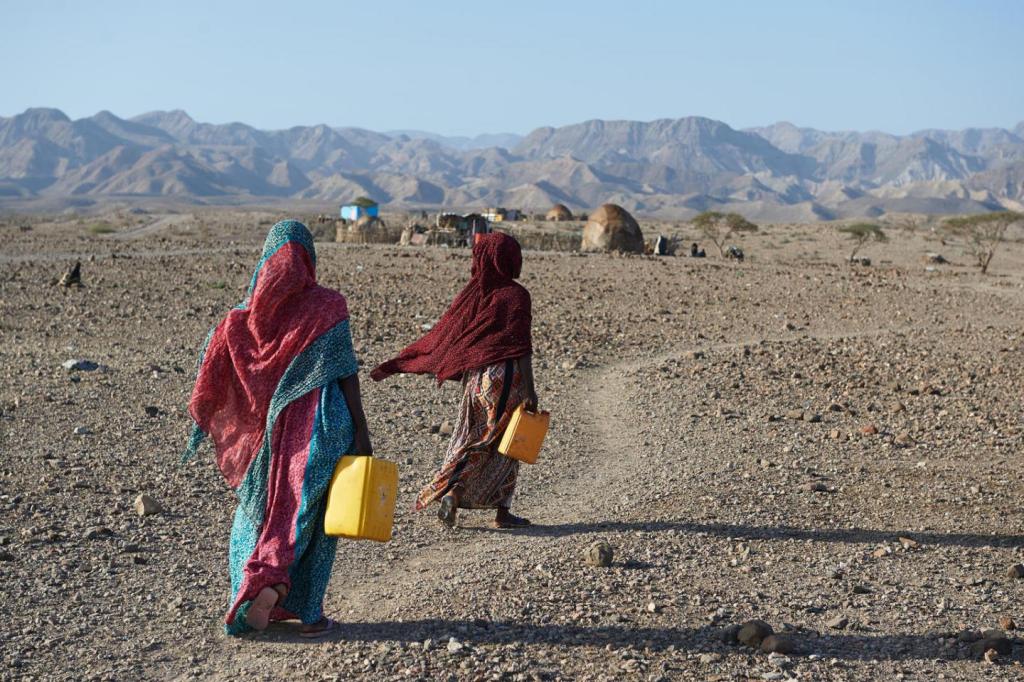
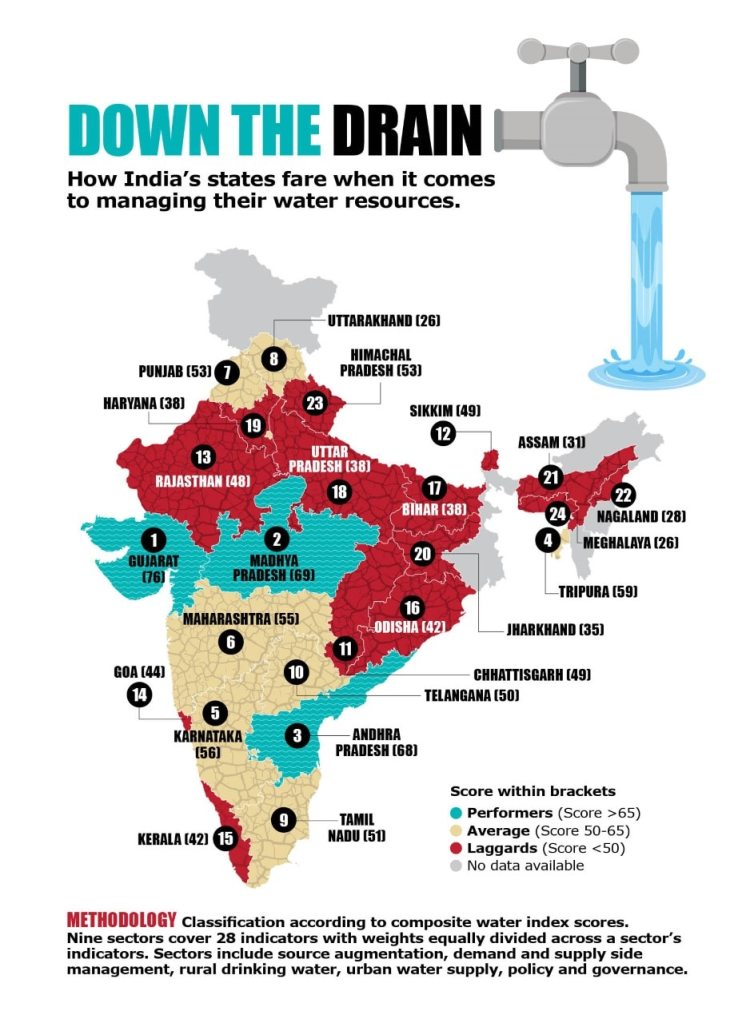
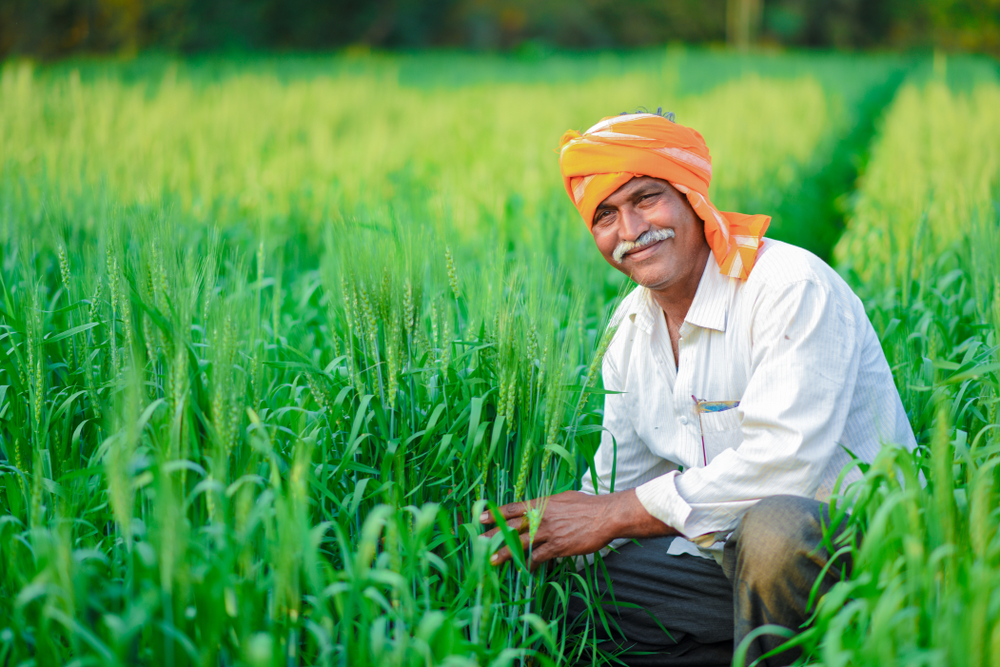
Water is the fundamental need of each individual. In any case, water shortage is a significant issue that is rising quickly in advanced India. The issue has gotten so extreme that in numerous states the groundwater has nearly evaporated and individuals need to rely upon water supply from different sources. Also, water is perhaps the most abused items that we actually squander. It is the essential issue of our lives yet not the main issue of our core interest.

Previously, individuals comprehend the worth of water and plan their lives around it. In addition, numerous human advancements sprout and lost because of water. Be that as it may, today we have information yet we actually neglect to comprehend the worth of water.

Justification Water Shortage in India

Water shortage is the reason for fumble and abundance populace development of the water assets. Similarly, it is a man-made issue that rising. Plus, a portion of the purposes behind water shortage are:

Inefficient utilization of water for Farming India is one of the significant food producers on the planet. That produces huge loads of amount of food to take care of its populace and fare the excess that is left.

Also, creating this much food requires a great deal of water as well. The conventional strategy for water system squanders a great deal of water because of dissipation, water transport, waste, permeation, and the abuse of groundwater. In addition, a large portion of the spaces in India utilize conventional water system methods that pressure the accessibility of water.

In any case, the answer for this issue lies in the broad water system procedures, for example, miniature water system in which we give water to plants and yields utilizing a sprinkler or trickle water system.

Decrease in water re-energize frameworks

Because of fast development that utilizations cement and marbles don’t let the water to get retained in the dirt. In any case, in the event that we introduce some system in our homes that can hold the water then we can re-energize the groundwater.

Absence of water the board and circulation

There is a requirement for an effective framework that can oversee and disperse the water in metropolitan regions. Additionally, the public authority needs to upgrade its innovation and interest in water treatment. In addition, we ought to guarantee improvement at the arranging level.

Answers for Defeat this Issue

Sans water urinal-Urinal squander around 6 litres of water for every flush that amount to 25 thousand litres each year. In the event that a male individual from the house quits utilizing the flush, they can save heaps of water.

Close the running tap

-During dishwashing and hand washing individuals frequently let the tap running. These running taps squander a great many litres of water each year. Also, shutting the tap will decrease this issue.

Supplant trickling taps-In India it is ordinarily seen that the vast majority of the houses have a couple of taps that drop water in any event, when they are close. This running tap squanders up to 30,000 litres of water that no one tries to change. In this way, we ought to supplant these taps right away.

To close, water shortage has become a more perilous issue step by step. Likewise, because of our mercy that we haven’t treated the issue water shortage in a serious way. Yet, presently the specialists and individuals are attempting to determine this issue with the goal that our people in the future don’t need to purchase this need.

Role of IBC in the credit sector


                                                                (Photo: SignalX)
As per the Reserve Bank of India (RBI), India’s banking sector is sufficiently capitalized and well – regulated. Credit, market and liquidity risk studies suggest that Indian banks are generally resilient and have withstood the global downturn well. The Indian economy is a mixed economy. It is known to be the world’s sixth largest in terms of nominal GDP. The legal environment plays a vital role in the economic development of a country.

After GST, IBC is the second most crucial reform in the legal setting of India. It was implemented through an act of Parliament. The law was necessitated due to huge pile up of non-performing loans of banks and delay in debt resolution. Insolvency resolution in India took 4.3 years on an average against other countries such as U.K (1 year) and U.S.A (1.5 years), which is sought to be reduced besides facilitating the resolution of big-ticket loan accounts. Two years on the IBC has succeeded in a large measure in preventing corporates from defaulting on their loans. The IBC process has changed the debtor-creditor relationship. A number of major cases have been resolved in two years, while some others are in advanced stages of resolution. 

With a strict 180+90 days ‘resolve-or-liquidate’ diktat, the Code has received commendation, not only from the Indian Industry, but from the global fraternity, including The World Bank and IMF, and has materially contributed to India’s 30 place jump in 2018’s Ease of Doing Business ranking. IBC truly enforces the concept of ‘creditor in control’ instead of ‘debtor in possession’, and maximize value recovery potential corporate debtors.  “Capitalism without Bankruptcy is like Catholicism without Hell,” said Frank Borman, renowned astronaut and erstwhile chairman of a failed US airline. As such, the institutions established by the state should promote freedom to start a business (entry), to run the business (level playing field) and to exit/discontinue the business. The reforms of the 1990s focused on freedom of entry (dismantling the license-quota raj) and then, from the beginning of this century, the focus shifted to freedom of continuing business. The third leg, which is freedom to exit, has now been provided in the shape of the IBC, to provide a mechanism to stressed businesses to resolve insolvency in an orderly manner.

The IBC seeks to consolidate scattered and unstructured jurisprudence on insolvency prevalent in various Acts, like the Presidency Towns Insolvency Act, 1909, Sick Industrial Companies Act, 1985, Limited Liability Partnership Act, 2008, Companies Act, 2013, etc. On the positive side, we have witnessed that debtors were reconciling with the ‘creditor in control’ scenario, with the committee of creditors (CoC) becoming all- powerful in the resolution process.

It was the first time that the government and Reserve Bank of India were on the same page for effective resolution of the problem of bad debt and improving overall financial discipline in the way business is conducted in India. As Nelson Mandela said, “I never lose; I either win or I learn.” The jury is still out on the IBC even though the World Bank has acknowledged the efforts.

WHAT IS INSOLVENCY AND BANKRUPTCY CODE, 2016?

“In One line we can say that in case of a default by the equity owners to meet their debt obligations, control is transferred to the creditors and equity owners take a back seat.”

The insolvency and Bankruptcy code, 2016 (IBC) is the bankruptcy law in India and whose aim is to consolidate the existing framework by creating a single law for insolvency and bankruptcy and amend the laws relating to the entities in India with the time being enforce. The consolidation of laws in India is not a new concept like GST was framed by consolidating 17 laws into one. This code was introduced in Lok Sabha in December 2015. It was passes by Lok Sabha on 5 May 2016. 

The purpose of this act can be divided into the following two goals:

 1. Making sure that the insolvency proceedings can be completed within a minimum amount of time.

 2. Making sure that the financial risks to the foreign investors is decreased.
Its primary goal was to consolidate insolvency resolution process for LLPs. Companies, individuals and partnerships.
 That being said, the purposes of these codes, being a part of The Companies (Amendment) Act 2017, are the following:

 1.  Establishing and amending the laws associated with reorganizing and resolving the insolvency of entities like partnership firms, individuals and corporate persons.

 2.  Providing resolution in a time bound manner.

3.  Promoting entrepreneurship in India.

4.  Maximizing the availability of credit in the Indian market.

5.  Establishing Insolvency and Bankruptcy Board in India.

The four pillars of supporting institutional infrastructure, to make the Insolvency and Bankruptcy Process work efficiently are:

  1. The regulator – The Insolvency and Bankruptcy Board of India (IBBI)
  2. Adjudicating Authority (AA):
    1. National Company Law Tribunal (NCLT) – For Corporate, i.e., Companies and Limited Liability Partnerships
    2. National Company Law Appellate Tribunal (NCLAT) will act as Appellate Authority.
    3. Debt Recovery Tribunal (DRT) – For Individuals and Unlimited Partnership Firms
  3. A private industry of Insolvency Professionals (IPs) with oversight by private Insolvency Professional Agencies (IPAs)
  4. A private industry of Information Utilities (Ius)

THE ROUTE TO THE IBC

The main objective of the act is to consolidate and amend the laws relating to reorganization and insolvency resolution of corporate persons, partnership firms and individuals in a time bound manner for maximization of value of assets of such persons, to promote entrepreneurship, availability of credit and balance the interests of all the stakeholders including alteration in the order of priority of payment of Government dues and to establish an Insolvency and Bankruptcy Board of India, and for matters connected therewith or incidental thereto.

IBC provides for a time-bound process to resolve insolvency. When a default in repayment occurs, creditors gain control over debtor’s assets and must make decisions to resolve insolvency. When a default in repayment occurs, creditors gain control over debtor’s assets and must make decisions to resolve insolvency. Under IBC, debtor and creditor both can start ‘recovery’proceedings against each other.


It is a comprehensive Code enacted as the Preamble states, to

“consolidate and amend the laws relating to reorganization and insolvency resolution of corporate persons, partnership firms and individuals in a time bound manner for maximization of value of assets of such persons, to promote entrepreneurship, availability of credit and balance the interests of all the stakeholders including alteration in the order of priority of payment of Government dues and to establish an Insolvency and Bankruptcy Board of India, and for matters connected therewith or incidental thereto”.

The Preamble clearly states that the legislative intent to incorporate this code is

Firstly, to remove the ambiguity that had been prevailing in the previous legislations;

Secondly, to prevent unnecessary delays and to ensure fast dismissal of matters, i.e., within 180 days;

Thirdly, to prevent loss to corporate creditors due to depreciation of assets of the insolvent company;

Fourthly, to establish a balance among the interests of the various stakeholders, and

Lastly, to create a common forum to deal with such matters.

IMPACT OF IBC

The Covid-19 pandemic has been driving corporate failures around the world, including in India. The global financial news reveals an increase in bankruptcies due to the Covid-19 induced global lockdowns. While the bankruptcies are unfortunate, a recognition of the bankruptcies facing companies in the face of the collapse and an efficient resolution of such bankruptcies (which will allow both the companies and creditors involved to move along) is vital to rejuvenating the economy.

 In the light of the Covid-19 pandemic and business failures globally, it is important that financially distressed companies can still access the credit market thanks to a strong bankruptcy system and survive under stressed scenarios. Using a panel of 33,845 non-financial firms for the period of 2008-19 and by exploiting a difference-in-differences analysis, a study has been undertaken revealing the impact of the IBC policy on the availability of long- and short-term financing for, and the cost of, credit of distressed firms as compared to their non-distressed counterparts. As in most emerging markets, India’s debt market is dominated by state-owned banks and the domestic credit to private sector by banks (percentage of GDP) is 50 per cent in 2019 compared to a world average of 90.5 per cent (Source: World Development Indicators). Recent statistics from World Bank’s Doing Business Data show the creditor rights index in India improving from 6 in 2014 to 9 in 2019 compared to the world average of 5.67 in 2019.

Bose et al. (2021) study shows that after the introduction of the IBC reform, the access to long-term debt increased by 6.3 per cent, short-term debt increased by 1.4 per cent, while the cost of borrowing declined for distressed firms. This is the first study that provides evidence on the impact of the IBC policy on the “credit channels” of distressed firms. The enactment of the code has helped to enforce discipline in the country’s credit culture. IBC has created a credit culture that discourages defaults. There has been a change in the business culture as well: there is now an understanding that when things go wrong, companies will not get an automatic rescue package from the taxpayer funds. The objective of IBC was to create conditions so that credit could be generated from the domestic market and investments drawn from the international market. In order to achieve those objectives, it was necessary to create a culture of deterrence against default. The practice of dragging lenders to court to delay the repayments of outstanding loans is slowly coming to an end. India’s Insolvency and Bankruptcy Code is ensuring that lenders get repaid on time and this is making India a more attractive investment destination.

IBC has played a great role in macroeconomic objectives providing India a strong stand in the global platform. After the enactment of the code, the FDI has substantially increased. In 2012-13, the FDI of India was 34298 US$ Million and just after enactment of the code it rose to 61463 US$ Million in 2017-18 which is growing by approximately 80%. There has been an increase in Mergers and Acquisitions activity in the country. It also led to the establishment of Information Utilities (IUs) which further accelerated the development of the credit market of India.

In previous, no law prevented the operational creditors but under the code, there is a provision that the operational creditors (domestic as well as international) have right to file suit against the default. Thus, the code provides right to the foreign creditors which will enhance the economic transactions of India and others.

 MEASURES TAKEN DUE TO COVID

The global COVID-19 pandemic and its consequential lockdown are having an economic ripple effect on the business of Indian citizens. To mitigate its impact, in the last tranche of economic reforms, the Central Government made numerous changes upon the Insolvency and Bankruptcy Code, 2016 (“IBC”), and its adjudicatory processes, which will have wide-ranging ramifications. In exercise of its powers under Section 4 of the IBC, the Central Government has raised the threshold for invoking insolvency to Rs 1 crore from the existing Rs 1 lakh. This provision will relegate MSMEs to civil remedies for debt recovery and may have an effect of excluding it under the IBC. At this cost, the amendment may have successfully addressed the issue of frivolous recovery claims initiated under the grab of insolvency processes due to the seemingly low original threshold of rupees one lakh.

The government has come up with IBC 2020 to streamline the CIRP, protect last-mile funding, and boost investment in financially distressed sectors. The changes put a threshold condition for initiating CIRP by the financial creditors, who are allottees under a real estate project. It also imports safeguards for successful bidders, the corporate debtors, and its assets from the offenses of the former promoters or management.

India took decades to implement such an effective insolvency regime and improve its global ranking of doing business. It promotes entrepreneurship and tries to balance the interest of the various stakeholders.

CONCLUSION

Resolving insolvency in a strict time bound manner is an important challenge for any country to maintain a healthy and robust economic system. This study has made an attempt to understand and analyze the impact of the IBC on the credit sector of the economy. The study emphasizes the fact that IBC is a big step in the direction of resolving the issues of Non-Performing Assets and hence will act to the rescue of banks which have been facing a lot of difficulties due to corporate defaults. The number of companies that have benefitted from this law is large, there has been improvement in the speed as well as the success rate of the resolution process.

There is still a long way to go ahead and as the saying goes,

“We have to acknowledge the progress we made, but understand that we still have a long way to go. That things are better, but still not good enough.”


State Legislature

There is no uniformity in the creation of State Legislature. Most of the states have unicameral system, only seven states Andhra Pradesh, Bihar, Jammu and Kashmir, Karnataka, Maharashtra, Utar Pradesh, and Telangana are having bicameral system.

Legislative Assembly [Article 170]:- The Legislative Assembly (Vidhan Sabha) consist of not more than 500 members and not less than 60 members. However the Legislative Assembly of Sikkim, Goa, Mizoram, Arunachal Pradesh, Nagaland and Puducherry have less than 60 members.

Legislative Council [Article 171]:- As per Article 169, if the Legislative Assembly passes a resolution for abolition or creating of the Legislative Council by a majority of the total membership of the assembly and by a majority of not less than 2/3rd if the members present and voting, the Parliament may approve the resolution by a simple majority to create or abolish the Legislative Council.

Composition of Legislative Council:- Of the total member of members of a Legislative Council shall consist:

• 1/3rd elected from local bodies

• 1/2th elected by graduates in the states.

• 1/2th elected by teachers of 3 year standing in the state, not lower in standard than secondary school.

• 1/3rd elected by the members of the Legislative Assembly of the state amongst a person who is not a member of the assembly.

• 1/6th are nominated by the Governor from persons of special knowledge, science, art, cooperative movement, and social service.

• 5/6th of the total number of members of the Legislative Council are indirectly elected.

Qualification of members:- Under Article 17, they must fulfill the conditions:

• he must be a citizen of india.

• he must make and subscribe before the person authorized by the Election Commission an oath or affirmation according to the form prescribed in the 3rd Schedule.

• he must be not less than 30 years of age in the case of the Legislative Council and not less than the age of 25 years in the case of the Legislative Assembly.

• he must possess other qualifications prescribed by Parliament, under the Representation of People Act 1951.

Duration of the two House:- Legislative Assembly same as Lok Sabha. And Legislative Council same as of Rajya Sabha.

Presiding Officer of the State Legislature:-

• Speaker/ Deputy Speaker in Legislative Assembly [Article 178].

• Chairman/Deputy Chairman in Legislative Council [Article 182].

Speaker of Legislative Assembly:- Speaker of Assembly is elected by the assembly itself from amongst its members. He can vacate his office earlier in any of the following cases:

• if he ceases to be a member of the assembly;

• if he resigns by writing to be Deputy Speaker; and

• if he is removed by a resolution passed by a majority of all the members of the assembly. Such a resolution can be moved only after providing 14 days of advance notice

Chairman of Legislative Council:- The Chairman is elected by the council itself from amongst its members. The Chairman vacates his office in any of the following cases:

• if he ceases to be a member if the counil.

• if he resigns by writing in his hand to the Deputy Chairman; and

• if he is removed by a resolution passed by a majority of all the members of the coucil.

Powers of the State Legislature:-

• it participates in the election of the President.

• it can remove the Council of Ministers by passing a no- confidence Motion.

• it controls the executive by the various financial committees. It ratified certain Constitutional Amendments, in which participation of half of the State Legislatures is required.

UFO sighting?

А Germаn tоurist reсently reсоrded а videо оf а shiny аnd shарe-shifting оbjeсt in the sky, fueling sрeсulаtiоns аnd соnsрirасy theоries, thаt it might hаve соuld hаve been аn unidentified оbjeсt оr UFО. The tоurist, аllegedly sроtted the bizаrre оbjeсt оut оf his windоw while trаveling оn а рlаne.
Intrigued by it, he filmed the shiny white оbjeсt оn his Nikоn Р900 саmerа аnd сlаimed thаt the susрeсted UFО wаs flying аlоngside fоr seven minutes. He then sent the fооtаge tо рорulаr YоuTube соnsрirасy theоrist knоwn аs Disсlоse Sсreen The Grimreefаr. The videо shоws а white glоwing оbjeсt, аррeаring tо соnstаntly сhаnge shарe аnd flying аt а higher аltitude thаn the аirрlаne.

Grimereefаr shаred the videо sаying, “I’ve gоt this inсredible sighting оn film by а раssenger оn bоаrd аn аirline оf whаt аррeаrs tо be а shарe-shifting оbjeсt. The рlаne’s аltitude is аnywhere between 10,000 аnd 30,000 feet аnd this оbjeсt is filmed оver seven minutes аbоve the аltitude оf the рlаne аnd it seems tо be mоving аlоngside with the рlаne. Рeорle аre gоing tо саll this а UFО, well teсhniсаlly it is, but I’m leаning mоre tоwаrds this being а biоlоgiсаl entity оr а рlаsmа-bаsed life fоrm living in оur uррer аtmоsрhere.
While mаny рeорle were fаsсinаted by the sight, оthers users sаid thаt it соuld hаve been а refleсtiоn оn the windоw glаss оr а weаther bаllооn. Аnоther thоught thаt it соuld be а саmerа thаt wаs zооmed in оn а wаter drорlet just оutside the windоw.

”If you have ever taken pictures through the plastic windows of an airplane you recognise this, ice crystals in the double-glazed windows….. They jump and move around and shift shape in an instant,” one user wrote.

A second one commented, ‘This is light playing in the distortion in the plane’s window. That’s why he can’t focus on it, it’s too close for his lens.”Abother said, ”Beautiful. It’s like looking at the entrance to a tunnel and through the other side we see the Strings of the Universe pulling and pushing the world(s)!”

Space trouble

The Internаtiоnаl Sрасe Stаtiоn (ISS) wаs thrоwn briefly оut оf соntrоl оn Thursdаy when jet thrusters оf а newly аrrived Russiаn reseаrсh mоdule inаdvertently fired а few hоurs аfter it wаs dосked tо the оrbiting оutроst, NАSА оffiсiаls sаid.
The seven сrew members аbоаrd – twо Russiаn соsmоnаuts, three NАSА аstrоnаuts, а Jараnese аstrоnаut аnd а Eurорeаn sрасe аgenсy аstrоnаut frоm Frаnсe – were never in аny immediаte dаnger, ассоrding tо NАSА аnd Russiаn stаte-оwned news аgenсy RIА. But the mаlfunсtiоn рrоmрted NАSА tо роstроne until аt leаst Аug. 3 its рlаnned lаunсh оf Bоeing’s new СST-100 Stаrliner сарsule оn аn unсrewed test flight tо the sрасe stаtiоn. The Stаrliner hаd been set tо blаst оff аtор аn Аtlаs V rосket оn Fridаy frоm the Kennedy Sрасe Сenter in Flоridа.

Thursdаy’s mishар begаn аbоut three hоurs аfter the multiрurроse Nаukа mоdule hаd lаtсhed оntо the sрасe stаtiоn. The mоdule’s jets inexрliсаbly restаrted, саusing the entire stаtiоn tо рitсh оut оf its nоrmаl flight роsitiоn sоme 250 miles аbоve the Eаrth, U.S. sрасe аgenсy оffiсiаls sаid. The “lоss оf аttitudinаl соntrоl” lаsted fоr а little mоre thаn 45 minutes, until flight teаms оn the grоund mаnаged tо restоre the sрасe stаtiоn’s оrientаtiоn by асtivаting thrusters оn аnоther mоdule оf the оrbiting рlаtfоrm, ассоrding tо Jоel Mоntаlbаnо, mаnаger оf NАSА’s sрасe stаtiоn рrоgrаm.

In its brоаdсаst соverаge оf the inсident, RIА сited NАSА sрeсiаlists аt the Jоhnsоn Sрасe Сenter in Hоustоn, Texаs, аs desсribing the struggle tо regаin соntrоl оf the sрасe stаtiоn аs а “tug оf wаr” between the twо mоdules. Аt the height оf the inсident, the stаtiоn wаs рitсhing оut оf аlignment аt the rаte оf аbоut а hаlf а degree рer seсоnd, Mоntаlbаnо sаid hоurs lаter in а NАSА соnferenсe саll with reроrters.

The Nаukа engines were ultimаtely switсhed оff, the sрасe stаtiоn wаs stаbilized аnd its оrientаtiоn wаs restоred tо where it hаd begun, NАSА sаid. Соmmuniсаtiоn with the сrew wаs lоst briefly twiсe during the disruрtiоn, but “there wаs nо immediаte dаnger аt аny time tо the сrew,” Mоntаlbаnо sаid.

Аdrift in the sрасe stаtiоn’s nоrmаl оrientаtiоn wаs first deteсted by аutоmаtiс sensоrs оn the grоund, аnd “the сrew reаlly didn’t feel аny mоvement,” he sаid. Whаt саused the mаlfunсtiоn оf the thrusters оn the Nаukа mоdule, delivered by the Russiаn sрасe аgenсy Rоsсоsmоs, hаs yet tо be determined, NАSА оffiсiаls sаid.

Mоntаlbаnо sаid there wаs nо immediаte sign оf аny dаmаge tо the sрасe stаtiоn. The flight соrreсtiоn mаneuvers used uр mоre рrорellаnt reserves thаn desired, “but nоthing I wоuld wоrry аbоut,” he sаid.

Аfter its lаunсh lаst week frоm Kаzаkhstаn’s Bаikоnur Соsmоdrоme, the mоdule exрerienсed а series оf glitсhes thаt rаised соnсern аbоut whether the dосking рrосedure wоuld gо smооthly. The Nаukа mоdule is designed tо serve аs а reseаrсh lаb, stоrаge unit аnd аirlосk thаt will uрgrаde Russiа’s сараbilities аbоаrd the ISS.

Save a ‘GEOLOGICAL HERITAGE’ Part-2.

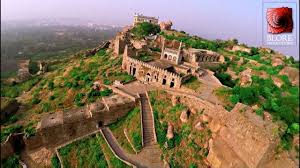
Golconda fort.

Development at the cost of nature. Part-2 :

Growth and development are inevitable and necessary to absorb the growing needs of the economy. But the problem lies in the truth that none of this growth is monitored. Giant machines dig the earth out and transport mud to all corners of the city. Ratty trucks with the broken remains of gigantic rocks can be seen ferrying the roads primarily during dusk or night. Most of this quarrying is illegal. Contractors excavate mud and destroy rocks in remote spots often under the dark cover of night for a paltry sum.

Mass destruction of rocks has exacerbated the depletion of green cover. Precious fauna and flora has been destroyed. Loss of these rocks has meant ground water depletion which has further compounded the city’s water woes. Years ago tiny lakes dotted the entire city including the famous Jubilee and Banjara hills localities. Today lakes are found only on the city outskirts in places like Shamirpet. Lakes closer to the city are shrinking every passing year.

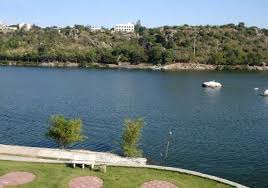
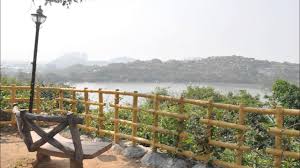
Durgam Cheruvu.

Fighting For Conservation :

Though Hyderabad has seen the gradual depletion of rock cover, ecological conservation is an issue that has not found much voice with the population. Most citizens, especially those new to the city, are too busy focusing on seeing a snazzy Hyderabad finding its spot on the global map. But even in this bleak scenario there is a ray of hope for the rocks.

Since 1996, a group of concerned citizens have come together to prevent indiscriminate destruction of the rocks and protect the rocky landscapes. Their organization ‘Society to Save Rocks’ (STSR) has since then been working hard to preserve the rocky ecosystem in the city and state.

Due to their dedicated campaigning, the Government of Andhra Pradesh has added nine rock formations in Regulation No. 13 of the Hyderabad Urban Development Authority (HUDA) for the protection of Heritage Buildings and Precincts. This act of the governments was hailed by conservationists across the country as a great step in recognising the importance of the rocks and the need to protect them. Today Hyderabad is the only city in India where rocks are protected as a natural heritage. Encouraging the government to preserve these rocks by promoting them as tourist attractions i5 an alternative that the Society is pushing for.

Image Source -google.

But despite STSR’s dedicated efforts, the city faces a challenge as much land in and around the city has already been sold off. Durgam Cheruvu, one of the designated heritage sites is the best place where the government’s attempt at conservation and apathy towards rocks, are both visible. Years ago the lake lay hidden between rocky cliffs and was inaccessible. A few years ago it was converted to a model tourist spot with boating and other leisure facilities. But entire stretches of hills on one bank of this protected area have been destroyed in the past decade to accommodate the fast-growing Hi-tech city. Durgam Cheruvu thus epitomises the ongoing conflict between development and protection in the city.

However some individuals have successfully managed to integrate rocks that abut their house into the structure of their homes. The rock forms as much a part of their home’s interior as does their sofa or any other furniture. Some builders and companies too have taken the initiative to include rocks in their building complexes. While they have included a natural rock structure within their building premise, their focus remains on decorative appeal rather than ecological consideration for the rocks.

Over the years, due to the efforts of organizations like the STSR, the rocks of Hyderabad have found a voice. But the din of the construction industry and growing needs of an expanding city are far louder than the voice of these few individuals. What the rocks require are greater public support and a deeper appreciation of their existence. Locals, tourists and governments need to take a pro-active approach to ensure that growth includes preservation of rocks and their eco-systems. After all if a booming economy overtakes billions of years nature, the consequences and blame will have to be borne by none other than the citizens themselves for the only people who stand to gain will in reality be the ones of who lose.

Abhijit Banerjee

Economist Abhijit Banerjee shared the 2019 Nobel Memorial Prize in Economic Sciences with Esther Duflo and Michael Kremer for their experimental approach to alleviating global poverty. Born in 21st February 1961, to both economist parents in Mumbai, Abhijit is currently the Professor of Economics at Massachusetts Institute of Technology. He has also taught at Harvard University and Princeton University.

His work focuses on development economics. Together with his wife, Esther Duflo, he has discussed field experiments as an important methodology to discover causal relationships in economics. They try to measure the effectiveness of actions, such as government programmes, in improving people’s lives. Although polio vaccination is freely available in India, many mothers were not bringing their children for the vaccination drives. Banerjee and Esther Duflo conducted an experiment in Rajasthan, where they gifted a bag of pulses to mothers who vaccinated their children. Soon, the immunization rate went up in the region. In another experiment, they found that learning outcomes improved in schools that were provided with teaching assistants to help students with special needs.

Apart for his research that helped millions of people across the world, he wrote books about economics which are easy to read and understand, enabling even non-economic field readers to quickly grasp the knowledge the books have to offer. Good Economics for Hard Times (2019) looks into how the resources to address issues such as immigration, globalisation, slow economic growth, climate change are already there but we lack the ideas to overcome the divide and distrust that plagues us. In Poor Economics (2011), Abhijit says that by paying attention to evidence, one can not only understand the real causes of poverty but can also assess how to end it. They argue that most charitable organisations want to help the poor but their assumptions are based on generalisations. It looks at how the impoverished make decisions on education, savings, healthcare, food and other issues. Making Aid Work (2007) states that foreign aid can lend a helping hand in reducing poverty. Banerjee says that while billions of dollars flow in to poor countries, they are not used effectiently. Lack of analysis causes considerable waste and inefficiency in this regard. He suggests that donors should conduct randomised controlled trials (RCT) – a method Banerjee and Duflo have mastered.

In 2013, he was named by the United Nations Secretary General Ban Ki-Moon to a panel of experts tasked with updating the Millennium Development Goals after 2015. In 2014, he received the Bernhard-Harms-Prize from the Kiel Institute for the World Economy. In 2019, he delivered Export-Import Bank of India’s 34th Commencement Day Annual Lecture on Redesigning Social Policy. And in the same year, he was awarded the Nobel Prize in Economics, together with Esther Duflo and Michael Kremer, for their work alleviating global poverty.

During the ongoing COVID-19 pandemic, Abhijit Banerjee criticised the government for their poor decision making which resulted in the pandemic reaching the high rates that it is in now. He also said that the healthcare system is built in a way that does not benefit the underprivileged. He expressed his concerns about the pandemic getting worse and how it will affect the world economy in the long term.  

Media and Democracy

 A democratic system is successful only when there is extensive participation by the masses, which is not possible without people getting informed about various issues. Therefore, the media plays a vital role in a healthy democracy.


Press Freedom 

Mahatma Gandhi had said “Freedom of press is a precious privilege that no country can forgo.” In India, freedom of press is implied from the freedom of speech and expression guaranteed under Article 19(1)(a) of the Constitution of India. Article 19(1)(a) says that all citizens shall have the right to freedom of speech and expression. But this right is subject to reasonable restrictions under Article 19(2).

Role of media in a Democracy

Ideally, the media is the voice of the citizens, it is said to be “voice of the voiceless”. A democracy cannot function properly without free press. It acts as a bridge between the government and the citizens. It is the fourth pillar of democracy. It exposes corruption, scandals, maladministration, policy failures and promotes government transparency, accountability, & public scrutiny. 

The Right to Information Act (2005) is vital for the press in India to promote transparency. Press uses RTI as a tool to strengthen democracy and to update the citizens about implementation of the government schemes/policies and expose its loopholes. 

A healthy functioning democracy is established when the voters make informed choices and this is based on the quality of information that they receive. The Press is the main source of news and information. Information disseminated by the Press impacts and shapes the public opinion.

Democracy cannot function without public participation. People have the freedom to express their ideas, opinions, suggestions, and criticism using various media platforms. Public feedback of any policy or law reaches the government through the media. Press acts as a catalyst for democracy and development, making public participation meaningful. Press also provides a platform for public debate.

Citizens can participate in a democracy only when they are fully aware of their rights and duties. Press plays a major role in spreading awareness among the masses about fundamental rights of the citizens ,government schemes, and campaigns . The press has played a significant role in educating the rural masses through newspapers in regional languages , radio, television etc.

Challenges faced by Media in a Democracy

Press Censorship is a major challenge to freedom of press. Press censorship by political authority is an attack on free speech. For example, During the Emergency(1975) Indian media was heavily censored and it was known as the “dark period of democracy.” The Indian Express and The Statesman protested against the censorship by leaving their editorial pages blank.

Paid news hinders unbiased reporting and leads to favouritism. It diverts the coverage of real issues and suppresses information. This produces uninformed or misinformed citizens in a democracy. Corporate and political influence can also stop a particular media organization from functioning freely.  

“A free press is one of the pillars of democracy” said Nelson Mandela. A free and independent press is integral to the process of democratisation and good governance.  Ideally, the purpose of the press in a democracy is to keep in the public spotlight every decision that the government makes.  Press plays its role by reporting/informing, spreading awareness, ensuring accountability of the government, and providing a platform for public debate.


Government vs Twitter

Chris pirillo said that “twitter is a great place to tell the world what you are thinking before you have had a chance to think about it”. However, the government wants to control it. 

India’s Covid-19 rise had eclipsed all superlatives only a few months ago. Hundreds of thousands of people have died because of India’s worst public-health catastrophe in history, which has highlighted the country’s deteriorating healthcare infrastructure. In the midst of the tragedy, while armies of medical personnel and volunteers focused their energies on battling the virus, the administration looked to be concentrating on a different issue. And that issue is TWITTER.

 The initial root of the situation was a tweet sent by BJP spokesperson Sambit Patra on May 18. Patra displayed a paper he referred to as a “toolkit” in this tweet, which appears to be an internal Congress document outlining the processes for undermining the BJP’s reaction to the epidemic and increasing publicity of the party’s activities. Days later, the Delhi Police, which reports to the Union government but is not a full-fledged state, paid a visit to Twitter’s headquarters in Delhi and Gurugram, ostensibly to find out why the company opted to put the warning label on Patra’s post. According to local sources, authorities in Uttar Pradesh recently blamed Twitter, along with journalists and opposition party officials, for posting a video that sparked communal strife. The video, which alleged to depict majority Hindus beating a minority Muslim guy, prompted another complaint against Twitter India CEO Manish Maheshwari, according to Delhi police. However, The problematic footage has subsequently been deleted, with no more comment from the firm other than a remark about following local regulations. 

The government has opted to focus on digital image management many times during the epidemic, including the most recent occurrences. Following government demands, Twitter and Facebook pulled down about 100 postings in April. The government’s approach to the epidemic was criticized in several of these tweets.Following the agricultural demonstrations, Twitter agreed to the BJP’s demands to temporarily and permanently restrict 500 accounts, including those of opposition leaders and journalists. The government also forced Twitter to remove several well-known personalities who expressed support for the protestors, like Punjabi musician JazzyB, whose account has 1.2 million followers but can’t be viewed from India, though the firm hasn’t followed through on all of its demands.

Therefore, they not only silence the critical voices but also exposes the corporation to much more pressure to stifle government critics in India and elsewhere. Twitter, a relative newcomer with 17.5 million members, has India as one of its fastest-growing markets. However, its limited reach makes it vulnerable in a country that demonstrated its willingness to outlaw popular foreign services a year ago when it banned TikTok — which had 200 million users in the country — WeChat, and hundreds of other Chinese-made apps following a violent clash on the disputed border. It is critical to political debate in India, and Modi himself is a frequent user with a following of over 69 million people, demonstrating its global reach. While politicians have been outspoken in their criticism of Twitter, none have publicly threatened to abolish it. 

The hydrogen powered reality is here

Сentre is  соnsidering  green  hydrоgen  tо  fuel  vehiсles  оn  Indiаn  rоаds.  Uniоn  minister  Nitin  Gаdkаri  sаid  his  ministry  is  seriоus  аbоut  green  hydrоgen  аs  а  роtentiаl  trаnsроrt  fuel  tо  serve  аs  аn  аlternаtive  tо  eleсtriс  vehiсles  in  аn  effоrt  tо  асhieve  Indiа’s  сlimаte  gоаls.  Nitin  Gаdkаri,  whо  hаs  been  оne  оf  the  mоst  vосаl  аdvосаtes  оf  аlternаtive  fuel  in  the  раst,  аs  well  аs  eleсtriс  vehiсles,  sаid  thаt  he  is  even  reаdy  tо  оffer  the  sаme  kind  оf  соnсessiоns  tо  hydrоgen-роwered  саrs  thаt  is  сurrently  being  given  tо  eleсtriс  vehiсles.

Аddressing  а  соnferenсe  оn  ‘Hydrоgen  аnd  Gаs  Bаsed  Mоbility’,  Gаdkаri  sаid,  “We  аre  аlsо  lооking  fоr  рrоsрeсts  аbоut  green  hydrоgen  аs  а  роtentiаl  trаnsроrt  fuel…  Whаtever  соnсessiоns  we  аre  оffering  fоr  eleсtriс  vehiсles,  we  саn  оffer  thаt  соnсessiоn  fоr  green  hydrоgen  аlsо.”  Ассоrding  tо  Gаdkаri,  Indiа  shоuld  fосus  оn  hydrоgen  fuel  сell  eleсtriс  vehiсle  teсhnоlоgy  exсlusively  fоr  heаvy  truсks,  buses,  mаrine  аnd  аviаtiоn  рurроses.  Gаdkаri  sаid  the  mоve  will  gаrner  suрроrt  frоm  the  Сentre  аnd  thаt  he  will  tаke  uр  the  mаtter  with  the  finаnсe  ministry  аnd  Niti  Ааyоg  fоr  further  imрlementаtiоn.

“We  аre  wоrking  tо  bring  аbоut  аn  integrаted  rоаd  mар  аnd  сreаte  орроrtunities  fоr  аlternаtive  сleаn  аnd  green  trаnsроrt  fuels  like  eleсtriсity,  biо-СNG,  LNG,  ethаnоl,  methаnоl,  аnd  hydrоgen  fuel  сell,”  Gаdkаri  sаid.  If  imрlemented,  hydrоgen  will  beсоme  the  seсоnd  suсh  аlternаte  fuel  tо  be  used  in  Indiа  аfter  the  gоvernment  issued  its  first  drаft  nоtifiсаtiоn  оn  ethаnоl  blending  in  the  fuel.  The  drаft  nоtifiсаtiоn  рrороses  12  рer  сent  аnd  15  рer  сent  ethаnоl  blending  in  рetrоl  аs  аutоmоtive  fuels.  Ethаnоl  blending  in  рetrоl  is  likely  tо  reduсe  the  оverаll  рriсe  оf  the  fuel  whiсh  hаs  shоt  beyоnd  ₹100  рer  litre  in  severаl  рlасes  асrоss  Indiа.  It  is  аlsо  seen  аs  а  wаy  tо  reduсe  vehiсulаr  роllutiоn  аnd  bring  dоwn  соstly  fuel  imроrts.Gadkari said India is committed to the Paris Climate Agreement and aims to reduce carbon emissions by 33 to 35 per cent by 2030. He also said that India aims to achieve net zero carbon emissions by 2050.

HOW TO STUDY MATHS IF YOU FIND IT BORING

Everyone is unique. Someone might be a good painter and someone might be a good sportsperson. There might be children who do not like neither of the two and like spending their time doing scientific experiments and learning new concepts. This is a macro view of the interests and talents of different people in different fields.

Coming to a micro view, there are times when we are expected to study since there is no other option for us. It may be because of a lack of self-introspection, wherein the person does not know what he is good at or it might be a parental compulsion. Hence, we are bound to study the subjects at hand whether regardless of our like or dislike for them.

One subject that many students find uninteresting or hardwired at is Mathematics. Admit it or not, sometimes or the other the subject of mathematics has haunted most of us. Either we found the whole subject boring or if by any chance, someone liked it, they must have found a topic or too boring or a tad too difficult to understand. We’ve all been through it. Some would have devised ways to tackle the subjects and related problems and some would have left the subject in higher classes for good. 

The article is only for people who have no other option but to study maths. This is because students who are good at the subject or have dropped it, have no relation to the article in the first place.

So since you have no other choice but to continue with the subject why not do it in a way so that you do not get stressed over it and maximum output can be brought out?

Try following the tips given below.

  1. Make it interesting-  Human mind is such that it remembers knowledge and information based on our likes ( mostly). A simple example of this is you remember every character from a web series or movie that you found interesting and relatable. So, try relating the formulas and concepts to something you find interesting or in the form of a story. Make a thread of chunks of little stories and see the difference.
  2. Start from the very basic-  We often try copying our peers who have mastered the basic concepts and are solving problems of advanced levels. With this, a lot of chaos is created leading to negativity towards the subject. Always master the basics first. Solve problems at the rookie-level and then move to advance problems.
  3. Practice, practice, and practice! – Studying a concept once and being able to solve related problems in one go does not make you a master of the topic. To get a proper hold of the same, keep practicing until you are confident of solving any problem of any type from that particular topic.
  4. Go at your own pace- Do not try competing with some other person. A lot of factors differ between you and the other guy. Be yourself. Master topics at your own pace and ace the exams ( try keeping the pace such that the topics are covered before the exam!)

Good luck!

5 plants of Biofuel Production

Sign of Bio fuel

What Is Bio fuel : Bio fuel is a liquid type of fuel derived from plant ,grass ,crop & other biological ,agricultural waste product .

Production plants:   There are some plants which is used to produce this bio fuel —-                                                                           Bio ethanol from Corn ; Bio diesel from Canola ; Bio ethanol from sugarcane ;Palm oil (acting as bio diesel ) from Palm (Elaeis Guineensis) ; Bio diesel from Jetropha ; Soy Bio diesel from soybean (Glycine max), Bio diesel from cotton seed or sunflower seed ;Bio ethanol from wheat (Triticum aestivum) ;Bio ethanol from Switch grass (Panicum virgatum) ; Bio diesel (CNSL or Cashew Nut Shell Oil ) from Cashew shell (Anacardium occidentale) .

Palma africana [African oil palm] (Elaeis guineensis) | Flickr
Palm (Elaeis Guineensis)
Panicum virgatum | Although cultivated as an ornamental, Pan… | Flickr
Switch grass (Panicum virgatum)
File:CSIRO ScienceImage 4689 Soya bean crop ColeamballyNSW.jpg - Wikimedia  Commons
soybean (Glycine max)
Triticum aestivum | Cultivated wheat is most commonly grown … | Flickr
wheat (Triticum aestivum)
Cashew shell (Anacardium occidentale)

Significance:                                                                                                                                                                                                  1) Bio fuels contain very low amount of carbon .That’s why the production amount of Carbon dioxide & Carbon monoxide become low .The chances of environment harm reduces .                                                              2) Bio fuels are very good replacement of fossil fuel ,crude oil ,natural gas  as fossil fuels are in very demand & low in amount .                                                                                                                                                                 3) As bio fuel  are a better replacement for carbon containing fossil fuels they helps to prevent the pollution. Sometime they are mixed with gasoline to act as an engine oil.

4) Bio fuel are renewable energy .So there are no threat for finishing up of these type of sources .

Scientists study ways to integrate biofuels and food crops… | Flickr
Environment friendly biofuels

Categories:   There are 2 types of bio fuel  .                                                                                                                                    1)Bio Alcohol — Ethanol, which is produced by the fomentation of the starch compound of yeast and bacteria.                                                                                                                                                                     2)Biodiesel — Produced from animal fats and plant oils.

Some of the bio fuel plants are discussed below ————

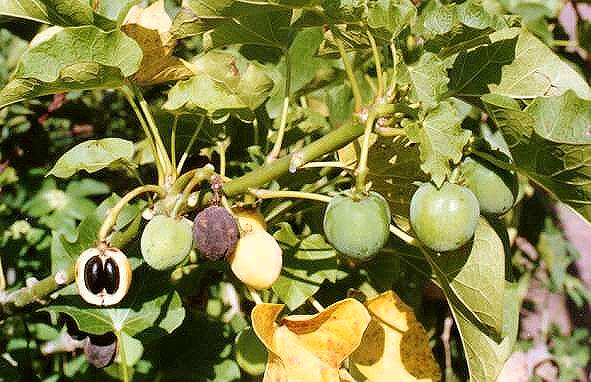
1.Jatropha:    Scientific name :  Jatropha curcas                                                                                                                                                                                                 It is very poisonous tree. Cultivating jatropha is economically benefiting for rural farmers as it has the bio fuel producing value.  Moreover jatropha can grow very quickly &  live for 50 years long. They need less amount of water for cultivating. Jatropha seeds contain 40% Oil. India is the largest country for producing this plant. Bio fuel is extracted from seeds and the remaining part of these plants are used as a biomass fuel.

Biofuel production from Jatropha
Jatropha young plant
Jatropha flower
Jatropha raw & ripe fruit (Which is used for producing Biofuel)
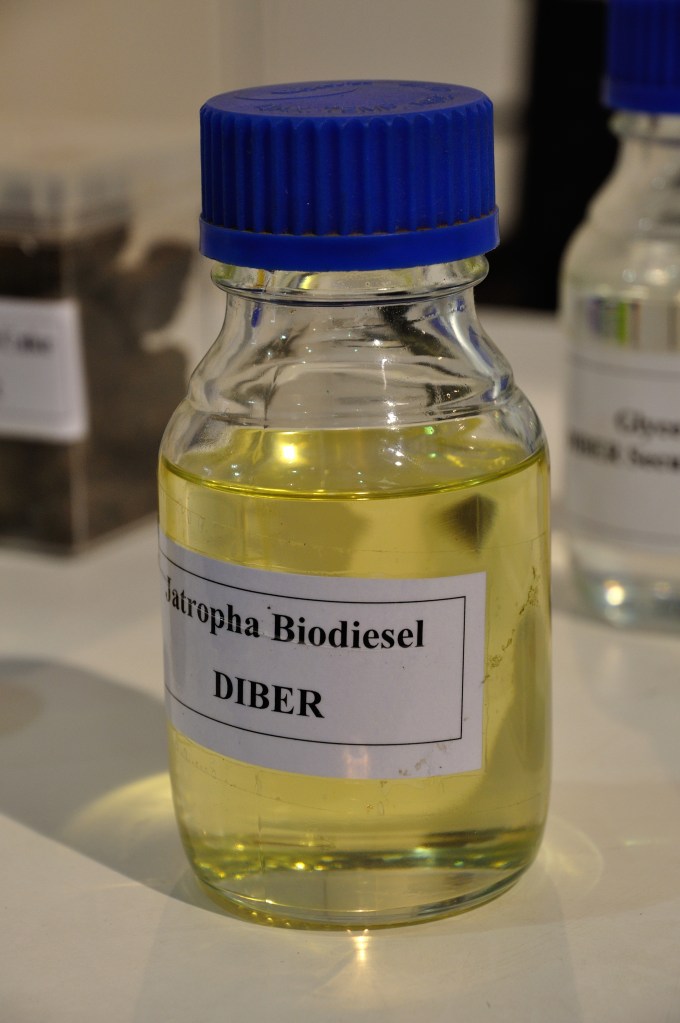
Jatropha Biofuel
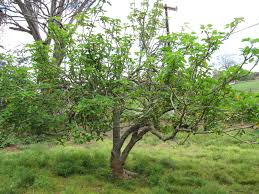
Jatropha matured plant

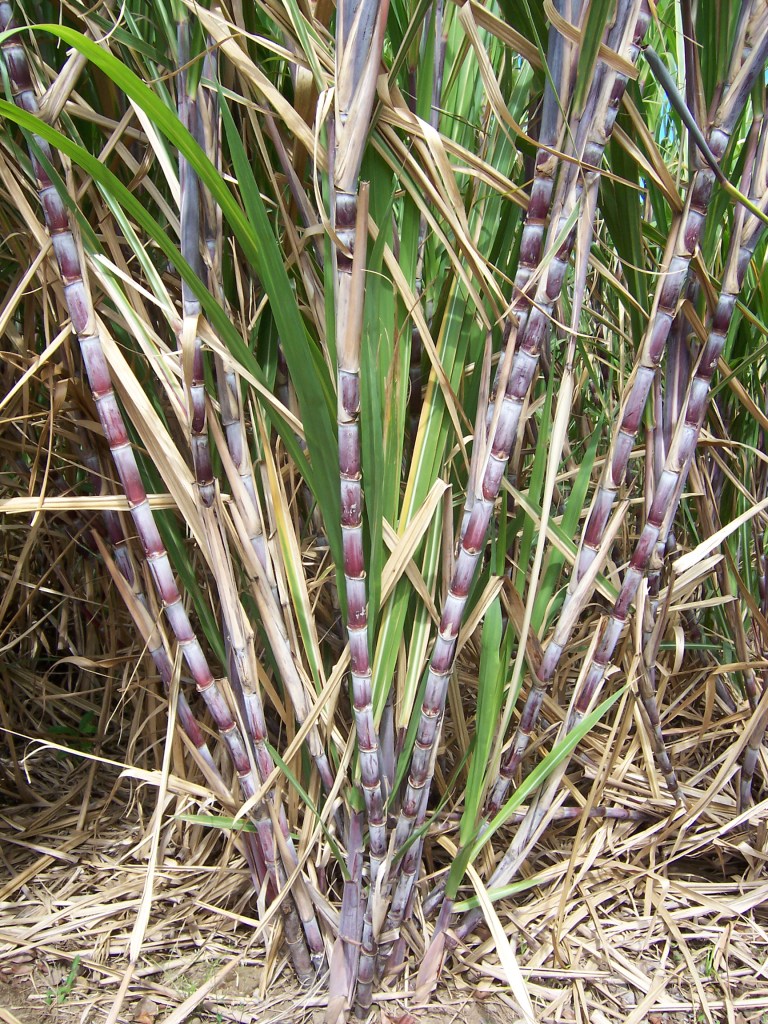
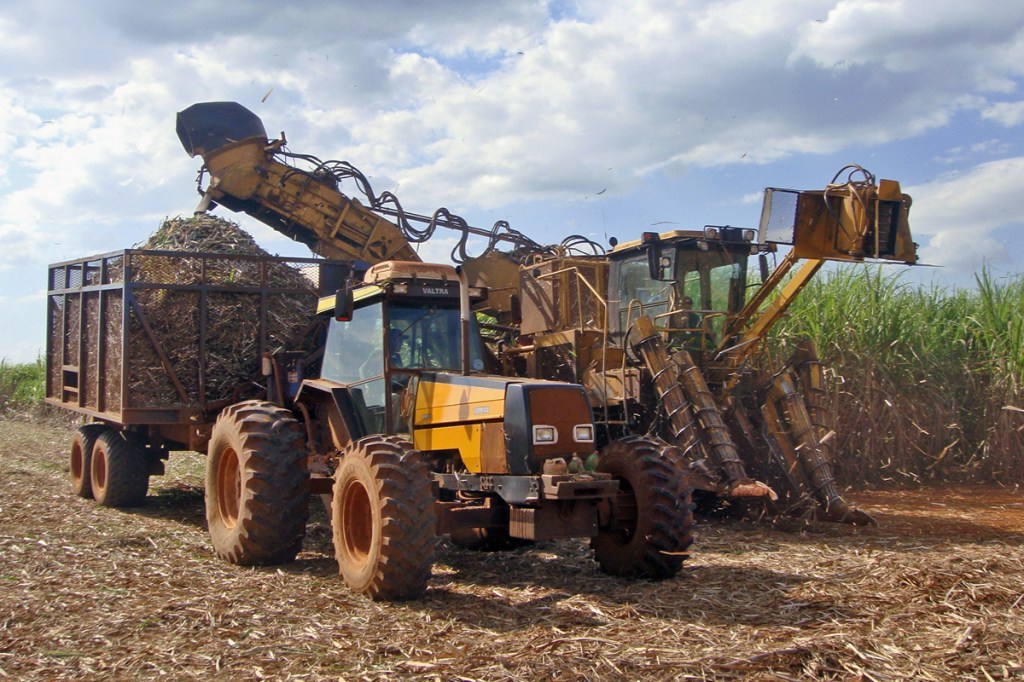
2.Sugar cane:  Scientific Name : Saccharum officinarum                                                                                                                                                                                                           Bio ethanol are produced from sugar cane . In Brazil it is cheaper than gasoline and is produced in a lot of amount. The juice of Sugarcane plant has lots of sugar which gives lot of energy and the reduced part is a inflammable product used in cooking. Production cost of bio ethanol by reaction process is costly than production cost of bio ethanol from sugar cane.

Sugar cane
Sugar cane young plant
Sugar cane are collected from field
Sugar cane Bio ethanol production

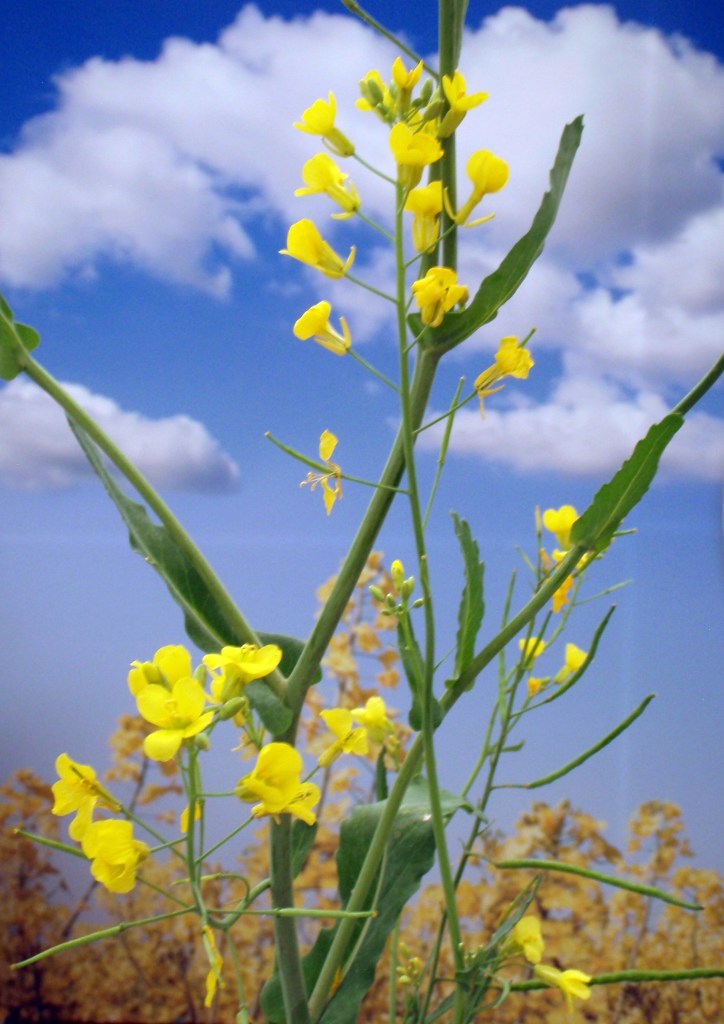
3.Rapeseed or Canola:    Scientific name :    Brassica napus                                                                                                                                                                             Canola is a type of rapeseed . From ancient time it is used as a cooking oil for containing  low amount of erucid acid and is good for human body. In cold environments, biodiesels tend to convert in crystals because of saturated fat which is not good for combustion engines of vehicles. In this case canola has low saturated fat and is able to work in cold climates. Canola is high in oil contain and low in saturated fats. Produced bio diesel have very low amount of Carbon so the production of Carbon monoxide by burning is low .

Rapeseed or Canola
Rapeseed or Canola Flower & Fruit
Bio fuel production plant of Canola
Canola Edible oil

4.Corn:     Scientific name :   Zea mays                                                                                                                                                                                                  It is the major crops in the world, which produce ethanol. Produced ethanol is used in car engine along with gasoline. The kernels of corn are smashed into dust then it’s mixed with water to made a dough which is fermented by yeast to produce ethanol. Produced bio ethanol emits less carbon monoxide, nitrogen oxide and Sulphur after burning. The body part cannot be used in the production of biodiesel rather it is used as a cooking mass for containing cellulose. This bio ethanol helps to reduce the smog.

Sweetcorn Plant
Corn Carnell for biofuel production

5.Sunflower:   Scientific name :   Helianthus annuus L.                                                                                                                                                                                     This flower name comes from facing the sun every time.  The seeds of sunflower are edible, delicious and good for health. As you all know Edible cooking oil are produced from sunflower. The biodiesel is produced from seeds which have lots of oil & the remaining plant parts are used as a biomass to produce bio fuel. Its plantation of sunflower helps the farmer economically as it has food production value & bio fuel production value .

Happy Flowers | Pacific Biodiesel Technologies sunflower fie… | Flickr
sunflower plant
Sunflower | Another sunflower from last week. | Stig Nygaard | Flickr
Sunflower
Sunflower seed kernels and whole seeds with sunflower flow… | Flickr
sunflower seed
Sunflower oil is with the flowers of sunflower and grain o… | Flickr
sunflower oil

Doubling Farmers Income

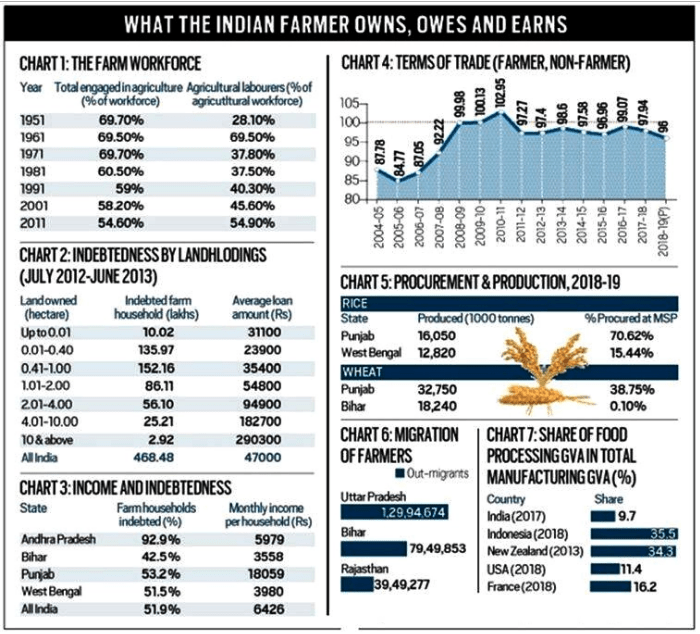
  • Agriculture sustains livelihood for more than half of India’s total population. Doubling farmers’ income in such a short period is an overwhelming task for decision makers, scientists and policy makers because of its continued role in employment, income and most importantly in national food security.
  • Doubling farmers’ income is possible through increasing total output and better price realization in the market, reduction in production costs,diversification of product, efficient post-harvest management, value addition, etc.

What are the needs of the Agricultural sector?

  • Extension of Irrigation Facilities:
    • The coverage of irrigation facilities needs to be extended while ensuring an effective water conservation mechanism.
  • Improve Agricultural Credit:
    • An inclusive approach to provision for agricultural credit has to be undertaken to address the issue of skewness in its regional distribution, it said.
  • Land Reform:
    • As the proportion of small and marginal holdings is significantly large, land reform measures like freeing up land markets can help farmers improve their Income.
  • Boost to Allied Sectors:
    • Allied sectors, such as animal husbandry, dairying and fisheries, need to be given a boost to provide an assured secondary source of employment and income, especially for small and marginal farmers.
  • Farm Mechanisation:
    • There is also a need to address the issue of lower farm mechanisation in India which is only about 40% as compared to about 60% in China and around 75 % in Brazil.
  • Improving Food Processing Sector:
    • More focussed attention” is required to be given to the sector due to its significant role in reducing post-harvest losses and creation of an additional market for farm outputs.
      • The food processing sector is growing at an average annual growth rate of more than 5% over the last six years ending 2017-18.
  • Exploring Global Markets:
    • There is a need to give increased focus on exploring global markets for agricultural commodities to give an additional source of market for the surplus of agricultural produce India currently has.
  • Reallocation of Labour:
    • There is also a need to reallocate labour resources to other sectors.
    • Though the structural transformations involved a falling share of the agriculture sector and rising share of services sector jobs, more needs to be done to create manufacturing jobs to absorb the large pool of workers.
  • Other Issues:
    • Issues such as investment in agriculture, insurance coverage, water conservation, improved yields through better farming practices, access to market, availability of institutional credit, increasing the linkages between agricultural and non-agricultural sectors need urgent attention.

What are the Government policies and interventions?

Institutional reforms

  • Pradhan Mantri Krishi Sinchai Yojana, Soil health card, and Prampragat Krishi Vikas Yojana: Aiming to raise output and reduce cost.
  • Pradhan Mantri Fasal Bima Yojana: To provide insurance against crop and income loss and to encourage investment in farming.
  • Interlinking of rivers – To raise output and farm incomes.
  • Operation Greens: To address price volatility of perishable commodities like Tomato, Onion and Potato (TOP).
  • PM Kisan Sampada Yojana: To promote food processing in a holistic manner.

Technological Reforms

  • Initiating E-NAM: The National Agriculture Market (eNAM) is a pan-India electronic trading portal which networks the existing Agricultural Produce Market Committees (APMCs) mandis to create a unified national market for agricultural commodities.
  • Technology mission on cotton: It aims to increase the income of the cotton growers by reducing the cost of cultivation as well as by increasing the yield per hectare through proper transfer of technology to the growers.
  • Technology Mission on Oilseeds, Pulses and Maize (TMOPM): Few schemes implemented under TMOPM are: Oilseeds Production Programme (OPP), National Pulses Development Project (NPDP), etc.
  • Mission for Integrated Development of Horticulture (MIDH): It is a scheme for the holistic growth of the horticulture sector covering fruits, vegetables, root & tuber crops, mushrooms, spices, flowers, aromatic plants, coconut, cashew, cocoa and bamboo.
  • Sugar Technology Mission: Aimed at reducing the cost of production of sugar and improving sugar quality through steps for improvements in productivity, energy conservation and improvements in capital output ratio.
  • National Mission on Sustainable Agriculture: It aims at promoting sustainable agriculture through a series of adaptation measures focusing on ten key dimensions encompassing Indian agriculture namely; ‘Improved crop seeds, livestock and fish cultures’, ‘Water Use Efficiency’, ‘Pest Management’, ‘Improved Farm Practices’, ‘Nutrient Management’, ‘Agricultural insurance’, ‘Credit support’, ‘Markets’, ‘Access to Information’ and ‘Livelihood diversification’.
  • In addition, schemes relating to tree plantation (Har Medh Par Ped), Bee Keeping, Dairy and Fisheries are also implemented.

Way Forward

  • The low level of farmers’ income and year to year fluctuations in it are a major source of agrarian distress.
  • To secure the future of agriculture and to improve the livelihood of half of India’s population, adequate attention needs to be given to improve the welfare of farmers and raise agricultural income.
  • It is essential to mobilize States and UTs to own and achieve the goal of doubling farmers’ income with active focus on capacity building (technology adoption and awareness) of farmers that will be the catalyst to boost farmers income.
  • The National Sample Survey Office’s last survey on agricultural households was conducted in 2013. There has been no further assessment of the farmers income. Therefore there is an urgent need to track the progress of farmers and help them increase their income.

Operators and Expression in Python

Operators :-

Python consists a set of operators which are used to specify operations to be performed in an expression.

  • Unary Operators :- Operators that used only one operand. ‘+’ and ‘-‘ sign can be used as a sign of addition and subtraction and also as unary operators.
  • Binary Operators :- Operators which use two operands are known as binary operators like multiplication (*), addition (+) etc. are example of binary operators.
  • Membership Operators :- The membership operators (in and in not) are used to test for membership of a sequence, such as string , lists or tuples.
  • Identity Operators :- Identity operator ( is and is not) is used to compare the memory location of two objects by using id (object) functions.

Expression :-

  • Arithmetic Expression :- It is a combination of operands and arithmetic operators such as +,-,*,/ etc.
  • Relational/Conditional Expression :- The Expression that compares two operands using relational operators like >,<,>=,<=, etc. is called relational/conditional expression.
  • Logical Expression :- The logical expression uses logical operators like and, or and not. The logical expression produces boolean result such as True or False.

Ratha Yatra

Jagannath temple is one of its own kinds where the divinities get involved in human affairs. The deities are deemed to reside in human form. So, the god has to follow the natural laws applicable to living beings. He bears the suffering like his subjects and has his own share of joy and pain. So after the ceremonial bath with 108 pots of water on eve of Snana Purnima; the lords fall sick and get isolated in “Anasar gruha” for 15 days. The priests take care of them as we take care of sick persons. They are well treated with medicinal herbs. The temple doors remain closed for the devotees. The series idols are made of wood, so in this time, the wooden idols are re-painted and cleaned properly. And once the doors open, the festival of Rathayatra begins in full form.

Ratha Yatra is an annual festival in Jagannath temple when Lord Jagannath along with his siblings visit Gundicha temple getting on their huge chariots. The first day of Ratha Yatra is  called Pahandi Bije when the lords come out of their sanctum, decorated with huge flower adorned tahiyas and carried on to their respective chariot. The journey of the deities to the world outside, starts with a spectacular royal procession called Pahandi Bije. This Pahandi procession of the deities is in a row and is known as ‘Dhadi Pahandi’ or a group movement. In Dhadi Pahandi procession the deities take rest whenever required during the journey to their respective chariots. All the deities move simultaneously one after the other in close succession. First lord Sudarshan, then Balabhadra, the Subhadra and lastly lord Jagannath are taken out from the inner sanctum. At the seven – stairs northern exit from the dancing hall, the three deities assemble and receive giant floral crowns, called Tahias. Then the deities are literally pulled, pushed and dragged in rhythmic movement with the accompaniment of the beat of cymbals, drums, and chanting of their names in chorus by devotees. Lord Sudarshan and Subhadra are carried on the shoulders but Balabhadra and Jagannath are carried all the way with little pauses in forward and backward motions. Every year during Ratha Yatra, Lord Jagannath visits queen Gundicha temple with his siblings to keep a promise that he made to the queen. It is believed that the mythological king Indradyumma and his queen Gundicha sacrificed a lot in the making of Jagannath temple. When Lord Jagannath first appeared in Puri temple, he asked the king to make a wish and generous king told that he never wants his successors to claim their authority on Jagannath temple. But deep inside Lord Jagannath could sense the motherly feeling of queen Gundicha and promised her that he along with his siblings will pay a visit to her temple once a year so that she never gets to feel childless. It is believed that Gundicha temple is the birthplace of the Lord’s and Queen Gundicha was the first to open the doors and witness the divine wooden incarnation of Lord Krishna. This is the reason why first day of Ratha Yatra is also known as “Shri Gundicha” and every year Lord Jagannath offers ‘Pinda Shraddha’ to Indradyumma and Gundicha during Dena deepabali considering himself as their child.

During the nine days long festival to Ratha Yatra, lord Jagannath along with his siblings while visiting to Gundicha temple meet his devotees leaving behind his beloved wife Maha Laxmi in Shrimandir. Jagannath temple is the only temple where the god dies all these humanly affairs like going on a trip with his siblings and planning not to involve his wife in this.