How did the Earth come into being??

A whooping 7.9 billion people, 8.7 million discovered eukaryotic species and an estimated 1 trillion microbes- How did it all came into being? How did our Earth or even better, the solar system or the whole universe came into being?
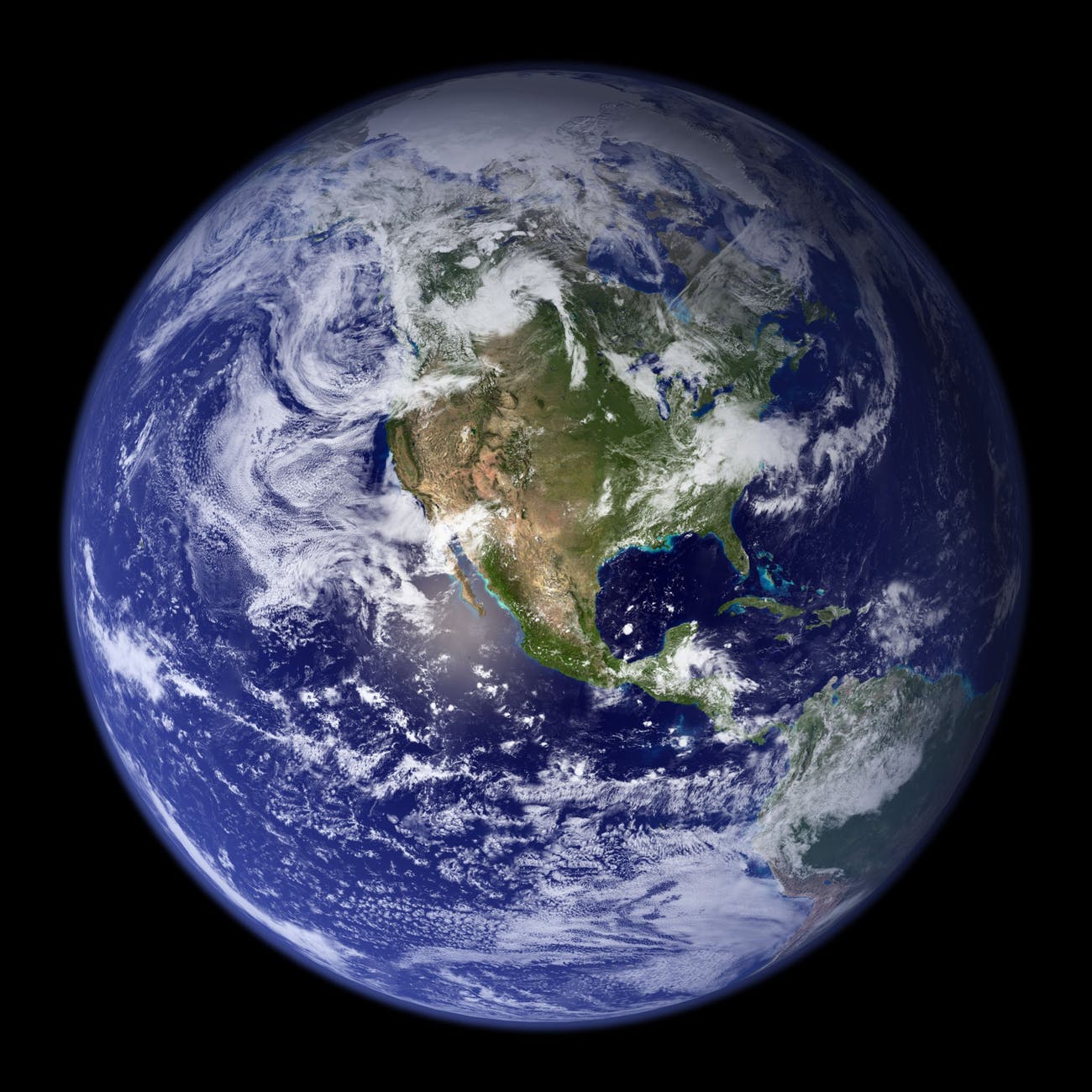
Photo by Pixabay on Pexels.com

So, it all began about 13.8 billion years ago. There existed a single point, a minute, hot and really dense point which violently exploded-‘The Big Bang’, and it is how everything came into being- Matter, Energy space, universe, stars, solar system, me, you-everything. After the explosion took place, it expanded into what we today call the universe. And, what’s more interesting is the fact that it is still expanding, and this is how the scientists came to believe that it all began with a big bang.

Scientists divide the period after the big bang into 2 era-

  1. Radiation era
  2. Matter era

Radiation era

The period between 10^(-43) seconds (after the explosion took place)-the Planck era(here, the current laws of physics do not apply), to about 30,000 years after the big bang is referred to as the radiation era. During this period, the temperature of the atmosphere was soo high that there was no distinction between matter and radiation ,or even better, no matter existed.

It is divided into 7 era or epoch-

  1. Grand unification epoch- Named for the unification of 3 grand forces of nature- Electro-magnetic forces, Weak forces, Strong nuclear forces. With a temperature greater than 1029 K, it began 10−43 s after the big bang. At the end of this epoch, the strong nuclear force broke away from the other two.
  2. Inflationary epoch- With a temperature greater than 1032 K, it began 10−36 s after the big bang. As the name suggests, the universe rapidly expanded in this epoch. The universe, ta this time had electrons, quarks and antiquarks.
  3. Electroweak epoch- Here, now all the 4 forces of nature have split off. Temperature- 10^20 K and time after big bang- 10^(-32)s.
  4. Quark epoch- Temperature here is 10^16K and 10^-12 s have passed since the big bang. All of the ingredients required to form subatomic particles were present but the universe still was too hot and dense.
  5. Hadron Epoch- Temperature- 10^10 K and Temperature-10^-6 s. The universe has not finally cooled down enough for subatomic particles to form and hence, quarks bind to form protons and neutrons.
  6. Lepton epoch- Temperature- 10^ 12 K and finally, about1 sec have passed since the big bang.
  7. Nuclear epoch- Temperature-10^9 K and 100 s approximately have passed since the big bang.

In these last two epoch, when the universe has cooled down quite a lot, the protons and neutrons fuse together to form the very first chemical elements- Hydrogen and Helium. And now that our universe is capable of forming elements, it brings us to the end of radiation era and the matter era begins.

Matter Era

Matter era includes 3 epoch that spread over billions of years and include the formation of our galaxy, solar system and even the present day.

  1. Atomic epoch- With the temperature of 3000 K and time after big bang- 50,000 years, this epic marks the beginning of attachment of electrons to nuclei. This process is known as recombination.
  2. Galactic epoch- Now, 200 million years have passed since the formation of our universe. With the ability of universe to now form Hydrogen and Helium molecules, the universe is dotted with atomic clouds. Within the clouds, due to gravity, clusters were formed which later led to the formation of galaxies.
  3. Stellar epoch- 3 billion years have now passed. Within those clusters of clouds, now stars will be formed. Stars begin their lives as proto-stars. These are formed as a result of gravitational forces between particles of dust and gas and heat is generated due to friction and collision. When the proto-star becomes extremely hot, the process of thermonuclear fusion starts taking place. This is how stars generate heat and electricity. This heat within the clouds convert the already exiting elements into all others that are currently known to humankind. When stars burn themselves and are destroyed in explosion know as supernova, it destabilizes the heat cloud, which then begins to rearrange itself in the shape of a flattened disc. At the center a proto-star forms (eg.- our sun). The clumps of dust are flash heated and form chrondules that later from planetesimals by cohesion. These planetesimals then, later accrete to form what we call today as planets.

And this is how our solar system was formed about 4.5 billion years ago. It is located in the Milky Way galaxy’s Orion Star Cluster and has about 8 planets with a total of 63 moons. The inner 4 planets (also known as terrestrial planets) are separated form the outer 4(also known as jovian planets) by a belt of asteroids. Terrestrial planets are known as such because they are made of rocky material, have solid surface, do nor have rings and are relatively small. Earth, among these, is the only one to have a moon.

The jovian planets, on the other hand, have multiple moons, support ring system, have no solid surface and are immense in size. The Oort Cloud, a collection of icy debris, marks the edge of our solar system as the gravitational and physical influence of sun diminishes .

This is how our solar system and our Earth were formed. Now, can our solar system end? If yes, then how and by when? It’s a question for a later time.

FIBONACCI SEQUENCE! THE MAGIC!!!

Though mathematics is an interesting and beautiful subject, most of us find it difficult to learn. We often learn mathematics to do calculations and learn formulas to get good grades in the exams. Mathematics is a wonderful subject which we tend to apply in our day-to-day life. If you see maths through a different dimension, it will be as interesting as social media. We learn so many formulas and theorems, but where do we apply them? Think and come to a solution to make mathematics an interesting one. To prove mathematics an interesting subject, here come the Fibonacci numbers. Most of us have heard it once or twice in our classes when our teacher says about it. If you love to play with numbers, then Fibonacci numbers are the one. Let’s see how interesting these Fibonacci Numbers are!!

The Fibonacci Sequence in Nature

Fibonacci numbers are numbers, such that each number is the sum of the two preceding numbers starting from 0 and 1. The Fibonacci numbers or Fibonacci sequence are first used in the book, Liber Abaci, by Fibonacci which is used in the calculation of the growth of the rabbits. The Fibonacci numbers are closely related to the golden ratio. The ratio of the two consecutive Fibonacci numbers gives the golden ratio as n increases. {Golden Ratio: 1.61803398875}. Though, Liber Abaci contain the earliest description outside India, Indian mathematicians are the ones who described Fibonacci sequence as early as the sixth century.

Fibonacci Sequence

The Fibonacci day is celebrated on November 23rd every year. If we write it in mm/dd format, 11/23; it is also a Fibonacci number. The name Fibonacci is named after its inventor, Leonardo of Pisa, commonly known as Fibonacci was an Italian Mathematician, who was famous for his invention in the history of mathematics.

Leonardo of Pisa, commonly known as Fibonacci (1170 – 1250)

Let’s see the Fibonacci sequence with the example of rabbit, A farmer put a pair of rabbits on a closed surface. How many rabbits can be produced from the pair in a year, if it is that every month each pair produces a new pair which from the second month on becomes productive? The solution is the Fibonacci sequence. The sequence will go on like   1, 1, 2, 3, 5,….. and so on.

FIBONACCI SEQUENCE IN NATURE!!

  • In some flowers, the petals are arranged in the Fibonacci sequential arrangement which is enough to prove that Fibonacci sequences are available in nature too.
  • In the branches of plants, the leaves are spirally arranged in the Fibonacci sequence arrangement. In small plants, it will be 5 or 8. In larger ones, it will be 8 or 13 based on the growth of the plant.
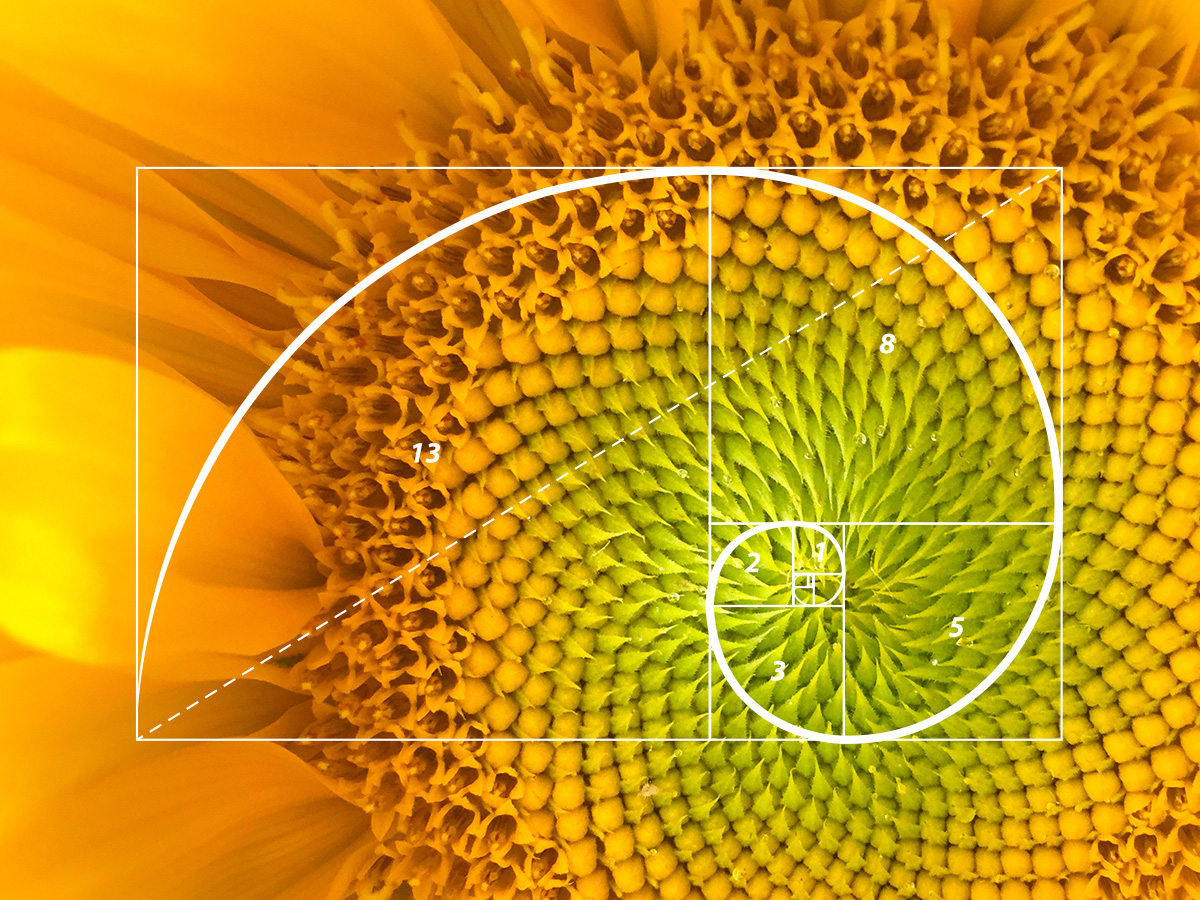
  • The pattern of the seeds within the sunflower follows the Fibonacci sequence (1,1,2,3,5, …..).
The nature of design: the Fibonacci sequence and the Golden Ratio -  Cleveland Design

Fine! Till now, we saw what is a fibonacci sequence, and who is the inventor and where can we see this fibonacci series. Now, shall we see where these fibonacci sequence are used practically? Yeah! Come on!

IN MATHEMATICS,

  • The Fibonacci numbers occur in the sum of the shallow diagonals of Pascal’s triangle.
Fibonacci sequence and Pascal’s triangle
  • The Fibonacci sequence is also used in the Pythagoras theorem. The hypotenuse of the triangle can be a Fibonacci number.
  • The Fibonacci sequence is also used in the network topology for parallel computing.

IN COUMPUTER SCIENCE,

  • The Fibonacci numbers are important in the analysis of algorithms (computational run-time analysis) of Euclid’s algorithm.
  • Its also used in the common factor tree method that is called a binary tree method which is the Fibonacci number minus one.
  • This Fibonacci sequence also used in the game called poker, it is a step in the game development.

Fibonacci sequence are used not only in these two fields but also in many other fields. To put it simply, I have given these two fields. As we saw earlier, fibonacci sequence can also be seen in nature. While contructing tall buildings, climb up and see from the top, this is also an example of a fibonacci sequence.

Algorithms 101: Climbing stairs in JavaScript | by Joan Indiana Lyness |  JavaScript in Plain English

These are the various interesting facts in the Fibonacci sequence. It’s just a small part of mathematics. If we take an interest in various parts or topics in mathematics, we can make maths an interesting one. Mathematics is an ocean, where Fibonacci sequence is a small fish in it. Let’s try to catch various fishes like the Fibonacci sequence and make our lives a great one. If you find it interesting, just do some more research and excite by yourself like how I got excited!!

Reference links;

https://www.mathsisfun.com/numbers/fibonacci-sequence.html

http://www.eniscuola.net/en/2016/06/27/the-numbers-of-nature-the-fibonacci-sequence/

Monkey-pox

Recently, we may heard about monkeypox, which took place in Texas, USA. Now, let’s have a brief intro about monkeypox.

A rare case of monkeypox was detected in Texas, marking the first such cases recorded in the state, the Centers for Disease Control and Prevention (CDC) said. “While rare, this case is not a reason for alarm and we do not expect any threat to the general public.”

Monkeypox belongs to the same family of viruses as smallpox. It is a rare but serious viral illness that is characterised by flu-like symptoms and swelling of the lymph nodes, which gradually progresses to a widespread rash all over the face and body.It spreads from one person to another via respiratory droplets.

The first case of monkeypox in humans was recorded in 1970 in the Democratic Republic of Congo during a period of intensified effort to eliminate smallpox.

Scientists have so far discovered two distinct genetic groups of monkeypox virus—Central African and West African.The most recent case detected in the US has been infected by the type of virus found in parts of West Africa, including Nigeria, CDC said.

The United Kingdom, Israel and Singapore have recorded cases of monkeypox in six passengers, all of whom were returning from Nigeria.

The Marie Effect

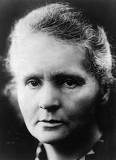
Maria Salomea Sktodowska was born on 7 November 1867 in Warsaw , Poland. She was the 5th child born to father Vladislav and Mother Bronislava sklodowska , who were both teachers. Because of bad investments, the family lost its savings and had to move to a private school where her mother taught.

Maria started her schooling in 1874, and she was the youngest and the smartest in her class. During that time, Warsaw was under Russian rule which banned polish dictums. Russian government forbade any polish women to attend university of Warsaw. So Marie and her older sister Bronya ,would pool their finances so that first her older sister ( Bronya ) could complete her education, and then Marie could attend University of Paris. Manya ( as Maria was also called) spent 6 years as governess and taught peasant children how to read and write.

She also attended secret meetings of “Floating University ” where they read scientific studies. By 1891,she had collected enough money to continue her studies in Paris. She moved there and lived with her sister and her husband and changed her name to Marie. She attended the Sorbonne University and then later moved to the student area , a tiny attic sized housing. In 1893,she earned her master’s degree in Physics, and then studied Mathematics on a scholarship.During this, she also got a job to study magnetism properties of various types of steel for French company.

She later met Pierre Curie and they got married in 1895 , and gave birth to daughter Irene the following year.

Later she decided to make French physicist Henri Becquerel and his discovery of mysterious Uranium rays in 1896 as her topic of physics doctorate. She began studying Uranium type rays radiated from other elements and found that Thorium also gave out such rays. Most of Uranium type rays given off by rocks called pitchblende- gave more radiation than she expected.

She announced in July,1898 that she found a new element and named it POLONIUM , after Poland and also invented the word ‘ radioactive ‘ , and later she also founded Radium.

To prove that she had indeed found those new elements, she had to produce pure radium. And finally on 21 july 1902 she reported the weight of 1 radium atom. In 1903, she became the first woman in Europe to receive doctorate in science. Radium began to be used for treating cancer cells, and the new treatment began to be called ‘ Curie treatment’. Marie and Pierre were awarded the Humphry Davy medal ; England’s highest award in chemistry.

The same year , she and her husband ,along with Henri Becquerel , were awarded the Nobel Prize in Physics .In 1906, Pierre died by falling off horse drawn wagon.

In 1911, Marie won Nobel Prize in chemistry for her work in radioactivity.

She died in 1934 of aplastic anaemia due to prolonged exposure to radiation .

Later, in 1935,Irene and her husband Fredrick, were awarded the Nobel Prize in chemistry .

The Semiconductor shortage

Semiconductors are defined as  crystalline or amorphous solids that have electrical conductivity opposite at temperatures to those of metal, higher electrical resistance than typical resistant materials, but still of much lower resistance than insulators.  Semiconductors can be pure elements, such as silicon or germanium, or compounds such as gallium arsenide or cadmium selenide.

Some facts about Semiconductors :

1. Conducts electric current less than a conductor and higher than insulator.

2. Has high resistance and negative temperature coefficient.

3. Formed due to covalent bonds

4. A semiconductor chip is an electric circuit with many components such as transistors and wiring formed on a semiconductor wafer. An electronic device comprising numerous of these components is called Integrated Circuit (IC), and can be found in electronic devices such as computers, smartphones, appliances, gaming hardware and medical equipment.

Taiwan is the world’s leading producer of semiconductors and other electronic components.The Taiwan Semiconductor Manufacturing Company (TSMC) has more than 55 per cent of the global market share in the production of high-end custom-made chips.Of the two rival companies that have survived, US-based Intel is in trouble and Korea’s Samsung has challenges of its own.

Due to the pandemic and the series of lockdowns being imposed, the world has been facing a shortage of semiconductors which has been affecting the industries dependent on them.The increase in chip consumption over the last decade is also partly attributable to the rising contribution of electronic components in a car’s bill of materials.Especially the car manufacturers and consumer electronics manufactures, have not been receiving enough of this crucial input to continue production.

This shortage has caused delayed vehicle deliveries, as carmakers in order to make just in time car deliveries , typically kept low inventory holdings and relied on an electronics industry supply chain to feed production lines as per demand. This has not only affected the international markets , but also affected the India based vehicle manufactures to curtail the production.

Also due to geopolitical tensions in Taiwan , prominently from China, this has opened an opportunity for India to realize it’s capacity and make positive changes in it.It should make extra efforts to solidify strategic-economic cooperation between Delhi and Taipei and make them more stronger.

Trade has increased from about $1 billion in 2001 to about $7 billion in 2018 . India has made a special effort to woo Taiwanese companies that are moving some of their production away from China.

India should continue to make it’s presence in Indo- Pacific stronger, and also come to terms with Taiwan’s critical role in shaping the strategic future of Asia’s waters.

Nausea! It could be Cybersickness or Motion sickness

Nausea due to watching fast moving digital images becoming common if you are watching computer generated mayhem in the latest action film or scrolling rapidly on your smartphone, you may start to feel a little off. Maybe it is a dull headache or dizziness or creeping nausea. And no, it is not something you ate.

A peculiar side effect of the 21st century is something called digital motion sickness or cybersickness. Increasingly common, according to medical and media experts, it causes a person to feel woozy, as if on a boat in a churning sea, from viewing moving digital content.

“It’s a fundamental problem that’s been kind of been swept under the carpet in the each industry,” said Cyriel Diels, a cognitive psychologist and human factors researcher at Conventry University’s Centre for Mobility and Transport in England. “ It’s a natural response to an unnatural environment.”

Digital motion sickness, known among medical professionals as usually induced motion sickness, stems from a basic mismatch between sensory inputs, said Steven Rauch, medical director of the Massachusetts Eye and Ear Balance and Vestibular Centre and professor of otolaryngology at Harvard Medical school. “Your sense of balance is different than other senses in that it has lots of inputs,” he said “ When those inputs don’t agree, that’s when you feel dizziness and nausea.”

In the traditional motion sickness, the mismatch of occurs because you feel moment in your muscles and joints as well as in the intricate coils of your inner ear, but you do not see it. That is why getting up on the deck of a ship and looking at the horizon helps you feel better. But with digital -motion sickness, it is the opposite. You see movement -like the turns and twists shown in a movie or video e game car chase that you do not feel. The result is the same: You may have sensory conflict that can make you feel queasy. It can happen to anyone, even if you are someone who is not prone to motion sickness in cars, boats or air r planes. Various studies indicate it can affect 50% to 80% of people, depend ting on the fidelity of the digital con tent and how it is presented. Studies show that women are, more susceptible than men, as are a those with a history of migraines or concussion.

How do you treat cybersickness?


The moment you feel the onset of symptoms, you should take a break from whatever screen you’re looking at. Crowson says you need to give your brain the visual cues that you’re not moving, ideally by looking at the horizon (which, depending on where you live, might not be possible). Even if you can’t see the horizon, anything outside or not moving around you will do.

How do you prevent cybersickness?


Since it’s not realistic to stop looking at screens (unfortunately), we have to find a way to manage our time with them. “Structured breaks are really important,” says Crowson, who recommends 50 minutes on and 10 minutes off your screen. “Even if you’re feeling good at the end of the 50 minutes, it’s still good to take that 10 minutes off, especially if it’s been a trigger before.”

Since screens aren’t disappearing from our lives anytime soon, your best bet to avoid cybersickness is to keep up with those breaks even if it’s for a walk, to stretch, or to look outside the window. Chances are you need it.

EYE GLASSESS OR LENS ??

Whether you choose to wear eyeglasses or contact lenses for vision correction mostly depends on personal preferences. Lifestyle, comfort, convenience, budget and aesthetics should all factor comes into your decision-making process.

I can just say what is the pros and cons of each in order to make you analyze things in more systematic manner.

WHY EYEGLASSESS ?

Pros :

  1. Eyeglasses offer many benefits over contact lenses.
  2. They require very little cleaning and maintenance, you don’t need to touch your eyes to wear them .
  3. Glasses are cheaper than contact lenses in the long run since they don’t need to be replaced as often.
  4. They can adjust the amount of light entering your eye for optimum comfort and vision.
  5. Eyeglass lenses block 100% UV and protect not only the inside of the eye from UV, but the exterior of the eye and eyelids as well.
  6. Wearing glasses reduces the need to touch your eyes, which in turn reduces the likelihood of irritating your eyes or developing an eye infection.
  7. If you have dry or sensitive eyes, glasses won’t exacerbate the problem like contact lenses can.

Cons:

  1. Some people don’t like how they look in glasses and feel it detracts from their facial aesthetics or hides their features.
  2. Some frames can exert constant pressure on your nose and behind your ears, leading to headaches and general discomfort.
  3. Your vision can be obstructed or blurred when they fog up in cold weather.
  4. If you have a strong prescription, your glasses might make your eyes appear unnaturally minified or magnified.
EYE GLASSES

WHY LENS ?

Pros:

  1. Contacts conform to the curvature of your eye, providing a wider field of view and causing less vision distortions and obstructions
  2. Contact lenses don’t get in the way when playing sports and exercising.
  3. Contact lenses won’t clash with what you’re wearing.
  4. Contacts typically aren’t affected by weather conditions and won’t fog up in cold weather like glasses.
  5. If you want to see how you would look with a different eye color, you can experiment with color contact lenses.
  6. Some contact lenses can reshape your cornea while you sleep. Overnight orthokeratology (Ortho-k) temporarily corrects myopia, so you can see clearly the next day without the need for glasses or contacts.

Cons:

  1. If you work at a computer often, wearing contact lenses will likely contribute to symptoms of computer vision syndrome.
  2. Contacts require proper lens care and lens case cleaning each day, to avoid potentially serious eye infections. 
  3. It doesn’t block UV rays as much as eyeglasses.
  4. If you accidentally fall asleep while wearing daily wear contacts, your eyes typically will be dry, gritty, red and irritated when you wake.
  5. Contact Lenses are costlier as it has to be changed periodically
  6. It doesn’t protect you from wind and dust instead it will make eye irritated.
  7. They don’t adjust light entering into your eye.
LENS

Nutrition can help prevent these diseases

Some may wonder why it is so vital to eat well. What are the advantages of eating a well-balanced diet that includes nutrient-dense foods that are low in calories? One of the key health benefits is illness prevention. Here are a few reasons why your health may be affected by your diet.

OBESITY

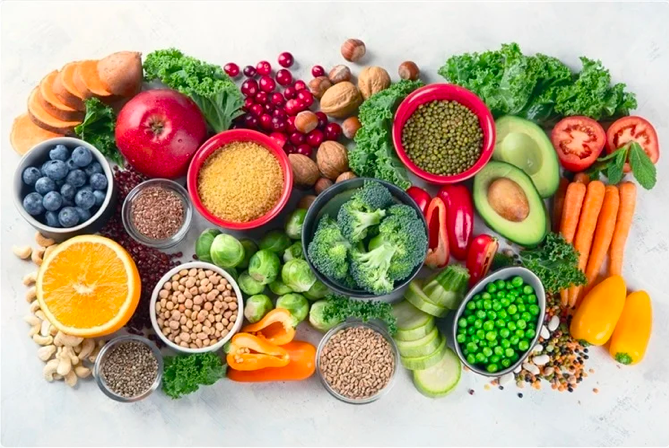
Obesity has been connected to an underlying factor in many other health disorders, such as cardiovascular disease and diabetes, and is directly tied to food. High-calorie meals and sedentary lifestyles are primarily to blame for these figures. Obesity is a big concern among seniors, who tend to become less active as they get older. Getting to and maintaining a healthy weight, on the other hand, is simple with the appropriate nutrition. Weight gain can be avoided by avoiding foods heavy in saturated and trans fats, as well as dishes with a lot of sugar. Instead of processed foods, people should eat whole grains, fruits, and vegetables.

More than 33% of people in the United States are obese, according to the Centers for Disease Control and Prevention.

DIABETES

Type 2 diabetes is on the rise worldwide, according to the WHO, which may contribute to the development of other illnesses such as renal and heart disease. Type 2 diabetes is primarily caused by consuming too much sugar, which can cause a person’s glucose levels to become erratic. People can reduce their risk of diabetes by avoiding processed baked goods, desserts, and sugary beverages like soda and fruit juice, according to Helpguide.org. Choose fruits, healthy grain cereals with low sugar content, and dark, leafy greens instead.

CANCER

Certain forms of cancer can be avoided by following a healthy diet. Keeping your body at a healthy weight will help you avoid malignancies of the breast, kidney, oesophagus, uterus, colon, and rectum. According to the American Cancer Society, 1,658,370 new cases of cancer will be diagnosed in 2015. Including a variety of fruits and vegetables in your diet can help reduce your risk of developing cancer. Focus on foods like soy beans, which, according to Helpguide.org, have been linked to a reduced risk of breast cancer.

CARDIOVASCULAR DISEASE

Cardiovascular disease kills more people than all forms of cancer combined, according to The Heart Foundation. There are many different types of cardiovascular diseases, but the most common is coronary heart disease. Fortunately, according to the World Health Organization, appropriate nutrition can minimise a person’s risk of acquiring this disease. Unbalanced diets or diets heavy in lipids and cholesterol can increase a person’s risk significantly. People can avoid heart disease by avoiding diets heavy in saturated and trans fats, as well as cholesterol, and instead opting for meals high in polyunsaturated fats, such as omega-3 fatty acids. It’s also a good idea to eat a lot of fruits and vegetables, healthy grains, and low-sodium dishes. A person’s blood pressure can be reduced by avoiding salt, which is a key factor in cardiovascular disease.

OSTEOPOROSIS

One of the leading causes of bone and fragility fractures is osteoporosis, a condition in which the bones become porous. This illness causes 8.9 million fractures each year, according to the International Osteoporosis Foundation. Fortunately, eating well can help you maintain good bone health and lower your chance of fracture. Vitamin D and calcium, two minerals that contribute to the formation of healthy bones, should be consumed at the recommended daily levels by older people. The National Institutes of Health recommends that you have at least 500 milligrammes of calcium and 600 international units of vitamin D every day. Regular physical exercise, in addition to a balanced diet, can help with bone health.

Bank of Maharashtra signs MoU with NABARD

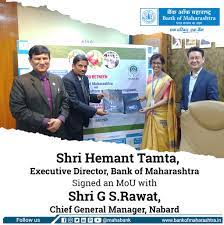
  • Bank of Maharashtra (BoM) has signed Memorandum of Understanding (MoU) with National Bank for Agriculture & Rural Development (NABARD) to boost ongoing developmental initiatives linked to priority sector lending in Maharashtra.
  • The MoU envisages joint initiatives for the assistance of farmers, farmer manufacturer organisations, joint liability groups, self help groups, rural artisans, weavers, agri-preneurs, agri start-ups, micro, small and medium enterprises in the State, BoM said in a statement.
  • Hemant Tamta, Executive Director, BoM, said with signing of this MoU, BoM and NABARD will work together towards complete improvement of rural regions of Maharashtra.
  • The MoU is basically meant to benefit farmers, farmer producer associations, joint liability groups, self-help groups, rural artisans, weavers, agri-preneurs, agri start-ups, and Micro, Small and Medium Enterprises (MSMEs) in the State.
    • BOM is the convenor bank of the State Level Bankers’ Committee (SLBC) of Maharashtra.

Coordination machinery

BoM is the convener of State Level Bankers’ Committee (SLBC) for Maharashtra. Each State/ Union Territory in the country has an Bankers’ Committee. The Committee is an apex inter-institutional forum to create adequate coordination machinery in a State for its development.

SLBC is chaired by the Chairman/ Managing Director/ Executive Director of the Convenor Bank. It comprises representatives of Banks, RBI, NABARD, heads of government departments, among others. They come together and sort out coordination problems at the policy implementation level.

Representatives of various organisations from different sectors of the economy such as industry bodies, retail traders, exporters, and farmers’ unions, are special invitees in the SLBC meetings for discussing their specific problems, if any.

reference-https://affairscloud.com/bom-signed-mou-with-nabard-to-improve-psl-in-maharashtra/

Want to be a CYBORG….?

Cyborg can be defined as an organism that has enhanced ability due to the integrated of some artificial components or technology. The concept of a man-machine mixture was widespread in science fiction before World War II. As early as 1843, Edgar Allan Poe described a man with extensive prostheses in the short story “The Man That Was Used Up”. In 1911, Jean de La Hire introduced the Nyctalope, a science fiction hero who was perhaps the first literary cyborg.

Actual cyborgization attempts :
Yuval Noah Harari, a professor at the Hebrew University of Jerusalem said- “ Humans may upgrade themselves to become cyber within the next 200 years merging man and machine to potentially live”. Although many technology companies have announced the plans to fuse machines and humans. The fact is the transformation has already begun. Here are some fascinating example from mankind who are already famous for being part human, part cyborg.

Jens Neumann
He’s the first person to have a completely artificial vision system, Neumann’s electronic eye is connected directly to visual cortex through brain implants enabling him to see lines and shapes. Latest reports say his vision has since then been restored.

Neil Harbisson
The world’s first ‘eye-borg’ to perceive colour as a sound on a musical scale, has an antenna attach it to his skull that converts light waves into sound waves, making it possible for the otherwise colour-blind cyborg artiste to conduct colour concerts, among other things. Also he co-founded the Cyborg foundation to help humans become cyborgs and different cyborg rights.  

Oscar Pistorius
Often called ‘The blade runner’ Pistorius created history as the first double amputee to compete against able body runner at international level in 2007. Since ‘the fastest man on no legs’ has competed at World Championships in Athletics 2011, which he won; Summer Olympics 2012 for able-bodied and won a gold medal at the Summer Para Olympics 2012.

Kevin Warwick
A cybernetics professor at University of Reading (UK ), he is one of the world’s foremost aspiring cyborgs, famous for experimenting with implants, including installing a microchip in his arm which allows him to operate select electrical gadgets.

Jesse Sullivan & Claudia Mitchell
Sullivan is equipped with bionic arm, which is connected through nerve-muscle grafting. But that’s not the real achievement. Sullivan can control the limb with his mind and experience warmth, coolness and the pressure of his grip. Claudia, the world’s first woman cyborg after getting outfitted with bionic limb.

Animal cyborgs

The US-based company Backyard Brains released what they refer to as the “world’s first commercially available cyborg” called the RoboRoach. The project started as a senior design project for a University of Michigan biomedical engineering student in 2010, and was launched as an available beta product on 25 February 2011.

The RoboRoach was officially released into production via a TED talk at the TED Global Conference; and via the crowdsourcing website Kickstarter in 2013, the kit allows students to use micro stimulation to momentarily control the movements of a walking cockroach (left and right) using a Bluetooth-enabled smartphone as the controller. Several animal welfare organizations including the RSPCA and PETA have expressed concerns about the ethics and welfare of animals in this project. In the late 2010s, scientists created cyborg jellyfish using a microelectronic prosthetic that propels the animal to swim almost three times faster while using just twice the metabolic energy of their unmodified peers. The prosthetics can be removed without harming the jellyfish.

General knowledge

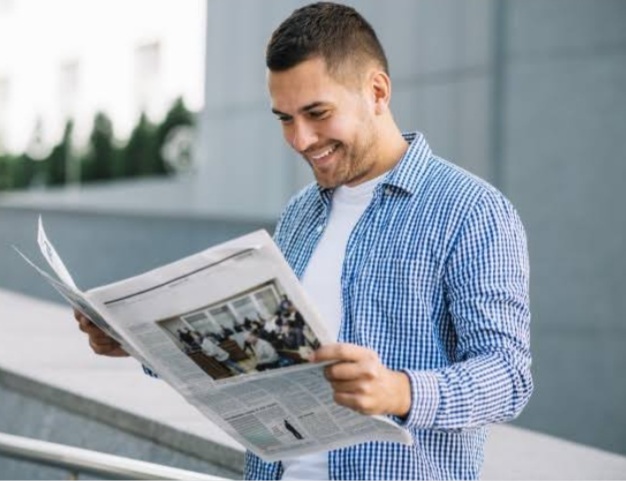
General knowledge is very important in everyone’s life. The person without the knowledge is like the bird without the wings. It is very important to know what is happening across the world. So, it is very important to attain the general knowledge. To grab general knowlede, an individual must follow some of the techniques like reading books, articles, magazines, newspapers etc.

The newspaper consists of all the important things like the business purposes, sports, entertainment, some interesting puzzles, Hindi habits, food recipes, Current affairs etc.

Reading newspaper is an important thing because whenever an individual comes across a motivational thing, he or she will be motivated and focuses on the particular aspect. The individual will get to know the current affairs. The person will get a good grip on the general knowledge. solving puzzles improves the skills of the person. Reading about the healthy habits in the newspaper makes the individual to go for good and healthier meals.

Reading newspaper is very important because gives the chance to know what is happening around us. Early in the morning or evening whatever the time maybe, sparing at least 10 to 15 minutes of time on newspaper is a very good habit that an individual can develop.

The newspaper consists of all the important things like the business purposes, sports, entertainment, some interesting puzzles, Hindi habits, food recipes, Current affairs etc.

In one of the other way the individual develops good habits and focuses more on what they are trying to do.

Individual Differences :

Intelligence :

High scores on tests of general knowledge tend to also score highly on intelligence tests. IQ has been found to robustly predict general knowledge scores even after accounting for difference in age, and five factor model personality tarits. However, many general knowledge tests are designed to create a normal distribution of answers, creating a bell shaped curve.

General knowledge is also moderately associated with verbal ability, though only weakly or not at all with numerical and spatial ability. As with crystallized intelligence, general knowledge has been found to increase with age.

Long term semantic memory :

General knowledge is stored as semantic memory. Most semantic memory is preserved through old age, though there are deficts in retrieval of certain specific words correlated with aging. In addition, stress or various emotional levels can negatively affect semantic nemory retrieval.

Personality :

People high in general knowledge tend to highly open to new experiences and in typical intellectual engagement. The relationship between openness to experieñce and general knowledge remains robust even when IQ is taken into account. People high in openness may be more motivated to engage in intellectual pursuits that increase their knowledge. Relationships between general knowledge and other five factor model traits tend to be weak and inconsistent. Though one study found that extraversion and neutroticism were negatively correlated with general knowledge, others found that they were unrelated.

Predictor of achievement :

A number of studies have assesses whether performance on a general knowledge test can predict achievement in particular areas, namely in academics, proofreading and creativity.

Academic achievement :

General knowledge has been found to predict exam results in a study of Britush schoolchildren. The study examined congnitive ability and personality predictors of exam performance and found that general knowledge was positively correlated with GCSE english, mathematics, and overall exam results. General knowledge test scores presicted exam results, even after controlling for IQ, five factor model personality traits, and learning styles.

Proofreading :

General knowledge has been found to robustly predict proofreading skills in univeristy students. A study found that proofreading had a larger correlation with general knowledge than with general intelligence, verbal reasoning, or openness to experience. In a multiple regression analysis using general knowledge, general intelligence, verbal reasoning, five factor personality traits, amd learning styles as predictors, only general knowledge was a significant predictor.

Creativity

General knowledge has been found to have weak associations with measures of creativity. In a study examining contributions of personality and intelligence to creativity, general knowledge was positively correlated with tests of divergent thinking, but was unrelated to a bigraphical measure of creative achievemnet, self- rated creativity, or a composite measure of creativity. The realtionship between general knowledge and divergent thinking became non- significant when controlling for fluid intelleigence.

Game shows and Quizzes :

Many game shows use general knowledge questions for entertainment purpose. Game shows such as who wants to be a Millionarie? and fiteen to one centre their questions on general knowledge, while other shows focus questions more on specific subjects. Some show ask questions both on specific subjects and on general knowledge .

Is the internet software or hardware ?

To come to some conclusion first we need to know about how the internet originally came into the existence, how it works, how we people are evolved with it, and then we are able to decide/answer the very question – is internet software hardware or what??

ARPANET ‘s initial logical map

The need…

Way Before the internet we know today there was a precursor ARPANET. ARPANET was funded by the US defence department to connect all research institutions and colleges through a big wire. by using this they can transfer or interact with each of these institutions very easily and fast. it was a really big breakthrough in computer or world history! later this tech was shared with many big companies later this network becomes so big that we now call it the internet! but in 1990 ARPANET stopped and the internet was unaffected by it ( tells how big internet became).
With time we have seen many advancements in tech too with lay down the path to normal users and made all this infrastructure so feasible that even a normal household can have a connection with the network, thanks to the introduction of WIFI and win98 in the 90s.

we and our peripherals all connected with internet today

Internet and us: today

When we entered the 21st-century internet started becoming a big deal started using in many sectors and helped professionals even students! with tech it impacted on our lifestyle too, from space exploration department to personal AI in our phones …all this developed with help of the internet! millions of developers/contributors around the world contributed to making it in reach of every human! In the 2000s nearly 6.5 % of earth’s population was using the internet ( which is HUGE ngl) but this number became 50.8%! in 2018 and still growing at a faster rate than before too! when we talk about the internet and its working we think of few things like phone or pc which connected with WIFI/broadband network then that WIFI connected with some wire (ex.- fibre wire) coming from ISP(in case of broadband, it connected with some tower initially then ISP) …yeah that’s it, until which we able to visualize .. let us see this and understand in more detail.

world shares one big network

It’s all connected …

Internet is very much the same as it was in ARPANET days. different system(ex- computer) connected with one common server which acts as a message counter aka help connect each other . back then all this connection used to happen only through wires but now we have wireless modems/routers which help us connect with the same network at on close range ( so no need to connect each of them with different wire !) . so communicate with others we need to identify each other by something unique name to all here comes IP addresses and make it happen some rules introduced called TCP. When ARPANET decommissioned and the internet growing rapidly to different nations connected through the big wire ( all way from oceans ) WorldWideWeb was introduced at the same time. through the browser, we can connect with all these IP addresses and request for things ( like this blog itself!) but as you noticed IP address look very different and numeric but what we use is are in more readable. this is because of DNS protocol all IP addresses have some word associated with them like http://www.facebook.com is associated with 69.63. 181.15 IP  address


From the user side( called client ) when we enter some URL / website our HTTP request for that website goes to ISP(Internet Service Provider) then DNS servers identify the IP address and where that website is stored, yes you heard it right! websites are files just like your word or excel ones and similarly, it stored somewhere someplace ( called data centers ) . so this HTTP request rhea there and all this info comes to you all the way from there in packets and tada! Each and every website works like these even video ones where the same packets come… in the case of live interaction it comes continuously. These data centres/web servers are a bit different they are not connected with the internet as your client one is through isp but they are connected with the internet network directly!

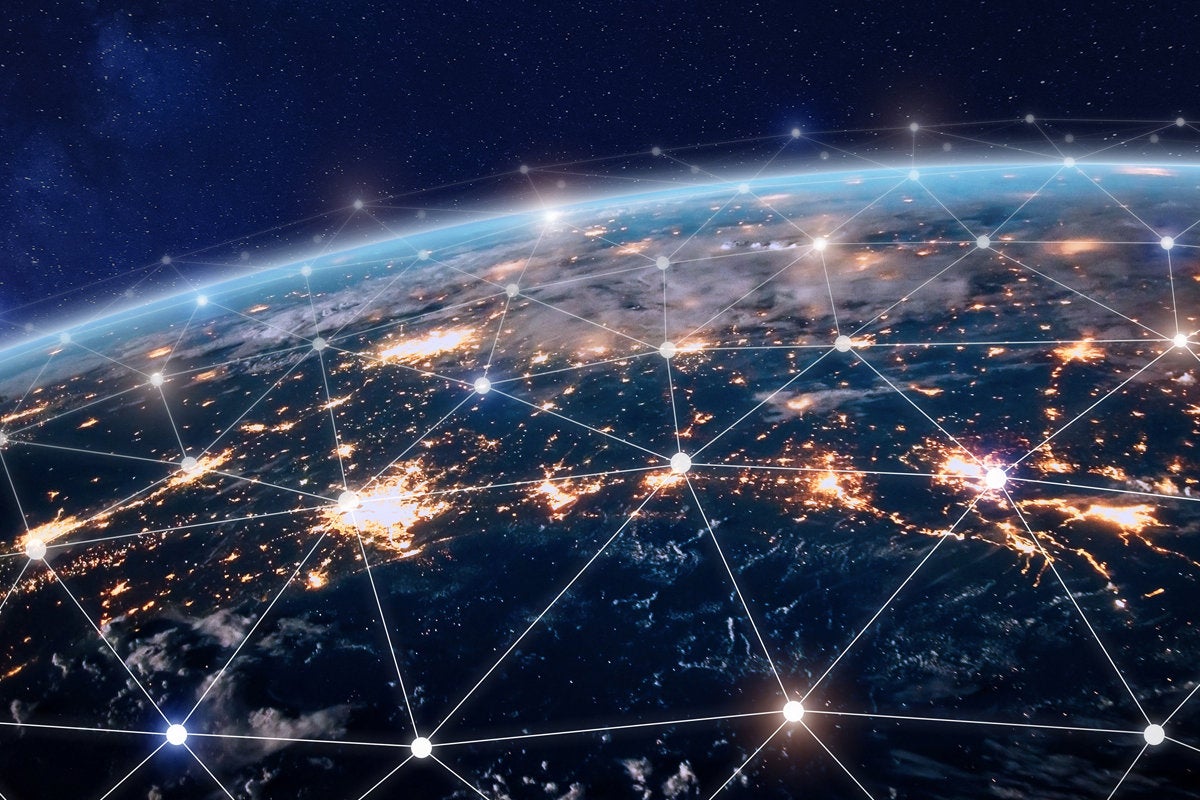
Photo by Pixabay on Pexels.com

SO… is it ?..

Now the big answer time! The answer is as you already figured out reading all this.. Internet is a mix of both!

The Internet consists of many interconnected networks. Those networks are composed of hardware and software. The systems connected to the network must have hardware network interfaces, which are either wired or wireless. Software is required to regulate those interfaces, to compose, send, receive, and decode packets of knowledge using several standard protocols. Routers, switches, firewalls, and other devices are required to attach systems and networks together. a number of these devices are purely hardware, but many perform some level of processing, which needs that they contain an embedded computer running software. The systems connected to the network also typically have some type of package running on them, and a software system is a software. Web servers, management systems, web browsers, web-enabled applications, etc. are all required likewise, and people are all samples of software.

So, the net consists of both hardware and software

Pls, comment down below tell me if you want me to cover something techy ! or have some suggestions! until then 🙂 sayonara!

McLaren F1: The Ultimate Road Car Ever

McLaren F1 was the fastest production car for 12 straight years from 1993 to 2005. At the time of its unveiling, McLaren F1 was an engineering marvel with numerous pioneering technological innovations. It was designed by the legendary designer and engineer Gordon Murray.

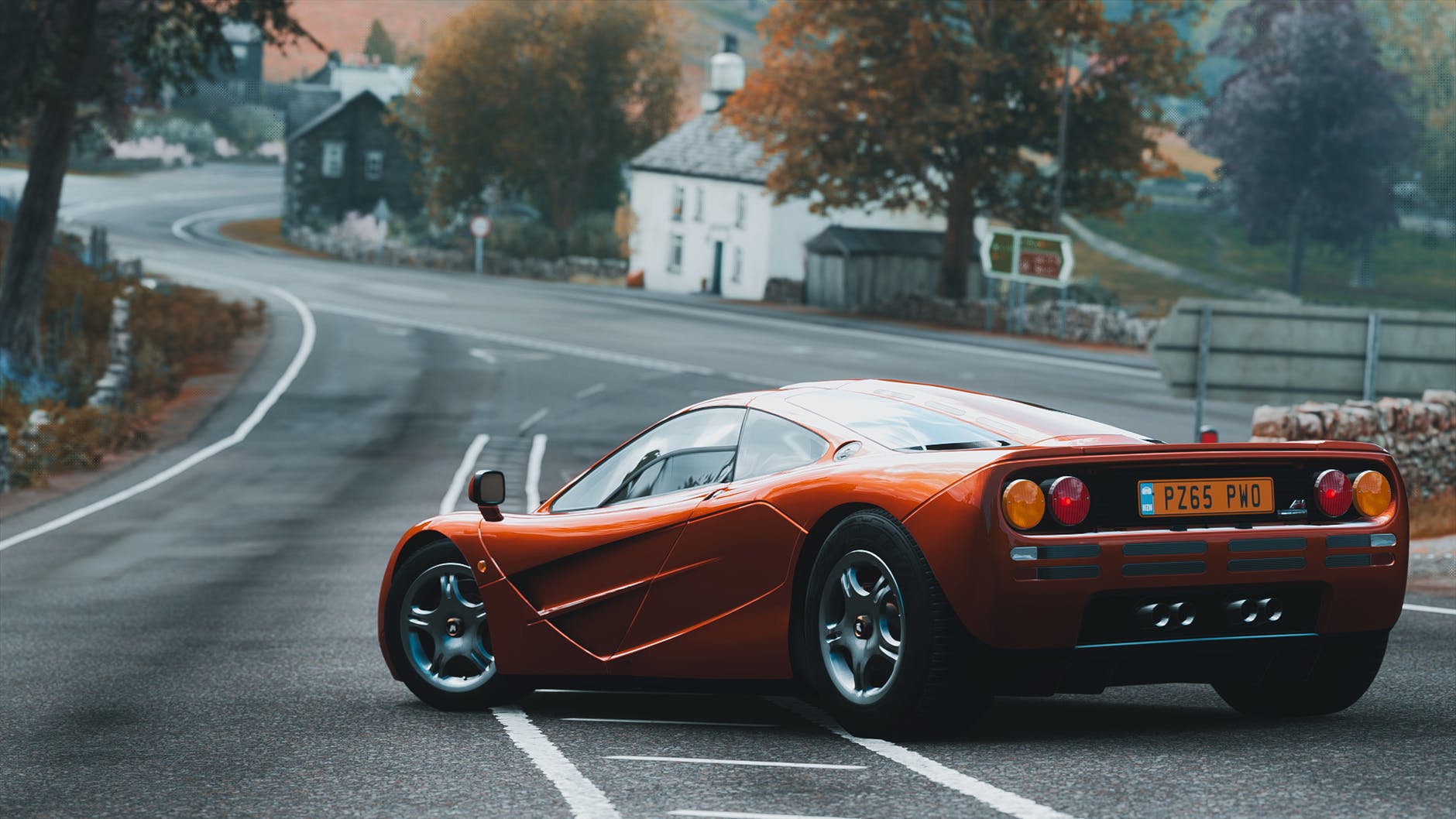
McLaren F1 Rear

It was the first road production car to be fully built carbon fiber. The entire Carbon fiber monocoque weighs just fewer than 220 pounds and 5000 pieces of carbon fiber pieces were used to mold the final frame.  This gives it double the strength of steel but it makes it five times lighter than traditional frames.

The car has a central seating position which is unique to this car. While developing McLaren F1, Gordon Murray drove and tested all the contemporary supercars of that time and he realized that their three-pedal boxes were somewhat offset. So He wanted to eliminate that. To solve this problem he placed the seat in the central driving position similar to a traditional F1 racing car. The central position also helps in increasing the visibility of the driver.

It has a naturally aspirated 6.1-liter V12 engine, but initially, McLaren has asked Honda to supply an engine for them as they were also the supplier for their F1 racing team at that time. But Honda didn’t follow the specification stated by Gordon Murray. Later they asked BMW to supply them with the engine of their car. BMW had to make a new engine as per the specification and the final results were incredible. The Engine is called BMW Motorsport S70/2
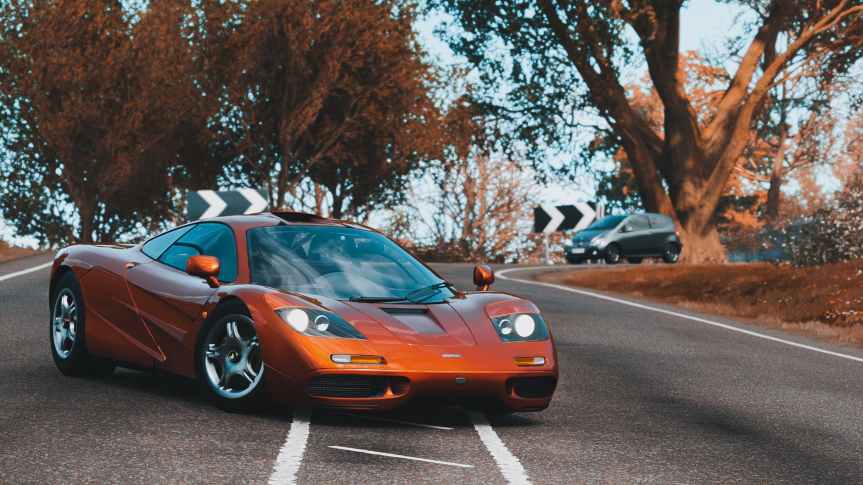
 The engine possesses extremely efficient heads. It also has continuous variable inlet valve timing and an emission-control system and four catalytic converters with ‘Lambda’ exhaust gas analysis control. Even with a 6064 CC displacement and a power output excess of 550bhp, the engine is quite efficient. The engine created so much heat that it had to be covered with a good heat deflecting material and to solve that problem the engine bay was covered with 16 grams of gold foil.

On 31 March 1998, Andy Wallace drove the McLaren F1 XP5 prototype at Volkswagen’s test track in Ehra-Lessen, Germany, and broke the record created by McLaren F1 itself in 1993. The car reached the top speed of 391 kilometers per hour or 243 Miles per hour. As of today, the F1 remains the fastest naturally aspirated production car in the world.

https://www.autozine.org/Archive/McLaren/old/F1.html

The car had a limited production of 106. Of those only 64 of them were road-going cars and 28 of them were racecars and the remaining of them were prototypes and special editions like the LM and longtail version. Rowan Atkinson (Mr. Bean) was for one period the owner of McLaren F1 as well.

Back in 1993, a brand-new McLaren F1 cost £540,000. In today’s money it would be approximately 1.1 million pounds but due to the rarity and the special status and engineering feat of the car. McLaren F1 has steadily climbed in value since then. As of today a McLaren F1 costs around £16 million and special versions can fetch even more. This car has also stood the test of time in its design, engineering, and craftsmanship.

References:

Scientists who became their own Guinea Pigs

The vomit sauna

A special place must be reserved in the annals of self-experimentation for medical student Stubbins Ffirth, who conducted a series of increasingly revolting experiments in the early 19th century to prove that yellow fever was not contagious. Ffirth started off by pouring “fresh black vomit” from a patient with yellow fever into cuts in his arm. He didn’t get yellow fever. Emboldened by this success, Ffirth graduated to dribbling the vomit into his eyes and smearing assorted other bodily fluids from yellow-fever sufferers over his person – including blood, spit, sweat and urine. He even sat in a “vomit sauna” full of heated regurgitation vapors, which caused him “great pain in [his] head”, but left him in rude health. Finally, he took to actually ingesting the vomit – first in pill form, then straight from a patient’s mouth. Since he still didn’t get ill, he considered the case proven. Presumably others did too, since he was in due course awarded his medical doctorate.

But they were wrong: yellow fever is contagious, albeit only if directly transmitted into the bloodstream. That was proven by another self-experimenter, US army surgeon Jesse Lazear, who allowed himself to be bitten by yellow fever-infected mosquitoes in the early 1900s. Ironically, the mosquito whose bite proved fatal to Lazear was reportedly not one of his experimental specimens, but a wild specimen.

August Bier’s leaking spine

In 1898, German surgeon August Bier invented spinal anesthesia, which involved a small dose of cocaine being injected into the cerebrospinal fluid surrounding the spinal cord. That was a great improvement on existing methods of general anesthesia, but how effective was it? To find out, Bier decided to be anaesthetized himself. But things didn’t go as planned for Bier – or for his hapless assistant, Augustus Hildebrandt. He was supposed to administer the cocaine but, thanks to a mix-up with the equipment, Bier was left with a hole in his neck from which cerebrospinal fluid began to flow. Rather than abandon the effort, however, the two men switched places. Once Hildebrandt had been anaesthetized, Bier stabbed, hammered and burned his assistant, pulled out his pubic hairs and – presumably eager to leave no stone unturned in testing the new method’s efficiency – squashed his testicles. Once the cocaine had worn off, the pair went out for a boozy dinner, despite their injuries. Both suffered terribly in subsequent days but, while Bier took it easy as he recovered, Hildebrandt had to stand in for his boss at work. Perhaps unsurprisingly, he subsequently fell out with Bier, becoming one of his fiercest critics and denying his discovery of spinal anesthesia – which rapidly caught on.

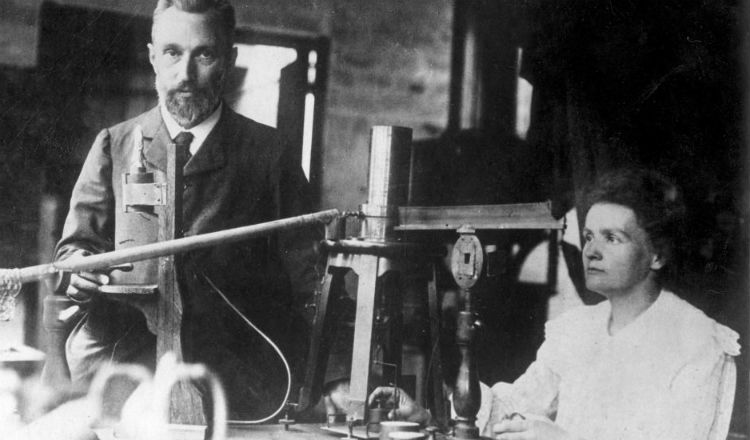
Pierre Curie’s arm

In June 1903, physicist Pierre Curie rolled up his sleeve and revealed a burn-like wound on his arm to a packed audience at the UK’s Royal Institution. The wound had been caused by a sample of radium salts, which he had taped to the skin of his arm for just 10 hours, more than 50 days earlier. During the course of his demonstration, Curie dropped some radium on the desk. The resulting contamination was still detectable, and in need of cleaning up, half a century later.

Curie and his wife, Marie, hoped that radium’s burning effect might prove useful in the treatment of cancer. But ironically, the radiation that the sample gave off – which was also emitted by various other chemicals to which the Curies routinely exposed themselves in the course of their work – were actually having a catastrophic effect on their health.

Both Pierre and Marie were constantly ill, tired and in pain, but their experiments did pave the way for the use of radium in medicine. Later in 1903, they shared the Nobel Prize in Physics for their research on radiation.

JBS Haldane’s smoking ear

One self-experimenter whose work had long-term personal consequences was the polymath JBS Haldane. Haldane wanted to build on work done by his father, John Scott Haldane, on the physiology of working Navy divers in the early 20th century. But whereas Haldane senior restricted himself to observation and measurement, his son took a more direct approach, repeatedly putting himself in a decompression chamber to investigate the physiological effects of various levels of gases. Haldane was motivated by concern for the welfare of sailors in disabled submarines, and his work led to a greatly improved understanding of nitrogen narcosis, as well as the safe use of various gases in breathing equipment. But he paid a high price, regularly experiencing seizures as a result of oxygen poisoning – one resulting in several crushed vertebrae. He also suffered from burst eardrums, but he was sanguine about the damage. “The drum generally heals up,” he said, adding, “if a hole remains in it, although one is somewhat deaf, one can blow tobacco smoke out of the ear in question, which is a social accomplishment.”

Nathaniel Kleitman’s cave

In 1938, the eminent sleep researcher Nathanial Kleitman, accompanied by his research assistant Bruce Richardson, moved into Mammoth Cave, Kentucky. Kleitman wanted to find out if humans could adapt to a longer, 28-hour day. The cave, 120 feet underground, offered a perfect environment to test the idea out: there was no natural light and the temperature remained constant, so there were no clues as to when it was day and night. It was not a comfortable environment, however: as well as being isolated and claustrophobic, the researchers found themselves sharing their beds with rats. A month later, they emerged, having discovered that while Kleitman had struggled to change his sleeping patterns, Richardson had adapted to the 28-hour cycle. Their studies helped to advance knowledge of human circadian rhythms, and spawned practical recommendations for shift-workers. Kleitman didn’t confine himself to caves: he later spent two weeks on board a submarine and a spell in the Arctic, with its long periods of darkness and daylight, in both cases studying sleep patterns.

Albert Hofmann’s bicycle ride

Swiss chemist Albert Hofmann, who discovered the drug lysergic acid diethylamide (LSD) while looking for medically useful derivatives of the ergot fungus, is also credited as the first to experience an acid trip. Hofmann took his first trip, in 1943, by accident, apparently as a result of accidentally spilling the chemical on his fingertips in his Basel laboratory. He went home and “sank into a not-unpleasant condition”, a dreamy state in which he saw psychedelic images. His second experience was less agreeable: he deliberately took a dose that he believed to be light, but which led to intense effects while riding home on his bicycle – an episode that has become notorious in recreational pharmaceutical circles. While the chemical may have uses in psychiatry, its impact to date has arguably been more cultural than medical. Hofmann himself continued to take LSD, and advocate its careful use, for the rest of his life. Hofmann wasn’t alone in testing out psychedelic drugs on himself: US chemist Alexander Shulgin ingested many chemicals, including MDMA (ecstasy), leading to its use in psychotherapy, and Harvard psychologist Timothy Leary experimented with LSD on himself, to test, among other things, whether it could be used to treat alcoholism. Leary eventually lost his job after he began touting psychedelics as a hotline to spiritual enlightenment.

Barry Marshall’s bad breath

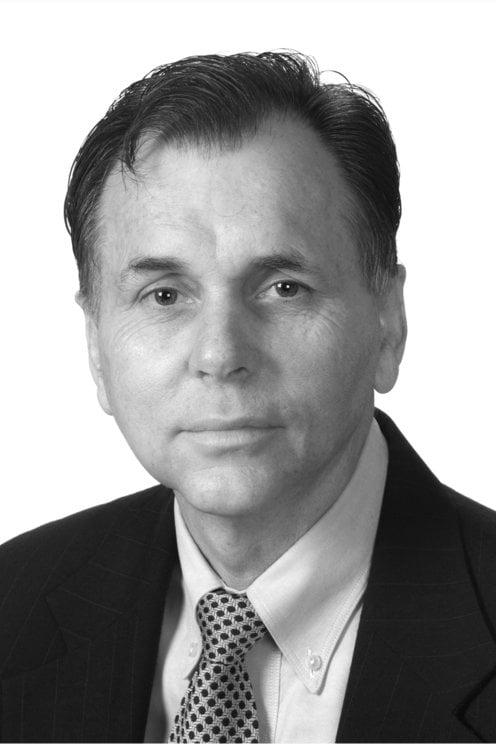
Junior doctor Barry Marshall was sure the medical establishment was wrong about the cause of stomach ulcers. The received wisdom was that they were caused primarily by lifestyle factors, but Marshall and pathologist Robin Warren were sure that the bacterium Helicobacter pylori was to blame. To prove their hypothesis, they needed to examine how the bacteria affected a healthy human volunteer – but as Marshall explained to New Scientist in a 2006 interview, “I was the only person informed enough to consent”. Marshall didn’t tell the hospital’s ethics committee what he had in mind, for fear of being turned down, or even his own wife, until after he had swallowed the bacteria. He was fine for three days, but then began vomiting; his wife complained that he had “putrid breath”. A biopsy taken 10 days later confirmed the bacteria had infected his stomach and that he had gastritis, which can eventually lead to ulcers. It still took another eight years for Marshall and Warren’s theory to be widely accepted, but their work eventually earned them the 2005 Nobel Prize for Physiology or Medicine.

David Pritchard’s itchy skin

Various researchers have infected themselves with parasites. One such is biologist David Pritchard, who in 2004 allowed fifty hookworm larvae to burrow through his skin. Hookworms seem able to modify the body’s immune response in ways that may be useful in treating immune system disorders, such as asthma and Crohn’s disease. Such disorders are comparatively rare in places where hookworm infestation is common. Other members of Pritchard’s lab also infected themselves with the hookworms, which can survive for up to a decade but are easy to kill off with drugs. “They itch quite a bit when they go through the skin,” said Pritchard, but become really troublesome only when they reached his stomach. Fifty turned out to be too many: ten was a safer number. Trials are continuing to evaluate the treatment, including a test to see if the hookworms can help multiple sclerosis sufferers.

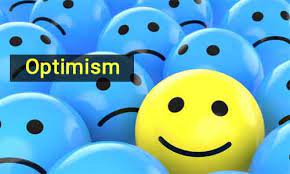
Want to be a optimist?! That’s Easy!!

Are you a person lacking confidence and hope in everything? Trying hard to be an optimistic person? It’s very easy. Let’s see how to be optimistic in everything through this article.

WHO IS A PESSIMIST?

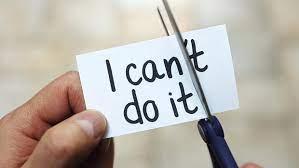
A pessimist is a person who thinks the worst side of anything or they have a thought that they can’t do it. These pessimistic thoughts came from fear to do something. They often focus on the negative side or an unfavorable situation rather than thinking about what is going right. A pessimistic person is more likely to notice problems or it may cause anxiety to them. These types of people may have depression because of this. If we want to know clearly, it is a personality trait. These pessimistic persons wouldn’t believe anyone because they don’t know whether those persons have good intentions. To put it simply, they don’t believe anyone firmly.

According to research, pessimism is associated with the right hemisphere of the brain and the lower self-esteem was also associated with the right side of the brain. Though pessimism is a perspective that affects the general worldview, it is not an unchangeable trait that can’t be changed throughout the lifetime. A pessimistic person can also be optimistic like others.
” A pessimist is an optimist in full possession of the facts “.

– Arthur Schopenhauer

COME ON; LET US BE OPTIMISTIC!

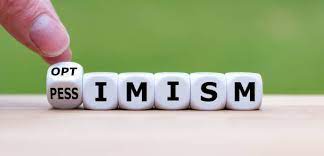
Till now, we saw about pessimism; Being optimistic is a wonderful thought that make us feel self-confident and self- aware. As we saw, pessimism is connected to the right side of the brain and optimism is connected to the left side of the brain. But we should know that both the right and left brains are necessary to maintain a healthy state. Yes, both optimism and pessimism are related to each other and necessary to maintain a healthy life. But sometimes, the pessimistic thoughts may come upon the optimistic thoughts. The only thing is we should control our pessimistic thoughts.
Why You Should Choose A Positive Response For Every Situation -  WhateverItTakesMotivation

Just follow few tips and automatically be an optimistic person. Yeah, that’s for sure.

  • First, learn to be grateful. Being grateful makes you both optimistic and have a great personality. Even if it is a small thing, be grateful to the one who helped you. For example, if one helped you during your difficult times, don’t forget their help when you reached some peaks in your career or life. So, grateful and optimistic feel makes you feel better than anything.
  • Always believe that you can do it even when no one can! In this case, being optimistic helps you to achieve it. Just believe and move towards your goal. Let me say myself as an example, I love photography and I participate in many inter-collegiate competitions. Till now, I didn’t win any prizes, but I continue to pursue my dream. And I hope one day I will be able to win the prize. Just trim yourself to be a better and confident individual.
  • Don’t think that it is impossible. When the word impossible reaches your mind or heart you can’t do anything, don’t allow it. Anything is possible if you are very optimistic and confident. Think about it, if anyone can do your work, why are you here? Just ask this yourself and find yourself in yourself.
  • If there is some problem, just look into a solution rather than blowing it into a big volcano. Be calm and shuttle, think optimistically, and seek solutions. It will be good for you and your loved ones.
  •  Then, focus on the things which are under your control. Don’t look into things that are out of your control. Because those things can disturb you and make you a pessimist sometimes.
  • Lastly, love fearlessly and no one can stop you in this. Yes, pursue your love optimistically. Your love can either be your career or dream or anything just pursue it optimistically. And learn to see beauty in small things. For example, none of us would say,’ I don’t like a child ‘ because we forget ourselves when we are with them. This is an optimistic feel. If there is a smile on that child’s face without any doubt we will be happy, Right? That’s it. This tells you how optimistic you are!!

Both optimism and pessimism are needed in our life but they should be kept at an equal level to maintain a healthy and a happy life.

The pessimist complains about the wind..." William A. Ward [800x598]:  QuotesPorn

Some reference links;

https://www.goodtherapy.org/blog/psychpedia/pessimism

https://www.123helpme.com/essay/The-Importance-Of-Optimism-774469