Cyclones

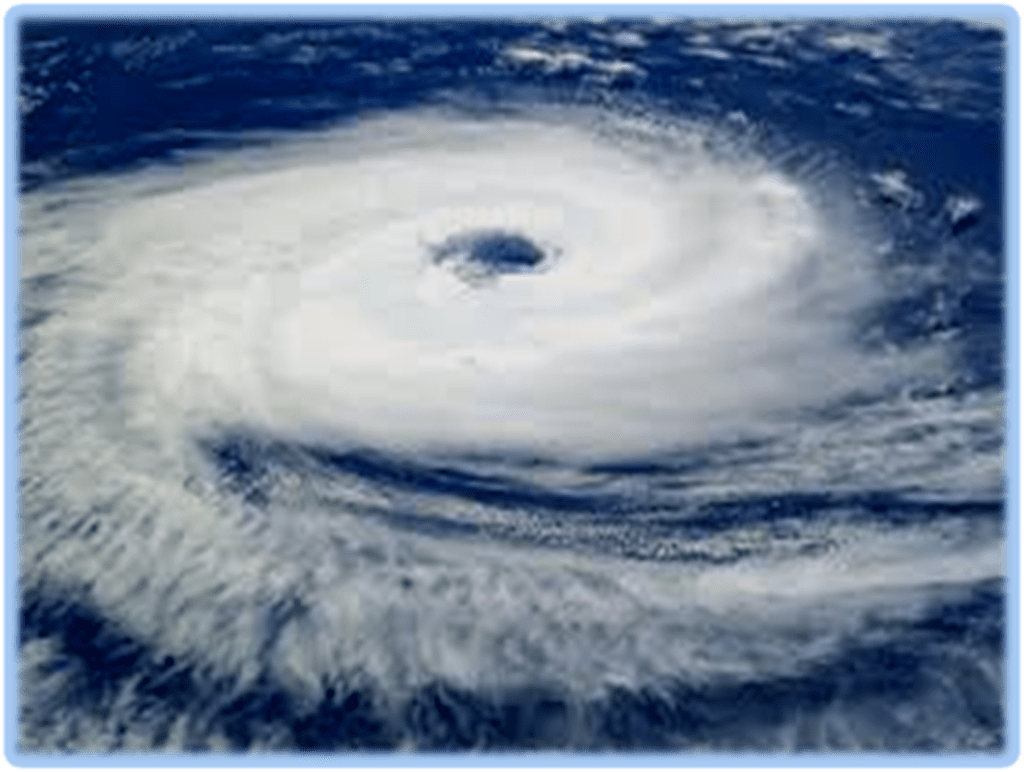
A cyclone is a violent storm ,often of vast extent ,characterized by high winds rotating about a calm center of low atmospheric  pressure. This center moves onward often 50 km an hour.

other definition is:

cyclone is an area of closed, circular fluid motion rotating in the same direction as the Earth.
What to do and what not to do

Turn off all electricity, gas and water and unplug all appliances

Keep your Emergency Kit close at hand

Bring your family into the strongest part of the house

Keep listening to the radio for cyclone updates and remain indoors until advised

If the building begins to break up, immediately seek shelter under a strong table or bench or under 
a heavy mattress

In case of evacuation:

If an official evacuation order is issued then you and your family must leave your home immediately and seek shelter with friends or family who are further inland or on higher ground.

Turn off all electricity, gas and water, unplug all appliances and lock your doors

Ensure all family members are wearing strong shoes and suitable clothing

Take your Emergency Kit and your Evacuation Kit and commence your Evacuation Plan

If you are visiting or holidaying in Queensland and do not have family or friends to shelter with, contact your accommodation manager immediately to identify options for evacuation.

Mitigation strategies –structural mitigation

The houses near costal areas should be constructed:

Water resistant

Behind a mountain or hill rock protects it from strong winds

Shelterbelt plantations reduce the impact of strong winds, they also check soil erosion and inward and drift ;they protect cultivation fields and houses.

Roads should be elevated.

They should be constructed so strongly that it should even resist the uplift or flying off.
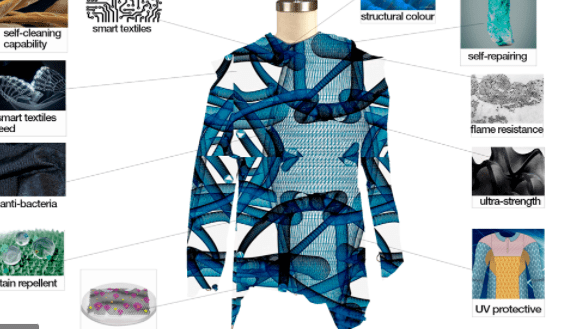
Nanotechnology in textiles

A nano meter is a unit of  length in the metric system, equal to billionth of a meter (10).

Technology  is the making ,usage and knowledge of making tools, machines and techniques ,in order to solve a problem or perform a specific function.

Nanotechnology  is the study of manipulating matter on an  atomic scale.

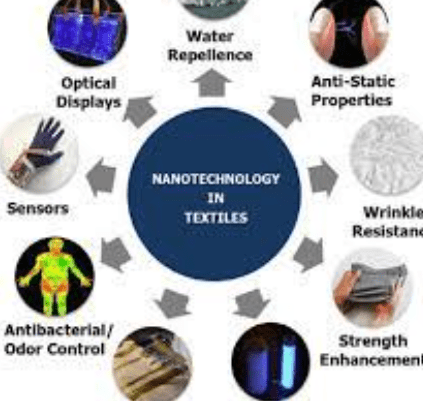
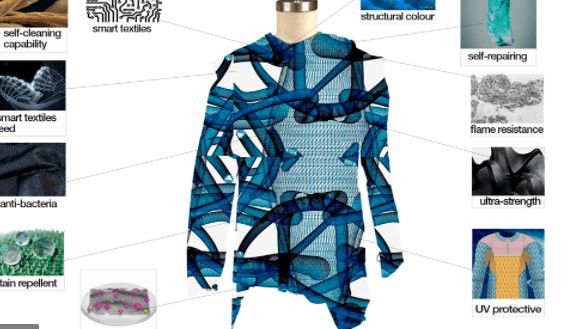
Nanomaterials in textiles have proved to be immensely valuable for the manufacturing of protective garments for workers involved in emergency services such as military personnel, firefighters and medical workers.

There are different methods for the production of nanoengineered textiles. For example, sometimes synthesized nanoparticles are incorporated into the fibers or textiles.

Nanoparticles are also applied as a coating on the surface of the finished product.  There are also different coating techniques such as sol-gel, plasma polymerization and layer-by-layer that are used in the application of nanoparticles onto textile fibers.

These techniques can enhance durability and are also capable of making the fabric resistant to extreme weather conditions. The composition of nanocoating materials, such as surfactants and carrier medium, can alter the surface texture of fabrics.  

Nanotechnology materials advantages  are:

Lighter

Faster

Stronger

Smarter

Safer

Cleaner

Even more precise.

Nanotechnology materials disadvantages are:

Very expensive

Hard to create

Single molecule of powder or dust can damage the whole thing.

APPLICATIONS

Antiwrinkle cotton fabric

Odor-free fabric

Water-resistant fabric

Ultraviolet-protective fabric

References

https://www.azonano.com/article.aspx?ArticleID=5501

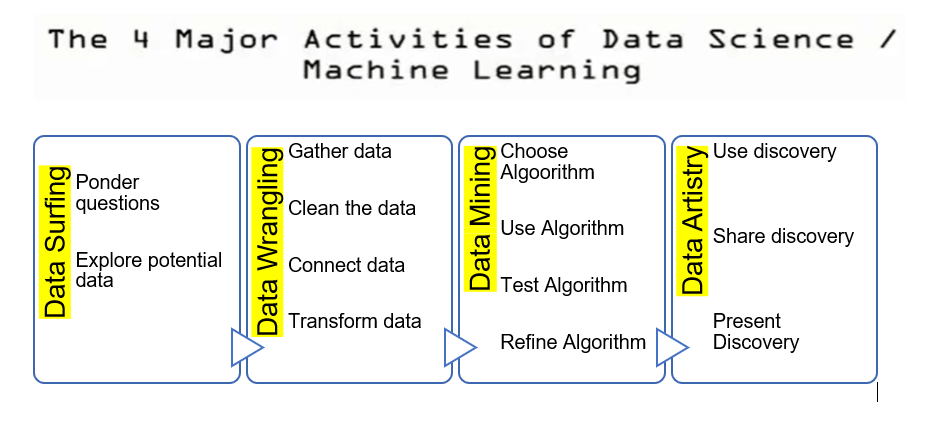
Major tasks of Data Science

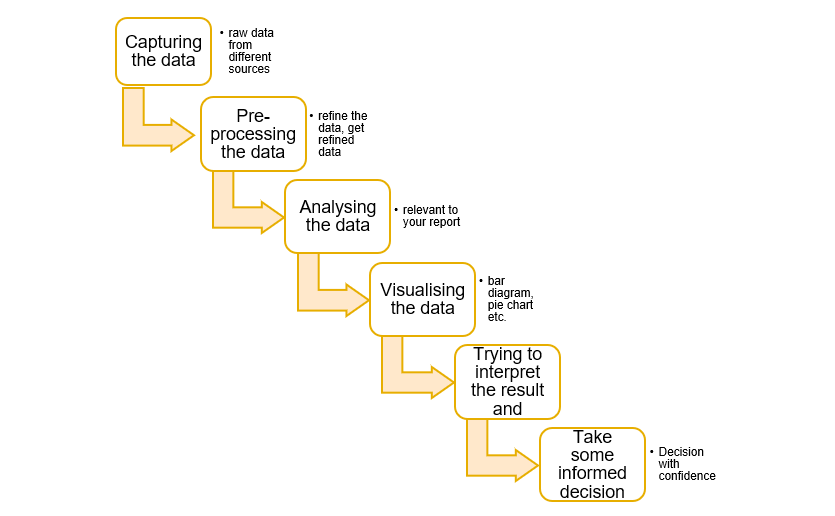
Data science involves a plethora of disciplines and expertise areas to produce a holistic, thorough and refined look into raw data. Data scientists must be skilled in everything from data engineering, math, statistics, advanced computing and visualizations to be able to effectively sift through muddled masses of information and communicate only the most vital bits that will help drive innovation and efficiency.

Data scientists also rely heavily on artificial intelligence, especially its subfields of machine learning and deep learning, to create models and make predictions using algorithms and other techniques. 

Reference

https://builtin.com/data-science

How machines learn?

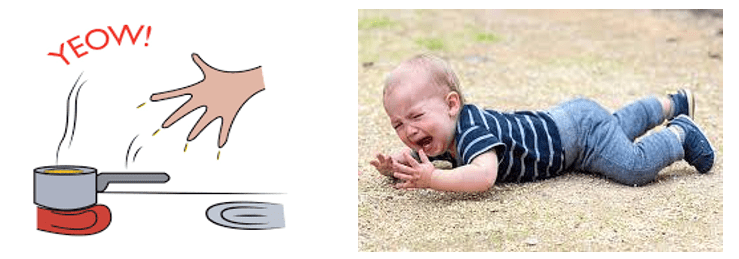
Machine learns through experience

Like humans,

machines also learn from experience. They analyse the existing data, figure out the pattern, and find what to do with the new data.

Learning from Medical records

based on combination of attributes i.e., symptoms, it determines an outcome variable i.e., whether the patient is covid positive or not by learning from the existing data.

Learning from Energy usage patterns

smart homes optimize the energy usage by learning from the energy usage patterns of its residents (by capturing the motion of residents), hence saving the electricity bills.

Learning from User interests

learns from user interests and gives suggestions and recommendations accordingly

Learning to target customers

learns from the travel history of customer and gives discounts, coupons, offers to the customers travelling more often during a certain period, to attract them to travel more (to retain the customer to themselves)

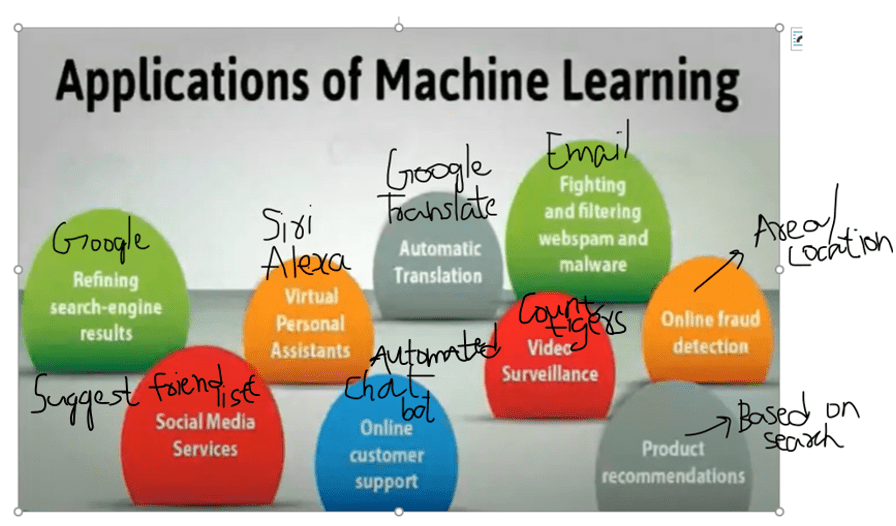
Applications of machine learning

Machine learning in finance

  • Financial Monitoring

Simultaneously multiple micro transactions to multiple accounts.

  • Risk Management

Giving loans based on credit score of the customer. (Credit worthiness)

  • Money laundering prevention

Machine learning in medicine

  • Personalized medical reports and treatments
  • Smart watches
  • Predicting whether a cell is cancerous cell or not
  • Based on the attributes (lifestyle, food habits, exercise, sleep etc.), determining whether a person is prone to certain disease (say cardiac arrest).

Equipment maintenance records

Combustion chamber, rockets

Types of Unsupervised Learning Algorithm:

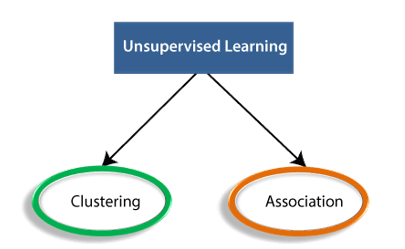
The unsupervised learning algorithm can be further categorized into two types of problems:

Clustering

Clustering is a method of grouping the objects into clusters such that objects with most similarities remains into a group and has less or no similarities with the objects of another group.

Cluster analysis finds the commonalities between the data objects and categorizes them as per the presence and absence of those commonalities.

Association

An association rule is an unsupervised learning method which is used for finding the relationships between variables in the large database. It determines the set of items that occurs together in the dataset.

Association rule makes marketing strategy more effective.

Such as people who buy X item (suppose a bread) also tend to purchase Y (Butter/Jam) item. A typical example of Association rule is Market Basket Analysis.

Unsupervised Learning algorithms:

K-means clustering

KNN (k-nearest neighbors)

Hierarchal clustering

Anomaly detection

Neural Networks

Principle Component Analysis

Independent Component Analysis

Apriori algorithm

Singular value decomposition

Advantages of Unsupervised Learning

Fast process as task of data labelling is not involved.

Provides unique and disruptive insights.

Disadvantages of Unsupervised Learning

The result of the unsupervised learning algorithm might be less accurate as input data is not labelled, and algorithms do not know the exact output in advance.

Difficult to measure accuracy

Dealing with high-dimensional data- when the dimension of data and the number of variables is more, the process becomes difficult.

Unsupervised Learning

As the name suggests, unsupervised learning is a machine learning technique in which models are not supervised using training dataset.

Instead, models itself find the hidden patterns and insights from the given data.

It is much similar as a human learns to think by their own experiences, which makes it closer to the real AI.

In real-world, we do not always have input data with the corresponding output (training or labelled data referred to as supervisor). So, to solve such cases, we need unsupervised learning.

Steps:

Step 1: The very first step is to load the unlabeled data into the system.

Step 2: Once the data is loaded into the system, the algorithm analyses the data.

Step 3: As the analysis gets completed, the algorithm will look for patterns depending upon the behavior or attributes of the dataset.

Step 4: Once pattern identification and grouping are done, it gives the output.

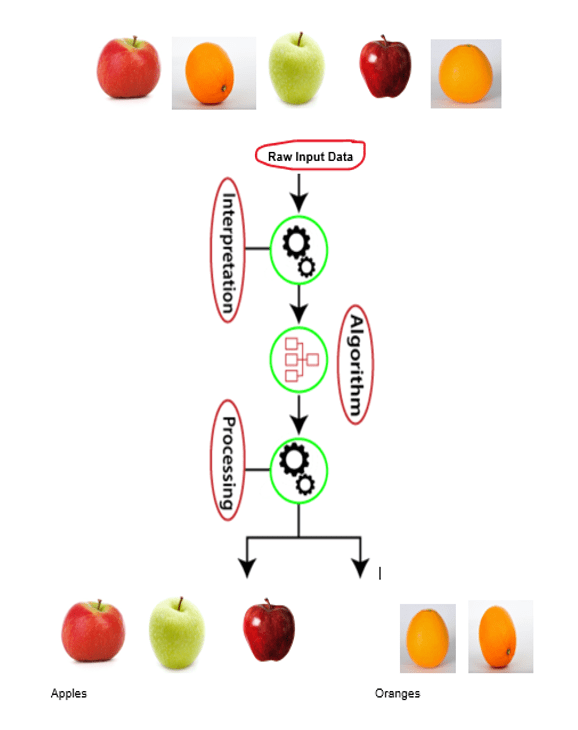
Example: Input dataset containing images of different types of fruits.

Now, let’s take these fruits and feed them to an unsupervised learning model.

The model determines the features associated with the data and understands that all the apples are similar in nature and thus groups them together.

Similarly, it understands that all the oranges have the same features and thus group them together and the same is the case with all the mangoes (in case we have mangoes in this example)

Here, the unsupervised learning algorithm will perform this task by clustering the image dataset into the groups according to similarities between images.

Example 2:

For instance, given a data base of movie reviews, you could identify clusters of users who rate action movies similarly, and use those correlations to predict how one member might like a particular movie he had not yet seen, but others have rated.

Types of Supervised learning

  1. Classification

Supervised learning can be further divided into two types of problems:

Classification algorithms are used when the output variable is categorical, which means there are two classes such as Yes-No, Male-Female, True-false, etc.

Multiple classes may also be present.

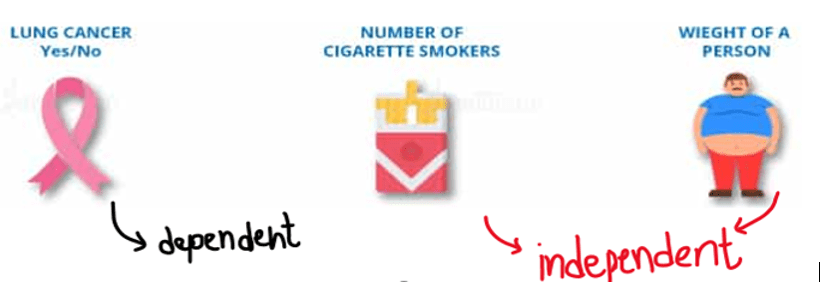
The output variable or the dependent variable should be categorical in nature.

Example:  Diagnosis

“Prone to lung cancer” (output variable) is the dependent variable and “Weight” and “Number of cigarettes smoked” are the independent variables.

  1. Regression

Regression algorithms are used if there is a relationship between the input variable and the output variable. It is used for the prediction of continuous variables, such as Weather forecasting, Market Trends, etc.

  • Analyse the existing data and
  • Predict the future data parts.

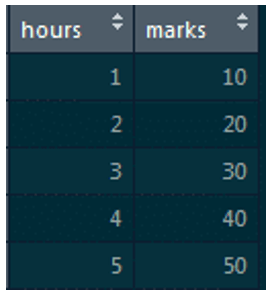
Let’s say you have two variables, “Number of hours studied” & “Number of marks scored”. Here we want to understand how the number of marks scored by a student change with the number of hours studied by the student, i.e.

“Marks scored” is the dependent variable, and “Hours studied” is the independent variable.

You need to note that “marks scored” is the dependent variable and it is a continuous numerical.

Question: “How many hours should a student learn to get 60 points?” 

Ans: The regression model would understand that there is an increment of 10 marks for    every extra hour studied and to score 60 marks the student must study for 6 hours.

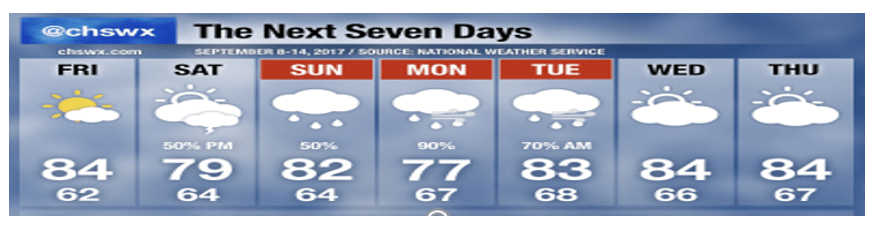
Example: Weather app in our mobile

                This app predicts the weather of the entire next week. How does it do?

By analysing the previous data (say past 10 years weather report data) and predicts the pattern for the next week.

Here, since we deal with large amount of data, it may be difficult for humans to work on it. Hence, the machines are fed with large amount of data and made to predict the future data parts.

How supervised learning works?

In supervised learning, models are trained using labelled dataset, where the model learns about each type of data.

Once the training process is completed, the model is tested based on test data (a subset of the training set), and then it predicts the output.

Example:

Task

Suppose we have a dataset of different types of shapes which includes square, rectangle, triangle, and Polygon. Now the first step is that we need to train the model for each shape.

Training Experience

If the given shape has four sides, and all the sides are equal, then it will be labelled as a Square.

If the given shape has three equal sides, then it will be labelled as a triangle.

If the given shape has six equal sides, then it will be labelled as hexagon.

Now, after training, we test our model using the test set, and the task of the model is to identify the shape.

Performance

The machine is already trained on all types of shapes, and when it finds a new shape, how well it classifies the shape based on number of sides and predicts the output.

Steps involved

  • First, determine the type of training dataset
  • Collect/Gather the labelled training data.
  • Split the training dataset into training dataset, test dataset, and validation dataset.
  • Determine the input features of the training dataset, which should have enough knowledge so that the model can accurately predict the output.
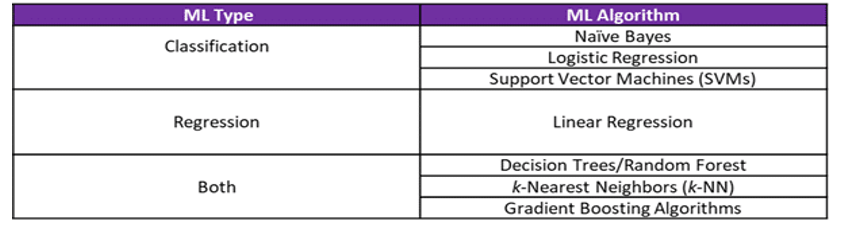
  • Determine the suitable algorithm for the model, such as support vector machine, decision tree, etc.
  • Execute the algorithm on the training dataset. Sometimes we need validation sets as the control parameters, which are the subset of training datasets.
  • Evaluate the accuracy of the model by providing the providing the test set. If the model predicts the correct output, which means our model is accurate.

References

https://www.javatpoint.com/supervised-machine-learning

Supervised learning

The machines are trained using well “labelled” training data, and on basis of that data, machines predict the output.

The labelled data means some input data is already tagged with the correct output.

Supervisor is this training data (labelled data) which helps to predict the output correctly when a new input data point is given as input.

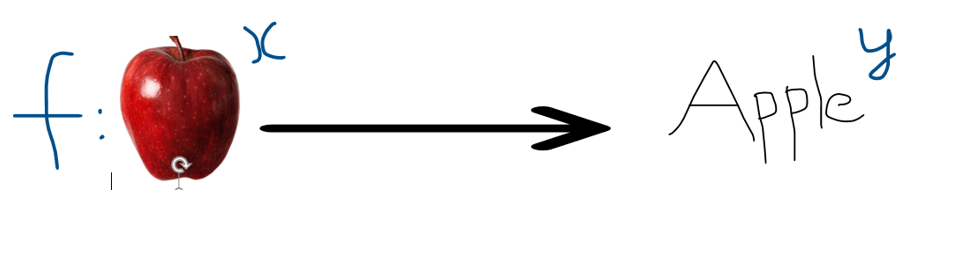
The aim of a supervised learning algorithm is to find a mapping function to map the input variable(x) with the output variable(y).

Step 1: The very first step of Supervised Machine Learning is to load labelled data into the system. This step is a bit time-consuming because the preparation of labelled data is often done by a human trainer.

Step 2: The next step is to train and build connections between inputs and outputs(function). This step is also known as the training model.

Step 3: Then comes the step known as the testing model. As the name suggests, you test the model by introducing it to a set of new data.

Here, the input is an independent variable, and the output is a dependent variable. The goal is to generate a mapping function that is accurate enough so that the algorithm can predict the output when we feed new input.

Example of labelled data:

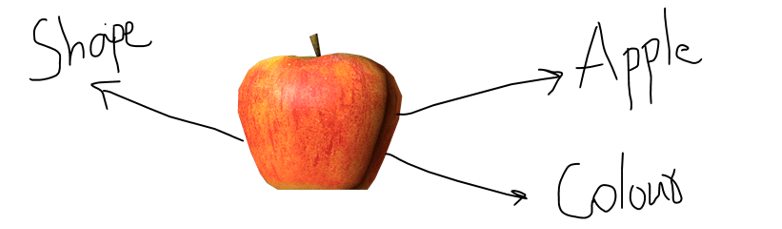
We have a labelled dataset that consists of images of apples and oranges, with different attributes such shape, colour etc.

Consider the image of an apple shown above with the labels- shape, colour, and apple.

We train the model with this image. Then, we repeat the same training process with other images of both apples and oranges with their attributes.

What we are doing is-

Here, the input data is the independent variable and “Apple” or “Orange” is dependent variable as it is dependent on the input picture given.

Our goal is to generate a mapping function between the dependent and independent variable so we can determine the output when we feed a new data point.          


Once the model is trained and the algorithm is built, the accuracy can be tested with the help of a test dataset.

When we feed the model with a new apple image, it scans the image and matches the attributes of the image with other trained images. Then depending upon the accuracy of the model, it returns the output ‘apple’.

When new data point is given as input, say,

The machine should be able to guess the output as  “Apple”.

This labelled data or the training data (acts as supervisor), helps to predict the output as “Apple”.

Machine learning

Machine learning (ML) is a type of artificial intelligence (AI) that allows software applications to become more accurate at predicting outcomes without being explicitly programmed to do so.

Machine learning algorithms are readily available. For example, Python has many libraries which support these machine learning algorithms.

Using this we can:

  1. Import a data set
  2. Fit a model to the data set
  3. Find the accuracy (how well it predicts a new data point)

Then why to learn the basics when instead we can use the pre-built algorithms that are readily available?

Still, we should learn the basics (the mathematics behind these concepts) of machine learning to be able to take an informed decision about the performance of the model.

Photo by Alex Knight on Pexels.com

We can fit the model to a data set and get some performance, but how to justify whether the performance given by the machine learning algorithm is proper or not?

The design of experiment                                                                                                                                              

Design of experiment

To be able to take the decisions with confidence we should know the fundamental concepts.

International Astronomy and Astrophysics Competition 2022

What is IAAC?

The International Astronomy and Astrophysics Competition is a global competition for science and astronomy enthusiasts.

Online Submission: The competition uses the possibilities of the modern world to allow all students to participate regardless of nation, region, school, or affiliation. Every student may participate independently – there is no affiliation of your school or teacher to IAAC required to participate in this competition.

Research Problems: The pre-final round includes two research problem types. They require participants to get in touch with real scientific research papers and learn about recent scientific results to solve the problems. They encourage students for more advanced science and give them insights into actual research material.

Teacher Support and Online Tools: We supply teachers and schools with additional materials and an online teacher interface that allows teachers to make better use of IAAC problems in class. We also generate performance reports for each individual student.

Information for Teachers and Schools

Teachers and schools are invited to share this opportunity with their students to make talented students in particular benefit from IAAC. There are also special school awards.

Process and Rounds

1. Qualification Round : 5 Problems: Knowledge, Calculation, Research, Free

2. Pre-Final Round : 3x Basic, 3x Advanced, 2x Research Problems, 4 Days, 8 EUR Registration Costs

3. Final Round :  Final Exam with 20 Multiple-Choice Questions, 60 Seconds/Question, Teacher Supervision 

 Note: The Qualification round is free. The 8EUR Registration cost covers both the Pre-final and Final round. DIgital participation certificates are awarded for all rounds.

Who can participate?

You have to be at least 10 years old and you have to be a student (this includes high school, college, and university). There are two age categories:

  Junior: under 18 years on 13. May 2022.

  Youth: over 18 years on 13. May 2022

Students from both categories will receive the same problems in all rounds, however, students that are youths (18 years or older) will have to reach more points to qualify for the next round (e.g. to qualify for the pre-final round, students that are under 18 years have to reach 15 points and students that are over 18 years have to reach 20 points). 

If you are a science enthusiast and love astronomy this competition is the way to go!

Contact me for further details at-yutsawant@amb.iaac.space

Importance of Self-Confidence

Self-Confidence is one of the important things needed in our life. It has the power to either push us up or pull us down. Most people lack self-confidence at some point in their life due to failures and disappointments. Self -Confidence can be increased due to the motivation of others, but it is not the only way to boost our inner confidence. The confidence that comes from inside is the one that resists for long and helps us achieve more and more in our life. Let us see some of the ways to boost our confidence and try to use them in our daily life.

Photo by Snapwire on Pexels.com

Ways to Boost Self Confidence

  1. Tell good words to yourself : It may feel silly on reading this. But actually it works during the time of crisis. Whenever we feel low, we can tell some good words to “We can do it”,”We are capable of doing it”,”Nothing is impossible”. These words lowers our stress as well as helps in boosting our confidence. We can even ask our friends and family to tell good words to us. Getting these words from those we trust , gives immense amount of confidence in our life.
  2. Take a deep breath : Before starting any task, taking a deep breath will definitely helps us. We should allot some two to three minutes before the beginning of the job and we should take a deep breath without thinking about anything else. During that time, we should not concentrate on the outside environment or thinking about how to do the job. Our only focus must be on taking a breath and relaxing both our mind and the body.
  3. Thinking on past success : When we are doing a difficult or stretchy job, we can think on our past success or achievement for some moments. Beware, it must only be for some moments. Sometimes it will lead to over -confidence and destroys both the time ,the effort and the task.
  4. Thinking on our good time : Everyone will definitely have such moments in our life that brings us instant laughter or instant happiness on our face. During our low time, we can think on these things for some moments to boost up our energy and confidence to do the job. These times can be with the family or friends or colleagues or anyone. Here too, over thinking may lead to procrastination , which is the dangerous one that won’t led us to finish the job.
  5. Hobbies : Hobbies can make an individual feel happy, calm ,satisfied and acts as a complete stress buster. Taking out some time for hobbies can help us to make our brain relaxed and peaceful. These hobbies can be done during breaks or free time.
  6. Talk to yourself : This task doesn’t need anyone to perform. During our low times or when we have no one with us, this is the best way to keep us away from negativity and low confidence. We can talk anything and everything to ourselves. Just imagine yourself as another human and tell everything that is going on our mind.

Believe you can and you’re Halfway there.

Theodore Roosevelt

THE CURSE OF DEPRESSION

For some people, depression may mean showing a sad face all the time, not responding to anyone, sitting in a room all day, and more. Depression is not always a combination of all these symptoms, some people are depressed but still, show happy faces. We must clearly understand what it actually means and must get out of it before it is too late.

Photo by Fredrick Eankels on Pexels.com

Common Symptoms of Depression

  1. Trouble in Concentrating : People with depression may feel difficulty or trouble in concentrating on their jobs. They even feel extremely hard to even take simple decisions due to lack of concentration.
  2. Insomnia : Insomnia is one of the most common symptoms of depression. They either sleep for long number of hours or never sleep at all. It varies with person to person. Even sometimes they wake at early morning without knowing.
  3. Guilty Feeling : Depressed state can also happen due to inability or failure to do an important job. It starts with feeling guilty all the time thinking about the work and stressing themselves too much. It makes them feel helpless and alone all the time even they are always being surrounded by friends , family or relatives.
  4. Lose of Interest : People start to lose interest over things that are once their favourite one. It may be hobbies like drawing, dancing, singing or even visiting places that are their favourite ones initially.
  5. Restlessness : Inability to relax or inability to make your mind calm and peace is called Restlessness. It happens due to over stress, thinking about something all the time and excess usage of devices like Mobile Phones, Laptop and television etc.
  6. Overeating/ Appetite Loss : It happens in two ways , either feeling of hunger at all times or feeling full at all time. It is also a symptom of depression which most people fail to address it at early stages of their life.
  7. Unbalanced feelings : Sometimes they feel too happy, sometimes too sad, sometimes too anxious with no meaning, sometimes too angry without knowing. Their feelings become unpredictable and meaningless during their depressed state of mind.
  8. Digestive problems : Even stomach ache for a long period of time , without reacting to medicines is a symptom of depression.

Most of these symptoms are the common ones, the failure to address them for a long period may lead to suicidal thoughts or suicidal attempts.

Ways to overcome depression

  1. Surround yourself with motivation
  2. Do yoga and meditation
  3. Always ask for help without hesitation.
  4. Go out to new places for refreshment.
  5. Take breaks during job to avoid stress.
  6. Eat healthy food like fresh fruits and vegetables.
  7. Create new hobbies
  8. Do activities that keeps both our mind and body calm.
  9. Focus on people who will be there for you during both good and bad times.
  10. Always get minimum six hours of sleep daily.
  11. It’s okay to say ‘no’ to works which is either stressful or not possible.

“Don’t let life discourage you everyone who got where he is had to begin where he was.”

Richard L. Evans

How Mental health affects your body?

We all feel under the weather from time to time, but if you have been feeling emotianlly drained for a long length of time, then it is likely you are suffering from a mental disorder and you should immediately consult with an expert. Ignoring your mental health can have negative impacts on your physical health as well.
Here are 5 common impacts that your mental health can impose on your body –

1) Weight fluctuation
Mood disorders can often lead to you eating more and less and not maintaining a proper balanced diet and henceforth can result in weight gain and weight loss.

2) high blood pressure
Extreme stress can cause your blood pressure levels to rise up and leave you feeling tired and weak.

3) Insomnia
Poor mental health can cause you difficulty to sleep and lack of proper sleep can disrupt your daily schedule.

4) Drugs and Smoking
People with mental health conditions often resort to drugs, liqour and smoking in order to avert their problems and feel at ease. This in turn proves detrimental to their health. Expert consultations are always recommended in such cases.

5) Weak Immune System
Poor mental heath can weaken your immune system making you more vulnerable to get colds and other infections.