How to Write Request Letter: Writing Tips and Samples

Want to write request letter but don’t know how to write request letter then this article is only for you and the learners who wants to learn letter writing. In today’s article we are sharing the steps, Tips or samples for writing request letter.

Request letters are written to ask recipient for some action or activity which other is unable to do. Letters is an ideal medium for requesting a favor because it allows its writer to explain his/her view point in best possible manner.

How to Write Request Letter Writing Tips and request letter Samples

How to Write Request Letter Writing Tips and request letter Samples

It is a best way to maintain privacy of your words between you and reader. Request letters can be of different types such as Promotion Request Letter, Change of Address Request Letter, Scholarship Request Letter etc.

Through request letter, you are going to ask for some favor therefore pay particular attention to the format and contents of letter. Accurate format can be first step toward persuasive writing.

Steps To Write Request Letter:

  1. In the opening paragraph, briefly introduce yourself and let the recipient know why you are writing to them.
  2. In the next paragraph, tell the recipient what you are requesting of them along with any pertinent details that would help them to fulfill your request. If you need your request filled by a certain date, be sure to let them know in this paragraph.
  3. In the closing paragraph, thank the recipient for their time/consideration and provide your contact information (if applicable).

While writing request letter you have to take care about following points:

Ask politely because you are requesting something so don’t demand or threaten.Show the reader what’s in for him/her. Prove your case.State exactly what you hope he/she will do for you.
Always keep in mind that tone of your letter should be polite and courteous. Clearly explain your purpose of writing request letter in first paragraph.

Try to be clear and concise in writing because reader is a busy person. You have to state it clearly what you are expecting from reader for example if you are writing Community Help Request Letter then clearly state how much voluntary work is appreciated and encouraged.

Remember to provide your contact number and address for reader so that he/she can easily contact you in case of any clarification or doubts. You should say thanks to reader in anticipation for his/her time and efforts he/she has spared to consider your request but don’t try to thank the person in advance for what you have requested from him/her.

It can be arrogant and can put an effect to reader that you are not giving him/her choice to deny your request. It also seems that you don’t want to write once again if the request is granted and it can also leave a negative effect on reader. You should write thank you letter after acceptance of request.

In order to assist you in your letter writing, I am providing you with sample request letters on varieties of topics. These letters are free from any cost so you can use these letters as guidance. I have tried my level best to design these letters on specific format of request letter so you can consult them without any doubt or hesitation.

Scholarship request letter

Blair Connor,

University of Heidelberg

London

Mr. Frasier Garrick,

Coordinator,

Coca-Cola Scholarship Foundation

4597, Indola Park

London

August 9, 2011

Subject: Request for scholarship

Dear Mr. Frasier Garrick

With great pleasure I am writing this request letter to you. I am an honest citizen of this country and I also want to contribute in the development and the progress of this country but my dreams are threaten by my poor financial condition. I am studying at a well known university and in every semester I had passed with flying colors.

The scholarship helped me to continue my education smoothly and I made the optimum use of scholarship and always led my class. I finished my secondary school with distinctions in all subjects. I also engaged in extracurricular activities and won many medals and awards.

Becoming a medicine specialist is my childhood dream but this can be sacrificed due to poverty therefore it is my respectful request to support my education. It is with this intention that I approach your organization with my humble request for scholarship. I am relying on your goodwill to fulfill my dream.

Thanking you in anticipation for a favorable response from you.

Yours truly,

Blair Connor

University of Heidelberg

Job Promotion Request Letter

Phineas Ridley,

Team Member,

Synergy Project,

Zenith Software Ltd,

England

August 9, 2011

Truman Zachary,

Vice President,

Zenith Software Ltd,

England

Dear Mr. Zachary,

I am writing this letter to request your kind attention on my career. First of all I would like to take opportunity to say thanks for accommodating me as a member of the Synergy Project team. I have been working with the team for the last five years during this tenure I have learnt extensively with my and other’s experience.

After acquiring enough knowledge, I consider that the time has come when I need to move upwards in position. This movement will implement my learning to the advantage of company. At this stage of my career, a promotion would be very motivating for me and encourage me to do more toward prosperity of the company.

I vow my dedication and sincerity to the company and remain optimistic that the company will offer me a break in serving the company in a better position.

Thanking you in advance for your time and consideration,

Yours Sincerely,

Phineas Ridley

Charity Funds Request Letter

Ms. Ella T. Darcy

Golden Arches Ltd

2365 Timber Oak Drive

Goleta, CA 12345

August 9, 2011

Deborah Crispin

Golden Arches Ltd

1234 Timber Oak Drive

Goleta, CA 12345

USA

Dear Ms. Crispin,

As you know the recent crises with Helping Hands that cause much damage and hardship on the lives of its residents. This crisis occurred as a result of blast near the area of Helping Hands. As you know that Helping Hands is a home for several homeless people and orphan children, now this destruction creates problem for these people.

I am writing on behalf of Extending Hands Foundation, to appeal you for a compassionate donation to support the rescue and relief work that is currently carried out for the poor people of Helping Hands. We hope to secure more foodstuff and medicine for distribution at the relief centers sent up by our counterparts in USA.

Your generous contribution will be greatly appreciated. Please do not hesitate to contact us for further clarifications.

Thanking you in anticipation for considering this letter on the behalf of Helping Hands.

Yours Sincerely,

Ms. Ella T. Darcy

Project Director

Extending Hands Foundation

Sample of Requesting Letter:

To write a very personalised requesting letter, you can use any of the samples provided and add your own message. Make sure you proofread your requesting letter carefully.

764 Cheery Lane
Clearwater Falls, FL 23619

September 27, 2015

Mr. Louis Henderson
Store Manager
The Corner Cafe
273 Main Street
Clearwater Falls, FL 23619

Dear Mr. Henderson:

My name is Piyush Joshi and I’m the chair of the Clearwater Falls Elementary School Fundraising Committee. The committee is planning to hold a fundraiser next month to raise funds for this year’s field trips and we’re looking for donors to help out with providing goods for the fundraising event.
If The Corner Cafe is willing to help donate some coffee and cups, we would greatly appreciate it. Our fundraiser will be held on the morning of October 18th and we’re expecting around 200 people to show up.
Thanks for your time and consideration, if you need to contact me with any questions, feel free
to call me at 555-555-5555, I’m available to speak between 10am-5pm on weekdays.

Sincerely,
Signature
Piyush Joshi

How to Write Informal Letter: Writing Tips and Samples

Want to write Informal letter but don’t know how to write Informal letter then this article is only for you and the learners who wants to learn letter writing. In today’s article we are sharing the steps, Tips or samples for writing Informal letter.
Informal letter or a Personal letter is a letter written to a close friend or an acquaintance. Isn’t it wonderful to receive such written letter from a friend?
Better yet, isn’t it wonderful to actually write one?

Letter writing still has a sentimentality about it that transcends all other forms of communication, and this is probably why some people stick to it even though they could use other means.
The best way of learning how to write letters, I reckon, is to look at a number of specimens, analyse what has to be done and perhaps what does not have to be done, don’t you agree?

Of course there are no hard and fast rules about how to write informal letter and common sense dictates that someone may use whatever works best for him. However, there is a conventional way of going about it that will make all the difference if you apply it.

How to Write Informal Letter:

As compared to formal letter writing Informal Letter writing is easy.

Informal Letter Format:

[Address of the Sender]

Date:

Dear (name of person)

Body of the letter:

Paragraph 1: Ask for the wellbeing of the person

Paragraph 2: Main reason to write the letter

Paragraph 3: Conclusion and end of letter

Yours lovingly,

Name of sender

Address and date in informal letter :

Some people may think the address is not important in an informal letter and prefer to leave it out. That works well if the person you are writing to knows your address already or if she has a good memory! However, it is very unlikely that someone will always remember your address, so it is always a good idea to include it.

Remember, this is the address they have to write to for the informal letter to reach you. The recipient’s address is on the envelope.

Salutation in Informal Letter

The most common salutation in an informal letter is “Dear….”
Note that it is followed by a comma.
Dear Mimi,
However, some go extremely informal and use “Hey!” or “Hi!”

You should use your discretion. Obviously if you are writing to your father, you would not use “Hey!” unless of course you are extremely close.

Body of an Informal Letter

Here are a few things you should take note of:

  • Paragraphs:

Since informal letters are usually written by hand, the paragraphs are usually indented. However, with more people using their computers to do most of their writing(and I have a bad feeling most people will forget how to write with their hands), it is becoming a common practice to write paragraphs without
indentations—like the way this one is written:

This,
apparently, is the modern way of writing paragraphs.

Use informal language:

The first paragraph generally expresses a greeting, followed by wishes of good health. Remember you are writing to someone you know very well, so try to be as friendly as possible:
How are you my dear sister?
However, always use your discretion. Try not to go overboard. Some people become bold and daring in letters and write things that they would otherwise not say to the person face to face. Obviously if you are writing to
an adult that you respect, like your dad, try not to write things like:
What’s up dude!” or “What’s going down?”
Try to picture the person you are writing to standing in front
of you. Imagine the things that you would say to him and write them down. This will help you not to go overboard.
Also avoid boring sentences like…
“I am writing this letter to….”

Punctuation and spelling

I have come across a good number of letters that abound with spelling mistakes and awful punctuation. Such
mistakes tend to distract the reader, so don’t neglect them even though you know your friend will understand.
The quality of your letter also speaks volumes about the kind of person you are so all the more reason to be careful!
If you use contractions, make sure that you put the apostrophe in the right places.

For example:

Isn’t and not is’nt
won’t and not wont
mustn’t and not must’nt
The contraction it’s is especially one that you must watch out for. It is the short form of it is or it has. But if you want to use it to indicate possession, you should use its and not it’s.

Check out this example:
The dog lost its collar.
Remember also to use capitals for the right things i.e. the names of people, places, holidays, etc should all start witha capital letter. Bottom line? Don’t throw away your grammar book!

Use consistence voice and style in Informal Letter

Use the active voice if you want your letter to sound more conversational and interesting. Avoid shifts in the voice.

Informal Letter of Business Format

Your Address

Your City, State Zip (Hit enter twice)

Today’s Date – Year, Month, Day

Company Name

Company Address

City, State Zip (Hit enter twice)

Dear Order Department : (Hit enter twice)

Paragraph 1( Hit enter twice)

Paragraph 2 ( Hit enter twice)

Last Paragraph( Hit enter twice)

Sincerely, (Hit enter 4 times)

Your handwritten signature goes here

Your Name

Your Title (if you have one)

Informal letter of business format block style :

Return Address
The address of the person sending the letter (sender). Includes the street address, city, state, and zip code. Note: The return address does not include the sender’s name.

Date
The date of the informal letter is written.Inside Address Includes the following information of the person receiving the letter: courtesy title (Mr., Mrs., or Ms.), first and last name and his/her job title (if applicable), company name (if applicable), street address, city, state, and zip code.

Salutation
Includes the greeting (opening) of the letter, followed by the receiver’s courtesy title and last name.

Body Includes the details of the letter. The first paragraph should introduce and state the reason for the letter. The following paragraphs should provide details for why the letter is being written and any background information that supports the message.

Complimentary Closing
Typically includes a closing phrase and is used to show respect and appreciation for the person reading
the letter.
Signature Area
The space for the sender’s signature.

Sender’s Name
Includes the sender’s first and last name, followed by his/her job title (if applicable).
Reference Initials
Initials of the person (other than the author) who keyed the letter for the sender.
Attachment/Enclosure Notation
Indicates another document is attached or enclosed with the letter.

Types of learners and how to engage them

  1. Auditory and Musical learners

To engage a social learner, encourage both group collaboration and presentation. Consider:

  • Roleplaying historical events or works of literature
  • Collaborating on maths problems
  • Working as a class on comprehension questions

Auditory learners like to hear solutions and examples explained to them, and may gravitate towards music subjects and group learning as a way to understand information. Auditory learners often have a high aptitude for distinguishing notes and tones in music and speech.

Qualities often associated with auditory learners include:

  • Possessing a ‘good ear’ for music and tones
  • May be distractible
  • Likes to talk to self / others / hum / sing

Auditory learners might say words out loud or hum tones to better learn them. This strategy is key for keeping musical learners engaged in class lessons.

How to engage them?

If you’re a music teacher, you’re in luck. Auditory learners will be engaged from start to finish. For other subjects however, engaging aural learners requires some tact and forethought.

The key here is your voice (and the voice of your students). Write down something on the whiteboard, then read it out loud. Work on your delivery so you can express learning material in interesting and engaging tones. Similarly, encourage your students to read back their own notes to themselves (and the class). Hearing the sound of their own voice and the voices of others is engaging to auditory learners, but it can be a great learning tool for students of all types.

Other strategies you can try include:

  • Recording lessons for later listening and reference
  • Encouraging auditory listeners to ‘teach others’ verbally
  • Seating them away from distractions

2. Visual and Spatial learner

Visual learners like diagrams, drawing out concepts, charts and processes. They learn by looking at visual concepts, creating them, and watching other people create them. Visual learners might be organised or creative in their application, and find things like colours and shapes useful.

Visual learners often possess the following qualities:

  • Habitual doodlers / drawers
  • Observant
  • Not easily distracted
  • Enjoys planning
  • Prefers visual instructions

How to engage them?

To engage a visual learner in the classroom you’ll want to include elements like maps, diagrams and imagery. If you have a projector, try to include relevant images to go along with the course content. In geography and history, maps are helpful, while for maths and logic, go with diagrams.

Charts, images and diagrams will aid most students, so catering to visual learners doesn’t mean you have to ignore other types. When it comes to self-driven learning, encourage the spatially aware to sketch out their ideas, create mind maps and flowcharts. It should probably come to them naturally, but a bit of prompting can always help.

Other tactics you can use include:

  • Sitting visual learners near the front
  • Using colour codes and cues
  • Encouraging note taking and recopying notes during study

3. Verbal learner

Verbal learning includes both writing and speaking. Verbal learners might have a preference for reading and writing, word games and poems. Verbal learners know the meanings of a broad category of words, can use them effectively, and actively seek out new words to add to their repertoire.

Some qualities associated with verbal learners include:

  • Intellectual
  • Bookworm
  • Good story teller

Verbal learners often seek out careers in journalism and writing, administration, law and politics.

How to engage them?

Verbal learners will want to write down notes, talk about concepts and potentially present them as well. The trick with verbal learners is knowing what adjacent types of learning apply to them – are they an outgoing or more introspective verbal learner? Some may lean more to talking, while others to reading and writing. Try to cater to preference while also using their verbal abilities to push personal boundaries every once in awhile.

4. Logical and Mahematical learners

Perhaps unsurprisingly, mathematical learners err towards careers in programming, accountancy, science, research and other number and pattern-orientated careers. Some qualities associated with mathematical learners include:

  • Pattern recognition
  • Good with numbers
  • Predisposition towards grouping and classification

How to engage them?

Mathematical learners will greatly appreciate any type of learning that logically explains the subject at hand. For maths, that’s easy. For other subjects, it requires some effort and planning:

  • History and geography: Try to include statistics and classification taxonomy in your lesson plans.
  • Literature: Ask your students “What category of book is this?” Or in poetry, have them learn the meters and explain them to other students.
  • Music: Teach both musical instrument classification (woodwind etc) and the mathematical relationships between notes.
  • Art: A good starting point is the colour wheel and the effects of combining different colours.

With logical students, always look to incorporate a system. If you’re unsure, include the students in the development of that system. They’ll benefit from it greatly.

5. Physical and Kinaesthetic learner

Commonly called hands-on learners, kinesthetics prefer to physically engage with the materials of the subject matter. Some qualities associated with physical learners include:

  • Preference to ‘get their hands dirty’
  • Energetic, may drum fingers or shake legs
  • Action-orientated and outgoing
  • May de-prioritise reading and writing

Physical learners represent about 50% of the population,and gravitate towards careers with lots of hands on work like emergency services, physical education and sports.

How to engage them?

Channeling the energy and excitability of physical learners is key to offering a good lesson. Taking breaks so they can move around can help, but so can encouraging role play and movement within the lesson itself. Physical interaction is also important. The use of props and models will greatly benefit a kinaesthetic learner. Give them something to grab onto and they’ll process information much better than from a book or whiteboard.

Other strategies to engage physical learners include:

  • Encouraging movement during study (don’t punish them for fidgeting)
  • Decluttering desks and surfaces so they can focus on learning

6. Social and Interpersonal learner

Social learners show preference towards groups and collaboration. Some, but not all, will gravitate towards leadership within a group. Some of the qualities often associated with this type of learner include:

  • Extraverted
  • Good communicator
  • Sensitive and empathetic

It’s important for educators to understand that not all social learners are extraverted or highly communicative, and that they can also be visual, auditory, verbal, logical or physical learners. The interpersonal aspect perhaps better describes the settings in which they are most comfortable, rather than how they absorb information.

As such, teachers should be cognisant of the breadth of variation between different types of social learners. For example, social doesn’t strictly mean verbal. Some social learners prefer to listen in a group setting, rather than on their own.

How to engage them?

Interpersonal learners like to ‘do’ and to ‘share’. This can sometimes lead to distraction for other students who are more intrapersonal in their learning habits. To prevent this, try to channel social learners into providing value to the group, giving them tasks that use their energy usefully, with a focus on empathy for their classmates.

7. Social and Intrapersonal learner

Solitary learners can be visual, auditory, physical, verbal or logical learners. Fulfilling all the needs of the solitary student will ensure they are fully engaged. Some of the qualities often associated with this type of learner include:

  • Independent
  • Introspective
  • Private

Intrapersonal learners may gravitate towards careers with a lot of self determination or motivation, as well as solitary workloads. Think:

  • Researchers
  • Writers and authors
  • Programmers and coders

How to engage them?

In a classroom environment it can sometimes be difficult to engage a solitary learner. They might sit silently in the back of the classroom, only to ace the exam at the end of semester. For the educator, it’s important to engage them during class. Provide visual materials, books and learning aids. Designate quiet areas, and collaborate with defined sharing time so the solitary learner can feel adequately prepared.

Mixed learning approach

With large classrooms, it’s not always easy to personalise lessons, but using a mixed learning approach throughout coursework can help you cater to each type of learning style. You may decide to focus on a particular learning type each lesson, or incorporate multiple strategies within each lesson. The most important element is first recognising the differences in student learning – the rest will flow from there.

Health consciousness.

Consciousness, at its simplest, is sentience or awareness of internal and external existence. Despite millennia of analyses, definitions, explanations and debates by philosophers and scientists, consciousness remains puzzling and controversial, being “at once the most familiar and most mysterious aspect of our lives”. Perhaps the only widely agreed notion about the topic is the intuition that it exists. Opinions differ about what exactly needs to be studied and explained as consciousness. Sometimes, it is synonymous with the mind, and at other times, an aspect of it. In the past, it was one’s “inner life”, the world of introspection, of private thought, imagination and volition. Today, it often includes some kind of experience, cognition, feeling or perception. It may be awareness, awareness of awareness, or self-awareness. There might be different levels or orders of consciousness, or different kinds of consciousness, or just one kind with different features. Other questions include whether only humans are conscious, all animals, or even the whole universe. The disparate range of research, notions and speculations raises doubts about whether the right questions are being asked.

Examples of the range of descriptions, definitions or explanations are: simple wakefulness, one’s sense of selfhood or soul explored by “looking within”; being a metaphorical “stream” of contents, or being a mental state, mental event or mental process of the brain; having phanera or qualia and subjectivity; being the ‘something that it is like’ to ‘have’ or ‘be’ it; being the “inner theatre” or the executive control system of the mind.

And that’s why to be health conscious is better than being careless.

Online education

frustrating indeed!!

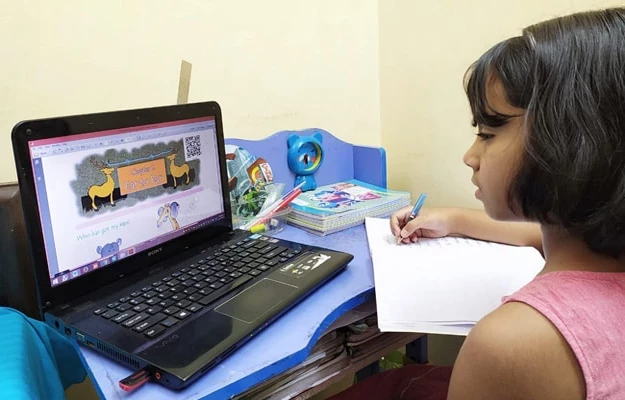
Online study has become a trend and more schools are opting for it with each passing day; more so, in the wake of COVID-19 lockdown.

Advantages

The online method of study has several advantages. It is very convenient as both you and your teacher can interact from the convenience of your respective homes. You can also ask questions and raise queries as you use to do in the classroom.

The online study method becomes more important in case of a natural calamity of emergency. The perfect example in this regard is the recent COVID 19 pandemic that the world is still recovering from. To date, many schools are running online classes, for the safety of students. Online study is indeed a safer alternative to school education.

Schools Have Saved Operational Costs During Lockdown; Can't Charge Students  For Unused Facilities : Supreme Court

Disadvantages

Apart from numerous advantages, the online method of the study also presents certain disadvantages. It lacks the filled with enthusiasm kind of environment presented by a classroom. The lively and joyful ambience of a classroom is usually lacking in an online session. Teachers and students interact with each other only on subject matters on one by one basis.

Moreover, overexposure to gadgets presents its own health hazards like headache, weak eyesight and lack of concentration, etc.

Conclusion

Despite the disadvantages, the online study method proved to be beneficial in certain specific conditions. When it is not advisable to leave your home, or it isn’t convenient for you, then in that case online study becomes a blessing in disguise.

reference-https://www.aplustopper.com/essay-on-online-education/

Why are Relationships so difficult to handle ?

Love is one of the most profound emotions known to human beings. Love is diverse and so is your relationships actually your relationships sometimes define you, it defines your personality in diverse forms, Love and relationships both are beautiful aspects of life but then why they are so difficult to handle ?

Your relationship are like your part of your daily life, they need your constant efforts, attention and time, but sometimes we become so busy that we try to ignore it which leads to discoloration of them, let me give you a simple example –

Suppose you bought a plant for yourself and promise yourself that you will take care of your plant no matter how busy your daily schedule gets, you water them daily, you check upon them daily, you check whether they need some extra care or not if yes, you give them some extra care, some extra nutrients just to make your plant grow more appropriately, that plant is just like your relationship the more you care the more you love it the more it will grow but when you stop taking care of it, umm you might lose it and that can damage you also.

Relationships needs your efforts just as someone said no one is too busy in their day that they couldn’t check up upon you, its all about their priorities.

Make sure you stay connected with people you love, with people you care about because life is not worth living if you don’t have someone with you.

3D PRINTING

3D Printing is an new and emerging field of biotechnology, it’s a field of revolution in science, the earliest record of 3D printing through the additive process was the Japanese inventor Hideo Kodama in 1981. He created a product that used ultraviolet lights to harden polymers and create solid objects. This is a stepping stone to stereolithography (SLA).Overall 3D printing has changed and improved over the past thirty years. SLA, SLS, and FDM show the history of 3D printing, and thus how it became a vital tool for manufacturing. It allows you to make virtually anything simply by creating a computer file

HOW DOES IT WORKS ?

3D printing, also known as additive manufacturing, is a method of creating a three dimensional object layer-by-layer using a computer created design.3D printing is an additive process whereby layers of material are built up to create a 3D part. This is the opposite of subtractive manufacturing processes, where a final design is cut from a larger block of material. As a result, 3D printing creates less material wastage.

3D Printing Technologies :

There are three broad types of 3D printing technology; sinteringmelting, and stereolithography.

  • Sintering is a technology where the material is heated, but not to the point of melting, to create high resolution items. Metal powder is used for direct metal laser sintering while thermoplastic powders are used for selective laser sintering.
  • Melting methods of 3D printing include powder bed fusion, electron beam melting and direct energy deposition, these use laser, electron beams to print objects by melting the materials together.
  • Stereolithography utilizes photopolymerization to create parts. This technology uses the correct light source to interact with the material in a selective manner to cure and solidify a cross section of the object in thin layers.

3D Printing Processes :

3D printing has been categorised into seven groups by ISO/ASTM 52900 additive manufacturing – general principles – terminology. All forms of 3D printing fall into one of the following types:

  1. Binder Jetting
  2. Direct Energy Deposition
  3. Material Extrusion
  4. Material Jetting
  5. Powder Bed Fusion
  6. Sheet Lamination
  7. VAT Polymerization

Applications

  • Most common application is organ transplantation, and are also used for producing metal orthopedic implants. Due to 3D printing’s capabilities for creating porous surfaces, these types of implants more easily integrate with the patient’s own natural bones, allowing them to grow into the implant.
  • 3D printing applications that are used in construction include extrusion (concrete/cement, wax, foam, and polymers), powder bonding (polymer bond, reactive bond, sintering) and additive welding. 3D printing in construction has a wide array of applications in the private, commercial, industrial and public sectors. Advantages of these technologies include allowing more complexity and accuracy, faster construction, lower labor costs, greater functional integration, and less waste.

Public administration and development related

INTRODUCTION:-

public administration at the local, regional, national and international levels where it is directed to managing development processes in low and medium income countries. It gives special attention to investigations of the management of all phases of public policy formulation and implementation which have an interest and importance beyond a particular government and state. PAD has a particular interest in the link between public administration practice and management research and provides a professional and academic forum for reporting on new experiences and experiments. PAD also publishes
articles on development management research in the NGO sector. It is widely read by academics and practitioners alike, including consultants, donors and policy advisers. With its case study approach, it is also frequently used for teaching and training purposes.

Public Administration and Development

Information for Subscribers

Public Administration and Development (Print ISSN 0271‐2075; Online ISSN 1099‐162X at Wiley Online Library, wileyonlinelibrary.com) is published in 5 issues per year. Institutional subscription prices for 2020 are: Print & Online: US$2987 (US and Rest of World), €1929 (Europe), £1528 (UK). Prices are exclusive of tax. Asia‐Pacific GST, Canadian GST/HST and European VAT will be applied at the appropriate rates. For more information on current tax rates, please go to http://www.wileyonlinelibrary.com.tax‐vat. The price includes online access to the current and all online back files to January 1st 2017, where available. For other pricing options, including access information and terms and conditions, please visit wileyonlinelibrary.com/access.

Delivery Terms and Legal Title

Where the subscription price includes print issues and delivery is to the recipient’s address, delivery terms are Delivered Duty Unpaid (DDU); the recipient is responsible for paying any import duty or taxes. Title to all issues transfers FOB our shipping point, freight prepaid. We will endeavour to fulfil claims for missing or damaged copies within six months of publication, within our reasonable discretion and subject to availability.

Services

Adver tisements

Advertisement Sales Department, John Wiley & Sons, Ltd.,

The Atrium, Southern Gate, Chichester, West Sussex

PO19 8SQ, UK.

Tel: +44 (0)1243 770254

Fax: +44 (0)1243 770432

e‐mail: adsales@wiley.co.uk

Commercial Reprints:

E‐mail: corporatesaleseurope@wiley.com;

corporatesalesusa@wiley.com; or

corporatesalesaustralia@wiley.com

Author Reprints (50–300 Copies):

Order online: http://www.sheridan.com/wiley/eoc

Backstock Agent

PSC

Back issues: Single issues from current and recent volumes are

available at the current single issue price from cs‐journals@wiley.com.

Earlier issues may be obtained from Periodicals Service Company,

351 Fairview Avenue ‐ Ste 300, Hudson, NY 12534, USA.

Tel: +1 518 822‐9300

Fax: +1 518 822‐9305,

Email: psc@periodicals.com

General Enquiries

Tel: +44 (0) 1243 779777,

Fax: +44 (0) 1243 775878.

Contact Details within John Wiley & Sons

Journal Customer Services: For ordering information, claims

and any enquiry concerning your journal subscription please go to

http://www.wileycustomerhelp.com/ask or contact your nearest office:

Americas: Email: cs‐journals@wiley.com; Tel: +1 781 388 8598 or

1 800 835 6770 (Toll free in the USA & Canada).

Europe, Middle East and Africa: Email: cs‐journals@wiley.com;

Tel: +44 (0) 1865 778315

Asia Pacific: Email: cs‐journals@wiley.com; Tel: +65 6511 8000

Japan: For Japanese speaking support, Email: cs‐japan@wiley.com;

Visit our Online Customer Help available in 7 languages at

http://www.wileycustomerhelp.com/ask

Copyright and Copying (in any format)

Copyright© 2021 John Wiley & Sons, Ltd. All rights reserved

No part of this publication may be reproduced, stored or trans

mitted in any form or by any means without the prior permission

in writing from the copyright holder. Authorization to copy items

for internal and personal use is granted by the copyright holder

for libraries and other users registered with their local Reproduction

Rights Organisation (RRO), e.g. Copyright Clearance Center

(CCC), 222 Rosewood Drive, Danvers, MA 01923, USA (www

copyright.com), provided the appropriate fee is paid directly to the

RRO. This consent does not extend to other kinds of copying such

as copying for general distribution, for advertising or promotional

purposes, for republication, for creating new collective works or

for resale. Permissions for such reuse can be obtained using the

RightsLink “Request Permissions” link on Wiley Online Library.

Special requests should be addressed to: permissions@wiley.com

Disclaimer

The Publisher and Editors cannot be held responsible for errors

or any consequences arising from the use of information

contained in this journal; the views and opinions expressed do

not necessarily reflect those of the Publisher and Editors, neither

does the publication of advertisements constitute any endorsement

by the Publisher and Editors of the products advertised.

Abstracting and Indexing

Public Administration and Development is covered by the following

abstracting and indexing services: Abstracts on Hygiene &

Communicable Diseases (CABI), ASSIA: Applied Social Sciences

Index & Abstracts (ProQuest), CAB Abstracts® (CABI), CAB

HEALTH (CABI), CABDirect (CABI). Current Contents: Social &

Behavioral Sciences (Thomson Reuters), Emerald Management

Reviews (Emerald), ERA: Educational Research Abstracts Online

(T&F), Forestry Abstracts (CABI), GEOBASE (Elsevier), Global

Health (CABI), Grasslands & Forage Abstracts (CABI), IBSS:

International Bibliography of the Social Sciences (ProQuest),

Journal Citation Reports/Social Science Edition (Thomson Reuters),

PAIS: Public Affairs Information Service (ProQuest), Plant Genetic

Resources Abstracts (CABI), ProQuest Central (ProQuest), Rural

Development Abstracts (CABI), SCOPUS (Elsevier), Social Sciences

Citation Index (Thomson Reuters), Social Services Abstracts

(ProQuest), Sociological Abstracts (ProQuest), Soils & Fertilizer

Abstracts (CABI), Studies on Women & Gender Abstracts (T&F),

Tropical Diseases Bulletin (CABI), Web of Science (Thomson Reuters),

World Agricultural Economics & Rural Sociology Abstracts (CABI),

Worldwide Political Sciences Abstracts (ProQuest).

Online open

Public Administration and Development accepts articles for Open

Access publication. Please visit http://olabout.wiley.com/

WileyCDA/Section/id‐406241.html for further information

about OnlineOpen.

Production Information

For manuscripts that have been accepted for publication,

please contact:

Podhumai Anban

e‐mail: padproofs@wiley.com

Production Details

Printed in Singapore by C.O.S. Printers Pte Ltd.

Identification Statement

PUBLIC ADMINISTRATION AND DEVELOPMENT (Print ISSN

0271‐2075; Online ISSN 1099‐162X) is published in February, May,

August, October and December. US mailing agent: Mercury Media

Processing, LLC 1850 Elizabeth Avenue, Suite , Rahway

NJ 07065 USA. Periodical postage paid at Rahway, NJ.

Postmaster: Send all address changes to PUBLIC ADMINISTRATION

AND DEVELOPMENT, Wiley Periodicals LLC, C/O The Sheridan

Press, PO Box 465, Hanover, PA 17331.

For submission instructions, subscription and all other information

visit: wileyonlinelibrary.com/journal/pad

Wiley’s Corporate Citizenship Initiative Statement

Wiley’s Corporate Citizenship initiative seeks to address the

environmental, social, economic, and ethical challenges faced in

our business and which are important to our diverse stakeholder

groups. Since launching the initiative, we have focused on sharing

our content with those in need, enhancing community philan

thropy, reducing our carbon impact, creating global guidelines

and best practices for paper use, establishing a vendor code of

ethics, and engaging our colleagues and other stakeholders in our

efforts. Follow our progress at http://www.wiley.com/go/citizenship

Statement on Research4Life

Wiley is a founding member of the UN‐backed HINARI, AGORA,

and OARE initiatives. They are now collectively known as

Research4Life, making online scientific content available free or

at nominal cost to researchers in developing countries. Please

visit Wiley’s Content Access – Corporate Citizenship site:

http://www.wiley.com/ WileyCDA/Section/id‐390082.html

Reference Link:-

https://onlinelibrary.wiley.com/journal/1099162x

https://onlinelibrary.wiley.com/loi/1099162x

Jee mains 2021 exam date announced; Registration process begins for April/may session.

The most crucial engineering and medical entrance exams JEE Main and NEET UG have also been postponed due to the coronavirus outbreak.The February and March sessions of engineering entrance exam JEE Main 2021 were held while the April and May exams were postponed.

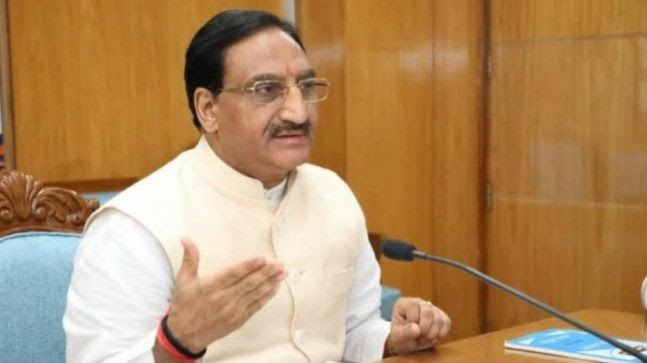
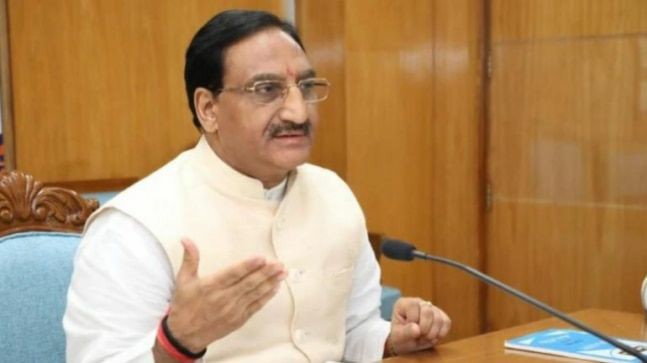
Education Minister Ramesh Pokhriyal has announced the exam schedule for JEE Main (April / May) sessions 2021 today. The minister made the announcement through a live session. The third session of JEE Main 2021 (April session) will be conducted from July 20-25. The fourth and last session of JEE Main 2021 (May session) will be conducted from July 27-August 2.Candidates can apply at jeemain.nta.nic.in. Those who wish to apply for the April session will be able to apply from tonight to July 8. JEE Main (May) session registrations will be open from July 9-12. Candidates will also be able to change their exam centres. Even to ensure social distancing amid the pandemic, the NTA has also increased the number of test centres for JEE Main (April and May) sessions. Earlier, the total number of test centres was 660. The test centres have now been increased to 828.

Social media reaction

Just within two hours of date announcement , the news started Trending over various social media plateform. On twitter the #jeemains2021reached in top ten trend within two hours only. Most of the people are making memes on the surprising announcement of exam date , while some are demanding for postponement of the exam .

What about jee advanced date announcement?

In this context, one thing has to be noted that the JEE Advanced 2021 Exam which was scheduled to take place July 3, 2021, also had to be postponed due to the COVID-19 situation in the country. However, recently, on June 25, 2021, IIT Kharagpur, the organising institute for JEE Advanced 2021 Exam has released the information brochure and list of documents that will be required for JEE Advanced 2021 Exam on the official website of JEE Advanced at jeeadv.ac.in. On the website, it is also mentioned that a new date for JEE Advanced 2021 Exam will be announced soon.

for more detail vist the link 👇

https://youtu.be/6x4aP17GXoE

https://www.dnaindia.com/education/report-nta-jee-main-2021-neet-2021-entrance-exam-dates-application-form-ntanicin-cbse-class-12-board-exam-2021-result-date-latest-updates-2898900

Courses and programs

Courses and programs for students are the main role to their education .

A program is your degree . A course is one building block (subject) of your program

Our featyre is depends on our Courses and programs

Some of courses

1 B.Com. This is the most popular choice among Commerce stream students. …

2 Chartered Accountancy.

3 Bachelor’s course in Economics.

4 Company Secretaryship course.

5 Law courses. …

6 Management courses. …

7 Technical courses. …

8 Designing courses.          

And some more

Administration Studies

Architecture Studies

Art Studies

Aviation

Business Studies

Construction

Cosmetology Studies

Design Studies

Economic Studies

Education

Educational and academic news and updates

Energy Studies

Engineering Studies

Environmental Studies

Fashion

Food and Beverage Studies

General Studies

Health Care

Humanities Studies

Journalism and Mass Communication

Languages

Law Studies

Life Sciences

Life Skills

Management Studies

Marketing Studies

Natural Sciences

Performing Arts

Professional Studies

Self-Improvement

Social Sciences

Sport

Sustainability Studies n

Technology Studies

Tourism and Hospitality

How to W.R.A.P decisions in Life

Every living being in this universe is subjected to make decisions for their survival – be it an ant and or a humpback whale. Fortunately, humans are the only beings gifted with the power of discrimination of understanding what is right or wrong for us and making a decision accordingly. Decisions can either be positive or otherwise but the quality of your decisions will determine how deeply they would impact your life.

It's A WRAP - Better Decision Making

Chip and Dan Heath, in their book ‘ Decisive: How to Make Better Choices in Life and Work’, talk about a Framework called W.R.A.P for making better decisions
WRAP consists of four elements:
W- Widen your options
R- Reality test your assumptions
A- Attain distance before deciding
P- Prepare to be wrong

Widen your options

There is a misconception that having a lot of options can lead to confusion and is as same as seeing only the big picture. So, people narrow their frames of you and often lose possible options that could have worked better for them.
You can start finding more options by creating a mindset where none of the options you are considering is available. What else can you do? Think about it and be surprised about how many new options crop up!

Reality test your assumptions

While encountering a decision-making situation, we all tend to select the options that support our preconceived beliefs and actions. But that might not work all the time.
We can overcome this by seeking out relevant data that might redeem or discard the options at hand. Also, for example, if you have a piece of work or a product to be published you can sample your work ok for a response from a small group first instead of jumping right into the market. Reason out to yourself why you would want to make a particular choice.

Attain distance before deciding

We often let our short-term emotions cloud our rationality and take hasty decisions. It is imperative to have a well-settled mind before making an important life decision.
Try broadening your point of view. Ask yourself what a reliable third person would do in such circumstances- step into your friend’s shoes or think like someone who you look up to. This can give you a fresh perspective of the situation at hand and make you take a better decision.

Prepared to be wrong

Voice Blog: In Order To Be Original, Prepare to Be WRONG - Ben Francia

We predict a lot in our life. What if a decision that you made is based on such predictions and things actually don’t turn up the way you wanted? What then? You should be ready to acknowledge the decision’s flaw.
Think about working back from a possible future. For example, suppose your work has been published and was poorly received. Think about how the work could have been made better so that you really don’t have to face that situation. Come up with backup ideas that can act like your ‘insurance’ and protect you in case things go the other way.

The next time when you faced a situation, remember that the process is as important as the decision itself. You are the master of your life- so make sure that the decision you made don’t make your life different from what you wanted.
Trust the process!

UNDERSTANDING SOFTWARE DEVELOPMENT LIFE CYCLE

In todays cyber world we are driven with a technical life style which introduces software to be an integral part in our day to day life. It is hardly possible to imagine our every day life with out any computerized process. When we closely observe the applications that we use daily we all get a common doubt that, how were these applications are developed and what is the process behind them? Let me explain you about the process of developing a software keenly.

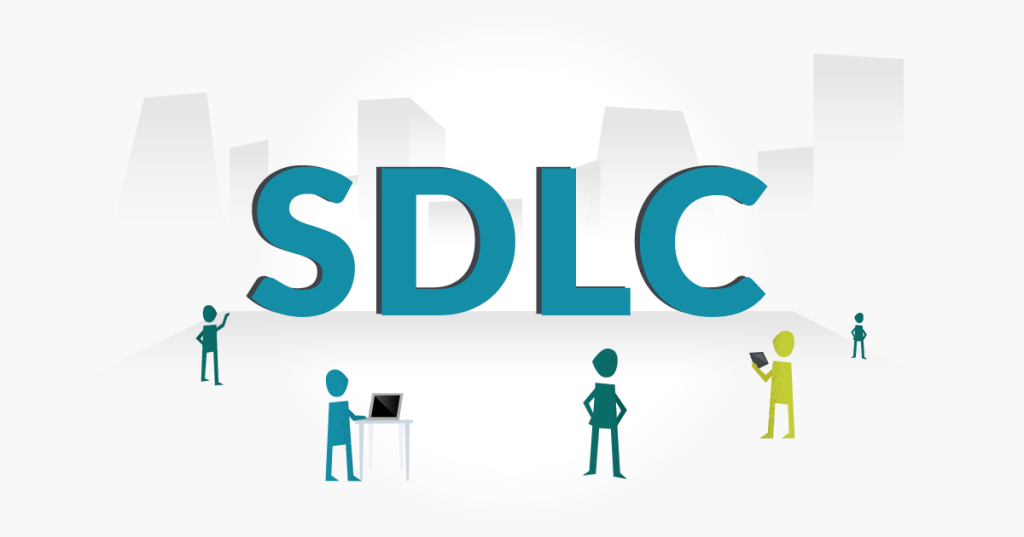
SOFTWARE DEVELOPMENT LIFE CYCLE:

Whenever there is a need for sophisticated system or an end user web or a mobile application we have to design a procedure which describes the whole process of development from starting stage to final stage. Similarly, Software development life cycle is also a methodology or a set of principles that should be followed in every software development team as preliminary steps to development a software.

This software development life cycle organizes the whole work process of the project into different stages which simplifies the work in order to complete it in the desired dead lines and it also focusses on the cost of project development. According to the project type we can apply different software development life cycles. The different SDLC processes applied by the companies are Agile model, RAD model, Waterfall model, Spiral model etc…. Though there are different models for the different kinds of projects, we use the following stages most frequently.

THE STAGES OF SOFTWARE DEVELOPMENT LIFE CYCLE:

1) BRAIN STORMING (OR) PLANNING: This is the first and fore most step in the software development life cycle process. This stage include brain storming session and then the development team finalizes an idea to proceed further into the project. After the completion of brain storming the team plans about the initial and core stages of the project and they also set the time frames and strategies to complete the project. When the prerequisite stage is perfectly completed then only the can move to the requirements stage.

2) DEFINING REQUIREMENTS: In this stage the team understands the project in deeper and classifies the requirements according to the stages of the project development and also in this stage only the team analyzes the future risks of the project and comes to a conclusion on the overall cost of the project.

3) DESIGN: Software design is the most complicated stage in the project development cycle. During this phase the team conceptualizes the created solution and verifies that whether the created solution meets the requirements or not. In this stage the team concentrates on the functionality of the solution and also analyze the structure capabilities, objectives of the proposed solution. After identifying a certain design for the development of software team forward in to development stage.

4) DEVELOPMENT: The development stage is all about converting the design into the actual software through coding. This stage of the development cycle is the longest path as it is the back bone of the whole project and the software development team should have to verify the code constantly to meet the requirements of the project. Once the development of complete architecture of the solution is completed. The team proceeds to the testing stage.

5) TESTING: In this stage the developed solution is tested under different methods in order to fix the bugs in the code and all the verified code at different stages are integrated in this stage. The testing stage is mainly useful for checking the quality of developed code prior to its release.

6) IMPLEMENTATION & MAINTENANCE: Once the software is certified with out having any errors or bugs then the team will release the developed software to production environment. This means the developed software product can be used by customers. Though the software is implemented also the development team must focus on the maintenance of the software in order to fix the bugs and update the new features.

These are the stages that are commonly used in every software development life cycle by a developer team. This SDLC process is use full to make perfect time frames for the completion of desired software product and also SDLC gives a perfect figure about total cost accomplished for the development of the project at every stage. Finally, SDLC is a process which sets the whole work in an organized and simplified manner.

Journalism and mass media

INTRODUCTION:-

Journalism and mass communication graduates work nationwide and worldwide at newspapers and magazines and in advertising, branding, broadcast news, social media, marketing, media research, photojournalism, publication design, public relations, radio, and other areas

Journalism:-

Journalism is the activity of gathering, assessing, creating, and presenting news and information. It is also the product of these activities.Journalism can be distinguished from other activities and products by certain identifiable characteristics and practices. These elements not only separate journalism from other forms of communication, they are what make it indispensable to democratic societies. History reveals that the more democratic a society, the more news and information it tends to have.

JOURNALISM ESSENTIALS

  1. What is journalism?
  2. What makes journalism different than other forms of communication?
  3. What is the purpose of journalism?
  4. The elements of journalism
  5. What does a journalist do?
  6. The journalist as a ‘committed observer’
  7. The theory of the interlocking public
  8. Bias and objectivity
  9. The lost meaning of ‘objectivity’
  10. Understanding bias

1.What is journalism?

Journalism is the activity of gathering, assessing, creating, and presenting news and information. … Journalism can be distinguished from other activities and products by certain identifiable characteristics and practices.

2. What makes journalism different than other forms of communication?

The vast majority of this communication, however, is not news and especially not journalism. Almost 70 percent of email traffic is spam, according to web security company Symantec. In 2012, there were an average of 175 million tweets each day. But almost all – 99% — consisted of “pointless babble,” according to researchers at Carnegie Mellon University.

3. What is the purpose of journalism?

“The purpose of journalism,” write Bill Kovach and Tom Rosenstiel in The Elements of Journalism, “is not defined by technology, nor by journalists or the techniques they employ.” Rather, “the principles and purpose of journalism are defined by something more basic: the function news plays in the lives of people.”

4. The elements of journalism?

In their book The Elements of Journalism, Bill Kovach and Tom Rosenstiel identify the essential principles and practices of journalism. Here are 10 elements common to good journalism, drawn from the book.

5. What does a journalist do?

Asking who is a journalist is the wrong question, because journalism can be produced by anyone.At the same time, merely engaging in journalistic-like activity – snapping a cell-phone picture at the scene of a fire or creating a blog site for news and comment – does not by itself produce a journalistic product. Though it can and sometimes does, there is a distinction between the act of journalism and the end result.

6. The journalist as a ‘committed observer’

Gil Thelen, the former publisher and president of The Tampa Tribune, believes the journalist has a very specific role in society. He calls it the “committed observer.” What he means by that, Thelen explains, is that the journalist is not removed from community, though at times may stand apart from others so as to view things from a different perspective.

7. The theory of the interlocking public

The splintering of mass media audiences and the migration of information consumers to tens of thousands of niche web sites is further evidence that everyone is interested, and expert, in something. The diversity and magnitude of the public, in fact, is its strength. A mix of publics is usually much wiser than a public comprised of just the elite or one segment of special interest.

8. Bias and objectivity

Journalism attempts to be fair and accurate. It does this through objective methods and managing bias. The guides in this section help you understand and navigate those processes.

9. The lost meaning of ‘objectivity’

One of the great confusions about journalism, write Bill Kovach and Tom Rosenstiel in The Elements of Journalism, is the concept of objectivity. When the concept originally evolved, it was not meant to imply that journalists were free of bias. Quite the contrary. The term began to appear as part of journalism after the turn of the 20th century, particularly in the 1920s, out of a growing recognition that journalists were full of bias, often unconsciously. Objectivity called for journalists to develop a consistent method of testing information – a transparent approach to evidence – precisely so that personal and cultural biases would not undermine the accuracy of their work.

10. Understanding bias

For a time, “bias” was the term of choice to describe anything people hated about journalism, whether the power and influence of corporate news organizations to the choices reporters made in writing individual stories. In 2001, in fact, a book about media unfairness entitled “Bias” was number one on the New York Times bestseller list. In recent years the public seems to have adopted a more nuanced view of bias.  Perhaps this is because many critics have found their voice online – where studies confirm that half the blogs contain just the author’s opinion – or that one-sidedness has become a successful business model, as Fox News Channel and MSNBC have demonstrated.

What Is Mass Media?

INTRODUCTION:-

Mass media is communication that is to a large group, or groups, of people in a short time (Mass Media, 2013, p. … This can be written, spoken or broadcast communication. Some of the most popular forms of mass media are newspapers, magazines, radio, advertisements, social media, television, Internet, and films/movies.

Mass Media:-

Think about this for a second: whenever you want to hear your favorite song, watch your favorite show, or see the latest current events, where do you go? You more than likely turn on your television, radio, or computer. The source that the majority of the general public uses to get their news and information from is considered mass media.Mass media means technology that is intended to reach a mass audience. It is the primary means of communication used to reach the vast majority of the general public. The most common platforms for mass media are newspapers, magazines, radio, television, and the Internet. The general public typically relies on the mass media to provide information regarding political issues, social issues, entertainment, and news in pop culture.

There are 6 main types of Mass Media:

  1. Traditional Media
  2. Print Media
  3. Electronic/Broadcasting Media
  4. Outdoor Media or Out of Home Media (OOH)
  5. Transit Media
  6. Digital Media/New Media/Internet

1. Traditional Media:-

People have developed different ways of communication depending upon their local language and culture. Traditional media is one of the oldest types of mass media to transfer traditions and culture over generations. The tools of communication have been developed from beliefs, customs, rituals, and practices of society. Traditional media imparts indigenous ways of communication for ages. Further, this type of mass media varied as per each culture and society as every culture has their own mediums to communicate to their mass audience. Thus, the traditional media can be folk songs, dances, folktales and folklore as well as paintings, sculptures, stupas, statues and fairs, festivals, rural or community radio and announcement mediums like nagada, etc.

Forms of Traditional Media

  • Folk Dances
  • Folk Songs and Music
  • Theatre, Drama, and Folktales
  • Painting, Sculptures, Inscriptions, Statues, and Stupas
  • Motifs and Symbols
  • Announcements made by beating drums or ‘nagada’
  • Shadow Puppetry and String Puppetry
  • Storytelling
  • Nautanki
  • Fairs and Festivals
  • Rural Radio

2. Print Media

In simple words, Print Media is all about the printed form of information and news. Before the invention of the printing press, printed materials had to be hand-written that made mass distribution almost impossible. Print media is one of the basic types of mass media tools making it very popular and convenient to reach a wider audience. Newspapers are considered as the oldest forms of mass media after the traditional mass media as for a long period of time, the general public relied on newspapers to know the latest happenings in their local areas as well as from around the world. Thus, print media originally refers to newspapers and then expanded towards magazines, tabloids, promotional brochures, journals, books, novels and comics.

Forms of Print Media

  • Newspapers (broadsheet and tabloid)
  • Periodicals, Newsletters, and Magazines (general or specific interest)
  • Brochures, Leaflets and Pamphlets
  • Journals
  • Books, Novels and Comics

3. Electronic/Broadcasting Media

Broadcasting is simply a distribution of audio and video content to a dispersed audience using the electronic broadcasting medium. Originally the term ‘broadcasting’ referred to the sowing of seeds on farms by scattering them over the large field. Broadcast media allows ease of news dissemination to even an illiterate person because it appeals to both the auditory and visual senses making it one of the most lucrative types of mass media. Centuries later after the newspapers were used as the original mass media, the advent of radio and television happened. Radio was the primary medium of news for the general public during wars as well as for sports and entertainment. When television was invented, it became the most effective type of mass media as it was primarily used for news dissemination and then for TV shows, live events and other entertainment purposes.

Forms of Broadcasting Media

  • Television
  • Radio (AM, FM, Pirate Radio, Terrestrial Radio, and Satellite)
  • Traditional Telephone
  • Film/Movie/Motion Picture
  • Video Games
  • Audio Recording and Reproduction

4. Outdoor Media or Out of Home Media (OOH)

This is also known as OOH or Out-of-Home Media and is focussed on transmitting information and news when the public is outside their home. Outdoor media gives importance to display advertising and attracting individuals towards new products, some social cause or any development or change in the society. These are prominent in brand promotion seen on buildings, streets, electric polls, roadside, vehicles, screens, kiosks, etc. This is one of the most prominent types of mass media used for commercial as well as public welfare advertising and mainly includes billboards, banners, posters, brochure distribution, ComPark Advertising, Wallscape, amongst others!

Forms of Outdoor Media

  • Billboards or Bulletins
  • Inflatable Billboards
  • Mobile Billboards
  • Banner
  • Lamppost Banners
  • Posters
  • Signs and Placards
  • Blimps, Skywriting
  • Brochure distribution
  • ComPark Advertising
  • Wallscape

5. Transit Media

Transit Media revolves around the concept of advertising and information dissemination when consumers are “on the go” in public places or in transit. These include display advertising on vehicles and transportation. With the aim “driving home a message” transit media is significantly used for massive brand promotion to millions of people who travel the country’s streets and highways every day.Some people might think that this type of mass media is outdated or ineffective, yet it is widely visible on the sides of buses, in subway cars, at transit stations where passengers enter or disembark from public transportation.

Forms of Transit Media

  • Bus Advertising
  • Railway Advertising
  • Taxi Advertising
  • Transit Shelter Advertising

6. Digital Media/New Media/Internet

Since the invention of the World Wide Web by English scientist Tim Berners-Lee in 1989, the Internet has drastically taken over all the types of mass media because of faster dissemination speed and higher digital technology. New Media is an interactive two-way communication with users being the active producers of content and information. The Internet is considered as a highly interactive mass medium and can be simply defined as the “network of networks”. It has quickly transformed as the centre of the mass media as it has marvellously integrated all the prominent types of mass media. Now, you can see news websites, broadcasted TV shows as well as listen to online radio using the internet and this is also called as the convergence of mass media!New Media is normally a re-conceptualization of the existing media. This is a rapidly growing mass media with the ease of accessibility with a computer and an Internet connection (broadband or WiFi). From Story Writing and Graphic Designing to Multimedia and Animation, pursuing a career in this field can be highly advantageous.

Forms of Digital Media

  • Websites
  • Emails
  • Social Media and Social Networking Sites (SNS)
  • Webcast and Podcast
  • Blogging and Vlogging
  • IPTV (Internet Protocol Television)
  • E-forums and E-books
  • E-commerce and M-commerce
  • Digital Videos
  • Computer Animation
  • Digital Video Games
  • Human-Computer Interface
  • Virtual World & Virtual Reality

Reference Link:-

https://www.americanpressinstitute.org/journalism-essentials/what-is-journalism/

https://leverageedu.com/blog/types-of-mass-media/

Introduction about different Schools, Colleges, Universities

Introduction about different Schools:-

INTRODUCTION:-

ust as teachers may teach a broad spectrum of subject matter from math, science, English, to foreign languages, technology and the arts, they also teach across a wide age range and in many different classroom settings around the country.

The specific type of school in which a teacher teaches can have a huge impact on many aspects of their teaching career. From public schools — including magnet schools, charter schools, urban schools, rural schools and high needs schools — to private schools including military schools and boarding schools, every classroom setting is different and each has it’s own unique benefits and challenges. Deciding where you are best able to make a difference can be difficult.

Learn more about each type of schools to help you decide where you can fit in best:

  • Public Schools
  • Charter Schools
  • Magnet Schools
  • Private Schools
  • High Needs Schools
  • Urban Schools
  • Rural Schools

1. Public Schools:-

 A public school is government funded and all students attend free of cost.Because of funding from several sources, private schools may teach above and beyond the standard curriculum, may cater to a specific kind of students (gifted, special needs, specific religion/language) or have an alternative curriculum like art, drama, technology etc. Public schools have to adhere to the curriculum charted out by the district, and cannot deny admission to any child within the residential school zone.Public schools are often thought of as shoddy, less disciplined and low-grade curriculum.

2. Charter Schools:-

A charter school is a public school that operates as a school of choice. Charter schools commit to obtaining specific educational objectives in return for a charter to operate a school. Charter schools are exempt from significant state or local regulations related to operation and management but otherwise adhere to regulations of public schools — for example, charter schools cannot charge tuition or be affiliated with a religious institution.In other words, charter schools are publicly accountable — they rely on families choosing to enroll their children, and they must have a written performance contract with the authorized public chartering agency. Charter schools are also autonomous — they have more flexibility in the operations and management of the school than traditional public schools.

3. What Is A Magnet School:-

Unlike charter schools or private schools, a magnet school is part of the local public school system. At regular public schools, students are generally zoned into their schools based on the location of their home – students go to the school that is nearest where they live. However, this may not always be true since boundaries can seem arbitrary and in some smaller towns schools are not zoned at all. But, magnet schools exist outside of zoned school boundaries. Whereas private schools are completely separate from local public school districts, and charter schools are public schools with private oversight, magnet schools remain part of the public school system and operate under the same administration and school board.

4. Private Schools:-

Many of the private primary and secondary schools in the United States were founded by religious institutions in order to incorporate religious beliefs and teachings into their students’ education, integrating it with a traditional academic curriculum. Some of the first religious schools were founded by the Catholic Church, and these parochial schools are still prevalent amongst private schools. Since then, however, many other religious denominations have started schools to provide religious education, and families often choose to enroll their children in schools whose policies reflect their own values. Nowadays, Protestant, Jewish, Muslim, Orthodox Christian and other religiously based schools are quite common. In addition, some private schools, boarding schools and military academies, offer their own unique approaches to education.

5. High Needs Schools:-

The No Child Left Behind Act of 2001 External link  defines a high-needs school as “within the top quartile of elementary and secondary schools statewide, as ranked by the number of unfilled, available teacher positions; or is located in an area where at least 30 percent of students come from families with incomes below the poverty line; or an area with a high percentage of out-of-field-teachers, high teacher turnover rate, or a high percentage of teachers who are not certified or licensed.” Essentially, high needs schools require teachers because they cannot fill job vacancies or retain teachers, or they have teachers who are not qualified or who teach in subjects outside their field. High-needs schools also serve communities of higher poverty rates, where classrooms are influenced by the difficulties of their students’ lives. Most high-needs schools are located in rural or urban areas.

6. Urban Schools:-

When thinking of high need schools, the first thing that comes to mind for many people is the image of an inner city school, crowded and poorly funded. The truth is, while this is a stereotype and many urban schools perform exceptionally well, there are still urban schools across the country that are in high need of teachers and resources.At the most technical level, urban schools are classified as city schools by the National Center for Education Statistics External link  (NCES). The NCES categorizes all schools into four locales by their size, population density and location in relation to a city. This is an “urban-centric” classification system. The four locale categories used by the NCES’ urban centric classification system External link  are city, suburb, town and rural. Urban schools are then broken down into three subcategories based on the Census Bureau External link ’s definitions of urbanicity:

7. Rural Schools:-

Ultimately, the technical definition of a rural school corresponds to our general understanding of rural areas; they are characterized by geographic isolation and small population size. All schools are categorized into four locales by their size, population density and location. The National Center for Education Statistics External link  (NCES) defines these locales by the school’s proximity to a city an “urban-centric” classification system. The four locale categories used by the NCES’ urban centric classification system External link  are city, suburb, town and rural. Rural schools are then broken down into three subcategories based on the Census Bureau External link ’s definitions of urbanicity. Rural schools are also all classified as high need schools.

Introduction about different Colleges:-

INTRODUCTION:-

college (Latin: collegium) is an educational institution or a constituent part of one. A college may be a degree-awarding tertiary educational institution, a part of a collegiate or federal university, an institution offering vocational education, or a secondary school.

In most of the world, a college may be a high school or secondary school, a college of further education, a training institution that awards trade qualifications, a higher-education provider that does not have university status (often without its own degree-awarding powers), or a constituent part of a university. In the United States, a college offers undergraduate programs; it may be independent or the undergraduate program of a university, it is generally also used as a synonym for a universitywhile in some instances a college may also be a residential college. A college in francophone countries [fr]—France (see secondary education in France), Belgium, and Switzerland—provides secondary education. However, the Collège de France is a prestigious advanced research institute in Paris.

Learn more about each type of colleges to help you decide where you can fit in best:

  • Community and Junior Colleges
  • Historically Black Colleges and Universities 
  • Liberal Arts Colleges
  • Women’s Colleges
  • Tribal Colleges
  • Technical Institutes and Professional Schools

1. Community and Junior Colleges:-

These colleges offer the first two years of a liberal arts education, as well as career or vocational training. Successful completion of a community or junior college curriculum earns graduates an associates degree. Many students continue on to a four-year institution after completing a community or junior college program.

2. Historically Black Colleges and Universities:-

These colleges originated when African-American students were legally denied access to most other institutions of higher education. Now, these colleges celebrate African-American culture and empowerment, and give black students the chance to experience an educational community in which they are finally part of the majority. A common abbreviation for this type of college is HBCU.

3. Liberal Arts Colleges:-

These colleges focus on the education of undergraduate students (students who are earning a bachelors degree). Classes are generally taught by professors who see teaching as their primary responsibility. Because most liberal arts colleges are smaller than universities, classes tend to be smaller and more personal attention  is available. Instead of preparing for a specific career path, students who attend liberal arts colleges are exposed to a broad sampling of classes. In addition, they select at least one area of in-depth study that is their college “major.” Many employers look for graduates of liberal arts programs.

4. Women’s Colleges:-

These colleges offer women the opportunity to enjoy a learning community where they are in the majority. Additionally, these colleges have a much larger population of female faculty and administrators. Women’s colleges graduate a high number of science majors, as well as students who continue on to graduate school or professional studies.

5. Tribal Colleges:-

Like HBCUs or Women’s colleges, these colleges focus on the needs and education of a group that has been traditionally underrepresented in higher education. In this case, these colleges focus on the education and empowerment of Native American students while celebrating a specific tribe’s unique culture and accomplishments.

6. Technical Institutes and Professional Schools:-

These colleges or institutes enroll students who have made a choice as to what career path they are taking. The curriculum at these colleges focuses solely on preparing students for these specific careers. Most of the career options offered at these colleges are in music, fine arts, engineering, or technical sciences.

Introduction about different Universities:-

INTRODUCTION:-

The original Latin word universitas refers in general to “a number of persons associated into one body, a society, company, community, guild, corporation, etc”. At the time of the emergence of urban town life and medieval guilds, specialized “associations of students and teachers with collective legal rights usually guaranteed by charters issued by princes, prelates, or the towns in which they were located” came to be denominated by this general term. Like other guilds, they were self-regulating and determined the qualifications of their members.

In modern usage the word has come to mean “An institution of higher education offering tuition in mainly non-vocational subjects and typically having the power to confer degrees,” with the earlier emphasis on its corporate organization considered as applying historically to Medieval universities.The original Latin word referred to degree-awarding institutions of learning in Western and Central Europe, where this form of legal organisation was prevalent and from where the institution spread around the world.

Learn more about each type of Universities to help you decide where you can fit in best:

  • Central universities, or Union universities
  • State Universities
  • Private Universities
  • Deemed university

1. Central universities, or Union universities:-

in India are established by an Act of Parliament and are under the purview of the Department of Higher Education in the Ministry of Education.In general, universities in India are recognised by the University Grants Commission (UGC), which draws its power from the University Grants Commission Act, 1956.In addition, 15 Professional Councils are established, controlling different aspects of accreditation and coordination.Central universities, in addition, are covered by the Central Universities Act, 2009, which regulates their purpose, powers, governance etc., and established 12 new universities.As of 1 June 2020, The list of central universities published by the UGC includes 54 central universities.

Other types of universities controlled by the UGC include:

  • State universities are run by the state government of each of the states and territories of India, and are usually established by a local legislative assembly act.
  • Deemed university, or “Deemed-to-be-University”, is a status of autonomy granted by the Department of Higher Education on the advice of the UGC, under Section 3 of UGC Act, 1956.
  • Private universities are approved by the UGC. They can grant degrees but they are not allowed to have off-campus affiliated colleges.

Apart from the above universities, other institutions are granted the permission to autonomously award degrees. These institutes do not affiliate colleges and are not officially called “universities” but “autonomous organisations” or “autonomous institutes”. They fall under the administrative control of the Department of Higher Education.These organisations include the Indian Institutes of Technology, the National Institutes of Technology, the Indian Institutes of Science Education and Research, the Indian Institutes of Engineering Science and Technology, the Indian Institutes of Management, the National Law Schools, the All India Institute of Medical Sciences, and other autonomous institutes.

2. State Universities:-

State universities are run by the state government of each of the states and territories of India, and are usually established by a local parliament act. As of 26 August 2011, the UGC lists 281 state universities, around 170 of which are receiving Central/UGC assistance. The oldest establishment date listed by the UGC is 1857, shared by the University of Mumbai, the University of Madras and the University of Calcutta.

In India, state universities are run and funded by the state government of each of the states of India.Following the adoption of the Constitution of India in 1950, education became a state responsibility. Following a constitutional change in 1976, it became a joint responsibility of the states and the central government.As of 17 March 2021, the UGC lists 426 state universities.

3. Private Universities:-

Private universities are approved by the UGC. They can grant degrees but they are not allowed to have off-campus affiliated colleges. The UGC list from 1 September 2011 lists 94 private universities.

Private universities and private colleges are usually not operated by governments, although many receive tax breaks, public student loans, and grants. Depending on their location, private universities may be subject to government regulation. This is in contrast to public universities and national universities. Many private universities are nonprofit organizations.

4. Deemed university:-

Deemed university, or deemed-to-be-university, is an accreditation granted to higher educational institutions in India, conferring the status of a university. It is granted by the Department of Higher Education.To quote the Ministry of Human Resource Development (MHRD), “An Institution of Higher Education, other than universities, working at a very high standard in specific area of study, can be declared by the Central Government on the advice of the University Grants Commission (UGC), as an Institution ‘Deemed-to-be-university’. Institutions that are ‘deemed-to-be-university’ enjoy the academic status and privileges of a university.”

Deemed university, or “Deemed-to-be-University”, is a status of autonomy granted by the Department of Higher Education on the advice of the UGC, under Section 3 of UGC Act, 1956. The UGC list from 23 June 2008 lists 130 deemed universities. According to this list, the first institute to be granted deemed university status was Indian Institute of Science which was granted this status on 12 May 1958. Note that in many cases, the same listing by the UGC covers several institutes. For example, the listing for Homi Bhabha National Institute covers the Institute of Mathematical Sciences, the Indira Gandhi Centre for Atomic Research and other institutes. The list below includes only the major institute granted the status, and such additional institutes are not listed separately.

Reference Link:-

https://teach.com/careers/become-a-teacher/where-can-i-teach/types-of-schools/rural/

https://www.cappex.com/articles/match-and-fit/the-different-types-of-colleges

https://sites.google.com/site/universitiesindiaonline/types-of-universities-in-india