
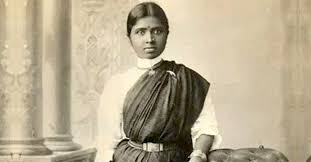
Death anniversary of Dr Muthulakshmi Reddy

Here's The Inspiring Story of India's First Woman Legislator ...

Today 22nd july, the death anniversary of Dr Muthulakshmi reddy. A surgeon, an educator, a social reformer and much more, Dr Muthulakshmi Reddy was a multitalented human and a campaigner of women’s rights. Google Doodle honoured Dr Muthulakshmi, India’s first woman legislator and one of the first women doctors in India on her 133rd birth anniversary.

EARLY LIFE

Dr Muthulakshmi was born on July 30, 1886. She was the daughter of a Devadasi Chandrammal who was married to Narayanaswamy, the principal of Maharaja’s College in Pudukkottai. She was born in an age where the phrase ‘women must be seen and not heard’, was often bandied about and used as an excuse to subvert the true potential of women. Muthulakshmi was intimate with Devadasi culture and norms. Right from a young age, her keen mind and quick ability to grasp things made her a roaring success at school. Upon reaching maturity, she continued her education through home-schooling.

STRUGGLE TOWARDS HER DETERMINATION

Later, she defied her parent’s decision to get her married, choosing education instead. But being a woman, her dream to pursue education invited the silent outrage of the conservative society. Because of the strong social pressures, the Maharaja college refused to admit her despite the excellent academic record. It was only when Martanda Bhairava Thondaman, the forward-thinking Raja of Pudukkottai stepped in and ordered them to take-in Muthulakshmi, that the college grudgingly accepted her application. Thus, breaking all the stereotypes of that time, Muthulakshmi became the first woman ever to get admission to Maharajah College which was a men’s college in Pudukottai. But it was just a beginning. After completing her under-graduation, she sought admission to the Madras Medical College. She was also the first and only woman candidate in the Medical College in 1907. It was during her college years that Muthulakshmi formed a deep friendship with Sarojini Naidu and Annie Besant, two individuals whose personal philosophies would go on to influence many of her future endeavours. She became the first woman House Surgeon in the Government Maternity and Ophthalmic Hospital, Madras.
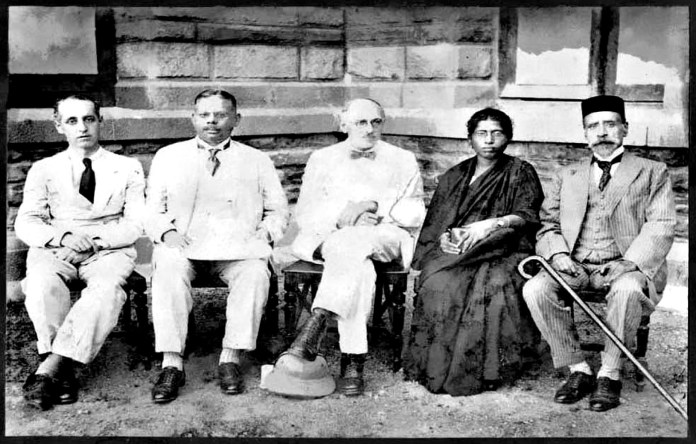
Later, she went to London to pursue Higher Education. Muthulakshmi came back to India upon a request from the Women’s Indian Association – an organisation she helped establish in 1918, to enter the Madras Legislative Council in 1927. She was elected to the post of Vice-President, making her the first Indian woman member of a Legislative Council. This event also marked her entry into politics and legislation after which, she made efforts to improve the lives of all women everywhere. In her capacity as a legislator, Muthulakshmi helped raise the minimum age for marriage for girls. Concerned about human trafficking, she pushed the Council to pass the crucial Immoral Traffic Control Act.

She was aware that even after the devadasi system was abolished, the deeply-ingrained prejudices against women still existed. In 1930, three devadasi girls knocked at her door seeking shelter and that’s when she realized that she needed to create a haven for countless young girls like them so she built Avvai Home. Today, Avvai Home has grown to include an educational complex that houses a primary school, a secondary school, a higher secondary school as well as a teacher’s training Institution. The home was primarily started for devadasis but now, its doors are open to all women who need assistance.
Having witnessed her sister’s untimely death due to cancer, she decided to open up a specialized cancer hospital. She dreamed of a place where anyone suffering from cancer would receive treatment, irrespective of social and economic status. In 1954, after overcoming several hurdles, Muthulakshmi’s dream came to life with the Cancer Institute. It was the second specialised cancer centre in India and the first in South India at the time. Today, Adyar Cancer Institute has 450 hospital beds, a full-fledged research division, a preventive Oncology department, and the Dr Muthulakshmi College of Oncologic Sciences. A countless number of cancer patients have been treated here and the numbers continue to grow.

Cancer Institute(WIA) Foundation, Inc. 100% Affliated with Cancer ...


For her countless contributions to society, she was awarded the Padma Bhushan in 1956. Muthulakshmi passed away in 1968 at the age of 81.

“Constantly breaking barriers throughout her life, Reddy was a trailblazer, who devoted herself to public health and the battle against gender inequality, transforming the lives of countless people, especially young girls”, Google said in its description on the occasion of her birth anniversary.

The Tamil Nadu government announced ‘Hospital Day’ celebrations to be held every year on July 30, the birth anniversary of one of the country’s prominent successful woman doctors in the early 20th century and the State’s first woman.


Though she is no longer with us, her legacy still lives on in every strong woman who fights for education and equality. Let us salute the woman whose vision and values have inspired and changed many lives for good!

17 Essential Tips for Young Entrepreneurs

Youth is the biggest resource of the Nation. Today’s generation is not only smarter but also ahead in innovation and dare to build their own empire at the prime of their youth. Though it takes a lot of efforts, a right amount of motivation and guidance can help the young budding entrepreneurs go a long way. Well who learn from than the experienced businessmen who started out at your age and now are known as the Young minds who made it to Big Shots.

Here are 17 essential tips for young entrepreneurs inspired by 17 people who made it under 17 years of age:

  • Dare to Dream:

Dr.A.P. J Abdul Kalam once rightfully said, ‘Dream is not what you see while sleeping, it is something that doesn’t let you sleep.’ Your dreams don’t have to look like anyone else’s. You get to define what success looks like in your life. Dare to dream your own unique dream of what living well looks like.

  •  Have a Vision:

The founder and CEO of Tumblr, David Karp, notes that an entrepreneur is someone who has a vision for something and a desire to create it. Keep your vision clear at all times. Having a vision means we have a clear sense of purpose.

It means we have a much larger picture of our business, than simply setting and reaching short term goals and tackling problems as they come along. In business, having a clear vision is absolutely critical. It is an extremely powerful tool to achieve the results you want.

  •  Do what you are Passionate about:

Where you care about DOING that thing, rather than what you get at the END of doing that thing. The dictionary definition of passion is “a strong feeling of enthusiasm or excitement for something or about doing something” The spark of passion when gets action it fires up and lights the way ahead.

  •  Take Action:

The world is full of great ideas, but success only comes through action. Walt Disney once said that the easiest way to get started is to quit talking and start doing. That’s true for your success as well. Work in silence, let your success make the sound.

  •  Face your Fears:

Overcoming fear isn’t easy, but it must be done. Arianna Huffington once said that she found fearlessness was like a muscle — the more she exercised it, the stronger it became.

  •  Take the Risk:

We never know the outcome of our efforts unless we actually do it. Jeff Bezos said it helped to know that he wouldn’t regret failure, but he would regret not trying.

  •  Believe in Yourself:

As Henry Ford famously said, “Whether you think you can, or think you can’t, you’re right.” Believe that you can succeed, and you’ll find ways through different obstacles. If you don’t, you’ll just find excuses.

  •  Rome was not built in a day:

No one succeeds immediately, and everyone was once a beginner. As Steve Jobs wisely noted, “if you look closely, most overnight successes took a long time.” Don’t be afraid to invest time in your company.

  •  Plan for raising funds & capital:

Richard Harroch, a venture capitalist, has this advice for upcoming entrepreneurs: “It’s almost always harder to raise capital than you thought it would be, and it always takes longer. So plan for that.”

  • Set goals and targets:

Ryan Allis, co-founder of iContact, pointed out that having the end in mind every day ensures you’re working toward it. Set goals and remind yourself of them each day.

  • Learn from your mistakes:

Many entrepreneurs point to mistakes as being their best teacher. When you learn from your mistakes, you move closer to success, since learning from failure is the first step towards succeeding.

  • Adapt to the market:

Bill Gates once said that your most unhappy customers are your greatest source of learning. Let unhappy customers teach you where the holes in your service are.

  • Put customer needs at the top:

“Customer is the king,” is the first rule of any market and business organizations.

  • Manage Energy, not Time:

Your energy limits what you can do with your time, so manage it wisely. Plan a proper schedule keeping your physical and mental potential as priority.

  • Invest your money wisely:

Investing your money can allow you to grow it. Most investment vehicles, such as stocks, certificates of deposit, or bonds, offer returns on your money over the long term. This return allows your money to build, creating wealth over time.

  • Be Consistent and determined:

       Consistency in your business is far more important that you can imagine. Being consistent allows you to establish awareness, build trust and deliver your services efficiently and profitably.

Whether you are establishing your brand or determining the course of your sales and marketing strategy, you have to recognise the power of consistency. Give yourself an advantage over fickle competitors by becoming consistent in how you operate your business, and what you present and offer to your customers.

  • Deliver more than expected:

Google’s Larry Page encourages entrepreneurs to deliver more than customers expect. It’s a great way to get noticed in your industry and build a loyal following of advocates.

Being a successful entrepreneur takes a lot of work, a lot of vision and a lot of perseverance. These 17 tips, from entrepreneurs who have already found success, will help you navigate the path much more easily.

5 SECRETS TO FINDING TRUE LOVE

Everybody desires to find their one true love with whom we can live our fairy tale of falling in love and living happily forever and ever. Welcome to reality my friends because these fairy tales exist only in movies and fiction stories.

Love is no fairy tale, so you can stop looking for a perfect “10” who fulfills all the qualifications on your wish list. It is possible, however, to find someone to stand by your side, brave the messiness of the world, and help you experience life to its fullest potential.

How do you work towards finding this ” someone ” ? Here are the 5 tried and tested secrets to finding your companian:

  1. BE REAL

To find real love, you must first emphasize your true self. If you want someone to love you through your moments of imperfection, you must first be willing to do that for someone else. Be real with yourself, so you are ready for someone else’s true self.

If you shift your personality, passions, or purpose to impress another person, you are not being your true self. People are attracted to genuine souls. Get to know yourself, love yourself, and learn to act and speak authentically.

2. BE CONFIDENT

Be confident in yourself, your decisions, and your ability to attract love into your life. If you are being your authentic, best self, this CONFIDENCE will radiate from you in a glow of SELF-WORTH. You will attract someone who recognizes, appreciates, and loves who you are.

Foster this confidence by knowing that you are whole and complete just by being you. Understand that a soul mate is nice to have, but not a must-have. You, alone, are enough.

3. BE OPEN

If your desire is to meet someone new, then you must be willing to connect and open up with the people around you. If someone next to you in the coffee line strikes up a conversation, be willing to engage. Even if that person is not to be the love of your life, practice BEING HONEST anyway. Developing this energy of openness will help you facilitate iterations that may lead to lasting relationships.

4. BE HAPPY

Perhaps the most important secret of this list is to be happy. Everyone wants to be around happy people; HAPPINESSS is magnetic. So focus your energy on thinking about and doing the things that make you happy. This energy of yours will also attract a similar kind of person which wiill only further amplify your life.

Will Smith said, “her happiness is not my responsibility. She should be happy and I should be happy individually. Then we come together and share our happiness. Giving someone a responsibility to make you happy when you can’t do it for yourself is selfish” let that sink in.

5. BE IN LOVE WITH YOURSELF

Loving yourself allows you to make healthier choices.When you put yourself first, you make choices that will only improve your quality of life. You eat better and sleep and exercise more because you realize that taking care of your mental and physical well-being are essential to your success.

By not loving yourselfyou‘ll create extra work for your partner because they‘ll have to pick up that slack and carry your weight. When you struggle with self-doubt and low self-esteem, your partner will have to work extra hard to make you happy.

The next time you enter a relationship, see to it that it will be with your true love already. This would save you from heartaches due to being with the wrong person.

Let love find you.
These tips can only help you increase the chance of finding the right person for you. However, there is no formula that can create true love. It just happens beyond conscious effort, and if handled well, it will surely last.

Do not try too hard on finding your true love. Let love find you, instead. And while waiting for it to arrive, focus on loving yourself.

Digitization with a human touch

A couple of days back, I was experiencing a bit of headache due to such long hours of online classes and so I decided to buy a pair of spectacles. During an online session, I just casually mentioned my intention when my friend suggested me to schedule an online appointment in Lenskart. I was a bit surprised that I failed to think about that in the first place, so I said I will check that out. So booked an appointment today and waiting for their response.

Now one might think that this is so weird because this method of digital appointment and 3D trying existed for such a long time and that’s true, no doubt. But what’s surprising is that, may people, including me, who looked for things in offline mode, they are now resorting to try out even the rarest of things in the online mode. We are constantly being surrounded by technology and all kinds of buzzwords “WFH”, “webinar”, ‘zoom’, ‘virtual coffee break’ and so are constantly bugging our life. We are progressing towards ‘humanized technology’ where technology, especially Artificial Intelligence, is completely integrated with a normal human life.

That being said, technology also needs to adapt to human life, meaning that the technology should also be human-friendly. Just engineering a technology to do human-like work will not help, rather it should also be capable enough to assist the humans in every possible way. Multiple reasons exist as to why such integration or amalgamation between technology and human is necessary. Firstly, for convenience. Human being are such generations who need specific information in the fastest and efficient way possible. So technology should be streamlined in a way to alleviate the situation. Presently, Microsoft and Google are looking out for such avenues. Second, is the simplification. We always look up to technology when we face any complex situation because we have always known technology to reduce the complexities of our lives. Since we are dealing with apps and software all the time, organizations should pay heed to the situation so that we, human being can find it easy to search and asses the information. Thirdly, emotional quotient factor. Technology is in fact great when it comes to assess human beings, especially during performance appraisal process, to provide the ratings. Now since we have converted our homes to cubicles, it is imperative that surveys which previously used to work, will fail. Technology should be leveraged to use emoticons and mood sensors to understand the non-verbal cues as well as which emoticons they use to respond to certain events. Fourth, and last but not the least, which is the most important is inclusion. Not all of us are tech-savvy. Many are trying to learn and grasp the technical way outs. It is very important that technology creates an inclusion environment so as to make them relevant in the workforce.

To summarize, we might be progressing rapidly towards the digitization phase, but we should not forget the human aspect to bring about this change. Both has to exist concurrently.

Without the other, one cannot exist.

Source: Self

Best low-risk Investments in 2020

Due to the Corona Virus Global Pandemic 2020, our economy has faced unprecedented challenges. With businesses shutting down and stocks facing a fall, INVESTORS are looking for stability in their returns by opting for low-risk investment options. Low-risk investments earn only modest or meager returns; and inflation can erode the purchasing power of money stashed in low-risk investments. But it all depends on what your economic requirement is and how much risk you are willing to accept.

Photo by Pixabay on Pexels.com

Lets dive into the top low-risk Investments in the year 2020.

  • High YEILD Savings Accounts.

Savings accounts offer a modest return on your money. A savings account is completely safe in the sense that you’ll never lose money. Most accounts are Government insured up to certain limits, so you’ll be compensated even if the financial institution fails.

  • Saving Bonds

Scrictly speaking rather than investments these bonds are more like saving instruments. Bond is a good choice for protection against inflation because you get a fixed rate and an inflation rate added to that every six months.

  • Certificate of Deposits

With a CD, the bank promises to pay you a set rate of interest over a specified term if you leave the Certificate of deposits intact until the term ends. Some savings accounts pay higher rates of interest than some CDs, but those so-called high-yield accounts may require a large deposit.

  • Money Market Funds

Unlike a CD, a Money market fund is liquid, which means you typically can take out your funds at any time without being penalized. Money market funds usually are pretty safe. The bank tells you what rate you’ll get, and its goal is that the value per share won’t be less than $1.

  • Corporate Bonds

Companies also issue bonds, which can come in relatively low-risk varieties (issued by large profitable companies) down to very risky ones. The lowest of the low are known as “junk bonds.” When you buy a corporate bond, you’re loaning money to the company. In return, you receive periodic interest payments until the bond matures and your principal investment is returned.

  • Dividend paying stocks

A dividend is a portion of a company’s profits paid out to the company’s shareholders. When a company makes a profit, it can choose to reinvest that profit back into the business, but sometimes it pays a percentage of it back out to shareholders. Not every company pays dividends, but those that do often have slow, reliable growth.

  • Preferred Stocks

Preferred stock is more like a lower-grade bond than it is a stock. Still, it may fluctuate substantially if the market falls. Like a bond, preferred stock makes a regular cash payout. But, unusually, preferred stock may be able to suspend this dividend in some circumstances, though often it has to make up any missed payments.

Building an investment portfolio that has at least some less-risky assets can be useful in helping you ride out the volatility in the market, and there’s been no shortage of that this year.

Abortion – The Debate on the Sole Choice of the Mother

Abortion is the term used to identify the act of intentionally interrupting pregnancy and not allowing the embryo or foetus to continue its normal process. The definition clearly recognizes only women reproductive parts giving a clear message that it only affects the women. But the question is whether it is actually true and justified from a general point of view. 

Up to some extent, we find the world comfortable with the debate being a sole decision of the mother because there is no proper legislation regarding it yet. Our Legislation gives special Right to Women in order to encourage them to be at par to men in day to day life but no where does it mention that Men should compromise for the same. What is fair should remain fair according to law. If it is a “women’s choice” whether or not she wants to become a mother then it is also a man’s choice whether or not he wants to become a father.

When a father doesn’t have an opportunity to express his opinion it only disapproves that he as a human, can have feelings. It is totally unjust that he doesn’t have a preference in the birth of his own child. In the support of my argument, there are provisions that I feel can be enforced. Like, if both parents choose to have an abortion then the child is aborted where both of them have an equal share in costs of the procedure. But if the mother chooses to have an abortion and the father wants to keep the child then she shall not be required to fund any part of procedure or any costs that may arise from it. Similarly, if the mother chooses to keep the child but the father wanted the abortion, then the father shall have zero legal or financial obligations from the day forward. In each case, the father shall likewise be recognized, and his choice duly recorded as a matter of legal record.

Another point to give light to is, when we claim that it is only about the mother’s choice, we tend to deny the whole of father’s responsibility in the scenario. Perpetually like that men need to stay out of the discussion about abortion because it is a woman’s body is not only untrue, it is catastrophic for generations to come. It is a sort of hindrance to the society we need for its utmost development. What we need is a generation of young men who honour ladies by helping them protect the precious gift of their sexuality as it was intended to be. We need a generation of young men who will not treat women like objects but honour them with dignity and respect. A generation who will not run away when they get a woman pregnant or pressure a woman to end their life. We need a generation of men who will love their unborn child and go to utmost lengths to encourage the mother to have their baby. They must be willing to help raise the child or place the child for adoption. In addition to that, we also need a generation of women who will encourage men to take responsibility and show the sacrificial love and empathy that ought to mark men, not push them out of the conversation of abortion.

Though abortion uniquely affects women, it is not only about women. It is also about the child in her womb, and the child’s father. Because in the end, it is her body but it is THEIR baby.

HOME UNDER JUVENILE JUSTICE ACT

Addressing the lack of safe shelters for children in conflict with the law, the court urged every state to evaluate the condition of their Child Care Institutions as well as to provide education, healthcare, and proper nutrition to its residents. The court reiterated that government registration in accordance with the provisions of the Juvenile Justice Act was compulsory for child care institutions run by individuals or NGOs to avoid incidents of trafficking or child sexual abuse.

Shelter Homes

While a large number of urban marginalized children are in need of day care services, there are many others who require residential care for a temporary period for one or more reasons. These include children without parental care, run away children, migrant children, and child substance abusers etc. The Juvenile Justice (Care and Protection of Children) Act 2000 empowers State Governments to recognize reputed and competent voluntary organizations, to cater to the needs of such children. The State Government shall provide financial assistance to set up and administer
Shelter Homes for such children. At least one such Shelter Home in the State is to be notified and designated by the States/UTs as a Home for the care, detoxification and counselling of children affected by substance abuse. These Shelter Homes shall offer day and night shelter facilities to the children in need of support services for a temporary period, while efforts are made to rehabilitate them. In order to facilitate and expedite the setting up of Shelter Homes in every district or group of districts, the scheme shall provide financial support to the State Governments and Union Territories.

Children’s Homes

A large number of children in need of care and protection who enter the juvenile justice system through the Child Welfare Committees (CWCs) are in need of residential care and protection during the pendency of any inquiry and subsequently for their long-term care, treatment, education, training, development and rehabilitation. The Juvenile Justice (Care and Protection of Children) Act 2000 empowers the State Government either by itself or in collaboration with voluntary organizations to set up Children’s Homes in every district or group of districts for the reception and residential care of such children. These homes shall serve as a home away from home and provide comprehensive child care facilities to children for ensuring their all-round development. They shall work towards enhancing the capabilities and skills of children and work with their families with the view of facilitating their reintegration and rehabilitation into mainstream society.
Children in conflict with law who enter the juvenile justice system through the Juvenile Justice Boards (JJBs) are in need of adequate residential care and protection during the pendency of any inquiry regarding them under the Juvenile Justice (Care and Protection of Children) Act 2000. The Act empowers the State Governments to establish and maintain either by itself or under an agreement with voluntary organizations, observation homes in every district or group of districts for their temporary reception. In order to facilitate and expedite setting up of Observation Homes in every district or group of districts, the scheme shall provide financial support to the State Governments and Union Territory Administrations.

Observation homes

The State Government shall establish and maintain in every district or a group of districts, either by itself, or through voluntary or non-governmental organisations, observation homes, which shall be registered under section 41 of this Act, for temporary reception, care and rehabilitation of any child alleged to be in conflict with law, during the pendency of any inquiry under this Act Where the State Government is of the opinion that any registered institution other than a home established or maintained under sub-section (1), is fit for the temporary reception of such child alleged to be in conflict with law during the pendency of any inquiry under this Act, it may register such institution as an observation home for the purposes of this Act. The State Government may, by rules made under this Act, provide for the management and monitoring of observation homes, including the standards and various types of services to be provided by them for rehabilitation and social integration of a child alleged to be in conflict with law and the circumstances under which, and the manner in which, the registration of an observation home may be granted or withdrawn. Every child alleged to be in conflict with law who is not placed under the charge of parent or guardian and is sent to an observation home shall be segregated according to the child’s age and gender, after giving due consideration to physical and mental status of the child and degree of the offence committed.


Special Homes

Children in conflict with the law committed by the Juvenile Justice Boards (JJBs) for long term rehabilitation and protection require institutional services. The State Governments are empowered to establish and maintain either by itself or under an agreement with voluntary organisations, special homes in every district or group of districts for the reception and rehabilitation of juveniles in conflict with law.
In order to facilitate and expedite setting up of Special Homes in every district or group of districts, the scheme shall provide financial support to the State Governments and Union Territory Administrations.

Place of Safety

As per section 16, of the Juvenile Justice (Care and Protection of Children) Act, 2000, the Juvenile Justice Board is empowered to place a juvenile above the age of 16 years in a Place of Safety, if the Board is of the opinion that the seriousness of the offence and/or the said juvenile’s behaviour, makes it unsuitable for them to be placed in a Special Home. A ‘Place of Safety’ is any place or institution, (not being a police lockup or jail), established separately or attached to an observation home or a special home, the person in-charge of which is willing to receive and take care of the juvenile in conflict with law placed there, by order of the Board, for a period and purpose as defined in the order.
The Act also states that the State Government may arrange to place a juvenile referred to it by the Board, in a ‘Place of Safety’, which has been declared fit by the State Government for such purpose, and may order such juvenile to be kept under protective custody, at such place and on such conditions, as it deems proper. The State Government may, by rules, prescribe the types of places that can be designated as ‘Place of Safety’ and the facilities and services that may be provided therein.

Boon of the Mid-Day Meal

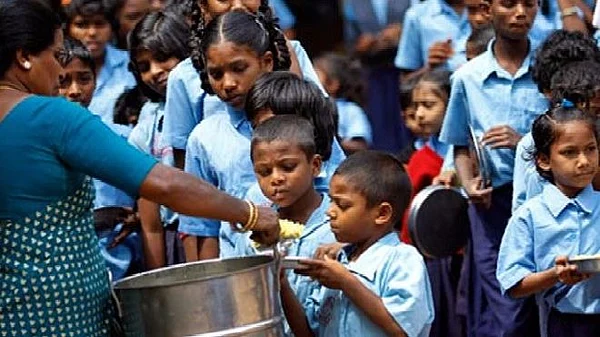
The very concept of Mid-Day Meal scheme was introduced on the year of 2000 by Akshaya Patra Foundation and was later passed as a mandate by Supreme Court of India on the year 2001. The sole purpose of the scheme is to provide wholesome freshly cooked hot lunch to all the students in the government and government aided schools in India. Usually the meal should be a whole mix of carbohydrates, proteins and various vegetables as per the bodily requirements of the children. The goal of such a scheme was to encourage the parents to send their wards to schools, to increase the school attendance and to do away with the norm of child labour, to prevent the child from being hungry at the time of attending the classes and thus to avoid malnutrition, and finally to improve the socialisation among the castes and last but not the least, to promote women empowerment.

The ultimate goal – to provide at least one of the three daily meals required for the proper growth of the children.

The scheme was institutionalized by the designated states and the schools and things were going fine until the pandemic hit the world. During the month of March, the lockdown was declared by the nation and there rose comprehensions among the low wage workers. They were worried about one of the most important thing on earth – what will happen to our mid-day meal and how can we arrange food for our children? The reason being the mid-day meal was one of the main reason as to why their parents sent their wards to school and they were worried about how to relinquish their daily requirements. But, like a godsend, the Government of India declared that even though the schools will be closed owing to the social distancing, the schools will still have to arrange the benefit of mid-day meal or any other substitute of equal value to the children and their families. Not only that, the Government also passed that if and when necessary, required assistance will be rolled out for the underprivileged.

Mid Day Meal: Latest news updates on Mid Day Meal - The Quint
Mid-Day Meal Scheme

The Government of India rolled out various schemes under which various states had to provide the mid-day meal scheme to the students. Some of such initiative are:

  • West Bengal – Ensured the distribution of the meals to their wards’ home amidst the curfew.
  • Odisha – Facilitation of Public Distribution System (PDS).
  • Chhattisgarh – Provision of mid-day meal to the parents of the children for about 40 days, with the difference in quantity by the primary and higher secondary school.
  • Kerala – Delivery of meal supplies to homes of their children.
  • Bihar – Transfer of the monetary amount of the mid-day meal, as a substitute of the food, to the accounts of their parents.
  • Maharashtra – Provision of the meals only to rural children.
  • Assam – Provision of mid-day meals to about 40 lakhs students.

Each and every state has taken the initiative to make sure that the meal reaches their students at times of distress. There also exists an underlying fear among the administration that if the meal is stooped, then it will automatically lead to the un-enrolment of the students whose attendance is already irregular and this will definitely push up the levels of illiteracy and unemployment.

States are putting in continuous efforts to make this journey smooth for the students. For instance, West Bengal has announced the decision to provide masks, sanitizer, as well as basic protein items such as pulses, soya bean which will be handed to the parents. They are going an extra length by providing stationery items to those students affected by Amphan.

It is very responsible on the part of Government of India to ensure the provision of mid-day meal and this help will definitely go a long way to build the future of India.

Source: https://timesofindia.indiatimes.com/india/bengal-government-to-add-mask-soap-to-mid-day-meal-items-in-covid-19-time/articleshow/76328492.cms

https://www.biharedpolcenter.org/post/covid-19-how-are-states-ensuring-midday-meals

New Domestic Cleaning Technologies That Help Save Water

Technology has always aimed in making our lives better – be it the automatic machines or smart devices- appliances have long brought convenience to our lives. 

But in the World of Climate Change and Environment preservation, we need technology to focus on Sustainability in order to save resources for the future generations.

CLEAN WASHING, LESS WATER

Washing Machines and Dish Washers have gained popularity across various parts the country due to their efficiency and convenience. But are they also water efficient?

The advertisements for various washing machines now have started to show how one can save more than two buckets of water when the clothes are washed in the machine as compared to when they are washed by hand. Dishwashers nowadays use ultrasonic technology to reduce consumption of water while making sure there is no reduction in the efficiency of cleaning. Due to technology we have been able to invent appliances that help in deeper cleaning and use less water.

DAILY ROUTINE, WATER WASTAGE

Right from brushing our teeth to taking a shower we use water that very conveniently reaches our house in pipes and showerheads

But not to worry about saving water anymore as the latest achievement in the field of technology is OPTIMIZED showerheads designed to maintain the flow pressure while drastically reducing the water consumption. One can research and purchase the one which best suits your showering needs and also saves water.

FLUSHING ACTION, SMART SOLUTION

Technologists have been continuously working towards designing a flush system to produce an alternative which is more hygienic and water-efficient in its operation. 

Apart from standard improvements, there are new water treatment systems being developed which could help recycle sink water to flush toilets in Indian homes in the near future. Such a system would save gallons of water, while making the required amount available for comprehensive and hygienic flushing action.

SUSTAINABILITY BEGINS AT HOME

The simplest method for conserving water is to turn off the tap whenever possible.

Running the water when you’re brushing your teeth, for example, wastes at least a quart of water. That may not seem like much, but it can really add up over time: a family of four could save at least 60 gallons of water a month by simply turning off the faucet.

FLOWING FAUCETS

New faucets utilize several different kinds of aerators, but all conserve water without sacrificing pressure. Older faucets use three to seven gallons of water per minute, while newer ones can cut that to around two gallons per minute, or even less.

WASTING WATER FOR WASHING WASTE

New low-flow toilets use 1.6 gallons per flush. They work as well as the older types but use considerably less water. Homeowners can also consider using dual-flush toilets, which offer two settings, depending on the type of waste in the bowl.

WATER HEATER, PRESERVE DROPS

A small pump that runs on minimal electricity can be attached to your hot water system and can help keep hot water circulating when it’s not in use. This prevents waste of up to 10 gallons of water while waiting for the shower to heat up. Tank less water heaters offer the same convenience, but cost more; a recirculation system can be sometimes be installed for as little as $300.

FIX LEAKS, SAVE GALLONS

Have water leaks in your home fixed right away. Even a tiny leak can quickly add up to a huge amount of wasted water. A faucet leak of just one drip per second can waste more than 2,000 gallons of water in a year, according to the U.S. Geological Survey.

These are some of the latest technologies that have brought the twin objectives of more hygienic homes and water conservations to the fore. As more manufacturers innovate, such technologies are projected to become standard in all Indian homes. Helping create cleaner homes at the cost of less water is also a mission of MODERN TECHNOLOGY AND SCIENCE, a movement dedicated to creating a more sustainable future for our water resources. You can also support such initiatives they’ve undertaken and join in to help conserve water for a healthier tomorrow.

Knowing about the Government schemes launched during COVID-19

June 2020 has seen two important government initiatives for the every-day earners for food in news. They are the Garib Kalyan Rojgar Yojana and the PM Street Vendor’s Atmanirbhar Nidhi.

First on the list is the Garib Kalyan Rojgar Yojana.  It is a central government initiative taken amidst the pandemic circumstances. The Abhiyaan was launched by the Prime Minister in June from Telihar in Bihar. As so the title suggests, the objective of the Abhiyaan is to secure, empower lives by providing livelihood opportunities. The scheme is specifically launched for that population of the country whose areas or villages have witnessed the return of a large number of migrant workers after the citizens were no longer employed following the lockdown announced for the devastating Covid-19.

This campaign is sought to be one of the components of Rs 1.70 lakh crore package under Pradhan Mantri Garib Kalyan Yojana which was set to help the poor fight against Corona Virus Pandemic.

The Campaign is nothing but a massive employment -cum- rural public works in which the public works are to be undertaken with an aim of generating a resource envelope of minimum Rs 50,000 crores. The campaign would involve 125 days of work. The public works will supposedly include rural housing for the poor along with the provision of providing drinking water through the already established Jal Jeevan mission. The infrastructure of Panchayat Bhavans, rural mandis, community toilets, rural roads, etc. are sought to be developed.

The initiative is hoped to cover 116 districts in 6 states – Uttar Pradesh, Bihar, Rajasthan, Madhya Pradesh, Odisha and Jharkhand. There are 27 aspirational districts hoped to be covered under this initiative. The mentioned are estimated to hopefully cover about 2/3 of the unemployed migrant workers. A major emphasis has also been put to the rural infrastructure. The initiative will have 25 different types of public works which is specifically to create infrastructure and importantly boost livelihood opportunities in the areas.

High speed and cheap internet are also part of the maintenances to be provided in every rural household. Thus, there shall be laying of fibre cable.

The campaign however would require a Multi-Ministerial Effort between different Departments of the Government with Ministry of Rural Development as the nodal Ministry along with the other ministries such as Panchayati Raj, Mines, Road and transport etc.

Second on the news was the PM Svanidhi. The initiative PM Street Vendor’s Atmanirbhar Nidhi was launched by the Ministry of Housing and Urban Affairs. It is launched with the aim of introducing a special micro-credit facility Scheme which would provide affordable loans to the street vendors, who recently went on losses or no business at all since the wake of the COVID-19 crisis. This scheme will thus enable the street vendors to resume work and earn their livelihoods.

The beneficiaries will include over 50 lakh people which would include the vendors, hawkers, etc. who work to supply fruits, vegetables, ready-to-eat street foods etc in the markets. It would also include the business of service providers like barber shops, laundry services etc.

The scheme shall be available for beneficiaries belonging to only those States and Union Territories which have notified been under the Rules and Scheme provided under Street Vendors Protection of Livelihood and Regulation of Street Vending Act in 2014.

The vendors or the hawkers can avail a loan (working capital) of up to Rs. 10,000 which is subject to be repayable in monthly instalments within the tenure of one year. On timely and the early repayment of the loan, credit limit was claimed to be raised and interest subsidy to be given at the rate of 7% per annum which ultimately shall be credited through Direct Benefit Transfer on a quarterly basis. 108 cities were selected, and the loan disbursement was planned to commence in July, 2020.  The eligible lenders were rated as the bank such as Regional Rural Banks, Small Finance Banks, Non-Banking Finance Companies, Micro Finance Institutions established in some States and Union territories.

The Small Industries Development Bank of India (SIDBI) is an implementation agency. It was developed to manage the credit guarantee approved to the lending institutions through Credit Guarantee Fund Trust for Micro and Small Enterprises.The SIDBI was developed through an Integrated PM SVANidhi portal. The Portal was developed to integrate  credit management and PAiSA portal of MoHUA to administer the interest subsidies automatically.

Approaching opposite gender

Why can’t I speak to opposite sex? What is the reason for it? What is it stopping many of us to atleast reply them in a gentle manner? I too don’t have a answer but the answer to my question lies in question itself. Is it shy or fear which is taking us far from here? These are common and frequently faced question by almost every individual.

When you can’t face you will never face it. If you face it now you will never have to face it again. Facing now will make you face it forever and will not make you feel as though you are facing it. If you have no wrong intention then you will feel free to talk. Feeling insecure about the opinion of the person whom you wanna talk will make you feel about yourself what you feel about the feel the other person gonna feel. But he’s never gonna feel because you will never gonna speak. It’s just a feeling that you feel that will be never felt by other person. If you can speak then speak, if you can’t speak then sont think about it. Wasting time on something that you will never do is something that you never get. It will happen all of sudden. If it is meant to happen it will happen for sure. Thinking about something that you can’t do unless some force make you do so is mere waste. Don’t wait for the moment because the moment happens when it wanted to.

Feel free to make a move. Have guts to do something that is not wrong. Doing something that never gonna harm others is acceptable and it’s never done because people beleive it as some wrong thing. Speaking to speak is good but speaking for the purpose of wrong intention is wrong. If you speak something that is not wrong then no one treats you in a wrong way. If you can’t speak and it’s not intended then atleast there will sometime in future where a situation arises where you have to speak because it had to happen. The only thing is stop wasting time on thinking on how to approach opposite sex to talk. It’s as simple as that. If you can, you will. If you can’t, you can’t. Don’t think of it, if it’s intended then it will happen. Daring at the moment will make you comfortable not inly to thay moment. The intensity of comfort increses as the fear decreases. Everything is normal unless you feel it so.

Battling COVID with stardom

Millions across the world, rich and poor, younger and older, does not matter where, we are always facing the lurking danger of coronavirus infection. It is causing a tumultuous effect on the day to day lives of people, with increasing healthcare costs, decreasing accessibility to the proper healthcare facilities, rising prices of commodities and the ever increasing number of deaths every day. Poverty has hit its record in India and with time, there is a rising inequality in the provision of treatment, thus leading to preferential treatment.  

But what is most astonishing is the fact that this diseases which was, at first, more common among the higher ranks of the society is spurring troubles among the lower ranks. Over the past few weeks, I could see a stark difference in the mode of treatment among the various ranks of the society. Consider the low wage or daily wage and the migrant workers. On the event of such a pandemic, they lost their sole earning potential, had to be transported back to their roots in ways that was unimaginable and even back at their home, poverty has reached the zenith of their lives. They basically had to pay their own fairs, which was multiple of the usual fares and they have to arrange for their own sanitation kit at the time, when they could not even afford the basic kit required for their survival. They are facing great uncertainties in their lives owing to stoppage of income, lost employment opportunities, educational hurdles of their children and many more. There were instances when the migrants tried to return to their homes walking on foot from the working locations and then losing their lives. It is very heart wrenching to see that how the lower sections of the society have to wait for uncountable hours just to get the basic treatment in the hospitals, and most of the times they succumb to their lives. Even for medical reasons other than COVID, they are being kept in isolation and the doctors do not even care to provide the basic treatment necessary to keep that patient alive. Such is the pathetic condition, not just for them but for all the common public.

And I am simply amazed to see how our own Bollywood is treating the entire pandemic. It seems like it’s a kind of spring break for them where they have been asked to do whatever they can. Many such pompous and self-centred Bollywood actors resorted to making videos such as washing the dishes when the bai is unable to come or when they are cooking some dish, which apparently we do it almost every day and then there are others who make their son playing an instrument while she teaches him how to do classical dance. And the worst part of it all is that, they all chant the same thing as to stay inside, wear mask, frequent sanitisation and doing things at home to keep mental stress at bay, but what they are forgetting is that they might have the opportunity to stay away at Disneyland, but others have to go out of their safe haven and do something to survive. Recently, a top notch Bollywood actor was tested positive for COVID and he and some of his ‘beloved’ family members had to be admitted to the hospital. He was tested on a regular basis for COVID and his family was getting the best medical care possible. The most surprising element of this news is that, first, it was broadcasted as a breaking news almost on all the national news channels and second, all the people were desperately praying for him and his family. Such is the disparity.

My only concern is in the fact that where is the praying when it comes to the ordinary people? People who are actually working for us, where are we when we need them? Why such disparity, even when the soul is not labelled?

Alas, our society still thinks actors are ‘heroes’.

Source: Self

MOST LOW-PRICE & AFFORDABLE INTERNET IN THE WORLD

Internet has become the most essential virtual commodity due to the Global Pandemic 2020. Its demand has reached a peak now more than ever. It has been declared as the basic necessity along with Food, Clothing, Shelter and Education.

In most Countries, schools and colleges are functioning through digitalized classrooms which require high speed data. 75% of office goers are working from home and the servers that connects the employers to the employees is kept alive on internet connections.

How can everybody afford the Internet? A recent report by Visual Capitalist reveals how much 1GB of mobile data costs in every country. Let’s have a look at what it costs to stay virtually connected in many Countries of the World:


1) India:

The Visual Capitalist report states that India has the most-affordable mobile data plans worldwide. India offers 1GB mobile data for just under Rs. 7, which is the cheapest in the world.

 Why is data so cheap in India? A significant factor is the country’s intense market competition, driven by Reliance Jio—a telecom company owned by Reliance Industries, one of the largest conglomerates in India. Reliance Jio launched in 2016, offering customers free trial periods and plans for less than a $1 a month. This forced other providers to drop their pricing, driving down the overall cost of data in the region.


2)  Sri Lanka:

Mobile internet in India’s southern neighbouring country, Sri Lanka, costs roughly Rs 38 per 1GB data. Some of the biggest Telcos in the country are Dialog, Airtel Lanka, SLT Mobitel, etc.


3)  Russian Federation:

1GB of mobile data plan in Russia costs roughly Rs 39. This makes Russia the ninth most-affordable country for cheap mobile data plans. Some of the biggest telecoms in the country, which is the fourth biggest smartphone market, are Mobile TeleSystems (MTS), Beeline, MegaFon, etc.


4)  Vietnam:

Mobile Internet in Vietnam costs roughly Rs 43, which according to the latest data, ranks 10th in the list of countries that offer the most affordable 1GB data plan. The biggest telecom operators in the Asian country are Viettel, MobiFone, Vinaphone.


5)  Italy:

Italy ranks fourth in the list of countries that offer the most affordable data plans worldwide. In Italy, 1GB of mobile data Rs.32.


6)  Israel:

 1GB of mobile data in Israel costs roughly Rs 8, making it the second most-affordable nation for internet usage.


7)  Ukraine:

Ukraine shares a similar per GB mobile data tariff cost as Kazakhstan, where 1GB mobile data costs Rs 34.


8)  Somalia:

1GB mobile data in Somalia costs roughly Rs 38, slightly cheaper than Sri Lanka’s per GB cost. The biggest telecom operators in the African country are Hormuud, Telecom Somalia, etc.


There has been a significant surge in the number of internet users over the last few years, which has led to telecom service providers competing against each other and lure consumers with the most value-for-money packs. the internet in India is quite affordable if you compare it with the rest of the world. 

TIPS TO FIND YOUR PASSION

Some people are born understanding their passions, but others have to work to find them— and it is overwhelming to consider how to begin. The first step is to start. Below are five tips to help you on your journey to finding work and hobbies you are truly passionate about:

1. WHAT DO YOU DO WELL?

This question helps you uncover that unique talent that sets you apart from others. Perhaps you’re good at public speaking or motivating others. Or maybe you’re good at finding computer bugs or supporting your friends through tough times. Whether you have a hard or soft skill, knowing what you do well will put you on your way to using your talent in your purpose.

2.   WHAT DO THE PEOPLE AROUND YOU SAY ABOUT YOUR SKILLS?

Unfortunately, it can be hard to recognize your own talent. When something comes naturally, it doesn’t always seem special. To get some help, ask your family or friends what they think you’re good at doing. This question gets to the heart of recognition “Most of us are not self-aware,” says Maxwell. “We all have blind spots, but you can ask others to help you identify your talents. “Ask several people, suggests Maxwell. When you start to hear certain talents over again, you’ve identified an area of strength.

3.   IF YOU COULD DO OR BE ANYTHING, WHAT WOULD YOU DO OR BE?

This question taps into your internal desires, and can help you identify your purpose. A good way to answer this question is to consider those things you like to do in your free time or the projects at work you volunteer for or seek out. You can also think about the spots in the day when time seems to fly—what are you doing when you get lost or immersed in a project?

These things should also align with your talent, and it’s important to not confuse purpose with passion, says Maxwell. “Sometimes your passion is something you’re not any good at,” he says. “If you’re passionate about something you’re not good at, you can make it a hobby, not a career.”

4.  WHAT GIVES YOU RESULTS WHEN YOU DO SOMETHING?

Your purpose will give you a return, and this question helps you identify the things you do that generate results. For example, if your talent is sales, you likely hit your goals every month. Or if you are good at innovative thinking, you might share ideas at work that prompt new projects. Pay attention to the tasks you do that get you accolades and awards.

Strengths and purpose are more than knowledge, says Maxwell. “Knowledge is overrated,” he says. “I can ask Siri, and she’ll tell me what I need to know. But what value is something if you know it but don’t use it? The result of knowing or learning is action application.”

5.   HOW CAN YOU GET BETTER?

Once you identify your uniqueness, you need to fine-tune and work harder at it to set yourself apart. While having talent helps make you special, developing it further can make you strong. “Your growth potential is connected to your strengths,” says Maxwell. “In your weak areas, your growth potential is low, but when you’re working to improve your strength, you have a higher capacity.”

Mark Twain once said the two greatest days in a person’s life are the day they’re born and the day they discover why. Deep? Definitely. But let’s be honest: the first day is a somewhat passive experience. The second day, however, can feel like a lot of pressure. While some of us can quickly identify our purpose (in our careers, or otherwise), others may struggle to answer the question “Why am I here?”

No one has ever been successful doing something that they didn’t like, and no one has ever been successful doing something they can’t do well, says Maxwell. “I see millions of people every day doing something they don’t like doing and wondering why they’re not a success,” he says. “Success is knowing your purpose in life and having a growth plan to help you reach your maximum potential.”


Human Rights Violations

“We can disagree and still love each other unless your disagreement is rooted in my oppression and denial of my humanity and right to exist.”

James Baldwin

What are Human Rights?

We learn social and moral cues from our environment. No one teaches us norms, things that come “naturally” to us. However, the basic freedom that everyone needs can’t be left up to the general public. They need to be written down and strictly monitored. 

Human Rights are basic rights each person deserves and gets, to live, express, study freely, and more.

Towards the end of World War II, the UN and other organizations created the Universal Declaration of Human Rights as the Universal Constitution. 

There are 30 Rights given to each individual and they are entitled to them regardless of their sex, age, orientation, colour, or any other differential characteristic.

Why is Human Rights important?

Every person is unique and so is every culture, religion, and nationality. These differences and the human urge to control and dominate makes it hard to maintain human rights for everyone. So a list was of articles were made to ensure:

  • Everyone is treated with respect and given equal opportunities
  • Protects those vulnerable from exploitation
  • Give citizens the opportunity and support to stand against societal corruption and inequality
  • Encourage freedom of speech and expression
  • Provide an opportunity for education
  • Allows everyone to practice their religion or any other practice
  • Allow people to love, marry, and start a family with whomever.
  • Encourages equal work opportunities
  • Protects the environment
  • To protect the world from having another war.

Who governs the Human Rights? How to Protect Human Rights?

The UN has set up a lot of committees that govern Human Rights. 

  • Office of the UN High Commissioner for Human Rights (OHCHR)
    • The OHCHR is most responsible for promoting and protecting human rights.
    • The High Commissioner of Human Rights regularly comments on Human Rights situations in the world and has the authority to investigate situations and issue reports on them.
  • Human Rights Council
    • Established in 2006, is the key independent UN intergovernmental body responsible for human rights.
  • Human Rights Treaty Bodies
    • Is the committee of independent experts that monitor implementation of the core International Human Rights Treaties.
  • Special Procedures
    • Experts working voluntarily, who examine, monitor and publicly report and advice on Human Rights
  • UNDG-HRM
    • UN Development Group’s Human Rights Mainstreaming Mechanism pushes the mainstreaming efforts within the UN.

Enforcing International Human Rights:

  • The International Bill of Human Rights
    • The first legal document protecting universal rights
  • Democracy
    • Democracy is the ultimate means of achieving the 3 pillars of the UN Charter, international peace and security, economic and social progress, and development. 
  • Security Council
    • Main duties involve dealing with grave human rights violations. 
  • Third Committee of the General Assembly
    • Examines a range of issues including human rights questions.
  • Other Bodies
    • Secretary-General, General Assembly, Economic and Social Council, Member States, The United Nations Permanent Forum on Indigenous Issues are a few other committees that work to maintain the UDHR’s promise of providing each individual all the Human Rights.

Retribution for Violations:    

Violating Human Rights not only weakens a country’s strength, but also affects an individual socially, emotionally, and economically. Human Rights are set in place to protest people, breaking them causes deep psychological trauma for years to come. African-Americans freed from slavery centuries ago, still are restricted and living lives fighting systematic racism each day.

In 1996, the International Criminal Court (ICC) was created to prosecute any human rights violator. “The ICC is authorized to try crimes against humanity, genocide, war crimes, slavery, mass rape, torture, and racism.”

The ICC can prosecute any individual, group, or government out of power and sentence them to prison (in their state) or death.

Why hasn’t Human Rights bettered the World?

Countries that are Violating Human Rights:

Almost every country is violating at least 3 human rights. Below is a list of violations from a few countries.

Australia

  • Denying basic rights to Asylum seekers and Refugees
  • Exploiting Indigenous people
  • Unreliable cyber surveillance
  • Lacking support and rights for Disabled citizens
  • Forced labor in the form of the recent Modern Slavery Bill

Brazil

  • Horrifying Prison Conditions
  • Prisoners face torture, assault, and unfair punishments
  • High rates of Juvenile Detainees
  • Reporters being made political prisoners
  • Denying basic rights to Asylum seekers and Refugees

Cuba

  • Illegal detaining
  • Denied freedom of speech and expression
  • An increasing number of political prisoners
  • Horrifying prison conditions
  • Exploiting workers

Democratic Republic of Congo

  • Denied freedom of speech and expression
  • Frequent attacks on civilians
  • Corrupted justice system
  • Women being denied basic rights
  • LGBTQ people denied basic rights
  • Disabled people being denied rights

El Salvador

  • Police Brutality
  • Horrifying Prison Conditions
  • Degrading prisoners and abusing them
  • Increasing gang violence
  • Women being denied basic rights and reproductive rights
  • Attacks on media

France

  • Flawed Asylum and Immigration Laws
  • Denying basic rights to Asylum seekers and Refugees
  • Flawed Child Protection services
  • Increased Sexual Assault and Rapes

Germany

  • Flawed Asylum and Immigration Laws
  • Denying basic rights to Asylum seekers and Refugees
  • Xenophobic culture
  • Illegal detaining
  • Corrupted Criminal Justice System

Haiti

  • Corrupted Criminal Justice System
  • Illiteracy
  • Women being denied basic rights
  • LGBTQ people denied basic rights
  • Disabled people being denied rights
  • Child Labor
  • Illegal detaining
  • Exploiting workers

India

  • Increased violence against Dalits, Tribals, Muslims and other marginalized communities
  • Denied freedom of expression
  • Police brutality
  • Women being denied basic rights
  • LGBTQ people denied basic rights
  • Disabled people being denied rights
  • Targeting political oppositions
  • Denied freedom of speech
  • High rates of Human trafficking
  • Corrupted Criminal Justice System
  • Child Labor
  • Illiteracy
  • Forced Prostitution and Begging
  • Increased Violence against women, LGBTQ and marginalized communities
  • Honour Killings
  • Denying Inter-Caste Marriages
  • Female Foeticide
  • Conservative Abortion Laws
  • Exploiting workers
  • Racist courts, hospitals, educational institutions, work places
  • Corruption
  • Poverty
  • Alarming rise in Sexual Assault and Rapes
  • Broken Healthcare System
  • Pollution
  • inconsistent access to food
  • Inconsistent access to sanitation
  • Regionalism, Casteism
  • Increasing addiction amongst the youth
  • domestic violence
  • Double Burden of Malnutrition

Japan

  • High rates of Death Penalty
  • Denied freedom of speech
  • Women being denied basic rights
  • LGBTQ people denied basic rights
  • Disabled people being denied rights

Kenya

  • Government controlled Media
  • Open threats to oppositions
  • Lack of accountability for rape and sexual violence
  • Women being denied basic rights
  • LGBTQ people denied basic rights

Libya

  • Armed Conflicts and War Crimes
  • Illegal Detaining
  • High rates of Death Penalty
  • Denied freedom of speech
  • Denied freedom to practice one’s religion 

Maldives

  • Targeting political oppositions
  • Denied freedom of expression
  • Women being denied basic rights
  • LGBTQ people denied basic rights
  • High rates of Human trafficking

Nepal

  • Changing Criminal Codes
  • Exploiting migrant workers
  • Women being denied basic rights
  • Disabled people being denied rights
  • LGBTQ people denied basic rights

Oman

  • Denied freedom of expression
  • Women being denied basic rights
  • Disabled people being denied rights
  • LGBTQ people denied basic rights
  • Exploiting migrant workers

Peru

  • Police brutality
  • Denied freedom of expression
  • Women being denied basic rights
  • Disabled people being denied rights
  • LGBTQ people denied basic rights

Qatar

  • Women being denied basic rights
  • Exploiting migrant workers
  • LGBTQ people denied basic rights
  • Refugees being treated horribly

Russia

  • Opposing citizens are openly tortured to death
  • Denied freedom of speech
  • Denied freedom of web use
  • LGBTQ people denied basic rights
  • A high number of domestic violence cases

South Korea

  • Denied freedom of expression
  • Exploiting workers
  • Women being denied basic rights
  • LGBTQ people being denied basic rights

Tunisia

  • Inoperative Constitution and parliament
  • Denying freedom of expression
  • Women are denied basic rights
  • LGBTQ people are denied basic rights

United States of America

  • Unfair and Harsh Criminal Sentencing of marginalized communities
  • Police Brutality often leading to deaths
  • Increasing Hate Crimes
  • No Health Insurance
  • Many are denied education/employment-based on discriminatory grounds

Venezuela

  • Prosecuting political opponents and those who speak against the government
  • Dictator as the Country Head
  • Preventing peaceful protests
  • Humanitarian Crisis

Zimbabwe

  • Media is controlled by the government
  • Non-heterosexual relationships are a criminal offense
  • Right to health has been violated multiple times

What happens when a Country Violates Human Rights?

Enforcing Human Rights on an international level is difficult and often problematic. Many countries might be unwilling to cooperate. The Human Rights Council was set up in 2006 to promote and protect human rights and is the main committee that overlooks the workings. The UN has a screening process in place to filter out any breach ton human rights violations.

When the UN receives a complaint, it launches an investigation. The International Criminal Court carries out the criminal proceedings of human rights abuse. 

Why isn’t the UN and the ICC able to control Human Right Violations?

The UN has the right to intervene and fix any violations of Human Rights. The problem arises when the country in question refuses to let the UN intervene. The UN cannot carry out an investigation when the country denies consent. A debate may be held on the country’s human rights abuses. If neither the investigation, not the debate allows the UN to intervene, all the UN can do is pass a resolution condemning the country’s human rights abuse.

Unlike the UN, this court is authorized to extend legal opinions without consent from the offending country. 

The ICC may hold the authority to prosecute the North Korean Dictator. Where it lacks is the manpower force. Without support from the North Korean Police, the ICC cannot arrest the dictator. 

While International Law and Human Rights seem strong on paper, they continue to prove weak and unorganized in practice. Without complete support from a state, none of the rulings of the ICC nor the presence of the UN are of any use.

The International Criminal Court works independently from the UN and hols the authority to prosecute individuals or groups for crimes violating human rights. If the UN violates Human Rights, then the ICC, which operates separately from the UN and holds the right to call out the UN on their wrongdoings. However, without the support of manpower, the pronouncement has no merit.