MITHALI RAJ!!!

Playing games is one of the best way to make us fit, active and fresh. Yes, playing games teaches you to be a disciplined person and also the importance of brotherhood.Okay, let’s get to the point. Talk about the game we like. Let me ask you, Which game do you like very much? Most of us would answer, I love cricket. Yes, it is the most likable game in India. The sense of watching cricket gives us a pleasure. I hope you all know a little bit about cricket and I said so because I too know a little bit about cricket. Then, let me ask, do you like men’s cricket or women’s cricket? Have you ever watched women’s cricket? I am asking you this type of question because most of us like only men’s cricket. It’s becausethe crase for men players is higher than women players. Let me share my thoughts about a women cricketer named Mithali Raj. Have you ever heard this name? I hope you would have heard about her. Mithali Raj is the captain of Women’s ODI and Test cricket in India. She is the highest run scorer in Women’s International Cricket.

Has Mithali Raj Ever Had Issues Dealing With Media, Like Naomi Osaka?  Here's Her Answer
MITHALI RAJ

Mithali Dorai Raj was born on 3rd December 1982 at Jodhour, Rajasthan. Her father’s name is Dorai Raj and he was a Warrant Officer in Indian Air Force. Her mother’s name is Leela Raj. Now, she lives in Hyderabad, Telangana. She completed her high school studies in Keyes High School For Girls. She completed her intermediate studies in Secunderabad. Mithali Raj started to play cricket at her age 10. She used to play with her elder brother. She started her cricket coaching in school days. She used to play with Puurnima Rau, Anjum Chopra during her start of the career and played for Air India.

MITHALI RAJ’S CRICKET CAREER

  • She was named in probables in the 1997 Women’s Cricket WorldCup but she couldn’t make it in the final squad.
  • With her constant efforts she played her first one day debut in 1999 against Ireland and scored 114 runs.
  • At the age of 29, she broke the recored of one’s individual score by beating Karen Roltan in 2002. But in 2004, a pakistan player surpassed Mithali Raj’s record.
  • In 2005, she led the Indian team to the Women’s World Cup finals for the first time but they lost to Australia since they proved too strong.
  • In 2013, She ranked first at ODI chart in the World Cup held that year.
  • In February 2017, She scored 5500 runs in the WODI ans she was the second player to score 5500 runs.
  • Soon after that in July 2017, She became the first player to score 6000 runs in the WODI.
  • Also, in 2017 World Cup, she led the team to the finals and lost to England by 9 runs.
  • In order to make team India mark it’s place in ODI, She retired from T20 International Cricket in 2019. This statement was made by her in the BCCI press meet.
  • In 2019, she was marked as the Captain of Women’s ODI against England.
Interesting Facts About Mithali Raj, The Indian Women's Cricket Team Captain

AWARDS AND HONOURS FOR MITHALI RAJ

  • In 2003, she won the Arjuna Award which is given to person who excel in sports.
  • In 2015, She won Padma Shri which is the fourth highest Civilian honor of India.
  • In 2017, She was given Youth Sports Icon of Excellence Award.
  • In 2017, She was awarded as the Vougue Sportsperson of the Year.
  • In 2020, She was nominated for he Rachael Heyhoe-Flint Award for the award, ICC Female Cricketer of the Decade.
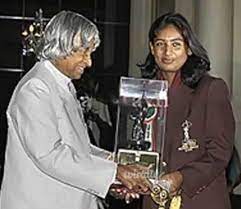
Other than being a right hand batsman, she is also a occasional bowler for India. These achievements prove how hardworking and confident she is!! Women in India are all very talented and high spirited. Yes, every woman is trying to be the best in her field. Mithali Raj is an example for the best women cricketer. Like her, you should try to prove yourself by your achievements rather than complaining or being feared for something. Everybody, come on let’s make India be filled with achievers.

Some reference links
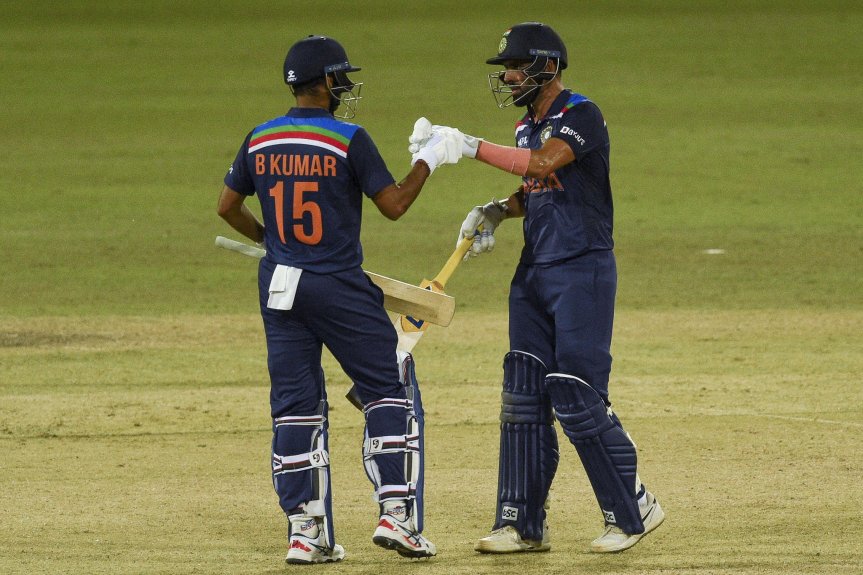
All-rounder Deepak chahar destroyed Lankans dreams in the 2nd ODI.

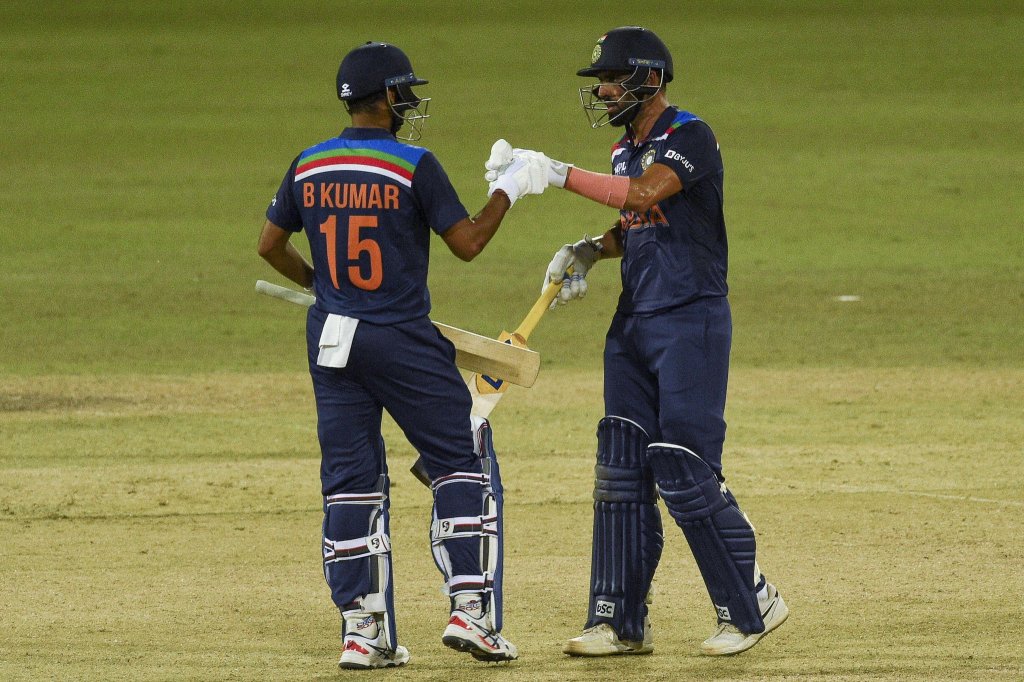
Chahar and bhuvaneshwar in the 2nd ODI

Lankans won the toss and elected to bat first. Openers minod Minod Bhanuka and Avishka Fernando added 59 runs in powerplay. Yazuvendra chahal broke this partnership and Minod 36(42) hit one delivery to Manish Pandey at midwicket and he made no mistake. On the very next ball,new man Bhanuka rakjpaksha edged the delivery to Ishan kishan and returned to pavilion with a golden duck.


Then, avishka Fernando and Dhananjay de selva continued the innings and added few runs between them. Avishka after reaching his fifty falled to Bhuvaneshwar,he scored 50 of 71. Deepak chahar got rid of Dhananjay 32 of 45 with a knuckle ball, shanaka 16 of 24 was bowled by chahal and Hasranga 8 of 11 was bowled over by chahar. Aslanka continued the scoreboard ticking and registered his maiden fifty and soon fall to Bhuvaneshwar,he scored 65 of 68. Karunaratne 44 of 33 landed some blows at end to take his side to 275/9. Bhuvaneshwar and chahal bagged 3 wickets each while deepak chahar took 2 wickets.

Chasing 275,Shaw and Dhawan opened the Indian innings and shaw hit 3 boundaries and was looking in good touch. Lankans introduced Hasranga and he got rid of shaw 13 of 11 with a googly. Kishan 1 of 4 soon followed with falling to Rajitha.

Dhawan 29 of 38 tried to carry the innings but Hasranga got better of him and he was strucked on pad and review got Lankans his wicket. Manish Pandey 37 of 31 , was striking well but he was unlucky to be run out. then, Hardik Pandya chipped one straight to midwicket to fall for a duck. Suryakumar Yadav continued the fight at the other end and scored a fluent fifty. Krunal Pandya sttruggled but managed to hang in there. Lakshan Sandakan trapped Suryakumar 53 of 44 leg-before-wicket and few overs later,Hasaranga castled Krunal 35 of 54 . Victory seemed easy to Lanka at that time and match was in their control.

After,that Bhuvneshwar and Chahar took the game deep. Chahar hit a massive six off Sandakan in the 43rd over and followed it up with two more boundaries in the next over to reach his fifty. Some streaky boundaries added to Sri Lanka’s woes and eased India’s path to victory eventually as the match was completed with five balls to spare. Bhuvaneshwar scored 19 of 28 and Chahar made 69 of 82. For his all-round performance Deepak chahar was given ‘Player of the match’ award.

Hasranga bagged 3 wickets and Rajitha,Shanaka and Sandakan got 1 wicket each.


T-20 world cup is near and India in chahar may have discovered an All-rounder. We’ve seen him landing few blows in IPL, but it was new for us in Indian Jersey. India will look to clean sweep the Lankans while Lankans will play for their pride in the last match,as they’ve nothing to loose now.

Environmental laws in india

Either Stable burning in various states accrued the air pollution in Delhi and created a gas chamber around NCR ; SC came upon a committee to observe scenario , Or 4 industries inflicting stream pollution were shut down by Maharashtra pollution board . Everybody has responsive to environmental problems as higher than . The key solution for resilience to environmental issues are provided by government in various legislations , enactments and provisions on environment laws .


In republic of India environmental law is concern with the policy and law for protection of the environment . It aims for achieving carbon free economy through taking measures for reducing climate change. All the acts under this laws are safeguards in ensuring effective management of the environment and its multiple ecosystems . It provides for preventing environmental damage .


Natural resources in the earth were unscathed from millions of years. It were remain pure until the industrialized started . After the industrialization this resources have been exploited in Spain of 100 years only . From 19th century, the environment (air , water and land ) is directly exploited by rapidly growing population at alarming-rates.


environment includes water, air and land and the inter-relationship which exists among and between water, air and land, and human beings, other living creatures, plants, microorganisms and property , as mentioned in section 2 of environmental protection Act of 1986 . Environment is a wide sphere , it consists of social, economically , political , religious dimensions .


Addressed area of environmental laws in India :

1. Quality of water : For the prevention and control of water pollution and to maintain or restore wholesomeness of water in the country the water act of 1974 was enacted. It further provides for the establishment of Boards ( CPCB and SPCB ) for the prevention and control of water pollution with a view to carry out the aforesaid purposes. This act prohibits the discharge of pollutants into water bodies beyond a given standard, it also lays down fine and penalties for non-compliance.

2. Reduction of air pollution and maintaining air quality : The Air (Prevention and Control of Pollution) Act, 1981 (the “Air Act”) is an act to provide for the prevention , protection and abatement of air pollution .It provides for establishment of Boards at the Central and State levels with a view to carrying out the aforesaid purposes.

3. Hazardous Waste management : legislations that directly or indirectly deal with hazardous waste management are the Factories Act, 1948, the Public Liability Insurance Act, 1991, the National Environment Tribunal Act, 1995 and rules and notifications under the Environmental Act.

4. Containment cleanup, damage mitigation : preventing future damage to the environment is undeniably the primary objective of environmental law, mitigating and reducing existing damage is also important. This area most often deals with issues like toxic leaks and oil spills. The central objective of this branch of environmental law is deciding liability, planning an appropriate response, and also determining the best process of investigation and monitoring in the overall clean up process. This area also concerns itself with the study and assessment of risk in the long term, to better mitigate any future accidents and risks.

5. Sustainability of resources : United Nations has put great emphasis on ensuring the sustainability of resources. For this vision , it has advocated the formation of various legal principles and legislation. In this regards concept of environmental impact assessment introduced .

Noble legislations and enactments on environment law in India :


Laws on Forest and wild life protection:
• The Indian Forest Act, 1927 ; The Wildlife Protection Act, 1972; The Forest (Conservation) Act, 1980 ; The Environment (Protection) Act, 1986; The National Green Tribunal Act, 2010.


Laws on Water pollution :
• The Water (Prevention and Control of Pollution) Act, 1974.


Laws on air pollution :
• The Air (Prevention and Control of Pollution) Act, 1981 (the “Air Act”)


Laws on hazardous waste management :
• Biomedical Waste (Management and Handling) Rules, 1998 ; Municipal Solid Wastes (Management and Handling) Rules, 2000 ; Batteries (Management & Handling) Rules, 2001 ; Hazardous Wastes (Management, Handling and Transboundary) Rules, 2008 ; E – Waste (Management and Handling) Rules, 2011 .
Laws on wetlands


Ramsar convention (1971) : This convention was initiated to push for greater conservation and sustainable use of wetlands ; Wetlands (Conservation and Management) Rules, 2017.
Constitutional provisions on environment laws


Part IVA (Art 51A-Fundamental Duties) of the constitution casts a duty on every citizen of India to protect and improve the natural environment including forests, lakes, rivers and wildlife, and to have compassion for living creatures.


• the Constitution of India under Part IV (Art 48A-Directive Principles of State Policies) stipulates that the State shall endeavour to protect and improve the environment and to safeguard the forests and wildlife of the country.

environment makes human life possible, and our cultural environment helps define who we are. It is therefore essential that our population and economic growth are environmentally sustainable.

Haryana and Punjab have 4% of India’s population

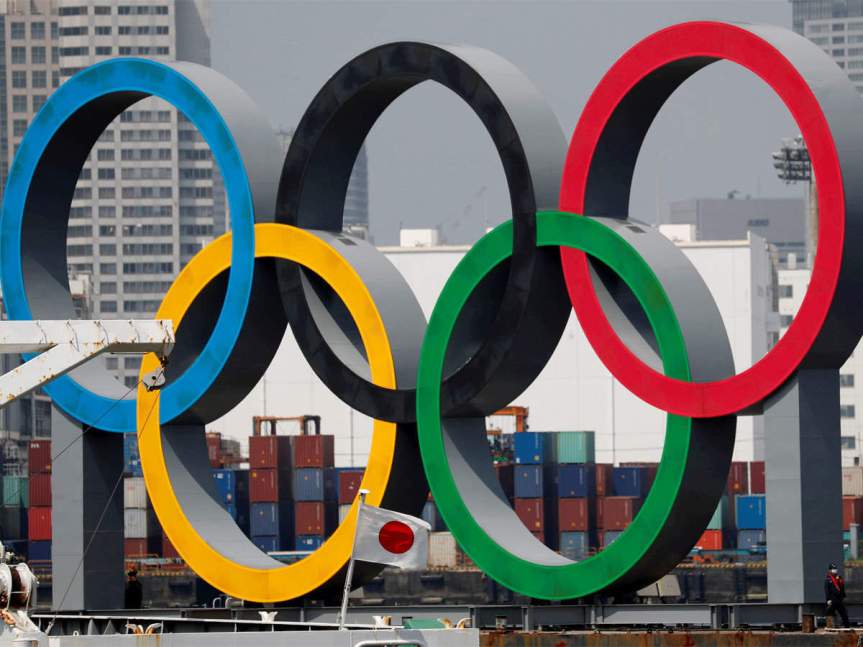
Haryana and Punjab are the two states that are once again leading the way for the country at the Olympics.

The two states, with just 4.4% share of India’s population, have together sent 50 athletes to the Tokyo Games, accounting for 40% of the Indian contingent. Haryana has 31 athletes in the contingent, nearly 25% of the total, while Punjab has 19.

Tamil Nadu had sent 11 athletes to Tokyo, 8.7% of the contingent. Other states are Kerala and UP each had sent 8 athletes.

For Haryana, nine of 19 women Hockey players, seven wrestlers(four women, three men), four boxers(three men, one women) and four shooters(two women, two men) make up most of the numbers. While for Punjab 11 out of India’s 19 member men’s hockey swell the tally. Two shooters(a man and a women), three from athletics(two men, one women), two women’s hockey team members, and one boxer make up the total.

India is sending its largest ever contingent to the Olympic Games with the total of 127 athletes and will take part in 18 disciplines: athletics, archery, badminton, boxing, fencing, equestrian, gymnastics, golf, hockey, rowing, shooting, sailing, swimming, table tennis, tennis, wrestling and weightlifting.

Kerala, known for its legacy in athletics, has six in track and field events out of the eight it is sending to Tokyo. One each is in swimming and the men’s hockey team.

Body Positivity

Body positivity is the belief that everyone deserves a good body image, regardless of how society and popular culture define ideal shape, size, or appearance.

Photo by Polina Tankilevitch on Pexels.com

The following are some of the goals of the body positivity movement:

1)Questioning society’s perceptions about the body

2)Advocating acceptance of all people’s bodies

3)Assisting people in developing self-esteem and acceptance of their own bodies

4)Confronting unattainable physical standards

Body positivity, on the other hand, is about more than just questioning how society views people based on their physical size and shape. It also acknowledges that race, gender, sexuality, and disability are frequently used to make judgments.

Body positivity also tries to educate people on how popular media themes influence people’s attitudes toward their bodies, including how they feel about food, exercise, clothing, health, identity, and self-care. People may be able to create a healthier and more realistic relationship with their bodies by better comprehending the impact of such forces.

HISTORY OF BODY POSITIVITY

Body positivity has its origins in the late 1960s fat acceptance movement. Fat acceptance aims to put an end to the culture of fat shaming and prejudice against those who are overweight or obese. The National Association to Advance Fat Acceptance was founded in 1969 and is still working to change the way people talk about their weight.

When a psychologist and an individual who had undergone eating disorder treatment launched the website thebodypositive.org in 1996, the phrase “body positive” was coined. The site provides information and instructional materials to help people feel good about their bodies by shifting the focus away from dieting and exercising in unhealthy ways.

In its current form, the body positivity movement emerged around 2012, primarily focusing on opposing unrealistic feminine beauty standards. As the movement gained traction, the emphasis shifted from weight acceptance to the idea that “all bodies are beautiful.”

Despite the fact that body positivity is becoming more mainstream, many individuals are still unsure what it entails. One of the reasons why body positivity is so misunderstood is that there are so many diverse interpretations of what the movement entails.

REASON BEHIND BODY POSITIVITY

One of the main goals of body positivity is to address how body image affects mental health and well-being. People’s feelings about their appearance and even how they assess their self-worth are influenced by their body image. According to research, having a bad body image is linked to an increased risk of mental illnesses such as depression and eating disorders.

A person’s subjective perception of their own body—which may differ from how their body actually appears—is referred to as body image. Body image feelings, emotions, and actions can have a significant impact on your mental health and how you treat yourself.

The creation of one’s body image begins at a young age. Even small infants, however, can experience body dissatisfaction. More than half of girls and nearly a third of boys between the ages of 6 and 8 believed their ideal body weight was smaller than their present weight, according to a research published by Common Sense Media. The findings also found that 25% of children had tried some form of dieting activity.

While the concept of body positivity is meant to make people feel better about themselves, it is not without flaws and criticism.

One issue is the notion that body positivity entails people doing whatever they think they need to do in order to feel good about their appearance. Unfortunately, people are constantly assaulted with messaging implying that smaller, fitter people are happier, healthier, and more attractive.

Body positivity is meant to promote acceptance and love of one’s own body, yet it can be a struggle that adds to the pressure and unrealistic expectations. The idea of body positivity is that you should modify how you feel about yourself, yet it can also be seen as yet another demand.

SELF CARE IN IMPORTANT

Self-care can sometimes be misconstrued as a means of altering or controlling one’s looks, but it should instead focus on activities that make you feel good about the body you have now.

Respect yourself and your body. Consume nutritious foods to keep your mind and body in good shape. You should exercise because it makes you feel strong and energized, not to change or control your physique.

Remove profiles from your social media feeds that make you feel bad about yourself. You’re less likely to feel good about yourself if you’re continually comparing yourself to others.

Follow accounts that pique your curiosity and leave you feeling uplifted. Many Instagram accounts, in example, are solely dedicated to showcasing perfection or an idealized view of the body.

While it may be difficult, improving the portrayal of all body types in popular media may aid in the fight against poor body image.

Deepak chahar helps India to win 2nd ODI

Deepak Chahar’s wonderful knock of unbeaten 69 helped India to win the second ODI against Sri Lanka. Deepak chahar with the help of Bhuvneshwar Kumar at the other end chased down the target with a record partnership of unbroken 84 runs. .

India were struggling at 193 for 7 when Bhuvneshwar joined chahar , when 83 more runs runs were needed for India to win. Both produced an incredible Chase .Bhuvneshwar was also beaten on 19 off 28.

Sri Lanka again won the toss in the second ODI , and made a descent score of 275 , thanks to Karunaratne who contributed some important runs at the death overs, after a poor show of middle order. The total of 275 was not a match winning total, but a fighting total. and something to bowled to.

India again started very nicely, Prithvi Shaw started the innings with 3 consecutive fours in 1st overs. and made 14 runs in 1st over. Shikhar Dhawan was also looking comfortable in starting. but at 6th ball of 3rd over, leg spinner Hasaranga bowled Prithvi Shaw with the ball coming little bit in to the batsman.it was really a master stroke from Sri Lankan captain Shanaka to introduce spin so early because they knew if Prithvi Shaw had stayed 5-6 overs more , he would have drag Sri Lanka out of the context.

But it was not only one dent that India faced during the chase, soon after Prithvi Shaw was dismissed, Ishan Kishan soon followed him with just 1 off 4.Then the chase become little bit tricky for India . Captain Shikhar Dhawan was joined by Manish Pandey who was also wanting to score some runs after a poor show in 1st ODI,but at the score of 65, Indian captain Shikhar Dhawan was also dismissed by Hasaranga. than it became a tough challenge for Manish Pandey and Suryakumar Yadav to get India chased down the target they both were batting really good but than came an unfortunate run out of Manish Pandey. Surya’s straight drive was so straight that it hit the stumps at the bowlers end and Shanaka managed to touch the ball in the process.

Hardik Pandya was straightaway dismissed for 0 off 3 . Making condition more worse for India. Soon after scoring his maiden fifty , Suryakumar was dismissed by spinner Sandakan. Krunal Pandya showed some resistance but was gone with a beauty of Hasaranga. After that it became almost impossible for India to win from that situation.Then came India’s hero of the match . Deepak chahar along with Bhuvneshwar managed to make a match winning partnership of 84 runs.

The innings of chahar was a combination of patience and maturity. he knew that the asking rate was not much . if India managed to rotate strike , they would achieve the target. he took some calculated risk with some outstanding running between the wickets soon after he scored his maiden fifty, and hopes of Indian dugout and fans was again came again.

it was a masterstroke from Rahul Dravid to send chahar ahead of Bhuvneshwar because he knew about the capabilities of chahar. Chahar also contributed with ball taking 2 for 52 in 8 overs. It was an all round performance from chahar to contribute in India’s win. After the second ODI , the third match is on Friday.

Super Cup ⚽⚽🥅

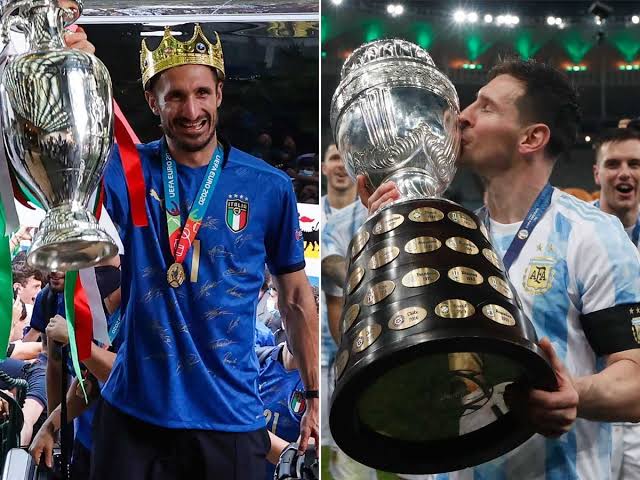
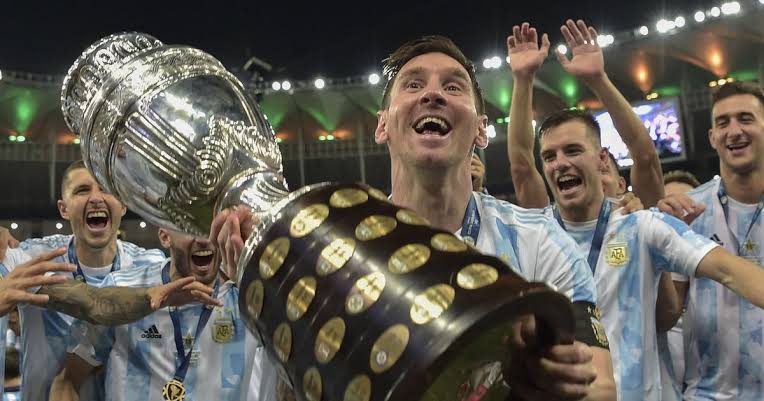
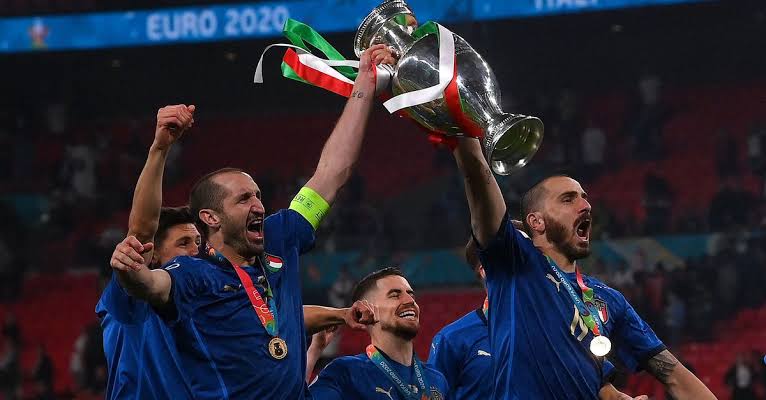
According to recent rumours the Champions of Copa America and Euro Cup can face each other in a super Cup . two teams defeated the likes of Brazil and England within a span of 24 hours last weekend. With Argentina’s victory, Lionel Messi brought an end to his trophy drought on an international stage while Italy won their Euro title for the first time after 53 years. Angel Di Maria’s lone goal proved too good for Brazil helping them clinch their first continental crown in 28 years while England vs Italy entered a penalty shootout after 120 minutes of top-flight football.

Italy had beaten England on penalties to win the Euro 2020 campaignArgentina defeated Brazil to lift the Copa America 2021, Lionel Messi’s first international triumphThe two teams could lock horns in a one-off Super Cup match
Football fans celebrated a Super Sunday as the world witnessed two big sporting showdowns take place within a span of 24 hours. First Argentina defeated Brazil in the Copa America final as Lionel Messi lifted his first major international trophy. Then, Italy edged favourites England in a penalty shootout at Wembley to be crowned Euro 2020 winners. But, how about a Super Cup battle between Argentina and Italy?

As per Barca Blaugranes, CONMEBOL, South America’s footballing body, has requested its European counterpart, UEFA, to hold a one-off Super Cup match between the winners of this year’s Copa America and European Championship. While UEFA hasn’t yet commented on the matter, such a match-up wouldn’t be a first in the history of international football.

Messi magic

Both the Copa America 2021 and Euro 2020 campaigns were special. While it was the first time ever that Messi had won an international trophy wearing the Argentina shirt, Italy had even failed to qualify in the 2018 FIFA World Cup.


Messi ended the Copa America campaign as the player with the most number of goals and assists. He was deservedly named the Player of the tournament, having played the most influential role in the team’s triumph.

Giorgio Chiellini’s Italy

The Calciopoli Scandal

‘Calciopoli’ was a match fixing scandal in Italy’s top professional football league, Serie A and to a lesser extent Serie B. The scandal was uncovered in May 2006, when a number of telephone calls showed relations between team managers and referee organizations during the 2004-05 and 2005-06 seasons, being accused of selecting favorable referees. This implicated then league champions Juventus and several other teams including AC Milan, Fiorentina, Lazio, and Reggina. In July 2006, Juventus were stripped of the 2004–05 title, and were downgraded to last place in the 2005–06 championship, the title was subsequently awarded to Inter Milan, and Juventus were relegated to Serie B.

On one end of the line were key figures in Italian football, at the other were refereeing officials. They were allegedly being pressured to favor certain clubs, with the claims only uncovered by chance as prosecutors were investigating claims of doping at Juventus. Then Juventus general manager Luciano Moggi was at the center of the scandal, though he has always denied any wrongdoing. Moggi, Juventus chairman Antonio Giraudo, Italian football federation (FIGC) president Franco Carraro and vice-president Innocenzo Mazzini ended up resigning from their respective roles. The name ‘Calciopoli’, which could be adapted in English as “Footballgate”, by analogy with the infamous Watergate Scandal.

The Punishments

The sanctions
Original punishmentFinal punishmentOther punishments
JuventusRelegated to Serie B, -30 pointsRelegated to Serie B, -9 pointsStripped of 2004-05 Serie A title, downgraded to bottom of 2005-06 table
AC Milan-15 points-8 pointsDeducted 30 points from 2005-06 season
FiorentinaRelegated to Serie B, -12 points-15 points in Serie AOut of 2006-07 Champions League
LazioRelegated to Serie B, -7 points-3 points in Serie AOut of 2006-07 Uefa Cup
Reggina-15 points-11 points€100,000 fine

The relegation of Juventus also prompted a mass exodus of important players such as Fabio Cannavaro, Lilian Thuram, and Zlatan Ibrahimovic. Some thirty other Serie A players who participated at the 2006 FIFA World Cup opted to move to other European leagues in the aftermath of the scandal.

The clubs demoted to Serie B were initially expected to have a difficult road back to the Italian top flight. They would have had to finish in the top two of Serie B to be assured of promotion and also had to avoid finishing in the bottom four to avoid being relegated to Serie C1. Juventus, for example, were initially docked 30 points, the equivalent of having ten wins reversed. This made it very likely that they would not return to Serie A until 2008 at the earliest. The point penalty, however, was reduced to nine points, giving Juventus a fighting chance at promotion.

Juventus went on to win Serie B in the 2006–07 season and made a swift return to Serie A.

https://www.bbc.com/sport/football/49910626

5 Games to Play with Your Dog

. Hide & Seek
Hide the Treat is a great brain game for dogs
Hide it in a place that’s difficult to get to and leave a trail of scent by rubbing it on a few spots along the way.

. Tug of War
Tug is by far dog’s favorite game. It’s fun, it’s engaging, it’s great physical exercise and it’s a good way for dogs to practice their manners.

. Water Games
Going to the local beach can be a lot of fun for dogs, especially those that already love swimming (don’t forget a doggie life jacket ). You can bring along some dog toys and play a game of fetch in the water.
If your dog isn’t a great swimmer, Get a plastic kiddie pool and fill it with water and play games.

. Fetch
Fetch is a great game for energetic dogs. It provides plenty of physical exercise.

#5.   Shell Game
let your dog watch as you place a treat under one of three cups. You then shuffle the cups around and encourage them to ‘find the treat.’

A Great Martial Artist ‘Bruce Lee’.

Born – Lee Jun-fan, November 27, 1940 ,San Francisco, California, U.S.

Died – July 20, 1973 ,(aged 32)Kowloon Tong,British Hong Kong.

Cause of death – Cerebral edema ,Resting place Lake View Cemetery, Seattle, Washington, U.S.

Other names – Bruce Lee Siu-Lung, Lee Yuen-cham, Lee Yuen-kam.

Citizenship – United StatesBritish Hong Kong

Occupation – Martial artist,philosopher, actor, director, screenwriter, producer.

Spouse(s) – Linda Emery ​(m. 1964).

About Bruce Lee:

Bruce Lee, the very name breathes enthusiasm and life euphoria in the minds of thousands of action movie lovers. When we talk about action movies today, particularly in the martial arts genre, it is impossible to forget, that Bruce Lee was the one who began it all with movies like The Big Boss (1971), Fist of Fury (1972), Way of the Dragon (1972), Enter the Dragon (1973) and The Game of Death (1978). Gone were the days when action movie lovers would be pleased with the gun fight of Clint Eastwood or the epic chariot races of Charlton Heston. Kung Fu had made its entrance in the world of entertainment, courtesy the silver screen. Bruce Lee was born on 27 November 1940. His father, Lee Hoi Chuen, was Chinese and his Catholic mother, Grace Ho, was of three-quarter Chinese and a quarter German ancestry. Lee and his parents went from the US to Hong Kong when he was three months old. Lee’s father was one of the leading Cantonese opera and film actors at the time.

At the age of thirteen, Bruce Lee took Kung Fu lessons with Yip Man. Having learnt the basics from his father, Bruce showed keen interest in the art and a year later, in 1955, had private training with the man who would later become the President of the Australian Federation of Kung Fu, William Cheung. At this time, the martial artist, Wong Shun Leung, who was consistently involved with dangerous and brutal competitions, had Bruce Lee privately train with him. Both Wong Shun Leune and William Cheung were students of Yip Man in his school at the same time as young Bruce Lee. Despite the advantages of his family’s high social status during his youth in Hong Kong, the neighbourhood where Bruce grew up was dangerous and full of gang rivalry. Bruce Lee evolved in these conditions as a dangerous street fighter. No wonder then that at the high school level at St Francis Xavier’s College in Kowloon, Lee was part of the school boxing team in inter-school tournaments.

Through his father, Bruce was introduced into films, and by the time he was 18, he had acted in 20 films. While in the United States from 1959 to 1964, Lee abandoned thoughts of a film career in favour of pursuing a career in martial arts. Destiny had different plans for him and the lightning fast moves of Bruce Lee landed him the role of Kato in the TV series The Green Hornet. This led to a host of other television serials like Iron Side (1967) and Here Come the Brides (1969). Lee’s return to Hong Kong landed him in Raymond Chow’s The Big Boss and Fist of Fury, and Lee was a big star overnight. Lee became a god of action cinema with the Warner Brothers’ production Enter the Dragon, but a cruel and inexplicable death snatched him away from his fans six days before the release of this movie.

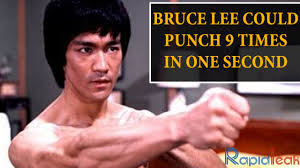
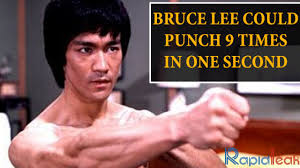
We remember Lee today as a man who redefined action on the silver screen. We remember his high kicks, his exceptionally fast punches and the spine-chilling fight sequences. ‘Lee, pound for pound, might well have been one of the strongest men in the world, and certainly one of the quickest,’ said Chuck Norris. When a child today watches Jackie Chan or Jet Li and gets excited to throw a punch, no father fails to remind him that these are compared to the master-Bruce Lee. hing Lee has left a unique legacy in the world of sports and cinema, imitated by millions but mastered by none.

Devoted Teacher:

Lee finished high school in Edison, Washington, and subsequently enrolled as a philosophy major at the University of Washington. He also got a job teaching the Wing Chun style of martial arts that he had learned in Hong Kong to his fellow students and others. Through his teaching, Lee met Linda Emery, whom he married in 1964. By that time, Lee had opened his own martial arts school in Seattle.He and Linda soon moved to California, where Lee opened two more schools in Oakland and Los Angeles. He taught mostly a style he called Jeet Kune Do, or “The Way of the Intercepting Fist.” Lee was said to have deeply loved being an instructor and treated his students like a clan, ultimately choosing the world of cinema as a career so as not to unduly commercialize teaching.Lee and Linda also expanded their immediate family, having two children — Brandon, born in 1965, and Shannon, born in 1969.

Mysterious Death:

Most of the people said that he died under mysterious circumstances .On July 20, 1973, just one month before the premiere of Enter the Dragon, Lee died in Hong Kong, China, at the age of 32. The official cause of his sudden and utterly unexpected death was a brain edema, found in an autopsy to have been caused by a strange reaction to a prescription painkiller he was reportedly taking for a back injury. Controversy surrounded Lee’s death from the beginning, as some claimed he had been murdered. There was also the belief that he might have been cursed, a conclusion driven by Lee’s obsession with his own early death.More rumors of the so-called curse circulated in 1993, when Brandon Lee was killed under mysterious circumstances during the filming of The Crow. The 28-year-old actor was fatally shot with a gun that supposedly contained blanks but somehow had a live round lodged deep within its barrel.

The Bosman Ruling – Football’s Landmark Moment

The Royal Belgian Football Association v Jean-Marc Bosman (1995) ( also known as the Bosman ruling) is a 1995 European Court of Justice decision concerning freedom of movement for wokers and association and direct effect of article 39. The case was an important decision on the free movement of labour and had a profound effect on the transfers of footballers, and by extension players of other professional sports.

Bosman’s Fight

In 1990, a 25-year-old Belgian midfielder Jean-Marc Bosman was coming to the end of his contract at Belgian side RFC Liege. His two-year stint had not worked out as he had first hoped, and he was offered an improved contract by French second division side Dunkirk. Before the Bosman ruling, a player could not leave at the end of their deal unless the parent club agreed to let him go on a free, or that club received a pre-agreed fee from a buying club. Liege demanded a fee which Dunkirk was not agreeing to and when the deal fell through, Bosman’s wages at Liege were cut by around 75 per cent.

Bosman then started a legal fight alongside lawyers Luc Misson and Jean-Louis Dupont, and brought the case to the European Court of Justice against the Belgian Football Association, RFC Liege and UEFA, citing the 1957 Treaty of Rome, which guaranteed the freedom of movement for players anywhere in Europe. Bosman was banned by the Belgian FA for refusing to sign the cut-price contract offered by Liege and only had brief spells at Saint Quentin and Saint Denis in France, along with several other lower league clubs, but ultimately he prevailed. Now the players, instead of the clubs had the power which gave rise to the player’s agents having power as well.

Bosman’s Victory

The ruling allowed a player to leave a club on a free transfer as soon as his contract expired, meaning they had the leverage to demand a huge signing-on bonus and salaries from new clubs to make up for the absent transfer fee with the club. Players coming to the end of their contract could also ask for more money from their current club, who would naturally fear losing that player on a free if his demands were not met.

The Players that benefited

There are many high profile players who have benefited from this ruling like Edgar Davids and Patrick Kluivert(Ajax to AC Milan, 1996 and 1997), Steve McManaman (Liverpool to Real Madrid, 1999), Sol Campbell(Tottenham Hotspur to Arsenal, 2001) and more recently Robert Lewandowski (Dortmund to Bayern, 2014), Andrea Pirlo (AC Milan to Juventus, 2011) and Michael Ballack (Bayern to Chelsea, 2006).

https://www.skysports.com/football/news/11096/10100134/how-the-bosman-rule-changed-football-20-years-on

INTERNATIONAL CHESS DAY 2021

International Chess Day is celebrated on July 20, every year as the founding day of World Chess Federation (FIDE). The concept of celebrating this was presented by UNESCO and this year marks FIDE’s 97th anniversary.

Chess is likely one of the oldest games of our era. It was invented in India in the fifth century and was then named “Chaturanga”. Later, the game moved to Persia, and when the Arabs invaded Persia, chess became an important part of the Muslim population’s existence, and it spread to Southern Europe from there. Chess took on its modern shape in Europe during the 15th century and evolved into a contemporary sport. Ever since then it has been a popular sport. Today, Chess competitions are held with fresh and interesting variations all around the world

Chess helps you increase your fluid intelligence and processing speed , elevates your creativity and enables you to enter a flow state , leads to better planning and strategy skills, and can improve the symptoms of ADHD (Attention Deficit Hyperactivity Disorder). Studies prove that Electronic chess may help stave off a panic attack when you play on the right level. Playing Chess also increases the effectiveness of any mental therapy.

Here are few recommendations of books and movies related to chess

Books

  • Chess 101 by Dave Schloss
  • Bobby Fischer teaches chess by Bobby Fischer
  • The steps method by Rob Brunia and Cor Van Wijgerden
  • Pandolfini’s Ultimate Guide to Chess by Bruce Pandolfini
  • Winning Chess strategy for Kids by Jeff Coakley
  • Tips for young players by Matthew Sadler
  • How not to play chess by Eugene A. Znosko-Borovsky
  • The art of checkmate by Renaud and Kahn

Movies , Documentaries and Series

  • Searching for Bobby Fischer (1993)
  • Magnus (2016)
  • Brooklyn Castle (2012)
  • Bobby Fischer Against the World (2011)
  • The Queen’s Gambit (2020)
  • Pawn Sacrifice (2014)
  • Queen of Katwe (2016)
  • Geri’s Game (1997)

Football’s Feeder Clubs

A ‘feeder club; in football is a club which is tasked to provide training and experience to young players. This training comes with a formal or even an informal agreement which involves successful players to move on to a much bigger club /higher level and to allow young, foreign players to gain a work permit, or for business purposes, such as merchandising. The bigger club is usually a major level club that is the ‘Parent team’

Clubs, who have agreements with smaller clubs to be their feeder/sister teams, usually send their youth players on loan to gain valuable first team experience there. This form of football ecosystem is a smart, efficient and sustainable way to nurture talents as the parent teams’s players can gain precious experience and the lower level teams can have talented youngsters on their books with whom they can achieve their seasonal objectives.

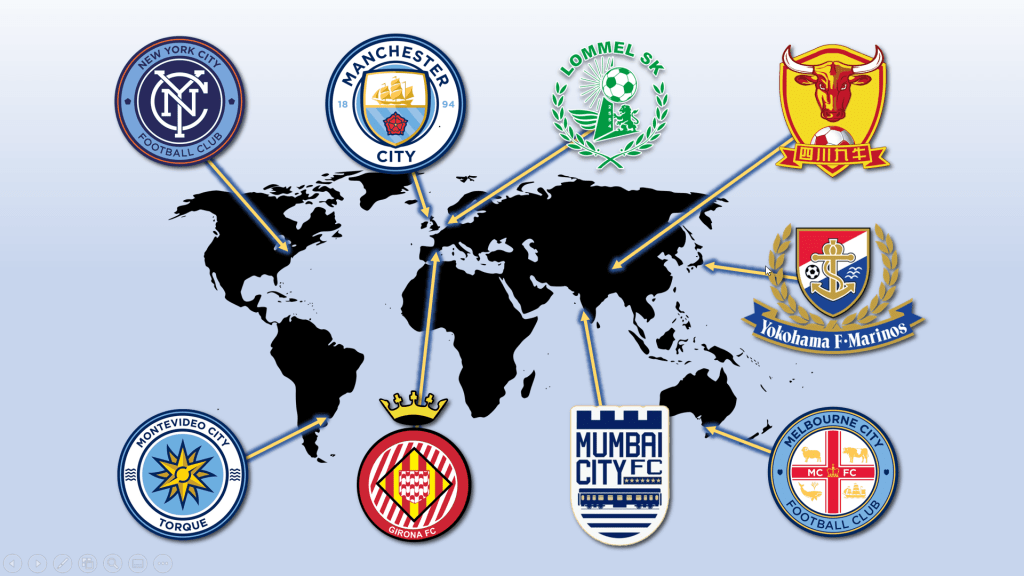
There are many significant clubs in world football who have tie ups with such other clubs, most famous being the City Football Group whose main team is Manchester City and has stakes in clubs like MLS’s New York City FC, Melbourne City FC, Japanese J1 League club Yokohama F. Marinos, Uruguay’s Montevideo City Torque, Spanish Segunda division club Girona FC, Chinese club Sichuan Jiuniu, ISL’s Mumbai City FC, Belgian club Lommel SK and French club Troyes AC.

Another famous example is Red Bull’s network of football clubs. The Austrian energy drink brand’s primary club is Bundesliga’s RB Leipzig, based in Leipzig, and other clubs such as Austrian Bundesliga’s RB Salzburg, New York Red Bulls, Red Bull Brasil, Red Bull Bragantino and Red Bull Ghana. RB Salzburg has it’s own feeder club, FC Lifering which competes a tier below. All Red Bull club’s train their player’s to play an attacking, attractive style of Football which help’s the player’s integration once they transfer to another Red Bull club.

There are other club’s who have tie up’s like above like recently promoted Premier League club Watford, whose owner businessman Giampaolo Pozzo also owns Granada and Serie A club Udinese and there is constant movement in terms of transfers between the three clubs. Chelsea, a club famed for it’s myriad of talented youth players and criticism for it’s abuse of the loan system which has seen the club loaning an army of players every season has a feeder club relationship with the Dutch Eredivisie club Vitesse Arnhem where Chelsea loans many of its players.

RECORDS OF ALL-ROUNDERS PERFORMED INDIVIDUALLY.

MATCHES PLAYED BY ALL ROUNDERS WHERE THEIR PERFORAMANCE HELPED THEIR TEAM TO HOLD TROPHIES

  • What is Cricket??

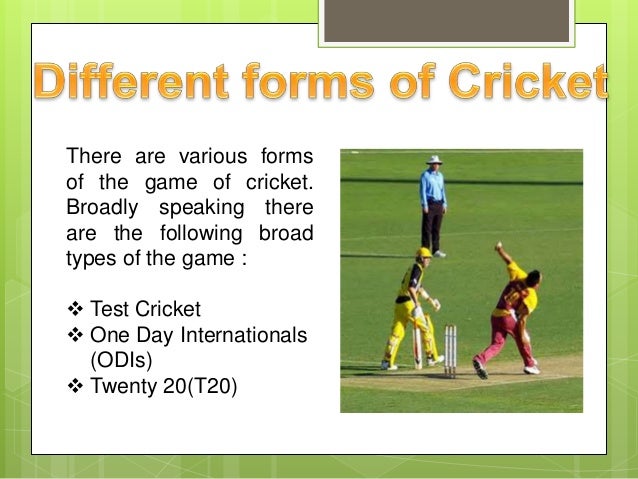
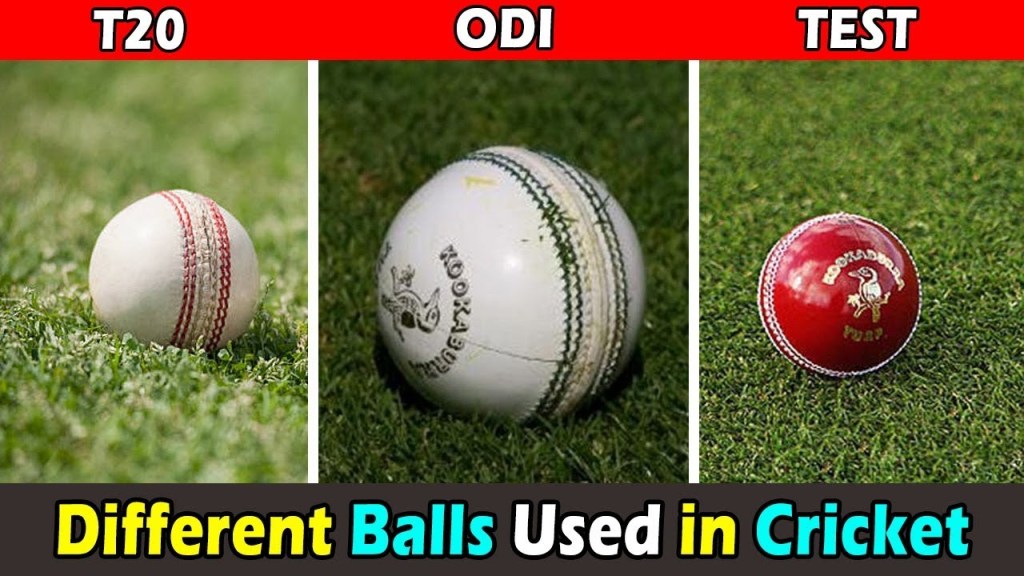
Cricket is a worldwide sport played by a team consisting of thirteen players where eleven alone will enter match and play with soul-hearted. There will be two opponent teams as they fight against each other as teams to win the game. There are different types in this sport itself: T20 series, one day match, World Tour, League matches and Test matches.

The basics of cricket, explained - Chicago Tribune

State matches and district wise are also conducted by private or government organization to pick valuable players to join teams. This sport requires a huge ground or vast area to practice. The center of play area is the pitch where stumps are placed in either ends. For batting there are ten wickets and swapping of roles in teams takes place if innings gets completed or all the wickets are gone.

There are four types of players to play a match (fielders, bowlers, batting and all-rounders) in every team as everyone is primary to assist or win the match along with teammates.

Cricket

This brief description helps you to figure out a sample idea of how will the cricket be and let me continue with all-rounders who perform dual roles to make them team fruitful in winning the game. Their responsibility in match is a bit higher than single tasking persons. So let me discuss a few players who showed out their rage to gain success. (all-rounders)

The 5 Most Common Cricket Injuries And How To Treat Them
  1. Kapil Dev
Kapil Dev (@therealkapildev) | Twitter

The master of cricket and the first person to win his most count of matches as an all-rounder. His performance of handling the match with the flow of bat and ball was enormous. He was the Captain of the Indian team when they won the WORLD CUP for the first time in 1983. He bowled the first while swapping roles in a similar where he as a low-ordered batsman gave only 6 runs in 4 overs. He is a faster bowler in a medium speed and also critical hitting batsman. Also, the coach for Indian team for consecutive two years. His talent of bowling and batting made the team to get the cup for the nation.  Holds the highest record in the world for taking wickets on all test series matches thus establishing a huge fame in Indian Cricket Organization.

2.Virender Sehwag

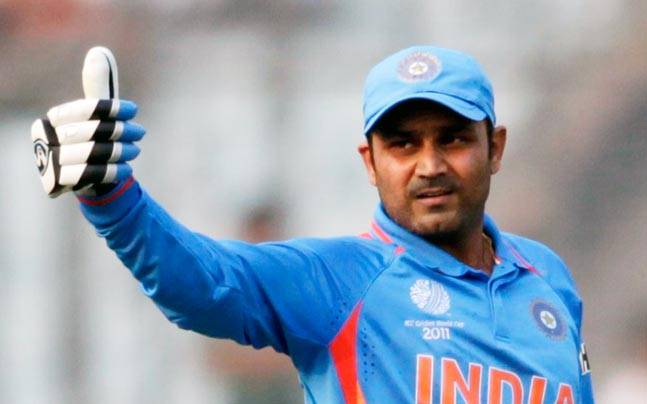
The First to bat in their team who is an extreme and ruthless batsman ever seen in matches. He is a well-respected all-rounder and a hard-hitting batsman for all types of bowling raising them to boundaries. He is a decent off-spinner and a good fielder over the critical times of innings by resisting ball to reach the lines of boundaries. An arrogant man hesitating to face failures, a game changer in certain matches where their team struggles over boundaries. Helped “Team India” score many wins over the decades against several countries and matches. “A trump card for the whole set that’s what we can call him”.

3.Garfield Sobers

Tony Cozier: Sean Abbott can learn from Sir Garfield Sobers

A unique key player recognized by all members in ICC (International Cricket Council) has been identified by other opponents as a threat in all the fields. Besides his retirement a rage of his energy is compensable as he can play the role of three cricketers in a match. He has taken a total of 235 wickets overall in his career. A multi-talented bowler and a low-medium batsman in the cricket history. Being appointed for West Indies for the first time his enormous performance covered a wide fame. He has a record of holding 26 times centuries and 30 half-centuries. Still 1994, His record of scoring runs was not broken against Pakistan. (365 not out) For his excellence he served as a Captain for West Indies and still his record is among the top 5 leading runs a greatest achievement of all.

4.Andrew Flintoff

Andrew Flintoff says bulimia may have cut short his cricket career |  Cricket News | Sky Sports

Always known as the hero of the Britain of early 2000 for his heroic acts in his first Ashes series where he was able to defeat Australia’s team known as the best in the world. A quick wicket gainer in both batting and bowling fields having a record of 226 wickets in his journey of cricket. His endless eye-catching performance made him an all-rounder with a huge fanbase and fame for his name remembered still now by teenagers.

15 Inspirational Cricket Quotes From The Legends Of The Game

I have given the best of all players whose performance have really gave their team to win an extra-ordinary innings against an enormous talented team thus establishing a history in records in International Cricket to be remembrance of.
 

50+ Inspirational Cricket Quotes by cricketers with Images

MEANING OF LEARNING

Why Learning Experience Matters | Litmos Blog

Generally people think that learning through practice is to make someone better than what he/she was earlier . To think so is not complete appropriate . However, it cannot be denied that there is an improvement as a result of learning . But it can lead towards unwanted or undesired changes . A child who plays football, may also learn wrong technique . Indeed , learning has a detailed explanation . The process of learning begins from the birth and continues throughout life. That is why it is said that learning takes place from womb to tomb. Learning means to adjust or adapt oneself according to the situation . There is a change in the behaviour of an individual after learning and he changes himself according to situations . The various psychologists have defined learning in different ways. However, they reach approximately at the same point . There are following definitions of learning by some eminent psychologists.

  • According to Guilford, ”We may define the term very broadly in saying that learning is any change in behaviour resulting from behaviour.”
  • According to R.S. Woodworth and D.G. Marquis, Learning consists in doing something new provided, this something new to be retained by the individual and reappears in his later activities.’
  • According to G. Murphy , ‘‘From this point of view it would be legitimate to regard learning as modification both of behaviour and of the way of perceiving.”
  • According to Whitkar, ”Learning may be defined as the process by which behaviour originates or is altered through training or experience.”

On the basis of the above-mentioned definitions, the following conclusions can be drawn :

  • Learning is adaptation and adjustment .
  • Learning is a continuous process.
  • Learning is universal.
  • Learning is a change in behaviour.
  • Learning is improvement and development .
  • Learning is a new organisation of experiences.
  • Learning is purposive and goal directed.