Micro Electro Mechanical Systems (MEMS)

Micro Electro Mechanical Systems (MEMS) is a manufacturing technology for microscale devices such as sensors, actuators, transducers, gears, switches, pumps, etc.

Basically, MEMS are microscopic integrated devices made up of electronics, electrical, and mechanical parts that work together to fulfil a single functional need, based on a technique known as Microsystems Technology (MST).

These MEMS-based devices are typically only a few micrometers in size (between 1 to 100 micrometers).

MEMS Sensors

One of the most essential components of today’s digital world is sensors. Because all computing and processing is done using digital signals, there has to be a bridge between the analog and digital worlds. Sensors bridge this gap by observing the temporal impacts of analog physical factors and producing a piece of useful information (to the computer).

A Sensor is a device that includes fundamental sensing elements that sense a physical property such as temperature or humidity and transform it into an electrical signal. A signal processing device, such as an amplifier, filter, or ADC, or a combination of these elements, is also included in a sensor.

When it comes to MEMS Sensors, a Micromachined Microsensor, or simply a MEMS Sensor, is one that is designed and manufactured utilising MEMS Technology.

Types of MEMS Sensors

The automobile sector is a major user of MEMS technology. Modern automobiles include a variety of sensors, the most of which are MEMS-based. Some of them are:

  • IMU or Inertial Measurement Units (they are a combination of MEMS Accelerometer and MEMS Gyroscope) are used to measure pitch, yaw, and roll for autonomous driving.
  • Accelerometers used for  airbag deployment and electronic stability control.
  • We use pressure and inertial sensor for braking control.
  • Magnetometer are used for the navigational direction.
  • By using airflow sensor, air intake is being monitored.
  • Pressure sensor are used in system for monitoring tyre pressure.
  • Impact and crash sensor are used for airbag deployment and detection of impact.
  • We use fuel sensor for indicator of fuel level.
  • Temperature sensor are used for automatic climate control and monitoring of engine temperature.
  • MEMS Microphone are used for noise cancellation and communication.

Applications of MEMS

Different sensors, such as pressure, temperature, vibration, and chemical sensors, are made using MEMS technology.

MEMS Sensors like accelerometers, gyroscopes, and e-compass are popular in ships, vehicles, planes, helicopters, and drones.

Sensors, actuators, generators, energy sources, biochemical and medicinal systems, and oscillators all use MEMS. MEMS applications include the following:

  • MEMS accelerometers, MEMS pressure sensors, MEMS pressure sensors, MEMS gyroscopes, MEMS, tilt and other types of MEMS resonant sensors are examples of sensors.
  • MEMS switches, micro-grippers, micro-levers, and micro-pumps, are examples of actuators.
  • MEMS fuels cells, MEMS vibration energy harvesters, and MEMS radioisotope power generators are examples of generators and energy sources.
  • MEMS biosensors, MEMS air microfluidic and particle sensors,  lab-on-chips,  are examples of biochemical and biomedical systems.
  • MEMS oscillators are used in applications that need precise timekeeping and frequency control.

One of the breakthrough innovations is the idea of combining sensors, actuators, electrical (and electronic), and mechanical components on a single chip. MEMS technology will enable the creation of smart devices having Microsensor perception, Microactuator control, and Microelectronics computational capabilities.

Python: An Introduction

Python was created by Guido Van Rossum in late 1980s at National Research Institute for Mathematics and Computer Science in the Netherlands. It is derived from many other languages like Modula-3, C, C++, Algol-68 and Unix Shell.It is object oriented , open source, cross platform, high-level dynamic and interpreted language . Python programming is very powerful, expressive and easiest language to learn and use.

Features of Python

  • easy to learn and use
  • comprises of board library
  • free and open source
  • object-oriented concepts
  • extensible

Interactive Mode :- A command line which gives immediate result for each statements.

Script Mode :- It is used to write set of statements/instruction in python. Set of statements store in file with .py extension.

IDLE :- It refers to “Integrated Development Environment” in python. It comprises Python shell program which lets user to type instruction into system.

If you decide to design your own language there are thousand of sort amateur language designer pitfalls.~ Guido Van Rossum

How AI is transforming our lives

Artificial Intelligence has found an important place in our day to day lives. We might not realise it but it has surrounded and transformed almost all aspects of our lives. AI is a branch in computer science that deals with the intelligent behaviour of machines. It is an ingeniously simulated ability of a machine to imitate human behaviour and our conventional response patterns. This is made possible with specific algorithms that make the AI function in a specified scope of activities. This means that with AI, many of our everyday activities can now be carried out effectively by programmed machine technology.

Microsoft’s chief envisioner David Coplin saysAI will change how we relate to each other. I would argue that it will even change how we perceive what it means to be human.

Real-life examples

The use of AI in organizations, governments, security frameworks, energy and natural resource management, etc., is drastically on the rise. For example, artificial intelligence has been pointed at to possess the potential for more accurate medical practices. Thus, you can be sure of a more accurate surgical procedure using this framework than what is currently available.

Another example would be the most commonly used AI-oriented app nowadays- Google maps. Google maps uses AI to detect traffic and its causes, time taken to travel to the destination, calculate speed of the vehicle and display estimated time accordingly, suggest fastest route alternatives. It is a very helpful tool and everyone uses it during travel.

Similarly, apps like Uber and Ola also use AI to connect you to the closest driver, display estimated wait and travel time, calculate prices according to the time of the day, traffic and other factors etc.

It is also used in food delivery apps to assign the closest outlet of the restaurant you want to order from and to assign the closest delivery person, calculate estimated time of arrival of the food, keep track of the timely preparation and delivery of the food etc.

Another most commonly used example would be voice assistants like Siri, Cortana, Alexa and Google assistant. These are AI powered assistants that can perform any tasks given to them with the help of AI.

Another example would be AI used by entertainment channels like Netflix, Prime video and even YouTube to keep track of the content consumed by every user to determine their liked genres and taste in order to give recommendations to every user according to their taste and preferences.

Google Translate uses AI to help you translate text from a source language to the target one. The company has a lot of contributors across the globe, which means that any person in the world can contribute to Google Translate by entering some words like synonyms or anything else related to languages.

Most importantly, it is used by businesses for providing valuable insights. Using AI supplies them with information about customer behaviour, their preferences, and the history of their interactions with a company. Moreover, AI can be a real game-changer in how marketing and ads campaigns are being run today. For instance, personalized advertisements are a hit with various companies. Corporate giants as Facebook, Google, YouTube, have already been using ads powered by AI for targeting specific audiences.

Internet of Behaviors (IoB)

Definition

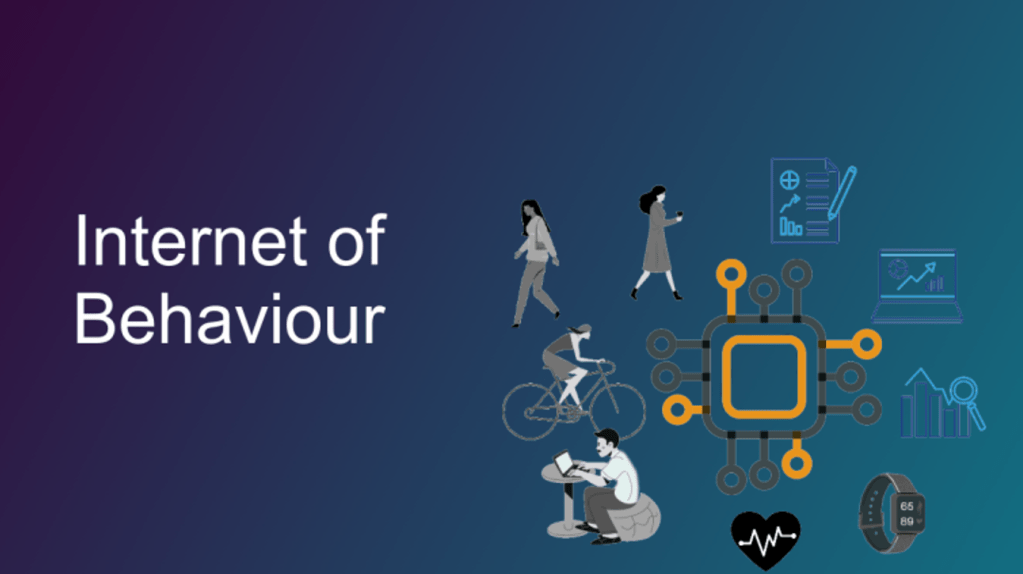
The collection and use of data to drive behaviors is called the Internet of Behaviors (IoB)

An example of it is industrial sites having employed computer vision to determine if employees were complying with mask protocol and then collecting this behavioral data to be analyzed by the organizations to influence people to follow government protocols at work.

What does the IoB mean ?

The purpose of the IoB is to capture, analyze, understand and respond to all types of human behaviors. In a way that allows tracking and interpreting those behaviors of people using emerging technological innovations and developments in machine learning algorithms. People’s behaviors are monitored and incentives or disincentives are applied to influence them to perform towards a desired set of operational parameters. Data collection (BI, Big Data, CDPs, etc.) provides valuable information about customer behaviors, interests and preferences, and this has been referred to as the Internet of Behavior (IoB). The IoB attempts to understand the data collected from users’ online activity from a behavioral psychology perspective. It seeks to address the question of how to understand the data, and how to apply that understanding to create and market new products, all from a human psychology perspective.

The IoB influences consumer choice, but it also redesigns the value chain. For companies, this means being able to change their image, market products more effectively to their customers or improve the Customer Experience (CX) of a product or service. Hypothetically, information can be collected on all facets of a user’s life, with the ultimate goal of improving efficiency and quality.

What does the IoB contribute?

Firstly, before the creation of the application, it is important to imagine the user’s interaction patterns and touch points. Involve them in the creation process, understand their needs, keep the app experience unified and cohesive, make navigation simple and meaningful so that the app is relevant and useful. Once the app is up and running, convey its purpose, create a user guide and reward by gamifying the CX in the app. Strong user engagement is required.

Secondly, solid tools are required such as multi-format support platforms (XML, JSON, PHP, CVS, HTML, etc.) That can connect to any API, that can upload data to the cloud, i.e. the fundamental features of platforms such as Google or Facebook. Platforms should allow for multi-channel personalization, centralized updates that are replicated, sending unique notifications that turn users into contributors to the personalization of the app, allow for social media integration and maintain an interactive interface.

Finally, it is the data captured through the app that serves to model user behavior. And in turn, this is the actionable data that can be sent in the form of pop-ups and notifications to the customer to encourage and incentivise them to adhere to a desired behavior. Analytics are necessary so that essential information can be extracted from all the data.

Benefits of IoB

uAnalyse customer buying habits across all platforms. uStudy previously unattainable data on how users interact with devices and products. uObtain more detailed information about where a customer is in the buying process. uProvide real-time POS notifications and targeting. uResolve problems quickly to close sales and keep customers happy. uCitizen data processed by public-sector uCommercial customer data uGovernment agencies uSocial media uPublic domain uLocation tracking.

Problem with IoB

The problem that can occur with this technology is not of a technical nature. The IoB is confronted with the adversity of how data is collected, stored and used. Its level of access is difficult to control and therefore all companies need to be aware of the liability of IoB use. Google, Facebook or Amazon continue to acquire software that potentially brings the user from a single app to their entire online ecosystem, without their permission. This presents significant legal and security risks to privacy rights, which also vary between jurisdictions around the world

Behavioral data can allow cybercriminals to access sensitive data that reveals customer patterns, collect and sell property access codes, delivery routes and even banking codes. These cybercriminals could take phishing to another level by generating more advanced scams, tailored to the habits of individual users, and thus maximizing the likelihood that users will be scammed. uIt is therefore important to have a secure platform, storage and execution of data with the use of tools such as Confidential Computing, E2E encryption or SDP tools.

The Three Types of Hackers

The term “hacker” is commonly linked with hackers with bad intent, although it encompasses much more. A hacker is someone who uses their computer software and hardware skills to break down and circumvent security measures on a computer, device, or network. Hacking is commonly thought to be criminal on principle, although this isn’t the case if the system owner willingly and knowingly gives access. In reality, many private companies and government agencies engage hackers to assist them in maintaining the security of their systems.

The motivations of an individual and the legality of their acts are the two key criteria that determine what type of hacker they are. Hackers are classified as white, black, or grey hats, a naming scheme borrowed from classic western films in which protagonists wore white hats and villains wore black.

1. Black Hat

Malware, which is routinely used to enter computerized networks and systems, is usually created by black hat hackers. They’re usually driven by personal or financial gain, but they’ll also engage in espionage, protests, or just for the pleasure of it. Black hat hackers can range from inexperienced to highly skilled individuals with the goal of spreading malware and stealing private data such as login passwords, as well as financial and personal information. Black hat hackers can either steal, modify, or destroy system data after they gain access to their targets, depending on their motivations.

2. White Hat

They’re also known as “ethical hackers,” and they’re frequently hired or hired by businesses and government agencies to operate as security specialists looking for flaws. While they use the same techniques as black hat hackers, they always receive authorization from the system’s owner, ensuring that their actions are fully legal. Penetration tests, monitoring in-place security systems, and vulnerability assessments are all tactics used by white hat hackers. Independent sources, training, conferences, and certifications can all be utilized to understand ethical hacking, which is the word used to define the nature of a white hat hacker’s conduct.

3. Grey Hat

As the term implies, these individuals combine elements of both black and white hat hackers, although they will frequently look for weaknesses in a system without the consent or knowledge of the owner. They’ll notify the owner of any problems they see, but they’ll also ask for money or an incentive. If the owner does not reply or rejects their proposal, a grey hat hacker may take advantage of the newly discovered problems. Grey hat hackers aren’t evil by nature, but they do want to be compensated for their services. Because grey hat hackers do not have authority from the system’s owner to access the system, their acts are ultimately regarded illegal, regardless of whatever disturbing findings they may uncover.

What is an IP Address? An Overview

A device on the internet or a local network is identified by its IP address, which is a unique address. The Internet Protocol (IP) is a set of rules that govern how data is transmitted across the internet or a local network. IP addresses, in essence, are the identifiers that allow data to be transmitted between devices on a network: they contain location information and make devices reachable for communication. The internet requires a method of distinguishing between various computers, routers, and webpages. IP addresses are a crucial aspect of how the internet operates and provide a means of doing so.

What is an IP?

A string of integers separated by periods makes up an IP address. IP addresses are made up of four numbers; for example, 192.158.1.38 is an example address. The set’s numbers can vary from 0 to 255. As a result, the entire IP addressing range is 0.0.0.0 to 255.255.255.255.

IP addresses are not generated at random. The Internet Assigned Numbers Authority (IANA), a part of the Internet Corporation for Assigned Names and Numbers, creates and assigns them mathematically (ICANN). ICANN is a non-profit organisation based in the United States that was founded in 1998 to assist keep the internet secure and accessible to everyone. Every time someone registers a domain name on the internet, they do so through a domain name registrar, who pays ICANN a nominal fee to do so.

How do IP addresses work

It helps to understand how IP addresses function if you want to figure out why a device isn’t connecting the way you want it to or if you want to troubleshoot why your network isn’t working. Internet Protocol communicates in the same manner that any other language does, by following a set of rules to convey information. This protocol is used by all devices to find, send, and share information with other connected devices. Any computer in any area can communicate with one another if they speak the same language.

IP addresses are most commonly used behind the scenes. The procedure is as follows:

  1. Your device connects to the internet indirectly by first connecting to a network linked to the internet, which then allows your device internet access.
  2. That network will most likely be your Internet Service Provider when you are at home (ISP). It will be your workplace network at work.
  3. Your Internet service provider (ISP) assigns an IP address to your device.
  4. Your internet activity passes through your ISP, which uses your IP address to deliver it back to you. It is their responsibility to issue an IP address to your device because they are providing you with internet connection.
  5. Your IP address, on the other hand, may change. Turning your modem or router on or off, for example, can make a difference. You can also contact your ISP and get it changed for you.
  6. Your home IP address does not go with you while you are out and about – for example, when you travel – and you take your device with you. This is because you will be accessing the internet through a different network (Wi-Fi at a hotel, airport, or coffee shop, for example) and will be allocated a different (temporary) IP address by the hotel, airport, or coffee shop’s ISP.

What is Dark Web? An Overview

The dark web is a section of the internet that requires special software to access and can be difficult to navigate once you do. Multiple layers of encryption allow people to browse and post information on the dark web with near anonymity, making it a go-to platform for buying and selling illicit goods and services.

What Are the Three Levels of the Internet?

Learning about the three levels of the internet might help you better understand what the dark web is.

Surface Web

The surface web, often known as the clear web, is the part of the internet that anyone can access using a web browser and a search engine. Search engines “crawl” the internet looking for new websites and pages to index. When you search for a website or term, the search engine returns results from its index that it believes are the most relevant to your search. The surface web includes news and informational websites (such as this blog), e-commerce sites, video-hosting platforms, and many other sorts of websites. While you may spend a lot of time on the surface web, it only accounts for roughly 4% of all internet traffic.

Deep Web

The majority of the internet is made up of the deep web, often known as the invisible or hidden web. These pages aren’t found in search engine results, but you probably visit them on a daily basis. The Deep Web includes:

Pages that need to be logged in to: The surface web includes home pages for social media sites, streaming services, email, and banking. You do, however, enter the deep web after you log in to your account.

Unindexed content: A website, page, or piece of content may be excluded from the list that search engines crawl, and hence will not appear in the search results. If you know the URL or are linked to it from another page, you can still visit non-indexed pages.

Secure Storage: Photo, video, research papers, medical information, and other data that is stored online but only accessible with the correct credentials make up a large part of the deep web.

Intranets: Businesses, schools, and governments can have their own private networks that are created specifically for their needs but are also connected to the internet. Employees could use this intranet to communicate, save files, and access informational pages about corporate policies.

For how we utilize the internet, the distinction between the surface and deep web is critical. After all, you don’t want your bank statements to show up in a Google search. However, because the deep web is still connected to the internet, a hacker may compromise a company’s security mechanisms and gain access to your personal data through a data breach.

Dark Web

The dark web is a subset of the deep web that requires special tools, software, or authorization to access. Search engines, like the deep web, do not index data on the dark web. The black web, like the rest of the internet, does not refer to a specific site or page. Instead, it’s a darknet, a form of network. A darknet could be created by setting up a secret and secure network with a group of people.

What Is the Dark Web and How Does It Work?

When most people talk about the dark web, they’re referring to the Tor network, which is one of the largest and most well-known darknets.

Tor, which stands for “The Onion Router,” bounces data through a series of encrypted layers (like an onion) to provide greater anonymity to users. On the Tor network, there are onion sites and services, and page addresses end in. onion.

Download and instal the free Tor browser to gain access to the dark web. (You may use it to search the surface and deep webs as well.) It’s totally legal, and the Tor Project, which created the browser, receives a lot of funding from the US government.

However, having a browser is only the first step. The dark web, unlike the surface online, lacks good search engines. You might have to look up the address of an onion site on your own, and the names aren’t easy to remember. The onion address for the CIA, for example, is ciadotgov4sjwlzihbbgxnqg3xiyrg7so2r2o3lt5wz5ypk4sxyjstad.onion, while for the nonprofit newsroom ProPublica, it’s propub3r6espa33w.onion.

These are two examples of legal businesses with dark web presences. The dark web, on the other hand, is primarily recognized for the unlawful activities that occurs there.

Why Are Criminals So Attracted to the Dark Web?

The Tor network helps you disguise your identity and allows you to construct and host onion services anonymously. As a result, criminals frequently buy and sell illicit goods and services on the dark web. Limited-time specials, user reviews, and adverts for organic items can all be found on darknet marketplaces, which are surprisingly similar to sites found on the surface web. Criminals, on the other hand, use these marketplaces to sell illegal goods and services such as drugs, firearms, and hacking software. On the dark web, many identity thieves and hacker groups make money by selling the information they stole. Depending on what’s being sold, the value of the information can vary dramatically. Full profiles, also known as fullz, might include a name, Social Security number, date of birth, and account numbers, and can cost anything from $8 to $30 per profile.

Medical records in their whole are extremely desirable to identity thieves, and can fetch up to $1,000. Cryptocurrencies, such as Bitcoin, are the preferred payment method because they allow buyers and sellers to remain anonymous.

Trainings and Internships In Technical Fields

In the early days of our university, we will all live in a fantasy world, where we will feel that we have everything we want. The future is bleak If we start the internship after the first year of study, whether it is a remote internship or a full-time internship, this situation can be easily resolved. Choose according to your convenience and university practice.

“Your greatest opportunity may be by your side”-Napoleon Hill

Your interns can choose from several trusted websites such as:

  • Internshala
  • Letsintern

In the college, we will have a group of friends and we will be happy to play with them. In the workplace, this may or may not happen, but you have to adapt to the environment as soon as possible to deal with different types of people. I’m sure some companies offer internship extensions and full-time performance based on the attitude of interns, depending on their Attitude Pages An easy process If this is a paid internship, you will understand the value of the funds you have used in the past, which will help you make better use of the economy. During the internship, you will need you to manage your studies, study and test results. Although once you have mastered the multitasking and time management skills that can be solved in real-time with World Problems , the process may seem daunting at first, but if your internship skills are not too passionate for Asmara, then your internship skills are also something Good things signal that they ignored the option very early. Work hard, study, and then forget to make the most of it. Don’t hesitate, don’t be afraid to start again. Because experts say you don’t start from scratch, but from experience.

You can learn how to apply the knowledge you have acquired during an internship to your future workplaces. In addition to this, it is an excellent learning curve for young graduates and students while meeting new people and making connections in the professional world

The Healthcare Systems

Only healthy citizens can contribute to a healthy economy. The government of a country provides the necessary funds for the health plan in its budget. In addition, during an epidemic or pandemic, the government ensures the health of its citizens through large-scale tests. And treatment The government is also taking various measures to educate the public about epidemics. In addition, the government is raising public awareness of the causes and preventive measures of various diseases. A large-scale immunization program has also been carried out to prevent the occurrence of many bacterial and viral diseases. The health system of one country is different from that of another country. In India, health services are provided by the public and private sectors. The health system includes hospitals, telemedicine, insurance doctors, etc. In India, the health structure consists of three, two, and three levels. Primary includes sub-centers and primary health care centers. The second level includes community health centers, while the third level includes hospitals and medical schools.

Sub-center:

This is the main point of contact between the health system and patients. It is composed of male and female health professionals and a volunteer.

Primary Medical and Health Center:

This is the main point of contact between villagers and doctors. Medical professionals and nursing staff are part of APS. The main functions of APS are vaccination plan, contraceptive plan, pregnancy care, etc.

Community Health Center:

Including doctors, pediatricians, gynecologists, surgeons, and equipped with operating rooms, X-ray machines, etc.

The private sector

The private sector has also contributed to providing health services to the majority of the population. Through telemedicine, many private medical hospitals and new medical companies are also providing high-quality medical services to rural residents.

Conclusion

The health information system is the future of the medical center. Even so, many hospitals are skeptical about the introduction of this new technology. There are two reasons for this: high cost and implementation process. Changing the initial process This may sound daunting, but we guarantee that the results are worthwhile.

ANDROID APP DEVELOPMENT

The Android device market is growing day by day, and companies are taking advantage of it by developing Android applications and selling them on the market. Google Mobile Operating System. It is designed to be open source so that Android application developers can take advantage of the operating system and create innovative new applications. The app makes everything easier. But anyone can simply download and use the application; developing an application is not easy. It takes months or even years of brainstorming and deciding on technical details to finally develop an application that can prove itself in the market. To cope with fierce competition in the market, it is important to ensure that everything is done under the latest trends and technological updates in the development industry. Mobile application development is the process of creating software applications that run on mobile devices, and a typical mobile application Use network connections to handle remote computing resources.

Basics of Android development

Android application development consists of one or more of the following four categories:

Operation-an application that provides visible user operations. On the start screen or application Start the operation in the launcher.

Service-You can use service for any application that needs to run for a long time, such as a B. Network monitor or application to check for updates.

Content provider. The easiest way to think about content providers is to think of them as database servers. The job of the content provider is to manage access to persistent data, such as contacts on mobile phones. If your application is very simple, you don’t need to create a content provider. However, if you are building a larger application or application that makes the data available for multiple operations and/or applications, the content provider is a medium that prohibits access to your data.

Streaming media receiver. You can launch Android applications to process data about specific items or respond to events, for example to Receive SMS.

In the past 10 years, Android has become the most popular operating system in many ways. This is a very flexible and user-friendly system that can change anything unrecognizable. It can be done at any stage of the Android application development process, which is impossible to build an application from scratch on a traditional linear platform

MACHINE LEARNING – THE MIRACLE

In the real world, we are learning new things every day and improving our decision-making skills on the basis of successful decisions in the past. Isn’t this human learning? If we now use computers to fully automate this process, what will it be? This will be machine learning.

Everyday applications

We use it a dozen times a day without even realizing it. Every time you perform a Google search, your machine learning software will figure out how to categorize the pages you want to visit. Also learn that if you read emails from your inbox, the smart spam filter can save you from browsing a lot of spam.

THE TECHNICAL UNDERSTANDING

Recently, Tom Mitchell described machine learning as a computer program. It is said that the program learns from experience E related to task T and performance metric P because its performance in T is improved by the P metric. Experience E Let us give an example of an online chess game, in which each game is a task T, and the process of the game is the experience E. Each game has a final result, which is a performance indicator P. This performance indicator is to win. Probability of a game against a new opponent. Now that the computer has the patience to play tens of thousands of games alone, it can further improve your chances of winning consecutively. Machine learning technology: a brief overview We all know how computers work, we all know How the computer works, we have simplified many operations. Now we are trying to get computers to examine all the macro and micro levels of human thought processes that lead to multiple decision-making skills. By developing truly intelligent machines, we can do almost anything you and I can do. This work consists of complex algorithms and functions of artificial intelligence applications running in expert systems. With every action you take, the computer will learn self-learning and self-esteem through progressive, keen, and precise decision-making skills. The computer learns to remember a past experience and process them according to the archived tasks and the resulting performance level. Development of actions/results in a specific context or situation.

FUTURE ASPECTS AND THE SCOPE OF IMPROVEMENT

Machine learning is not limited to Google search or Amazon prediction. It is widely used in medical diagnosis, where tiny patterns are revealed to predict disease. Machine learning can have a positive impact on treatment and subsequent procedure decisions. Financial transactions, data mining, fraud detection, speech recognition, spam prevention, and language translation are some other areas where machine learning is used. The company uses the technology to predict the relevance of products based on the collected data. Let us see what machine learning can bring to the future. A fully functional self-driving car is expected to be available at the end of 2018. Natural language processing has developed a subset of machine learning so that students can improve search results and translations based on the search context. It will also help digital assistants like Siri interact with Humans On Cyber ​​Security Front, a machine learning model that can analyze the structure of inbound or outbound traffic to detect and stop suspicious before continuing damage occurs. activity. Decisions and code changes can be made without explicit programming, which makes machine learning an inevitable trend now and in the future.

The issue of Electric Vehicles and their sustainability

Tesla launched the Model-S in 2012, the luxury car was one of the more mainstream vehicles that accelerated the growth of electric vehicles. Some traditional cars manufacturers also followed the suit to compete with Tesla. Fast forward to a decade later, electric cars have become even more relevant and every major internal combustion engine manufacturer has an electric car model in their portfolio.

The rise of electric cars has been commendable with 75% growth rate and current sales north of 3 million units. But we have to look at the sustainability of electric vehicles realistically. Internal Combustion Engines cars have come a long way from 20 years back. Conventional cars are significantly more fuel-efficient and release less harmful gases to the environment. But still, they are incomparable to electric vehicle zero fuel emissions.

When we talk about electric vehicles, we also have to consider the whole infrastructure that is required to sustain that. The elephant in the room is the batteries. Battery technology has progressed a lot in the past decade but still, there are lots of limitations that have hindered the adaptability of EVs. One of the biggest issues that EVs face is the limited lifespan of batteries. The average lifespan of a typical EV battery is approximately 10 years depending upon the usage. In many EVs, the replacement of batteries is very difficult or almost impossible. Another problem is the case of recycling batteries. It’s not easy to recycle batteries and currently, electric vehicles have a very small percentage of market share. But as more and more people adopt EVs, there will be more EVs that will have to be scrapped and the proper disposal of batteries will be required. This can be a cause of environmental concerns as batteries will accumulate with no proper arrangement for its recycling.

Issues that will have to be addressed

The problem is much more than just battery technology. The power delivery and infrastructure also need to be developed to support the EVs. It’s going to be easier in urbanized areas with a small population, for instance Norway has been moderately successful in adopting EVs as a standard with plans to totally cease the sales of internal combustion engine vehicles by 2025. This target is going to be much more difficult in large countries with large populations and rural populations where distances between cities are larger. It also requires a considerable amount of capital resources to make the transition possible. Currently, traditional gas vehicles are still more viable, practical, and cheaper than EVs. This tells us that EV manufacturers and the government will require much more than subsidies to convince people to convert. EV manufacturers will also need to control the amount of energy that is required to produce a single EV, which is much more than a gas vehicle.

The extraction of lithium is also a contested issue and just as fossil fuels, the elements that are required to make batteries are non-renewable. Lithium can be extracted in a limited capacity and with more demand, it will become even more challenging to supply the raw materials required to build a battery. Building new battery production factories will also require a considerable amount of time and money. Until battery production facilities are not increased, supplying batteries will be a challenge and mass adoption will not be as fast as we would like it to be.

In conclusion, EVs are certainly the future, they are cheaper to operate and have zero emissions. But there are many other issues like infrastructure, battery supply, and proper disposal that would have to be addressed.

References:

Message Queuing Telemetry Transport (MQTT)

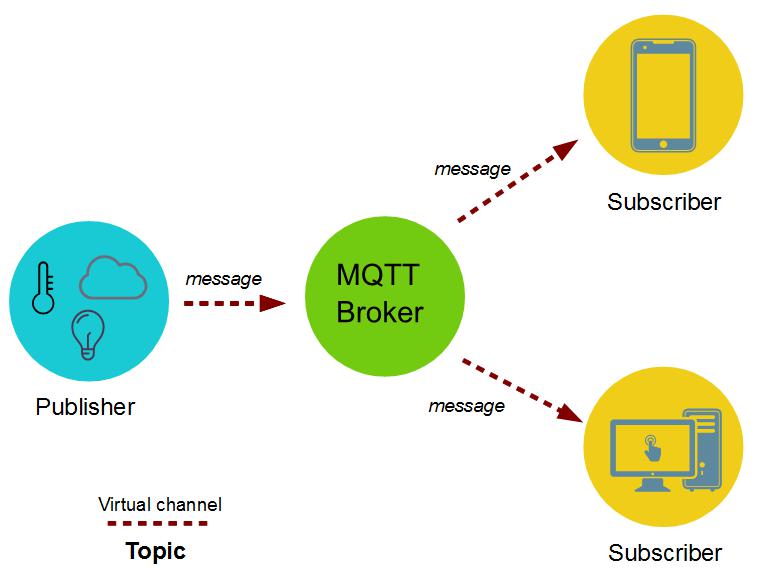
MQTT is a lightweight publish and subscribe system that allows clients to send and receive messages.

MQTT is a low-bandwidth messaging system developed for limited devices. As a result, it’s ideal for Internet of Things applications.

MQTT allows you to control outputs, read and publish data from sensor nodes, and send commands to control outputs. As a result, setting up communication across many devices is simple.

The server is in charge of responding to client requests for data to be received or sent between them. A broker is an MQTT server, while clients are just linked devices.

MQTT Components 

  1. Subscribe and Publish
  2. Message
  3. Topic
  4. Broker
  1. Subscribe and Publish

A device can either publish a message on a topic or subscribe to a topic to receive messages in a publish and subscribe system. 

For example,

Device_1 publishes on a certain topic.

Device_2 is subscribing to the same topic as Device_1 publishes.

As a result, the message is received by Device_2.

  1. Message

Messages are the information you wish to send and receive between your devices. It doesn’t matter if it’s a command or data.

For example, if we are publishing temperature data to the cloud, this data is referred to as a Message.

  1. Topic

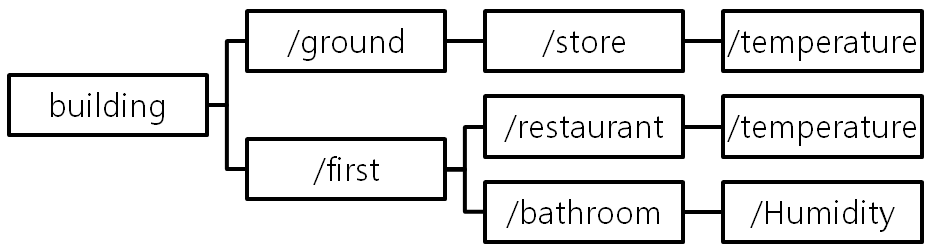
Topics are how you indicate your interest in incoming messages or where you wish the message to be published.

Strings separated by a forward slash are used to denote topics. A topic level is indicated by each forward slash.

For Example,

  1. Broker

The broker is in charge of receiving all messages, screening them, determining who is interested in them, and finally publishing the message to all subscribers.

QoS – Quality of Service 

With an integer number ranging from 0-2, each connection can indicate a level of service to the broker.

0 denotes at most once, or once and only once without needing an acknowledgment of delivery. This is known as the “fire and forget” strategy. When a sender sends a message, it doesn’t care if it’s delivered to the intended recipient or if it’s resent.

1 denotes at least once. The message is delivered several times until it receives an acknowledgment, which is known as acknowledged delivery. The Sender waits for the receiver’s acknowledgment after sending a message. It resends the message if it does not get an ACK. This option ensures that the message is delivered at least once, but it does not ensure that it is repeated.

2 denotes exactly once. A two-level handshake is used by the sender and receiver clients to ensure that only one copy of the message is received, which is known as ensured delivery.

Example of MQTT

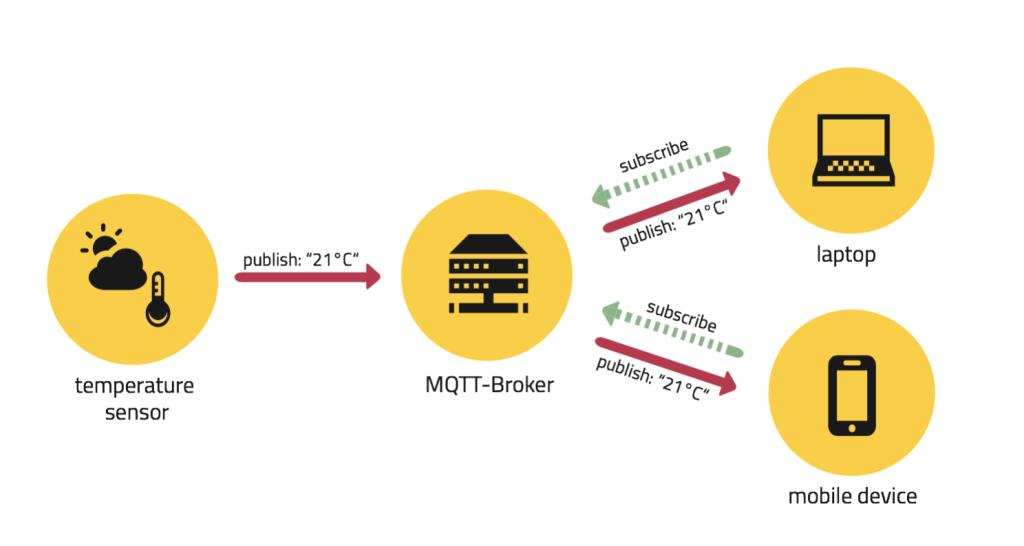
Suppose, there is a device with a temperature sensor. And, it wants to send its readings to the broker. A phone/desktop application, on the other hand, want to get this temperature value. As a result, two things will occur:

  • The device specifies the topic on which it wishes to publish, for example, “temp.” The message “temperature value” is then published. 
  • The “temp” topic is subscribed by the phone/desktop application. The device’s published message, which is the temperature reading, is then received.

The broker’s job is to transmit the message “temperature value” to the phone/desktop application.

How to use the phone as a webcam for your PC

In these pandemic situation there no offline meetings and interviews. Video conference is daily habited in these time , we are using lot of application for video conference like Google meet, zoom meet, Microsoft teams , Skype and  jio meet

Most of people facing problems while hosting and interviews times ,our laptops and PC doesn’t have good quality of video

Then , is there any way to optimise for good quality of video . yes there is a way for that problem

In these day every one have mobile phones , by those mobile phone we can as a webcam

Are you thinking I am joking , then just follow my instruction you will be find my word are no joke..

I have research many application but ,I  recommended an application Droidcam  that can be download by our favourite  app stores

Now  you connect your PC or a Laptop over the same Wi-Fi network or with the help of a USB cable. If you downloaded the DroidCam app on your phone from the app store, then download the DroidCam Client on your Windows laptop or PC

There are two ways :

  • Using wi-fi
  • Using cable
  • using Browser

Using Wi-Fi

Open  the DroidCam app on your phone and click on the ‘Wireless’ option.

Then next screen should display the ‘WiFi IP’ and ‘DroidCam Port’ . If your ‘WiFi IP’ appears 0.0.0.0, then you are not connected to the Wi-Fi.

Open the DroidCam Client on your PC or laptop and enter the ‘WiFi IP’ and ‘DroidCam Port’ as displayed on your mobile phone. Click on the ‘Start’ button.

Now start the video conferencing app and check the webcam  by clicking on the ‘Webcam’ or ‘Video’ settings.

Using cable

Connect your mobile phone   to your PC  or Laptop with  USB cable.

We have remember to note is that you need iTunes downloaded on your  PC to connect using USB cable. If you do not have iTunes, you can download it . Once you login to iTunes, it will automatically detect your mobile Phone.

Start the DroidCam Client, select the ‘USB’ option and tap on ‘Start’.

using Browser

 DroidCam mobile phone application also connect to the camera using a web browser.

Then you  have to  connect your phone to a Wi-Fi and open DroidCam application.

Lunch  Chrome on your Laptop or PC and enter the ‘Browser IP Cam Access’ data then ‘http://192.168……./video’ and click on  enter.

If you have wish to specify the resolution of the video in the URL by using the path including ‘force’. example – http://192.168…./video.force?1280×720.

The application  DroidCam Wireless Webcam we used was the free ver . You canl also find the paid ver of this app, called the DroidCamX Wireless Webcam Pro in  the Google Play Store. The paid version application supports HD video streaming with out ads

there is one more application I recommends i.e Xsplit connect

The Struggle against Ransomware

115 milliseconds, that’s the amount of time a new technology — developed by researchers from Australia’s national science agency and a university in South Korea — takes to detect that ransomware has detonated on a computer and block it from causing further damage. As hackers execute bolder attacks with bigger potential payouts, computer scientists are pushing the limits of software to make near-instantaneous decisions and save victims from ruin.

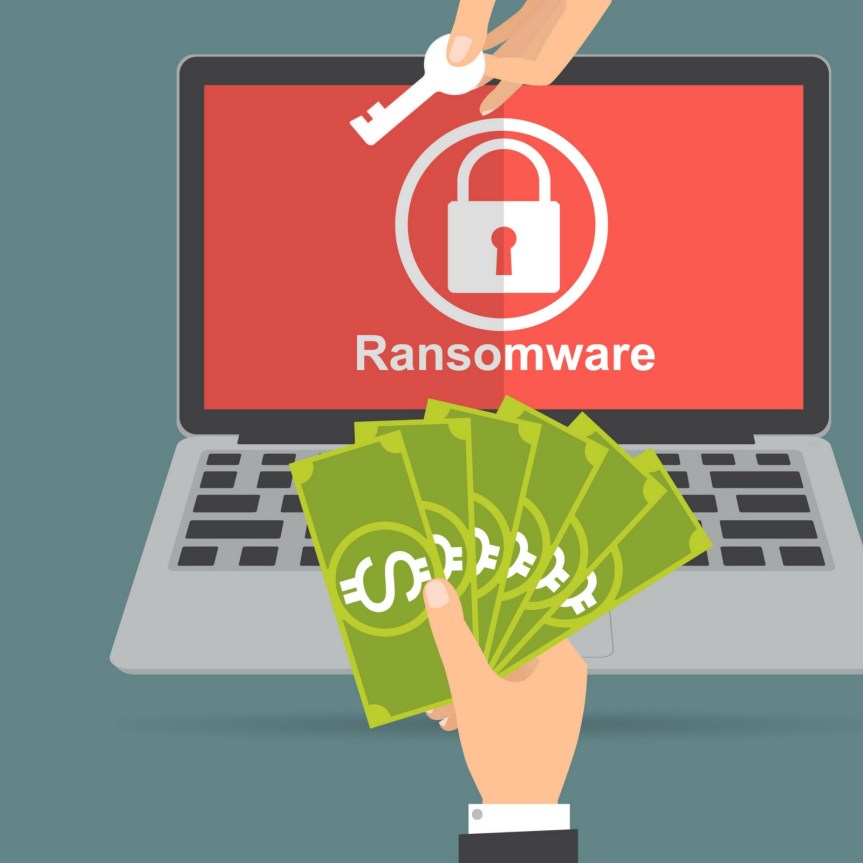
Ransomware is a type of cyberattack that encrypts files on victims’ computers, rendering them useless until a ransom is paid. It can take just minutes to cripple an entire network.

The recent hacks of Colonial Pipeline Co., which shut the biggest gasoline pipeline in the U.S. for nearly a week, and of JBS SA, which temporarily shut all U.S. beef plants for the largest meat producer globally, have exposed drawbacks in protection for industries. Colonial paid a $4.4 million ransom, while JBS paid $11 million.

Endpoint Protection Software are cybersecurity tools that protect “end user” devices such as laptops and desktop computers, which are vulnerable to being hacked through their users clicking on malicious links or phishing emails. some of the leading companies offering Endpoint Detection software include SentinelOne Inc., Cybereason Inc., Microsoft Corp. and CrowdStrike Holdings Inc.

The innovation of that software is that it blocks files deemed to be malicious — what traditional antivirus does — and goes a step further, automating the hunt for suspicious behavior on users’ machines, aiming to identify poisoned code before it causes damage.

One of the few ways to get ahead of the problem is to have security software running deep inside a computer’s operating system. There, it can see each program running on the machine and have the best shot at distinguishing between legitimate and malicious ones.

But according to Oliver Spence, co-founder of U.K.-based North Star Cyber Security, “Solving ransomware is magnitudes harder than solving spam and that isn’t solved yet,” he said. “How do you tell which email is legitimate or not? How do I tell if a process is legitimate or not? Solve either problem completely, and you are well on your way to being rich enough to retire.”

One challenge of staying ahead of the problem is that skilled hackers routinely test their code and techniques against the latest security software, adapting when needed to evade detection, said Andrew Howard, chief executive officer of Switzerland-based Kudelski Security, said Andrew Howard, chief executive officer of Switzerland-based Kudelski Security.

“Ransomware attacks today are typically human-operated, meaning that a human is actively guiding the attack,” Howard said. “As the defenses get better, this drives new offensive techniques, which drives better defenses, which drives new offensive techniques, and so forth. There is not a 100% effective technical solution for this problem.”

©2021 Bloomberg L.P.