Virgin Galactic’s SpaceShipTwo Unity 22 launch with Richard Branson: Here’s when to watch and what to know.

On July 11, Virgin Galactic will make a giant leap toward commercial suborbital spaceflight. The company will launch its first fully crewed flight of its SpaceShipTwo space plane Unity with a special passenger on board: the company’s billionaire founder Richard Branson

Branson, three crewmates and two pilots will launch on the historic flight after being carried into launch position by Virgin Galactic’s carrier plane VMS Eve. They will take off from the company’s homeport of Spaceport America in New Mexico, with a live webcast chronicling the flight. Here’s everything you need to know about the mission, which Virgin Galactic has dubbed Unity 22.

Related: How to watch Virgin Galactic launch Richard Branson to space
More: How Virgin Galactic’s SpaceShipTwo works (infographic)

WHAT TIME IS VIRGIN’S GALACTIC LAUNCH & AND CAN I WATCH?

Virgin Galactic has not released a specific time for the actual Unity 22 launch, but the company has announced it will begin webcasting the mission at 9 a.m. EDT (1300 GMT). And it looks like it’s going to be fun. The crew will walk out to the ship about an hour earlier.

Stephen Colbert, host of The Late Show on CBS, will host the webcast along with singer Khalid (who will debut a new single during the launch), former Canadian Space Agency astronaut Chris Hadfield and future Virgin Galactic astronaut Kellie Gerardi, who will launch on a research flight in 2022.

The webcast will begin with the Unity spacecraft and its carrier plane taking off from its runway at Spaceport America, which is located 55 miles (88 kilometers) north of Las Cruces, New Mexico. 

Branson has stated that the entire flight will take about 90 minutes, including the ascent up to launch position, release, flight to space and glide back to Earth for a runway landing at Spaceport America.

Virgin Galactic will launch six people on the Unity 22 flight, although the spacecraft is designed to carry up to eight people (two pilots and six passengers).

Unity 22’s crew includes four mission specialists:

  • Sirisha Bandla, Vice President of Government Affairs and Research Operations at Virgin Galactic. She will evaluate the human-tended research experience via an experiment from the University of Florida that requires several handheld fixation tubes to be activated at various points in the flight profile.
  • Colin Bennett, Lead Operations Engineer at Virgin Galactic. He will evaluate cabin equipment, procedures and the experience during the boost phase and weightless environment inside Unity.
  • Sir Richard Branson, founder of Virgin Galactic. Branson will evaluate the private astronaut experience. He will receive the same training, preparation and flight as Virgin Galactic’s future ticket-buying astronauts and use the flight to fine ways to enhance the experience for customers.
  • Beth Moses, Chief Astronaut Instructor at Virgin Galactic. She will serve as cabin lead and test director in space. Her tasks include overseeing the safe execution of the test flight objectives. Moses has launched on Unity before.

Two veteran Virgin Galactic pilots will be at the helm of Unity during the launch. They  have both launched to space on Unity before and are: 

  • Dave Mackay: Mackay is Virgin Galactic’s chief pilot and grew up in the highlands of Scotland. He is a former Royal Air Force pilot and flew for Branson’s airline company Virgin Atlantic before joining Virgin Galactic. 
  • Michael Masucci: Michael “Sooch” Masucci is a retired U.S. Air Force colonel who joined Virgin Galactic in 2013 who racked up over 9,000 flying hours in 70 different types of airplanes and gliders during more than 30 years of civilian and military flight. 

Two other pilots will fly the VMS EVE carrier plane that will carry SpaceShipTwo into launch altitude. They are: 

  • Frederick “CJ” Sturckow: A former NASA space shuttle commander who joined Virgin Galactic in 2013 with Masucci. A retired Marine Corps colonel, he was the first NASA astronaut to join the company and flew four space shuttle missions.
  • Kelly Latimer: Latimer is a test pilot and retired lieutenant colonel in the U.S. Air Force who joined Virgin Galactic’s pilot corps in 2015. She was the first female research test pilot to join what is now NASA’s Armstrong Flight Research Centre.

The primary objective for Unity 22 is to serve as a test flight for future passenger flights by Virgin Galactic. As its number suggests, this will be the 22nd flight of Unity, but only its fourth launch to space. 

The four mission specialists will each evaluate different experiences that Virgin Galactic has promised its future customers, many of whom have already reserved trips to space with the company at $250,000 a seat. 

Bandla, for example, will test the experience of performing experiments aboard Unity during different phases of the flight, including the weightless period. Branson will take note of the flight as a paying passenger to look for ways to enhance the trip for ticket holders looking for the experience of a lifetime. 

Related: The long road to spaceflight for Virgin Galactic and Blue Origin

Moses is Virgin Galactic’s Chief Astronaut Trainer and will ensure everyone is safe in their tests while Bennet will examine Unity’s cabin performance to look for potential enhancements. 

This mission is a critical flight or Virgin Galactic, which Branson founded in 2004. VSS Unity is the company’s second SpaceShipTwo after the first, VSS Enterprise, broke apart during a 2014 test flight, killing one pilot and seriously injuring another. Virgin Galactic has made numerous safety upgrades to prevent such an accident from happening again.

The mission will begin with takeoff from Spaceport America, where Virgin Galactic has built its “Gateway to Space” terminal to serve its future customers. The crews of Unity and Eve will walk out to their vehicles at about 8 a.m. EDT (6 a.m. local time, 1200 GMT). They’ll be wearing custom Under Armour flight suits made for Virgin Galactic.

After takeoff, the carrier plane VMS EVE will haul the SpaceShipTwo VSS Unity (short for Virgin Space Ship) to an altitude of about 50,000 feet (15,000 meters), when it will drop the the spacecraft.

In Photos: Virgin Galactic’s Sleek Under Armour Spacesuits for Space TouristsAdvertisement

Virgin Galactic's first test passenger Beth Moses looks out the window of the VSS Unity during a test flight with pilots Dave Mackay and Michael "Sooch" Masucci, on Feb. 22, 2018.
Virgin Galactic’s first test passenger Beth Moses looks out the window of the VSS Unity during a test flight with pilots Dave Mackay and Michael “Sooch” Masucci, on Feb. 22, 2018. (Image credit: Virgin Galactic)

After separation, Unity will ignite its hybrid rocket motor, which uses a mixture of solid and liquid propellant, to begin the boost phase. This will carry Unity to its target altitude above 50 miles (80 kilometers), where the pilots and crew can expect up to 4 minutes of weightlessness. They will exist their seats and enjoy sweeping views of the Earth below through the many round windows that dot the space plane’s fuselage.

After that short encounter with weightlessness, the crew will climb back into their seats as Unity prepares to return to Earth. Pilots Mackay and Masucci will have “feathered” the spacectraft’s twin tail booms to provide stability during atmospheric reentry.

The feathered tail will then be locked back into place for the glide back to Earth, which will end with a runway landing at Spaceport America. The entire flight, from takeoff to landing, should last about 90 minutes, Branson has said.

WILL VIRGIN GALACTIC REALLY REACH SPACE WITH UNITY 22?

Virgin Galactic's VSS Unity spaceliner captured this view of Earth during the vehicle's first trip to space, on Dec. 13, 2018.
Virgin Galactic’s VSS Unity spaceliner captured this view of Earth during the vehicle’s first trip to space, on Dec. 13, 2018. (Image credit: Virgin Galactic)

Virgin Galactic will launch Unity to an altitude above 50 miles (80 km), which NASA, the Federal Aviation Administration and the U.S. military classify as space. They will earn astronaut wings for reaching that height.

Another widely recognized boundary of space, the Kármán line, is at an altitude at 62 miles (100 km) above Earth. The SpaceShipTwo VSS Unity won’t reach this milestone, which has led Virgin Galactic’s competitor Blue Origin (which does fly higher than 62 miles) to call out Virgin Galactic for missing that mark. 

Richard Branson has downplayed that criticism and saying that “the actual difference in experience is going to be almost non-existent,” in an interview with NPR’s Leila Fadel.

WHERE DOES VIRGIN GALACTIC LAUNCH SPACESHIPTWO FROM?

Click here for more Space.com videos…Sorry, the video player failed to load.(Error Code: 101102)Advertisementhttps://e42edf55977935dba9fbedb9fb4dde49.safeframe.googlesyndication.com/safeframe/1-0-38/html/container.html

Virgin Galactic initially launched SpaceShipTwo test flights from the company’s facilities at Mojave Air and Space Port in California. However, in 2020 the company moved Unity and its carrier craft to its permanent home at Spaceport America, where it plans to fly regular passenger flights beginning in 2022. 

Spaceport America is located near Las Cruces, New Mexico and is home to Virgin Galactic’s “Gateway to Space” terminal, a welcome center and waiting room for ticketed passengers preparing for trips to space. It also sports a large hangar designed to fit multiple SpaceShipTwo spaceplanes and the VMS Eve. Virgin Galactic has also built a new vehicle, the SpaceShip III VSS Imagine

WHEN COULD I LAUNCH TO SPACE WITH VIRGIN GALACTIC?

Click here for more Space.com videos…Sorry, the video player failed to load.(Error Code: 101102)

If you booked a trip with Virgin Galactic early and have one of the first reservations, you may get your chance to fly in space as early as 2022. If not, there’s a long wait ahead. And that’s assuming you can afford the $250,000 ticket price. 

Virgin Galactic has said it plans to begin passenger launches in 2022 after a series of final test flights in 2021. The company does have hundreds of reservations for customer flights in backlog from eager would-be astronauts that have been waiting for over 17 years (since Richard Branson first announced Virgin Galactic in 2004) for the SpaceShipTwo to finally fly. The company paused taking new reservations after the 2014 accident.

Virgin Galactic is expected to resume taking reservations for “a limited number of tickets for future spaceflights” sometime this year, according to its website.


Current trends of serverless computing.

Developers spend countless hours solving business problems with code. Then comes a never ending part where ops team’s turn to spend countless hours figuring out how to get the code that developers write up and running on whatever computers are available and making sure those computers operate smoothly. Serverless computing represents an enhancement of cloud programe models, abstraction, and platforms, and is a command to the attainment and wide acceptance of cloud technologies.

What is serverless computing?

Serverless computing is a cloud computing implementation model in which the cloud provider deals with machine resources on demand, taking care of the servers on behalf of their customers. It does not hold resources in volatile memory; computing is rather done in short bursts with the results persisted to storage. When an app is not in use, there are no computing resources allocated to the app. It is an execution model for the cloud in which Some of the Common languages supported by serverless runtimes are Java, Python and PHP. Amazon’s AWS Lambda was the first serverless platform and it defined several key dimensions including cost, programming model, deployment, resource limits,security, and monitoring. Supported languages include Node.js, Java, Python, and C programming. Initial versions had limited composability but this has been addressed recently.

Current trend

1.Google Cloud Functions : It provides basic FaaS functionality to run serverless functions written in Node. The functionality is currently limited but expected to grow in future versions.

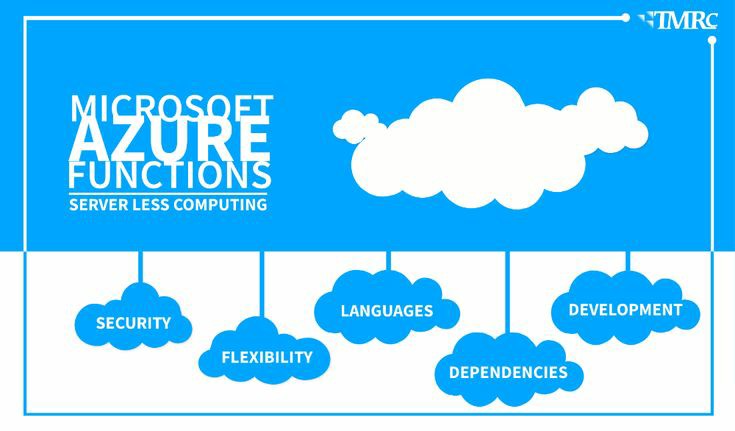
2.Microsoft Azure Functions : It provides HTTP webhooks and integration with Azure services to run user provided functions. The platform supports C , Node.js, Python, PHP, bash, or any executable. The runtime code is open-source and available on GitHub under an MIT License. To ease debugging, the Azure Func-tions CLI provides a local development experience for creating, developing, testing,running, and debugging Azure Functions.

3.IBM OpenWhisk provides event-based serverless programming with the ability to chain serverless functions to create composite functions. It supportsNode.js, Java, Swift, Python, as well as arbitrary binaries embedded in a Docker Container. OpenWhisk is available on GitHub under an Apache open source license.Besides There are several serverless projects ranging from open source projects to vendors that find serverless a natural fit for their business. OpenLambda is an open source serverless computing platform. The source code is available in GitHub Lunder an Apache License. It’s paper outlines a number of challenges around performance such as supporting faster function startup time for heterogeneous language runtimes and across a load balanced pool of servers, deployment of large amounts of code, supporting stateful interactions (such as HTTP sessions), etc

4.AWS Lambda: It is a serverless compute service that lets you run code without provisioning or managing servers, creating workload-aware cluster scaling logic, maintaining event integrations, or managing runtimes. With Lambda, you can run code for virtually any type of application or backend service – all with zero administration. Just upload your code as a ZIP file or container image, and Lambda automatically and precisely allocates compute execution power and runs your code based on the incoming request or event, for any scale of traffic. You can set up your code to automatically trigger from over 200 AWS services and SaaS applications or call it directly from any web or mobile app. You can write Lambda functions in your favorite language (Node.js, Python, Go, Java, and more) and use both serverless and container tools, such as AWS SAM or Docker CLI, to build, test, and deploy your functions.

Advantages

1.No infrastructure to maintain :Serverless computer services, which are small snippets of code meant to execute a single function are executed on pre-existing servers that run functions for countless other customers as well. Since you’re literally using someone else’s computer to execute your serverless functions, there’s no infrastructure to maintain it.

2.No costs : when functions aren’t running As Hacker Noon points out, the costs associated with serverless computing are minimal compared to other cloud services. Access authorization, presence detection, security, image processing, and other costs associated with operating a server, whether physical or virtual, are eliminated under a serverless model. In short, serverless functions can be dirt cheap, and if they aren’t being spun up for use, you aren’t paying anything.

3.Infinitely scalable : Automatic scaling capability of any serverless platform worth investing in is designed to scale based on need. That’s another advantage to serverless computing as there’s never a need to partition a new cloud server or purchase additional computing power for an existing instance. All of that is handled by the serverless computing platform, leaving you with no complication outside of a slightly larger bill for additional computing time.

4.Reduced latency : Cloud flare points out that using serverless functions can greatly reduce the latency experienced by end users. Serverless functions don’t operate from an origin server, so there’s no single location that an end user’s traffic has to be directed to.

5.Reduced software complexity : Serverless computing functions don’t need to take any of that into account–the code just has to be supported by the cloud platform being used. On top of being easier to build, serverless functions require a lot less coding knowledge to build, which opens up development to those at lower skill levels. As cloud native systems inherently scale down as well as up, these systems are known as elastic rather than scalable. Small teams of developers are able to run code themselves without the dependence upon teams of infrastructure and support engineers; more developers are becoming DevOps skilled and distinctions between being a software developer or hardware engineers are blurring.

Disadvantages

1.Security issues : server that runs serverless functions runs them for myriad customers, which opens up a lot of security concerns.

2.Vendor lock-in : Building serverless functions on one platform can mean that migrating to another is difficult. Code might need to be re-written, APIs that exist on one platform may not exist. you’re going to invest in a serverless platform, be sure the vendor you’re considering has everything you need because becoming unhappy with your serverless computing provider a few months or years into your service can be a major problem.

3.Debugging is more difficult : Every time a serverless instance spins up it creates a new version of itself, and that means it’s difficult to collect data necessary to debug and fix a serverless function. Debugging serverless functions is possible, but it’s not a simple task, and it can eat up lots of time and resources.

Conclusion

Evolution of the trend towards higher levels of abstractions in cloud programming models, and currently exemplified by the Function as a Service (FaaS) model where developers write small stateless code snippets and allow the platform to man-age the complexities of scalably executing the function in a fault tolerant manner.This seemingly restrictive model nevertheless lends itself well to a number of common distributed application patterns, including compute intensive event processing pipelines. Most of the large cloud computing vendors have released their own serverless platforms.

for more information go to the link below 👇

https://youtu.be/Fx3ZGy-mbV4

https://youtu.be/i_U_S5Eboy0

The Journalism and mass media

The Journalism and mass media is the  graduates work nationwide and worldwide at newspapers and magazines and in advertising, branding, broadcast news, social media, marketing, media research, photojournalism, publication design, public relations, radio, and other areas.

The Journalism is the activity of gathering, assessing, creating, and presenting news and information. It is also the product of these activities. Journalism can be distinguished from other activities and products by certain identifiable characteristics and practices.

There are five types,

  • investigative,
  • news,
  • reviews,
  • columns,
  • feature-writing.

The Rules Of Journalism

: Ask questions.

The  journalist’s greatest assets is their natural curiosity. Start with the famed five W’s (and one H), then ask some more. Asking “why?” is what gets you the good stuff.

: Dig for the story.

If you think you’ve got the whole story, dig around some more. The most fascinating parts of the story are often just under the surface.

: Master the language.

As a journalist, language is your main tool. Read as much as you can and as often as you can, research odd words and archaic sayings, look at what’s behind etymology. Learn the patterns behind language and how to use them.

: Spelling matters.

Double-check if you aren’t sure about spelling or style (especially in the case of names), and read through messages and articles thoroughly before sending either.

#5: Know thy publication.

Before you pitch, know a publication’s style, editorial staff and content. Publications are usually more than happy to provide back-issues. If you can’t find writer’s guidelines, send a short introductory email requesting them.

#6: Contacts are your career.

Contacts (and your reputation with said contacts) are your entire career. Editors, sources and interviewees are all vital parts of the journalistic process. Without them, you’d be screwed.

#7: Once it’s off the record, keep it that way.

Trusted sources will tell you all sorts of juicy, fascinating, scandalous and personal things in your career as a journalist, often off the record. Shut up about it.

#8: Three is a golden number.

Mind the rule of threes: Have at least three reliable, corroborating sources for every fact; three interviewees for every article; and read through a piece at least three times before you sit down to change a comma – that’s at least.

#9: Rejection is opportunity.

Getting a story rejected means you’ve just opened up a line of communication with a new editor – congratulations. Pitch again. Rejection also gives you a chance to sell the story elsewhere: Sometimes rejection just means it’s not right for them

#10: Editors are teachers.

You can learn a hell of a lot from the experience of your editors, and when given the chance you should. They braved the journalistic battlefield before you, so you can trust their edits and advice. Usually, they’re right.

: Mind the word count.

Yes, you can do that in the assigned word count, and the editor will either make you add or cut if you don’t. Here, they always know better. (Remember this piece of key-advice from The Elements of Style and repeat it as your daily editing mantra: Omit unnecessary words.)

: Deadlines are holy.

Deadlines exist for a reason: Never skip out on a deadline unless you are incapacitated or dead. If you have to, let your editor know beforehand and have a damn good reason. Then, don’t do it again. Compare deadlines to menstrual cycles: If you skip one, you might just be stressed. If you skip several, you’re in trouble.

#13: Know the law.

Journalism can take you to some strange places. Make sure you know the law and what side of it you’re standing on at all times.

#14: Always do your research.

Make sure that your research is flawless and that you can always match which source gave which fact. Cross-reference, find first-hand information and do your background research before requesting, planning or conducting an interview.

#15: Have it outlined.

Have the skeleton of your idea outlined and ready by the time you pitch the idea. That way you have all the information ready, and it makes your job – and theirs – easier. Your outline should include the article’s proposed headline, the article’s sub-headers and sections (you can write down facts as key-words here) and who you will interview.

#16: Keep and file everything.

Keep prior notes, interviews, sources, tapes, the lot: You never know when you’ll need it, and you probably will.

#17: Guard your vices.

Many great journalists have been crippled or completely destroyed by their vices – and it can be almost anything: Overworking, coffee, manic exercising, painkillers or heavier drugs. Whatever yours is, keep it in check or risk your job.

#18: Burnout is a rabid, fanged monkey.

Burnout is a myth, until you’re there. It’s a mental and physical size of your writing engine, and if you don’t find your way to unwind you’ll get there a lot quicker.

The Mass media refers to a diverse array of media technologies that reach a large audience via mass communication. … Broadcast media transmit information electronically via media such as films, radio, recorded music, or television.

The types of mass media include Newspapers, Radio, Television, Internet, Magazines and more,

  • What is Mass Media?
  • Journalism.
  • Social Media.
  • Films.
  • Television.
  • Radio.
  • Advertising.
  • Public Relations.
  • Books, Magazines, Newspapers and Journals.

RULES OF MASS MEDIA

  • The Privacy Act works to guarantee privacy to individuals and controls how personal information is used. Defamation in the written form (libel) or the spoken form (slander) is illegal in the United States.
  • Section 315 (Equal Time Rule) ensures that broadcast media cannot favor any one candidate over another by granting one more time than another. The Fairness Doctrine ensured that radio stations offered equal time to opposing viewpoints.
  • The Freedom of Information Act grants the public, including the news media, access to many government documents. The Digital Millennium Copyright Act, established in 1998, extended existing copyright laws to encompass and protect information online.

LIBRARIES: A BOON TO THE SOCIETY

THE HARD COPY OF LIBRARY

According to WIKIPEDIA, “A library is a collection of materials, books or media that are easily accessible for use and not just for display purposes. It is responsible for housing updated information in order to meet the user’s needs on a daily basis. A Library provides physical (hard copies documents) or digital access (soft copies) materials, and may be a physical location or a virtual space, or both. A library’s collection can include printed materials and other physical resources in many formats such as DVDs, CDs and Cassette as well as access to information, music or other content held on bibliographic databases.”

IMPORTANCE OF LIBRARIES TO MAN

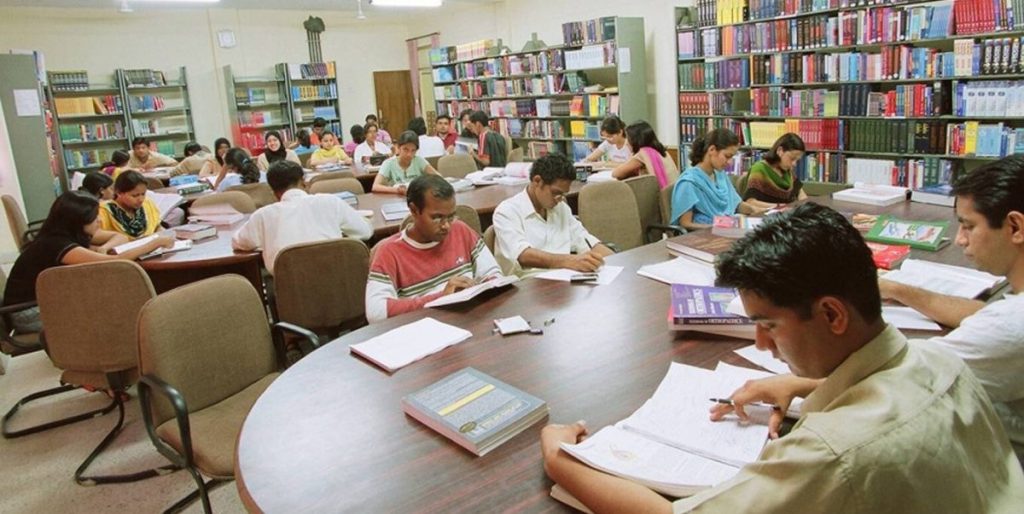
Libraries are said to be the storehouse of culture. If a man is to be known by the company he keeps, society is to be known by the number of good libraries it has. Man’s craving for knowledge is eternal. He wants to know more; he wants to enjoy more. But he cannot always move about for various reasons. He goes to a library and reads books of his choice. Libraries preserve books of various types, old and new. There are also periodicals and daily papers to meet the demands of the people. In all ages, libraries have been considered to be the best medium of public instructions.

The doors of library are exposed to everyone for rewarding the requirement for information. They are run by the government, schools, colleges, and universities. The society members of the neighbouring locality can visit these libraries to boost their information and complete their research.

TYPES OF LIBRARIES

There are different types of libraries, such as public libraries, circulating libraries, private or personal libraries. Of these, public libraries are most important. These are financed either by Government or by public institutions. All readers are allowed to read here. These libraries have two sections-lending and reference. Books are lent out to those who deposit money. Others are allowed to sit a id read books during the period, these are kept open. As libraries spread education, the Government of India have taken up a scheme to establish rural libraries for the benefit of rural people. They sanction annual grants to these libraries in cash or kind. In these libraries, books are stocked to suit the half-literate people of villages.

A FRIEND IN NEED

Government-managed libraries are well equipped and well manned. Only technical men are employed here to help the readers. Quite a large number of scholars, students and members of the public daily attend such libraries for reading and making notes. There are public libraries organised by public institutions. These libraries cater to the needs of a large number of people living in particular localities. Students of schools and colleges also utilise these libraries and derive benefit from them. But these libraries are in bad shape. Government grants to these libraries are not adequate. Public-spirited men now-a-days, are rare. Development of libraries is an important task of a welfare Government. Common people and students get opportunities to read in these libraries. In our country where the percentage of illiteracy is high, these libraries help in expanding the facilities for reading. Public libraries and rural libraries do a lot of good to the localities where they are established. Now the Government has established primary unit libraries, town libraries etc. The Government gives regular grants for the purchase of books and equipment. But still the grants are not adequate. However, they help the public libraries to satisfy the needs and aspirations of the local people.

CONCLUSIONS

So, if we can see deeply a library Builds and helps to connect Community, it Provide Access to the full range of information resources needed to live, learn, govern, and work. It Promote Literacy to both children and adults. It Protect Your Rights to read and offers freedom of information gathering and sharing. People becomes innovative and smart in the company of library, which enhances creation and collaboration.

Introduction about different Schools, Colleges, Universities

Every student wants to join a dream college or university.

After schooling, we desire to join a top college or university for the security of our feature

Is a college the same thing as a university? What does “liberal arts” mean? Why are some colleges called public and others private? Here are the basics of the types of colleges.

Let me know about NIT AGARTALA

Institute is committed to developing highly competent young Engineers, Scientists, and Management Professionals to cater to the ever-increasing techno-managerial needs of national and international standards fulfilling professional ethics and societal commitment.

MISSIONS

• To produce techno-managerial human resources in line with global needs, offering a state-of-the-art facility, research, and engineering and allied disciplines.

• To enhance the effectiveness of technical education with innovative systems and devising a mechanism to facilitate the application of research findings to solve real problems of industries/academics.

• To nurture and sustain an academic ambience conducive to the development of intellectually capable and committed professionals so that effective growth is obtained for the region’s economic development and the nation as a whole.

• To establish as the corridor of higher education for the South East Asian countries.

EDUCATION SYSTEM

Presently the Institute offers eight UG courses and PG courses in several fields along with Post Doctoral Fellowships. This Institute is autonomous under NIT being act passed by the parliament.

The Institute recently introduced a new curriculum in IITs where more elective subjects are being offered to make the system flexible. Previously, the Institute used to follow the mark based system of evaluation, but have been switching over to a credit-based system to keep track of the global evaluation methods. Industrial training, Undertaking projects are parts of the education system and students are also encouraged to take various activities for social development through NSS and NCC.

Initiatives

The Institute recently has been converted from State Engineering College to National Institute of Technology. The total seats have been increased from 250 to 420 for the academic session 2007-2008. Recently three Under Graduate courses has been introduced in Electrical & Electronics Engineering, Transportation Engineering and Production Engineering. The Civil Engineering Department will start a PG programme in Structural Engineering to fulfil the requirement of the State. The nonresidential campus is to be made residential with the reopening of two boys hostels and one girl’s hostel for the students admitted for the session 2007-2008. A master plan is under preparation for 335 acres of land where a new campus will be built with modern facilities for the overall requirement of the Institute. The Institute is getting a 33 VK dedicated power supply through Tripura State Electricity Corporation Limited for uninterrupted power supply in the campus. The R. D. Department of Govt. of Tripura took total renovation work of the existing buildings after conversion to NIT. The Institute has also obtained a grant of 12 crore rupees from DoNER for the development of infrastructures like the extension of the Library Building, an extension of the Academic Building, the Centralized Computer Centre, a new water treatment plant and boys and girls common room. The campus is now totally connected through Wi-Fi with WiMAX wireless backbone and all e-journal facilities are available in the digital library of NIT Agartala.

DISABILITY ETIQUETTES

Disability Etiquette - United Spinal Association

Disability etiquette is a set of guidelines dealing specifically with how to approach persons with disabilities . Before knowing about disability etiquettes , it is essential to understand certain basic things such as if someone has a disability don’t assume he/she needs help . In fact , adults with disabilities wants to be treated as an independent persons , So offer help only if the person with disability seems to need it . Physical contact should be avoided . Always speak directly to the person with a disability , not to his/her friend . Persons with disabilities are the best judge of what they can or can’t do .

General Disability Etiquettes

Disability Etiquette | OSU TOPS Program

The general disability etiquettes are stated below :

  • Always put the person first , i.e., say ‘person with disability ‘ rather than ‘disabled person’ . Always avoid the outdated words like handicapped , retarded , physically challenged or differently – abled . For example , refer to ‘person who are blind ‘ rather than ‘ blind person ‘.
  • In case of introduction to a person with a disability , it is appropriate to shake hands .
  • When you meet a person with a visual impairment , always identify yourself and others who may be with you .
  • Leaning or hanging on a person ‘s wheelchair should always be avoided because such act is generally considered annoying . In fact , the chair is the part of the personal body space of the person who uses it.
  • Always listen carefully as well as attentively when you are having conversations with a person who has difficulty in speaking . Have patience and wait for the person to finish rather than correcting or speaking for that person . Generally , ask short questions that require short time .
  • When talking with a person who is on a wheelchair or person who uses crutches , keep yourself at eye level in front of the person to facilitate the talk .
  • To get the attention of a person who is deaf or having hearing impairment , tap the person on the shoulder or wave your hand . You should look directly at the person and speak clearly .
  • Never patronize person who use wheelchairs by patting them on the head or shoulder .
  • Always introduce yourself to persons who are blind using your name .
  • Always avoid asking personal questions to an individual who is differently-abled .
  • Always give additional time to a person with any disability to do or to say something .
  • Always have conversation at a normal tone of voice . Don’t talk in high pitch to such individuals .
  • Don’t pretend to understand if you are facing problem in doing so .
  • If you need to leave a person who is blind , inform him that you are leaving and ask him if he needs anything before you leave .

What is Astrophysics?

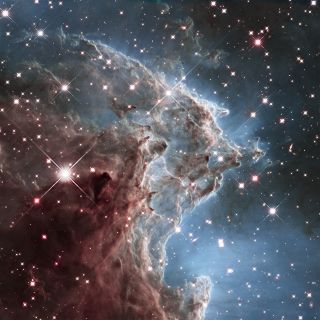
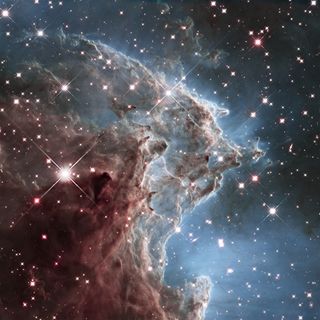
Hubble Snaps 'Monkey Head' Nebula
Astrophysics is a branch of space science that applies the laws of physics and chemistry to explain the birth, life and death of stars, planets, galaxies, nebulae and other objects in the universe. It has two sibling sciences, astronomy and cosmology, and the lines between them blur. 

In the most rigid sense:
Astronomy measures positions, luminosities, motions and other characteristics
Astrophysics creates physical theories of small to medium-size structures in the universe
Cosmology does this for the largest structures, and the universe as a whole. 

In practice, the three professions form a tight-knit family. Ask for the position of a nebula or what kind of light it emits, and the astronomer might answer first. Ask what the nebula is made of and how it formed and the astrophysicist will pipe up. Ask how the data fit with the formation of the universe, and the cosmologist would probably jump in. But watch out — for any of these questions, two or three may start talking at once!
Goals of astrophysics
Astrophysicists seek to understand the universe and our place in it. At NASA, the goals of astrophysics are “to discover how the universe works, explore how it began and evolved, and search for life on planets around other stars,” according NASA’s website.

NASA states that those goals produce three broad questions:

  • How does the universe work?
  • How did we get here?
  • Are we alone?

It began with Newton

While astronomy is one of the oldest sciences, theoretical astrophysics began with Isaac Newton. Prior to Newton, astronomers described the motions of heavenly bodies using complex mathematical models without a physical basis. Newton showed that a single theory simultaneously explains the orbits of moons and planets in space and the trajectory of a cannonball on Earth. This added to the body of evidence for the (then) startling conclusion that the heavens and Earth are subject to the same physical laws.

Perhaps what most completely separated Newton’s model from previous ones is that it is predictive as well as descriptive. Based on aberrations in the orbit of Uranus, astronomers predicted the position of a new planet, which was then observed and named Neptune. Being predictive as well as descriptive is the sign of a mature science, and astrophysics is in this category.

Milestones in astrophysics

Because the only way we interact with distant objects is by observing the radiation they emit, much of astrophysics has to do with deducing theories that explain the mechanisms that produce this radiation, and provide ideas for how to extract the most information from it. The first ideas about the nature of stars emerged in the mid-19th century from the blossoming science of spectral analysis, which means observing the specific frequencies of light that particular substances absorb and emit when heated. Spectral analysis remains essential to the triumvirate of space sciences, both guiding and testing new theories.

Early spectroscopy provided the first evidence that stars contain substances also present on Earth. Spectroscopy revealed that some nebulae are purely gaseous, while some contain stars. This later helped cement the idea that some nebulae were not nebulae at all — they were other galaxies! 

In the early 1920s, Cecilia Payne discovered, using spectroscopy, that stars are predominantly hydrogen (at least until their old age). The spectra of stars also allowed astrophysicists to determine the speed at which they move toward or away from Earth. Just like the sound a vehicle emits is different moving toward us or away from us, because of the Doppler shift, the spectra of stars will change in the same way. In the 1930s, by combining the Doppler shift and Einstein’s theory of general relativity, Edwin Hubble provided solid evidence that the universe is expanding. This is also predicted by Einstein’s theory, and together form the basis of the Big Bang Theory.

Also in the mid-19th century, the physicists Lord Kelvin (William Thomson) and Gustav Von Helmholtz speculated that gravitational collapse could power the sun, but eventually realized that energy produced this way would only last 100,000 years. Fifty years later, Einstein’s famous E=mc2 equation gave astrophysicists the first clue to what the true source of energy might be (although it turns out that gravitational collapse does play an important role). As nuclear physics, quantum mechanics and particle physics grew in the first half of the 20th century, it became possible to formulate theories for how nuclear fusion could power stars. These theories describe how stars form, live and die, and successfully explain the observed distribution of types of stars, their spectra, luminosities, ages and other features.

Astrophysics is the physics of stars and other distant bodies in the universe, but it also hits close to home. According to the Big Bang Theory, the first stars were almost entirely hydrogen. The nuclear fusion process that energizes them smashes together hydrogen atoms to form the heavier element helium. In 1957, the husband-and-wife astronomer team of Geoffrey and Margaret Burbidge, along with physicists William Alfred Fowler and Fred Hoyle, showed how, as stars age, they produce heavier and heavier elements, which they pass on to later generations of stars in ever-greater quantities. It is only in the final stages of the lives of more recent stars that the elements making up the Earth, such as iron (32.1 percent), oxygen (30.1 percent), silicon (15.1 percent), are produced. Another of these elements is carbon, which together with oxygen, make up the bulk of the mass of all living things, including us. Thus, astrophysics tells us that, while we are not all stars, we are all stardust.

Astrophysics as a career

Advertisement

Becoming an astrophysicist requires years of observation, training and work. But you can start becoming involved in a small way even in elementary and high school, by joining astronomy clubs, attending local astronomy events, taking free online courses in astronomy and astrophysics, and keeping up with news in the field on a website such as Space.com. 

In college, students should aim to (eventually) complete a doctorate in astrophysics, and then take on a post-doctoral position in astrophysics. Astrophysicists can work for the government, university labs and, occasionally, private organizations.

Study.com further recommends the following steps to put you on the path to being an astrophysicist:

Take math and science classes all through high school. Make sure to take a wide variety of science classes. Astronomy and astrophysics often blend elements of biology, chemistry and other sciences to better understand phenomena in the universe. Also keep an eye out for any summer jobs or internships in math or science. Even volunteer work can help bolster your resume.

Pursue a math- or science-related bachelor’s degree. While a bachelor in astrophysics is the ideal, there are many other paths to that field. You can do undergraduate study in computer science, for example, which is important to help you analyze data. It’s best to speak to your high school guidance counselor or local university to find out what degree programs will help you.

Take on research opportunities. Many universities have labs in which students participate in discoveries — and sometimes even get published. Agencies such as NASA also offer internships from time to time. 

Finish a doctorate in astrophysics. A Ph.D. is a long haul, but the U.S. Bureau of Labor Statistics points out that most astrophysicists do have a doctoral degree. Make sure to include courses in astronomy, computer science, mathematics, physics and statistics to have a wide base of knowledge.

Natalie Hinkel, a planetary astrophysicist who was then at Arizona State University, gave a lengthy interview with Lifehacker in 2015 that provided a glimpse into the rewards and challenges of being a junior astrophysics researcher. She described the long number of years she has put into doing her research, the frequent job switches, her work hours and what it’s like to be a woman in a competitive field. She also had an interesting insight about what she actually did day to day. Very little of her time is spent at the telescope.

“I spend the vast majority of my time programming. Most people assume that astronomers spend all of their time at telescopes, but that’s only a very small fraction of the job, if at all. I do some observations, but in the past few years I’ve only been observing twice for a total of about two weeks,” Hinkel told Lifehacker. 

“Once you get the data, you have to reduce it (i.e. take out the bad parts and process it for real information), usually combine it with other data in order to see the whole picture, and then write a paper about your findings. Since each observation run typically yields data from multiple stars, you don’t need to spend all of your time at the telescope to have enough work.”

Wireshark – Packet Analyzer

Wireshark is a free and open-source packet analyzer. It is used for network troubleshooting, analysis, software and communications protocol development, and education. Originally named Ethereal, the project was renamed Wireshark in May 2006 due to trademark issues. Wireshark is cross-platform, using the Qt widget toolkit in current releases to implement its user interface, and using pcap to capture packets. It runs on Linux, macOS, BSD, Solaris, some other Unix-like operating systems, and Microsoft Windows. 

Features

  • Available for UNIX and Windows.
  • Capture live packet data from a network interface.
  • Open files containing packet data captured with tcpdump/WinDump, Wireshark, and many other packet capture programs.
  • Import packets from text files containing hex dumps of packet data.
  • Display packets with very detailed protocol information.
  • Save packet data captured.
  • Export some or all packets in a number of capture file formats.
  • Filter packets on many criteria.
  • Search for packets on many criteria.
  • Colorize packet display based on filters.
  • Create various statistics.

Requirements

The amount of resources Wireshark needs depends on your environment and on the size of the capture file you are analyzing.

Microsoft Windows

  • Wireshark should support any version of Windows that is still within its extended support lifetime. •
  • At the time of writing this includes Windows 10, 8.1, Server 2019, Server 2016, Server 2012 R2, and Server 2012.
  • The Universal C Runtime. This is included with Windows 10 and Windows Server 2019.
  • Any modern 64-bit AMD64/x86-64 or 32-bit x86 processor.
  • 500 MB available RAM. Larger capture files require more RAM.
  • 500 MB available disk space. Capture files require additional disk space.
  • Any modern display. 1280 × 1024 or higher resolution is recommended.
  • A supported network card for capturing.

macOS

  • Wireshark supports macOS 10.12 and later.
  • Similar to Windows, supported macOS versions depend on third party libraries and on Apple’s requirements.

UNIX, Linux, and BSD

  • Wireshark runs on most UNIX and UNIX-like platforms including Linux and most BSD variants.
  • The system requirements should be comparable to the specifications listed above for Windows.

security attacks considered in wireshark

  • LOCAL AREA NETWORK ATTACKS
  • ARP Poisoning Attack
  • MAC Flooding Attack
  • DOS Attacks
  • DHCP Spoofing Attack
  • VLAN Hopping
Working diagram of  Wireshark

Advantages of using Wireshark

  • Free software
  • Available for multiple platforms – Windows & UNIX
  • Can see detailed information about packets within a network
  • Not proprietary can be used on multiple vendors unlike Cisco Prime

Disadvantages of using Wireshark

  • Notifications will not make it evident if there is an intrusion in the network
  • Can only gather information from the network, cannot send

EVERY CLOUD HAS A SILVER LINING

“With the dawning of a new age, after pandemics have done their work, we may find ourselves at the watershed of singular considerations about how to handle the changes that revolutionize our lives, and trace the silver lining in a new reality. (What do they think behind their dirty aprons?)”
― Erik Pevernagie

TASTE THE POWER OF THE ‘PROVERB’

Clouds are the symbol of grave period of life and the silver lining as mentioned refers to the bright, contented, or enjoyable times. It is very obvious that the entire proverb is about optimism. If an individual is positive even in the murkiest of periods, then indeed things will ultimately be in his/her favour. However, if the individual has a pessimistic approach towards life, then no opportunity in his/her life can ever make him/her gratified and he/she will end up in difficulties. Ups and Downs are part and parcel of life. In fact, if these did not exist, life would have been boring and meaningless. All these understandings enhance us in some way or the other and help us to become strongminded individuals. In fact, all the hardships and difficulties we face in life have the effect of making us richer in experience and educate us to embark upon adverse situations. Therefore, it can be appropriately said that ‘Every Cloud has a Silver Lining’.

HOW DARKNESS PENETRATES OUR LIVES

To elucidate the above, let us analyse the problems of a person called Kamal. He was an average person, coming from a middle-class family. His parents, who were well-educated themselves, wanted him to have the best education and so he was admitted to the best school in the city. As a student, he outshined neither in academics nor in sports and was always placed in the middle of his class in both. Even in extra co-curricular activities Kamal did not leave behind any distinctive mark. Being an obedient child, he was always guided by parental advice, which prevented the development of his personality and as a result, he lacked self-confidence.

AN IRON DETERMINATION PAVES THE WAY

However, Kamal’s life went disordered with the sudden demise of his father in an accident. The family was staring at imminent poverty because his father was the sole bread-winner and the pension that they were to get was not enough to fund the education of both Kamal and his younger sister. All of a sudden, the entire burden of the family descended on Kamal’s young shoulders, but that was a blessing in disguise because the misfortune made him resolute. He developed into a very strong-willed individual who was ready to take on the world legitimately. Kamal took stock of the situation and started providing private tuitions to supplement the family income. In doing so, he realized that his actual calling in life was to be an academician. Gradually, he cleared all the examinations with flying colours and at a very young age joined an elite institution as a there has been no looking back since then. Had the disaster never occurred, Kamal might have followed and done what his parents believed fit for him instead of realizing his own potential and aptitude in life and society would have been left without a very good teacher.

SO…BE OPTIMISTIC

Like Kamal, there are millions of such individuals who suffer major hindrances in their lives but still manage to pull through. So, one should never feel hopeless because of problems, as no individual in this world leads an uncomplicated existence. Whenever clouds of worries appear, they always carry an indication of something better that might happen.So, we must be inspired from such events and should always move frontward in life even if it is hard for us to do so. Strong willpower and undying hope pave the way for success to be achieved. Every single problem in life is like a riddle which hides some solution and a mindful search for that solution open many closed doors of achievements.

All you need to know about UGC( University grant commission)

Introduction

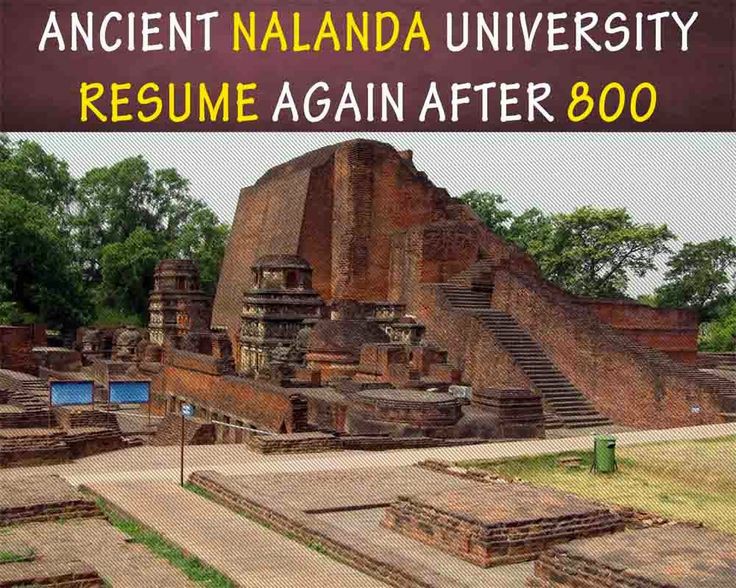
Since ancient times to the modern world, the Higher Education System has always been remarkable in our country, India. From ancient Bharat to modern India, higher education has always occupied a place of prominence in Indian history. In ancient times, Nalanda, Taxila and Vikramsila universities were renowned seats of higher learning, attracting students not only from all over the country but from far off countries like Korea, China, Burma, Sri Lanka, Tibet and Nepal. Today, India manages one of the largest higher education systems in the world.

UGC

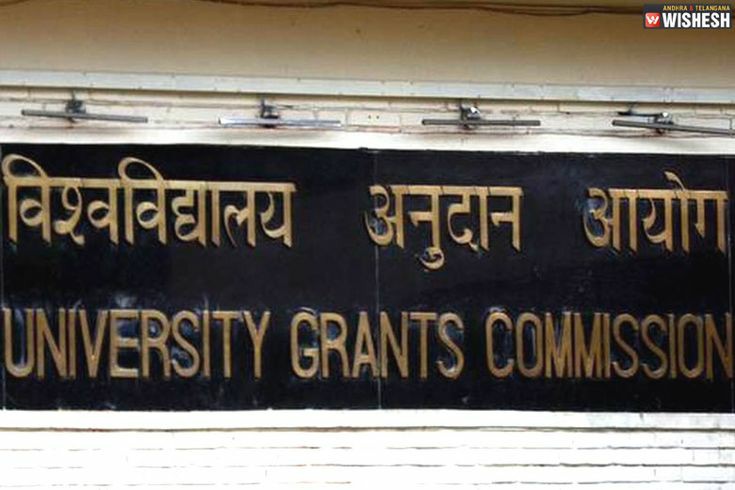
The University Grants Commission of India (UGC India) is a statutory body set up by the Government of India in accordance to the UGC Act 1956 under the Ministry of Education, and is charged with coordination, determination and maintenance of standards of higher education. It provides recognition to universities in India, and disbursements of funds to such recognized universities and colleges. The headquarters are in New Delhi, and it has six regional centers in Pune, Bhopal, Kolkata, Hyderabad, Guwahati and Bangalore. A proposal to replace it with another new regulatory body called HECI is under consideration by the Government of India. The UGC provides doctoral scholarships to all those who clear JRF in the National Eligibility Test. On an average, each year more than a $100 million is spent on doctoral and post-doctoral fellowships by the commission.

Basic information

Established
28 December 1953 First
executiveshanti Swaroop bhatnagar
Headquarternew Delhi
ChairmanDp Singh
Departmentdepartment of higher education, ministry of education
Sectorhigher education

History

  • The present system of higher education dates back to Mountstuart Elphinstone`s minutes of 1823, which stressed on the need for establishing schools for teaching English and the European sciences. Later, Lord Macaulay, in his minutes of 1835, advocated “efforts to make natives of the country thoroughly good English scholars”. Sir Charles Wood`s Dispatch of 1854, famously known as the ` Magna Carta of English Education in India`, recommended creating a properly articulated scheme of education from the primary school to the university. It sought to encourage indigenous education and planned the formulation of a coherent policy of education. Subsequently, the universities of Calcutta, Bombay (now Mumbai) and Madras were set up in 1857, followed by the university of Allahabad in 1887. The Inter-University Board (later known as the Association of Indian Universities) was established in 1925 to promote university activities, by sharing information and cooperation in the field of education, culture, sports and allied areas.
  • The first attempt to formulate a national system of education in India came In 1944, with the Report of the Central Advisory Board of Education on Post War Educational Development in India, also known as the Sergeant Report. It recommended the formation of a University Grants Committee, which was formed in 1945 to oversee the work of the three Central Universities of Aligarh, Banaras and Delhi. In 1947, the Committee was entrusted with the responsibility of dealing with all the then existing Universities.
  • Soon after Independence, the University Education Commission was set up in 1948 under the Chairmanship of Dr. S Radhakrishnan “to report on Indian university education and suggest improvements and extensions that might be desirable to suit the present and future needs and aspirations of the country”. It recommended that the University Grant Committee be reconstituted on the general model of the University Grants Commission of the United Kingdom with a full-time Chairman and other members to be appointed from amongst educationists of repute. In 1952, the Union Government decided that all cases pertaining to the allocation of grants-in-aid from public funds to the Central Universities and other Universities and Institutions of higher learning might be referred to the University Grants Commission. Consequently, the University Grants Commission (UGC) was formally inaugurated by late Shri Maulana Abul Kalam Azad, the then Minister of Education, Natural Resources and Scientific Research on 28 December 1953.
  • The UGC, however, was formally established only in November 1956 as a statutory body of the Government of India through an Act of Parliament for the coordination, determination and maintenance of standards of university education in India. In order to ensure effective region-wise coverage throughout the country, the UGC has decentralized its operations by setting up six regional centers at Pune, Hyderabad, Kolkata, Bhopal, Guwahati and Bangalore. The head office of the UGC is located at Bahadur Shah Zafar Marg in New Delhi, with two additional bureaus operating from 35, Feroze Shah Road and the South Campus of University of Delhi as well.
  • In 1994 and 1995 the UGC decentralized its operations by setting up six regional centres at Pune, Hyderabad, Kolkata, Bhopal, Guwahati and Bangalore. The head office of the UGC is located at Bahadur Shah Zafar Marg in New Delhi, with two additional bureaus operating from 35, Feroze Shah Road and the South Campus of University of Delhi as well.
  • In December 2015 the Indian government set a National Institutional of Ranking Framework under UGC which will rank all educational institutes by April 2016.

Role

  • The main aim & role of UGC in higher education is to provide funds to universities and coordinate, determine & maintain the ethics in institutions of higher education. The commission upholds the interpretation among the universities, government, and the community. UGC has also set some standards for the universities for being UGC Approved Universities. With the growth of higher education in India, many top, medium, and small universities are being established day by day. Among these universities, there are many universities that are fake and not fit as per the UGC standards. Therefore, the University Grants Commission has released the list of Fake Universities in India to help the students to recognize these rejected universities

Functions

It provides funds and it also arranges for the coordination and maintenance of the universities in India. The UGC controls the following in India:

1.Maintaining the standard of research, teaching and examination in the university maintaining standards of teaching, examination and research in universities & Framing regulations on minimum standards of education.

2.It is a link between the union government and the institutes of higher education system.

3. It also advises the government about the steps to be taken in order to improve the education system.

4.Allocates grants to the universities and colleges out of its own funds for their development or other general purpose.Advises the central and state government on disbursing grants to the universities out of the Consolidated Fund of India. Advises any authority on the establishment of new university or on the proposal seeking expansion of any university.

5.Collects information on university education in India and in other countries.

6.Seeks information from the universities from time to time. The information may range from the financial position of the university, their various branches of learning to the rules and regulations followed in a particular university.

Imparts education to the students in various streams through its Country wide classroom teachings and a four-year old 24 hours educational channel ‘Vyas’.

8.Conducts National Eligibility Test (NET) through its National Educational Testing Bureau in a bid to determine eligibility for lectureship. It also awards Junior Research Fellowship (JRF), which has been set as the minimum standards for Indian nationals to enter teaching profession and research. Humanities (including languages), Forensic Science, Computer Science, Social Sciences, Environmental Sciences, and Applications and Electronic Science are the subjects in which a student can appear for a JRF.

9.The University Grants Commission has recently launched an ‘e-scripting’ course in television for all those students who want to make a career in broadcast media. The course is being run by its Consortium of Educational Communication, an Inter University Centre of the UGC on electronic media.

10.Monitoring developments in the field of collegiate and university education; disbursing grants to the universities and colleges.

Types of universities under ugc

1.Central Universities

2.state universities

3.Deemed universities

4.private universities

for more information go the link below 👇

https://en.wikipedia.org/wiki/University_Grants_Commission_(India)

https://www.ugc.ac.in/

Pomodoro Technique for productive study/work

” Time and tide wait for none”. No matter how many times we hear or see this clichéd quote, not all of us actually understand the essence of these words. Time management is an essential skill for aspirants of all kinds. In this fast-evolving world, one must keep up par with others to achieve their goal. The fact that smart work is better than hard work is of the essence. Productivity is smart work. One such method to maintain productivity in our daily life is the Pomodoro technique.

Pomodoro technique is a time management method where a timer is used to break down the work at hand into intervals, separated by short breaks. This method was developed by Francesco Cirillo in the late 1980s. Each interval is called a ‘Pomodoro’ the Italian word for tomato, the tomato-shaped kitchen timer that Cirillo used as a college student.

The original technique has 6 steps

1. Choose a task you would like to get done

No matter how small or big the task is, it deserves your full undivided attention.

2. Set the timer for 25 minutes

Keep a promise to yourself that you don’t interrupt yourself for just 25 minutes. You can use your mobile timer or a good old clock for timing your session.

3. Work on the task until the timer rings

Immerse yourself. Meanwhile, if you remember anything other than the work at hand, write it down on a sheet of paper. You can give them thought later.

4. When the timer rings, tick off your completed task

Hurray! You have given your undivided attention to the task for 25 minutes.

5. Take a short break

Take a deep breath, meditate, grab a cup of your favourite beverage go for a stroll or do something that is relaxing for your brain to reward yourself.

6. After every 4 Pomodoros take a longer break

A break of 20 to 30 minutes is good enough to rest, preview the information and prepare yourself for the next set of Pomodoros.

To make the best out of these Pomodoro sessions you can:

  • Use the first few minutes of the session to review what you have done earlier.
  • Set up a timetable and try to be devoted to it.
  • You can use airplane mode or do not disturb mode on your mobile. (Apply only if you are not accountable for not picking up calls 🙂
  • Be mindful of the shorter breaks. They might prolong at times, thus unsettling your next Pomodoro cycle.
  • Understand your body — find out which part of the day you are most productive. This can work wonders and get a lot of things done.

The rules of the Pomodoro technique are not necessarily rigid. If you are not able to pull up 4 Pomodoros continuously, opt for one or two Pomodoros in a day. At the end of the day, what matters the most is how much productive and focus you are in those sessions and how much work gets done. You can also vary the time interval as 50/10 (50 minutes of focus and 10 minutes of break) instead of the traditional 25/5 technique if you are quite confident about your focus.

This technique is useful if you feel distracted or overwhelmed to focus on what matters to you. It has worked well for me in this lockdown and has helped a lot in my exam preparations. Hope it works for you too!

UNIX

UNIX Full Form - GeeksforGeeks

UNIX is a multi-user and multitasking operating system. in a multi-user environment. the computer can receive the commands from a number of end users programs, access files, and print documents simultaneously.

The host computer, which has a UNIX operating system, provides services to the terminal, such as file access services. four terminals are connected to one host computer and all the terminals are sharing resources from the host computer.

Features of UNIX

The general and additional features of UNIX operating system are :

  • File and Processes : file and process are two entities that are supported by UNIX. A file contains information, such as text, code or directory structure that you need to save in the computer, The file is stored in the hard disk of the computer at a particular location, which can be easily remember whereas a process is the name given to a file or a programs that is currently running . UNIX provides various tools that enable you to control a process, change the sequence of the process, and kill the process.
  • Multi-user system: UNIX supports multitasking system as the kernel is designed to handle multiple processes. A single user can run multiple process simultaneously. For example, an end user can print a file and edit another file simultaneously. The kernel handles the multiple processes as foreground and background process. The current process runs in the foreground and the other processes run in the background. This multitasking feature is an advantage for the programmers, as they do not have to close the editor and run the program; this can done simultaneously.
  • UNIX toolkit: The UNIX toolkit provides various tools that are enable you to perform different tasks in UNIX as kernel alone cannot perform every task. The tools that are included in the UNIX toolkit are:

1:- General purpose tools , such as vi editor

2:- Text manipulation utilizes filters that are used to retrieve the output from two or more commands simultaneously .

3:- Compiler and Interpreter .

4:- Network administration and system tools , such as mailx and pine.

  • Pattern Matching :- UNIX supports pattern matching feature that enables you to retrieve the output according to the required pattern . Pattern matching in UNIX can be implemented using a special characters , such as * known as metacharacter .
  • Programming Facility :- UNIX provides a programming facility known as shell that is developed specifically for programmers and not for the users .

Most important days in our history

TEACHER’S DAY

Happy teacher’s day

Teacher’s day is a special day for the appreciation of teachers,& may include celebration to honor them for their special contributions in a particular field area ,or the community in general.

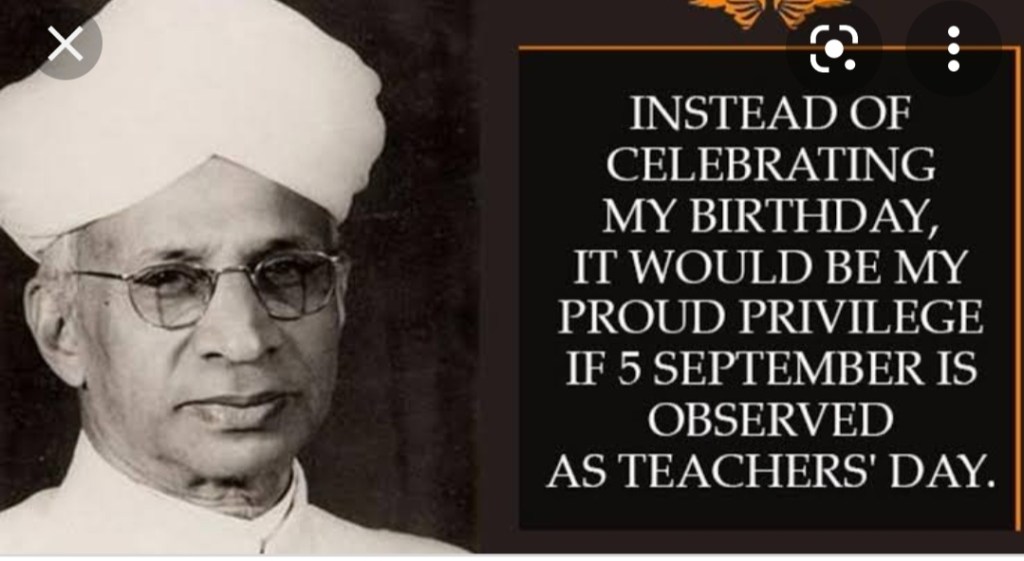
5 th September is the birth anniversary of a great teacher Dr Sarvepalli Radhakrishnan who was a staunch believer of education & was a well known diplomat,scholar,the president of India and above all a teacher.

Best teacher ever

Who are Teachers?

Teachers nourish and prepare students for their future as they are the real icon of knowledge and wisdom. They create awareness among the students and common people. They are the source of light in the world that has been darkened due to ignorance. Our teachers are the true pillars of our success. They help us garner knowledge, improve our skills, grow confidence as well as they help us to choose the right path to success. But, despite playing such a crucial role in the lives of students and in nation-building, they rarely are shown the gratitude that they deserve. So, as a student, it is our duty to thank them at least once a year and Teachers’ Day gives us an ideal opportunity to do so!.

As it is rightly said that:

Jagranjosh

In addition to their own teachers and mentors, 5th September is also a day when a person can look back, and be inspired by the life and works of Dr. S. Radhakrishnan. Dr. Radhakrishnan hailed from a small city boy and with the help of education, he became an esteemed politician and a visionary educationist.

PSYCHOLOGICAL ASPECTS OF WOMEN ATHLETE

Lesson 6 women and sports

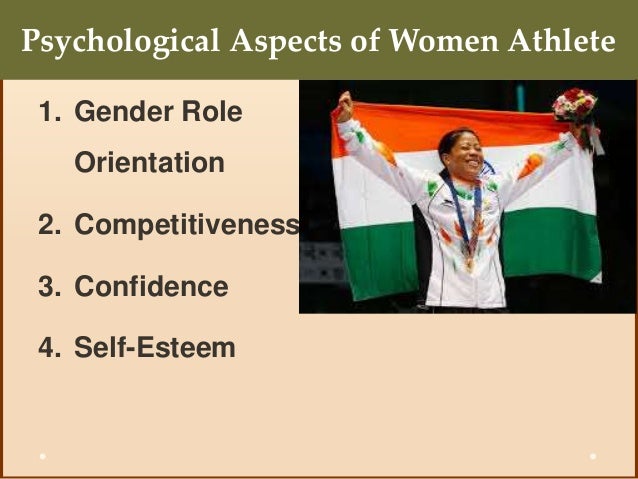
Over the past several decades , the role of women has changed drastically .However , gender beliefs and stereotypes still do exist across the world especially in sports . Most of the people in our society consider that sports are not meant for females but only for males .Social tradition , customs and cultures have great influence upon the psychology of women . In a male dominating society , males are expected to be aggressive , independent , dominating , robust and confident , whereas females are expected as well as considered to be emotional , sensitive , cooperative , sympathetic , loyal , etc. It is a well – known fact that participation of women in sports is increasing year after year .With this enhancement in female participation in sports , there is also renewed interest in the psychological characteristics of the female athletes and the effects of athletics on women . The various psychological traits of women athletes are stated below .

  1. Gender Role Orientation : It is an established fact that there has been an increase in the level of women’s participation in the types of sports that have been traditionally limited to only males , e.g., wrestling , weightlifting , kick boxing , body building , etc . However , many sports have been still considered inappropriate for women . For a long time it was considered that women should not take part in athletics because of the potentially harmful masculinising effects of sports .
  2. Competitiveness : It is evident that in the field of sports , both men and women are competitive in their own fields . In fact , women are more goal oriented and perform magnificently in artistic activities such as gymnastics . However , a number of research studies indicate that females who take part in sports are more competitive in comparison to the females who do not participate in sports .
  3. Confidence : As mentioned earlier , due to social pressures , women tend to have less confidence than men . Participation in sports , competitive environment , awards and recognitions increase confidence levels of sportspersons . However , a significant difference may exist between sportswomen and non- sportswomen .
  4. Self-esteem : Most of the research studies indicate that training plays a vital role in performance . Self -esteem improves with good performance . In the field of sports , intensive training helps in enhancing self-esteem . Research studies also show that those people who engage in sports have high self-esteem in comparison to non-participants .
  5. Aggression : Aggression is a forceful , goal- directed action that maybe verbal or physical . Participation in sports has many positive aspects which usually involve aggressive behavior . Various studies of aggression show that athletes who participate in contact sports , i.e., football players , judos or wrestlers are more aggressive than the athletes who participate in less contact sports . However , females who participate in contact sports show more aggression in comparison to females who do not participate in sports at all.

Math 2.0 day

Today is math 2.0 day, but what exactly does that even mean?.With or without knowing we all use math several times every single day. The subject is also important for the advancement of technology. And thus, to celebrate the combination of maths and technology, Math 2.0 Day is celebrated on July 8. Read on to know other details.

Imagine the way the world used to be viewed! Math as known to be important but not thought to be something you could make a living at and the rising tide of technology was considered a fad! Math 2.0 Day reminds us that technology is here to stay!

Every year, Math 2.0 Day is celebrated on July 8. The day is observed to highlight the importance of the combination of maths and technology. The day was formed to celebrate the achievement made through the combination of maths and technology. Math 2.0 Day also helps to educate the masses about the benefits of maths and technology. Without maths and technology, it would have been impossible for us to achieve the various entertainment mediums we have now.

History of Math 2.0 Day

In 2009, the Math Interest Group formed Math 2.0 Day. Math is extremely important for the advancement of science, technology and education.Math 2.0 Day is a celebration of the blending of technology and mathematics. For a lot of us, math wasn’t a favorite subject, we’d spend the entire period staring at the equations and wondering what sort of livid madman designed these torture chambers on paper. Ultimately, however, we realized that math is utterly indispensable in our modern world. If you’ve ever wondered who uses math in their day to day careers, you aren’t alone and we have some answers for you.

Programmers deal with mathematics every day, as it’s the framework upon which all computer operations are formed. Everything from the order of operations to quadratic equations is necessary to make even the simplest program. Scientists are one of the biggest users of mathematics, whether they’re calculating the statistical variance of their data or figuring out how much to add to their chemistry experiment, it’s involved at every step.

One presumes you live in a house, drive a car, or operate a computer? The engineers responsible for designing those things so that they work, and especially in the case of the house, use math to ensure it doesn’t come crumbling down on your head. Math 2.0 day celebrates all these mathematical heroes and more.

How to celebrate Math 2.0 Day

If you’re like me, you probably have your old math books from college laying around. I suggest busting them open and studying them again. Who knows, in the intervening years you may have secretly developed a love for those dancing numbers. If not, make sure that you stop by those people who use math every day and thank them for doing the work so you don’ thave to.Mathematics is one of the most important fields in the world today, and just about everything we know and love is built on its back.