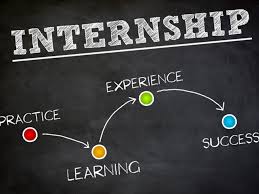
Importance of INTERNSHIPS for college students!!!

In the world full of competitors to be successful student/businessman etc. should have a different approach. They need do things which have already less participants. It would be best if none of the competitors are present, it doesn’t mean you have to do very odd thing. Everyone needs a better lifestyle and a proper career so that they can live luxurious life with the family, for that we have to start at early as possible and gain the maximum experience. There are many of the websites nationally and internationally that provide work to college students as in the name of freelancers some of the popular sites are:

1- Internshala

2- LetsINTERN

3- LinkedIN

4- GlassDoor

5- Hello Intern

6- Twenty19

7- AngelList

8- Indian Internships

9- Oyster Connect

10- Interlelo

The above listed Internship site are the popular one yet there are many more to be listed.

  • Internships not only make a student financial independent at college life but it plays a very important role as while on last year of college it boost the CV and the chances of selection in your dream company gets increased by 10 folds.
  • Internship help a student start to build a professional network that can be a resource for the student.
  • Internship also help student to decide a second option of career and also can make it as a part-time works on his professional job.
  • Many companies are in search of students who have already completed an internship related to professional job which will also help student to do the work which is of his choice and already experienced on it.
  • Internships provide a great impact on confidence of the student which will help a lot in the actual job.
  • Students gain knowledge and get aware on how to talk with superior person, how to keep conversation on and most importantly how to influence anybody with the power of the words.
  • Students also get hands on to manage the task assigned. They also get to know to give a separate time table to each task and mange the workflow while studying.
  • They get the professional guidance even if they fail to mange the task as the internship provider cannot force any student and they encourage the student on compilation of task.


download

This are the most benifits of the Internship…Hope it will be helpful.

If you are in college and not having any internship, than go for it…It will prove helpful in the future.


Why We Say Sorry? Is it ok to say in any situation?

Saying you’re sorry is called apologizing. When we apologize, we’re telling someone that we’re sorry for the hurt you caused, even if we didn’t do it on purpose. People who are apologizing might also say that they will try to do better. They might promise to fix or replace what was broken or take back a mean thing they said. The apology comes to English from the Greek roots of apo– (“away from, off”) and logia (from logos, meaning “speech”).

The earliest published use of apology we have evidence of comes from the title of a work by Sir Thomas More, the Catholic humanist and social philosopher of Henry VIII’s court. The word appears in his 1533 work Apologye of Syr Thomas More, Knyght. However, the first published use of a word is not necessarily the same thing as the first actual use of it, and there has recently been discovered earlier, hand-written evidence of apology in correspondence between members of the British court; a letter addressed to Cardinal Thomas Wolsey in 1526 contains the line “Here are apologies made for the defense of the French King.

700820218-H

Nowadays, we use sorry more in our conversion while talking with office bosses, parents, relationship partners, and unknown people. However, When you say sorry, it is not because you are weak, you just show that you wont to calm down yourself and display self-ego is stronger than your ego. When we say sorry, it is not just for the mistakes which we have done, it is also for yourself to cultivate a healthier spirit, furthermore, when someone says sorry, it does not direct the mistake, which he/she did, but it may not mean that they have done wrong. You do it because, it is an important skill to learn in life, and you can only do so through deliberate practice.

Here is research regarding apologies, According to a 2015 poll from research firm YouGov, there are approximately 15 British “sorries” for every 10 American ones (for situations like if they sneezed, stood in someone’s way or corrected someone who is wrong). The survey, which polled 1,600 British people and 1,000 Americans, showed a few similarities: 73% of British people would apologize for interrupting someone, compared to the 71% of Americans. And when doing a favor for someone but getting it wrong, 60% of British people said they’d apologize, compared to the 58% of Americans.

Many famous and renowned people always told, Over-apologizing for things you have little control over can make people think less of you. A few examples of things you don’t need to apologize for include sneezing, standing in someone’s way, getting bumped into by someone else, being interrupted, and so on. whenever we say more sorry this thing happened with us lose respect for you, It lessens the impact of future apologies, and It can lower your self-esteem.

sometimes, by saying sorry does not fix everything like, a heartfelt “I’m sorry” fixes everything right away. Other times, it might take a while for someone to feel friendly after you apologize. You might need to give the other person some time. Even after you say you’re sorry, you might still feel bad about what you said or did, but you can feel good about apologizing and about making up your mind to do better.

Sometimes people don’t say sorry because,

  1. When you apologize, you admit that you may be wrong, which is a threat to our ego and our pride.
  2. Some people see an apology as a confirmation of guilt and, as a result, of responsibility for the conflict.
  3. The apology is viewed as a means to draw attention to the mistake.
  4. The person might see an apology as a way of dwelling on the past when they just want to move on.
  5. Some people assume that apologizing is a sign of weakness, but actually, it is a hallmark of strength.

By considering, all points which I narrated above we have to say sorry, whenever we need bet don’t be over-apologized.

thank you to read this post.


Companies Are Turning to Digital Marketing to Survive COVID-19: Here’s Why

As we already know that Covid-19 has become a global pandemic and it is here to stay for quite a while. As this pandemic has caused a sense of chaos among the global companies and made them think and also change the ways on how they used to execute their business strategies.

Coming across the results, majority of the company owners have not succeeded in planning out some new strategy to balance out the chaos created by the pandemic.

It seems that that they are unable to the accept the fact that their previous strategies or the way they used to work may not work now. They will have to adapt to the current situation and make changes accordingly to survive this pandemic.

Some of the organizations which used to work hand in hand have now adopted Digital Marketing as a part of their survival plan.

Some of the company owners have not only embraced the pandemic but are willing to face the temporary economic downfall and then try to recover from it later on as quickly as possible.

Major impacts of Covid-19 on Business companies.

As we know that there’s no such business that’s not been affected by the corona virus but the companies that are suffering the most are the startups which do not have a large capital to keep their company alive and even the companies which highly rely on meeting and face to face interactions like hair salons, gyms, sporting complexes and clothing stores.

Some of the companies which usually had unbelievable amount of growth by the customer referrals are now experiencing such major revenue loss that their reaction to this problem is to cut the marketing costs instead of heading and thinking about the solution.

On the other hand the unusual reactions from the people have caused a lot of harm to the larger B2B companies that serve these smaller businesses.

Digital marketing can help all sorts of business ideas or strategies irrespective of the company’s net worth. The customers are still in need of the products that they used to purchase before the pandemic so the company just has to change the ways in which they reach their audience.

How to take your business online.

If we talk about the time when there was no corona virus, People knew where the best pizza was sold or the best quality beauty products.

But now as there is a complete shutdown and the companies are no where to be seen, People wonder which ones are still in business and where they can spend their money to buy the essentials.

It’s a great opportunity to the businesses which have been highly affected by the deadly virus. With the help of digital marketing they can get in touch with the customers and start boosting their brand on their website or social media platform.

Communicating with the customers.

The first step involves the interaction between the business and the customers. The companies which were never socially or digitally active will now have to change their ways and build strong connections online for the scope of their survival.

  • The companies which are affected by the corona virus should take the initiative and contact their customers via email or sms and explain them how the services have changed and how they can still avail the services.
  • Make an advertisement go viral on a newsletter on how the company have managed to keep up with the crisis and what are the necessary changes made which should be known by the people.
  • The power of social media cannot be neglected here, a simple public post on Facebook or Instagram can be used as a source to reach out the customers.

Charging up the company website.

It is a fine opportunity for the global companies to invest in longer term channels only if the marketing budget allows.

The world has become unstable and the people are not certain on what to do, here alot of external tactics can be used to for internal success as creating a blog for the company or enabling the sales of the materials.

Let’s look up to some of the examples :

Sharing vital information on the web site’s homepage regarding the business queries and letting the audience know that the business is still ongoing.

Updating the service pages with some catchy new photos and descriptions would do the job and if possible add certain discounts which would catch the eye of a lot of audience.

E-commerce system would help the company in taking online orders so it should be a top priority. Some of the platforms which can be uself for such agendas are Shopify or even Paypal.

Building the company’s social media presence.

With isolation and social distancing in hand people are spending most of their time online, this is a great opportunity to take your business on social media and start interacting with more and more people.

There is a huge increase in the time spent by the people of Italy on Facebook and when it comes to Instagram the people of USA are no further left behind they top the chart by 43.1% active users in isolation.

This is a one time opportunity for all the business leads to get on social media and set a goal to build a large set of online following.

Let’s see how the companies can do that –

Updating or sharing various sets of things such as contents or blogs related to the company or related to the social aspects.

Humor is something that is loved by the audience and the posts or videos regarding humor would catch a lot of audience.

Get in touch with an influenceer and start working with him as a lot of influencers are left set open due to the coronavirus outbreak and are available for a reasonable price.

By making these kind of certian and easy changes with less amount of money involved a company could benefit even after the lockdown is over and normalcy is availed.

India And Germany Sign Many Pacts To Deepen Ties

It is most heartening to note that India and Germany have just recently on November 1 signed wide-ranging agreements to deepen the strategic cooperation between both the countries and also exchanged notes on ways to boost the bilateral trade between the two. As we all know, just recently on October 31, German Chancellor Angela Merkel accompanied by several Cabinet colleagues and a business delegation arrived in New Delhi on a three-day official visit. PM Narendra Modi while addressing a joint news conference along with the German leader said plainly that, “We’re encouraging our private sectors to give an impetus to our growing bilateral trade and Chancellor Merkel and I will meet some of the top business and industry leaders.”

                                       Truth be told, the bilateral trade between the two countries rose to $24.06 billion in 2018-19 from $22 billion the previous year while German companies have invested nearly $12 billion in India since 2000. There is still considerable scope for further improvement. It must be mentioned here that Eric Schweitzer who is the President of the Association of German Chambers of Commerce and Industry had earlier said that India had enormous potential but there has been uncertainty among companies after an investment protection agreement between the two countries ended in 2016.

                          Needless to say, it must also be mentioned here that the Ministry of External Affairs (MEA) spokesperson Raveesh Kumar had tweeted about the visit of German Chancellor mentioning that, “Enriching the strategic texture of our relationship, German Chancellor Angela Merkel had arrived in Delhi beginning her State visit to India during which she, along with PM @ narendramodi will co-chair the 5th IGC (Inter Governmental Consultations). This would be the 5th meeting between the leaders within a year.”  

                                Before proceeding ahead, it would certainly be worthwhile to discuss briefly the 17 pacts/agreements/memorandum of understandings (MoU) that were signed between the two countries. They are as follows:-

1.    Implementing Arrangement for Exchange of Personnel between Indian Space Research Organisation (ISRO) and German Aerospace Centre.

2.    Joint Declaration of Intent on Cooperation in the Field of Civil Aviation.

3.    Joint Declaration of Intent on Cooperation within the International Smart Cities Network.

4.    Joint Declaration of Intent between on Cooperation in the Field of Skills Development and Vocational Education and Training.

5.    Declaration of Intent on Strengthening Economic Cooperation in the field of Start-ups.

6.    Joint Declaration of Intent on the Establishment of Bilateral Cooperation Project regarding Agricultural Market Development.

7.    Memorandum of Understanding (MoU) in the field of Occupational Diseases, Re-habilitation and vocational training of Insured Persons and workers with disabilities.

8.    Memorandum of Understanding for cooperation in Inland, Coastal and Maritime Technology.

9.    Memorandum of Understanding to promote, establish and expand scientific and technological research cooperation.

10.                   Memorandum of Understanding on establishment of an academic collaboration in ayurveda, yoga and meditation.

11.                   Addendum to the MoU between India and Germany on cooperation in the field of higher education for extension of the period of Indo-German Partnership in Higher Education from July 1, 2020 to June 30, 2024.

12.                   MoU between National Institute of Agricultural Extension Management – MANAGE and the German Agricultural Academy – DEULA in the city of Nienburg in Germany on collaboration in agricultural, technical and professional training.

13.                   Joint Declaration of Intent between Siemens Limited, India and MSDE and German Ministry for Economic Cooperation and Development on Skills for Sustainable Growth.

14.                   MoU on the extension of Indo-German Partnership in Higher Education.

15.                   MoU regarding cooperation between the National Museum, the National Gallery of Modern Art, the Indian Museum Kolkata, the Prussian Cultural Heritage Foundation and the Stiftung Humboldt Forum in Berliner Schloss.

16.                   MoU between All India Football Federation (AIFF) and DeutscherFuBball-Bund e.V (DFB).

17.                   Statement of Intent on the key elements of the Indo-German Migration and Mobility Partnership Agreement.

                                       Apart from these, five joint declarations of intent, including cooperation on strategic projects, partnership for green urban mobility, research and development on artificial intelligence and cooperation prevention of marine litter were also signed. Merkel also identified “artificial intelligence” and “digital transformation” as an area of cooperation. While lauding India, she said that, “India has a huge potential here especially when it comes to digitalization. But the development is very fast as when it comes to 5G and AI. It’s a challenge and if we work together, this would be a wonderful way of cooperation. It’s also about trade, innovation, investment and knowledge.”                                                            

                                           It is most heartening and refreshing to note that in a new and more robust joint statement from the one issued two years ago, both India and Germany were on the same page in describing terrorism as a “global scourge” and called for a “halt to cross border movement of terrorists” and asked all the countries to work towards disrupting terrorist networks and financing channels. It also said that, “The leaders underlined the need for all countries to ensure that their territory is not used to launch terrorist attacks on other countries in any manner.” The joint statement was issued after Prime Minister Narendra Modi met visiting German Chancellor Angela Merkel. The joint statement as said earlier is far more stronger than the one issued in May 2017 when PM Narendra Modi had visited Germany and it needs no rocket science to conclude that it is palpably aimed at Pakistan which is the fountainhead of all terror activity and mother of all terrorists!

                                           It also clearly conveys that Germany has now certainly moved closer to India’s valid position on Afghanistan as they both agreed on the need for “dismantling of terrorist safe havens and sanctuaries”. PM Modi also reiterated that, “We have resolved to intensify bilateral and multilateral cooperation to deal with terrorism and extremism.” But this is still not enough.

                                     It is high time and European countries like Germany must understand that India has tolerated terrorism and proxy war operated directly from Pakistan to shocking level, declaring stupid, shameless and senseless ‘Ramzan ka ceasefire’ repeatedly for terrorists and Pakistan many times unilaterally who use it as an opportunity to re-group, re-arm and re-kill Indians most mercilessly which under no circumstances can ever be justified by any self-respecting nation and still Pakistan is not ready to amend its way in any manner! Yet we are asked repeatedly to extend the “peace hand” towards Pakistan by European countries only to be stabbed repeatedly! It is Pakistan’s proxy war that India has to deploy so much force in Kashmir and curb all type of movement of ordinary people as terrorists are always ready to exploit any opportunity which they get to strike at India!

                                       This is what countries like Germany never appreciates which is most hurting and keep advising India that, “We hope that India and Pakistan will find a peaceful solution together. The situation for the people on the ground as of now is not good for the long-term, this certainly has to change.” What the German Chanellor Merkel perhaps ignore is what is blindingly obvious that clapping cannot be done with one hand alone and Pakistan is not ready to cooperate with India in any manner and its stated policy is to “inflict thousands cuts on India from every side”! But let’s hope that good sense will prevail upon Germany as well as other European countries who have always turned a blind eye to it till now them in the days to come! We need to be more proactive in conveying our strong point on this score!

                                               On a different note, it must be said with some degree of satisfaction that while referring to the need for presenting a united front in the fight against terror, the two leaders – Modi and Merkel called for the finalization and adoption of the Comprehensive Convention on International Terrorism (CCIT) in March 2020. While the CCIT was mentioned in the 2017 statement, this is the first time that a deadline has been specified which has to be applauded and appreciated in no uncertain terms! This is a very key step in the right direction!

                                            While agreeing to continue cooperation within the framework of the Joint Working Group on counter-terrorism, they also spelt out specific areas this time: “information and intelligence sharing on terror networks” and experiences on dealing with the growing phenomenon of “radicalisation”. The two leaders also asked officials on both sides to schedule the next meeting of this working group at the earliest.  

                                                 On defence cooperation, the joint statement said that Germany will work towards facilitating “export of military equipment as well as technology sharing” with India. In another key upgrade, it also sought deeper cooperation between the defence industries of both countries to take advantage of “defence corridors set up in the states of Tamil Nadu and Uttar Pradesh” under the Make in India initiative. The two sides also decided to establish regular dialogue between their defence ministers, alternately in India and in Germany, at least once every two years.

                                            Going forward, the two sides also agreed to “deepen efforts to restart” stalled negotiations between India and European Union (EU) on the Bilateral Trade and Investment Agreement (BTIA). Negotiations have been held up since May 2013 after both sides failed to bridge gaps on crucial issues. But with this we hope that now the deadlock will end and adequate progress will be made in this direction also!

                                               On Afghanistan, India welcomed Germany’s efforts at co-organising an Intra-Afghan Dialogue that includes the government and ensures an Afghan-led and Afghan-owned peace process. The joint statement stated that, “They called for a cessation of violence; breaking of all ties to international terrorism; dismantling of terrorist safe havens and sanctuaries; preservation of the Constitutional order and the respect for the universal human rights of all Afghan citizens as enshrined in the Constitution. Germany appreciated India’s contribution in development cooperation and rebuilding of Afghanistan. The leaders underlined that the Heart of Asia-Istanbul process as well as the International Contact Group for Afghanistan remain important formats for regional and international confidence building and political cooperation.”

                                              Striking the right note, Merkel said that, “While economic relations have increased, they could be intensified even more”, while referring to the fast-track mechanisms. She also underscored that, “We can bring some cases where difficulties have occurred in terms of economic investments. We could really find help here quickly and make India a modern industrialised nation.” There can be no denying it!

                                       To put things in perspective, while underlining that Indo-German relations are progressing well, President Ram Nath Kovind said that they needed to strengthen cooperation in counter-terrorism and coordinate their positions at meetings of the Financial Action Task Force which is an intergovernmental organisation to combat money laundering. He also said that, “Terrorism is a global threat that must be fought jointly by the world community and terrorist safe havens eliminated in every part of the world.” What is most depressing to note is that countries like USA and UK are only keen to eliminate those terror leaders like Osama bin Laden and ISIS chief Abu Bakr al-Baghdadi who are direct threat to their nation but are just not bothered to eliminate all those terror leaders like Hafiz Saeed who is chief of Laskar-e-Taiba, Masood Azhar who is chief of Jaish-e-Mohammad, Syed Salaluddin who is chief of Hizbul Mujahideen along with many others who are openly enjoying official state patronage in Pakistan yet no European country nor US nor UN is doing anything to address it! They feel that they are not directly affected by them so why should they bother? The supreme irony is that Taliban has still not been declared a terror organization which since last more than 30 years has been regularly killing innocents as also American forces, UK forces along with others but wastes no time in declaring a Balochistan organization as a terror organization just because Pakistan wanted them to do so! If this is not “worst hypocrisy” then what else is I just fail to understand!

                                       While welcoming German Chancellor Angela Merkel to India at the Rashtrapati Bhavan, President Kovind said that, “Both countries were rightful claimants to a permanent membership of a reformed United Nations Security Council. In this regard, our cooperation as part of G-4 is important.” The chances of Germany are bright because it has no nation that is deadly opposed to it! But China which is implacably opposed to India and also controls a huge area of Jammu and Kashmir illegally transferred by Pakistan to it is just not prepared to concede for it under any circumstances! This despite the fact that former Indian PM late Jawaharlal Nehru always rooted for China to get permanent seat in the UN Security Council. But China has never reciprocated and instead stabbed us in 1962 by suddenly attacking us and occupying a large part of our territory which is still under their control! But we can hope that Germany will build a strong case for India to get a permanent seat in the UN Security Council!

                                      It is also good to note that on a day public health emergency was declared in the Delhi-NCR region, Angela Merkel said Germany will spend one billion euros (nearly Rs 8000 crore) in the next five years on green urban mobility projects in India over the next five years including 200 million euros to replace diesel buses in Tamil Nadu state which shall control pollution to a great extent. What was striking to note is that Chancellor Angela Merkel and PM Narendra Modi both had ignored the declared public health emergency and did not wear any masks. Both countries have certainly come a long way in deepening the relations but still there is a lot of way to go and one hopes that in coming years we would see the bond getting deeper between both the countries!

Sanjeev Sirohi, Advocate,

s/o Col BPS Sirohi,

A 82, Defence Enclave,

Sardhana Road, Kankerkhera,

Meerut – 250001, Uttar Pradesh.

PM Modi’s Visit To Saudi Arabia Deepens Bilateral Ties

It goes without saying that India has always cherished to maintain good bilateral ties with Saudi Arabia. The incumbent PM Narendra Modi has right from start always shown a great deal of interest in improving further the bilateral relations between both the countries and deepening them further. The Crown Prince of Saudi Arabia – Mohammad Bin Salman too has shown great interest in enhancing further the bilateral relations between India and Saudi Arabia.

                                         It goes without saying that the sustained efforts to end the prolonged nonchalant relations between both the countries began seriously for the first time while former PM late Atal Bihari Vajpayee was at the helm of affairs. The first step was taken when Vajpayee’s Foreign Minister Jaswant Singh had travelled to the kingdom of Saudi Arabia in early 2001. We then saw how five years later, King Abdullah visited Delhi which was the first visit to India by a Saudi monarch in half a century to announce a new phase being heralded in bilateral relations. But the depth was still lacking and attention was confined only to buying oil from Saudi Arabia and exporting manpower.

                                             However, much water has flown under the bridge since then! It cannot be denied that the expansion and institutionalization of strategic cooperation between India and Saudi Arabia started taking deep roots during the Prime Minister Narendra Modi’s latest two-day visit visit to Saudi Arabia in end of October which is the second in three years. After arriving in Riyadh, PM Modi tweeted on a happy note saying that, “Landed in the Kingdom of Saudi Arabia, marking the start of an important visit aimed at strengthening ties with a valued friend. Will be taking part in a wide range of programmes during this visit.”

                                 It is quite well known that Saudi Arabia is second biggest supplier of oil to India after Iraq. It is also India’s fourth largest trading partner and the bilateral trade amount adds up to $27.48 billion in 2017-18 and Saudi investment of around $ 100 billion in India in various key areas like energy, agriculture, minerals, mining, petrochemicals and infrastructure is also in the pipeline. This makes the relations between both the countries all the more important and both countries appreciate this fully.

                                   As we all know, this latest visit by PM Modi to Saudi Arabia was about Modi delivering a keynote at the high profile “Future Investment Initiative Summit” that was basically an initiative of Crown Prince of Saudi Arabia. It also cannot be denied that this visit of PM Modi to Riyadh truly marks the consolidation of a bilateral partnership that has long struggled to take deep roots and this is in the mutual long term shared interests of both the countries.        

                                        It is most refreshing to learn that India and Saudi Arabia have shown together deep interest in last few years to deepen the ties between both the countries. This has culminated in the launch of a Strategic Partnership Council between both the countries during PM Modi’s visit to Saudi Arabia just recently. This new body comprising of two mechanisms which will be headed by the Foreign Ministers and Commerce Ministers of both sides will guide and monitor relations in some crucial areas, as for instance, energy, security and trade.

                               It cannot be lightly dismissed that India is one of eight countries with which Saudi Arabia is forging strategic partnerships under its Vision 2030 policy. Saudi Arabia understands fully the growing potential of India and this alone explains as to why it has placed India in the club of those few countries with whom it is forging strategic partnerships as just stated above. This is bound to deepen the bilateral ties between both the countries.

                                      It is also quite heartening to note that in a marked departure from the one they issued in February 2019, the joint statement by New Delhi and Riyadh made no mention at all on the resumption of dialogue between India and Pakistan. In the joint statement that was issued on October 29 after the bilateral meeting was concluded between PM Narendra Modi and Saudi King Salman bin Abdulaziz Al Saud, the two sides reiterated their “categorical rejection of all forms of interference in the internal affairs of countries” and the need for the international community to fulfil its responsibilities towards “preventing any attacks on the sovereignty of States”. This was the need of the hour also!

                                          Be it noted, the February 2019 joint statement that was issued after Saudi Crown Prince Mohammad bin Salman’s visit to India had a full paragraph on India-Pakistan relations stating that, “The two sides stressed the importance of regional stability and good neighbouring relations. His Royal Highness appreciated consistent efforts made by Prime Minister since May 2014 including Prime Minister’s personal initiatives to have friendly relations with Pakistan. In this context, both sides agreed on the need for creation of conditions necessary for resumption of the comprehensive dialogue between India and Pakistan.”

                                     It cannot be lost on us that the recent October 29’s joint statement between both India and Saudi Arabia was silent on India-Pakistan ties or a dialogue. This is a healthy sign as relations between both the countries are now not placing Pakistan on priority list any longer! It has to be unequivocally appreciated!

                                      Also it cannot be ignored that unlike February 2019 when the joint statement said that the Prime Minister and His Royal Highness “condemned in the strongest terms, the recent terrorist attack on Indian security forces on 14 February, 2019 in Pulwama in Jammu & Kashmir”, there was no reference this time to the Pulwama attack. The joint statement said that, “The Indian side condemned the terrorist acts against civilian installations in the Kingdom”. This was a reference to the drone attacks on Saudi oil fields. The joint statement said that both sides expressed their rejection of all terrorist acts and stressed the need to “prevent access to weapons including missiles and drones to commit terrorist acts against other countries”.

                                           Needless to say, the February statement too had called upon “all States to deny access to weapons including missiles and drones to commit terrorists acts against other countries. This time, on terrorism, it said that the two sides stressed that “the extremism and terrorism threaten all nations and societies. They rejected any attempt to link this universal phenomenon to any particular race, religion or culture.” Very rightly so!

                              More importantly, in a new formulation, both sides also called for “closer cooperation in the United Nations Counter-Terrorism Center”, and also agreed on strengthening cooperation in combating terrorist operations, exchange of information, capacity building and strengthening of cooperation in combating transnational crimes, within the framework of the existing bilateral security cooperation.

                                     Any discussion on India’s deepening ties with Saudi Arabia would be incomplete without mentioning the full list of 12 Memorandum of Understanding (MoU) that were signed between both the nations following bilateral talks. So let us discuss them one by one. They are as follows:-

1.  The most significant MoU was signed to establish a Strategic Partnership Agreement that was signed by the Prime Minister of India – Narendra Modi and Crown Prince of Saudi Arabia – Mohammed bin Salman bin Abdulaziz Al Saud.

2.    MoU on Cooperation in the Field of Renewable Energy between Saudi Ministry of Energy and Ministry of New & Renewable Energy of India that was signed by Dr Ausaf Sayeed who is the Ambassador of India to Saudi Arabia and HRH Prince Abdulaziz bin Salman Al Saud who is Energy Minister of Saudi Arabia.

3.   MoU on Security Cooperation that was signed by TS Tirumurti who is Secretary, Economic Relations (ER), Ministry of External Affairs (MEA) of India and HRH Prince Abdulaziz bin Saud bin Naif Al Saud who is Interior Minister of Saudi Arabia.

4.  MoU for cooperation in combating illicit trafficking and smuggling of narcotic drugs, psychotropic substances and chemical precursors that was signed by Dr Ausaf Sayeed and HRH Prince Abdulaziz bin Saud bin Naif Al Saud.

5.  MoU between Saudi General Authority of Military Industries (GAMI) and Department of Defence Production, Ministry of Defence concerning collaboration in military acquisition, industries, research, development and technology that was signed by TS Tirumurti and HE Ahmad Al-Ohali who is Governor of General Authority of Military Industries of Saudi Arabia.

6.  MoU for cooperation in Civil Aviation that was signed by Dr Ausaf Sayeed and HE Abdulhadi Al-Mansouri who is President of GACA in Saudi Arabia.

7.   MoU between Central Drugs Standard Control Organization (CDSCO), Ministry of Health & Family Welfare and Saudi Food & Drug Authority (SFDA) for Cooperation in the field of medical products regulations that was signed by TS Tirumurti and HE Dr Hisham Al Jadhey who is CEO of SFDA of Saudi Arabia.

8.  Letter of Intent between Small and Medium Enterprises General Authority (Monshaat) of the Kingdom of Saudi Arabia and Atal Innovation Mission (AIM), NITI Aayog of the Republic of India that was signed by Dr Ausaf Sayeed and Engineer Saleh Al-Rasheed who is Governor of Small and Medium Development Authorities of Saudi Arabia.

9.  Cooperation Programme between Foreign Service Institute, MEA and Prince Saud Al Faisal Institute of Diplomatic Studies (IDS) of Ministry of Foreign Affairs of Saudi Arabia by Dr Ausaf Sayeed and Dr Abdallah Bin Hamad Al Salamah who is Director General of Prince Saud Al Faisal Institute for Diplomatic Studies.

10.                   MoU between Indian Strategic Petroleum Reserves Limited (ISPRL) and Saudi Aramco signed by HPS Ahuja who is CEO and MD of ISPRL of India and HE Ahmad Al-Subayae who is Vice-President of ARAMCO of Saudi Arabia.

11.                   MoU for Cooperation between National Stock Exchange (NSE) and Saudi Stock Exchange (Tadawul) signed by Vikram Limaye who is MD and CEO of National Stock Exchange of India and Engineer Khaled Al-Hasan who is CEO of Saudi Stock Exchange (Tadawul).

12.                   MoU between National Payments Corporation of India (NPCI) and Saudi Payments that was signed by Arif Khan who is the Chief Digital Officer of National Payments Corporation of India and Ziyad Al Yusuf who is MD of Saudi Payment.

                                           In its joint statement pertaining to the volatile Syrian situation, the two leaders of India and Saudi Arabia very rightly highlighted the importance of preserving unity in Yemen, ensuring its stability and coming out with a viable political solution to solve the Yemeni crisis  that would be based on the outcome of the Yemeni National Dialogue, GCC initiative and the Security Council Resolution (2216).

                                       On Palestine, India and Saudi Arabia both stressed on the need for achieving a comprehensive, just and lasting peace in Palestine based on relevant UN resolutions and the Arab Peace Initiative. Both leaders exuded confidence that the peace resolution will guarantee the rights of the people of Palestine and lead to the establishment of their independent state based on the 1967 borders with Jerusalem as its capital.

                         Last but not the least, the two leaders also agreed on the ever-lasting importance of bilateral engagement in promoting ways to secure the waterways in both the Indian Ocean region and the Gulf, from any threat that may endanger the interests of the two countries including their national security. Finally, we saw how at the end of the visit, PM Modi extended an invitation to King Salman to visit India to complete the consultations and further discuss matters of bilateral cooperation and international issues of mutual interest. PM Modi also reiterated his support to Saudi Arabia for its upcoming Presidency of the G20 in 2020.

                                      On a concluding note, it may well be said that the bilateral relations between India and Saudi Arabia have certainly deepened over the last couple of years but still there is lot of scope for expanding it further which must be worked out exhaustively. No doubt, PM Narendra Modi is showing considerable interest in ensuring that relations between both the countries are further deepened and what is most comforting to note is that this is being reciprocated by the Saudi Crown Prince Mohammad bin Salman bin Abdulaziz Al Saud in equal measure! This will benefit both the countries equally!

Sanjeev Sirohi, Advocate,

s/o Col BPS Sirohi,

A 82, Defence Enclave,

Sardhana Road, Kankerkhera,

Meerut – 250001, Uttar Pradesh.

A tale of misuse of power

These days the age-old quote might makes right, rings true throughout the world. In every nation, the vile fruit of corruption has ripened. We have recently seen, protests about the massive misuse of power police have done in the US. However, it is not the case in just America, but rather every country in the world. But simply implying that the police have excessive power, cannot be true as the problem runs way deeper. Various cases of misuse of power arise due to the lack of accountability. None go more unchecked than when the political party has more influence than the opposition.

Like the case in India, where BJP has nigh invulnerability when it comes to misuse of power. Due to their opposition either being weak, or having lost the trust of the people, the BJP of today has seen a tremendous rise in power. And with a charismatic leader like Narendra Modi to lead them is just cherry on top. This makes it easier for the member of affiliates of the party to misuse their power for their own gain or to silence their enemies. Even the news that should be holding them accountable is either bought or silenced. The few who do report on them, a majority of them have ties outside of India and have been known to have worked against India in the past. All of this has put our motherland in a vulnerable situation right now. Thus, here we see that a single party gaining major influence can be a deterrent for a well-functioning democracy. Modi as been termed as borderline tyrannical by many a foreign news experts. However, this is not just the case in India, even in other nations such situations and problems have arisen. Take the example of USA, now a republican dominant country. Ever since Trump came into office with his motto of make America great again, many within the country feel like it has been anything but so. Many a times we have seen Trump blatantly showing his racist, misogynistic and overall apathic side, but due to less accountability he has had a free rein since the start of his term. He has often been seen slamming his opponents the way bullies do, name calling and spitting false facts. In fact, should a group or a person be in Trump’s good books, he has been seen going to any lengths to take their side. He has repeatedly referred to the charlotsville racists as “good people”, even defending people who have done reprehensible deeds just because they were associated with his image. He even goes as far as concocting conspiracy theories around people who stand up against him. The conspiracy theory actually makes a lot of sense once you delete your sense of empathy and humanity. Once you view your political opponents as soulless automata whose only purpose and motivation is to damage your personal agenda, you can easily believe that they’re going to risk death just to damage your political position. It’s just a more extreme version of an authority figure seeing a civilian’s every movement as a threat — once you stop viewing people as other humans with lives and aspirations and concerns and ONLY as opponents whose prime agenda is to hurt you, you will believe they will seize any opportunity to attack you, even at hopeless detriment of themselves. If you view their lives as not valuable, then you’re willing to believe they will unthinkingly trade that low value life for the privilege of threatening you. That’s how prejudice works. The same has also been seen in case of India’s ruling party

Will India have SUPERPOWERS like USA?

The world is almost ruled by powerful countries like USA, China, Japan, Russia etc. and its none of the wonder that developed countries are helping as well as exploiting the developing countries. Developing countries like India, Pakistan, Srilanka and many more… are mostly dependent on the developed countries, but the biggest question arises will India be list of the superpower countries by 2050. The answer would be yes, but unfortunately due to pandemic situation that number will rise to 2055-2060 because India faced a major setback due to this and also India build a strong relation with other countries with help of our respected Prime Minister sir. Let us look out which factors are going to help to build a nation with superpowers:

1- Economic growth

Chinese economy is based on foreign investment, while India is growing based on a more local economic sector. So if we look in future i.e. after 30-40 India will overtake as it is very slow process. We know very well that many MNCs have begun to invest tremendously in India and has started to rely on Indian engineers for their next generation products. Companies like GM, Boeing, Motorola and many others have begun to build their Research and Development facilities and Asian headquarters in India. They see more potential on Indian market. If India is able to maintain this steady growth, it can definitely become 2nd largest economy by 2050.

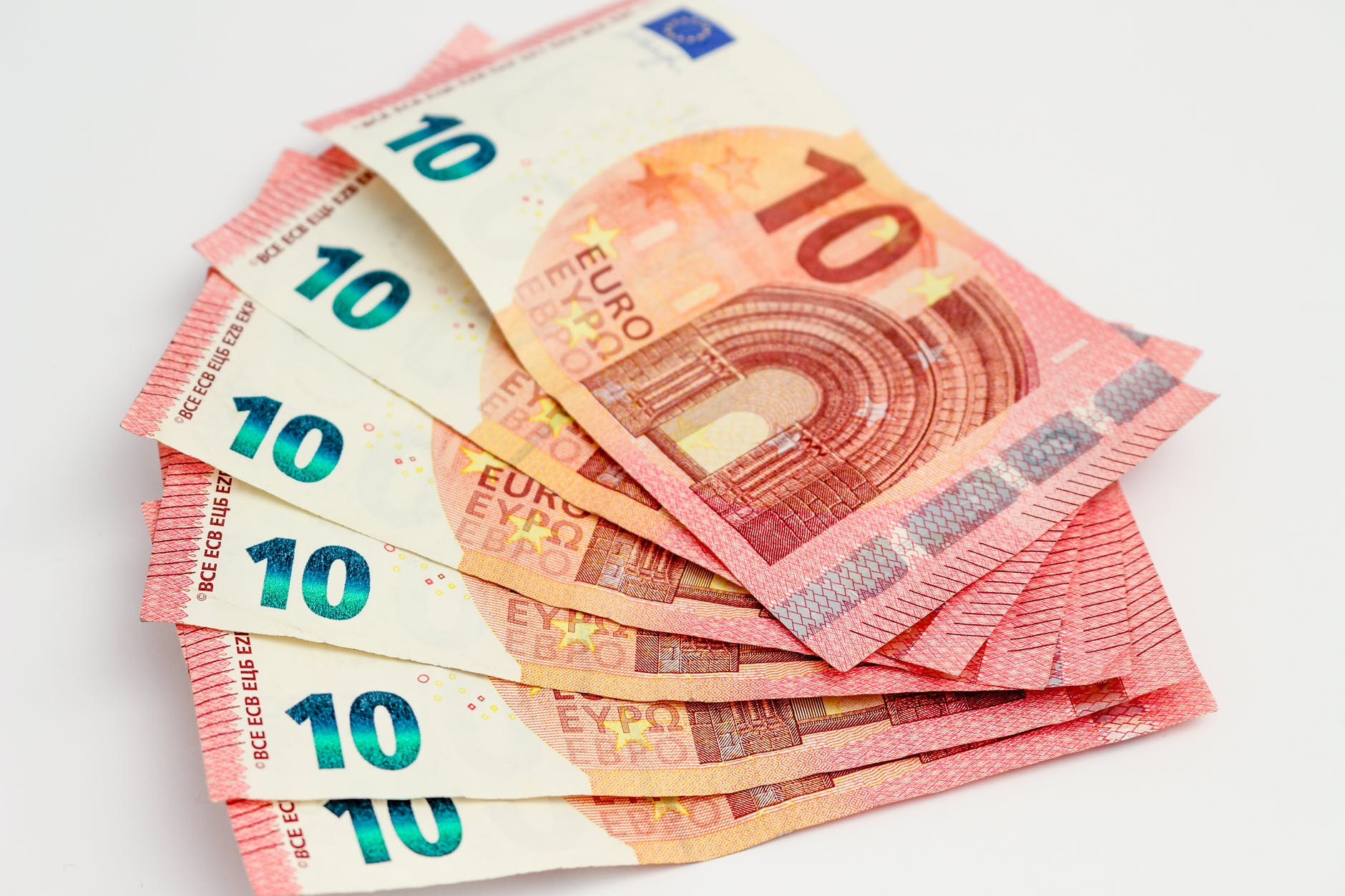
money bills currency euros
Photo by Dom J on Pexels.com


3) Military power

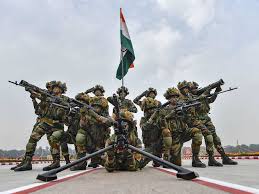
India stands on 4th rank in terms of defense with the budget of 54 billion $ and 13L+ army man. India has a total of 2,102 aircrafts and a naval strength of 295 and is ready to tackle any military emergency. India is gaining new technology and ideas from world and also our DRDO is working very efficient like wise India adopted 5th generation fighter plane from Russia and Defense Drone technology from USA and other technology too from Israel. Therefore if India increases the defense budget in next 3-4 decades, specially in Air force and cyber and New technology than India definitely can handle any worse situation.

download (1)

Image source: economictimes.com

3- Diplomacy and international relations

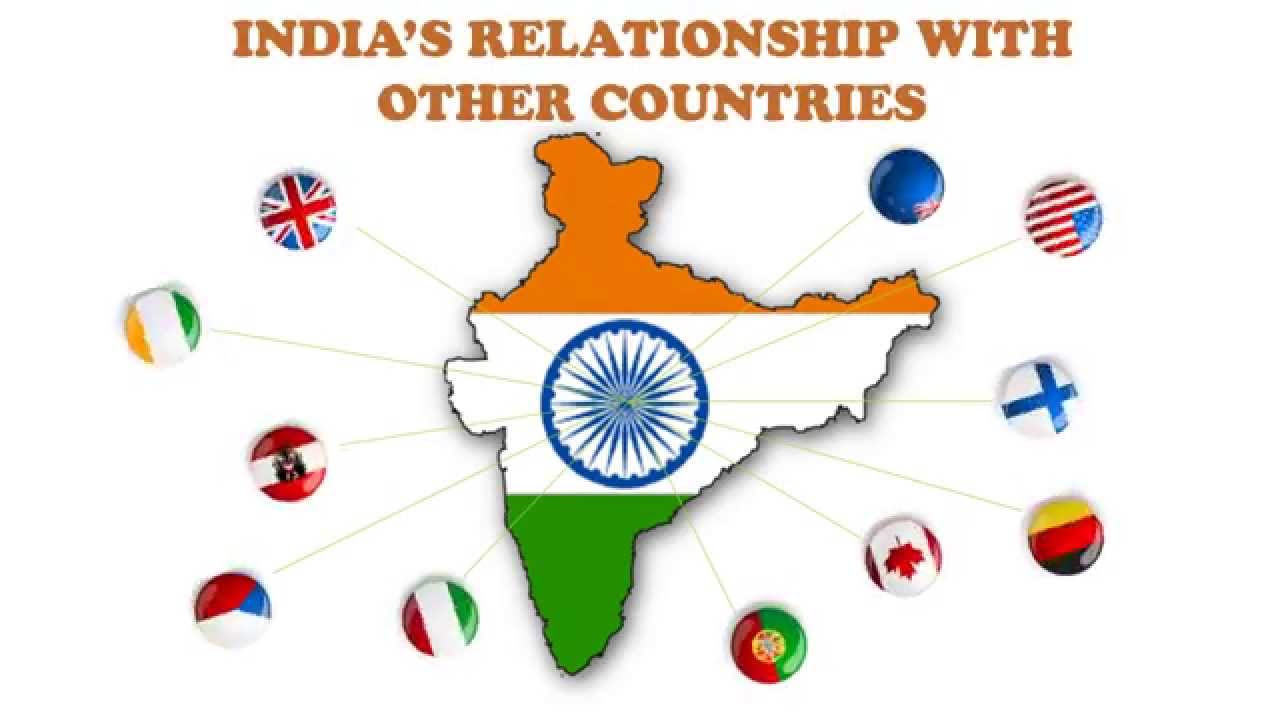
India’s Diplomacy is standing at a good potions no matter still there are many internal disputes but in the eyes of world India is at a better place. India is able to maintain relation with foreign countries in a stable and steady manner which will ultimately help the people of India. In the coming years India will be able to maintain permanent seat in UN Security Council which will be biggest achievement in diplomatic point of view.

maxresdefault

Image source: Kosha group

4) Population

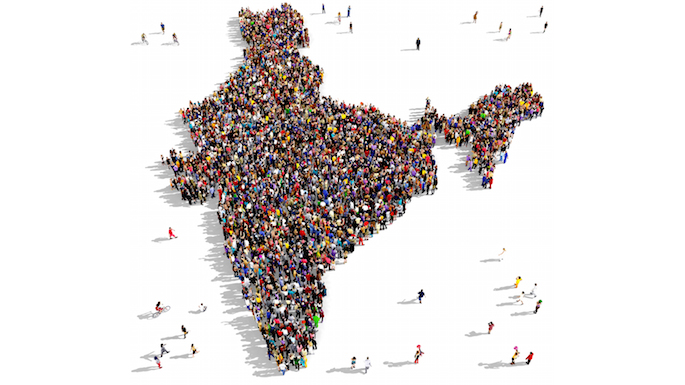
India has highest number of fresh minds, they are handled correctly with innovative and interesting education system than none of the country can stop India to be listed in top 5 countries. Youth is the biggest asset of India and no other country has this much amount of youth in their population. In the coming years, some of the strong nations of the world will face problem of decrease in populations and this will lead to, a decline in workforce, India will face no such problem.

India’s education system need to be modified a bit and student instead of memorizing theories, they should be taught to learn and understand the concept. The subject related to entrepreneurship should be added at early age so that they get knowledge of business at early age which would help them and ultimately help the nation.

1487221957_mnnhdhd9498jp534h1ctvc3aj7indian-population

Image source: Indiannewsonweb.com

5- Science and Technology

India has greatest potential yet to be showed to the world in the field of science and technology. New and new startups are evolving around us day by day and that will help a lot. Our scientist proved that India can even complete the mission on a budget of bollywood movie. India is also 4th country to land on the moon. India is emerging slowly in the field of software and will create a great impact in the near future.

creative internet computer display
Photo by Markus Spiske on Pexels.com


‘ DARK ‘ Season-3 Theories

Season 3 of Netflix’s Dark is releasing on 27th June, and the anticipation is rising. The time-bending series dropped an explosive cliffhanger at the end of season 2, which left us with a whole lot of questions. Considering how confusing the show is anyway, adding an alternate dimension was just icing on the cake. There are some theories which will leave us with  more questions than answers floating around about what happens in the final season  – check it out.

1. Winden will be removed from the timeline entirely.

Considering this is the final cycle, and the intangible knot of timelines has gotten far beyond anyone’s control, something drastic is required. Some people have posited that the town of Winden, which is at the centre of this unholy mess, will be obliterated entirely.

2.The world that alternate Martha comes from is the ‘world without time’ that Adam has been trying to create.

We don’t exactly know everything that Adam has been up to during his timeline, only the bits and pieces that we get during other people’s interactions with him. Mainly, we know he wants to create a world without time . If Adam succeeds in a part of his timeline we haven’t seen yet, then this other world would already exist, because it exists outside of time. This might be where alternate Martha comes from.

3. Helge Doppler has an injured eye in the new trailer, meaning it’s probably him from the alternate dimension.

In the dimension we’re familiar with, Helge has a ear injury (due to Ulrich, If I remember correctly). However, in the new trailer, there’s a shot of Helge with an injured eye , meaning it’s definitely alt-Helge, from the new Martha’s world.

4. Martha is Jonas’ replacement in the other world, as he does not even exist there. There’s even a shot of her wearing Jonas’ yellow coat.

According to Old Claudia, she’s seen the world without Jonas, which means he was probably never born in the alternate world. In that world, Martha lives Jonas’ life.

5. The shot of Stranger/Jonas working on a God Particle in the past could mean he’s accepted his role in founding Sic Mundus and ultimately becoming Adam.

The Stranger, from the post-apocalypse version is shown in the trailer working on a God Particle machine in the distant past under the church.

This could mean he’s decided to follow the path to becoming Adam.

6. The pendant Jonas found near the lake in 2019 belonged to Hannah , who was drowned there by someone while stuck in the 1950s.

In a photo of the filming of 3 season, Hannah has a pendant around her neck, which Jonas found on the lake in 2019. Bartoz spoke of the legend of a dead woman on the lake that grabs people by the legs. It is possible that Katharina, wanting revenge, murdered Hannah while they were both in the 50s.

7. It is theorised that the new trio seen in the trailer is made up of the real Aleksander Tiedemann, or an alt-world Mads Nielsen.

The kid who plays Mads and the child seen in the trailer, burning shit up like a pro, bear a striking resemblance. Similarly, the resemblance between Aleksander and the character seen is also quite notable. Considering his strange and unexplained history in the show, it’s a possibility.

8. Time moves backwards in the alternate world, and everything there goes in reverse.

There are 2 examples of this in the trailer – one is where Jonas is running backwards, and another is of Martha crying and tears going up her eyes. However, that is quite an impractical scenario, so let’s see.

If there’s one thing I’ve learned though, it’s that this show is always ready to surprise you, no matter how many theories you read online. So let’s wait and watch!

Source: YouTube.

WET MARKETS: The ugly truth

These markets have caused mayhem and a word of caution has been spread across the whole world in relation to them, they have been in the picture for a long time and also have become a host to the world’s deadliest pandemic.But their eradication can lead to a cultural and an economic crisis as well.

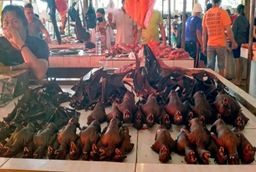
Wet market is a type of market which sells putrescible goods which includes a diversity of meats from sea food to poultry, the price ranges are overwhelming, one can find the rarest of meats and it’s definitely a jaw dropping sight to behold.

As we spread our raging voices over social media, through protests and education over animal rights and preserving and protecting endangered species and animal conservation, there will always be a component which we will be unable to change, and in this case it’s the wet markets.

It’s a million dollar business, the merchants, dealers and middle men earn thousands in a day under this trivial and disturbing business. It contributes greatly to any economy and is one of the important factors when it comes to the export and import in case of businesses as it can escalates both imports and exports and lead to an extraordinary rise in the market economy. The existence of wet markets is not a new trend but rather a very old one and they have been a part of the society from ages and continue to expand.

Most of Southeast Asia has wet markets all over the counties be it China, Malaysia, Indonesia or Japan etc. and even in certain parts of India .These wet markets are host to selling meat from all kinds of animals be it wild or even endangered animals such as bears, pangolin, bats, dogs, snakes, exotic bird species, diverse sea animals and even monkeys.


These wet markets which are lurking with unique meats and other items can be eye opening  for many of us who  have heard or seen them for the first time and can also come as a shock when we hear about the items being sold inside the market, but for many southeast Asians these are a common sight, these markets have consumers coming on a regular basis to buy fresh produce, besides meat they also do sell unusual herbs as well. And one can actually find fresh produce at whole sale prices most of the times.

People who buy from the wet markets generally buy products in bulk and hence majority of the consumer who are regular visitors completely depend on these markets. As most of the people living in towns and tiny villages and cities are everyday visitors of these markets, they are part of the community and hold a strong connection with the people.

Most of the restaurant and hotel owners buy their fresh ingredients for some of their extravagant delicacies from wet markets, hence the value which wet markets hold is quite high and eradicating them completely from the picture would put millions of lives at stake as not only will the regular consumers be effected but even the merchants along with the economy will also be affected.

It’s the wet markets which have been blamed for the spread of the current pandemic which has engulfed the world with chaos and has been blamed for the life changing calamity, these markets are not well kept they are crowded and there is hardly any space to walk around in the compact area of these markets, when it comes to hygiene maintenance its very low and the meat being sold has a very low shelf life hence have to be displayed in certain manner, which makes them a host to numerous faults and they have the capacity to start many epidemics. These markets don’t even meet the demands which a regulated and inspected market should have. But China along with many other countries is not ready to put a permanent lock on this business as it will disrupt the financial system of their countries.

Many have signed petitions to put an end to these markets forever but looking at the consequences which affect the population and economy people are not willing to wipe them completely from the picture.

Abdhi Upadhyay

INDIA MOVING TOWARDS SELF RELIANCE

Progress of India towards self-reliance is governed by certain pressing issues and their timely solution to achieve self-reliance. India has succeeded in keeping the rate of spread of Coronavirus which has caused a lot of injury to the social and emotional status of the society and created obstacles for India in achieving the aim of becoming self-reliant and seek self-sustenance.

If we look back to the days when economic reforms were introduced in the 1990s that gradually brought improved result in bringing the economy on the right track and resulted in improvement in the living standards of the people. However, we could have put in more thrust on technological and related advancements. This lacuna surfaced because of the trade policy on import and export of the goods.

The Central Government is now focusing more on development of infrastructure, usage of technology to optimum, upliftment of human resources. This is the right time when India can revive the economy by bringing about some major changes in the usage of available resources with the help of penning down new methodologies.

Issues that have caused hindrance for India’s progress towards self-reliance are; keeping away from full open markets that aligned with globalization, rate of production and manufacture, China playing an indispensable role in the Indian economy, Centre-State face off in concurrent sectors particularly agriculture.

If we shift our focus towards the solutions available to us viz. the availability of trained and skilled workforce for self-sustenance, shifting the dependence of manufacturing from China to India. India has a considerable young population strength that can be trained to attract new investments from global manufacturing giants. Optimum utilization of Indian human resource can set a new trend in the global economy. India is a ground for development and also a market with a huge potential for finished goods.

India possesses relevant aspects for generating the demand and consumption of the supply which can boost Indian self-sustenance. At the same time, while striking the balance between opening more areas for investment, India needs to seek healthy competition among the local and regional level. An opportunity to recognize the scattered local expertise of the Indian people in creating hand made useful things.

Policies can be framed to give more inclination towards local innovative crafts and skills so that they survive capitalism. Increasing control over agricultural products, defence sector, public health system and developing an indigenous chain of supply will enhance the self-sustenance. Increasing transparency in government purchase system adopting global procurement standards can enhance the rate of provision of material for expecting real-time growth.

India can focus on areas where it can shoulder the leadership and invite the investors. Usage of technology for the growth of Indian subcontinent is still underexplored. The world has turned virtual and advancement towards artificial intelligence and automation is the need of the hour. Hence, it can be summed up that framing real-time policies that focus more on meeting the results and adequate pumping of resources for proper development of education sector, health sector and catering for training the human resources will take India a step closer to achieve self-reliance.

SDG 11: SUSTAINABLE CITIES AND COMMUNITIES

Ideas, commerce, science, culture, productivity thrive at cities. More than half of the world’s population lives in urban areas. By 2020 two thirds of the world’s population (6.5 billion) will be urban. The increasing shift of rural to urban population because of various factors like job opportunities is called as urbanization.[1] However the development of cities comes with its own share of challenges. Cities which occupy only 2-3 % of earths land accounts for earths land account for around 60 -80 percent of energy consumption. The increasing number of slums has become a significant feature of urbanization. Over 1 billion people currently live in slums, with the number of slum dwellers only expected to grow in the coming decades. The less developed countries or developing which have grater rates of urbanization are host to majority of the slums.[2] The growth rate of urban areas in the developing countries are 2 % while it is 0.5 % in the developing countries.[3] Most of these countries however has failed to develop adequate infrastructure for these growing urban population. The number of slum dwellers is projected to increase to 2 billion by 2030 and to 3 billion by 2050 if current trends persist (UN-Habitat, 2010).[4] The presence of slums has regional and global implications, impacting areas such as education, health and child mortality, and political and social exclusion, among many other things.[5] This necessitates efficient urban planning and management and culturally inspiring cities and inclusive green cities for future. There is a need for a rapid shift to a sustainable way in the process of creation of our urban spaces. Jobs and opportunities should be created without burdening available land and resources.

The UN explains:” The challenges cities face can be overcome in ways that allow them to continue to thrive and grow, while improving resource use and reducing pollution and poverty. The future we want includes cities of opportunities for all, with access to basic services, energy, housing, transportation and more.”

SDG 11 in Indian Context

India, which will be third largest economy just behind china and U.S.A by 2025 is one of the fastest growing economies of the world.[6] India has witnessed a very high increase in its urban population. According to 2011 census, the urban population in India is around 31 % while it was at 11% according to 1911 census. Various statistics points to the fact Indians urban population has increased by 91 million between 2001 and 2011. Most of the Indian cities like Delhi and Mumbai faces the problem of congestion.  Also this goals holds great importance in Indian context as Mumbai is home to one the world’s largest slum, Dharavi which expands over an area of 2.1 square kilometers and has a population of about 700,000. 17% percent of urban population in India lives in slums, Delhi being the most polluted capital of the world again this year again and more alarmingly India is home to 21 of the of the 30 cities in the world, there are repeated instances of floods in Chennai .Further there are numerous cases of repeated prosecution of Bangladeshi immigrants in Kolkata.

Migrants who come to cities from villages looking for better jobs and opportunities end up homeless due to various reasons like financial problems, unemployment, natural calamities etc. They end up living in small huts made of straws, plastic, polythene etc. Majority of them live in very deplorable conditions without even basic necessities like toilet food and clothes.[7] 13 %   percent of the urban households doesn’t even have basic sanitary toilets.[8]

Efficient management of slums is essential towards this SDG as growth of slums has harmful ramifications on both humans and environment which are interlinked and not severable. Slum dwellers are vulnerable to threats like natural calamities and manmade disaster and these have direct impact on them[9].Their weak economic status makes it nearly impossible or extremely difficult for them to recover from the natural calamities. On the other hand, slum residents themselves can impact their environment due to lack of basic services, which results in contaminated soil and polluted air and waterways. This results in a perpetuated cycle of decline for both slum dwellers and the environment.[10]

This can be ascribed to the fact that the capacity of slum dwellers to recover from disasters are very low compared to formal communities.[11] Hence, increase in number of slums can be a serious challenge to sustainable development and we need efficient urban governance to combat this.

Conclusion

The challenge and responsibilities of achieving the Sustainable  Development Goal 11 are domineering in India. Urbanization must usher in a process of inclusive economic growth and counter the trends in inter and intra-urban inequalities that have grown at an alarming rate. It is expected that the Goal will be achieved through an urban development strategy, which allows all stakeholders, especially the currently marginalized and excluded sections to participate actively in social and economic life. Govt’s policies, programmes and schemes need to ensure that there is universal access to safe and affordable housing, basic amenities and open green spaces. The strategy must include components aimed at upgradation of slums, improvements in urban planning and management practices to make them participatory and inclusive, safeguarding the heritage and protecting the citizenry against natural disasters.

Despite the fact that India has done well on many sustainable development goals and climate goals, much is yet desired to achieve sustainable development in the real sense. First and foremost is the need for a clear road map to implement the policies to achieve with identified roles for the state governments, and a monitoring mechanism to measure progress. It also needs to draw up a quick plan to overcome the want for quality data. Public education and awareness are second to none in terms invoking agency of people in achievement of sustainable cities and communities. The goal is more complex than to be achieved by the policies and government programmes alone. We thus need to harness energy, understand and  involve participation of all stakeholders including the NGOs to make sustainable development a reality.

SDG Naga

[1]Pti, “India Poised to Become Third-Largest Consumer Market: WEF” (The Economic TimesJanuary 9, 2019) <https://economictimes.indiatimes.com/news/economy/indicators/india-poised-to-become-third-largest-consumer-market-wef/articleshow/67450935.cms?from=md&gt; accessed April 30, 2020

[2]Admin, “Invisible Urban Poor: The Pavement Dwellers of India” (Counterview.OrgDecember 7, 2019) <https://counterview.org/2019/12/07/invisible-urban-poor-pavement-dwellers-of-india/#_ftnref1&gt; accessed April 30, 2020

[3] IndiaSpend, “Every Indian To Have Toilet In Next 365 Days: Official Data. Under The Surface, A Crisis” (BloombergQuintOctober 2, 2018) <https://www.bloombergquint.com/politics/every-indian-to-have-toilet-in-next-365-days-official-data-under-the-surface-a-crisis&gt; accessed April 30, 2020

[4] “Informal Settlement Integration, the Environment and Sustainable Livelihoods in Sub-Saharan Africa” <http://www.grif.umontreal.ca/pages/irec% 20papers/napier.pdf.>

[5] Ali, M. H., & Sulaiman, M. S. (2006). The causes and consequences of the informal settlements in Zanzibar.

XXIII Congress of the International Federation of Surveyors, Munich, Germany, Retrieved from https://

http://www.fig.net/resources/proceedings/fig_proceedings/fig2006/papers/ts35/ts35_01_ali_sulaiman_0320.pdf.

[6] Ajibade, I., & McBean, G. (2014). Climate extremes and housing rights: A political ecology of impacts, early

warning and adaptation constraints in Lagos slum communities. Geoforum, 55, 76–86. doi:10.1016/j.

geoforum.2014.05.005

[7] “Cities – United Nations Sustainable Development Action 2015” (United Nations) <https://www.un.org/sustainabledevelopment/cities/&gt; accessed April 30, 2020

[8] McGranahan, Gordon, and David Satterthwaite. Urbanisation Concepts and Trends. International Institute for Environment and Development, 2014, http://www.jstor.org/stable/resrep01297. Accessed 7 Apr. 2020.

[9] Ibid.

[10] “Millennium Development Goals Report 2015 | Latest Major Publications – United Nations Department of Economic and Social Affairs” (United Nations) <https://www.un.org/en/development/desa/publications/mdg-report-2015.html&gt; accessed April 30, 2020

[11] Authors UN-HABITAT, “State of the World’s Cities 2010/2011- Cities for All: Bridging the Urban Divide: UN-Habitat” (UN) <https://unhabitat.org/state-of-the-worlds-cities-20102011-cities-for-all-bridging-the-urban-divide&gt; accessed April 30, 2020

Does CONNECTIVITY really means DISCONNECTION ?

I FEAR THE DAY WHEN TECHNOLOGY WILL SURPASS OUR HUMAN INTERACTION. THE WORLD WILL HAVE A GENERATION OF IDIOTS

~ALBERT EINSTEIN

Our era has come to see the vital importance of digital technology in our daily lives. It allows us to unlock a huge collection of information and communication data. Each kind of task, be it a regular task or a job specific task requires digital proficiency or literacy. Digital literacy can be defined as “the ability to use digital technology, communications tools, and or networks to access, manage, integrate, evaluate, and create information in order to function in a knowledge society.

The utilization of digital devices such as computers, TV, mobile phones and video game has escalated substantially over the past few years globally. Technology has helped humanity get things done faster and there is no doubt or shortage of recognition of these increased benefits to mankind.

How far both Digital media and social media have become integrated in the lives of most of the global population is shown here as at 31st March 2011, with the exception of some third world countries such as Liberia and Ethiopia. At the other end of the scale Asia has the largest percentage of internet user at 44% of all users globally from its population of 3.8 billion, a penetration of 24%. China is by far the highest population of users at 485 million and India at 100 million.

We live in a digital environment ; just short of being pixelated or virtual ourselves, the things around us continue to get smarter, faster, more accurate and the connection becoming increasingly more digital. Customer relationships are digital; Business channels are digital; Our conversations are digital, and our social interactions are slowly being affected by this digital world. With the existing of new and emerging technologies through the past decade, it is an undeniable fact that digital technologies have made a significant  contribution to improvements in our lives. It has made our lives effortless, placing more of our daily activities to the online web and being able to communicate across long distances. For example, currently being on exchange has allowed me to connect with my family back home via FaceTime an online video application.

Computer systems and the Internet have altered human interactions arguably in the most critical ways when compared to non-computer technological systems that have been developed in the last few centuries. The alterations in how humans communicate with each other in the modern day – which is largely via smart apps, through the Internet/WiFi – has both good and bad consequences. The wide availability of Internet-capable smart devices means that it is now possible for loved-ones to be in close contact wherever they are on earth 

While technology-

  • has helped bridging a global gap by connecting people via the digital world, This bridge has allowed multitudes to learn about the world, and connect with others, in ways that were previously impossible
  • The Internet has also provided endless source of resources, educational materials, and learning systems for people to learn or work from their own home, without interacting with anyone
  • Additionally, for social interactions, people often meet friends or dates using apps, from the convenience and comfort of their own home. This is contrasted with a previous age of meeting friends and dates via day-to-day mingling outside of one’s own home.

As technology are becoming more prevalent in everyday life, the assessment of technology’s presence in relationships and its impact on how humans interact with one another is an emerging area of study. There are diff outlooks on the relationship between technology and human interactions and relationships. It is purported that the integration of technologies in everyday life can have intense effects on human relationships.

Nevertheless, the downsides of technologies cannot be ignored; which is why I will be discussing the negative implications that the digital technology can bring into the social face-to-face interactions of our relationships today.

Humans are made to form relationships since we have an innate longing to share our lives with family, friends and partners. This social interaction is important but often intricate as people take in face to face communication in different ways. The nature of social interaction has changed as technological advances have provided new methods of contact. Consider the evolution from in-person contact and letter writing to the telegraph and telephone and, most recently, to ever more individualized and electronic forms of contact such as cell phones, video calls and social media (e.g., Facebook). We know very little about how different forms of communication influence social relations, health, and well-being. However today, instead of spending time in person with friends, we are consistently choosing to communicate via online mechanisms such as applications like Facebook, IMessage, Snapchat and Instagram. These four are only some of the new ways that offer ways of interaction and engagement allowing us to be as physically close to one another as possible in a virtual world

Technology has both eliminated a gap and created one. Virtual distance is the phenomenon where people are physically together but detached from each other due to being completely absorbed with their technological device. This is called Virtual Distance. Additionally, modern Technology is often linked to an over exposure to EMFs, and is linked to excessive blue light exposure, while developing children not only face possible cognitive changes due to constant exposure to the above factors, but often grow up in a possibly more isolated manner due to constantly being “wired” to their smart devices instead of physically spending time with friends.

 However, the biggest difference: conversations that happen over technology lack content. You never really know when someone is being sarcastic, funny, or serious. Misunderstandings, miscommunication and assumptions impact how we view others, and happen very often when there is no face-to-face communication. Online contact still falls short and fails to deliver personal touch despite all these advances

Conversations that now happen through social media and have taken the place of traditional interactions is causing people to leave their houses less and less since they do not need to leave to communicate with others. This can lead to social isolation.

  • High level of usage of Digital Technologies are associated with decline in communication within family members.
  • Domestication of Digital Technologies in household & technologisation of childhood has led to a bedroom culture & digital divide in a negative way
  • There is an individualism & privatization within a household regarding digital technologies

It is not uncommon for people to prefer texting instead of actually meeting, or at the very least, calling and thus hearing another human voice. It is also not uncommon for people to walk around, or even sit with others, head bowed to their digital device without saying a word or even noticing anything about anyone else. Human interactions and relationships have thus largely decreased, while intimacy and human-to-human interactions have been replaced with human-to-machine interactions. Technology has helped to modify human behavior by creating a gap between people and reducing intimacy. In an age where robots and AI are slowly replacing humans within the workplace, this interaction between humans and machines is only set to increase.

One of the main areas of interaction that has been impacted by Virtual Distance and technology besides parenting is dating. With the advent of popular dating apps like Tinder, people do not utilize social skills to meet potential mates, but simply swipe through a “catalog” of people. Additionally, ghosting (simply disappearing from the digital world when one is no longer interested) is often very prevalent, which results from a lack of social skills – or courage – to end a relationship in the old fashioned way. Thus, virtual distance directly results in the reduction of refined social skills that was previously universal.

CONNECTIVITY REALLY MEANS DISCONNECTION

Though technology has helped to bridge global gaps, devices and social media/messaging apps, for instance, have largely helped to create a larger disconnect between people. Increased isolation, decrease in social interaction and social skills, and increased human-to-machine interactions are all a result of an excessive use of technology, which has created a wall between many people globally

BASICS OF A MICROBIOLOGY LAB

Microbiology is the study of microbes i.e. the organisms which we can’t see with the naked eyes. Although many microorganisms are beneficial for the human use, some are pathogenic also which causes diseases. Clinical Microbiological Laboratory is concerned with finding of those infectious, pathogenic microbes.

MATERIALS USED IN MICROBIOLOGY LAB
Laminar flow hood, Incubator, Autoclave, Refrigerator, Bunsen Burner, Wire loop, Petri plates, Glass slides, Weighing balance, Media plates, Sensitivity disks, Staining rack, Microscope, Bio safety Cabinet, Centrifuge etc.

INTRODUCTION TO DIFFERENT MEDIA
Some of the media used in the microbiology lab are :

  1. MacCONKEY AGAR : It is the selective and differential media used for the isolation of Gram-negative Bacteria. This media can be used for differentiating Lactose fermenting and Non-lactose fermenting bacteria.
  2. BLOOD AGAR : It is the enriched media for the growth of bacteria such as streptococci.
  3. CHOCOLATE AGAR : It is the lysed Blood Agar. The only difference in blood agar and chocolate agar is that in blood agar RBCs are lysed. This enriched media is suitable for the growth of bacteria that are unable to grow on Blood Agar.
  4. THIOSULFATE CITRATE BILE SALT AGAR (TCBS) : It is the selective as well as differential media for the growth of vibrio cholerae , a causative organism for cholera.

GRAM STAINING
Gram staining is the process for differentiating Gram positive and Gram negative bacteria. When the whole procedure of gram stain is followed and the slide is observed under the microscope, Gram positive bacteria appear Violet in color and Gram negative bacteria appear Pink in color.
For the gram staining we need Glass slide, Normal Saline, Inoculating loop, Bunsen burner, Crystal Violet, Gram’s Iodine, Acetone, Safranine.

PROCESS :

  1. The isolated colony of the microorganism is taken and in the drop of normal saline on the glass slide the colony is mixed with the help of inoculating loop to make a smear. The prepared smear is heat fixed.
  2. A staining rack is taken and on the smear, Crystal Violet is added. After 1 minute, the stain was removed by washing the slide in running water.
  3. After that, Gram’s Iodine is added on the smear as a decolorizing agent which is again washed after 1 minute under the running tap water.
  4. The next step is to add Acetone on the smear which is added in the hand to hand process.
  5. After the decolorisation is done, Safranine is added on the smear which is also washed after 1 minute.
  6. The glass slide is then air dried and observed under the microscope.

RESULTS :
It was observed under the microscope that the Gram positive bacteria appear Violet in color due to Crystal Violet stain whereas Gram negative bacteria appear Pink in color due to safranine.

TESTS ANALYZED
The tests analyzed in the microbiology section of the laboratory are basically the culture and sensitivities tests of urine, stool, sputum, pus swab etc.
The basic procedure of performing all the tests are :

  1. First of all, all the tests are performed inside the laminar flow hood.
  2. The samples collected from the patients and the media plates are kept inside the laminar flow.
  3. The inoculating wire loop is heat sterilized and with the help of it, the samples are cultured or streaked on the media plates.
  4. After inoculation, the cultured media plates are incubated for 24 hours (48 hours if necessary) for allowing the growth of bacteria.
  5. After the growth, staining is done or sensitivities are checked according to the requirement by the doctor.
  6. The report is prepared for the patient.

Do You Know, Why We Write Blogs?

First of all, what is the blog, everyone knows the blog, but here is the question of what is the technical turn and where is the origin of the blog? well, I tell you, the blog started out as a mix of what was happening in a person’s life and what was happening on the Web, a kind of hybrid diary/news site, and a person who has knowledge of how to post any news or new thing they begin their life with small blogs and they continue to word the success. furthermore, look about the origin of  The word “blog” is a shortened version of weblogs or weblogs. Besides being shorter and catchier, “blog” seems less likely to cause confusion, as “weblog” can also mean a server’s log files. in the past, not many people aware of the posting blogs, and there were not many facilities provided on the internet to post a blog, but in the last 10 or 15 years the trend of posting blogs is growing like a rocket.

people post many kinds of blogs like technology, photography, lifestyle, cooking, daily knowledge, general knowledge, news regarding pollution and Government, and many more. by sharing the post, people can share their experience and they can also pass their time if they do not have work to do. Nowadays, many companies and organizations like EDUindec.com and other NGOs higher the writer and give access to write something and post on their website or share on their social media and get the popularity, many organization also provide the education on these and how to bring more people on the site by getting this education on can easily understand the process of SEO (search engine optimization). there are some websites and domains, which provide free workspaces to write or promote social media handles.

However, many online e-commerce sites also on the trading and they start there platform by sharing the information on the blogs and through they share the product on their blog like clothes, accessories, computer parts, cooking books, and more. there are some famous bloggers Amit Agarwal, who is a Google Developer Expert, Amit Bhawani, who is also a famous tech blogger and he also has own youtube channels, so he starts to build his future by posting technology-related blogs, and in last, Srinivas Tamada he also famous Indian blogger post blog regarding the SQL databases and new database software for those people who wont to know about the databases of companies.

Here some advantages of having and writing blogs:


  1. Instant Marketing and Publicity: Now as people read, they learn about your work, your life, and/or your interest. You are on-air as long as your website is up. For about 10 to 30 minutes a day depending on how much effort you place, you are to impart something different to your readers, it might be knowledge or entertainment but as long as they get something, they finish your article with you leaving a mark in them at that moment. And that’s what’s important, ’cause when you do, you just got yourself a tribe.
  2. Increase in Search Ranking: Compared to a static portfolio, a blog counterpart is much friendlier to search engines because of the fresh content it offers once in a while. The friendlier you are, the better chances of you being searched for. And in case you haven’t thought about it, your blog can also include your portfolio which can be easily update-able rather than tinkering with your.html code just to insert another work.
  3. You gain additional income: Some of the successful people in the blogging industry choose to have additional income by placing some ads beside their website.  In some cases, their website becomes a marketing tool for other companies because of market specifics they cover. Other companies don’t like to make blogs for the heck of it, so in turn, they use other bloggers to market their services or product, and guess what? They pay for it!, For other online ad-companies, a mere browse through is enough to add to your piggybank, for others, you need clicks and to some, you need sales. But whichever the case is, you are earning passively for writing about things you love.


Guide to live a Happy Life !

–You’re going to realise it one day-
That happiness was never about your job, or you degree, or being in a relationship. Happiness was never about following  the footsteps of all of those who came before you, it was never about being like others.
One day you are going to see  it – that happiness was all about the discovery, the hope, the listening to your heart and following or wherever it chose to go. Happiness was always about being kinder to yourself, it was always about embracing the person you are becoming. One day you will understand that happiness was all about learning how to live with yourself, that it was never in the hands of other people. It was about you , It is about you and It will always be about you–

Since long time, I’ve been exploring the best ways that people can live happily. And over the last year.
Outsmart Your Smartphone,Conscious Tech Habits for Finding Happiness, Balance, and Connection IRL. Even though there are tons of things you can do to live a happier life, I’ve narrowed our focus down to the 10 skills you can build that I believe are the most important to increase happiness. By building these skills, you can start to live a happy life.

1. Live a happy life by creating a plan for your happiness.

You wouldn’t bake a cake without a recipe. You wouldn’t go to a place you’ve never been without a map. And you shouldn’t try to build happiness without a plan either. Creating a good happiness plan is what takes you from where you are now to the happy life you envision.

2. Develop yourself to live a happy life.

Remember when something you wanted to do seemed impossible? Maybe it was that first time you rode a bike, or drove a car, or asked someone out on a date. Then you did it and realized you had it in you all along. Creating a happy life is the same way — the first step is believing in yourself and your ability to live happily. Then you’ll see that you had it in you all along. This is why engaging in personal development is key to living a happy life.

3. Think positive to create a happy life. 

We all know someone who will find the one bad thing in every situation. Maybe this person is us. If we learn to think positive instead, we can make even the most obnoxious situations more enjoyable, creating a happier life from the one we have now. Every moment of every day is a little better, because we can find the silver linings. This is why positive thinking is key to a happier life.

4. Boost your self-confidence to create a happy life.

If we don’t have self-confidence, it’s easy to think that there’s something fundamentally wrong with us — that there’s nothing we can do to change ourselves and create the happy life we desire. But self-confidence is actually a skill. When we learn how to think, feel, and act in ways that make us a person we really love, we can be more self-confident and, as a result, live happily more easily.

5. Create work-life balance for a happy life. 

Are you exhausted, demotivated, and in desperate need of a break? By learning how to create better work-life balance, you can make better use of the limited time you do have in your life. As a result, you end up enjoying all parts of your life a bit more.

6. Build resilience for a happier life. 

Sometimes life knocks you down — there is no getting around that. What really matters for creating a happy life is how easy it is for you to get back up. Developing emotional resilience keeps those challenges and hardships from overwhelming you. You recover more quickly from difficulties, and as a result, you’ll live happily more days each month and year.

7. Be more mindful to create a happy life. 

Now that we live in a high-tech world, we go through much of our lives on autopilot. As a result, we miss out on the best parts of being alive — positive experiences, connections with others, and even having fun. So maybe we already have a happy life . . . and we just don’t see it. When you become more mindful and self-aware, you stop feeling so numb and are able to better enjoy everything your life has to offer.

8. Find your life purpose for a happy life. 

We all want our lives to feel like they matter. It can be tricky, though, to figure out what matters to us. Each person’s life purpose is different, and learning to notice when you’ve found your purpose is a skill. By building this skill, your life becomes more meaningful and more satisfying, so you can live happily more easily.

9. Practice kindness to live a happier life.

We’re often so focused on boosting our own happiness that we ignore how we affect others. This is a huge mistake, because kindness is, counterintuitively, one of the best ways to create a happy life. Acts of kindness fuel a longer-lasting, more enduring type of happiness. So when you build this skill, you live more of your days happily.

10. Build healthy relationships for a happy life.

So often we think that a happy life is something we must build on our own. But long-term happiness actually comes from the relationships that we build with others. In fact, healthy relationships are the most important factor in both our health and our happiness. This is why learning how to develop better relationships helps you live happily for life.

Here are some steps which will help to boost the above skills :

~ Clarify why you want a happy life.
~ Clarify when you’ll build the skills that lead to a happy life.
~ Decide which happiness skills to build.
~ Decide in what order you will build the skills that lead to a happy life.
~ Commit to your goal to create a happier life.
~ Develop a growth mindset that focuses on           your belief in your ability to create a happy life.
~ Identify your values.
~ Define a happy life in your own words.
~ Record your progress towards personal development.
~ Get some help developing yourself to build a happy life.
~ Help your brain get used to thinking positive.
~ Start your day by imagining the way it looks in your happy life.
~ Savor positive moments.
~ Capitalize on positive moments.
~ Pay attention to the positive things.
~ Create a collection of positive images or positive quotes.
~ Think positive, but think negative when you need to​.
~ Practice gratitude​.
~ Stop minimizing your successes​.
~ Practice self-compassion.
~  Imagine your best self.
~ Know your strengths.
~ Celebrate your successes.
~ Practice mindful acceptance.
~ Observe your situation to increase your awareness​.
~ Find the positives in negative situations​.
~ Create a collection of images or quotes that inspire you to live happily.
~ Understand the benefits of negative emotions.
~ Beef up your coping skills.
~ Stop your negative thought cycles.
~ Be more present in the moment.
~ Take breaks from technology.
~ Pay more attention to find the meaning in your life.
~ Spend more time uninterrupted
~ Identify your values.
~ Find out what drives you.

Of course, building all of these skills takes time. If you need help, get support to walk you through the steps and guide you on your journey to living a happier life