The Great Emu War

The ‘Emu War’, also known widely as the Great Emu War, was a nuisance wildlife management military operation undertaken in Australia in the later part of 1932 to address public concern over the number of Emus that were said to be running amok in the Campion district of Western Australia. The unsuccessful attempts to curb the population of emus, employed soldiers armed with Lewis guns, a World War 1 era light machine gun, making the local media to adopt the name “Emu War” when referring to the incident. 

While a number of emus were killed, the emu population persisted and continued to wreak havoc by crop destruction.

Background

Discharged Australian WW1 veterans were given lands to take up farming by the Australian government within Western Australia. The difficulties farmers were already facing increased by the arrival of as many as 20,000 emus. Emus regularly migrate after their breeding season, heading to the coast from the inland regions. With the lands cleared and additional water supplies being made available for the livestock by the Western Australian farmers, the Emus found that the cultivated lands were a good habitat for them, and began to intrude into farm territory. The veteran farmers began taking up arms against the birds.

The War

Military involvement was due to begin in October 1932. The “war” was conducted under the command of Major G. Meredith of the Seventh Heavy Battery of the Royal Australian Artillery. They moved in formation behind the birds, and the birds answered their organised assault with inspired chaos, scattering themselves in all directions to minimize the casualties. The army tried gunning them down in moving trucks, but found they could not aim properly at their speedy foes.

A second campaign was mounted by Major Meredith on 13 November 1932, killing 40 emus. Two days later, barely any, but about a month later its was reported that 100 emus were being killed every week. The commanding officer found that it took 10 bullets to bring down every one emu, which was a pretty dismal effort. He was recalled the Great Emu War had finally come to an end.

Aftermath

Despite the problems encountered with the culling of the emus, the farmers once again requested military assistance in 1934, 1943, and 1948, only to be turned down by the Australian government. Instead, the bounty system that had been initiated in 1923 was continued, which proved to be effective as 57,034 bounties were claimed over a six-month period in 1934 alone.

https://blogs.scientificamerican.com/running-ponies/the-great-emu-war-in-which-some-large-flightless-birds-unwittingly-foiled-the-australian-army/

https://www.atlasobscura.com/articles/the-great-emu-war

Environmental laws in india

Either Stable burning in various states accrued the air pollution in Delhi and created a gas chamber around NCR ; SC came upon a committee to observe scenario , Or 4 industries inflicting stream pollution were shut down by Maharashtra pollution board . Everybody has responsive to environmental problems as higher than . The key solution for resilience to environmental issues are provided by government in various legislations , enactments and provisions on environment laws .


In republic of India environmental law is concern with the policy and law for protection of the environment . It aims for achieving carbon free economy through taking measures for reducing climate change. All the acts under this laws are safeguards in ensuring effective management of the environment and its multiple ecosystems . It provides for preventing environmental damage .


Natural resources in the earth were unscathed from millions of years. It were remain pure until the industrialized started . After the industrialization this resources have been exploited in Spain of 100 years only . From 19th century, the environment (air , water and land ) is directly exploited by rapidly growing population at alarming-rates.


environment includes water, air and land and the inter-relationship which exists among and between water, air and land, and human beings, other living creatures, plants, microorganisms and property , as mentioned in section 2 of environmental protection Act of 1986 . Environment is a wide sphere , it consists of social, economically , political , religious dimensions .


Addressed area of environmental laws in India :

1. Quality of water : For the prevention and control of water pollution and to maintain or restore wholesomeness of water in the country the water act of 1974 was enacted. It further provides for the establishment of Boards ( CPCB and SPCB ) for the prevention and control of water pollution with a view to carry out the aforesaid purposes. This act prohibits the discharge of pollutants into water bodies beyond a given standard, it also lays down fine and penalties for non-compliance.

2. Reduction of air pollution and maintaining air quality : The Air (Prevention and Control of Pollution) Act, 1981 (the “Air Act”) is an act to provide for the prevention , protection and abatement of air pollution .It provides for establishment of Boards at the Central and State levels with a view to carrying out the aforesaid purposes.

3. Hazardous Waste management : legislations that directly or indirectly deal with hazardous waste management are the Factories Act, 1948, the Public Liability Insurance Act, 1991, the National Environment Tribunal Act, 1995 and rules and notifications under the Environmental Act.

4. Containment cleanup, damage mitigation : preventing future damage to the environment is undeniably the primary objective of environmental law, mitigating and reducing existing damage is also important. This area most often deals with issues like toxic leaks and oil spills. The central objective of this branch of environmental law is deciding liability, planning an appropriate response, and also determining the best process of investigation and monitoring in the overall clean up process. This area also concerns itself with the study and assessment of risk in the long term, to better mitigate any future accidents and risks.

5. Sustainability of resources : United Nations has put great emphasis on ensuring the sustainability of resources. For this vision , it has advocated the formation of various legal principles and legislation. In this regards concept of environmental impact assessment introduced .

Noble legislations and enactments on environment law in India :


Laws on Forest and wild life protection:
• The Indian Forest Act, 1927 ; The Wildlife Protection Act, 1972; The Forest (Conservation) Act, 1980 ; The Environment (Protection) Act, 1986; The National Green Tribunal Act, 2010.


Laws on Water pollution :
• The Water (Prevention and Control of Pollution) Act, 1974.


Laws on air pollution :
• The Air (Prevention and Control of Pollution) Act, 1981 (the “Air Act”)


Laws on hazardous waste management :
• Biomedical Waste (Management and Handling) Rules, 1998 ; Municipal Solid Wastes (Management and Handling) Rules, 2000 ; Batteries (Management & Handling) Rules, 2001 ; Hazardous Wastes (Management, Handling and Transboundary) Rules, 2008 ; E – Waste (Management and Handling) Rules, 2011 .
Laws on wetlands


Ramsar convention (1971) : This convention was initiated to push for greater conservation and sustainable use of wetlands ; Wetlands (Conservation and Management) Rules, 2017.
Constitutional provisions on environment laws


Part IVA (Art 51A-Fundamental Duties) of the constitution casts a duty on every citizen of India to protect and improve the natural environment including forests, lakes, rivers and wildlife, and to have compassion for living creatures.


• the Constitution of India under Part IV (Art 48A-Directive Principles of State Policies) stipulates that the State shall endeavour to protect and improve the environment and to safeguard the forests and wildlife of the country.

environment makes human life possible, and our cultural environment helps define who we are. It is therefore essential that our population and economic growth are environmentally sustainable.

REPUBLIC DAY

A huge Republic Day procession begins early in the morning. Doordarshan broadcasts a running commentary on the programme. A large no of Army, Navy and Air Force personnel participate in this procession. Cadets of N.C.C., A.C.C. , Boy Scouts, Girl Guides also participate.

The country also exhibits its weaponry strength. The biggest attraction are the tableaux of various states and their cultures. Some departments also bring their own tableaux. The spectators cheer each and every activity happening at India Gate.

In the end, color balloons are released into the sky. Tricolor made by the aeroplanes is also a very memorable show. The whole environment is filled with patriotic zeal. Here we get a great opportunity to see the unity of India at one spot.

Not only in Delhi, Republic Day Celebrations take place in other parts of the country with same passion. In schools, especially, there is great atmosphere. There are activities – Cultural and Sports. There is also the Chief Guest of the Programme.

The activities include parade, P.T. exercises, speeches, songs, skits, fancy dress competition etc. The honorable speakers tell the students about Indian Freedom Struggle, role of Freedom fighters etc. They also urge them to work harder to serve the country in a better way.

So, Republic Day is a great Indian Festival. It creates feeling of patriotism among the people. It reminds us of the supreme sacrifices made by great freedom fighters. Republic Day also realizes us our responsibilities towards our country. It makes us feel proud to be Indian.

WONDER OF SCIENCE

Science is a blessing to human beings. The role of science is very important in our everyday life. We cannot think of our life without science. The most important invention of science is Electricity. It is the most important thing to keep the wheel of progress running. The invention of electricity brings an incredible change in human civilization. Electricity helps us to run fa, air conditioners, trains, heavy machinery, industries, or other heavy wagons. Electric fans, lights, mobiles, Air conditioners have made our life more comfortable. All the scientific technologies rest on electricity have made our life ease.

Science is the base for preparing wonderful medicines which give us immediate relief. Science helped us to overcome many dangerous and deadly diseases. Many vaccinations and medicines have been discovered with the help of science to save humans from many diseases. Nowadays it is possible that we can transplant every part of the human body by the surgery.

Science and surgery can give us eyes to see, ears to hear and legs to walk. Medical science is doing unbelievable improvements. Blood transfusion and organ transplantation have now become possible with the help of science. Now diagnosing the problem becomes much easier with the help of the invention of X-Ray, Ultrasonography, ECG, MRI, Penicillin, etc.

Inventions of science have made our traveling fast and comfortable. We can reach safely at any part of the world within a few hours. We can easily travel by bicycles, buses, cars, trains, ships, airplanes, and other vehicles. Also, these are used to transport goods.

Science also developed a way of communication. In past days we have to wait for a long time to get one’s letter but today we can talk to our relatives even if they are too far away from us. Not only talk to them but also we can even see them on our mobile phones. The invention of mobiles and the internet has reduced the distance between people.

Many innovations and discoveries of science help farmers grow a good quality crop. The Harvesting machines, Tractors, Manures, and good quality seeds are the gift of science to a farmer. In dairy and manufacturing business, types of machinery are helping to grow their business.

The first invention of science for entertainment was Radio. In the old days, the radio is used to listen to songs and news. But now science has changed everything with its new and wonderful innovations in the field of entertainment. Now, we can watch TV programs videos on mobiles, T.V and also on computers. These are now one of the most basic needs of humans.

Science also developed our education and trade sector. The invention of printing, typing, binding, etc. has boosted our education system. Similarly, the invention of the needle, scissors, and the sewing machine to the heavy industrial machinery has done huge progress in the industrial field. In one word we can’t live a minute without science.

OBESITY

Difference Between Obesity and Morbid Obesity | Difference Between

Nowadays, obesity has become an enormous as well as fatal health problems. This problem not only in India but in other countries also. Even in United States of America, one out in three adults and one out of five children and teenagers are facing the problems of obesity. In India also, we are sailing in the same boat. Most of the people since childhood fall prey to obesity is most of the countries of the world . In fact, ‘obesity is that condition of the body in which the amount of fat increases at extreme level.’ In other words, obesity can be defined as ‘the condition when an individual weighs 20 per cent or more than the ideal weight. ‘ A child weighing around 30 pounds (approximately 13.600 kg ) or more than the ideal body weight is usually considered an obese. In the state of obesity, the body weight of the individual is always more in comparison to height . Due to a number of health risks of obesity , it has been declared a disease . It has been observed that obese persons usually fall prey to diabetes, hypertension, cardiovascular diseases, cancer, arthritis , osteoarthritis, flat foot, respiratory problems , varicose veins , liver malfunctions , etc .

Generally , the questions arises : What should be the ideal body weight of an individual ? Who is obese and who is not? Different methods are used in various countries to know the obesity of an individual .According to the first method , after having a glance over the shape of the body it can be observed whether he/she is obese or not . But this method cannot be called an appropriate method to know about obesity of an individual because the approval of a society about body shape changes with the passage of time . For example , plump females used to be liked by society in yester century in India . According to the second method , if an individual’s body weight is more than in proportion to height (according to height and weight chart) , the individual will be obese . But this method cannot be accepted as the best method. The third method is a more scientific method . In this method , the body fat percentage is calculated . If the body fat percentage of a person is more than the requirement , he/she will be an obese . This is the most accurate method to know the obesity but it is not easy to apply this method . In comparison to other methods , the weight and height chart is still preferred to know one’s obesity because it is easily available , cheap and easy to use . Another method to know the obesity is BMI (or Body Mass Index ). If you want to know your body mass index , then divide your body weight in kg by your height in meter square viz .

Obesity - Lompoc Valley Medical Center

HEALTH IS WEALTH

Health is God’s gift to us. Health refers to the physical and mental state of a human being. To stay healthy is not an option but a necessity to live a happy life. The basic laws of good health are related to the food we eat, the amount of physical exercise we do, our cleanliness, rest, and relaxation. A healthy person is normally more confident, self-assured, sociable, and energetic. A healthy person views things clearly, calmly, and without prejudice. 

Introduction

We live in a super-fast age. The Internet has shrunk the world dramatically and people are connected 24×7. Multitasking is the order of the day, as we struggle to fulfill our responsibilities for everyone in life. In this fight, we often forget to spare time for ourselves. The stress levels continue to build up until one day a major collapse may make us realize that in all this hectic activity, we have forgotten to take care of one important thing – our health. 

As we spend days shuttling between hospital and home, put our body through one test after another, trying to find out what has gone wrong, we are forced to remember that ‘Health is indeed Wealth’. 

In earlier days, life was very simple. People worked for a stipulated time, often walked everywhere, ate more homemade food, did household chores, and enjoyed a healthy balance in life. 

Now people have cars and bikes to commute, so they walk less. With the demand for more working hours, people are awake till late nights and indulge in more junk food than home-cooked food. Modern equipment at home has reduced the labour work and increased dependency on this equipment.  People don’t have enough time to exercise or even get enough sunlight. Basically, nowadays people are living very unhealthy lifestyles. 

Unhealthy living conditions have increased the contraction of people to various diseases like obesity, diabetes, heart attacks, hypertension, etc. This has alarming implications in our near future. So it is very important to focus on our health as much as we focus on our work. Moderation in food habits, daily exercise, and balanced work-life can surely make a big difference to our health and body. When a person stays mentally and physically fit, his action and decision are more practical and logical and hence he is more successful in life. Furthermore, good health has a direct impact on our personality. 

Importance of Good Health

A healthy body has all the major components that help in the proper functioning of the body. The essential component is the state of physical health. Your life term extends when you maintain good physical fitness. If you are committed to exercising with a sensible diet, then you can develop a sense of well-being and can even prevent yourself from chronic illness, disability, and premature death. Some of the benefits of increased physical activity are as follows.

1. It Improves Our HealthIt increases the efficiency of the heart and lungs.

2. A good walk can reduce cholesterol levels. 

3 . Good exercise increases muscle strength.

4. It reduces blood pressure.

5. It reduces the risk of major illnesses such as diabetes and heart disease.

Improved Sense of Well-beingIt helps in developing more energy.

1. It reduces stress levels.

2. Quality of sleep improves.

3. It helps in developing the ability to cope with stress.

4. It increases mental sharpness.

Improved AppearancesWeight loss contributes to a good physique. 

1. Toned muscles generate more energy.

2. Improved posture enhances our appearance.

3. Enhanced Social LifeIt improves self-image

It increases opportunities to make new friends.

It increases opportunities to share an activity with friends or family members.

Increased Stamina

Increased productivity.

Increased physical capabilities.

Less frequent injuries.

Improved immunity to minor illnesses.

Along with physical fitness, a good mental state is also essential for good health. Mental health means the emotional and psychological state of an individual. The best way to maintain good mental health is by staying positive and meditating.

CONCEPT OF EMOTIONS

List of Emotions: 54 Ways to Say What You're Feeling

The word ‘emotion‘ is derived from a Latin word ‘emovere’ which means ‘to stirr up ‘ ,to agitate ‘ or ‘excite ‘. Emotions play a very significant role in human life . These are related with internal needs of human beings . Emotions stimulate the mind and as a result emotions became intense . During the stage of emotion an individual appears to feel impatience which enhances physical and mental readiness . To understand the clear cut meaning of emotion , the following definitions may be beneficial :

  • According to Mc Dougall , ”Emotion is a moved or stirred up state of feeling in an individual, linked with some tendency. There are physiological changes associated with each emotion frequently of a muscular or glandular nature”.
  • According to Gates , ‘Emotions are episodes in which the individual is moved or excited”.
  • According to Woodworth, ”It is a moved or stirred up state of an organism. It is a disturbed muscular and glandular activity”.

In simple words , emotions is any strong agitation of the feelings actuated by experiencing love, hate, fear, etc., and usually accompanied by certain physiological changes, as increased heartbeat or respiration and often overt manifestation , as crying or shaking.

Indeed, emotions appear to influence action in various ways. The stronger the emotion, the greater the activity to which it will give rise. It is a well-known fact that emotions disturb our logical thinking . Whenever any emotion is aroused we usually lose our head; functioning of our vital organs changes due to simulation of our nervous system . Emotions change our face expression . Under the influence of emotions , sometimes we are not able to perform the activity naturally . During emotions impossible thing can be made possible. Sometimes under the influence of emotions simple things become complex and intricate.

As a matter of fact, various emotions play a very significant role in the field of games and sports such as fear, anger, pride, jealousy, anxiety, frustration, worry, hope, enthusiasm , vitality, confidence, joy, etc. The emotions of fear, anger, frustration, pride, etc., have a negative effect on the movement of muscles . In fact, such emotions should be under control for better performance in games and sports.

Indian Monsoon

The Indian summer monsoon typically lasts from June-September, with large areas of western and central India receiving more than 90% of their total annual precipitation during the period, and southern and northwestern India receiving 50%-75% of their total annual rainfall. Overall, monthly totals average 200-300 mm over the country as a whole, with the largest values observed during the heart of the monsoon season in July and August.

At the Equator the area near India is unique in that dominant or frequent westerly winds occur at the surface almost constantly throughout the year; the surface easterlies reach only to latitudes near 20° N in February, and even then they have a very strong northerly component. They soon retreat northward, and drastic changes take place in the upper-air circulation. This is a time of transition between the end of one monsoon and the beginning of the next. Late in March the high-sun reaches the Equator and moves farther north. With it go atmospheric instability, convectional (that is, rising and turbulent) clouds, and rain. The westerly subtropical jet stream still controls the flow of air across northern India, and the surface winds are north easterlies.

five special conditions- 1) The Sea Surface Temperature (SST) gradient between the north Atlantic and the north Pacific (conditions during December of the previous year and January of present year)
2) SST of the equatorial south Indian Ocean (conditions during February and March of the present year)
3) Mean Sea Level pressure in east Asia (conditions during February and March of the present year)
4) The surface air temperature over northwest Europe (conditions during January of the present year)
5) The warm water volume of the equatorial Pacific Ocean (conditions during February and March of the present year).

How Translation Studies is gaining its recognition in the field of Literature

Photo by Tima Miroshnichenko on Pexels.com

“The secrecy behind that pacifism among language is due to the beautiful alteration of those alphabets which allowed themselves to dwell into those anonymous letters and accepted those outlandish cultures!”

Yes, definitely!  It’s the mere alphabets that give consent to the translator who translates them into a different language and give them a new beginning as something which often becomes phenomenal.

It’s always not prominent that the one who thinks great and writes great texts and even the audience who extols it, will be the legendry texts of all time. Certain times, we as a reader forget that those minute things which make a text more fabricated are due to those editors, translators who make a text complete.

Profoundly the question which hikes up is: Do these translators get any recognition for their work? Do they have any popularity like the writers or they are just considered a person who steals a writer’s copyright?

If we talk why translating is a bad job? we will get a plethora of reasons behind not being a translator. But taking the example from the fictional world of literature, translating is somewhat recognized. One of the outs of context but yet one of my favorites is the translated book – After Dark by Haruki Murakami. One of the best Japanese books translated into English which does not make it less beautiful than the original one.

It’s just not only one translated text, but many texts like this play a major role that tackles the problems in language barriers.

Translation and Language in the world of Literature:

Merely when we focus on the job of translation:

            “A translator is an artist who paints those structure, language, and sentence in such a form that it decodes the message to the other sectors of society for whom language built a bridge”.

The notion of translation was encrypted by different critics and poets according to their ages, to which they belonged too. As looking into the 16th century, during the flourishing dazzling age of romanticism, where many poetries were paraphrased and translated. Translation of classics was the only matter of importance in the 18th century. But as in the 1970s, the main focus was on innovation and novelty.

The concept and theories applied in the romantic age were somewhat experimentative, as theories of translations given by John Dryden, Pope, and then by Alexander Fraser Tytler was so much popular in the literary world.

The main hitch that occurred in the field of translation was when it was surrounded by allegations of plagiarism and many writers made certain rules and boundaries or rather principles upon the translations. Translation theories were largely formed around Bible translations in the sixteenth century. Etienne Dolet is credited with the first formulation of a theory of translations.

Certain critics like Dryden, – one of the earliest English translation theorists, classifies translation into three types:

 1. Metaphrase – word for word, line for line rendering,

 2. Paraphrase – wherein translating sense is given more importance

 3. Imitation –   were sense matters in translation.

E.g.: Horace’s Ars Poetica tars by Ben Jonson – metaphrase

Virgil’s Aeneid tars by Waller – paraphrase

Pindar’s two odes by Abraham Cowley – imitation

In 1789, George Campbell suggests three criteria for good translation:

  1. There should be just a representation of the original.
  2. The spirit and manner of the original should be conveyed through consistency with the language of the translation.
  3. The translation should have the quality of original performance to appear natural and easy.

In 1790 Alexander Taylor in The Principles of Translation set up three different principles

  1. The translation should give a complete transcript of the idea of the original work
  2. The style and manner of writing should be of the same character as that of the original.
  3. The translation should have all the cases of the original composition.

Translation maintains the authenticity:

The translation is the right job to do and it maintains the authenticity of the author and it works and keeps the work original.

 As Aristotle rightly said that imitation is not a mere, it’s a photostat copy of life or the world, but it is a recreated ideal copy of the world. Similarly, a translation is also crafted in such a way that it does not take the cultural rights of the original work.

  Yes, as a reader we cannot deny the fact that a translator copies the whole idea of the author and displays the work, but one should always remember that translation is not an easy task as it needs huge determination to learn the mindset, structure, and form of the writer’s mind and have to work accordingly so that the readers don’t repulse upon the translator and it should not hurt the sentiments of the readers of the authors. As translation according to me breaks the bridge created by the prejudicated norms in favor of language.

Literature and Translation are counterparts of each other:

As we know a language has the power to bring war, riots, and bloodshed among the 2 communities, whereas literature is binding the difference and helping to bring harmony among the language in such a way that the translation will help them to cover the gap. By taking the foreseen principles of these writers a translation can portray us in a better way and be fruitful to our literature.

 “The best form of mourning a writer is to read their body of work” — and include the act of translation.

 As rightly said by, Fahmida Riaz that what my interpretation is about the translator is the one who goes through the soul of the author reads it, interprets it, notions all those ideas according to the writer, and then translates it.

“Translation is mere not a copy, rather a piece of art which beautifully presents the bio of the author, the story and the translator”!

Body Positivity

Body positivity is the belief that everyone deserves a good body image, regardless of how society and popular culture define ideal shape, size, or appearance.

Photo by Polina Tankilevitch on Pexels.com

The following are some of the goals of the body positivity movement:

1)Questioning society’s perceptions about the body

2)Advocating acceptance of all people’s bodies

3)Assisting people in developing self-esteem and acceptance of their own bodies

4)Confronting unattainable physical standards

Body positivity, on the other hand, is about more than just questioning how society views people based on their physical size and shape. It also acknowledges that race, gender, sexuality, and disability are frequently used to make judgments.

Body positivity also tries to educate people on how popular media themes influence people’s attitudes toward their bodies, including how they feel about food, exercise, clothing, health, identity, and self-care. People may be able to create a healthier and more realistic relationship with their bodies by better comprehending the impact of such forces.

HISTORY OF BODY POSITIVITY

Body positivity has its origins in the late 1960s fat acceptance movement. Fat acceptance aims to put an end to the culture of fat shaming and prejudice against those who are overweight or obese. The National Association to Advance Fat Acceptance was founded in 1969 and is still working to change the way people talk about their weight.

When a psychologist and an individual who had undergone eating disorder treatment launched the website thebodypositive.org in 1996, the phrase “body positive” was coined. The site provides information and instructional materials to help people feel good about their bodies by shifting the focus away from dieting and exercising in unhealthy ways.

In its current form, the body positivity movement emerged around 2012, primarily focusing on opposing unrealistic feminine beauty standards. As the movement gained traction, the emphasis shifted from weight acceptance to the idea that “all bodies are beautiful.”

Despite the fact that body positivity is becoming more mainstream, many individuals are still unsure what it entails. One of the reasons why body positivity is so misunderstood is that there are so many diverse interpretations of what the movement entails.

REASON BEHIND BODY POSITIVITY

One of the main goals of body positivity is to address how body image affects mental health and well-being. People’s feelings about their appearance and even how they assess their self-worth are influenced by their body image. According to research, having a bad body image is linked to an increased risk of mental illnesses such as depression and eating disorders.

A person’s subjective perception of their own body—which may differ from how their body actually appears—is referred to as body image. Body image feelings, emotions, and actions can have a significant impact on your mental health and how you treat yourself.

The creation of one’s body image begins at a young age. Even small infants, however, can experience body dissatisfaction. More than half of girls and nearly a third of boys between the ages of 6 and 8 believed their ideal body weight was smaller than their present weight, according to a research published by Common Sense Media. The findings also found that 25% of children had tried some form of dieting activity.

While the concept of body positivity is meant to make people feel better about themselves, it is not without flaws and criticism.

One issue is the notion that body positivity entails people doing whatever they think they need to do in order to feel good about their appearance. Unfortunately, people are constantly assaulted with messaging implying that smaller, fitter people are happier, healthier, and more attractive.

Body positivity is meant to promote acceptance and love of one’s own body, yet it can be a struggle that adds to the pressure and unrealistic expectations. The idea of body positivity is that you should modify how you feel about yourself, yet it can also be seen as yet another demand.

SELF CARE IN IMPORTANT

Self-care can sometimes be misconstrued as a means of altering or controlling one’s looks, but it should instead focus on activities that make you feel good about the body you have now.

Respect yourself and your body. Consume nutritious foods to keep your mind and body in good shape. You should exercise because it makes you feel strong and energized, not to change or control your physique.

Remove profiles from your social media feeds that make you feel bad about yourself. You’re less likely to feel good about yourself if you’re continually comparing yourself to others.

Follow accounts that pique your curiosity and leave you feeling uplifted. Many Instagram accounts, in example, are solely dedicated to showcasing perfection or an idealized view of the body.

While it may be difficult, improving the portrayal of all body types in popular media may aid in the fight against poor body image.

Cooperatives

  • Cooperatives play an important role in the growth of a country, although they are rarely the focus of policy planning.
  • According to the government, the formation of a new Union Ministry to manage the cooperatives sector will save it from neglect.
  • Cooperatives aren’t supposed to follow the market logic of maximising profits, but rather to evenly distribute the advantages to all stakeholders.
  • Cooperatives have made major contributions to poverty alleviation, food security, natural resource management, and environmental protection in India, albeit they are not consistent.
  • True, the sector has devolved into a tool of favouritism and plunder. In several states, mismanagement and corruption ruined the sector.
  • Cooperatives are effective at mediating politics at the local level, outside of the parliamentary system, in addition to helping localities and segments that markets may overlook.
  • As market conditions change, cooperatives in states like Kerala have expanded their businesses to include IT parks and medical schools.
  • More expansion opportunities, such as insurance, remain untapped, and the regulatory framework must keep pace.
  • Because cooperatives are on the Constitution’s State List, the Centre will have to come up with new ways to ensure the new Ministry’s legal validity.
  • However, the sector’s distributed capacity can be marshalled by a different Ministry.
  • Conclusion-The need for greater openness and efficiency in the sector is compelling; yet, this goal must be pursued not by terrifying the industry’s very soul, but by fostering a cooperative spirit.

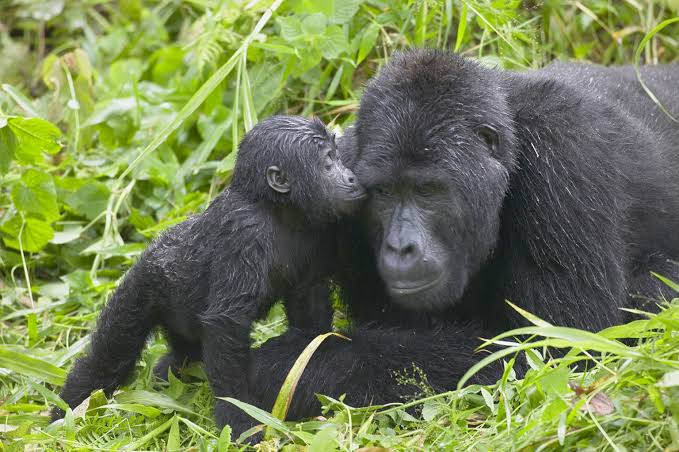
Gorilla trekking

Hello guys Today we are going to discuss about an unique trekking

I am sure you guys have heard Gorilla and trekking these two words respectively .But how did a relationship form between these two and how did this topic of Gorilla trekking came into existence is what we are going to talk about .

Generally trekking means a long journey typically on foot , and gorillas are largest of the great apes and are the largest living primates.
From bwindinationalparkuganda.com
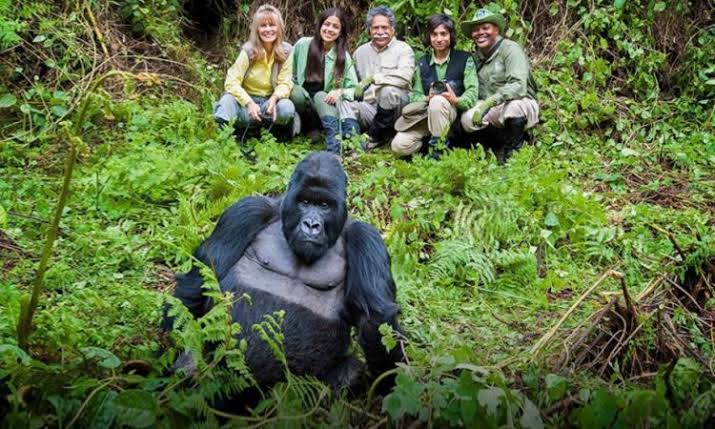
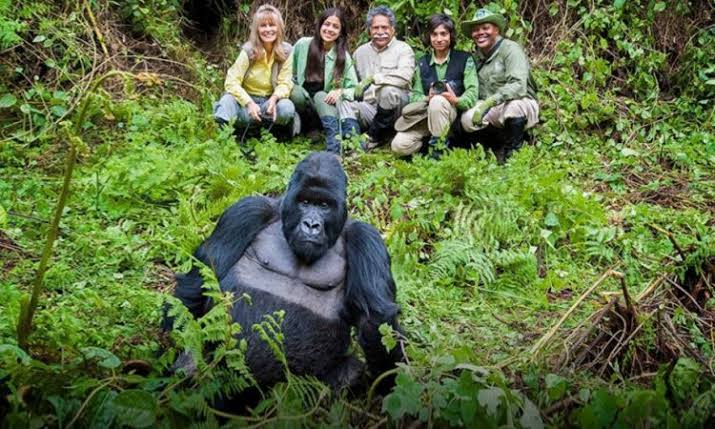
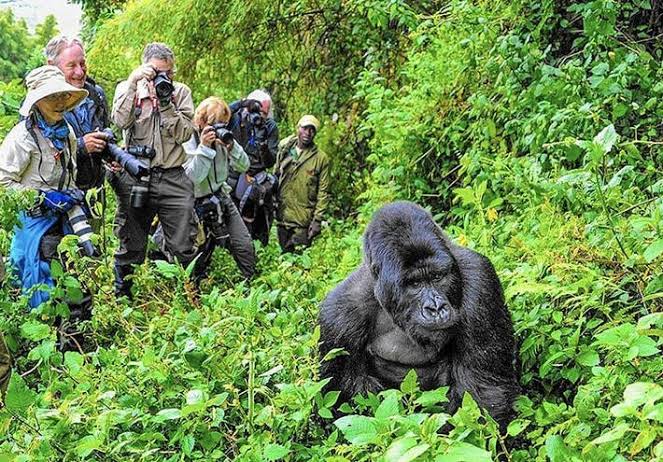
Gorilla trekking refers to people hiking through forests to see mountain Gorillas in their natural habitat unlike how we visit zoos to watch animals here the animals are not caged.

This trekking happens in forests of Africa at Bwindi National park in Uganda and also in Rwanda.

It's a popular choice for travel bucket list of many travellers.But for trekking almost for 8 hours you need stamina,physical fitness and also should be able to balance yourself out there
From : national geographic
The Gorilla trek tour costs ranges from $1,200  to $3,300 from cheapest to expensive respectively.The package includes a Gorilla tacking permit,private transport ,an English speaking guide , accomodation and meals.

You may think is it safe to join this kind of trip? yes ,these gorillas are habituated to the presence of trekkers and considered to be safe,but precautions are needed to be taken so the gorillas don’t get agitated by our behavior .

June July august are considered to be park seasons for Gorilla trekking and there is a tough competition for their permits during these months.

From forbes

There are certain rules you should follow while trekking so that you a can avoid any types of discomfort during this trip.Planning before the trip is a must and to cut down the costs on the trip better to choose reliable packages and plans.

This trekking has been a life changing experience for many travellers and it is very fascinating to see their true nature in their natural habitat.

Thankyou^^

TRAVELLING…

In simple words, Travelling can be defined a transporting or moving from one place to another. Travelling can be an awesome source of education as if enhances the exposure of people to different places, different types of environment, surrounding and people etc. Travelling provides away by which people can share their knowledge and can also be a source of income and an individual can learn many things from travelling.

LEARNING DIFFERNT LANGUAGE: Travelling provides a way to connect with others and visit different places. By commuting to other places and communicating with the native citizens provides an awesome opportunity to learn their language and the interest of the travelers to do so also increases, as they get a chance to interact and enjoy more. Learning a new language helps the travelers to understand them better and make new friends in different areas. Learning a new language gives you an opportunity to learn something new and different and helps you to be creative. Learning the native language can help in a number of ways while traveling. It makes helps in connecting with the local people and helps you to be confident with the help of proper lingual skills and interact with the people smartly.

LEARN HISTORY : Every city or place has its own history and culture which makes it unique from other places and this identity is inherited. A person gets to know about that place and its history by travelling. People get to know about the stories, amazing tales etc. related to that place from the locals which makes the experience more thrilling.

INCREASE YOUR FRIEND CIRCLE: Making new friends is the best part of travelling and make the journey even more enjoyable and interesting. You can make new friends, hang out with them, spend quality time and learn many new things. The current advancement in digital media and communication helps to stay in touch with them. It helps people to understand people of different personalities, nature and behavior. This will help in exploring their places and can also be your guide and can make the tour really effortless and easy.

LEARN NEW SKILLS : Travelling helps in providing new skills by increasing your experience and exposure to different areas and cities. All these new skills and exposure will help you in long run.

ENJOY NATURE : Travelling shows different sides of nature and its beauty. It increases your exposure to beautiful natural spots and places. The world is full of amazing places and excitements. Different places show different sides of nature. There are lot of things that you have not seen yet and travelling helps to explore and find the beauty of nature.

UNDERSTNADING PEOPLE : After living for a few days will help in finding few people who will like you and will be friends. In this way you will be able to learn a lot and understand people of different regions.

There are number of reasons to travel… Travel can be a real fun and can be a source of education and business. On the basis of someone’s financial situations, travelling can be planned.

Types Of Marriages In India

Marriage ceremonies in India are especially spectacular because of the colour, festivity, traditions, and cuisine. People from all over the world travel to see Indian weddings. The vast variety of Indian wedding rites is what makes them so unique. The rituals followed in the northern portion of India differ from those followed in the southern part of India; the east and west have various types of weddings. In India, there are several sorts of weddings, and it is this diversity that we will focus on in this essay.

History Of Marriages In India

If we are going to talk about the many forms of weddings in India, we must first look at the history of marriages in India. India is a country that has traditionally emphasized arranged weddings, a tradition that is now practised in every Indian group, regardless of religion, caste, or status. Previously, two families agreed on the match, and couples were generally married in their youth so that they could adjust better. Mohandas Karamchand Gandhi married Kasturba Gandhi when he was 13 years old, and they were married for 62 years.

The practise of child marriage did not exist in ancient India, but it began later when there were invasions and patriarchy began to rear its ugly head. In reality, in India, rulers organised Swayamvars for their daughters so that they may marry from among the best, ostensibly giving a woman the option. Although author Chitra Banerjee Divakaruni makes it clear in her book The Palace of Illusions that Draupadi was in love with Karna and would have garlanded him if she had the choice, she was forced to tell him that he was not a Kshatriya and could not participate in the Swayamvar because she had to serve her destiny, which was with the Pandavas.

How Many Types Of Marriages Are There In India?

It is difficult to specify the whole range of marriage ceremonies in India. Because there is so much variety within the scope of Hindu marriage. Needless to mention, several sorts of marriage rituals exist in India. Despite the fact that they are all Hindu weddings, a Bengali wedding is not the same as a South Indian or a Maharashtrian wedding. Although the faith is the same and the mantras spoken are identical, the ceremonies, time of wedding, and dress are all extremely different. If we are talking about sorts of weddings in India, we can state that there are nine forms of marriages in our nation.

  1. Hindu Marriage

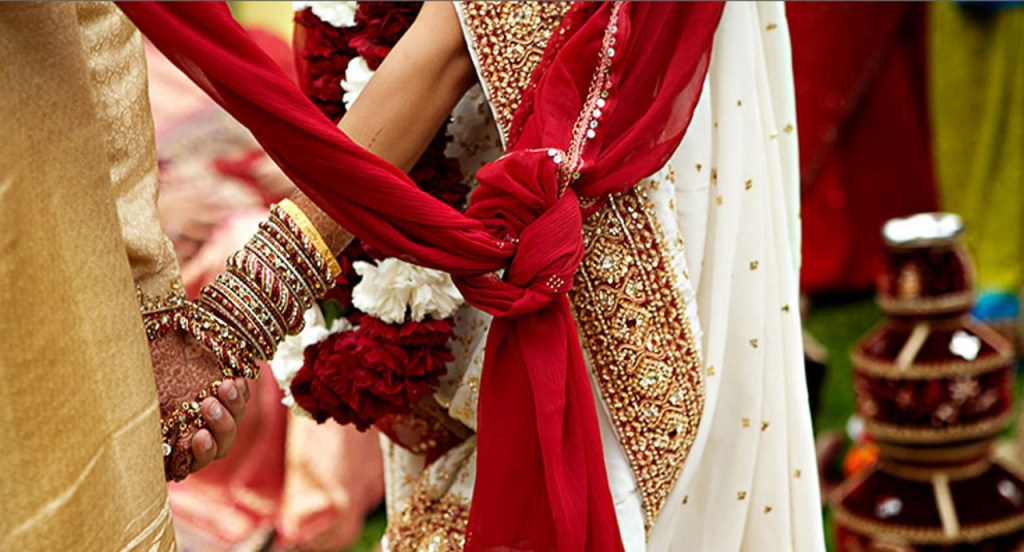
The Hindu marriage ceremony adheres to Vedic customs, including the three primary rituals of Kanyadaan, Panigrahana, and Saptapadi. The first involves the father giving the bride away, the second has the bride and groom linking hands in front of the fire, and the third involves completing seven circuits around the fire. However, not all rites are observed at every Hindu wedding. Different groups in Kerala and Tamil Nadu, for example, do not have a technique of lighting a fire, and their weddings often begin early in the morning and end by midday. Some rites, such as turmeric ceremony, take place in the morning in Bengal, while the major wedding ceremony takes place in the evening, according to the auspicious hour stated in the Almanac.

North India has the most elaborate wedding rites, which begin with the sagai (engagement) and can last for days when garlands are exchanged, a havan is performed, and the woman is forced to wear the Mangal Sutra. The application of vermillion is more important in East India, and the Lakshmi Narayan Puja is very important in Maharashtra.

All Hindu marriages are registered under the Hindu Marriage Act, 1955 or the Special Marriage Act, 1954.

2. Christian Marriage

Christian weddings are performed in a church by a minister or a priest under the Indian Christian Marriage Act of 1872. The beauty of Christian marriage in India is that a bride frequently chooses to wear the clothing of her culture rather than a gown. So, in Christian marriages in India, the bride wears traditional dress such as sarees, mekhlas, and traditional sarongs, while the groom often wears traditional attire with his best men. Among the types of marriages in India it is a Christian marriage that is a happy amalgam of Indian and Western cultures. The tradition of the feast, the toast and the bouquet are all followed sprinkled with indigenous traditions.

3. Sikh Marriage

Sikh weddings were formerly recorded under the Hindu Marriage Act, but are now registered under the Punjab Sikh Anand Karaj Marriage Act 2018. The Sikh wedding ceremony is basic. It is held in the Gurudwara. Before that, a ceremony called milni is held in which the bride’s and groom’s family meet. The bride and groom then take pheras around Guru Granth Sahib after reciting four short stanzas from their religious texts (Holy Scripture). The bride and groom dress up in extravagant traditional costume, and delicious food is served throughout the ceremonies.

4. Muslim Marriage

A Muslim marriage is governed by the Muslim Personal Law (Shariat) Application Act of 1937. In India, Muslim marriages adhere to Islamic customs. The bride and groom may choose to wear traditional Indian clothes, however the religious ceremony is typically carefully adhered to Islamic standards. The Maulavi performs the wedding ceremony known as the Nikah. Kanydan is also present during a Muslim wedding, followed by the reading of the Koran, the groom’s proposal, and the bride’s acceptance. Biriyani is a traditional wedding dish among Indian Muslims.

5. Parsi Marriage

The Parsi Marriage and Divorce Act of 1936 governs the legalisation and registration of Parsi marriages. Some of the traditions included in a Parsi marriage include the exchanging of silver coins between the bride’s and groom’s family. Following this ritual, the woman assumes the husband’s name. Three days before the wedding, the festivities continue, and on the fourth day, a wedding procession arrives to the bride’s residence, where the marriage is solemnised.

Following the wedding, the couple must eat from the same plate to symbolize their unity.

6. Buddhist Marriage

A Buddhist marriage is most likely the simplest kind of marriage in India. The Special Marriage Act of 1954 governs Buddhist marriages. There are no rigidly prescribed rites or elaborate ceremonies to be observed. True to its religious precepts, a Buddhist marriage stresses spirituality and the fulfilment of vows. A monk or Rinpoche generally performs the engagement solo. On the wedding day, the bride and groom, along with their respective families, attend the temple before the wedding ceremony, which is held in a different location.

A Buddhist wedding is a modest gathering to which only a few close friends and family are invited.

7. Jain Marriage

Buddhists and Jain can register their marriages under the Hindu Marriage Act of 1955 or the Special Marriage Act of 1954. These are two sorts of marriage acts that individuals of many religions might employ. Jain marriages have numerous rites that are comparable to Hindu nuptials, such as pheras and kanyavaran, but they also include a variety of Pujas and aarti.

The most significant tradition is that after the wedding, the bride and groom travel to a Jain Temple with their family members and feed the destitute there.

8. Court Marriage

Inter-caste and inter-faith marriages are a common occurrence in India. Many people who wish to skip religious rites choose judicial marriage under the Special Marriage Act of 1954. A 30-day notice is provided to the registrar, along with the bride and groom’s residence and birth information. Then, on the appointed day, they must appear at the registrar’s office with three witnesses to sign the legal paperwork and read the vows.

9. Mixed marriages

Many brides and grooms follow the rites of both faiths to solemnise their weddings in the case of inter-faith marriages. These marriages are governed by the Special Marriage Act of 1954, although it is customary to have a church wedding in the morning followed by a havan in the evening.

In a country with as diverse customs as India, mind-boggling rituals and traditional rites are unavoidable. However, there are primarily nine sorts of weddings that are widely solemnised in modern India, about which we just reported extensively.


SNAKE ISLAND

No humans are allowed on Snake Island and with good reason. There’s about one deadly snake per square foot on it.

SHAKE ISLAND

About 25 miles off the coast of Brazil, there is an island where no local would ever dare to say its name. It is said that the last fisherman who strayed too close to its shores was found days later in his own boat lifeless in a pool of blood.

The mysterious island is known as Ilha da Queimada Grande.

The danger on the island comes in the form of the golden lancehead snakes – a species of pit viper and one of the deadliest serpents in the world.

golden lancehead

The lanceheads can grow to be over a foot-and-a-half long and it’s estimated that there are between 2,000 and 4,000 snakes on the island. Snake Island used to be part of Brazil’s mainland, but when sea levels rose over 10,000 years ago, it separated the landmass and turned it into an island. Since the island vipers had no prey but birds they evolved to have extra-potent venom so that they could almost immediately kill any bird.