Linguistics is the systematic study of language. Its focus is on language, in general , not on any individual language. The word linguistics is derived from Latin lingua meaning tongue and istics meaning knowledge or science. It studies language as a universal and recognizable part of human behavior . It investigates how the language is constructed, how it varies through space , how it is used, and how it is related to other languages. Hence the linguist studies the origin , organization ,nature and development of language descriptively ,historically , comparatively and explicitly and formulates general rules related to language . The linguist is one who studies language objectively , observing it scientifically , recording facts about language objectively , observing it scientifically , recording facts about language and deriving general principles for them. First study the language and second it tries to describe the language apply those theory in language .
The facts about language that interest a linguist are its sounds ,forms of words and the arrangement of words to form meaningful utterances. There are various approaches to the study of linguistics : historical, descriptive and comparative.
HISTORICAL LINGUISTICS :-
It studies the facts about a language for the purpose of describing the development of the language for a period of time. It traces language change and the causes and results of such changes that occurred from time to time.
DESCRIPTIVE LINGUISTICS:-
It deals with the description and analysis of the ways in which a language operates and is used by a given set of speakers at a given time. it is based on a structural approach to language.
COMPARATIVE LINGUISTICS:-
It is concerned with comparing two or more languages .It traces the evolution of language and by comparing one with another , establishes the relationship between them .
Linguistics may be considered as science . Like any other branch of science it has a well – defined subject matter called language. It makes use of methods like observation , recording and analysis of the various phenomena related to the study of language.
Jhumpa Lahiri is an award – winning author and translator. She received the Pulitzer Prize in 2000 for Interpreter of Maladies, which also won the New Yorker Prize for Best First Book, the PEN/Hemingway Award and was shortlisted for the Los Angeles Times Award. She was awarded a National Humanities Medal in 2015. Her other works of fiction in English include The Lowland, which was a finalist for the Man Booker Prize in 2013.
Lahiri has also written three books in Italian, including In altre parole ( translated in English as In Other Words) and the novel Dove mi trovo. Her translation of Domenico Starnone’s Trick was a finalist for the National Book Award. She decides her time between Rome and Princeton University, where she is a professor of Creative Writing and Literary Translation.
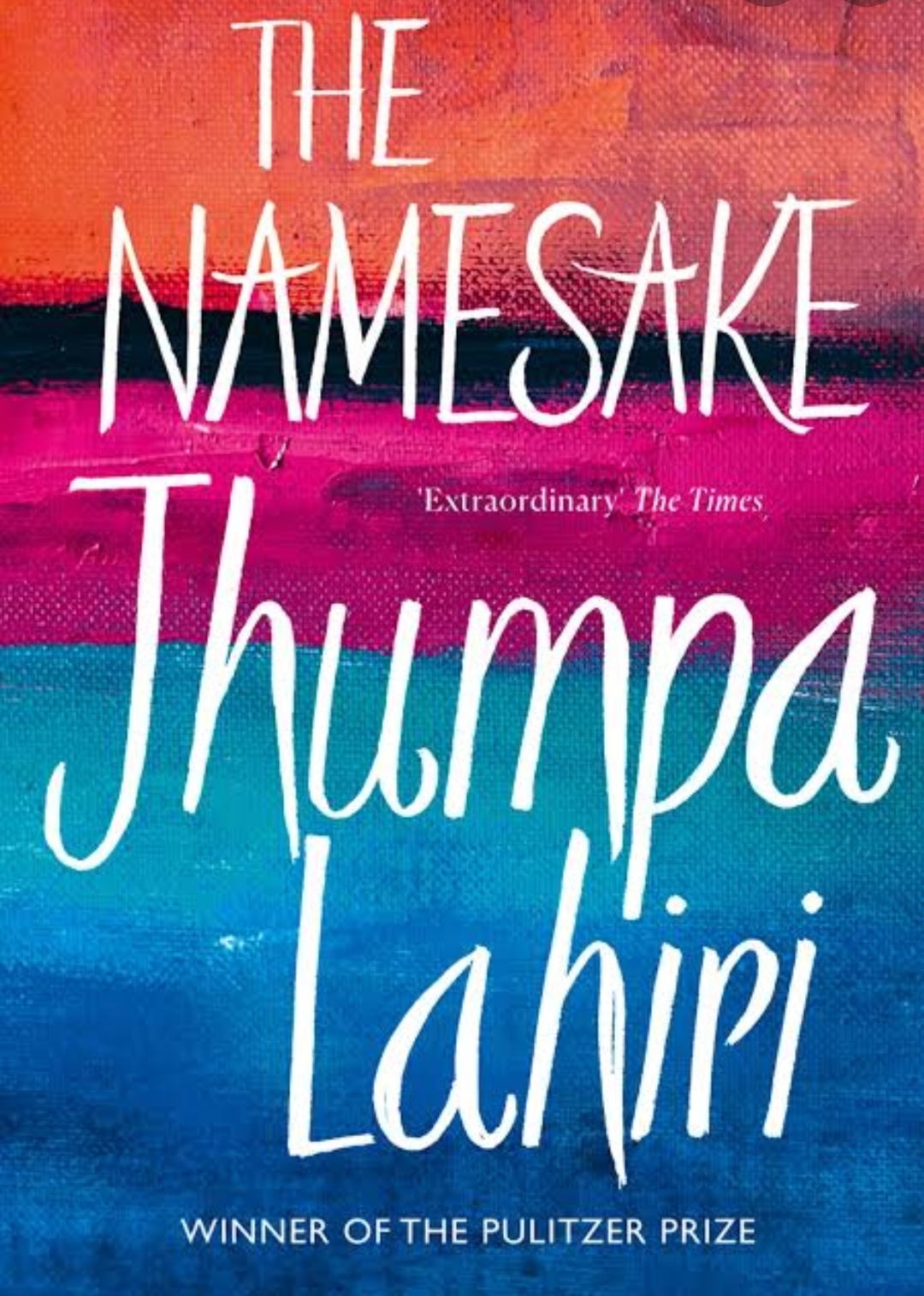
In 2003,Lahiri published her first novel, The Namesake. The theme and plot of this story was influenced in part by a family story she heard growing up. Her father’s cousin was involved in a train wreck and was only saved when the workers saw a beam of light reflected off of a watch he was wearing.
“Good novelists, like Bengali parents, must make their creation unique, and Lahiri’s central characters are painfully believable…. An extremely good first novel, a glowing miniature of a tiny family making the voyage between two worlds.”
” Lahiri’s prose reveals her as a mistress of the small moment with a debt to the Russian classics.”
Analysis of the book
The Namesake is the debut novel by American author Jhumpa Lahiri. It was originally published in The New Yorker and was later expanded to a full-length novel. It explores many of the same emotional and cultural themes as Lahiri’s Pulitzer- winning short story collection Interpreter of Maladies.
The novel between events in Calcutta,Boston, and New York city, and examines the Nina CES in loved with being caught between two conflicting cultures with distinct religious social and ideological differences.
Gogol was named in haste after his father’s favourite author. Growing up in an Indian family in suburban America, he finds himself yearning to cast off his awkward name,and with it the inherited values it represents.
Determined to live a life far removed from that of his parents, Gogol sets off on his own path, only to discover that the search for identity depends on much more than a name.
Summary of the story
The story begins with Ashoke and Ashima Ganguli, a young Bengali couple, who leave Calcutta, India and settles in Central Square in Cambridge, Massachusetts. When they gave birth to their first child, they weren’t allowed to leave the hospital without providing a legal name in the medical papers and documents of their child.
But as per their family tradition,the naming of a child was done by the elderly and in their case, they were waiting for a letter from their grandmother who was going to give name to their son. But the letter never arrived and the grandmother died. So as per their tradition, a child must have a pet name which will be called by friends or families. And the other name was the good name which will be used officially.
Thus Ashoke pet named their son Gogol by getting inspired from his favourite Russian author, Nikolai Gogol. But they decided to use Nikhil as his official name. But when Gogol was little, he loved his pet name so the teachers of his school named him Gogol in all the official documents.
But as Gogol was growing, he started hating the name Gogol and was eager to change his name officially. On going college,he changed his name to Nikhil. He hated Bengali culture and loved American life and dated American girls. He met Maxine at a party and they both started a relationship. He was accepted by Maxine’s family but she was not that much accepted in Gogol’s family.
When Ashoke died of heart attack in Ohio, Gogol was totally heartbroken and he broke up with Maxine and started more time with his mother and sister. After that he was married to Moushumi,the daughter of his mother’s friend. But within a year Moushumi was no more interested in their marriage and they got a divorce.
Conclusion
At the end, Ashima decided to go to Calcutta as she feels nothing here anymore without Ashoke, and Sonia(Gogol’s sister) decided to marry her boyfriend Ben. Gogol was all alone and at the end he started reading the Russian novels which his father gave him as birthday gift.
“You are still young, free.. Do yourself a favor. Before it’s too late, without thinking too much about it first, pack a pillow and a blanket and see as much of the world as you can. You will not regret it. One day it will be too late.”
“Pet names are a persistant remnant of childhood, a reminder that life is not always so serious, so formal, so complicated. They are a reminder, too, that one is not all things to all people.”
Old school love: Sending letters: Via courier? Via pigeon? Via travelers? Waiting for calls? Sending cute but short text messages? (With ‘don’t reply, mom, will read it) Seeing each other for the first time? (With those shy eyes) This is what we are searching for.
People nowadays think relationships don’t last. And here I am talking about a long-lasting long distant relationship. GOD! But yes, it does work. Only if you want it to work.
You know long distance relationship still has a touch of old-school love somewhere. You know; where you wait all day long to talk to them; where you wait for months/years to see each other’s faces; where you still look at the moon at the same time to feel each other’s presence(cliche, but true); where you’re always there virtually to be a part of each other’s success and failure; where you find ways to do things together. (watching series/movies, having online dates, playing online games, having late night antakshri sessions) All of these sounds so perfect, doesn’t it? But as I say, not every day is rainbows and flowers. There are clashes in every relationship. A long-distance relationship has some pieces of stuff to spice the clashes.
For example DISTANCE. You live far away from your partner, there is a problem in matching your timings. You cannot frequently see each other, which isn’t a problem unless you need a hug/cuddle after a long tiring day.
COMMUNICATION GAP. You can only talk over phone calls, and solving fights over phone calls is something one shouldn’t try. Just kidding, conveying your point of view over a call, is tough. You will never know how the other one is perceiving it. Then misunderstanding takes place. There are times when you barely have a good conversation for over a month.
DISTRACTIONS. Maybe he/she won’t be able to be there for you and someone else is doing their part. Don’t just let that affect your relationship. All you need to remember is where your heart belongs. Where do you belong? Not everyone stays.
“आखों मे बसी हो पर दूर हो कही, दिल के करीब हो ये मुझको है यकिन”
There are times when you just feel that this is not going to work. Everyone feels that. But don’t give up easily. Now by this, I don’t mean that continue being in a toxic relationship. Just don’t give up on something, you know will last long.
Long-distance relationships do last, you just need the right partner to go along with. You just need to remember the love you have for them. And also I believe LOVE lasts. Long-distance or short. It lasts forever.
I am going to tell you guys about my sweet memory regarding this topic,before we jump right into the topic.
I remember going to an exhibition with my mother.The exhibition used to take place monthly twice.
While we are shopping through the baazar I saw a person making something with some metals and tools and it piqued my curiosity so I asked my mother what was it .
My mother said it is filigree, the art of making jewellery.I was so impressed by their work and asked them if I can watch them more closely.They gave permission and were happy cause I was showing interest in their craft.
They delicately and precisely made jewellery with their hands ,they twisted ,and turned the metals but the result was beautiful in whatever way they turn.
Filigree is also called as filigrann or filgrene.This form of metal work can be traced back to 17th to 19th century of itialian and French and Portugal Metal works.
The word can be broken into two word filum and granum ,which means a thread and grain or bead respectively.
Filigree is mainly done on two metals those are gold and silver.The customers love the works crafted through this art which are often described to be classy,unique.
This work needs a lot of concentration and finesse while making these metal works intricately. This works still remains popular in India and some other parts of Asia .
Jewellery ,watches,spoons,beads and what not everything that is made through this metal work is just wonderful.
Filigree is a metal art because every piece created by this technique is a chef’s kiss or to say a craftsman kiss.
I love this craft cause every piece has its own delicate nature that it depicts and also the finite accuracy in each twist and turn of the metal reminds me the hardwork,the time they sacrifice for our satisfaction.
Something which can never be defined in words ,filled with so many emotions.It is as simple as it can be and as complex as it could be .life is god’s most amazing and artistic creation . So ,love it ‘as it is’ cause you are the luckiest one who can atleast feel those emotions . Enjoy your life and remember bloom where you are planted.
Gautama Buddha, popularly referred to as Buddha (also referred to as Siddhattha Gotama or Siddhārtha Gautama or Buddha Shakyamuni), was a Śramaṇa who lived in ancient India (c. 5th to 4th century BCE). He’s considered the founding father of the planet religion of Buddhism and revered by most Buddhist schools as a savior, the Enlightened One who rediscovered an ancient path to release clinging and craving and escape the cycle of birth and rebirth. He taught for around 45 years and built an outsized following, both monastic and lay. His teaching is predicated on his insight into the arising of duḥkha (the unsatisfactoriness of clinging to impermanent states and things) and therefore the ending of duhkha—the state called Nibbāna or Nirvana (extinguishing of the three fires).
The Buddha was born into an aristocratic family within the Shakya clan but eventually renounced lay life. consistent with Buddhist tradition, after several years of mendicancy, meditation, and asceticism, he awakened to know the mechanism which keeps people trapped within the cycle of rebirth. Buddha then traveled throughout the Ganges plain teaching and building a spiritual community. Buddha taught a middle way between sensual indulgence and therefore the severe asceticism found within the Indian śramaṇa movement. He taught training of the mind that included ethical training, self-restraint, and meditative practices like jhana and mindfulness. Buddha also critiqued the practices of Brahmin priests, like animal sacrifice and therefore the class structure.
A couple of centuries after his death he came to be known by the title Buddha, which suggests “Awakened One” or “Enlightened One”. Gautama’s teachings were compiled by the Buddhist community within the Vinaya, his codes for monastic practice, and therefore the Suttas, texts supported his discourses. These were passed down in Middle-Indo Aryan dialects through an oral tradition. Later generations composed additional texts, like systematic treatises referred to as Abhidharma, biographies of Buddha, collections of stories about the Buddha’s past lives referred to as Jataka tales, and extra discourses, i.e. the Mahayana sutras.
FORMATION OF THE BHIKKHUNI ORDER
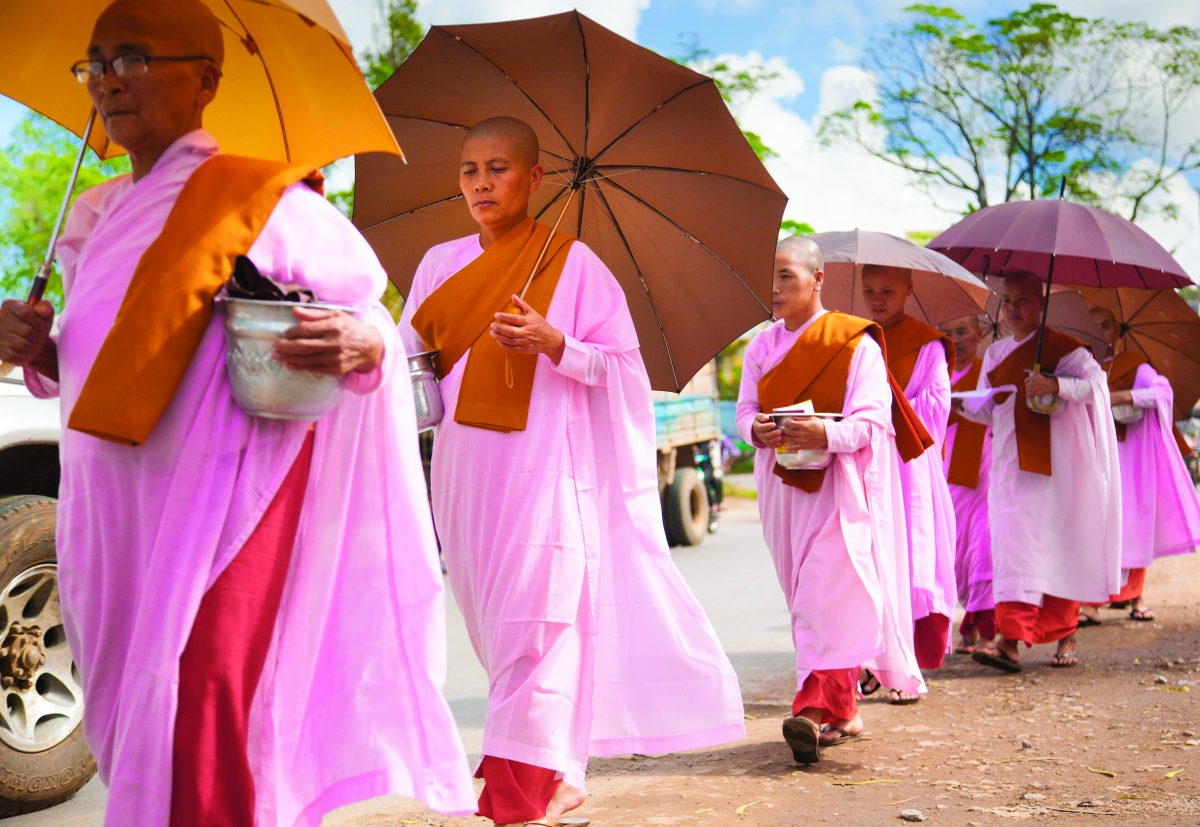
The formation of a parallel order of female monastics (bhikkhunī) was another important part of the expansion of the Buddha’s community. As noted by Anālayo’s comparative study of this subject, there are various versions of this event depicted within the different early Buddhist texts.
According to all the main versions surveyed by Anālayo, Mahāprajāpatī Gautamī, Buddha’s step-mother, is initially turned down by Buddha after requesting ordination for her and a few other women. Mahāprajāpatī and her followers then shave their hair, don robes, and start following Buddha on his travels. Buddha is eventually convinced by Ānanda to grant ordination to Mahāprajāpatī on her acceptance of eight conditions called gurudharmas which specialize in the connection between the new order of nuns and therefore the monks.
According to Anālayo, the sole argument common to all or any of the versions that Ananda uses to convince Buddha is that ladies have an equivalent ability to succeed in all stages of awakening. Anālayo also notes that some modern scholars have questioned the authenticity of the eight gurudharmas in their present form because of various inconsistencies. He holds that the historicity of the present lists of eight is doubtful, but that they’ll are supported earlier injunctions by Buddha. Anālayo also notes that various passages indicate that the rationale for the Buddha’s hesitation to ordain women was the danger that the lifetime of a wandering sramana posed for ladies that weren’t under the protection of their male relations (such as dangers of sexual abuse and abduction). because of this, the gurudharma injunctions may are how to put “the newly founded order of nuns during a relationship to its male counterparts that resembles the maximum amount as possible the protection a laywoman could expect from her male relatives.”
As of now 2021, Computers become very important for our daily life. Computers are in each of every sector like banking, gaming, health care sectors. 20 years back, computers were just used in some purposes only. But now computers become very important for each of every sector. In this blog we are going to discuss the following topics. What is a computer? Why computers are important? Evolution of Computers, and at last Is Computer Science the future of the world?
A Computer is machine that can be programmed to carry out sequences of arithmetic or logical operations automatically. Computer consist of two things, one is Hardware and the other is Software. The all physical components of computer like keyboard, CPU, mouse, monitors etc. Comes under the Hardware. The programs, files and programming languages comes under the Software.
EVOLUTION OF COMPUTERS
In 1882, the first computer was invented by Charles Babbage.
In 1880, Herman Hollirith developed in computer which can record and store information in it.
In 1936, the first programmable computer was developed by Konrad Zuse.
In 1947, Bell Telephone Company invented transistors which were the key component of the computer.
In 1953, IBM(International Business Management) came out with there first computer.
In 1962, the first computer video game was invented.
In 1963, Douglas Engelbart invented the computer mouse.
In 1974, IBM and Apple were the companies to sold personal computer(pc) to the people.
In 1991, the first laptop computer came out.
WHY COMPUTERS ARE SO IMPORTANT?
Communication
Due to the use of computers, the communication become much more easier with the help of internet. Now you contact any person in the corner of the world. We can send messages to every person in the world within seconds, all this happen because of computers.
Business
With the help of computers, Huge transactions can be made within seconds. Computers are used to store details about there product in business. Computers are used to keep of record of profit and loses of the company.
Education
Due to the covid-19 pandemic, all schools shifted there education in online mode. Teachers use computers to teach children online. Due to computer, a student can learn anything which he wants from his home itself.
Hospital
Computers are used in hospitals to keep the track record of the patients admitted to the hospital. They are used to detect diseases. They help doctors to perform an operation.
And there are many more reasons why computers become so important in this world.
IS COMPUTERSCIENCE THE FUTURE OF THE WORLD?
Now we came to the most interesting topic in this blog. Nowadays, people are showing more interest towards computer science. Computer science is the most famous branch of education. New emerged careers such Artificial intelligence, Data science and full stack Developer are highest paying jobs in the world, all these are the parts of computer science. Due to the covid-19 pandemic the opportunities of other careers are some what decreased. But the opportunities in Computer science was tend to grow double. There are many career options in computer science. Experts suggest that the growth rate of computer science is 16 percent through 2028. With this we can say that Computer science is the future of the world.
I hope you like this blog, If you like this blog kindly like and rate it. It gives me motivation.
A region present in Northern Greenland was named the Arctic’s last ice area. This was named as such because scientists believed that this area was the strongest and most resistant to global warming. Global warming has caused some major effects around the globe melting of ice caps, ever-rising sea levels, erratic weather conditions all of these occur due to global warming. Due to various human activities, harmful gases and pollutants are released into the atmosphere which results in increasing the temperature and also causing a breach in the ozone layer.
Let’s take a close look into what the last ice area means; the National Geographic in the year 2015 estimated the climatic changes and their effects on our environment and predicted that by the end of 2040, the final place to able to withstand global warming would be this area. It’s devasting to imagine that in another two decades there will only be a small island on which global warming would not have its effect. Furthermore, the World Wildlife Fund also stated that the current climatic conditions are majorly responsible for the shrinking Arctic and are not a good sign for the future. They also made it clear that not only the animals residing in the Arctic are exposed to danger, but also the local Inuit societies that survive on these lands.
This area was regarded important as it would help sustain several species that require the habitat as and when the surrounding areas would have melted. This area is now prominent with several polar bears who use this region as their hunting grounds. But now this area has begun to melt, raising concerns all around the globe. Researchers have stated in a Journal published in “Communications Earth & Environment” in August 2020 this region recorded an ever-low concentration of sea ice; suggesting that the Last Ice area has begun to deteriorate.
The main question that arises is that when did the melting start. Well According to research led by the University of Washington, the initial signs of melting were observed in the year 2018. They also claimed that about 80% of melting had occurred due to weather-related scenarios like winds and the other 20% was due to global warming. This has resulted in the gradual melting of ice caps throughout the Arctic region, causing panic among the locals.
With the additional help of satellite imagery researchers have identified that sea ice levels were less than 50%. Although satellite imagery cannot be considered to be accurate, it does give us an idea about how worse the situation is. The lead author of the study under the University of Washington also stated the alternate reason for the melting was maybe due to the open ocean causing a cycle of absorbing heat energy from the ice, forcing it to melt.
Although the results and studies are unsatisfactory in giving any accurate reason behind this, it tells us that the effects due to global warming have begun sooner than we had expected and we must get together and must prevent further harm to our environment.
When American billioniore Jeff Bezos blast off into space later this month. He’ll bring 82 year old Wally Funk with him.
Funk is one of the 13 women who completed a NASA astronaut training program in 1960s, and will be oldest person ever to travel into to space. Funk was 21 year old when she passed the training. In 1960 she was a part of program to determine whether women were fit for space or not.
They told me I’ve done better and completed the work faster than any of the guys, Ms Funk said in a video posted on Mr. Bezos account. But women were denied the chance to become astronaut because of their gender.
In a video posted to social media on Thursday, Bezos space firm blue origin announced that Funk would be among the passengers. Also she will join Jeff Bezos’s brother Mark and the other traveler who paid 28 million, winner of an auction on 20 July. Bezos is currently the richest man on the planet. He is been flying with fellow billionaires Elon Musk and Richard Branson to become the first, to travel into space on a privately developed rocket.
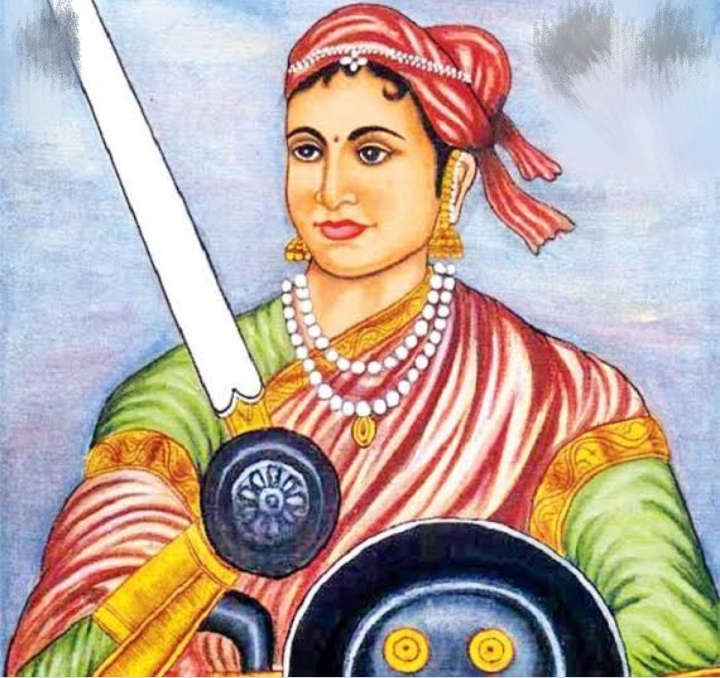
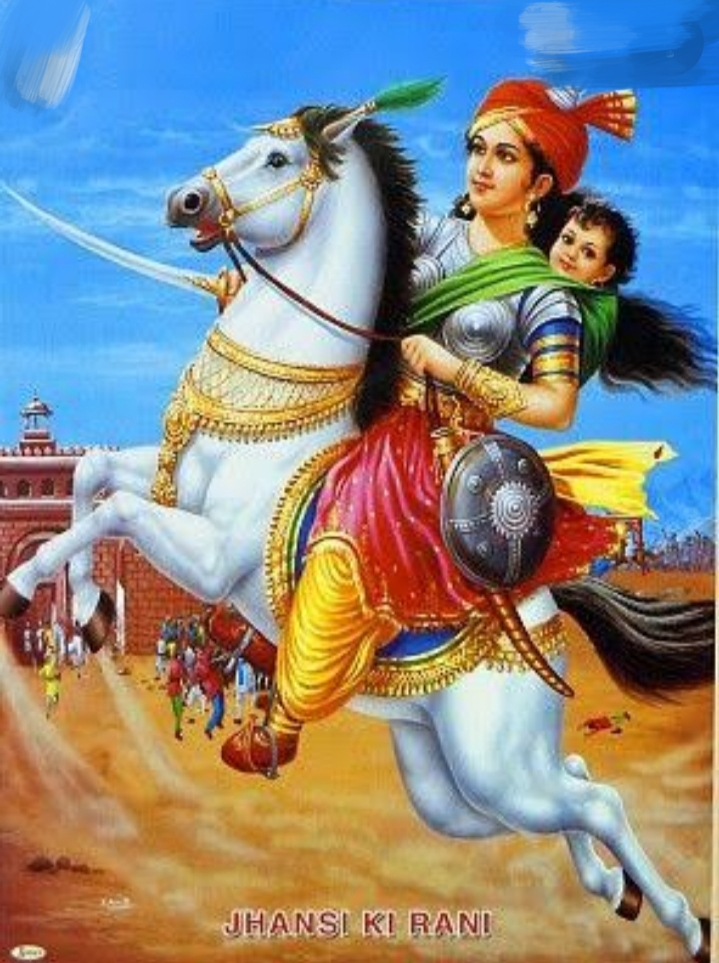
Rani Lakshmibai is an unforgettable warrior in the Indian History. Lakshmi Bai was born around 1827 in present-day Varanasi in northeast India. Named Manikarnika, she was the daughter of a Brahman who worked as an adviser to the court of the peshwa, or prime minister, of the Maratha Empire, Baji Rao II. Though not aristocratic, Brahmans belonged to a higher caste of priests and scholars. When Manikarnika was four, her mother died, and she moved to court with her father. The peshwa raised her like his own; she received an education unlike most girls and trained with the boys in martial arts, fencing, and riding.
Rani & the Annexation of Jhansi
In May 1842, Manikarnika was married to Maharaja Gangadhar Rao Newalkar, the Maharaja of Jhansi. Sometime later she was named Lakshmibai after the revered Hindu goddess Lakshmi. In 1851, she gave birth to a son Damodar Rao, who died in infancy after four months. Sans any heir, the Maharaja adopted the son of his cousin. The boy, originally called Anand Rao, was given the name Damodar Rao on the day before the Maharaja died. The Maharaja conducted the adoption procedure with a British political officer in attendance and gave a letter to the latter with instructions to treat the child with respect. In his letter, the Maharaja also mentioned that following his death, his widow Lakshmibai should be given the government of Jhansi for her lifetime.
The Maharaja died in November 1853, and thereafter the British East India Company, under Governor-General Lord Dalhousie refused to recognise the adopted son of the Maharaja as his heir and annexed the state of Jhansi applying the policy of ‘Doctrine of Lapse.’ The turn of events infuriated Lakshmibai who was generally known to the British as “the Rani of Jhansi”. She resolved not to surrender Jhansi to the British. The British ordered Lakshmibai to leave the Jhansi palace and fort and commissioned to her a yearly pension of Rs. 60,000 in March 1854, which the young queen refused, declaring, “I will not give up my Jhansi.”
The Revolt of 1857 & Rani Lakshmibai
Regarded as the first major resistance against the British rule, the Indian Rebellion of 1857 for the first time posed some kind of a threat to the British rule in India. It began in the form of a sepoy mutiny against the British East India Company in the garrison town of Meerut on May 10, 1857.
As she took control of her kingdom and organized her forces to fight the colonialists, a revolt by Indian soldiers, or sepoys, in the company’s army, which began to the north in Meerut, caught fire. Rather than a single cause, the revolt had been stoked by an accumulation of grievances over what was seen as a British attempt to undermine traditional Indian society and religion.
Till such time, Lakshmibai had not revolted against the British and had actually sought permission from the British political officer Captain Alexander Skene to build a group of armed men for her security, which she was allowed.
The rebels of the 12th Bengal Native Infantry captured the fort of Gwalior in June 1857, and massacred several European officers and their families. The involvement of Lakshmibai in such incident remains obscure and debatable till present. The sepoys left Jhansi acquiring hefty money from Lakshmibai and threatened to destroy the palace she resided in. Post the massacre, Lakshmibai took charge of administration of the city and wrote about the incident to the commissioner of the Saugor division, Major Erskine. The latter replied on July 2 that year requesting her to manage the District on behalf of the British Government till the time a British Superintendent arrived. Meanwhile, Lakshmibai had to defend Jhansi against a group of mutineers as well as from Company allies, Datia and Orchha.
Her appeal to the British for help later fell on deaf ears, the governor-general considered her responsible for the massacre. This, however, did not deter the courageous Lakshmibai to protect Jhansi at any cost. She got a foundry built to cast cannon to be used on the fort walls. She also mustered forces which included former Jhansi feudatories and also some mutineers and managed to defeat the invaders in August 1857. Lakshmibai then ruled Jhansi peacefully till January 1858.
The British had announced to send troops to Jhansi, but the troops did not arrive for long. Meanwhile, a section of Lakshmibai’s advisers, who wanted to free Jhansi from the British rule, bolstered their position and when the British troops finally reached Jhansi in March 1858, they were taken aback by the kind of defence set up by the city. The fort was equipped with heavy guns that could fire across the town. Sir Hugh Rose, who was in command of the Central Indian Field Force, declared that if the city does not surrender it will be destroyed. At this juncture Lakshmibai proclaimed that they would fight for independence till their last breath. She fought the British troops in defending Jhansi when it was besieged by Rose on March 23, 1858. She put up a tough resistance to the British forces and also sought and received help from Tantia Tope.
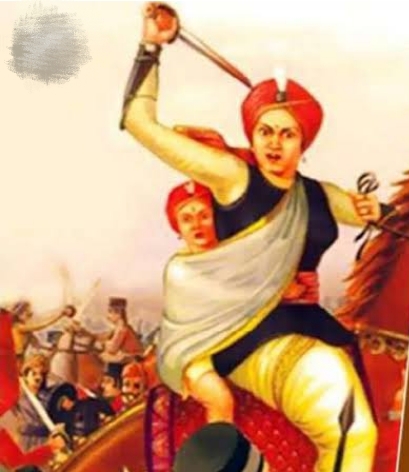
Although her troops were overpowered by the British, Lakshmibai did not surrender. The valiant Rani jumped from the fort on her horse, Badal, with Damodar Rao on her back and managed to escape in the night escorted with her guards. The other warriors who escaped with her included Dee Lala Bhau Bakshi, Moti Bai, Deewan Raghunath Singh and Khuda Bakhsh Basharat Ali (commandant) among others.
Escaping the fort, she headed east and decamped to Kalpi where other rebels including Tantia Tope joined her. They managed to occupy Kalpi, but the British troops attacked the town on May 22, 1858. Lakshmibai led the Indian troops against the British but could not make headway. Lakshmibai along with Nawab of Banda, Rao Sahib, and Tantia Tope then fled to Gwalior and joined the other Indian forces. They were successful in occupying Gwalior sans any combat and led a successful assault on the city-fortress of Gwalior seizing its treasury and the arsenal. Thereafter, Nana Sahib was proclaimed as the Peshwa (ruler) and Rao Sahib as his governor (subedar). Lakshmibai, however, expected an attack by the British in Gwalior but failed to convince the other Indian leaders to prepare for a defence. Lakshmibai’s anticipation proved right when the British forces under Rose made a successful attack on Gwalior after capturing Morar on June 16 that year.
Death
Lakshmibai led a fierce battle against a squadron of the 8th (King’s Royal Irish) Hussars under the command of Captain Heneage in Kotah-ki-Serai, close to the Phool Bagh of Gwalior on June 17, 1858. According to some sources, Lakshmibai wearing a sawar’s uniform died when a soldier “dispatched the young lady with his carbine”, while other sources mention that the Rani wearing an attire of a cavalry leader fought fiercely and when she got severely wounded, she asked a hermit to burn her body so that the British could not capture it. Following her death, her body was cremated by a few local people. According to Rose, the remains of Lakshmibai were interred under a tamarind tree under the Rock of Gwalior “with great ceremony”.
Immortal Rani Lakshmibai
In the course of time, many patriotic songs and poems have been written narrating her bravery, including the Hindi poem ‘Jhansi ki Rani’ by Subhadra Kumari Chauhan, which finds place in curriculum of many Indian schools.
While Lakshmibai is depicted as an iconic figure of the Indian independence movement in Indian novels, poetry, and films, the Victorian novels mostly represent her in negative shade as an unscrupulous, scandalous and bloodthirsty woman.
Several films and television series have been made on her life. These are ‘The Tiger and the Flame’ (1953) and ‘Manikarnika: The Queen of Jhansi’ (2018); television series ‘Jhansi Ki Rani’ (2009).
Many books and stories have also been penned narrating the bravery of Lakshmibai. Some of them are ‘The Queen of Jhansi’ (1956) by Mahasweta Devi, and ‘Rani’ (2007) by Jaishree Mishra.
England secure their place in the last four of Euro 2020 with a 4-0 hammering of Ukraine at the Stadio Olimpico. Harry Kane fired the Three Lions ahead in the fourth minute. Harry Maguire then doubled their advantage almost immediately after the restart before Kane added a third with a close-range header. Jordan Henderson put the game beyond doubt with his first England goal, allowing Gareth Southgate and his team to canter into the semi-finals for the second major tournament in a row.
Kane’s brace helps England rout Ukraine 4-0 and enter semis
England take on Denmark in their semi-final clash at Wembley on Wednesday. Ukraine are next in action in their World Cup qualifying campaign against Kazakhstan in September.
Online mode of learning was always there in the market but it has been acquired by almost every institution, college, and school during the pandemic. Login…join a lecture…logout, presently this is what a student’s life sounds like.
So, is the online learning mode efficient enough?
Well, be it online or offline it always depends upon the pupil. As everyone has a different pace of learning and acquiring things. The online mode may be suitable for someone or maybe not. But in this pandemic, the only option left to us is to learn online.
So, it brings us to the next question.
What are the pros and cons of online learning?
There are many pros as there are cons. So, let’s go through them very quickly.
Pro: Flexibility increased
One of the biggest advantages of online learning is the increase in flexibility. You can study at your own pace, you can choose where you want to study, and how you want to study. But this doesn’t mean that the workload is decreased, it will be the same.
Con: No labs/experiments
Courses like engineering, applied sciences, MBBS need to be understood by experiments and lab practices, which is a major missing when it comes to the online mode of learning.
Pro: More Affordable
Transportation, books, eating at the cafeteria can cost thousands of bugs per semester. Which can be saved while learning online. You just need to pay the annual fee.
Con: Lack of social interaction
One of the biggest disadvantages of learning online is the lack of social interaction. Especially applicable for young undergraduates who should be interacting with people and making friends.
Pro: Ease of access
In the online mode of learning, all you need is a computer/smartphone with internet access. All the study materials, assignments, and lectures are available either via email or a particular platform like Microsoft Teams, Google Meets, etc.
At the rate by which technology is developing, online learning may become the only option. Well, this you never know. Until the pandemic is over, one should practice discipline in regards to the timetable to learn in a better way.
There is no perfect person in the world, but the most holy and supreme person has his shortcomings, but I believe that everyone is born innocent, because of course you can’t make mistakes in your childhood. But I think people are not really good or bad or both.
Not all people are good people. No matter how hard you try, everyone has their own shortcomings. I also feel bad about people.
The mistakes they make will anger God; therefore human beings are both. People are bad because someone has to do some naughty or bad things in their lives. No one can be so good, because I believe that if you think you are a good person, you should not do anything at all. Lock yourself in the room. people are bad mainly because of temptation. We have all done some non-model things, sometimes without even realizing it.At some point we are all bad people, but most people are not bad, just like everyone goes to jail, so we keep our balance. So we have good and bad. We have holy days and bad days.
We are not perfect people. When we start to think for ourselves and know what is happening, we will do this to ourselves. Our environment, except when we were young, they told us what to do, and now we can control our lives. Our daily decisions make us who we are today.
Sometimes we can be good, sometimes we can be bad. He mentioned in his sermon that God loves everyone, no matter what. Whether you are good or bad, as long as you are willing to give, God will always find in his heart to forgive your sins.
Heading up hills naturally increases the intensity of your walk even if you’re moving at the same pace or slower. “A walking incline can be even harder than running,” Barrett says. Declines also serve their purpose, activating your core and strengthening your mind-muscle connection as you focus on each step.
Those lucky enough to live near undulating trails or roads can simply plan their route accordingly. If you’re largely on flat land, find any suitable slope—even a sledding hill or a parking-lot ramp—and do four to five hill repeats, walking up purposefully and down intentionally.
2. Do an out-and-back where you can do some stair climbs at the halfway point.
One simple way to add extra intensity into your workout is to incorporate some stairs into your routine. A common way to do this is to map your route to include regular walking as a warm-up, then hitting a flight of stairs for some higher-intensity work, and then walking back home as a cooldown.
For instance, Lewis lives in Philadelphia—home to the art museum with the steps featured famously in the movie Rocky. Someone who lives a mile or so away could plot a route to their base, then climb up and down a couple of times before briskly walking home again, she suggests. (You can also try this stair workout for some inspiration.)
3. Mix in some bodyweight moves.
Even if there aren’t stairs in your vicinity, you can still break up a walk with a burst of calisthenics. If you have access to a track or a park with a looped path, try walking the curves and doing dynamic or bodyweight moves on the straightaways, Curry says—for instance, walking lunges, walking planks, or single-leg hopping. No track? Try it by time—for instance, two minutes of walking, then one minute of strength moves.
If you’re near an open playground and don’t mind toting along hand sanitizer, you can do pull-ups or monkey bars. Prefer not to touch? Try toe taps on a curb, step-ups on park benches, or a split squat with one foot elevated on a ledge.
4. Walk to music with a quicker tempo
There’s a reason group fitness classes blast power pop—music not only boosts your mood, research shows it can actually make hard efforts feel easier. What’s more, it can also work as a kind of metronome guiding your pace.
Spotify has playlists for songs of various beats per minute that Lewis loves for keeping the tempo up. Choose one that’s comfortably challenging—say, 130 to 140 BPM—and will last for the duration of time that you want to walk, and aim to keep up with it. (You can also try our SELF playlist of the best workout songs for some motivation, too.)
Or use music as a cue for more intense segments. Walk easy for verses and fast during the chorus, suggests Erin Schirack, a Chicago-based personal trainer and cofounder of MV Fitness. Theodore recommends this bodyweight circuit at the start of every other tune: 10 squats, 10 split squats on each leg, 10 lateral lunges per leg, and 10 push-ups, either on the ground or with your hands on a bench to make it easier.
5. Or even twirl, prance, or twerk.
Professional dancer Bobby O’Brien is the other mind behind MV Fitness in Chicago, which offers dance workouts inspired by music video choreography. Sprinkling a few moves into your walk elevates your heart rate and gives you an opportunity to move in different directions—critical for those of us hunched at desks and over our devices all day, he says. Some of his favorite moves are air punches, grapevines, lateral shuffles, and strutting on the balls of your feet, which works your calves and quads.
Don’t let self-consciousness or a lack of dance training hold you back. After this whole COVID thing and the movement that’s been happening with our country—we’ve all gone through this together. “Let go of everything that’s in your head and don’t worry about what people think.”
6. Use technology to your advantage (or leave it behind).
This is another time when it’s important to consider the purpose of your walk. If it’s a mind-clearing, meditative stroll, it might be best to leave your GPS watch at home and your phone in do-not-disturb mode, Lewis says. But if you’re aiming for fitness benefits, you can use digital tools as motivators.
If you have a watch or fitness tracker with a step count, try to take a few more steps during each 30- or 60-minute walk. Or you can race others using the app Strava, whether it’s against friends or strangers.
If you go this route, just be careful not to let your competitive nature get the best of you. Stress and anxiety can affect what’s known as your rate of perceived exertion, or how hard it feels like you’re working to power through each step.
“You need to listen to your body,” she says, even if the message is to slow down or back off. “If you’re used to hitting a certain number or certain metric, don’t be disappointed by what your Garmin says. You should be more excited and proud that you did something as opposed to nothing.”
7. Close it out with a stretch session.
Taking a few minutes to further loosen warm, limber muscles after a walk can ease some of the strain and fatigue you’ve built up and also give your session a sense of closure.
Your body may guide you to what’s tight and achy. If your form is correct, your shins, calves, and hamstrings may feel sore, Mosier points out. Loosen your calves by standing with the ball of your left foot on a curb or step and your right foot flat on the ground. Lean but don’t bounce until you feel a stretch in your left calf, and hold for 30 to 60 seconds before repeating on the opposite side.
For your hamstrings, step your left foot forward, straighten your left knee, bend the right slightly, then hinge forward at your hips with your back flat. Stretch your arms overhead, reach forward, then slowly stand back up. Repeat five times on each side.
That small act of self-care can go a long way in cementing your walk as an important accomplishment, another way you’re navigating the challenges everyone’s facing right now. It’s this buffer between the workout and the rest of the world, a finishing touch. “It just makes the rest of the day better. And then the next day, you’re prepared to go for a walk again.”
Women in ancient India were highly respected. With the course of time, the status of women got lowered. The practice of female foeticide also started on a large scale. This eventually led to a slump in female sex ratio.
Problems faced
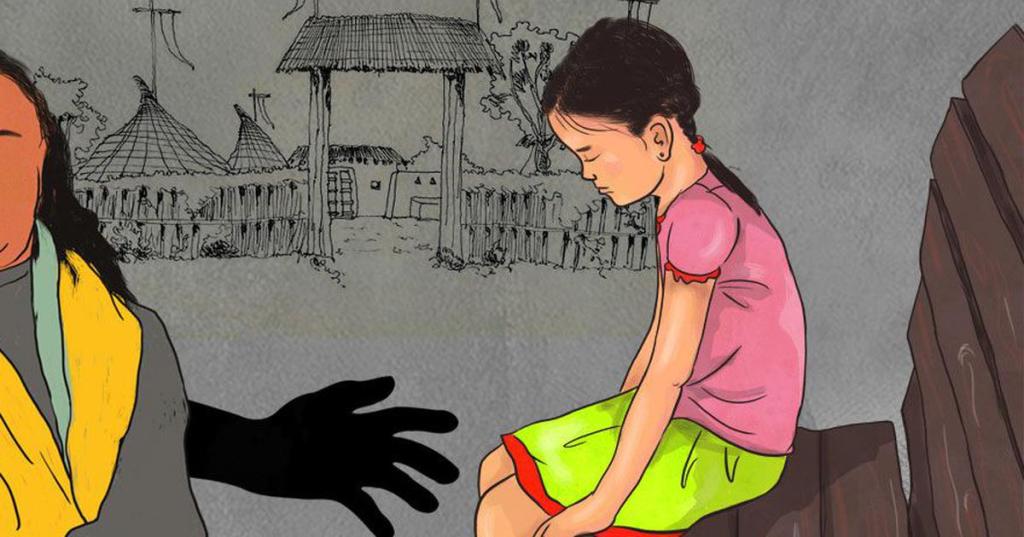
Dowry has become widespread, and birth of girl child became inauspicious. In several parts of India, women are seen as an economic liability even though they contribute in many ways to our economy and society. Early marriages, forced marriages, molestation, domestic and work area harassment, trafficking, and eve teasing are the issues faced by today’s women. Polygamy is also a problem faced by woman of some communities.
Women are also victims of malnutrition. If a pregnant lady suffers from malnutrition, the child’s health will be affected.
As responsible citizens we must strive towards gender equality and women empowerment. Government must also act against women’s rights violators.


















 Eduindex
You must be logged in to post a comment.