Behind every ivory trinket-is a dead elephant?

It is distressing to see the plight of the tusk-bearing animals these days. Numerous news headlines are daily highlighting the illegal smuggling of ivory. The extortionate value and demand of the ivories are not only in India, but also in the international markets. Wild animals are mercilessly being poached on a massive scale, possessing a major existential threat to wildlife. But do we really care or do enough to stop this inhumane and selfish act?

Let us first understand the connotation of the word ‘poaching’.

Poaching, in simple words, is the illicit act of killing, shooting, hunting or capturing of animals. The aim of this illegal act is mainly for the purpose of trade of animal products like skin, teeth, horn, bone, etc. Poaching plays a decisive role in being a contributor to biodiversity loss. Due to this felonious act, the number of extinctions has increased dramatically over the past decades. It is necessary to understand that poaching is not only about the uncontrolled killing of protected animals or endangered animals but any unlawful killing of animals.

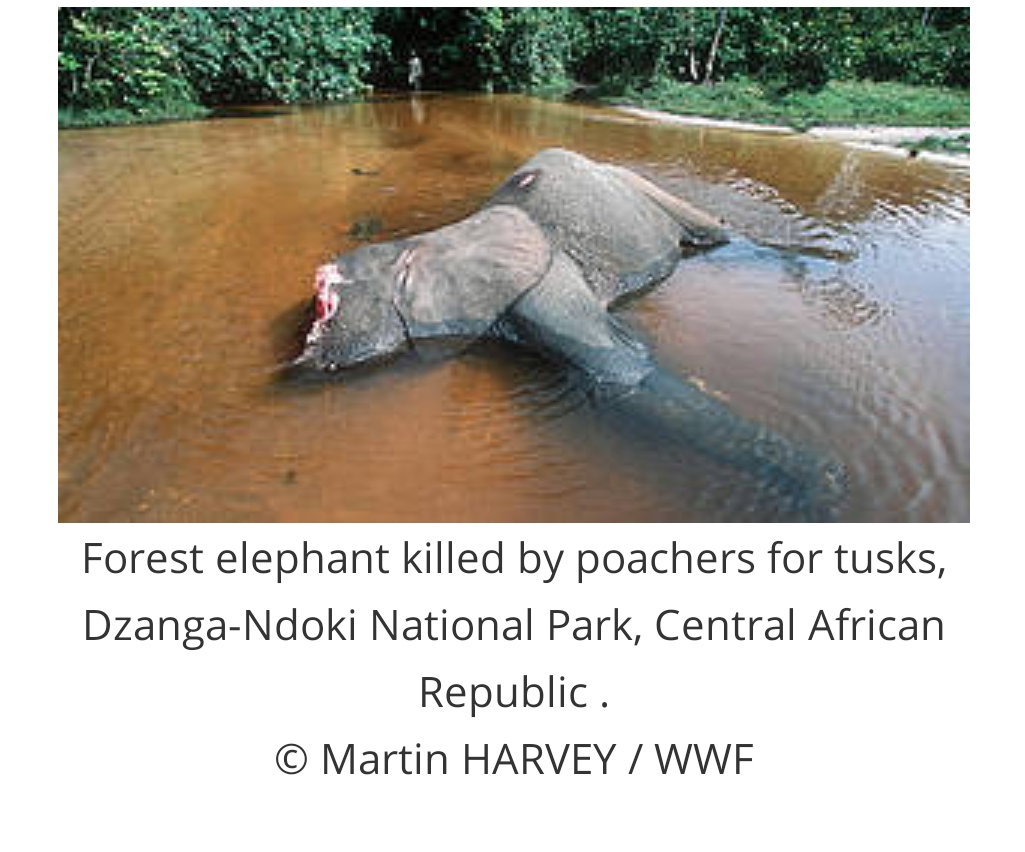
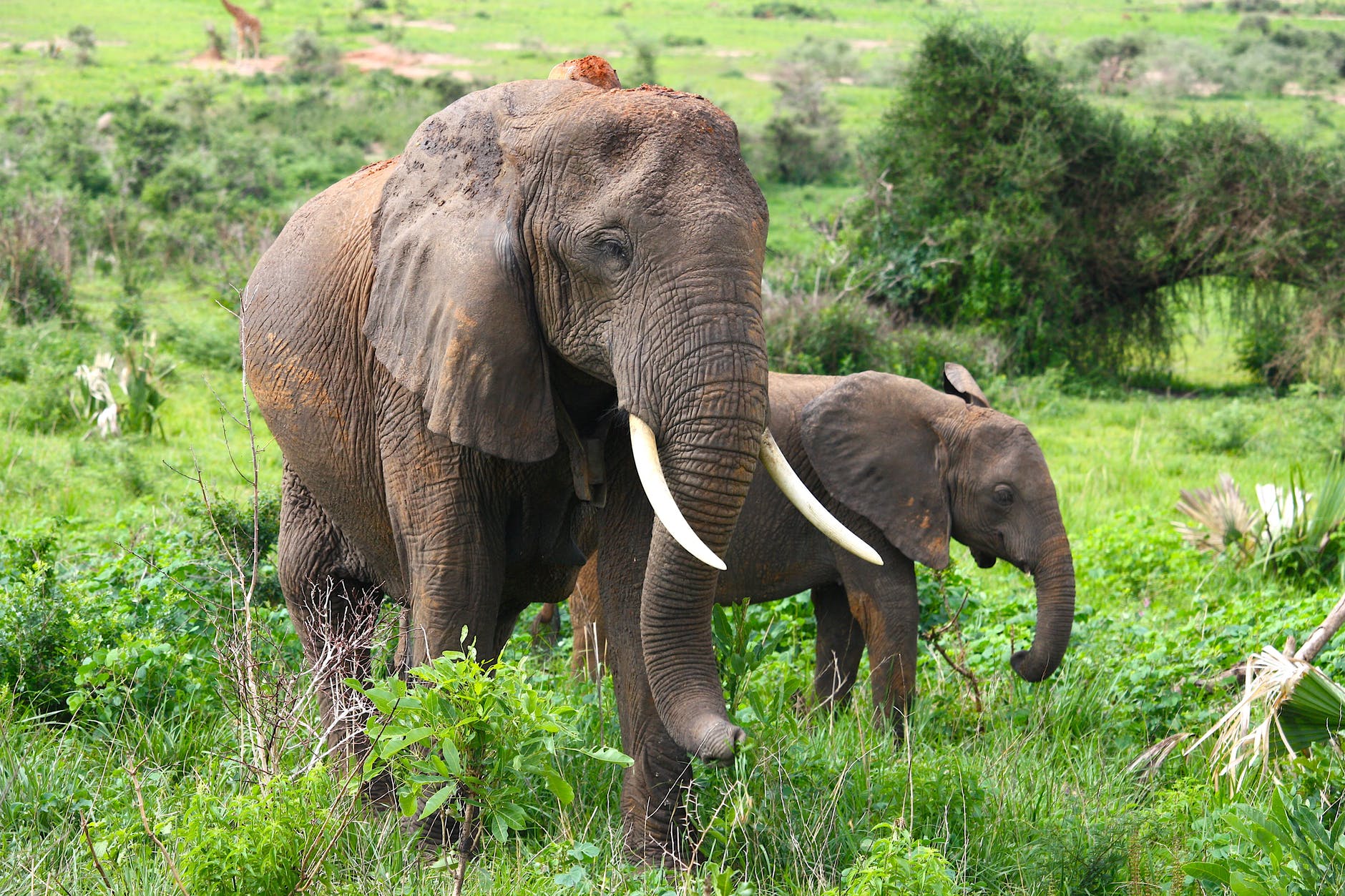
Smuggling of elephant tusks

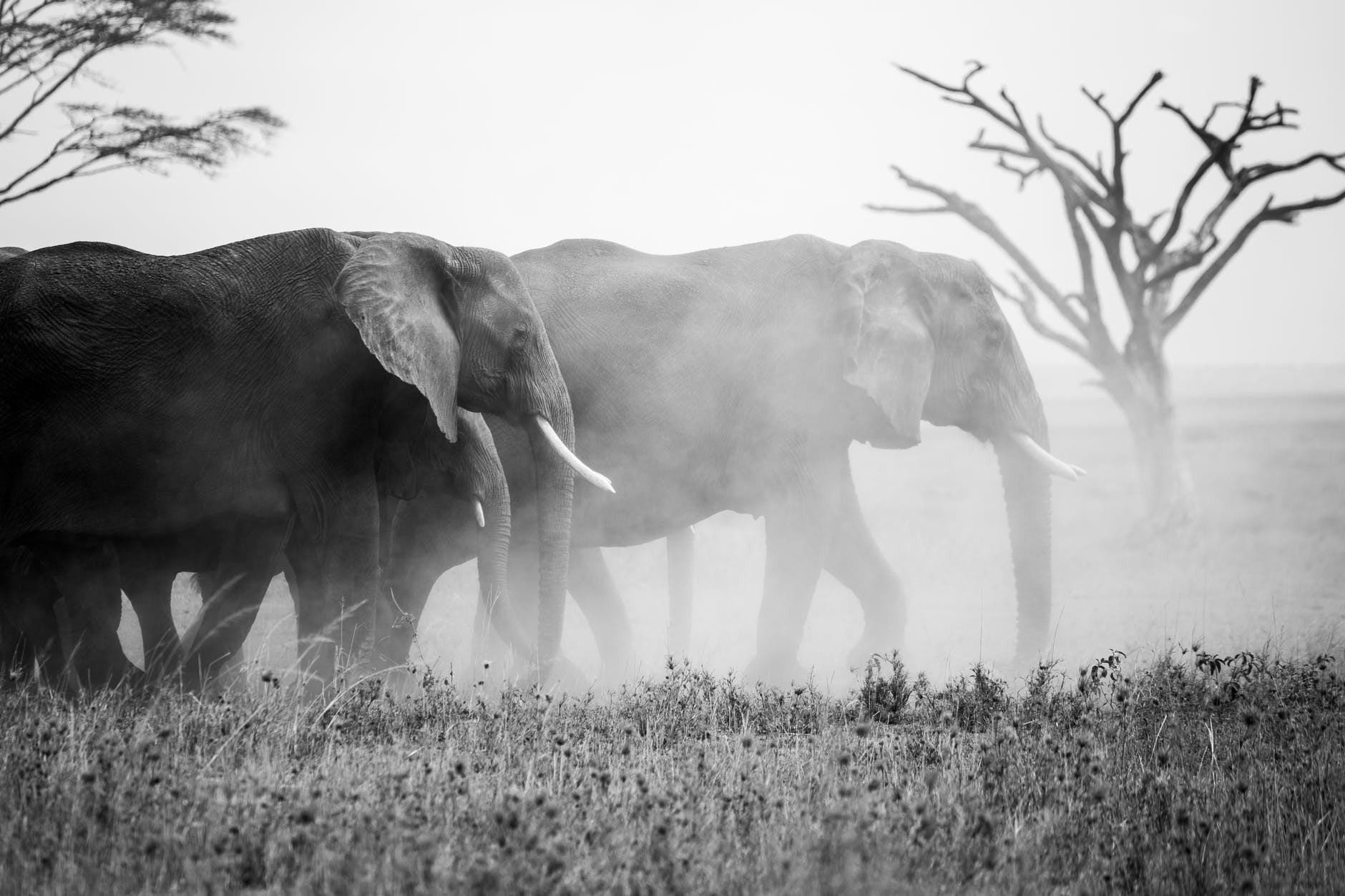
In India, poaching of elephants is very common and a major challenge to be combated. Ivory trade is in high demand mostly in the Asian countries. About 20,000 elephants are mercilessly killed every single year for their tusks. These ivory tusks are then smuggled in the international markets to eventually end up as ivory trinkets.

Ivory trade has been in practise for millennia. In the 14th century BCE, the exportation of ivory and slaves from Africa and Asia were done extensively. The freshly captured slaves along with the tusks were sold. The ivory was then used to make ornaments and aesthetically pleasing commodities.

On July 6, 2016, a complete ban on commercial trade in African elephant ivory went into effect in the United States. The African elephant population has decreased dramatically. Near about 350,000 elephants are left in Africa, as per 2019 data. It is quite shocking to know that 10,000 to 20,000 elephants are slain every year. Elephant numbers have dropped by 62% over the last decade, and if not brought under control, then they’ll be extinct by the end of the next decade.

Major countries where these tusks are sold

China is the biggest consumer market for ivory products. However, a ban was enforced on ivory trade by China in the year 2017. But it is evident that ivory is in high demand in many countries. Illegal selling of ivory is still rampant. In the year 2011, a whopping amount of 100kg of ivory was seized by Tanzanian officials. That same year several countries including Tanzania and Kenya seized a total of 17 ivory shipments weighing 800 kg.

According to surveys and in-depth interviews the demand for ivory is known to be concentrated in: China, Thailand, Vietnam, the Philippines, and the United States.

Last year, about 8.8 tonnes of ivory items were seized in Singapore.
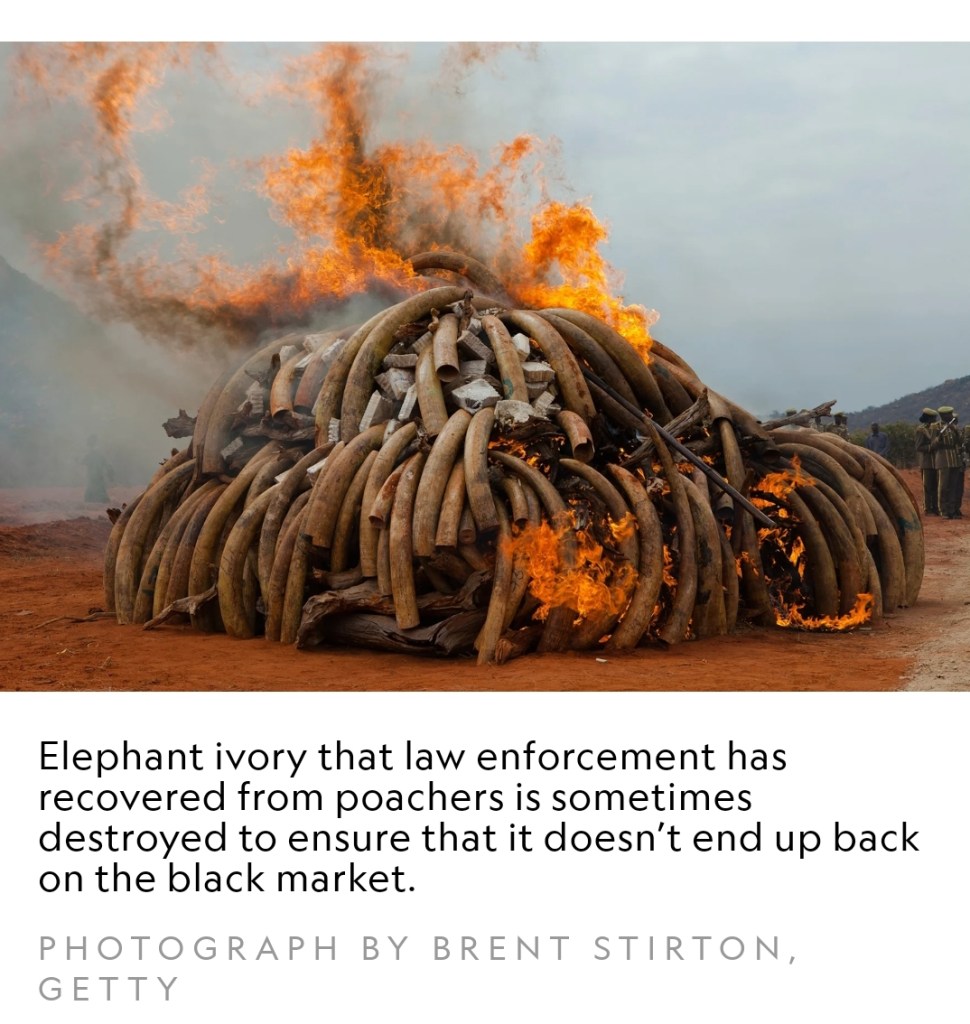


The adverse effects of tusk-removal on the elephants

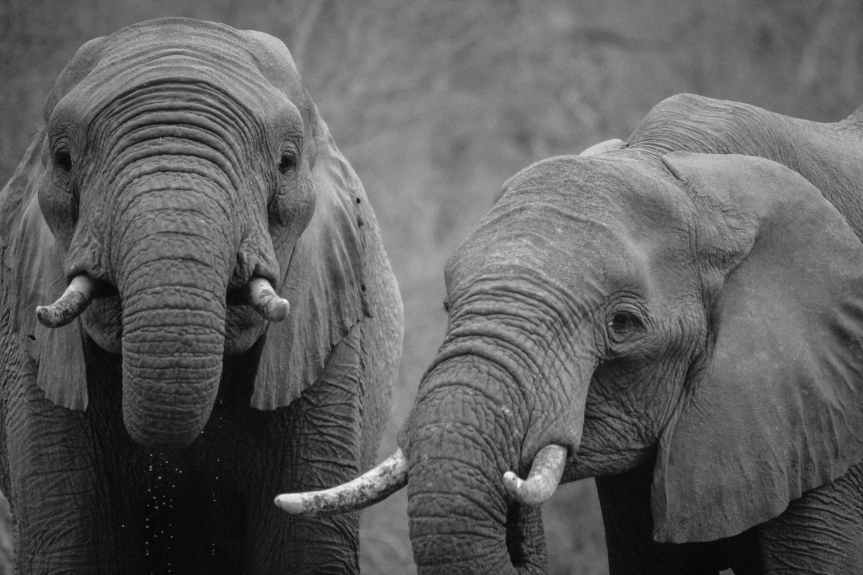
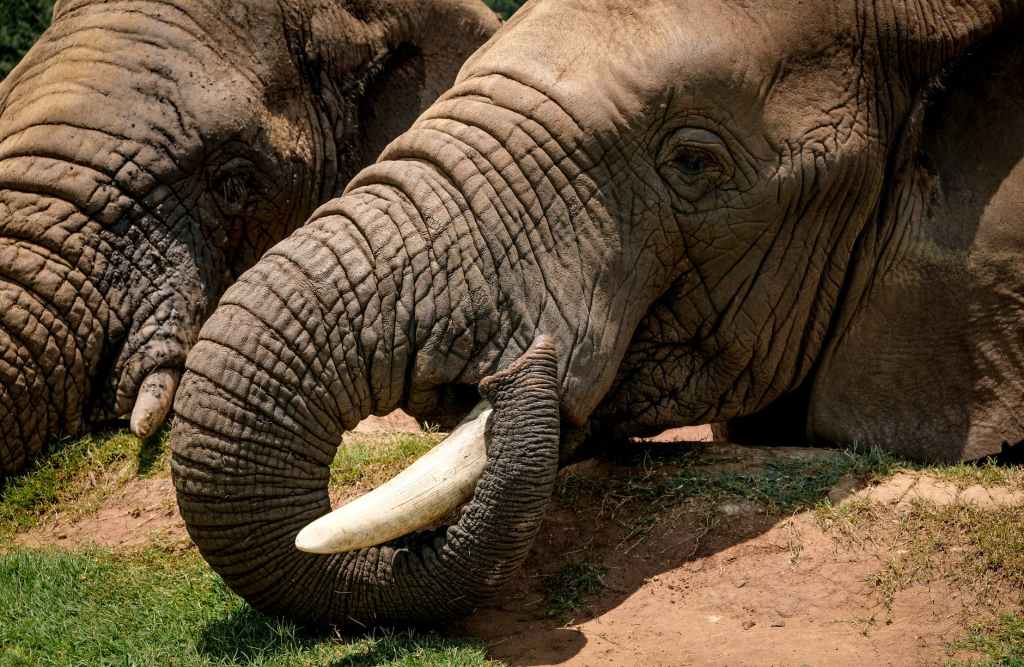
I am sure that we have all seen the majestic elephants flaunting big, off-white tusks on either side of their trunks. These tusks are both beautiful on the elephant and of utmost importance in the species’ survival.

Many poachers claim that there are no after effects of tusk-removal. Either the elephants are killed or sedated before removing their beautiful tusks.

An elephant’s tusk is deeply embedded in its skull. When the tusks are removed, there is a big hole left afterwards. The hole is big enough to stick your arm into it. If the tusks are removed at the point where it protrudes from the head, the nerve is exposed. Either way, now the wound is open and vulnerable to all sorts of infection. So, even though the elephant remains alive it is still at risk. Now, suppose there is an ivory poacher. Any poacher will want as much ivory as he can acquire with as little risk as possible. If he opts for the removal of the tusk completely, he/she will have to completely sedate or kill the elephant, because of little time and the fear of getting caught.
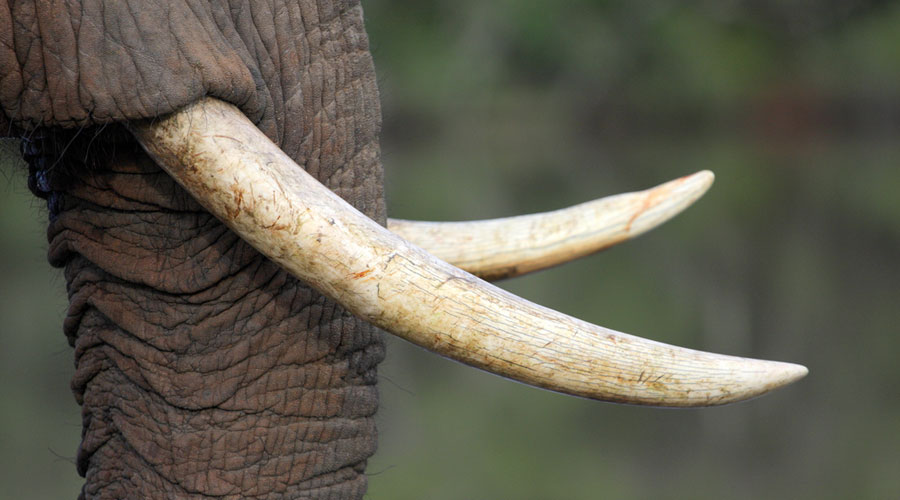
But is it just the elephants?

The answer is a ‘Big No’. Ivory has been valuable since ancient times in art and manufacturing a range of items and artefacts. Though elephant ivory is the most important source, ivory of walruses, mammoth, killer whale, sperm whale, hippopotamus, narwhal and warthog are used as well.

The international and national trade of ivory of threatened species such as African and Asian elephants is illegal.

Read about ivory trade and other tusk bearing species at- https://en.m.wikipedia.org/wiki/Ivory_trade#:~:text=The%20ivory%20trade%20is%20the,resulting%20in%20restrictions%20and%20bans.


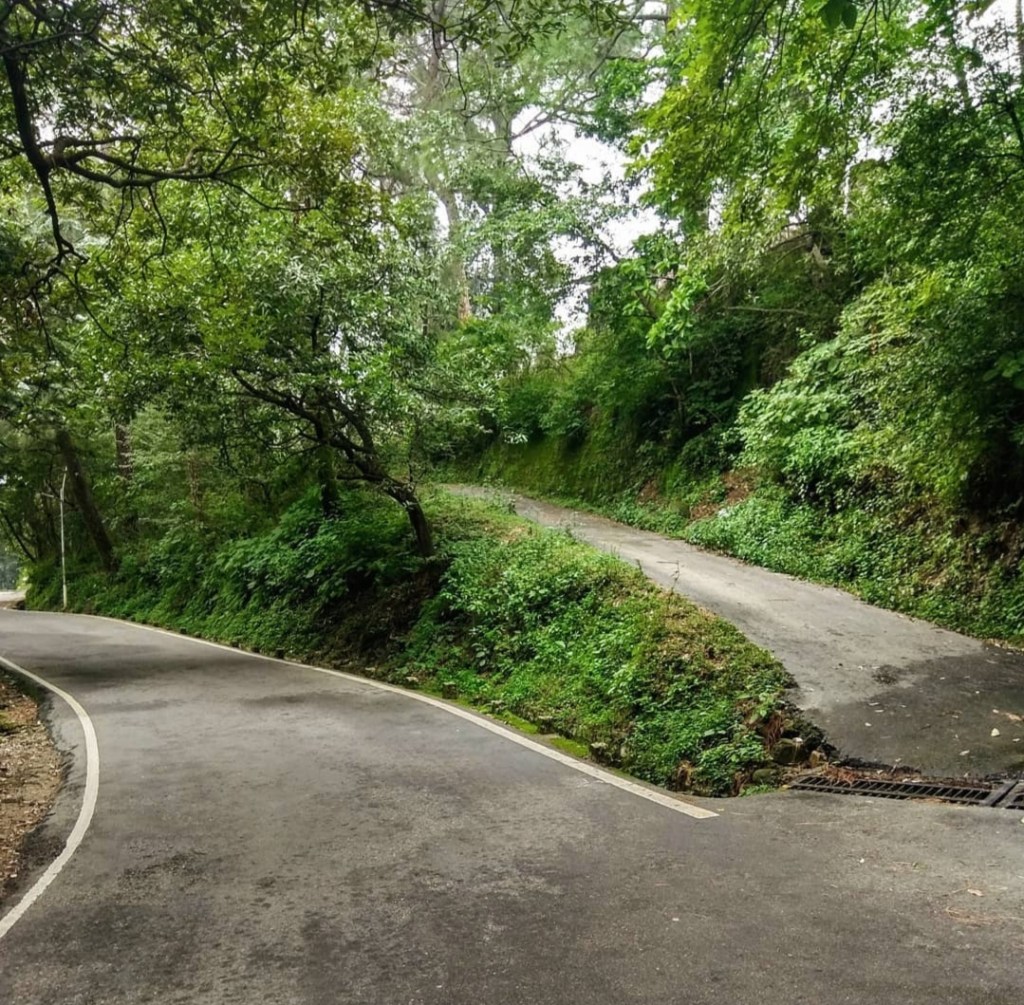
The Road Not Taken

When every choice involves the loss of opportunity, which path will you choose? When your choices come with incomplete information, how can you be certain? How long will you stand still before making your choice? How confident are you when you realize you can’t save the first road for another day when the road you chose tends to lead onward to another? Whichever road you choose will make all the difference. In order to be different and do something great, you have to think different and implement things with a different approach. You have to take a different lane; the road not taken.

Remember the poem “The Road Not Taken” penned by Robert Frost?

Two roads diverged in a yellow wood,

And sorry I could not travel both

And be one traveler, long I stood

And looked down one as far as I could

To where it bent in the undergrowth…

The poem describes someone standing at a fork, or turning point, in a road in the woods, trying to decide which path he is going to take. He looks down one road as far as he can see, and after thinking for another minute, decides to take one because it looks like nobody’s been that way yet, and he is curious about where it leads. He thinks maybe he might come back another day and try out the other path but he has a feeling that the road he has chosen will lead him to new places and discoveries, and he probably won’t be back. He thinks wistfully about that road, which he did not take, and where he might have wound up if he’d gone that way instead. Part of him regrets his decision, but he also realizes that the things he’s seen and the places he’s gone because of the direction he chose has made him who he is.

This poem tells a lot about life in general. Life is all about making choices, whether it’s about choosing to change your daily diet or choosing the right partner. Every choice has its significance in some way or the other.

It makes me remember that past is always dynamic because it shapes my present and therefore, I should be careful about my present as it will take care of my future. Most importantly, this poem makes me think wisely about my choices. It reminds me that I should not make such a choice which I would regret one day and say ‘if I would have taken the other road, it would have been better’. Rather I should be proud of my decision and say ‘Yes! Since I chose the right path, it has led to all this difference’. The difference is what makes it different. Just as Frost ended the poem: “I took the road less travelled, and that’s all that matters”. There are no bad roads, there are only different battles that births different results.

In my opinion, the poet encourages the readers to create opportunities that may be overlooked by us because we all are in search of solutions for our problems rather than trying to sort out the things in the less conventional way.

Day Out With Chip- The Robot!

There is no rule on how to write. Sometimes, it comes easily and perfectly; sometimes it’s like drilling rock and then blasting it out with charges.”

  • Ernest Hemingway

Today’s article discusses all about writing with Chip – The Robot. I had officially booked a day out with him and he seemed welcoming. We had a long conversation which I will try to compress in this article. So, let us begin.

Hello Chip. So, My Very First Question For You Is That What Do You Think About Writing?

Writing is an art which only a few are blessed with. Certain talented people around the globe are able to compose creative and fictitious worlds and make people visualize them through their amazing description. That is exactly what writing is all about. You make people reflect through your writing. Thus, it becomes an art and can’t be learnt. The creative and imaginative aspects sprout from within.

Totally! I Agree To This. However, What Do You Think Makes Writing An Entertaining Task?

This totally depends on the interest levels of the individual. Writing is fun for people who are completely inclined towards it while those who hesitate to read even a page, aren’t going to like it. So, the thing is that you need complete love for the process before initiating it. The second stage could be that you are interested in the process but aren’t able to concentrate and come up with certain new ideas and topics to write on. In such cases, you could take inspiration from the pettiest things around you. You just need to open your inner eye to notice that. And that, I tell you honestly, is an amazing job. Sitting and pondering over the petty objects and coming up with some imaginative character or story of your own, in itself is so entertaining. Another reason maybe that you aren’t able to concentrate could be that your mind is disturbed and aren’t focused. Thus, all you could do is practice meditation or do tasks that would soothe your senses. In short, I would state that indulging into the process of imagination is one of the best experiences when it comes to writing which is enough to make writing an entertaining task.

That Was So Helpful! Which Is Your Favourite Genre When It Comes To Writing?

My favourite genre shall always be fiction because it makes writing all the more interesting. You get to weave your own imagination and there aren’t any limits in the framing of thoughts onto that sheet of paper. Fiction introduces a new world, not only to the readers but also to the writers.

True That! So, What Are The Effective Ways Of Writing Fiction?

Fiction as a genre needs extremely insightful and creative people to frame a good story. You need to think outside the box when it comes to fiction. People don’t admire the same boring mythological concepts. Instead, when added a spice of an entirely new world of fictitious characters and incidents, the story begins to gain certain amount of popularity. The effective way of writing fiction is to never force on writing it. Sit and ponder over the outline of your story. Don’t try to be creative when your brain is stressed. Don’t set a deadline to writing a story when working on fiction. Just be cool, calm and devoted to your manuscript. Don’t give up easily on manuscript. You could always give some time to thinking effectively. However, if you wish to launch your book at a specific date then it is advisable to start as early as possible so that you don’t have to overdo on the last minute and can work with peace.

So, Important! Would You Like To Speak About Some Other Favourite Genre Of Yours?

Certainly! Mystery catches my attention every single time. It is because of the intense suspense factor that makes reading such a fun task. Here too, you need to have the creativity to frame the suspense appropriately. A single mistake can disclose the entire sequence and thereby disrupt your attempt of maintaining suspense. So, this is another genre, you need to be careful with. Give proper amount of time to thinking and don’t rush. Your manuscript isn’t yelling at you to finish it as soon as possible, nor is anybody else urging you to be prompt. Unlike writing prompts which don’t stress on the topic, other types of write ups don’t require you to be prompt. So, work with peace and eliminate all the pessimistic thoughts before you choose to begin with these genres.

That Was So Helpful! Lastly, Would You Like To Conclude On A Good Note?

Certainly! I would like to thank you for choosing to go out with me. I request each and every reader of this article to definitely write and not hesitate in the process. The more you write, the more efficient you shall be. You just need to be faithful and devoted to the process. Your thoughts need to be refined, in order to make writing a fun task. Maintaining effective sanity is quintessential for writers who must hibernate from chaos. So, go surrender yourself to the lap of mother nature and write for hours together, trusting that one fine day a highly creative idea would grace you with its presence on that blank sheet of paper!

Thank You So Much Chip!

Some Basic Rules that Diabetics need to follow.

(By Bhoomika Saini)

Are you worried about your fluctuating level of blood sugar? For a diabetic patient, it is the blood sugar levels which reveal whether they have either high amounts of blood sugar (hyperglycemia) or low blood sugar levels (hypoglycemia).

Lets see how you can gain control over your sugar levels and stay healthy even with a diabetic condition.

Be regular with your medication

Medication is important for having a good diabetic control. Missing medication can increase your risk of suffering from several diabetes-related health complications.

Eat right and exercise regularly

Eating meals and snacks at consistent times help keep your blood glucose levels within target range. Getting regular physical exercise is equally important to maintain normal blood sugar levels. But check your blood sugar levels before and after exercise and avoid exercising if your blood sugar levels are too high or too low.

Check your blood sugar levels regularly

Regular blood sugar monitoring is the most important thing you can do to manage type 1 or type 2 diabetes. You’ll be able to see what makes your numbers go up or down, such as eating different foods, taking your medicine, or being physically active. Most people with diabetes need to check their blood sugar (glucose) levels regularly.

Shed those extra pounds

Obesity is one of the most crucial mitigating factors of diabetes. Obesity also causes your cholesterol levels to skyrocket, increasing the chances of heart disease.


Control your cholesterol levels

Diabetes often increases LDL “bad” cholesterol levels in a person’s body while lowering HDL “good” cholesterol levels. Controlling cholesterol levels plays a crucial role in reducing a person’s risk of heart disease.

Data science

Data science is an interdisciplinary field that uses scientific methods, processes, algorithms and systems to extract knowledge and insights from structured and unstructured data,and apply knowledge and actionable insights from data across a broad range of application domains. Data science is said to data processing , machine learning and large data.


Data science may be a “concept to unify statistics, data analysis, informatics, and their related methods” so as to “understand and analyze actual phenomena” with data.[3] It uses techniques and theories drawn from many fields within the context of mathematics, statistics, computing , informatics , and domain knowledge. However, data science is different from computing and knowledge science. Turing Award winner Jim Gray imagined data science as a “fourth paradigm” of science (empirical, theoretical, computational, and now data-driven) and asserted that “everything about science is changing due to the impact of data technology” and therefore the data deluge


There are a spread of various technologies and techniques that are used for data science which depend upon the appliance . More recently, full-featured, end-to-end platforms are developed and heavily used for data science and machine learning


Data Analyst
Data analysts bridge the gap between data scientists and business analysts. they’re given the questions that require answering from a corporation then organize and analyze data to seek out results that align with high-level business strategy. Data analysts are liable for translating technical analysis to qualitative action items and effectively communicating their findings to diverse stakeholders.


Skills needed: Programming skills (SAS, R, Python), statistical and mathematical skills, data wrangling, data visualization


Data Engineer
Data engineers manage exponential amounts of rapidly changing data. They specialise in the event , deployment, management, and optimization of knowledge pipelines and infrastructure to rework and transfer data to data scientists for querying.


Skills needed: Programming languages (Java, Scala), NoSQL databases (MongoDB, Cassandra DB), frameworks (Apache Hadoop)

The Revolt of 1857

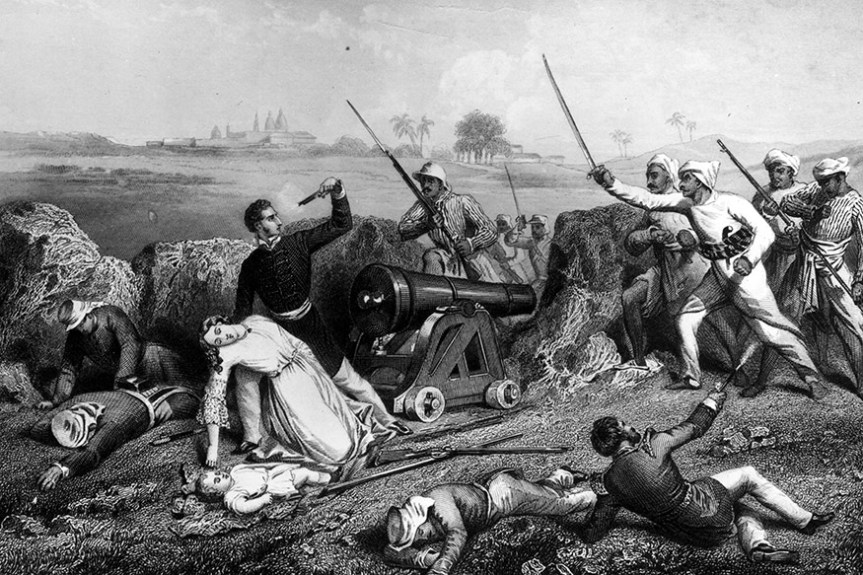
It was the first rebellion against the British East India Company in India which functioned as a sovereign power under the British Crown. The revolt began in Meerut when Sepoys of the British East India Company rebelled against the Company which led to widespread participation of the masses across the nation. The revolt is known by several names like the Sepoy Mutiny, the First War of Independence, the Great Rebellion.

Causes of the Revolt

  • The immediate cause of the revolt was from a rumour that spread that catridges used in rifles were greased with fat of cows and pigs. Before loading into the rifle the sepoy had to bite of the covering on the catridge. This was a big insult to the ritual of the Hindus and the Muslims. Lord Canning made ammends in the manufacturing of the catridges but the damage was done. In March 1857, Mangal Pandey refused to use the catridges and infuriated he attacked his British superiors. He was executed on April. On 9th May, 85 sepoys in Meerut refused to use the new catridges and were sentenced to ten years imprisonment.
Mangal Pandey
  • Indian sepoys formed a large majority of the British troops but they were considered inferior and paid less than a European sepoy who held the same rank. The General Services Enlistment Act Required the sepoys to be ready to serve even in the British land in the West.
  • The adoption of a new British policy called the Doctrine of lapse. The policy sought annexation of a Hindu ruler’s kingdom if had no natural heir, and also prohibits adopted successor of the ruler from seeking the throne, after the ruler dies. The rule was imposed by Lord Dalhousie. The rule annnexed many kingdoms and a large number of rulers were dislodged. Rani Lakshmi Bai’s adopted son was prohibited from acquire the kingdom of Jhansi. Satara, Nagpur, Jhansi were annexed under the rule. The kingdom of Awadh was also annexed which lead to discontent among the people.
Lord Dalhousie
  • The abolition of social practices like sati, and the legalizing of widow remarriage were perceived as threats to the culture. The introduction of acts like changing the Hindu law of inheritance allowing a Hindu who converted into a Christian inherit their ancestral properties. Introduction of Western style of Education was perplexing for the Indains.
  • The local peasants and zamindars were enraged ny the heavy taxes imposed on their land. Borrowal of money from money lenders in order to meet the heavy taxation demands eventually lead to bad debts, thereby losing their land that survived for generations.
  • The post Industrial Revolution in the West brought in an influx of British machine made goods into India. The action ruined the small scale industries like the textile and the handicraft.
Rani Lakshmi Bai

Many rulers also revolted. Begum Hazrat Mahal lead the revolt in Awadh when the British annxed the kingdom. Nana Saheb the adopted son Peshwa Baji Rao II, led the revolt in Kanpur. Rani Lakshmi Bai led the revolt in Jhansi after British suppressing her adopted son to ascend the throne.

JAIPUR – Pink City of India (Part – 2)

Jaipur or pink City, is the capital of Indian state of Rajasthan, and its largest city. The city was built in the 18th century by Sawai Jai Singh as India’s first planned city, and today it’s a major tourist attraction for Indians and for international visitors. It is a very picturesque city with splendid palaces, forts and historical monuments. Some of the tourists places are —

1 – City Palace in Jaipur

City Palace has stood at the heart of the Old City of Jaipur for nearly three centuries, shortly after Maharaja Sawai Jai Singh II decided to relocate his court from the city of Amber. Protected by huge guard walls, the fairy-tale-like structure is still the home of Jaipur’s modern-day royal family, and is more extravagant and enchanting than you might imagine.

City Palace is more than a sand-colored regal abode—it’s a sprawling complex of buildings built around a series of landscaped garden courtyards overlooking Jaipur and Lake Palace. The entire property is a stunning display of Rajasthani and Mughal architecture.

The current occupants reside in the most eye-catching building, the Chandra Mahal, an elegant structure with curved eaves and domed rooftops. Each of its seven stories features an entirely different style. The ground floor is included in the price of admission, but you’ll need to book a private tour to go upstairs.

2 – Jantar Mantar

At first glance, Jantar Mantar may look to be nothing more than a bunch of larger-than-life abstract sculptures. But this is not an art gallery—it’s a special collection of astronomical tools started by Rajput ruler Jai Singh II to measure the heavens nearly 300 years ago.

Each of the 20 or so structures at the UNESCO World Heritage Site serves a distinctive purpose. The observatory’s massive sun dial, known as Samrat Yantra, is particularly striking. At 27 meters tall, it casts a huge shadow that accurately measures time down to two seconds.

3 – Hawa Mahal

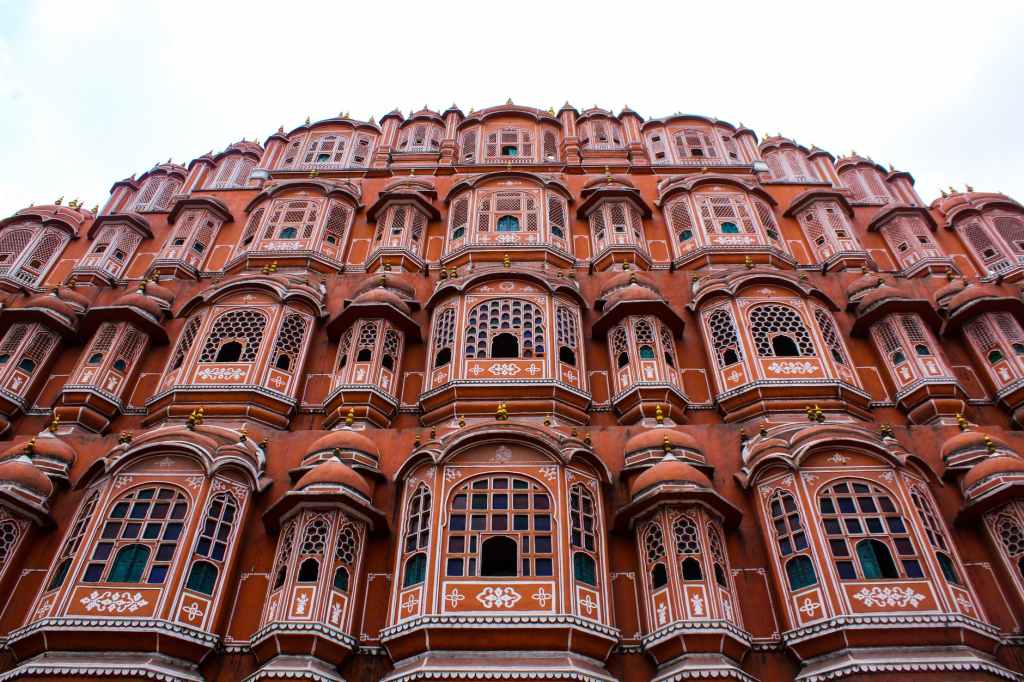
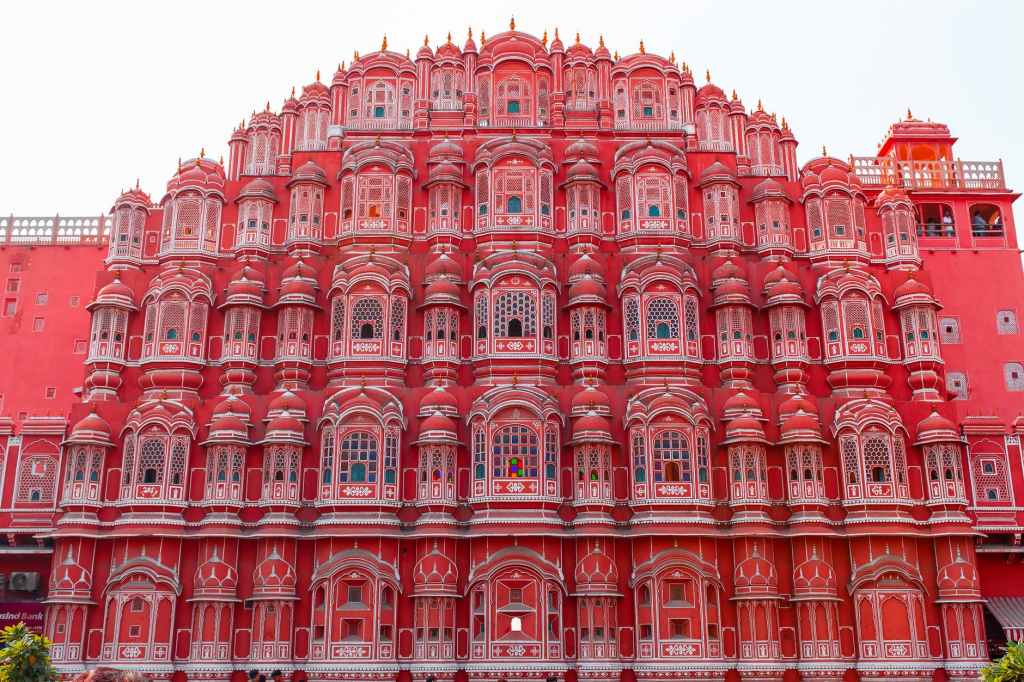
If you had any preconceived notions about how the buildings in Jaipur look, they probably came from Hawa Mahal (Palace of Breeze). It has all of the distinctive architectural features that appear in postcards of the city, from the salmon-pink, honeycombed facade, built to resemble the crown of Hindu god Krishna, to the geometric accents and rows of tiny windows.

The landmark was built in 1799 to allow royal ladies to watch festivals on the street without being seen by the public. Its 953 windows allow plenty of breeze to pass through, making it an ideal summer palace.

4 – Amber Fort

Jaipur is home to one of India’s most-visited forts: Amber Fort. Built in the year 1592, the sandstone and marble monolith stands atop a small hill roughly 20 minute’s driving distance northeast of the center of Jaipur. It’s best known for being a pristine example of Rajasthani architecture.

Getting to Amber Fort typically involves a short uphill hike that’s well worth the effort. It’s decked out with intricate patterns of inlaid marble in nearly every color of the rainbow. The fort is laid out into four separate sections, each of which has a spectacular garden courtyard outside. While you’d never know it from above, you can actually explore the fort’s underground tunnels, some of which have been restored.

5 – Albert Hall Museum

When English writer Rudyard Kipling visited the Albert Hall Museum in Jaipur, he wrote that it was a “rebuke to all other museums in India from Calcutta downwards.” That’s high praise coming from the son of a curator, and fitting for this renowned institution.

The oldest museum in Rajasthan, the Albert Hall Museum boasts an extensive collection of art and historically significant artifacts. Come for the Egyptian mummy, stay to see antique coins from different periods in India’s history, charming permanent exhibits of miniature paintings, 18th-century costumes worn by members of different castes, and a peculiar collection of 19th-century clay figures demonstrating all the yoga poses.

6 – Birla Mandir

In a city that seems to be dipped from top to bottom in pink, the stark white marble Birla Mandir stands out—big time. The Hindu temple pays tribute to Lakshmi, the goddess of wealth and purity, and Vishnu, one of the religion’s main deities.

7 – Nahargarh Fort

When it comes to sightseeing around Jaipur, the views don’t get better than what you’ll find at Nahargarh Fort. Also known as Tiger Fort, the nearly 300-year-old fort overlooks the entire city from atop the Aravalli Hills—a prime location for the structure to defend Jaipur against enemies many years ago.

More than just a formidable barrier though, this fort also contains Madhavendra Bhawan, a summer destination for royalty. The sumptuous Rajasthani building features a dozen identical boudoirs for the queens, which all connect to the king’s suite through mural-filled corridors.

8 – Jal Mahal on Man Sagar Lake

One look at the Jal Mahal, and you might think you’re seeing a mirage. The graceful palace seems to float atop the twinkling Man Sagar Lake , a calm sight compared to the rest of the frenzied city.

While it appears to have just one story, the Water Palace has four other levels submerged beneath a reservoir. Tourists can’t access the site, however, that may change in the future.

Wonders of Western Ghats

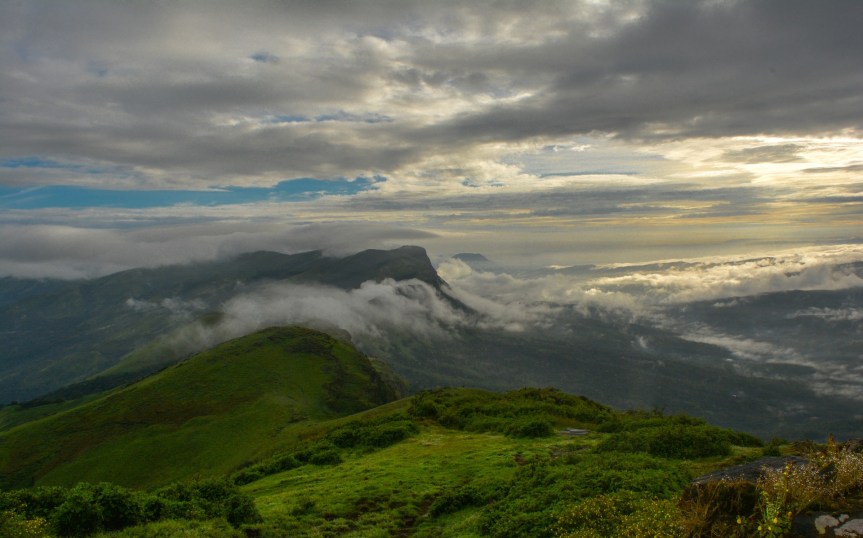
Western Ghats, mountain range which is older than the Himalayas, is present parallel to the western coast of Indian peninsula covering 160,000 square km area in a stretch of 1600km. Western Ghats travel through the states of Karnataka, Goa, Tamil Nadu, Kerala, Maharashtra, and Gujarat. UNESCO identifies it as a World Heritage site and it is one of the hotspots of biological diversity in the world. The mountain influences the country’s monsoon. Western Ghats has a rich biodiversity. There are so many species of flora and fauna endemic to the place and make it rich.

Western Ghats has over 7,402 flowering plants species, 1,814 non-flowering plant species, 139 species of mammals, 179 amphibian species, 6,000 insect species and 290 freshwater fish species. There are at least 325 globally threatened species present.

SOME OF THE WONDER SPECIES OF WESTERN GHATS
  1. BENGAL TIGERS: Bengal tigers are known for their beauty and power. they are native to Indian subcontinent. These predators are present in western Ghats also. Western Ghats are home to 10% of the tiger population. they live in the tiger reserve. Ranthambor national park has 585 tigers.
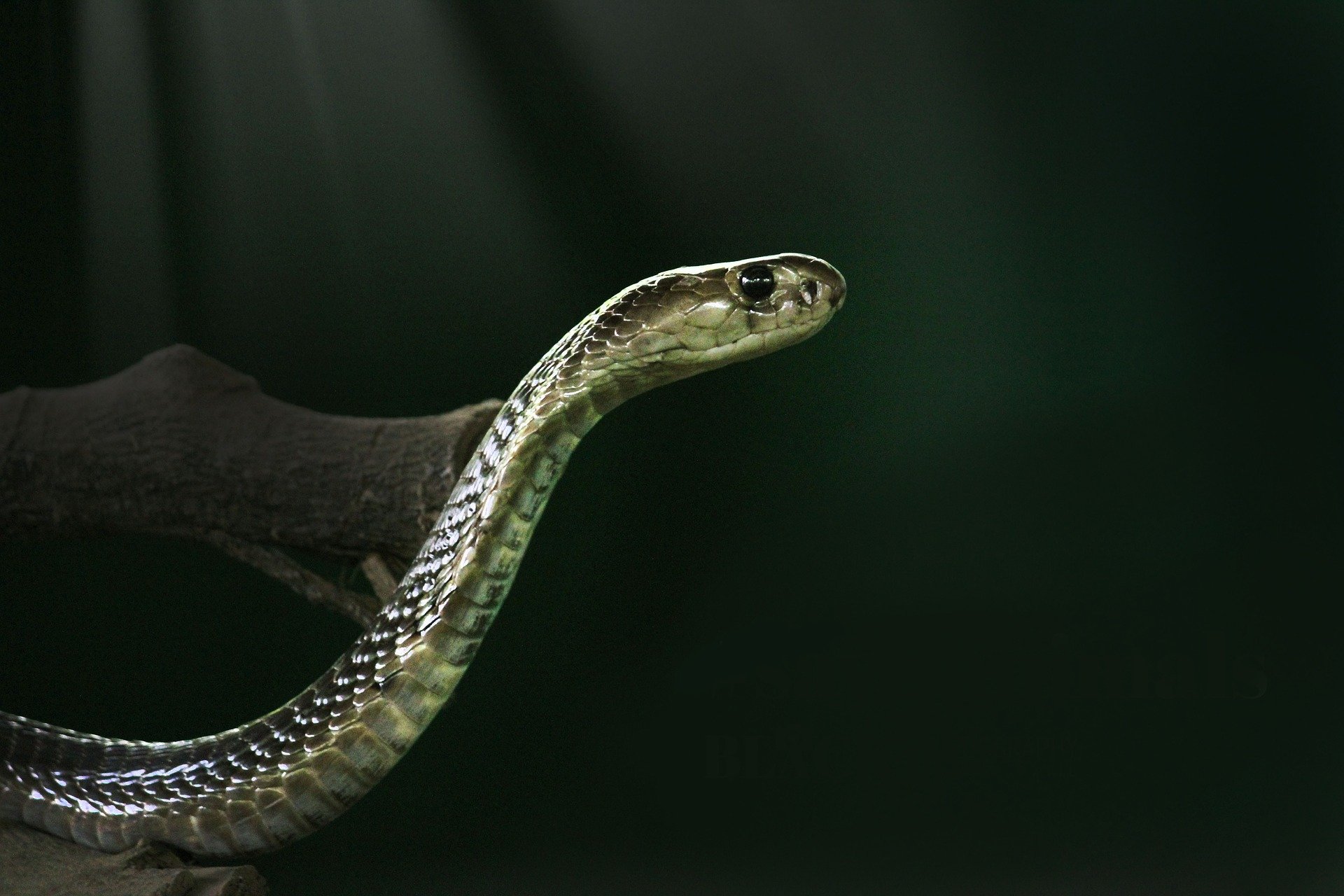
  2. KING COBRA: This is the worlds largest venomous snake. This lives in rainforests and scrubs and grasslands of western Ghats. Adult king cobras are 3.18-4m long and weigh between 11 and 20lbs. Male snakes are little longer than females. They are snake eaters and also eat lizards rats etc. This is the only snake that builds nest for its eggs. Their behavior include aggressiveness and shy nature. It has enough venom to kill an elephant.
  3. INDIAN WILD DOG: It is one of the most dangerous wild animal of Western Ghats. They are classified as endangered and the main reason is habitat destruction. They are also called as Dhole. They can be seen in jungle roads, river beds etc. It has large round ears and hooded eyes. It is a highly social and co-operative animal.
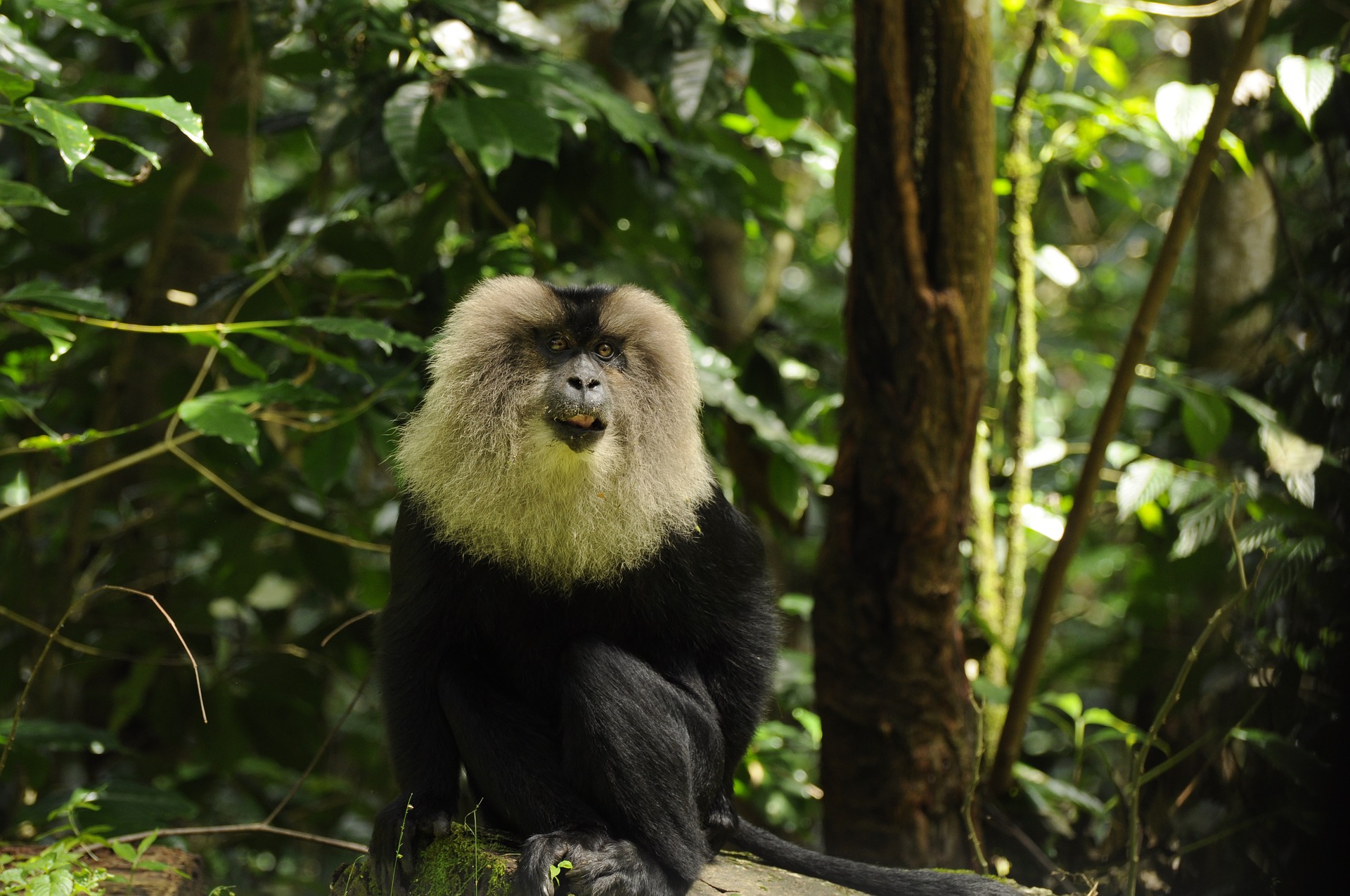
  4. LION TAILED MACAQUE: This animal is endemic to Western Ghats and it is one of the endangered species. their population is below 4000. They are an old world monkey. This magnificent animal is the proof for the wonderful biodiversity of the western Ghats. These are omnivores but fruits are the major part of their diet. These get a part of their required moisture by licking the leaves.
  5. INDIAN GIANT SQUIRRAL: They are also called Malabar giant squirrel. Bhima Shankar wildlife sanctuary has a noticeable population. They mostly live on trees. They build their spherical nest with leaves and twigs. they have a long bushy tail. They are mostly seen solitary or sometimes in pair. They feed on nuts, fruits and bird eggs.
  6. PURPLE FROG: It is also an endangered species because of habitat loss. this species is formally described recently in 2003. They have a bloated body, short hind legs and sucker like mouthparts. Local people consume tadpoles of this frog. These frogs are found in damp soil which is well aerated and loose. Only 135 individuals are identified in which only 3 are females.
  7. MALBAR GREY HORNBILL: This is also endemic to Western Ghats. They have large beak. They are found in dense forest and are mostly fungivores. They are mostly 45cm in length and weigh 240-340g.

Benefits of the Evergreen Neem

(By Bhoomika Saini)

This popular medicinal plant Neem, is famous for its healing properties. Neem, also known as Indian Lilac is commonly known for its antiseptic, anti inflammatory and antioxidant properties. It contains great sources of fatty acids, minerals and vitamins that has some medicinal properties that could be beneficial for you in many ways.

Either you have skin problems, hair problems or any other, Neem is here for the rescue. Let’s take a glance at the great benefits of this evergreen herb that could provide you many benefits.

Benefits of neem for skin:

1.Soothes irritated skin

Neem has antibacterial and anti-inflammatory properties that may pacify irritated skin. With the advantage of getting a cooling effect on the skin, neem is beneficial for treating skin sensitivity. Additionally, neem features a soothing effect on dehydrated or dry skin.

2. Fight signs of ageing

Neem leaves are stuffed with antioxidants, moisturizing triglycerides and vitamin E, which makes it an ideal anti-ageing treatment. They lower wrinkles, fines lines and dark spots and make your skin look firm and toned.

3. Treats acne

The antibacterial properties of neem fight acne-causing bacteria, which helps in the treatment and prevention of acne. Also, it’s extremely useful in controlling oil production in the skin.

4. Tackles blackheads and whiteheads

Neem on your face is helpful to say goodbye to whiteheads and blackheads when used regularly. It pulls back large pores and works as an exfoliating agent to pull out impurities and tighten pores.

Benefits of neem for hair:

1. Relieves itchy scalp

Neem has antifungal properties that may help within the treatment of dandruff. The effective use of neem to your hair can relieve the itchiness, inflammation, and irritation associated with dandruff.

2. Intensify hair growth

The regenerative properties of neem help in reducing hair fall. Gently, massaging your scalp with neem oil can increase the blood circulation in the scalp and help in enhancing the speed of hair growth.

3. Avert premature greying of hair

Neem is rich in antioxidants that curb the action of free radicals that cause premature greying of hair. Regular usage of neem powder or neem oil for the same is also useful.

4. Conditions under nourished hair

Neem contains a significant ingredient called fatty acid which help the scalp to nourish thereby keeping the hair smooth.

So, to get those clear skin goals or to get those luscious hair locks, Neem is all you need.

JAIPUR – Pink City of India (Part-1)

Jaipur is also known as the Pink City, due to the dominant color scheme of its buildings. It is located 268 km (167 miles) from the national capital New Delhi. Jaipur was founded in 1727 by the Kacchawa Rajput ruler Jai Singh II, the ruler of Amer, after whom the city is named.

Jaipur is the Capital City of Rajasthan. Jaipur is famous for Rajasthani traditional Jewelry, traditional fabrics and handicrafts, and also for traditional rajasthani cuisine.

This nicknames arise from the distinctive architectural features of each city. The Pink City of Jaipur, for example, is so named because its buildings were painted pink in the 19th century, back when India was a British colony, to prepare for a visit by Edward, Prince of Wales.

Maharaja Sawai Ram Singh II, who was the then ruler of Jaipur, in his infinite spirit of hospitality, had the whole city painted pink terracotta in honour of the royal guest. Pink was considered the colour of hospitality. … Historic accounts state the city was coloured in white before it was turned pink.

A romantic dusty pink hue — which has defined the city since 1876, after it was painted pink to welcome Queen Victoria’s husband, Prince Albert — gives Jaipur its status as the “Pink City,” as it is commonly known.

The number of tourists visiting these monuments and paying tribute to the historical traditions of the city, this city’s nickname is Paris of India.

Python: An Introduction

Python was created by Guido Van Rossum in late 1980s at National Research Institute for Mathematics and Computer Science in the Netherlands. It is derived from many other languages like Modula-3, C, C++, Algol-68 and Unix Shell.It is object oriented , open source, cross platform, high-level dynamic and interpreted language . Python programming is very powerful, expressive and easiest language to learn and use.

Features of Python

  • easy to learn and use
  • comprises of board library
  • free and open source
  • object-oriented concepts
  • extensible

Interactive Mode :- A command line which gives immediate result for each statements.

Script Mode :- It is used to write set of statements/instruction in python. Set of statements store in file with .py extension.

IDLE :- It refers to “Integrated Development Environment” in python. It comprises Python shell program which lets user to type instruction into system.

If you decide to design your own language there are thousand of sort amateur language designer pitfalls.~ Guido Van Rossum

PARADISE LOST: FIRST SPEECH OF SATAN

John Milton’s Satan, by common consent is one of the greatest artistic creation in any language. He is the most heroic and magnificent character ever portrayed. There has been a great controversy on the ambiguity of his character, yet it is an absolute truth that his character engages the reader’s attention and excites his admiration also. He is the main character of Milton’s epic. From the beginning of the epic poetry till the very end Satan’s character degenerates. This degeneration gives real epic quality to Paradise Lost and also to Satan himself.

Satan’s speeches reveal pure Miltonic lyricism. his opening speech to Beelzebub is a magnificent set piece. it reveals the character of Satan-a defiant rebel and a great leader. He encourages and sympathizes with bold words and sentiments. Satan first takes pity on the change in his friend. then he refers to their friendship of the hazardous enterprise in heaven and their present misery. He is ashamed to admit the might of God but, he will not allow it to change his mind. He has nothing but contempt for God who insulted his merits. It is a sense of injured merit that makes him rage war against the tyrant of heaven. As for the battle, it has been an equal match and the issue uncertain. It is not their want for acknowledgement of their merit but God’s new secret weapon that made God victorious in the war. There is an irony through Satan’s speech which continually reduces his stature even when apparently it seems to be building it up. Satan’s historical ‘high disdain’ and ‘sense of injured merit’ have overtones of the hedicrous. It seems weak and childish.

A single victory does not permanently ensure God’s victory. For the present, they may have lost the battle, but that does not mean they have lost everything, ” What though field be lost? … And what is the else not to be overcome”. He, who failed to conquer these things cannot be called to be a victor at all. Defeat is complete only when the spirit and the will too are subjugated. The bow down before God is worse than defeat. So, he is determined to rage eternal war by force or guile.

Satan’s question “What though the field be lost?” is an exposure of himself and his inability to act in any other way other than what he enumerates. Though the speech is one of high rhetorics there is barrenness no suggestion no action at all except to brood on revenge and hate. Revenge will be eternally “studied” and have sustained yet it is so grandly expressed that we are thrilled by the implied suggestion to wage ceaseless battle against hopeless odds, this appears as admirable.

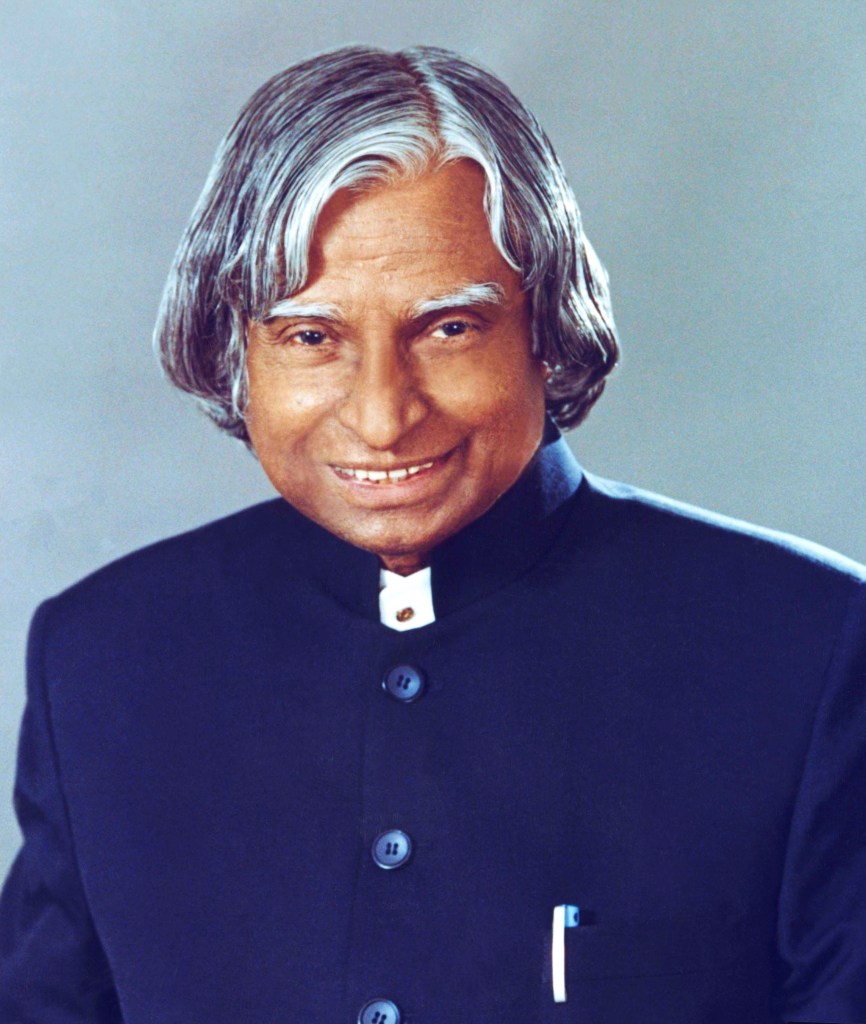
ABDUL KALAM

Abdul Kalam was an Indian aerospace scientist who served as the 11th President of India from 2002 to 2007. He was born and raised in Rameswaram, Tamil Nadu and studied physics and aerospace engineering.

BORN – October 15, 1931
Rameswaram, India
DIED – July 27, 2015 (aged 83)
Shillong, India

A.P.J. Abdul Kalam served as president of the Republic of India from 2002 to 2007. As president, Kalam promoted the advancement of the national nuclear weapons program. Kalam also devised a 20-year action plan to achieve economic growth through technological development in India.

Awards: 1.1981- Padma Bhushan – Government of India

2. 1990 – Padma Vibhushan – Government of India

3. 1997 – Bharat Ratna – Government of India

4. 1997 – Indira Gandhi Award for National Integration – Government of India

5. 1998 – Veer Savarkar Award – Government of India

Achievements:

  1. India’s first Satellite Launch Vehicle (SLV).
  2. Ballistic missiles project.
  3. Nuclear tests at Pokhran.
  4. Universal healthcare plan.

What do you think is globalisation?

Something which caught my attention across all the classes I had was the striking connections between the advantages and disadvantages of globalization. It stopped me  to think of the kind of world we live in. 

People living in the 21st century had turned around the whole concept of globalization with the coming of inventions and technologies. It now connected every single thing in a whole new level. Not just commodities but culture and lifestyles are also exchanged between the people. With these advantages came the disadvantages. People made use of technology with religious fundamentalism making us go way back in time.

The Modern Era came with the cosmopolitan outlook among people and everyone was more secular. People left behind the conservative outlook towards life and were more adapting and absorbing. Or so we thought, because globalization spread the stereotypes of one place to another. Religious identities also were spread among people. A very bad effect of globalization was the spread of terrorism among the nations.

Now terrorists groups could make use of the technology to make large connections around the world, this has resulted in lots of attacks in different places. With the good side of technological advancements came this very bad side. 

People have turned a blind eye to this twisted fact, a very common say that if something has a good side, there definitely will be a bad side. For a minute where we believed that people had changed from being ethnocentric, we directly get a blow from various examples like this.