Book Reviews

The Books are of  knowledge oceans, from every book we learn some thing new and to improve our knowledge and build our personality

BOOK Defination  

we all know that a lot of English words come from ancient Latin – that’s because the Romans occupied England for almost five hundred years from 54BC to 410 AD. … The word book comes from Old English “boc” which in its turn comes from a Germanic root “*bok-“, which means “beech” – as in the beech tree

Types of Book Reviews

Endorsements: Hand-picking Relevant Reviewers Before Your Book is Published. …

Trade Reviews: Publishing Professionals May Advocate Your Book To The Industry. …

Reader Reviews: Individuals Recommending Your Book To Each Other. …

Editorial Reviews: Third Parties Publishing Reviews About Your Book.

Why write book reviews

Book reviews give books greater visibility and a greater chance of getting found by more readers. On some websites, books that have more book reviews are more likely to be shown to prospective readers and buyers as compared to books with few or no book reviews.

How to write a book review

  • Start with a couple of sentences describing what the book is about. …
  • Discuss what you particularly liked about the book. …
  • Mention anything you disliked about the book. …
  • Round up your review. …
  • You can give the book a rating, for example a mark out of five or ten, if you like!

In this days most of people like to read blogs because they have simple and clear to understand content

Some of people read books by help of Book review, its give simple summary to understand that book

MUSIC

So firstly let us know why the music is very important in humanlife? once let us question ourselves why music is very important. it is very important in human life because it relaxes peoples mindsets. this music is also know as universal language of humanity. it has the power to bring positivity and entertainment in the lives of people. everyone loves music because it holds the power to transform the mood and bring a sense of relief in their daily life. we can get all answers to our unsolved questions through music. music can make a person until the end of their lives. it never leaves the person along during their difficult times in life. it plays an important role in the world as it helps us in easily expressing ourselves. it has different impacts on the daily lives of the people. there are different emotions attached to every kind of music as we can easily relate music with power to bring people together in different ways on several occasions. it can also be termed as a good source of communication. in our daily life there are certain feelings which we fail to express but through music all the missing words find its way and we can easily communicate our message to the people. we find the words to express either by writting songs or just listening to it. music can also be described as a theraphy for many people because it has the power to heal the problems of many people. there are many children with a learning disability who have responded to the music set pieces. music is a part of meditation in many workshops to make people positive and to make them aware of their emotions. music has an impact on everyones life in different ways in different phase of life. music can transform the emotions and feelings of the people within no time. it can lessen the stress, pain, struggle, distraction, and bring positivity and calmness in our daily life. music holds the power to bring people together in different ways. music can make us expressive and help us in understanding our feelings and emotions in a better manner. making art is an basic human function. for whatever reason we feel the need to leave a mark on the world. we have a burning desire to create, whether its a folk songs, rock art, or movies. having a carrer in music can be frustating and at times a discouraging affair. its easy to feel discouraged about it. truth is music is incredibly important to people. its important that people hear music, see music, learn music, play music, create music and teach music. making music is inherently worthwhile.

Book Review: The Immortals of Meluha

The Immortals of Meluha is the first book of the Shiva trilogy penned by Amish Tripathi. The book is a spectacular blend of history, philosophy and mythology. The simplicity of language and the intriguing narration make it a must read for everyone interested in the ancient Indian thought.

The book depicts the journey of Lord Shiva, the hero of the trilogy, from the pristine surroundings of the Mansarovar Lake at the foot of Mount Kailash to the country of Meluha, described as a Heaven on Earth. The book portrays Shiva as the chief of a tribe named the Gunas. He receives an invitation from the kingdom of Meluha to immigrate along with his entire tribe. Shiva accepts the invitation in order to safeguard his tribe from the continuous onslaught of the Prakrits, an enemy tribe. Amish portrays Shiva as a human, who is always ready to protect his people. Shiva achieved his godliness by fulfilling his destiny of working for the betterment of mankind.

The description of places like Kashmir, Meluha, Karachapa, Swadweepa and Ayodhya is so spectacular that the readers are transported to the beautiful and well-planned cities of ancient Bharat. The fast-paced writing touches upon many aspects like the reason why Shiva became the Neelkanth, how Nandi, a Meluhan Captain, became the trusted aide of Shiva, the origin of the world-renowned Om (ॐ) symbol and so on. A number of characters like Daksha, Sati, Ayurvati, Chitrangadh, Bhadra, etc., all of whom are from the Shiva Purana, are introduced into the story. Each character is well defined, thus enabling the readers to easily connect with them.

Amish carefully describes a number of warrior clans that we often read about in Indian history and mythology – the Suryavanshi clan (the Sun clan), the Chandravanshi clan (the Moon clan), the Nagas (the Snake clan), and many more, whereby each clan has its distinctive characteristics and symbols. The interpretation of the different kingdoms and the politics between them is interesting to say the least. The Suryavanshi clan expects Mahadev to fight the Chandravanshis and protect their river Sarasvati from extinction and the Chandravanshis lure him to their side in order to annihilate the Suryavanshi rulers.  Mahadev is forced to look at the bigger picture and understands that both the clans have their own ways of living and the differences between two different lifestyles cannot be labelled as good or bad.

The book has good explanations of the different philosophies that collectively make up the beautiful mosaic of Indian culture. The depiction of the origin of the Saptarishis (the Seven Sages), the Varna System, the Somras and its efficiency, and the concepts of universal energy, karma and dharma are put forth in an interesting manner.

Amish uses the mythological stories and the legends of ancient India (Bharat) as the basis for his novel. The narrative technique he has used is a third-person account of the happenings. The impartial writing gives the readers enough space to study the plot and form their own opinions about the virtues and vices of Shiva’s times.

The Immortals of Meluha is a softcover book containing 410 pages. The interesting tales are broken down into 26 chapters, with a map at the beginning and a glossary at the end. Readers will find it hard to keep the book down, because of its immersive and imaginative writing.

Kolkata: A city of arts, culture and cuisine

Kolkata, still commonly referred to as Calcutta, is the capital of India’s eastern state of West Bengal. It’s now known for its gentle pace of life, but back in the 18th century, the city was British India’s most important trading post and the showpiece of colonial power.

In addition to its history, the gateway to eastern India is famous for its food. Bengali cuisine has evolved over time, but Kolkata still remains an ideal place to experience the cuisine characterized in part by mustard oil and fish.

There are many very good restaurants in the city, but if you want home cooked Bengali food, then that’s possible, too. Iti Misra is one of a number of home chefs that host lunches for visitors to the city: Cooking from her kitchen, Iti dishes out authentic Bengali cuisine and gives her guests a glimpse into local life.

Home to prominent intellectuals, Kolkata is regarded as an artistic and cultural capital of India. In northern Kolkata, the oldest part of the city, you’ll find the stately mansions of famous Kolkatans such as Nobel Prize-winning poet Rabindranath Tagore.

That area of the city is also home to the busy Kumartuli clay making quarter. There, potters mold lifelike religious idols for the city’s many festivals.

Running from north to south right through the city is Hooghly River. At roughly 160 miles long, it provides the city with a supply of water and serves as a major transport system for both people and cargo. It was through the river that the East India company sailed into the region and established its trade settlement.

The waterway also provides the perfect place to experience a Kolkatan sunset. You can hire a boat to take you out on the water where you can see the iconic Howrah Bridge and the newer Vidyasagar Bridge.

For the Bengali high society, evenings in Kolkata can be spent at one of the many old colonial private members clubs such as The Saturday Club, which was founded in 1875.

Reminders of Kolkata’s colonial past can be found on every corner, but it’s the combinations of that history and modern advances that make this friendly metropolis a unique Indian experience.

a tour to chennai

“Once in a year go to someplace, you have never been” – Dalai Lama.

Travel is an outlet for all emotions buried underneath our hearts and remains unnoticed in the rapid phase of our daily lives. We all have different travel choices. Some of us can be fond of beaches, some would be fond of crowds, some would be fond of food. In case if you are expecting all three of them in one place, I have got your back. It’s time for you to visit NammaChennai, the city which has a place for every other personality. 

To experience the beauty of the city,  the cheap and best choice is local and metro trains. They cover half of the city landscape and you can also experience various cultures of the city inside the train. Every person you meet on a train has a different story to hold within. The scenes I commonly enjoy on a local train are as follows :

  • Ladies having their me-time by sitting near the window seats,  
  • Some of them would start cutting vegetables on the train to save time, 
  • Some people put their lives in danger to catch the train just because they could spend few more minutes with their family after a hectic day,
  • Men who are lost in thoughts of their responsibilities. 

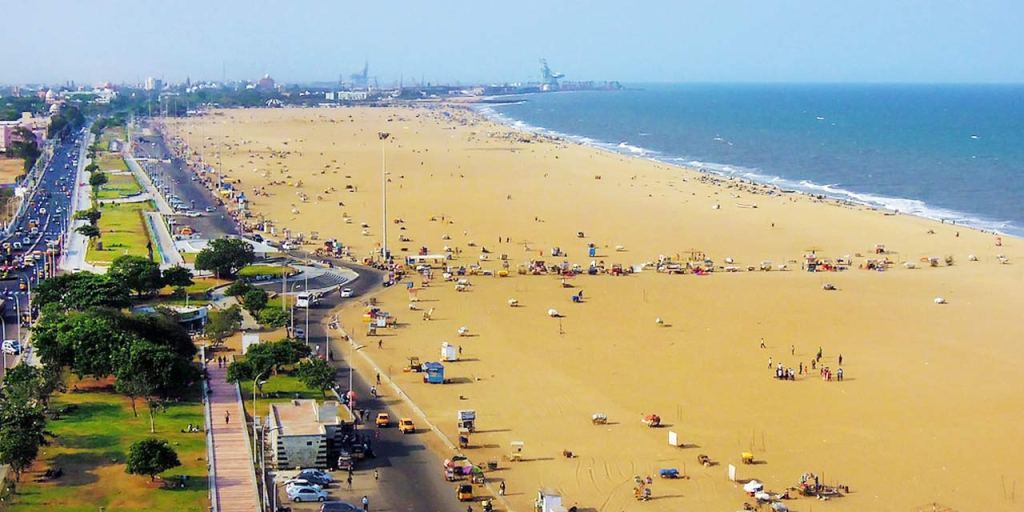
The city has exciting places for every other age group right from ancient temples to extravagant malls. There are also places which are loved by every age group. One such place is Marina Beach. A place that holds millions of emotions. The foods served, the gift shops filled with crowds, magnificent light-house, thousands of vehicles parked, colorful boats sailing make the beach remain unparalleled. 

The foods served in Chennai are the ones that make the tour remain an unforgettable experience. Right from crowded roadside shops to cozy and ravishing cafes, Chennai has every cuisine existing in the world. The food street in OMR, snacks shops in T.Nagar, biryani shops in every nook and corner of the city, parotta shops with unique sidedishes treat your taste buds in every possible way. 

The crowded city has been a ray of hope for many people. Fresh graduates, people who have lost their jobs all of a sudden, people who have always dreamt of starting a business have been warmly welcomed by the city and most of them have been gifted with a bright future here. Hence Chennai is commonly known as “Vandarai Vazha Vaikum Chennai” ( A city that has given a dream life to everyone”).  So when you plan for a tour next time have the “City of Hope” at the top of your list. 

TRAVELLING

TAKE MEMORIES, LEAVE FOOTPRINTS

“Life is either a daring adventure, or nothing at all”
                         
                               – Helen Keller

Travel is defined as the act of going on a trip or going on vacation.A Hodophile is “One who loves to travel.”

Travel is the activity of going from one place to another place. When a person makes the same trip every day to work or school, this type of travelling is usually called “commuting.” Some people travel to other cities as part of their job.

                       “The world is a book, and those who do not travel read only one page.”
                      
                                      –Saint Augustine

The purpose of travel is connected with building social relationships, opportunities to learn and grow, and commitment. It gives us the chance to be truly engaged in an activity, to develop new skills and to discover new cultures. It brings us closer to ourselves and others.

Travel takes us out of our comfort zones and inspires us to see, taste and try new things. It constantly challenges us, not only to adapt to and explore new surroundings, but also to engage with different people, to embrace adventures as they come and to share new and meaningful experiences with friends and loved ones

                “Once a year, go somewhere you have never been before.”
               
                                   –Dalai Lama

Travelling is the most important mean of gaining health, happiness, a pleasure. It also helps to develop national unity in everyone. Travel also develops  and providing an opportunity to meet new people . Travelling makes us familiar with the vast world outside the narrow space of our homes.

                   “There are no foreign lands. It is the traveler only who is foreign”
                  
                           – Robert Louis Stevenson

SEBI: Securities and Exchange Board of India

SEBI (LOGO)

The Securities and Exchange Board of India (SEBI) is the regulatory body for securities and commodity market in India under the jurisdiction of Ministry of Finance , Government of India. It was established on 12 April 1988 and given Statutory Powers on 30 January 1992 through the SEBI Act, 1992.

Securities and Exchange Board of India (SEBI) was first established in 1988 as a non-statutory body for regulating the securities market. It became an autonomous body on 30 January 1992 and was accorded statutory powers with the passing of the SEBI Act 1992 by the Indian Parliament. SEBI has its headquarters at the business district of Bandra Kurla Complex in Mumbai and has Northern, Eastern, Southern and Western Regional Offices in New Delhi, Kolkata, Chennai, and Ahmedabad respectively. It has opened local offices at Jaipur and Bangalore and has also opened offices at Guwahati, Bhubaneshwar, Patna, Kochi and Chandigarh in Financial Year 2013–2014.

The SEBI is managed by its members, which consists of the following:

*The chairman is nominated by the Union Government of India.
*Two members, i.e., Officers from the Union Finance Ministry.
*One member from the Reserve Bank of India.
*The remaining five members are nominated by the Union Government of India, out of them at least three shall be whole-time members.

SEBI has to be responsive to the needs of three groups, which constitute the market:

*issuers of securities
*investors
*market intermediaries

SEBI has three powers rolled into one body: quasi-legislative, quasi-judicial and quasi-executive. It drafts regulations in its legislative capacity, it conducts investigation and enforcement action in its executive function and it passes rulings and orders in its judicial capacity. Though this makes it very powerful, there is an appeal process to create accountability.

Mumbai HQ (Head Quarters)

MARITAL RAPE

Marital rape is defined as any unwelcome sexual act conducted by a spouse without consent or consent obtained by force or threat of force, intimidation, or any other threat. Intercourse, anal or oral sex, forced sexual behaviour with other individuals, and other sexual practises deemed painful and unwelcome by the victim are examples of these sexual actions. It should be mentioned that in marriage, if a woman consents to sexual intercourse owing to any of the threats, this is still counted as NO.

According to Section 375 of the Indian Penal Code, marital rape is not legally forbidden if the lady is over the age of 15. It is only illegal when the lady is required by law to live apart from her spouse. Marital rape is not illegal in India because it is founded on historical myths that the spouse has full rights even if his wife does not consent. In truth, investigations and research have shown that marital rape has an identical long-term effect on the mentality of women, as well as physical effects.

Short-term mental impacts may include anxiety, shock, acute terror, depression, and post-traumatic stress disorder. Long-term consequences frequently include inappropriate eating, sleep issues, depression, and increasing negative thoughts about oneself. While the bodily symptoms may include private organ injury, discomfort, ripped muscles, and vomiting. Women who have been raped may suffer from fractured bones, black eyes, bloody noses, and knife wounds as a result of the sexual violence.

Marital rape is something that has to be criminalised under the IPC, but it has not yet been criminalised. According to statistics acquired in 2015-16, approximately 5.4 percent of women reported to have suffered marital rape, which is less than the 9 percent in 2005-06, but it must be criminalised. These figures are far from accurate because this is something that not every woman can express. Furthermore, this may occur numerous times with the same lady.

It’s not like people didn’t raise their voices in opposition to the Section 375 exception. It has been observed that for many years, activists, civil society, and people in general have been calling for marital rape to be criminalised, but it doesn’t appear that it will happen soon, because the Indian Government believes that the Indian population is uneducated to understand this law, so it will not be implemented. According to a 2014[1] survey performed by the International Centre for Research on Women (ICRW) and the United Nations Population Fund (UNFPA) in 8 Indian states, one-third of men acknowledged to forcing a sexual act on their wives or partners. In fact, the bulk of sexual abuse reported by women occurs within the confines of the marriage.

Various communities, NGO’s, the RIT FOUNDATION, and others have raised their voices over the years. In 2011, a marital rape case was reported to the Delhi High Court, and the Centre advised the Delhi High Court that criminalising marital rape would destabilise the institution of marriage and make it an easy tool for harassing husbands, resulting in the denial of the appeal in the Delhi High Court. According to the center’s affidavit, criminalising marital rape may lead to its misuse, similar to section 498 A of the IPC, which deals with cruelty to a wife by her husband or his relatives.

In a society where a woman is constantly restricted from going out, staying out, and engaging in other activities, it is not a bad thing to state that not criminalising marital rape is a curse for India. We are attempting to restrict women’s rights in order to protect men’s rights. Women are a part of society, and they play an important role in our economy; therefore, they must have the right to speak out against any such acts (for which her approval is required) conducted by their spouse or anyone else. Women are doing their best in every sector, yet males continue to dominate them, thus there should be a forum where women may talk without fear of being judged.

DEPRESSION

“Depression is living in a body that fights to survive, with a mind that tries to die.”

Depression (major depressive disorder) is a common and serious medical illness that negatively affects how you feel, the way you think and how you act. Fortunately, it is also treatable. Depression causes feelings of sadness and/or a loss of interest in activities you once enjoyed.

There are many possible causes of depression, including faulty mood regulation by the brain, genetic vulnerability, stressful life events, medications, and medical problems.

Depression can affect a person psychologically, it also has the potential to affect physical structures in the brain. These physical changes range from inflammation and oxygen restriction, to actual shrinking. In short, depression can impact the central control center of your nervous system

Research has found that stress caused by sleep deprivation increases signs of aging, such as fine lines, reduced elasticity, and uneven pigmentation. The loss of skin elasticity may also contribute to the formation of bags under your eyes

Depression doesn’t just get in the way of being happy. It can also interrupt your ability to think. It hampers your attention, memory and decision-making abilities. You may find that your executive functions are limited, so you begin having trouble seeing your way through issues.

                          “The sun is a daily reminder that we too can rise again from the darkness, that we too can shine our own light.” 

Central Bureau of Investigation (CBI)

Central Bureau of Investigation

• Origin as Special Police Establishment (SPE) – set up in 1941.

• Purpose: Investigate bribery and corruption in
transactions with the War & Supply Department of India during World War II.

Delhi Special Police Establishment (DPSE) Act,1946

• Transferred the superintendence of the SPE to the Home Department.

• Jurisdiction of the DPSE:
 Extended to all the Union Territories.
 Could be extended to the States with the
consent of the State Government.

• 1963 Home Ministry resolution: SPE became the
Central Bureau of Investigation (CBI)

• Purpose: To investigate
 Serious crimes related to Defence of India, corruption in high places, serious fraud etc.
 Hoarding, black marketing and profiteering in essential commodities.

• At present, employees of public sector undertakings come under CBI purview.

• 1969 nationalisation of the banks: employees of Public Sector Banks come under the ambit of the CBI.
• Superintendence of CBI:
 Central Vigilance Commission (CVC) – for
investigation of offences under the Prevention
of Corruption Act, 1988.
 Department of Personnel & Training (DOPT) in the Ministry of Personnel, Pension & Grievance -for all other matters.

Three divisions of CBI:

Anti-Corruption Division
 Investigates cases under the Prevention of Corruption Act, 1988.
 Against public officials and the employees of Central Govt, PSUs, Bodies controlled by the GoI etc.

• Economic Offences Division
 Investigates major financial scams and serious economic frauds.
 Crimes related to Fake Indian Currency Notes, Bank Frauds and Cyber Crime.

Special Crimes Division
 Investigates serious, sensational and organized crime under the IPC and other laws.
 Based on the requests of State Govts or on the orders of the SC and High Courts.
• CBI needs the prior consent of State to exercise of powers and jurisdiction in the State.
 SC and HCs can order investigation without the consent of the state.

PHOBIA


                     “Nothing in life is to be feared. It is only to be understood.’
                    
                                         –Marie Curie

A phobia is a persistent, excessive, unrealistic fear of an object, person, animal, activity or situation. It is a type of anxiety disorder. A person with a phobia either tries to avoid the thing that triggers the fear, or endures it with great anxiety and distress. Some phobias are very specific and limited

There are three types of phobia: social phobia, agoraphobia, and specific phobia. Symptoms, or phobic reactions, may be psychological, such as an intense feeling of unease or foreboding; physical, such as crying or gastrointestinal distress; or behavioral, which includes a wide variety of avoidance tactics

Some of humanity’s most common fears are well known, like fear of heights or the dark. Others, however, are less talked-about, like the fear of speaking to strangers due to thoughts of what they might think of you. To free yourself of these fears, it’s not enough to change the channel or end the conversation.

Fear is a natural emotion that protects people from harm when they face real and imminent danger. A phobia is an excessive fear or anxiety related to specific objects or situations that are out of proportion to the actual danger they present.

                                  “The brave man is not he who does not feel afraid, but he who conquers that fear.”

                                –Nelson Mandela

Political Obligation and the Five Grounds for Political Obligation by D. D. Raphael

Political Obligation: Political obligation is a duty of citizens to obey the laws of the state for their own benefit and common welfare. It is also a moral requirement from the citizens to the obey the law of their nation.

These are the five grounds for political obligation by D D Raphael: 

State rests on social contract.

The State rests on consent.

The State represents the general will.

The state secures justice.

The state pursues the general interest or common good.   

The Theory of Social Contract: It tries to justify political obligation being based on implicit promise, like the obligation to obey the rules of a voluntary association. There are three kinds that imply promise: contract of citizenship, contract of community and contract of government. Citizenship has been compared to getting membership of a voluntary association. It is formed on the basis that state provides benefits to citizens and citizens therefore have to fulfill their obligations. Contract of community means man egoistic by nature tends to cause harm. In order to prevent this, he makes an agreement with community. This was done for the mutual benefit of all. Contract of government means men contract with the state and society. In the first contract, he agrees to form a society and in the following contract he agrees to obey laws.

The Theory of Consent: This means the authority of the state is based on the consent. That notion is a basis of political obligation is a principle of John Locke. The state is bound to ensure welfare, protection and fulfillment of promises of people. In return, people are to fulfill the obligations of the state. According to this theory, consent has to be understood and accepted. It is based on a mutual promise. This means that a form of consent is essential for the authority of a particular law.

The Theory of General Will: It is based on the belief that a collectively held will aims at the common good or common interest and collective welfare. It was criticized for being vague and obscure. This theory states that the state represents the collective will of all the citizens. Hence, citizens are expected to oblige. Collective interest of the society is given priority over individual interest. It is based on an assumption that general will is always right. Rousseau was of the opinion that the solution was direct democratic self legislation in which each citizen, as a member of the sovereign, makes laws that apply equally to all. His general will was confined to the limits of the state. It aims to show that state is a voluntary association.

The Theory of Justice: It is based on the belief that it is the duty of the state to ensure people’s obligation to the state. In principle, therefore, the theory of justice and general interest take the same sort of form. People are given both certain natural rights and duties. The state undertakes  the function of granting and protecting our natural rights and hence we are obliged to fulfill our duties. This is a ground of political obligation. It is based on morality and justice. It depends on our moral obligation to pursue justice

The Theory of General Interest or Common Good: It is of the view that it depends on our utility for promoting the general happiness or interest. The state is a necessary means to a moral end. The state forms rules that the citizens are bound to follow. This requires people to lead a crime free life by following the laws. The government, it it causes harm instead of promoting welfare, loses its right to obedience. Here, it is similar to the theory of justice. This helps the state to focus on the greater good rather than concentrating on individual interest. This theory of General Interest is held by Utilitarians. 

FATF

Financial Action Task Force (FATF)

• Global money laundering and terrorist financing
watchdog.

• Established by the 1989 G-7 Summit held in Paris.

• An inter-governmental body- sets international
standards to prevent illegal activities and the harm they cause.

• Works to generate the necessary political will- for
national legislative and regulatory reforms.

• Commitment by more than 200 countries and jurisdictions- to implement FATFRecommendations/FATF Standards.

• Also works to stop funding for weapons of mass destruction.
• Monitors countries to ensure they implement the
Standards effectively.

• Membership: 37 member jurisdictions and 2 regional organisations- including India. Jurisdictions under increased monitoring .

• Work with FATF to counter money laundering, terrorist financing, and proliferation financing.

• Committed to resolve the identified strategic deficiencies within agreed timeframes.

• Referred to as the “grey list”.

• Those failing to address these issues after a specific time- listed under ‘black list’.

 Greylisted countries- Pakistan, Mauritius, Myanmar, Syria etc.
 Blacklisted countries- North Korea and Iran.
Implications of being greylisted/black listed:
 Squeeze the country’s economy- harder to meet its foreign financing needs.
 Future borrowings from international organisations (IMF)- would be difficult.
 Downgrade the country’s debt ratings- difficult to tap into the international bond
markets
 Discourage foreign investors and companies to
do business in the country.

Animals rights awareness week

Animal Rights Awareness is observed this June 14 – June 20. Animal Rights Awareness Week(ARAW) is created to honour the animals who have been exploited and killed by humans around the world. It is our duty to spread the awareness among humans as animals can be our friends, companions, protectors, benefactors and comforters. Research studies indicate that people has own pets and have close bond with them and have higher self esteem. They are also generally happier and healthier.

The aim of this week is to create an opportunity to direct the public’s attention to the needs and wants of animals.

History of Animal Rights Awareness Week

In 1991 Animal Rights awareness week founded to promote education about animals welfare and bring further protection to animals.

Several ways to participate in spreading awareness concerning the human treatment of animals are:

  1. Adopt shelter for pets.
  2. Do programs in your area and spread the importance of animals.
  3. Buy cruelty-free products.
  4. Know where your products come from and determine whether they are obtained humanely.
  5. Consider adopting pets from shelter.
  6. If you do decide to buy from a breeder make sure to do your research and find reputed one.

Many zoos function as an extension to conservation and preservation efforts, others do not. The conditions in puppy mills, for example, do not provide proper shelter or care. Most of the dogs are used solely for breeding purposes and rarely leave their kennels or receive proper veterinary care.

Education and Inequality

Introduction

Educational inequality is the unequal distribution of academic resources, including but not limited to; school funding, qualified and experienced teachers, books, and technologies to socially excluded communities. These communities tend to be historically disadvantaged and oppressed. Individuals belonging to these marginalized groups are often denied access to schools with adequate resources. Inequality leads to major differences in the educational success or efficiency of these individuals and ultimately suppresses social and economic mobility.

There are some key areas where structural inequalities in educational outcomes can be expected. An example is the process of socialization. How girls and boys are socialized differently from one another can impact upon their educational outcomes in terms of their confidence, performance, and interests. There are many factors that can impact on how well a child does in school and whether he or she pursues post-secondary education. Many of these different factors—but certainly not all.

Many characteristics people have that can impact on the opportunities they have in life (or their life chances) can be divided into ascribed and achieved characteristics. Ascribed characteristics are those features of individuals with which they are born, such as race, sex, and the social class of one’s family. Achieved characteristics, in contrast, are earned or chosen through individual effort, like personal skills and occupational designations. Most life chances are influenced by a combination of ascribed and achieved characteristics. For example, earning a doctorate requires a lot of effort on the part of the individual, but people from middle- and upper-class families are more likely to pursue post-graduate degrees. In this chapter, however, the focus is on ascribed characteristics.

Gender

Gender is a major contributing factor to socialization. The outperformance of boys by girls on recent standardized reading tests was also discussed, which suggests that gender is no longer a barrier to educational achievement for girls—although debates have arisen as to whether the school environment has become feminized to match the learning styles of girls, leaving boys at a disadvantage.

Male disadvantage

In 51 countries, girls are enrolled at higher rates than boys. Particularly in Latin America, the difference is attributed to the prominence of gangs and violence attracting male youth. The gangs pull the males in, distracting them from school and causing them to drop out.In some countries, female high school and graduation rates are higher than for males. In the United States for example, 33% more bachelor’s degrees were conferred on females than males in 2010–2011.This gap is projected to increase to 37% by 2021–2022 and is over 50% for masters and associate degrees. Dropout rates for males have also increased over the years in all racial groups, especially in African Americans. They have exceeded the number of high schools and college dropout rates than any other racial ethnicity for the past 30 years. A majority of the research found that males were primarily the most “left behind” in education because of higher graduation dropout rates, lower test scores, and failing grades. They found that as males get older, primarily from ages 9 to 17, they are less likely to be labeled “proficient” in reading and mathematics than girls were.In general, males arrive in kindergarten much less ready and prepared for schooling than females. This creates a gap that continually increases over time into middle and high school.

In Asia, males are expected to be the main financial contributor of the family. So many of them go to work right after they become adults physically, which means at the age of around 15 to 17. This is the age they should obtain a high school education.Males get worse grades than females do regardless of year or country examined in most subjects.

It has also been suggested that teacher bias in grading may account for up to 21% of the male deficit in grades.One study found that male disadvantage in education is independent of inequality in social and economic participation.

Female disadvantage

Obstacles preventing females’ ability to receive a quality education include traditional attitudes towards gender roles, poverty, geographical isolation, gender-based violence, and early marriage and pregnancy.Throughout the world, there is an estimated 7 million more girls than boys out of school. This “girls gap” is concentrated in several countries including Somalia, Afghanistan, Togo, the Central African Republic and Democratic Republic of the Congo. In the Democratic Republic of the Congo, girls are outnumbered two to one.

Early marriage affects females’ ability to receive an education.”The gap separating men and women in the job market remains wide in many countries, whether in the North or the South. With marginal variables between most countries, women have a lower employment rate, are unemployed longer, are paid less, and have less secure jobs.Young women, particularly suffer double discrimination. First for being young, in the difficult phase of transition between training and working life, in an age group that has, on an average, twice the jobless rate or older workers and are at the mercy of employers who exploit them under the pretext of enabling them to acquire professional experience. Secondly, they are discriminated against for being women and are more likely to be offered low paying or low-status jobs.Discrimination is still very much in evidence and education and training policies especially targeting young women are needed to restore a balance. Although young women are increasingly choosing typically ‘male’ professions, they remain over-represented in traditionally female jobs, such as secretaries, nurses, and underrepresented in jobs with responsibility and the professions.

Remedies

There are a variety of efforts by countries to assist in increasing the availability of quality education for all children.

Education for All Act

The Education For All act or EFA is a global commitment to provide quality basic education for all children, youth, and adults. In 2000, 164 governments pledged to achieve education for all at the World Education Forum. There are six decided-upon goals designed to reach the goal of Education for All by 2015. The entities working together to achieve these goals include governments, multilateral and development agencies, civil society, and the private sector. UNESCO is responsible for coordinating the partnerships. Although progress has been made, some countries are providing more support than others. Also, there is a need to strengthen overall political commitment as well as strengthening the needed resources.

Massive online classes

There is a growing shift away from traditional higher education institutions to massive open online courses (MOOC). These classes are run through content sharing, videos, online forums, and exams. The MOOCs are free which allows for many more students to take part in the classes, however, the programs are created by global north countries, therefore inhibiting individuals in the global south from creating their own innovations