Social media and Eating Disorders- does it have a connection?

Eating disorder describes conditions in which individuals engage in disordered eating. Eating disorders are not simply poor eating habits but are recognized mental health disorders in which emotional issues manifest in harmful eating habits. Eating problems in childhood and adolescence are very common.

It usually starts to be a problem in teenage years. It is not known for certain what causes them, but many factors could play a part such as Social pressure, particularly caused by the social media idealizing being thin, losing weight can make us feel good and in control, others include puberty, family problems, trauma, bullying, depression and low self-esteem.

The messages people get from society about how they should look, how much they should weigh especially western culture (particularly, the social media) promotes extreme thinness as the epitome of body perfection, success and happiness. Bullying others when they fail to be perfect since bullying others over the internet is easier due to anonymity so people do it without feeling guilty without worrying about the consequences. This leads people to become dissatisfied with their own bodies, their self-esteem suffers and they turn to dieting as they feel the pressure to be thin.

Our generation has become so obsessed with taking picture perfect selfies, having the perfect body and weight just like they see on the internet and thinking a person can only be happy if they have large number of followers and likes on social media that they fail to realize that social media only shows the good side of a person’s life and nobody knows what goes on the inside.

A lot of effort goes into becoming like those people or what we call “influencers” and not everything we see or hear on the internet is the truth and as the saying goes “comparison kills the joy” we see them and get disappointed with what we have when we compare ourselves to them. A lot of people start taking shortcuts just achieve those unrealistic goals like excessive dieting or starving and in turn ruining their overall health. Sometimes it leads into developing an eating disorder.

Eating disorders can develop from the desperation to live up to unrealistic cultural expectations, strained relationships within the family, other pressures arising from school or in the work place. Some people eat to curb their loneliness, anxieties and sometimes even to pass the time. A lot of people with eating disorders do not have other effective coping strategies, so, they turn to their eating disorder to help them cope and without even realizing it, many of these individuals actually end up harming their health and the quality of their lives.

The most common types of eating disorders are anorexia nervosa, bulimia nervosa, and binge eating disorder.

There are a lot of causes of eating disorders including stress from a variety of external factors such as some sort of crisis or disappointment to the individual. The loss of a loved one or life changes, lack of communication as people who are unable to communicate clearly and effectively often prefer to hold in their emotions, sometimes described as “swallowing” their emotions, many individuals choose to remain silent but express their feelings and frustrations in other ways, including through abnormal eating disorders.

Signs of Eating Disorders vary, but here are some of the signs and symptoms to look out for an eating disorder are only eating certain types of food, using the bathroom immediately after eating, making excuses not to eat at meal times, obsession with body weight/being overweight.

Anorexia Nervosa

Anorexia nervosa is an eating disorder in which an individual becomes so afraid of gaining weight and/or having body fat that they severely limit the amount of food that they eat or they exercise excessively in an attempt to burn off the calories that they do eat so that they will not gain any extra weight. Self-induced vomiting, the misuse of diet pills, diuretics, or laxatives is often found in them.

There are many health risks of Anorexia such as if weight becomes dangerously low, there is the risk of vital organs shutting down and anorexia nervosa has the highest death rate. Others include malnutrition and dehydration, anemia, amenorrhea.

Bulimia Nervosa

Bulimia nervosa, which is more commonly known as bulimia, is an eating disorder marked by binges and then purges. During a binge a bulimic will eat a great amount of food in one sitting, then purge by either inducing vomiting or taking a laxative or diuretic to expel the food. For bulimics, bingeing and purging becomes a cycle but they may never lose or gain enough weight to make it obvious that they have an eating disorder.

Damage to the digestive tract, mouth, teeth, and salivary glands is common among bulimics and the constant bingeing and purging mean that bulimics rarely keep in enough vitamins and minerals to remain healthy. Others include changes in body chemistry, erosion of tooth enamel due to vomiting and, in extreme cases, stomach rupture and death.

People suffering with bulimia are often of a normal weight so it may go undetected for many years, with those close to them often having no idea they have the disease or that their health is suffering.

Binge Eating Disorder

Binge eating disorder is a common eating disorder in which an individual regularly consumes a large amount of food in one sitting, or “grazes” constantly even when they are not hungry or become physically uncomfortable from consuming so much food.

Binge eaters do not purge after over-eating, nor do they routinely exercise excessively in an attempt to burn off the calories.

Binge eating disorder can occur in individuals of any gender, race, age and because binge eaters often become overweight or clinically obese, they put themselves at risk for a wide variety of health conditions such as high blood pressure, diabetes, heart disease, gallbladder disease, kidney disease, fertility problems, high cholesterol, and some types of cancer.

Treatment for Eating Disorders

The type of eating disorder treatment that is most appropriate will depend on the severity and type of eating disorder and the length of time it has continued, as well as, the patient’s individual preferences about the type of treatment they would like.

Getting professional help is a good idea. Various therapies are available, including psychotherapy, family counselling, group therapy, and self-help groups, in which patients can explore their issues with food and learn to develop healthy eating habits. They might suffer relapses once eating disorder treatment has begun, but early treatment makes a far greater chance of recovering successfully.

Coping with Stress

Developing efficient coping skills may prevent the development of an eating disorder. Some of the simple coping skills include:

-Accepting that life brings disappointments

-Avoiding stressful situations. If reading fashion magazines makes people feel bad about themselves, then, they should stop looking at them and focus on another activity instead.

-Scheduling time for hobbies that are enjoyable and relaxing.

-Building a support system of friends and family who support their hopes and dreams, and accept them for who they are.

Family and friends can help individuals stay strong and prevent an eating disorder by praising an individual’s talents and strengths, listening to and discussing an individual’s thoughts, feelings, and fears, supporting an individual’s hopes and dreams, reminding an individual that a healthy body, not necessarily a slim body, is most important, barring unrealistic and unhealthy diets and excessive exercise regimes.

Overuse of social media can become an addiction which might lead to anxieties, damage to eyesight after staring at the screen for long periods of time, unhealthy sleep patterns leading to insomnia and other health problems so we should always keep a check on the content and the amount of our usage of social media. If it goes out of hand and you feel like its impacting you negatively you can always quit it, since you are in control of what should be a part of your life, take a social media detox. And always know that in whatever form and whenever you need help it is always available.

Call for Papers IJR

International Journal of Research (IJR) ISSN 2348-6848 is an international journal for publishing research papers of Management and Business. Our objective is to encourage and provide international publication to Researchers, Managers, Scientists, Professionals and Professors of Management. We welcome original researches, articles, surveys and review papers from all over the world.

Our objective is to encourage and provide international publication for researchers, scientists and engineers. We welcome original un-published researches, articles, surveys and review papers from all over the world.


Aims & Scope

International Journal of Research (IJR) ISSN 2348-6848 publishes scholarly research, review and survey articles on any aspect of computer science. This Journal topics include, but are not limited to: 

  • General Management

    • Organizational Behaviour
    • Management Development
    • Accounting and Finance
    • Business Ethics
    • Equality, Diversity and Inclusion
    • Strategic Management
    • Marketing
    • Operations Management
    • R&D Management
    • Business Economics
    • Public Sector Management
    • Research Method
    • Business ethics and legal issues

    Business Environment

    • Business policies, strategies, and performance
    • Business and retail research
    • Business security and privacy issues
    • Consumer behaviour
    • Emerging advances in business and its applications
    • Innovation and product development
    • International business issues
    • Management and retail marketing
    • Marketing management and strategies
    • Relationship management
    • Risk Management
    • Retail Management and communication
    • New venture start-up
    • Retail buying
    • MIS and Retail Management
    • Demographics and Retail Business
    • HRM and Retail Business
    • Innovation in Retail Management
    • Law and management

51st @tiger reserve

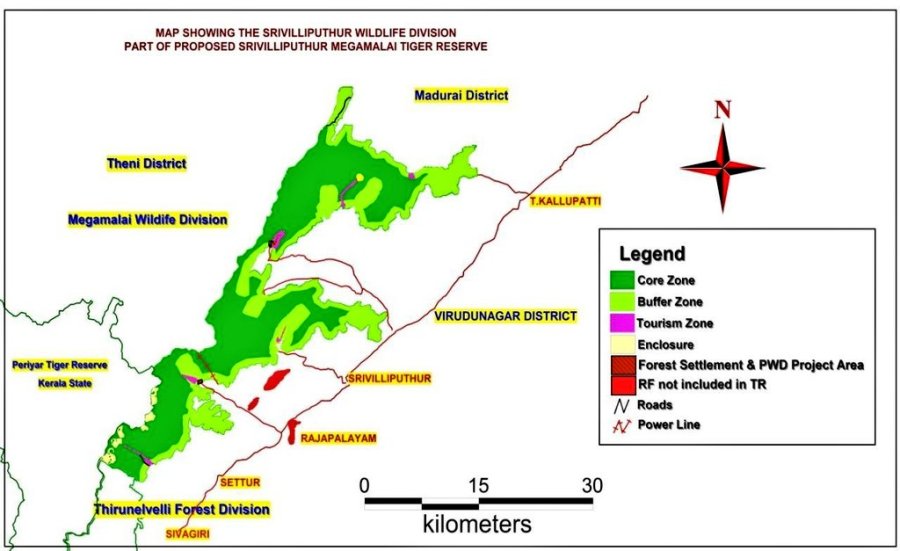
Indian government recently approved a new tiger reserve .Srivilliputhur Megamalai Tiger Reserve in Tamil Nadu is the latest addition. It’s 51st tiger reserve in the country & 5th in the state of Tamil Nadu. The 50th tiger reserve was Kamlang , which was the first & only tiger reserve of Arunachal Pradesh, & was approved 6 years ago.

The land encompassing the Meghamalai Wildlife Sanctuary (spread across the districts of Theni and Madurai) and Srivilliputhur Grizzled Squirrel Wildlife Sanctuary, which adjoins Kerala’s Periyar Tiger Reserve and Tirunelveli’s Kalakkad Mundanthurai Tiger Reserve is declared as the 51st tiger reserve of the country.

This land is habitat of 63 mammal species & 323 bird species.

Meghamalai Wildlife Sanctuary hosts ungulates (hoofed mammals), spotted deers, Indian gaurs, wild boars and other carnivores.Srivilliputhur on the other hand,  is habitat of grizzled giant squirrels, flying squirrels, leopards, Nilgiri tahrs, jungle cats, Sambars, elephants and many species of birds, including the lion-tailed macaque.

This new tiger reserve is spread over 1,016,57 sq km (core area – 641.86 sq km, buffer area – 374.70 sq km) with the potential to provide much needed habitat for tigers dispersing from neighbouring Periyar Tiger Reserve & Anamalai Tiger Reserve.

This new tiger reserve will act as a boost in direction of restoration of the health of forests & wildlife.

As a tiger reserve, illegal entry into the area becomes a punishable offence, with five years of imprisonment & it also gets a better team of dedicated officers , researchers & guards.

Conservationists believe that by declaring the Meghamalai Srivilliputhur Tiger reserve, there are great chances for the Vaigai River rejuvenation.

As per latest estimation , the number of tigers in India is 2,967 (range 2,603 to 3,346). And the largest tiger reserve of the country is Nagarjunsagar Srisailam Tiger Reserve which covers 5 districts of the states of Andhra Pradesh & Telangana.

Recommendations Of State Human Right Commission Are Legally Enforceable, Binding On Government/Authorities

In a well-written, well-worded, well-analysed, well-reasoned, well-substantiated, well-articulated and well-concluded 517-page judgment titled Abdul Sathar vs The Principal Secretary to Government and 5 others in W.P. No. 41791 of 2006 delivered as recently as on February 5, 2021, a Full Bench of the Madras High Court has held that the recommendation of State Human Rights Commission under Section 18 of the Protection of Human Rights Act, 1993 is binding on the Government or Authority. The Bench comprising of Justices S Vaidyanathan, Parthiban and M Sundar also held that it is an adjudicatory order which is legally and immediately enforceable. Very rightly so! 

To start with, the ball is set rolling by first and foremost observing in para 1 of this commendable judgment authored by Justice M Sundar for himself, Justice S Vaidyanathan and Justice Parthiban wherein it is laid down as a preferatory note that, “It is often said that interpretation is a journey of discovery, which is not akin to a regular journey of discussion and dispositive reasoning which predominantly turns on ‘construction’. Interpretation (unlike construction) is more in the nature of determining the idea of legal meaning of a Statute. Interpretation is a jurisprudential journey as it is the process of sifting a statute and/or it is provisions to seek the intention of the Legislature. In this order, we had embarked upon such a jurisprudential journey, which under the normal circumstances should have reached its destination before the dawn of December 2020, but that was not to be owing to the Corona virus pandemic and consequent lock down, which is now widely and commonly referred to as ‘Covid-19 situation’; Covid-19 was something which we did not portend or presage when this journey commenced on 17.02.2020 and thereafter we had no means of prophesying that it would impact one of us and personal staff of another of us.”
On an introductory note, it is then held in para 2 that, “We are much conscious over the joint effort to raise the efficiency and therefore, we feel it appropriate to state as to why there is a little delay in delivering this judgment, though it is not imperative for us to narrate the reasons, we believe that keeping a clear conscience is always better. We can speak only through our order with none to articulate these facts if this order is assailed in the Apex Court. Owing to conflict of judgments with regard to human rights violations, these batch of cases were referred to us by constitution of a Special Bench by the then Hon’ble Chief Justice, for a firm judicial pronouncement on the said aspect. These matters were heard by us on several listings / days in virtual Courts (Web hearing on a video conferencing platform) and finally judgment in this case was reserved on 29.09.2020.”
While continuing in a similar vein, the Full Bench then holds in para 5 that, “We have thought it appropriate and pertinent to write this prefatory note in the light of matters now before different Hon’ble Division Benches which are awaiting this verdict. Suffice to say that pronouncing of this order which should have happened before the dawn of December 2020, is happening now owing to circumstances narrated herein which we could neither foretell nor foreshadow.”
Most significantly and most remarkably, what forms the cornerstone of this commendable judgment is then stated in para 490 that, “In the conspectus of the above discourse, the following is our summation to the terms of the Reference: 
(i) Whether the decision made by the State Human Rights Commission under Section 18 of the Protection of Human Rights Act, 1993, is only a recommendation and not an adjudicated order capable of immediate enforcement, or otherwise?
Ans: The recommendation of the Commission made under Section 18 of the Act, is binding on the Government or Authority. The Government is under a legal obligation to forward its comments on the Report including the action taken or proposed to be taken to the Commission in terms of Sub Clause (e) of Section 18. Therefore, the recommendation of the H.R. Commission under Section 18 is an adjudicatory order which is legally and immediately enforceable. If the concerned Government or authority fails to implement the recommendation of the Commission within the time stipulated under Section 18(e) of the Act, the Commission can approach the Constitutional Court under Section 18(b) of the Act for enforcement by seeking issuance of appropriate Writ/order/direction. We having held the recommendation to be binding, axiomatically, sanctus and sacrosanct public duty is imposed on the concerned Government or authority to implement the recommendation. It is also clarified that if the Commission is the petitioner before the Constitutional Court under Section 18(b) of the Act, it shall not be open to the concerned Government or authority to oppose the petition for implementation of its recommendation, unless the concerned Government or authority files a petition seeking judicial review of the Commission’s recommendation, provided that the concerned Government or authority has expressed their intention to seek judicial review to the Commission’s recommendation in terms of Section 18(e) of the Act. 
(ii) Whether the State has any discretion to avoid implementation of the decision made by the State Human Rights Commission and if so, under what circumstances? 
Ans: As our answer is in the affirmative in respect of the first point of Reference, the same holds good for this point of Reference as well. We having held that the recommendation is binding, the State has no discretion to avoid implementation of the recommendation and in case the State is aggrieved, it can only resort to legal remedy seeking judicial review of the recommendation of the Commission.
(iii) Whether the State Human Rights Commission, while exercising powers under sub-clauses (ii) and (iii) of clause (a) of Section 18 of the Protection of Human Rights Act, 1993, could straight away issue orders for recovery of the compensation amount directed to be paid by the State to the victims of violation of human rights under sub-clause (i) of clause (a) of Section 18 of that enactment, from the Officers of the State who have been found to be responsible for causing such violation?
Ans: Yes, as we have held that the recommendation of the Commission under Section 18 is binding and enforceable, the Commission can order recovery of the compensation from the State and payable to the victims of the violation of human rights under Sub Clause (a)(i) of Section 18 of the Act and the State in turn could recover the compensation paid, from the Officers of the State who have been found to be responsible for causing human rights violation. However, we clarify that before effecting recovery from the Officer of the State, the Officer concerned shall be issued with a show cause notice seeking his explanation only on the aspect of quantum of compensation recoverable from him and not on the aspect whether he was responsible for causing human rights violation.
(iv) Whether initiation of appropriate disciplinary proceedings against the Officers of the State under the relevant service rules, if it is so empowered, is the only permissible mode for recovery of the compensation amount directed to be paid by the State to the victims of violation of human rights under sub-clause(i) of clause(a) of Section 18 of the Protection of Human Rights Act, 1993, from the Officers of the State who have been found to be responsible for causing such violation?
Ans: As far as the initiation of disciplinary proceedings under the relevant Service Rules is concerned, for recovery of compensation, mere show cause notice is sufficient in regard to the quantum of compensation recommended and to be recovered from the Officers/employees of the concerned Government. However, in regard to imposition of penalty as a consequence of a delinquent official being found guilty of the violation, a limited departmental enquiry may be conducted only to ascertain the extent of culpability of the Official concerned in causing violation in order to formulate an opinion of the punishing Authority as to the proportionality of the punishment to be imposed on the official concerned. This procedure may be followed only in cases where the disciplinary authority/punishing authority comes to the conclusion on the basis of the inquiry proceedings and the recommendations of the Commission that the delinquent official is required to be visited with any of the major penalties enumerated in the relevant Service Regulations.
As far as imposition of minor penalty is concerned, a mere show cause notice is fair enough, as the existing Service Rules of all services specifically contemplate only show cause notice in any minor penalty proceedings.
(v) Whether Officers of the State who have been found to be responsible by the State Human Rights Commission for causing violation of human rights under Section 18 of the Protection of Human Rights Act, 1993, are entitled to impeach such orders passed by the Commission in proceedings under Article 226 of the Constitution and if so, at what stage and to which extent?
Ans: As we have held that the recommendation of the Commission under Section 18 of the Act is binding and enforceable, the Officers/employees of the State who have been found responsible for causing violation of human rights by the Commission, are entitled to assail such orders passed by the Commission by taking recourse to remedies of judicial review provided under the Constitution of India. It is open to the aggrieved officers/employees to approach the competent Court to challenge the findings as well as recommendations of the Commission.”
No less significant is what is then stated in para 492 that, “Before we part with this Reference, we are constrained to express our considered opinion that despite all the provisions in the Act, covering wide spectrum of human rights concerns in consonance with the Rule of Law governing our polity, in the absence of an inbuilt and integral provision within the explicit frame work of the Statute, a perception has been gaining ground in the corridors of the implementing authorities that the recommendation of the H.R.Commission lacks legal sanctity and hence can be trifled with. Such perception and point of view on the part of the implementing authority may not augur well towards addressing the complaints of human rights violation in the country where the written Constitution reigns supreme and is placed at the altar of our governance.”
As it turned out, the Full Bench then observes in para 493 that, “Although the history after the introduction of the Act, reveals that by and large the recommendations of the Commission have been implemented, any discretion to the implementing authorities to either accept or not accept the recommendation would only lead to avoidable delay, forcing the Commission to invoke Section 18(b) of the Act.” 
Be it noted, it is then rightly and remarkably pointed out in para 494 that, “In a constitutional democracy, there is always a possibility of change of Governments, policy makers and so are the policies. The policies are always in a state of fluidity depending on expectations resulting in shifts and changes of perspective framework of the policy makers. In such circumstances, at the time of enactment of the Act, an assurance given on behalf of the Treasury Bench by the Hon’ble Minister concerned that recommendation of the H.R.Commission would be accorded due respect as in the case of recommendation of the Finance Commission and the Government in the past had never declined to accept the recommendation of the Finance Commission as matter of healthy convention.”
Frankly speaking, the Full Bench then adds on a practical note in para 495 that, “The history of politics and governance has been witnessing constant change through evolution of different policies and as a consequence of such change any convention observed in the past has its breaking point in tune with the time. Therefore, the Act which was introduced providing a public law remedy, cannot be operated on the basis of the assurance of the Hon’ble Minister concerned, unless the assurance is transformed into a letter of law for all the time to be followed.”
For the sake of clarity, it is then made clear in para 496 that, “The avowed intention of the policy frames at that point of time was clear but at the same time, following any convention after all is a only a matter of choice at the end of the day. If in this context, we are of the considered opinion that the intention of the framers may be given a statutory sanction within the Act itself to make the Act a complete code in itself instead of invoking the jurisdiction of the Constitutional Court for execution of the recommendation.”
As an advisory note, the Full Bench then holds in para 497 that, “We earnestly trust and hope that the Parliament in its collective wisdom would bring necessary amendments in the Act to provide wherewithal to the Commission for direct execution of the recommendation. By such initiation, the learned Parliament would be according befitting status to the Commission steered by the high constitutional dignitaries of the highest legal order.”
While making further suggestion, the Full Bench then also observes in para 498 that, “In the said circumstances, we hereby suggest to the policy makers to make suitable amendment/s in the Act providing for an internal/self-contained mechanism qua Human Rights Commission for enforcing its recommendations under Section 18 of the Act. By such amendment/s, the Act would become complete in all fours, leaving no room for procrastination in offering remedial action promptly.”
Now coming to the concluding paras. It is held in para 499 that, “Now we part this case with trust and hope that our suggestion finds codified Statutory expression in the realm of Human Rights Laws in the days to come.” Para 500 states that, “The terms of the Reference are answered accordingly.” 
Finally, it is then held in the last para 501 that, “All the individual Writ Petitions are to be posted before the Honble Benches concerned for disposal on the respective merits of the Writ Petitions, after taking note of our answers to the Reference.”
On a concluding note, it has to be said that the Full Bench of Madras High Court has very commendably held that the recommendations of State Human Rights Commission are legally enforceable, binding on government/authorities. As the ruling is 517 pages, it was just not possible to mention each and every significant point mentioned in this latest, learned landmark and laudable judgment. But we can derive satisfaction from this that we have dwelt considerably on the vital parts of this leading case which forms the sum and substance also. It would be prudent to always remember what is mentioned in para 477 of this notable judgment that, “We may not be elected Judges through Universal suffrage, nay we are nominated by operation of the Constitutional provisions to preside over Constitutional Court. Our partnership with Executive and Legislature ordains us with shared responsibility in safeguarding, protection and promotion of Human Rights. In discharge of the sublime responsibility, the role of the Constitutional Court assumes sovereign coloration and the interpretation of the Statute lies at its portals. The Act which has been conceived and designed as a Protector of Human Rights, has to necessarily include enforcer of Human Rights as well. Protection of Human Rights without enforcement would only amount to empty proclamation, as promise without a guarantee.” Same is the case with para 470 which holds that, “Human Rights Commission created to address the exalted human rights concerns is not a show-piece to the world as a token of conformity to the commitment of India to the Universal Declaration of Human Rights and International treaties, viz., International Covenant on Civil and Political Rights, 1966 and International Covenant on Economic, Social and Cultural Rights. 1966. The institution’s reach and the functional efficacy must be real to carry its constitutional obligation to the hilt. Our lawmakers must remember this always now and must amend laws to meet the present circumstances accordingly in the right earnest!
Sanjeev Sirohi

BIO-TERRORISM AND CLIMATE GETTING WORSE- TWO MORE PANDEMICS WAITING FOR US IN THE FUTURE

In 2015, when Bill Gates warned us about a possible global pandemic occurring in the future, which could kill above 10 million people, he predicted that it would not be because of a nuclear war but it would come in the form of a deadly virus. He warned us that we are not prepared enough to face the pandemic head-on and our unpreparedness will result into very adverse outcomes.

Looking back at it, he was right wasn’t he. We remained unprepared ignoring the warnings and then coronavirus hit us, and it hit us so bad that even developed countries like China, Italy, USA and UK took a serious blow and the death toll is still increasing. Vaccines are being developed but we still have a long way to go.

And while we are still recovering, we are facing the danger of two more pandemics which are- Bio-terrorism and Climate change. In his recent interview, Bill Gates talked about these issues, he warned about increasing death toll in future due to changing climate and spread of biological weapons in form of infectious bacteria and viruses with the intention to cause damage globally. Many physical impacts of climate change are already visible, including extreme weather events, glacier retreat, increase in level of sea water, drought and wildfires etc. And he also suggested us the ways in which we could better prepare ourselves to fight effectively against these future pandemics, they are-

  1. Field based activity- Appointing a team of epidemiologists so that they could go to the affected locations and collect data about the problems and difficulties they are facing because vaccine research begins only after a careful assessment of public health priorities. Work conducted in the basic research laboratory forms the scientific foundation for all subsequent investigation.
  2. R&D activity- Investing more in the Research and development for the solutions to the pandemics, like in case of an infectious virus developing mRNA vaccines and developing warning systems using technology.
  3. Contact Tracing- Contact tracers use clear protocols to notify, interview, and advise close contacts to patients with confirmed or probable infections . Jurisdictions can use the following steps and considerations as a framework when developing a protocol for the tracing of close contacts.

To prevent climate change we have to take some important steps ourselves to save our environment and sustain our resources by-

  1. Planting more trees & Stop deforestation
  2. Using resources like water and fuels responsibly
  3. Using energy efficiently and minimizing wastage
  4. Using natural resources like solar power to generate electricity.
  5. Recycling and using renewable resources
  6. Informing and educating others of these dangers and ways to fight against it

Few Important Findings from FAO’s Recent Publication

This article is based on FAO’s recent publication viz., World Food and Agriculture Statistical Pocketbook 2019 of the Food and Agriculture Organization (FAO) of the United Nations, Rome. So I have highlighted the issues based on their publication.  I was in FAO Rome, to present my research paper as they selected me few years ago, so could  observe their function closely and feel that FAO has been doing commendable work in the field of agriculture and rural development.  

a)      As per the publication, the total number of people in the world is around 7.5 billion, indicating an increase of 100 percent since the early 1960s.  

b)      In many areas of South Asia and Sub-Saharan Africa young populations present high fertility. 

c)      At present about 45 percent of the global world population is classified as rural, based on ‘national definitions’. It clearly implies that urbanisation has been taking place rapidly. Of course, we know the pace of urbanisation is much faster in developed countries than developing countries.

d)     Another important finding is that as national income goes up, the share of agriculture in Gross Domestic Product (GDP) decreases. And in the developed countries agriculture accounts for a smaller share of GDP.

e)      In India and China because of fast development of secondary and services sectors, share of agriculture in GDP has been scaling down.

f)       In the context of using chemical or mineral fertilizers in the world, the statistics reveal that in 2017 total use of nitrogen (N) was 109 Metric ton/Mt, 45 Mt phosphates (P2O5) and 38 Mt potash (K). It may be mentioned here that in comparison to 2002, this represented increases of 34 percent use of nitrogen (N)     , 40 percent increase of phosphates (P2O5) and 45 percent for potash (K).   

g)      In the world total agricultural use of fertilizers per hectare of cropland (arable land and permanent crops) also increased in 2017 and the data are 70 kg N/ha, 29 kg P2O5/ha and 24 kg K/ha.

h)      Hunger is now a great issue particularly in the developing countries. The data in this regard reveal the number of undernourished people (million) in 2015 in the world were 785 which scaled up to 821.6 million in 2018.

i)        Number of severely food insecure people in 2015 was 568.2 million against the backdrop in 2018 the same was 704.3 million, such a figure is unfortunate as instead of coming down the same has gone up.  In this context, it may be mentioned that as per the publication, hunger is traditionally measured by the prevalence of undernourishment, which is the inability to acquire enough food to meet dietary energy requirements.

j)        Top 20 countries with the highest number of undernourished during 2016 to 2018 were India, China, Pakistan, Nigeria, Bangladesh, Indonesia, Ethiopia, Uganda, Tanzania, Kenya, Philippines, Democratic People’s Republic of Korea, Madagascar, Iraq, Yemen, Afghanistan Vietnam Zimbabwe Mozambique and Sudan. Whereas a number of severely food insecure people by sub region (2018) wise are: Southern  Asia, Eastern Africa, Western Africa,  South America, South-eastern Asia, Western Asia, Southern Africa, Central America, Northern Africa and Eastern Asia.

  I feel these statistics will help the readers to get an idea about hunger and agricultural development in the different parts of the world. And also I suggest researchers can take up M.Phil. /Ph. D. studies selecting the topic like use of fertilizers, chemicals, hunger, poverty etc.  

Prof Shankar Chatterjee, Hyderabad

Twinkle Twinkle little star – Now I wonder why so far

You must have read & recited the poem ‘Twinkle Twinkle Little Star’ in your childhood days. Kids still read & recite the poem. But there’s a difference in their recitation.While we used to recite it in starry nights, they just watch twinkling stars in a youtube video.What else can they do ?

Those starry nights are no longer visible. Even in a small town , there are only a few stars you can see by naked eyes. Future generations will see the starry nights only in pictures.

Now you can’t just point out your finger in the north to show someone the pole star.

Now the question is why ? Why the night sky is vanishing ? Why the Milky Way is fading ? Why the stars are no longer visible ?

Well , the reason is light pollution. With the advancement of more & more LEDs , the milky way is now no longer visible to more than a third population of the world. Those thousands of stars have just turned into hundreds.

Buildings’ lights , residents’ lights , street lights, vehicles’ lights , neon signs. Well , this much amount of light is creating a permanent ‘skyglow’ at night,which is obscuring that beautiful sight.

Is it only about the stars ? No , excessive lighting at night has other adverse consequences too –

1. It can disrupt our sleep , or in long run can cause stress.

2. It is waste of energy , not all the lights you see in cities at night , are needed. A lot of buildings or streets just glow for the sake of beauty.Thus , a lot of energy get wasted.

3. It’s not good for animals , birds & ecosystem. Migratory birds often get bewildered by lighting buildings , sea turtles lose their ability to navigate in ocean due to the confusion lighting from coastal create. There’re evidences that artificial lighting make it harder for the zooplankton to eat harmful algae in lakes , thus degrades the water quality.

And of course this one consequence is also there , from which I started the blog. Future generation will not be able to see the milky way without a telescope , thus it”ll lessen their interest in astronomy. It”ll lessen their sense about vastness of Universe.

Of course , the street lighting is necessary , but not for the show off. Unnecessary lighting can be avoided. Street lights can be replaced by more focused LEDs which only send light downward rather than those lights which scatter the lights in all directions. There can be other ways to reduce the light pollution. As it is said “Where there’s a will , there’s a way”.

Beti Padhao, Beti Bachao movement leads to a nationwide increase in the average sex-ratio of male child to female child

In these difficult times when a good news is hard to come by, we have got a good news.

States like Uttar Pradesh, Rajasthan, Haryana, Punjab and Himachal Pradesh were suffering from a huge  difference in the sex-ratio of male child to female child due to old and prevalent malpractices such as female infanticide and abortion of female child in the womb itself, are now  seeing a decrease in the difference in the sex-ratio. By definition, sex-ratio means the ratio of males to females in a given population.

According to Mrs. Smriti Irani, Minister of Women and Child Development “Improvement in the sex-ratio in these states happened due to the Beti Padhao, Beti Bachao Scheme launched by the government. Average sex-ratio throughout the country has also improved”.

In 2015-16 , the sex-ratio was 1000 males to 918 females which increased to 1000 males to 934 females in 2019-20.

In Uttar Pradesh, the average per 1000 males is now 928 females which was previously 885. In Haryana, this average  per 1000 males became 924 females which was earlier 816. In Chandigarh it increased to 935 from 874 females per 1000 males. In Punjab female ratio increased from 892 to 920. In Himachal Pradesh, it increased from 897 to 933 females and in Rajasthan it increased from 929 to 948. It just goes to show that people are changing slowly and in a good way.

But where these states saw an increase in the ratio, some others states like Bihar, Odisha and Kerala saw a decrease in the no. of females per 1000 males thereby increasing the difference in the sex-ratio which shows that we still have a long way to go.

Despite Marrying Willingly A Minor Girl Can’t Be Allowed To Stay With Husband Till She Attains Majority

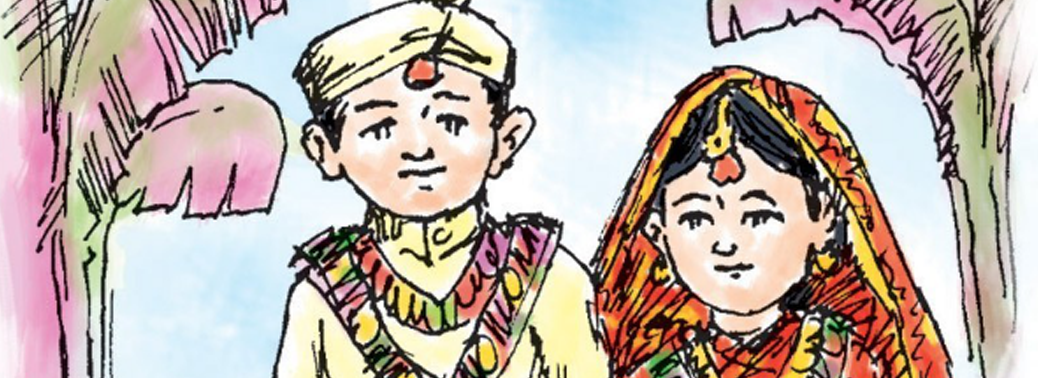
In a significant judgment titled Pradeep Tomar And Another v. State of U.P. and Another [Matters Under Article 227 No. 4804 of 2020] delivered on January 27, 2021, the Allahabad High Court has recently, righteously and remarkably held that a minor girl cannot be allowed to live in a matrimonial relationship with a man she claims to be her husband even if she had left her home of her own accord and married the man out of her own free will. The Single Judge Bench of Justice JJ Munir ruled thus while taking into account her High School Certificate which “clearly indicated” that she is minor as her date of birth is 04 November 2004. The Bench specifically stated that, “So long as the prosecutrix is a minor, she cannot be permitted to accompany the accused Pintoo, whom she claims to have married.”

To start with, the ball is set rolling by first and foremost observing in para 1 that, “This petition under Article 227 of the Constitution has been filed seeking to set aside an order of the learned Judicial Magistrate-I, Hapur, dated 24.11.2020, passed in Case Crime No. 516 of 2020, under Section 363 IPC, P.S. Pilakhuwa, District Hapur, directing that the prosecutrix Km. Shivani be permitted to go along with her husband, the accused Pintoo son of Omvir.”
To be sure, it is then stated in para 2 that, “A counter affidavit has been filed on behalf of the second opposite party by Mr. Rama Shankar Mishra, Advocate, which is taken on record. The petitioner has filed a rejoinder.”
On the one hand, it is put forth in para 6 that, “The submission of Mr. Sudhir Mehrotra, learned counsel for the petitioners, briefly said, is to the effect that the date of birth of the prosecutrix, according to her High School Examination Certificate issued by the U.P. Board of High School and Intermediate Education, is 04.11.2004. She is, thus, a minor, aged 16 years and 2 months approximately. She would attain majority on 05.11.2022. Mr. Mehrotra submits that the Magistrate has erred in permitting the prosecutrix to accompany her husband, an accused in the crime, going by the marriage acknowledged by the parties to be solemnized on 21.09.2020 at the Pandav Kalin Neeli Chhatri Mandir Sanatan Dharam Vivah Padti Trust, Yamuna Bazar, Delhi. Mr. Mehrotra submits that the prosecutrix, being a minor, cannot be permitted to stay in a matrimonial relationship, where the marriage would be void under Section 12 of the Prohibition of Child Marriage Act, 2006 (for short, ‘the Act of 2006’). He submits that in any case the prosecutrix, who is not a major, cannot be permitted to stay with her husband and ought not to be allowed to accompany him. Doing so, would be permitting statutory rape and also an offence under Section 5/6 of the Protection of Children from Sexual Offences Act, 2012.”
On the other hand, it is then brought out in para 7 that, “Mr. Rama Shankar Mishra, on the other hand, submits that the prosecutrix in her stand before the Magistrate has made it clear that she has married the accused Pintoo of her free will and wishes to stay with him. He emphasizes that the parties’ marriage has been registered under the U.P. Marriage Registration Rules, 2017 by the Marriage Registration Officer, Ghaziabad on 21.09.2020. He has drawn the attention of this Court towards a certificate of the registration of marriage, dated 21.09.2020.”
To put things in perspective, it is then pointed out in para 8 that, “This Court has perused the impugned order and considered the entire facts and circumstances. The prosecutrix is a little over 16 years of age. The Magistrate has been swayed to permit the prosecutrix to go along with the accused, her husband on ground that the father of the prosecutrix made an application that he would not take her back home and that he had lodged an FIR, out of social embarrassment. The Magistrate has relied upon the decisions of this Court in Smt. Rajkumari vs. Superintendent, Nari Niketan, 1998 Cr.L.J 654 (All) and Smt. Ramsati @ Syamsati vs. State of U.P., Habeas Corpus Writ Petition No. 245 of 2015, decided on 07.09.2005 to hold that upon marriage of a minor according to her wishes, she could be left free to live her life.”
As it turned out, it is then stated in para 10 that, “So far as the age of the prosecutrix is concerned, in the face of the High School Certificate, there is no cavil that evidence about her being a major, which is her stand, cannot be accepted. She cannot be referred to medical examination for determination of her age, so long as her date of birth founded on her High School Certificate, is available. This certificate clearly indicates that she is a minor. There, her date of birth is 04.11.2004. Section 94 of the Juvenile Justice (Care and Protection of Children) Act, 2015 makes the following provision regarding presumption and determination of age: 
“94. Presumption and determination of age.– (1) Where, it is obvious to the Committee or the Board, based on the appearance of the person brought before it under any of the provisions of this Act (other than for the purpose of giving evidence) that the said person is a child, the Committee or the Board shall record such observation stating the age of the child as nearly as may be and proceed with the inquiry under section 14 or section 36, as the case may be, without waiting for further confirmation of the age.
(2) In case, the Committee or the Board has reasonable grounds for doubt regarding whether the person brought before it is a child or not, the Committee or the Board, as the case may be, shall undertake the process of age determination, by seeking evidence by obtaining –
(i) the date of birth certificate from the school, or the matriculation or equivalent certificate from the concerned examination Board, if available; and in the absence thereof; 
(ii) the birth certificate given by a corporation or a municipal authority or a panchayat; 
(iii) and only in the absence of (i) and (ii) above, age shall be determined by an ossification test or any other latest medical age determination test conducted on the orders of the Committee or the Board:
Provided such age determination test conducted on the order of the Committee or the Board shall be completed within fifteen days from the date of such order.
(3) The age recorded by the Committee or the Board to be the age of person so brought before it shall, for the purpose of this Act, be deemed to be the true age of that person.”
Be it noted, it is then stated in para 11 that, “The provisions of Section 94 (2) of the Act, which are designed to determine the age of a juvenile, have been extended to the victim in Jarnail Singh v. State of Haryana; (2013) 7 SCC 263 and by a Division Bench decision of this Court in Smt. Priyanka Devi through her husband vs. State of U.P. and others 2018 (1) ACR 1061, to which I was a party. It has been held in Smt. Priyanka Devi thus: 
“13. Learned counsel for the petitioner lastly urged that provisions of Section 94 of the Juvenile Justice Act, 2015 do not apply to the case in hand as the same are available for the purposes of determination of age for a juvenile or a child in conflict with the law but would not apply to the determination of age in the case of a victim.
14. We are afraid that the aforesaid submission is not correct. The issue was examined by the Supreme Court in the case of Mahadeo S/o Kerba Maske v. State of Maharashtra and Another; (2013) 14 SCC 637 where in paragraph no. 12 of the report it was held as under: “Under rule 12(3)(b), it is specifically provided that only in the absence of alternative methods described under Rule 12(3)(a)(i) to (iii), the medical opinion can be sought for. In the light of such a statutory rule prevailing for ascertainment of the age of the juvenile in our considered opinion, the same yardstick can be rightly followed by the courts for the purpose of the ascertaining the age of a victim as well.” 
15. This issue has also been considered in an earlier judgment of the Supreme Court in Jarnail Singh v. State of Haryana; 2013 (7) SCC 263, where too it has been held that rule 12(3) of the Juvenile Justice (Care and Protection of Children) Rules, 2007 must apply both to a child in conflict with law as well as to a victim of a crime. Paragraph 23 of the said report reads thus: 
“Even though Rule 12 is strictly applicable only to determine the age of a child in conflict with law, we are of the view that the aforesaid statutory provision should be the basis for determining age, even for a child who is a victim of crime. For, in our view, there is hardly any difference in so far as the issue of minority is concerned, between a child in conflict with law, and a child who is a victim of crime. Therefore, in our considered opinion, it would be just and appropriate to apply Rule 12 of the 2007 Rules, to determine the age of the prosecutrix VWPW6. The manner of determining age conclusively, has been expressed in sub-rule (3) of Rule 12 extracted above. Under the aforesaid provision, the age of a child is ascertained, by adopting the first available basis, out of a number of options postulated in Rule 12(3). If, in the scheme of options under Rule 12(3), an option is expressed in a preceding clause, it has overriding effect over an option expressed in a subsequent clause. The highest rated option available, would conclusively determine the age of a minor. In the scheme of Rule 12(3), matriculation (or equivalent) certificate of the concerned child, is the highest rated option. In case, the said certificate is available, no other evidence can be relied upon. Only in the absence of the said certificate, Rule 12(3), envisages consideration of the date of birth entered, in the school first attended by the child. In case such an entry of date of birth is available, the date of birth depicted therein is liable to be treated as final and conclusive, and no other material is to be relied upon. Only in the absence of such entry, Rule 12(3) postulates reliance on a birth certificate issued by a corporation or a municipal authority or a panchayat. Yet again, if such a certificate is available, then no other material whatsoever is to be taken into consideration, for determining the age of the child concerned, as the said certificate would conclusively determine the age of the child. It is only in the absence of any of the aforesaid, that Rule 12(3) postulates the determination of age of the concerned child, on the basis of medical opinion.”
16. Thus, principles applicable to the determination of age in the case of a juvenile would in terms apply to cases of determination of the age of a victim as well. It may be pointed out that at the point of time when Mahadeo (supra) was decided by their lordships of the Supreme Court, the Juvenile Justice Act, 2000 was in force and their lordships were interpreting the provision of Rule 12(3) of the Juvenile Justice (Care and Protection of Child) Rules, 2007. The said Act of 2000 has since been repealed and has been replaced by the Juvenile Justice Act, 2015. The rules framed under the Act of 2000 are thus no longer on the statute book. However, the provisions that found place in Rule 12(3) of the Juvenile Justice (Care and Protection of Child) Rules, 2007 framed under the Juvenile Justice Act, 2000 are now, with certain modifications engrafted into the Principal Act vide section 94 of the Juvenile Justice Act, 2015. The inter se priority of criteria to determine age under Rule 12(3) of the Rules, 2007 (supra) and section 94 of the Act, 2015 remains the same albeit with certain modifications which are of no consequences to the facts in hand. In short, provisions of Rule 12(3) of the Rules, 2007 framed under the Juvenile Justice Act, 2000 are para meteria to the provision of Section 94 of the Juvenile Justice Act, 2015. This being the comparative position, the principles of law laid down by their lordships in the case of Mahadeo (supra) would apply with equal force to the provisions of section 94(2) of the Juvenile Justice Act, 2015 while determining the age of a victim of an offence under Sections 363 and 366 IPC. Thus, the submission of the learned counsel for the petitioners, on this score, is not tenable.””
It is also worth noting that it is then stated in para 12 that, “The provisions of Section 94(2) makes it vivid that in the face of a date of birth certificate from the school or the matriculation or equivalent certificate from the concerned examination Board, the other evidence about the age of a victim cannot be looked into. If the date of birth certificate as envisaged in clause (i) of sub-Section (2) of Section 94 of the Act is not available, the birth certificate given by a corporation or a municipal authority or a panchayat is the next evidence to be considered in the rung. It is only when the evidence about age envisaged under clauses (i) and (ii) of Sub-Section (2) of Section 94 of the Act is not available, that a victim can be referred to a medico-legal examination for the determination of her age. Therefore, even if it is the prosecutrix’s stand, which this Court assumes to be so that she is 18 years old, and has married Pintoo of her free will, she cannot be regarded as a major or permitted to prove herself a major, by asking herself to be referred to medical examination by a Board of Doctors, so long as her High School Certificate is clear on the point. After the decision of their Lordships of the Supreme Court in Suhani vs. State of U.P., 2018 SCC Online SC 781, there was some confusion whether a victim could be referred to the medical examination of a Board of Doctors for determination of her age, in the face of a recorded date of birth in the High School certificate. But, after the decision of a Division Bench of this Court in Smt. Nisha Naaz alias Anuradha and another vs. State of U.P. and others 2019 (2) ACR 2075 holding that the decision in Suhani does not lay down any law but is a decision on facts, the principles in Smt. Priyanka Devi, following the decision in Jarnail Singh, is law that would govern the fate of this case. In Smt. Nisha Naaz alias Anuradha, it was held: 
“14. A plain reading of Section 94 of the 2015, Act would reveal that only in absence of: (a) the date of birth certificate from the school, or the matriculation or equivalent certificate from the concerned examination Board; and (b) the birth certificate given by a corporation or a municipal authority or a panchayat, age is to be determined by an ossification test or any other latest medical age determination test conducted on the orders of the Committee or the Board. A Division Bench of this court in the case of Smt. Priyanka Devi Vs. State of U.P. and others in Habeas Corpus Petition No.55317 of 2017, decided on 21st November, 2017, after noticing the provisions of the 2015, Act and the earlier 2000, Act and the rules framed thereunder, came to the conclusion that as there is no significant change brought about in the 2015, Act in the principles governing determination of age of a juvenile in conflict with law, in so far as weightage to medico legal evidence is concerned, the law laid down in respect of applicability of those provisions for determination of a child victim would continue to apply notwithstanding the new enactment. The Division Bench in Priyanka Devi’s case (supra) specifically held that as there is on record the High School Certificate, the medico legal evidence cannot be looked into as the statute does not permit.
15. The judgment of the apex court in Suhani’s case (supra) does not lay down law or guidelines to be used for determination of the age of child victim. Further, it neither overrules nor considers its earlier decisions which mandated that the age of child victim is to be determined by the same principles as are applicable for determination of the age of juvenile in conflict with law. From the judgment of the apex court in Suhani’s case (supra), it appears that the concerned victim (petitioner no.1 of that case) was produced before the court and the court considered it apposite that she should be medically examined by the concerned department of All India Institute of Medical Sciences (for short AIIMS). Upon which, AIIMS, by taking radiological tests, submitted report giving both lower as well as higher estimates of age. On the lower side the age was estimated as 19 years and on the higher side it was 24 years. Therefore, even if the margin of error was of 5 years, the victim was an adult. Hence, on the facts of that case, in Suhani’s case, the first information report was quashed by the Apex Court. The decision of the Apex Court was therefore in exercise of its power conferred upon it by Article 142 of the Constitution of India which enables it to pass such decree or make such order as is necessary for doing complete justice in any cause or matter pending before it. The said decision cannot be taken as a decision that overrules the earlier binding precedents which lay down the manner in which the age of a child victim is to be determined.””
No less significant is what is then stated in para 13 that, “So long as the prosecutrix is a minor, she cannot be permitted to accompany the accused Pintoo, whom she claims to have married. In order to determine whether the prosecutrix was enticed away from her guardian’s lawful custody, or she went away of her own, this Court ascertained the prosecutrix’s stand, who is present in Court. Her stand is recorded verbatim:
Q. Aapka Naam? 
Ans. Shivani 
Q. Aapki Aayu Kya Hai? 
Ans. 04.01.2002 (18 years) 
Q. Aap Pintoo Ko Janti Hain? 
Ans. Haan. 
Q. Pintoo Kaun Hain? 
Ans. Mere Pati. 
Q. Pintoo Aapko Bahla Fusla Kar Le Gaya Tha? 
Ans. Nahi, Mai Apni Marzi se Uske Saath Gayi Thi. 
Q. Aap Apne Mata-Pita Ke Pass Jaana Chahti Hain? 
Ans. Nahi. Main Apne Pati Ke Pass Jana Chahti Hun.”
As a corollary, it is then stated in para 14 that, “Looking to Shivani’s stand, it is evident that she has not been enticed away by Pintoo. Rather, she has left her home of her own accord and married him. In this view of the matter, the marriage would not be void under Section 12 of the Act of 2006, but would be voidable under Section 3 of the said Act.”
Interestingly enough, it is then envisaged in para 15 that, “The conclusion is evident from the provisions of Sections 3 and 12 of the Act of 2006 which read as under: 
“3. Child marriages to be voidable at the option of contracting party being a child.—(1) Every child marriage, whether solemnised before or after the commencement of this Act, shall be voidable at the option of the contracting party who was a child at the time of the marriage:
Provided that a petition for annulling a child marriage by a decree of nullity may be filed in the district court only by a contracting party to the marriage who was a child at the time of the marriage.
(2) If at the time of filing a petition, the petitioner is a minor, the petition may be filed through his or her guardian or next friend along with the Child Marriage Prohibition Officer.
(3) The petition under this section may be filed at any time but before the child filing the petition completes two years of attaining majority. 
(4) While granting a decree of nullity under this section, the district court shall make an order directing both the parties to the marriage and their parents or their guardians to return to the other party, his or her parents or guardian, as the case may be, the money, valuables, ornaments and other gifts received on the occasion of the marriage by them from the other side, or an amount equal to the value of such valuables, ornaments, other gifts and money: Provided that no order under this section shall be passed unless the concerned parties have been given notices to appear before the district court and show cause why such order should not be passed.
12. Marriage of a minor child to be void in certain circumstances.—Where a child, being a minor— 
(a) is taken or enticed out of the keeping of the lawful guardian; or
(b) by force compelled, or by any deceitful means induced to go from any place; or 
(c) is sold for the purpose of marriage; and made to go through a form of marriage or if the minor is married after which the minor is sold or trafficked or used for immoral purposes,
such marriage shall be null and void.””
Needless to say, it is then rightly asserted in para 16 that, “It would, therefore, be open to the prosecutrix to acknowledge the marriage or claim it to be void, once she attains the age of majority. It would also be open to her, once she attains the age of majority, to go wherever she likes and stay with whomsoever she wants.”
Simply put, the Bench then holds in para 17 that, “Since, she is not inclined to go back to her parents, for the present, this Court is left with no alternative but to direct the State to place her in a suitable State facility other than a Nari Niketan, may be a Safe Home/Shelter Home.”
What’s more, the Bench then also holds in para 18 that, “The District Magistrate, Hapur and the Superintendent of Police, Hapur are ordered to ensure that the prosecutrix is immediately housed in a suitable Safe Home/Shelter Home, or other State facility where she would be safe and taken care of.”
Furthermore, para 19 then states that, “The learned District Judge, Hapur is also directed to ensure that a Lady Judicial Officer, posted in his Judgeship, will visit the prosecutrix once a month and inquire about her welfare. In case there is anything objectionable, she will immediately report the matter to the District Judge, who will take appropriate steps to ensure the prosecutrix’s welfare during her stay in the State facility/Safe Home/ Shelter Home, wherever she is housed.”
Thereafter, it is then held in para 20 that, “Shivani would be permitted to live in State facility/Safe Home/ Shelter Home till 04.11.2022, and thereafter, she may go wherever she wants and stay with whomsoever she likes, including Pintoo, whom she claims to be her husband.”
As we see, it is then stated in para 21 that, “In the result, this petition succeeds and is allowed. The impugned order dated 24.11.2020, passed by the learned Judicial Magistrate-I, Hapur in Case Crime No. 516 of 2020 under Section 363 IPC, P.S. Pilakhuwa, District Hapur is hereby set aside. The prosecutrix shall be dealt with in accordance with the directions made hereinabove.”
Adding more to it, para 22 then states that, “Let Shivani, who is present in person, be forthwith taken into the care of the Court Officer and conveyed through the Registrar General to the Senior Superintendent of Police, Prayagraj. The Senior Superintendent of Police, Prayagraj shall cause the prosecutrix to be conveyed in safety to the Superintendent of Police, Hapur, who, along with the District Magistrate, Hapur will carry out the directions carried in this order forthwith.”
Now coming to concluding paras. Para 23 states that, “The Court Officer shall convey Shivani to the Registrar General, who shall make immediate arrangement to take her into his immediate care and ensure compliance of this order.” Finally, the last para 24 holds that, “Let this order be communicated to the learned District Judge, Hapur, the District Magistrate, Hapur, the Senior Superintendent of Police, Prayagraj and the Superintendent of Police, Hapur by the Joint Registrar (Compliance) within 24 hours.”
To sum it up, what can be inferred from this noteworthy ruling of Allahabad High Court is that despite marrying willingly a minor girl can’t be allowed to stay with her husband till she attains majority. This is so because if she is permitted to stay with her husband it would tantamount to permitting statutory rape and also would constitute an offence under Section 5/6 of the Protection of Children from Sexual Offences Act, 2012. Such a marriage of minor would not be void under Section 12 of the Prohibition of Child Marriage Act, 2006 but would be voidable under Section 3 of the said Act. It would be open to the minor girl to either acknowledge the marriage or claim it to be void once she attains the age of majority. It is left entirely on her own discretion to take what decision she likes once she attains the age of majority. This is the real crux of this commendable judgment! 
Sanjeev Sirohi

Rail Accident Claim Can’t Be Denied On Account Of Boarding Wrong Train Mistakenly

It is in the fitness of things that the Bombay High Court has most recently on 20 January 2021 held in a latest, learned, laudable and landmark judgment titled Smt Munnibai v. Union of India in First Appeal No. 259 of 2020 that one cannot be branded as an unauthorized train passenger merely because one mistakenly boards a wrong train. The Single Judge Bench of Justice Anuja Prabhudessa ruled thus while directing railways to pay Rs 8 lakh as compensation to one Munnibai Chaube whose son died due to the injuries sustained in accidental fall from a running train. Very rightly so!
To start with, the ball is set rolling in para 1 of this notable judgment authored by a single Judge Bench of Justice Anuja Prabhudessai of Nagpur Bench of Bombay High Court wherein it is put forth that, “The appellant herein has challenged the judgment and award, dated 17/01/2017, whereby ther Railway Claims Tribunal (hereinafter referred to as “the Tribunal” for short) has dismissed the Claim Application No. OA(IIu)/NGP/2013/0340.” 
                                    <div style="text-align: justify"><br /></div><div class="separator" style="clear: both;text-align: center"><a href="https://i.ytimg.com/vi/wEjJwRhoraU/maxresdefault.jpg" style="margin-left: 1em;margin-right: 1em"><img border="0" src="https://i.ytimg.com/vi/wEjJwRhoraU/maxresdefault.jpg" /></a></div><br /><div style="text-align: justify"><br /></div><div style="text-align: justify">To put things in perspective, it is then enunciated in para 2 that, “The appellant is the mother of Vikki Munnalal Chaube, who died in a train accident on 12/12/2012. It was the case of the appellant that on the relevant date, her son Vikki was travelling from Nagpur to Tumsar Road by Train No.12101 LTT - Howrah-Janeshwari Express. It is alleged that said Vikki fell down from a running train at Mundikota Railway Station. He was taken to KTS Hospital, where he was declared dead. The appellant filed an application under Section 23 of the Railway Claims Tribunal Act, for compensation on account of death of her son in “untoward incident”.”</div><div style="text-align: justify"><br /></div><div style="text-align: justify">On the contrary, it is then stated by the Bench in para 3 that, “The claim was contested by the respondent on the ground that no such “untoward incident” had occurred resulting in the death of the son of the appellant within the meaning of Section 123(c) read with Section 124A of the Railways Act. The respondent further claimed that the deceased was not a bona fide passenger.”</div><div style="text-align: justify"><br /></div><div style="text-align: justify">As it turned out, the Bench then points out in para 4 that, “The Tribunal framed the issues and upon considering the evidence on record held that the appellant is the dependent of the deceased within the meaning of Section 123(b) of the Railways Act. The Tribunal also recorded a finding that the death of deceased had occurred in an “untoward incident”. The Tribunal further observed that the deceased was having a journey Ticket No.R94100073 from Nagpur to Tumsar Road on 12/12/2012. The Tribunal, however, dismissed the claim mainly on the ground that the said ticket was not a valid journey ticket for Train No.12101 LTT Howrah-Janeshwari Express.”</div><div style="text-align: justify"><br /></div><div style="text-align: justify">As against what has been stated above, the Bench then points out in para 5 that, “Assailing the said judgment, learned Counsel for the appellant has contended that the Tribunal was required to consider, whether deceased Vikki had lost his life as a result of “untoward incident” and whether the Railway Administration had proved and established exception or exceptions available under Section 124A of the Railways Act. He contends that the Tribunal was not justified in dismissing the petition only because the deceased had boarded a wrong train. He has relied upon the decision of Union of India vs. Rina Devi (AIR 2018 SC 2362) and Union of India vs. Anuradha &amp; another (2014 ACJ 856) to contend that the Railway Administration cannot be absolved of its liability, merely on a plea of negligence of victim as contributing factor.”</div><div style="text-align: justify"><br /></div><div style="text-align: justify">There can be no denying that there is a lot of merit in what the learned counsel for the appellant has contended. The petition should not have been dismissed by the Railway Claims Tribunal on the sole ground that the deceased had boarded a wrong train. The judgments cited above are latest and also relevant to hold the Railway Administration accountable which cannot be absolved of its liability as stated above.</div><div style="text-align: justify"><br /></div><div style="text-align: justify">Needless to say, it is then stated in para 6 that, “Per contra, learned Counsel for the respondent submits that the deceased had no valid ticket for travelling by Train No.12101 LTT Howrah-Janeshwari Express. He contends that the deceased cannot be considered to be a bona fide passenger and, hence, the Railway Administration is not liable to pay compensation to the appellant.”</div><div style="text-align: justify"><br /></div><div style="text-align: justify">Truth be told, after considering all the facts before it and perusing the records, it is then held in para 7 by the Bench that, “I have perused the records and considered the submissions advanced by learned Counsel for the respective parties. Before adverting to the facts of the case, it would be relevant to refer to the decision of Rina Devi (supra), wherein the Apex Court has observed that death in the course of boarding or de-boarding a train will be an “untoward incident” entitling a victim to the compensation and will not fall under the proviso of Section 124A merely on the plea of negligence of the victim as a contributing factor.”</div><div style="text-align: justify"><br /></div><div style="text-align: justify">More significantly, the Bench then goes on to hold in para 8 that, “In the case of Anuradha (supra), learned Single Judge of this Court (Coram : A.P. Bhangale, J.) on similar facts, has held that the Railway trains are used as convenient and affordable means of conveyance by any commoner in our country. If a passenger unguided by railway security personnel, ticket checkers or in absence of the regular announcements mistakenly boards a wrong train halting on the platform, may on realizing his mistake fall off the train due to panicky situation or otherwise accidentally, the railway administration cannot feign ignorance about the untoward incident in such case in order to shirk away from its strict liability to compensate monetarily for the untoward fatal accidents.”</div><div style="text-align: justify"><br /></div><div style="text-align: justify">Finally and far most significantly, the Single Judge Bench of Justice Smt Anuja Prabhudessai then goes on to hold in para 9 that, “In the present case, the victim Vikki had admittedly purchased a train ticket for travel from Nagpur to Tumsar Road. It is in evidence that he had boarded a wrong train. He cannot be branded as an unauthorized passenger merely because he had mistakenly boarded a wrong train. The death of the said passenger was due to the injuries sustained in accidental fall from a running train. Accordingly, the death was an “untoward incident” and was not covered by proviso to Section 124-A of the Railways Act. The Tribunal was, therefore, not justified in rejecting the claim solely on the ground that the victim had boarded a wrong train. The appellant having discharged the initial burden of proving that Vikki was a bona fide passenger and that his death was an “untoward incident”, the respondent cannot be absolved of their liability of paying the compensation to the dependents of the deceased. For the reasons stated above, the impugned judgment cannot be sustained. Hence, the following order : </div><div style="text-align: justify"><br /></div><div style="text-align: justify">O R D E R</div><div style="text-align: justify"><br /></div><div style="text-align: justify">i.       The appeal is allowed.</div><div style="text-align: justify"><br /></div><div style="text-align: justify">ii. The impugned judgment, dated 17/01/2017 in Claim Application No. OA(Ilu)/NGP/2013/0340 is quashed and set aside.</div><div style="text-align: justify"><br /></div><div style="text-align: justify">iii. The respondent-Union of India is directed to pay to the appellant a sum of Rs.8,00,000/-. </div><div style="text-align: justify"><br /></div><div style="text-align: justify">iv.   The said amount shall be deposited in the account of the claimant-appellant after verifying the identity within a period of three months. </div><div style="text-align: justify"><br /></div><div style="text-align: justify">v.     The appeal stands disposed of. </div><div style="text-align: justify"><br /></div><div style="text-align: justify">All said and done, the sum and substance of this commendable, cogent and convincing judgment delivered by Justice Smt Anuja Prabhudessai of Nagpur Bench of the Bombay High Court is that the Railway is certainly liable to pay compensation of Rs 8 lakh to one Munnilal Chaube whose son Vikki died due to the injuries sustained in accidental fall from a running train while he was travelling from Nagpur to Tumsar Road by Howrah-Janeshwari Express. Railway cannot exonerate itself from its liability on this score merely on the specious ground that he had mistakenly boarded a wrong train and as a corollary the Union of India had no option but to shell out Rs 8 lakh as compensation to the appellant. As we know, the appellant named Munnibai Chaube had filed an application under Section 23 of the Railway Claims Tribunal Act for compensation on account of death of her son in “untoward incident”.</div><div style="text-align: justify"><br /></div><div style="text-align: justify">As per Section 123(c) of The Railway Act, 1989, “untoward incident” includes the accidental falling of any passenger from a train carrying passenger. So the appellant was well within her right to demand the compensation on the ground as specified above! There is nothing extraordinary about it! </div><div style="text-align: justify"><br /></div><div style="text-align: justify">It may be recollected that the Bombay High Court last year had similarly allowed an appeal against the order of the Railway Claims Tribunal, Nagpur and had directed Central Railways to pay Rs 8 lakh as compensation to the family of one Arjun Gawande who died while alighting from a train at Badnera station. Justice MG Giratkar of the Nagpur Bench had held that even though the deceased boarded the wrong train which did not have a stoppage at Badnera station the Tribunal’s finding that the deceased responsible for his own death was not sustainable. Same is the case here also as has been rightly ruled by Justice Smt Anuja Prabhudessai!</div><div style="text-align: justify"><br /></div><div style="text-align: justify">Sanjeev Sirohi</div>

Rajasthan or The Dowry Sthan

I’m just confused from where should I start. But ok , let me start from the rates, the rates of bridegroom. Ohh yes , you read it right.

10 lakhs for a government third grade teacher , 15 lakhs for a cleark or constable , 20 lakhs for a patwari , 30 lakhs for a college profesor or minimum 50-60 lakhs for income tax officer , more than a crore for an IAS , IPS or for a doctor. I’m not so familiar about conditions of other states , so let’s only talk about Rajasthan & its neighbors. Rates may vary ( T & C applied ) . I’m not a trader friends , I just wrote down some rates I’ve heard or seen. Yes , it’s what you people call dowry.

Rajasthan , the braveland , has such a bad condition , in this matter. This is the place where dowry is like the Saat Feras , compulsory element of marriage ( relax, exceptions are always there ). It’s not only about Rajasthan , but this tradition is followed on equal basis in the states of M.P. , Bihar & U.P. .Well , I only know about eastern Rajasthan.

I know it’s hard to believe. But you’ve to believe. The rates actually varies directly with the government job , the power & with the amount of money the groom can earn. Like a patwari & constable will get more money than a teacher. And this principle tells us why an income tax officer , a doctor , an IAS , an IPS or an IRS are pro in this game. They fall in the upper most category.

And yes , these marriages happen on a large scale , but you may not be able to find about such marriages as there’s no one complains about these. Why will people register complain when they know that their girls can only get married to the one whom they can pay. Or you can say , no one forces the other. This dowry doesn’t stop here , this continues in an indirect manner , even after the marriage. Middle class people often take years just to pay the loan , they take for their daughter’s marriage.

This kind of direct or indirect dowry , or this kind of rate system can’t be stopped by any law because no one will complain against this. It’s not like that people like this , but they just accept it.

Like a frog in a well , people have accepted their fate. They are stuck in a well which is called as society , so they can’t even think of getting out from it.

The only way to stop this is to change the thinking of society. Only equally provided real education can do this.

India – The land of Green Gems

Have you ever wondered why some advertisement makers show that we’ve used this or that plant in our product ?

Do you know there are about 47,000 plant species in India ?Out of these , many have healing capacities , they have abilities to cure some diseases. You may have even used one out of these plants’ leaves or bark to heal your wounds or to beautify yourself or to cure some disease .

India has about 8000 species of plants which have some medicinal qualities. About 2000 species have been described in Ayurveda & more than 500 are in regular use. You may be familiar with some medicinal plants , herbs & trees like Tulsi , Neem , Babool , Palash , Ashok & Arjun.

Let’s talk about their qualities .

Tulsi is used to cure not only cough, cold & headache but is also useful in indigestion, heart diseases & respiratory diseases. Neem has antibiotic & antibacterial properties. People often use its twig to clean their teeth , its bark can be used to heal wounds , it is also used to cure bloody nose & leprosy & to kill intestinal worms. Babool has its use in healing of bleeding gums , its leaves are used to cure eye sore , it is also used as tonic. Palasha is used as a cure in complexion of skin, worm infestations, roundworm. Ashok is used to cure menstrual irregularities & used as uterine stimulant . Arjun’s leaves are used as a cure for earache , it is also used to regulate blood pressure.

Sarpgandha is one such medicinal plant which is found in India only. It is used to treat blood pressure.

Some other popular medicinal plants are Amaltas , Amla , Kachnar , Jamun , Varun , Brahmi , Kateki & Akarkara.

There are many medicinal plants which are like all-rounders , they are not only for medicinal purposes but also used as beauty products. Some are edible ( & off course tasty too ). People use some of these plants for decorative purposes , some of these are used to make colors , & some are used as jewellery too. Some plants like Tulsi are worshipped by many Indians.

India’s ancient culture valued its flaura & fauna. But now we’re losing on it.The World Conservation Union’s Red List has named 352 plants out of which 52 are critically threatened & 49 are endangered.It’s not only about saving the culture , it’s about preservation of the biodiversity , or you can say it’s about saving our own lives.

There are a lot of local medicinal plants & herbs in India. They are not so popular but are very useful. Only the locals have knowledge about them & only they can save such plants , trees & herbs.

There’s a need to create & implement policies which include locals. Locals , administration , & government together can change the whole scenario . One such example is of India’s only orchid sanctuary, where the administration together with the locals rejuvenated the Sessa Orchid Sanctuary in just 21 days.

Let’s come together to preserve the beautiful Indian culture , & the biodiversity.

Ps : It’s never too late to make a change.