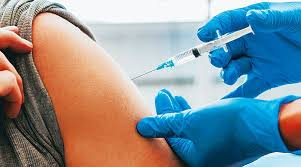
World' fastest vaccination campaign is underway in India

The country’s largest corona vaccination campaign is underway. The Union Health Ministry said that a total of 75 lakh people have been vaccinated in the country till Friday, the 27th day of the vaccination campaign. Out of this, 58.14,976 health workers and 16,90,034 Front line workers are included.

Why vaccination is important?

Vaccines can help limit the spread of antibiotic resistance.

The global increase in disease caused by drug-resistant bacteria, due to overuse and misuse of antibiotics, is a major public health concern. Vaccinating humans and animals is a very effective way to stop them from getting infected and thereby preventing the need for antibiotics.

Making better use of existing vaccines and developing new vaccines are important ways to tackle antibiotic resistance and reduce preventable illness and deaths.

According to the ministry, a total of 1,54,370 sessions of immunization have been completed across the country so far. Immunization campaign is fastest in India. On 11th February, a total of 4.5 lakh people were vaccinated. This includes 1,09,748 health workers and 3,78,148 front line workers.The corona virus is seen to be dying with speed in the corona vaccination campaign, according to the report released by the Union Health Ministry on Friday, 9309 cases were reported in the last 24 hours across the country, this is the third time in February when less than ten thousand cases were reported.

According to the Health Ministry, there were seven days in February when the daily death rate from Corona has been less than 100. There was no death reported from corona in 18 states and union territories of the country in the last 24 hours.

World' fastest vaccination campaign is underway in India

The country’s largest corona vaccination campaign is underway. The Union Health Ministry said that a total of 75 lakh people have been vaccinated in the country till Friday, the 27th day of the vaccination campaign. Out of this, 58.14,976 health workers and 16,90,034 Front line workers are included.

Why vaccination is important?

Vaccines can help limit the spread of antibiotic resistance.

The global increase in disease caused by drug-resistant bacteria, due to overuse and misuse of antibiotics, is a major public health concern. Vaccinating humans and animals is a very effective way to stop them from getting infected and thereby preventing the need for antibiotics.

Making better use of existing vaccines and developing new vaccines are important ways to tackle antibiotic resistance and reduce preventable illness and deaths.

According to the ministry, a total of 1,54,370 sessions of immunization have been completed across the country so far. Immunization campaign is fastest in India. On 11th February, a total of 4.5 lakh people were vaccinated. This includes 1,09,748 health workers and 3,78,148 front line workers.The corona virus is seen to be dying with speed in the corona vaccination campaign, according to the report released by the Union Health Ministry on Friday, 9309 cases were reported in the last 24 hours across the country, this is the third time in February when less than ten thousand cases were reported.

According to the Health Ministry, there were seven days in February when the daily death rate from Corona has been less than 100. There was no death reported from corona in 18 states and union territories of the country in the last 24 hours.

Science > Commerce >>> Arts ? ( A typical Indian society’s thinking )

Do you know approximately 16 lakhs people apply for the NEET every year and more than 9 lakhs apply for the JEE ?

Well , this huge amount shows the craziness of Indian teens for the two prestigious exams of the country .

But do you know that India has a huge amount of unemployed engineers ? Or do you know that India has lack of specialized doctors ?

Why the things are like that ?

Ohk, let’s not talk about these things now. Let me ask you a simple question,”What subject did you opt in 11th & Why ?” Just try to find out the reason behind this “Why”. Was it because you wanted to be ‘something’ or because you liked ‘the subject’ or was it because others gave you the suggestion to opt ‘ that subject ‘ ? Or was it because you wanted to prove someone your intelligence or brilliance ? Or because of the reason that you scored the percentage of marks that fall in the category of the subject ?

Well , as much I observed ; I think most of you must have opted ‘the subject ‘ because of the reasons other than the first two.

Normally , high secondary students aren’t mature enough to decide what they actually want from the life. So they may ended up opting a subject , they don’t like.

In most of the cases , students opt for the science , not because they love it , but because they fall in the so called ” category of 90+”. Many students opt for science because of the respect the science students get. Ohk ohk , before you think more about this ‘ respect portion ‘, I think I should explain it to you.

Just observe the facial expressions of people , when you tell them that you belong to the arts stream.

Well , exceptions are always there. But it’s a typical Indian society’s thinking that arts students aren’t intelligent or science students are among the most intelligent creatures of the Earth. Well , commerce students act as the bridge between the two streams.

Ohk , let’s not talk about other categories. Let me pay my all attention to that typical “90+ or 10 cgpa” student. Students from this category get a lot of respect after their so called achievement in class 10th. So they can’t compromise with that ‘respect portion’. And the parents or relatives of these achievement holders have lot of expectations from them. And as everyone knows these ’90+’ students are made up for the science stream. They may or may not interested in science. They may or may not want to become a doctor or an engineer. But off course they don’t have any other option. Believe me , respect matters a lot. So these students ended up opting the pcm/pcb.

And then these students pack their luggage for the Kota or they enroll themselves in a local coaching. These ’90+’ are confident enough and see the dreams from the eyes of society. They prepare for the NEET or for the JEE. Many out of these get selected in first attempt , many require more than one attempt. Many of these don’t get selected , so they ended up choosing a private college or many decide to go with the BSc. Degree. Many out of these just realise at this moment about their dreams & change their graduation stream to Arts or Commerce.

But sadly , a lot of students commit suicide after not getting selected in these exams.

And a lot more who get selected in a government college or those who decide to graduate in technical field from private colleges ended up regretting. Well , such things are also valid for the ‘MBBS’ students. But let me talk about engineering students.

Just ask this question to an engineering student , that how much she/he is interested in her/his branch or field. You”ll get the answer, “why so many of them are unemployed.” And that’s the reason why you”ll find most of them engaged in non-technical activites. Off course there’re other reasons behind the ‘unemployment in engineering’. But , yes this is one out of those reasons.

Off course you”ll find this ’90+’ category students among the toppers in many prestigious exams , like CAT , or CSE. And most of them are from engineering background.

And off course many people blame them, ” why they did engineering if they don’t want to pursue it as a career.” If you’re also one of these people , then blame the society , not the students.

The society needs to restructure its thinking about science>commerce>>>arts

There should be stream counselling & career counselling sessions for the high school students.

Never opt for the subject or degree you don’t like. Choose your subjects wisely.

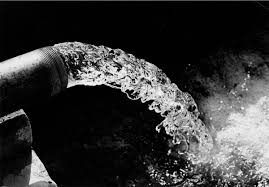
More than 20% of India’s underground water found contaminated with arsenic: IIT Kharagpur

More than 25 crore people of our nation are being forced to drink water contaminated with arsenic.

In a study carried out by IIT Kharagpur using an AI (Artificial Intelligence) based inference model it was found that the poisonous substance arsenic was present in more than 20% of the country’s underground water.

According to the estimates made by a few government and non-government organizations it was found that a large percent of the total population is being affected by the contamination. With the increasing water pollution, we need to take strict measures when it comes to collecting water samples from different regions and studying it for more chemical contamination.

According to the Assistant Professor Abhijit Mukherjee of IIT Kharagpur, it was reported that these high arsenic zones are present mostly along the Indus Ganga-Brahmaputra river basin and in the peninsular areas.

Health Effects- According to the World Health Organization, arsenic is highly toxic in inorganic form. Prolonged exposure to consuming contaminated water can cause cancer, skin lesions and other diseases when it reaches the body. It has also been associated with cardiovascular disease and diabetes. Early childhood exposure has been linked to negative impacts on cognitive development and increased deaths in young adults.

Sources of Exposure-

Arsenic is a natural component of the earth’s crust and is widely distributed throughout the environment in the air, water and land. People are exposed to high levels of inorganic arsenic through drinking contaminated water, using contaminated water in food preparation and irrigation of food crops, industrial processes, eating contaminated food.

Dietary Sources– Seafood, Poultry and dairy products contain arsenic although the amount is very low in comparison and arsenic is present in its less toxic organic form.

Industrial Processes– Arsenic is used widely in industries as an alloying agent, in processing of glass, pigments, paper, wood etc., and also in a limited extent in making pesticides and pharmaceuticals.

Smoking tobacco– Tobacco plants can take up arsenic naturally present in soil so people who smoke tobacco are exposed to natural inorganic arsenic.

Prevention and control

  • Substituting high arsenic sources such as groundwater, with low arsenic sources such as rain water and treated surface water.
  • Install arsenic removal systems and ensure the appropriate disposal of the removed arsenic. Technologies for removal of arsenic include oxidation, coagulation-precipitation, absorption, ion exchange, and membrane techniques. The most important action in affected communities is the prevention of further exposure to arsenic of a safe water supply.
  • Discriminate between high-arsenic and low-arsenic levels and paint tube wells or hand pumps with different colours.

Arsenic is one of WHO’s 10 chemicals of major public health concerns. WHO’s work to reduce arsenic exposure includes setting guideline values, reviewing evidence, and providing risk management recommendations.

Educating others about the dangers and necessities of this problem is crucial and community engagement is important for ensuring successful interventions. There is a need for community members to understand the risks of high arsenic exposure and the sources of arsenic exposure, including the intake of arsenic by crops (e.g. rice) from irrigation water and the intake of arsenic into food from cooking water.

Custodial Violence Unacceptable In Civilized Society

In a latest, learned, laudable and landmark judgment titled Pravat Chandra Mohanty vs The State Of Odisha & Anr. in Criminal Appeal No. 125 of 2021 (arising out of SLP (Crl.) No. 6174/2020) with Criminal Appeal No. 126 of 2021 (arising out of SLP (Crl.) No. 6224/2020) delivered on February 11, 2021, a two Judge Bench of the Apex Court comprising of Justice Ashok Bhushan and Justice Ajay Rastogi refused the plea seeking compounding of offences of two police officers accused in a custodial violence case. It must be mentioned here that though considering their age, the sentence was reduced, the Bench enhanced the compensation to Rs 3.5 lacs each in addition to compensation awarded by the High Court to be paid to the legal heirs of the deceased. The Apex Court rightly underscored that custodial violence is unacceptable in civilized society. So there has to be zero tolerance for it. We thus see that the Apex Court rejects the plea of police officers seeking compounding in view of settlement. 

To start with, the ball is set rolling in para 2 of this notable judgment authored by Justice Ashok Bhushan for himself and Justice Ajay Rastogi after granting leave in para 1 wherein it is put forth that, “These two appeals by the accused have been filed against the common judgment of the Orissa High Court dated 09.11.2020 dismissing the Criminal Appeal Nos. 207 and 210 of 1988 filed by the appellants. Both the appellants being the accused in Lal Bagh P.S.Case No.273 of 1985 were tried in Sessions Trial No.246 of 1985 for the offences punishable under Sections 304, 342, 323, 294, 201 167, 477-A, 471 read with Section 34 of the IPC. Learned Sessions Judge convicted the accused Pratap Kumar Choudhury under Section 304 (Part II) IPC to undergo R.I. for eight years and accused Pravat Chandra Mohanty under Section 304 (Part II) to undergo R.I. for five years. Both the accused were further sentenced under Section 471 IPC read with Section 466 IPC to undergo R.I. for three years and R.I. for three months under Section 342 IPC and R.I. for one month under Section 323 IPC by judgment dated 29.08.1988.”
To put things in perspective, the Bench then states in para 3 that, “Aggrieved by the judgment of the trial court the appellants, Pravat Chandra Mohanty (hereinafter referred to as “Mohanty”) filed Criminal Appeal No.207 of 1988 and Pratap Kumar Choudhury (hereinafter referred to as “Choudhury”) filed Criminal Appeal No.210 of 1988 before the Orissa High Court. The High Court decided both the appeals by its judgment and order dated 09.11.2020 partly allowing the appeals. The conviction of both the appellants under Section 304 (Part II) IPC read with Section 34 IPC and Section 342/34 IPC was set aside and their conviction under Sections 323/34 IPC and 471/34 IPC was upheld. The High Court convicted both the appellants under Section 324/34 IPC. Simple imprisonment for one month was imposed under Section 323/34 IPC. Simple imprisonment for three months for the offence under Section 471/34 IPC and simple imprisonment for one year for the offence under Section 324/34 IPC were imposed by the High Court. All the sentences were to run concurrently. Aggrieved by the above judgment these appeals have been filed.”
Be it noted, it is then envisaged in para 14 that, “The High Court in its judgment has noticed the prosecution case in paragraph 2 of the judgment. Paragraph 2 of the High Court judgment is as follows: “2. The prosecution case, as per the first information report (Ext.1) lodged by Kusia Nayak (P.W.1) on 05.05.1985 (Sunday) at 11 a.m. before the D.S.P., City, Cuttack(S) is that the informant was staying in a rented house of one Bishnu Mohanty of Rajabagicha, Cuttack. On 02.05.1985 he had been to Nayagarh in connection with the marriage of his nephew and returned home to Cuttack in the morning hours of 04.05.1985. After arrival, he was informed by his wife Kanchan Dei (P.W.18) that there was quarrel between their Basti residents Sura and Bainshi on Friday. He went to the market and returned at about 4 p.m. when his wife told him that Pramod Naik, Benu Naik and Guna Naik were abusing her in filthy language and telling her to drive out her family members as they had no houses and no holding numbers. The informant was also told by his wife that 4 Thana Babu of Purighat police station had called him to go to the police station. After sometime, Kasinath Naik (hereafter ‘the deceased’) also told the informant that the constable had come and told him in that respect. Accordingly, both the informant and the deceased decided to go to Purighat police station. In the evening hours, when both of them reached at Purighat police station, one police officer having mustache told the deceased that on the next time, he would cause fracture of the hands and legs of the son of the deceased by assaulting him as the later had filed a case against him before the Legal Aid. The deceased remained silent. The said police officer also used slang language against the deceased and told that he belonged to Alisha Bazar, Cuttack and he would not allow the family of the deceased to stay at Cuttack and no lawyer could do anything to him. The deceased replied to the said police officer that on being assaulted, his wife and son had filed the case before the Legal Aid and he did not know anything in that respect.
It is further stated in the first information report that the said police officer having mustache gave a kick to the deceased and again used slang language and also gave two blows on the hands of the informant and also kicked him. Then said police officer having mustache further assaulted the 5 deceased who cried aloud and in that process, he sustained bleeding injuries on his body. The informant was asked to wait in one room of the police station and the deceased was taken to the other side verandah of the police station and was assaulted. Though the informant was not able to see the assault but he could hear the cries of the deceased. Then the police officer called the informant outside and after he came out, he saw the appellant Pravat Mohanty assaulting the deceased by means of a stick and the deceased was crying aloud. The informant gave water to the deceased on being told by the police officer but the deceased was having no strength to walk and he was just crawling. The deceased came near the informant and he was having bleeding injuries on his hands and necks and the legs were swollen. The deceased was telling that he would not survive and would die. When the deceased sought permission to attend the call of nature, the police officer having mustache and appellant Pravat Mohanty further assaulted him. When the deceased again requested to attend the call of nature, with permission of the police officer, the informant took him for such purpose and after they returned, the appellant Pravat Mohanty asked the deceased as to why he was limping. The deceased was given bread to eat but when he refused, appellant Pravat Mohanty compelled him to take bread and further assaulted him 6 on his knee. Getting indication from the constable, the informant concealed the bread and told the police officer that the deceased had already taken the bread. The said police officer brought liquor in a bottle and poured it in the mouth of the deceased as well as the informant and then sprinkled liquor over them and went outside of the police station. Sura Naik (P.W.13) who belonged to the Basti of the informant came to the police station and talked with one Mishra Babu secretly but on seeing the deceased and the informant, he went away. Then appellant Pravat Mohanty again assaulted the deceased and asked him to sit in a vehicle to go to the hospital. At that time, it was 11 to 12 O’ clock in the night. The appellant Pravat Mohanty, a driver and a constable lifted the deceased and placed him inside the vehicle and he was crying that he would not survive. When the informant expressed his eagerness to accompany the deceased to the hospital, he was told that there was no necessity to accompany the deceased even though the deceased was calling the informant to accompany him. After the deceased was taken away from the police station, one constable chained the left leg of the informant to a table of the police station and in the morning hours, the informant was untied as per the instruction of the appellant Pravat Mohanty. One sweeper was called to the police station and he was asked to clean the blood and stool of 7 the deceased which was lying at different places inside the police station. At that time the informant came to know that the deceased had died in the hospital last night. The widow of the deceased had also come to the police station crying but she was not allowed to stay there by the Havildar. It is mentioned in the first information report that the police officer having mustache was a fair and tall person. 
On receipt of such first information report, Purighat/ Lalbag P.S. Case No.273 of 1985 was registered under sections 302, 342, 323, 294, 201 read with section 34 of the Indian Penal Code on 05.05.1985 at 11 a.m. against appellant Pravat Mohanty and the other police officer of Purighat police station having mustache.”
In retrospect, the Bench then points out in para 15 that, “The prosecution in the trial has examined 39 witnesses, i.e., PW.1 to PW.39. PW.1, Kusia Naik, being informant, eye-witness and injured witness and PW.39 Gaganbehari Mohanty, being the IO. No witness was examined for the defence. A large number of Exhibits running Ext.1 to Ext.67/1 were produced by the prosecution. Ext.A to Ext.J were also admitted into the evidence by defence. MO.I to MO.VII were material objects. After marshalling evidence on record, the learned trial judge while holding conviction under Section 304 (Part-II) read with Section 34 IPC recorded its conclusion in paragraph 74 which is to the following effect: 
“74. It is thus found that there is nexus between death of the deceased and the act of the accused persons in subjecting him to long detention throughout the night and in mercilessly beating him. Therefore, it is clear that such death was caused by the act of the accused persons. They did it in furtherance of their common intention. The facts of the case disclose that there might not be an intention to cause such bodily injury as was likely to cause death. But the facts disclose that the accused persons knew that their act would be likely to cause death. Hence, it is found that the accused persons also committed an offence punishable u/s 304(Part-II) I.P.C. read with section 34 IPC.”
In hindsight, it is quite clearly stated in para 18 that, “Both the appellants have been convicted under Section 371/34 IPC by the courts below, finding offence of forging and fabrication of record to be proved. The reason for fabricating the false story that deceased, Kasinath Naik came to Police Station to lodge an FIR about the assault on him at 9 p.m. was only with a view to save the accused, with intent to explain injuries caused on the body of deceased which he received during his stay in the Police Station. As noted above, the conviction of the appellants under Section 371/34 IPC has not been challenged before us. The defence taken by the appellants has miserably failed. The High Court after re-appraising the evidence on record including the oral and documentary evidence has come to the conclusion that ante-mortem injuries noticed on the person of the deceased as per postmortem report were caused in Purighat Police Station during his stay from 7.30 p.m. till post midnight on 4/5.05.1985 and the evidence of the scientific officer and chemical report also corroborates the assault at the police station and the appellants were author of those injuries. The trial court has also held in its judgment after marshalling the entire evidence that injuries were caused to the deceased, Kasinath Naik in the Police Station, Purighat by both the accused. The High Court on reappraisal of the evidence came to the same finding.”
It cannot be glossed over that it is then observed in para 19 that, “We have carefully perused the judgment of the trial court as well as the High Court and have adverted to the marshalling of oral evidence by both the Courts below as well as analysis of the documentary evidence on record where evidence of PW.1, who was the informant and eye-witness has rightly been believed by the trial court and the High court to the fact that both deceased and informant arrived at Police Station after 7.30 p.m. and they were mercilessly beaten by Choudhury and Mohanty. In spite of Varandah of the Police Station washed in the morning by the sweeper, the scientific officer, who visited the police station found the blood stains in the Varandah.”
It also cannot be glossed over that it is then stated in para 20 that, “The evidence of PW.1 could not have been discarded merely because he was an agnate of the deceased. In the long cross-examination, PW.1 could not be shaken and his evidence of account given of beating of the deceased by the Police Officers, i.e., Choudhury and Mohanty is to be believed and relied on.”
It is highly commendable to note that the Bench then without mincing any words goes forth to observe in para 36 that, “Present is a case where the offence was committed by the in-charge of the Police Station, Purighat, as well as the Senior Inspector, posted at the same Police Station. The Police of State is protector of law and order. The people look forward to the Police to protect their life and property. People go to the Police Station with the hope that their person and property will be protected by the police and injustice and offence committed on them shall be redressed and the guilty be punished. When the protector of people and society himself instead of protecting the people adopts brutality and inhumanly beat the person who comes to the police station, it is a matter of great public concern. The beating of a person in the Police Station is the concern for all and causes a sense of fear in the entire society.”
More pertinently, the Bench then while referring to a relevant case law adds in para 37 stating that, “We may refer to the judgment of this Court in Yashwant and others vs. State of Maharashtra, (2019) 18 SCC 571, where this Court laid down that when the police is violator of the law whose primary responsibility is to protect the law, the punishment for such violation has to be proportionately stringent so as to have effective deterrent effect and instill confidence in the society. Following was laid down in paragraph 34: – 
“34. As the police in this case are the violators of law, who had the primary responsibility to protect and uphold law, thereby mandating the punishment for such violation to be proportionately stringent so as to have effective deterrent effect and instill confidence in the society. It may not be out of context to remind that the motto of Maharashtra State Police is “Sadrakshnaya Khalanighrahanaya” (Sanskrit: “To protect good and to punish evil”), which needs to be respected. Those, who are called upon to administer the criminal law, must bear, in mind, that they have a duty not merely to the individual accused before them, but also to the State and to the community at large. Such incidents involving police usually tend to deplete the confidence in our criminal justice system much more than those incidents involving private individuals. We must additionally factor this aspect while imposing an appropriate punishment on the accused herein.””
Most pertinently, the Bench then underscores in para 40 that, “The custodial violence on the deceased which led to the death is abhorrent and not acceptable in the civilized society. The offence committed by the accused is crime not against the deceased alone but was against humanity and clear violations of rights guaranteed under Article 21 of the Constitution. Although the High Court has awarded the compensation of Rs.3 Lakhs in favour of the legal representatives of the deceased. We are of the view that compensation awarded was not adequate.”
As it turned out, the Bench then holds aptly in para 43 that, “Looking to the facts that both the appellants are more than 75 years of age now, we are of the considered opinion that the ends of justice be served in reducing the sentence awarded for conviction under Section 324 IPC to six months instead of one year. Additionally the legal heirs of the deceased can be compensated by the compensation which has been offered and deposited by the appellant in this Court. Thus, sentence of one year is reduced to six months by awarding compensation of Rs.3.5 Lakhs each to the legal heir of the deceased in addition to the compensation awarded by the High Court. The compensation deposited in this Court shall be remitted to the trial court who may pay the same to the legal heirs of the deceased. The affidavit has been filed before us that the deceased had four sons, his wife is dead, the entire amount be disbursed equally to two sons who are alive and heirs of two deceased sons.”
Finally, it is then held in the last para 44 that, “In result, the appeals are partly allowed. The sentence awarded to the appellants under Section 324 IPC of one year is reduced to six months with enhancement of compensation to Rs.3.5 lacs each in addition to compensation awarded by the High Court to be paid to the legal heirs of the deceased. The compensation to the legal heirs be paid as directed above.” 
In conclusion, it is a brilliant, bold, blunt and balanced judgment which makes it absolutely clear that there has to be zero tolerance for custodial violence. Those men in uniform who still indulge in it are liable to pay heavily for it. This alone explains why the compensation to be paid to the legal heirs is enhanced from Rs 3 lakhs as awarded by the High Court to Rs 3.5 lakhs each even though considering their advanced age of 75 years their sentence awarded for conviction under Section 324 of IPC is reduced from 1 year to six months. Very rightly so!
Sanjeev Sirohi

Prevent Disclosure Of Rape Victim’s Identity Even Indirectly

It is in the fitness of things that the Bombay High Court Bench at Aurangabad has recently on 19 January 2021 in a learned, latest, landmark and laudable judgment titled Sangita v. The State of Maharashtra [Criminal Public Interest Litigation No. 1 of 2016] has issued additional guidelines to restrain print/electronic media as well general public, using social media, from publishing information related to rape victim that could “directly or indirectly” disclose her identity. The Bench of Aurangabad Bench of Bombay High Court comprising of Justice TV Nalwade and Justice MG Sewlikar was hearing the plea of one Sangita who is the mother of a rape victim who sought directions to the print and electronic media that the name or identity of the rape victim should not be disclosed. It was underlined by the Bench that the victim of sexual offence undergoes not only physical trauma but also mental trauma for no fault of hers. Very rightly so! 

To start with, the ball is set rolling by first and foremost observing in para 3 about the purpose of the petition that, “This Public Interest Litigation is fled by the petitioner seeking direction to the Print and Electronic Media that the name or identity of the rape victim should not be disclosed.”
While elaborating on the facts of the case, the Bench then enunciates in para 4 that, “Facts leading to this Public Interest Litigation are that the petitioner is the real mother of the victim. First Information Report No. I-336/2010 was registered with Tofkhana Police Station, District Ahmednagar, under Sections 363 and 366 of the Indian Penal Code and after arrest of the accused, Section 376 was added. It is however, alleged that despite having made the provisions under Section 228-A of the Indian Penal Code and despite having the directions been issued by the Honourable Supreme Court in the case of Nipun Saxena and another Vs. Union of India and others reported in (2019) 2 Supreme Court Cases 703, the Print and Electronic Media are publishing the details of the crime in such a manner that the identity of the victim is invariably disclosed. The petitioner has alleged that in this case also the local newspapers of Ahmednagar district i.e. Daily Sarvamat dated 23.02.2011 and 06.07.2015 highlighted the news in such a manner that the identity of her daughter was disclosed. Similarly, in Daily Punyanagari, Daily Sakal, Daily Divya Marathi and other newspapers the identity of the victim (not related to the victim i.e. daughter of the petitioner), is disclosed. The petitioner has alleged that because of the offence of rape, the victim suffers physical and mental trauma and publication of the news thereby disclosing the identity of the victim, causes severe mental agony to the victim. The petitioner had made several representations to find out whether there are any guidelines and whether any training is imparted to the media in this regard. She has further sought directions to the media not to disclose the details revealing the identity of the victim in the case of rape.”
To be sure, it is then stated in para 5 that, “Learned counsel Shri A.D. Ostwal was appointed as amicus curiae to assist the Court in this matter. He argued that the Honourable Supreme Court in the case of Nipun Saxena (supra) has issued various guidelines. Guidelines in this regard are also issued by the Delhi High Court. Kolkata High Court has also issued directions in the case of Bijoy @ Guddu Das Vs. State of West Bengal reported in (2017) 2 Cal LJ 224. These guidelines indicate that in no case name of the victim should either be disclosed nor the details revealing her identity shall be published. He argued that despite these directions, the Print Media and the Electronic Media give the details of the crime, relation of accused with the victim, details as regards the parents of the victim thereby revealing the identity of the victim. He has furnished proposed guidelines for the consideration of this Court.”
Be it noted, it is then observed in para 6 that, “It is true that the victim of sex offence undergoes not only physical trauma but also mental trauma. She has to undergo these agonies for no fault of hers. Keeping this object in view, Section 228-A of the Indian Penal Code was enacted which mandates that the identity of the victim in offences under Sections 376, 376-A, 376-B, 376-C, 376-D or 376-E should not be disclosed. Section 228-A of the Indian Penal Code reads thus :-
228-A Disclosure of identity of the victim of certain offences, etc.- 
(1) Whoever prints or publishes the name or any matter which may make known the identity of any person against whom an [offence under section 376, section 376-A, section 376-B, section 376-C, section 376-D or section 376-E] is alleged or found to have been committed (hereafter in this section referred to as the victim) shall be punished with imprisonment of either description for a term which may extend to two years and shall also be liable to fine.
(2) Nothing in sub-section (1) extends to any printing or publication of the name or any matter which may make known the identity of the victim if such printing or publication is –
(a) by or under the order in writing of the officer-in-charge of the police station or the police officer making the investigation into such offence acting in good faith for the purposes of such investigation; or
(b) by, or with the authorisation in writing of, the victim; or 
(c) where the victim is dead or minor or of unsound mind, by, or with the authorisation in writing of, the next-of-kin of the victim. 
Provided that no such authorisation shall be given by the next-of-kin to anybody other than the chairman or the secretary, by whatever name called, of any recognised welfare institution or organisation. Explanation – For the purposes of this subsection, “recognised welfare institution or organisation” means a social welfare institution or organisation recognised in this behalf by the Central or State Government.
(3) Whoever prints or publishes any matter in relation to any proceeding before a Court with respect to an offence referred to in sub-section (1) without the previous permission of such Court shall be punished with imprisonment of either description for a term which may extend to two years and shall also be liable to fine. Explanation – The printing or publication of the judgment of any High Court or the Supreme Court does not amount to an offence within the meaning of this section.”
It would be instructive to have a glance at what para 8 says that, “The Honourable Supreme Court in the case of Nipun Saxena (supra), after considering Section 228-A of the Indian Penal Code and various provisions of Protection of Children from Sexual Offences Act, has issued following guidelines :- 
50.1 No person can print or publish in print, electronic, social media, etc. the name of the victim or even in a remote manner disclose any facts which can lead to the victim being identified and which should make her identity known to the public at large. 
50.2 In cases where the victim is dead or of unsound mind the name of the victim or her identity should not be disclosed even under the authorisation of the next of kin, unless circumstances justifying the disclosure of her identity exist, which shall be decided by the competent authority, which at present is the Sessions Judge.
50.3 FIRs relating to offences under Sections 376, 376-A, 376-AB, 376-B, 376-C, 376-D, 376-DA, 376-DB or 376-E IPC and the offences under POCSO shall not be put in the public domain. 
50.4 In case a victim files an appeal under Section 372 CrPC, it is not necessary for the victim to disclose his/her identity and the appeal shall be dealt with in the manner laid down by law.
50.5 The police officials should keep all the documents in which the name of the victim is disclosed, as far as possible, in a sealed cover and replace these documents by identical documents in which the name of the victim is removed in all records which may be scrutinised in the public domain. 
50.6 All the authorities to which the name of the victim is disclosed by the investigating agency or the court are also duty-bound to keep the name and identity of the victim secret and not disclose it in any manner except in the report which should only be sent in a sealed cover to the investigating agency or the court.
50.7 An application by the next of kin to authorise disclosure of identity of a dead victim or of a victim of unsound mind under Section 228- A(2)(c) IPC should be made only to the Sessions Judge concerned until the Government acts under Section 228-A(1)(c) and lays down criteria as per our directions for identifying such social welfare institutions or organisations.
50.8 In case of minor victims under POCSO, circumstances justifying the disclosure of her identity exist, which shall be decided by the competent authority, which at present is the Sessions Judge. 
50.9 All the States/Union Territories are requested to set up at least one “One-Stop Centre” in every district within one year from today.”
More damningly, about flouting of the rules regarding the revelation of the identity of the victim, the Bench then minces no words to state in para 9 that, “Despite issuance of these guidelines, the Print Media and Electronic Media are reporting these offences in such a manner that the identity of the victim is established directly or indirectly. Learned counsel Shri Ostwal argued that the electronic media holds interviews of the victim/relatives of the victim which lead to revealing the identity of the victim. He argued that the victim or the relatives of the victim are least aware that by giving such interviews they are exposing themselves to the revelation of the identity of the victim.”
Honestly speaking, the Bench then concedes in para 10 that, “It is true that the electronic media and the print media publish news items giving details of the crime in such a manner that by reading the news item, one can easily establish identity of the victim. The electronic media holds interviews of the victims or relatives of the victims. The victim or relatives of the victim, most of the time, are not aware that by giving such interview they are revealing the identity of the victim. If the victim who is major or the relatives of such a victim voluntarily consent for disclosing her identity, in that case, no one can have any objection. The question arises when the victim or relatives of the victim do not want the identity to be revealed. In such cases, the media should act with circumspection and is expected to observe restraint. Publishing news item in detail thereby disclosing identity of the victim itself indicates that the media does not observe self-restraint. We do not mean to say that the media does it deliberately. But in their zeal to publish the news item fast, appropriate care is not taken in some cases and the news is reported by which the victim’s identity becomes known to the readers/viewers. To illustrate, we can take by way of sample the news items published in reference to the offence committed against the daughter of the petitioner. This news item clearly establishes the identity of the victim. It mentions the name of the petitioner (i.e. the mother of the victim) and address of the petitioner. It also mentions name and residence of the accused as well. The only thing left is the name of the victim. By this news item, one can easily establish the identity of the victim especially those who know the family of the victim.
As we see, it is then stated in para 11 that, “In another news item, the identity of the victim is disclosed. It is reported in Daily Lokmat. This clearly indicates that the identity of the victim is established. In this news item, all the details by which the identity of the victim can be established are given though the name of the accused and the name of the victim is not mentioned.”
What is worse is what is then stated in para 12 that, “On the basis of the judgment of the Honourable Supreme Court in the case of Nipun Saxena (supra) the Government of India, vide letter dated 16.01.2019, communicated the directions of the Honourable Supreme Court for their strict compliance. Despite this, the directions are followed in breach.”
What’s more, the Bench then adds in para 13 that, “Having considered the news item, it is evident that without mentioning the name of the victim, the identity of the victim can be established by giving the details as regards the name of parents of the victim or other relations of the victim, relation of the accused with the victim, residential address of the accused and the victim and other details. Learned counsel Shri Ostwal has produced a circular issued by the Special Additional Deputy Inspector of Police (Training and Special Squad) Maharashtra State, Mumbai. The said circular states that the petitioner had brought to the notice that because of lack of policy with the police department while releasing the information as regards sex offences, care is not taken that the identity of the victim is not disclosed. The said circular mentions that in the course of training subject as regards non-disclosure of identity of the victim should be included.” 
With concern, the Bench then notes in para 14 that, “Despite clear directions by the Honourable Supreme Court, restricting/restraining media from disclosure of such information leading to identification of victim, media continues to indulge into giving details of the crime in such a manner that the victim can be identified easily. There are instances in which the news items mention the place of work of the victim or of the accused with reference to which identity of the victim is easily possible can be readily available or made known.”
Most significantly, the Bench then aptly observes in para 15 that, “The Honourable Supreme Court has dealt with the aspect of disclosure of the identity of the victim while preferring appeal. However, there can be disclosure of identity of victim while recording evidence during trial, recording statement of the accused under Section 313 of the Code of Criminal Procedure, framing charge, submitting remand report by the police. To avoid disclosure of identity of victim in the same, we propose, in addition to the directions of the Honourable Supreme Court in Nipun Saxena (supra), to issue the following directions to the print media, the electronic media, the people using social media such as WhatsApp, Facebook, Internet, Twitter etc.
The print media, the electronic media, the people using social media such as WhatsApp, Facebook, Internet, Twitter etc. while giving information / circulating information relating to offences under section 376, 376-A, 376-B, 376-C, 376-D or 376-E of the Indian Penal Code and the offences under Protection of Children from Sexual Offences Act, shall not publish/disclose following information in such a manner that the victim will be identified directly or indirectly :- 
i) The names of the parents or relatives of the victim.
ii) Relation of the accused with the victim.
iii) Residential/occupational/work address of the accused and the victim and the village at which the victim and/ or accused live. 
iv) Occupation of the parents or other relations of the victim and place of work of the victim and accused /their parents or any other relative in such a manner that the victim will be identified.
v) If the victim is a student, name of the school or college or any other educational institution or private coaching class or classes which the victim has joined for pursuing her hobbies such as music, drawing, dance, stitching, cooking etc.
vi) Details of family background of the victim.”
As a note of caution, the Bench then adds in para 16 that, “It is noticed that while framing of charge, recording evidence, recording statement of accused under section 313 of the Code of Criminal Procedure, name of the victim is disclosed. Therefore, while framing charge, mentioning name of the victim should be avoided. Instead he/she should be referred to as ‘X’ or any other alphabet the Court deems fit and proper. While recording evidence if the witness mentions the name of the victim, the Court shall record that “the witness stated the name of the victim but to conceal her identity, her name is not recorded.” And the victim should be referred to in the same manner as is done during the framing of charge.” 
Furthermore, the Bench then adds in para 17 that, “If the witness is a victim, his/her name should not be disclosed while recording evidence. Her name, place of residence, age, occupation shall be kept in a sealed cover and in the name column, she can be referred in the same manner described while framing charge keeping the address column, occupation column blank.”
While continuing in the same vein, the Bench then holds in para 18 that, “The same procedure should be followed while recording statement under section 313 of the Code of Criminal Procedure. While recording statement under section 313 of the Code of Criminal Procedure, the Court shall refer the victim in the manner she is referred to while framing charge.”
Not stopping here, the Bench then further sounds a note of caution in para 19 holding that, “While forwarding remand report to the Magistrate or to the court dealing with remand, mentioning of name of the victim should be avoided. Instead she should be referred as ‘X’ or any other alphabet the Investigating Officer deems fit and proper.”
Of course, the Bench then advises electronic media in para 20 that, “According to Shri Ostwal, learned Amicus Curiae, the electronic media holds interviews of the victim or his/her relations. He submitted that because of these interviews, though care is taken to blur the face of the victim or his/her relations, identity of the victim can be disclosed by his/her voice. We hope that the electronic media will show restraint in holding interviews of the victims and/or their relatives and would take all precautions to avoid and prevent disclosure of the identity of the victim.”
Now coming to concluding paras. It is held in para 21 that, “In view of above directions, instant Public Interest Litigation is disposed of. Rule made absolute in above terms. We record our appreciation for the assistance rendered by Shri Ostwal, learned Amicus Curiae and learned APP Shri Salgare. Fees of the appointed counsel is quantified at Rs.15,000/- and it should be paid through the High Court Legal Services Authority, Sub-Committee at Aurangabad.”
It is worth noting that it is then observed in para 22 that, “The Registrar (Judicial) is directed to bring these directions to the notice of : The Registrar General of this Court for circulating to all the subordinate Courts; the Principal Secretary, Home Department, Government of Maharashtra; the Principal Secretary & R.L.A., Law and Judiciary Department; the Secretary, Indian Broadcasting Foundation, New Delhi and, the Secretary, Press Council of India, New Delhi.” Finally, it is then held in the last para 23 that, “Learned counsel Shri Ostwal stated that his fees shall be credited to the Chief Minister’s Relief Fund (for Covid-19).”
To conclude, it goes without saying that the landmark, laudable and learned directions given by the Bombay High Court Bench at Aurangabad to avoid and prevent disclosure of rape victim’s identity must be implemented in letter and spirit. Media, public and courts must all comply with these directions accordingly as we have already discussed above in detail! There can be no denying or disputing it!
Sanjeev Sirohi


Scale Of Drug Usage In Kerala Unacceptably High

It is certainly refreshing, rejuvenating and remarkable to see that the Kerala High Court most recently in a leading judgment titled Suo Motu Proceedings Initiated Based On A Representation Submitted By Sri. N. Ramachandran I.P.S. (Retired), Regarding The Efforts To Be Undertaken To Curb The Increasing Menace Of Drug Abuse vs State of Kerala and others in W.P.(C). No. 9001/2019(S) has observed that the “scale of drug usage in Kerala is unacceptably high” and has therefore issued a slew of directions to control drug abuse among youngsters and students in educational institutions. A Division Bench comprising of Chief Justice S Manikumar and Justice AM Shaffique took note of an alarming report of the State Special Branch that around 400 institutions in the State are affected by drug abuse and out of such education institutions, 74.12% are schools, 20.89% are colleges and professional institutions and 4.97% are other institutions viz, ITI, Polytechnics etc. This invariably results in surge in crime and violence which cannot be just glossed over!

First and foremost, it is observed in para 1 that, “Instant writ petition is registered, suo motu, taking note of the menace of drug consumption and trade, in the State of Kerala.”
To start with, the ball is set rolling in real sense in para 2 of this notable judgment authored by Chief Justice S Manikumar for himself and Justice AM Shaffique wherein it is observed that, “Short facts leading to the writ petition are that a representation dated 15.03.2019 has been submitted by Sri. N. Ramachandran, IPS (Retd.), former District Police Chief, Kottayam, to a Hon’ble Judge of this Court highlighting various aspects of drug abuse in Kerala. The letter has thrown light to the increasing rate of crimes committed by the youth under the influence of drugs and its alarming growth by the children/ students of both genders. The letter emphasised the need for proper utilisation of funds provided by the Central, as well as State Governments, in the field of drug abuse.”
To put things in perspective, the Bench then observes in para 3 that, “On consideration of the representation, this Court has decided to register a suo motu public interest writ petition. It was observed that issues concerning the rampant drug abuse were recently reported in the editorials of major newspapers in the State. It was further observed that ‘Abon Kits’ used by the Police in Vadodara and Gujarat can detect whether a person has consumed contraband, besides identifying the type of drug consumed. Writ court has suggested that efforts have to be taken to identify whether any ‘user-friendly’ device, at the same time ‘less expensive’, is available, and if so, to cause it to be procured and make the same available to the Police, Excise, and such other departments for extensive use. In the above-said circumstances, instant writ petition has been registered.”
Be it noted, the Bench then enunciates in para 10 that, “Report of the State Special Branch, as regards drug abuse in educational institutions, reveals that in the past so many years, there is a significant increase in the number of drug abuse cases and it has become a serious problem in the educational institutions. On enquiry, it came to understand that around 400 institutions in the State are affected by drug abuse and out of the education institutions, 74.12% are schools, 20.89% are colleges and professional institutions, and 4.97% are other institutions viz., ITI, Polytechnics etc.”
It cannot be glossed over that it is then stated in para 11 that, “The report also reveals that a range of drugs from Ganja, Hashish to Synthetic Drugs are used by the student community. Majority of cases registered are regarding possession and sale of Ganja. The State Special Branch has provided intelligence inputs on drug trafficking, drug peddling, drug use centered around schools, college campuses and other educational institutions to the concerned District Police Chiefs, State Police Chief, and Excise Commissioner, depending on the jurisdiction of the offence and its magnitude involved.”
More revealingly, the Bench then enunciates in para 12 that, “The report further reveals that in most of the cases detected in the college campuses, the seizure is below 1 kg of ganja, which is bailable, and this encourages a person to engage in drug abuse. Apart from the narcotic and synthetic drugs usage being rampant among the student community, inhaling of Noxious chemicals like whitener, ink, fevicol, varnish solution used for repairing tyre puncture, are being used by the students for getting intoxication. This would cause illness and sometimes damage their organs permanently. Since the above substances do not come under the purview of NDPS Act, no legal action was initiated. In the report, the State Special Branch has recommended the following, to curb the drug abuse in educational institutions:
(a) In order to conduct regular checking inside the educational institutions, or personal search of students by the Police and Excise, the Government may adopt a method of establishing Campus Police Units, which is widely used in western countries. Measures may also be identified to make it easier for the enforcement agencies to enter the educational institutions, so as to enforce the NDPS Act. 
(b) To make the campuses of educational institutions drug free, the Universities/Colleges/School authorities be provided with guidelines as a charter of duties and responsibilities of such officials. 
(c) Since, most of the students are unaware of the health and career hazards, and also the legal repercussions of usage and trafficking of drugs, sensitization on health as well as legal aspects are necessary. For this purpose, the services of Student Police Cadets, NCC, NSS and other Non Governmental Organisations may be used. 
(d) There is a necessity to establish regular counseling and rehabilitation mechanisms to save the students already using drugs and addicts. For this purpose, co-operation of University authorities, affected students and their parents should be elicited. 
(e) A special scheme may be introduced to declare educational campus as drug free. The educational institutions and Universities could initiate steps to conduct anti drug programmes, health awareness campaigns and use social media to propagate the message and conduct of voluntary random urine/blood tests of students.”
As it turned out, the Bench then states in para 41 that, “Section 32B(d) of the NDPS Act, 1985 speaks about the fact that offence is committed in an educational institution or social service facility or in the immediate vicinity of such institution or facility or in other place to which school children and students resort for educational, sports and social activities as one of the aggravating factors, which may be justified for imposing higher than the minimum penalty prescribed for the offence.
Most significantly, the Bench then points out in para 42 that, “In order to tackle the problem of sale of drugs in schools and colleges, the following measures can be adopted:
a) Local police shall pay special attention to areas surrounding schools and colleges in their efforts to tackle drug peddlers.
b) Schools and colleges be encouraged to look out for peddlers in their vicinity and report them to police.
c) Schools and colleges be encouraged to conduct surveys (possibly anonymous) to assess the levels of drug addiction among their students, and if addicted students can be identified, to talk to their parents or wards to find medical help to cure their addiction.
d) The Central and State Education Authorities to include a mandatory and comprehensive chapter on drug abuse and illicit trafficking and its socio-economic costs to self, society, and the country, in the syllabus for 10+1 and 10+2 students.
e) Schools and colleges be encouraged to constitute the AntiDrug Club to promote a drug free life among its members and also in the institution.”
Equally significant is what is then stated in para 43 that, “Street peddlers being an important link between the addicts and the traffickers, it is vital to contain them to tackle the drug problem. Hence, to deal with street peddlers, the following steps shall be taken:
a) Increase the public awareness about the potential harm street peddlers can do to their societies and their children and the need to report peddlers to police and to follow up. 
b) NGOs, resident welfare societies, etc., be involved in reporting peddlers and follow up with police.
c) Sensitize police that dealing with street peddlers is an important part of their job.
d) Train and build capacities of the local police to deal with peddlers, including those who are addicts themselves. 
e) In large cities, develop special, mobile, anti-peddling squads of police with jurisdiction all over the city and linked to a helpline.
f) Similar to the method of contact tracing followed in the case of Covid-19 patients, police can explore the possibility of tracking drug peddlers.
g) Like in the case of history sheeters, there should be constant monitoring of street peddlers.”
No less significant is what is then stated aptly in para 45 that, “Considering the entire material on record, we issue the following directions to the concerned: 
I. Respondent No.1 is directed to adopt a method of establishing Campus Police Units, since the Law Enforcement agencies are not conducting regular checking inside the educational institutions. Measures shall also be taken to make it easier for the police and excise personnel to enforce NDPS Act, 1985, in the educational institutions. 
II. Respondent No.1, is also directed to convene a meeting of all the key officials from the Department of Home Affairs, Excise, Health, Law, Education and representative of State Mental Health authority, Department of Social Justice, and chalk out programmes, to ensure reduction in the incidence of Substance abuse among teenagers and youth and for the implementation of the suggestions made above.
III. The Universities/Colleges/School authorities shall be provided with guidelines as a charter of duties and responsibilities, to make the campuses of the educational institutions, drug free. 
IV. Respondent No.3 shall seek the services of Student Police Cadets, NCC, NSS and other similar organisations to tide over the situation that the students are unaware of the legal repercussions of the usage and trafficking of drugs, and the health and career hazards caused due to the usage of drugs. 
V. Respondent No.3 is also directed to introduce a special scheme to ensure that the premises of the educational institutions and Universities are drug free. The 3rd respondent shall initiate steps to conduct anti-drug programmes in the institutions, propagate health awareness campaigns, and use the assistance of social medias.
VI. The 3rd respondent is further directed to establish counselling and rehabilitation mechanisms, to save the students who are already using drugs and addicts, and for that purpose, co-operation of University authorities, affected students, and their parents be elicited.”
Finally, it is then held in the last para 46 that, “The directions issued, be complied with strictly, in letter and spirit, in accordance with law, within a period of three months from the date of receipt of a copy of this judgment. Failure to implement the directions, by the authorities concerned, would only affect many. Writ petition is disposed of accordingly. Registry to post the writ petition after three months, for submitting the compliance report. Copy of this judgment shall be communicated to the Chief Secretary, State of Kerala, for appropriate action and compliance.” 
No doubt, the remarkable and commendable directions issued by the Kerala High Court in this leading case must be implemented forthwith. It brooks no more delay anymore now! This noteworthy judgment also minces no words to underscore that the directions issued, be complied with strictly, in accordance with law, within a period of three months from the date of receipt of a copy of this judgment. The Division Bench of Kerala High Court issued the directives as stated above while disposing of a suo motu case initiated on the basis of a letter from a former IPS officer N Ramachandran highlighting the rampant abuse of drugs in schools and colleges. It is a no-brainer that if the directives that have been outlined by the Division Bench of the Kerala High Court are honestly implemented in letter and spirit then it will make a huge sea change and the rampant abuse of drugs in schools and colleges can certainly be considerably checked to a large extent.
Sanjeev Sirohi

SLEEP DEPRIVATION CAUSED BY THE UNHEALTHY USE OF GADGETS

It is said that “Sleep deprivation will kill you more quickly than food deprivation.” A good night’s sleep is one of the basic necessities of the human body for its active metabolism and better productivity. An average adult human requires 8 hours of continuous sleep each day. Any interference in the natural regular sleeping patterns can have a tremendous impact on one’s health: mentally as well as physically. Nowadays, people tend to sleep less than they did in the past and their quality of sleep has also faced a downturn.

We live in the middle of a world full of technologies and are surrounded by screens of smartphones, laptops, tablets, e.t.c. Though these gadgets make our lives easy and fast, we are least bothered about its negative effects on our lives. The overuse of technology causes eye strain, musculoskeletal health issues, sleep deprivation, etc. not only in adults but also in teens and kids. According to the American Optometric Association (AOA), prolonged use of computers, tablets, and cellphones can lead to digital eye strain which results in blurred vision, dry eyes, headaches, due to screen glare, bad lighting, and improper viewing distance. The unnatural way of holding the smartphones induces a lot of stress on the neck, shoulder and spine. Initially, these physical strains might seem negligible but can cause severe health impacts in the long run. 

Technology in the bedroom can interfere with sleep in a number of ways. Studies have found that 90% of US citizens use screening devices in the hour before going to bed, which can cause immense psychological and physiological impacts, capable enough to disrupt one’s sleep. Scientifically speaking, the blue light emitted from the gadgets suppress the sleep-inducing hormones like melatonin disturbing the biological clock. Lack of sleep causes stress, increased blood pressure, memory issues, weakened immunity, increased risk of heart diseases etc, thus dramatically decreasing our quality of life. Studies reveal that the increasing number of depression and anxiety among people, especially youth, has a correlation with the overuse of gadgets and social networks. Kids who are exposed to television, video games, mobile phones, and tech toys beyond the recommended time limit is seen to have retarded brain growth than other kids. They too experience sleep problems in addition to behavioural and social problems. 

From buying groceries to attending online classes, from consulting a distant doctor virtually to paying bills and dues, technology and gadgets plays an intangible role in making our lives smooth and less hectic. The technologies which we depend on for our comforts should never be the reason for our own distress. For that, we should always make sure to keep a balance between technology and healthy lifestyle.

Celebrating Indian Women Scientists on International Women Scientist’s Day

The United Nations celebrates International Women’s Scientific Day on 11 February every year. The aim is to encourage women and girls to take up the field of STEM i.e. Science, Technology, Engineering and Mathematics.

This time the theme is laid out by leading lady scientist in the struggle against Covid-19.

According to the Ministry of Science and Technology, approximately 20% percent of women in 2019-20 are directly involved in research and development (R&D) in the country.

Females in technology education

According to the United Nations, 43% of students in STEM are studying in India. India ranks first on the list of 17 countries in this case. Russia ranks second in this list, while America is ninth with 34%. Among 2.80 lakh scientists, engineers and technologists working in India only 14% of them are women.

Women had significant involvement in the fight against Corona. From treatment and testing, women were ahead in drug discovery and patient care. Dr. Soumya Swaminathan of the country is working as a Chief Scientist in the World Health Organization to carry out the fight against the epidemic.

According to UNESCO, there are only 33% of women researchers worldwide. The percentage of women taking admission to Bachelors or Masters under STEM is 45 and 55 percent. Approximately 70% of women are in the field of health and social work but they are given 11 percent less salary than men. Hopefully as we advance into the future we will see more women achieving greater heights in Science and Technology.

Here are some of the female scientists of India who inspire us with their achievements in the field of STEM-

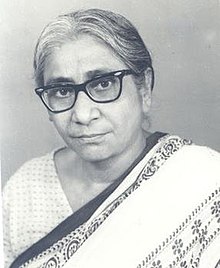
  • Asima Chatterjee

First Indian women to earn a doctorate in science, her research concentrated on natural products chemistry and resulted in anti-convulsive, anti-malarial, and chemotherapy drugs. She also discovered anti-epileptic activity which led to the development of an epilepsy drug called Ayush-56 and several anti-malarial drugs.

She won the C.V Ramen award, P.C Ray Award, and the S.S Bhatnagar award.

  • Janaki Ammal

an Indian botanist who worked on plant breeding, cytogenetics and phytogeography. Her most notable work involved studies on sugarcane and the eggplant and co-authored the Chromosome Atlas of Cultivated Plants (1945) with C.D. Darlington. She was awarded a Padma Shri by the Indian government in 1977. The University of Michigan conferred an honorary LL.D. on her in 1956 in recognition of her contributions to botany and cytogenetics.

  • Rohini Godbole

Prof. Godbole is part of the International Detector Advisory Group (IDAG) for the International Linear Collider in the European research lab, CERN. She is the Chair of the Panel for Women in Science initiative of the Indian Academy of Sciences.

She received Padma Shri for her contributions in science and technology (2019).

  • Tessy Thomas

Tessy Thomas joined DRDO in 1988, where she worked on the design and development of the new generation ballistic missile, Agni. She was appointed by Dr. APJ Abdul Kalam for the Agni Project. In addition, Tessy was the associate project director of the 3,000 km range Agni-III missile project. She was the project director for mission Agni IV which was successfully tested in 2011. Later, Tessy was appointed as the project director of the 5,000 km range Agni-V in 2009, which was successfully tested on 19 April 2012.

In 2018, she became the Director-General, Aeronautical Systems of DRDO

Thomas received the Lal Bahadur Shastri National Award for her contribution for making India self-reliant in the field of missile technology.

  • Ritu Karidhal

Dr. Ritu Karidhal Srivastava is an aerospace engineer, working with the Indian Space Research Organisation (ISRO). She was a Deputy Operations Director to India’s Mars orbital mission, Mangalyaan. She has been referred to as a “Rocket Woman” of India.

Karidhal received the ISRO Young Scientist Award in 2007 from A. P. J. Abdul Kalam, then president of India

  • Anna Mani

The only woman scientist to work with C.V. Raman, is well known for her work in atmospheric physics and instrumentation. She contributed to the study of radiation, ozone and atmospheric electricity, both on the surface and in the upper air using special sounding techniques. Joining the India Meteorological Department in 1948 she rose to become the Deputy Director General of Observatories in Delhi.

  • Soumya Swaminathan

Soumya Swaminathan is an Indian pediatrician and clinical scientist known for her research on tuberculosis and HIV Since March 2019, Swaminathan has served as the Chief Scientist at the WHO. Previously, from October 2017 to March 2019, she was the Deputy Director General of Programmes (DDP) at the WHO. In March 2019, Swaminathan became Chief Scientist of the World Health Organization, where she participated in regular bi-weekly press briefings on the COVID-19 Pandemic.

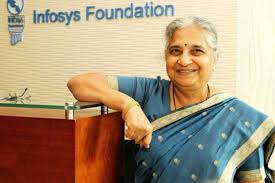
  • Sudha Murty

Sudha Murthy became the first female engineer hired at India’s largest auto manufacturer TATA Engineering and Locomotive Company (TELCO). She joined the company as a Development Engineer in Pune.

In 1996, she started Infosys Foundation & till date has been the Trustee of Infosys Foundation and a Visiting Professor at the PG Center of Bangalore University. She has written and published many books.

She won India’s fourth highest civilian award Padma Shri.

Food Waste – The Social , Economical and Environmental Issue

Do you know that more than 40% of food produced in India is wasted ?

Inspite of adequate food production , India’s ranking is 103 in global hunger index. According to UN approximately 190 million Indians remain undernourished. Estimated value of food wastage in India is ₹ 92,000 crore per annum.

Why the data seems so much scarious ? Do you know how much you contribute to this wastage of food ?

Well , next time if you go to a wedding , or a party , or function , just observe everyone around you , you yourself”ll get the answers of these questions. Just observe people in restaurants or observe everyone in your house.

And if you want to see the dark side of India , then just move out of your house , & observe people around the bins. There’re a lot who just eat food from the dustbins. Can you just imagine about them ?

For some it’s waste , for some a day’s Meal

There’s a lot of leftover but edible food which can be provided to those who need this. Many NGOs work in this direction. They collect the leftover edible food from restaurants , households , weddings & from other sources & provide them to the needy.

It’s not always like that , one can also leave some food in their plates when it’s simply not edible or when she/he isn’t feeling good.

And this leftover food from your plates then go to dustbins & then it decompose in landfills. This leads to the emission of green house gases like CO2 & CH4 .

The impacts of food waste on the global scale are huge. According to the World Resources Institute, if food waste was a country, it would be the world’s third largest carbon emitter after the USA and China.

Food waste rotting in landfills produce millions of tonnes of methane in CO2 equivalents , a measure that directly compares the global warming potential of pollutants.

But do you know that wasted food can be used effectively ?

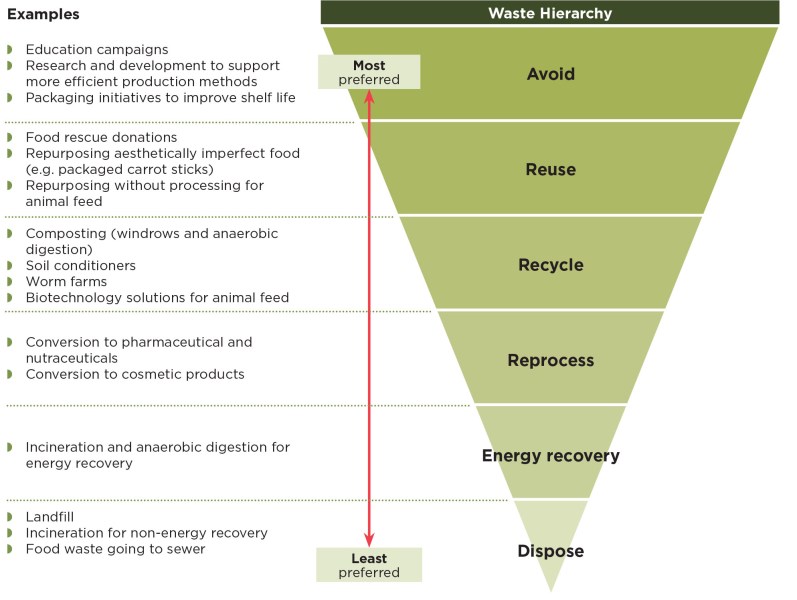
Yes , food waste can be transformed into valuable resources. It can be used as fertilizer , can be transformed into energy , & can be transformed into a bunch of innovative products , from pharmaceuticals to building materials.

Food waste can be recycled to produce nutrient rich fertilisers. Household composting recycles food waste in an environment where lot of oxygen is available. Fungi and bacteria break down the proteins, fats and carbohydrates in the waste into compost and CO2. The CO2 released from the breakdown of organic materials returns to the atmosphere , which is then captured by the plants. So it’s a carbon-neutral process.

Food waste can generate sustainable energy through waste-to-energy processes , where organic waste is used to generate electricity or heat. It is categorised as renewable energy. Various technologies are available to generate such energy ,although they do produce greenhouse gases like CO2, methane and nitrous oxide, so measures should be taken to reduce these emissions.

Extractions from the food waste can be used in production of biofuels like biodiesel & bioethanol.

Fruits and vegetables have the highest wastage rates of any food products. The Food and Agriculture Organization of the United Nations  estimates that globally, 45 per cent of fruits and vegetables are wasted along the supply chain. But these scrapped by-products can be reprocessed into functional and valuable products.

There are researches investigating how mango seeds could be used to make surfboard wax & fibres in root vegetables could be used in super strong concrete. Rice husks have variety of applications , such as cement, insulators, adsorbents and various construction material.They can also be ground with glass to create lightweight bricks that are resistant to fire and termites.

Discarded parts of fruits & vegetables are often rich in bioactive phytochemicals. These extracts can be used in pharmaceuticals , dietary supplements & food preservatives. Extracts & oils derived from food waste also be used in cosmetics.

The essential chemicals needed to create bioplastics include various carbs, fats and cellulose fibre that can be extracted from food waste using methods like freeze drying and hydrodynamic shockwave technology. Bioplastics ,are plastics produced from renewable sources and can be used for packaging, coatings and adhesives.Turning food waste into bioplastics can reduce food and plastic waste. It could also minimize the emissions associated with plastic production.

There’s need to reliase that this waste is not only causing social & economical problem but is also a cause of green house gases emissions, & thus is a harm for the environment.

Obviously , we should think of alternate ways to transform the waste into resource but our first priority should be to minimize the waste.

Avoid wastage of food. Provide the leftover edible food to those who need this instead of throwing this out. Use the leftover food as fertilizer


Love & Food are meant for sharing not for wasting
🙂 Don’t waste Food 🙂

Ice Volcanoes ~ Nature never fails to amaze us

Recently a 45 feets tall ice volcano was seen in the Almaty region of Kazakhstan . Yes , you read it right , it’s a ice volcano.

This volcano is formed over an underground hot spring , which is in Almaty region of the country , between the villages Kegan & Shrganak.

The volcano is a cone- shaped frozen structure which was formed by the spouting water of spring. As the hot water spouts out from the spring it freezes almost instantly due to the extreme cold weather.The volcano also sprays water from the top vent.

Last year also , a small ice volcano was observed here. But the recent one is more organised. Ice volcanoes were also witnessed at the Oval Beach in Saugatuck, Michigan in February 2020. 

An ice volcano is a conical mound of ice formed over a terrestrial lake via the eruption of water and slush through an ice shelf. The formation process is wave-driven , & the wind is energy provider for the waves to cut through ice & form the volcanoes.It may take hours or days for the formation. Their formation is temporary , frequently destroyed by the storms & warm weather. It requires precise conditions for the formation of these volcanoes.

Such ice volcanoes are often observed along the southern coast of Lake Erie and Lake Ontario in North America during specific conditions.

Twitter will have to obey the Indian government's law, Government encourages people to switch to Koo

Clash between Twitter and the central government is increasing due to the order to close 1178 accounts related to Khalistan-Pakistan . The central government has clearly told the American company that it has to follow Indian law. Also, many politicians and others are switching to Koo app against Twitter.

In a virtual meeting with Twitter Vice President Monique Meshe and Jim Baker, the secretary of Ministry of Electronics and Information Technology said,”despite government instructions, fake accounts related to the peasant movement were not closed. This is very unfortunate”. Earlier, Twitter replied it cannot fully oblige to the center’s order citing violation of the right to freedom of expression and said the Indian government’s demand was not in line with the country’s laws. Twitter believes in protecting the Freedom of Expression of its users and hence it did not take an action against the accounts of media companies, journalists, social workers and politicians.

25+ lakhs downloads of the KOO app in last 48 hours-

Amidst the trending #ban_twitter and #Koo_app on twitter in India, many politicians and spokespersons are switching to Koo to express their anger and requesting their followers to do the same. Koo app
was launched only last year under self-sufficient India. About 3 million people downloaded it in 48 hours.

Twitter will have to obey the Indian government's law, Government encourages people to switch to Koo

Clash between Twitter and the central government is increasing due to the order to close 1178 accounts related to Khalistan-Pakistan . The central government has clearly told the American company that it has to follow Indian law. Also, many politicians and others are switching to Koo app against Twitter.

In a virtual meeting with Twitter Vice President Monique Meshe and Jim Baker, the secretary of Ministry of Electronics and Information Technology said,”despite government instructions, fake accounts related to the peasant movement were not closed. This is very unfortunate”. Earlier, Twitter replied it cannot fully oblige to the center’s order citing violation of the right to freedom of expression and said the Indian government’s demand was not in line with the country’s laws. Twitter believes in protecting the Freedom of Expression of its users and hence it did not take an action against the accounts of media companies, journalists, social workers and politicians.

25+ lakhs downloads of the KOO app in last 48 hours-

Amidst the trending #ban_twitter and #Koo_app on twitter in India, many politicians and spokespersons are switching to Koo to express their anger and requesting their followers to do the same. Koo app
was launched only last year under self-sufficient India. About 3 million people downloaded it in 48 hours.

Ways to Be a True Friend

“Don’t wait for people to be friendly. Show them how. ”~ Unknown

One night I called my old friend with whom I had spoken for a while. While we were catching up, sharing stories, and laughing at secret jokes that might sound silly when the phone rang, I wondered why I was letting so much time go by because I had last called him.

We don’t live close to each other, so taking a drink or hitting a yoga class is not an option. But really communicating with him, sharing the pieces of my life and accepting the pieces he wants to give, does not require a certain geography.

We can become close friends with each other, no matter how far away, if we choose to put forth effort. If we remember to be punctual, we can have such wholesome, satisfying conversations that make us feel recognized, understood, appreciated, and supported.

Then I started to think about all the times I had been busy and lost contact with friends who lived right on the street – times when I was caught up in everything that happened in my life and forgot to grow my relationships.

We need meaningful communication with other people.

Not everyone should be a close friend, but it is associated with our happiness that we show people who we really are, let ourselves know them, and remind each other of actions — small or large — that we care about them.

We do not have to be alone or feel alone in this world, but it is up to us to create and allow opportunities to be together, enjoy each other, and consult one another. It is up to us to make our relationship better.

With this in mind, I recently asked on Facebook, “What does it mean to be a true friend?”

I have included some ideas that have touched me deeply (some of which have been described in detail or slightly modified to make it easier to read).

Here is what some young Buddhist scholars say:

  1. Stay calm, even in peace.
  2. Be kind and listen. Be fun and simple. Be serious, loving, and forgiving.
  3. Don’t be afraid to tell the truth, no matter how difficult it may be.
  4. Communicate to each other in times of need with your honest opinions.
  5. A true friend is one who is always listening and genuinely interested in right and wrong, and someone who calls or just writes a greeting.
  6. Be honest and ethical, stay open and invite you to share your concerns, and be honest even if you don’t agree with it.
  7. A true friend will do his best to please you when you are upset and make you feel special.
  8. Try and improve their health despite your friendship.
  9. Be what you really are, be at risk, give someone else space, security and the choice to do the same.
  10. Be truly happy when they find, discover, or accomplish something that they truly desire. (Heather Tucker)
  11. Share the truth in your heart, without fear of disagreement.
  12. Be honest and forgiving but above all: love and respect.
  13. Accept the person as he or she is, as an individual, unconditionally. And, since it is important that you are there to help them, sometimes you have to be willing to make them available for you.
  14. Stay with friends despite a person’s choices in life and do not bail them out if they are not what you want them to be.
  15. A true friend always supports the person but does not feel compelled to support the situation. A true friend knows how and how to say company, “No.”
  16. Help yourself and your loved ones grow. Life means growing up, and a true friend is someone who can honestly say that he helped you to describe himself as a person.
  17. Celebrate the win and be there to support the loss. Keep your word and admit it if you don’t.
  18. Go to a friend’s help when others are out.
  19. Do not hold a grudge against a minor disagreement.
  20. Veza! You can pretend to be tired but you can’t pretend to appear.

And I will add the last one: share with honesty every opportunity you get.

I don’t know you all, but I know very few. To all the wonderful, inspiring people who come here and share their pieces, thank you for being you and for taking me, as I am.

Koo App – An Indian Alternative to Twitter

Koo , an Indian alternative of twitter is gaining a lot of attention from the netizens as the government ministers & ministries are switching to the app.

Koo’s rise comes as Twitter is currently engaged in a standoff with the Indian government over the blocking and unblocking of accounts linked to the farmer protests. The Koo a made-in-India app is now seen as a prospective competitor to Twitter in the backdrop of the government’s disagreement with Twitter.

Union minister Piyush Goyal, who is quite active on Twitter,announced on Tuesday that he has also opened an account on Koo. Electronics and IT minister Ravi Shankar Prasad has already joined the platform and has a verified handle. Several government departments, including the ministry of Electronics and IT , India Post have verified handles on this platform. Former cricketer Anil Kumble & Sadhguru are among the personalities who have joined the Koo.

Koo is a microblogging app just like Twitter where you can post opinions publicly & follow others. The character limit for a ‘Koo post’ is 400 while it’s 280 on twitter.Users can share audio, video & can create the post polls just like twitter.Users also have option of linking their Facebook , LinkedIn , Youtube & Twitter feed to their Koo profile. It is available as a website and on ios and Google Play Store.

Koo , a Swadeshi app was launched in March 2020. It had also won the Aatmanirbhar App Innovation Challenge along with other Indian apps like Zoho and Chingari. The Koo app was created by Bombinate Technologies Private Limited which is a Bangalore-based private company incorporated in 2015. Aparameya Radhakrishna and Mayank Bidawatka are the co-founders.

Prime Minister Narendra Modi had, in one of his Mann Ki Baat encouraged Indians to use the app.

The app is available in several languages, including Hindi, Telugu, Kannada, Bengali, Tamil, Malayalam, Gujarati, Marathi, Punjabi, Odiya and Assamese.

The Koo website notes that only 10 per cent of India speaks English and “almost 1 billion people in India don’t know English.Instead they speak one of India’s 100s of languages.” The website adds that the “majority of the internet has been in English. Koo is an attempt to make the voice of these Indians heard. They can now participate on the internet in their mother tongue by listening to the views of some of the sharpest Indian minds and also speak their mind by sharing their thoughts.”