

It is in the fitness of things that the Bombay High Court Bench at Aurangabad has recently on 19 January 2021 in a learned, latest, landmark and laudable judgment titled Sangita v. The State of Maharashtra [Criminal Public Interest Litigation No. 1 of 2016] has issued additional guidelines to restrain print/electronic media as well general public, using social media, from publishing information related to rape victim that could “directly or indirectly” disclose her identity. The Bench of Aurangabad Bench of Bombay High Court comprising of Justice TV Nalwade and Justice MG Sewlikar was hearing the plea of one Sangita who is the mother of a rape victim who sought directions to the print and electronic media that the name or identity of the rape victim should not be disclosed. It was underlined by the Bench that the victim of sexual offence undergoes not only physical trauma but also mental trauma for no fault of hers. Very rightly so!
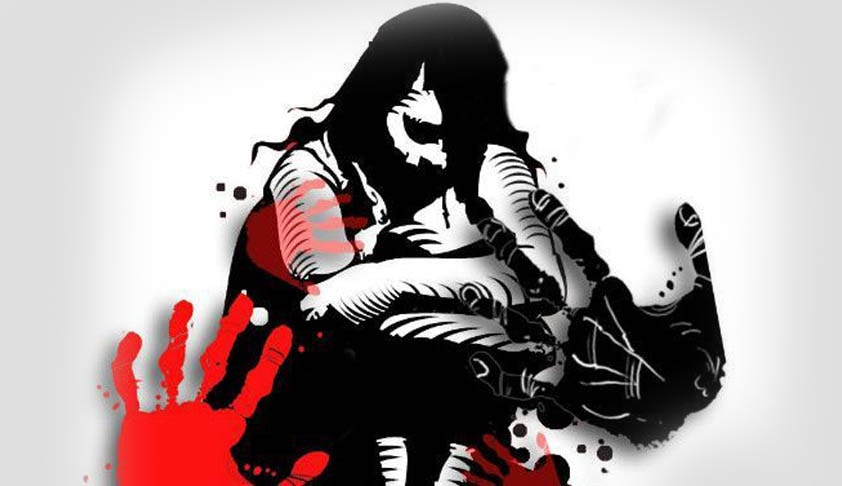
To start with, the ball is set rolling by first and foremost observing in para 3 about the purpose of the petition that, “This Public Interest Litigation is fled by the petitioner seeking direction to the Print and Electronic Media that the name or identity of the rape victim should not be disclosed.”
While elaborating on the facts of the case, the Bench then enunciates in para 4 that, “Facts leading to this Public Interest Litigation are that the petitioner is the real mother of the victim. First Information Report No. I-336/2010 was registered with Tofkhana Police Station, District Ahmednagar, under Sections 363 and 366 of the Indian Penal Code and after arrest of the accused, Section 376 was added. It is however, alleged that despite having made the provisions under Section 228-A of the Indian Penal Code and despite having the directions been issued by the Honourable Supreme Court in the case of Nipun Saxena and another Vs. Union of India and others reported in (2019) 2 Supreme Court Cases 703, the Print and Electronic Media are publishing the details of the crime in such a manner that the identity of the victim is invariably disclosed. The petitioner has alleged that in this case also the local newspapers of Ahmednagar district i.e. Daily Sarvamat dated 23.02.2011 and 06.07.2015 highlighted the news in such a manner that the identity of her daughter was disclosed. Similarly, in Daily Punyanagari, Daily Sakal, Daily Divya Marathi and other newspapers the identity of the victim (not related to the victim i.e. daughter of the petitioner), is disclosed. The petitioner has alleged that because of the offence of rape, the victim suffers physical and mental trauma and publication of the news thereby disclosing the identity of the victim, causes severe mental agony to the victim. The petitioner had made several representations to find out whether there are any guidelines and whether any training is imparted to the media in this regard. She has further sought directions to the media not to disclose the details revealing the identity of the victim in the case of rape.”
To be sure, it is then stated in para 5 that, “Learned counsel Shri A.D. Ostwal was appointed as amicus curiae to assist the Court in this matter. He argued that the Honourable Supreme Court in the case of Nipun Saxena (supra) has issued various guidelines. Guidelines in this regard are also issued by the Delhi High Court. Kolkata High Court has also issued directions in the case of Bijoy @ Guddu Das Vs. State of West Bengal reported in (2017) 2 Cal LJ 224. These guidelines indicate that in no case name of the victim should either be disclosed nor the details revealing her identity shall be published. He argued that despite these directions, the Print Media and the Electronic Media give the details of the crime, relation of accused with the victim, details as regards the parents of the victim thereby revealing the identity of the victim. He has furnished proposed guidelines for the consideration of this Court.”
Be it noted, it is then observed in para 6 that, “It is true that the victim of sex offence undergoes not only physical trauma but also mental trauma. She has to undergo these agonies for no fault of hers. Keeping this object in view, Section 228-A of the Indian Penal Code was enacted which mandates that the identity of the victim in offences under Sections 376, 376-A, 376-B, 376-C, 376-D or 376-E should not be disclosed. Section 228-A of the Indian Penal Code reads thus :-
228-A Disclosure of identity of the victim of certain offences, etc.-
(1) Whoever prints or publishes the name or any matter which may make known the identity of any person against whom an [offence under section 376, section 376-A, section 376-B, section 376-C, section 376-D or section 376-E] is alleged or found to have been committed (hereafter in this section referred to as the victim) shall be punished with imprisonment of either description for a term which may extend to two years and shall also be liable to fine.
(2) Nothing in sub-section (1) extends to any printing or publication of the name or any matter which may make known the identity of the victim if such printing or publication is –
(a) by or under the order in writing of the officer-in-charge of the police station or the police officer making the investigation into such offence acting in good faith for the purposes of such investigation; or
(b) by, or with the authorisation in writing of, the victim; or
(c) where the victim is dead or minor or of unsound mind, by, or with the authorisation in writing of, the next-of-kin of the victim.
Provided that no such authorisation shall be given by the next-of-kin to anybody other than the chairman or the secretary, by whatever name called, of any recognised welfare institution or organisation. Explanation – For the purposes of this subsection, “recognised welfare institution or organisation” means a social welfare institution or organisation recognised in this behalf by the Central or State Government.
(3) Whoever prints or publishes any matter in relation to any proceeding before a Court with respect to an offence referred to in sub-section (1) without the previous permission of such Court shall be punished with imprisonment of either description for a term which may extend to two years and shall also be liable to fine. Explanation – The printing or publication of the judgment of any High Court or the Supreme Court does not amount to an offence within the meaning of this section.”
It would be instructive to have a glance at what para 8 says that, “The Honourable Supreme Court in the case of Nipun Saxena (supra), after considering Section 228-A of the Indian Penal Code and various provisions of Protection of Children from Sexual Offences Act, has issued following guidelines :-
50.1 No person can print or publish in print, electronic, social media, etc. the name of the victim or even in a remote manner disclose any facts which can lead to the victim being identified and which should make her identity known to the public at large.
50.2 In cases where the victim is dead or of unsound mind the name of the victim or her identity should not be disclosed even under the authorisation of the next of kin, unless circumstances justifying the disclosure of her identity exist, which shall be decided by the competent authority, which at present is the Sessions Judge.
50.3 FIRs relating to offences under Sections 376, 376-A, 376-AB, 376-B, 376-C, 376-D, 376-DA, 376-DB or 376-E IPC and the offences under POCSO shall not be put in the public domain.
50.4 In case a victim files an appeal under Section 372 CrPC, it is not necessary for the victim to disclose his/her identity and the appeal shall be dealt with in the manner laid down by law.
50.5 The police officials should keep all the documents in which the name of the victim is disclosed, as far as possible, in a sealed cover and replace these documents by identical documents in which the name of the victim is removed in all records which may be scrutinised in the public domain.
50.6 All the authorities to which the name of the victim is disclosed by the investigating agency or the court are also duty-bound to keep the name and identity of the victim secret and not disclose it in any manner except in the report which should only be sent in a sealed cover to the investigating agency or the court.
50.7 An application by the next of kin to authorise disclosure of identity of a dead victim or of a victim of unsound mind under Section 228- A(2)(c) IPC should be made only to the Sessions Judge concerned until the Government acts under Section 228-A(1)(c) and lays down criteria as per our directions for identifying such social welfare institutions or organisations.
50.8 In case of minor victims under POCSO, circumstances justifying the disclosure of her identity exist, which shall be decided by the competent authority, which at present is the Sessions Judge.
50.9 All the States/Union Territories are requested to set up at least one “One-Stop Centre” in every district within one year from today.”
More damningly, about flouting of the rules regarding the revelation of the identity of the victim, the Bench then minces no words to state in para 9 that, “Despite issuance of these guidelines, the Print Media and Electronic Media are reporting these offences in such a manner that the identity of the victim is established directly or indirectly. Learned counsel Shri Ostwal argued that the electronic media holds interviews of the victim/relatives of the victim which lead to revealing the identity of the victim. He argued that the victim or the relatives of the victim are least aware that by giving such interviews they are exposing themselves to the revelation of the identity of the victim.”
Honestly speaking, the Bench then concedes in para 10 that, “It is true that the electronic media and the print media publish news items giving details of the crime in such a manner that by reading the news item, one can easily establish identity of the victim. The electronic media holds interviews of the victims or relatives of the victims. The victim or relatives of the victim, most of the time, are not aware that by giving such interview they are revealing the identity of the victim. If the victim who is major or the relatives of such a victim voluntarily consent for disclosing her identity, in that case, no one can have any objection. The question arises when the victim or relatives of the victim do not want the identity to be revealed. In such cases, the media should act with circumspection and is expected to observe restraint. Publishing news item in detail thereby disclosing identity of the victim itself indicates that the media does not observe self-restraint. We do not mean to say that the media does it deliberately. But in their zeal to publish the news item fast, appropriate care is not taken in some cases and the news is reported by which the victim’s identity becomes known to the readers/viewers. To illustrate, we can take by way of sample the news items published in reference to the offence committed against the daughter of the petitioner. This news item clearly establishes the identity of the victim. It mentions the name of the petitioner (i.e. the mother of the victim) and address of the petitioner. It also mentions name and residence of the accused as well. The only thing left is the name of the victim. By this news item, one can easily establish the identity of the victim especially those who know the family of the victim.
As we see, it is then stated in para 11 that, “In another news item, the identity of the victim is disclosed. It is reported in Daily Lokmat. This clearly indicates that the identity of the victim is established. In this news item, all the details by which the identity of the victim can be established are given though the name of the accused and the name of the victim is not mentioned.”
What is worse is what is then stated in para 12 that, “On the basis of the judgment of the Honourable Supreme Court in the case of Nipun Saxena (supra) the Government of India, vide letter dated 16.01.2019, communicated the directions of the Honourable Supreme Court for their strict compliance. Despite this, the directions are followed in breach.”
What’s more, the Bench then adds in para 13 that, “Having considered the news item, it is evident that without mentioning the name of the victim, the identity of the victim can be established by giving the details as regards the name of parents of the victim or other relations of the victim, relation of the accused with the victim, residential address of the accused and the victim and other details. Learned counsel Shri Ostwal has produced a circular issued by the Special Additional Deputy Inspector of Police (Training and Special Squad) Maharashtra State, Mumbai. The said circular states that the petitioner had brought to the notice that because of lack of policy with the police department while releasing the information as regards sex offences, care is not taken that the identity of the victim is not disclosed. The said circular mentions that in the course of training subject as regards non-disclosure of identity of the victim should be included.”
With concern, the Bench then notes in para 14 that, “Despite clear directions by the Honourable Supreme Court, restricting/restraining media from disclosure of such information leading to identification of victim, media continues to indulge into giving details of the crime in such a manner that the victim can be identified easily. There are instances in which the news items mention the place of work of the victim or of the accused with reference to which identity of the victim is easily possible can be readily available or made known.”
Most significantly, the Bench then aptly observes in para 15 that, “The Honourable Supreme Court has dealt with the aspect of disclosure of the identity of the victim while preferring appeal. However, there can be disclosure of identity of victim while recording evidence during trial, recording statement of the accused under Section 313 of the Code of Criminal Procedure, framing charge, submitting remand report by the police. To avoid disclosure of identity of victim in the same, we propose, in addition to the directions of the Honourable Supreme Court in Nipun Saxena (supra), to issue the following directions to the print media, the electronic media, the people using social media such as WhatsApp, Facebook, Internet, Twitter etc.
The print media, the electronic media, the people using social media such as WhatsApp, Facebook, Internet, Twitter etc. while giving information / circulating information relating to offences under section 376, 376-A, 376-B, 376-C, 376-D or 376-E of the Indian Penal Code and the offences under Protection of Children from Sexual Offences Act, shall not publish/disclose following information in such a manner that the victim will be identified directly or indirectly :-
i) The names of the parents or relatives of the victim.
ii) Relation of the accused with the victim.
iii) Residential/occupational/work address of the accused and the victim and the village at which the victim and/ or accused live.
iv) Occupation of the parents or other relations of the victim and place of work of the victim and accused /their parents or any other relative in such a manner that the victim will be identified.
v) If the victim is a student, name of the school or college or any other educational institution or private coaching class or classes which the victim has joined for pursuing her hobbies such as music, drawing, dance, stitching, cooking etc.
vi) Details of family background of the victim.”
As a note of caution, the Bench then adds in para 16 that, “It is noticed that while framing of charge, recording evidence, recording statement of accused under section 313 of the Code of Criminal Procedure, name of the victim is disclosed. Therefore, while framing charge, mentioning name of the victim should be avoided. Instead he/she should be referred to as ‘X’ or any other alphabet the Court deems fit and proper. While recording evidence if the witness mentions the name of the victim, the Court shall record that “the witness stated the name of the victim but to conceal her identity, her name is not recorded.” And the victim should be referred to in the same manner as is done during the framing of charge.”
Furthermore, the Bench then adds in para 17 that, “If the witness is a victim, his/her name should not be disclosed while recording evidence. Her name, place of residence, age, occupation shall be kept in a sealed cover and in the name column, she can be referred in the same manner described while framing charge keeping the address column, occupation column blank.”
While continuing in the same vein, the Bench then holds in para 18 that, “The same procedure should be followed while recording statement under section 313 of the Code of Criminal Procedure. While recording statement under section 313 of the Code of Criminal Procedure, the Court shall refer the victim in the manner she is referred to while framing charge.”
Not stopping here, the Bench then further sounds a note of caution in para 19 holding that, “While forwarding remand report to the Magistrate or to the court dealing with remand, mentioning of name of the victim should be avoided. Instead she should be referred as ‘X’ or any other alphabet the Investigating Officer deems fit and proper.”
Of course, the Bench then advises electronic media in para 20 that, “According to Shri Ostwal, learned Amicus Curiae, the electronic media holds interviews of the victim or his/her relations. He submitted that because of these interviews, though care is taken to blur the face of the victim or his/her relations, identity of the victim can be disclosed by his/her voice. We hope that the electronic media will show restraint in holding interviews of the victims and/or their relatives and would take all precautions to avoid and prevent disclosure of the identity of the victim.”
Now coming to concluding paras. It is held in para 21 that, “In view of above directions, instant Public Interest Litigation is disposed of. Rule made absolute in above terms. We record our appreciation for the assistance rendered by Shri Ostwal, learned Amicus Curiae and learned APP Shri Salgare. Fees of the appointed counsel is quantified at Rs.15,000/- and it should be paid through the High Court Legal Services Authority, Sub-Committee at Aurangabad.”
It is worth noting that it is then observed in para 22 that, “The Registrar (Judicial) is directed to bring these directions to the notice of : The Registrar General of this Court for circulating to all the subordinate Courts; the Principal Secretary, Home Department, Government of Maharashtra; the Principal Secretary & R.L.A., Law and Judiciary Department; the Secretary, Indian Broadcasting Foundation, New Delhi and, the Secretary, Press Council of India, New Delhi.” Finally, it is then held in the last para 23 that, “Learned counsel Shri Ostwal stated that his fees shall be credited to the Chief Minister’s Relief Fund (for Covid-19).”
To conclude, it goes without saying that the landmark, laudable and learned directions given by the Bombay High Court Bench at Aurangabad to avoid and prevent disclosure of rape victim’s identity must be implemented in letter and spirit. Media, public and courts must all comply with these directions accordingly as we have already discussed above in detail! There can be no denying or disputing it!
Sanjeev Sirohi















 Eduindex
You must be logged in to post a comment.