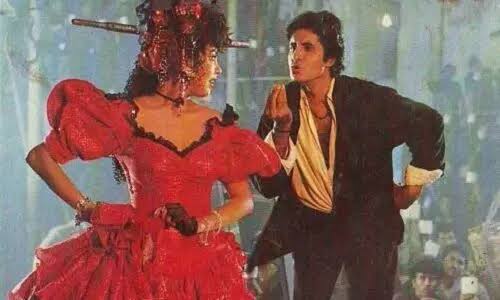
Legend Javed Akhtar takes dig at the “Drug Conspiracy” in Bollywood

After so much controversy on drug angle which is revolving in the news. Whole Bollywood is now just started to react on this. However, reaction is mixed but still majority of industry has opted to remain silent on the burning issues.Now the great legend has given his thoughts on this issue which we are going to tell you now because you must give a shot to some points that he has made regarding the whole matter.  Akhtar has been renowned for presenting his valuable advice and comment on various issues.

He recently gave an interview where he told his take on all the matters. Javed out and out told that drugs is a wrong sentiment in whole world and there is a solid reason behind banning it from whole universe. A lot of people have risked and lost their lives in such unimportant things. Millions of money and time has been wasted by this fake and man-made pleasure. He told that he had only heard about it and still it feels worse just by thinking.

It has been said that Youth has been affected by it most. I haven’t seen any drugs with my naked eyes in my whole life. It is not just a problem to industry rather it’s an issue threatening the society. It is among the worst of problems world is suffering currently. There should be more ponder on this to eliminate it fully. However, he somewhat said he don’t know that it is legal or illegal as per law.

Jawed Akhtar has also poured views on various topic across the interview. The drug thing has become the most discussed and hyped issues after Kangana quoted that 90% -90% of the Bollywood is used to of taking drug. The Actor turned BJP MP also raised this issue in the parliament. Ravi kishan bluntly criticized the practice and its growing network all around.

Then in parliament, there was a big mess as Jaya Bacchan didn’t agreed with this and opposed this with a long speech. He replied that on the mere mistake of some peoples, ravi kishan can’t defame the whole industry. Kangana also replied opposing the comment of jaya bacchan in Twitter. Twitter was trending whole day on this topic with retweets of various celebrity or influencers in twitter.

This whole incidents in and out on online made quite a few persons against the Kangana on the whole Drug-nepotism-SSR triangle. As very peoples have expressed in this issue recently.

Filmmaker Vikram Bhatt has said that he was told that drugs were served on trays at high-profile Bollywood parties, although he has never personally witnessed it. His comments come after Kangana Ranaut alleged that 99% of the film industry has been exposed to drugs. Vikram said, “I have never been to a party where drugs have been taken by anyone. I have been to big parties. Somebody once told me that in some parties, different kinds of drugs are offered in trays. The guests then pick up the drug of their choice. However, I have never seen any such thing in the parties I’ve been to.”

How to leverage marketing automation for maximum benefit

Marketing automation has a very nice potential to benefit everyone in business- from employees to owners. The future of marketing automation is bright and promising because of its world -wide business and ability to reach the right people at the right time with right messages.

What do you mean by Marketing Automation?

Marketing automation is a combination of different types of tools, strategies, apps and software. Each of these technologies practices, usefully messages that pushes people from awareness to conversion to brand loyalty. Marketing automation is like a growing garden in a business. You just need to saw proper seeds to bloom and nurture.

It can reduce friction, increase speed and maximise efficiency in the business. It helps in the progress of the business.

How to leverage the maximum benefit with marketing automation

Read this article and find how you can leverage the maximum benefit with marketing automation. Scroll it down. Have a happy reading ahead.

  1. You have to choose software very carefully: There are a lot of marketing tools out now-a-days. While there are many options and solutions open for you, you have to remember which tool will be alright for your business. The key to success is to get the right tool that completes your needs and objectives both. You need that kind of software that strengthen your strong point and reduces your weakness. You must be knowing how to proceed further. You have to find that right tool that touches every aspects of marketing.
  2. You have ensure integration and compatibility: You have to pick up the two most powerful tool that go with each other very well. Interoperability is a must one. When it comes to marketing automation hubs, these are the platforms that have a high level of compatibility with other tools: Hub Spot, Get Response, Drip, Mautic, Infusion Soft, and many more.
  3. Build your list: Your list is the most main and valuable asset. So do not miss any big contacts in your list Or else you may fall. Your main target will be to build your list and not and not to buy it. You should not forget it or else you may lack behind. It requires a lot of maintenance to undo the bad effects of database delay.
  4. You have to outsource customer facing tasks: When it comes to customer facing tasks or marketing tasks that can directly put an impact on brand image and customer relations, it is more likely to be efficient and effective step is to outsource. Content marketing is an awesome example but you have to be committed internally to content creation. Thus outsourcing can save your time and eliminate human element. You can always hire freelance copywriters to look after your blog content and it is of great use.
  5. Do leverage automated drip campaigns in a right way: It an effective way to reach people over and over again is to launch email drip campaigns. You can continue maintaining your contacts on a regular basis. You need a correct outsourced content partner with correct voice , tone and messaging style.

So these are some of the ways of how you can maximise your benefit with marketing automation. Try these ways we assure you with long-term benefits and it will plentiful.

This is how being stuck in past affects your future

Have you ever bogged down by your past mistakes? Do you regrets about things that you have done or neglected to do? Have you had bad things happen to you that were unjustified and unfair? If so, you are not alone. We will assure you that your past experiences does not determine or define your future.

Yes, exactly it is true that your current life is at some point of the result of choosing your past actions, choices and experiences. Your future depends on the present moment or how to work in present.

By creating a lifeline, you can easily get the choices and experiences that had affected your life. It will be helpful to see the past perspective and where you may aim your future.

Here are some tips. Scroll down to read them.

  1. Draw a chart of your past experience: Start depicting you’re your chronologically through drawing a chart. See your life story out of that chart. Then highlight the key points of your life. It can be both negative and positive. Focus on the interactions of your career. Pay special attention to your key points that have affected you and your decisions regarding career. These could be the areas or centres where you have worked, volunteered or made your own career choices. It will be helpful for you to determine that you lacked and it will help you fulfil that gap.
  2. Create a connection between events: Now you know your career impacts after creating a chart. Sometimes careers gets affected by the past incidents like there can be high or low points of your career, health issues and relationships occurred at the same time. It creates a lot of impact on well-being of ours. Step back and look the trends of your experiences- positive and negative both. By looking back you will get to know what are things you liked most of your career and which you did not like. So you can easily pinpoint what you want to do in future and what you not.
  3. Vision the insights of a bright future: If you have noticed the positive things, do the same with negative things also. You then have to expand this lifeline and identify and focus on the positive things or experiences that you would prefer to do. Ask yourself questions like-‘Are you satisfied with your current job status?’ ‘Are you ready to bring a change in your career?’ ‘Are you happy with your career?’ ‘Do you want to see more positive experiences to increase your job motivation and satisfaction level?’ All these questions can help you to determine your today’s action to your future.

Remember that your past had a grip on the present just because you have allowed it. Accept the fact that you could not change your past but you have complete autonomy to make your wishes and choices of your future.

No matter what has happened in your past, you can choose how much power over your current life you want to afford it. You cannot change the past but can always have a choice how to react to it.

Your past, no matter how bad it was, cannot determine your future. The choices and decisions that you take today will definitely make you what you want to become. Make the decisions to learn from your past and apply this to your present life, so that you can have a great future, that you are meant for. You deserve it.

Hope you enjoyed reading this article. Stay tuned with us for more updates. Till then goodbye. Have a nice day.

5 Ways to overcome low self-esteem

Do you often find your friends or your colleagues better than yourself? Do you often end up criticising yourself on baseless points and land up depressed? Well, this happens to many because of their low self-esteem.Some of the ways to boost and assist you overcome your low self-esteem are as follows-
1) Turn a deaf ear to your inner negative voice – people with low self-esteem often gives in to their inner judge. It is that inner voice of yours that observes and judges your thoughts and actions. It lowers our self-esteem consistently, when we listen to those terrible thoughts, ultimately hindering our self-worth. In order to overcome low self-esteem and get rid of our negative self-image, it is essential that you challenge these negative thoughts. You can do this by focusing on all the good qualities you have rather than constantly being worried about your flaws and focusing on all the negativities of life.
2) Self- acceptance– self- acceptance is essential for every individual to overcome their low self-esteem. You should learn to accept yourself first for others to truly accept you for who you are as a person. So try to treat yourself like a friend, silence your negative ideas and beleifs about yourself and accept yourself the way you are. Accept yourself with all the flaws you have,as no human alive is born flawless. This might not seem easy but this is vital for your mental well-being and for your overall personality development. Be kind to yourself always, no matter what! Always remember that “You” are unique and best in your own ways!
3) Stop comparisons- if you often find yourself comparing with others then it is the time to stop doing so.Comparison frequently brings in needless anxiety, and makes you feel worthless for no reason. As there’s a saying- “Comparison is the thief of joy!” What you have to apprehend is that there will always be people more beautiful, successful or smarter than you are, but it doesn’t necessarily make you an unsuccessful person.Everybody grows and moves towards success at their own pace and time. You will shine too, when your time comes, till then grow with your life experiences and enjoy the process of becoming your true self, harnessing your potential to the fullest. Keep chasing your dreams and you will soon be at your desired place in life.
4) Self-belief-  Belief in yourself against the world’s disbeliefs! If you have a dream, but you are unsure about achieving it or you find it unachievable and fear even taking a step forward,because of what your inner critic or the people around you says, then do yourself a favour by just silencing all the irrational thoughts and fears and better focus on what you really want out of your life. Keep following what your heart says, follow your passion, work hard to make your dream come true and eventually you will find your self-esteem increasing with every goal you have accomplished so far.
5) Seek meaning- strive to do something significant in life. Work for something or do something that is beyond yourself. The act of kindness is one way to reap contentment and inner peace in life. Be kind to others for no reason. Do good to others without ever anticipating anything in return, this would add a meaning to your life. Volunteering for a cause you believe in and you always wanted to, is another example, for boosting your self-esteem and living a fulfilled life.
   So dear readers, if you often struggle with low self-esteem, I hope the above mentioned ways would help you overcome your struggle. You are special in your own unique way, so don’t ever let the world or your own negative thoughts belittle you!

Multiplayer Chess: Turning the Duels Into Battles

Chess in itself is a complicated game. Even with all the strategy, sometimes one can go only that much far. Also known as the game of kings, chess has evolved through the passage of time. It is said to have derived its roots from the indian game chaturanga. The standardized rules of chess that are followed unanimously now were discussed and fixed in the 19th century.

In this game, each player is alloted 16 pieces: one king, one queen, two bishops, two knights, two rooks and lastly, eight pawns. Each piece follows a different movement pattern, and the main objective of the game is to checkmate the opponent’s king. Checkmate refers to the position where the opponent’s king is in threat of capture, with no option to safeguard the piece. 

It is a fact that change is the only thing that is constant. Same applies to chess too. Many variants of chess, on the basis of different criterias, are popular amongst the population. If anyone is keeping up with the chess developments, then they will surely know about three and four player variants of chess. So what are these variants? Let’s see…

Triple Trouble

Three player chess, also known as three way chess, or three handed chess is specially designed for three players. Usually a non-standardized board is used, and many variations of this form exist. The pieces of three players are usually separated on the basis of colours. Three way chess variants are more tough to design as for disbalance caused by teaming up of two players will be a great disadvantage for the third one, and also not easily lovercomable. Hence, some variants declare the first player to checkmate any of the other two players as the winner. The third player might be declared to have lost, alongside the checkmated player, or, might be rewarded a half point.

The strategy in three way chess differs greatly from the traditional chess variant, as for the face against two opponents, the usual opening and defenses might not hold strong. Also, the third player is given the most advantage when the other two players exchange their pieces. This point opens a plethora of new tactics in the game. Also, in the games where the first one to checkmate wins, the players not only have to build on their attack and defense, but also have to make sure that no other player checksmates before them. Also, checkmate from both the opposing players simultaneously is a tricky situation. As for if the checkmated piece is captured by the second player, which in turn, is captured by the third player, then it is considered that the ultimate checkmate is given by the third player. But with all these complications, three way chess pushes the mind to evaluate the game even with more concentration and critical thinking.

Some variants of three way chess are:

  • Boards with triangular cells: Patented by Russian Ilshat Tagiev in 2008, this variant uses a hexagonal board with triangular cells. The cells which are not adjacent to the perimeter have three cells adjacent in an oblique fashion.
  • Boards with quadrilateral cells: Under this, variants can be sub classified on the basis of the geometry of the boards.
  • Hexagonal board: Some variants under this category are Three Man Chess (96 cell board), Self’s Three Handed Chess (144 cell board), Waidder’s Three Handed Chess (126 cell board), etc.
  • Other Boards: Megachess (roughly triangular board with 130 cells), Mad Threeparty Chess (10X10 board) etc.
  • Boards with hexagonal cells: In this type of board, usually three bishops are alloted to each player, in order to include all the cells of the hex- playing field. Some variants with this type of cells are- Chesh, HEXChess etc.
  • Circular boards: Usually has three or four sided cells. One such variant is Three Man Chess.

From all the directions

Four player chess, also known as four way chess and four man chess, is relatively simpler to understand. It follows some basic rules of traditional chess. The board itself, though, is different. The common board format is the standard 8X8 squares, with an extension of three rows, each of eight cells, on each side. The pieces are again differentiated on the basis of colours. Played in both team and single format, the objective is to mate the opponent kings (two in case of team game and three in case of singles). In a team game, check mating only one king successfully leads to a draw. A fun fact: If two or more players team up during a game, then also it is considered legal.

Four player chess, incidentally, has a set of common rules. Those are:

  • Pieces of a certain colour can only be moved at their own turns.
  • Pawn can move diagonally forward only in an attacking case, otherwise it has to move forward in a straight line.
  • A pawn, on successfully reaching the King’s row of any of the other three opponents, has the option to upgrade to a queen, rook, knight or bishop.
  • In most of the variations, if the move of one opponent directly places another opponent in a mate position due to the presence of a piece of third opponent, the third opponent is forbidden to capture the mated King, until the mated opponent gets the opportunity to play something in order to defend their king.

The variation in the chess world is much, much more widespread than this. If this seems interesting, check out the other variations too!

Website References:

https://en.wikipedia.org/wiki/Four-player_chess

https://en.wikipedia.org/wiki/Three-player_chess

Descendants of the sun :MUST WATCH KOREAN SHOW

Television still of Descendants Of The Sun, starring Song Hye Kyo and Song Joong Ki.

Whether you love this show or hate it; whether you think it’s the drama gods’ gift to mankind or the most ludicrous thing to ever grace our screens – heck, whether you even watch kdrama or not – you just can’t ignore it.

When I first started watching Descendants of the Sun sometime last week, I had no idea how popular it was. During its original run in South Korea, it broke record ratings with a 28.5 percent viewership surpassing another insanely popular kdrama from two years ago called My Love From Another Star (that one was so popular, there’s going to be an American remake, although I don’t know what happened with that project) in only six episodes. It then continued to surpass its own ratings as the show went on. It currently has over 440 million views in China on legal and not-so-legal streaming sites and has been sold to 27 countries and translated into 32 languages.

 I watched the first episode and at about maybe 20 minutes into the first episode, I had fallen head-over-heels in love.

Descendants of the Sun Review – Epic Romantic K-Drama

The story revolves around a special task force officer, Yoo Shi-Jin (Song Joong-Ki) and a surgeon Kang Mo-Yeon (Song Hye-Kyo) who meet under extraordinary circumstances. Their fate seems to collide again and again and they slowly realise their feelings for each other. Either their relationship will be strong enough to handle everything or will one be left behind forever.

Yoo Shi-Jin and Kang Mo-Yeon😍 indeed meet under extraordinary circumstances which leads to a misunderstanding. Yoo Shi-Jin is immediately attracted to the feisty surgeon but they don’t get enough time to know each other. When Kang Mo-Yeon and her team are sent to Urk for medical works, they come face to face once again and their incomplete story begins again. This show is kind of cheesy too but it’s worth it! I couldn’t stop smiling at some of the moments and most of their interaction was pretty hilarious!

Review – Descendants of the Sun | subtitledreams

But the story had its serious moments too, especially when the earthquake happened and everything was in chaos, also when the epidemic broke out, I loved how the characters handled things. It kept me on edge and I was glued to the screen to know what happened next! There were also a loooot of side characters and I definitely enjoyed the fact that all the main focus was on always on the main leads but we were getting to know about the others as well.

Descendants Of The Sun - Korean Drama Review

Anyway, their precious moments were interrupted a lot due to Yoo Shi-Jin emergency duty calls but they took their chance in the small moments possible. Their chemistry was crystal clear from the very start although the relationship slowly develops. (And I loooooove that now they are married in real life!!!) Trust was one of the most important factors and their trust in each other was the strongest! I absolutely loved the romance. 

Also, I absolutely loved the secondary pair. Seo Dae-Young (Jin Goo) and Yoon Myeong-Joo (Kim Ji-Won) were just adorable!! Yoon Myeong-Joo was an army doctor but due to her father who was the General, Seo Dae-Young was forced to stay away from her. It broke my heart to see those two hurting but I loved when they finally stood up for each other!

K-Drama Review: Romance Between a Soldier and a Doctor in a War Zone in ' Descendants of the Sun' | Channel-K

Descendants of the Sun was a fantastic watch! One that will stay will me forever! The plot although a little cliched was executed perfectly and loved the characters and the romance!! But the last two episodes were kind of crazy, I didn’t feel it was necessary to do that of an extreme thing but well, I was satisfied in the end!

Bollywood Songs That Shouldn’t Be Played Anymore


Songs have a lasting impact on our mind and leave us humming the same tune for weeks. However, we often don’t pay attention to the lyrics and its meaning. Most of the Bollywood songs are racist, sexist, promote rape culture, and dismiss consent as being essential. Covering the lyrics with peppy beats and catchy lines, Bollywood songs never fail to objectify women. People tend to focus on the extravagant choreography, the glamorous clothes and the actors rather than judging the quality of the song’s lyrics. It is a dire need to raise our voices against such songs especially at this time when songs are easily available and can be streamed anytime and anywhere. Censorship needs to be more strict with respect to such lyrics as Bollywood songs reach about 17% of the world’s population and influence young as well as mature minds. 

Some of the songs that need to be removed from streaming platforms are-

• Jumma Chumma Dede 

A super-hit song from a well-recognised movie, Hum, is rather an example of harassment but everyone sings this song without acknowledging its problematic concept. We should take a second to analyse its lyrics-

Are tu boli thi pichhle jumme ko

Chumma dungi agle jumme ko

Aaj jumma hai to aaja aaja

Aaja aaja aaja aaja”

These lines harass a woman by constantly asking her to give a kiss which she had promised last week. The repetition of the word ‘aaja’ which means come, is abusive. 

• Samundar Mei Nahake

One of the most hit among the old songs, Samundar Mei Nahake is seen as a classic composed by R. D. Burman in the movie Pukar. This song shows women objectification by attributing salty as a quality to the female actress in the song. Here are its lyrics-

“Samundar mei naha ke 

Tuma ur bhi namkeen ho gayi ho”

Constantly listening or singing along with these songs somehow reinforce these values. We need to unlearn these concepts we have integrated into our minds and it is such songs and movies of Bollywood which have popularised them. 

• Gandi Baat

This song of R.Rajkumar promotes rape culture, disregard consent from women, normalise sexual and emotional harassment. Its lyrics are self-explanatory- Achhi batein karli bohot ab karunga tere saath gandi baat (which is a direct rape threat). Another line of this song is “Mooh se kya kya kya, Bol na na na, Mann to mann mann mann ho gaya” which is based on assuming that the woman is also in agreement without taking any kind of consent. 

• Yaad Piya ki Aane Lagi

The romanticisation of problematic behaviour is very frequently represented in Bollywood. One such song is Yaad Piya ki Aane Lagi, even though it is one of the recent songs it still portrays values which should’ve been left behind. It shows the backwardness of our cinema industry. 

The lyrics of this song is – Hum dheere dheere dheere paagal ho rahe hai

Main to mar jaana haye wo na jo milne aaye

Main to mar jaana haye wo na jo milne aaye

Saansein meri hai unke hathon mein

In this, words like ‘paagal’ are ableist and should not be used. This song shows unhealthy dependability on your partner. 

These songs need to be eliminated from our industry as they are negatively influencing the youth along with the rest of the audience. 

HOSTAGES 2 REVIEW😀

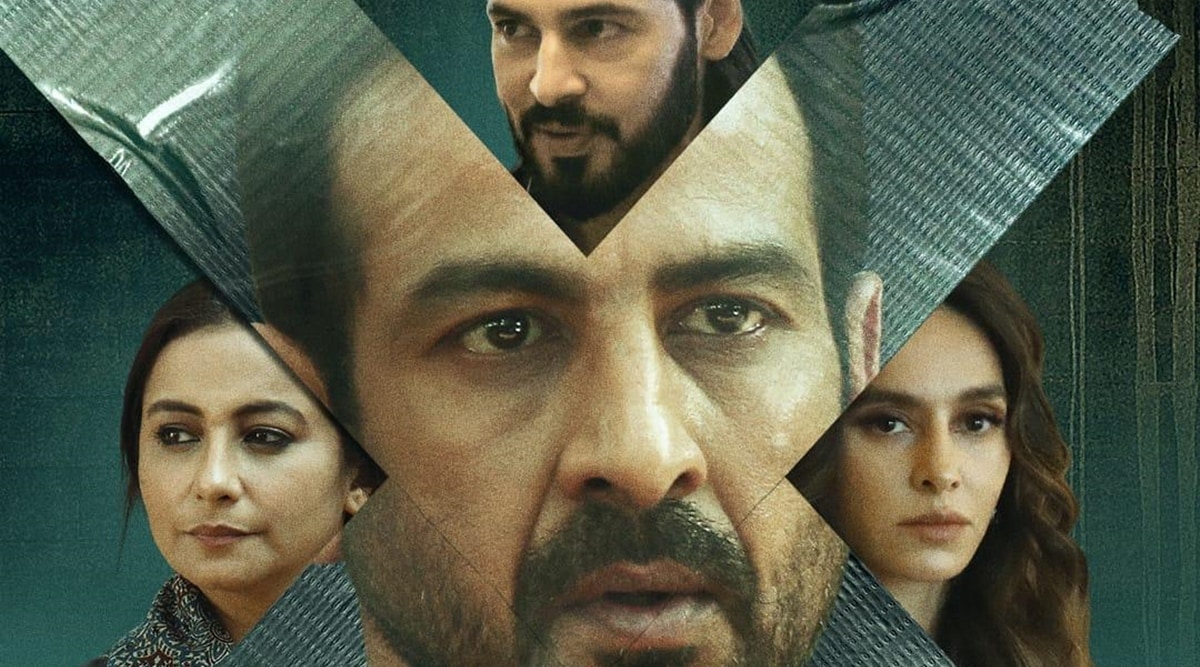
Hostages Season 2’ picks up from where Season 1 had left off. It shifts its attention from Dr. Anand’s family, who were held hostage by Singh and his gang in the previous season. This time around, the hostage-taker’s plan is a bit too personal — he needs the CM’s bone marrow to save his wife’s life. But nothing goes as planned because of Saba’s (Shriswara Dubey) deteriorating health conditions and they now must halt their journey and take shelter in an abandoned house (Purani Kothi) on the Delhi-Gurgaon Highway. But that’s not all, the CM’s head of security, Subramanian (Mohan Kapur), hunts the gang down, and gunshots are fired which attracts local cops’ attention. Just as things get rolling, events conspire to set up a brand-new hostage situation — will Prithvi be successful in finding a way out of this mess and getting the bone marrow transplant for his wife?

Hostages 2 review: A wasted effort | Entertainment News,The Indian Express

The screenplay is a bit slow but manages to keep the audience hooked as the tension between the main characters has been highlighted quite well. While a few subplots feel a bit forced everything falls into place once the show reaches the business end.The death of a key character too has been executed with a fair deal of competence and makes the desired impact. The last two episodes in particular pack a punch as it has a strong emotional connect. The climax has a strong ‘shock value’.

Coming to the performances, Ronit Roy is the heart and soul of Hostages 2 and does full justice to a layered character. His raw and natural intensity adds a new dimension to the show, upping the recall value. He also handles the emotional sequences rather well.

Divya Dutta is sincere and makes a decent impact in the opening episodes. Dino Morea looks stylish but fails to add much to Hostages 2. Veteran actor Dalip Tahil delivers an effective performance, proving that he has still got it. Kanwalijit Singh,however, fails to make an impact as he is burdened with a generic and one-dimensional character.

While not quite as riveting as its precursor, this season has impressive production values and fine performances. Among them are Ronit Bose Roy, who returns as the mastermind Prithvi Singh, Aashim Gulati as Prithvi’s sensitive and steadfast brother-in-law Aman and Divya Dutta as the perceptive negotiator. Kanwaljit Singh provides the temperance associated with a commanding police officer. Amit Sial, Mohan Kapur, Faezeh Jalali, Dalip Tahhil and Shriswara Dubey reprise their roles as Peter, Subramanian, Sarah, Handa and Saba respectively.

The background music could have a lot better as it does not up the thrill quotient associated with Hostages 2, The action sequences, however, are upto the mark and have a realistic feel. The other technical aspects have been handled well .

Conserve Nature, Conserve life !

Look around yourself. The air we breathe , the water we drink , the soil we live on ,the rays of the sun and the blossom of a flower . The trees and the fauna everything is just so beautiful. Mother Nature has blessed us with magnificent things which of course we humans have taken it for granted. The human race has already done a lot of damage to the environment. In the greed of reaching heights we have badly affected our environment. Pollution levels have increased drastically and exploitation of resources has been immense. The ground water has depleted. The rains have turned into acid rain. The rivers are no longer purest. The regular cutting down of trees has led to deforestation. The effect of global warming, the increase of greenhouses gases, the depletion of the ozone layer and the alarming levels of pollution are all an indicator of an impending catastrophe. Industrialization has been a major source to pollution. With the increase in factories ,fuel , waste disposal everything has destroyed the purity of nature. To compensate our needs of fuel we have consumed the non renewable sources to a great extent. There is an urgent need for sustainable development. Sustainable development is the development that meets the needs of the present without compromising the ability of future generations to meet their own needs.

“A nation that destroys its soils destroys itself. Forests are the lungs of our land, purifying the air and giving fresh strength to our people. ”
― Franklin D. Roosevelt

We need to realize our responsibilities towards our Mother Earth and do every bit to conserve her. There are certain things we can do to save the upcoming disaster. The steps we can take are –

Sustainable living – It is important that we use the current resources by keeping in mind that there is a future ahead of us and also a generation that will live in it.

Plant trees as much as possible – There is no better way then planting trees / saplings. Nurture a sapling and that is the best you can do . We need to do Aforestation and Reforestation top save our environment.

Pollution control – Air, water or soil. There is a need to control all kinds of pollution . We should stop dumping wastage on the ground or stop disposing them in the rivers. The diesel and petrol vehicles should replace it by CNG for reduced air pollution.

Go Eco friendly – Use Biodegradable / Disposable Waste Bag, replace plastic bags with paper bags, reuse and recycle, do not waste paper , use terracotta products etc. Use Bulbs and tube lights that are energy efficient to save energy. Solar panels and rechargeable batteries can be used as alternative sources of energy. Compost bins can be set up to produce manure instead of using fertilizers.

There are several programs run by our government too , The National Afforestation Programme (NAP) of the Ministry of Environment and Forests is a 100 percent centrally sponsored scheme for afforestation and tree plantation and eco-restoration of degraded forests and adjoining areas in the country.

The National Green Tribunal (NGT) was established on October 18, 2010 under the National Green Tribunal Act 2010.It has been set up for effective and expeditious disposal of cases relating to environmental protection and conservation of forests and other natural resources including enforcement of any legal right relating to environment and giving relief and compensation for damages to persons and property and for matters connected therewith or incidental thereto.

Green skill development program , green skills’ refers to those that contribute to preserve and restore environment and create a sustainable future. Hence, the programme focuses on developing skills among the youth in the environment and forest sector.

Swacchh Bharat Abhiyan, Launched on Mahatma Gandhi’s birth anniversary on October 2, 2014,Over the years, different versions of the campaign were started. This includes Gramin Swachh Bharat Mission and Bal Swachhata Abhiyan.

Toilet before Temples, ‘Pehle shauchalaya, phir devalaya’ .Implemented as part of the Swachh Bharat Mission, the government claims to have built over nine crore household toilets and 32 states or Union Territories have been declared open defecation-free since October 2, 2014.

So let’s promise ourselves to contribute everything we can to make this world a better place to live in! It is our duty to save the environment. Do something GREEN everyday .

Dadabhai Naoroji

Dadabhai Naoroji was also regarded as the ‘Great Old Man of India’ and ‘Oficial Ambassador of India’ as an Indian Parsi scholar, merchants and politicians and was the first Asian to be an Indian MP, despite the British MP David Ochterlony Dyce Sombre who was disenfranchised on the grounds of corruption in the United Kingdom House of Commons between 1892 and 1895. Naoroji was one of the Indian National Congress’ founding members.

The Indian drain of wealth in Britain was brought to light in his Book Poverty and the United Kingdom rule in India. He clarified in it his principle of draining of capital. He and Kautsky and Plekhanov were also participants of the Second International. The congress works of Dadabhai Naoroji are deserving of praise. He was elected president of INC three times in 1886, 1893 and 1906. The Dadabhai Naoroji Awards for services to United Kingdom and India were opened in 2014 by Vice-Premier Nick Clegg. In 1963, 1997 and 2017 Naoroji was seen in the Indian Post on stamps.

In a Gujarati-speaking family, Naoroji was born in Navsari and taught at the Elphinstone Institute School. He was patronised by Sayajirao Gaekwad III, the Baroda Maharaja, and began his career as a dewan in 1874. On 1 August 1851, Naoroji established the Rahnumae Mazdayasne Sabha in order to restore its original purity and simplicity to the Zoroastrian faith. In 1854 he founded a quintessential gujarati journal, the Rast Goftar, in order to explain Zoroastrian concepts and to encourage social reforms in Parsi. He was named Professor of Mathematics and Natural Philosophy at the Bombay University of Elphinstone in December 1855 and was the first Indian to hold this position in the academia. He also published an additional newspaper called The Voice of India. In 1855, he visited London to become a Cama & Co partner, opening an office in Liverpool in order to create the first Indian company in England. He resigned for legal reasons within three years. In 1859, he set up his own Dadabhai Naoroji & Co. cotton trade firm. Later, at University College , London, he became Professor of Gujarati.

Naoroji led the London Indian Society in 1865 and launched it with a view to addressing Indian political , social and literary problems. In 1861, together with Muncherjee Hormusji Cama, Naoroji founded The Zoroastrian Trust Funds of Europe. He also helped set up in 1867 the East India Association, one of the Indian National Congress’ predecessors with the intention of providing the British public with an Indian perspective. The Association played a part in combating the propaganda of the London Ethnological Society, which tried to demonstrate the Asians were inferior to the European in 1866.

In the colonial rule of India, Dadabhai Naoroji concentrated on the drain of riches from India to England. One of the reasons for Naoroji’s drain theory is its choice to estimate India’s net national benefit and, by extension, its impact on the economy. By interacting with the economy, Naoroji tried to show that Great Britain drained money from India. Six factors led to external drain have been identified by Naorojis. First of all, India’s foreign government is controlled. Secondly, India does not attract immigration that contributes to economic growth through labour and capital. Third, India pays for the civil and occupational army of Britain. Fourthly, India carries in and outside its borders the burden of building an empire. Fifth, the country’s opening to free trade was in fact a way to manipulate India by supplying international workers with high paying jobs. Finally, the key income-makers would buy or leave the revenue, as most foreign workers, outside India. In Naoroji’s ‘Poverty’ book, he estimated that the income of India in Great Britain was losing about 200-300 million pounds. Naoroji described it as vampirism with money as a blood metaphor that made India human and tried to display the conduct of Britain as monstrous as a way to sympathise with the nationalist movement.

Rajiv Gandhi Khel Ratna Award 2020

The Rajiv Gandhi Khel Ratna Award for sports and games is the highest sporting award of India. The award is named after, Rajiv Gandhi former Prime Minister of India. This award will be given annually for those sports persons who make india proud that year. This is not such an easy award to win. Out of several sports persons of different sports who contribute their efforts for making India proud, only three will ne selected as recipients of the award. But in 2020, there were 5 finalists for receiving this award. Let us see those Rajiv Gandhi Khel Ratna award 2020 recipients.

The final recipients of Rajiv Gandhi khel Ratna award 2020 are:

  1. Shri Rohit Sharma
  2. Shri Mariyappan Thangavelu.
  3. Ms. Rani Rampal
  4. Ms. Vinesh Phogat
  5. Ms. Manika Batra

This is the first time that five five sports persons received Rajiv Gandhi Khel Ratna Award on the occasion of the National Sports Day on 29th August 2020.
Shri Rohit Sharma is the fourth Indian cricketer to win Khel Ratna. Our Master, Sachin Tendulkar won Khel Ratna in 1997-98 and was the first cricketer to win followed by MS Dhoni in 2007-08 and Virat Kohli in 2018. Rohith Sharma was the highest run getter(648 runs) with 5 centuries in ODI 2019. He is also the most successful IPL captain with 4 titles.

Shri Mariyappan T. is the third Indian Para Athlet to win Khel Ratna after Devendra Jhajharia in 2017 and Deepa Malik in 2019.
Mariyappan created history by winning gold medal for India in men’s High Jump under T-42 Category at the 2016 paralympic games in Rio.

Ms. Rani Rampal is the third Indian Hockey player to receive Khel Ratna after Dhanraj Pillay in 1999-2000 and Sardar Singh in 2017. She has a silver and a bronze medal in Asia Games and a Junior World Cup bronze medal in her cabinet. She also won ‘Best young player of the tournament’ title for her performance in Women’s Hockey World Cup in 2010.

Ms. Vinesh Phogat is the fourth Indian Wrestler to receive Khel Ratna after Sushil kumar in 2009,Sakshi Malik in 2016 and Bajrang Punia in 2019. Vinesh created history by winning the gold medal in the 50 kg category of freestyle wrestling. This was never achieved by a female wrestler before which made a stunning mark on her profile.

Ms. Manika Batra is the first Indian Table Tennis player to receive Rajiv Gandhi Khel Ratna Award which is for highest sports honor in India. Batra is the highest ranked India table tennis player in the world. She created history by winning four medals at the Commonwealth Games. She is top ranked female table tennis player in India and ranked 47th in the world.

Rohit Sharma who was in UAE for IPL 2020 couldn’t attend for the ceremony as it was only allowed those who are currently in India had to take part in the ceremony. Vinesh Phogat who was supposed to be in Sonepat, had to be in quarantine after she tested positive for Covid-19 on the eve of award ceremony. Rani Rampal and Mariyappan attended the ceremony from Bengaluru and Commonwealth Games champion paddler Manika Batra joined from Pune.

Social Media : A Social Dilemma

Recently a Netflix documentary has stirred up a lot of controversies on the usage of social media. I believe that some certain parts of our childhood went as an experiment into the growing of the technology. There was this certain period of time when all our answers were found in the libraries and not in the e- resource lab. Our minds have changed in alternative way, changing the way we think and respond.  And most importantly Concentration gap has considerably decreased for most of the teenagers due to their constant usage of phone. It has all turned us time some creature who no longer uses their brain, but just their fingertips.

Media, especially social media has turned around the way our minds work, we are no longer owners of our brain but we are its prisoners. Our minds have turned against ourselves. Sometimes we find ourselves in situations we cannot explain or relate too. It has passively affected the way our minds work. It got into our system and rewired our brain. Quitting can come up as an easy solution but for long will you quit, give up on something that connects you to everyone.

One of the major problems of using internet is that we forget to rely on ourselves sometimes. Assignments, projects are now all googled up and copy pasted and submitted, the student no longer reads a book. Even if someone attempts too, their concentration span has gone down so low that they wont be able to focus for more than 20 minutes.  Are we on the path to self-destruction? That was a constantly asked question around the world. The technology that we build is now turning against us.  The worst part of this is that we do not even realize how much of it has affected us and our mind.

A major impact social media has on teenagers is that it has wired our brains to believe that our potential lies in getting likes or comments from certain posts. Our brain functions in a way where it becomes happy with the mere likes we get on social media and it can turn into depression and a feeling of inferiority when we do not get likes. Social media creates a segregation between the rich and poor. It has become a platform where people show off what they have, this inflicts a sense of disappointment for the ones who do not own a luxury.

What makes human beings so much more different from other creatures on earth is the fact that they have a very capable and efficient brain.  Across these years from the time of humanity, human beings have grown in lot of possible different ways. Human beings had made life smooth with various inventions, it has become so easy that we sometimes simply not use our brains anymore. Life had become so easy with the push of a button that we forget the entire process that had existed once before.

A major reason why we don’t get sleep is because of the tiny screens. We spend so much time using that we no longer become aware of the time. It can cause sleeping disorders as well as eye problems too.

Usage of phones have so much impact on our lives that we sometimes cannot give it up. We can simply never quit from this technological advancement, all we can do is adjust ourselves in a way that it doesn’t become an addiction.  

OCD and Dopamine

Obsessive compulsive disorder. You might have read this term in many articles,memes and so many places. But…..OCD is not something to be considered as a joke.

Photo by David Garrison 

The disorder is a psychological disorder which includes a ‘certain’ compulsive disorder. Meaning, a person with OCD always has a way of things,and when it does not go that way,it often results in agitation,hypervigilance(increased state of alertness), repetitive movements and so much more.Now you might be like, ‘ Ya,so what?’ The thing is the person with OCD cannot even control their actions. They just simply can’t control their thoughts at all.They often isolate themselves from socialising. Often anxiety , depression and panics are observed within the patients. Now this does not mean that every second person out there has OCD. Obsessive Compulsive disorder is not being annoyed from your room not being clean. Suppose,you have to save a particular presentation. So, you’ll click the save button once a day your work is done. But an OCD patient will click the save button multiple times. And they don’t have a dominance over it. It sort of becomes a natural tendency after sometime. Our brain is a pretty complex concept. It has various components and chemicals which make us experience various types of emotions. One of them is dopamine. What is dopamine? Suppose you like to eat  chocolates every day single day. And it quiet makes you happy. Sure,but when you eat that chocolate, dopamine oxytocin etc. are released within your whole brain. Whenever you do something amusing and mind blowing, dopamine gets released within your body. At some point of time it becomes an obsession. Then you cannot live without it. Why? Because your brain likes to adapt itself in any given condition. Scientists have proven this by experiments,suppose you wear a wristwatch for 3 days straight. After a point of time,your brain eliminates the feeling of the mass of the watch at all. Exactly the reason why we don’t always notice our heartbeat or breathing unless we go for a long run,when the heart has to pump the blood with more intensity,that’s when you sort of feel the heartbeat without actually putting your hand over your heart. Anyways,once your brain gets used to a particular habit,it’s capacity increases day by day. Suppose the first day you drank a cup of coffee,and continued for quite some time . Now your body is used to the caffeine rush of one cup,and now you have to drink  about two cups of coffee to get the same effect as before. Dopamine rush, kind of works similarly. Once you acquire it as an habit,your capacity to hold dopamine increases,and a time comes when you cannot control it at all. Dopamine is a natural component. It will be released in the brain. But the intensity through which it rushes is always up to you.  There is one more enzyme which is released when you are desperate to make a decision. The liquid,maybe flows into the  brain and  makes it very hard for you to make the decision.  The  purpose? Well,it might be a n  indirect indication of the body to calm down and take the decision wisely and with all factors  into the point of view. Thereforevice,experts advise to use dopamine as a reward for whatever good work you do. Make use of this dopamine as a reward for accomplishing small activities which you planned.

So let’s get back to OCD. The major cause of this phenomenon is not exactly known,but a few speculations are maybe made,but not every speculation is true now,is it? People with OCD often suffer with mood swings from few to depression etc. Some may distance themselves from almost everyone and get used to loneliness. And loneliness is the devil’s workshop. There are several cases of OCD as well. The disorder is not a joke.You might think it funny but the issue is more serious than you think.The people have common symptoms like constant nightmares, repeatedly overthinking about any incident that happened. Ya,now you might be like’ Oh my god, I do this as well!!’ But what you do would be milder than what a person with OCD suffers. It makes you sort of classify everything. Literally. From colours to number of bottles in your house etc. People with this avoid contact with any means like a handshake,door lock etc. Makes them have impulsive cleanliness everywhere. The problem  may interfere with your social life,jobs etc.

Photo by Pixabay

OCD is pretty rare and one of the mysteries still to be uncovered. Therefore,not much information is available and which is why awareness is not there within the people. That’s why they find it funny. But the things which are experienced from OCD are not funny.

To calm your panic attacks,here are some ideas you could use-

  1. Use a distraction-  Concentrate on anything which does not remind you of the source of your panic
  2. Take a cool long and deep breath. Often people say that it helped them concentrate on their actual work
  3. Count any five to ten things which you find weird, amusing or distractive. 
  4. Close your eyes for a minute and remember what could be the possible reason for your work to go Wrong. Once you hit the error, do your efficiently and  steadily to avoid any mistake that you did in the past

These are some small tips,but can save from disasters happening!!

Financial Crimes in India

Financial crime is a crime committed against property, involving the unlawful conversion of the ownership of property (belonging to one person) to one’s own personal use and benefit. Financial crimes may involve fraud (cheque fraud, credit card fraud, mortgage fraud, medical fraud, corporate fraud, securities fraud (including insider trading), bank fraud, insurance fraud, market manipulation, payment (point of sale) fraud, health care fraud); theft; scams or confidence tricks; tax evasion; bribery; sedition; embezzlement; identity theft; money laundering; and forgery and counterfeiting, including the production of Counterfeit money and consumer goods. Financial crimes may involve additional criminal acts, such as computer crime and elder abuse, even violent crimes such as robbery, armed robbery or murder. Financial crimes may be carried out by individuals, corporations, or by organized crime groups. Victims may include individuals, corporations, governments, and entire economies.

The main types of financial crimes in India include : bank fraud, electronic crime, money laundering, bribery and corruption, market abuse and insider dealing, information security, market manipulation, tax evasion.

Bank Fraud:

Bank fraud is the use of potentially illegal means to obtain money, assets, or other property owned or held by a financial institution, or to obtain money from depositors by fraudulently posing as a bank or other financial institution. In many instances, bank fraud is a criminal offence. While the specific elements of particular banking fraud laws vary depending on jurisdictions, the term bank fraud applies to actions that employ a scheme or artifice, as opposed to bank robbery or theft. For this reason, bank fraud is sometimes considered a white-collar crime. In order to hide serious financial problems, some businesses have been known to use fraudulent bookkeeping to overstate sales and income, inflate the worth of the company’s assets, or state a profit when the company is operating at a loss. These tampered records are then used to seek investment in the company’s bond or security issues or to make fraudulent loan applications in a final attempt to obtain more money to delay the inevitable collapse of an unprofitable or mismanaged firm.

Electronic Crime:

Computer fraud is any dishonest misrepresentation of fact intended to let another to do or refrain from doing something which causes loss. In this context, the fraud will result in obtaining a benefit by: Altering in an unauthorized way. This requires little technical expertise and is a common form of theft by employees altering the data before entry or entering false data, or by entering unauthorized instructions or using unauthorized processes; Altering, destroying, suppressing, or stealing output, usually to conceal unauthorized transactions. This is difficult to detect Altering or deleting stored data. Other forms of fraud may be facilitated using computer systems, including bank fraud, carding, identity theft, extortion, and theft of classified information. These types of crime often result in the loss of private information or monetary information.

Money Laundering:

Money laundering is the illegal process of concealing the origins of money obtained illegally by passing it through a complex sequence of banking transfers or commercial transactions. The overall scheme of this process returns the “clean” money to the launderer in an obscure and indirect way. One problem of criminal activities is accounting for the proceeds without raising the suspicion of law enforcement agencies. Considerable time and effort may be put into strategies that enable the safe use of those proceeds without raising unwanted suspicion. Implementing such strategies is generally called money laundering. After money has been laundered, it can be used for legitimate purposes.

Bribery and Corruption:

A bribe is an illegal or unethical gift or lobbying effort bestowed to influence the recipient’s conduct. It may be money, goods, rights in action, property, preferment, privilege, emolument, objects of value, advantage, or merely a promise to induce or influence the action, vote, or influence of a person in an official or public capacity.

Many types of payments or favors may be fairly or unfairly labeled as bribes: tip, gift, sop, perk, skim, favor, discount, waived fee/ticket, free food, free ad, free trip, free tickets, sweetheart deal, kickback/payback, funding, inflated sale of an object or property, lucrative contract, donation, campaign contribution, fundraiser, sponsorship/backing, higher paying job, stock options, secret commission, or promotion (rise of position/rank).

Corruption is a form of dishonesty or criminal offense undertaken by a person or organization entrusted with a position of authority, to acquire illicit benefit or abuse power for one’s private gain. Corruption may include many activities including bribery and embezzlement, though it may also involve practices that are legal in many countries. Political corruption occurs when an office-holder or other governmental employee acts in an official capacity for personal gain.

Corruption can occur on different scales, corruption ranges from small favors between a small number of people (petty corruption), to corruption that affects the government on a large scale (grand corruption), and corruption that is so prevalent that it is part of the everyday structure of society, including corruption as one of the symptoms of organized crime. Corruption and crime are endemic sociological occurrences which appear with regular frequency in virtually all countries on a global scale in varying degree and proportion. Individual nations each allocate domestic resources for the control and regulation of corruption and crime. Strategies to counter corruption are often summarized under the umbrella term anti-corruption.

Market Abuse:

Market abuse may arise in circumstances where financial market investors have been unreasonably disadvantaged, directly or indirectly, by others who:

  • have used information which is not publicly available (insider dealing)
  • have distorted the price-setting mechanism of financial instruments
  • have disseminated false or misleading information

Market Abuse is split into two different aspects (under EU definitions):

  • Insider dealing: where a person who has information not available to other investors (for example, a director with knowledge of a takeover bid) makes use of that information for personal gain
  • Market manipulation: where a person knowingly gives out false or misleading information (for instance, about a company’s financial circumstances) in order to influence the price of a share for personal gain

Phishing (Information security scams):

Phishing is the fraudulent attempt to obtain sensitive information or data, such as usernames, passwords and credit card details, by disguising oneself as a trustworthy entity in an electronic communication. Typically carried out by email spoofing, instant messaging, and text messaging, phishing often directs users to enter personal information at a fake website which matches the look and feel of the legitimate site.

Phishing is an example of social engineering techniques used to deceive users. Users are lured by communications purporting to be from trusted parties such as social web sites, auction sites, banks, colleagues/executives, online payment processors or IT administrators.

Market Manipulation:

Market manipulation is a type of market abuse where there is a deliberate attempt to interfere with the free and fair operation of the market and create artificial, false or misleading appearances with respect to the price of, or market for, a product, security, commodity or currency. A type of manipulation possible when financial instruments are settled based on benchmarks set by the trading of physical commodities, for example in United States Natural Gas Markets. The manipulator takes a large long (short) financial position that will benefit from the benchmark settling at a higher (lower) price, then trades in the physical commodity markets at such a large volume as to influence the benchmark price in the direction that will benefit their financial position.

Tax Evasion:

Tax evasion is the illegal evasion of taxes by individuals, corporations, and trusts. Tax evasion often entails taxpayers deliberately misrepresenting the true state of their affairs to the tax authorities to reduce their tax liability and includes dishonest tax reporting, such as declaring less income, profits or gains than the amounts actually earned, or overstating deductions.

Tax evasion is an activity commonly associated with the informal economy. One measure of the extent of tax evasion (the “tax gap”) is the amount of unreported income, which is the difference between the amount of income that should be reported to the tax authorities and the actual amount reported.

In contrast, tax avoidance is the legal use of tax laws to reduce one’s tax burden. Both tax evasion and avoidance can be viewed as forms of tax noncompliance, as they describe a range of activities that intend to subvert a state’s tax system, although such classification of tax avoidance is not indisputable, given that avoidance is lawful, within self-creating systems.


Indian Literature : Our Biggest Asset

Indian literature refers to the literature produced on the Indian subcontinent until 1947 and in the Republic of India thereafter. The earliest works of Indian literature were orally transmitted. Sanskrit literature begins with the oral literature of the Rig Veda a collection of literature dating to the period 1500–1200 BCE. The Sanskrit epics Ramayana and Mahabharata were subsequently codified and appeared towards the end of the 2nd millennium BCE. Classical Sanskrit literature developed rapidly during the first few centuries of the first millennium BCE, as did the Tamil Sangam literature, and the Pāli Canon. In the medieval period, literature in Kannada and Telugu appeared in the 6th and 11th centuries respectively. Later, literature in Marathi, Assamese, Odia, Bengali and Maithili appeared. Thereafter literature in various dialects of Hindi, Persian and Urdu began to appear as well. In 1913, Bengali poet Rabindranath Tagore became India’s first Nobel laureate in literature. In contemporary Indian literature, there are two major literary awards; these are the Sahitya Akademi Fellowship and the Jnanpith Award. Eight Jnanpith Awards each have been awarded in Hindi and Kannada, followed by five in Bengali and Malayalam, four in Odia, four in Gujarati, Marathi, Telugu and Urdu, two each in Assamese and Tamil, and one in Sanskrit.

Vedic Literature:

The Vedas are a large body of religious texts originating in ancient India. Composed in Vedic Sanskrit, the texts constitute the oldest layer of Sanskrit literature and the oldest scriptures of Hinduism. There are four Vedas: the Rigveda, the Yajurveda, the Samaveda and the Atharvaveda. Each Veda has four subdivisions – the Samhitas (mantras and benedictions), the Aranyakas (text on rituals, ceremonies, sacrifices and symbolic-sacrifices), the Brahmanas (commentaries on rituals, ceremonies and sacrifices), and the Upanishads (texts discussing meditation, philosophy and spiritual knowledge). Some scholars add a fifth category – the Upasanas. The texts of the Upanishads discuss ideas akin to the heterodox sramana-traditions.

Sanskrit Literature:

Sanskrit literature refers to texts composed in Sanskrit language since the 2nd-millennium BCE. Many of the prominent texts are associated with Indian religions, i.e., Hinduism, Buddhism, and Jainism, and were composed in ancient India. However, others were composed central, East or Southeast Asia and the canon includes works covering secular sciences and the arts. Early works of Sanskrit literature were transmitted through an oral tradition for centuries before they were written down in manuscript form. Dramas, poems and stories were written in Sanskrit language in ancient India.

Pali Literature:

Pali literature is concerned mainly with Theravada Buddhism, of which Pali is the traditional language. The earliest and most important Pali literature constitutes the Pali Canon, the scriptures of Theravada school. From the 15th century onwards, Pali literature has been dominated by Burma, though some has also been written in Thailand, Laos and Cambodia, as well as Ceylon. This Burmese literature has in turn been dominated by writings directly or indirectly concerned with the Abhidhamma Pitaka, the part of the Canon variously described as philosophy, psychology, metaphysics etc.

Sangam Literature:

The Sangam literature, sometimes referred to as the Cankam literature or Koodal literature connotes the ancient Tamil literature and is the earliest known literature of South India. The Tamil tradition and legends link it to three literary gatherings around Madurai (Pandyan capital): the first over 4,440 years, the second over 3,700 years, and the third over 1,850 years before the start of the common era. Scholars consider this Tamil tradition-based chronology as ahistorical and mythical. Some of these scholars suggest the historical Sangam literature era spanned from c. 300-BCE to 300-CE while others variously place this early classical Tamil literature period a bit later and more narrowly but all before 300 CE.

Indian Persian Literature:

During the early Muslim period, Persian became the official language of the northern part of Indian subcontinent, used by most of the educated and the government. The language had, from its earliest days in the 11th century AD, been imported to the subcontinent by various culturally Persianised Central Asian-Turkic and Afghan dynasties.[28] Several Indians became major Persian poets later on, the most notable being Amir Khusro and, in more modern times, Muhammad Iqbal. Much of the older Sanskrit literature was also translated into Persian. For a time, it remained the court language of the Mughals, soon to be replaced by Urdu. Persian still held its status, despite the spread of Urdu, well into the early years of the British rule in India. Most British officials had to learn Persian on coming to India and concluded their conversations in Persian. In 1837, however, the British, in an effort to expand their influence, made a government ruling to discontinue the use of Persian and commence the use of English instead. Thus started the decline of Persian as most of the subcontinent’s official governmental language, a position to be taken up by the new language of the British Raj, English. Many modern Indian languages still show signs of relatively heavy Persian influence, most notably Urdu and Hindi.