Pranab Mukherjee Complete Life History

Pranab Mukherjee was born in 11 December 1935 – 31 August 2020) was an Indian politician who served as the 13th President of India from 2012 until 2017. In a political career spanning five decades, Mukherjee was a senior leader in the Indian National Congress and occupied several ministerial portfolios in the Government of India. Prior to his election as President, Mukherjee was Union Finance Minister from 2009 to 2012. He was awarded India’s highest civilian honour, the Bharat Ratna in 2019 by the President of India, Ram Nath Kovind.Mukherjee got his break in politics in 1969 when the then Prime Minister Indira Gandhi helped him get elected to the Rajya Sabha, the upper house of Parliament of India, on a Congress ticket. Following a meteoric rise, he became one of Gandhi’s most trusted lieutenants and a minister in her cabinet in 1973. Mukherjee’s service in a number of ministerial capacities culminated in his first stint as Finance Minister of India in 1982–84. He was also the Leader of the House in the Rajya Sabha from 1980 to 1985.Mukherjee was sidelined from the Congress during the premiership of Rajiv Gandhi. Mukherjee had viewed himself and not the inexperienced Rajiv, as the rightful successor to Indira following her assassination in 1984. Mukherjee lost out in the ensuing power struggle. He formed his own party, the Rashtriya Samajwadi Congress, which merged with the Congress in 1989 after reaching a consensus with Rajiv Gandhi. After Rajiv Gandhi’s assassination in 1991, Mukherjee’s political career revived when Prime Minister P. V. Narasimha Rao appointed him Planning Commission head in 1991 and foreign minister in 1995. Following this, as elder statesman of the Congress, Mukherjee was the principal and architect of Sonia Gandhi’s ascension to the party’s presidency in 1998.When the Congress-led United Progressive Alliance (UPA) came into power in 2004, Mukherjee won a Lok Sabha seat (the popularly elected lower house of Parliament) seat for the first time. From then until his resignation in 2012, Mukherjee held a number of key cabinet portfolios in Prime Minister Manmohan Singh’s government – Defence (2004–06), External Affairs (2006–09) and Finance (2009–12) – apart from heading several Groups of Ministers (GoMs) and being Leader of the House in the Lok Sabha. After securing the UPA’s nomination for the country’s presidency in July 2012, Mukherjee comfortably defeated P. A. Sangma in the race to Rashtrapati Bhavan, winning 70 percent of the electoral-college vote.In 2017, Mukherjee decided not to run for re-election and to retire from politics after leaving the presidency due to “health complications relating to old age.” His term expired on 25 July 2017. He was succeeded as President by Ram Nath Kovind. In June 2018 Mukherjee became first former President of India to address a Rashtriya Swayamsevak Sangh (RSS) event.

Early life and education :- Pranab was born into a Bengali family at Mirati, a village in the Bengal Presidency of British India (now in Birbhum districtWest Bengal). His father, Kamada Kinkar Mukherjee was active in the Indian independence movement and was a member of West Bengal Legislative Council between 1952 and 1964 as a representative of the Indian National Congress; he was a member of AICC. His mother was Rajlakshmi Mukherjee. He had two siblings: older sister Annapurna and younger brother Piyush.He attended the Suri Vidyasagar College in Suri (Birbhum), then affiliated to University of Calcutta. He subsequently earned an MA degree in Political Science & History and an LL.B. degree, both from University of Calcutta.He was an upper-division Clerk in the Office of Deputy Accountant-General (Post and Telegraph) in Calcutta. In 1963, he became a lecturer (Assistant Professor) of Political Science at Vidyanagar College, Kolkata and he also worked as a Journalist with the Desher Dak (Call of Motherland) before entering politics.

Political Career :- Mukherjee started his political career as a founding member of the Bangla Congress. In 1969, when he managed the successful Midnapore by-election campaign of an independent candidate, V. K. Krishna Menon. He became a member of Rajya Sabha (the upper house of Indian parliament) in July 1969 on a Bangla Congress ticket. Then Prime Minister of India, Indira Gandhi, recognised Mukherjee’s talents and recruited him to her party, the Indian National Congress. Mukherjee was re-elected to the house in 1975, 1981, 1993, and 1999.

Mukherjee became a Gandhi loyalist and was often described as her “man for all seasons.” Mukherjee’s rise was rapid in the early phase of his career and he was appointed Union Deputy Minister of Industrial Development in Indira Gandhi’s cabinet in 1973. Mukherjee was active in the Indian cabinet during the controversial Internal Emergency of 1975–77. Ruling Congress politicians of the day including Mukherjee were accused of using extra-constitutional powers to “wreck established norms and rules of governance.” Following the Congress’s defeat in the 1977 general elections, the newly formed Janata government-appointed Shah Commission indicted Mukherjee; however, the commission was itself indicted in 1979 for stepping “outside its jurisdiction. Mukherjee emerged unscathed and rose through a series of cabinet posts to become Finance Minister from 1982 to 1984.His term was noted for his work in improving the finances of the government which enabled Gandhi to score a political point by returning the last instalment of India’s first IMF loan. As Finance Minister, Mukherjee signed the letter appointing Manmohan Singh as Governor of the Reserve Bank of India.In 1979, Mukherjee became Deputy Leader of the INC in the Rajya Sabha, and in 1980 he was appointed Leader of the House. Mukherjee was considered the top-ranking Indian cabinet minister and he presided over cabinet meetings in the absence of the Prime Minister.Mukherjee was sidelined from the INC following the assassination of Indira Gandhi. Although Mukherjee was much more experienced in politics than Indira’s son, Rajiv Gandhi, it was Rajiv who gained control. Mukherjee lost his position in the cabinet and was sent to manage the regional West Bengal Pradesh Congress Committee. He was considered to be Indira’s likely successor and, siding with those within his party who aligned themselves against Rajiv Gandhi, Mukherjee was sidelined and eventually expelled from the mainstream.

In 1986, Mukherjee founded another party, the Rashtriya Samajwadi Congress (RSC), in West Bengal. The RSC and INC merged three years later after a compromise was reached with Rajiv Gandhi. The RSC had fared terribly in the 1987 Assembly polls in West Bengal. Many analysts, over the years, have attributed the muting of Mukherjee’s political aspirations as the supreme leader to his inability to emerge as a magnetic mass leader. On later being asked that did he ever desire to become Prime Minister, Mukherjee, however, replied, “7 RCR was never my destination.” The Zee News noted: “The statement assumes heft in the light of the longstanding speculation that Mukherjee, as one of the doyens of Congress, always nursed an ambition to occupy the top executive post.”Mukherjee’s political career revived following Assassination of Rajiv Gandhi in 1991 when P. V. Narasimha Rao chose to appoint him as deputy chairman of the Indian Planning Commission and subsequently as a union cabinet minister. Mukherjee served as External Affairs Minister for the first time from 1995 to 1996 in Rao’s cabinet.Mukherjee was considered to be a Gandhi family loyalist and the principal architect of Sonia Gandhi’s entry into politics, a mentoring responsibility he was believed to have continued shouldering. He was made General Secretary of the AICC in 1998–99 after Sonia Gandhi became Congress President. Mukherjee was made President of the West Bengal Congress in 2000 and held the position until his resignation in 2010. He had earlier held the position in 1985.Mukherjee became Leader of the House in the Lok Sabha in 2004. He contested and won a Lok Sabha seat from Jangipur in West Bengal which he would later retain in 2009. It was speculated in 2004 that Mukherjee would be made Prime Minister of India after Sonia Gandhi declined to become Prime Minister; however, Manmohan Singh was chosen.Mukherjee was briefly considered for the post of the largely ceremonial Indian presidency in 2007 but his name was subsequently dropped after his contribution in the Union Cabinet was considered practically indispensable.Mukherjee held many important posts in the Manmohan Singh government. He had the distinction of being the Minister for various high-profile Ministries including Defence, Finance, and External Affairs. Mukherjee also headed the Congress Parliamentary Party and the Congress Legislative Party which consists of all the Congress MPs and MLAs in the country apart from being Leader of the House in Lok Sabha and Bengal Pradesh Congress Committee President.Mukherjee ended his affiliation with the Indian National Congress and retired from active political life following his election as president in 2012. The Economic Times had noted: “[the] decades of activity in critical all-rounder roles make [Mukherjee’s] exit both a structural and generation shift. With him, the last of the Congress triumvirate – along with Rao and R. Venkataraman – who formed the core team of Indira/Rajiv regimes bows out. While Rao became PM, Pranab’s political marathon too ends where Venkataraman’s did, at the Rashtrapati Bhavan.”

Political Party Role :- Mukherjee was “very well respected within the party social circles.” Media accounts describe him as having “a reputation as a number-crunching politician with a phenomenal memory and an unerring survival instinct.”

Mukherjee became a member of the Congress Working Committee on 27 January 1978. He also became a member of the Central Parliamentary Board of the All India Congress Committee (AICC) that year. Mukherjee briefly held the position of treasurer of the AICC and the Congress party in 1978.

Mukherjee was appointed chairman of the Campaign Committee of AICC for conducting National Elections to Parliament in 1984, 1991, 1996, and 1998. He was chairman of the Central Election Coordination Committee of the AICC from 28 June 1999 to 2012. He was appointed to the Central Election Committee on 12 December 2001. Mukherjee was appointed General Secretary of the AICC in 1998. In 1997 Mukherjee was voted Outstanding Parliamentarian by the Indian Parliamentary Group.After Sonia Gandhi reluctantly agreed to join politics, Mukherjee was one of her mentors, guiding her through difficult situations with examples of how her mother-in-law, Indira Gandhi would have done things. His talents were on display during the negotiations for the Patents Amendment Bill in early 2005. The Congress was committed to passing an IP bill, but their allies in the United Progressive Alliance from the Left front had a long tradition of opposing some of the monopoly aspects of intellectual property. Mukherjee, as Defence Minister, was not formally involved but was roped in for his negotiation skills. He drew on many old allies including; the CPI-M leader Jyoti Basu (former Chief Minister of West Bengal), and formed new intermediary positions, which included product patent and little else. Then he had to convince his own colleagues including commerce minister Kamal Nath, who at one point said…”An imperfect legislation is better than no legislation.” Finally on 23 March 2005 the bill was approved.India Today wrote that Mukherjee’s role in “skillfully pushing through the historic 123 Agreement and treaty with the Nuclear Suppliers Group” may have saved the UPA-II government from the 2008 motion of no confidence.Mukherjee played a crucial role in steering the Cabinet pre-Lok Sabha elections when Prime Minister Manmohan Singh underwent a heart bypass surgery in 2008–09 by taking additional charges as chairman of the Cabinet Committee of Political Affairs and Union Minister in Finance Ministry despite already being Union Minister of External Affairs.Mukherjee’s political skills and long experience in government have also led him to head a large number of committees of Ministers in the government. At the time of his resignation on being nominated as the UPA’s presidential candidate, Mukherjee was heading several Groups of Ministers (GoMs) and Empowered Groups of Ministers (EGoMs).

Union Cabinet Minister :- Ministry of Defence. Manmohan Singh appointed Mukherjee as the Minister of Defence of India when the Congress Party once again came to power in 2004. Mukherjee held the post until 2006. He expanded co-operation with the United States during his tenure. The Times of India reported on the Wikileaks cables release and noted how the U.S. is full of praise for the “uniformed leadership” of Indian armed forces. Mukherjee in June 2005 had inked the ten-year Indo-US Defence Framework deal.Despite increasing co-operation with the United States, Mukherjee maintained that Russia will remain India’s ‘topmost’ defence partner. He asserted that “Russia has been and will remain India’s largest defence partner in the years to come” while inaugurating the 5th session of the Indo-Russian Inter-Governmental Commission on Military-Technical Cooperation (IRIGC-MTC) in Moscow in 2005.Russia and India held their first joint anti-terror war games in Rajasthan in October 2005, during which Mukherjee and Russian Defence Minister Sergei Ivanov narrowly escaped injury after a heavy mortar landed several metres from their platform. The Russian ministry subsequently declared its hopes to follow up joint military exercises in India with further joint exercises on Russian territory.

Minister of External Affairs :- Mukherjee was appointed the External Affairs Minister of India in 1995. Under his leadership, India was made “Full Dialogue Partner” of ASEAN as part of the Look East foreign policy initiated by Narasimha Rao. Mukherjee left the position in 1996.Mukherjee’s second term began in 2006. He oversaw the successful signing of the U.S.-India Civil Nuclear Agreement with the U.S. government and then with the Nuclear Suppliers Group, allowing India to participate in civilian nuclear trade in spite of not having signed the Nuclear Non-Proliferation Treaty. Mukherjee played a crucial role in mobilising world opinion against Pakistan after the 2008 Mumbai attacks. He left the position a year later to take over the Finance Ministry of India.When asked what legacy he wanted to leave behind as Foreign Minister of India, Mukherjee replied, “As the [man] who prepared Indian diplomacy to address the challenges of a more globalised, interdependent and uncertain world.”

Minister of Commerce and Industry

Mukherjee thrice served as Commerce Minister of India. His first stints were in the Indira Gandhi government from 1980 to 1982 and again in 1984. His third stint in the 1990s saw him contribute significantly to the negotiations which led to the establishment of the World Trade Organization.The final years of Mukherjee in the finance ministry were not considered a success. The NDTV upon his resignation as Finance Minister in June 2012 wrote: “There [had] been a clamour from many quarters for a change in the Finance Ministry, with Mr Mukherjee having faced flak for several decisions where politics seemed to overwhelm economic imperatives.

Other Positions :- Mukherjee was chairman of the Indian Statistical Institute in Kolkata. He was also for various tenures; the chairman and president of the Rabindra Bharati University and the Nikhil Bharat Banga Sahitya Sammelan, as well as a trustee of the Bangiya Sahitya Parishad and the Bidhan Memorial Trust. He also served on the Planning Board of the Asiatic Society

President Of India :- Mukherjee was nominated as the presidential candidate of the United Progressive Alliance on 15 June 2012 after considerable political intrigue. The elections were scheduled to be conducted on 19 July 2012 and the results were expected to be announced on 22 July 2012. The nominee of the National Democratic Alliance (NDA) was P. A. Sangma. To file his nomination for the presidential poll on 28 June, Mukherjee resigned from the government on 26 June 2012.

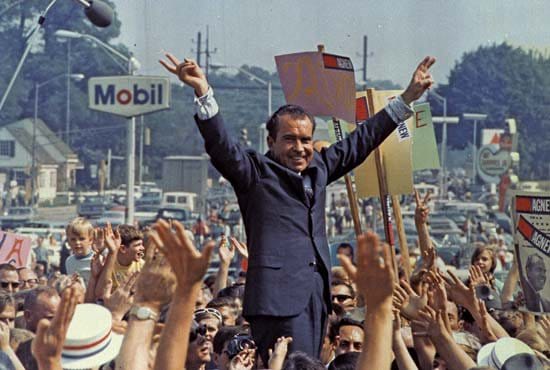
In the election, Mukherjee received 713,763 votes, while Sangma had 315,987. In his victory speech, delivered outside his residence before the results were officially announced, he said:I would like to express my deep gratitude to all of you who are waiting. The figure has crossed 7 lakhs, only one state remains. The final figure will come from the returning officer. I would like to thank the people of India for electing me to this high office. The enthusiasm, the warmth of the people was remarkable. I have received much more from the people of this country, from the Parliament, than I have given. Now I have been entrusted with the responsibility of protecting and defending the constitution as President. I will try and justify the trust of the people. I would like to reciprocate the congratulation Shri Purno Sangma has extended.Mukherjee was sworn-in by the Chief Justice of India on 25 July 2012, becoming the first Bengali to hold the post of President of India. After being administered the oath of office, he said we are in the midst of a fourth world war of terror (the third was the Cold war) and what minutes of peace can achieve cannot be achieved in many years of war.Congress President Sonia Gandhi and Prime Minister Manmohan Singh both congratulated Pranab Mukherjee on his election as president. Former Communist leader Somnath Chatterjee termed Mukherjee as one of “the best parliamentarians and statesmen of India” and said the country “has got the most able man for the top job.” Opposition leader Sharad Yadav declared “the nation needed a president like Pranab Mukherjee.” Delhi Chief Minister Sheila Dikshit commented and said Mukherjee will be “one of the wisest presidents.” She further marvelled at the fact that parties in the opposition ranks supported Mukherjee. “Even the NDA broke up and wanted to vote for the president to be Pranab Mukherjee.” The Bharatiya Janata Party (BJP) was reportedly “shocked” and “upset” at the cross-voting for Mukherjee by its legislative members. However, the BJP party President Nitin Gadkari congratulated Mukherjee and said “I extend my hearty congratulations to Pranab Mukherjee on his election today as the new President of India.” Gadkari further declared “I am sure that the country will make further development and progress. I wish him all success and a bright future.The Zee News noted: “What is striking about [Mukherjee] is that after more than four decades in public life, the Opposition had no ammunition against him after he was declared UPA’s choice for President. In spite of Team Anna making some noise about him being involved in some corruption cases, it has been more or less an easy ride for Pranab to Raisina Hill. Once when Sonia Gandhi announced his name, most of the allies and the Opposition came on board. Whereas, NDA partner JD(U) saw no merit in opposing him, one of the bitter critics of the Congress Shiv Sena too toed the line a little too easily. This support was not for Congress but for [Mukherjee].”Criminal Law (Amendment) Ordinance, 2013 was promulgated by Pranab Mukherjee on 3 February 2013, which provides for the amendment of Indian Penal Code, Indian Evidence Act, and Code of Criminal Procedure, 1973 on laws related to sexual offences. As of July 2015, President Mukherjee had rejected 24 mercy pleas including those of Yakub Memon, Ajmal Kasab, and Afzal Guru.In January 2017, Mukherjee announced that he would not contest the 2017 Presidential elections citing “advanced age and failing health”.

Personal Life :- Pranab Mukherjee married Suvra Mukherjee on 13 July 1957. Suvra Mukherjee was born and raised in Narail, Bangladesh. She immigrated to Kolkata while she was 10 and married Pranab in 1957. The couple had two sons and a daughter. Suvra died on 18 August 2015, aged 74 of heart failure while Mukherjee was still in office. His elder son, Abhijit Mukherjee, was a Congress MP from Jangipur, West Bengal until 2019. He was elected in a by-election after his father vacated the seat. Before his election to the Lok Sabha, Abhijit was an MLA from Nalhati in Birbhum.

He was inspired by Deng Xiaoping and quoted him quite frequently. His hobbies were reading, gardening, and music.

His daughter Sharmistha Mukherjee is a Kathak dancer and politician of the Indian National Congress.

Mukherjee celebrated the Durga Puja at his ancestral home at Mirati village. He used to make it a point to be at Mirati village every year to take part in the four-day rituals, the puja having a “social dimension” for him. “I want to avail this opportunity to be with the people of my area,” Mukherjee said during a puja ceremony on 4 October 2011.

Illness and Death :- During the COVID-19 pandemic, on 10 August 2020, Mukherjee announced on Twitter that he had tested positive for COVID-19 prior to his surgery to remove a blood clot in his brain. He was admitted to the hospital after accidentally slipping and falling in his bathroom. He was on ventilator support and in critical condition at the Army’s Research and Referral (R&R) hospital in Delhi.On 13 August, the hospital reported that Mukherjee was in a deep coma after he underwent brain surgery, however his vital parameters remained stable. On 19 August, the Army’s Research and Referral hospital said that the health condition of Mukherjee had declined as he had developed a lung infection. On 25 August, his renal parameters became “slightly deranged”, with the condition worsening days later.Mukherjee died on 31 August 2020, aged 84, which was confirmed by his son Abhijit Mukherjee via Twitter. His death came after the attending hospital confirmed that his health had deteriorated early that day stating that he had been in septic shock since a day earlier which was caused by his lung infection and that he was overseen by a team of specialists.Condolences poured in immediately from leaders of both India and other nations. India’s Prime Minister Narendra Modi, the President Ramnath Kovind, Vice President Venkaiah Naidu, Home Minister Amit Shah, and Congress leader Rahul Gandhi conveyed their condolences via Twitter. The President of Russia, Vladimir Putin, the President of Afghanistan, Ashraf Ghani, the President of Maldives, Ibrahim Mohamed Solih, the Prime Minister of Bangladesh, Sheikh Hasina, the Prime Minister of Bhutan, Lotay Tshering, the Prime Minister of Sri Lanka, Mahinda Rajapaksa, and the Prime Minister of Nepal, K. P. Sharma Oli, were among the foreign leaders who expressed their condolences. Sports players and actors from the country also expressed their condolences.The Government of India announced a seven-day period of state mourning between 31 August to 6 September, whereby the national flag will fly at half mast on all buildings wherever it is flown regularly. The West Bengal state government declared a closure of state run offices for the following day as a mark of respect.The funeral was held the following day, i.e. 1 September at the Lodhi Road crematorium at 2 pm IST with full state honours. The mortal remains were carried to the crematorium in a van instead of gun carriage due to the COVID-19 pandemic restrictions in the country.

National honours

Foreign honours

Academic honours

  • Hon. Doctor of Letters degree by the University of Wolverhampton, UK in 2011.
  • Hon. D.Litt by Assam University in March 2012.
  • Hon. Doctorate in Science by Visvesvaraya Technological University; Belgaum, Karnataka in 2012
  • Hon. LL.D. by President of Bangladesh and Chancellor Md. Zillur Rahman at University of Dhaka on 4 March 2013.
  • DCL (Doctor of Civil Law) (honoris causa) by University of Mauritius on 13 March 2013.
  • Hon. Doctorate by Istanbul University on 5 October 2013.
  • Honorary Doctorate from the University of Calcutta in on 28 November 2014.
  • Hon. Doctorate in Political Science by University of Jordan on 11 October 2015.
  • Hon. Doctorate by Al-Quds University of RamallahPalestine on 13 October 2015.
  • Hon. Doctorate by Hebrew University of JerusalemIsrael on 15 October 2015.
  • Hon. Doctorate by Kathmandu UniversityNepal on 3 November 2016.
  • Hon. Doctorate by Goa University on 25 April 2017.
  • D.Litt.(Honoris Causa) by the Jadavpur University on 24 December 2017.
  • Hon. D.Litt by University of Chittagong on 16 J
  • anuary 2018.Other recognitionBest Finance Minister in World (1984), according to survey of Euromoney magazine.
    Finance Minister of Year for Asia (2010), by Emerging Markets, daily newspaper of record for World Bank and IMF.
    Finance Minister of Year (2010), by The Banker
  • Honorary Citizenship of Abidjan, Republic of Côte d’Ivoire on 1
  • 5 June 2016.
  • Pranab Mukherjee’s positions in chronological order:
    Union Minister of Industrial Development 1973–1974
    Union Minister of Shipping and Transport 1974
    Minister of State for Finance 1974–1975
    Union Minister of Revenue and Banking 1975–1977
    Treasurer of Congress Party 1978–79
    Treasurer of All India Congress Committee 1978–79
    Leader of House of Rajya Sabha 1980–85
    Union Minister of Commerce and Steel and Mines 1980–1982
    Union Minister of Finance 1982–1984
    Board of Governors of International Monetary Fund 1982–1985
    Board of Governors of World Bank 1982–1985
    Board of Governors of Asian Development Bank 1982–1984
    Board of Governors of African Development Bank 1982–1985
    Union Minister of Commerce and Supply 1984
    Chairman; Campaign Committee of Congress-I for conducting National Elections to Parliament, 1984 Indian general election, 1991 Indian general election, 1996 Indian general election and 1998 Indian general election
    Chairman of Group of 24(a Ministerial Group attached to IMF and World Bank)1984 and 2009–2012
    President of State Unit of Congress Party 1985 and 2000–08
    Chairman of Economic Advisory Cell of AICC 1987–1989
    Dy Chairman of Planning Commission 1991–1996
    Union Minister of Commerce 1993–1995
    Union Minister of External Affairs 1995–1996
    President, SAARC Council of Ministers Conference 1995
    General Secretary of AICC 1998–1999
    Chairman of Central Election Coordination Committee 1999–2012
    Leader of House of Lok Sabha 2004–2012
    Union Minister of Defence 2004–2006
    Union Minister of External Affairs 2006–2009
    Union Minister of Finance 2009–2012
  • President of India 25 July 2012 – 2
  • 5 July 2017.Books writtenBeyond Survival: Emerging Dimensions of Indian Economy. S. Chand & Company. 1986. ISBN 0706926587.
    Off the Track: A Few Comments on Current Affairs. K. P. International. 1987.
    Challenges Before the Nation: Saga of Struggle and Sacrifice (Indian National Congress). Vikas Publishing House. 1993. ISBN 0706966236.
    A Centenary History of the Indian National Congress – Volume V: 1964–1984 (co-authored with Aditya Mukherjee). Academic Foundation Kolkata. 2011. ISBN 978-8171888641.
    Congress and the Making of the Indian Nation. Academic Foundation Kolkata. 2011. ISBN 8171888585.
    Thoughts and Reflections. Rupa Publications India. 2014. ISBN 8129134470.
    The Dramatic Decade: The Indira Gandhi Years. Rupa Publications India. 2015. ISBN 8129136015.
    The Turbulent Years: 1980–1996. Rupa Publications India. 2016. ISBN 8129137690.
  • The Coalition Years: 1996–2012. Rupa Publications India. 2017. ISBN 8129149052

Topographic Region/ Physiographic Region


India is home to various geographical features such as rivers, mountains, valleys, tablelands, seashores, deserts, and flat terrains. The country is a traveler’s paradise. The states in northern India lie in the Himalayan Mountain Range. India is the seventh largest country in the world and covers a total area of 3,287,263 sq km. The shoreline of the country extends for 7,517 km and the longest river of the country is the holy Ganga or Ganges which is 2,510 km long. You will notice four separate regions in the country – the plains, the mountains, the southern peninsula and the desert. 

The eastern and middle portion of India is made up of productive Indo-Gangetic plains. The Thar Desert in Rajasthan is located to the northwest. The terra firma in southern India is nearly wholly made up of the Deccan plateau. There are two important mountain ranges in South India that are closely located to the seashores and they are the Western Ghats and Eastern Ghats mountain ranges. The Aravallis and the Vindhyachal are the other well-known mountain ranges of India. 
India is the seventh largest country with 2.4% of total area of the world. The Indian Mainland extends from 8°4′ north and 37°6′ North in length(latitudes). And between 68°7′ East and 97°25′ East in width (longitudes). This makes the North-south extension of 3214 km and East-west extension of 2933 km. At 23°30′ North, the Tropic of Cancer passes through the centre of India, dividing the country into two equal parts – Northern and Southern India. The Tropic of Cancer passes through eight states in India – Gujarat, Rajasthan, Madhya Pradesh, Chhattisgarh, Jharkhand, West Bengal, Tripura and Mizoram. Physiographic divisions in India include 

1) The Northern Mountains 

The northern boundary of India is created by the northern mountain ranges known as Himalayas that form the natural border between India and Tibet. The Himalayan range is divided into Pir Panjal Range, Zanskar Range, Ladakh Range, Dhaula Dhar Range and East Karakoram Range. Apart from the Himalayan, other ranges are Siwalik Range lying in the outer Himalayas, Karakom Range, Patkai Range lying at the eastern part of India at the Burma border, Vindhya Range covering parts of central India, Satpura Range covering parts of central India being parallel to Vindhya Range, Aravalli Range covering areas of Haryana and Rajasthan states, the Western Ghats and the Eastern Ghats. 

2) The Indo-Gangetic Plains 

The plains named after the rivers flowing through them – Indus and Ganges, cover northern and eastern parts of India, stretching to cover some parts of Pakistan, Nepal and Bangladesh also. These rivers form tributaries that network the entire region. These tributaries are Yamuna, Chambal, Gomti, Sutlej, Kosi, Ravi, Beas, Chenab, Ghaghara and Tista. These rivers make the soil fertile and apt for farming which is widely practiced all over. This has led to tremendous increase in population with time. The plains are divided into four belts namely, the Bhabar belt, the Terai belt, the Bangar belt and the Khadar belt. The crops produced in these belts are wheat, rice, cotton, sugarcane, and maize. 

3) The Thar Desert 

It is ranked as the seventh biggest desert in the world that covers most of the Rajasthan and neighboring states of Haryana, Punjab and Gujarat. It also crosses the borders to touch Pakistan where it is known as Cholistan desert. It’s some parts are attributed by sand dunes and some have rocks. The vegetation in the area includes small trees, herb and shrubs. The sandy nature of the soil makes it get eroded quite often, due to speedy winds that blow with full force in the region. This region gets very less rainfall which is less than 150 mm in a year. Understanding the need of plantation in the region to avoid erosion, the Indira Gandhi Canal scheme was started in 1965 to irrigate the land. The common source of income for the people here is animal husbandry and agroforestry. 

4) The Central Highlands 

The highlands of central India are divided into three plateaus, the Deccan Plateau located between the western and eastern ghats, the Malwa Plateau at the western parts of India including states like Rajasthan, Gujarat and Madhya Pradesh, and the Chota Nagpur Plateau covering eastern states of India like Bihar, Jharkhand, Chattisgarh and Odisha. The Chota Nagour Plateau is rich in coal and metal ores and is divided into Ranchi plateau, Hazaribagh plateau and Koderma plateau. The Ranchi plateau is characterized by numerous falls. The Hazaribagh plateau is a part of Hazaribagh region, the lower part of which is known as Koderma plateau. Read more on the Central Highlands 

5) The Eastern and Western Coastal Plains 

These plains lie at the eastern parts of India spreading from the state Tamil Nadu to West Bengal. With rivers like Mahanadi, Kaveri , Krishna and Godavari flowing through them, Chilika Lake runs alongside them. The plains are divided into six regions – Coromandel Coast of Tamil Nadu, Kanyakumari Coast at the southern-tip of India, Krishna-Godavari delta at southeast of Vijaywada, Mahanadi delta in Odisha, and the south Andhra Pradesh coastal plain that covers the major parts of Eastern Ghat and Bay of Bengal. These coastal regions normally stay humid with frequent rainfall. Tall coconut palms adorn the eastern coastline, apart from the crops grown here. Fishing is the major occupation of the locals here. 
As the name suggests, they lie at the areas of Western Ghats forming the coastal parts of that are flanked by the Arabian Sea. They cover Gujarat, Maharashtra, Goa, Karnataka and Kerala. Narmada, Zuari, Tapi and Mandovi are rivers that flux through them. The plains are divided into Konkan and Malabar Coasts. The Konkan coast runs through 700 km, covering parts of the Karnataka, Goa and Maharashtra. The Malabar coast covers 845 km, stretching from Karnataka to the extreme south tip Kanyakumari through Kerala. All of the Malabar coast receives heavy rainfall that makes it suitably irrigated enough for farming. Read more on western and eastern coastal plains 

6) The Islands 

There are two main groups of islands – Andaman and Nicobar islands and Lakshadweep islands that are recognized as Union Territories (UT). Apart from them, Daman and Diu are also known as UT; they almost touch the mainland unlike Andaman and Nicobar and Lakshadweep. Andaman islands are composed of 572 tiny islands that serve as a great tourist attraction. The Nicobar islands are not accessible for the tourists. Inhabited by native tribes, their beaches stay deserted yet beautiful owing to lovely colors added to the waters by a variety of corals. The Lakshadweep islands comprise of 35 tiny islands that stand in the Laccadive Sea, just 200 to 400 km from Kerala, the southwestern coast of India.

COVID-19: Don’t expect effective vaccine in near future

In a joint statement, experts of the Indian Public Health Association (IPHA), Indian Association of Preventive and Social Medicine (IAPSM), and Indian Association of Epidemiologists (IAE) said, “Vaccines do not have any role in current ongoing coronavirus pandemic control in India. It must be assumed that an effective vaccine would not be available in near future. We must avoid false sense of hope that this panacea is just around the corner.”

India has crossed tally of 36,91,166 in total with nearly 7 lakh active cases and around 65288 deaths. After all the practices of lockdown, corona cases have yet not under control. India is doing 10lakhs tests per day. Around total of 4 crores test has been conducted till now.

According to a press statement, the health minister noted that India was “much ahead’ than other nations in tackling the highly infectious contagion. He said, “The COVID-19 will significantly come under control by the Deepavali this year. The leaders and common people effectively worked together to fight the pandemic.” The minister had inaugurated ‘Nation First’ webinar series organised by the Anathkumar Foundation.

Reports are stating that vaccine could be in use for general public around the last quarter of year 2020. Depending on the results, some companies say their vaccines could be greenlighted for use as soon as this year.

Now, a handful are starting or nearing the final stage of testing. Approximately 170 Covid-19 vaccines are in development around the world. According to the World Health Organization, each one promising to protect people from the deadly coronavirus and allow them to go back to work and school.

To date, just one coronavirus vaccine has been approved. Sputnik V – formerly known as Gam-COVID-Vac and developed by the Gamaleya Research Institute in Moscow – was approved by the Ministry of Health of the Russian Federation on 11 August. Experts have raised considerable concern about the vaccine’s safety and efficiency given it has not yet entered Phase 3 clinical trials.

Indian Council of Medical Research director general Balram Bhargava on Tuesday confirmed that the trials for the ‘Covishield’ vaccine, jointly developed by the University of Oxford and Astrazeneca plc, have begun. ICMR is the secondary sponsor to the phase 2 and 3 trial of around 1,600 patients.

Serum Institute, which is the world’s largest vaccine manufacturer by volume, had in June signed an agreement with British-Swedish multinational pharmaceutical company AstraZeneca to supply an additional 1 billion doses, principally for low- and middle-income countries.

As it is a contract manufacturer of the vaccine, the company had secured the Indian drug regulator’s approval to conduct a phase II and III trial as per regulations.

Screening and enrolment of participants in the trial is only done after getting approval from the ethics committee of the hospital. So far, seven hospitals, including BVDU, of the 17 sites have received ethics committee approval, according to the government’s clinical trial registry. As many of corona vaccines are in development across the world with promise of maximum effectiveness. But none of them is expected to be an anti-drug. Besides all of this, most of the vaccines are supposed to be a medicine of disease as a cure. But quality of them is still not confirmed.

Trudeau also said the government will invest C$126 million (72.3 million pounds) over two years to build a biomanufacturing facility at the Human Health Therapeutics Research Centre in Montreal capable of producing up to 2 million doses of a vaccine per month by next year. Canada reached an agreement in principle on Monday with both Novavax Inc and Johnson & Johnson for millions of doses of their experimental coronavirus vaccines, Prime Minister Justin Trudeau said. Canada`s two agreements follow separate deals with Pfizer Inc and Moderna Inc announced weeks ago and are the latest example of countries rushing to secure access to vaccines.

BOLLYWOOD: NOT SO GLAMOROUS INDUSTRY

“Bollywood” lately has always been making headlines but this time for a change the news is not so heartwarming. Bollywood is India’s biggest film industry which has always caught the attention of millions of people who are or were planning to make their career in acting. The glamour world looks beautiful from the outside with new fashion trends, expensive lifestyle, etc.


However, the year 2020 which was a lot unpredictable witnessed the unfortunate demise of one the actor, Mr. Sushant Singh Rajput which has raised various enigmas regarding the functioning and clarity of this captivating world. The death talented actor has showcased the reality of Bollywood and has created a stir amongst the entire audience. Although, Bollywood actors who made it big with their hard work and dedication had previously mentioned ‘Nepotism’ as a hindrance in their path of success and did not get a proper chance to prove their abilities and skills were always taken as a joke and it is very much upsetting to see the facts that it costed the life of a remarkably skilled young actor for the public to consider this subject thoughtfully.


It has made the audience to recognize the fact that it is them who has the power, it is they who has raised them to stardom, and now it’s the audience have to chance and reason to choose what is right and the outrage of the public was much apparent in their response to the movie trailer of a popular personality as well as in the social media platforms against the product of nepotism with trending tweets like boycott Bollywood and famous actors and producer. This high profile stars almost rules this industry and who believes in “Monarchy”. Indian especially the Hindi film industry which actually should have been the platform to give an unbiased chance to showcase the capability of the nation, a stage were people with talent and interest had a chance to build their career is now almost over with this ugly truth coming into the forefront”. Being one of the most Prominent cinema industries rather than impacting the lives of millions of souls positively has on the contrast wrecked and shattered the dreams of people.

The time has come it’s not the actors or producers who have the power over Bollywood, we the audience have the power for it. The actors leading a life wearing masks are fake in real life. Even animals care for their kind but humans are just selfish and Bollywood has proven it with a hard-hitting reality. We have to choose who should shine and who should not and it’s high time, we need to make the right choice for the betterment for our future generation, and Let’s give the young talents a fair chance and bring back the glory of the industry along with the nation. This is the least we can do for SSR a tribute to him and let him live in our hearts and let’s not do a mistake again.

Environmental Pollution

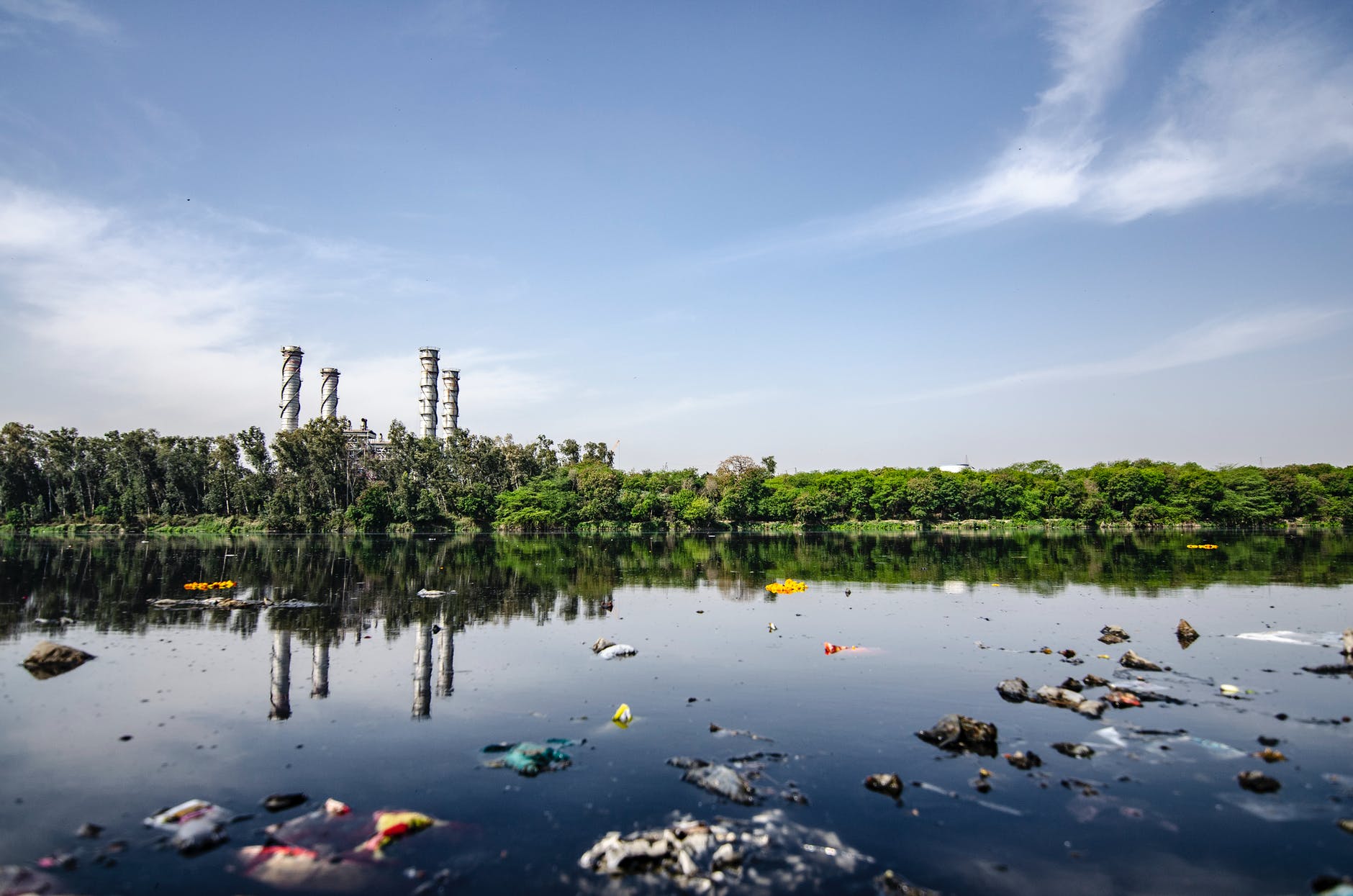
Pollution is the presence of particles or elements in a natural environment and thereby degrading the quality of it. It causes adverse changes to natural environment. Pollution is caused by contaminants and they can be of various types. Contaminants can be particles like chemical substances, gases or energy. They can be foreign substances or naturally occurring ones. Depending on the kind of contaminants and the environment, there are different forms of pollution – air pollution, light pollution, litter, noise pollution, plastic pollution, soil contamination, radioactive contamination, thermal pollution, visual pollution, and water pollution.

Pollution exists mainly in urban societies. The burning of coal and wood increase carbon content in air and make the cities the primary sources of pollution. The Industrial Revolution had brought an infusion of untreated chemicals and wastes into local water resources which supplied water to the people. Early instances include the time when King Edward I of England banned the burning of sea-coal by proclamation in London in 1272, after its smoke became a problem.

Photo by Yogendra Singh on Pexels.com

The major forms of pollution are described as follows:

Air pollution – It is caused by the release of chemicals and particulates into the atmosphere. Common gaseous pollutants are carbon monoxide, sulfur dioxide, chlorofluorocarbons (CFCs) and nitrogen oxides which are produced by industry and motor vehicles.

Electromagnetic pollution – It is caused due to the overabundance of electromagnetic radiation in their non-ionizing form, like radio waves, etc. Nowadays people are constantly exposed to these radiations.

Light pollution – It includes light trespass, over-illumination and astronomical interference. There have been instances when over illumination of a natural environment by artificial lights have caused birds to be awake at night. It disturbs their natural time cycle.

Noise pollution – It includes noise from all sorts of sources like roadway noise, aircraft noise, industrial noise as well as high-intensity sonar.

Photo by Tom Fisk on Pexels.com

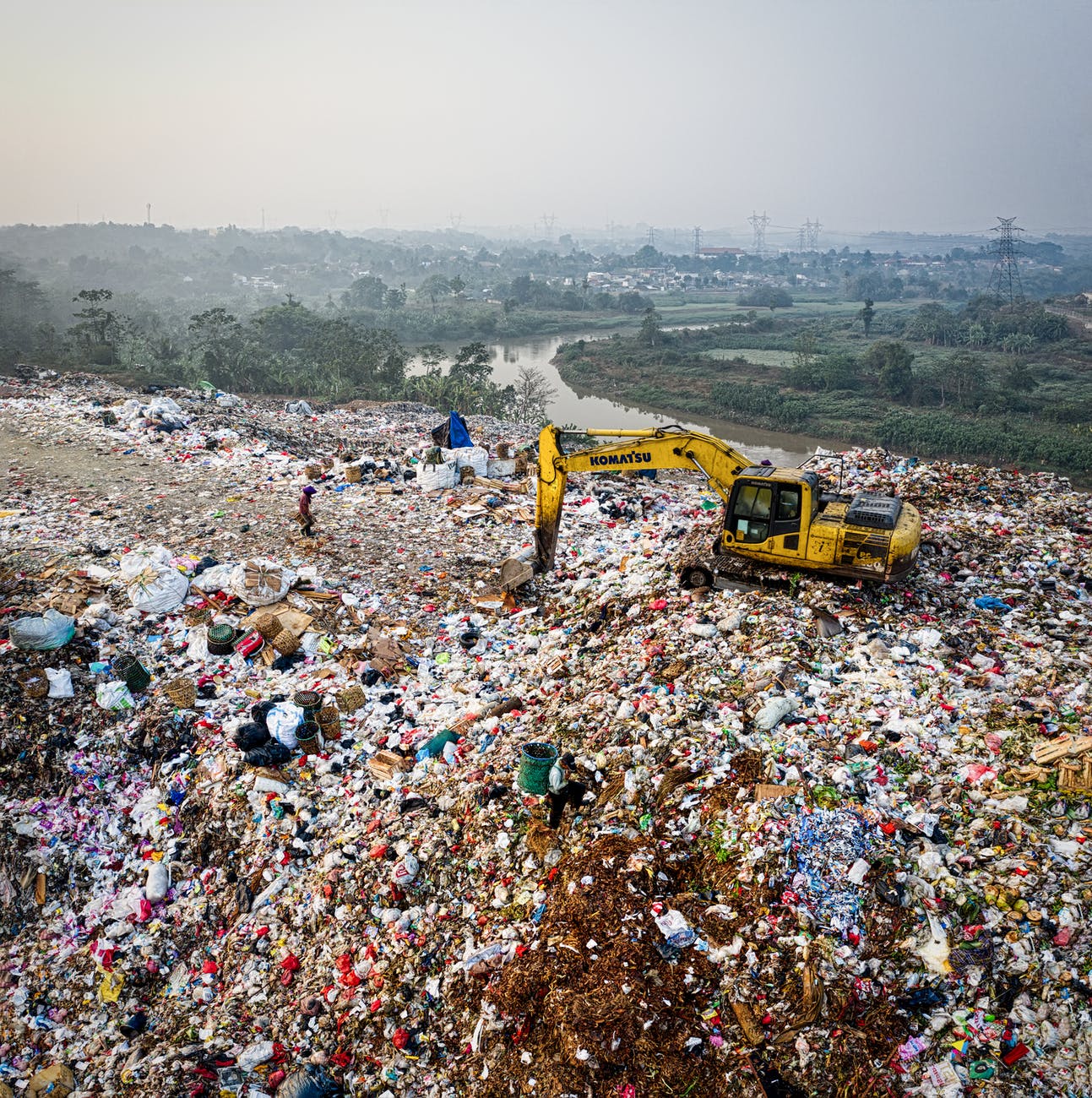
Plastic pollution – This involves the accumulation of plastic products and microplastics in the environment and thereby affecting the wildlife, wildlife habitat, and humans.

Soil contamination – It is caused by chemicals released by spills or underground leakages. Among the most significant soil contaminants are hydrocarbons, heavy metals, MTBE herbicides, pesticides and chlorinated hydrocarbons.

Radioactive contamination – This has increased the 20th century due to activities in atomic physics, such as nuclear power generation and nuclear weapons research, manufacture and deployment.

Thermal pollution – This is a temperature change in natural water bodies. The most common reason is human influence. For example, the use of water as coolant in a power plant.

Visual pollution – It refers to the presence of overhead power lines, motorway billboards, scarred landform, open storage of trash, municipal solid waste or space debris.

Water pollution – It is caused by the discharge of wastewater from commercial and industrial factories into surface waters resources. It also includes discharges of untreated domestic sewage, and chemical contaminants, such as chlorine, treated sewage; pesticides and fertilizer components reaching water bodies through irrigation water. Groundwater pollution is caused from waste disposal including pit latrines and septic tanks; eutrophication and littering.

With growing evidence of local and global pollution, more and more people have started getting informed over time. Issues such as global warming and climate change have also developed in recent years. These have given rise to environmentalism and environmental movements. There are environmental activists who work to raise awareness and to limit human impact on the environment.

Solar Power

Energy indisputably a resource on which humanity has been dependent. Without energy, we cannot find or administer medicine to cure disease, prepare food, purify water, drive our cars etc. the current energy need is 15TW and this number is projected to increase.in nowadays we are more reliable on fossil fuel. Fossil fuels are also large source pollution and also a non-renewable source of energy. As solar energy is a renewable source of energy so we are likely to shift our energy consumption from the non-renewable forms to the renewable forms. Moreover, the energy of the sun which is received by our planet is approximately 835w/m2 which is more than the required amount for us to produce electricity for our use.

Solar energy is the conversion of energy from sunlight to electricity by use of photovoltaic cells or by directing or concentrating a large amount of solar beam into a small region. The concentrated solar system utilizes a wide range of solar lights into a small beam with lenses or mirrors and other tracking devices whereas photovoltaic cell uses the photoelectric phenomenon to convert sunlight into electricity.

A solar cell is a semiconductor which produces electricity when the ray consisting of photons of energy (hv) strikes the semiconductor and when the energy of photons crosses the threshold frequency there is a flow of electron inside the semiconductor which give rise to electricity. Solar cells can be classified into first, second and third generation cell. The first generation solar cells are also called conventional, traditional, or wafer based cells that include polysilicon material. Second generation are thin film solar cells that include amorphous silicon, CdTe and CIGS. The third generation of solar cell include a number of thin-film technologies often described as emerging technologies of the future which use organometallic compounds.

Concentrated solar energy is also referred to as “concentrated solar thermal,” uses the lentils or mirrors as well as tracking systems for concentrating sunlight. The most well-known are the parabolic pitcher, the compact linear Fresnel reflector, the Stirling platter. There are a number of concentrate technology. Different techniques for the tracking of light and sunlight are used. A working fluid is heated in all these systems through the concentrated solar radiation, which is then used for electricity generation or energy storage. A parabola consists of a linear parabola reflector, focusing light on the receiver located along the focus line of the reflector. The receiver is a tube located along the focal points and is filled with a working fluid in the linear parabolic mirror. In daylight hours, the reflector is designed to follow the sun by tracking a single axis. The best land use factor in solar technology are parabolic trough systems.

The rapidly developing industry in India is solar power. As of 30 June 2020, the country’s installed solar power was 35,122 MW. India’s global installation of solar power plants is the lowest capital cost per MW.

In India the Initial 20GW of capacity of producing of solar power which is to be achieved by 2022, reached four years ahead of schedule which had been set by the Government of India. By 2022, the target for 2015 had been increased by 100GW of solar capacity, including 40GW of solar rooftops. India has created nearly 42 solar parks in order to provide land for solar power plant developers.

The solar rooftop accounts for 2.1 GW, 70 per cent of which is industry and trade. India is now developing off-grid solar power to meet local energy requirements in addition to its large-scale PV grid-connected initiative Solar products have helped increasingly respond to rural need; just under a million solar lanterns were sold in the country by the end of 2015, reducing the need of kerosene. In that year, the national programme included a total of 118,700 solar home lighting systems, 46,655 solar street lighting systems, and over 1,4 million solar cookers distributed throughout India.

The calculated solar incidence on India’s land area is approximately 5000 billion kilowatt-hours (kWh) per year (or 5 EWh / YR) with approximately 300 clear and sunny days per year. The available solar energy in a single year exceeds all Indian fossil fuel energy reserves’ potential energy output. The average capacity for the production of solar plants is 0.30 kWh per m2 of the land used, equivalent to 1400–1800 peak (rating) hours of operation per year with market-tested technology.

Say goodbye to procrastination today

Do you often procrastinate? Well, everybody procrastinates at times. Procrastination is however found to be more common in students. If you are a student and you keep pushing your assignments to the next day, to be done and in the end, you are stress-induced and often had to pull an all-nighter to finish your work before the deadline, then you are a hardcore-procrastinator. Anyway, there’s nothing much to worry as there are certain ways by which you can get rid of this habit of procrastinating, and put your life together. All that you have to do is just implement the ways mentioned below in your life, and change your life for the better.
1) Create a schedule – make a schedule, and plan you work beforehand so that you don’t have to break your head just before the deadlines. Mark on the calendar or set reminders on your phone as to how many days you have to devote to one subject to be studied before an exam or assignments to be done before the deadline arrives. Plan your timeline according to your work schedule and sincerely adhere to it.
2) Set achievable goals- Do not try to do the entire assignment in one day, otherwise, it would look like a daunting task to ever get completed, and in the end, you would find yourself procrastinating on your couch. So, it’s better if you divide your work into small chunks and work accordingly. For example, completing one chapter of English, per day or doing some part of an assignment in a day would be fruitful. Try to set your goals for a day, and try to achieve it at any cost. Do not go to sleep before completing your task. Make it a rule!
3) Stay away from distractions – while working on your assignment or studying for your exam, try your best to stay away from any distraction that might pull you out from your already prioritised schedule. So, it would be better if you put your phone out of your sight and use it once you are done achieving your goal for the day.
4) Reward yourself- the human brain gets a boost to function at it’s best if it gets tricked of being rewarded for its work. So, reward yourself every damn time you achieve your set goal for the day. For instance after completing a chapter, reward yourself by watching one episode of your favourite series. Tell yourself about it, and your work would be done in no time, as you would be filled with motivation with the thought of getting the reward.
5) Time management – managing your time plays an important role in deciding if you would be able to complete the given task before the deadline. In order to get a good night’s sleep and complete your work on time, you have to be very careful in allocating your time to the different tasks in a day. So, prioritise your work, and devote time accordingly. For instance, if you have a lot to cover for a specific subject before the exam day, you need to devote more time to it, and less to the subject you have already studied earlier.
   Moreover, in order to complete your assignments, try to start doing from the one’s which you know would require more time than the rest. Start your work from the difficult part and then get to the easier ones. Once you complete the difficult assignments, you would get the motivation to complete the rest in no time. So, plan and use your time wisely.
   Next time, if you find yourself
procrastinating, apply the above-mentioned ways in your life, and you would see the difference for yourself!

Dissent v/s Contempt

In Indian legal system, concept of contempt is older than the India herself, but the earlier recorded roots can be traced back to the Regulating Act of 1773. This Act stated that the Mayor’s Court of Calcutta would enjoy the same power as the court of the English Bench to penalize in case of Contempt of Court.

Contempt of court is the act of being defiant or disrespectful to the judiciary institutions. Conducts that amount to contempt of court are:
• disobeying or opposing court’s order
• scandalizing or prejudicing court and it’s proceedings
• interfering with administration of justice

Though the Indian Constitution doesn’t explicitly state the definition of Contempt of Court, it categorises this offence into
Civil and Criminal Contempt.
• Civil Contempt: Section 2(b) of the Contempt of Court Act defines Civil Contempt as “wilful disobedience to any judgment, decree, direction, order,
writ or other process of a court or wilful breach of an undertaking given to a court”;
• Criminal Contempt: Section 2(c) defines Criminal Contempt as the publication of any matter or the doing of any other act whosoever which,
(i) scandalise or tends to scandalise, or lowers or tends to lower the authority of, any court; or
(ii) prejudices, or interferes or tends to interfere with, the due course of any judicial
proceeding; or
(iii) interferes or tends to interfere with, or obstructs or tends to obstruct, the administration

In 1926, the first Contempt of Court Act was passed, affirming the power of the High Courts to punish or judge contempt offences committed against the subordinate courts. And again, the Contempt of Court Act of 1952 replace the previous Act and also expanded the power of penalizing from High Courts to the other courts as well.

Dissent v/s contempt

The Court is the pedestal from where the divine light of justice blankets the whole nation. It is the place of faith. And this is the place where should arise impartiality, independence, and fairness in their crude form. This third pillar of democracy not only supports the democratic structure of the country, but also the faith of each individual, regardless of age, gender, caste, power and so on. While it is believed that justice served must be accepted as it is, people often tend to have varied opinions, disagreeing with the Court or the Judge. This dissent sometimes, intentionally or unintentionally, takes the form of contempt.

In Indian legal system, concept of contempt is older than the India herself, but the earlier recorded roots can be traced back to the Regulating Act of 1773. This Act stated that the Mayor’s Court of Calcutta would enjoy the same power as the court of the English Bench to penalize in case of Contempt of Court.

What is the Contempt of Court?
Contempt of court is the act of being defiant or disrespectful to the judiciary institutions. Conducts that amount to contempt of court  are:
• disobeying or opposing court’s order
• scandalizing or prejudicing court and it’s   proceedings
• interfering with administration of justice

Though the Indian Constitution doesn’t explicitly state the definition of Contempt of Court, it categorises this offence into
Civil and Criminal Contempt.
Civil Contempt: Section 2(b) of the Contempt of Court Act defines Civil Contempt as “wilful disobedience to any judgment, decree, direction, order,
writ or other process of a court or wilful breach of an undertaking given to a court”;
Criminal Contempt: Section 2(c) defines  Criminal Contempt as the publication of any matter or the doing of any other act whosoever which,
(i) scandalises or tends to scandalise, or lowers or tends to lower the authority of, any court; or
(ii) prejudices, or interferes or tends to interfere with, the due course of any judicial
proceeding; or
(iii) interferes or tends to interfere with, or obstructs or tends to obstruct, the administration.

A brief history.
In 1926, the first Contempt of Court Act was passed, affirming the power of the High Courts to punish or judge contempt offences committed against the subordinate courts. Further, the Contempt of Court Act of 1952 replaced the previous  Act and also expanded the power of penalizing from High Courts to the other courts as well. But, there continued to be disagreeing opinions about the law. Hence, in 1961, a committee was adopted to examine the application of contempt laws. The committee recommended that the proceedings of the Contempt should be initiated on the recommendation of government law officer, unlike the previous legislation that the Court itself can initiate the proceedings. These recommendations were carried forward in the Contempt of Court Act of 1971. And this, 1971 Act, is the current legislation which governs contempt of court in India.

What is dissent?
Dissent can be regarded as “a strong difference of opinion on a particular subject, especially about an official suggestion or plan or a popular belief”. A person in India, is allowed to differ in opinions with other citizens and also those in power and can propagate his belief as his own. Freedom to dissent is one of the most important rights guaranteed by the Constitution.

There is a very thin line between dissent and contempt which often goes blurred. If there’s no freedom without dissent, then contempt is the exploitation of that freedom. But not to forget, if contempt is a punishable offense under Indian law, then free dissent is the right of every man. A democracy without the tolerance for dissent is actually a totalitarian regime, for there’s no greater idea of democracy than free men. “Freemen, in the exercise of free thoughts, will give vent in free speech”.

India is so confusing!!!

The most confusing country in the world is our country India. We live in a very confusing country because when you and I think about India, we get confused whether we should be proud or ashamed of India!

Because there are two Indias hidden in our country. One Indian is full of absconding millionaires!, and second India where businessmen think of the people before profit. One Indian which is spreading hatred based on religion and second India which has moved on and embracing peaceful tomarrow. One India which houses few of the most polluted cities in the world and second India which is powering homes using solar energy.

So which India are we part of!? Let me explain three stories that sounds impossible but are actually true.

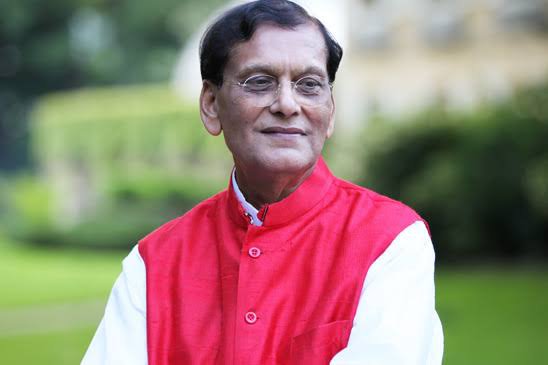
  1. Can India make electricity from POOP! 💩 sounds impossible, right? But Padmabhushan Dr. Bindeshwar Patak has made it reality. India had 60.4% people without access t toilet. Then in 1970s he has made 15 lakh toilets in India. You know these pay and use toilet as ‘Sulabha Shouchalayas’. But let’s go one step further he asked himself what happens to this waste? “Biogas”. 190+ toilets convert poop into energy. Over here waste gets processed and decomposed and ultimately it is used to generate electricity, to cook and to light street lamps too! Your outgoing is utilized and not just gas. The water left after this process is used to grow plants. Your waste treasure for plants. This gives them nutrients. This is so cool! It sounds impossible but it’s true.
Dr. Bindeshwar Pathak
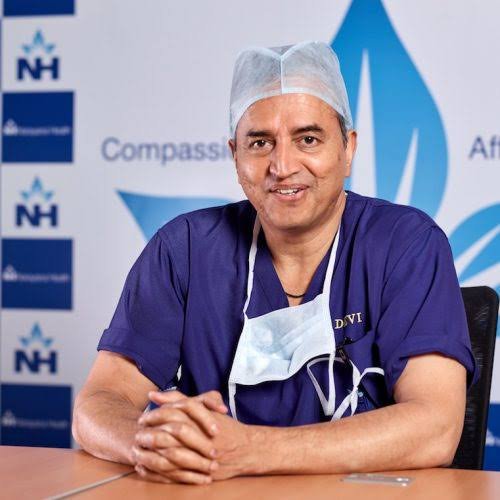
  1. Poor people can’t afford a surgery but they can give 10/- per month. The Government can add 30/- in it and make a health insurance for them. In 150 per year get a health coverage. Today more than one crore people are part of this low cost health insurance. 100000+ low cost surgeries and this was all possible because of Dr. Devi Shetty.

He is cardiac surgeon who founded Narayan Health. Poor people aren’t a problem, problem is poverty. Narayan Health isnonr of the cheapest hospital in the world but cheap doesn’t mean loss making?

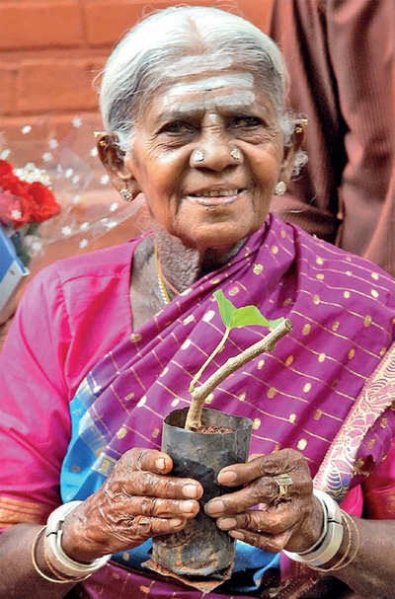
  1. Can women have 800 children? Even after 25 years of marriage Timmakka from Hulikal could not have baby of her own. So what did she do? She planted 380+ banyan trees and 8000+ other trees and she raised them as her own children. Today she is 109 years old! and since last 70 years she has been planting trees on the highway. She never went to school, she knows nothing about the climate crisis but what she knows is this it feels nice to sit in the shadow. When we see an environmentalist from a small village receiving Padmashree from Presidentnsnd giving blessing in return. Then this cute moment sounds impossible but it’s true.
Timmakka

It is true that India has all the problems of the world but it also means that all its solutions to the problem can come from India! Maybe we have complicated patriotism beyond recognition. Maybe it is very simple. What can we do? Let’s ask this question. Which India do we want!? The first India that see the problem and runs away at the 1st chance? or second India which doesn’t depend upon anyone else to find a solution. India’s 50% population is below 25. That means there is 50% chance that you’re yet to make a choice. Then why not support India that you want to grow? It’s simple demand and supply. The news you share becomes the news you see. The people you support are the people who grow. Every small step in the right direction takes our country one step forward. Today we need more practical patriotism who are ready to take small step at their level. They treat their work as their religion and move ahead and turn the things that looks impossible. Today’s interest becomes tomarrow’s truth. Because freeing the second India from the first one makes difference to us.

Indian Railways go Solar: Clean Energy

Indian Railways has over 960 solar powered railway stations and placed an order for 198 MW solar rooftop capacity for 550 stations. This is going to speed up Indian Railways’ goal of becoming ‘Net Zero Carbon Emission Railway’ and being100% self-sustainable for its power consumption.

The Railways recently organised a meet of leading solar power developers who shared their expectations of being partners in the journey of Indian Railways to become “net zero carbon emitter” before 2030. About 51,000-hectare vacant land is available for the Indian Railways to extend support to the developers for installing solar power plants.

Some solar powered stations are New Delhi, Old Delhi, Jaipur, Varanasi, Kolkata, Guwahati, Secunderabad, Hyderabad and Howrah.

Railways is also seeking for 100% electrification by the year 2023 by utilizing solar energy to meet its traction power needs and become a complete ‘Green mode of transportation.’ This will contribute to national solar power needs.

All this is in line with the recent orders of Prime Minister Narendra Modi to solarise railway stations and use vacant railway land for renewable energy projects. These solar projects will also protect the land by the construction of boundary walls along the track.

Significance & Evolution of Western music

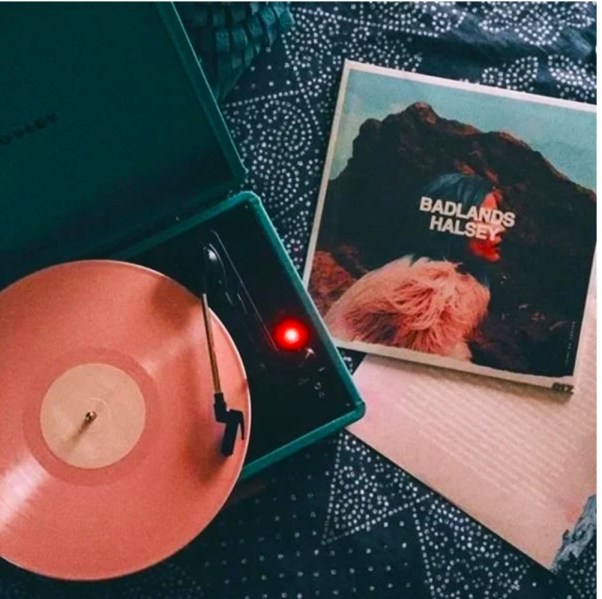
https://in.pinterest.com/pin/584131014160455756/

The Mid & the late 2000s was the era of songs when you had the most beautiful songs. The lyrics, rhythm & music just made so much sense & blended so perfectly to fit in each other. I still remember swaying my head listening to these tracks, whilst sitting by the window seat of local trains. As the cool breeze hit my face & the music captivated my soul. Truly an underrated experience. 

Be it pop, jazz, heavy metals, or blues every musical composition had some deep & pleasant meanings to lend. 

  Remember the days back when we used thomp our feet on Shakira’s ‘Waka-Waka’ & ‘Closer’ by Chainsmoker’s. And if you are a fan of laments, then you may also recall sinking your heart listening to ‘A Thousand Years’ by Christina Perri or ‘Let Her Go’ by Passenger

  You bet I didn’t forget all-time fave & heartthrobs of millions right? The One Direction! Giving a series of popular hits back then . ‘Live while we are young’ & ‘What makes you beautiful’ being the liveliest tracks I’ve ever heard. I don’t know if you’ve ever heard to the songs of this American musical drama movie called ‘The Sound of Music.‘ It was made in the mid-1960s. But if you haven’t, you must give it a try. 

  To the present, where we are mindlessly mesmerized by the songs that hold no proper significance of lyrics. No wonder why the current generation songs aren’t sought for traces of culture & ethics. Well, this is a never-ending debate that can be conquered by none. 

   A good song helps not only to have a rest but it’s also helpful for learning new vocabulary. If you like listening to music, your hobby can prove to be quite beneficial to you. As many people including myself, believe in music therapy. This helps you deal with your physical, mental & emotional by establishing a therapeutic relationship with music. 

    “One good thing about music is when it hits you, you feel no pain”  

                                                           ~Bob Marley

Listening to these Billboard chart artists like- Taylor Swift, Marshmello, Dua Lipa, Ed Sheeran, Selena Gomez, Billie Eilish, Cardi B, Beyonce, Ariana Grande, Harry Styles are treat to ears. Similarly, bands like The Beatles, Maroon 5, The Weeknd, Imagine Dragons. The list goes on & on. Also, pardon me if I missed out on some importants. 

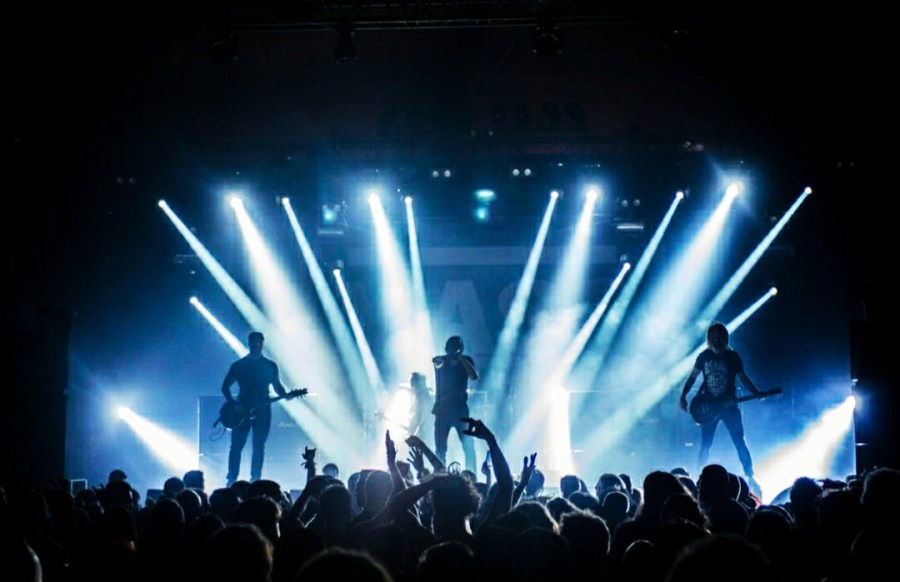
  From the era where one used to feel at bliss listening to music through gramophone to attending live gigs. We have come a long way. Attending the live concerts where the audience sings in chorus with the singer over & over again. And then finally as it ends, a sudden silence falls for a fraction of seconds. Moments later the crowd breaks into a round of applause. Isn’t it intoxicating & magical all at the same time? 

     K-pop bands like BTS, Army, Blackpink are no behind in taking the music levels to new heights & breaking the internet. Despite the fact of being unable to understand their language, fans all over the world haven’t given up on them. As songs sometimes doesn’t need understanding all it needs is music & soul to connect with. But that doesn’t necessarily imply mindless lyrics are all the same. 

https://www.pexels.com/

    Have you ever heard of this newly emerging virtual artist called, Lil Miquela? She’s currently taking the music world by storm & has a booming fan base. A CGI character created by Trevor Mcfredries & Sara DeCou. Precisely a robot of 19-years who has released some crackling electro-pop singles. Thus taking the internet by storm. 

      So this is how time flew by, from using instruments to produce musical notes to just using certain software to produce EDMSs. The simple lyrical songs overtime replaced the hearts of the masses by rap songs.

The Power of Believing in Yourselves

Haven’t we all came across a situation in our lives that we felt like we should just give up? On an average everybody has dealt with situations like that. We all clearly know that  we don’t live in a bed of roses, we have our ups and downs in life but something that we all should follow is the magic of believing in ourselves.

We hear stories of success all the time but have anyone of you noticed something common in all of it, it was this very small and accurate thing ever. The power of believing in yourself and never giving up. People who have never stopped believing in themselves have reached heights beyond imagination. Have you all heard the story behind the author of the Harry Potter Series. J K Rowling was rejected 12 times before her novel got published and now it has become one of the highest selling books across the world. What we must notice here is the will power of J K Rowling. Getting 12 rejections never stopped her. She mailed it to many people because she believed in herself and she knew that she could change the world with her books.

Today we cannot find a person or a child who don’t know the 9 ¾ platform at Kings Cross, that was the magic she penned down. Her life story give us all the true meaning of self esteem and confidence and the will to stay strong through bad times. Not everyday will be a good one and not everyone you meet will be worthy of your trust or love but what is important is mastering the art of moving on and forgiving people by your principles.

It is human nature to naturally feel low and letting negativity in each time you fall down. We always forget about our capabilities and what we can achieve. Giving ourselves the right emotional space matters the most whenever we receive a setback. If you don’t then you will break like glass each time you fail. Nobody reaches success nor win on their first times, people work hard day and night to reach their respective goals. What is important is the strong sense of self love.

In our lives we all encounter with people who will pull us down, always keep in mind that your mind is the only thing which can bring you down. Nothing else can. So let the barking dogs bark, ignore people who pull you down and never throw stones at a barking dog, because it is always a waste of our time and energy.

“Once you replace negative thoughts with positive ones, you’ll start having positive results.” Said Willie Nelson an American Singer. This is something that we all should take in deep consideration. It doesn’t really take much effort to think positively about ourselves, neither does it cost too.

Listening to our inner voice can always connect us back to reality because inside all of us is a person who wants to succeed and never give up. Always learn to forgive ourselves from mistakes we do rather than putting ourselves down. Self love is a choice. Own it.  

Coronavirus Latest News: Top 10

  1. AstraZeneca’s coronavirus vaccine reached Phase 3 clinical trials in the United States and is very close to get an approval. It could get launched before the November 3, 2020.
  2. The Institute of Medical Sciences and SUM Hospital, Bhuwaneshwar, is preparing for the second phase of the human clinical trial of ‘Covaxin’. There were zero side effects in the reports of first trials.
  3. The German scientists claim that they found that cancer drugs stop the growth of coronavirus. A total image of all correspondence channels of a human cell contaminated by coronavirus is recorded and observed for the first time. If these flagging pathways are interrupted and stopped, the virus can not duplicate and spread in the body anymore. Read the study here.
  4. Auckland, the largest city of New Zealand, successfully controls coronavirus spread and exits the lockdown.
  5. China has successfully controlled the transmission of coronavirus and did not find any new community spread reports of the coronavirus in the past few days. After Beijing and Shanghai, Wuhan reopens all the schools.
  6. Reopening of schools in the U.S. proves to record a lot more cases of coronavirus in the country when school children and staff are tested positive.
  7. Anti-mask protestors still on the rise in many parts of the U.S.
  8. Coronavirus protestors come out on the streets of Berlin in Germany, to fight for basic human rights.
  9. Peru, South America now has world’s highest coronavirus death rate.
  10. Japan plans to extend coronavirus loan for India to fight the pandemic.

Vacations Over!

The European countries have finally decided to reopen the schools after months of shutdown due to the Covid-19 pandemic. Realizing the limitations of online learning, several countries are now finding ways to restart the classroom studies. The governments have brought forward various rules and regulations to minimize contagion in schools and protect the students from the virus attack. Let’s have a look on the different approaches that the countries are taking to reopen the schools in this “new normal”!

In Britain, the schools started opening in June and finally all years are back full time this week. The classes have been split into small groups or “bubbles”, with each group keeping a safe distance from the others to prevent any widespread infection. The recess periods are changed and the start times staggered, to prevent crowding. The face masks rules depend upon the lockdown situation in the area.

In France, the schools have opened from today September 1st. The masks are compulsory at all times, regular disinfection of classrooms and proper ventilation shall be ensured. The school attendance is mandatory though schools can temporarily shutdown according to the outbreak in the neighborhood.

In Germany, the schools started in early August with compulsory mask wearing for students except while sitting at their desks. The classes should keep to different places during the interval time. The doors and windows are kept to open at all times.

In Italy, the schools are set to get back on track from 14th September with new single desks being introduced to ensure a social distancing norms. Mask wearing is mandatory while entering and leaving the school, though can be removed during the lessons. Some secondary schools with larger class sizes say they will use a mix of distance learning and on-site teaching to prevent overcrowding

In Norway, the schools have reopened with normal routine and even the masks are not compulsory for the pupils. The break times are staggered and different classes have been assigned specific area of the playground. The students having symptoms of Covid-19 are required to stay at home and get tested.

The case of India is significantly different, with daily record-breaking high cases of Covid-19. The schools are shut and no reopening can be possible in the near future. For how long the students will have to stick to their screens for daily lectures is the million dollar question!