Indian Labour Laws in the process of Codification, Reformation and Consolidation: A Study

INTRODUCTION


India begins the process of codification of its labour laws, a long-awaited and much-needed reform. India’s new Code on Wages, 2019 (“Code on Wages”) has been approved by both the Houses of the Parliament [4] and it is now awaiting Presidential assent in order to become law.[5]


This is the first in the series of four labour codes that have been proposed by the government and is expected to pave way for the other labour codes including the code on employee health and safety and social security.[5]

Once the effective date of the Code on Wages is notified, it shall subsume and repeal the following important labour laws:[5]

1) The Payment of Wages Act, 1936 (POWA)

2) The Minimum Wages Act, 1948 (MWA)

3) The Payment of Bonus Act, 1965 (POBA)

4) The Equal Remuneration Act, 1976 (ERA)


The Code on Wages shall regulate wage and bonus payments in all employments and aims at providing equal remuneration to employees performing work of a similar nature in every industry, trade, business, or manufacture. [5]

COVERAGE AND APPLICABILITY

The Code on Wages will apply to employees in the organized and un-organized sectors. While the Central Government will continue making wage-related decisions for employments such as railways, mines, oil fields, central public sector undertaking etc., the State Governments shall make such decisions for all other employments including for private sector establishments.[5]

Unlike the POWA which applied to only those employees who drew monthly wages of up to INR 24,000 (approx. US$ 340) and the MWA which applied only to scheduled employments, the provisions of the Code on Wages relating to payment of wages shall extend to all employees irrespective of their wage ceiling and type of employment.[5]


WHEN THE CODE ON WAGES, 2019 WAS ENACTED AND PASSED?

The Code on Wages, 2019 the enactment of which empowers the Centre to set a minimum statutory wage, expected to benefit over 500 million workers across the country, was re-introduced in Lok Sabha by the Minister of Labour, Mr. Santosh Gangwar, on July 23, 2019, and subsequently passed on July 30, 2019. [3]

After due deliberations on the suggestions received, the Committee furnished its report on December 18, 2018, incorporated with its various recommendations. [3]

Thereafter, it was passed by Rajya Sabha on August 2, 2019 and is currently awaiting the Presidential assent following which, it will become an Act of Parliament.[3]

“OBJECTIVE” OF THE CODE ON WAGES, 2019

The Code seeks to regulate and streamline wage and bonus payments in all the employment sectors where any industry, trade, business, or manufacture is carried out.

The central government will make wage related decisions for employment sectors, inter alia, railways, mines, oil fields, etc. and the state governments are to make similar decisions for all the other employment sectors.[3]

BACKGROUND

Presently, the provisions of both the Minimum Wages Act, 1948 and the Payment of Wages Act, 1936 are applicable only on workers falling below a particular wage ceiling, working in the Scheduled employment sectors. [3]

Many unorganized sector workers like agricultural workers, painters, persons working in restaurants and roadside food stalls, gatekeepers, etc., who previously did not fall under the cloak of the minimum wages, will get legislative protection of minimum wages after the Code becomes an Act.[3]

The Code is likely to be an improved and a more efficient version of the 2017 Bill as it incorporates many of the recommendations provided by the Parliamentary Standing Committee in their December 2018 report.[3]

The need for codifying and implementing a uniform labour legislation arose owing to the fact that currently, there are close to 12 different definitions for wages, which is one of the primary reasons for labour litigations in the country, and for inefficiency in the implementation of these legislations.[3]

NEW DEFINITION FOR WAGES UNDER THE CODE ON WAGES, 2019

The Code introduces a simplified definition for wages, which includes salary, allowance, or any other component expressed in monetary terms, but does not include, inter alia, bonus payable to employees or any travelling allowance.[3]

This new definition is expected to reduce litigation and enable easier and cheaper means of compliance for an employer. Establishments will further be benefitted as the number of registers, returns, forms, etc. can not only be filed and maintained electronically, but it is believed that by taking recourse to the applicable rules, all the statutory compliances can be comprised under a single template.[3]


ARTICLE 43 AND THE DEFINITION OF “LABOUR”

Article 43 of the Constitution of India states that, “The State shall endeavour to secure, by suitable legislation or economic organization or in any other way, to all workers, agricultural, industrial or otherwise, work, a living wage, conditions of work ensuring a decent standard of life and full enjoyment of leisure and social and cultural opportunities”. [3]

Under the Constitution of India, ‘Labour’ falls under the Concurrent List under the Seventh Schedule, where both the central and the state governments are competent to enact legislations.[3]

WHO SHALL SET THE STANDARD FOR MINIMUM WAGES BASED ON THEIR EMPLOYMENT UNDER THE CODE ON WAGES, 2019?

Presently, the state governments are empowered to set the standard for minimum wages, based on employment, in their respective states. With the introduction of the Code, the central government, to the exclusion of the state governments, will be empowered to fix a floor wage, keeping in mind the living standards of the workers. [3]

Moreover, different floor wages may be fixed for different geographical areas. The central government may consult the Central Advisory Board and the state governments to decide and set a favorable floor wage.

Thereafter, the minimum wages set by the central and the state governments, in their respective states, have to mandatorily be higher than the floor wage fixed. In case the existing minimum wage fixed by the central or the state governments is higher than the floor wage fixed, they cannot be reduced.[3]

NEW CONCEPT INTRODUCED: THE FLOOR WAGE

The concept of a floor wage was brought about to ensure a uniform standard of living across the country. Presently, differences observed in the minimum wages set out across states and regions are primarily attributed to the fact that the central and state governments set, revise and enforce minimum wages for the employments covered by them.[3]

The advent of a floor wage may aid in reducing these differences and provide a basic standard of living for all employees across the country, as the floor wage fixed by the Centre will no longer be based on employment, but on geography and skills.[3]

PROCESS OF FIXING MINIMUM WAGES

The process of fixing minimum wages has also been revisited while framing the Code. Under the Code, the employers are prohibited from paying wages less than the minimum wage fixed.[3]

This minimum wage will be fixed based on either the time consumed or the number of pieces produced i.e., the level of difficulty of the task undertaken or the skill of the workers involved, and will be notified by the central or state governments from time to time.[3]

This minimum wage rate fixed by the governments will be reviewed and revised periodically, at an interval of not more than 5 years in a stretch.[3]

OVERTIME WAGES

With reference to overtime wages, the Code provides for the central and state governments to fix the number of hours which would constitute a normal working day, and employees working in excess of a normal working day shall be entitled to overtime wages, which would be no less than twice the normal rate of wages payable to the respective employee. [3]

MODE OF PAYMENT

Payment of wages is to be made in coins, currency notes, by cheque, by crediting to the bank account, or through electronic mode, and the employer is responsible for fixing the wage period as daily, weekly, fortnightly, or monthly.[3]

SALARY TO BE GIVEN IN A TIME BOUND MANNER

The Code also ensures that the employee’s be given their salary on a timely basis by stating that employees in receipt of monthly payment will receive the same by the 7th day of the next month. Further, those employees working on a weekly basis will receive their salary on the last day of the week, and daily wagers, on the same day.[3]

HARMONY BETWEEN THE EMPLOYER AND EMPLOYEE RELATIONSHIP SHALL BE MAINTAINED BUT IN AN ENHANCED WAY

The Code, in order to maintain harmony in the employer-employee relationship, has subjected an employee’s wages for deductions, inter alia, on the grounds of fines, absence from duty, accommodation given by the employer, recovery of advances given to the employee, etc.

Further, keeping in mind the beneficial nature of the labour legislations, the Code caps the maximum deductions to up to 50 percent of an employee’s total wages.[3]

Under the Code, every employee whose wage does not exceed a specified monthly amount, as notified by the central and state governments, will be entitled to receive an annual bonus, aggregating to at least 8.33 percent of his/her wages or INR 100, whichever is higher.[3]

In addition to receiving bonus, the employer is mandated to distribute a portion of the gross profits amongst the employees, in proportion to the annual wages of the respective employee. An employee can receive a maximum bonus of up to 20 percent of his/her annual wages.[3]

GENDER DISCRIMINATION: A BY-GONE ERA IN THE NEW CODE

The Code also places strong emphasis on prohibition of gender discrimination in matters concerning wages and recruitment of employees for the same work or work of similar nature. [3]

“Work of similar nature” is defined as ‘work for which the skill, effort, experience, and responsibility required are the same, when performed under similar working conditions’. [3]

The definition further extends to state that if there are any differences in skill sets with respect to gender, they are not of practical importance in relation to the terms and conditions of the employment.[3]

ADVISORY BOARD UNDER THE NEW CODE ON WAGES,2019

Under the Code, the central and state governments are required to constitute advisory boards, who would advise the respective governments on various aspects including, but not limited to, fixing minimum wages, increasing gender-neutral employment opportunities, etc. [3]

The Central Advisory Board will consist of employers, employees (in equal number of employers), independent persons, and 5 representatives of state governments; and the State Advisory Board will consist of employers, employees (in equal number of employers), and independent persons; all the while keeping in mind that one-third of the total members in both the boards will be women.[3]

PENALTIES FOR OFFENCES


As minimum wages is regarded to be an integral aspect in the life of an employee, stricter compliance of the provisions is envisioned under the Code.

The Code now lays down penalties for offences committed by an employer, be it by way of paying less than the due wages, or for contravening any of the provisions under the Code. [3]

The extent of penalties differ according to the nature of the offence, with a maximum penalty set at imprisonment of up to 3 months and fine of up to INR 100,000. [3]

Further, with a view of providing appropriate and adequate relief to the claims of the employees, the limitation period for filing claims for minimum wages, bonus, and equal remuneration has been raised to 3 years.[3]

It is a widely accepted notion that India has a serious wages problem. Today, regular workers in urban sectors earn an average of INR 449 per day, 49 percent more than their peers in rural sectors, who take home an average of INR 300. Casual workers in rural sectors earn the least, at INR 138.[1]

Keeping in mind the glaring inequalities, a mandated minimum wage is a welcome step to streamline the employment sectors and reduce disparities.[3]

According to the Periodic Labour Force Survey 2017-18[2], 45 percent of the regular workers (people who are employed in a relatively stable, formal sector) are paid less than the minimum wage. [3]

MINIMUM FLOOR WAGE: A MUST UNDER THE NEW CODE

The Code mandates payment of a minimum floor wage for all workers, which will be universal across the country, and across all sectors. This would allow for wages to rise in the informal sector and would also serve as a stepping stone in addressing the gender based disparities. [3]

At present, women earn roughly 45 percent less than men in the same occupation. A universal floor wage would reduce the rural-urban gaps. Although there is little doubt that the implementation of the Code would uplift the employment sector, we still have a far way to go in ensuring that these provisions are enforced in accordance with the true intent of the legislature.[3]

COMPARISON OF THE PAYMENT OF BONUS ACT, 1965 AND THE CODE ON WAGES, 2019:


While the Equal Remuneration Act extends protective provisions in favor of women, the Wage Code has taken a gender-neutral approach by prohibiting discrimination on the ground of gender in matters relating to wages. [3]

1) Payment of Bonus: The Payment of Bonus Act applies only to employees earning less than INR 21,000. [3]

The Main Point of difference :

While Section 26(1) of the Wage Code stipulates that employees earning below the salary threshold to be notified by the state government, will be eligible for payment of bonus, Section 26(2) of the Wage Code provides that where the wages of the employee exceeds the notified salary threshold, the bonus payable to such employee shall be calculated as if his wage were such amount, so determined by the appropriate government or the minimum wage fixed by the appropriate government, whichever is higher. [3]

It may be noted that the state governments may, by way of a notification, exempt employees of any establishment from the application of the chapter relating to the payment of bonus, having regard to the overall benefits under any other profit-sharing scheme available in such establishments. [3]

2) Fixation of minimum wages and floor wages: For fixing minimum wages, the appropriate government shall primarily take into account the skill of workers and the arduousness of work. [3]

By foregoing ‘type of employment’ as one of the factors for fixation of minimum wages, over 2000 minimum wage rates existing as of today are expected to reduce to 300. [3]

Further, the Wage Code introduces the concept of floor wages, whereby the central government will fix floor wages taking into account the minimum living standards of a worker for different geographical areas. The minimum rates of wages fixed by the state governments will have to be not less than the floor wages fixed by the central government. [3]

3) Inspection: The Wage Code provides for randomized web-based inspections, and information relating to the inspection may be called for electronically. It is expected that this will reduce the potential for corruption and harassment that a physical inspection entails. [3]

4) Streamlining of procedural compliances: With the consolidation of the Payment of Wages Act, Payment of Bonus Act, Minimum Wages Act and the Equal Remuneration Act into the Wage Code, multiple filings, and maintaining multiple records and registers under each of the four legislations is reduced.[3]

5) Penalties: Non-payment of amounts due to an employee under the Wage Code is punishable with a monetary fine, which may range up to INR 50,000.[3]

Other contraventions are punishable with monetary fines, which may range up to INR 20,000 depending on the type of contravention. [3]

REPEAT OFFENSES CRIMINALIZED UNDER THE NEW CODE

The Wage Code criminalizes only repeat offenses, that is, when a similar offense is committed within five years from the date of commission of the first or subsequent offense, after conviction, in which case imprisonment and a higher penalty may be imposed. [3]

Before initiation of prosecution for the offenses under the Wage Code, the employers are to be given an opportunity, by way of a written direction to be issued by the Inspector-cum-Facilitator, to comply with the provisions of the Wage Code within a specified time period (provided it is not a repeat offense) and if the employer complies with such direction, no prosecution proceedings shall be initiated against the employer. [3]

This would come as a relief to employers as they are given an opportunity to cure any inadvertent non-compliances before initiation of prosecution.

The Wage Code also provides for compounding of offenses for which imprisonment is not prescribed as a penalty. [3]

6) Claims: The existing labor legislations prescribe six months to 1 year as a period of limitation for filing claims, and some are silent on the period of limitation. [3]

Under the Wage Code, employees may file claims at any time within a period of 3 years from the date on which the claim arises. The Wage Code also expressly provides for filing of a single application on behalf or in respect of any number of employees employed in an establishment, subject to any prescribed rules. [3]

The authorities to be appointed under the Wage Code for determination of claims are empowered to order payment of compensation in addition to the claim determined, which may be up to ten times of the claim determined.[3]

RELEVANT CASE LAWS OF EACH OF THE 4 ACTS MENTIONED ABOVE ARE AS FOLLOWS:

(A) Payment of Wages Act, 1936:-
What are the rules that an employer should follow before deducting wages for damage or loss?[6]

An employer can deduct wages for damage or loss through Section 7(2)(c), which is authorised under the Act. According to Section 10 the employer shall not deduct the wages exceeding the amount of damage or loss of goods occurred due to neglect or default of the employee.[6]

Also, it is to be ensured that the employee had the custody of the goods which were so damaged. The employer is bound to give an opportunity to the employee for showing cause before deducting any wages.[6]

In M/S Rampur Engineering Co. Ltd. v. City Magistrate (AIR 1966 All 544) it was observed by Allahabad High Court that the deduction for loss of electric bulbs and tools that were given to the employees for their own personal use is a valid deduction. [6]

(B) Equal Remuneration Act, 1976:-
A landmark case in the light of equal pay for equal work was the Judgment given by the Hon’ble Supreme Court in the case of Randhir Singh v. Union of India. [7]

Here, the Court adopted a sociological ideology and deviated from strict interpretation to liberal interpretation for the employees. [7]

The court, in this case, relied on ‘‘socialist’ as envisage in the Preamble to the Constitution in deciding the case, and it was held that the principle of equal pay for equal work was deducible from article 14 and 16 of the Constitution of India, may be properly applied to the cases of unequal scale of pay based on classification, though those drawing a different scale of pay do identical work under the same employer.” [7]

Here, the court observed that “equal pay for equal work” is deductible from Articles 14 &16, understood in the light of the Preamble and Art. 39(d). [7]

(C) Minimum Wages Act, 1948:-

Sanctity of the Act

It is a clear decision of the Supreme Court in their three rulings held that non-payment of minimum wages leads to “forced labour” which is prohibited under Article 23 of The Indian Constitution. ‘Forced labour’ can arise in many ways like hunger and poverty, want and destruction.[8]

In the case of Sanjit Roy Vs. State of Rajasthan, the Supreme Court has decided that ‘The Exemption Act in so far as it excluded the applicability of the Minimum Wages Act, 1948 to the workmen employed in famine relief work is “clearly violative” of Article 23.

Thus, even public works ostensibly initiated by the Government for the sole purpose of providing employment are subject to the Minimum Wage Act.[8]

(D) Payment Of Bonus Act, 1965:-

Case Law: Shashikant Janardan Pimpalpure Vs Development Corpn. Of Vidarbha

On 20 February, 1995 the Respondent No. 1 (Corporation) filed a reply to the application and contested the claim of the petitioner.

The respondent set up the defense that the petitioner was not an employee of the respondent Corporation, but was appointed in Carpet Weaving Center only and is on the rolls of that establishment only.[9]

According to the respondent Corporation, Carpet Weaving Center was totally separate and distinct from the Corporation and had no resemblance to the terms of employment of the employees of the respondent Corporation.[9]

The Corporation set up the plea that since the Carpet Weaving Center was a training center and an educational institution and has no profit motive, bonus was not payable under the Payment of Bonus Act.[9]

The Corporation also set up the defence that the said Training Center has not completed five years of service and on that ground under Section 16 of the Payment of Bonus Act, the employee is not entitled to the payment of bonus.[9]

The first and foremost question which requires consideration is, whether an application under- Section 33-C(2) of the Act of 1947 is maintainable seeking payment of minimum bonus under the Payment of Bonus Act. Admittedly, the petitioners are only seeking minimum payment of bonus under the Payment of Bonus Act.[9]

It is also admitted that before filing of the application under Section 33-C(2) of the Act of 1947, there was no order for payment of bonus to the present petitioner under the Payment of Bonus Act.[9]

Scope of Section 33-C(2) of the Act of 1947 is now well settled and does not require any debate. The right to the benefit which is sought to be computed under Section 33-C(2) must be an existing one and that is to say, already adjudicated upon or provided for and must arise in the course of and in relation to the relationship between the industrial workmen and his employer.[9]

CONCLUSION

The Wage Code is being hailed as a historic step towards labor reforms and ease of doing business in India without diluting any basic rights of employees. The Wage Code aims for enforcement of labor laws with transparency and accountability, and it is expected to reduce the cost of compliance for employers significantly. [3]

Amongst several benefits, the codification of labour laws shall remove the multiplicity of definitions and authorities, without compromising on the basic concepts of employee welfare and benefits. [5]

In a way, it would make it easier for employers to understand and thereby comply, and for the labour authorities to enforce the laws. Including the unorganised sector under the ambit of the Code on Wages and implementing a national level floor wage for minimum wages could end up becoming path breaking for a labour-intensive country like India. [5]

Encouraging digitization through introduction of web based inspection scheme, calling of information electronically for inspection, composition of offences etc. may also become a model for other ministries when it comes to enforcement. The ease of compliance is also expected to promote setting up of more enterprises catalyzing the creation of more employment opportunities. [5]

Thanks to the Code on Wages and other continuing efforts of the government, please expect a higher ranking for India in the next World Bank survey on Ease of Doing Business! [5]

WEBSITES REFERRED AND FOOTNOTES:

1) Tish Sanghera (2018), “Daily Wages in India Doubled in 18 Years, But Wage Inequalities Grow”, IndiaSpend.

https://www.indiaspend.com/daily-wages-in-india-doubled-in-18-years-but-wage-inequalities-grow-20098/

2) Annual Report, PLFS 2017-18 (2019), Periodic Labour Force Survey (PLFS), National Statistical Office, Ministry of Statistics and Programme Implementation, Government of India.

http://www.mospi.gov.in/sites/default/files/publication_reports/Annual Report, PLFS 2017-18_31052019.pdf

3) Wage Code – A Step In The Right Direction by Vaishnavi Eshwar and
Sawant Singh of Phoenix Legal

https://www.google.com/amp/s/www.peoplematters.in/amp-compensation-benefits-a-primer-on-code-on-wages-24808

4) Passed by the Lok Sabha on July 30, 2019 and by the Rajya Sabha on August 2, 2019

5) India Consolidates And Codifies Its Labour Laws – The Code On Wages, 2019 by Preetha Soman and Vikram Shroff of Nishith Desai Associates

https://www.mondaq.com/india/employee-benefits-compensation/834696/india-consolidates-and-codifies-its-labour-laws–the-code-on-wages-2019

6) The obligations of employer under the Payment of Wages Act, 1936 by Anubhav Pandey

https://www.google.com/amp/s/blog.ipleaders.in/payment-of-wages-act-1936/amp/

7) Duties Of The Employer Under The Equal Remuneration Act, 1976 by Sylvine

https://www.google.com/amp/s/blog.ipleaders.in/duties-employer-equal-remuneration-act-1976/amp/

8) Indian Labour laws- Minimum Wages Act, 1948 by Akanksha

https://www.google.com/amp/s/blog.ipleaders.in/labour-law-indian-laws-caselaws/amp

9) A Critical Analysis Of The Payment Of Bonus Act, 1965 by Rebecca Furtado

10) https://www.google.com/amp/s/blog.ipleaders.in/critical-analysis-payment-bonus-act-1965/amp/

11) https://corporate.cyrilamarchandblogs.com/2020/01/recap-indian-labour-law-developments-2019-outlook-2020/amp.html/

Firecrackers: An alternative to the law, sentiments and labour

Firecrackers are merely constituents of gunpowder comprising of various elements which gives rise to prolong combustion. In India, it means a lot more than that. It has aesthetic purposes since it has been believed that ‘Agnichurna’ was used in ancient times to fight enemies during wars. Be it marriages, birth or festivals, firecrackers are a form of awakening light by defeating the darkness. One such prevalent case has been of Diwali, where the entire country lights up together and celebrates the mythological victory of good over evil.

Firecrackers believably have grown during the end of Mughal dynasty and start of British East India Company and are burst like any other ritual in the country. Apart from acting as a ritual, there are also scientific reasons why the bursting has become so prevalent. Diwali comes after the monsoon season, at a time when the population of insects increases rapidly and encroaches various human habitats, be it cities or villages. That is also why most houses paint homes. Crackers then act like city wide fogging which cleans these insects, making a healthy and safe home for its residents throughout the year. This act of bursting crackers has been set on the hearts of people igniting homes and binding people all over the country. Firecrackers in a way, signals the entire country that everyone is celebrating a festival together. The bursting of crackers has been serving a ritual since decades across India. The religious sentiments that are aligned with the act are huge.

Focusing on the origin of Diwali, it is not only a specific event but the entire country actually has its varied forms of celebrating it. Like Ma Kali is worshipped in Bengal, Lord Ganesha is also worshipped in many homes, Jains specifically devote their day to Lord Mahavira. Lighting diyas and bursting crackers has been going on since time immemorial and along with it is lies belief of most Indians. These rituals significantly have stories to tell upon which India bases its heart. The sound of firecrackers, according to the older generation, is an example and indication of joy in people’s heart which makes the Gods aware of their state in their devotees’ lives. Hence, it clearly foreplays as an act of worship to satisfy the God as well. Most people in the country who cannot be in their homes during these times depend on the sound of crackers and lights around to feel complete.

Apart from these sentiments, there are various real-life problems attached to this. The firecracker industry gives employment to a large segment of people. Amidst the lack of employment scarcity already observed in the country, banning firecrackers can give rise to a different issue altogether. The claims of pollution due to crackers is a valid argument but pollution is also caused due to automobiles. And it is impossible to point out which act causes more harm. At this point of time, the firecracker industry is worth of 6000 crores and the economic aspect stands as the biggest reason why India cannot afford banning firecrackers. What can also not be ignored is the fact that the people who are working under such sites and have become skilled for this specific business have a family to support. Most of them found security in this industry and gave a major part of their lives to excel in it. With complete ban will come the threat to such workers who would face situations to start new amidst crisis until their death. There is also a relevance of economic aspect aligned with the fundamental rights. The extended jurisdiction of Article 21 guaranteed under the Constitution of India gives the right of livelihood to manufacturers. It is important to realise that crackers are not the only factor of pollution and respiratory problems, there are other factors involved like the wind and temperature which contributes to it. Until and unless, there is proper data on how much pollution and harm has been caused due to firecrackers, the industry cannot be strictly banned. Any violation of this would also be a violation of their right to business.

However, the way forward is certainly not dull as it sounds now. There can be terms where both of the situations can be kept under control. Some of the ideas that can be implemented as alternatives to the current scenario are as follows:

  • On adopting the various laws as introduced in the developing countries such as Washington, Switzerland etc, the idea is of having a regulation on the bursting of crackers. There can be only specific occasions on which the use of firecrackers shall be allowed and only up to a certain time. It would help preserve the religious sentiments as such.
  • Green crackers shall be developed which would not fall under these regulations. Claims on the pollution levels would not be affected by Green Crackers, they shall be environment friendly. It would help keep the industry intact along with the socio-economic affects.
  • The industry shall not favour child labour but at the end of the day, child labour happens in the need of money. So, there shall be job securities given to the skilled labourers who have given at least five years to the same industry.
  • In order to support the sale and good flow in the industry, there shall be one day sponsored by the Government when there shall be a firecracker show in an inner area. The show shall be open to all but at own’s risk.
  • The license of selling firecrackers shall be issued by the Government.

The perpetual war between the two countries

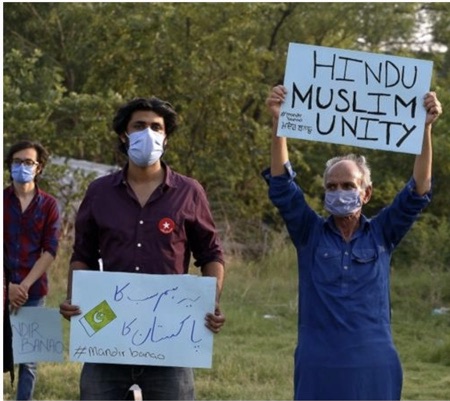
You must have seen a video which got viral few days back where a boy was seen damaging the walls of a temple that is currently being built in Islamabad(Pakistan). Another example like this was where a five year old boy was seen warning the Pakistani Prime Minister Imran Khan that if he will allow the the temples to be built, he will “kill all the Hindus”. Imagine a five year child speaking in his childish voice and warning such higher authority which may seem funny, but on the other hand this is a very important matter for the society that some people of Pakistan are filling up their children’s mind with filth and not showing them the right way where they should treat everyone as equal irrespective of caste, colour, gender plus nationality. I do agree with some of the things that the conflict between India and Pakistan is never ending but at least we can try to change the minds of the youth who will take the country forward.

Let me begin with the actual story where the Pakistani Government has decided to release funds for the Hindu temple to be built in Islamabad. This decision was made for the Minority class- the Hindu’s in Pakistan who also have the right to worship God in the temples. This plan was committed in the year 2017 by Nawaz Sharif’s government but it got delayed due to some issues. This is not the first time where the government has taken such step, before this the government took many initiatives for Hindu pilgrimage like they renovated Katas Raj Temple– a buddhist temple for the Hindus to worship. The Government has also helped the Sikh community with building gurudwaras for them like The Peshawar Gurudwara and the Nankana Sahib in Sailkot which was renovated for the sikhs.

aljazeera.com

Well, all of these things are small stepping stones by the Government for the minority so that they can also live like normal people without the barriers of religion. But on the other hand some projects have been backlashed by the Muslims of Pakistan where in a recent example the Pakistani government was planning to celebrate the legacy of Maharaja Ranjit Singh with statue, but it ended up causing a controversy on social media and in less than two months the statue was vandalised by the people. How will the country progress like this where the people are still not agreeing to some basic terms of accepting their fellow citizens as equal, building a temple or a gurudwara will never harm the other religion in fact all of these initiatives will bring the conflicts to an end. I am not saying that we Indians are the best and we don’t do such things, we are still facing major conflicts between Hindu and Muslim and there is no other solution to bring an end to this but there are Gurudwaras, Temples, Mosque and Church which are built together on the same lane and people respect that.

But why are these issues still arising, why can’t the soldiers just guard the country peacefully? The major reason for this is ‘Education‘ where the children are taught some facts which are against Hindus and Muslims, the facts which are putting them apart instead of living in tranquility and in harmony. The youth is being taught the wrong subjects with wrong facts and the society is also playing a major role in this, where they term minority people with funny names, where they are always referred to as a ‘minority class‘ instead of terming them as equal citizens.

All these examples and statements are not to hurt anyone be it from any religion or country. Building a temple or a gurudwara or even a mosque will never help the people to understand and have respect for the other religious sentiments, but education is and will be the only factor to bring everyone together and to treat everyone as equal, not becoming religion bias.

“My religion is ver simple, my religion is Kindness.” -Dalai Lama

Understanding of Kidnapping and Abduction

Generally we get confused between ‘kidnapping’ and ‘abduction’. We assume that if kidnapping means stealing of kids than abduction would be stealing of adult. But it’s not true. Though kidnapping literal meaning is child stealing but abduction is not an age specific offence. For detail understanding of these two offence, I have turned the pages of Indian Penal Code (IPC), 1860. And in this article, I have tried to compile it in easy and simple words. Please have a look.

Kidnapping: In Indian Penal Code, 1860 two types of Kidnapping is mentioned, (a) Kidnapping from India and (b) Kidnapping from lawful guardianship.

  • Kidnapping from India, (section 360 of IPC): whoever takes a person beyond the limits of India without the consent of such person or any person legally authorized to give consent on his behalf then he shall be liable for the offence of kidnapping from India.

The point should be noticed here that, the victim’s age does not matter. Which means that not only a minor but a major person can also be kidnapped. But if the major and sane person gives his consent for such taking than the offence of Kidnapping will not be committed.

  • Kidnapping from lawful guardianship, (Section 361 of IPC): Whoever takes or entices any minor under sixteen years of age if a male, or under eighteen years of age if a female, or any person of unsound mind, out of the keeping of the lawful guardian of such minor or person of unsound mind, without the consent of such guardian, is said to kidnap such minor or person from lawful guardianship’. The unsoundness of mind must be permanent and not temporary insanity produced due to intoxication.

As mentioned in this section consent of the child is completely immaterial. The consent of the guardian alone should be taken into consideration. That too, the consent of guardian have to be free and must not have been obtained by fraud or misrepresentation.

Simplified terms:

  • Taking: the word ‘takes’ means to cause to go, to escort or to get into possession with or without the use of force.
  • Enticing: the word ‘entice’ means alluring or attracting. It means a person attempts to do a thing after some persuasion which he or she would not have done otherwise.
  • Keeping of Lawful guardian: here guardianship not only includes parents but also persons to whom the custody of the child has been lawfully entrusted. That could be teachers, relatives, servants or anyone. And the term ‘keeping of lawful guardian’ denotes the protection or care of the guardian. (A direct physical custody of the guardian is not needed but the whereabouts or movement should be known to the guardian.)

Abduction (section 362 of IPC): Whoever by force compels, or by any deceitful means induces, any person to go from any place, is said to abduct that person.

Abduction is an auxiliary act which becomes offence only when coupled with intention. The offence shall be complete if the accused takes away the person by tricking him or by deceitful means, or by using force and an actual use of force and not a mere threat to use force. As it is not an age-specific offence, which means any person of any age, can be abducted. In this offence the intention and consent is very important.

  1. If intention is that abducted person may be murdered, Section 364, applies;
  2. If intention is wrongfully confine person, Section 365 applies;
  3. If abducted person is a woman and intention is that she may be forced to marry against her will or have illicit sexual intercourse then Section 366 applies;
  4. If intention is to cause grievous hurt then Section 367 applies;If the abducted person is a child under age of ten years and intention is take dishonestly any movable’ property from its person then Section 369 applies.

Punishment for kidnapping (section 363 IPC): Whoever kidnaps any person from India or from lawful guardianship, shall be punished with imprisonment of either description for a term which may extend to seven years, and shall also be liable to fine.

Abducting or Kidnapping to Murder: As per Section 364 of Indian Penal Code, if a person is kidnapped or abducted by a person with the intention or knowledge that the person is going to be murdered or is going to be put in danger of being murder, such person is punishable with imprisonment for life or rigorous imprisonment for a term up to 10 years and a fine.

Kidnapping for Ransom: Section 364A of IPC provides for punishment to the whoever threatens to hurt or cause death to that person who he has kidnapped or abducted or detained after kidnapping or abducting. The punishment is death or imprisonment for life, and fine.

Inputs: law journals, IPC, 1860

Technology in Today's legal world

As things stand today the employment opportunities may shrink for those who are rolling stones but vastly  expand for those who are who keep pace with the turns and twists of technology in day to day Human quest ,aspirations and achievements. This technology transform legal practices, even  the way the law professor teach , Each lawyers to use a Laptop or some other computer  to work effectively. Students must be taught the following technologies in law school.

Legal Research has now moved from Hard copy to digital systems  such as west law, lexisnexis, cloud -based systems of Google scholar and wikipedia. More statutes are now available online . There are many changes in disclosing documents and filing documents in court . Keeping pace  with the changing world , courts in western countries have adopted modern technology . The most important document that took place in England over the least decade was modernization of Judiciary.
Some technologies that should be taught to law students in the law school are-
E-discovery -responsive information is digital on phone, websites, Facebook , E mail and voice mail messages. They should be aware of E-discovery tools and how to make efficient use of them. Powerpoint presentations/ presentation skill need to be learnt  . Attorneys are told to  deliver a much better  presentation to their listener.
Marketing / web design / social media-unbundled legal services in which potential clients increasingly choose online self help options, more than half of the law firms donot have website. Other spend thousand on web development.
Case management lawyers – lawyers utilize various tools to help manage client  and case information .all aspects like indexibg, sharing contacts and calendars , billing clients.
Hardware / software/Mobile- lawyers, especially those in solo environments have  numerous choice of technology.
Transformation changed the way law professors teach , many are changed averse and use the methods that their own professors employed  a generation before. Alose technology is unreliable.  Noone likes to have technology fail when calss is under their control thus element of uncertainity and stress in comfort zone .
 Students are encouraged to take class notes on a laptop , or tablet , using  Ms Word  ,Ever note or Google docs because its synthesizing  those notes later in the term.
Understanding technology , one important skill like fact invest, negotation, communication lawyer must be acquainted with. For law , more clients, strong work product,  more effective use of time, better job prospects, smoother transition into practice . Clients can talk to attorneys in way while traveing.

Peru and COVID19: My Experience in Peru

Peru, officially the Republic of Peru, is a country located in South America. The country is in news because of COVID19 as up to 25 July 2020, total coronavirus cases were 375,961 and unfortunately 17,843 persons passed away because of COVID19. I was in Peru in May 2013 for academic activities, invited by them.

   Peru has a total land area of 1,379,999 square kilometers and a total water area of 5,000 square kilometers with total population of 3.2 crores (2018). . Lima is the capital of Peru. In 2017, 79.3 percent of total population lived in urban areas and 20.7 percent were in rural areas.

  I observed the people of Peru want a healthy trade relation with India. I could meet few Peruvian friends in Peru who visited India opined that by developing trade relation both would be benefitted. The tourist places like Jauja city, Mantaro Valley, the Andean highlands, Junion region of Tarma city etc., can be compared with our places like Shillong, Shimla or even Tirupati. In Tirupati many people offer their hair and similarly in Acobamba of Peru where Church (Catholic) is located near a foot hill many people of Christian faith in the stones of the hills pour whisky or rum or other alcoholic drinks to fulfill their desire or if desire is fulfilled. In addition near the Church people lit candles. I enjoyed as all religions lead to Almighty/God and I prayed my own way.

  Both India and Peru are having huge scope to develop trade relations. While going by air from Lima to Jauja town, an engineer sat beside me and was happy to know I am Indian and he was in the opinion that trade between India and Peru may be invigorated. Our technology, engineering goods, transport items including railways, IT, agriculture extension service, etc., may be exported to Peru. On the other hand, products like organic cotton (super quality), and agricultural goods like native variety potato, maize of soft variety, artichoke, asparagus , avocado etc., may be imported from them and subsequently may be grown in India as these are having huge international market. Regarding organic cotton case of Oro Blanco may be referred which is a joint venture between the Dutch ecumenical development agency Solidaridad and farmers in Peru. Oro Blanco supports 71organic cotton farmers in Cañete and Chincha Valleys on about 275 hectares of organic land. The farmers grew other organic crops on their land as well as cotton, which were fetching good price. Oro Blanco supplied organic cotton to socially responsible local manufacturers that export organic garments to fashion brands and thus market was assured. It is pertinent to mention that each farmer owned around 4 hectares of agricultural land in the Cañete and Chincha Valleys and produced on an average of 55 quintals per hectare of seed cotton. So such type of crop may be promoted in India if feasible. Both India and Peru should try to develop economic relation and exchange knowledge, ideas, skill vis-à-vis goods. The farmers of both the countries are endowed with enormous knowledge and skill which may be shared for development of both the nations.

 The Agriculture Minister of Peru took lot of interest while I informed about our Kisan Credit Card, Kisan Call Center, etc. of India.

Lastly it may be mentioned that in 1968 the Peruvian military led a bloodless cup of power headed by General Juan Velasco Alvarado.  One of the main objectives was the implementation of an agrarian reform which inter alia, included redistribution of land to peasants/former workers so that they can lead quality life not like slaves.

 I suggest not only with Peru but with all other countries of South America wherever feasible trade relation may be developed by India.

Dr. Shankar Chatterjee

Former Professor& Head (CPME)

NIRD &PR (Govt. of India),

Hyderabad-500 030

Telangana, India

Email <shankarjagu@gmail.com>

Babri Demolition case:Advani states: “I’m innocent”.

BJP Veteran Lal Krishna Advani, ex-deputy Prime Minister on Friday recorded his statement in the Babri Masjid case in CBI’s special court.

He attended via video conferencing from Delhi. CBI’s advocate interrogated Advani for around 4 hours thereby asking him 1000 questions required by the CBI.

During the session Advani said false accusations regarding the Babri demolition have been claimed and he is innocent. On 6th December 1992, in the disputed Babri demolition case, L.K. Advani was the 29th accused out of the 32 people.

BULLYING; a known DEVIL

One of the biggest problems that people face these days is bullying. Right from children to adults everyone has faced bullying some or the other way. Bullying is unwanted, aggressive behaviour among school-aged children that involves a real or perceived power imbalance. The behaviour is repeated, or has the potential to be repeated, over time. Both kids who are bullied and who bully others may have serious, lasting problems.

To be considered bullying, the behaviour must be aggressive and include:

  • An Imbalance of Power: Kids who bully use their power—such as physical strength, access to embarrassing information, or popularity—to control or harm others. Power imbalances can change over time and in different situations, even if they involve the same people.
  • Repetition: Bullying behaviours happen more than once or have the potential to happen more than once.

Bullying includes actions such as making threats, spreading rumours, attacking someone physically or verbally, and excluding someone from a group on purpose.

Bullying can occur during or after school hours. While most reported bullying happens in the school building, a significant percentage also happens in places like on the playground or the bus. It can also happen travelling to or from school, in the youth’s neighbourhood, or on the Internet. People usually think of bullying as taking place between children at school. However, it can also occur at work and include aggressive behaviour’s like verbal abuse, sabotaging the victim’s job or work relationship, or misusing authority. Adult bullies who engage in these behaviours are males 60% of the time. While men who bully tend to victimize both genders equally, women bullies target other women about 80% of the time.

Types of Bullying

There are three types of bullying:

  • Verbal bullying is saying or writing means things. Verbal bullying includes:
    • Teasing
    • Name-calling
    • Inappropriate sexual comments
    • Taunting
    • Threatening to cause harm
  • Social bullying, sometimes referred to as relational bullying, involves hurting someone’s reputation or relationships. Social bullying includes:
    • Leaving someone out on purpose
    • Telling other children not to be friends with someone
    • Spreading rumours about someone
    • Embarrassing someone in public
  • Physical bullying involves hurting a person’s body or possessions. Physical bullying includes:
    • Hitting/kicking/pinching
    • Spitting
    • Tripping/pushing
    • Taking or breaking someone’s things
    • Making mean or rude hand gestures

Cyberbullying

As the social life of young people has moved onto the internet, so has bullying, with electronic bullying becoming a significant new problem in the past decade. Whereas bullying was once largely confined to school, the ubiquity of hand-held devices affords bullies constant access to their prey. Cyber harassment can be especially disturbing because it can often be carried out anonymously; victims may have no idea who the perpetrators are.

How has the internet changed bullying?

The anonymity of cyberbullying removes many restraints on meanness and amplifies the ferocity of aggression. It’s easier to inflict pain and suffering on others when you don’t have to look them in the eye. Constantly evolving digital technologies enable new ways of spreading false information about targets.

How do bullies harm others on the internet?

Both direct harassment and relational aggression thrive on the internet. Cyberbullies can spread false rumours with viral speed on social media. They can falsely impersonate someone and conduct all manner of mischief in someone else’s name. Sexual harassment and cyberstalking particularly target women. And long after the active bullying has stopped, malicious information can linger on the internet and continue to harm.

How can people reduce their risk for being bullied?

Since low self-esteem tends to be a risk factor for becoming the victim of bullying, interventions that promote confidence and self-esteem are important ways to reduce the risk of being bullied. Confidence builders can range from engaging in activities at which the person excels (for example, theatrical performances, sports teams, and special work projects) to engaging in psychotherapy. As isolation is both a risk factor and result of bullying, helping the person feel less alone by lending a listening ear and/or engaging in a support group can go a long way toward providing the community needed to prevent a person from being bullied. The government has launched a helpline to take care of bullying please do not hesitate to take help.

Patriarchy

It refers to the hierarchical relations between men and women whereby men dominates and control over women’s sexuality. 

Structures of patriarchy

According to Sylvia walby patriarchy as a system of social structure where men are in the dominant position to exploit and opress women.

She talks about six structures of patriarchy;

1. Patriarchal mode of production,

2. Patriarchal relations in paid work,

3. Patriarchal relations in the state,

4. Male Violence,

5. Patriarchal relations in sexuality,

6. Patriarchy relations in cultural      institutions. 

Now, let us study some of the institutions, practices and norms that maintain patriarchal set up of the society.

Family

Kate millets says “patriarchy’s chief institution is the family”. Family is the main agent of socialization where young boys and girls first encounter patriarchal power.generally, whatever is taught by the patriarchal ideology running in the family is accepted as natural and unchallengeable.

School 

Women need to go to the school to receive education, in order to achieve freedom in true sense. The patriarchal belief system rests on the assumption that there’s no need to enrich women with higher level of education as they just have to remain inside the four walls.patriarchy is able to make women ignorant of her capabilities and makes them highly dependent on the menfolk.

Marriage

Marriage is practiced and institutionalised in our society keeping in mind tha patriarchal ideology and it’s structure. Our society has put certain Norms and values that a man and woman have to follow to make their marriage acceptable by people at large for instance , in the marriage between a man and woman a man should be elder to woman.

Conclusion

Many forms of violence and Crimes against women take place in our society for the sake and defence of patriarchal. Structure and ideology. Other structures like that of caste , class and religion collaborate with patriarchy that leads to violence and oppression like honour killing, female foeticide, forced marriages, control over modes of contraception etc. As a result women and other weaker sections of the society get caught in a vicious circle that leads to never ending modes of domination and suppression. If women and other suffering group identify and acknowledge the source of domination, it would be a great achievement in its own way, this is because the invisibility and acceptability of patriarchy at large is the main reason behind its very existence. So, we may conclude by saying that patriarchy forms the governing ideology that device our experiences when we are born as a girl or as a boy. It directs our socialization and provides us position of submission and domination. 

Women’s empowerment

Most of the time we discuss about this topic Women’s empowerment do you think that now women have there right and compete with men in every field. women’s empowerment is a critical aspect of achieving gender equality. It includes increasing a woman’s sense of self-worth, her decision-making power, her access to opportunities and resources, her power and control over her own life inside and outside the home, and her ability to effect change.Yet gender issues are not focused on women alone, but on the relationship between men and women in society. An educated girl is more likely to postpone marriage, raise a smaller family, have healthier children, and send her own children to school. She has more opportunities to earn an income and to participate in political processes, and she is less likely to become infected with HIV.The political sphere of the country is, by and large, reserved for men alone. The place of women in society is also relegated to contributing minimally to the social development of the country.

As women were not allowed to make decisions  for them, women empowerment came in like a breath of fresh air. It made them aware of their rights and how they must make their own place in society rather than depending on a man. It recognized the fact that things cannot simply work in someone’s favor because of their gender. However, we still have a long way to go when we talk about the reasons why we need it.In other words, women from all over the world have been rebellious to reach the status they have today. While the western countries are still making progress, third world countries like India still lack behind in Women Empowerment.

domestic violence is a major problem in India. The men beat up their wife and abuse them as they think women are their property. More so, because women are afraid to speak up. Similarly, the women who do actually work get paid less than their male counterparts. It is downright unfair and sexist to pay someone less for the same work because of their gender. Thus, we see how women empowerment is the need of the hour. We need to empower these women to speak up for themselves. women must be given equal opportunities in every field, irrespective of gender.women’s empowerment  is a part to encourage women to feel strong by telling them that they can do everything that they want to do. women can work outside their home, have opportunity to make up their mind. women are not depended on men. They can earn money to support their family by working through their abilities.

Women’s empowerment is a part to encourage women to feel strong by telling them that they can do everything that they want to do. Women can work outside their home, have opportunity to make up their mind. Women are not depended on men. They can earn money to support their family by working through their abilities. As some women are not confident to work in a hard condition or a high position because they still determine that it’s not women’s job.

Empowerment helps to reduce in domestic violence due people promote and give the value to women. Women are not abused by any factors such as sexual abuse, emotion abuse and physical abuse.

These day women are achieving high-level job just as man do. Some women are promoted to become a president, leader, chief of commune and other high-level positions. And there are many women now are participating in society, politically, education and economically.

Empowering women and making full use of their labour force for economic growth.

Educating and maintaining the health of women to enhance productivity and social development.and we should also respect every women they deserve equal respect as men please don’t compare with others everyone have their own unique quality.

Employees expectations from employer

If you want to attract and retain great employees, it pays to be a great boss. Here are some simple expectations that the best employees have of their bosses:

1. Be consistent with meaningful communication.

Smart employees want clear expectations and communication when it comes to what’s expected of them. The No. 1 problem people cite with their bosses and managers is a lack of communication. If you can improve your communication skills and create a culture of open communication with your team, you will go a long way to creating an environment where the best employees will be happy.

2. Give recognition and praise.

Across the board, most people like to feel appreciated in their job. According to Entrepreneur, 65 percent of employees would be happier if they got more recognition at work, whereas only 35 percent say they would be happier if they got a raise. If you can build a routine of recognition and praise, you will encourage your best employees to be happy at work — and therefore stay. Don’t worry too much about awards or rewards; words go a long way.

3. Provide feedback, mentorship, and training.

The best employees want to improve and grow, and crave a development and mentorship role from their managers. Watch for opportunities to teach, to provide additional support, or to invite the right training for your employees. Making individual development a part of every job description is an excellent way to encourage and retain strong employees (and help them get even stronger).

4. Create a work culture by design.

Good bosses find ways to foster a sense of community at work. Great bosses build that culture intentionally. A big part of that is finding and attracting the right team members — and making sure that the wrong ones move on quickly. Nothing can hurt morale of your best employees more than feeling like they’re supporting a poor team member. Culture design is also about making sure those team members are in the right roles, the ones that make the best use of their particular talents and skills.

5. Create a safe space for failure.

Employees who trust that their failures will be met with constructive feedback and support are more likely to think creatively, work outside the box, and come up with innovative solutions to problems. It’s important to foster a sense that you succeed and fail together as a team, so that no one is thrown under the bus. If people are too busy worrying about losing their job to take chances, you’ll never get their best work out of them.

6. Provide strong leadership and a clear vision

The captain must steer the ship. If leadership doesn’t know where a project or company is headed, how can the employee know? This isn’t just about action steps or deliverables, either, but a clear vision of the department or company’s future that you can communicate to your employees. The best employees feel more confident when they feel that someone is steering the ship competently.

7. Hold yourself and others accountable

Many bosses hold their staff accountable, but the best hold themselves accountable as well. This means adhering to the same guidelines you set for your employees and taking responsibility for both team successes and failures. If your employees feel like you have their back, no matter what, they are much more comfortable and confident in their jobs, and will produce better work and stay longer.

8. Demonstrate good problem solving

Employees need their boss to be consummate problem solvers. You need to be able to not only spot a problem before it becomes a catastrophe, but brainstorm successful and innovative ways to fix it. When an employee comes to a manager with a problem, he or she needs to have confidence that they will get the help they need to fix it.

9. Avoid micromanaging

Learn to understand the art of delegation. One employee once told me that the best bosses have “fired themselves from their previous job” — meaning that they don’t interfere in the day-to-day and minute-to-minute workflow or processes. In essence, learning to delegate instead of micromanage is about trust, and the best employees want to feel trusted, and thrive in that environment.

10. Be an effective decision maker

Sometimes the worst position an employee can be in is when they are waiting for a decision from above. Effective bosses must be effective decision makers. You cannot vacillate over every tiny decision. Being able to make decisions quickly and decisively — and then take responsibility for the outcome (see number 7) — is an important business skill, especially when managing others. The more quickly and effectively you can make decisions, the better your employees can implement them, and that makes employees feel more efficient and effective.

11. Put people first

A great employee is going to want to find a job that fits his or her lifestyle and work/life balance needs. The best bosses understand that there must be a balance between the company or client’s needs and the needs of his or her employees. You must be willing to listen and talk about any issues an employee may be having and understand that a happy employee is a more productive employee.

12. Manage up, down, and sideways

Managers are expected to manage the people below them on the corporate hierarchy, but the best bosses also have ways of managing their superiors and coworkers on behalf of their team. This might mean effective communication, managing expectations, and requesting help in a timely manner. This sort of support is key from an employee’s perspective, who may not have any direct contact with those other partners.

13. Be honest

There’s nothing worse than a boss who says one thing and does another — and nothing will make a great employee start looking for a new position any faster than being lied to. Just as managers must trust their team, employees must trust their boss to have their best interests at heart. It’s always going to be in your best interest to be honest with your employees. (This is also a great way to ensure that they want to be honest with you.)

14. Be dedicated and balanced

The very best bosses I’ve seen are passionate about their work; they live and breathe their jobs and strive to do the best work possible. Yet at the same time, they have lives outside of work. They understand the need to balance family and work or play and work. And they set a good example of how to do that for their employees. Employees want to know that their outside lives are understood and valued because they can see that you value life outside the office as well.

Some of these expectations may seem obvious or commonplace, but I would challenge you to really look within and make sure that you’re demonstrating these qualities regularly with your team. If you are, you should have no trouble finding and retaining the best employees in your field.

Red fort

There are many historical structures in Delhi. Red Fort is one of them. It is renowned all over the world. It is a sign of Mughal power and majesty. The Emperor Shah Jahan built Red fort in 1648. It is built of red stone. It is located on the west bank of the river Yamuna opposite the famous Chandni Chowk market.

Significance of The Red Fort

Everyone knows Red Fort as one of the several wonders in India. Though it has witnessed many centuries that has a treasured history of our country, Red Fort stands young always.  Every year on 15th August, that is our independence day the Prime Minister of India addresses its country about its virtue and purpose of life. It is one of the greatest and most significant historical formations in India. Thus, we can say that this monument embraces together the walls that have witnessed the Mughal dynasty, imprisoned India during British empowerment to now a democracy.

Origin of Red Fort

This monument embraces the utmost significance in Modern Indian History. It is made of Red Sandstone alone. Sited in central Delhi it was placed where the Mughal emperors lived for many periods. Red Fort was a magnificent castle coated with precious jewels but the Britishers looted these precious jewels during their empowerment over India.

Since Delhi was the capital of India until the British men shifted it, Red Fort was the control place for the whole nation. Built on the banks of Yamuna River, the walls of this magnificence fort have been built from 30 meters high Sandstone. It is supposed that Red Fort was made after 9 years of hard work of numerous masons for day and night during all seasons.

Architecture of Red Fort

The architecture of Red Fort is amazing and appreciable for its creations of five centuries ago without any modern-day technologies and methodologies. It is built with typical Mughal art and view. It has a Dewan-e-Am which is courtroom for all. The king held a hearing from common men about their complaints.

The Red Fort is built right beside the Fort of Islam Shah Suri, namely- Shalimar Fort. He built it in 1546 as his fortified Palace. Both the forts are combined together by a water channel, namely- Stream of Paradise, or Nahr-i-Behisht.

Prominent Structures within the Fort

Though as many as 66% of the buildings within the fort were either broken or badly damaged, the Red Fort still houses many historic structures and some prominent ones are listed below:

  • Mumtaz Mahal – Located in the women’s quarters (zenana) of the fort, Mumtaz Mahal was one of the six palaces inside the fort. All these palaces were constructed along the banks of Yamuna River and the Stream of Paradise.
  • Khas Mahal – The Khas Mahal used as the king’s private residence. The palace was separated into three parts namely the chamber of telling beads, sitting room and sleeping chamber.
  • Rang Mahal – The Rang Mahal which literally means ‘Palace of Colors’ was built to house the emperor’s mistresses and wives. Thus, the palace was built to look colorful with bright paints and ostentatious decorations.
  • Hira Mahal – Bahadur Shah II built it in 1842. the Hira Mahal is probably one of the last constructions of a Mughal emperor before the invasion of the British. It is only a pavilion but has an interesting legend related to it.
  • Moti Masjid – Moti Masjid which literally means to ‘Pearl Mosque’. Aurangzeb built this for his personal use. Therefore, the inhabitants of the Zenana also used the mosque. It is constructed using white marble, Moti Masjid has three domes and three arches
  • Hammam – The Hammam is mainly a building that housed the baths, for the emperors. On the eastern apartment, was the dressing room. In the western apartment, hot water came through the taps.

Red Fort is not only a building but a true witness of the national movement of Indian freedom. Thus, it is a symbol of the great and golden history of India. So the Indian republic, as well as every citizen of India, have great affection and respect towards the Red fort. Undoubtedly it will always be a symbol of great Indian history. Also, it holds a special place in Indian history because Jawaharlal Nehru announced the independence of India from Red Fort.

Waterfalls to visit on your next trip to India

India is a beautiful country with waterfalls originating both from the ice glaciers to the waterfall that caters their way into the sea.  Waterfalls have always been inspiring forces of nature and people travel from all over the world to experience these natural wonders on Earth. However, there are hundreds of beautiful waterfalls in the world but India and its waterfall beauty have something unique in them. They have a charm that can attract a huge number of viewers in and around.

Iruppu Falls, Coorg –

Irpu Waterfalls | Kodagu District, Government of Karnataka | India

Iruppu Falls is located in the Kodagu district of Karnataka. Coorg is one of the most popular hill stations of South India. The Iruppu Falls is located close to Nagarhole National Park. This beauty of Nature attracts a lot of people from all over the world especially during Maha  Shivratri- a festival celebrated in honour of the Lord Shiva probably in the month of February or March every year.

Nohkalikai Falls Meghalaya –

Nohkalikai Waterfalls East Khasi Hills - Timings, Entry Fees ...

Meghalaya is a small state situated in the Northeast of India. It is the wettest region in India. Meghalaya fully justifies its name as “The Abode of Clouds” as this beautiful place situated in the East Khasi Hills District of Meghalaya enjoys rain cats and dogs throughout the year. The seven sister states is the home to India’s tallest waterfall – Nohkalikai Falls. Nohkalikai Falls is located near Cheerapunji Meghalaya and is also known as the seven sister falls because of the seven streams cascading side-by-side.

Bhimlat Falls, Rajasthan –

Bhimlat water falls - Picture of Hotel The Hadoti Palace Bundi ...

Rajasthan is a place known for the extreme temperature, and it is a place where the sun does not hesitate to shine brightly throughout the year. Having one of the top ten waterfalls in such a dry state is no less than a wonder. You would be surprise to know that the Bhimlat Falls crash this stereotypical image of Rajasthan. Bhimlat Falls is just 60 meters high, but for a dry state like Rajasthan and for the people residing there it is no less than a jewel.

Dudhsagar Falls, Goa –

Goa Dudhsagar Waterfall with Spice Plantation Trip -

Goa is the smallest state in India known for a huge tourist spot. It is one of the most beautiful states with one of the top ten waterfalls, Dudhsagar Falls in India. No wonder it is also called as the” Ocean of Milk”. This beauty of the world is 310 meters tall, surrounded by the deciduous forest which is simply worth its see.

Kempty Falls, Uttarkhand –

Kempty Falls 2020, #1 top things to do in mussoorie, uttarakhand ...

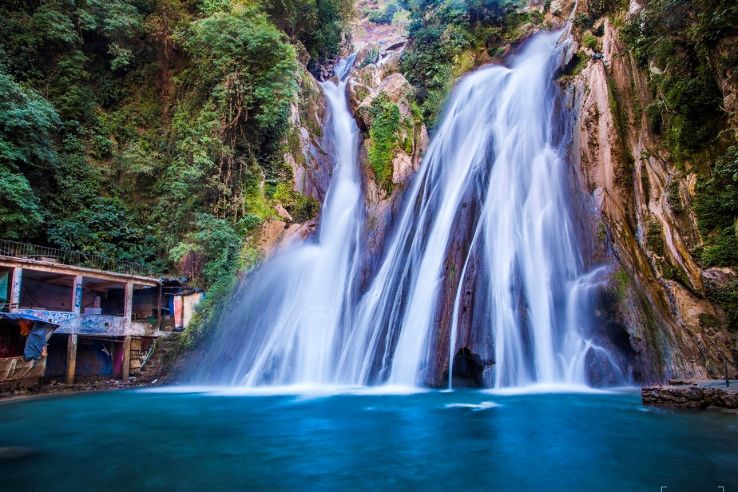
Kempty Falls, situated in a northern part of India “Uttarkhand”. It is nearly 1364 meters above sea level, surrounded by the high mountain ranges deserves to be among the top ten waterfalls in India. You can visit it at any time of the year and explore this beauty of Nature.

Chitrakote Falls, Chhattisgarh –

13 Best Waterfalls In India That Would Make You Wanna Forget About ...

The Chirakote Falls is located to the west of the Jagdalpur in Bastar district in Chhattisgarh. It is also known as the Nigara Falls of India, with this waterfall being 29 meters tall, surrounded by dense forest makes it fit in the top ten waterfalls in India.

Jog Falls, Shimoga, Karnataka –

Jog Falls Tourism (2020) - Karnataka > Best Time, Top Things To Do

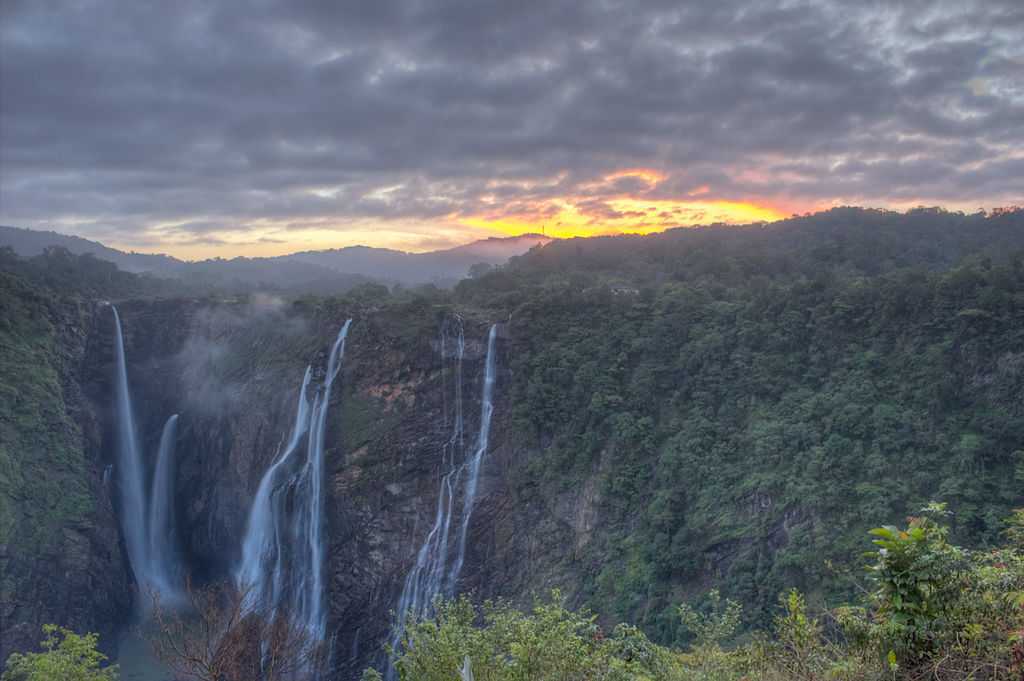
Jog falls is located near Sagara taluk, Shimoga district in the state of Karnataka. Karnataka is a state which is blessed with some of the highest waterfalls in India. Jog Falls is the second highest waterfall in India. It is a treat to watch this 253 meters tall waterfall as it can almost make you feel the force of it against the rock. This beauty of Nature is also on the 13th number in the world by the waterfall database.

Jang Falls, Tawang, Arunachal Pradesh –

Nuranang Falls Tawang | Experience Northeast India

Arunachal Pradesh has yet another beauty of the Northeast India, which holds the maximum number of population among the states in the Northeast region of India. This beautiful crashing water scares can attract both souls and minds. The beauty of nature is yet not known to many and only came into notice after a song from the movie Koyla, featuring Madhuri Dixit was shot in here.

Athirappilly Waterfall Kerala –

Athirapally Waterfalls Trekking -best time to visit falls-seasonz ...

Kerala is the Land of Gods, situated in South India on the Malabar Coast. Athirappilly falls is situated at Athirappilly Panchayat of Thrissur district. You can visit Athirappilly Falls during the monsoon in Kerala and experience the beauty of this 80 ft. tall waterfall. Athirappilly Waterfalls passes through a landscape of winding roads, small villages and dense green trees.

Impact from social media

Social media are interactive computer-mediated technologies that facilitate the creation or sharing of information, ideas, career interests and other forms of expression via virtual communities and networks.The variety of stand-alone and built-in social media services currently available introduces challenges of definition; however, there are some common features:

  1. Social media are interactive Web 2.0Internet-based applications.
  2. User-generated content such as text posts or comments, digital photos or videos, and data generated through all online interactions, is the lifeblood of social media.
  3. Users create service-specific profiles and identities for the website or app that are designed and maintained by the social media organization.
  4. Social media facilitate the development of online social networks by connecting a user’s profile with those of other individuals or groups.

Users usually access social media services via web-based apps on desktops and laptops, or download services that offer social media functionality to their mobile devices (e.g., smartphones and tablets). As users engage with these electronic services, they create highly interactive platforms through which individuals, communities, and organizations can share, co-create, discuss, participate and modify user-generated content or self-curated content posted online. Networks formed through social media change the way groups of people interact and communicate or stand with the votes. They “introduce substantial and pervasive changes to communication between organizations, communities, and individuals”.[1]These changes are the focus of the emerging fields of technoself studies. Social media differ from paper-based media (e.g., magazines and newspapers) and traditional electronic media such as TV broadcasting, Radio broadcasting in many ways, including quality,reachfrequency, interactivity, usability, immediacy, and performance. Social media outlets operate in a dialogic transmission system (many sources to many receiversThis is in contrast to traditional media which operates under a mono-logic transmission model (one source to many receivers), such as a newspaper which is delivered to many subscribers, or a radio station which broadcasts the same programs to an entire city. Some of the most popular social media websites, with over 100 million registered users, include Facebook (and its associated Facebook Messenger), TikTokWeChatInstagramQZoneWeiboTwitterTumblrBaidu Tieba and LinkedIn. Other popular platforms that are sometimes referred to as social media services (differing on interpretation) include YouTubeQQQuoraTelegramWhatsAppLINESnapchatPinterestViberRedditDiscordVK and more.

Observers have noted a wide range of positive and negative impacts of social media use. Social media can help to improve an individual’s sense of connectedness with real or online communities and can be an effective communication (or marketing) tool for corporations, entrepreneurs, non-profit organizations, advocacy groups, political parties, and governments.

Information and communication technology has changed rapidly over the past 20 years with a key development being the emergence of social media.

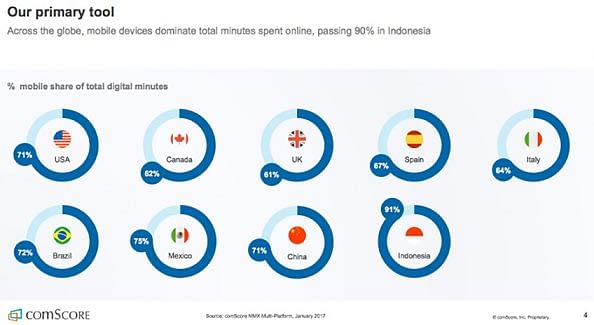
The pace of change is accelerating. For example, the development of mobile technology has played an important role in shaping the impact of social media. Across the globe, mobile devices dominate in terms of total minutes spent online. This puts the means to connect anywhere, at any time on any device in everyone’s hands.

What is the real impact of Social Media
Source: Smart Insights

Why People Share Information

Afascinating study by the New York Times Consumer Insight Group revealed the motivations that participants cited for sharing information on social media. These include a desire to reveal valuable and entertaining content to others; to define themselves; to grow and nourish relationships and to get the word out about brands and causes they like or support.

These factors have caused social networks to evolve from being a handy means for keeping in touch with friends and family to being used in ways that have a real impact on society.

Social media is being used in ways that shape politics, business, world culture, education, careers, innovation, and more.

Assam floods: Over 50,000 people take shelter at relief camps

In flood hit Assam, over 50 thousand displaced people are taking shelter at relief camps. The current wave of floods affected 28 lakh people and washed away houses, cattle stock. 1.28 lakh hectare crop areas are also under water.

96 people lost their lives due to floods so far. Majority portion of national parks and wildlife sanctuaries are also under water. Meanwhile, the Panchayat and Rural Development department would give priority in allocating works under MG NREGA at flood hit areas. Talking to AIR, Principal Secretary J B Ekka said that MG NREGA works are affected to some extent due to floods. Mr. Ekka said that as soon as the flood water recedes priority basis works will be done.