Prime Minister Narendra Modi will deliver the keynote address at the India Ideas Summit today. The two-day Summit which began yesterday is being hosted by the US-India Business Council. This year marks the 45th anniversary of the formation of the Council. The theme for this year’s India Ideas Summit is ‘Building a Better Future’.
AIR correspondent reports, Prime Minister Narendra Modi will provide perspective on how the US-India Partnership can shape the post-COVID world.
The virtual Summit will witness discussions on areas including India-US cooperation and future of the relation between the two countries in a post pandemic world. It will feature high-level presence from Indian and US government policymakers, state-level officials, and thought leaders from business and society.
Key speakers at the Summit include External Affairs Minister Dr. S Jaishankar, U.S. Secretary of State Mike Pompeo, Senator of Virginia and co-chair of Senate India Caucus Mr. Mark Warner, Former U.S. Ambassador to the United Nations Nikki Haley, among others.
Addressing the lack of safe shelters for children in conflict with the law, the court urged every state to evaluate the condition of their Child Care Institutions as well as to provide education, healthcare, and proper nutrition to its residents. The court reiterated that government registration in accordance with the provisions of the Juvenile Justice Act was compulsory for child care institutions run by individuals or NGOs to avoid incidents of trafficking or child sexual abuse.
Shelter Homes
While a large number of urban marginalized children are in need of day care services, there are many others who require residential care for a temporary period for one or more reasons. These include children without parental care, run away children, migrant children, and child substance abusers etc. The Juvenile Justice (Care and Protection of Children) Act 2000 empowers State Governments to recognize reputed and competent voluntary organizations, to cater to the needs of such children. The State Government shall provide financial assistance to set up and administer Shelter Homes for such children. At least one such Shelter Home in the State is to be notified and designated by the States/UTs as a Home for the care, detoxification and counselling of children affected by substance abuse. These Shelter Homes shall offer day and night shelter facilities to the children in need of support services for a temporary period, while efforts are made to rehabilitate them. In order to facilitate and expedite the setting up of Shelter Homes in every district or group of districts, the scheme shall provide financial support to the State Governments and Union Territories.
Children’s Homes
A large number of children in need of care and protection who enter the juvenile justice system through the Child Welfare Committees (CWCs) are in need of residential care and protection during the pendency of any inquiry and subsequently for their long-term care, treatment, education, training, development and rehabilitation. The Juvenile Justice (Care and Protection of Children) Act 2000 empowers the State Government either by itself or in collaboration with voluntary organizations to set up Children’s Homes in every district or group of districts for the reception and residential care of such children. These homes shall serve as a home away from home and provide comprehensive child care facilities to children for ensuring their all-round development. They shall work towards enhancing the capabilities and skills of children and work with their families with the view of facilitating their reintegration and rehabilitation into mainstream society. Children in conflict with law who enter the juvenile justice system through the Juvenile Justice Boards (JJBs) are in need of adequate residential care and protection during the pendency of any inquiry regarding them under the Juvenile Justice (Care and Protection of Children) Act 2000. The Act empowers the State Governments to establish and maintain either by itself or under an agreement with voluntary organizations, observation homes in every district or group of districts for their temporary reception. In order to facilitate and expedite setting up of Observation Homes in every district or group of districts, the scheme shall provide financial support to the State Governments and Union Territory Administrations.
Observation homes
The State Government shall establish and maintain in every district or a group of districts, either by itself, or through voluntary or non-governmental organisations, observation homes, which shall be registered under section 41 of this Act, for temporary reception, care and rehabilitation of any child alleged to be in conflict with law, during the pendency of any inquiry under this Act Where the State Government is of the opinion that any registered institution other than a home established or maintained under sub-section (1), is fit for the temporary reception of such child alleged to be in conflict with law during the pendency of any inquiry under this Act, it may register such institution as an observation home for the purposes of this Act. The State Government may, by rules made under this Act, provide for the management and monitoring of observation homes, including the standards and various types of services to be provided by them for rehabilitation and social integration of a child alleged to be in conflict with law and the circumstances under which, and the manner in which, the registration of an observation home may be granted or withdrawn. Every child alleged to be in conflict with law who is not placed under the charge of parent or guardian and is sent to an observation home shall be segregated according to the child’s age and gender, after giving due consideration to physical and mental status of the child and degree of the offence committed.
Special Homes
Children in conflict with the law committed by the Juvenile Justice Boards (JJBs) for long term rehabilitation and protection require institutional services. The State Governments are empowered to establish and maintain either by itself or under an agreement with voluntary organisations, special homes in every district or group of districts for the reception and rehabilitation of juveniles in conflict with law. In order to facilitate and expedite setting up of Special Homes in every district or group of districts, the scheme shall provide financial support to the State Governments and Union Territory Administrations.
Place of Safety
As per section 16, of the Juvenile Justice (Care and Protection of Children) Act, 2000, the Juvenile Justice Board is empowered to place a juvenile above the age of 16 years in a Place of Safety, if the Board is of the opinion that the seriousness of the offence and/or the said juvenile’s behaviour, makes it unsuitable for them to be placed in a Special Home. A ‘Place of Safety’ is any place or institution, (not being a police lockup or jail), established separately or attached to an observation home or a special home, the person in-charge of which is willing to receive and take care of the juvenile in conflict with law placed there, by order of the Board, for a period and purpose as defined in the order. The Act also states that the State Government may arrange to place a juvenile referred to it by the Board, in a ‘Place of Safety’, which has been declared fit by the State Government for such purpose, and may order such juvenile to be kept under protective custody, at such place and on such conditions, as it deems proper. The State Government may, by rules, prescribe the types of places that can be designated as ‘Place of Safety’ and the facilities and services that may be provided therein.
Electric cars are becoming increasingly popular, and you are probably not alone in wondering if the electric car is right for you. As the technology that supports electric vehicles (EVs) and batteries continues to improve, barriers such as high cost, limited distance, operational issues, long charging time, and the difficulty of charging stations will disappear.
Car giants like Volvo are expressing their commitment to the transformation of automotive manufacturing only recently; and luxury luxury cars like Tesla offer less expensive options to the consumer, transforming the public perception of electric cars as the only thing accessible by management.
Electric cars cost less than electric cars.
Electric cars cost less than conventional gas cars each year. Since the cost of electric cars is the same or less than the existing cars the choice of ‘electric ride’ will be clear. Electric cars are already less expensive. The cost of using an electric car will only save you money for a car life.
In almost every major way, an electric car costs much less to operate and maintain than a gas car. No electricity to buy, no oil change, no smog testing, and a few advanced components for burglary or exhaustion. In fact, many electric car owners go through years without any repairs or bills.
Electric cars are better for the air we breathe.
Since electric cars have less than zero emissions, we can look forward to cleaning up the air if there are more electric cars on the road. Clean air means fewer diseases in the world, which means less pressure on public health systems, hospitals, and so on. In addition, a small amount of greenhouse gas emissions will save the ozone layer and reduce our carbon footprint.
Jump to the gas station, you can ‘fill’ the house and work.
Since there is no gas to buy, or oil can change. To get up, simply connect at home, at work, or on a pay rise. As an added bonus to EV charging, the power that goes into your batteries increases with the production of non-renewable resources. Non-renewable electricity bills for your electric car are made internally. Add a list of the day to your home or work and your travel can pay off.
Electric cars are the future of travel.
If you drive an electric car you are obviously planning for the future. In addition to being counted among the “coolest” people, you will be making a difference in the environment, and saving money.
EVs must pass the same test for electric vehicles.
EVs have passed the same safety tests as electric vehicles, you can be sure they are completely safe to operate. In fact most EVs reach the top of safety standards, the Tesla Model X for example has perfect scores. Widespread concern for EV safety focuses on the risk of fire, but in reality, EVs are much less likely to catch fire than fuel vehicles. On average, gasoline vehicles will generate an average of 1 fire every 20 million.2 For EVs, the value is 1 fire out of 120 million driven. That’s 80% when you take notes.
It’s really important to let today’s generation understand how valuable and enjoyable it is to play outdoor games, as today’s generation is just involved in playing new online games on their computers , ipads, laptops, psp, etc.Developing these habits from the beginnings is just damaging their lives, because they don’t recognize how interesting it is to play outdoor with friends, loose with friends but still appreciate, create new friends, etc. The introduction of tv, film, video gaming just tends to turn kids couch potatoes.
We used to get so engrossed in playing outdoor games with friends from morning till night that we never get bored or had to go home soon. Outdoor games like kabaddi, cricket, langdi, kho and many more only made our childhood so unforgettable that we’re always looking forward to that period.
Outdoor game is really useful and provides a substantial value. The brain has been functioning for a long time. We are very changed out from the digital environment. The wellbeing is enhanced. We grow our personalities. We know how to function with harmony and cohesion. We understand that losing with friends is enjoyable as well.Learning how to ride or bike is a ability that lasts a lifetime, making it possible to indulge in other sports such as mountain biking, roller hockey, cycling and skateboarding. They strive to meet lifelong connections and socialize with others.There is never a disadvantage of playing outdoor games .Instead parent these days force their child to play outdoors with friends rather than sitting infront of computers or phones everyday.
Let us hear about the advantages of these outdoor games;
1. It gives them an opportunity to learn new things.
Outdoor sports will be a great opportunity to develop children’s social abilities. They will learn valuable lessons and skills in life, cultivate a problem-solving mindset, get to experience nature, discover new knowledge, and appreciate science in its fundamentals.In fact, as children practice outdoors, they believe that it is an active and enjoyable experience and not a boring task they will conduct in the classrooms.
2. It can help in their physical development.
Outdoor play keeps children healthy, which will increase their physical stamina and health. Playing outdoor games will also improve the muscles and organs, develop immunity and reduce the possibility of many diseases such as diabetes, cardiac attacks and obesity..Living in the fresh air and sunlight will actually supply them with Vitamin D. Children’s vision may be affected from being connected to technological devices for prolonged time. Yet outdoor activity will make their vision much stronger.
3. Its imagination can be improved.
Enjoying outdoor games will make kids more imaginative, and improve their creativity abilities. Out in the open and surrounded by plants and trees, as well as other things will enhance the imaginative potential of a child and unlock its creativity.
4. It can help them acquire social skills.
Children who spend time outdoors and play games with each other try to communicate more with other adolescents, as opposed to children who live indoors and become separated and taken away. If your kid spends the most time indoors and lives inside his own shell, you should strongly encourage him to go out and enjoy with other kids.As children meet new companions, turn around to play without parental guidance, or simply talk to each other, they learn and develop their social and cognitive abilities without understanding. So in the future, this ability will benefit them.
5. It can help them develop a positive attitude.
Children playing outdoors tend to develop a positive attitude to life and have a relatively calm and joyful personality. Additionally, outdoor environment offers a perfect chance to manage their creativity in a positive way.
6. It helps in personality development.
Outdoor games help in a children’s development. They learn to be self-reliant. They learn to cope with emergency incidents, losses, etc., without adult supervision. This builds trust in them and empowers them to cope with life problems further on.Outdoor play also lets children establish values such as patience, sportsmanship and leadership – both of which later in life would be useful.
7. It helps improve the attention span in children.
Outdoor sports will also boost children’s attention span. While playing outside games the attention and analytical and thinking abilities of your child would be improved. Kids with ADHD (attention deficit hyperactivity disorder) can also gain from physicality-it may also boost their periods of concentration.
8. It strengthens their motor skills.
Devoting to outdoor games will help children improve their gross and fine motor skills. By practicing outdoor games they achieve greater strength , flexibility, and equilibrium.
9. It improves their love for nature.
Children who spend substantial amount of time outdoors may be more likely to develop a lifelong connection with nature.
10. It makes them lead a healthier lifestyle.
Children who engage productively in physical activities are more likely to live a stable and well-balanced lifestyle later in adulthood. They do have good ability to make decisions. They learn to educate themselves and overcome their limits at risk evaluation while being stronger.
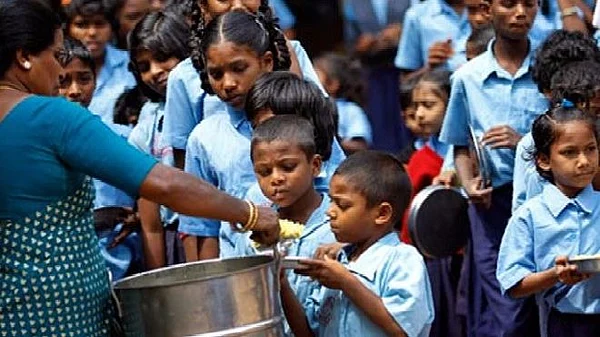
The very concept of Mid-Day Meal scheme was introduced on the year of 2000 by Akshaya Patra Foundation and was later passed as a mandate by Supreme Court of India on the year 2001. The sole purpose of the scheme is to provide wholesome freshly cooked hot lunch to all the students in the government and government aided schools in India. Usually the meal should be a whole mix of carbohydrates, proteins and various vegetables as per the bodily requirements of the children. The goal of such a scheme was to encourage the parents to send their wards to schools, to increase the school attendance and to do away with the norm of child labour, to prevent the child from being hungry at the time of attending the classes and thus to avoid malnutrition, and finally to improve the socialisation among the castes and last but not the least, to promote women empowerment.
The ultimate goal – to provide at least one of the three daily meals required for the proper growth of the children.
The scheme was institutionalized by the designated states and the schools and things were going fine until the pandemic hit the world. During the month of March, the lockdown was declared by the nation and there rose comprehensions among the low wage workers. They were worried about one of the most important thing on earth – what will happen to our mid-day meal and how can we arrange food for our children? The reason being the mid-day meal was one of the main reason as to why their parents sent their wards to school and they were worried about how to relinquish their daily requirements. But, like a godsend, the Government of India declared that even though the schools will be closed owing to the social distancing, the schools will still have to arrange the benefit of mid-day meal or any other substitute of equal value to the children and their families. Not only that, the Government also passed that if and when necessary, required assistance will be rolled out for the underprivileged.
Mid-Day Meal Scheme
The Government of India rolled out various schemes under which various states had to provide the mid-day meal scheme to the students. Some of such initiative are:
West Bengal – Ensured the distribution of the meals to their wards’ home amidst the curfew.
Odisha – Facilitation of Public Distribution System (PDS).
Chhattisgarh – Provision of mid-day meal to the parents of the children for about 40 days, with the difference in quantity by the primary and higher secondary school.
Kerala – Delivery of meal supplies to homes of their children.
Bihar – Transfer of the monetary amount of the mid-day meal, as a substitute of the food, to the accounts of their parents.
Maharashtra – Provision of the meals only to rural children.
Assam – Provision of mid-day meals to about 40 lakhs students.
Each and every state has taken the initiative to make sure that the meal reaches their students at times of distress. There also exists an underlying fear among the administration that if the meal is stooped, then it will automatically lead to the un-enrolment of the students whose attendance is already irregular and this will definitely push up the levels of illiteracy and unemployment.
States are putting in continuous efforts to make this journey smooth for the students. For instance, West Bengal has announced the decision to provide masks, sanitizer, as well as basic protein items such as pulses, soya bean which will be handed to the parents. They are going an extra length by providing stationery items to those students affected by Amphan.
It is very responsible on the part of Government of India to ensure the provision of mid-day meal and this help will definitely go a long way to build the future of India.
Excessive composed mental illness can cause impulsiveness and route to several toxic and unlikely scenarios which create room for apprehensive behavior and self harm. Sensitive matters as such are meant to be dealt with utmost captivating mindsets , in brief people who can actually listen and just not hear. Hearing out someone differs from listening to their anxiety subjects. Delicate tone of things like mental health are always lined up in a very thin statements of secrets , confidential thing but the question arises that why such sensitive matters are to be seen in such views. What’s the apparent tendency of twenty first century facing peak times in these cases of impulsiveness effecting in absurd change in graphs of their thoughts. There is a fine line of communication and thoughts that a certain person bottles up in a very exaggerated moments.
Taken care of or seriously ?
Either ways can’t be chosen by one particular individual because , the problem sometimes comes with the listener and not the teller. How seriously is the listener taking the teller in the contexts and views of his mental illness? People , if put in brief , the listeners who are oblivious of what depression , anxiety and panic attacks can do to a person think that mental illness isn’t even a thing. For them , it’s just a made up thing to flex on excuses and sorts. The more seriously listener takes the teller , the better mental health. Keep listening.
Corruption is a form of dishonesty or criminal offense undertaken by a person or organization entrusted with a position of authority, to acquire illicit benefit or abuse power for one’s private gain. Corruption may include many activities including bribery and embezzlement, though it may also involve practices that are legal in many countries. Political corruption occurs when an office-holder or other governmental employee acts in an official capacity for personal gain. Corruption is most commonplace in kleptocracies, oligarchies, narco-states and mafia states.[citation needed] Corruption can occur on different scales. Corruption ranges from small favors between a small number of people (petty corruption), to corruption that affects the government on a large scale (grand corruption), and corruption that is so prevalent that it is part of the everyday structure of society, including corruption as one of the symptoms of organized crime. Corruption and crime are endemic sociological occurrences which appear with regular frequency in virtually all countries on a global scale in varying degree and proportion. Individual nations each allocate domestic resources for the control and regulation of corruption and crime. Strategies to counter corruption are often summarized under the umbrella term anti-corruption.
Everyone censures corruption at a societal stage but that does not mean that anyone has escaped from the flu of corruption. It is not an infection in one country. People worldwide are involved in the act of corruption. India is no exception to it. Corruption in India has even crossed the alarming stage. From the officials of the highest rank to a peon everyone is corrupt.
It is a term known to all of us precisely meaning an illegal, immoral or unauthorized act done in due course of employment. But literally it means “Inducement (as of a public official) by improper means (as bribery) to violate duty (as by committing a felony)”.
Corruption is a termite in every system. Once it enters the system, it goes on increasing. Today it is rampant and has gradually become routine. Worldwide, bribery alone is estimated to involve over 1 trillion US dollars annually.
This shows how big a problem is corruption. It is indeed the biggest challenge in front of any government because the system itself is handicapped as its own employees are slaves of another. In the author’s view view corruption is the root cause of all other problems that a country faces. Let us look at it with reference to India. Many big problems such as poverty, unemployment, illiteracy, pollution, external threats, underdevelopment etc. are posed in front of the Indian government. But having a glimpse at all these problems faced by India, one might notice that corruption plays an important role in making these problems even bigger. India is still facing poverty due to corruption.
The government and its employees all are corrupt so the schemes floated by the government for the betterment of poor are not properly implemented and just because corruption comes into play the grant advanced to the poor does not reach them and they remain the same and so does the problem of poverty. The same principle applies to the problem of external threats. India’s neighbouring countries are also a threat to the country and its sovereignty. Because of the officials or even citizens being corrupt either for their personal gain or enmity towards their home country the neighbours prove to be even more dangerous. Such officials may leak important information to the neighbours which gives them an upper hand. The same was hinted post 26/11 attack in India. According to the sources the attack couldn’t have been possible without the help of the insiders.
Corruption is not just limited to administration. It is very much prevalent even in legislation and judiciary so much so that it is probably the biggest challenge and needs to be eradicated from its grass root. For the same purpose the Prevention of Corruption Act, 1988 has been enacted.
This Act incorporated the Prevention of Corruption Act, 1947, the Criminal Law Amendment Act, 1952, and sec. 161 to 165-A of the Indian Penal Code. The Prevention of Corruption Act, 1988, thereby widened the coverage, strengthened the provisions and made them more effective.
This Act in particular defines the act of bribery, prescribes its punishment and also deals with the intricacies of law such as appointment of special judges, their powers, summarily triable cases etc.
The Act describes, defines, discriminates different forms and stages of corruption and prescribes punishment for the same. Under Section 7 of the Act, any public servant expecting or accepting any gratification other than his legal remuneration from any person to favour or disfavour or service or disservice any other person shall be punishable with imprisonment not less than 6 months but may extend to 5 years and also with fine.
Section 8 deals with the cases of public servants accepting gratification by illegal means to influence public servant. The same provision prescribes punishment up to 5 years imprisonment and fine. The maximum punishment prescribed under the Act is up to seven years imprisonment and fine under Section 14 that deals with those habitual of getting involved in the act of corruption in one or the other way.
Corruption is a big reason to worry for the Indian government. The Act is technically drafted in a beautiful way, but it has not effectively come to the aid of the government to curb corruption. So the punishment prescribed in the Act shall be much stricter to deter the intending violators.
It is very much seen that information is the indication of flawlessness , the uprightness which a man cares for so as to make his life existential and honorable. Information gives him the excellence to be regarded in the public arena, arrive at his objectives of endeavors and adventure into the universe of potential outcomes that mankind wants in this quick entry of time. Is virtue truly information, an inquiry which individuals if truly experience , the vast majority of their questions is probably going to be extinguished. The substance of uprightness in its most predominant structure can be seen in the ravel of nature.
The nature is the most lovely blessing agreed by the eternity to the humanity. It favor us with trust, inspiration, freedom to seek after our objective and show us a few characteristics to lead an ideal and healthy lifestyle. The blossoms spread their aroma with clears out all pessimism, the petals lively shading is by all accounts landed legitimately from paradise , this wonderful thing cause us to understand that we are the most lucky being on earth. Not even this the dew framed on leaves which is by all accounts like a pearl upon the sea , loaded with lucidity and ingenuity have a few message to accord to us. This ideals did essentially is information which anybody would not avoid to consolidate. Indeed, even on the way of commitment we set up a few organizations, political , efficient , social or logical , it is the astounding good character if present in them can turn the parity of accomplishment in support of themselves , along these lines conferring information. The prudence as information in political circle has significance even in the pages of history and the contemporary time also.
The extraordinary political pioneers like Mahatma Gandhi, Nelson Mandela, and so on were effective in adorning their fantasy on the grounds that their aim was acceptable. They were a virtuous man with information which records their way and deeds in brilliant history. On opposite another political pioneer of Britain , Winston Churchill who won Britain in second universal war additionally lost open order. The explanation for his annihilation can be named to be absence of goodness and ethical quality as he would like to think and the journey of harmony by the open whose great information is reflected. Indeed, even today in the event that individuals have confidence in their pioneers, at that point it just because of their goal and profound quality which can convince the mass to tail him with no terms and conditions. Indeed, even the science and logical investigations is inadequate without the information on prudence.
A similar science can be utilized for making medications , consequently sparing millions, driving poor out of the verge of destitution and with innovation like early admonition frameworks spare their valuable life and make then less powerless. Then again a similar science additionally lead to the development of atomic weapon and nuclear bomb whose image of pulverization is instilled in the spirit and soil of Japan. Thus , it appears information is deficient without goodness.
The honest youngsters grin causes us to overlook everything and it is their capacity of guilelessness that draws in us towards them making them exceptionally insightful. They are unadulterated , immaculate with the shades of malice like untruths, envy, scorn , and they know just a single thing ,i.e to spread the message of adoration and joy. The information that is being deciphered to the understudies in school and other instructive foundations ought to likewise not be just words and sentences of the book, to be sure they whenever showed great propensities, indicating admiration to their older folks, educators, being discipline, being straightforward, and so forth then just would turn into a total individual.
Subsequently , it is qualified to state that the world is where the mankind needs harmony and congruity. It needs an exhibition of inspiration and light emission. It needs an idea of belonging and pardoning alongside progress and improvement. Where man regards another man, the possibility of uniformity, freedom and rights are clear in the pages of some book as well as which wins in actuality, at that point just the genuine intensity of information will be esteemed by us with it brimming with virtue and profound quality.
Federalism is a political framework wherein one basic community joins different territories shaping a country. India’s establishing father conceived a government framework with solid focus infer able from decent variety of interests and incipient phase of “nation in the making” and articulated “India is indestructible association of destructible states” and enriched focus with wide powers bringing about an arrangement of organization with unitary highlights. This doesn’t imply that inside is almighty and exercise total controls on the state issues. To ensure that separation of power schedule -7 – 7 was fused in the constitution to unmistakably differentiate the circle of forces of focus and states. Additionally to guarantee that states have an equivalent state in the issues going under the circle of impacts of focus, chamber of states was similarly enabled as lower house with the exception of in specific issues to speak to the states interests. In aggregate constitution conceive equality between the inside and states aside from in certain outstanding conditions. Aside from coordination among focus and states in the general development and improvement of the country, there is likewise a component of rivalry required among focus and states (vertical rivalry) and among the states (level rivalry) also with the goal that most extreme utility can be gotten from assets and openings.
In Cooperative federalism the Center and states share a level relationship, where they “participate” in the bigger open intrigue. It is a significant apparatus to empower states’ support in the detailing and execution of national strategies. Association and the states are unavoidably obliged to help out one another on the issues determined in Schedule VII of the constitution.
in Competitive federalism the connection between the Central and state governments is vertical and between state governments is flat. This thought of Competitive federalism picked up criticality in India post 1990s financial changes. In a free-showcase economy, the blessings of states, accessible asset base and their near focal points all encourage a feeling of rivalry. Expanding globalization, be that as it may, expanded the current disparities and lopsided characteristics between states. In Competitive federalism States need to contend among themselves and furthermore with the Center for benefits. States rival each other to draw in assets and venture, which encourages productivity in organization and improves formative exercises. The financial specialists incline toward progressively created states for putting away their cash. Association government decays assets to the states based on utilization of recently assigned assets. Sound rivalry endeavors to improve physical and social framework inside the state.
Competitive federalism has begun proving to be fruitful when certain states, for example, Gujarat and Maharashtra actualized different land change designs and facilitated different principles identified with rent augmentation, simple land securing, getting rid of assent provision and different activities which is apparent from their degree of GSDP.
Numerous a period Competitive federalism will in general win over helpful one and states shows no quiet, for example, the water questions, which have been hampering the participation of states since autonomy. Measures should be taken to spare the intrigue and the participation between states since, there is long approach.
By and large one can say that Competitive and cooperative federalism are significant for the development of the nation in all angles and one can’t conclude which to picked previous or last mentioned, It will be alright to state both are cut out of the same cloth. Focus should go about as a solid umpire and a manual for choose the subsidizing, improvement and the emergency between the states and the neighborhood government to wrap things up there ought to be balance between the cooperative and Competitive federalism.
Technology has always aimed in making our lives better – be it the automatic machines or smart devices- appliances have long brought convenience to our lives.
But in the World of Climate Change and Environment preservation, we need technology to focus on Sustainability in order to save resources for the future generations.
CLEAN WASHING, LESS WATER
Washing Machines and Dish Washers have gained popularity across various parts the country due to their efficiency and convenience. But are they also water efficient?
The advertisements for various washing machines now have started to show how one can save more than two buckets of water when the clothes are washed in the machine as compared to when they are washed by hand. Dishwashers nowadays use ultrasonic technology to reduce consumption of water while making sure there is no reduction in the efficiency of cleaning. Due to technology we have been able to invent appliances that help in deeper cleaning and use less water.
DAILY ROUTINE, WATER WASTAGE
Right from brushing our teeth to taking a shower we use water that very conveniently reaches our house in pipes and showerheads
But not to worry about saving water anymore as the latest achievement in the field of technology is OPTIMIZED showerheads designed to maintain the flow pressure while drastically reducing the water consumption. One can research and purchase the one which best suits your showering needs and also saves water.
FLUSHING ACTION, SMART SOLUTION
Technologists have been continuously working towards designing a flush system to produce an alternative which is more hygienic and water-efficient in its operation.
Apart from standard improvements, there are new water treatment systems being developed which could help recycle sink water to flush toilets in Indian homes in the near future. Such a system would save gallons of water, while making the required amount available for comprehensive and hygienic flushing action.
SUSTAINABILITY BEGINS AT HOME
The simplest method for conserving water is to turn off the tap whenever possible.
Running the water when you’re brushing your teeth, for example, wastes at least a quart of water. That may not seem like much, but it can really add up over time: a family of four could save at least 60 gallons of water a month by simply turning off the faucet.
FLOWING FAUCETS
New faucets utilize several different kinds of aerators, but all conserve water without sacrificing pressure. Older faucets use three to seven gallons of water per minute, while newer ones can cut that to around two gallons per minute, or even less.
WASTING WATER FOR WASHING WASTE
New low-flow toilets use 1.6 gallons per flush. They work as well as the older types but use considerably less water. Homeowners can also consider using dual-flush toilets, which offer two settings, depending on the type of waste in the bowl.
WATER HEATER, PRESERVE DROPS
A small pump that runs on minimal electricity can be attached to your hot water system and can help keep hot water circulating when it’s not in use. This prevents waste of up to 10 gallons of water while waiting for the shower to heat up. Tank less water heaters offer the same convenience, but cost more; a recirculation system can be sometimes be installed for as little as $300.
FIX LEAKS, SAVE GALLONS
Have water leaks in your home fixed right away. Even a tiny leak can quickly add up to a huge amount of wasted water. A faucet leak of just one drip per second can waste more than 2,000 gallons of water in a year, according to the U.S. Geological Survey.
These are some of the latest technologies that have brought the twin objectives of more hygienic homes and water conservations to the fore. As more manufacturers innovate, such technologies are projected to become standard in all Indian homes. Helping create cleaner homes at the cost of less water is also a mission of MODERN TECHNOLOGY AND SCIENCE, a movement dedicated to creating a more sustainable future for our water resources. You can also support such initiatives they’ve undertaken and join in to help conserve water for a healthier tomorrow.
The All India Council for Technical Education, AICTE yesterday informed the Bombay High Court that it has asked all its affiliated institutions and deemed universities to follow guidelines issued by Universities Grants Commission, UGC to conduct final year degree exams. It thus has not cancelled the last semester exams in any of its affiliated colleges.
The decision to hold the final-year degree exams comes following University Grants Commission’s (UGC) direction to conduct the examinations by the end of September. In the coming days, the Telangana State Council of Higher Education (TSCHE) will hold a meeting with authorities of the State universities and a detailed schedule for exams will be released. The exams will be held in offline mode i.e. pen and paper mode.
June 2020 has seen two important government initiatives for the every-day earners for food in news. They are the Garib Kalyan Rojgar Yojana and the PM Street Vendor’s Atmanirbhar Nidhi.
First on the list is the Garib Kalyan Rojgar Yojana. It is a central government initiative taken amidst the pandemic circumstances. The Abhiyaan was launched by the Prime Minister in June from Telihar in Bihar. As so the title suggests, the objective of the Abhiyaan is to secure, empower lives by providing livelihood opportunities. The scheme is specifically launched for that population of the country whose areas or villages have witnessed the return of a large number of migrant workers after the citizens were no longer employed following the lockdown announced for the devastating Covid-19.
This campaign is sought to be one of the components of Rs 1.70 lakh crore package under Pradhan Mantri Garib Kalyan Yojana which was set to help the poor fight against Corona Virus Pandemic.
The Campaign is nothing but a massive employment -cum- rural public works in which the public works are to be undertaken with an aim of generating a resource envelope of minimum Rs 50,000 crores. The campaign would involve 125 days of work. The public works will supposedly include rural housing for the poor along with the provision of providing drinking water through the already established Jal Jeevan mission. The infrastructure of Panchayat Bhavans, rural mandis, community toilets, rural roads, etc. are sought to be developed.
The initiative is hoped to cover 116 districts in 6 states – Uttar Pradesh, Bihar, Rajasthan, Madhya Pradesh, Odisha and Jharkhand. There are 27 aspirational districts hoped to be covered under this initiative. The mentioned are estimated to hopefully cover about 2/3 of the unemployed migrant workers. A major emphasis has also been put to the rural infrastructure. The initiative will have 25 different types of public works which is specifically to create infrastructure and importantly boost livelihood opportunities in the areas.
High speed and cheap internet are also part of the maintenances to be provided in every rural household. Thus, there shall be laying of fibre cable.
The campaign however would require a Multi-Ministerial Effort between different Departments of the Government with Ministry of Rural Development as the nodal Ministry along with the other ministries such as Panchayati Raj, Mines, Road and transport etc.
Second on the news was the PM Svanidhi. The initiative PM Street Vendor’s Atmanirbhar Nidhi was launched by the Ministry of Housing and Urban Affairs. It is launched with the aim of introducing a special micro-credit facility Scheme which would provide affordable loans to the street vendors, who recently went on losses or no business at all since the wake of the COVID-19 crisis. This scheme will thus enable the street vendors to resume work and earn their livelihoods.
The beneficiaries will include over 50 lakh people which would include the vendors, hawkers, etc. who work to supply fruits, vegetables, ready-to-eat street foods etc in the markets. It would also include the business of service providers like barber shops, laundry services etc.
The scheme shall be available for beneficiaries belonging to only those States and Union Territories which have notified been under the Rules and Scheme provided under Street Vendors Protection of Livelihood and Regulation of Street Vending Act in 2014.
The vendors or the hawkers can avail a loan (working capital) of up to Rs. 10,000 which is subject to be repayable in monthly instalments within the tenure of one year. On timely and the early repayment of the loan, credit limit was claimed to be raised and interest subsidy to be given at the rate of 7% per annum which ultimately shall be credited through Direct Benefit Transfer on a quarterly basis. 108 cities were selected, and the loan disbursement was planned to commence in July, 2020. The eligible lenders were rated as the bank such as Regional Rural Banks, Small Finance Banks, Non-Banking Finance Companies, Micro Finance Institutions established in some States and Union territories.
The Small Industries Development Bank of India (SIDBI) is an implementation agency. It was developed to manage the credit guarantee approved to the lending institutions through Credit Guarantee Fund Trust for Micro and Small Enterprises.The SIDBI was developed through an Integrated PM SVANidhi portal. The Portal was developed to integrate credit management and PAiSA portal of MoHUA to administer the interest subsidies automatically.
Indian agriculture is being plagued by various problems. These problems directly and indirectly affect the life of a farmer. Farming practices and other activities of agriculture consume time as well as the efforts of a farmer.
Today’s world are becoming paperless office. Paperless office is very beneficial for the organisation because it help organisation to maintain their documents, reduce the cost and space to maintain the documents in the files . It is a modern approach to maintain their office and eliminates staff which deduct in the cost. Paper office is now a days not much useful because in these days most of organisation using paperless office. Paper office is taking time and papers are worthless after sometime.
A paperless office, also called a paper-free office, is a work environment which uses minimal physical paper and instead uses primarily digital documents. A paperless employee is a worker who has eliminated or greatly reduced the use of paper in the workplace. The process of converting paper files into electronic files is known as digitization.
The idea of an entirely paperless office has existed since personal computers became the basis of the modern workplace. Despite the prevalence of electronic documents and email, most organizations still rely on paper documents. There are many benefits to going paperless, from saving resources to boosting security. Yet from handouts at meetings and HR onboarding documents to receipts, many business processes still revolve around paper.
Benefits of Going Paperless
Save Time
Time spent filing, organizing, and searching for paper documents is time that could be spent on more productive tasks. Digitized documents are stored in a central repository, which is basically a well-organized digital filing cabinet where all of your documents live. Using a digital document management system you’ll get to harness the same powerful search abilities that you’re used to using on Google. This means employees can find files at the click of a button, much more quickly than the laborious, manual process of searching for a specific file in a buried folder. Employees are able to use this extra time on revenue – generating projects.
Saves Money
Going digital improves process efficiency, saving you money. Paperless offices can process a much larger volume of paperwork compared to traditional offices in the same amount of time.
Further, digitization reduces money spent on paper, printers, ink, postage, office space for files and employee time to manage paperwork. The savings on employee time become especially valuable in regards to regulatory audits and repetitive, high-volume tasks like expense reimbursements.
Saves Space
Paper takes up a lot of space – as do filing cabinets and space to store those filing cabinets. Books and bookshelves are bulky, too. What’s worse, paper keeps piling up, oftentimes accumulating more quickly than it can be sorted and organized. This is particularly true of industries that have long mandatory retention periods for paperwork like the financial industry.
Digitizing files allows you to store all documents either on an on-premises server or in the cloud. Digital file folders in a repository require much less space than a physical records archive.
Eases Transfer of Information
Document management software offers a simple process for saving documents. The software easily compiles digital documents using scanners, mobile capture using a camera on a phone or tablet or importing any file type (.docx, .pdf, image files). Many commonly used applications, like Microsoft Office and Adobe Acrobat, integrate with document management systems and have native plugins which allow you to file your document into your content management system with just one click.
Promotes the Environment
Manufacturing paper products produce greenhouse gases, causing deforestation and global warming. Recycling can offset some of the environmental impact, but not by much. Most paper eventually ends up in a landfill. Further, ink and toners contain volatile compounds and non-renewable substances which are damaging to the environment. It is much more sustainable to simply reduce paper use altogether by switching to a paperless office.
Boosts Security
Physical documents are hard to track – reams of paper can get lost, misfiled or destroyed without anyone noticing. It can also be difficult to monitor the access, printing and copying of sensitive files.System administrators can set-up granular access rights, which assign permissions at the document level (e.g. settings based on the type of document), user level (e.g. settings based on person’s job function), or system level (e.g. overarching security for all data in the system).
The security benefits of a paperless workplace go beyond access rights. Implementing document management software also allows organizations to leverage electronic signatures, redact confidential information, create audit trails and more.
In paper office , these systems are followed:
Paper documents: Difficult to track changes when collaborating on a document.
Newspapers, Books and Magazines: News quickly becomes outdated. Message constrained by word space and page count.Each new book takes up more space.
Mail and faxes: Constant maintenance required to organize and find documents, especially really old ones. Easily misplaced or damaged.
Printed Maps : No way to factor in traffic, road closures and other barriers. Becomes out-of-date.
In Paperless Office, these systems are followed:
Digital Documents: Seamless electronic transfer between individuals and departments. Easy to track changes and records comments using “Track Changes” feature.
Email: Easily searchable based on content and metadata.Access from phone or browser. Archived forever. Even in the event of a deletion, can potentially be recovered.
Media , Websites and ebooks: Immediate access to content
Message not constrained by space
Real-time updates and amendments and 24-hour news cycle.
Waze, Google Maps and Navigation device : Reacts to traffic to maximize route efficiency and gives an accurate estimate of arrival time. Updated regularly to ensure accurate navigation.
These systems are followed by paper and paperless office.
The Path of Digital Transformation
Deciding to make the move from paper to paperless is part of a larger process called digital transformation.
There has five key step to completely digitized workplace:
Digitize : Convert all documents from paper to digital.
Organize : Categatized documents in a central electronic filing cabinet.
Automate: Digitize business processes using forms and workflow.
Streamline : Take a high – level view of business processes to identified bottlenecks and opportunities for mere efficiency.
Transform : Use advanced analytics to turn data into insights in how to make your company even more efficient.
Principles of natural justice have been developed by democratic government for protection of rights of individuals and regulation of power against the arbitrary and ruthless use of power. One such principle of natural justice is ‘Audi Alteram Partem’ which has fundamental rule that no one should be censured unheard. Right to be heard is an essential element of principles of natural justice. Audi Alteram Partem is a rule which ensures that fair decision is made out of statutory authority of courts. This concept strengthens up the implementation of post decisional hearing.
Post-decision hearing is held where pre-decision hearing would not be viable. It is done after provisional decision is reached.
AUDI-ALTERAM PARTEM (RULE OF FAIR HEARING)
It means ‘hear the other side’ or ‘no man should be condemned unheard’ or ‘both the sides must be heard before passing any order’.
The duty to hear is imparted in all those actions which cause detriment to a person. No order involving adverse civil consequences can be passed against any person without giving him any opportunity to be heard against the passing of such order. A statue which impliedly provides or is silent, in both hearing, is implied but when it expressly excludes the hearing the court may have to exclude it to development which have expanded the scope of the rule of fair hearing are:
An activist interpretation of Article 21 of the constitution whereby the words personal liberty as well as procedure established by law acquired new dimensions incorporating the duty to hear in respect to various administrative actions which cause infraction of personal liberty.
Abandonment the courts of the policy of requiring hearing only in cases of quasi-judicial actions and extending such a requirement to administrative actions also.
The Audi alteram partem principle is the fundamental idea of the natural justice system. This is ‘sine qua non’ in any civilized society and means that no one is to be prosecuted without being listened. The person must get an incentive to defend himself.
RIGHT TO HEARING
Constitutionally the rules of natural justice are must if administrative actions are not to violate certain fundamental rights. The violation of natural justice results in arbitrariness, therefore, violation of natural justice is violation of equality clause of Article 14. The court has held absolute discretion without any guidance for its exercise and without having to follow the principles of natural justice to be a reasonable restriction under Article 19(2) to (6). The right to be heard is also an aspect of ‘procedure established by law’ under Article 21 means procedural fairness.
POST DECISIONAL HEARING
Meaning:
The principle of post-decision hearing was created to ensure a balance between administrative effectiveness and individual justice. After a preliminary decision was made by the authorities, an individual would be heard during a post-decision hearing. In such cases, a standard pre-decisional hearing is unfeasible to the authorities and decisions would be taken on first-instance grounds before the person expresses his or her opinions, because it would be deemed necessary for the authorities to have post-decision hearing in accordance with the principle of Natural Justice.
Development and Proposal of idea:
The idea of post decisional hearing has been developed to maintain a balance between administrative efficiency and the fairness to the individual. The harmonizing tools were developed by Supreme Court in Maneka Gandhi vs. Union of India[1].
The post decisional hearing will give satisfaction to the affected individual that was at least given same opportunity of hearing even at a belated stage. The judicial opinion, however is not uniform about the stage. The judicial opinion however is not uniform about the stage at which the rules of natural justice are applicable.
In the case of Maneka Gandhi vs. Union of India,
Maneka Gandhi’s passport was impounded. She challenged the order of the R.P.O. on the ground that the principle of natural justice have not been followed. No hearing was allowed to her as they contended that if the hearing was done to her then the very purpose of impounding would have been frustrated. Hence, no hearing was held for the petitioner. The court evolved this because it said that you cannot have straight jacket formula. It is important but most important part is that justice has to be given to the affected party so that principles of natural justice are followed in every situation. You can pass the orders after pre decisional hearing but this order is interim but after post decisional hearing the order will become final in nature and thus the order of the passport authorities was considered as interim order. And becomes final after post decisional hearing.
Justice P.N. Bhagwati propounded three important principles:
For an administrative function principles of natural justice have to be applied.
Reasoned decisions.
Concept of post decisional hearing.
ANOTHER CASE LAWS:
In the case, Baldev Singh v. State of H.P.[2] in both these cases stress was being laid on Post Decisional hearing on the other hand there were series of decisions which laid down because Post Decisional Hearing is doing a mere lip service. I t is not serving the purpose of Audi Alteram Partem. Because once a decision of Post Decisional Hearing to the affected party is a formality as the authorities are rigid in bringing change in their decision as arrogance, egoism comes into picture. It is a mere formality done in the papers so there is no need to follow the same.
In the case, K.L. Shephard v. Union of India[3]the concept of Post Decisional Hearing was rejected. In this case there were three banks Hindustan Commercial Bank, Bank of Cochin and Lakshmi Commercial Bank by virtue of banking regulation Act, a scheme of amalgamation was introduced where these banks were amalgamated with 3 Nationalized Banks.
Once this amalgamation took place the services of Employees of these 3 Banks were not taken into account i.e. they lost their jobs. Accordingly the employees approached the court stating that the employees were not given any opportunity to present their case and their right to be heard has been violated. The court ruled that Post-Decisional hearing does not serve any purpose and it is a mere formality.
CONCLUSION
The implementation of this theory does not come with a strait jacketed formula, but rather is based on the facts of the case and its condition. In case pre-decision hearing cannot be implemented, post-decision hearing can come to the aid.



 Eduindex
You must be logged in to post a comment.