Responsibility towards organisation- Karma and Dharma of an employee

Does an employees holds any responsibility towards organisation.? What can be the responsibilities that employee holds..? Lets understand everything about responsibilities that an employee holds in detail.

When employees works in the organisation it proliferates the growth of organisation. So, karma And dharma Of an employee for the company should be the responsibility towards organisation that he/she works in because its not only organisations growth but it helps in the growth of an employee too.

Lets move forward and discuss roles and responsibilities a employee holds towards an organisation

The new and existing employees that are hired in an organization have a certain responsibility towards the organization, society, and the nation, at large. Therefore, it is important to induct the ‘right’ employees in the organization. The traits that these employees personify include teamwork, integrity, commitment, and work ethic.

Roles & Responsibilities for Employees:
1. Do Early Homework: Every employee is responsible for understanding the work allotted and determining if it is appropriate for him. He/she should make sure whether he/she has mastered the skills required to perform the task completely. If he/she is not sure about how to handle the work allotted to them they should talk with their superiors and get suggestions and directions in fulfilling the work allotted to him/her. This will help the employee in building good relations with not only their superiors also with their colleagues.

2. Plan with the Manager: Having a proper work schedule or time table for the work allotted to the employee helps the employee in Time Management and reaching the deadlines on time. Also, when a new work is allotted

3. Take Responsibility and Use Available Resources: The employees should have sense of responsibility towards the resources of the Organization. As a part of the Organization every employee is equally responsible for the long life of the existing resources, for which smooth usage and suggestions for usage is required, which in case is not provided should be requested for.

4. Participate: Active listening and participation in teams will ensure that all employees become good team players and work with unity towards common goals of the Organization. Whenever a new work is being allotted all the Employees should be eager enough to take the initiative rather than trying to avoid newer tasks. This will facilitate in employees learning new skills and reaching the Organizational goals with much effectiveness.

5. Be Punctual And Regular: The Prime responsibilities of every employee must be Punctuality and Regularity. You can be better organized by being punctual and regular. Unwanted and unexpected work delays can be dealt effectively

6. Cleanliness is Next To Godliness: One should maintain the cleanliness of their desk, and also premises of the Organization. If you and your premises are clean you will find it more encouraging to work and also it be convenient to work for other employees.

7. Washroom: Please use the washrooms bearing in mind that you are not the only person who is using it. See to it you don’t spill the water across the wash basin when you are using it same with the premises of wash room. Health and Hygiene of you and others should be your prime concern.

Please be organized and contribute to the growth of the Organization. Everyone grows with the Organization. So, Organizational Growth is our Growth.

Honor killing


Honour killing is seen as a dirty behaviour by the member of the family thinking to bring purity to the family. It is an act of murder by the family on the family members to bring honour to the family to eradicate the shame and dishonour brought by the family member. The male member of the family kills the female member who has violated the wishes and honour of the family. This is a kind of pre-planned murder by the members of the family against the member who had bought shame to the family. Mostly these acts are caused due to trigger done by the relatives, society, neighbours by whom the accused feels dishonoured and gets provoked. Mostly these occur against the female who are assumed for sexual and marital offences. In situation where the members should be a support for the female are against them and brings a situation where they should not exist. India is a democratic country as every citizen has their rights and freedom to do acts which does not violate law. In a society where the citizens are equal without any discrimination, honour killing brings discrimination where the family member is considered to bring dishonour by choosing a person of a different caste.(Keane 2016) Caste and status are the main reasons for honour killing in the present world as the caste and status changes for a girl when she goes to her husband house.

HONOUR KILLING IN INDIA


Honour killing is an act of shame caused to the family for which it is otherwise called as shame killing. It is an act of killing when the person does not accept for arranged marriage, marrying a person disapproved by the family, doing inter-caste marriage which is against the wish and will of the family. In India, this type of killing is been carried over since many centuries. From the olden days this has become a practice. It has become a common practice for our country. Supreme Court had brought a decision based on honour killing that, „killing or physical assault being made over young men/women who marries against the wish of the family is illegal.‟(Ercan 2014) This type of killing is a brutal and barbaric activity made by the member of the family. However, in our country, honour killing has been made a separate provision having severe punishment. In India, mostly in places of Punjab, Uttar Pradesh, Haryana and Rajasthan practice of honour killing is more. Due to
the complex socio-cultural problems the crime of honour killing is divulging more and more. The prime factors of honour killing is the high caste members do not accept inter caste marriage to maintain their caste and in case if anything occurs to bring their status down, they would feel such thing need not exist and in that case if the female /male gets married to that person of low status they feel the person need not exist instead of leaving down their status. Even in case the status and gotra is the same, the parents do not accept if the victim wants to go for love marriage. This killing is done to restore their honour which would be reduced due to the act of the young male/woman. In India, honour killing is practiced due to merciful act also. The parties who had committed the act of honour killing ca plea on the circumstance of grave and sudden provocation. Such an idea was been indulged when the act was formed as the act of honour killing is prevailing since ages. Honour killing is a crime which has become predominantly equal to other rigorous crimes. Culture is important for a family but still the young male/female that had been brought up by the family since years are also to be considered by the family. The level of importance given to the culture and status is not given to the members of the family. They think about the society and neighbors and the allegations and news spreading about the victim and get triggered to commit honour killing but does not seek remedy to safeguard the victim. This has become a spreading crime in our country.


EFFECTS OF HONOUR KILLING


Honour killing is not constrained to one gender. Men are also brought as a victim of honour killing. It is inappropriate that the victim is a man or a woman, if they had violated or brought down the name of the family, they are subjected to be killed by the members of the family. However, honour killing are focused on the women, it is not restricted so. It extends to men too. When the men violate the customs, the family members of the women or the male family members tend to join hands to kill him. For the execution of honour killing, the role of male is more. In case to commit the crime, the male descendants of the family form a group to kill the victim and especially if the victim is a girl, the male members would kill the victim. It does not matter about how close and love they had on the victim, they kill the victim if they cross the limits of the family. In certain cases, women also play a part in commission of honour killing. They join hands with the male descendants in executing the crime. They play a role in ensuring the limits of sexual regulations and plan to kill the victim, if the victim is her daughter.

SPECIFIC TRIGGERS OF HONOUR KILLING


Following are the specific reasons for which honour killing is been made(Reddy 2014; Singh 2013):


● Refusal of an arranged marriage: The member of the family be it a male or female member of the family, if refuses to accept the marriage arranged by the family, they would be triggered to be killed for the welfare of the family. It is a kind of shame the family members feel when the person does not accept the marriage arranged by the family.


● Seeking a divorce: The victim of honor killing would be a married party and would have been divorced due to family issues in their marital life. Seeking divorce by the member would bring down the prestige of the family where they feel the victim would rather die than being alive and they themselves kill the person.


● Allegations and rumors about family members: The victim may be subjected to allegations or wrong talks by the neighbors or other members in the society. In that case knowing the true fact or not, the members of the family for their status and prestige would kill the member. Killing the victim according to them brings an additional prestige and status to the family.


● Homo-sexuality: It has become natural where love comes between the people of the same sex. When a couple of the same sex wants to live together the family or the society does not permit it and in turn creates more and more allegations and triggers the members of the family.


● Victims of rape: In a society where women should be protected, they are being raped. In that case it is the duty of the family to accept such victims but the family feels it as a shame and feels the life of the girl is gone and she is completely useless to the society and the family and thus she would be killed by them.


● Inter-caste marriage: Marriage done by the victim with another person of the different caste brings down the caste of the party who seek their caste as their soul and important than their member of the family. In such case, the member who is of higher caste would kill the victim than living by lowering their caste. In case where the victim is of lower caste, and the caste is the heart and soul of their prestige, they do not care about the victim and would kill them despite of the fact that they belong to their family. Not only their family members become the victim the other party with whom they want to live also becomes a victim.

Honor killing is definitely a serious and heinous crime.

NDMA suggests Lightning safety tips

In view of the recent loss of lives due to lightning strike in different parts of the country, the National Disaster Management Authority (NDMA) has suggested some measures to be followed by the pople so that its impact can be reduced.

Talking to AlR News, NDMA Member Kamal Kishore has suggested the people not to take shelter under or near trees during lightening strike when they are outside  their homes.

Mr Kishore advised the people to get inside a house or building, but avoid structure with tin or metal roofs. He said, if anyone caught under the open sky then the person should sit down and crouch and not lie down on the ground. 

In case the people are indoors, the NDMA Member suugested to the people to unplug all electrical equipments, not to use corded telephone and  stay away from windows and doors at the time of lightning.

Atma Nirbhar Bharat programme will revive economy, also make country self-reliant

Union Minister for Chemicals and Fertilisers D V Sadananda Gowda has informed that the Atma Nirbhar Bharat programme announced by the Prime Minister has provided succour to more than 35 lakh MSMEs through extension of credit. Speaking to AIR News, the minister said that the programme will revive our economy and also make the country self-reliant.
 
AIR Correspondent reports that Union Minister for Chemicals and Fertilisers D V Sadananda Gowda has said that Atma Nirbhar programme will energize efforts to surpass challenges posed by the Corona pandemic.
Speaking exclusively to AIR yesterday, he said, that Prime Minister has asked every Member of Parliament to ensure that the scheme reaches the beneficiaries.
 
Shri Sadananda Gowda said that every individual should work towards making our country self-reliant.

Agriculture Ministry says satisfactory progress of sowing area coverage under Kharif crops

Union Ministry Agriculture is taking several measures to facilitate the farmers and farming activities at field level during COVID 19 pandemic. The Ministry said, there has been satisfactory progress of sowing area coverage under Kharif crops. It said, rice has been sown in about 120.77 lakh hectare area as compared to 95.73 lakh hectare during the corresponding period of last year.
 
Besides, about 64.25 lakh hectare area has been brought under sowing of pulses as compared to 24.49 lakh hectare during the corresponding period of last year. It said, oilseeds have been sown in over 139 lakh hectare area as compared to around 75 lakh hectare of last year.
 
The Ministry said, coarse cereals has been sown in around 93 lakh hectare area and sugarcane was sown in around 51 lakh hectare area.

PM to share his thoughts in ‘Mann Ki Baat’ programme on All India Radio on July 26

Prime Minister Narendra Modi will share his thoughts with the people in the country and abroad in his ‘Mann Ki Baat’ programme on All India Radio on 26th of this month. It will be the 67th episode of the monthly radio programme. People have been invited to share their ideas.
 
People can dial 1800-11-7800 to record their messages and can write on the NaMo App Open Forum or on MyGov.

India’s foreign exchange reserves touches all time high of 513.25 billion dollars

India’s foreign exchange reserves have surged by a massive 6.47 billion dollars to reach a fresh all-time high of 513.25 billion dollars in the week ended 3rd July 2020. Foreign currency assets, a major part of the overall reserves, rose by 5.66 billion dollars to 473.26 billion dollars. In the previous week, the reserves had increased by 1.27 billion dollars to end at 506.84 billion dollars.
 
The reserves had crossed the half-a-trillion-dollar mark for the first time in the first week of June, when it had jumped by 8.22 billion dollars to reach 501.70 billion dollar mark. Gold reserves went up by 495 million dollars to end at 34.02 billion dollars.
 
India’s special drawing rights with the International Monetary Fund rose by 4 million dollars to reach 1.45 billion dollars, while the country’s reserve position increased by 259 million dollars to 4.526 billion dollars. 

WHO sets up independent panel to review its handling of COVID-19 pandemic

World Health Organization (WHO) has set up an independent panel to review its handling of the COVID-19 pandemic and the response by governments. The announcement follows strong criticism by US President Donald Trump, which accused the WHO of being China-centric.

Former New Zealand Prime Minister Helen Clark and former Liberian President Ellen Johnson Sirleaf have agreed to head the panel. The co-chairs will select the other members.

The panel will then provide an interim report to an annual meeting of health ministers in November and present a substantive report next May.

WHO Director-General Tedros Adhanom Ghebreyesus said that the magnitude of this pandemic has virtually touched everyone and deserved a commensurate evaluation.

More than 1.2 crore people have been infected by the novel coronavirus globally and over 5.48 lakh have died.

US has formally informed WHO that it is withdrawing from the UN agency in a year’s time.

IRDAI gives its nod to Insurance companies to launch corona Kavach Health Insurance Policies

Insurance Regulatory and Development Authority of India (IRDAI) has allowed 29 general and health insurers to launch short-term ‘Corona Kavach’ health insurance policies. The policy will cover medical expenses occurred due to coronavirus disease.
 
The insurance regulator said that it has designed a standard Covid specific product addressing basic health insurance needs of insuring public with common policy wordings across the industry. The sum insured amount of the policy ranges between fifty thousand rupees to five lakh rupees.
 
This policy can be availed by persons between the age of 18 to 65 years. People can avail the Corona Kavach policy for Self, spouse, parents, parents-in-law and dependent children up to 25 years of age.
 
The IRDAI has said that the policy will also provide for any co-morbid condition triggered due to Covid-19 during the period of hospitalization.
 
The authority had issued clearance to 30 General and Health Insurance companies to market this Corona Kavach Policy.
 
Following the IRDAI order, several insurers have already announced the launch of the ‘Corona Kavach’ policies for three -and-a-half months; six-and-a-half months; and nine-and-a-half months.
 
Home care expenses benefit up to a period of 14 days will also be covered in the policy for those seeking treatment within the comfort of their own homes, on the advice of a medical practitioner.

COVID-19 fatality rate declines to 2.72% in the country

India’s Covid-19 fatality rate has declined to 2.72 per cent. This is lower than the fatality rates observed in many other countries in the world. Union Health Ministry said, the focus of Covid-19 management in the country has been to keep the fatalities low. It was 2.82 per cent a month ago. Health Ministry also noted that 30 states and Union Territories have a fatality rate lower than the national average. Manipur, Nagaland, Dadra and Nagar Haveli and Daman and Diu, Mizoram, Andaman and Nicobar Islands, Sikkim have zero fatality rate.
 
The recovery rate has improved to 62.42 per cent. In 18 states and UTs the recovery rates are higher than the national average.
 
The ministry said with the support and guidance of the Central government, the states and union territories have taken many steps like mapping of communities to focus on high-risk groups like the elderly/aged and population with comorbidities, and providing special care to them.
 
It said, there is a focus on the improvement of quality of medical care for coronavirus patients. The country-wide strong network of ASHAs and ANMs along with Ayushman Bharat Health and Wellness Centres have helped in effective surveillance and contact tracing of the cases, including the lakhs of migrants and returnees, it said.

PM welcomes foreign investments in renewable energy sector; Describes India most attractive market for clean energy

Prime Minister Narendra Modi has welcomed foreign investment in the renewable energy sector and described India the most attractive market for clean energy. He said solar energy will play a big role in Atmanirbharta or self reliance, and remains a core focus of the government. Prime Minister was inaugurating Asia’s biggest solar project in Rewa, Madhya Pradesh through vodeo link yesterday.
 
The 750 MW plant in Rewa is the first renewable energy project to provide energy outside the state to Delhi Metro. Mr Modi said he expects Madhya Pradesh to become a hub of clean energy in India with the addition of this project. The state currently has solar energy projects in construction at Neemuch, Shajapur, Chattarpur and Omkareshwar.
 
Calling solar energy “sure, pure, and secure”, Mr Modi said India is one of the most attractive markets for clean energy. He said Solar energy is going to be a major medium of energy needs, not only today but in the 21st century. He said that Rewa’s “ultra mega” project will reduce carbon dioxide emissions every year by about 1.5 million tonnes, which would have otherwise been a by-product of conventional energy sources.
On reducing reliance on imports, Mr Modi said the government has realised the need for commissioning many such other projects which would manufacture PV cells, batteries and storage equipment.

The conflict of Kashmir…

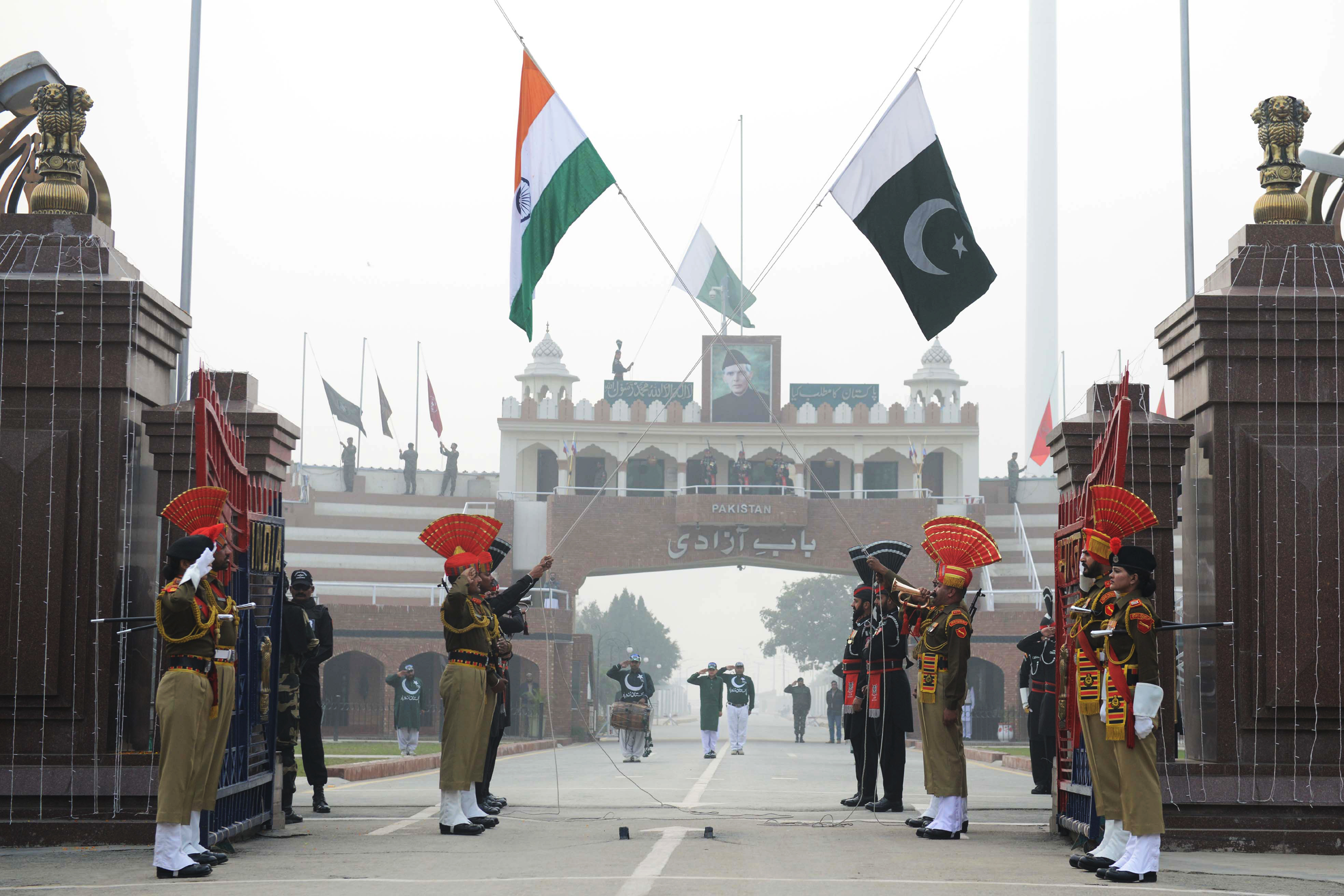
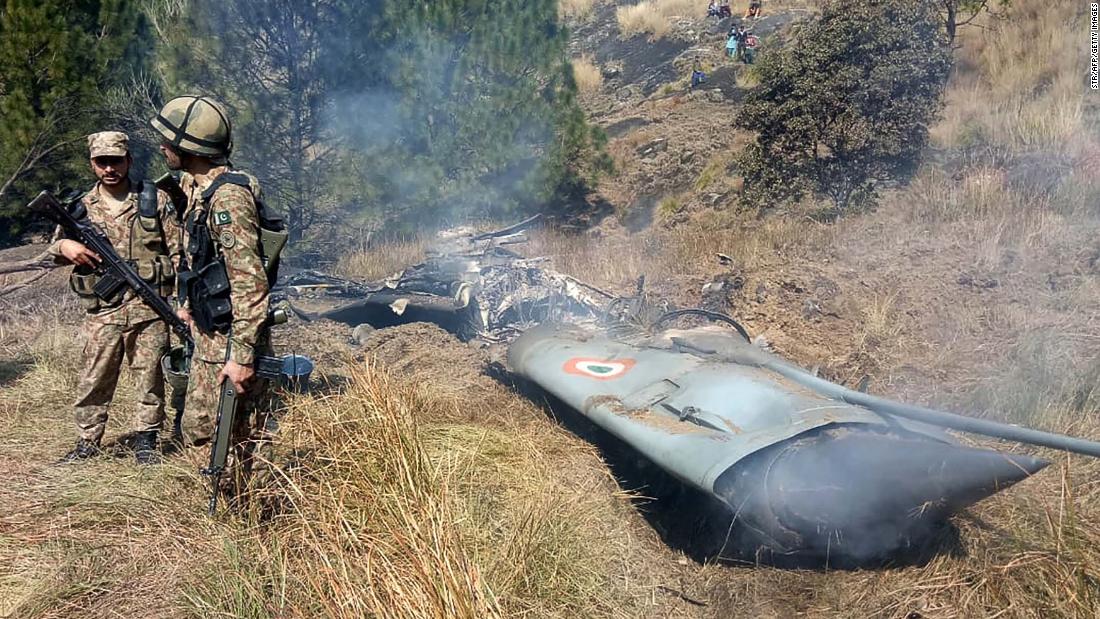
On February 14th 2019, a suicide bomber attacked a convoy of Indian security forces. “We’re getting reports of multiple casualties in a roadside…” He killed at least 40 Indian soldiers here in Kashmir. “The deadliest attack the region has seen this century.” The bomber was part of an Islamic militant group based in Pakistan. “Jaish-e-Mohammed claimed responsibility for that attack.” 12 days later, India carried out airstrikes in Northwestern Pakistan. Then Pakistan shot down at least one Indian aircraft around here. “The most serious escalation in years.” Kashmir is one of the most disputed places on Earth. Over the course of 70 years, it’s been at the center of three wars fought between two massive armies. It’s heavily occupied by more than half a million Indian troops and a deadly collection of militias and terrorist groups.

How Memory of Indian Partition Is Preserved Across Borders | Time
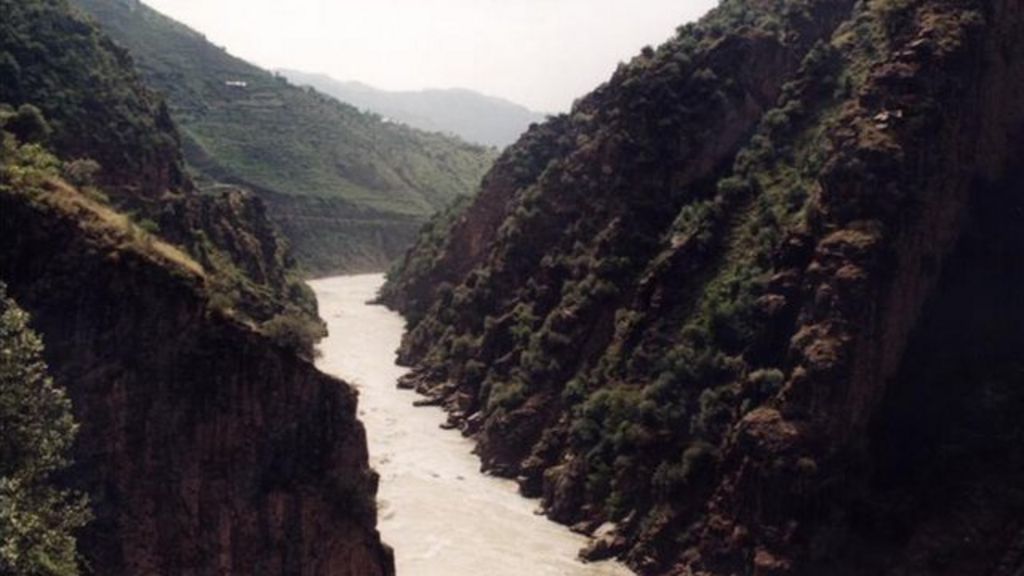
Kashmir is the stage for the relentless conflict between India and Pakistan. But focusing on the two countries can obscure what’s really at stake: The voice of Kashmiris who are caught in a vicious cycle of violence. Kashmir is one of the most strategic places in the world, where 3 powerful countries collide: India, Pakistan, and China. China invaded and took this slice of Kashmir from India. And was given this one by Pakistan. India and Pakistan control these parts, but lay claim to more. This region is at the center of a brutal conflict over these disputed borders. So it’s important to start when they were being drawn. In the mid-1800s, India was a patchwork of several hundred provinces and princely states under British rule. A century later, when British India won independence, the British left and hastily decided to split the region into two. These areas would be a new Muslim-majority country, Pakistan. And this would be the mostly Hindu, but secular, India. The partition was bloody. “Communal hatred flares up within the Punjab.” “1 million people become refugees overnight.” “They flee from savagery and butchery that has never been exceeded, even in India’s stormy history.” Amid the chaos, some princely states were given the choice to join either country. In most cases, the ruling monarchs followed the will of their people. But this state, called “Jammu & Kashmir” was different. It was right along this new border and had a Muslim-majority population, but was ruled by a Hindu monarch. When asked to pick a side, the ruler chose to stay neutral Fearing that the monarch would join India, the Kashmiri population rebelled here in 1947 Armed tribesmen from Pakistan soon joined the fight.

India and Pakistan in Kashmir border skirmish - BBC News
The monarch turned to India for military help and in exchange agreed to join them, which sparked the first Indo-Pakistan war in Kashmir. “Continuing thus increased the threat to world peace and brought the dispute to the eye of the United Nations . The UN Security Council brokered a ceasefire in 1949, which established this line with Pakistan controlling this side and India this one. It also asked Pakistani tribesmen to withdraw and Indian troops to follow, so that Kashmir could hold a direct vote to decide its own future. But neither held up their end of the deal. Pakistan argued that Kashmir’s Muslim-majority population rightfully belonged with them. While India insisted that Kashmir was handed over to them by the Hindu monarch. So they doubled down and added Kashmir to their constution. Both countries continued to tighten their grip around it for many years . “Kashmir. Fighting is going on and heavy casualties in men and equipment have been inflicted on the aggressor.”

India-Pakistan: Latest news on Kashmir crisis
In 1965, the second India-Pakistan war broke out in Kashmir. Thousands of people were killed between the huge armies on both sides. A ceasefire ended the war, but didn’t change this line. Kashmir was kept divided and occupied. And another war broke out in 1971. This time the focus wasn’t in Kashmir — it was in East Pakistan. Here, India helped rebels fight for independence and dealt Pakistan a devastating defeat. This region became a new country, Bangladesh, and Pakistan lost its eastern half. This made Kashmir more important than ever: It became one of the most militarized places on Earth, as India and Pakistan deployed planes, tanks, artillery, and soldiers along the Line of Control. On the political front, in ’87, India reportedly rigged an election, declaring a pro-India party as the winner. Now this was a big turning point for many Kashmiris, who felt they were again denied the chance to vote. Thousands took to the streets in Indian-controlled Kashmir to protest the occupation. But India met the movement for independence with harsh resistance. Which quickly escalated to more violence.
“In January security forces opened fire on demonstrating separatists, turning a two-year old struggling movement into a full-blown popular uprising.” “More than 600 people are killed in clashes between troops and separatists.” Kashmiri militias, just like the Jammu and Kashmir Liberation Front, started recruiting Muslim youth to fight for independence. And increasingly attacked the Indian military. Pakistan saw an opportunity in this insurgency. They helped introduce a new kind of militant group: Radical Islamic fighters who fought for a more pro-Pakistan Kashmir. By the mid ’90s, these groups dominated the insurgency. India responded with incredible military force, deploying 500,000 troops to Kashmir. And they cracked down on militants and protestors. Unarmed civilians were killed and many more were forced to flee the violence. And in ’98 the stakes were raised yet again. “Today India conducted three underground nuclear tests.” “Pakistan today successfully conducted five nuclear tests.” Kashmir became a battleground between two nuclear-armed nations and another war broke out in 1999. “More evidence of the attacks being launched on the Indian-controlled area of Kargil.” “The past two days have seen a number of the fiercest fighting thus far .” “Militant Muslim fighters have also crossed over into some parts of Indian-ruled Kashmir.” The 1999 war ended with another ceasefire, but that did not stop either country.

India-Pakistan cross-border shelling hits Kashmir | News | Al Jazeera

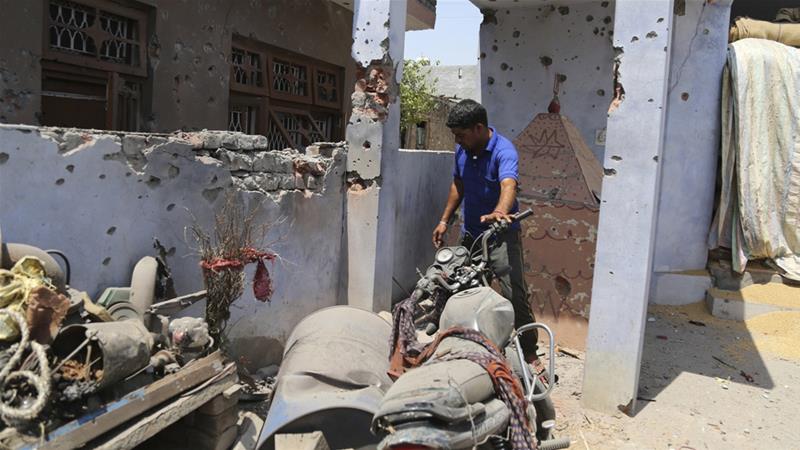
Over the years, Pakistan’s militant groups got bolder and launched terror attacks in Kashmir and outside of Kashmir. In 2001, members of Lashkar-e-Taiba bombed India’s parliament building in New Delhi killing 14 people. And in 2008, 10 militants from the same group killed 174 people and wounded 300 in Mumbai. Meanwhile, Indian military cracked down in Kashmir, firing bullets and pellets on unarmed protesters. Leaving hundreds wounded and blind. This is the vicious cycle of violence. The Indian Army’s crackdown drives some Kashmiris to join Pakistani-backed militant groups, who carry out violence against the Indian forces. It’s a cycle that Kashmiri civilians are stuck in the middle of. Which brings us back to 2019. The suicide bomber was 19-year old Adil Ahmed Dar from Pulwama, Kashmir. According to his parents, in 2016, Indian police officers stopped him and humiliated him by forcing his face into the ground. The same year he was shot in the leg at a protest. The next year, Dar left home with his brothers, to join Jaish-e-Mohammed, a Pakistani-supported militia that radicalized him and trained him to be a suicide bomber. A year later, he drove explosives into an Indian military convoy. For more than 70 years India and Pakistan have driven a cycle of violence, retaliation, and exploitation in Kashmir. But beneath it all is the Kashmiri’s wish to make a choice. A wish that continues to be suppressed, again and again, by violence.

Cyber Bullying is a serious problem!


Internet and mobile phones have become an inseparable part of our lives. When the internet was out, there were restrictions on its usage that were imposed on children by the parents almost everywhere. At least they would use it under an adult’s supervision. Now that the use of the internet has become inevitable because of the school requirements and its necessity in the making of assignments and projects, parents really can’t help but make it accessible for their children.

Since we all are aware of the risks and dangers of cell phones and the internet entail, we ensure that they don’t adversely impact our children and their vulnerable brains. Are the web restrictions like age gate, safe search and family filters enough to keep our kids protected from every kind of possible harm in the cyber world? Do we only need to worry about that inappropriate content on the internet or there are other things too?

“Cyber bullying is a term used for bullying kids using technology including digital or social media. It involves the use of harassment, threat, and provocation that leave a negative impact on the mind, mood and overall psychological position of the child. It occurs in kids and teens and normally young children of all age groups. In adults, the same acts constitute a legally punishable crime known as cyber-stalking or cyber-harassment.”

Misuse of your child’s photos, messages or any other thing on digital media, any messages or calls that tend to scare your child out of their wits, acts like calling names, causing embarrassment and insult, faking identities etc., all are acts of cyber bullying. Most victims of cyber bullying don’t share their grief with their parents or teachers. According to a recent study, 1 in every 4 children encounters cyber bullying.

The consequences of cyber bullying vary from child to child. Some children are not that seriously affected by it while others can develop conditions like depression, anxiety, and disorders involving high stress. In some rarely reported cases, some children have even committed suicides that were either provoked by cyber bullying or merely attempted to get rid of it.

It’s not really difficult to spot if a child is being bullied online if we’re smart enough and know our children. Cyber bullying can result in increased distress for the victims along with increased anger and frustration. They will vent this out on various occasions, and it might force them to get addicted to the virtual world where they can have several identities to hide their real one.

The victims will automatically have lower self-esteem since that is the sole purpose of bullying. Prolonged bullying will lead to severe withdrawal from their family and friends. They will begin favoring isolation most of the time and indulging in harmful activities like drugs and alcohol.

Cyber bullying is a serious issue, and it can be truly horrific to go through such a difficult period. Staying strong and fighting back is the only option against these bullies. It’s possible to get over it and live your life again. Seeing a counselor can help the victims handle the incident in a better and a safe way. Life does not get over if you are a victim of cyber bullying and it is possible to fight back.

Reality of Internet Speeds in India

4G is the talk of the town, but foot-racing is still a reality in India! The average speed of 4G LTE data in India has remained stagnant for more than a year at 6.1Mbps which is almost one-third of the world’s average of 17 Mbps, making it one of the slowest in the metric. Even if the big telcos are boosting 4G distribution, looking at 5G and talking about providing home-based fiberband speeds at the start of 100 Mbps soon, data junkies have no reason to rejoice. India’s 4G download speed is slower than neighboring Sri Lanka (13.95 Mbps), Pakistan (13.56 Mbps) and Myanmar (15.56 Mbps), according to UK Open Speed ​​Inspector. U.S. data speed tester Ookla has placed India at 109 near its 124 nations list with full internet speed, with download speeds of 9.12 Mbps, which is way below. With so many people using the Internet at any given time, network communication can be a daunting task. Experts say the country’s 4G speed also depends on how much it is used on LTE, even if it has adopted new 4G technologies such as LTE Advanced, how many networks are built and the levels of integration. Each Indian display is at a lower level compared to other countries, which affects the speed of the 4G network. Indians experienced a much slower internet speed for at least two years in March when the country shut down to accelerate the spread of Coronavirus, an analysis of data from the government’s MySpeed ​​program showed. The national closure began last March and some provinces ordered the closure of schools and the banning of public gatherings even earlier, resulting in people staying at home. The Hindustan Times last week reported, from government data, that India’s average internet usage in the week beginning March 22 (Janata’s home day) was 13% higher than the average daily usage last week. Raw data analysis from the app showed that the average download speed was 2.8 megabits per second in March. This has been the lowest monthly download speed for at least two years, starting in April 2018, when the app started tracking speed. The average download speed of 1.9 Mbps was also very low in the last two years. Prior to this in March, download speeds were significantly lower in December 2019 (3.5 Mbps) while download speeds were significantly lower in October 2019 (2 Mbps). Specifically, 4G users got an average download speed of 3.1 Mbps while 3G users got a Median speed of 0.8 Mbps, both of which are very low in two years. Median is considered to be a better measure of middle ground than what is stated, where there are a number of very large values ​​that can be considered to be calculated. The average upload speed in February this year was 4.2 and 2.4 Mbps, compared to 2.8 and 1.9 Mbps in March, which is a decrease of 34% and 20% respectively. This slowdown in internet speed has been evident to all users of major Telecoms Airtel, Vodafone-Idea, Jio and the state-owned Bharat Sanchar Nigam Limited. The average download speed across all networks was much lower in two years.