7th Edition of Swachh Talks Webinar Series organised to highlight importance of health and wellness in the sanitation sector

 The atmosphere is brimming with excitement and celebration as the festive mood sets in. Diwali is being welcomed with great fervour and delight by all, who have adorned their homes, streets, neighbourhoods, and market places with decorations and lighting. This time of the year also highlights the importance of swachhata, not only in households but also in public areas that witness heavy footfall. The citizens are participating in maintaining cleanliness and hygiene in their surroundings, making the festival even more special and meaningful. The onus also comes on the front-liners, who are conducting special cleanliness drives, managing heavy influx of waste and managing the sanitation and waste sector.

Taking forward the journey of Swachhata , the Ministry of Housing and Urban Affairs (MoHUA) launched the Swachh Diwali Shubh Diwali campaign to instil a sense of collective responsibility of celebrating a clean and eco-friendly Diwali, use local products and donate old and unused items in the RRR centres. It also aims to address the health and safety aspect in the sanitation and waste management sector during the festive season The citizens, local bodies, RWAs, Market Associations, SHGs, NGOs, office complexes, schools, institutions should ensure that the street cleaning timings be changed to early mornings when the pollution and the crowd visiting the busy markets and streets is not as much.  Misting and water sprinkling activities should be done more often to keep the dust down. Appropriate face masks, protective eye and safety gears should be distributed by the local bodies.

As a part of this campaign and a as a run up to the upcoming festival season, MoHUA organized the 7th edition of the Swachh Talks Webinar Series on the theme of ‘Health & Wellness in Sanitation & Waste Management Sector’. Chaired by Secretary, MoHUA, Shri Manoj Joshi & JS & MD, SBM-U, Ms. Roopa Mishrathe 7th episode highlighted the importance of health and wellness in the sanitation sector. The session was addressed by Padma Shri Dr. Randeep Guleria, Chairman of lnstitute of lnternal Medicine & Respiratory & Sleep Medicine, Director Medical Education at Medanta. Dr. Guleria suggested on SOPs and protocols to be made for the work force to practice and follow while being exposed to the air pollution.

Speaking at the forum, the Padma Shri awardee focused on a need for mitigation action and the need to strengthen the healthcare services. Highlighting the need for immediate measures, Dr. Guleria emphasized curbing the use of firecrackers, occupational health and safety measures like protective eye gears, safety gears, N95 masks, caps, reducing exposure, picking visible waste instead of manual sweeping, pollution abatement for sanitation / outdoor workers. Ms. Bharti Chaturvedi, Founder and Director of Chintan Environmental Research and Action Group, shared the findings of the study ‘Unfair Quality- The lmpact of Air Pollution on Three Occupation’. She highlighted on the possible health impacts of poor air quality on waste pickers, SafaiMitras and Security Guards and discussed the protocols to follow.  Padma Shri Dr. Indira Chakraborty, Public Health Specialist, Scholar& Environmentalist, shared her observations on how critical it is to link WASH to food and health. She emphasized on the pollution that results from street food. She highlighted the need to focus on Garbage Management in Food sector and how it is important to streamline health & hygiene. 


Speaking on the occasion, Secretary, MoHUA, Shri Manoj Joshi highlighted the need to focus on the SOPs and protocols to be practiced during the alarming air pollution. He mentioned that it is important for the Sanitation workers, especially in the waste management sector to use safety and protective gears. He also highlighted the need for Cities to ensure that the task force exposed to the polluted air is taking preventive measures. The virtual event was attended by State & city officials, sector partners, NGOs working in the sector and representatives of sanitation workers. The Swachh Talks concluded with an interactive session with Cities, wherein they shared their experiences and challenges in health and wellness.

****

2 Australian Universities in GIFT City

 Union Minister for Education and Skill Development & Entrepreneurship Shri Dharmendra Pradhan along with his Australian counterpart, Hon’ble Jason Clare, MP, Government of Australia, today visited the site for the upcoming campuses of Wollongong and Deakin Universities at GIFT City,Gandhinagar. They were briefed on the developments of the campus and future plans.

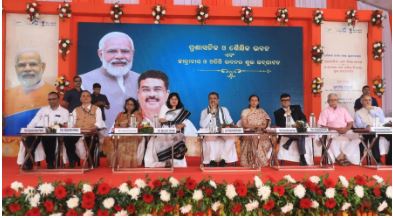
The Ministers attended an event, Arambh (The Beginning), formally announcing the opening of campuses at the GIFT City. Opening up of foreign universities on Indian soil is in line with the Nation Education Policy 2020’s vision of the internationalization of education.  Arambh  celebrated a significant milestone in the international educational landscape, bringing together eminent dignitaries, ministers, and academic leaders to mark the commencement of Australian university campuses in India.

The Vice-Chancellors of Deakin University and University of Wollongong stressed the importance of country-to-country partnerships, highlighting the significant growth in bilateral relations between India and Australia, even during challenging times such as the COVID-19 pandemic. They shared the future plans including the scheduled start of courses with opening up of the campuses in India.

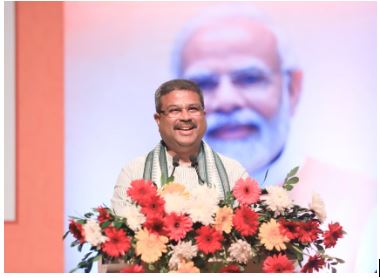
Speaking on the occasion, Shri Pradhan congratulated the student and academic fraternity on a new ‘Arambh’. He said that Foreign University campuses at home will facilitate Study In India and also create a vibrant, diverse and inclusive educational environment as envisioned in the NEP 2020.

Shri Pradhan mentioned that opening up the campus of these two universities in the GIFT City—the land of opportunities—is a ‘Gift’ to the student community. He expressed his gratitude to Prime Minister Shri Narendra Modi for his vision and efforts to transform India’s education through the NEP 2020. He also said that students and faculty from different parts of the world will collaborate, learn, and grow together with such efforts.

This transformative policy emphasizes ‘Internationalization at Home’, aiming to create a vibrant, diverse, and inclusive educational environment within our own country, he added.

In the afternoon, both the Ministers addressed a conclave ‘Research Dialogue: New Horizons in Research Collaboration’. The aim of the conclave was to identify innovative opportunities for deepening bilateral collaboration in a thriving research ecosystem. Australian delegation, senior representatives of key Indian higher education and research institutions, and other dignitaries were also present at the conclave.

Shri Pradhan spoke at the ‘Research Dialogue’ , exhorting University leaders and researchers  to  catalyse new opportunities for deepening bilateral research collaborations between India and Australia. Research has to be a priority area for the larger benefit of society; both Australia and India are committed to promote research for mutual prosperity and global well-being, he added.

Both the Ministers met with academicians and industry leaders on Industry Education Partnerships where discussions were held on strengthening education-industry connections, benefiting industry through university partnerships, R&D collaboration etc.

***

India is moving towards massive investments in infrastructure

 Union Minister of Commerce & Industry, Consumer Affairs, Food & Public Distribution, and Textiles, Shri Piyush Goyal said that India is moving towards massive investments in infrastructure to meet the aspirations of its growing population. While addressing the 4th edition of ‘ISA Steel Conclave 2023’ held in New Delhi today, the Minister acknowledged that steel is vital to achieving this goal, with an aspiration to produce 300 million ones of steel annually by 2030.

Addressing concerns about the Carbon Border Adjustment Mechanism (CBAM), Shri Goyal assured that the Indian government has taken up the issue with the European Union and at the World Trade Organization (WTO). He emphasized the importance of fair treatment for Indian producers and exporters and reaffirmed India’s commitment to opposing unfair taxes or levies that may harm the steel industry.

The Minister further highlighted efforts to secure better Free Trade Agreement access for the steel industry in developed countries and emphasized the importance of intellectual property and value addition in trade agreements. He also recognized the industry’s support for the MSME sector in India and urged continued commitment to this segment.

The steel industry’s role in the construction sector, India’s growth, and its influence in helping the nation become self-reliant were highlighted by the Minister. Shri Goyal commended the industry’s commitment to quality standards and the need to expand quality control orders to ensure high-quality steel products for consumers. Additionally, the Minister pledged to address concerns related to safeguard duty and other international trade agreements impacting the steel industry.

Shri Goyal said that the steel industry in India currently employs approximately two million people, making a substantial contribution to the national GDP. The Minister conveyed his confidence that the steel industry can significantly enhance self-reliance as India strives to meet the increasing demands of the sector. The industry’s growth and performance have been remarkable in recent years, with Shri Goyal receiving feedback from major steel producers regarding their plans for capacity expansion and sustainable manufacturing practices.

Shri Goyal referenced Prime Minister Narendra Modi’s vision, emphasizing that as India moves toward becoming a developed nation, the steel industry will play a pivotal role in strengthening the country’s infrastructure. He noted that this recognition of the steel industry’s importance is well-placed, especially as India gears up for massive investments in infrastructure. India’s per capita steel consumption is expected to rise significantly as the country aspires to fulfill the dreams of its billion-plus citizens.

The Minister noted that India aspires to transform from being a net importer of steel to a net exporter, supporting its “One Earth, One Family, One Future” theme. The Production-Linked Incentive (PLI)  for specialty steel is one of the steps taken in this direction, promoting the manufacturing of high-quality steel and bolstering India’s position in the international market. He recalled pioneering initiatives like steel slag road technology, emphasizing the efficient utilization of waste stream slag in road and highway construction. This practice aligns with the principles of the circular economy.

The Minister expressed admiration for the vibrancy of the Indian steel industry, describing it as the bedrock of the country’s development. He reflected on the industry’s growth journey since its inception, harking back to the first steel town in Jamshedpur. Sharing a personal connection to the steel industry, Shri Goyal conveyed his sense of pride as India now stands as the second-largest steel producer globally, surpassing Japan. He underscored that with the National Steel Policy 2017 and the industry’s recent investments, along with abundant iron ore resources and surging domestic and international demand, India is poised to approach the target of producing 300 million ones of steel.

The event was marked by discussions on the theme, ‘Steel Shaping The Sustainable Future,’ underscoring the multifaceted role of the steel industry in India’s growth and development. Shri Piyush Goyal lauded the theme, highlighting the pivotal role of steel in building a more sustainable future. He emphasized how steel, as an essential material in construction and manufacturing, can significantly contribute to replacing traditional, polluting industries. In the era of growing environmental concerns, the Minister underlined the importance of sustainable practices, including responsible construction methods that could help mitigate pollution.

He said that India’s leadership in the G20 presidency this year provided a fitting backdrop to the theme of “One Earth, One Family, One Future.” Shri Goyal encouraged further discussions on sustainable practices, reinforcing how steel remains integral to our daily lives, underpinning our infrastructure and economy.

The Minister acknowledged the challenge of coking coal availability and costs and encouraged the industry to explore alternative technologies to address this issue. Research and development are essential for the steel industry’s sustainability and the future, promoting green and low-carbon steel production. He highlighted the importance of recycling steel scrap, referring to the recently promoted automobile scrapping policy and the potential it has to reduce pollution and crude oil imports while fostering demand for energy-efficient electric vehicles.

Shri Piyush Goyal stressed the importance of a collaborative approach between the government, the industry, and consumers. He emphasized the need for an aspirational target for per capita steel consumption in India and encouraged industry players to engage in innovative and sustainable practices to achieve this goal.

Shri Piyush Goyal acknowledged the steel industry’s support for the ‘Brand India Project’ and urged the industry to actively participate in forthcoming exhibitions to showcase their strengths. He reiterated his belief in the industry’s potential to be a cornerstone of India’s growth and development.

***

2nd World Local Production Forum in Netherlands

 The Indian delegation led by Shri Bhagwant Khuba, Union Minister of State for Chemicals and Fertilizers participated in the Second World Local Production Forum (WLPF) held in Hague, Netherlands today. This meeting is being organized from 6 to 8 November 2023. The World Local Production Platform is a platform created at the initiative of WHO with the aim of increasing access to medicines and other health technologies.


Shri Khuba said in his address that this meeting provides a crucial opportunity to share experiences, challenges and successes in the development and manufacturing of diagnostic countermeasures. He said that we must collaborate further to identify innovative approaches that will enable sustainable and equitable access to these critical tools.

The Minister further said that 21st century has seen frequent epidemics and pandemics like COVID-19, revealing vulnerabilities in global supply chain and inequities in accessing quality medical countermeasures. Inadequate diagnostic tools worsened outbreaks, emphasizing the necessity of enhancing cooperation for sustainable, affordable diagnostic countermeasures to improve global access to them. Countries worldwide have realized the importance of collaboration between multiple sectors for achieving equity in providing novel solutions.

Shri Khuba informed that the pharmaceutical industry in India is one of the largest globally, earning India the title of the ‘Pharmacy of the World.’ Indian pharmaceutical companies have become reliable and affordable suppliers of high-quality drugs, significantly improving healthcare access worldwide. He said that India provides approximately 60% of the global vaccine supply, accounts for 20-22% of generic exports and serves over 200 countries through its pharmaceutical exports. Numerous Indian organizations have played a pivotal role in promoting innovation and entrepreneurship that act as a landscape for innovative mind and ultimately boosts health sector.

The minister said that the government is providing funding, mentoring, incubation space etc, and acts as a bridge between academia and industry, to ensure timely translation of innovations into commercial ventures”.

The Minister also said, “currently, local production faces significant challenges as it seeks to address the critical issue of translating research into product development. Lack of technology transfer stands out as a formidable barrier. Validation, production, and distribution are daunting hurdles, requiring efficient coordination to bring innovative healthcare technologies to market. Capacity building in regulatory systems and skilled technical manpower are necessary ingredients. The Forum must focus on marketing, upscaling regional manufacturing, efficient procurement and delivery systems, and repurposing existing infrastructure for efficient coordination during health emergencies. Last-mile delivery to ensure that the benefits of innovations reach those who need them most and guarantee equitable access to essential healthcare products”.

During his visit, Mr. Khuba also met the Minister of Public Health of Surinam Dr. Amar N. Ramadhin and discussed about quality health care. He also visited Eindhoven to take part in Kannada Rajyotsava 2023 Celebrations of Shrigandha Holland Kannada Balaga.

***

35TH CONVOCATION OF GOVIND BALLABH PANT UNIVERSITY OF AGRICULTURE & TECHNOLOGY, PANTNAGAR

 The President of India, Smt Droupadi Murmu graced and addressed the  35th convocation of Govind Ballabh Pant University of Agriculture & Technology at Pantnagar, Uttarakhand  today (November 7, 2023).

Speaking on the occasion, the President said that the Govind Ballabh Pant University of Agriculture & Technology was established to promote agricultural education and development of the agricultural sector in the country. Since inception, it has become a centre of excellence for agricultural education, research and growth. She noted that, spread over 11000 acres of area, it is one of the largest universities in the world.

The President said that Nobel Laureate Dr. Norman Borlaug had named Pantnagar University as ‘Harbinger of Green Revolution’. Mexican wheat varieties developed by Norman Borlaug were tested in this University. It has played an effective role in the success of the green revolution. Everyone associated with the agriculture sector knows about the ‘Pantnagar seeds’. The seeds developed at the Pantnagar University are used by farmers across the country to increase crop quality and yield. She expressed confidence that the Pantnagar University will continue to play a leading role in the development of the country’s agricultural sector.

The President said that dissemination of research being done in the field of agriculture to the farmers is necessary for agricultural development. She was happy to note that this University is assisting the rural community through various climate resilient technologies.

The President emphasised that the education system needs to keep pace with the technological, economic and social developments taking place globally. She said that educational institutions should produce industry ready graduates who can create employment and compete in the technology driven world.

The President said that today the world is moving towards natural and organic farming to deal with problems like climate change and soil degradation. Eco-friendly food habits are also being promoted. She stated that researchers, scientists and faculty members of this university will play an important role in giving priority to millets in our food habits.

The President said that use of the latest technology is necessary to face global challenges. She appreciated the Pantnagar University for initiating digital solutions in agriculture through crop management, nano-technology, organic farming etc. She noted that the University is also taking steps for use of Artificial Intelligence. She was happy to note that this University has developed its own agricultural drone which can spray several hectares of land in few minutes. She expressed confidence that the benefits of drone technology will reach the farmers soon.

Click here to see the President’s speech

Delhi Development Authority

 The Delhi Development Authority (DDA) is a prominent governmental organization in India, primarily responsible for urban planning, development, and management of the national capital territory, Delhi. Established in 1957, the DDA plays a pivotal role in shaping the city’s infrastructure, housing, and overall development. Its primary functions include land acquisition, allocation, and development, as well as the formulation and implementation of master plans to ensure the sustainable growth of Delhi.

DDA is known for its significant contributions to urban development, including the creation of residential areas, commercial hubs, and recreational spaces like parks and sports complexes. The authority also manages various housing schemes and initiatives aimed at providing affordable housing to the citizens of Delhi. Additionally, it is responsible for regulating land use, promoting green spaces, and enhancing the city’s overall quality of life.

One of the most notable tasks of DDA is the periodic revision and implementation of Master Plans that guide the city’s development, ensuring a balance between infrastructure growth, environmental preservation, and social well-being. The authority’s continuous efforts in urban planning and development have been crucial in making Delhi one of the leading metropolises in India.

DDA plays a vital role in facilitating the expansion and modernization of Delhi while striving to maintain its historical and cultural heritage. As the city continues to evolve and grow, the Delhi Development Authority remains a pivotal institution in shaping its future, ensuring that it remains a vibrant and sustainable urban center.

Vacancy at Rajkot Municipal Corporation (RMC)

 The Rajkot Municipal Corporation (RMC) is the local governing body responsible for administering and managing the civic affairs of the city of Rajkot in the state of Gujarat, India. It is an important institution that plays a central role in providing essential public services, urban development, and overall municipal governance to the residents of Rajkot. Here are some key aspects of the Rajkot Municipal Corporation:

Local Governance: RMC functions as the local self-government authority for Rajkot. It is responsible for planning, implementing, and overseeing various urban development and public service initiatives within the city.

Administrative Structure: The corporation is led by a Mayor who is elected by the elected representatives. The elected representatives are known as corporators and are elected by the residents of Rajkot through municipal elections. The Mayor is the ceremonial head of the municipal corporation, while the Municipal Commissioner is the chief executive officer responsible for day-to-day administration.

Urban Planning and Development: RMC is responsible for the planning and development of the city, including infrastructure development, town planning, and land use regulation. It plays a crucial role in managing the city’s growth, ensuring proper land use, and implementing development projects.

Public Services: The corporation provides a wide range of essential public services, including water supply, sewage and sanitation services, waste management, road maintenance, and healthcare facilities. RMC is also involved in promoting environmental sustainability and cleanliness initiatives.

Revenue Generation: RMC generates revenue through property taxes, fees for various services, and grants from state and central governments. This revenue is crucial for funding municipal services and development projects.

E-Governance: RMC has implemented various e-governance initiatives to improve the efficiency and transparency of its services. This includes online payment systems, digital records, and citizen engagement platforms.

Municipal Elections: Municipal elections are held periodically to elect representatives who serve on the municipal council. These elected representatives work towards the betterment of their respective wards and the city as a whole.

Infrastructure Projects: RMC undertakes and supervises infrastructure projects such as road construction, water supply projects, sewage treatment plants, and urban transportation systems to enhance the quality of life for residents.

Smart City Initiatives: Rajkot is one of the cities selected under the Smart Cities Mission by the Government of India. As a result, RMC is actively involved in implementing smart city projects aimed at improving urban services and quality of life for its residents.

Community Engagement: The corporation often encourages community participation in civic affairs through public meetings, consultations, and citizen engagement programs. These efforts are intended to make governance more inclusive and responsive to the needs of the community.

The Rajkot Municipal Corporation plays a critical role in the governance and development of Rajkot, ensuring that the city’s residents have access to essential services, infrastructure, and a good quality of life. It works in collaboration with state and central government bodies to implement various urban development and improvement projects in the city.

𝐉𝐎𝐁 𝐎𝐏𝐄𝐍𝐈𝐍𝐆 at Rajkot Municipal Corporate (RMC).

𝐀𝐏𝐏𝐋𝐘 𝐍𝐎𝐖!!
✅𝐏𝐨𝐬𝐢𝐭𝐢𝐨𝐧: – Urban Planners
✅ 𝐓𝐨𝐭𝐚𝐥 𝐧𝐨 𝐨𝐟 𝐏𝐨𝐬𝐢𝐭𝐢𝐨𝐧𝐬: – 06
✅ 𝐐𝐮𝐚𝐥𝐢𝐟𝐢𝐜𝐚𝐭𝐢𝐨𝐧𝐬: 1. B.Arch. / B.Plan, and 2. Post graduate degree in Urban Planning. MPlan in City/Town Planning, or ITPI equivalent.
✅ 𝐄𝐱𝐩𝐞𝐫𝐢𝐞𝐧𝐜𝐞 : Nil
✅ 𝐒𝐚𝐥𝐚𝐫𝐲 : 1,10,000/- per month
✅ 𝐋𝐨𝐜𝐚𝐭𝐢𝐨𝐧 : Rajkot, Gujarat.
✅ 𝐌𝐨𝐝𝐞 𝐨𝐟 𝐒𝐞𝐥𝐞𝐜𝐭𝐢𝐨𝐧 : Walk-in interviews.

Walk-in interview date: 8th 𝐍𝐨𝐯𝐞𝐦𝐛𝐞𝐫 𝟐𝟎𝟐𝟑

𝐂𝐥𝐢𝐜𝐤 𝐨𝐧 𝐭𝐡𝐞 𝐥𝐢𝐧𝐤 𝐟𝐨𝐫 𝐝𝐞𝐭𝐚𝐢𝐥s:

http://117.240.113.212/documents/upload/urban%20planner%20DETAIL.pdf

Vacancy at School of Planning and Architecture, New Delhi

  The School of Planning and Architecture, Delhi (SPA Delhi), is a prestigious institution of higher education in India that specializes in architecture and urban planning. Established in 1941 as the Department of Architecture at Delhi Polytechnic, it has since evolved into a full-fledged autonomous institution. SPA Delhi is known for its excellence in architecture and planning education and research, and it holds a prominent place in the academic and professional realms of the country.

APPLY NOW 𝐍𝐎𝐖!!
✅ 𝐏𝐨𝐬𝐢𝐭𝐢𝐨𝐧: – Project Associates (Ad-hoc) December 2023-February 2024(initially)
✅ 𝐓𝐨𝐭𝐚𝐥 𝐧𝐨 𝐨𝐟 𝐏𝐨𝐬𝐢𝐭𝐢𝐨𝐧𝐬: – 02 positions
✅ 𝐐𝐮𝐚𝐥𝐢𝐟𝐢𝐜𝐚𝐭𝐢𝐨𝐧𝐬: M.Arch / M. Urban Design
✅ 𝐄𝐱𝐩𝐞𝐫𝐢𝐞𝐧𝐜𝐞: Nil
✅ 𝐒𝐚𝐥𝐚𝐫𝐲: Fixed Remuneration Rs45,000 pm
✅ 𝐋𝐨𝐜𝐚𝐭𝐢𝐨𝐧: New Delhi
✅ 𝐌𝐨𝐝𝐞 𝐨𝐟 𝐒𝐞𝐥𝐞𝐜𝐭𝐢𝐨𝐧 : Online/Offline Interview
✅ 𝐇𝐨𝐰 𝐭𝐨 𝐚𝐩𝐩𝐥𝐲 : Send CV on or before 10.11.2023 to the O/o PA of HOD, Urban Design Department or mail at spaurbandesign@gmail.com

𝐋𝐚𝐬𝐭 𝐃𝐚𝐭𝐞 : 𝟏𝟎𝐡 𝐍𝐨𝐯𝐞𝐦𝐛𝐞𝐫 𝟐𝟎𝟐𝟑
𝐂𝐥𝐢𝐜𝐤 𝐨𝐧 𝐭𝐡𝐞 𝐥𝐢𝐧𝐤 𝐟𝐨𝐫 𝐝𝐞𝐭𝐚𝐢𝐥𝐞𝐝 𝐚𝐝𝐯𝐞𝐫𝐭𝐢𝐬𝐞𝐦𝐞𝐧𝐭 𝐚𝐧𝐝 𝐭𝐨 𝐚𝐩𝐩𝐥𝐲:
http://spa.ac.in/User_Panel/UserView.aspx?TypeID=5656

School of Planning and Architecture, Delhi

 The School of Planning and Architecture, Delhi (SPA Delhi), is a prestigious institution of higher education in India that specializes in architecture and urban planning. Established in 1941 as the Department of Architecture at Delhi Polytechnic, it has since evolved into a full-fledged autonomous institution. SPA Delhi is known for its excellence in architecture and planning education and research, and it holds a prominent place in the academic and professional realms of the country.

Here are some key aspects of the School of Planning and Architecture, Delhi:

Academic Programs: SPA Delhi offers undergraduate, postgraduate, and doctoral programs in architecture, urban planning, and design-related fields. It is renowned for its Bachelor of Architecture (B.Arch.) program, which is highly competitive and sought after by students aspiring to become architects. Additionally, the institution offers Master’s and Ph.D. programs in various specializations.

Research and Innovation: SPA Delhi has a strong focus on research and innovation in the fields of architecture, urban planning, and design. Faculty members and students are often engaged in research projects that contribute to the development of sustainable and innovative solutions for urban and architectural challenges.

Campus and Facilities: The campus of SPA Delhi is equipped with state-of-the-art facilities, including design studios, workshops, a library, and other resources necessary for architectural and planning education. The campus provides an environment conducive to creative and academic pursuits.

Architectural Design and Planning Competitions: SPA Delhi students often participate in and excel at national and international architectural design and planning competitions, showcasing their talent and skills.

Collaborations and Partnerships: The institution collaborates with government bodies, industry partners, and other educational institutions to work on real-world projects and research initiatives. These partnerships enhance students’ exposure to practical applications of their knowledge.

Professional Accreditation: SPA Delhi’s architecture programs are accredited by the Council of Architecture (COA), ensuring that graduates meet the necessary professional standards to become registered architects.

Alumni Network: The school boasts a strong alumni network, with many of its graduates holding influential positions in the fields of architecture, urban planning, and design. They often contribute to the institution’s growth and development.

Heritage and Tradition: SPA Delhi has a rich heritage and a tradition of producing architects and urban planners who make significant contributions to the built environment of India. Its legacy is a source of pride for the institution.

Community Engagement: The institution often engages with the local community through various outreach programs and initiatives aimed at improving the urban environment and promoting sustainable development.

SPA Delhi is known for nurturing talent, fostering creativity, and preparing students to address the complex challenges of urbanization and architectural design. Its contributions to the field of architecture and urban planning are significant, and it continues to play a vital role in shaping the future of the built environment in India.

Vacancy at Department of School Education & Literacy


The Department of School Education & Literacy is a critical government entity responsible for shaping and overseeing the educational landscape in many countries, including India. Its primary focus is on the development and improvement of school education, literacy, and educational infrastructure, with the ultimate goal of providing quality education to the masses.

Key responsibilities of the Department of School Education & Literacy typically include:

Policy Formulation: This department plays a pivotal role in developing and implementing educational policies at the national and state levels. These policies encompass a wide range of aspects, including curriculum development, teacher training, educational technology integration, and more.

Implementation of Programs: The department is responsible for implementing various educational programs and schemes aimed at enhancing the quality and reach of education. This may include initiatives to improve school infrastructure, provide scholarships, enhance teacher training, and promote digital literacy.

Monitoring and Evaluation: Ensuring the effectiveness of educational programs is crucial. The department typically conducts regular monitoring and evaluation to assess the impact of policies and programs. This helps in making necessary adjustments and improvements.

Universalization of Education: A major objective of the Department of School Education & Literacy is to work towards the universalization of elementary education. This means ensuring that all children, regardless of their background or location, have access to quality primary education.

Promoting Literacy: In addition to school education, promoting literacy among adults and underprivileged sections of society is a key focus. The department often collaborates with other agencies to run literacy programs and campaigns.

Teacher Training and Development: The quality of education heavily depends on the quality of teachers. Therefore, the department is typically involved in developing and implementing teacher training programs to enhance the skills and knowledge of educators.

𝐀𝐏𝐏𝐋𝐘 𝐍𝐎𝐖!!
✅ 𝐏𝐨𝐬𝐢𝐭𝐢𝐨𝐧: – Consultant (Access & Infrastructure Development)
✅ 𝐓𝐨𝐭𝐚𝐥 𝐧𝐨 𝐨𝐟 𝐏𝐨𝐬𝐢𝐭𝐢𝐨𝐧𝐬: – 01 positions
✅ 𝐐𝐮𝐚𝐥𝐢𝐟𝐢𝐜𝐚𝐭𝐢𝐨𝐧𝐬: M.Arch
✅ 𝐄𝐱𝐩𝐞𝐫𝐢𝐞𝐧𝐜𝐞: 3 years
✅ 𝐒𝐚𝐥𝐚𝐫𝐲: 80,000 – 1,00,000 /-
✅ 𝐋𝐨𝐜𝐚𝐭𝐢𝐨𝐧: New Delhi
✅ 𝐀𝐠𝐞 𝐥𝐢𝐦𝐢𝐭: 35 years
✅ 𝐌𝐨𝐝𝐞 𝐨𝐟 𝐒𝐞𝐥𝐞𝐜𝐭𝐢𝐨𝐧 : Based on educational qualification / professional experience. Writing skills test / PPT presentation depending on the number of candidates.
✅ 𝐇𝐨𝐰 𝐭𝐨 𝐚𝐩𝐩𝐥𝐲 : https://edcilindia.co.in/TCareers

𝐋𝐚𝐬𝐭 𝐃𝐚𝐭𝐞 : 𝟖𝐭𝐡 𝐍𝐨𝐯𝐞𝐦𝐛𝐞𝐫 𝟐𝟎𝟐𝟑
𝐂𝐥𝐢𝐜𝐤 𝐨𝐧 𝐭𝐡𝐞 𝐥𝐢𝐧𝐤 𝐟𝐨𝐫 𝐝𝐞𝐭𝐚𝐢𝐥𝐞𝐝 𝐚𝐝𝐯𝐞𝐫𝐭𝐢𝐬𝐞𝐦𝐞𝐧𝐭 𝐚𝐧𝐝 𝐭𝐨 𝐚𝐩𝐩𝐥𝐲:
https://edcilindia.co.in/TCareers

Department of School Education & Literacy

 The Department of School Education & Literacy is a critical government entity responsible for shaping and overseeing the educational landscape in many countries, including India. Its primary focus is on the development and improvement of school education, literacy, and educational infrastructure, with the ultimate goal of providing quality education to the masses.

Key responsibilities of the Department of School Education & Literacy typically include:

Policy Formulation: This department plays a pivotal role in developing and implementing educational policies at the national and state levels. These policies encompass a wide range of aspects, including curriculum development, teacher training, educational technology integration, and more.

Implementation of Programs: The department is responsible for implementing various educational programs and schemes aimed at enhancing the quality and reach of education. This may include initiatives to improve school infrastructure, provide scholarships, enhance teacher training, and promote digital literacy.

Monitoring and Evaluation: Ensuring the effectiveness of educational programs is crucial. The department typically conducts regular monitoring and evaluation to assess the impact of policies and programs. This helps in making necessary adjustments and improvements.

Universalization of Education: A major objective of the Department of School Education & Literacy is to work towards the universalization of elementary education. This means ensuring that all children, regardless of their background or location, have access to quality primary education.

Promoting Literacy: In addition to school education, promoting literacy among adults and underprivileged sections of society is a key focus. The department often collaborates with other agencies to run literacy programs and campaigns.

Teacher Training and Development: The quality of education heavily depends on the quality of teachers. Therefore, the department is typically involved in developing and implementing teacher training programs to enhance the skills and knowledge of educators.

Integration of Technology: In the modern era, technology plays a significant role in education. The department is responsible for integrating technology into the curriculum and ensuring that schools have the necessary digital infrastructure.

Inclusive Education: Promoting inclusive education, which ensures that children with disabilities have equal access to education, is another important aspect of the department’s work.

Scholarship Programs: To encourage children to continue their education, the department often provides scholarships and financial incentives to deserving students.

Research and Data Collection: The department is usually involved in collecting educational data and conducting research to better understand the state of education in the country. This data is essential for informed decision-making.

Collaboration: The department collaborates with various stakeholders, including state governments, NGOs, international organizations, and academic institutions, to achieve its goals and objectives.

The Department of School Education & Literacy plays a critical role in shaping the educational future of a country. Its work is instrumental in not only improving the quality of education but also in addressing issues related to equity, access, and inclusivity in education. Through its various policies and programs, it aims to build a strong educational foundation, empowering individuals and contributing to the overall development of the nation.

Vacancy for Urban Planners at REPL Global

 REPL Global, is an Indian planning firm that specializes in various aspects of urban and infrastructure planning and development. It is a well-established organization that has been involved in numerous projects aimed at enhancing urban environments, real estate development, and smart city initiatives across India. Some key aspects of REPL Global’s activities include:

Urban and Regional Planning: REPL Global engages in comprehensive urban and regional planning, helping cities and regions design and develop sustainable infrastructure, transportation networks, and land use plans. They focus on creating well-designed urban environments that promote economic growth, environmental sustainability, and quality of life for residents.

Smart City Initiatives: The firm is involved in India’s Smart Cities Mission, which aims to transform selected cities into technologically advanced, sustainable, and citizen-centric urban areas. REPL Global plays a role in planning and implementing smart city projects, which may include IoT-based infrastructure, digital services, and innovative urban solutions.

Real Estate Development: REPL Global is also active in real estate development, encompassing residential, commercial, and mixed-use projects. They contribute to the design and execution of real estate ventures, often with a focus on sustainable and environmentally friendly development.

Infrastructure Development: The firm takes on infrastructure projects that involve the construction and maintenance of critical transportation, utility, and public facilities. These projects aim to improve connectivity and accessibility in urban areas.

Consultancy Services: REPL Global provides consulting services in the fields of architecture, engineering, project management, and more. They work with public and private sector clients to bring projects from concept to completion.

J𝐎𝐁 𝐎𝐏𝐄𝐍𝐈𝐍𝐆 at Vacancy at REPL 𝐀𝐏𝐏𝐋𝐘 𝐍𝐎𝐖!!
✅ 𝐏𝐨𝐬𝐢𝐭𝐢𝐨𝐧: – Urban Planner
✅ 𝐐𝐮𝐚𝐥𝐢𝐟𝐢𝐜𝐚𝐭𝐢𝐨𝐧𝐬: Degree in Planning
✅ 𝐄𝐱𝐩𝐞𝐫𝐢𝐞𝐧𝐜𝐞:0-3 yrs
✅ 𝐒𝐚𝐥𝐚𝐫𝐲 : As per experience
✅ 𝐋𝐨𝐜𝐚𝐭𝐢𝐨𝐧 : Odissa
✅ 𝐑𝐞𝐪𝐮𝐢𝐫𝐞𝐝 𝐤𝐧𝐨𝐰𝐥𝐞𝐝𝐠𝐞 𝐚𝐧𝐝 𝐬𝐤𝐢𝐥𝐥𝐬: -Must have a knowledge of GIS based development plan, town planning scheme, local area planning, TOD planning and policy, Knowledge of GIS based application, Report writing
✅ 𝐇𝐨𝐰 𝐭𝐨 𝐚𝐩𝐩𝐥𝐲 : Interested candidates please forward cv to – hr@repl.global

The Environmental Impact of Crypto Mining: What You Need to Know

 Introduction

In the rapidly evolving world of digital currencies, crypto mining has emerged as a powerful process to validate transactions and secure blockchain networks. However, this innovative process comes at a considerable cost to the environment. As concerns about climate change and sustainable practices grow, understanding the environmental impact of crypto mining is crucial. This article sheds light on the subject, highlighting the challenges and potential solutions that can mitigate the ecological footprint of this burgeoning industry. To effectively invest in crypto, you must consider knowing about blockchain security.

Introduction to Crypto Mining and its Soaring Popularity

Photo by RDNE Stock project on Pexels.com

Crypto mining plays an integral role in the creation and distribution of these digital assets. It involves solving complex mathematical puzzles using high-powered computer systems, a process that requires substantial computational power and energy.

The Energy Intensive Nature of Crypto Mining

Crypto mining’s insatiable appetite for energy has become a significant concern for environmentalists. The mining process demands extensive computing power, and as a result, energy consumption levels have skyrocketed. In some cases, entire mining farms have sprouted up, consuming electricity on a scale comparable to small nations. This surge in energy demand has led to a surge in greenhouse gas emissions, further exacerbating climate change.

Fossil Fuel Dependency: A Dark Side of Crypto Mining

One of the most troubling aspects of crypto mining is its heavy reliance on fossil fuels. Many mining operations are concentrated in regions where coal and other non-renewable energy sources are abundant and cheap. Consequently, this leads to a higher carbon footprint, as mining operations tap into these fossil fuels to power their energy-intensive machines.

E-waste Generation and Electronic Footprint

As technology evolves, older mining rigs become obsolete, contributing to the ever-growing issue of electronic waste (e-waste). These discarded devices contain hazardous materials that pose a threat to the environment and human health. Proper e-waste management is essential to minimize the ecological impact of crypto mining and other digital activities.

Sustainable Solutions for Crypto Mining

Despite the environmental challenges posed by crypto mining, the industry is not without hope. Innovators and enthusiasts are actively exploring greener alternatives to traditional mining practices. Here are some sustainable solutions that could help mitigate the impact:

Renewable Energy Integration: Embracing renewable energy sources like solar, wind, and hydroelectric power for mining operations can significantly reduce the carbon footprint of crypto mining. Encouraging partnerships with renewable energy providers could pave the way for a more sustainable future.

Energy-Efficient Mining Hardware: Designing and implementing energy-efficient mining hardware is crucial to reducing overall energy consumption. Investing in advanced technologies that offer higher hash rates with lower power requirements can be a game-changer for the industry.

E-waste Recycling and Responsible Disposal: Crypto mining operators should prioritize the recycling and responsible disposal of electronic devices to prevent e-waste from polluting the environment. Extended producer responsibility programs could be implemented to ensure a circular economy for mining hardware.

Collaborative Efforts for a Greener Future

Addressing the environmental impact of crypto mining requires a collaborative effort from all stakeholders involved. Governments, mining companies, investors, and individual miners must come together to establish environmentally conscious policies and practices. Encouraging transparency and accountability within the industry can lead to more sustainable choices and strategies.

Public Awareness and Education

Educating the public about the environmental impact of crypto mining is vital for driving change. Awareness campaigns can shed light on the carbon footprint of mining and foster a sense of responsibility among cryptocurrency users. Understanding the significance of sustainable mining practices can influence consumer behavior and encourage demand for greener solutions.

Conclusion

As the world embraces the digital revolution and the use of cryptocurrencies becomes more widespread, it is essential to remain mindful of the environmental consequences. Crypto mining, while revolutionizing financial systems, cannot be divorced from its environmental impact. By adopting sustainable practices and pushing for eco-friendly solutions, the industry can thrive without compromising the planet’s well-being. Collaboration, education, and innovation hold the key to striking a balance between technological advancements and environmental stewardship. Only through such concerted efforts can we ensure a greener and more sustainable future for crypto mining and the digital world it powers.

Investing in Value ETFs: How to Invest in a Basket of Value Stocks

 Introduction

Investing in value stocks has long been considered a prudent approach for investors seeking steady long-term returns. One effective way to gain exposure to a diversified portfolio of value stocks is through Value ETFs (Exchange-Traded Funds). These investment vehicles offer a cost-effective and convenient way to capitalize on the potential of undervalued companies. In this article, we will explore what Value ETFs are, their advantages, and how investors can benefit from them. Additionally, if you are starting to invest in crypto, you may consider knowing about strengthening communication.

What are Value ETFs?

Photo by Leeloo Thefirst on Pexels.com

Value ETFs are a type of exchange-traded fund that primarily focuses on investing in stocks deemed undervalued by the market. These funds typically follow an index that selects companies based on fundamental factors such as low price-to-earnings ratios, low price-to-book ratios, and high dividend yields. By investing in a basket of value stocks, investors can diversify their holdings and potentially achieve better risk-adjusted returns over time.

The Advantages of Value ETFs

Diversification: One of the key advantages of investing in Value ETFs is the instant diversification it offers. By owning shares in a single Value ETF, an investor gains exposure to a wide range of undervalued companies across different industries. This diversification can help reduce the risk associated with individual stock investments.

Lower Costs: Value ETFs are known for their cost-effectiveness. Compared to actively managed funds, which often charge higher management fees, Value ETFs typically have lower expense ratios. This means that investors can keep more of their returns, enhancing their long-term gains.

Less Active Management: Value ETFs are passively managed, meaning they aim to replicate the performance of a specific index. As a result, investors don’t have to worry about the fund manager’s active decisions, reducing the risk of human error and potential bias.

Long-Term Focus: Value investing is based on the premise that undervalued stocks will eventually realize their true worth over time. Therefore, Value ETFs tend to have a long-term investment horizon, aligning well with investors who are seeking sustainable growth rather than short-term speculation.

Considerations Before Investing

Before diving into Value ETFs, investors should conduct thorough research and consider the following factors:

Investment Goals: Assess your investment goals and risk tolerance. While Value ETFs are generally considered less volatile than growth stocks, they are still subject to market fluctuations. Investors should align their investment strategy with their financial objectives.

Expense Ratios: Compare the expense ratios of different Value ETFs. Lower expenses can significantly impact overall returns, especially in the long run.

Track Record: Review the historical performance of the Value ETFs you are considering. Past performance does not guarantee future results, but it can provide insights into how the fund has performed in various market conditions.

Fund Holdings: Examine the fund’s holdings to ensure it aligns with your investment preferences. Different Value ETFs may have varying concentrations in specific sectors or industries.

Diversification: Although Value ETFs provide broad diversification, consider how it complements your existing portfolio. Avoid over-concentrating in a single investment strategy.

Investing in Value ETFs with Online Platforms

For investors seeking to invest in Value ETFs, platforms offer a user-friendly and efficient way to access these investment vehicles. Through the platform, investors can easily research different Value ETF options, analyze their performance, and execute trades with just a few clicks.

Creating a Portfolio of Value ETFs

Selecting Multiple Funds: Diversification within Value ETFs can further reduce risk. Consider allocating funds across multiple Value ETFs to gain exposure to different value strategies.

Rebalancing: Regularly review and rebalance your portfolio to maintain the desired asset allocation. Rebalancing ensures that your investments remain aligned with your financial goals and risk tolerance.

Monitoring Performance: Keep an eye on the performance of your Value ETFs and the underlying holdings. While long-term investing is the primary focus, periodic evaluations help ensure your investments are on track.

Conclusion

Investing in Value ETFs can be a smart approach for investors seeking exposure to a basket of undervalued stocks. The benefits of diversification, lower costs, and long-term focus make Value ETFs an attractive addition to any well-rounded investment portfolio. Before investing, it is essential to conduct thorough research and consider factors such as investment goals and expense ratios. Online platforms provide a convenient way to access and invest in Value ETFs, making it easier for investors to implement their investment strategies effectively. By carefully crafting a portfolio of Value ETFs and monitoring its performance, investors can potentially unlock the rewards of value investing while managing their risk in a well-structured manner.

How Does Bitcoin Work? A Technical Overview

 Introduction

In the fast-paced digital age, cryptocurrencies have emerged as a revolutionary financial asset. At the forefront of this digital revolution stands Bitcoin, the first and most popular cryptocurrency. Understanding how Bitcoin works is essential to comprehend the potential of this decentralized digital currency. This article provides a comprehensive technical overview of Bitcoin, shedding light on its underlying mechanisms and the process of transactions. If you are into crypto investment like Bitcoin, you may also want to know about the Apps That Make Every Word Count.

Unraveling the Enigma of Bitcoin

Photo by RDNE Stock project on Pexels.com

An online trading platform, has been instrumental in popularizing Bitcoin by offering a user-friendly platform for trading this digital asset. But before delving into the technicalities, it’s crucial to grasp the fundamentals of Bitcoin’s architecture and ideology.

The Blockchain: Building Blocks of Bitcoin

Bitcoin operates on a revolutionary technology called the blockchain. The blockchain is a decentralized and immutable ledger that records all Bitcoin transactions in chronological order. These transactions are grouped into blocks, and each block is cryptographically linked to the previous one, forming an unbroken chain. This ensures transparency, and security, and prevents fraudulent activities.

Decentralization: No Central Authority

One of Bitcoin’s defining features is its decentralized nature. Unlike traditional currencies that are controlled by central banks, Bitcoin is not governed by any central authority. Instead, it relies on a network of nodes (computers) that collectively validate and record transactions. This decentralized structure ensures that no single entity can manipulate the system, making it resistant to censorship and corruption.

Mining: Fueling the Bitcoin Ecosystem

Mining plays a pivotal role in the functioning of the Bitcoin network. Miners are individuals or entities that use powerful computers to solve complex mathematical puzzles, known as proof-of-work (PoW). The first miner to solve the puzzle gets the privilege of adding the next block to the blockchain and is rewarded with newly minted Bitcoins and transaction fees. Mining secures the network, validates transactions, and ensures consensus among participants.

Public and Private Keys: Ensuring Security

To engage in Bitcoin transactions, users need a pair of cryptographic keys: a public key and a private key. The public key, which acts as an address, is visible to everyone and is used to receive funds. The private key, on the other hand, is kept secret and is used to sign transactions, proving ownership of the funds. This cryptographic pair ensures the security and integrity of transactions.

Transactions: The Heart of the Bitcoin Network

When a user initiates a Bitcoin transaction, it is broadcast to the network, where it awaits confirmation. Miners then select pending transactions and add them to a new block, validating their authenticity. Once confirmed, the transaction becomes a permanent part of the blockchain, and the recipient gains access to the transferred Bitcoins.

Consensus Mechanism: Reaching Agreement

Maintaining consensus among the network participants is vital for Bitcoin’s operation. As the blockchain grows, multiple versions of the same block may exist temporarily. However, the longest chain is deemed the valid one. Miners continue to extend the longest chain, and eventually, the network reaches a consensus on which block is the correct one.

Scalability Challenges: A Work in Progress

Despite its tremendous success, Bitcoin faces challenges, particularly in terms of scalability. The blockchain’s size increases with every transaction, leading to longer confirmation times and higher fees. Solutions like the Lightning Network aim to address these issues by enabling off-chain transactions and improving scalability.

Security and Immutability: Safeguarding the Bitcoin Network

Bitcoin’s robust security measures are fundamental to its success. The immutability of the blockchain, achieved through the cryptographic linking of blocks, ensures that past transactions cannot be altered or tampered with. This tamper-resistant feature guarantees the integrity of the entire transaction history, instilling trust in the system and its participants.

The Halving Event: Controlling Supply and Inflation

One of the unique aspects of Bitcoin’s design is the halving event, which occurs approximately every four years. During this event, the block rewards that miners receive for successfully adding a new block to the blockchain are cut in half. This halving mechanism is programmed into the Bitcoin protocol and serves a crucial purpose – to control the supply of new Bitcoins entering circulation.

Conclusion

In conclusion, Bitcoin’s success as the first cryptocurrency can be attributed to its innovative use of blockchain technology, decentralization, and security measures. Understanding how Bitcoin works at a technical level is essential for investors, traders, and enthusiasts alike. As the technology evolves and scalability improves, Bitcoin’s potential to revolutionize the financial landscape continues to grow, inspiring a new era of decentralized digital finance.