Inceldom: a scourge to the society

Incels or as they describe themselves as the involuntarily celibate, are slowly gaining prominence on various social platforms like reddit and 4chan. These are males who treat women like sexual objects and feel that their lack of a sex life is due to a large conspiracy that all females are doing. They feel that it is their right to have a prominent sex life and that women’s time, bodies, and sexual desires should be primarily centred around men. They can easily be ignored as sad pathetic men which they certainly are, but the fact is that they are very dangerous for the society should they be allowed to thrive. The incel community gains a strong foothold in sexually frustrated men who have had an unsuccessful romantic life. Their beliefs include that “masculinity” trumps over any other power, Their beliefs are anti-feminist and a majority of the community support the idea that women should simply be enslaved so as to improve the society or as one incel member wrote on a 4chan thread “Enslaving them would free up men’s time to focus on more constructive goals like curing diseases, developing technology, [etc.]. It would be effortless too. Women are too weak and incompetent to put up a fight.”
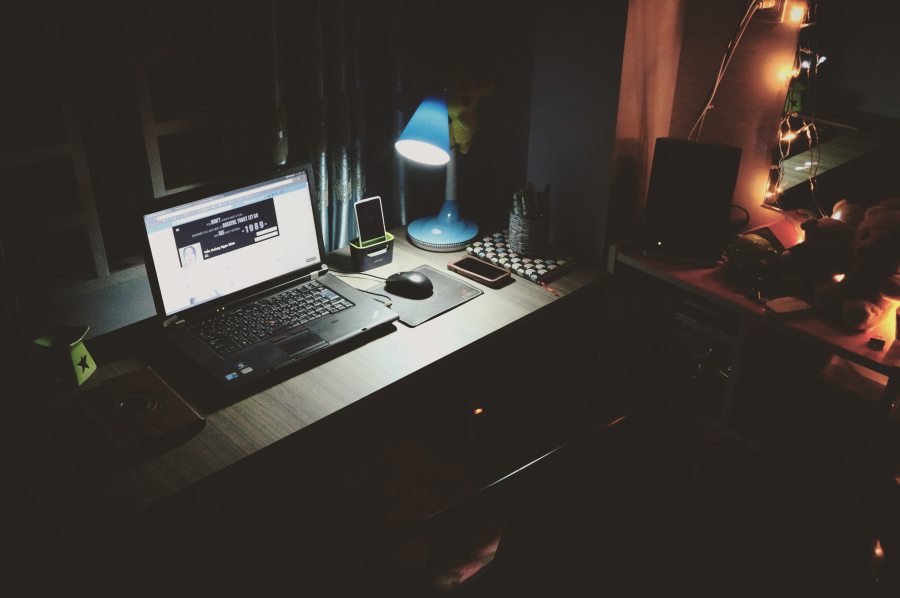
Photo by Stefan Lobont on Pexels.com

These days a new belief has started within the incel community called Dogpiling: an online theory that implies women are rejecting men to engage in sexual acts with dogs. While this isn’t a mainstream idea yet, dogpiling is a longstanding theory that is rapidly beginning to thrive. Despite a lack of evidence (where would they even get it?) the idea has maintained its hold and is now slowly creeping its way to the mainstream incel community. Dogpill believers claim that the very fact that “there are more posts online of women describing romantic feelings for dogs rather than male virgins”, supports their theory.

Now to understand this we need to understand two very different “movements”. The first being Men Going Their Own Way, or the MGTOWs, who due to having bad experience with woman specifically in the romantic region have chosen to forsake any involvement with women. And the other more radical “movement” being that of the incel, who claim that women are knowingly refusing to have sexual relations with them. Their ideolog encompasses that women who are sexually active are “sluts” and they demonise the women who have premarital sex. There are a lot od narratives out their but all falling under two categories where men demonise sexually active women and that the said women get a kick out of rejecting “good” men. Hence Dogpiling snugly fits between the two narratives, that women would have relations with dogs to satisfy their sex drives and subsequently reject “good” men. A chat moderator for the group explains that the idea probably evolved from the theory that women need strong alpha males in their lives and that they do not care if their mate is human or not if they satisfy the above criteria. Should someone still be thinking that this is the work of some awkward teenage boys trying to vent out their frustration, need it be reminded that a few incels have made headlines over the last several years, even linked to terrorist attacks. Both Elliot Roger and Alek Minassian were self-proclaimed incels and Are often heralded in the incel community.

Incel community is filled with men describing violent ways they have lashed out against the women who have “wronged” them. Inceldom encourages straight men to alienate themselves from society and creates a black-and-white worldview. These people believe that women are the cause for men’s problems are encourage each other to treat sexually active people like their enemies. These are a group of sick, misogynistic hostile filth in the form of humans, many of whom are way beyond help. Because in order to help these pathetic excuses for human beings, one would need to make them realize that they are wrong. But very often these men think that they are the “oppressed victims” of the women’s “atrocities”.

  Filth no matter what kind must be eradicated at some point, how this unfolds is for all of us to see.
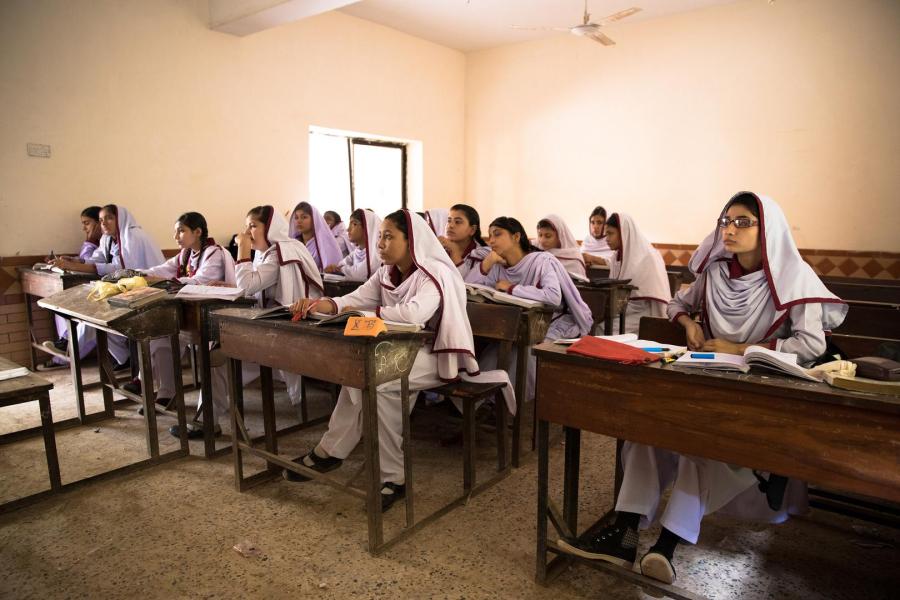
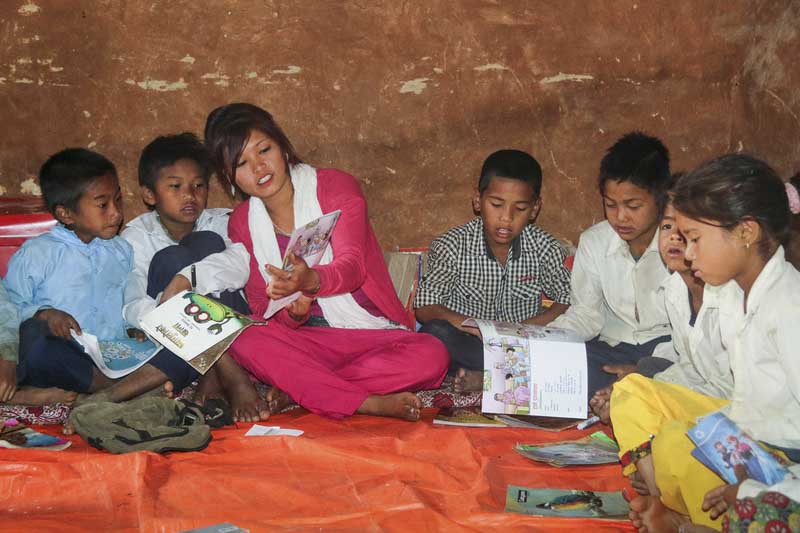
THE ROLE OF STUDENTS IN REMOVING ILLITERACY.

Students play a very important role in removing illiteracy. … This is because the students are responsible for ensuring they themselves are engaged in the learning process and in ensuring that they become enlightened to be able to help others on coming out illiteracy. In this modern age there are several ways to ensure you don’t miss out on education and end up in poverty.
Without students being available and ready to learn, teacher would be wasting their time and at the end of the day they would not have someone to teach.
It is very unfortunate some students cannot access education due to poverty or other life situations that hinder them from participating in the education process. But one thing that is important to note that for there to be eradication of illiteracy the students themselves must be willing and available to partake of this treasure. The thirst for education or for learning is what is required for one or a nation to eradicate illiteracy.
This means that even that are in poverty, they need to be willing to learn even from their counterparts that have access to education. This means that access to education is readily available in this contemporary world is readily available.
Therefore from this alone one is able to understand that students play a very important role in eradicating poverty.   
Students can play an imperative part in expelling lack of education as they have a lot of time.In summer vacations they can give several hours to instruct the uneducated people in regions or towns close to their residence. They can stir the uneducated people in living aptitudes, appropriate cleanliness, childcare, and sustenance. Additionally, they can evacuate particularly the social wrongs from the psyche of ignorant people like visually impaired faith in superstitions, religious bias, communalism and limited – mindedness.

They can educate about the significance of being illiterate.They can get to different plans of the administration for their inspiration and growth. they can render it better with the assistance of educational organizations, National Literacy Mission, NGOs and social gatherings.

A country wants to achieve the goal of 100% literacy, it will have to involve the students in the literacy programmes.

Each one teach one is a famous historical proverb that originated in America before the declaration of the Emancipation Declaration. The black people did not have privileges to education. Thus, this campaign ‘each one teach one’ was launched to educate the colored people. The few educated black people taught as many uneducated people as was possible.

Ebony and Ivory: The Divided Colours of Society

In the classic and unforgettable song, ‘Ebony and Ivory’, written by Paul McCartney and sung in duet in McCartney and Stevie Wonder, an extremely sensitive question is put in the forefront: if ebony and ivory, the black and white reeds can coexist in piano keyboard “in harmony” why doesn’t it happen in our case? The song became public in 1982 but the question remains a nagging one in human civilization even today. Why do we play the superior-inferior game on the basis of the colour of skin? It is especially intriguing. Science has proved beyond doubt that it is not caused by anything else but by the varying degree of melanin in our skin. Those who among us have lightly pigmented skin types possess approximately half as much epidermal melanin than those most darkly pigmented. There is no better or worse DNA involved to make one group inherently superior at the cost of another.

But societal ideas defy scientific rules. Nowhere perhaps it is more evident than in the distinction between black and white. The US just recently has witnessed the eruption of protests following the killing of George Floyd, a middle aged Afro American, by a white policeman. When he cried and appealed to the policeman who had his knee on Floyd’s neck, saying “”I cannot breathe”, it fell into deaf ears. Within a couple of days after this horrific incident another black man was shot and killed by a white officer in Atlanta. President Trump seeks to solve the problem on his own style by promising some revisions of policing standards. But everyone knows that the solution is too superficial to tackle the problem. The roots of the problem lie much deeper into our minds and it is engraved in society and in our everyday life.

One need not romanticize the black cause. But as the leading slogan of the recent protests asserts “Black Lives Matter”. In fact, any life matters. It is also good to see the number of white participants in the protests, who are equally conscious of the terrible outcome of such distinction based on colour. South Africa had long been a warning to the world in having practiced apartheid. One can even argue that the world got a great leader like Gandhi, partly due to the fact that he was thrown out of a train in that country despite being a ticket holder but daring to travel in upper class. Officially apartheid is no longer there in South Africa after the blacks gained power. But in most parts of the world the same attitude remain unofficially. In various European countries too, like America, which are otherwise admired for proclaiming liberty, freedom, rights and equality for all, behind the constitutional provisions such discriminations remain. More  alarming is the latent racist bias. The skin colour plays a vital role in determining the degree of opportunities, social and economic positions and status in society. The fight must go on. Martin Luther King, Jr., the iconic leader of civil rights movement in the US and a disciple of Gandhi, made this remark: “Our lives begin to end the day we become silent about things that matter.”

An Indian cannot rest assured that we are far removed from such incidents. Any Indian committed to the welfare of our society also know that we are not immune from the same disease. Recently, in West Bengal one headmistress and one teacher of a government-aided school were suspended for teaching from a textbook which has the picture of a black man as ‘ugly’ and a white man as ‘uncle’. We all know that ‘colour sensitivity’ is a pan Indian phenomenon. Despite the fact that our skin colour in general gains the white tag many of us are extremely obsessed with being fair at least. Fairness creams and solutions have a wide market. Despite being banned from advertising proxy advertising goes on unabated. The horrific television commercials of a girl using such cream before the first date or before facing the interview board may be a thing of the past thanks to large scale protests by social activists. But our perception of ‘fair is beautiful’ has hardly changed. The matrimonial columns of all newspapers prove the colour obsession of Indians of all varieties.

It is not a crime to be black. Nor is it a crime to be white. The gravest crime is to assess human beings on the basis of colour. Rightly the piano provides a valuable guide in this regard.

Self love is important

If someone ask you, name 5-10 people who you love the most, or 5-10 people who is in your priority. You will make a long list including your family, partner, relatives, friends etc but your own name is may be somewhere at the bottom or may not be even present in the list. As we don’t even think that self- love is as important as loving other or may be much more important than that. And it is not selfishness.

Self-love is accepting yourself fully with all your flaws, treating yourself with kindness and respect and nurture your growth and well being. It involves not only how you treat yourself but also your thought and feelings about yourself. When you love yourself you positively see to yourself. Not everytime, you may feel angry and disappointed sometimes but you will forgive yourself in sometime.

HOW TO SHOW YOURSELF LOVE

  • Say positive things to yourself. Like I’m beautiful, I’m able to do this in a proper way.
  • You prioritize your health and well being. If you are not feeling well or feeling sad then cuddle yourself, hug yourself, make feel yourself special. Make coffee for yourself. Read your favourite book or enjoy your favourite song. Spend time with yourself.
  • Spend time with those people who support you or make you feel happy and comfortable and built you up and avoid those people who don’t.
  • Try to recognise your strengths. Work on your skills. Try to polish them. It will help you to make yourself feel great.
  • Always value your feelings. Don’t do such things which you don’t like, just to make others happy. Sometimes thinking about yourself is not selfishness, it’s self-care.
  • Challenge yourself to do the tasks. It gives you positive motivation and help you to achieve your goal.
  • Accept your imperfections. Always think that you are beautiful in your own way, the way you are.

If you don’t love yourself then you are likely to be self critical and always fall into people’s pleasing and you start looking for perfectionism due to which you started feeling low and you started feeling flows in yourself which decrease your confidence. You also start tolerating abuse or mistreatment from others. You start neglecting your need and feeling because you don’t value yourself.

So, it is necessary to love yourself and prioritize yourself. It will help you to develop confidence and self-esteem. Self love is the foundation that allow us to be assertive, set boundaries and create healthy relationship with others, practice self care, pursue our interests and goals and feel proud of what we are.

Solitary confinement cell

Over the period of time, the idea of prison has evolved from just punishment to rehabilitation of criminals. The reason behind the rehabilitation was to prevent the convicts from repeating the crime.

One such attempt was made in 1787 when a group of influential Philadelphians met at the house of Benjamin Franklin. They considered that the environment of a shared cell by male, female, children and prisoners convicted of heinous crime resulted in bad influence on each other. Thus, they came with an innovative idea of creating an environment that supported repentance by the convicts.

They built Eastern State Prison, in which each prisoner was offered a separate cell containing a flush-toilet, central heating and an outdoor exercise yard covered by a 10 feet wall. The skylit room and the hallway that resembled the church like appearance, made the prison a perfect place for spiritual repentance. The prisoners would be left in silence and solitude to reflect upon their mistake. The Eastern state building was usually referred to as Penitentiary because the criminals were expected to become penitent during their stay in that building.

But when the convicts were brought to this building they experienced a different realm. Charles Dickens, an English author, upon his visit to the Eastern State Prison says the following in his travel journal, chapter seven titled “Philadelphia and its Solitary Prison:”

In its intention I am well convinced that it is kind, humane, and meant for reformation; but I am persuaded that those who designed this system of Prison Discipline, and those benevolent gentleman who carry it into execution, do not know what it is that they are doing….I hold this slow and daily tampering with the mysteries of the brain to be immeasurably worse than any torture of the body; and because its ghastly signs and tokens are not so palpable to the eye,… and it extorts few cries that human ears can hear; therefore I the more denounce it, as a secret punishment in which slumbering humanity is not roused up to stay.”

Most of the inmates in the cell expressed anxiety and despair about their solitude. They were pushed to the limits of solitude in that cell where they hardly heard or saw anyone except the guard. The guards too don socks over their shoes to dampen the sound and even the slightest of sounds from adjacent cells were barred by the cell architecture. This solitude was never met remorse rather considered as mental torture that killed all the hope of living for a prisoner. The prison which was supposed to give back a better person to society, was sending soulless corpses instead. Another excerpt from Charles travel journal says the following,

Better to have hanged him in the beginning than bring him to this pass, and send him forth to mingle with his kind, who are his kind no more

The above words reflect the reflection of prisoners witnessed by Charles Dickens. The inmates usually lost all their hope for a prospective living before leaving the Penitentiary. It is hard for us to expect them to adapt to the outside world after spending years with their only companion which never provoked or got provoked by them. When Charles Dickens asks his companion about the prisoners conduct of themselves when they are going out of the prison while hinting his presumption about trembling , he says the following,

“Well, it’s not so much a trembling,”

“though they do quiver — as a complete derangement of the nervous system. They can’t sign their names to the book; sometimes can’t even hold the pen; look about ’em without appearing to know why, or where they are; and sometimes get up and sit down again, twenty times in a minute. This is when they’re in the office, where they are taken with the hood on, as they were brought in. When they get outside the gate, they stop, and look first one way and then the other; not knowing which to take. Sometimes they stagger as if they were drunk, and sometimes are forced to lean against the fence, they’re so bad: — but they clear off in course of time.” 

This explains the extent of mental distress the inmates might have experienced during their stay in the penitentiary. What is more shocking is that representatives of many countries around the world flocked to witness the penitentiary only to adopt this model later in their country. Though this penitentiary, after its commissioning in 1829 was closed in 1971 for the reasons of overcrowding. The painstricken screams of the inmates which never crossed their mouth can still be witnessed by the words of Charles Dickens.

But the modern world prisons have got rid of those systems for imprisonment and use them only as punishment. The fear of this type of punishment helps the guards to maintain the social behaviour of inmates. 

Source:- 1. Charles Dickens excerpt. 2. Eastern state prison

ISRO’s GSLV 3.0 can boost 5G Dream Constellation : Super Exclusive !!!

GSLV-F06 carrying GSAT-9 at the second launch pad” width=”660″ height=”auto” tw=”1200″ th=”801″ />In picture: The fully integrated GSLV-F06 carrying GSAT-9 at the second launch pad. India has long been yearning for uninhibited high-speed internet services, despite having the world’s second largest internet user base after China. The country has fallen behind numerous Asian countries in acquiring the fastest internet connectivity speeds due to infrastructure limitations and outdated satellite technology.

There is, however, some good news for the netizens of India as Indian Space Research Organisation (ISRO) has plans to introduce a new era of high-speed internet to the country with the launch of its three new communication satellites: GSAT-19 in June, followed by GSAT-11 and GSAT-20.

Credit : Third Party Reference

ISRO chairman Kiran Kumar said to Times of India (TOI):

We will launch three communication satellites. GSAT-19 in June and GSAT-11 and GSAT-20 thereafter. GSAT-19 will be launched by GSLV Mk III, Isro’s next-generation launch vehicle boosted by an indigenous cryogenic engine that is capable of carrying a four-tonne satellite to the geosynchronous transfer orbit. These satellites will use multiple spot beams (a special kind of transponder that operates on a high frequency) that will increase internet speed and connectivity. These multiple spot beams will cover the entire country.

Unlike the traditional broad beam, these new satellites will be using narrower beam known as “spot beam” which can travel faster and enable high-speed internet connectivity within a limited range of operation. As the name suggests, spot beams are concentrated high-power signals that can provide better signal reception within the specified boundaries and consequently the coverage will be limited.

The catch here is to reuse the beams multiple times over smaller areas, unlike the single broad beam sent across wider areas of coverage. The spot beams will not lose their signal strength which is the case with a single broad beam that has to travel longer distances and suffer from interference.

Tapan Misra (director of Ahmedabad-based Space Application Centre) sheds more light on the data-transfer speed comparison between the current-gen and next-gen GSAT satellites. Accordingly, the GSAT-19 is rated to be capable of reaching top data transfer speeds up to four gigabytes per second as opposed to existing data transfer speeds of one gigabyte per second. In other words, the GSAT-19 will offer a data transfer output which is equivalent to four existing GSATs and this output will be further multiplied with the use of up to eight beams.

The GSAT-11 (heavier version of GSAT-19) is touted to support up to 16 beams for a total attainable data transfer speed of 13 gigabytes per second. The GSAT-11 is expected to be launched by the end of 2017.

The GSAT-20 has a proposed launch set for the end of 2018 and it is expected to use two polarisations for each of its 40 beams. Thereby, it is expected to support a total of 80 beams for a net data throughput of 60-70 gigabytes per second. A recent report from the Internet and Mobile Association of India projects the country to reach a massive internet user-base of 450-465 million by June. In contrast, the country’s average connection speed is rated at a meagre 4.1Mbps.

Consequently, India has a lowly 105th position in the world’s fastest internet connectivity speed rankings behind other Asian countries, according to a recent survey report by a US-based cloud service provider. South Korea leads the pack with 26.3Mbps and followed by Hong Kong (20Mbps), Sri Lanka (6Mbps), Vietnam (6.3Mbps), and finally China (5.7Mbps).

Reference – divyanshspacetech.wordpresss.com

Communist China’s dubious role with India

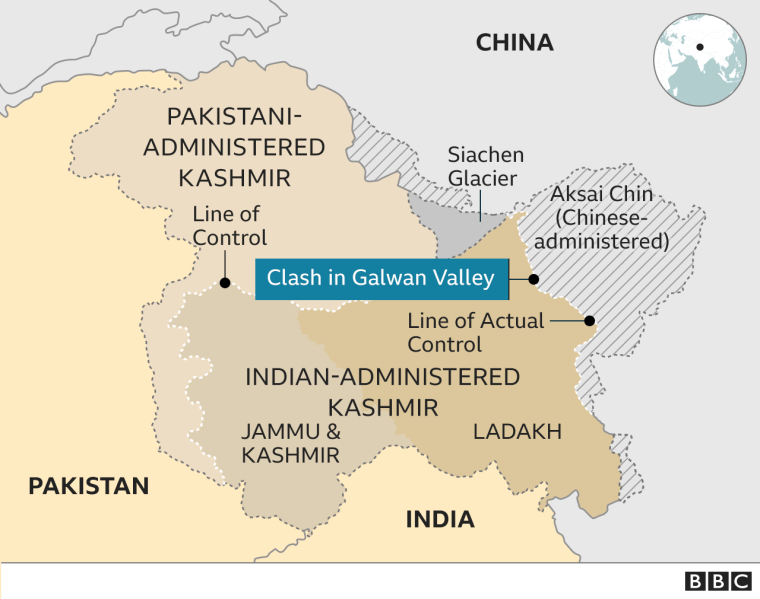
At the outset, I salute to our valiant and courageous soldiers who have sacrificed their lives against aggressive Chinese force. Our soldiers sacrificed in the Galwan Valley of Ladakh region to protect the country.  In spite of worst climatic condition, they were guarding our border to protect Indians. It has to be admitted that no one is more selfless and brave than a soldier.       

       India, from ancient period, have good relation with China as many travellers visited India and appreciated Indians,  our culture, hospitality, food, etc.  One famous traveller was Fa-hien a Chinese Buddhist monk visited on foot from China to India. He visited many sacred Buddhist sites to acquire Buddhist texts and had jotted down his impressions about India. Another Chinese traveller Hiuen Tsang visited India during the period of emperor Harsha also known as Harshavardhana. When he went back to China, he wrote impressively about India in his book ‘Si-yu-ki’ means ‘Record of the Western Countries’.  Third Chinese traveller is I-tsing, a Seventh century Chinese Buddhist pilgrim, was highly impressed after visiting India. Three  names have been mentioned here.    

    Thus from ancient period onwards we have good relation with China but problem started after the Chinese Communist Revolution. It is observed that they have developed ‘expansionist attitude’. It may be mentioned that during the early 1950s – the period marked by an increasing Chinese military superiority over India – both countries were friendly and cordial to each other and the Chinese did not want to disturb this because ‘they found in Nehru an important champion of their case in international forums and thus a great help in their control of Tibet’.  “In the year 1955 the euphoria of “Hindi-Chini Bhai-Bhai” continued unabated. After his return from China in November, 1954, Nehru started making preparations for the forthcoming Bandung Conference to be held in Bandung, Indonesia. This first large-scale Afro-Asian Conference was a meeting of Asian and African states, most of which were newly independent. It was sponsored by India Indonesia, Burma, Pakistan and Ceylon (now Sri Lanka) and took place during the week of April 18-24, 1955. Having just returned from his China visit, Nehru’s enthusiasm for China was again exhibited at this Conference when he became the main sponsorer of Chou En-Lai to this conference in spite of reservations from some countries” (new.resurgentindia.org/the-history-of-sino-indian-relations-and-the-border-dispute-between-the-two-countrie).  Further, it is pertinent to mention that “India actually helped China consolidate its control over Tibet. In October 1950 India refused to sponsor a Tibetan appeal to the United Nations. When El Salvador sponsored such an appeal, India played a key role in squashing it” (www.people.fas.harvard.edu/~johnston/garver.pdf).

So the present   leaders of China should not forget India’s massive friendly and generous contribution towards China. Unfortunately, in present days we have been observing different China, now international community blaming China because of COVID-19, economy of China is in recession stage, unemployment has been scaling up etc. To justify the same, few lines from the newspaper, South China Morning Post (SCMP, 20/2/2020) are presented here,  “Coronavirus costs keep mounting for manufacturers, who are facing huge losses in sales and struggling to ramp up production. If such losses take place then there will be negative effect in the economy and poor Multiplier Effect meaning more unemployment, less purchasing power of the people, and finally a sort of “Vicious Circle of Poverty” qualitatively may operate”.  With all these issues faced by the leaders of China may be they have adopted tactics of conflict with India. China’s aggression vis-à-vis conflicting attitude is observed not only with India but Hong Kong protest, South China Sea conflicts are few among many where China is involved.  Hope good sense will prevail among the Communist leaders of China and they will discard transgression attitude.

Dr. Shankar Chatterjee

Former Professor& Head (CPME)

NIRD &PR

Hyderabad-500 030

India

Mental illness in Children

Although an acute awareness has started emerging after years and decades of negligence in discussing mental health and mental illness as one of the prime subjects in today’sworld, mental illness in children still seems to belong to a narrow lane behind a shadow which most people are completely unaware of.

Over 40% children from this generation face developmental disorders including anxiety disorder, depression along with other mood disorders, schizophrenia, eating disorders so on and so forth. Since it is very normal for children to have a fickle mindset due to which the common symptoms of these disorders are generally ignored by their teachers, parents and other elders.
The best possible way to detect whether a child is suffering from any of these disorders or not is to get them to talk. A psychotherapist who has sufficient knowledge in child psychology may be appointed to get in touch with the child and proceed with the process which may or may not include medication.

However, ignoring these symptoms in children may lead to life fracturing impacts in their characteristics which will eventually refrain them from having a normal and sound personal and professional life. Therefore, mental health in children should be discussed as a prime subject and should never be neglected or ignored by the elders for the children to have a successful professional and personal life in their future.
There have been many instances where mild to severe symptoms have been neglected which has caused alcoholism and depression in future. A recent study shows depression takes place at a rate about 4-5% in children and upto 20% during adolescence and most of them need to be clinically diagnosed with proper medication, otherwise, it leaves life and scars in an emotional and psychological sphere.

Autism spectrum disorder is another illness that can cause lifelong impact on children if not diagnosed in a proper way since the beginning. Kids with autism require special care and treatment in order to lead a normal life further.

Various studies show 1 out of 10 children from our generation tends to suffer from mental disorder that in most cases goes unnoticed. These children tend to be nervous most of the time due to their lack of ‘normalcy’ that they are very much aware of. Bullying in high school and its contemporary institutions makes it worse for many. They suffer in silence which affects their mental health in a huge way.
Ignorance towards these things can lead to long term as well as short term consequences which include but are not limited to changes in sleeping and eating habits, abuse of drug and alchohol, gaining/losing weight, hypertension and depression.
Although many people tend to consider medication to be the only treatment available today but in many cases mere psychotherapy sessions work magically. A few excercises are supposedly recommended to those suffering that works really well and medicines are recommended only in crucial conditions.

Henceforth, even mild symptoms should never be ignored by the elders for it may leave life long physical and mental scars that would make their lives highly threatening.

– Suvasree Bandyopadhyay.

What all do we know?

It is often said that while success has several suitors, failure has none.

Nepotism might be an alien term for many but for some this is a cause of depression or on a higher scale cause of death. Favouritism or special attention granted to close friends and relatives by the people in power is called nepotism and we all face this in one way or the other. No matter which field you are working in, nepotism is everywhere. It is like a disease that has already made the world hollow and is still mushrooming. It is all about power, the damn chair! We all are part of it, sometimes as a victim and the other times as the sinner. The tragedy is we all believe that we are victims and we do nothing bad. The truth is, we all are trapped in this materialism knowingly or unknowingly and it doesn’t matter because we are too weak to come out.  What do you think was the reason Voldemort chose the dark art and attacked Hogwarts or Kaleen Bhai wanted his two men to be killed by his son in Mirzapur, all of these to not let the other one powerful than you because we can’t stand someone being more powerful than us. Be it reel or real nepotism is everywhere. We want the other person to respect us. Nobody wants to give up their power and let the other rule, even if the other person is better than them.

All of this has become the part of a dynasty. The biggest example of this is the glamorous industry BOLLYWOOD, hollow and shabby from inside. Many normal people with big dreams go to Mumbai to fulfil their wishes. But the most appealing has its own secrets, its flaws. As soon as an outsider start making progress, making fame after working hard. These big names ban them, ignore them, boycott them and what not. Everybody has its own way to handle it but not everyone can handle it properly.

A child may be a victim of depression too. But hardly have we cared. As for us nothing like this exists. Talking about mental health is a taboo because we don’t know how this society will treat us. That’s why to most of us it doesn’t even exist. All we get from such people is a one liner- EVERYTHING WILL BE OKAY, DO NOT OVERTHINK.

This is the most irritating line when you are in pain and going through a lot. Nobody needs advice at that time. That entire person with depression need is to be heard, your support without you being judgemental. But the cruelty of society doesn’t let it help people without judging them. Life is all about helping each other in the time of need. It doesn’t matter much If you cannot be with someone in their happy times, at least try to be with them in their time of need, and stop using others for your selfish interests.

In the end you will definitely get what you have planted. Plant your destiny well. Spread love. Karma spares no-one.

We all just need to be patient time heal wounds. Your life matters the most. Nobody will get affected more than your parents and your loved ones. Think about them before taking detrimental steps.

Creative Approach.

Long time ago, one of the most influential scientists in history was strolling through a garden when he was struck with a flash of creative brilliance that would change the world.

While standing under the shade of an apple tree, Sir Isaac Newton saw an apple fall to the ground. “Why should that apple always descend perpendicularly to the ground,” Newton wondered. “Why should it not go sideways, or upwards, but constantly to the earth’s center? Assuredly, the reason is, that the earth draws it. There must be a drawing power in matter.” 

And thus, the concept of gravity was born.

The story of the falling apple has become one of the lasting and iconic examples of the creative moment. It is a symbol of the inspired genius that fills your brain during those “eureka moments” when creative conditions are just right. What most people forget, however, is that Newton worked on his ideas about gravity for nearly twenty years.The falling apple was merely the beginning of a train of thought that continued for decades.

Newton isn’t the only one to wrestle with a great idea for years. Creative thinking is a process for all of us. In this article, I’ll share the science of creative thinking, discuss which conditions drive creativity and which ones hinder it, and offer practical tips for becoming more creative.

Creative Thinking: Destiny or Development?

Creative thinking requires our brains to make connections between seemingly unrelated ideas. Is this a skill that we are born with or one that we develop through practice.This is not to say that creativity is 100 percent learned. Genetics do play a role.

All of this to say, claiming that “I’m just not the creative type” is a pretty weak excuse for avoiding creative thinking. Certainly, some people are primed to be more creative than others. However, nearly every person is born with some level of creative skill and the majority of our creative thinking abilities are trainable.

Now that we know creativity is a skill that can be improved.

Growth Mindset

What exactly are these “personality factors” that researchers are referring to when it comes to boosting your creative thinking?

One of the most critical components is how you view your talents internally. More specifically, your creative skills are largely determined by whether you approach the creative process with a fixed mindset or a growth mindset.The basic idea is that when we use a fixed mindset we approach tasks as if our talents and abilities are fixed and unchanging. In a growth mindset, however, we believe that our abilities can be improved with effort and practice. Interestingly, we can easily nudge ourselves in one direction or another based on how we talk about and praise our efforts.

Embarrassment and Creativity

How can we apply the growth mindset to creativity in practical terms? In my experience, it comes down to one thing: the willingness to look bad when pursuing an activity.The growth mindset is focused more on the process than the outcome. This is easy to accept in theory, but very hard to stick to in practice. Most people don’t want to deal with the accompanying embarrassment or shame that is often required to learn a new skill.

The list of mistakes that you can never recover from is very short. I think most of us realize this on some level. We know that our lives will not be destroyed if that book we write doesn’t sell or if we get turned down by a potential date or if we forget someone’s name when we introduce them. It’s not necessarily what comes after the event that worries us. It’s the possibility of looking stupid, feeling humiliated, or dealing with embarrassment along the way that prevents us from getting started at all.

In order to fully embrace the growth mindset and enhance your creativity, you need to be willing to take action in the face of these feelings which so often deter us.

CONCLUSION

Creativity is a process, not an event. It’s not just a eureka moment. You have to work through mental barriers and internal blocks. You have to commit to practicing your craft deliberately. And you have to stick with the process for years, perhaps even decades like Newton did, in order to see your creative genius blossom.

The ideas in this article offer a variety approaches on how to be more creative. The things to always remember is that creativity is a process not an event.

4 fundamental laws of India every student should know

Students of a country are the most powerful and important resource for better development. Students create the future of a country. As important students are, they sometimes end up being exploited and denied of their rights.

It is very important for every student, specially college students to know their legal rights. Although, in India, there is no special right and provision is solely dedicated to students, but here are four very important laws in the Indian constitution that every student must know of the Indian Penal code.

Right to Information (Article 19 (1) (a)):

Right to Information (RTI) is an act of the Indian Parliament that makes the right to information a fundamental right for the citizens of India. This Right to Information was passed by Parliament on June 15, 2005, and came fully into force on October 12, 2005.

Under the RTI Act, any citizen of India can request information from any public authority and the authority will have to revert back at the earliest or within thirty days.

If the matter involving a petitioner’s life and liberty, the information has to be provided within 48 hours.

Right to Equality (Article 14):

Right to Equality (Article 14) of the Indian constitution give equality before the law within the territory of India. This law is applicable to anybody and everybody who is inside the territory of India including an Indian citizen, corporations, and foreigners.

Article 14 permits classification, so long as it is ‘reasonable’, but forbids class legislation. Classification of groups of people is considered reasonable when:

  • The classification is based upon intelligible differentia that distinguishes persons or things that are grouped from others that are left out of the group,
  • The differential has a rational relation with the objective of the act

Right to Education (Article 21A):

Right to Education Act (RTE), is an Act of the India Parliament which was made on August 4, 2009. This law describes the modalities of the importance of free and compulsory education for children between 6 and 14 in India under Article 21 (a) of the Indian Constitution.

RTE makes accessibility of education a fundamental right of every child between the ages of 6 and 14 and specifies minimum norms in elementary schools.

This law states that all private schools have to reserve 25 percent of seats to children (to be reimbursed by the state as part of the public-private partnership plan).

It also prohibits all unrecognised schools from practice and makes provisions for no donation or capitation fees and no interview of the child or parent for admission.

The Act also provides that no child will be held back, expelled, or required to pass a board examination until the completion of elementary education.

There is also a provision for special training of school drop-outs to bring them up to par with students of the same age.

Right to Life (under Article 21):

The Right to life (Article 21) says that nobody, including the Government, has to authority to end your life. Under this law, it is mandatory for the Government to take appropriate measures to safeguard life by making laws to protect you.

Right to Life also makes it necessary for the govt to take appropriate steps to protect you if your life is at risk.

Public authorities should also consider your right to life when making decisions that might put you in danger or that affect your life expectancy.

If a member of your family dies in circumstances that involve the state, you may have the right to an investigation.

Mystery behind Sushant Singh Rajput sucide may be revealed!!!!

On 14th June, the charming actor committed suicide in his own flat. At first report, there was not a single suicide not was there. Then after his nearby closest friend shekhar which is a well known in bollywood comes and saying there is a hypocrite panel behind this suicide.

As from the coming report from media, it is impossy the depression of sushant was dur to well established production houses like Yash Raj Films, Balaji Filmes, Salman khan films etc. These production houses ban this outsider actor from bollywood. A 1year ago there was a clash between sushant and suraj Pancholi at a part night of bollywood. There Salman Khan sort out the fight. And at last he settle down the heat. But after that He silently makes the things tough for Sushant.

After that incident Sushant signed 7 films, but unfortunately not even a single film comes on box office. From the sources, there was also a humour that every well known production house banned this talented star. But after that too, Sushant makes it into the very remembered film “CHICHORE”. He showed his master class performance in this one. And it was his last and the biggest hit in BOLLYWOOD.

Now many actors and producers are giving tribute to him. But now audience are aware and just trolling down this people. Many people are requesting Police to take the look up at social media too into this investigation. Police also claimed they will going to look up at all the points.

At last everyone just want Justice for Sushant Singh Rajput. Let the nepotism must be banished through all. Because it is really taking alot from us. It is not only in Bollywood, also in every field. This thing must be stopped. And people have to understand if they don’t give hope to a person who is in grief, then they should not also celebrate on their failure. And try to aware your surroundings, and whenever finds a man with depression, please let know about him.

Indo-China border dispute explained

There was never a border between China and India. In 1950 China invaded and took Tibet. The border between India and Tibet became the border between Indian and China. In the year 1914 there was a agreement between India and Tibet about the border line. But China never agreed to Indian claims. In 1962 India and China had a war. After that there were minor clashes which lasted in the year 1975 in which 4 Indian soldiers died.

Had China invaded the Indian territory or India did? How much territory had been occupied? The Line Of Actual Control(LAC) is not clearly defined and not demarcated. There is a disagreement where LAC lies. The region between this disagreement is known as Area Of Differing Perception (ADPA) which is also known as gray area.

There are three regions where the current dispute is going on namely Pangong Lake, Galwan valley and hot springs near Konga.

1. Pangong Lake: Both Indian and Chinese army went for patrolling in this region which covered about 10km. Those conversations had turned into conflicts. From the past few years India started building infrastructure by building roads which made easy for India to transport the troops. China claims that their LAC lies in Finger 4 whereas Indian claimed LAC lies in Finger 8. The region between these fingers is termed as gray region. The first dispute began on 5th May 2020 and Chinese troops travelled to finger 5 and eventually reached finger 4 on 10th of May. Over 5000 soldiers are between Finger 4 and finger 8 which covered about 8km. Both the governments agreed not use guns and bullets. That is why we have seen savage kind of beating which includes the rocks, sticks, iron rods and fists. Intially Indian government claimed that three soldiers were killed and which rose to 20 in number the very next day. Indian claims that 43 Chinese soldiers were killed but there is no official announcement from the Chinese government.

2. Galwan valley: It is situated at the height of 14000 km above the sea level. They occupied 2-3kms of Indian territory which also gave them direct access to the Northern India. The main advantage to Chinese troops lies in the height itself. They can attact the Indian troops from above. We can’t say that Chinese intruded in the Indian land in Pangong river because there wasn’t a clear LAC. But here there is a clear border line which was agreed by both governments. Chinese crossed the border line.

3. Hot springs near Konga: It is the least affected area among the three. Chinese got no use of this area.

Rajnath Singh once admitted in an interview that Chinese soldiers crossed border. PIB made sure that it was a fake news. Few say that China is trying to evoke the nationalist sentiment amidst COVID19 crisis. Few say that Chinese is against the infrastructure that had been developed by India by building roads. The majority say that the government made Ladakh a union territory and this had made China to do so.

There are no natural resources in that area and still China try to conquer that frozen deserted land to show its power and strategic position in the world.

Renaissance: A new Beginning

Renaissance is one of the most important periods when it comes to the chronological graph of English literature. Various theorists and historians have developed their own theories in terms of renaissance ideologies, style, fashion so on and so forth. This article aims at representing the shift and transformation that was brought about by the movement during the Renaissance period with the reference with reference to Stephen Greenblatt’s work. Greenblatt gives a vivid idea of the transformation that took place in the 16th century which brought about a fashion sense which made them realize that they could be transformed and fashioned in a way that would make a change.

The central thematic idea of this transformation is not the autonomy, but the perception. This change is quite difficult to express in a vivid manner because it is not only complex but the mode is dialectical. However, the simplest observation that one can make here is that the 16th century brought about a collective sense of self-consciousness among the people. Such self-consciousness had been once wide spread among the classical people but Christianity made a shift happen in the perspective which simply brought a growing suspicion of man’s power to govern.


Renaissance brought about a collective consciousness in terms of all kinds all social, political, psychological and economic domains which has completely changed the world since then.


Spenser in The Faerie Queene puts forward a sense of self-consciousness towards fashion which had never been seen in Chaucer’s poetry. Knight Calidore can be considered a representative who brought forward this consciousness in literature and the society at a larger scale.
Greenblatt also explains the kind of this sense of “fashion” and he mentions how even the figure of Lord Christ in the New Testament has been shown as a figure with a sense of fashion within himself. Apart from that, this fashion gives rise to considerable anxiety, self-doubt and acquires a new range of meaning.


The role of literature in bringing forward this transformation in the society has also been highlighted by Greenblatt. According to him literature functions as a driving mechanism that helps to bring about this sense of self-doubt and pushes further to re-imagine their sense of existence.
A common factor in all the significant figures of the sixteenth century is their depiction of mobility from different perspectives that ends up showing the similar sense of transformation.

There is no such thing as a “single history of the self” of the sixteenth century. In order to express the sense of self-fashioning of the period, Greenblatt gives a few more points in a detailed manner. Self-fashioning according to him involves submission to an absolute power, supposedly an external one (God or some sacred book or something like that).
Self-fashioning is achieved from something which apparently seems to be something alien/strange/hostile. When one authority or alien is destroyed, another one immediately takes place. Therefore self-fashioning can be presumed to be something which is achieved at the point of encounter between an authority and an alien.

– Suvasree Bandyopadhyay

Social Media: Boon or Bane

We live in a massive world. Humans are spread out all over the globe. On a very basic and natural level some of us are separated from others by a huge distance and in some cases by the oceans between us. Naturally this makes it impossible for us to connect with someone across the globe. But thanks to the level of technology and advancement this world is at, most of us have smartphones and a working wireless internet connection. With the help of all this, we are all connected with each other. Via the internet there is no part of the world we can not connect to while sitting in our bedrooms on our bed. If someone told us that this would be possible 50 years ago, we would call them stupid. And it would have been a justified response as the internet did not exist. 

All this is majorly possible with the help of social media. Social media is an internet based platform which helps people as well as communities all over the world connect with each other via texting, posting, commenting etc. Some of the popular social media sites are facebook, instagram, twitter, snapchat, etc.

In the past decade social media has taken over the world with ease. With the start of myspace to facebook to the latest most popular platform snapchat, the world is now socially connected.

Social media has not only helped people connect all over the world, but it has given people an open opportunity to express themselves, it has given people careers, has helped spread important messages etc.

While all of this seems great on paper, social media also has major upsetting downsides.

With giving a common man an open platform to share his views, opinions on a certain topic freely, social media has also given a hefty amount of power into the hands of an everyday man. As a world famous quote has said “With great power comes great responsibility”.  While some people have used this power responsibly and have worked for the greater good of the world, some people have used this power to spread hate, pass on private information and commit crimes like harassment, cyberbullying etc. The amount of reported cyber crime via social media has been increasing at an alarming rate every year. While precautions as well as certain rules and restrictions have been set into place to prevent such activities, these crimes and scams continue to happen. Also in some countries like India, the cyber security department is not as strong because of which some crimes often go unnoticed.

While causing harm over the internet and helping people connect online, social media has also made people disconnect offline. Often people rather than meeting up and talking in person connect on social media and talk through that. Which would be fine if it did not hide the true nature of someone, allow manipulation and thought out schemes.

Social media can be a plus as well as an effective negative for our generation depending on how we use it. If you use social media, in your hands lies a great power. A post on social media has a potential to reach millions and billions of people online. So what you do with this reach is in your hands. Use social media wisely and carefully and make sure to also connect with people in a natural way rather than just sticking to online.