G20 document prepared by World Bank lauds India’s progress

 Digital Public Infrastructure (DPI) has had a transformative impact on India, extending far beyond inclusive finance. The G20 Global Partnership for Financial Inclusion document (https://www.g20.org/content/dam/gtwenty/gtwenty_new/document/G20_POLICY_RECOMMENDATIONS.pdf) prepared by World Bank has lauded transformative impact of DPIs in India over the past decade under the Central Government.

The document highlights the groundbreaking measures taken by Central Government and the pivotal role of government policy and regulation in shaping the Digital Public Infrastructure (DPI) landscape.

  • Financial Inclusion: Lauding India’s DPI approach the World Bank document notes that India has achieved in just 6 years what would have taken about five decades.
    • JAM Trinity has propelled financial inclusion rate from 25% in 2008 to over 80% of adults in last 6 years, a journey shortened by up to 47 years thanks to DPIs.
    • The document categorically notes, “While DPIs’ role in this leapfrogging is undoubtable, other ecosystem variables and policies that build on the availability of DPIs were critical. These included interventions to create a more enabling legal and regulatory framework, national policies to expand account ownership, and leveraging Aadhaar for identity verification.”
    • Since its launch, the number of PMJDY accounts opened tripled from 147.2 million in March 2015 to 462 million by June 2022; women own 56 percent of these accounts, more than 260 million.
    • The Jan Dhan Plus programme encourages low-income women to save, resulting in over 12 million women customers (as of April 2023) and a 50% increase in average balances in just five months, as against the entire portfolio in the same time period. It is estimated that by engaging 100 million low-income women in savings activities, public sector banks in India can attract approximately Rs 25,000 crore ($3.1 billion) in deposits.
  • Government to Person (G2P) Payments:
    • In the last decade, India has built one of the world’s largest digital G2P architectures leveraging DPI.
    • This approach has supported transfers amounting to about $361 billion directly to beneficiaries from 53 Central government ministries through 312 key schemes.
    • As of March 2022, this had resulted in a total savings of $33 billion, equivalent to nearly 1.14 percent of GDP.
  • UPI:
    • More than 9.41 billion transactions valuing about Rs 14.89 trillion were transacted in May 2023 alone.
    • For the fiscal year 2022–23, the total value of UPI transaction was nearly 50 percent of India’s nominal GDP.
  • DPIs’ Potential Added Value for the Private Sector:
    • The DPI in India has also enhanced efficiency for private organizations through reductions in the complexity, the cost and the time taken for business operations in India.
    • Even some NBFCs have been enabled 8% higher conversion rate in SME lending, a 65% savings in depreciation costs and 66% reduction in costs related to fraud detection.
    • According to industry estimates, banks’ costs of onboarding customers in India decreased from $23 to $0.1 with the use of DPI.
  • Lower Cost of Compliance for Banks for KYC
    • India Stack has digitised and simplified KYC procedures, lowering costs; banks that use e-KYC lowered their cost of compliance from $0.12 to $0.06. The decrease in costs made lower-income clients more attractive to service and generated profits to develop new products.
  • Cross-Border Payments:
    • The UPI-PayNow interlinking between India and Singapore, operationalised in February 2023, aligns with G20’s financial inclusion priorities and facilitates faster, cheaper, and more transparent cross-border payments.
  • Account Aggregator (AA) Framework:
    • India’s Account Aggregator (AA) Framework aims to strengthen India’s data infrastructure, enabling consumers and enterprises to share their data only with their consent through an electronic consent framework. The framework is regulated by RBI.
    • Total of 1.13 billion cumulative accounts are enabled for data sharing, with 13.46 million cumulative number of consents raised in June 2023.
  • Data Empowerment and Protection Architecture (DEPA):
    • India’s DEPA grants individuals’ control over their data, enabling them to share it across providers. This promotes tailored product and service access without requiring new entrants to invest heavily in pre-existing client relationships, fostering innovation and competition.

****
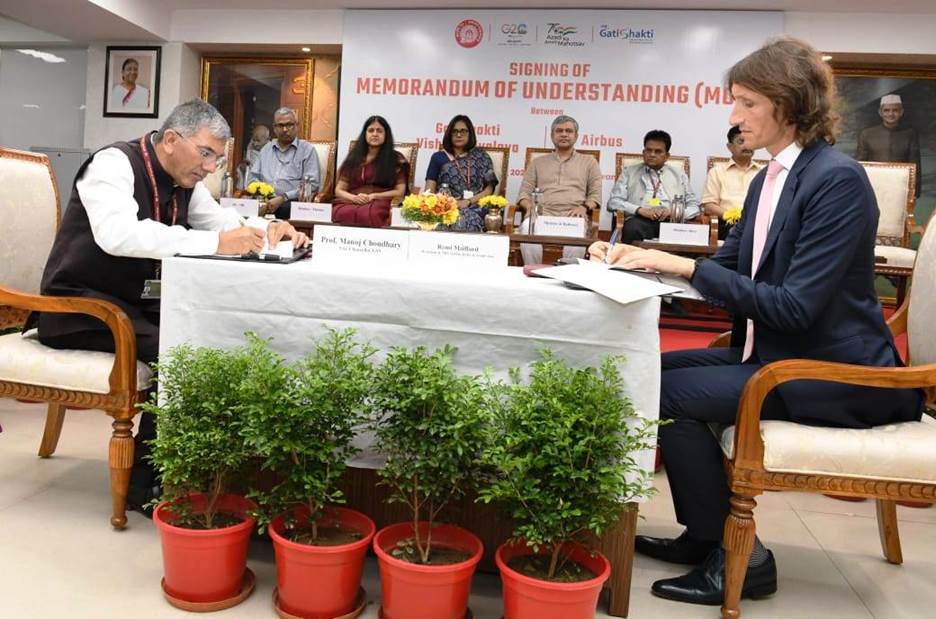
Gati Shakti Vishwavidyalaya (GSV) Vadodara and Airbus sign Memorandum of Understanding (MoU) for aerospace teaching and research

 Indian Railways’ Gati Shakti Vishwavidyalaya (GSV) Vadodara and Airbus today entered into collaboration to significantly strengthen the Indian aviation sector. An MoU (Memorandum of Understanding) was signed at Rail Bhawan, New Delhi between Mr. Rémi Maillard (President and Managing Director, AIRBUS India and South Asia) and Prof. Manoj Choudhary (Vice-Chancellor, Gati Shakti Vishwavidyalaya). The MoU was signed in the presence of Shri Ashwini Vaishnaw,  Minister of  Railways, Communications, Electronics and IT who is also the First Chancellor of Gati Shakti Vishwavidyalaya. Ms. Jaya Varma Sinha, the Chairperson and CEO, Railway Board and senior officials of the Railway Board were present on the occasion.

Airbus and Tata had recently announced a partnership to design, innovate, make, manufacture and develop in India C295 aircraft facility at Vadodara (Gujarat). Airbus is the world’s largest manufacturer of commercial aircraft and a leading producer of helicopters, defence and space equipment. The company has a long-standing relationship of symbiotic growth with India. The company recognises India as a key driver of global aviation as well as an indispensable talent and resource hub and is committed to maturing all the necessary building blocks to develop a fully integrated aerospace ecosystem in the country. Make in India is at the heart of Airbus’ business strategy in India and the company is steadily increasing India’s contribution to its global products.


Speaking on the occasion, Shri Ashwini Vaishnaw said, “GSV will focus on intense industry-academia partnerships. All its courses will be designed in collaboration with industry. The students who study at GSV will be industry ready. They will be highly sought after for employment in transportation and logistics sectors. Today’s MoU with Airbus is a significant step in achieving this goal.”

Speaking at the event, Mr. Rémi Maillard, President and Managing Director, Airbus India and South Asia, said, “As a company that is committed to developing the aerospace ecosystem in India, we realise our responsibility to invest in human capital development. The partnership with Gati Shakti Vishwavidyalaya will develop a strong pipeline of skilled workforce in the country that will be future ready to serve its fast-growing aerospace sector.”

This industry-academic partnership will enable co-development and co-delivery of sector-relevant skilling courses and programs for regular students and working professionals, joint research and industry experiences for faculty, internships and placements for students and scholarship programs. It will create job opportunities for students as per the industry requirements. It is expected that 15000 students are likely to be placed in Airbus Indian operations.

Gati Shakti Vishwavidyalaya (GSV) Vadodara was established through an Act of Parliament in 2022, for creating best in class manpower and talent for the entire transportation and logistics sectors. This Central University is sponsored by the Ministry of Railways, Govt. of India and has Shri Ashwini Vaishnaw, Minister of  Railways, Communications, Electronics and IT as its First Chancellor.

Focusing exclusively on transport and logistics sectors, GSV is a “first of its kind” university aiming to fulfil the mandate of the National Developmental Plans (PM Gati Shakti National Master Plan 2021 and National Logistics Policy 2022) across railways, shipping, ports, highways , roads, waterways, and aviation etc. Following a demand-driven curriculum and leveraging state of the art infrastructure of all the Centralized Training Institutes of Indian Railways, the GSV shall create a resource pool of professionals across technology, economics, management and policy comprising multidisciplinary teaching (bachelors/masters/doctoral), executive training and research. GSV shall also undertake trainings for Indian Railways probationers and serving officers.

Being an Industry-driven and Innovation-led university, GSV already has several collaborations with leading institutions and industries across the world.

***

Increasing investment and sharing responsibility for overcoming air pollution

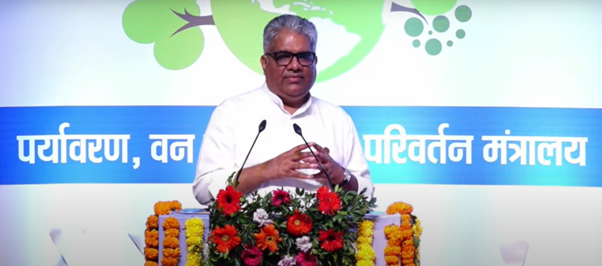
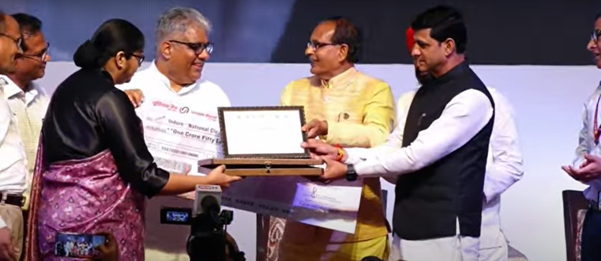
 nion Minister for Environment, Forest and Climate Change and Labour and EmploymentShri Bhupender Yadavannounced the awardsof Swachh Vayu Sarvekshan 2023 in Bhopal ,Madhya Pradesh today. Under the 1st category (million plus population) Indore ranked first followed by Agra and Thane.  In second category (3-10 lakhs population), Amravati secured first rank followed by Moradabad and Guntur. Similarly, for third category (less than 3 lakhs population) Parwanoo secured first rank followed by Kala Amb and Angul. Chief Minister of Madhya Pradesh Shri Shivraj Singh Chauhan was also present on the occasion.

Speaking on the occasion Shri Yadav said this year, 4th International Day of Clean Air for blue skies (Swachh Vayu Diwas 2023) is to create stronger partnerships, increase investment, and share responsibility for overcoming air pollution, with the global theme of “Together for Clean Air.”

The Union Minister said on 15th August 2020, the Hon’ble Prime Minister Shri Narendra Modi displaying government’s commitment to ensure clean air to all the people of the country, assuring them a healthy and productive life, announced the intent and plan to improve the air quality in more than 100 cities through holistic approach. He said the Ministry of Environment, Forest and Climate Change (MoEF&CC) has been implementing a National Clean Air Programme (NCAP) as a national-level strategy outlining the actions for reducing the levels of air pollution at city and regional scales in India since 2019.He saidthe National Clean Air Programme (NCAP) aims to systemically address air pollution by engaging all stakeholders and ensuring necessary action.

Shri Yadav said 131 cities have been identified for the implementation of the city specific action plans under this Programme. NCAP focuses on preparation and implementation of national level action plan, state level action plans & city level action plans of the targeted 131 cites.The coordinated implementation of these plans would help to achieve improvement in air quality in targeted 131 cities as well as in the entire country, he added.

Shri Yadav said with the coordination, collaboration, participation and sustained efforts of all stakeholders, objectives of National Clean Air Programme will be achieved.

The Union Minister said under NCAP Ministry has also launched “PRANA” a portal for monitoring implementation of NCAP. In this portal, action plans of cities, states and line ministries will be reflected and monitored for their implementation status. In addition, best practices adopted by cities are shared on PRANA portal for adopting these practices by other cities.

Shri Yadav said during the UNFCCC, COP 26 held in Glasgow in 2021 Hon’ble prime Minister launched the “Mission LiFE” which means Lifestyle for Environment. He said the mission aims to create and nurture a global network of individuals, having a shared commitment to adopt and promote environment friendly lifestyles and make life a mass movement (Jan Andolan).

Shri Yadav highlighted the notification of  waste management rules covering solid waste, plastic waste, e-waste, bio-medical waste, battery waste, Construction & Demolition waste and tyre and hazardous wastes. He said Extended Producer Responsibility and Polluter Pays Principles have been incorporated to ensure producers/manufacturers are responsible for management wastes in environmentally sound manner.

The Union Minister said the SATAT (Sustainable Alternative Towards Affordable Transportation) scheme of the Government aims to set up Compressed Bio-Gas (CBG) production plants and make CBG available in the market for use as a green fuel.Moving forward he said today we have a statutory Commission for Air Quality Management for Delhi-NCR and adjoining areas working comprehensively, taking the entire airshed as its jurisdiction.

MJPS

Draft Guidelines for Prevention and Regulation of Dark Patterns

 The Department of Consumer Affairs, Government of India, has sought public comments on Draft Guidelines for Prevention and Regulation of Dark Patterns. Draft Guidelines are placed on the website of the Department of Consumer Affairs and are accessible through the link (https://consumeraffairs.nic.in/sites/default/files/file-uploads/latestnews/Draft%20Guidelines%20for%20Prevention%20and%20Regulation%20of%20Dark%20Patterns%202023.pdf). Public comments/suggestions/feedback are solicited and may be provided to the Department within 30 days (until 5th October 2023).

The draft Guidelines for Prevention and Regulation of Dark Patterns have been framed after detailed deliberations with all stakeholders including e-commerce platforms, law firms, Government and Voluntary Consumer Organizations (VCO’s).

The Department of Consumer Affairs (DoCA) conducted an interactive stakeholders consultation on “Dark Patterns” on 13th June 2023, which was attended by Advertising Standards Council of India (ASCI), various e-commerce platforms, NLU’s, Law firms etc. In the meeting, there was a general consensus that Dark Patterns are a cause of concern and need to be dealt with proactively.

Thereafter, a letter dated 28.06.2023 was sent by the Secretary, Department of Consumer Affairs to E-commerce companies, Industry Associations and participants of stakeholder consultation, requesting them to refrain from incorporating any design or pattern in the online interface of their platform that may deceive or manipulate consumer choice and fall in the category of dark patterns. It strongly advised online platforms to not engage in ‘unfair trade practices’ by incorporating dark patterns in their online interface to manipulate consumer choice and violate ‘consumer rights’ as enshrined under Section 2(9) of the Consumer Protection Act, 2019.

A Task Force was subsequently formed consisting of representatives from Industry Associations, ASCI, NLU’s, VCO’s and e-commerce platforms including Google, Flipkart, RIL, Amazon, Go-MMT, Swiggy, Zomato, Ola, Tata CLiQ, Facebook, Meta, Ship Rocket and Go-MMT. That 5 meetings of the members of the Task Force were held, wherein inputs for draft policy were taken from all the members of the task Force.

Based on these deliberations and draft Guidelines submitted by the Task force to the Department of Consumer Affairs, present Draft Guidelines for prevention and regulation of dark patterns have been drafted and are now being put up for public consultation. Proposed Guidelines shall be issued under section 18 (2) (l) of the Consumer Protection Act 2019.

The draft guidelines define dark patterns as any practices or deceptive design patterns using UI/UX (user interface/user experience) interactions on any platform; designed to mislead or trick users to do something they originally did not intend or want to do; by subverting or impairing the consumer autonomy, decision making or choice; amounting to misleading advertisement or unfair trade practice or violation of consumer rights. Under the Guidelines, following Dark patterns have been specified:

  1. “False Urgency” means falsely stating or implying the sense of urgency or scarcity so as to mislead a user into making an immediate purchase or take an immediate action, which may lead to a purchase


  1. Basket sneaking” means inclusion of additional items such as products, services, payments to charity/donation at the time of checkout from a platform, without the consent of the user, such that the total amount payable by the user is more than the amount payable for the product(s) and/or service(s) chosen by the user


  1. “Confirm shaming” means using a phrase, video, audio or any other means to create a sense of fear or shame or ridicule or guilt in the mind of the user, so as to nudge the user to act in a certain way that results in the user purchasing a product or service from the platform or continuing a subscription of a service.


  1. “Forced action” shall mean forcing a user into taking an action that would require the user to buy any additional good(s) or subscribe or sign up for an unrelated service, in order to buy or subscribe to the product/service originally intended by the user


  1. “Subscription trap” means the process of making cancellation of a paid subscription impossible or a complex and lengthy process including similar other practices


  1. “Interface interference” means a design element that manipulates the user interface in ways that (a) highlights certain specific information; and (b) obscures other relevant information relative to the other information; to misdirect a user from taking an action desired by her.


  1. “Bait and switch” means the practice of advertising a particular outcome based on the user’s action but deceptively serving an alternate outcome.


  1. “Drip pricing” means a practice whereby-elements of prices are not revealed upfront or are revealed surreptitiously within the user experience; and/or other such practices


  1. “Disguised advertisement” means a practice of posing, masking advertisements as other types of content such as user generated content or new articles or false advertisements.


  1. Nagging”shall mean a dark pattern due to which users face an overload of requests, information, options, or interruptions; unrelated to the intended purchase of goods or services, which disrupts the intended transaction.

Guidelines would be made applicable to all the persons and online platforms including sellers and advertisers. Under the draft guidelines, certain specified dark patterns have been defined and illustrated with examples, to bring more clarity.  The objective of the Guidelines is to identify and regulate such practices which tend to manipulate or alter consumer choices, often by using deceptive or misleading techniques or manipulated user interfaces/web designs. Thus, the proposed Guidelines seek to oversee such practices which are prejudicial to the consumer interests.

The department is committed to safeguarding consumer interests and promoting a fair and transparent marketplace, especially in the increasingly expanding and penetrative digital space. The proposed guidelines will further strengthen the industry and protect consumer interests.

For more information on the new guidelines, visit the link: (https://consumeraffairs.nic.in/sites/default/files/file-uploads/latestnews/Draft%20Guidelines%20for%20Prevention%20and%20Regulation%20of%20Dark%20Patterns%202023.pdf).

****

Human-Centric Globalisation: Taking G20 to the Last Mile, Leaving None Behind

 ‘Vasudhaiva Kutumbakam’ – these two words capture a deep philosophy. It means ‘the world is one family’. This is an all-embracing outlook that encourages us to progress as one universal family, transcending borders, languages, and ideologies. During India’s G20 Presidency, this has translated into a call for human-centric progress. As One Earth, we are coming together to nurture our planet. As One Family, we support each other in the pursuit of growth. And we move together towards a shared future – One Future – which is an undeniable truth in these interconnected times.

The post-pandemic world order is very different from the world before it. There are three important changes, among others.

First, there is a growing realisation that a shift away from a GDP-centric view of the world to a human-centric view is needed.

Second, the world is recognizing the importance of resilience and reliability in global supply chains.

Third, there is a collective call for boosting multilateralism through the reform of global institutions.

Our G20 Presidency has played the role of a catalyst in these shifts.

In December 2022, when we took over the Presidency from Indonesia, I had written that a mindset shift must be catalysed by the G20. This was especially needed in the context of mainstreaming the marginalized aspirations of developing countries, the Global South and Africa.

The Voice of Global South Summit, which witnessed participation from 125 countries, was one of the foremost initiatives under our Presidency. It was an important exercise to gather inputs and ideas from the Global South. Further, our Presidency has not only seen the largest-ever participation from African countries but has also pushed for the inclusion of the African Union as a permanent member of the G20.

An interconnected world means our challenges across domains are interlinked. This is the midway year of the 2030 Agenda and many are noting with great concern that the progress on SDGs is off-track. The G20 2023 Action Plan on Accelerating Progress on SDGs will spearhead the future direction of the G20 towards implementing SDGs.

In India, living in harmony with nature has been a norm since ancient times and we have been contributing our share towards climate action even in modern times.

Many countries of the Global South are at various stages of development and climate action must be a complementary pursuit. Ambitions for climate action must be matched with actions on climate finance and transfer of technology.

We believe there is a need to move away from a purely restrictive attitude of what should not be done, to a more constructive attitude focusing on what can be done to fight climate change.

The Chennai HLPs for a Sustainable and Resilient Blue Economy focus on keeping our oceans healthy.

A global ecosystem for clean and green hydrogen will emerge from our presidency, along with a Green Hydrogen Innovation Centre.

In 2015, we launched the International Solar Alliance. Now, through the Global Biofuels Alliance, we will support the world to enable energy transitions in tune with the benefits of a circular economy.

Democratising climate action is the best way to impart momentum to the movement. Just as individuals make daily decisions based on their long-term health, they can make lifestyle decisions based on the impact on the planet’s long-term health. Just like Yoga became a global mass movement for wellness, we have also nudged the world with Lifestyles for Sustainable Environment (LiFE).

Due to the impact of climate change, ensuring food and nutritional security will be crucial. Millets, or Shree Anna, can help with this while also boosting climate-smart agriculture. In the International Year of Millets, we have taken millets to global palates. The Deccan High Level Principles on Food Security and Nutrition is also helpful in this direction.

Technology is transformative but it also needs to be made inclusive. In the past, the benefits of technological advancements have not benefited all sections of society equally. India, over the last few years, has shown how technology can be leveraged to narrow inequalities, rather than widen them.

For instance, the billions across the world that remain unbanked, or lack digital identities, can be financially included through digital public infrastructure (DPI). The solutions we have built using our DPI have now been recognised globally. Now, through the G20, we will help developing countries adapt, build, and scale DPI to unlock the power of inclusive growth.

That India is the fastest-growing large economy is no accident. Our simple, scalable and sustainable solutions have empowered the vulnerable and the marginalised to lead our development story. From space to sports, economy to entrepreneurship, Indian women have taken the lead in various sectors. They have shifted the narrative from the development of women to women-led development. Our G20 Presidency is working on bridging the gender digital divide, reducing labour force participation gaps and enabling a larger role for women in leadership and decision-making.

For India, the G20 Presidency is not merely a high-level diplomatic endeavour. As the Mother of Democracy and a model of diversity, we opened the doors of this experience to the world.

Today, accomplishing things at scale is a quality that is associated with India. The G20 Presidency is no exception. It has become a people-driven movement. Over 200 meetings will have been organised in 60 Indian cities across the length and breadth of our nation, hosting nearly 100,000 delegates from 125 countries by the end of our term. No Presidency has ever encompassed such a vast and diverse geographical expanse.

It is one thing to hear about India’s demography, democracy, diversity and development from someone else. It is totally different to experience them first-hand. I am sure our G20 delegates would vouch for this.

Our G20 Presidency strives to bridge divides, dismantle barriers, and sow seeds of collaboration that nourish a world where unity prevails over discord, where shared destiny eclipses isolation. As the G20 President, we had pledged to make the global table larger, ensuring that every voice is heard and every country contributes. I am positive that we have matched our pledge with actions and outcomes.

*******

AI a Friend or a Foe: Striking a Balance in the Age of Automation

By-Aditi Chhetri 

Artificial intelligence (AI) has evolved as a potent force in the quickly changing technological world that can be both an ally and an enemy. It has a significant influence on society and affects almost every facet of our daily life. We must consider AI’s potential advantages as a friend and the difficulties it poses as a foe in order to fully comprehend its duality.


• AI as a Friend:

1. Enhanced Productivity: One of the most significant advantages of AI is its ability to enhance productivity. AI-powered automation streamlines processes, reducing human error and freeing up valuable time for more creative and strategic tasks. For businesses, this means increased efficiency and cost savings.

2. Improved Healthcare: AI is revolutionizing the healthcare industry. It aids in diagnosing diseases, analyzing medical images, and even predicting patient outcomes. With AI as a friend, healthcare professionals can provide more accurate and timely care, potentially saving lives.

3. Personalized Experiences: AI-driven algorithms are behind the personalized experiences we enjoy on social media, streaming platforms, and online shopping. They analyze our preferences and behaviours to offer tailored recommendations, making our digital interactions more enjoyable.

4. Environmental Impact: AI can be a friend to the environment as well. It helps optimize energy consumption, reduce waste, and improve resource management. This technology is crucial in the fight against climate change.

5. Space Exploration: AI plays a vital role in space exploration, from autonomous rovers on Mars to guiding spacecraft through the cosmos. It allows us to explore the universe beyond our planet’s boundaries.

• AI as a Foe:
1. Job Displacement: The fear of AI taking human jobs is a legitimate concern. Automation can lead to job displacement in industries such as manufacturing, customer service, and even data analysis. It raises questions about retraining the workforce for new roles.

2. Bias and Discrimination: AI systems can inherit biases from their training data, leading to discrimination in areas like hiring, lending, and criminal justice. This poses a significant ethical challenge that must be addressed.

3. Privacy Concerns: With the proliferation of AI-powered surveillance systems and data collection, privacy concerns are on the rise. The constant monitoring and data mining by AI can infringe upon personal freedoms.

4. Security Threats: AI can be weaponized for cyberattacks and misinformation campaigns. The rapid development of AI-driven malware and deep fakes poses a significant threat to cybersecurity
5. Loss of Human Control: As AI systems become more advanced, there is a risk of losing control over them. Ensuring that AI operates in alignment with human values and ethics is a growing challenge.

6. Striking a Balance:
The key to harnessing AI’s potential while mitigating its negative impacts lies in striking a balance. Here are some strategies to achieve this equilibrium:

(a) EthicalAIDevelopment: Developers and organizations must prioritize ethical AI development, including fairness, transparency, and accountability.

(b) Education and Re-skilling: Investing in education and reskilling programs can help workers adapt to the changing job landscape caused by automation.

(c) Privacy Regulations: Governments should enact and enforce robust privacy regulations to protect individuals from invasive AI practices.

(d) Human-AI Collaboration: Emphasizing collaboration between humans and AI systems can lead to more productive and equitable outcomes.,

(e) Oversight and Governance: Implementing oversight and governance mechanisms is crucial to ensure that AI serves the greater good.


AI is a double-edged sword, capable of both tremendous good and harm. To harness its potential as a friend and mitigate its negative impacts as a foe, we must adopt a proactive and responsible approach. The future of AI in our society depends on our ability to strike the right balance, ensuring that it serves humanity’s best interests while safeguarding our values and ethics.


Spreading Awareness: The Power and Peril of AI in Cyber Attacks

Spreading Awareness: The Power and Peril of AI in Cyber Attacks


In today’s interconnected world, the use of artificial intelligence (AI) in cyber attacks is increasingly common. As artificial intelligence technology evolves, so do the opportunities for malicious actors, so individuals and organizations must be aware of the risks and act proactively in cyber security operations. In this blog, we explore how you can spread awareness about automating cyberattacks with artificial intelligence.

(I) Understanding the Threat

Before diving into spreading awareness, it’s crucial to understand the threat. AI-driven cyber attacks leverage machine learning algorithms to identify vulnerabilities, launch sophisticated phishing campaigns, and evade traditional security measures. These attacks can be highly automated, making them faster and more efficient, and can adapt in real-time to counter defensive measures.
(ii) Educational Campaigns
One of the most effective ways to raise awareness about AI-driven cyber threats is through educational campaigns. These campaigns should target a broad audience, from individuals to small businesses and large corporations. They can take various forms, such as workshops, webinars, or online courses, and should cover the following topics:
(a) How AI is used in cyber attacks: Explain how AI can automate various stages of an attack, from reconnaissance to evasion, and how this technology can mimic human behavior to bypass security measures.
(b) Recognizing phishing attacks: Teach individuals how to identify phishing emails and messages, as AI often plays a role in crafting convincing scams that target personal or financial information.
(d) Securing IO T devices: Many AI-based attacks target Internet of Things (IoT) devices. Provide guidance on securing smart devices to prevent them from becoming entry points for attackers.
(e)Importance of strong passwords: Emphasize the need for strong, unique passwords and two-factor authentication to thwart AI-driven brute force attacks.
(f)Regular software updates: Explain why keeping software and systems up to date is essential to patch vulnerabilities exploited by AI-powered attacks.

(iii) Collaboration with Industry Experts

To further educate the public, collaborate with cybersecurity experts and organizations. These experts can provide valuable insights into the evolving landscape of AI-driven cyber threats and share best practices for protection. Invite them to speak at events, contribute to blog posts, or participate in panel discussions to reach a wider audience.
(iv) Online Resources
Create and promote online resources that are easily accessible to anyone interested in learning more about AI-driven cyber attacks. This can include:
(a) Blogs and articles: Regularly publish informative articles and blog posts on your website or social media platforms to keep your audience informed about the latest threats and defenses.
(b) Infographics and videos: Visual content can be highly effective in conveying complex concepts. Create infographics and explainer videos that simplify the understanding of AI in cyber attacks.
(C) Online forums and discussion groups: Foster a sense of community among individuals interested in cybersecurity. Encourage discussions and knowledge sharing in online forums or groups dedicated to the topic.
(V) Government and Corporate Involvement
Governments and corporations also play a crucial role in spreading awareness about AI-driven cyber attacks. Encourage policymakers to implement regulations and standards that promote cybersecurity practices. Furthermore, advocate for corporations to invest in cybersecurity training for their employees and customers.
(Vi) Stay Informed and Evolve
Lastly, it’s essential to stay informed about the ever-evolving landscape of cyber threats. AI technology is continually advancing, o the methods and tactics used by cybercriminals will also evolve. Adapt your awareness campaigns and educational materials accordingly to address emerging threats.
 Raising awareness about AI-driven cyber attacks is an ongoing effort that requires collaboration, education, and vigilance. By providing the public with the knowledge and tools to protect themselves and their organisations, we can collectively mitigate the risks posed by AI in cyber warfare. Remember, knowledge is the first line of defence in the digital age.
                                                                                                                                          By- Aditi Chhetri 

The Impact of Artificial Intelligence on the JobMarket

 The Impact of Artificial Intelligence on the JobMarket

In the ever-evolving landscape of technology, Artificial intelligence (AI) has become a potent force changing industries and economies in the ever-evolving technological world. The job market is one of the most important areas that AI is changing. The effect of AI on the workforce is a fascinating and worrisome subject. We’ll look at how AI is affecting the labor market in this blog post, as well as what it means for businesses and people.
1.Automation and Job Displacement
AI-powered automation is perhaps the most noticeable impact on the job market. Routine and repetitive tasks in various sectors are being automated at an unprecedented rate. Manufacturing, customer service, data entry, and even some aspects of healthcare have seen jobs replaced or augmented by AI-driven systems. While this improves efficiency and productivity, it also results in job displacement for certain roles.
2.The Rise of New Job Categories
While AI eliminates some jobs, it also creates new opportunities. AI and machine learning have opened up careers in data science, machine learning engineering, and AI ethics, among others. These fields require specialized skills and expertise, and they are experiencing significant growth. As AI becomes more integrated into our daily lives, the demand for professionals who can develop, maintain, and regulate these systems is expected to rise.
3.Enhanced Productivity and Skill Augmentation
AI is not just about replacing jobs; it’s about augmenting human capabilities. Many industries benefit from AI systems that assist workers in making better decisions and completing tasks more efficiently. For example, in healthcare, AI aids in diagnosing diseases and identifying treatment options, enhancing the abilities of healthcare professionals.
3.The Need for Upskilling and Reskilling
The rapid evolution of AI means that many workers will need to adapt to remain competitive in the job market. Upskilling and reskilling programs are becoming essential for individuals to stay relevant in their careers. Workers must learn to collaborate with AI systems and leverage them to their advantage. Lifelong learning will be crucial for career sustainability.
4.Job Market Polarization
The impact of AI is not uniform across all job sectors. Some highly specialized and skilled professions may see increased demand and wage growth due to AI’s complementary nature. Conversely, lower-skilled jobs with routine tasks are more susceptible to automation. This polarization of the job market can exacerbate income inequality if not properly addressed.
5.Ethical and Regulatory Challenges
As AI continues to infiltrate various industries, ethical concerns and the need for regulations are becoming more pronounced. Issues related to bias in AI algorithms, privacy, and accountability are hot topics. The job market will see the emergence of roles related to AI ethics and compliance, as organizations grapple with these challenges.
Artificial Intelligence is reshaping the job market in profound ways. While it poses challenges such as job displacement and ethical concerns, it also offers opportunities for those who are prepared to adapt and learn. The key to thriving in this AI-driven job market is a commitment to continuous learning and a willingness to embrace AI as a tool for enhancement rather than a threat to job security. As AI technologies continue to advance, individuals and industries that navigate this transformation wisely will be better positioned for success in the future job market. 
   By Aditi Chhetri 
 overhttps://www.cnbc.com/2023/02/20/artificial-intelligence-is-booming-but-will-it-impact-your-career-and-job.html

Asia Cup 2023, the Indian cricket team secured a convincing victory against Nepal in their second match, winning by 10 wickets.

However, despite this significant
win, Team India’s captain, Rohit Sharma, expressed mixed emotions.


     In the match against Nepal, Nepal’s
team set a target of 230 runs after losing all their wickets while
batting first. Due to rain interruptions, Team India was given a target of
145 runs in 23 overs. In response, Captain Rohit Sharma and Shubman
Gill showcased a splendid partnership,  leading the team to
victory without losing a single wicket. Rohit Sharma scored an
unbeaten 74  runs from  59 deliveries, including
6 fours and 5 sixes, while Gill played a remarkable innings
of 67  runs from 62 deliveries, featuring 8 fours and 1 six.


Despite this significant victory, Captain Rohit made a noteworthy
statement. He mentioned that he wasn’t entirely pleased with the innings, as
there were initial nerves. Still, once he settled in, he was determined to lead
the team to victory. He highlighted that it wasn’t a mere flick or sweep; he
aimed to chip the ball over the infield, and the team’s batting was in
excellent form these days. Rohit Sharma also mentioned that when they arrived,
they knew the Asia Cup would not provide a comprehensive picture because it
consisted of only two games.


Rohit went on to say that fortunately, they had the opportunity to bat in the
first match and bowl in it, making it a complete game for them. “There is still
much work to be done” he mentioned. “Several players need time to regain their
form as they strive to recover from injuries,” he said. He also praised
Hardik Pandya and Ishan Kishan for their excellent performance in the previous
match, which got the team close to the target. Rohit also pointed out that
while the bowling was good, the fielding needed improvement, and they would
work on it.

Looking ahead, India will face Pakistan on September 10th in the Super 4 stage
of the tournament. Ravindra Jadeja contributed with both bat and ball, scoring
40 runs and taking 3 wickets, but the other spinner, Kuldeep Yadav, did not
achieve much success with 34 runs in 10 overs. Among the fast bowlers, Mohammad
Siraj picked up 3 wickets by conceding 61 runs, while Mohammad Shami, Shardul
Thakur, and Hardik Pandya each claimed one wicket.
    

In summary, Team India won convincingly against Nepal in the Asia Cup 2023,
with Captain Rohit Sharma expressing his mixed feelings about the
 performance. Despite the win, he emphasized the need for
improvement in certain areas as they prepare to face Pakistan in the next match
on September 10.


IREDA and IIFCL team up to finance renewable energy projects

 Indian Renewable Energy Development Agency Ltd. (IREDA) has signed a Memorandum of Understanding (MoU) with India Infrastructure Finance Company Ltd (IIFCL), to finance renewable energy projects. The MoU will empower IREDA and IIFCL to engage in Co-Lending / Co-Origination and Loan Syndication for all categories of Renewable Energy projects, including Small Hydro projects. Both organisations will strive to also fix interest rates for IREDA borrowings for a period of three to four years. Further, IIFCL may invest in the bonds issued by IREDA, as per the terms and conditions of the issue. 

The MoU was signed today, September 4, 2023, by Chairman & Managing Director, IREDA, Shri Pradip Kumar Das and Managing Director, IIFCL, Shri P R Jaishankar.


Two men sitting on a couch looking at papersDescription automatically generated

Speaking on the occasion, CMD, IREDA said: “We are pleased to partner with IIFCL and offer our techno-financial expertise to IIFCL for the development of Renewable Energy sector. With this collaboration, we will be able to support Govt. of India’s target of achieving 50% share of our energy from non-fossil fuels by the year 2030. We remain confident that by working together, we will leverage our strengths and continue to serve our customers in line with Prime Minister Shri Narendra Modi’s vision of Aatmanirbhar Bharat and a clean and green India.”

IREDA established a specialised Business Development and Consultancy division two years ago to meet the growing demand in the RE sector. In the past, IREDA has signed MoUs with other central and state agencies.  This MoU will enable a synergy of green financing expertise of IREDA and Infra financing expertise of IIFCL.

Indian Renewable Energy Development Agency Ltd. (IREDA) is a PSU under the Ministry of New & Renewable Energy (MNRE) and India Infrastructure Finance Company Ltd (IIFCL) is a wholly-owned Government of India company set up in 2006 to provide long-term financial assistance to viable infrastructure projects.

***

‘Green Hydrogen Pilots in India’ Conference

 In the run-up to the 18th G20 Summit, a day-long conference on “Green Hydrogen Pilots in India” is being held in New Delhi, on 5th September, 2023. The conference will showcase various Green Hydrogen Pilots being implemented by both public and private sector companies of India. The conference will also present pioneering innovative pilots and progress in green hydrogen technology.

The conference is being hosted by NTPC Ltd., India’s leading integrated power producer.

Union Minister for Power and New & Renewable Energy, Shri R. K. Singh will attend the opening session of the conference and deliver the keynote address.

Secretary, Ministry of New & Renewable Energy, Shri Bhupinder S. Bhalla; CMD, NTPC, Shri Gurdeep Singh; and CEO, NTPC Green Energy Ltd., Shri Mohit Bhargava will also address the opening session.

Conference participants will get the opportunity to see pilot innovations and gain valuable insights into the future of clean energy. Green hydrogen pilots being showcased include presentations on Green Hydrogen Blending in Petroleum and Natural Gas (NTPC); Green Hydrogen Mobility (NTPC); FCEV and H2ICE Vehicles (Ashok Leyland); Green Shipping Initiatives (Cochin Shipyard); Microgrid and Mobility (NHPC); Mobility, Blending using AEM Electrolysers (Oil India); Green Hydrogen based Microgrid and other initiatives (H2E); Green Ammonia Plant in Bikaner (ACME); Green Methanol, Green Ethanol  (NTPC); Making of DRI Steel with Green Hydrogen (Ministry of Steel); Hydrogen based Microgrid Initiatives (THDC); Green Hydrogen for use in Welding Procedures at Hazira (L&T); Green Hydrogen using off-grid solar (Hygenco); and Solar to Direct Hydrogen – (SoHHytec).

The discussions during the event will help in assimilation of information and encourage sharing of achievements and challenges faced by the early movers. In addition, the pilot projects will help address technological challenges, develop local supply chains, and optimise techno-economic feasibility in the future.

The conference will not only illuminate the path forward but also inspire concerted efforts to achieve the objectives of the National Green Hydrogen Mission.

The agenda of the conference can be found here.

Related:


***

National KCC Conference for Fisheries,Animal Husbandry & Dairying’ in Maharashtra

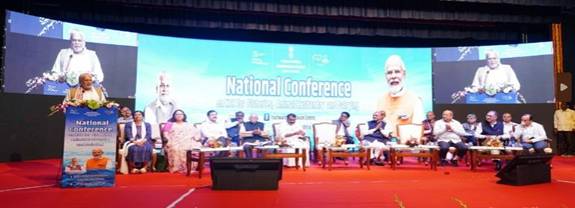
 Minister of Fisheries, Animal Husbandry & Dairying, Shri Parshottam Rupala chaired National KCC Conference for Fisheries, Animal Husbandry & Dairying’ in Maharashtra today. Ministry of Fisheries, Animal Husbandry & Dairying organised the National KCC Conference in coordination with Department of Fisheries. Minister of State, Fisheries, Animal Husbandry & Dairying, Dr. L. Murugan, Minister of State, Ministry of Finance, Dr. Bhagwat Kishanrao Karad, Minister for Fisheries, Govt. of Maharashtra, Shri Sudhir Mungantiwar, Minister for Revenue, Animal Husbandry and Dairy Development, Govt. of Maharashtra, Shri Radhakrishna Eknathrao Vikhe Patil, Secretary, Department of Fisheries, Dr. Abhilaksh Likhi, Secretary, Department of Animal Husbandry & Dairying, Ms. Alka Upadhyaya, Additional Secretary, Department of Animal Husbandry & Dairying, Ms. Varsha Joshi, Joint Secretary (Inland Fisheries), Department of Fishries, Shri Sagar Mehra and Chief Executive, NFDB, Dr. L. Narasimha Murthy, ARS were present in the event. Special guests, Executive Director, Reserve Bank of India (RBI), Shri Neeraj Nigam and CGM, Dept. of Refinance, NABARD, Shri Vivek Sinha too graced the occasion.

Union Minister Shri Parshottam Rupala congratulated all officials from Department of Fisheries(DoF), Department of Animal Husbandry and Dairying(DAHD), Govt. of Maharashtra. He emphasized that KCC should be issued to both AHD and fisheries’ farmers and as a first step they should be acknowledged. This is expected to develop the rural economy. He appreciated the work undertaken by the department officials along with district officers for promotion of KCC during Sagar Parikrama. He said that reviews at district levels should be done to address on ground issue.

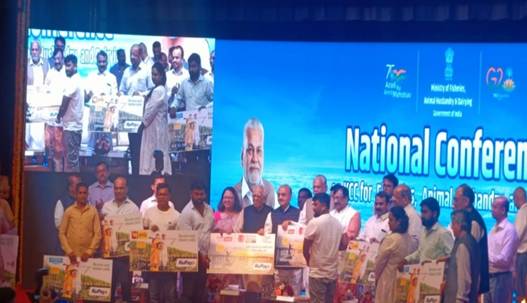
Short videos on PMMSY and KCC by DoF /DAHD and KCC with benefits and eligibility of KCC along with testimonials from beneficiaries were shared. Shri Parshottam Rupala distributed KCC cards to eligible fishers and fishermen. Followed by virtual interactions the beneficiaries shared their experiences in availing KCC.

MoS, MoFAH&D, Dr. L Murugan, welcomed everyone for the first National KCC Conference and emphasised that a component of Garib Kalyan includes financial inclusion hence it should be endured that high interest loan imposed by local creditor need to be eliminated through promotion of KCC all over the country. Hence he urged all Banks to come forward, train and build capacity. Minister for Revenue, Animal Husbandry and Dairy Development, Govt. of Maharashtra, Shri Radhakrishna Eknathrao Vikhe Patil advised all bankers present to relax the norms as both the sectors of DAHD and DoF are undergoing transformation and requires credit at the ground level.

Minister of State, Ministry of Finance, Dr. Bhagwat Kishanrao Karad highlighted that as India moves towards achieving our goal of becoming the 3rd largest economy, changes need to take place at the grass root level. He urged that KCC should be given to all fisheries’ applicants, pending applications should be dealt with at the earliest and return applications either from bank or applicant should be taken up. Like the state scheme of Gujarat that finances loan at 0%, such a provision should also be proposed to the cabinet. He also urged that small scale vendors and women vendors should be treated as vendors to make implementation easy. He suggested that Banks should participate proactively in promoting the scheme and door to door mobilisation for KCC should take place. Minister for Fisheries, Forest and Cultural Affairs, Govt. of Maharashtra, Shri Sudhir Mungantiwar, appreciated the Sagar Parikarama programme and congratulation the Union Minister for leading the initiative. He emphasised that KCC applicants should be handheld with care and vendors too should be granted loans such that problems of market linkages, technology adoption etc may be resolved. He also suggested that provisions of Corporate Social Responsibility (CSR) should be explored for livelihood generation.

Secretary, Department of Fisheries, Dr Abhilakh Likhi mentioned that with Fisheries has a credit target of Rs 25,000 crore hence ease of business is critical. Prioritisation for examining reasons for rejection of applications, review of Scale of finance for shrimp culture and other intensive activities, credit for women vendors, inclusion of FAHD in Ghar Ghar KCC abhiyan, fund requirements for capacity building, outreach, communication by States/UTs etc were highlighted during the address.  Secretary, Department of Animal Husbandry & Dairying, Ms Alka Upadhyaya highlighted that India is known as the ‘Dairy of the world’ and now India needs to move ahead from self-sufficiency towards entrepreneurship and value addition. Need for KCC outreach at district and block levels for coverage of larger beneficiary base and need for monitoring in collaboration with DFS was emphasised upon.

The event kick started with Welcome address by Joint Secretary (Inland Fisheries), Department of Fishries, Shri Sagar Mehra and requested all stakeholders present to share their views, issues, challenges, suggestions, feedbacks to identify specific causes and gaps in implementation of KCC scheme. He emphasised that certain norms need to be relaxed and some corrective actions need to be taken so that KCC reaches all eligible farmers across the country. Additional Secretary, Department of Animal Husbandry & Dairying, Ms. Varsha Joshi highlighted the achievements on KCC in DAHD and challenges faced by the sector. She urged that stakeholders should relax few norms and educate farmers as needed.

Executive Director, Reserve Bank of India (RBI), Shri Neeraj Nigam highlighted that enhancement in uptake of small loans is essential to achieve financial inclusion. He deliberated that banks need to comply with RBI KCC guidelines, further, bank staff may be trained in financial literacy and campaigning should be done across the year, processing timelines should be followed while status should be relevantly communicated by the banks. He mentioned that monitoring should be taken seriously and should be done at the lower levels i.e. block and district levels for issues to be further highlighted at the state level. CGM, Dept. of Refinance, NABARD, Shri V.K Sinha highlighted that allied sectors of agriculture have become equally important as the core sector itself and for realising the actual potential each value chain node needs to be focused upon. He highlighted that NABARD is reviewing RRBs regularly and will continue to do so to get on-ground information. He suggested that uniform guidelines should be made available for bankers to follow on issues related to the documentation.

Chief General Manager, ABU & GSS, SBI, Shri Shantanu Pendsey briefly spoke about the products offered by SBI to farmers which includes the newly developed product for supporting value addition/ processing in the value chain. He informed that challenges highlighted during the discussion have been duly noted and as an immediate step an advisory will be issued and circulated to ground zero for reiterating on compliance to the KCC guidelines and relaxation of insistence of ownership papers, cibil score while norms such as no collateral till 1.6 lakh, guarantor be followed. Former Governor Uttar Pradesh, Shri Ram Naik appreciated the Sagar Parikrama programme led by the Union Minister, MoFAH&D and urged inclusion of CSR for activities such as small landing centers etc should be promoted.

A total of 80,000 participants joined through physical and virtual modes; 35 states/UTs joined from 370 locations with 21,000 fishers and fish farmers, 9000 joined physically and through virtual mode while 50,000 AHD farmers connected through 1000 Common Service Centers (CSCs). Around 22 lakh public were reached out through digital, electronic, print media as part of outdoor campaign and publicity material in 7 vernacular languages on Guidelines/SOP were distributed and video on KCC facility for Fisheries was released. The programme concluded with Vote of Thanks by CE, NFDB, Shri L N Murthy.

******

SK/SS/SM

3-year partnership with Meta, Education to Entrepreneurship


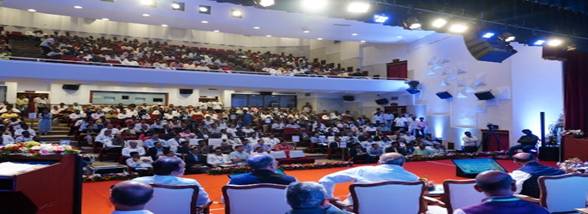
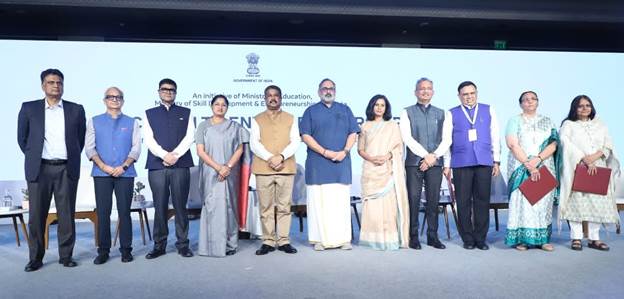
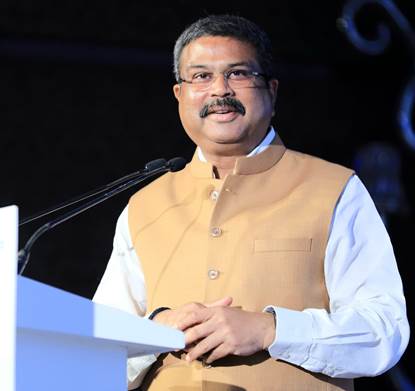
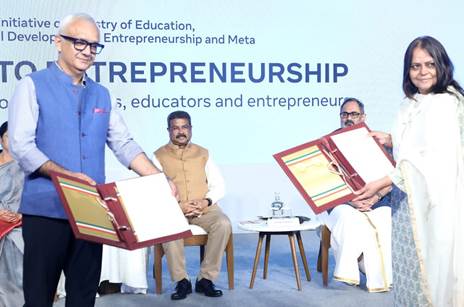
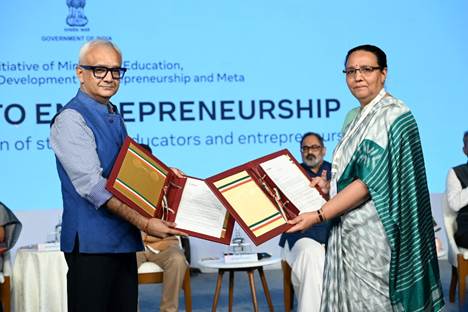
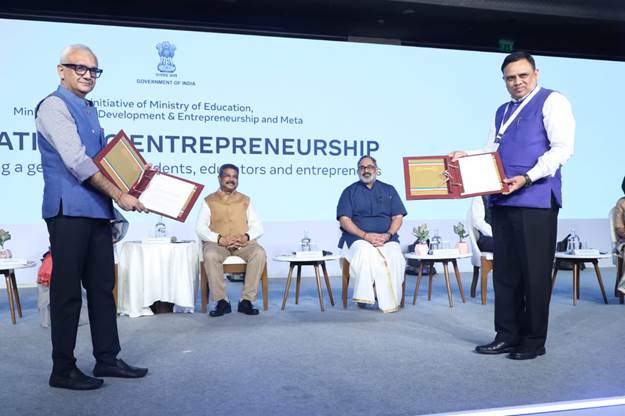
Union Minister for Education and Skill Development & Entrepreneurship Shri Dharmendra Pradhan launched a 3-year partnership “Education to Entrepreneurship: Empowering a generation of students, educators and entrepreneurs” between Ministry of Education, Ministry Skill Development & Entrepreneurship and Meta in New Delhi today. 3 Letters of Intent (LoI) were exchanged between Meta and NIESBUD, AICTE and CBSE. Minister of State for Education Smt. Annpurna Devi and Minister of State for Electronics & Information Technology and Skill Development and Entrepreneurship Shri Rajeev Chandrasekhar also graced the occasion.


Speaking at the event, Shri Dharmendra Pradhan said that the initiative launched today is in furtherance to Prime Minister Shri Narendra Modi’s vision of making India a skill capital of the world and empowering our Amrit Peedhi.

He further said that ‘Education to Entrepreneurship’ partnership is a game-changer, which will take Digital Skilling to the grassroots. This will build capacities of our talent pool, seamlessly connect students, youth, workforce & micro-entrepreneurs, with futuristic technologies and transform our Amrit Peedhi into new-age problem solvers and entrepreneurs.


He stated that India’s democracy, demography, and diversity are to be connected with technology conversion so that technology becomes the equalizer for the entire society. Guided by the tenets of NEP, META’s partnerships with NIESBUD, CBSE & AICTE will catalyse infinite possibilities for equipping our population with critical digital skills and empowering micro entrepreneurs and small businesses, he added.

Shri Rajeev Chandrasekhar, in his address, highlighted the Government’s focus on preparing our youth and workforce in these rapidly transforming times, to be equipped with the skills to succeed and play important roles in the evolving landscape of technology and the global economy. Digital skills, while representing skilling and entrepreneurship in the innovation ecosystem, more importantly represents a bridge between lakhs of small rural, micro and self-employed entrepreneurs, enabling them to expand, grow and succeed, he added.

In a video message Meta President, Global Affairs, Sir Nick Clegg, thanked Shri Dharmendra Pradhan for his support in bringing the partnership together between the two most important sectors of the workforce, education and skilling. India’s talent base and rapid digital adoption make it the perfect place for us to invest in emerging technologies, he added. He looked forward to Meta’s contribution in empowering India’s students, young people and entrepreneurs, with significant focus on skill development for Indian startups and businesses, having worked closely with India during its G20 Presidency in areas such as education, job creation, skill development and user safety.

Under the partnership with NIESBUD, 5 lakh entrepreneurs will get access to digital marketing skills by Meta over the next 3 years. Budding and existing entrepreneurs will be trained in digital marketing skills using Meta platforms in 7 regional languages to begin with. Three short films were also showcased highlighting the details about the partnerships.


Secretary, Higher Education, Shri K. Sanjay Murthy; Secretary, Department of School Education & Literacy, Shri Sanjay Kumar; Secretary, MSDE Shri Atul Kumar Tiwari; Chairman, AICTE, Prof. T.G. Sitharam; Chairman, National Educational Technology Forum NBA NAAC, Prof. Anil Sahasrabudhe; President, Federation of Indian Chambers of Commerce and Industry (FICCI), Shri Subhrakant Panda and senior officials of the Ministries, AICTE, CBSE, National Institute for Entrepreneurship and Small Business Development (NIESBUD); Shri Shivnath Thukral, Director, Public Policy, India and South Asia, Meta and Sandhya Devanathan as the Vice President of Meta India were also present.

*****

Indian Heritage app and e-Permission portal

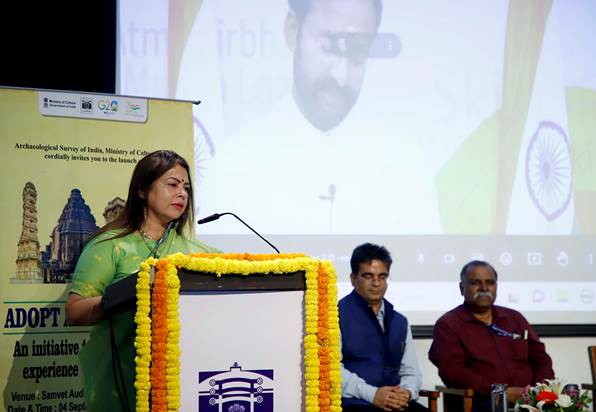
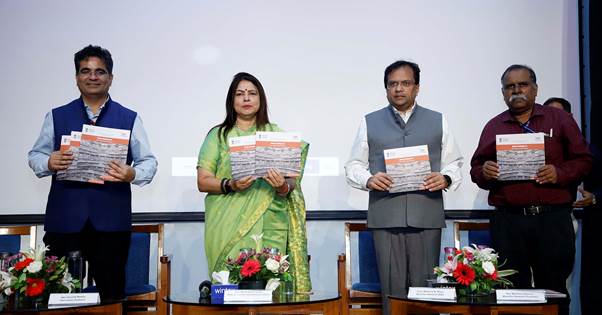
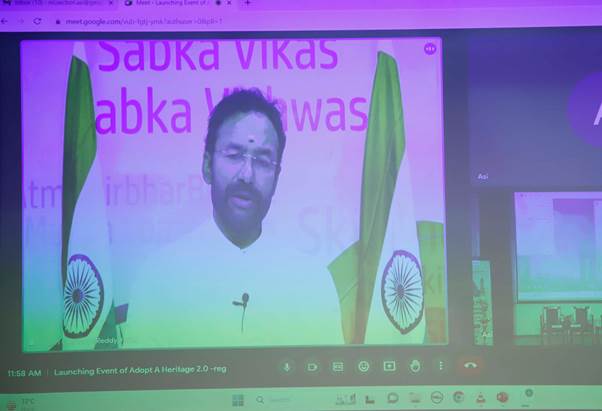
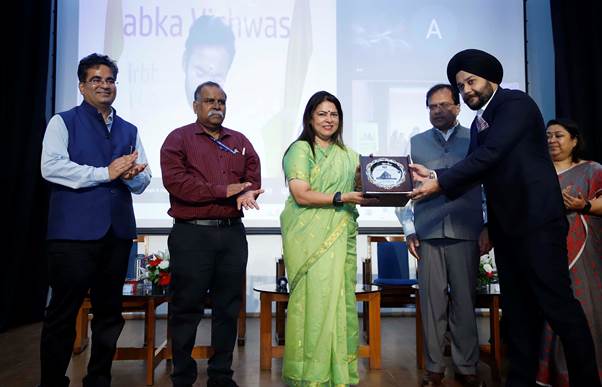
 The Archaeological Survey of India (ASI) has 3696 monuments under protection, which are spread, throughout the country. These monuments not only exhibit the rich cultural heritage of India but also play a significant role in fostering the economical growth. In order to sustain the rich cultural legacy, the heritage sites require time to time enhancement of the amenities. To this end and to further enhance the experience of visitors, ASI launched “Adopt a Heritage 2.0” programme on 4th September 2023 at Samvet Auditorium, IGNCA, New Delhi. Union Minister of Culture, Tourism and DoNER Shri G Kishan Reddy, who attended the launch programme virtually, urged all entities to come forward and help in better upkeep and rejuvenation of India’s rich cultural heritage, in line with the vision of ‘Virasat Bhi, Vikas Bhi’.

He further said that ‘Adopt a Heritage 2.0’ programme seeks to foster collaboration with corporate stakeholders through which they can contribute to preservation of these monuments for the next generations.


Under this programme, ASI invites corporate stakeholders to enhance the amenities at the monuments by utilizing their CSR funds. The programme is a revamped version of the earlier scheme launched in 2017 and clearly defines the amenities sought for different monuments as per AMASR Act 1958. The stakeholders can apply for adopting a monument or specific amenities at a monument through a dedicated web portal with URL http://www.indianheritage.gov.in, which contains details of monuments sought for adoption along with gap analysis and financial estimation of amenities. Union Minister of State for Culture Meenakashi Lekhi, Union Culture Secretary Govind Mohan and Director General of ASI, K. K. Basa, were present on the occasion.


Minister of state for Culture, Smt. Meenakashi Lekhi, elaborates the importance of cultural heritage in shaping the identity.  She said that G20 Presidency is an opportunity to showcase the Cultural heritage of our country. She said that he process for selection will be carried out after due diligence and discussions with various stakeholders and assessing the economic and developmental opportunities at each monument.

 The ‘Adopt a Heritage 2.0’ programme seeks to foster collaboration with corporate stakeholders through which they can contribute in preserving these monuments for our upcoming generations”, said the minister. The process for selection will be carried out after due-diligence and discussions with various stakeholders and assessing the economic and developmental opportunities at each monument.

The selected stakeholders will develop, provide and maintain amenities in hygiene, accessibility, safety and knowledge categories. In doing so, they will get an opportunity to be recognized as a responsible and heritage-friendly entity. The term of the appointment will be for a period of five years initially, which may be further extended up to five years.

Further, a user-friendly mobile app, named ‘Indian Heritage’ also launched on the same day, which will showcase the heritage monuments of India. The app will feature state-wise details of monuments along with photographs, list of public amenities available, geo-tagged location and feedback mechanism for citizens. The launch will be in a phased manner, with the ticketed monuments launched in Phase I, followed by the remaining monuments. An e-permission portal, with URL http://www.asipermissionportal.gov.in for obtaining permission for photography, filming and developmental projects on monuments was also launched. The portal will fast-track the process for obtaining various permissions and solve operational and logistical bottlenecks involved.

www.indianheritage.gov.in

www.asipermissionportal.gov.in

***