Élection présidentielle 2017
This blog largely tries to steer clear of political issues and focuses on the economic ones. So, although this blogger has strong views on the candidates and knows who he would vote for if he had a vote, he will avoid discussing that here. Instead, the focus is strictly on economic policies, which is of course, only one dimension of evaluating any candidate.
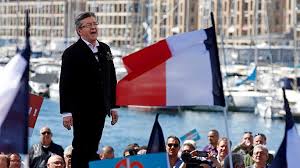
Who\’s the most dangerous of them all economically ? If the pat answer is Marine Le Pen, a more polished version of Trump, think again. Introducing Jean-Luc Mélenchon, the far left candidate who is currently surging in the polls . Nearly 20% of France want him as President .
Here are his economic policies, without comment
- 90% tax rate for those earning more than Euro 400,000 a year
- 273 billion Euros higher spending over 5 years
- 16% rise in minimum wage to Euros 1326 a month (Rs 90,000 a month)
- 35 hour work week.
- Exit the Euro
- Abolish the treaties prescribing a target of deficit to GDP . In other words, simply print money
- Exit EU, a la Britain, if necessary
- Join Alba the economic pact between Cuba and Venezuela. Honourable observers of this pact are Iran and Syria
- Right to housing to become a constitutional right
- Nationalise utility companies
Immigration and Agriculture
The Real Issue With Tech In Ed
Planning Regions
A planning region is a segment of territory over which economic decisions apply. The term planning here means taking decisions to implement them in order to attain economic development. Planning regions may be administrative or political regions such as state, district or the block because such regions are better in management and collecting statistical data. Hence, the entire country is a planning region for national plans, state is the planning region for state plans and districts or blocks are the planning regions for micro regional plans.
Three Reasons Why The Use Of I.T. In Schools Is NOT Leading to Improved Learning
Thus spake Gates
PM congratulates ISRO team on successful launch of PSLV-C47 carrying indigenous Cartosat-3 satellite
The Prime Minister, Shri Narendra Modi has congratulated the entire ISRO team on yet another successful launch of PSLV-C47 carrying indigenous Cartosat-3 satellite and over a dozen nano satellites of USA.
“I heartily congratulate the entire ISRO team on yet another successful launch of PSLV-C47 carrying indigenous Cartosat-3 satellite and over a dozen nano satellites of USA.
The advanced Cartosat-3 will augment our high resolution imaging capability. ISRO has once again made the nation proud”, the Prime Minister said.
Narendra Modi✔@narendramodi
I heartily congratulate the entire @isro team on yet another successful launch of PSLV-C47 carrying indigenous Cartosat-3 satellite and over a dozen nano satellites of USA.
The advanced Cartosat-3 will augment our high resolution imaging capability. ISRO has once again made the nation proud!
***
What The Education System REALLY Exists For – Myth # 7
- teachers/CRC-BRC must spend more time collecting data even at the cost of teaching or improving learning, or
- every school must follow the given framework for its School Development Plan (because the need to compile the plans at the block level is more important than the need for it to be appropriate for that school), or
- every HT must maintain records for the officials \’above\’ even if it means she will not have time to support her teachers in improving the classroom process.
Did you brush your ideas today?
- How can each stakeholder envisage the improvement desired in their own way (i.e., have their own vision)?
- How can all involved begin to understand / conceptualize the massive shift involved?
- Since improvement is helped by planned rather than a random set of actions, how to help each person plan better – which implies the ability to identify what is desired, what the gaps are, conjuring up a repertoire of \’solutions\’, weighing the different options to identify the ones that fit the situation best, and knowing the difference between sequencing and prioritizing!
What can one do to begin overcoming this situation? A few suggestions to start with:
- Make a list of all the key actions you perform
- Identify the thinking skills or ways of thinking required (e.g. do you have to be more \’out of the box\’ and creative, or do you have to maintain a rigorous commitment to the given information and derive a logically valid inference).
- Practice these skills
- When undertaking new action, please choose the appropriate thinking tool you need to use
- Finally, don\’t forget to brush your ideas! That is, do reflect on the ideas we use in the daily course of our work – have they become stale? or dusty or outdated? do we need to discard them and move on to different ideas?
Cure or Prevention: the Health Education Dilemma
If we were to talk of prevention, we find ourselves making invalid assumptions. For instance, we start with \’washing hands with soap regularly prevents disease\’. But the problem is, say a huge proportion of children and the community, \’there is not enough water even to drink, how do we wash hands with soap?\’ Next we say, \’you must eat green leafy vegetables\’. However, the response: \’hey, there isn\’t enough food to eat in the first place, let alone leafy vegetables\’. The list is endless. The bottom-line: poverty is at least as important a health issue as lack of health education.
On the other hand, emphasizing prevention has its own limitations. For example, when discussing scabies it is common to find the use of neem being advocated. Though neem is commonly available, it is not exactly always useful in all cases of scabies. Medical advice should be sought rather than relying only on such suggestions. As they say, it can be dangerous to be armed with half-baked information.
So what do we do? Not talk about health at all?
No, we do need to educate our children on health. But the emphasis has to be on educate rather than merely plying them with information. In concrete terms this implies helping children perceive the causal links between different factors in their immediate environment and their health. How the body works, what it is affected by and how it responds to different factors, and how our own actions (individually and collectively) impact upon it — these are some of the components of what contemporary health education should be like.
This would naturally require scope for exploration, projects and activities. The pedagogy involved should help children arrive at their own conclusions, especially in terms of actions they could take. Here\’s an example of what might be a good health education activity (for grade 3 students, assisted by their teacher):
Take two small plates — put a little dal water in one, and a little sweet tea in the other. Set these plates in the sun and let the fluids dry. After a while, touch both of them with your fingers – one of them feels sticky and the other doesn\’t. Why do you think this is so?
Next, take a knife (let your teacher do this!). Cut a cucumber and feel the knife edge carefully. Now cut a piece of jaggery and feel the edge again (carefully!). Which item left a more sticky knife edge? Why?
So when we eat, which items are more likely to continue sticking to our teeth? And what will happen if they remain there (discuss with your teacher)? So what do we need to do?
That\’s it. There\’s no need really to give a long lecture of oral hygiene, full of facts and figures and information on exactly how to hold the brush etc. etc. All that sounds so platitudinous that children instinctively \’switch off\’ (as do adults when lectured!). The intention is that by helping children arrive at their own conclusions, we increase their stake in taking appropriate health-related action. And hence the increased chance that the understanding will actually translate into behavior!
Is Education for Girls Different from Education for Boys?
Before you lynch me for raising blasphemous ideas and restricting girls to things such as reproductive health and sewing/knitting, let me explain. If we were to look at education only from the boys\’ point of view, we would find that everything we wanted is probably already there. But that is not the case when it comes to girls. Surely, education for both boys and girls would be much better off if the girls\’ perspective, experience and world view were, in fact, included.
Think, for a moment, of recipes, and how they would be wonderful material for learning mathematics (interesting, isn\’t it?). Or the kind of abilities girls have with fine motor skills and patterns. Or multi-tasking. Or giving value to emotions and relationships. Or being able to share rather than dominate. Or how to make use of meager resources. Or a range of other things which I\’m sure you can list (endlessly). Are we not depriving ourselves in not exploring this? There is no doubt that, on the whole, education is much the poorer from having been defined by the male perspective. Which then applies to the world itself as well.
Using Performance Standards to Improve Teacher Effectiveness
- The most important way to generate teacher motivation is to enable them to experience success in the classroom. Hence a set of minimum enabling conditions being in place make a huge difference.
- Teachers change when they experience the standards, rather than simply being told about them – towards this, the in-service courses themselves need to incorporate the standards expected of teachers. (A few of the states have begun this process of improving their own inputs to teachers.)
- There is a sequence in which teachers learn (and indeed institutions and systems learn). It is also better to avoid overcrowding expectations. It would therefore be best to plan improvement in terms of stages of teacher development, broken down into three-month phases, each of which has a very limited number of indicators to be attained (4-8). As teachers attain one set of indicators, this motivates them as well as prepares them for the next, higher order, set. The support institutions, too, learn along with the teachers and grow phase-wise in turn.
- Standards and indicators can tend to be vague! It is important to convert them into concrete steps that can actually be implemented by teachers. Thus, if an indicator agreed upon is ‘children ask questions freely, without fear’ there is a need to make clear exactly what the teacher needs to do for this to happen. Hence, as part of the roll out, all teams need to detail the concrete steps involved in converting the expectations into actionable steps.
- Implementer choice and partnering with teachers is more likely to yield results than passing on a set of instructions. In sub-district meetings, teachers should get to choose the indicators they want to attain (from a given list of potential indicators for that stage, though) and identify / develop the steps needed to attain these. Their performance will be assessed against the indicators chosen by them. If possible, peer assessment will be introduced.
- ‘Target setting’ in terms of the degree of improvement in performance can now be practiced. Teachers and their resource persons can use the standards document to fix the degree of change they seek to bring about over, say, a year or six months. They can then assess their progress against this. As this was not possible earlier, improvement efforts tended to lose their way very soon.
- Taking a ‘low-interference’ approach helps – that is, there is no pressure on the system to change curriculum or textbooks or introduce new model of teaching. It is more a case of ‘doing the same as before, but a little differently’; this reduces systemic stress and enables rapid implementation.
Missing the Aim(s) of Education!
The Top Ten Confusions in Education
- It is only when I teach that children will learn, isn\’t it?
- Don\’t we have to guide children and show them the way?
- I\’m not biased, am I?
- Can all children really learn?
- We can\’t teach different children different things in the same classroom, can we?
- If only the teachers started working, wouldn\’t all problems of school education be solved?
- If I turned out OK, how can there be much wrong with the education system?
- If children start thinking by themselves and \’constructing\’ their own knowledge, what is the role of (and the need for) the teacher?
- If we don\’t discipline children and correct their \’errors\’, won\’t they turn out bad?
- Isn\’t the curriculum the same as the textbook that has to be \’covered\’?
- In-service teacher training workshops can transform teachers, isn\’t it?
- Testing is the best and the only way to find out if children have learnt anything, isn\’t it?
- If one\’s education doesn\’t help one get a job, what good is it?
- Researchers and academics know best about classroom processes, don\’t they?
Actually the list is longer than ten – pick out your own top ten! (You can include ones that are not here)
Also, who\’s the one confused? You, or the others? And is there anything that can be done?


You must be logged in to post a comment.