Range Countries to strengthen conservation efforts for migratory birds and their habitats in the Central Asian Flyway (CAF)

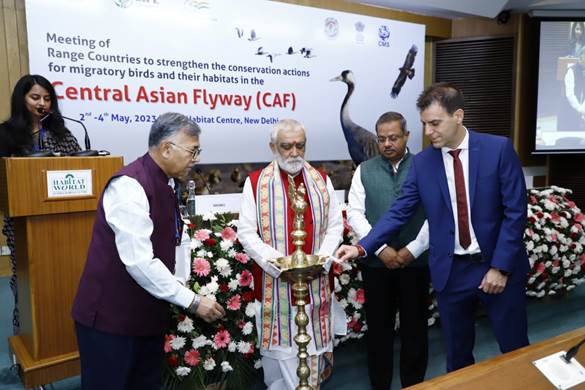
 The Ministry of Environment, Forest and Climate Change  in collaboration with the United Nations Environment Programme/ Convention on Migratory Species (UNEP/CMS) had organized a meeting of Range Countries to strengthen conservation efforts for migratory birds and their habitats in the Central Asian Flyway (CAF) from 2nd to 4th May, 2023 in New Delhi.

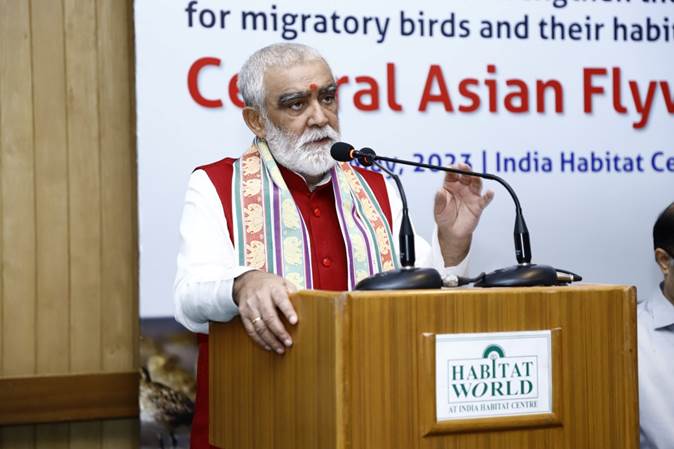
Union Minister of State for Environment, Forest and Climate Change, Government of India, Shri Ashwini Kumar Choubey inaugurated the meeting. In his inaugural address the Minister  while echoing the Prime Minister’s call to adopt LIFE (Lifestyle for environment for environmental protection) made at COP-26 in Glasgow  mentioned that :

“…It gives us immense satisfaction that we have taken concrete steps towards his vision with this meeting of the range countries of the Central Asian Flyway to frame an Action Plan. Additionally, adopting a sustainable lifestyle that allows for the co-existence of all life forms, including migratory birds, is critical to ensure their continued existence in the years to come. This aligns with  Prime Minister’s LiFE movement, which calls for a Lifestyle for Environment for environmental protection, and serves as a reminder of our responsibility towards the planet. Through this meeting, we are taking a significant step towards achieving the common goal of conservation and sustainable development in the Central Asian Flyway….”


The meeting was attended by the eleven countries of CAF region including Armenia, Bangladesh, Kazakhstan, Kyrgyzstan, Kuwait, Mongolia, Oman, Saudi Arabia, Tajikistan, and Uzbekistan, besides the Secretariats of CMS, AEWA and Raptors MOU, and  representatives of Chief Wildlife Wardens of States, scientific institutions in India, international and national non governmental organizations, and subject experts.

The delegates deliberated and agreed on an institutional framework for the Central Asian Flyway, discussed priority areas for implementation, and agreed on a draft roadmap for updating the CMS CAF Action Plan. The meeting was a critical opportunity for CAF Range States to collaborate and exchange ideas and best practices to ensure the sustainable conservation of migratory birds and their habitats.

The discussions during the meeting also led to the modalities of an institutional framework mechanism with the aim of developing a coordinated approach to the conservation of migratory birds and their habitats. There was an overall consensus in the meeting for  further strengthening and formalizing  this initiative. The formalization of the Central Asian Flyway initiative, was seen as a significant step towards the conservation of migratory birds and their habitats.

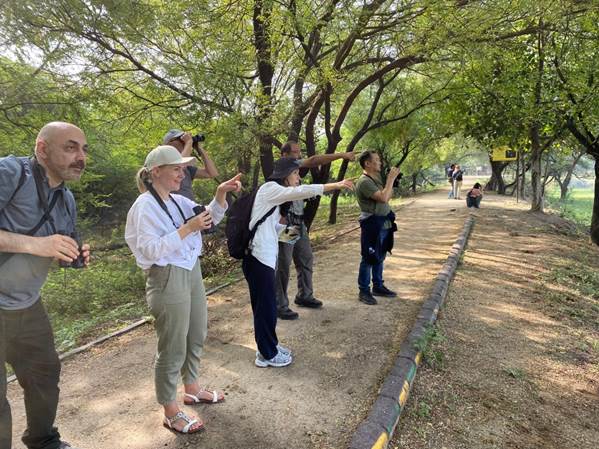
The delegates also undertook a field visit to the Sultanpur National Park, Gurugram, Haryana, to understand the management of bird sanctuary and learn the best practices being adopted in India for management of bird sanctuaries.  

****

TACTICAL RESCUE OPERATION FROM SUDAN BY IAF C-17 NON-STOP OPERATION OF NEARLY 24 HOURS

 In the midnight hours of 03 – 04 May 23, an Indian Air Force C-17 Globemaster aircraft airborne from Hindan, flew through the night to land in the early morning hours at Jeddah, Saudi Arabia. The aircraft refuelled at Jeddah to undertake a nonstop flight from Jeddah, via war torn Sudan and back to India. The aircraft took excess fuel from Jeddah to avoid a situation of non-availability of fuel and refueling delays in Sudan. The mission was one of a kind, with the aircraft carrying 192 passengers, mostly ladies, children and elderly persons, who either were NRIs, foreign nationals or OCIs (Overseas Citizens of India). These people could not be taken to Jeddah, and hence were required to be flown directly to India in a nonstop flight by the heavy jet.

At Sudan, the aircraft carried out an overhead steep tactical arrival followed by an assault approach to land the heavy jet. During the entire duration of the ground operations, the aircraft engines were kept running in readiness of a quick exit from the airfield, in case of such a need arising.

The crew encountered another unplanned emergency when one of the passengers became unconscious during the flight. This situation was immediately and proficiently handled by the crew who administered him 100% Oxygen to stabalise him.

The aircraft landed at Ahmedabad late in the evening on 04 May 23 late in the evening and then at the home base of Hindan late in the night on the same day. The crew thus flew through extended duty periods of nearly 24 hrs to get some of the last stranded countrymen back to India.

***

President of India Graces 12th Convocation of Maharaja Sriram Chandra Bhanja Deo University

 The President of India, Smt Droupadi Murmu graced and addressed the 12th convocation of Maharaja Sriram Chandra Bhanja Deo University at Baripada, Odisha today (May 6, 2023). 

Speaking on the occasion, the President said that Maharaja Sriram Chandra Bhanja Deo University has made a unique identity in the field of higher education and research in a short span of its history.

The President appreciated the University for establishing the ‘Sacred Grove’ in its campus with the aim to preserve the bedrock of tribal practices and cultural traditions. She said that the ‘Sacred Grove’ is important for the conservation of environment and local biodiversity. It is also one of the best examples of community-based management of natural resources.

The President said that the world is facing huge challenges of global warming and climate change. India has set an example for the world to adopt a nature-friendly lifestyle, which is called Lifestyle for the Environment or LiFE. In our tradition, it is believed that trees, plants, mountains, rivers all have life and not only humans but also all living beings are children of nature. Therefore, it is the duty of all human beings to live in harmony with nature. She said that the Similipal National Park located in this region holds a globally important place in terms of biodiversity. She expressed confidence that the students and teachers of the university would find a way to protect biodiversity through their research and innovation.

Addressing the graduating students, the President said that receiving degree does not mean that education process has been completed. Education is a continuous process. She said that after getting higher education some of them would do a job, some would do business and some would also do research but thinking of giving a job is better than thinking of doing a job. She was happy to note that this University has set up an Incubation Centre and provides assistance to the students, alumni and common people in setting up start-ups.

The President said that competition is an inevitable side of life. One has to face competition in every walk of life. She said that students should always keep trying to succeed in the competition and for that they should keep acquiring higher skills and move towards greater efficiency. They can turn the impossible into possible with their will-power. 

The President said that competition is a natural side of life, but cooperation is the beautiful side of life. She told students that while moving forward in life, when they would look back, they would find that some people of the society are not very capable of competing with them. She advised students to hold the hands of deprived ones and bring them forward. She said that a healthy society can be built through generosity and cooperation. She urged students to think not only of their own happiness and interest but also about the welfare of the society and country.

***

Conference Proceedings Publication with ISBN


Conference proceedings publication with ISBN (International Standard Book Number) is a common practice in academic and research communities. It involves publishing the papers presented at a conference in the form of a book or a collection of papers, which are assigned a unique ISBN number. This enables the papers to be easily cited and referenced, and provides a permanent record of the research presented at the conference.

The process of publishing conference proceedings usually involves the following steps:

Call for papers: The conference organizers issue a call for papers, inviting researchers to submit their papers for consideration.

Review process: The papers are reviewed by a panel of experts, who assess their quality and relevance to the conference theme.

Acceptance and revision: Papers that meet the criteria for acceptance are selected for inclusion in the conference proceedings. Authors may be required to revise their papers based on feedback from the reviewers.

Editing and formatting: The papers are edited and formatted for publication in a book or a collection of papers.

Publication and distribution: The proceedings are published and distributed to the conference attendees and other interested parties, such as libraries and academic institutions.

The use of ISBN numbers for conference proceedings is important because it ensures that the proceedings are easily accessible and can be referenced in academic publications. It also provides a measure of quality control, as only papers that meet certain standards are accepted for publication.

Overall, the publication of conference proceedings with ISBN numbers is a valuable way to disseminate research and promote academic exchange, as well as to provide a lasting record of the research presented at a conference.

<

p style=”text-align: justify”>Contact us: Send mail to editor@pen2print.org or editor@edupub.org for getting Conference Proceedings published with ISBN or Conference Proceedings in IJR Journal

Top Ten Popular Arts of India

Top Ten Popular Arts of India

India is known for its rich cultural heritage and diversity, which is reflected in its traditional arts and crafts. Here are the top ten popular arts of India:
Madhubani painting – A style of painting native to the Mithila region of Bihar, known for its intricate and colorful depictions of nature and mythology.
Kalamkari – A type of hand-painted or block-printed cotton or silk textile from Andhra Pradesh, known for its beautiful patterns and vibrant colors.
Warli art – A tribal art form from Maharashtra, known for its simple yet beautiful depictions of daily life and nature, usually painted in white on a red ochre background.
Pattachitra – A type of traditional painting from Odisha, known for its intricate details and bright colors, often depicting Hindu mythology and folklore.
Phulkari – A type of embroidery from Punjab, known for its colorful floral patterns and intricate stitching.
Pottery – India has a rich tradition of pottery, with different regions known for their unique styles and techniques, such as Blue Pottery from Rajasthan, Terracotta from West Bengal, and Khurja pottery from Uttar Pradesh.
Kondapalli toys – Wooden toys from Andhra Pradesh, known for their intricate carving and vibrant colors, depicting a wide range of themes, including animals, mythology, and daily life.
Chikankari – A type of embroidery from Lucknow, Uttar Pradesh, known for its delicate and intricate needlework, usually done on white cotton or muslin fabric.
Meenakari – A type of metalwork from Rajasthan, known for its intricate enamel work and colorful patterns.
Kathak – A classical dance form from North India, known for its graceful movements, intricate footwork, and expressive storytelling.
These popular arts and crafts of India not only reflect the country’s rich cultural heritage but also represent the skill and creativity of its people. They are essential cultural assets that have been passed down through generations and continue to thrive and evolve in contemporary times.

Why Publish with Edupedia Publications Pvt Ltd

 We offer authors sophisticated and global marketing and distribution alongside an attentive and personal editorial experience.

From award-winning research to major reference works, our experienced team of editors New Delhi will work closely with you on a plan tailored to suit your work. What you can expect from us:

  1. Editorial Excellence – Now part of Springer Nature, Palgrave Macmillan’s program has an unbroken tradition of over 10 years of independent academic publishing. New authors will join a rich publishing heritage, impactful program of research, and a stable of top-notch academic authors.
  2. Commitment to quality and peer review – Above all, we care deeply about the quality of our publishing. Rigorous peer review is vital to this. We will support you with a thorough but fast and responsive peer review process. 
  3. Open access – We are also pleased to offer authors the option to publish their monographs, edited collections, proceedings, reference works, chapters and other book types open access. You can browse our author resources to learn more. 
  4. Innovative tools and platforms – We are always thinking about how best to support our authors as publishing incentives, platforms and formats continue to change. EduPub, our content platform, allows us to make all our books accessible on any device, track impact through usage statistics, and give authors the tools to make the best of their research.
  5. Engaged approach to academia – Palgrave offers strategic support to early career researchers and mid-career scholars, as well as targeted campaigns in support of key disciplines, such as our Campaign for the Humanities and Social Science Matters.
  • New Content Item

    ORCID iD

    Share your discoveries and receive recognition for your work

  • Palgrave Book Archives

    EduPub Book Archives

    Digitizing over 10 years of academic publishing 

JNPA posts an impressive turnaround time (TAT)

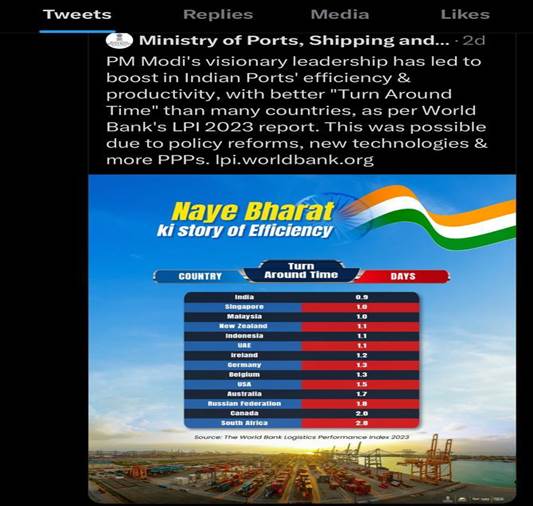
 A month after the record handling performance for the last FY, Jawaharlal Nehru Port Authority (JNPA), India’s premier container port, has achieved another feat when it set a global benchmark in container cargo handling. According to the Logistics Performance Index (LPI) Report, 2023, published by the World Bank, JNPA has an impressive turnaround time (TAT) of just 22 hours (equal to 0.9 days), putting India amongst the top performers.


JNPA was able to achieve the feat due to various measures taken in reducing the dwell time. Most importantly the operational efficiency of the terminal operators has been the biggest contributor along with the better landside- rail and road connectivity, introduction of Centralised Parking Plaza (CPP), Digitization of the processes; streamlining berthing and unberthing of vessels; deploying more tugs for smooth transition of the vessel etc. are some of the other initiatives that JNPA has undertaken to facilitate efficient functioning of the port.

Shri Sanjay Sethi, Chairman of JNPA said, “This is exciting news for all of us at JNPA. Just last month, we achieved a record of handling 6.05 million TEUs in 2022-23, the World Bank data reiterates that our efficiency parameters are better than many countries as per LPI 2023 report and we as a team are committed to further reduce the logistics cost and time for the EXIM trade.”

 Chairman of JNPA and Deputy Chairman, JNPA  congratulated the team for this remarkable achievement.

*****

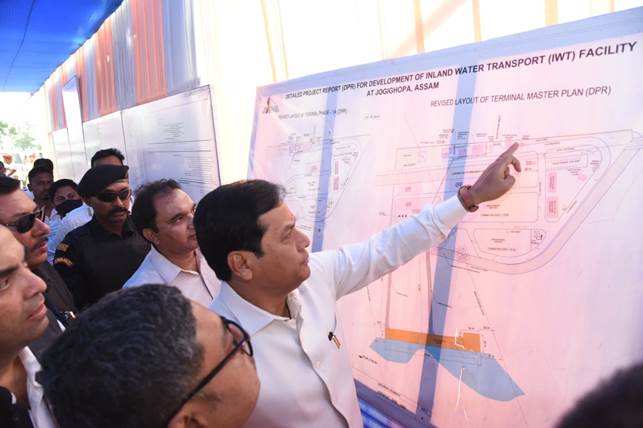
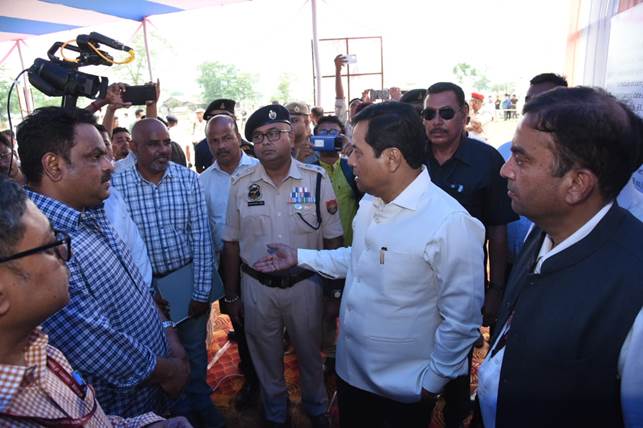
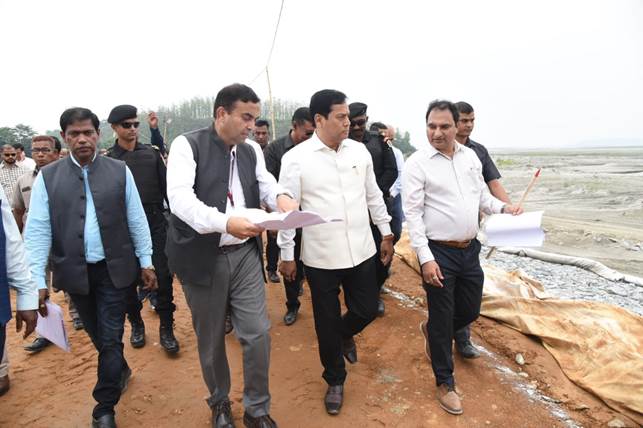
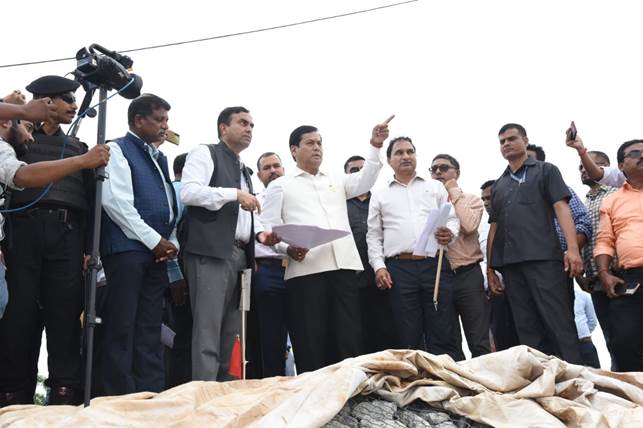
India’s First International Multimodal Logistics Park at Jogighopa ,Assam

 Union Minister of Ports, Shipping & Waterways and Ayush, Shri Sarbananda Sonowal visited the construction site of India’s first International Multi Modal Logistics park in Jogighopa, Assam to review the progress today. Shri Sonowal said the jetty at the park is likely to be completed within this year. Union Minister expressed satisfaction at the pace of work as the road and railway connectivity is also aimed at completion by end of this year.


Speaking on the occasion, the Shri Sonowal said, “For the swift development of the Northeast India, our dynamic Prime Minister Shri Narendra Modi ji has been taking many revolutionary steps to revitalise our economy. Prime Minister Modi ji’s vision of transformation via transportation has enabled the entire region of Northeast to revamp their transportation network. As the construction of this crucial Multi Modal Park goes on in a swift pace, it is likely to unlock huge potential for the region along with the neighbouring countries like Bhutan and Bangladesh. The PM Gati Shakti National Master Plan has been conceived to revive and rejuvenate the transportation to become an efficient & effective agent of change. In order to ensure trickle down of economic prosperity, the PM Gati Shakti NMP aims at strengthening the coastal regions of both sea and rivers. I call upon everyone to join this wonderful initiative and make it a grand success.”

The park is being developed under the ambitious Bharatmala Pariyojana of the Government . First such MMLP, it is being made by NHIDCL in Jogighopa of Assam. The park will be connected to road, rail, air and waterways. This is being developed in 317-acre land along the Brahmaputra. 


The distance of 154 km between Jogighopa and Guwahati will be covered by making a 4-lane road on this stretch, a 3-km rail line will connect Jogighopa station to the MMLP, another 3-km rail link will connect it to the IWT, and the road to newly developed Rupsi airport will be upgraded to 4-lanes for easier connectivity. 

The MMLP will have all the facilities like, warehouse, railway siding, cold storage, custom clearance house, yard facility, workshops, petrol pumps, truck parking, administrative building, boarding lodging, eating joints, water treatment plant, etc.

****

India-Israel Friendship – Beginning of a New Era of Industrial Research and Development Cooperation

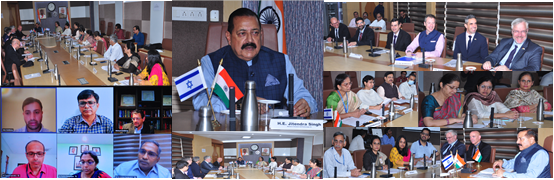
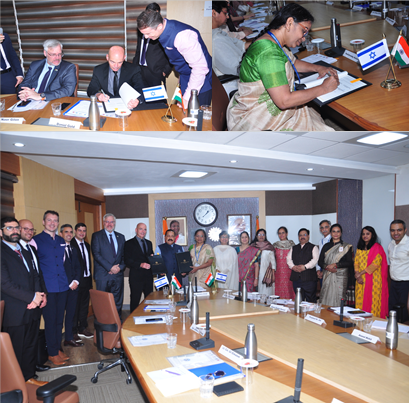
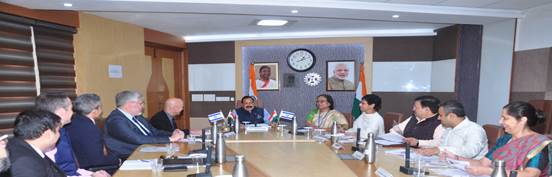
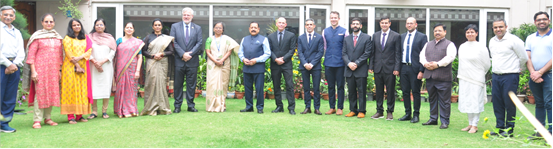
 In a momentous milestone in S&T cooperation between India and Israel, a Memorandum of Understanding (MoU) on Industrial Research and Development Cooperation was signed between the Council of Scientific and Industrial Research (CSIR) under the Ministry of Science and Technology (MoST) of the Republic of India and the Directorate of Defense Research and Development (DDR&D), under the Ministry of Defense of the State of Israel.

Dr N Kalaiselvi, DG, CSIR and Secretary, DSIR thanked the Hon’ble Minister of State(IC), Ministry of Science and Technology and Earth Sciences, GoI and Vice President, CSIR Society for gracing the meeting and his continued support to CSIR. She welcomed the dignitaries and gave an overview of CSIR, showcasing its technological and research prowess as also the ongoing collaboration discussions with DDR&D, Israel in Aerospace, Healthcare, Energy. Sharing CSIR’s priority topics she concurred to the interest of DDR&D for furthering collaboration with Israel in high technology areas such as Artificial Intelligence, Quantum and semiconductors, synthetic biology etc.

Acknowledging the ongoing cooperation efforts of CSIR and his team, Dr. Daniel Gold, Head, DDR&D envisioned that the CSIR-DDR&D cooperation would be beneficial for the welfare of both the countries. He added that DDR&D welcomes collaboration not only with R&D organizations but also with start-ups and companies, venture capitals on both sides. He apprised that AI and photonics are strengths of Israel and welcomed cooperation with CSIR in High Technology sectors which would pave the way for building a better future.

Stressing the successful completion of three decades of India-Israel successful diplomatic relations, Mr. Naor Gilon, Ambassador of Israel to India emphasised the close friendly relations between Israel and India, which have culminated into a strategic partnership after the complimentary visits of Prime Ministers of both the countries in 2018. The present CSIR-DDR&D cooperation would add another feather and be a milestone for India-Israel relations.

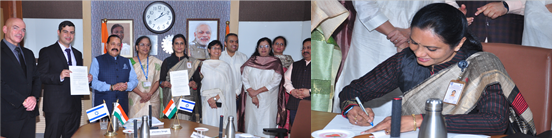
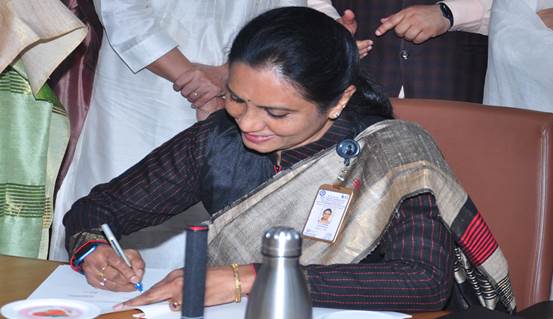
Dr N Kalaiselvi and Dr. Daniel Gold signed the CSIR-DDR&D MoU in the august presence of Hon’ble Minister of S&T, Government of India and Vice President, CSIR Society, Dr Jitendra Singh.

The MoU shall enable cooperation in the industrial R&D programs in mutually agreeable industrial technology fields through implementation of specific projects. The collaboration would encompass some of the key industrial sectors including Healthcare; Aerospace & Electronics Instrumentation; Civil, Infrastructure & Engineering; Chemicals and Petrochemicals, Sustainable Energy including Energy Devices; Ecology, Environment, Earth & Ocean Sciences and Water; Mining, Minerals, Metals & Materials; Agriculture, Nutrition & Biotechnology. The collaboration through the MoU would be steered and the execution monitored by a Joint Steering Committee led by the heads of the CSIR and DDR&D for taking forward mutually benefiting Industrial and technology cooperation.

Specific collaboration on Hydrogen and Aerospace currently under discussed between CSIR and DDR&D were briefed by Dr Abhay Pashilkar, Director, CSIR-National Aerospace Laboratories (CSIR-NAL), and Dr Ashish Lele, Director, CSIR-National Chemical Laboratory (CSIR-NCL); they welcomed collaboration on futuristic technologies in these domains, including in High Altitude Platform, Hydrogen Valley programs of CSIR, respectively.

Specific collaboration on Therapeutics between CSIR-Indian Institute of Chemical Technology (CSIR-IICT) and M/s 101 Therapeutics for conducting clinical trials of a COVID-19 drug having enormous therapeutic potential was briefed; if successful this would prove to be highly appropriate and effective for preparation of future pandemics. The cooperation MoU between CSIR-IICT and M/s 101 Therapeutics was also signed during the meeting.


In his remarks, Dr Jitendra Singh said that it is a very important year in the S&T sphere of India under the leadership of  PM of India as India is holding G20 presidency, celebrating the International year of Millets, as also India and Israel completed 30 years of successful diplomatic relations.

He apprised that CSIR has specialized laboratories in almost all the identified priority sectors therefore assured appropriate competence for this cooperation. For e.g. indigenous Hydrogen Fuel Cell bus by CSIR-NCL, purple revolution (Lavender cultivation) by CSIR-IIIM. He welcomed technology partnership with Israel and congratulated both sides for for their efforts to strengthen the India-Israel relationship.

Dr. Rama Swami Bansal, Head, International S&T Affaris Directorate (ISTAD), CSIR thanked the Hon’ble Minister for his continued support to CSIR, the team from Israel for building and formalizing the cooperation and her colleagues from CSIR and MEA for their kind and gracious presence during the MoU signing meeting today.

**************************

New way to track particles in soft colloids using optical tweezers

 Scientists have found a way to track minute clay particle movements within soft clay colloids using optical tweezers — the application of which in biological systems brought the Nobel Prize in Physics in 2018. This new way to track particles and manipulate them as desired can be applied in areas like targeted drug delivery.

Using optical tweezers, researchers at Raman Research Institute (RRI), an autonomous institute funded by the Department of Science and Technology, Govt. of India, attempted to study the dynamics and hidden structural details of Laponite, a synthetic clay. As these clay particles are the same size (monodisperse) and transparent, so they are best suitable for performing advanced studies under light. Laponite is a widely used raw material in the pharmaceutical and cosmetics industries. This clay comprises disk-shaped particles sized 25 to 30 nanometres (nm) and one nm in thickness.

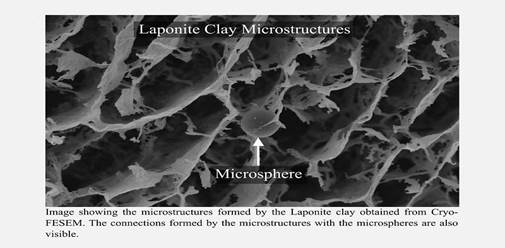
Polystyrene beads dispersed in Laponite clay suspension were used for the experimental setup. With time, microstructures were noted to have developed due to the electrostatic interactions between the clay particles. These microstructures grew stronger with time, with their network size dependent on the concentration of Laponite particles.

“These structures are responsible for the material’s elasticity, enabling adjustment of elasticity by tuning the microstructures. These microstructures also form connections with micron-sized polystyrene particles, which are used to probe these suspensions in such studies,” said Anson G. Thambi, a third-year Ph.D. student at RRI.

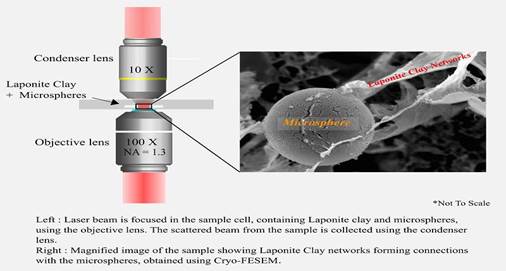
In a study published in the journal ‘Soft Matter, Ranjini Bandyopadhyay, faculty, RRI, and her team used optical tweezers as they wanted to measure movements of the probe in nanometres scales, where the properties of the medium evolve with passing time. Optical tweezer is a popular tool in an optics laboratory, used to measure minute forces and manipulate tiny dielectric beads trapped at the tight focus of an intense laser beam over length scales down to a few nanometers. It allows the inducement of movement in the trapped probe particle, and its response is analysed to extract previously inaccessible local viscoelastic properties of the underlying medium.

“These attachments between the probe (PS) and Laponite clay particles are necessary to understand the properties of the suspension if the internal networks are of sizes greater than the probe itself,” said Bandyopadhyay.

Furthermore, the team used cryogenic field emission scanning electron microscopy (cryo-FESEM) to examine the average pore areas formed by the Laponite microstructures.

“Interestingly, the collective observations obtained using an optical tweezer and cryo-FESEM experiments revealed an intriguing and previously unknown correlation. We found that beads trapped by the optical tweezer moved much slower in denser network structures,” added Bandyopadhyay.

The RRI team thus concluded the prevalence of a direct relation between the morphologies of the clay suspension structures and the probe particle dynamics at micrometre length scales.

Publication link: https://pubs.rsc.org/en/content/articlelanding/2023/SM/D2SM01457B

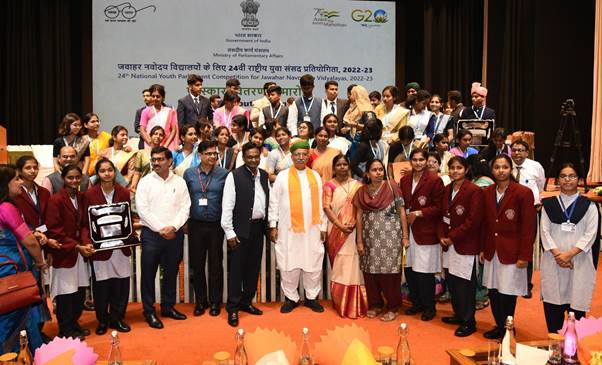
Prize Distribution Function of the 24th National Parliament Competition, 2022-23

 The Prize Distribution Function of the 24th National Youth Parliament Competition, 2022-23 for Jawahar Navodaya Vidyalayas was held on Thursday, the 4th of May, 2023 at Parliament House Complex, New Delhi. Jawahar Navodaya Vidyalaya, Nadia, West Bengal (Patna Region) wins first prize  in the 24th National Youth Parliament Competition, 2022-23.

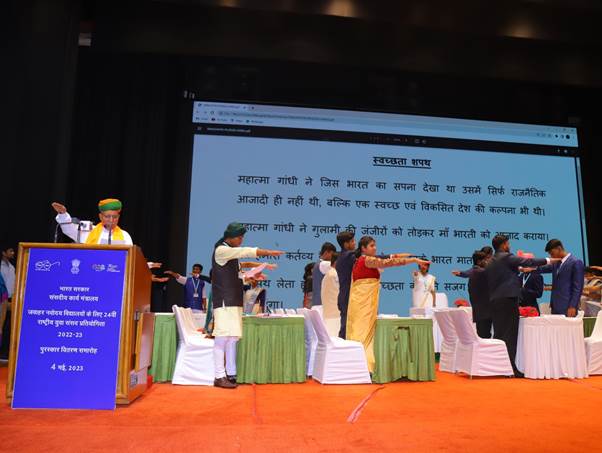
The Union Minister of State for Ministry of Parliamentary Affairs and Culture Shri Arjun Ram Meghwal, distributed  the prizes to the winning teams of Vidyalayas for their meritorious performance in the Competition .Apart from JNV ,Nadia,West Bengal , the following 7 regional winning Vidyalayas also received prizes :

1. Jawahar Navodaya Vidyalaya, Puri, Odisha (Bhopal Region)

2. Jawahar Navodaya Vidyalaya, Chandrapur, Maharashtra (Pune

Region)

3. Jawahar Navodaya Vidyalaya, Mandya, Karnataka (Hyderabad

Region)

4. Jawahar Navodaya Vidyalaya, Kathua, Jammu & Kashmir

(Chandigarh Region)

5. Jawahar Navodaya Vidyalaya, East Khasi Hills-I, Meghalaya

(Shillong Region)

6. Jawahar Navodaya Vidyalaya, Kurukshetra, Haryana (Jaipur

Region)

7. Jawahar Navodaya Vidyalaya, Saharanpur, Uttar Pradesh

(Lucknow Region)


The Minister, Shri Meghwal  has taken an interactive session with the students during the program. The Minister exhorted while interacting with the students that the younger generation should learn and adapt the democratic values and ethics of democracy and devote themselves to promote the harmony and tradition of this democratic country. Shri Meghwal also administered the Swachhata Pledge to all the attendees of the function.


While delivering the Welcome Address, the Secretary, Ministry of Parliamentary Affairs ,Shri G.Srinivas has given a clarion call to the students for popularising and inculcating the practices and process of Parliamentary proceedings. He said that National Youth  Parliament Competitions have been spread from Schools to Universities.

On this occasion, the winning team of Jawahar Navodaya Vidyalaya, Nadia, West Bengal (Patna Region), presented an energetic repeat performance of Youth Parliament which was appreciated hugely by the gathering.

Ministry of Parliamentary Affairs has been organising Youth Parliament Competitions in Jawahar Navodaya Vidyalayas for the past 26 years. Under the scheme of National Youth Parliament Competition for Jawahar Navodaya Vidyalayas, the 24th Competition in the series was organized during 2022-23 among 80 Vidyalayas spread over 8 regions of Navodaya Vidyalaya Samiti, all over India.

The Youth Parliament Scheme aims at inculcating among the younger generations the spirit of self-discipline, tolerance of diverse opinion, righteous expression of views and other virtues of a democratic way of life. Besides, the scheme also acquaints the students with the practices and procedures of Parliament, techniques of discussion and debate and develops in them self-confidence, quality of leadership and the art and skill of effective oratory.

*******

National Mission For Clean Ganga Organizes River-Cities Alliance Global Seminar

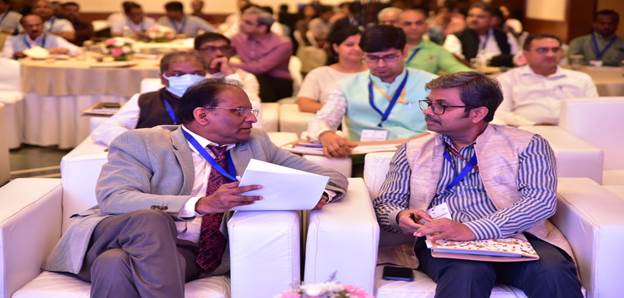
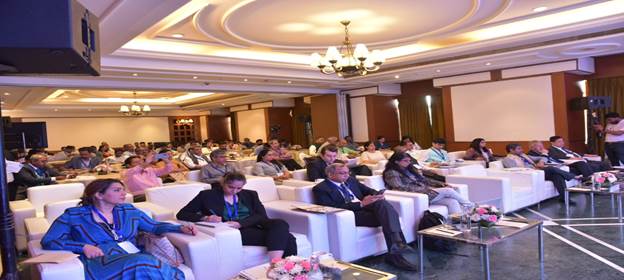
 National Mission for Clean Ganga (NMCG) in association with the National Institute of Urban Affairs (NIUA) organized the ‘River-Cities Alliance (RCA) Global Seminar: Partnership for Building International River-Sensitive Cities’ today in New Delhi. The purpose of the RCA Global Seminar was to provide a platform for officials of member cities and international stakeholders to discuss and learn good practices for managing urban rivers.

The RCA Global Seminar witnessed participation from Embassies/High Commissions of select countries and their respective river cities in order to highlight objectives, achievements, and potential collaborative outcomes of RCA. State Missions for Clean Ganga (SMCGs) and funding agencies like World Bank, ADB, JICA & KfW also were part of the discussions.
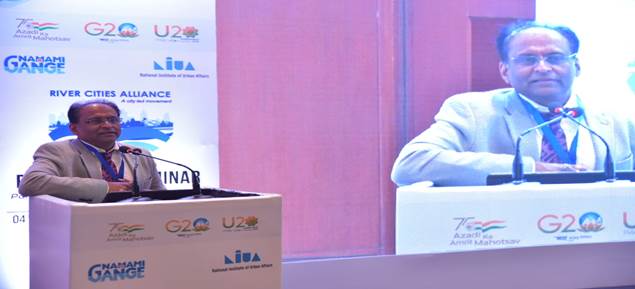
The RCA Global Seminar was presided over by Mr. G. Asok Kumar, Director General (NMCG).  

Addressing the gathering, Mr. G. Asok Kumar expressed happiness on the increase in number of cities joining the RCA and the immense interest NMCG has been able to generate on this issue. He noted that the trickle started with the Urban River Management Plan and has been flowing ever since. He emphasized the importance of issues related to climate change and urban water management, and how urban planners have a serious challenge at hand. “Climate change is a reality. We can see it now in Delhi where in the month of May we are needing blankets,” he said.

He informed that RCA started with 30 cities on the banks of the river and eventually it was decided to expand it to all cities not restricting to the Ganga Basin. “During the DHARA 2023 event in Pune, we were enthused to see the response from the city planners, who viewed water as something not important,” he said, adding, “People and administrators are now waking up to the reality as they have realized that issues related to water such as floods, droughts, inadequate waste management etc. can shut down cities.” DG, NMCG hoped that urban planners incorporate water management at the planning stage and start giving the priority it deserves.
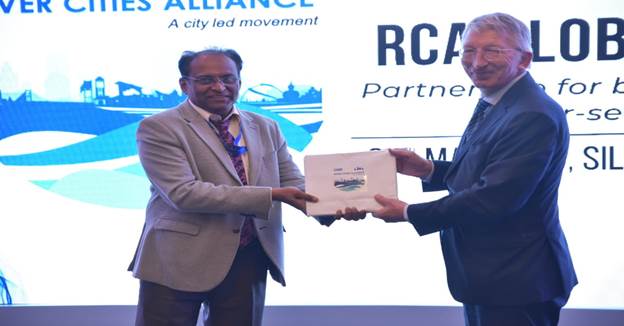
Mr. Kumar said that under the leadership of the PM, Swacch Bharat Mission and Jal Jeevan Mission are progressing well and creating positive impact on ground setting world class examples in the water and sanitation sectors. The stopping of Open Defecation ensured that the drinking water sources don’t get contaminated whereas household water supply under JJM is easing the pain of women in rural areas who had to walk several kilometres to fetch water. “With urbanization, if we don’t take care about the disposal of sewage then it is a major threat. The urban planners solely focussed on the infrastructure must take this into account to keep the rivers and other drinking water sources clean,” he said. 

He noted that the theme of RCA resonated in the UN Water Conference 2023 held in New York in March 2023. “The timely success in water sector in India is primarily because of people’s participation (Jan Bhagidari) and whole-of-government approach,” he said, adding, “The time has now come, as envisaged by the Union Minister for Jal Shakti, is to move towards whole-of-world approach to break the silos in which water has been divided.” 

He called for the world players to co-operate, work together, pick from each other’s best practices, share knowledge (Gyan Bhagidari), come up with transformational solutions and share in the success.
On RCA Global, he said that cleaning of rivers like Rhine and Thames in foreign lands is a lesson and inspiration for us and we should partner with international cities to create beautiful cities in India which can take pride in their rivers and people enjoy and have pleasant experience at the river fronts. “The experience of international cities in making their rivers clean, improving river properties, managing river flooding and increased aesthetic value can be seen as fruitful lessons for us. RCA Global platform should leverage the experience of foreign countries,” he added. He also said that it is not about aping anyone but taking the adaptable best practices as per requirements and using them to make our cities more beautiful.

DG, NMCG informed that Namami Ganga was recognized as the ‘Top 10 World Restoration Flagships to Revive the Natural World’ in Montreal, Canada and Clean Ganga, which seemed impossible, is now happening. He said that NMCG has committed to the SDG goals of equity in water distribution, access to safe drinking water, democratization of water etc.

Session 1 of the event saw a presentation from the Asian Development Bank Institute (ADBI) on ‘Decentralized Urban Wastewater Management System in Japan’, and an Embassy Round Table discussion.

Session 2 began with the context setting of RCA that incorporated an introduction to NMCG’s Urban Agenda, Urban River Management Plan (URMP) Framework with comments on RCA and future goals/actions pertaining to river management. Furthermore, there was a presentation from representatives of the India-Denmark Partnership, with a focus on the case study of Udaipur-Aarhus. Another presentation was made on RCA Cities – Ayodhya and Chhatrapati Sambhaji Nagar in this session.

NMCG c-Ganga facilitated presentations from International Cities – Greater Manchester by Mr. Mark Turner (National Course GM Team Leader, Greater Manchester Combined Authority), City of Hamburg by Mr. Christian Ebel (Desk Officer for Implementation of EU Water Framework Directive in Hamburg for the Elbe River Free and Hanseatic City of Hamburg), City of Copenhagen by Mr. Jan Burgdorf Nesilsen, Municipality of Copenhagen and City of Aarhus, Mr. Gitte Nordmand Andersen (Aarhus Municipality). The session 2 also witnessed an open house discussion and ended with a vote of thanks from Mr. Dheeraj Joshi, Deputy Secretary, NMCG.

Mr. D.P Mathuria, Executive Director (Technical), NMCG delivered the special address and spoke about how India is hugely investing in the water sector, but staring at twin challenges of water security and climate change. Both of these factors are interlinked in making water equitable. He noted the facets of water security being water management and water quality. NMCG has developed a large number of STPs that are able to address the issues of faecal contamination. He noted that nature-based solutions and decentralised systems shall be very important assets in terms of solution to organic waste falling into rivers.

Other participants included Mr. Mukul Verma (Senior Adviser – Infrastructure & Financial Services, Embassy of UK), Mr. Shayan Yousefi (Embassy of Austria), Mr. Beate Langset (Counsellor for Climate & Environment, Royal Norwegian Embassy), Ms. Anitha Sharma (Counsellor in Urban Development with focus on Water, Embassy of Denmark), Mr. R.K. Srinivasan (USAID’s Senior Water and Sanitation Advisor, US Embassy), Mr. Dirk Steffes-enn (Deputy Head of Economic Cooperation and Development, Embassy of the Federal Republic of Germany), Ms. Martina Burkard (Head of Programme, GIZ), Ms. Nishi  Pant (Senior Policy Advisor, Netherlands Embassy), Mr. Jun Tsumori (Counsellor, Economic Cooperation, Embassy of Japan), Mr. Kazushi Hashimoto (Consultant, ADBI), Prof Manabendra Saharia (Assistant Professor, IIT Delhi), and Prof. Ashish Pandey (HOD, Department of Water Resources Development & Management, IIT Roorkee).

NMCG-NIUA Collaboration
The NMCG-NIUA collaboration has witnessed the historic establishment of the ‘River Cities Alliance (RCA)’ of 110 river cities across India with one international member city – the city of Aarhus from Denmark. RCA was a significant initiative at NMCG’s Side Event during the ‘UN 2023 Water Conference – Water Action Agenda’ on March 23, 2023, which highlighted the importance of Germany as a key partner for the commitment related to ‘River Cities Alliance: Partnership for Building International River Sensitive Cities’.

NMCG has been tirelessly working on a joint initiative to propagate river-sensitive development in our cities with NIUA. This is in response to the Prime Minister’s call for new thinking in river cities at the 1st Meeting of the National Ganga Council (NGC) in December 2019. Hence, NMCG seeks to deepen the commitment through the inclusion of international cities as members of the RCA during the RCA Global Seminar. The intent is to facilitate knowledge exchange (online) for Indian cities to learn new practices and approaches for urban river management. Likewise, it will also be an opportunity for international cities to learn about experiences in Indian cities, which may be relevant to their contexts.

River Cities Alliance

The River Cities Alliance (RCA) is a joint initiative of the Department of Water Resources, River Development & Ganga Rejuvenation under the Ministry of Jal Shakti (MoJS) & the Ministry of Housing and Urban Affairs (MoHUA), with a vision to connect river cities and focus on sustainable river centric development. Beginning with 30 member cities in November 2021, the Alliance has expanded to 109 river cities across India and one international member city from Denmark.

DHARA 2023

The first annual meeting of the RCA – DHARA 2023 (Driving Holistic Action for Urban Rivers) was held on February 13–14, 2023, in Pune. DHARA 2023 featured key sessions on international best practices and examples for urban river management. DHARA 2023 was aimed to inspire members of the RCA to engage in progressive actions for urban river management in their cities. The event shone a light on the unaddressed issues and challenges for river management in cities, which helped NIUA and its partners formulate an effective work plan. The event also helped in developing a compendium of technological solutions that cities may adopt for enhancing the management of their local rivers.

****

City Beautification Progressing By Eliminating Garbage Dumps in Cities


Garbage Dumps and open dumpsites are being transformed rapidly to change and beautify the urban landscape. Under Swachh Bharat Mission Urban 2.0, it was realised that transforming garbage dumps in urban areas was the need of the hour to protect environment and reduce health risks. Many States are taking creative steps to transform and beautify these garbage dumps in urban areas which eventually lead to sustainable development and a healthier, greener future. It has also created avenues for waste reduction, recycling, and reusing, helping in the sustainable use of resources.
Bhopal’s exemplary dumpsite remediation is an inspirational example of transformation of urban spaces. Flagged off by Hon’ble PM Sh. Narendra Modi, the Vande Bharat Express travelling between Bhopal to Delhi zooms past a dumpsite-turned-green zone in Bhopal. It was beautified after 37 acres of land was reclaimed.


Navi Mumbai Makes Urban Spaces Usable

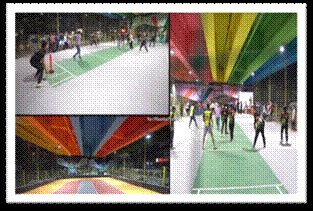
Navi Mumbai Municipal Corporation (NMMC) took an innovative approach to embark on an ambitious plan to convert area under bridges/ flyovers into community recreational facilities. An example of this can be seen in a public sports complex built under the Sanpada flyover in Mumbai. A sports complex was created as per the height of the bridge, where a basketball court, badminton court, box cricket zone, and skating rink were all painted in vibrant colors, creating a visually appealing and attractive space. The complex was also equipped with safety nets to ensure the safety of the players.

The success of the Sanpada flyover project has encouraged Navi Mumbai to plan and execute more such projects in future. The Ghansoli-Talawale bridge has already received a facelift last year with new paintings and lighting. This year, the area will be transformed into a garden and a seating area for industrial workers. The second stretch of the Sanpada Bridge will have a yoga center, and the Seawoods Bridge will undergo a beautification drive along with a sports complex.

The once-neglected spaces have now become thriving centres of activity, fostering social interaction, and promoting a healthy lifestyle among the residents. Not only has it revitalized neglected areas, but it has also improved the health and well-being of citizens.

Surat’s Creative Initiative to Eliminate Garbage Dumps

Surat’s conversion of garbage dumps into seating areas for the public has been a remarkable transformation. To eliminate garbage dumps, the Surat Municipal Corporation (SMC) transformed many of these points into seating areas. Under this initiative, Surat identified the garbage dumps and transformed them into seating area equipped with benches, lights, and trash bins. It has also planted trees and shrubs to create a green environment and promote biodiversity. ‘Sanjay Nagar circle’ is one of the few examples of these transformations, where the garbage dump site has been converted into a beautiful seating area by SMC. The corporation ensures daily coverage of door-to-door garbage collection from the surrounding area to ensure 100% waste collection.

Patna’s Swachhata Journey: Garbage Points to Green Zones

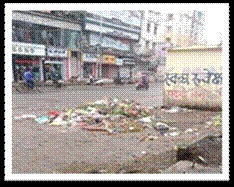
Patna was struggling with the increasing number of garbage dumps for a long time. To transform these garbage dumps into green zones and promoting a sustainable environment, Patna Municipal Corporation began a massive garbage dumps transformation drive in which a total of 630 garbage dumps across the city were cleaned and beautified. The mass garbage dumps removal drive emerged as massive development in the city.

The transformation drive was then conducted in 4 phases including 19 wards from each 19 zones of the PMC jurisdiction. PMC officials conducted awareness activities in which they rallied in the wards playing musical instruments and urging citizens to keep the city clean. The listed garbage dumps were cleaned extensively and the corporation made an appeal to the residents to keep the city clean and wreathed the offenders with garlands made out of disposable cups, bottles, wrappers and kitchen waste.

The Transformation of 630 Garbage Dumps
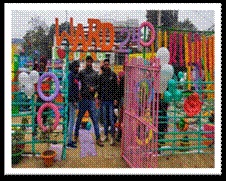
Patna Municipal Corporation began its transformation drive of garbage dumps by converting such sites into green zones. The cleaned-up spaces were beautified by planting saplings, paintings, placing benches made out of discarded items like rubber tubes, tires, tins and other plastic materials.


Many of the garbage points were also turned into selfie points. Later, PMC even celebrated various festivals and events on the transformed garbage dumps including Litti Chokha program on New Year’s Eve, Dahi chura on Makar Sankranti and a Kite Festival.

The transformation of garbage dumps into beautiful urban spaces is an excellent example of how innovative ideas and community engagement can help to address environmental and social issues in cities. This process not only improves the quality of life for locals but also creates a sustainable and green environment for all.

***********

Chief Minister of the Punjab Late Shri Parkash Singh Badal

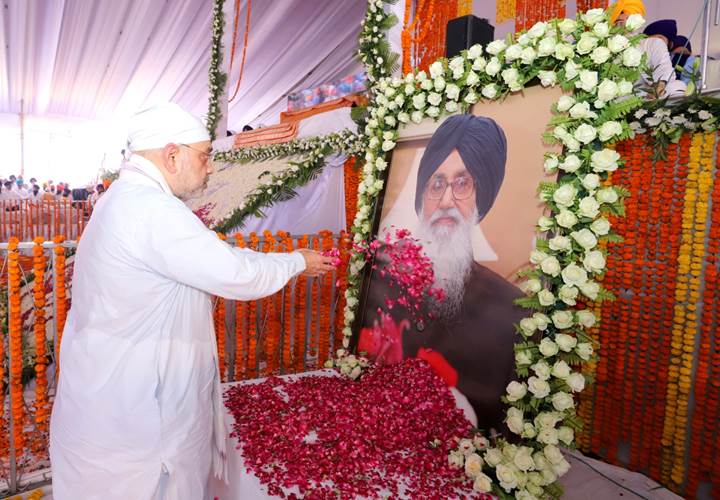
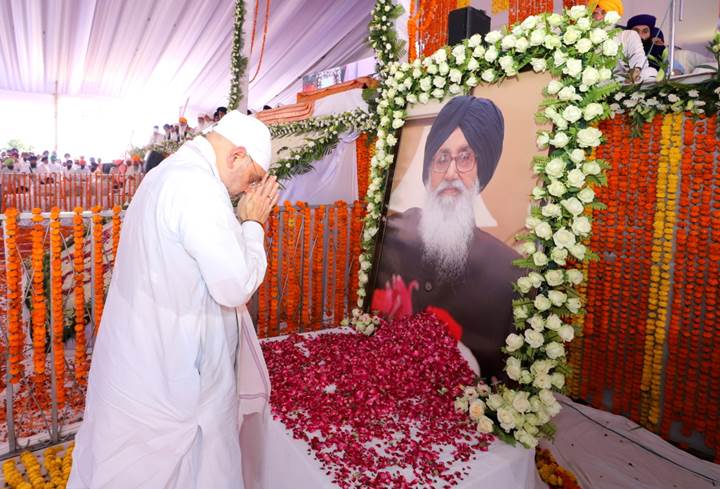
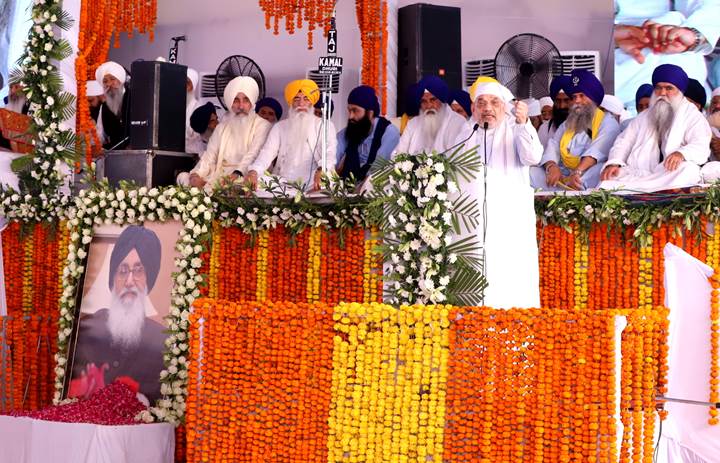
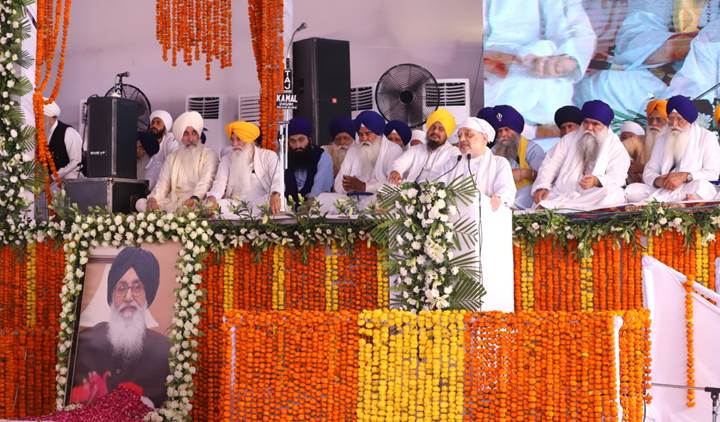
 Union Home Minister and Minister of Cooperation, Shri Amit Shah took part in the ‘Antim Ardas’ of former Chief Minister of the Punjab Late Shri Parkash Singh Badal and paid his last respects at Shri Muktsar Sahib in Punjab.

https://static.pib.gov.in/WriteReadData/userfiles/image/image001U30J.jpg

Shri Amit Shah said that due to passing away of Shri Parkash Singh Badal, the political and social leadership of not only Punjab but the entire country has suffered an irreparable loss. He said that it would be very difficult to fill the vacuum created by the demise of Shri Badal. Shri Shah said that with the passing away of Shri Badal, the Sikh community has lost a true soldier, the country has lost a patriot, the farmers have lost a true sympathizer and politics has lost a great man who set high standards.

https://static.pib.gov.in/WriteReadData/userfiles/image/image002D723.jpg

The Union Home Minister said that Shri Parkash Singh Badal had a long public life of 70 years, no person except Badal Sahab could live such a life without making any opponent. Shri Shah said that he always learnt from his meeting with Shri Badal and he always tried to show the true path. No one except great man like Shri Badal can give advice in political life with such transparency.

https://static.pib.gov.in/WriteReadData/userfiles/image/image003HB3V.jpg

Shri Amit Shah said that Shri Parkash Singh Badal was the longest serving member of the Punjab Legislative Assembly and Shri Badalserved as the Chief Minister of Punjab for 5 times and laid the foundation of New Punjab. With his demise, the Sardar of brotherhood has also left us. Shri Parkash Singh Badal devoted his whole life to Hindu-Sikh unity and despite facing many oppositions in politics, Badal Sahab always tried to keep everyone united. Shri Shah said that it is impossible to find such a person in public and political life.

https://static.pib.gov.in/WriteReadData/userfiles/image/image004L62O.jpg

The Union Home Minister and Minister of Cooperation said that from 1970 till today, whenever there was an opportunity to stand for the country, Badal Sahab never backed down. He said that Sardar Parkash Singh Badal fought for principles and creedand spent longest time of his public life on jail. During the Emergency, Shri Parkash SinghBadal firmly stood to protect democracy, whether it was the Kargil war or the fight against terror, on every front, Badal Sahab, always stood like a shield for the national interest. Shri Shah said that the passing away of Badal Sahab is a huge loss for the entire country. Shri Amit Shah said that we all should take inspiration from the life of Shri Parkash Singh Badaland may Waheguru give us all the strength to walk on his path.

*****

‘Food Street Project’ to develop 100 Healthy and Hygienic Food Streets across the country

 Union Minister of Health and Family Welfare, Dr. Mansukh Mandaviya reviewed the ‘Food Street Project’ to develop 100 healthy and hygienic food streets across the country with senior officers of Health Ministry and Food Safety and Standards Authority of India (FSSAI). The aim of this project is to encourage safe and healthy food practices among food businesses and community members, thus, reducing foodborne illnesses and improving the overall health outcomes.

To operationalize the food streets, the National Health Mission (NHM) of the Ministry of Health and Family Welfare will provide an assistance of Rs. 1 crore per food street as a pilot project to support 100 such food streets at different locations across the country. The grant will be routed under NHM, in the ratio of 60:40 or 90:10, with the condition that branding of these food streets will be done as per FSSAI guidelines.

The financial assistance would be provided for activities such as provision of safe drinking water, hand washing, toilet facilities, tiled flooring of common areas, appropriate liquid & solid waste disposal, provision of dustbins, using billboards, façade preparation and signage of permanent nature, common storage space, lighting, specialized carts for specific type of trades, branding etc.

The initiative will be implemented through NHM in convergence with Ministry of Housing and Urban Affairs (MoHUA), apart from FSSAI’s technical support. The technical assistance will include assistance in designing of food streets, preparation of an SOP and providing training under Hazard Analysis and Critical Control Points (HACCP) protocol.

Street food has been an integral part of the Indian food culture and has played an immense role in sustaining and shaping the Indian food economy. It is not only a source of affordable and delicious food for millions of Indians but also a major contributor to the country’s economic growth. With rapid urbanization, street food hubs have led to an easy access to food but food safety and hygiene at these hubs remain a matter of concern.

The Ministry of Health and Family Welfare has taken various steps to improve the hygiene and food safety standards protocols for food street hubs. These initiatives include training of food handlers, independent third-party audits, and certification under Clean Street Food Hub initiative of the Eat Right India movement.

The state-wise list of suggestive number of food streets is as under:

S.N.

State/UT


No. of food streets

1

Andhra Pradesh

4

2

Assam

4

3

Bihar

4

4

Chhattisgarh

4

5

Delhi

3

6

Goa

2

7

Gujarat

4

8

Haryana

4

9

Himachal Pradesh

3

10

Jammu & Kashmir

3

11

Jharkhand

4

12

Karnataka

4

13

Kerala

4

14

Ladakh

1

15

Madhya Pradesh

4

16

Maharashtra

4

17

Odisha

4

18

Punjab

4

19

Rajasthan

4

20

Tamil Nadu

4

21

Telangana

4

22

Uttar Pradesh

4

23

Uttarakhand

4

24

West Bengal

4

25

Arunachal Pradesh

1

26

Manipur

1

27

Meghalaya

1

28

Mizoram

1

29

Nagaland

1

30

Sikkim

1

31

Tripura

1

32

A & N Islands

1

33

Chandigarh

1

34

DI) & DNH

1

35

Lakshadweep

1

36

Puducherry

1


Total

100


****