Petersberg Climate Dialogue over need for stronger mitigation and adaptation efforts and for expansion of renewables

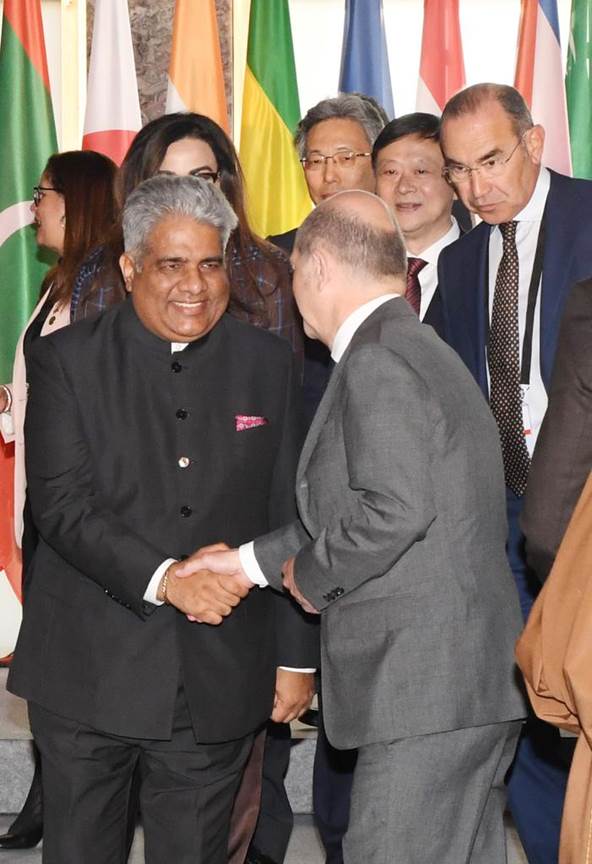
 Union Minister for Environment, Forest and Climate Change and Labour and Employment Shri Bhupender Yadav said the Petersberg Climate Dialogue concluded in Berlin with delegates having worked towards laying the groundwork for joint decisions at COP28. He said that there was a broader consensus over the need for stronger mitigation and adaptation efforts and for expansion of renewables.

https://static.pib.gov.in/WriteReadData/userfiles/image/image001OYML.jpg

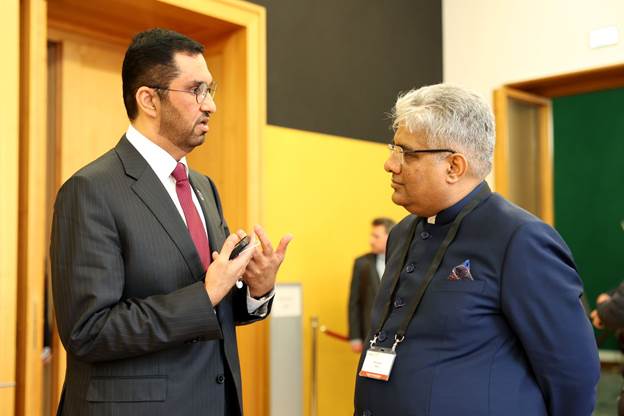
India put forth its side strongly at the discussions. Shri Yadav said as has been underlined by Prime Minister Shri Narendra Modi, at the event it was reiterated that recognising the need for support towards Just, Affordable & Inclusive Energy Transition is crucial in the spirit of leaving no one behind.

https://static.pib.gov.in/WriteReadData/userfiles/image/image002OMQV.jpg

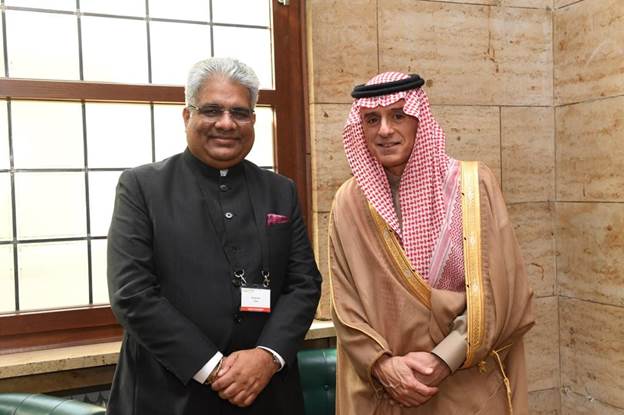
Shri Yadav said while following the clean energy pathway, to protect livelihood of local population and local economy, which depend on the existing energy system, focus on diversifying the economy and creation of new livelihood opportunities are required.

https://static.pib.gov.in/WriteReadData/userfiles/image/image003OIHC.jpg

Earlier Shri Yadav addressed the session on ‘Strategic Dialogue on Global Stocktake and Roadmap for Global Transformation’.

The Union Minister highlighted that the Global Stocktake outcome should focus on how climate change impacts, actions and responses have a bearing on the developmental priorities of developing countries including eradication of poverty. He said the outcome of the first GST should seek to convey a message on sustainable lifestyles as well as sustainable consumption to inform the next round of Nationally Determined Contributions (NDCs) and enhanced international cooperation.

*****

From Trash to Treasure: A Hackathon on Innovative Solutions for Waste Utilization

 Driven by the message of Mission LiFE and circular economy goals, the Central Pollution Control Board is organizing an online ‘Waste to Wealth Ideation Hackathon’ for undergraduate and above students on 14th May, 2023 (Sunday) the registration for which are currently open on https://cpcb.nic.in/w2w-hackathon-cpcb/#

 It is a nationwide event to provide platform to college students across the country to solve real-world waste management challenges on (a) plastic waste (b) electronic waste (c) battery waste (d) crop residueIt will help them to build upon their understanding of waste management and present innovative solutions for Waste to Wealth conversion.

The Ideation Hackathon offers a one-of-a-kind opportunity to students to win cash prizes worth up to Rs. 3.6 Lakhs across all waste streams. On the day of Ideation Hackathon i.e. May 14, 2023 (Sunday), one problem Statement each for four waste categories will be posted on the CPCB website at 09:00 am and students will be required to email the original ideas pertaining to it on w2w.cpcb[at]gov[dot]in by 05:00 pm in a given template. The best original ideas under each waste category will be awarded cash prize of Rs. 50,000, Rs. 25,000 and Rs. 15,000. Along with this, chosen ideas will get incubation support, industry exposure, and mentoring from top scientists of CPCB. For further details regarding eligibility, process, important dates and problem scope, please visit https://cpcb.nic.in/w2w-hackathon-cpcb/.

The last date for registration is May 12, 2023 (Friday).


CONTACT

Central Pollution Control Board

Parivesh Bhawan, East Arjun Nagar, Delhi 110092, India

mscb.cpcb[at]gov[dot]in   

C-DAC Transfer of Technology of Power quality solution for Grid and Electronics Solutions for Railways

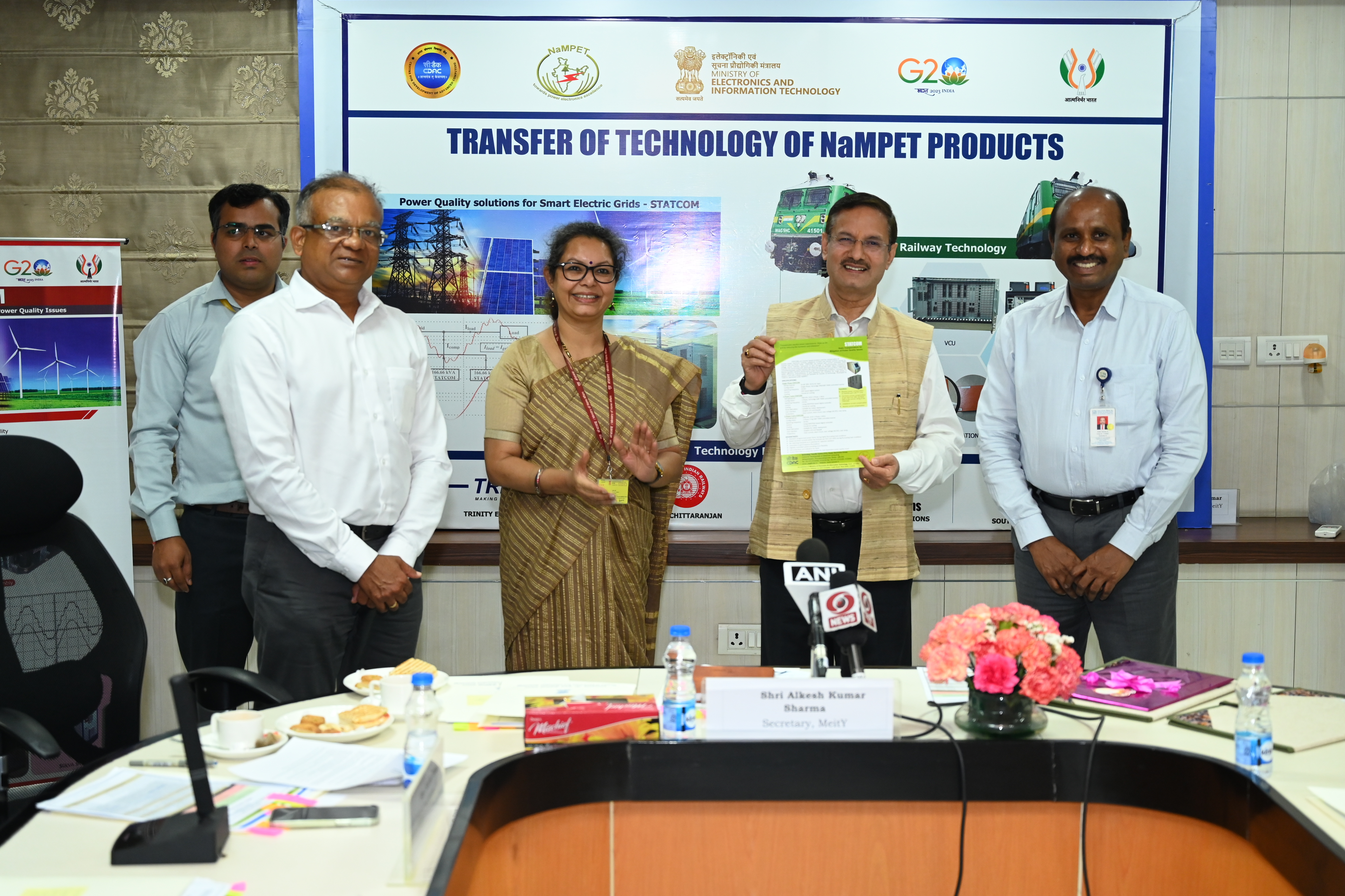
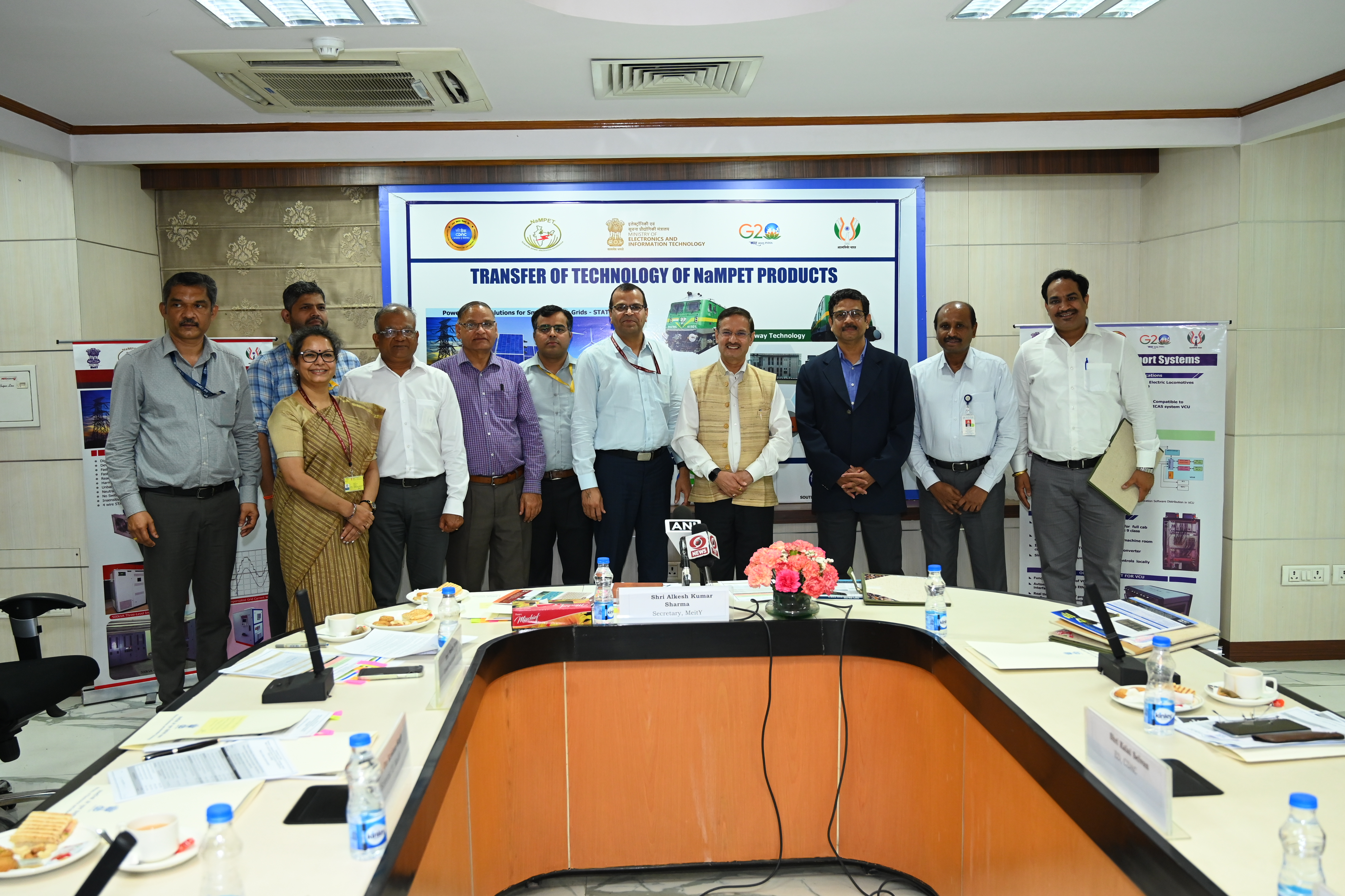
 Centre for Development of Advanced Computing (C-DAC), Thiruvananthapuram, Ministry of Electronics and Information Technology (MeitY), Transferred  Indigenous Technology of Power Quality Solution and Railways VCU solutions to industry partners in the presence of MeitY Secretary Shri Alkesh Kumar Sharma here today.

Addressing the gathering, Shri Alkesh Kumar Sharma said the Prime Minister’s vision of ‘Make in India- Make for the World’ can be achieved through more and more indigenisation of technology and taking it forward by the industry. “The STATCOM technology will help the masses in integration of different renewable sources of energy to the grid without depleting power factor and can help the grid in unbalanced grid conditions. Also, the VCU and its offshoot technologies given to the Indian Railways will ultimately help the passengers, freight, Shatabdi and Tejas trains to have more indigenisation of the technologies,” he added.

Shri Alkesh Kumar Sharma said, “India is slowly transforming and strengthening itself in the R&D and manufacturing sector in which the industry partners has more roles to play as Indian Entrepreneurs and stakeholders to take this mission forward and this synergy will make India a ‘Aatmanirbhar Bharat’.” There is a huge market for the new and innovative, upgraded, devices, and the whole advantage of this technology is on efficiency which will be a win-win situation for both the developer of the technology and the industry, in which the momentum gain of Indian technology will be crucial as an exporter hub, he added.

Group Coordinator, MeitY, Smt Sunita Verma in her address said the development technology for STATCOM for Power quality solution and Electronics Solutions for Railways (Vehicle Control Unit, Rolling Stack software, Loco Simulation Controller and Off-Loco VCU test kit) is a good initiative when country is focussing on self-reliance. The requirement of these five applications will grow manyfold in coming years, She added.

STATCOM: The Static Synchronous Compensator (STATCOM) based on PQ standard-IEEE519 & IEEE1459. The STATCOM technology has become increasingly relevant in recent years due to the growing demand for renewable energy sources such as wind and solar power, which are intermittent and variable in nature. The integration of these sources into the power grid can cause voltage fluctuations and instability, which can be mitigated by using STATCOMs. This Technology of STATCOMs developed by C-DAC, Thiruvananthapuram was transferred Trinity Energy Solution

VCU: The VCU based on the Standard IEC-61375. The technology was based on TCN protocols available during early 2010s. Since then various enhancements have come up in TCN protocol. Further, it has been felt that there was a need to upgrade the VCU at par with contemporary technology. The existing C-DAC-VCU in terms of hardware and software and to handhold the technology for 5 years while in-house capacity is built at CLW to tackle the day-to-day and long term maintenance requirement of locomotive fleet. This Technology of VCU developed by C-DAC, Thiruvananthapuram was transferred CLW Chittaranjan.

Loco Simulation Controller: The Loco Simulation Controller is based on the Railways standard. The VCU and its application software needs to be tested in locomotive to better debugging, understanding the response of the outputs given from VCU to various sub-systems of locomotives. This test platform could simulate the actual functionalities of locomotive and will be giving inputs to VCU as per actual locomotive logic. Similarly, it also takes inputs from VCU and processes it and generates outputs as of actual locomotive to VCU. This Technology of Loco Simulation Controller developed by C-DAC, Thiruvananthapuram was transferred to CG Power & Industrial solution.

Rolling Stack Software: The Rolling Stack Software is as per the requirement of Indian Railways. The rolling stock application that controls the loco function is distributed among the 4 processors boards in the VCU set. So as to make the loco operation more reliable in case of processor board failures, the important functions are implemented redundantly. This will also help the loco pilot to steer the train without moving from the driving cab to rear cab to address the failure. This software of Rolling Stack Software developed by C-DAC, Thiruvananthapuram was transferred to CG Power & Industrial Solutions.

Off-Loco VCU Test Kit: The Off-Loco VCU Test kit is as per the necessity of Indian Railways. The PCB test jig is used to verify the basic functions of the sub-system PCBs that are being used in C-DAC developed VCU for 3 phase electric locos. The OK/ Not OK status of VC MeitY U subsystem PCBs under test is used for screening the PCBs for use in VCUs. This technology of Off-Loco VCU Test Kit developed by C-DAC, Thiruvananthapuram was transferred to Electrical Loco shed, Rayapuram Southern Railway.

Executive Director (Electrical), Railway Board, Shri Ram Niwas; Scientist ‘D’, Dr Om Krishan Singh, representatives from the industry and other senior officials from MeitY, C-DAC and Indian Railways were also present on the occasion.

Written Result of Combined Defence Services Examination (I)-2023

 On the basis of the results of the COMBINED DEFENCE SERVICES EXAMINATION (I), 2023 held by the Union Public Service Commission on 16th April, 2023, 6518 candidates with the following Roll Numbers have qualified for being interviewed by the Service Selection Board of the Ministry of Defence, for admission to (i) Indian Military Academy, Dehradun 156th  (DE) Course commencing in January, 2024 (ii) Indian Naval Academy, Ezhimala, Kerala, Course commencing in January, 2024 (iii) Air Force Academy, Hyderabad (Pre-Flying) Training Course (215 F(P)) commencing in January, 2024 (iv) Officers Training Academy, Chennai  119th SSC (Men) (NT) (UPSC) Course commencing in April, 2024 and (v) Officers Training Academy, Chennai, 33rd SSC Women (Non-Technical) (UPSC) Course commencing in April, 2024.

The candidature of all the candidates, whose Roll Numbers are shown in the lists below, is provisional.  In accordance with the conditions of the admission to the examination, they are required to submit the original certificates in support of age (Date of Birth), educational qualifications, NCC (C) (Army Wing/Senior Division Air Wing/Naval Wing) etc. claimed by them to IHQ of MoD (Army) / Dte Gen of Rtg (Rtg A) CDSE Entry for SSC male candidates and SSC women entry for female candidates West Block III, R. K. Puram, New Delhi-110066 in case of IMA/SSC first choice candidates and IHQ of MoD(Navy DMPR (OI & R Section), Room No. 204,‘C’ Wing, Sena Bhawan, New Delhi-110011 in case of Navy first choice candidates and PO3 (A)/Air Headquarters ‘J’ Block, Room No. 17, Opp. Vayu Bhawan, Motilal Nehru Marg, New Delhi-110 106 in case of Air Force first choice candidates by the following dates failing which their candidature will stand cancelled.  The original Certificates are to be submitted not later than 01st January, 2024 for IMA & INA,not later than 13th November, 2023 for AFA and not later than 1st April, 2024 in case of SSC course only.  The candidates must not send the original Certificates to the Union Public Service Commission.

Candidates who qualified in the written exam and given their first choice as Army (IMA/OTA) are required to register themselves on the recruiting directorate website www.joinindianarmy.nic.in in order to enable them to receive call up information for SSB interview. Those candidates who have already registered on the recruiting directorate website are advised not to register again.

In case, there is any change of address, the candidates are advised to promptly intimate directly to the Army Headquarters/Naval Headquarters/Air Headquarters as the case may be.

For any further information, the candidates may contact Facilitation Counter near Gate “C” of the Commission, either in person or on telephone numbers 011-23385271, 011-23381125 and 011-23098543 between 10:00 hrs to 17:00 hrs on any working day. In addition for SSB/interview related matter the candidates may contact over telephone no. 011-26175473 or joinindianarmy.nic.in for Army as first choice011-23010097 / Email: officer-navy[at]nic[dot]in or joinindiannavy.gov.in for Navy/Naval Academy as first choice and 011-23010231 Extn. 7645 / 7646 / 7610 or www.careerindianairforce.cdac.in for Air Force as first choice. Candidates can also obtain information regarding their result by accessing UPSC website http://www.upsc.gov.in

The marks-sheet of candidates who have not qualified, will be available on the Commission’s website within 15 days from the date of publication of the final result of OTA (after conducting SSB Interview) and will remain available on the website for a period of 30 days. 

Click here for results:

India-U.S. partnership is the defining moment of the 21st century

 Union Minister of Commerce & Industry, Textiles and Consumer Affairs, Food & Public Distribution Shri Piyush Goyal said that the India-U.S. partnership is the defining moment of the 21st century and reiterated the “ChaleinSaathSaath: Forward Together We Go” motto underscoring the depth of the partnership. During his Inaugural Address on ‘US-India Partnership: Forging Ahead’ at American Chamber of Commerce in India (AMCHAM) India’s 31st Annual General Meeting today in New Delhi, he talked about diversifying and deepening India-U.S. trade and investment ties for mutual growth and prosperity.

The Minister emphasised that the leaders of both the countries, Prime Minister of India, Shri Narendra Modi and President of the United States of America, Mr. Joe Biden, understand each other and work smoothly together to find solutions to complex geopolitical problems around the world. Shri Goyal mentioned the 5Ts-Talent, Technology, Tradition, Trade and Trusteeship- identified by the Prime Minister as the vision for the India-U.S. relationship.

The Minister noted that the bilateral trade between India and U.S. has been the highest in the last couple of years and said that it is aimed to increase multifold in the coming years. He said that the target of US$2 trillion exports by the year 2030 is doable with the increasing eminence and recognition of India across the world and with strengthening partnerships with like minded countries having shared values like the U.S.

Shri Piyush Goyal cited the examples of many Indian companies operating in the U.S. and vice versa and highlighted how significantly they are contributing to each other’s economy. The Minister said that these business relations are deepening the partnership between the two countries. He expressed hope that more and more U.S. based corporations will work together with Indian companies in the near future.

The Minister encouraged companies from the U.S. to establish their base in India and expand to newer frontiers like the markets of Africa and South-East Asia. He said that India offers assured prosperity and growth to the U.S. companies with the recent policy reforms undertaken with focus on the fundamental  macroeconomic parameters, affordable labour costs, inclusive and sustainable development and increasing ease of doing business.

The Minister said that the businesses in both countries can work together to expand to the next level in many sectors like defence manufacturing, pharmaceuticals, textiles, engineering products, auto components, electrical products, agricultural products, etc. on the merchandise side while IT, accounting, business processes outsourcing, research & development, tourism, etc. on the services side. He said that the bilateral trade between both the countries is growing rapidly and has tremendous potential to scale further heights. He said that the technical and managerial talent offered by India to businesses around the world cements India’s relationship with the world; he cited the example of many U.S. corporations having Indian or Indian-origin CEOs.

The Minister said that Amrit Kaal is the defining period for India in which the demographic dividend is contributing to the growth of the economy bringing prosperity & future for the country. He said that the reform processes undertaken by the government in the last 9 years will turn India into a global manufacturing hub. He said that the efforts of the government towards improving logistics infrastructure like connectivity, power, etc. is leading to better quality of life for the people of India and enabling the aspirational youth to contribute to the rapid development of India. Shri Goyal stressed that it is important for the industry to stand on its own feet with delivery of high quality products and services with government interference in business to the minimum.

The Minister said that there is multifarious interaction between India and the U.S. at various platforms like the Indo-Pacific Economic Framework for Prosperity (IPEF), U.S.-India CEO Forum, Quad, etc. He said that the comprehensive & strategic partnership between India and the U.S. is based on the strong foundation of shared values, commitment to the rule of law, transparency, freedom of business, freedom of media, independent judiciary, etc. The Minister said that there is complementarity between the India-U.S. economy and both countries collaborate to make prosperous and rational decisions.

He mentioned the significance of the recent visit of United States Secretary of Commerce, Ms. Gina Raimondo to India for the strengthening and deepening of the India-U.S. Partnership. He said that during her visit, Ms. Raimondo met the Prime Minister of India, Shri Narendra Modi and praised his visionary leadership in transforming India. He said that Ms. Raimondo noted the efforts of the Government in eliminating poverty and improving the lives of the people of India through the efficient use of technology and effective policy formulations.

The Minister said that India is committed to the fight against climate change and praised the performance of India as it performed better than the commitments it had made with being among the top 5 countries in performance on climate action. He said that India is consistent in the fight against climate change under the visionary leadership of Prime Minister, Shri Narendra Modi who brought less developed, developing and developed countries together for the signing of the Paris Agreement.

The Minister appreciated the important role played by AMCHAM and the impetus provided by it for the India-U.S. partnership. He said that the collective effort between the leadership of both countries, warmth between people, etc. enables both the countries to partner in uncharted territories for mutual growth and development. The Minister also released two reports at the event: 1. The India edge – US Industries catalysing the growth trajectory and 2. Future of Urban Mobility- Integration of Platforms.

***

Social Sector Ministries/ Departments being onboarded on PM GatiShakti National Master Plan

 In line with the vision of the Prime Minister, Shri Narendra Modi of expanding the outreach of the NMP platform for socio-economic development, Social Sector Ministries are being onboarded on mission mode through a series of meetings. During a high-level meeting on the adoption of PM Gati Shakti NMP by Social Sector Ministries/Departments held yesterday in New Delhi, Special Secretary, Logistics Division, DPIIT, Smt. Sumita Dawra highlighted that there is immeasurable potential for the adoption and augmentation of NMP in social sector planning.

As of date, 14 Social Sector Ministries/ Departments have been onboarded, namely Ministry of Panchayati Raj, Department of Health and Family Welfare, Department of Post, Department of School Education and Literacy, Department of Higher Education, Ministry of Culture, Ministry of Housing and Urban Affairs, Ministry of Rural Development, Ministry of Women and Child Development, Ministry of Tribal Affairs, Department of Youth Affairs, Department of Sports, Ministry of Skill Development and Entrepreneurship and Ministry of AYUSH. Individual portals of these Ministries/Departments have been developed, which are integrated at the backend with the NMP.

61 data layers of Social Sector Ministries related to infrastructure assets, such as primary and secondary schools, colleges, primary health centres, district hospitals, health sub-centres, public toilets, dump sites, Anganwadi centres, fair price shops, Amrit samovars, and dairy locations, etc., have been mapped on NMP.

Smt. Dawra stated that for wider adoption of PM GatiShakti NMP, a comprehensive area approach planning should be focused upon. It was further emphasized that Standard Operating Procedures (SOPs) are to be developed by each social sector Ministry to serve as guidelines for data management, which may be replicated by States.

The focus of the discussion in the meeting was on reviewing the status of the adoption of NMP for social sector planning and also on the measures to be taken for data management, i.e., improving the data quality, data uploading, and validation of data. The meeting saw the participation of 34 officers from all 14 Ministries/ Departments.

Ministries like the Ministry of Women and Child Development, the Department of School Education and Literacy, and the Ministry of Skill Development and Entrepreneurship showcased the use cases for the adoption of NMP.

Ministry of Women and Child Development has developed a mobile application viz., Poshan Tracker for the collection of data regarding Anganwadi Centres (AWC) under the Mission Poshan 2.0. The collected data is geo-tagged and integrated with the NMP platform through API integration. So far, 9.27 lakh Anganwadi Centres have been captured and integrated on NMP through this application. Hence, this has resulted in real-time data enrichment on the platform for infrastructure planning.

Further, after the mapping of the existing Anganwadi centres on the NMP platform, new areas were identified in terms for establishment of new Anganwadi Centres (AWC), basis the parameters like local population, habitat clusters, distance between institutions, and using the site suitability tool on the NMP.

Department of School Education and Literacy are using the NMP platform by identifying suitable sites for the opening of new schools through the use of the site suitability tool and mapping of existing data layers, i.e., road and rail network, population census data, and demographic layer for identifications of gaps and finalising the locations for opening new schools.

Other social sector Ministries, like the Ministry of Housing and Urban Affairs, Ministry of Health & Family Welfare, Department of Higher Education, Ministry of Culture, and Ministry of Tribal Affairs are also in the process of identifying assets essential for social sector planning, to be uploaded on NMP.

Individual portals for 22 infrastructure and user economic ministries and all 36 States/UTs have been created and integrated with the NMP at the backend. At present, 1460 data layers have been integrated into NMP, belonging to Central Ministries/ Departments (585) and States/ UTs (875).

***

Media and entertainment industry to make a matchless mark

 Union Minister of Commerce and Industry, Textiles and Consumer Affairs, Food and Public Distribution, Shri Piyush Goyal said that the media and entertainment industry will make a mark that will be matchless in the Amrit Kaal poised to be the defining moments for India. During his address at the FICCI Frames 2023, the Minister lauded the industry for its commitment to take Indian cinema on the global map.

The Minister said that the government under the visionary leadership of the Prime Minister, Shri Narendra Modi is supportive to all the efforts by the media and entertainment industry to expand the frontiers of the sector globally and reach the remotest corners of the world. Shri Goyal said that the media and entertainment industry can disseminate the message to the world that India is on the pathway to become a developed nation by 2047. He also said that India as the fastest growing economy of the world along with an unparalleled talent and skill base at a very competitive price offers unmatched opportunities for economic development and business growth to the world.

The Minister appreciated the industry for efficiently adopting modern technologies and cited the example of widespread use of smartphones as cameras. Shri Goyal said that the media and entertainment industry will grow by leaps and bounds with the emergence of digital platforms. Shri Piyush Goyal lauded the Indian VFX companies involved in Hollywood movies like Avatar. He said that startups are contributing to the growth of this sector significantly.

The Minister noted that the media and entertainment industry can showcase to the world, the New India of today and boost the economy, helping the country reach a new audience, influencing opinions, and spreading positivity. He said that this positivity encourages people, government and businesses to be more aspirational and look at the future with greater hope demanding better lifestyles and better business opportunities.

Shri Goyal said that the media and entertainment industry are the cultural ambassadors of India and have given a unique identity to India. He highlighted that the media and entertainment industry has a huge potential to connect people, businesses and nations leading to a better understanding and appreciation of different cultures and conditions across the world.

The Minister said that the world is also appreciating Indian art and culture and the recent Oscar Awards for the ‘Naatu-Naatu’ song and the ‘Elephant Whisperers’ showcase this global appreciation. Shri Goyal said that these Awards helped India convey a social message that sustainability is at the core of Indian culture and tradition. He said that the message of Naari Shakti was also effectively conveyed as the Awards highlighted that Indian women of substance are defining the New India. Shri Goyal said that these achievements are boosting the morale of billions of people.

Shri Piyush Goyal noted that the theme ‘inspire, innovate and immerse’, is relevant to the current times as it reflects the vibrancy demonstrated by the media and entertainment industry. He said that the theme also resonates with the belief that creativity can indeed enhance commerce. He said that the industry acts as a key pillar of India’s cultural identity and cultural heritage. The Minister noted that FICCI Frames has now become an established platform in the media and entertainment sector showcasing to the world what India truly represents.

The Minister said that every artist can dream and every dreamer can succeed in New India and urged the media and entertainment industry to build an industry which entertains, empowers, enlightens and inspires the whole nation, in this journey of progress and prosperity.

***

CEPA is the growth engine for India-UAE bilateral trade

 On the occasion of the first anniversary of the implementation of the India-UAE Comprehensive Economic Partnership Agreement (CEPA) today, Commerce Secretary Shri Sunil Barthwal congratulated the people of India and the UAE on the milestone and talked about CEPA’s role as a growth engine for India-UAE bilateral trade over the past 11 months. CEPA is a full and deep Agreement signed on 18 February 2022, during a virtual summit between the Prime Minister of India, Shri Narendra Modi and His Excellency the President of the UAE and Ruler of Abu Dhabi, His Highness Sheikh Mohamed bin Zayed Al Nahyan. CEPA entered into force from 01 May 2022.

The Commerce Secretary said that both sides are continuing to work together to further improve Ease of Doing Business between the two countries. Representatives from Industry mentioned about the experience of leveraging upon the CEPA to register significant growth in their respective sectors.

During the past one year, CEPA has made a significant impact on India’s Bilateral Trade with the UAE and particularly India’s Exports to the UAE (Oil and Non-Oil). The Bilateral Trade between India and the UAE has touched historic highs during FY 2022-23. Trade has increased from US$ 72.9 billion (Apr 21-Mar 2022) to US$ 84.5 billion (Apr 22-Mar 2023) registering a year-on-year increase of 16%. During the CEPA Implementation period (from May 22 to Mar 23), bilateral trade increased from US$ 67.5 billion (May 21-Mar 2022) to US$ 76.9 billion (May 22-Mar 2023) – an annual increase of 14%.

Exports from India to the UAE have also registered a multiyear high. During April-March period, Indian exports to the UAE increased from US$ 28 bn to US$ 31.3 bn; an increase of around US$ 3.3 billion; or 11.8% year-on-year growth in percentage terms. During the same period, growth in India’s global exports was 5.3%, excluding the UAE, India’s global exports grew at 4.8%.

During the CEPA Implementation period (May 22 – March 23), India’s exports to the UAE increased from 26.2 billion (May 21 – March 22) to 28.5 billion (May 22 – March 23); an 8.5% y-o-y growth. During the same period, India’s global exports, excluding the UAE, grew at 3.1%. India’s Imports from the UAE have grown to USD 53.2 billion (an annual increase of 18.8%) during Apr 22 to Mar 23. Non-oil imports during the same period grew by 4.1%.

Some of the key sectors, including labour-intensive sectors, that have witnessed significant export growth on account of the CEPA include: Mineral Fuels; Electrical Machinery (particularly telephone equipment); Gems & Jewellery; Automobiles (Transport vehicles segment); Essential Oils/Perfumes/Cosmetics (Beauty/Skin care products); Other Machinery; Cereals (Rice); Coffee/Tea/Spices; Other Agri Products; and Chemical Products

Utilization of the India-UAE CEPA has been increasing steadily on a month-on-month basis. Number of Preferential Certificates of Origin (COOs) issued under the CEPA increased from 415 in May 2022 to 8440 in March 2023. Over 54,000 COOs issued under the CEPA during the 11-month (May 22 – March 23) period.

Under the India-UAE CEPA in the Goods Domain, the UAE eliminated duties on 97.4% of its tariff lines corresponding to 99% of imports from India. India has obtained immediate duty elimination on over 80% of its tariff lines corresponding to 90% of India’s exports in value terms. Most of these tariff lines correspond to the labour-intensive industries/sectors such as oil seeds & oils, beverages, cotton, fish & fish products, textiles, clothing, gems and jewellery, leather, footwear, pharmaceuticals and many engineering products.

In the Services Domain, broader and deeper commitments have been taken across all the sectors and modes of supply. Out of the 160 services subsectors, India has offered 100 sub-sectors to the UAE and the UAE has offered 111 sub-sectors to India.

Given the significant increase in bilateral trade, particularly in exports of Indian goods and services, CEPA would have had a concomitant positive impact on other key macroeconomic variables such as GDP and Employment.


Top Ten Monuments of India

India is home to numerous ancient and modern architectural marvels that attract tourists from all over the world. Here are the top ten monuments of India:

Top Ten Monuments of India

Taj Mahal – A mausoleum in Agra, Uttar Pradesh, built by Mughal Emperor Shah Jahan in memory of his wife Mumtaz Mahal.

Red Fort – A historic fort in Delhi, built by Mughal Emperor Shah Jahan in the 17th century, featuring intricate architecture and beautiful gardens.

Qutub Minar – A 73-meter-high tower in Delhi, built in the 13th century, featuring intricate carvings and inscriptions.

Hawa Mahal – A palace in Jaipur, Rajasthan, known for its distinctive honeycomb architecture and 953 small windows.

Ajanta and Ellora Caves – A group of Buddhist, Jain, and Hindu caves in Maharashtra, featuring some of the most exquisite rock-cut sculptures and paintings.

Gateway of India – An arch monument in Mumbai, built in the early 20th century to commemorate the visit of King George V and Queen Mary.

Charminar – A mosque and monument in Hyderabad, Telangana, built in the 16th century, featuring four minarets and intricate Islamic architecture.

India Gate – A war memorial in Delhi, built in the early 20th century, featuring a towering gate and sprawling lawns.

Victoria Memorial – A museum and monument in Kolkata, West Bengal, built in the early 20th century, featuring stunning architecture and lush gardens.

Lotus Temple – A Bahai temple in Delhi, known for its unique lotus-shaped design and serene atmosphere.

These monuments not only showcase India’s rich history and culture but also represent the country’s architectural diversity and innovation. They are essential cultural and tourism assets that attract millions of visitors every year, making them an integral part of India’s tourism industry.

Top Ten Heritage of India

India is a country with a rich and diverse cultural heritage, and there are numerous heritage sites that showcase this rich cultural legacy. Here are the top ten heritage sites of India:

Top Ten Heritage of India

Taj Mahal – A mausoleum in Agra, Uttar Pradesh, built by Mughal Emperor Shah Jahan in memory of his wife Mumtaz Mahal.

Khajuraho – A group of Hindu and Jain temples in Madhya Pradesh, known for their intricate carvings and sculptures.

Hampi – An ancient city in Karnataka, once the capital of the Vijayanagara Empire, famous for its ruins and temples.

Ajanta and Ellora Caves – A group of Buddhist, Jain, and Hindu caves in Maharashtra, featuring some of the most exquisite rock-cut sculptures and paintings.

Konark Sun Temple – A 13th-century temple in Odisha, built in the form of a chariot, with intricate carvings depicting Hindu mythology.

Mahabodhi Temple – A Buddhist temple in Bodh Gaya, Bihar, believed to be the site where Buddha attained enlightenment.

Fatehpur Sikri – A deserted city in Uttar Pradesh, built by Mughal Emperor Akbar, featuring several palaces, mosques, and other structures.

Qutub Minar – A 73-meter-high tower in Delhi, built in the 13th century, featuring intricate carvings and inscriptions.

Amer Fort – A hilltop fort in Rajasthan, known for its grand architecture, ornate carvings, and stunning views.

Sanchi Stupa – A Buddhist monument in Madhya Pradesh, dating back to the 3rd century BCE, featuring intricate carvings and sculptures depicting the life of Buddha.

These heritage sites not only showcase India’s rich cultural heritage but also attract tourists from all over the world, making them an essential part of India’s tourism industry.

International Conference on Multidisciplinary Research 2023

 International Conference on Multidisciplinary Research (ICMR) 2023 aims to provide an opportunity to academics and practitioners around the world to discuss and share the contemporary issues of business and social science research. The proposed conference provides an outlet for high quality research in all areas of accounting, CSR, finance, economics, econometrics, education, information technology, Islamic finance and Sharia, law, management, marketing, social business and multidisciplinary. Aim of our peer-reviewed conference is to bring together the world’s leading scholars and opinion leaders and to increase our understanding of emerging scientific issues and research methodologies relating to business management, economic and social sciences. Please, engage freely in discussions, share your ideas and build relationships among the group of international researchers.


International Conference on Multidisciplinary Research (ICMR) 2023 will provide an excellent international forum for sharing knowledge and results in theory, methodology and applications of Different areas of Studies and Education. ICMR is a platform for researchers, scientists, scholars, students and industry professionals from around the world to present their current research, and foster alliances with peers. The goal of this Conference is to bring together researchers and practitioners from academia and industry to focus on understanding Modern engineering and applied sciences concepts and establishing new collaborations in these areas. Authors are solicited to contribute to the conference by submitting articles that illustrate research results, projects, surveying works and industrial experiences that describe significant advances in the areas of Studies and Education. The Conference will also have a space for companies or institutions to present their innovations and research results.

Multidisciplinary Research and Innovation and Collaboration

Social and Human Sciences
Arts and Humanities
Natural and Physical Sciences
Computer and Information sciences
Engineering and Technology
Medical and Health Sciences
Agricultural and Environmental Sciences

Social and Human Sciences
Psychology – Cognitive science, Applied psychology, Social psychology
Economics, Business and Financing – Economics, Econometrics, Business, International trade, Banking, Financing
Management and Marketing – Micro and Macroeconomics, HRM
Educational sciences – School education, ICT in education and learning, Formal and Non-formal education
Sociology, Demography, Anthropology, ethnology, Social issues, Family studies, Social work
Law – Human rights, History of law, Legal studies, constitutions, comparative law
Political science – Organisation theory, Public administration
Other social and human sciences

Arts and Humanities
History and Archaeology – Cultural heritage, cultural memory, Historical geography
Languages and Literature – Literary theory, Linguistics
Philosophy, Ethics and Religion – Theology, Philosophy, history of philosophy
Arts and Performance Studies
Other arts and humanities – Human rights, History of law, Legal studies, constitutions, comparative law

Natural and Physical Sciences
Mathematics – Pure mathematics, Applied mathematics, Statistics and probability
Physical sciences – Atomic, molecular and chemical physics, Nuclear physics, Optics, Acoustics, Astronomy
Chemical sciences – Applied and industrial chemistry, Organic and Inorganic chemistry
Earth and related Environmental sciences – Mineralogy, Palaeontology, Geology, Environmental sciences, Climatic research
Biological sciences – Cell biology, Microbiology, Biochemistry and molecular biology, Genetics
Other natural and physical sciences

Computer and Information sciences
Computer architecture – Hardware platforms, Parallelled computing, Cloud computing, HPC
Networking – Network design, Signal processing and transmission, Sensor networks, Ad-hoc networks
Software – Software design and development, Operating systems, Open source, Design patterns
Web development – Information systems, E-commerce, E-business
Intelligent systems – Artificial intelligence, Computer vision, Human Computer interaction, Image processing, Pattern recognition and classification
Databases – Data processing and management, Data storage
Other Computer and Information Sciences

Engineering and Technology
Civil engineering – Architecture, Construction, Transport engineering
Electrical and Electronic engineering – Robotics and automatic control, Automation and control systems, Computer hardware and architecture
Mechanical engineering – Applied mechanics, Thermodynamics
Chemical engineering
Materials engineering – Ceramics, Coating and films, Paper and wood
Medical engineering – Architecture, Construction, Transport engineering
Other engineering – Space, Aeronautics, Nano-technology

Medical and Health Sciences
Basic medicine – Toxicology, Anatomy and morphology, Immunology, Pharmacology and pharmacy
Clinical medicine – Paediatrics, Hematology, Surgery
Health sciences – Epidemiology, Nursing, Public and environmental health
Other medical and health sciences

Agricultural and Environmental Sciences
Agriculture, Forestry, and Fisheries
Animal and Dairy science
Ecology and Environment
Veterinary science
Other agricultural and environmental sciences

How to submit papers

Send your paper using the form given here


Sadhana Khamari


1. https://www.track2training.org/2023/02/7-intriguing-facts-of-jagannath-puri.html

2.  https://www.track2training.org/2023/01/7-tips-to-crack-gate-2024.html

3. https://www.track2training.org/2023/01/different-opportunities-after-gate-exam.html

4. https://www.track2training.org/2023/02/5-must-visit-places-in-bhubaneshwar.html

5. https://www.track2training.org/2023/02/structure-of-earth.html

6. https://www.track2training.org/2023/02/vedic-literature.html

7. https://www.track2training.org/2023/02/noise-pollution-causes-preventive.html

8. https://www.track2training.org/2023/02/fact-devices-statcom-its-working.html

9. https://www.track2training.org/2023/02/indian-princess-who-married-korean-king.html

10. https://www.track2training.org/2023/02/women-empowerment.html

11. https://www.track2training.org/2023/02/drainage-system-of-india.html

12. https://www.track2training.org/2023/02/know-more-about-every-12-zodiac-signs.html

13. https://www.track2training.org/2023/02/story-of-dharmapada-legend-of-konark.html

14. https://www.track2training.org/2023/02/traffic-rules-and-regulations.html

15. https://www.track2training.org/2023/02/fundamental-rights-and-fundamental.html

16. https://www.track2training.org/2023/02/bronze-age-civilization.html

17. https://www.track2training.org/2023/02/second-world-war.html

18. https://www.track2training.org/2023/02/maa-kalijai-temple-beauty-of-chilika.html

19. https://www.track2training.org/2023/02/you-can-win-step-by-step-tool-by.html

20. https://www.track2training.org/2023/02/5-alarming-signs-that-you-might-not-be.html

21. https://www.track2training.org/2023/02/5-true-stories-prove-multiple-universes.html

22. https://www.track2training.org/2023/02/why-developing-countries-are-so-poor.html

23. https://www.track2training.org/2023/03/the-french-revolution-1789-1799.html

24. https://www.track2training.org/2023/03/dance-forms-of-india.html

25. https://www.track2training.org/2023/03/theories-about-lost-city-atlantis.html

26. https://www.track2training.org/2023/02/international-trade.html

27. https://www.track2training.org/2023/03/a-japanese-revolution-that-led-to.html

28. https://www.track2training.org/2023/03/the-revolt-act-of-1857.html

29. https://www.track2training.org/2023/03/indus-valley-civilization.html

30. https://www.track2training.org/2023/03/chola-art-and-its-architecture.html

31. https://www.track2training.org/2023/03/mauryan-empire-322-bce-184-bce.html

32. https://www.track2training.org/2023/03/did-cleopatra-really-die-by-snake-bite.html

33. https://www.track2training.org/2023/03/silla-first-korean-kingdom.html

34. https://www.track2training.org/2023/03/transients-in-power-systems.html

35. https://www.track2training.org/2023/03/how-did-plate-tectonics-led-to.html

36. https://www.track2training.org/2023/03/vertical-axis-wind-turbines-and-its.html

37. https://www.track2training.org/2023/03/purification-of-organic-compounds.html

38. https://www.track2training.org/2023/03/what-are-dwarf-planets.html

39. https://www.track2training.org/2023/03/preamble-of-indian-constitution.html

40. https://www.track2training.org/2023/03/what-is-open-system-interconnectionosi.html

41. https://www.track2training.org/2023/03/network-topology-and-its-types.html

42. https://www.track2training.org/2023/03/mandatory-military-service-in-korea.html

43. https://www.track2training.org/2023/03/pakhala-divas-unique-festival-of-odisha.html

44. https://www.track2training.org/2023/03/gudi-padwa-marathi-new-year.html

45. https://www.track2training.org/2023/03/disturbing-discovery-after-finally.html

46. https://www.track2training.org/2023/03/ssb-selection-process.html

47. https://www.track2training.org/2023/03/what-are-protective-devices.html

48. https://www.track2training.org/2023/03/structure-of-electrical-system.html

49. https://www.track2training.org/2023/03/ram-navami-2023.html

50. https://www.track2training.org/2023/03/use-of-metaverse-in-various-technologies.html

51. https://www.track2training.org/2023/03/best-places-to-witness-northern-lights.html

52. https://www.track2training.org/2023/03/impact-of-light-pollution-on-night-sky.html

53. https://www.track2training.org/2023/03/grimes-changes-name-of-her-and-elon.html

54. https://www.track2training.org/2023/03/red-thread-connection-in-chinese-culture.html

55. https://www.track2training.org/2023/03/marie-curie-first-woman-who-won-nobel.html

56. https://www.track2training.org/2023/03/discovery-of-uranus.html

57. https://www.track2training.org/2023/03/intriguing-facts-about-roman.html

58. https://www.track2training.org/2023/03/first-and-only-ruler-of-delhi-sultanate.html

59. https://www.track2training.org/2023/03/evolution-of-clocks.html

60. https://www.track2training.org/2023/03/ancient-indian-mathematics.html

61. https://www.track2training.org/2023/04/the-seven-wonders-of-world.html

62. https://www.track2training.org/2023/04/finland-ranked-happiest-country-for.html

63. https://www.track2training.org/2023/04/mesopotamias-cradle-of-civilization.html

64. https://www.track2training.org/2023/04/princess-dianas-death-tragic-accident.html

65. https://www.track2training.org/2023/04/controversy-of-comfort-women-in-japan.html

66. https://www.track2training.org/2023/04/evolution-of-indian-saree-over-centuries.html

67. https://www.track2training.org/2023/04/lao-peoples-democratic-republic-laos.html

68. https://www.track2training.org/2023/04/western-ghats-of-india.html

69. https://www.track2training.org/2023/04/death-of-devi-sati-tragic-tale-of-love.html

70. https://www.track2training.org/2023/04/ashadi-ekadashi-its-significance.html

71. https://www.track2training.org/2023/04/char-dham-yatra.html

72. https://www.track2training.org/2023/04/pana-sankranti-beginning-of-odia-new.html

73. https://www.track2training.org/2023/04/uncanny-coincidences-between-john-f.html

74. https://www.track2training.org/2023/04/disapperance-of-cessna-182-over.html

75. https://www.track2training.org/2023/04/12-jyotirlinga-in-india-temples-of-lord.html

76. https://www.track2training.org/2023/04/history-of-paris.html

77. https://www.track2training.org/2023/04/handloom-sarees-of-india.html

78. https://www.track2training.org/2023/04/9-indian-royal-families-their-heads-and.html

79. https://www.track2training.org/2023/04/erin-brockovich-legal-clerk-activist.html

80. https://www.track2training.org/2023/04/mizoram-happiest-state-of-india.html

81. https://www.track2training.org/2023/04/kamakhya-temple.html

82. https://www.track2training.org/2023/04/intriguing-facts-about-capybara.html

83. https://www.track2training.org/2023/04/pu-la-deshpande-wodehouse-of-marathi.html

84. https://www.track2training.org/2023/04/all-you-need-to-know-about-n-seoul-tower.html

85. https://www.track2training.org/2023/04/next-summer-2024-olympics-in-paris.html

86. https://www.track2training.org/2023/04/biggest-volcanoes-in-world.html

87. https://www.track2training.org/2023/04/7-famous-american-sitcoms-to-binge.html

88. https://www.track2training.org/2023/04/ssc-cgl-2023-notification-out-exam-date.html

89. https://www.track2training.org/2023/04/putins-journey-from-kgb-agent-to.html

90. https://www.track2training.org/2023/04/self-paced-mathworks-courses-for.html

20 Tips for Good Website Design

  1. Keep it Simple: A simple and minimalist design is easier for users to navigate and will make your website more accessible.
  2. Use a Clear and Legible Font: Choose a font that is easy to read and is legible on both desktop and mobile devices.
  3. Use a Consistent Color Scheme: Choose a color palette and stick with it throughout your website to create a cohesive look and feel.
  4. Make it Mobile-Friendly: Your website should be optimized for mobile devices since more than half of all internet traffic now comes from mobile devices.
  5. Use High-Quality Images: Use high-quality images that are optimized for web use to enhance the visual appeal of your website.
  6. Ensure Fast Load Times: Ensure your website loads quickly by optimizing images, compressing files, and reducing HTTP requests. You can learn more from opsite.biz
  7. Make Navigation Easy: Make sure your website’s navigation is easy to use, clear, and consistent.
  8. Use White Space Effectively: Use white space effectively to make your content more readable and visually appealing.
  9. Ensure Accessibility: Make sure your website is accessible to all users, including those with disabilities.
  10. Include Social Sharing Buttons: Include social sharing buttons to encourage visitors to share your content on their social media channels.
  11. Use Calls-to-Action: Use clear and concise calls-to-action to guide visitors through your website.
  12. Keep Content Fresh: Keep your website’s content up-to-date and relevant to keep visitors engaged.
  13. Optimize for Search Engines: Optimize your website’s content for search engines to improve its visibility in search engine results pages.
  14. Include Contact Information: Make it easy for visitors to get in touch with you by including contact information on your website.
  15. Make it Scannable: Use headings, bullet points, and short paragraphs to make your content more scannable and readable.
  16. Use Responsive Design: Use responsive design to ensure your website looks great on all devices.
  17. Ensure Consistency: Ensure consistency in design and layout throughout your website to create a seamless user experience.
  18. Use Whitespace: Use whitespace effectively to break up content, draw attention to important elements, and create a sense of balance and harmony.
  19. Test Your Website: Test your website on different devices and browsers to ensure it works well across all platforms.
  20. Make it Easy to Share: Make it easy for visitors to share your content on social media by including social sharing buttons.
Photo by Pixabay on Pexels.com

20 Tips for Good Website Design

  1. Keep it Simple: A simple and minimalist design is easier for users to navigate and will make your website more accessible.
  2. Use a Clear and Legible Font: Choose a font that is easy to read and is legible on both desktop and mobile devices.
  3. Use a Consistent Color Scheme: Choose a color palette and stick with it throughout your website to create a cohesive look and feel.
  4. Make it Mobile-Friendly: Your website should be optimized for mobile devices since more than half of all internet traffic now comes from mobile devices.
  5. Use High-Quality Images: Use high-quality images that are optimized for web use to enhance the visual appeal of your website.
  6. Ensure Fast Load Times: Ensure your website loads quickly by optimizing images, compressing files, and reducing HTTP requests. You can learn more from opsite.biz
  7. Make Navigation Easy: Make sure your website’s navigation is easy to use, clear, and consistent.
  8. Use White Space Effectively: Use white space effectively to make your content more readable and visually appealing.
  9. Ensure Accessibility: Make sure your website is accessible to all users, including those with disabilities.
  10. Include Social Sharing Buttons: Include social sharing buttons to encourage visitors to share your content on their social media channels.
  11. Use Calls-to-Action: Use clear and concise calls-to-action to guide visitors through your website.
  12. Keep Content Fresh: Keep your website’s content up-to-date and relevant to keep visitors engaged.
  13. Optimize for Search Engines: Optimize your website’s content for search engines to improve its visibility in search engine results pages.
  14. Include Contact Information: Make it easy for visitors to get in touch with you by including contact information on your website.
  15. Make it Scannable: Use headings, bullet points, and short paragraphs to make your content more scannable and readable.
  16. Use Responsive Design: Use responsive design to ensure your website looks great on all devices.
  17. Ensure Consistency: Ensure consistency in design and layout throughout your website to create a seamless user experience.
  18. Use Whitespace: Use whitespace effectively to break up content, draw attention to important elements, and create a sense of balance and harmony.
  19. Test Your Website: Test your website on different devices and browsers to ensure it works well across all platforms.
  20. Make it Easy to Share: Make it easy for visitors to share your content on social media by including social sharing buttons.
Photo by Pixabay on Pexels.com

Self-Paced Mathworks Courses for Engineering Students

MATLAB is a proprietary multi-paradigm programming language and numeric computing environment developed by MathWorks. MATLAB allows matrix manipulations, plotting of functions and data, implementation of algorithms, creation of user interfaces, and interfacing with programs written in other languages.

  1. MATLAB Onramp: This is a free, interactive introductory course that teaches you the basics of MATLAB. You’ll learn how to navigate the MATLAB environment, write and run basic code, and work with arrays, matrices, and plots. The course takes about two hours to complete.

  2. MATLAB Fundamentals: This is a more comprehensive course that covers the basics of MATLAB programming in more detail. You’ll learn about data types, control structures, functions, and debugging. You’ll also get hands-on experience working with MATLAB’s built-in functions and toolboxes.

  3. Simulink Onramp: The Simulink Onramp course is an interactive online learning resource designed to help users get started with Simulink, a graphical programming environment for modeling, simulating, and analyzing dynamic systems. The course is offered by MathWorks and is intended for individuals who are new to Simulink and have limited experience with the software.

  4. Simscape Onramp: Learn the basics of Simscape for modeling dynamic systems in various physical domains. Use the physical network approach to quickly represent models of physical systems without explicitly deriving equations. It covers fundamental concepts such as physical networks, components, and how to create and simulate models using Simscape.

  5. Stateflow Onramp: Stateflow Onramp is an introductory tutorial or course offered by MathWorks. Stateflow is a graphical programming environment within Simulink that allows you to model and simulate complex systems with state machines and flow charts. The Stateflow Onramp is designed to help beginners get started with Stateflow and understand its basic concepts and features.

You can refer to the below link that is directed to the courses discussed in this article.