Story of Track2Training

Once upon a time, there was a small town nestled in the mountains called Greenview. The town was known for its beautiful landscapes and friendly community, but it lacked resources for youth development. The town only had one school, and the students’ options for extracurricular activities were limited.
One day, a group of young adults from the town decided to start a program to help the youth in their community. They called it “Track2Training,” a program that focused on providing various vocational and skill-based training to students outside of school hours.
The group of young adults worked tirelessly to develop a curriculum and reach out to businesses and organizations that could provide hands-on training opportunities. They were able to secure partnerships with local carpenters, electricians, chefs, and artists who were willing to volunteer their time to teach the students.
The program became an instant hit, and soon, students from neighboring towns began to participate as well. The program’s success attracted attention from the state government, which recognized the initiative’s potential and decided to support it financially.
With the additional funding, Track2Training was able to expand its offerings and hire full-time staff to manage the program. They added courses on coding, graphic design, and marketing, providing students with valuable skills that could help them secure future employment.
The program’s success continued to grow, and many of the students who participated went on to start their own businesses or secure well-paying jobs. The program even attracted the attention of national media, and Track2Training became a model for other communities looking to provide similar opportunities for their youth.
The program’s founders were proud of what they had accomplished, but they knew that their work was not done. They continued to expand the program, offering more courses and resources to ensure that every student in their community had access to the tools and training they needed to succeed.
Years later, the town of Greenview had transformed into a hub of innovation and entrepreneurship, and Track2Training played a significant role in that transformation. The program had not only provided students with valuable skills but had also given them the confidence and support they needed to pursue their dreams.

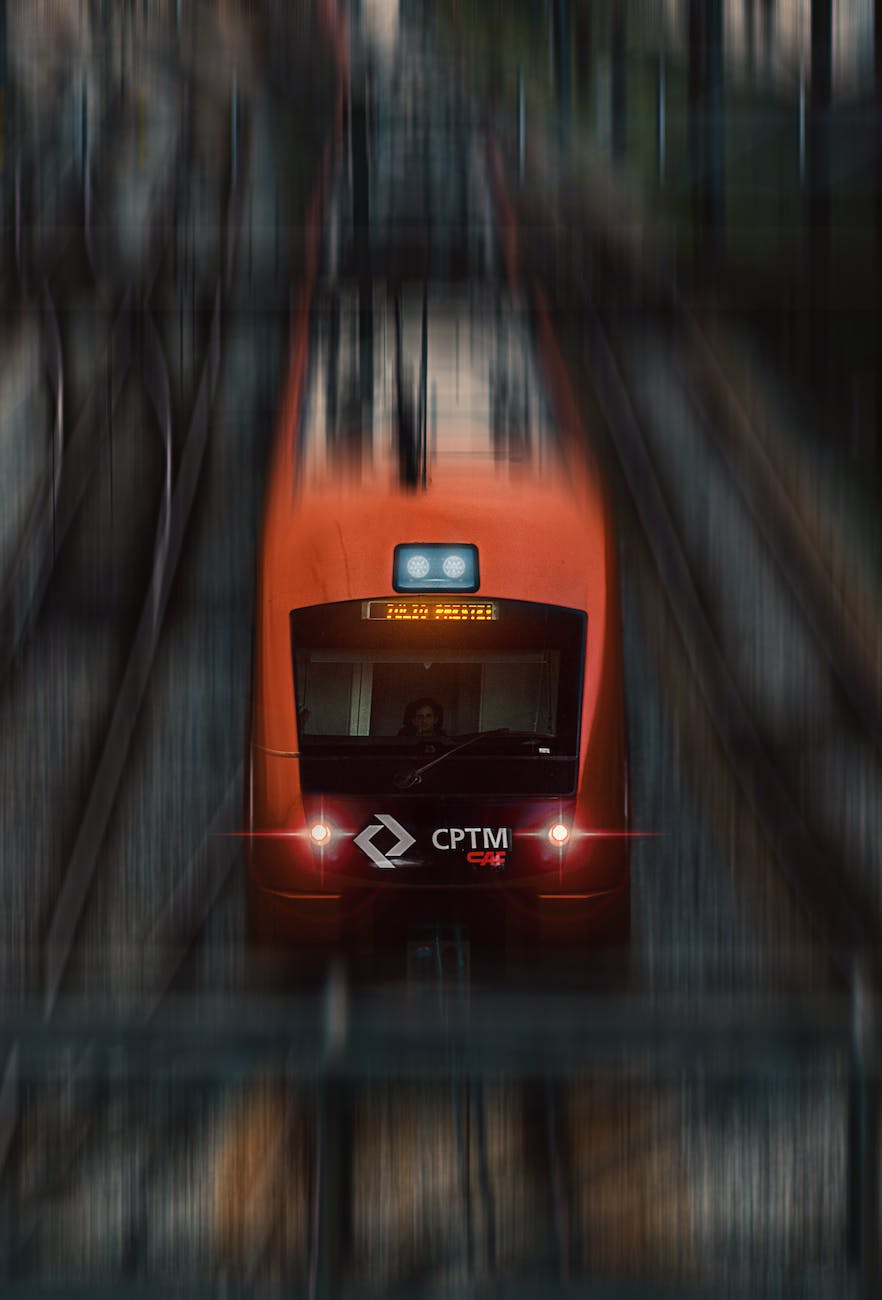
India surpasses Japan in term of metro rail system length to become 4th largest metro system in the world.

India has a new title to boast on an international level. With the newest addition of the Ahmedabad metro, the length of metro projects in India has reached 810 km, surpassing the lines in Japan. India will overtake South Korea and the United States to be the second longest metro line in the world. This ambitious project is expected to be completed within the next one or two years. 

After the inauguration of Ahmedabad metro, the coverage of metrorail in India reaches 810 kilometers. It is a matter of pride, that India is among leading countries with respect to total length of metrorail”, the union minister Puri said during inauguration, adding that India has not only overtaken Japan, but also has 982 kilometers of Metro rail under construction. “Once this (982 kilometers of metro rail) finishes, India will overtake South Korea and United States and will reach the second position in the world. I am expecting this to happen within next 1-2 years,” he added.

India surpasses Japan in term of metro rail system length to become 4th largest metro system in the world.

India has a new title to boast on an international level. With the newest addition of the Ahmedabad metro, the length of metro projects in India has reached 810 km, surpassing the lines in Japan. India will overtake South Korea and the United States to be the second longest metro line in the world. This ambitious project is expected to be completed within the next one or two years. 

After the inauguration of Ahmedabad metro, the coverage of metrorail in India reaches 810 kilometers. It is a matter of pride, that India is among leading countries with respect to total length of metrorail”, the union minister Puri said during inauguration, adding that India has not only overtaken Japan, but also has 982 kilometers of Metro rail under construction. “Once this (982 kilometers of metro rail) finishes, India will overtake South Korea and United States and will reach the second position in the world. I am expecting this to happen within next 1-2 years,” he added.

Village Fair

 India is a land of fairs and
festivals. They provide us a lot of fun and amusement. The urban people have
many sources of attraction and recreation. They can visit the dazzling bazaars,
big restaurants and cinema halls. The weekly bazaars provide them the
facilities of marketing. The poor villagers lack all such facilities. The
bazaars are far off from the villages. The villagers’ life the very hard and
lacks all charm. They have no means of recreation. Their secludes life is cut off
from the urban modernisation.

Many fairs are held every year
in the villages. These fairs generally take place on the occasion of some
festival. The Holi fair, the Rakhi Bandhan fair, the Basant fair and the
Baisakhi fairs are the chief and common ones. The Baba Haridas Mela is the most
prominent one in our area. It is held at village Jharauda Kalan, twice a year.

India and Bangladesh on Farakha

 Despite the claims made by Indian leaders
and the hopes aroused by several rounds of talks on Farakka held in turn at
Dacca and Delhi, no accord has yet been reached. The earlier reports on an
“understanding’ and a package deal, circulated by Indian leaders, have been
denied by Bangladesh Spokesman.

A Bangladesh Government Spokesman said on
September 4, that a verbal understanding had been reached between Indian and
Bangladesh on the Quantum of the share of the Ganga waters at Farakka “only for
the dries period of the year.”

The Spokesman was explaining
the position when his attention was drawn to a reported statement by the Prime
Minister of India and Bangladesh had reached a short-term agreement on sharing
the Ganga waters between the two countries.

Festival of Diwali

 Diwali or Deepawali is one of the most important festivals of the Hindus. It generally falls in the month of October. Fifteenth day of the month of Kartik is the day of its celebration. The festival marks the end of the rainy season and the beginning of winter.

A few days before the festival, houses are cleaned, white-washed and painted. The Hindus decorate their houses with pictures and images of gods. Fairs are held on this occasion in all towns and villages. People purchase parched rice, sugar toys, earthen cups and other things for the worship or goddess Luxmi.

In the right time goddess Luxmi is worshipped with parched rice, sugar toys and sweets. Then the Hindus illuminate their houses by means of earthen cups and candlestricks. Rows of lighted lamps are seen everywhere.

Some people gamble the whole night, while others recite Ramayana, hold keertans and read religious book. All want the blessing of goddess Luxmi on the night.

United Nations World Geospatial Information Congress (UNWGIC 2022)

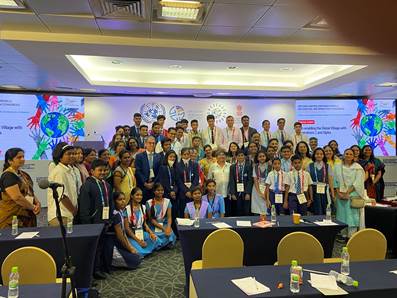
 Students from 18 schools across the country presented new ideas on how geospatial technologies can be embedded to address local challenges like protecting the heritage, soil fertility, crop diversity, clean city, water management, women empowerment, waste management, digital India, clean energy, climate change and so on to achieve sustainable development goals (SDGs).

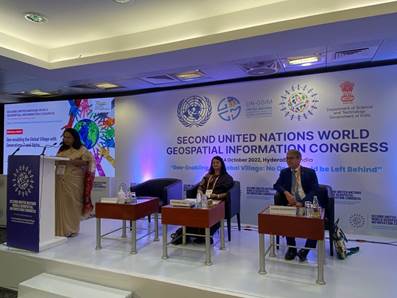
Teams from 18 urban and rural schools across India showcased the use of geospatial information and technology in understanding local issues and its use in planning and implementing at a special event titled ‘Geo-enabling the global village with Generation Z and Alpha’ of the Second United Nations World Geospatial Information Congress today (UNWGIC).

Efforts in mapping chemical fertilizer use in farms, as well as their production against organic fertilizer usage along with their production, were showcased. Students also highlighted initiatives of mapping rural biodiversity loss over time, as well as mapping of local recyclable products to source them effectively and increase their usage.

The young teams focused on SDGs of zero hunger, gender equality, decent work and economic growth, sustainable cities and communities, responsible consumption and production, climate action, and life on land. The event could show the way to localize the implementation of the SDGs through geospatial thinking.

In his address, Stefan Schweinfest, Director UN Statistics Division, said that SDGs is not just a document but it is a proper action plan to engage with each other, work together and bring solutions for a better world. “All the projects are truly incredible and great examples for localising the SDGs. Rather than competition, the purpose of this session is to interact with each other, make friends and discuss how to take the ideas forward in the future so that you can be a UN representative for SDGs,” he added.

 Dr. Subha Pandey, Scientist, Department of Science and Technology (DST), who chaired the session, elaborated on the DSTs activities and emphasized on geospatial technology use at school and community levels to localize SDGs.

The Second United Nations World Geospatial Information Congress (UNWGIC 2022) is being held at Hyderabad International Convention Centre (HICC), India, from 10 to 14 October 2022 with the theme ‘Geo-Enabling the Global Village: No one should be left behind. It has been convened by the United Nations Committee of Experts on Global Geospatial Information Management (UN-GGIM) and organized by the Department of Economic and Social Affairs of the United Nations and hosted by the Department of Science & Technology (DST) – Ministry of Science and Technology, Government of India.


SNC/RR

Wimbledon 2022 : Djokovic storms into third round with kokkinakis thrashing

Top seed Novak Djokovic looked every bit the dominant player who is the defending champion in the Wimbledon championships. Djokovic beats kokkinakis by 6-1,6-4,6-2 to stay on course for fourth consecutive Wimbledon title to move level with Pete Sampras on seven and within one of men’s record holder Roger Federer, and on this form, it is hard to see anyone stopping him. It was the 23rd straight victory for Djokovic at the grasscourt grand slam. Djokovic dominated rallies with his precise groundstrokes at was eager to step forward for every opportunity, winning 30 out of 38 points at the net. Djokovic brought the crowd to their feet with the incredible drop shots and when kokkinakis chased a few of them down, Djokovic calmly played the overhead lob to keep pressure on the opponent. The only opportunity kokkinakis had when Djokovic was serving but he duly saved most of the breakpoints and closed out the win in two hours on his second match point in the second round. After completing victory in exactly two hours, Djokovic said, I’m happy with my performance today and quite pleased with the way i’ve raised the level of tennis in two days. Hopefully, I can keep that form, just thinking about the next match and hope things will get better as tournament goes on.

Wimbledon 2022 : Djokovic storms into third round with kokkinakis thrashing

Top seed Novak Djokovic looked every bit the dominant player who is the defending champion in the Wimbledon championships. Djokovic beats kokkinakis by 6-1,6-4,6-2 to stay on course for fourth consecutive Wimbledon title to move level with Pete Sampras on seven and within one of men’s record holder Roger Federer, and on this form, it is hard to see anyone stopping him. It was the 23rd straight victory for Djokovic at the grasscourt grand slam. Djokovic dominated rallies with his precise groundstrokes at was eager to step forward for every opportunity, winning 30 out of 38 points at the net. Djokovic brought the crowd to their feet with the incredible drop shots and when kokkinakis chased a few of them down, Djokovic calmly played the overhead lob to keep pressure on the opponent. The only opportunity kokkinakis had when Djokovic was serving but he duly saved most of the breakpoints and closed out the win in two hours on his second match point in the second round. After completing victory in exactly two hours, Djokovic said, I’m happy with my performance today and quite pleased with the way i’ve raised the level of tennis in two days. Hopefully, I can keep that form, just thinking about the next match and hope things will get better as tournament goes on.

RBI may soon launch E-Rupee on pilot phase.

E-rupee or digital rupee is a digital version of the Indian rupee that the RBI is exploring. The RBI has proposed to issue two versions – wholesale for interbank settlement and retail for the public. According to the indirect model proposed by the RBI, you will hold the digital rupee in a wallet with a bank or service provider.

The Reserve Bank of India on 7th october said it will soon commence the pilot launch of digital Rupee or e-Rupee for specific use cases as it tests digital currency in India.

“As the extent and scope of such pilot launches expand, RBI will continue to communicate about the specific features and benefits of e-rupee, from time to time,” the central bank said in a concept note on Central Bank Digital Currency (CBDC).

The concept note also discusses key considerations such as technology and design choices, possible uses of the digital rupee, and issuance mechanisms, among others.

RBI may soon launch E-Rupee on pilot phase.

E-rupee or digital rupee is a digital version of the Indian rupee that the RBI is exploring. The RBI has proposed to issue two versions – wholesale for interbank settlement and retail for the public. According to the indirect model proposed by the RBI, you will hold the digital rupee in a wallet with a bank or service provider.

The Reserve Bank of India on 7th october said it will soon commence the pilot launch of digital Rupee or e-Rupee for specific use cases as it tests digital currency in India.

“As the extent and scope of such pilot launches expand, RBI will continue to communicate about the specific features and benefits of e-rupee, from time to time,” the central bank said in a concept note on Central Bank Digital Currency (CBDC).

The concept note also discusses key considerations such as technology and design choices, possible uses of the digital rupee, and issuance mechanisms, among others.

Biography of Mulayam Singh Yadav

Mulayam Singh Yadav (22 November 1939 – 10 October 2022) was
an Indian politician and the founder-patron of the Samajwadi Party. He served
for three non-consecutive terms as the Chief Minister of Uttar Pradesh, and
also served as the Minister of Defence, Government of India. A long-time
parliamentarian, he was the Member of Parliament, representing the constituency
of Mainpuri in the Lok Sabha, and has also earlier served as the Member of
Parliament from Azamgarh and Sambhal constituencies. He was often referred to
as Netaji (meaning respected leader in Hindi) by party leaders and workers.

Early life and education

Mulayam Singh Yadav was born to Murti Devi and Sughar Singh
Yadav on 22 November 1939 in Saifai village, Etawah district, Uttar Pradesh,
India.


Yadav had three degrees in political science — a B.A. from
Karm Kshetra Post Graduate College in Etawah, a B.T. from A. K. College in
Shikohabad, and an M.A. from B. R. College, Agra University.


Personal life

Yadav has married twice. His first wife, Malti Devi, was in
a vegetative state from 1974 until her death in May 2003 following
complications while giving birth to their only child, Akhilesh Yadav. Akhilesh
was Chief Minister of Uttar Pradesh from 2012 to 2017.


Mulayam had a relationship with Sadhana Gupta while still
married to Malti Devi in the 1990s. Gupta was not well known until February
2007, when the relationship was admitted in India’s Supreme Court. Sadhana
Gupta has a son named Prateek Yadav (born 1988), from her first marriage.


Prateek’s wife Aparna Bisht Yadav (born 1990) joined BJP in
2022. Sadhana Gupta died in July 2022 after a brief illness.


Early political career

Groomed by leaders such as Ram Manohar Lohia and Raj Narain,
Yadav was first elected as a Member of the Legislative Assembly in Legislative
Assembly of Uttar Pradesh in 1967. Yadav served eight terms there In 1975,
during Indira Gandhi’s imposition of the Emergency, Yadav was arrested and kept
in custody for 19 months. He first became a state minister in 1977. Later, in
1980, he became the president of the Lok Dal (People’s Party) in Uttar Pradesh
which became a part of the Janata Dal (People’s Party) afterwards. In 1982, he
was elected leader of the opposition in the Uttar Pradesh Legislative Council
and held that post until 1985. When the Lok Dal party split, Yadav launched the
Krantikari Morcha party.


Chief Minister

First term

Yadav first became Chief Minister of Uttar Pradesh in 1989.


After the collapse of the V. P. Singh national government in
November 1990, Yadav joined Chandra Shekhar’s Janata Dal (Socialist) party and
continued in office as chief minister with the support of the Indian National
Congress (INC). His government fell when the INC withdrew their support in
April 1991 in the aftermath of developments at the national level where it has
earlier withdrawn its support for Chandra Shekhar’s government. Mid-term
elections to Uttar Pradesh assembly were held in mid-1991, in which Mulayam
Singh’s party lost power to the BJP.


Second term

In 1992, Yadav founded his own Samajwadi Party (Socialist
Party). In 1993, he allied with the Bahujan Samaj Party for the elections to
Uttar Pradesh assembly due to be held in November 1993. The alliance between
Samajwadi Party and Bahujan Samaj Party prevented the return of BJP to power in
the state. Yadav became chief minister of Uttar Pradesh with the support of
Congress and Janata Dal. His stand on movement for demanding separate statehood
for Uttarakhand was as much controversial as his stand on Ayodhya movement in
1990 was. There was a firing on Uttarakhand activists at Muzaffarnagar on 2
October 1994, something for which Uttarakhand activists held him responsible.
He continued holding that post until his ally opted into another alliance in
June 1995.


Third term

In 2002, following a fluid post-election situation in Uttar
Pradesh, the Bharatiya Janata Party and Bahujan Samaj Party joined to form a
government under Dalit leader Mayawati, who was considered to be Yadav’s
greatest political rival in the state. The BJP pulled out of the government on
25 August 2003, and enough rebel legislators of the Bahujan Samaj Party left to
allow Yadav to become the Chief Minister, with the support of independents and
small parties. He was sworn in as chief minister of Uttar Pradesh for the third
time in September 2003.


Yadav was still a member of the Lok Sabha when he was sworn
in as chief minister. In order to meet the constitutional requirement of
becoming the member of state legislature within six months of being sworn in,
he contested the assembly by-election from Gunnaur assembly seat in January
2004. Yadav won by a record margin, polling almost 94 per cent of the votes.


With the hope of playing a major role at the centre, Yadav
contested the 2004 Lok Sabha elections from Mainpuri while still Chief Minister
of Uttar Pradesh. He won the seat and his Samajwadi Party won more seats in
Uttar Pradesh than all other parties. However the Congress party, which formed
the coalition government at the centre after the elections, had majority in the
Lok Sabha with the support of the Communist parties. As a result, Yadav could
not play any significant role at the centre, Yadav resigned from the Lok Sabha
and chose to continue as chief minister of Uttar Pradesh until the 2007
elections, when he lost to the BSP.


Cabinet minister

In 1996, Yadav was elected to the eleventh Lok Sabha from
Mainpuri constituency. In the United Front coalition government formed that
year, his party joined and he was named India’s Defence Minister. That
government fell in 1998 as India went in for fresh elections, but he returned
to the Lok Sabha that yearfrom Sambhal parliamentary constituency. After the
fall of Atal Bihari Vajpayee government at the centre in April 1999, he did not
support the Congress party in the formation of the government at the centre. He
contested Lok Sabha elections of 1999 from two seats, Sambhal and Kannauj, and
won from both. He resigned from Kannauj seat for his son Akhilesh in the
by-elections.


Positions held

Mulayam Singh Yadav has been elected 10 times as MLA and 7
times as Lok Sabha MP.

Criticism over comment on rape

The crime of rape became a capital offence in India
following the 2012 Delhi gang rape incident. Yadav has opposed this change in
the law, saying that “Boys will be boys. Boys commit mistakes”. In
response to 2014 Badaun gang rape and Yadav’s comments, UN Secretary-General
Ban Ki-moon said “We say no to the dismissive, destructive attitude of,
‘Boys will be boys'”. On 19 August 2015, Yadav remarked that gang-rapes
are impractical and rape-victims in those cases tend to lie. He was summoned by
the Judicial Magistrate of Mahoba district court in Uttar Pradesh for that
remark.


Support for a sovereign independent Tibet

Yadav has said it is necessary for India to support a
sovereign and independent Tibet. He said that a past government had made a
“big mistake” on the issue and noted that he had spoken against it at
the time.He believed that Tibet was a traditional buffer between China and
India and that India should support the Dalai Lama and Tibetan independence. Claiming
that China had secreted nuclear weapons in Pakistan, he cautioned that
“China is our enemy, not Pakistan. Pakistan can do us no damage”.


Family feud

Since the young Akhilesh Yadav became Chief Minister of
Uttar Pradesh in 2012, surpassing Mulayam’s brother Shivpal Singh Yadav, the
Yadav family was divided into two feuding groups. One of the groups, led by
Akhilesh, enjoyed the support of his father’s cousin and National General
Secretary Ram Gopal Yadav. The rival group was led by Mulayam Singh and
supported by his brother and State Chief of Party, Shivpal Yadav, and a friend,
former MP Amar Singh. Akhilesh had fired his uncle twice from his cabinet as it
was seen by many as a direct challenge to his father, who has steadily
supported Shivpal over Akhilesh. On 30 December 2016, Mulayam Yadav expelled
his son Akhilesh and his cousin Ram Gopal from the party for six years on the
grounds of indiscipline, only to revoke the decision 24 hours later. Akhilesh,
in response, stripped his father off the party presidency and instead named him
the chief patron of the party following the national convention of the party on
1 January 2017. Mulayam termed the national convention as illegal and directly
expelled his cousin, Ram Gopal Yadav, who had convened the national executive
convention. But the Election commission of India ruled that Ram Gopal Yadav had
the right to convene that executive convention, and reversed Mulayam’s order.
Hence Akhilesh Yadav officially became the new national leader of the party.


Know about India’s first Solar village

The Modhera village, located in the Mehsana district of Gujarat, declared as India’s first solar-powered village.

Modhera has a deep, historical Sun connection, thanks to the Sun Temple, or Surya Mandir, it hosts on the banks of river Pushpavati.

The renowned temple was built close to a thousand years ago, in 1026-27 CE, during the reign of Chalukya King Bhima I (1022-1063 CE). Connecting the old and the new, Modhera, which hosts this ancient architectural marvel, is heading into a modern, renewable future through the production of electricity using the energy of the Sun.

This initiative came about from a programme led by both the centre and state, called the “Solarisation of Modhera Sun Temple and Town.” As part of the project, they developed a ground-mounted solar power plant in addition to installing 1,300 rooftop solar systems on top of residential and government buildings. The solar systems are integrated with a 15Mwh battery energy storage system. This makes up a 6MW grid.

Solar energy is thus available to Modhera round the clock. According to the Gujarat government, the village residents will be able to save 60 to 100 per cent on their electricity bills with the solar push.

Know about India's first Solar village

The Modhera village, located in the Mehsana district of Gujarat, declared as India’s first solar-powered village.

Modhera has a deep, historical Sun connection, thanks to the Sun Temple, or Surya Mandir, it hosts on the banks of river Pushpavati.

The renowned temple was built close to a thousand years ago, in 1026-27 CE, during the reign of Chalukya King Bhima I (1022-1063 CE). Connecting the old and the new, Modhera, which hosts this ancient architectural marvel, is heading into a modern, renewable future through the production of electricity using the energy of the Sun.

This initiative came about from a programme led by both the centre and state, called the “Solarisation of Modhera Sun Temple and Town.” As part of the project, they developed a ground-mounted solar power plant in addition to installing 1,300 rooftop solar systems on top of residential and government buildings. The solar systems are integrated with a 15Mwh battery energy storage system. This makes up a 6MW grid.

Solar energy is thus available to Modhera round the clock. According to the Gujarat government, the village residents will be able to save 60 to 100 per cent on their electricity bills with the solar push.