Women in Renewable Energy: Call for Action


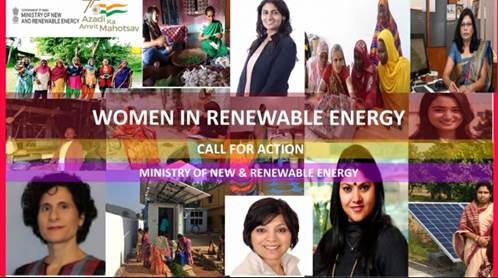
The Ministry of New & Renewable Energy (MNRE) observed the second day of its programme “New Frontiers: A Programme on Renewable Energy to celebrate Azadi ka Amrit Mahotsav. The Ministry organized an online session on “Women in Renewable Energy: Call for Action” to acknowledge the role of women entrepreneurs and leaders in the Renewable Energy Space. The session was attended by more than 200 participants including Padma Shree Awardee, Mr. Bunker Roy, officials of the Government of India, CEOs, CMDs, and representatives of NGOs, industries, banking institutions and, representatives from international organisations. 

Delivering the keynote address Secretary, MNRE recognised the role and importance of women’s participation in Renewable Energy and committed to formulation of a scheme for DRE applications, grater engagement with Ministry of Women and Child Development and addressing women’s issues in industry consultations.

Women RE entrepreneurs across the country shared their success stories, shining light on the impact of clean energy access on women. This was followed by the response to Call for Action by the stakeholders across policy makers, NGOs, Industries, international organisations and the Banking Institutions. Mr. Bunker Roy, founder Barefoot college, called for active engagement of women on RE platform. Mrs. Vaishali Nigam Sinha, founding chair for ReNew Power, and Ms. Mara Beatriz Orlando, energy specialist from WePower, highlighted how regular trainings and capacity building can change the lives of women entrepreneurs. Ms. A. Manimekhalai, Executive Director from Canara Bank called for earmarking funds for women, awareness campaign focused on women and sensitisation among financial institutions.

***

Frida Kahlo: Unconventional, Uncompromising and Unibrows

Frida Kahlo

Introduction

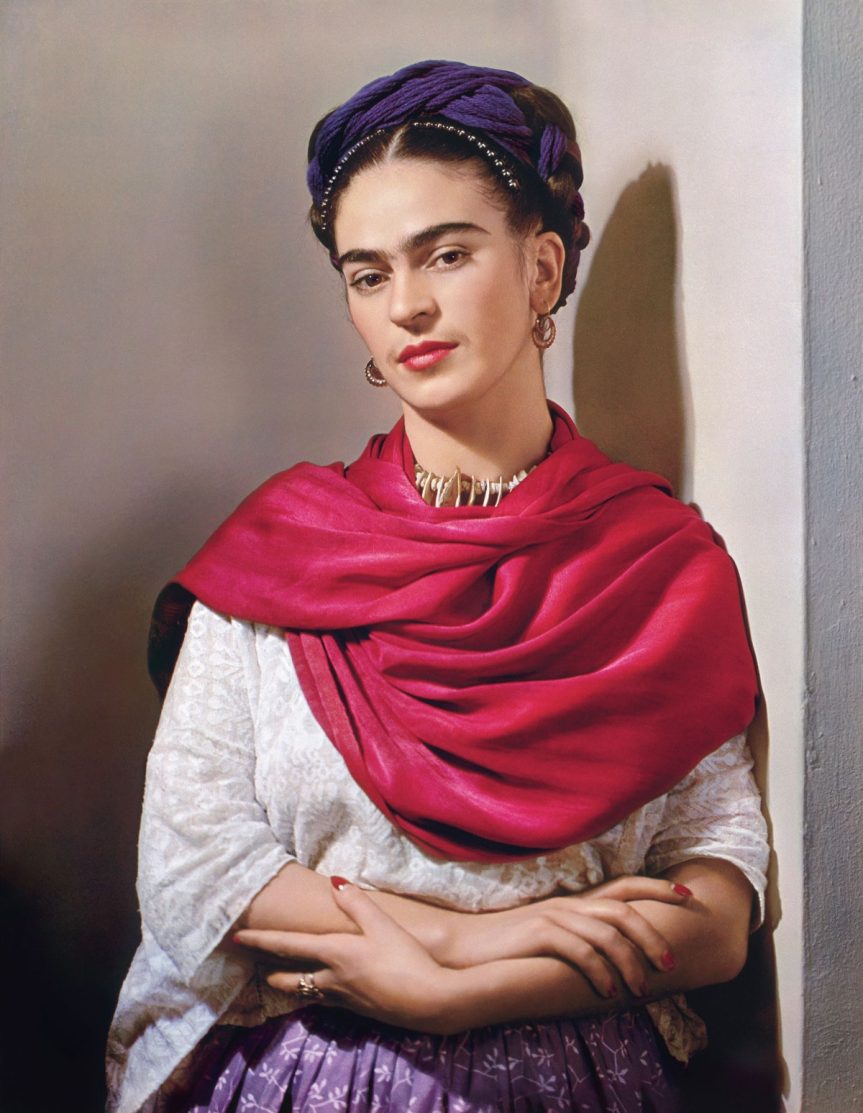
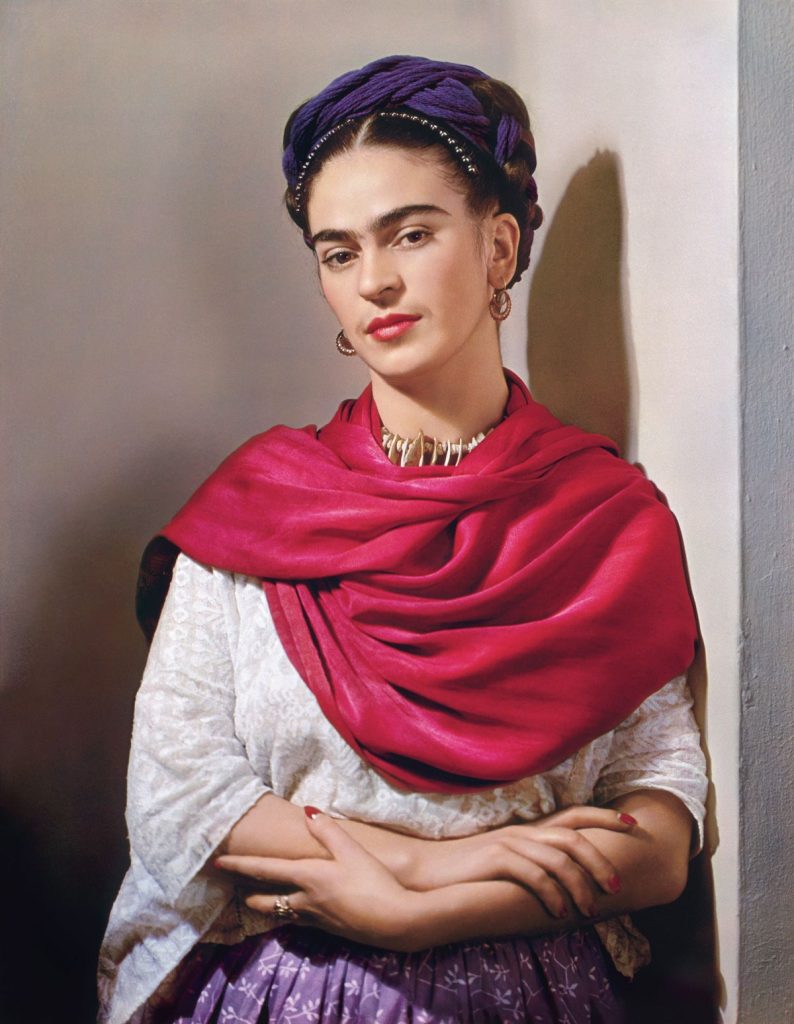
Even after years since Frida Kahlo’s demise, her charisma and powerful sense of style continue to captivate the world. The Mexican artist, famed for her self-portraits, is celebrated in her home country for her attention to indigenous culture, and by feminists worldwide for her depiction of the female experience and form. In fact, she was an advocate of feminism way before it became a staple in the social media age.

Frida

Early Life of Frida Kahlo

Magdalena Carmen Frida Kahlo y Calderón was born on 6 July 1907 in Coyoacán, a village on the outskirts of Mexico City. Born to a German father and a Mestiza  mother, Kahlo spent most of her childhood and adult life at La Casa Azul, her family home in Coyoacán  – now publicly accessible as the Frida Kahlo Museum. Although she was disabled by polio as a child, Kahlo had been a promising student headed for medical school until she suffered a bus accident at the age of 18, which caused her lifelong pain and medical problems. During her recovery, she returned to her childhood interest in art with the idea of becoming an artist.

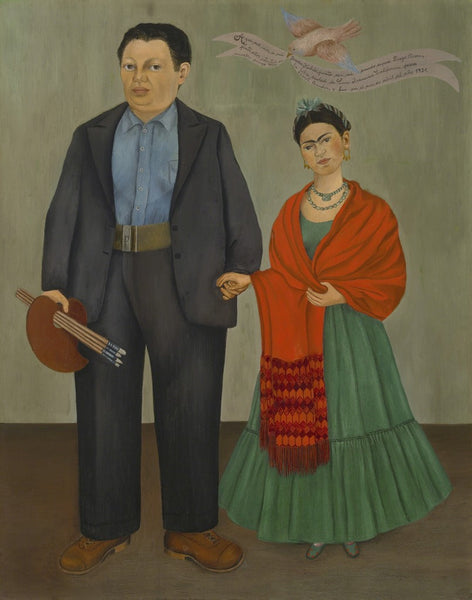
Diego and Frida, Self-Portrait With her Husband

Art Works of Frida Kahlo

Mexican artist Frida Kahlo is remembered for her self-portraits, pain and passion, and bold, vibrant colors. She is celebrated in Mexico for her attention to Mexican and indigenous culture and by feminists for her depiction of the female experience and form.

Life experience is a common theme in Kahlo’s approximately 200 paintings, sketches and drawings. Her physical and emotional pain are depicted starkly on canvases, because of her traumatic bus accident and multiple miscarriages depriving her of Motherhood and leading turbulent relationship with her husband, Mexican Mural artist Diego Rivera, who she married twice. Of her 143 paintings, 55 are self-portraits. She quoted, “I paint self-portraits because I am so often alone, because I am the person I know best.”

Kahlo’s first self-portrait was Self-Portrait in a velvet dress in 1926. It was painted in the style of 19th Century Mexican portrait painters who themselves were greatly influenced by the European Renaissance masters. She also sometimes drew from the Mexican painters in her use of a background of tied-back drapes. Self-Portrait Time Flies  (1929), Portrait of a Woman in White  (1930) and Self-Portrait  (1937) all bear this background.

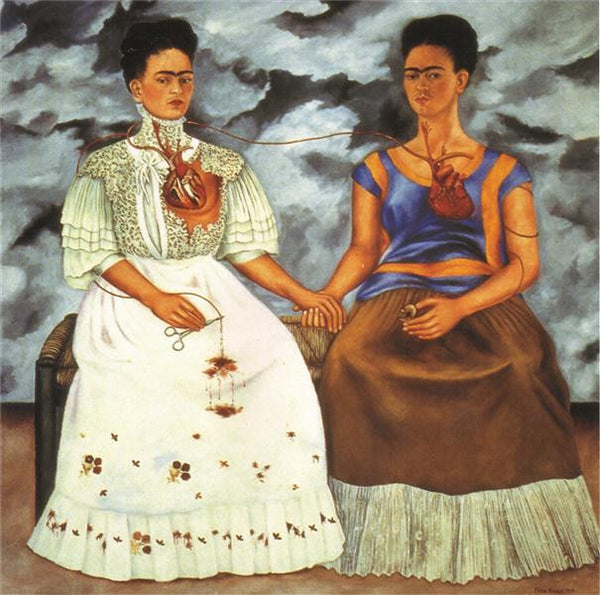
Two Fridas

Self-Portrait With cropped hair (1940), Kahlo is depicted in a man’s suit, holding a pair of scissors, with her fallen hair around the chair in which she sits. This represents the times she would cut the hair Rivera loved when he had affairs. The 1937 painting Memory, The Heart, shows Kahlo’s pain over her husband’s affair with her younger sister Christina. A large broken heart at her feet shows the intensity of Kahlo’s anguish. Frida Kahlo and Diego Rivera divorced in 1939, but reunited a year later and remarried. The Two Fridas  (1939) depicts Kahlo twice, shortly after the divorce. One Frida wears a costume from the Tehuana region of Mexico, representing the Frida that Diego loved. The other Frida wears a European dress as the woman who Diego betrayed and rejected. Later, she is back in Tehuana dress in Self-Portrait as a Tehuana  (1943). Pre-Columbian artifacts were common both in the Kahlo/Rivera home (Diego collected sculptures and idols, and Frida collected Jewelry) and in Kahlo’s paintings. She wore jewelry from this period in Self-Portrait Time Flies  (1926), Self-Portrait With Monkeys  (1938) and Self-Portrait With Braid  (1941), among others. Other Pre-Columbian artifacts are found in The Four Inhabitants of Mexico City  (1938), Girl With Death Mask  (1938).

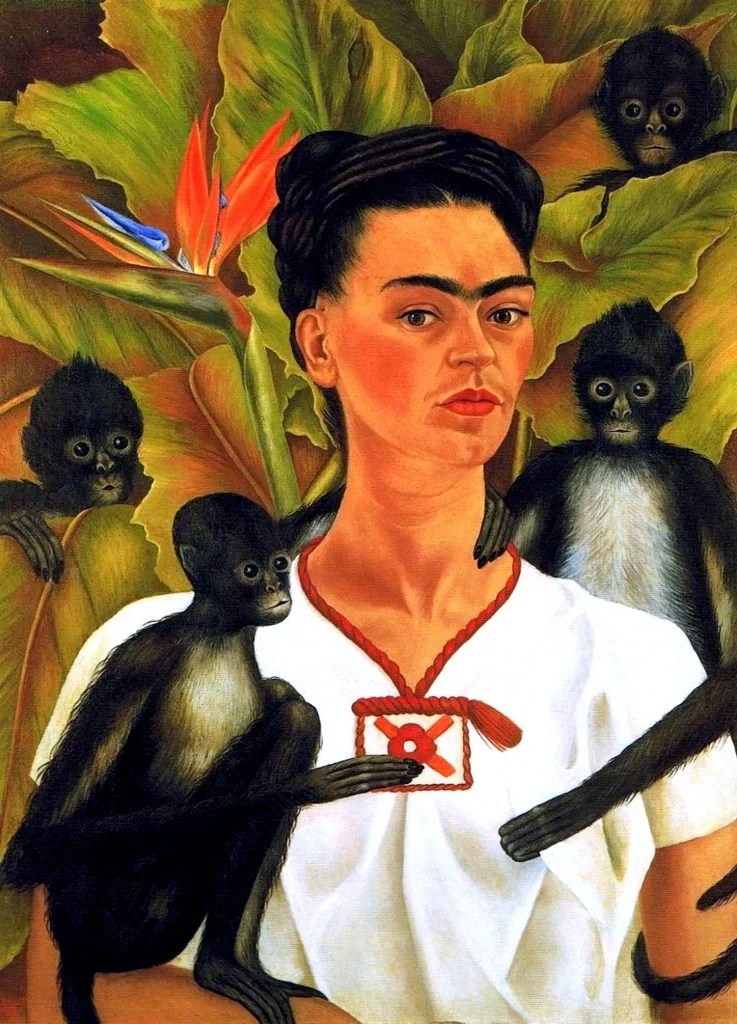
Frida‘s Self-Portrait With Monkeys

Analysis of Frida’s Artworks: Mexican Nationalism

Frida Kahlo was heavily influenced by the Mexicayotl movement, which sprung from the colonialist mindset that native Mexican culture is inferior and that Mexico should emulate Europe. The Mexicayotl movement aimed at protecting the indigenous culture and traditions among the Mexican people. In most of Kahlo’s self-portraits, she paints herself in traditional indigenous Mexican dress. She wears long, colourful skirts, huiplis (loose-fitting tunic), rebozos (shawls) and elaborate headdresses. Painting herself in the Tehuana dress was a chance for Kahlo to express her anti-colonialist ideas and pay homage to her indigenous ancestry.

Frida‘s Portrait of Deer with Human Face

Symbolism and Surrealism

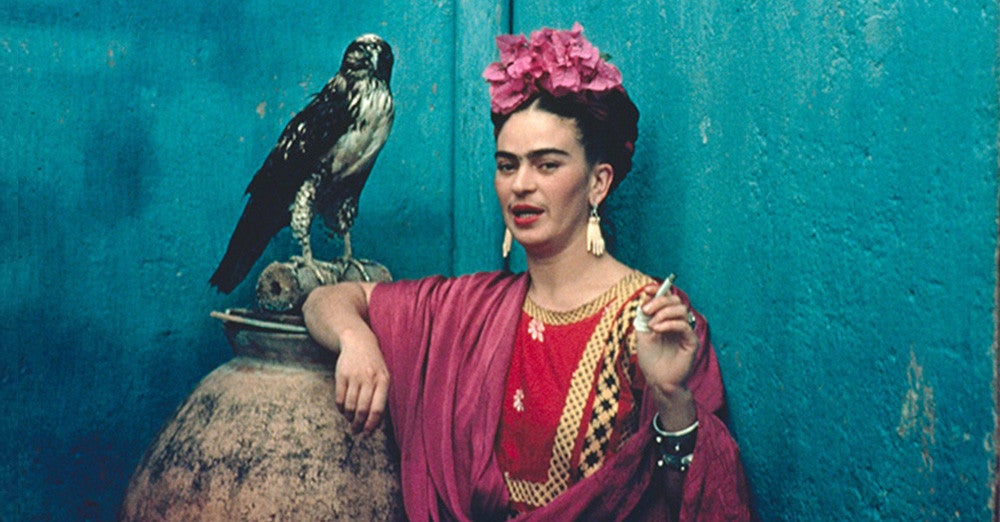
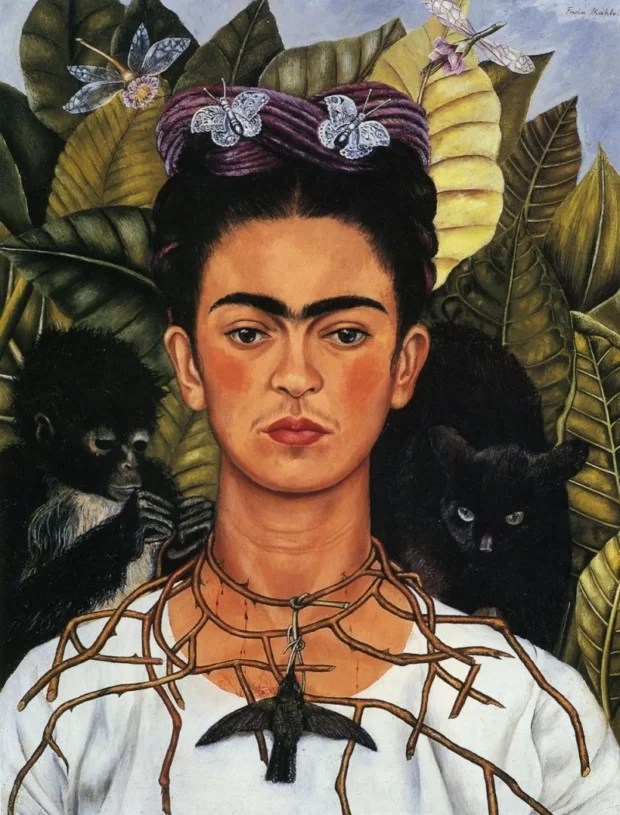
After periods of depression and miscarriages in her life she gave herself to pets around her. She liked to use animals as models in her artworks. Her paintings are domesticated by monkeys, hummingbirds, dogs, and cats. One of her self-portraits depicts her with three spider monkeys. The animals became protective and tender symbols to Kahlo. On the contrary, Mexican Mythology suggests monkeys are symbols of lust. Frida’s significant self-portrait was Self- Portrait with Thorn Necklace and Hummingbird. According to some art historians, Kahlo wanted to show that she had been resurrected and had started a new life with this painting. As a symbol of this idea, the hummingbird was placed in her necklace. The hummingbird symbolizes hope and good luck in Mexican culture. However, the audience may notice the black cat – known as a symbol of bad luck – taking its place behind the right shoulder of Kahlo. Different interpretations say that the hummingbird pendant refers to Huitzilopochtli. It is the Aztec god of war and may refer to the pain Kahlo suffered all her life internally. Other important symbols of the painting were butterflies and the thorn necklace. Butterflies symbolize resurrection and it may refer to her rebirth in life after the accident. Furthermore, the thorn necklace she wears may be the symbol of Jesus’ crown of thorns, which he bore while being dragged to his crucifixion. In addition to these symbols, Kahlo created a painting that both uses Christianity and animal symbolism in one subject matter. Painting The Little Deer, 1946 made by Frida  depicts her as a deer with a human face. The artist portrayed herself in this painting. However, there is a much more important detail in this artwork – the deer wounded by the arrows reminds us of Andrea Mantegna’s depiction of Saint Sebastian from 1480. It may also be a reference to crucifixion and resurrection.

Frida‘s Self-Portrait With Thorn Necklace and Hummingbird

Conclusion

Women prior to Kahlo who had attempted to communicate the wildest and deepest of emotions were often labelled hysterical or condemned insane – while men were aligned with the ‘melancholy’ character type. By remaining artistically active under the weight of sadness, Kahlo revealed that women too can be melancholy rather than depressed, and that these terms should not be thought of as gendered.

The Girl With a Pearl Earring: What Made It So Famous

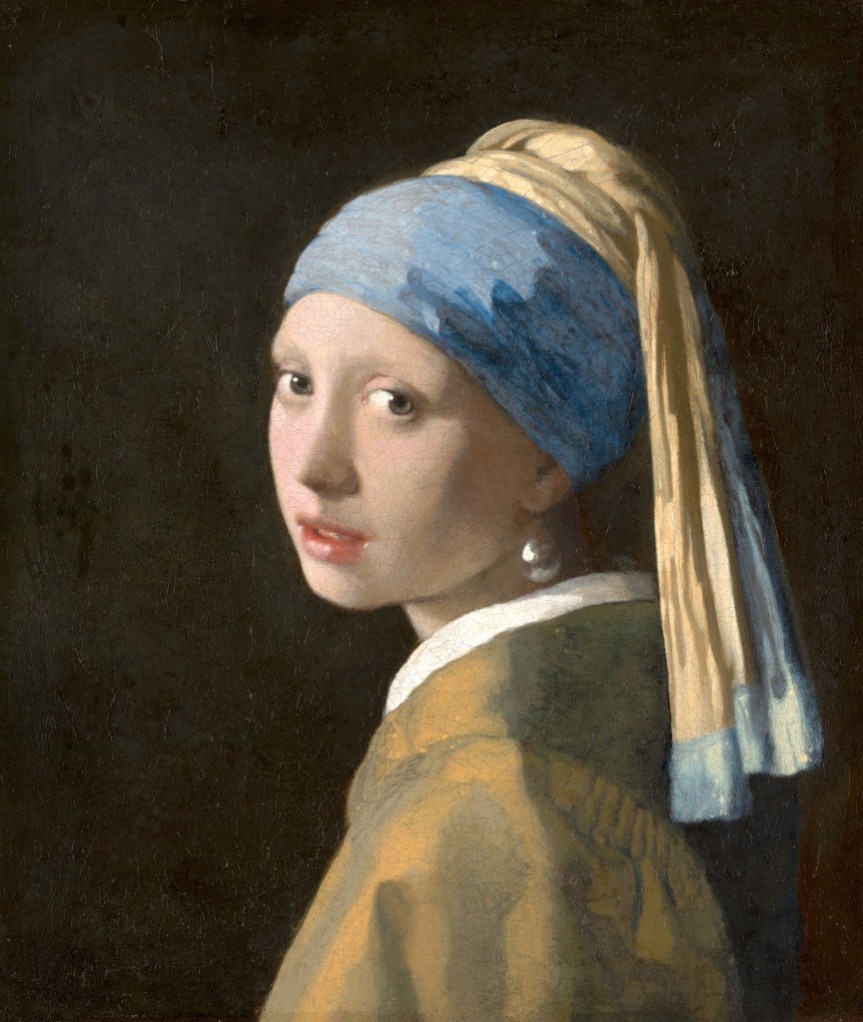
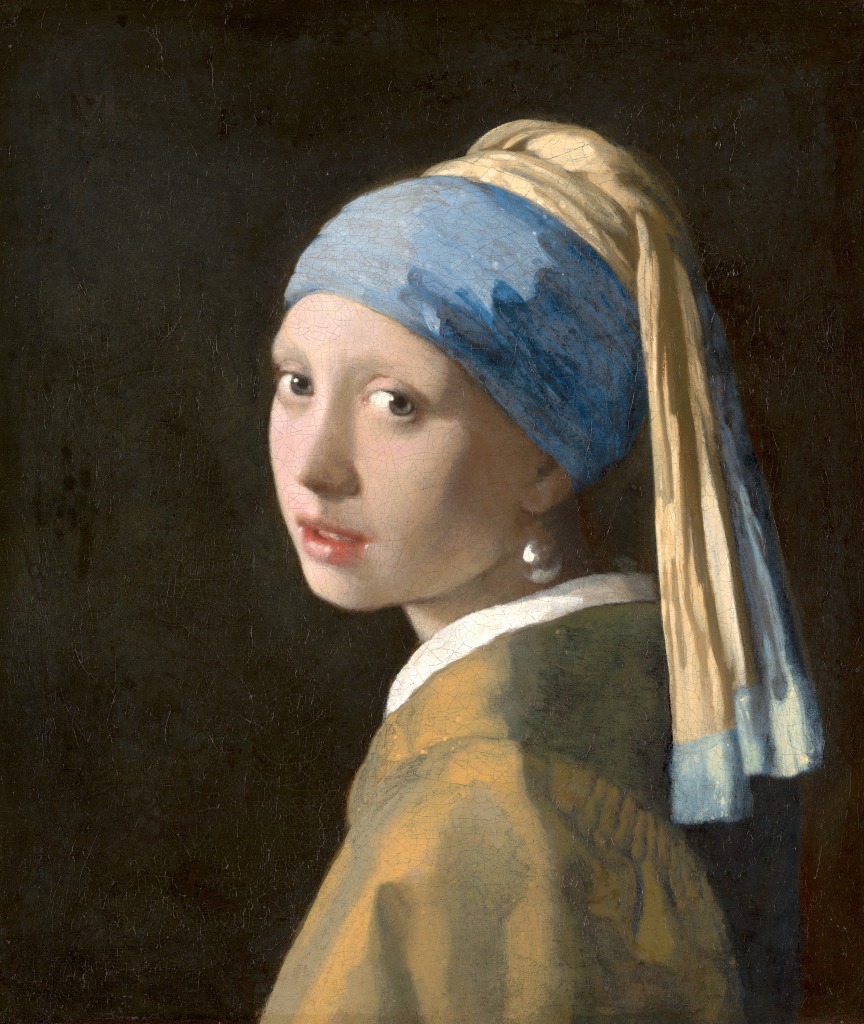
The Girl With a Pearl Earring (1665) by Johannes Vermeer

Introduction

Nicknamed the “Mona Lisa of the North“,the Girl with a Pearl Earring, is one of the masterpieces by famed Dutch painter, Johannes Vermeer. It hauntingly engages the viewer with enhanced realism, showcasing the electrifying gaze of a young girl adorned with a blue and gold turban. Created by Vermeer in 1665 during the Baroque period, the upper bust of the girl against a dark background has a three-dimensional effect that sets off her glowing appearance.

Historic Background

In Vermeer’s era, paintings were considered to be craftsmanship instead of art. Vermeer, a Dutch master painter at his peak, dedicated his life to developing his craft. By 1665, when the Girl with a Pearl Earring was created, Vermeer had begun to depict women, demonstrating a deep interest in their socio-cultural roles. The subject in this painting is believed to be Vermeer’s daughter, Maria.

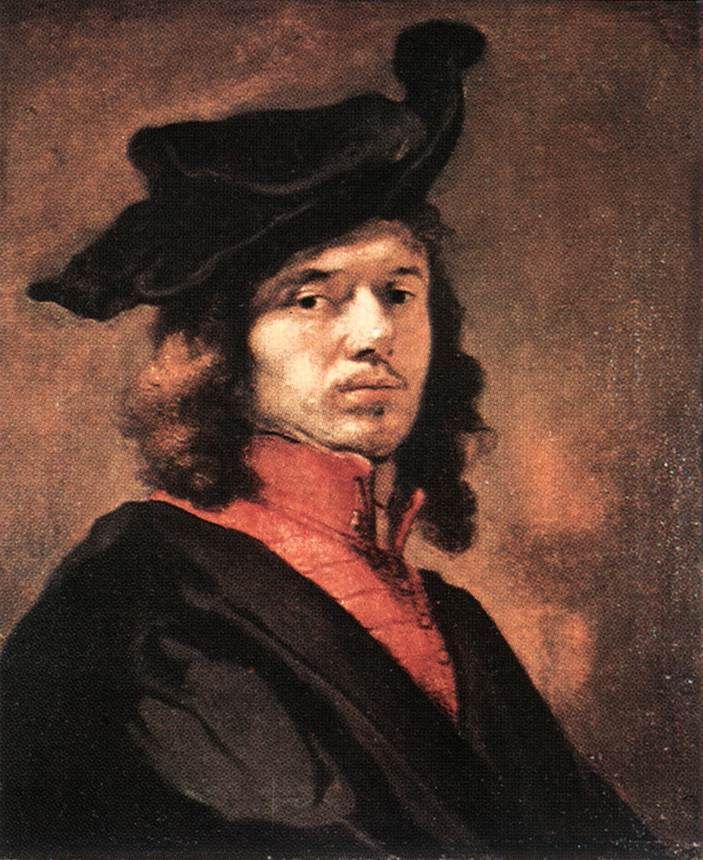
Self-Portrait of Johannes Vermeer

Subject of The Painting

The Painting was basically crafted with oil Painting on canvas and is categorized in Dutch Realism Movement arts. Although many art critics contend that the Girl with a Pearl Earring is a portrait, the prevailing argument is that it is a tronie, which is a study of the facial expressions of a living model. The composition of Girl with a Pearl Earring is delightfully simple. Unlike most of the other paintings by the Delft master, the subject here is only a simple head of a girl looking over her shoulder at the viewer. In Girl With a Pearl Earring, the young female model appears to be startled by something, while glancing taciturnly over her shoulder.No hint of a setting is provided, other than its atmospherically dark tone. This too is unusual for the mature Vermeer. The unusually direct contact between subject and spectator, and the slightly parted position of the lips, presents a sense of immediacy so great as to imply significant intimacy. The girl is wearing a simple brownish-yellow top, which contrasts strongly with her bright white collar. A further contrast is offered by her blue and yellow or turban (or chaperon) which gives the picture a distinctly exotic effect. During Vermeer’s time, the turban was a popular prop for tronies because of its deep folds and robust shades, which allowed artists to show off their skills and abilities.

Discussing the Painting: The uniqueness

Utilizing the technique of under-painting, or a monochromatic ground, Vermeer made the Girl with a Pearl Earring seem to lift from the canvas. Through careful use of his palette, he created the deep, rich tones of the girl’s headdress and gown. Then, to give her skin a glowing appearance, he used pigments to create light and shadow effect that contrasted the background. The Pearl Earring, status symbol of the period , worn by the subject, composed by only two brush strokes. The two whites, one on each corner of her mouth, helped to enliven the subject’s pensive smile.

Scarlett Johansson in Girl With a Pearl Earring movie (2003)

The Painter’s Touch: The Cinematic Adoption

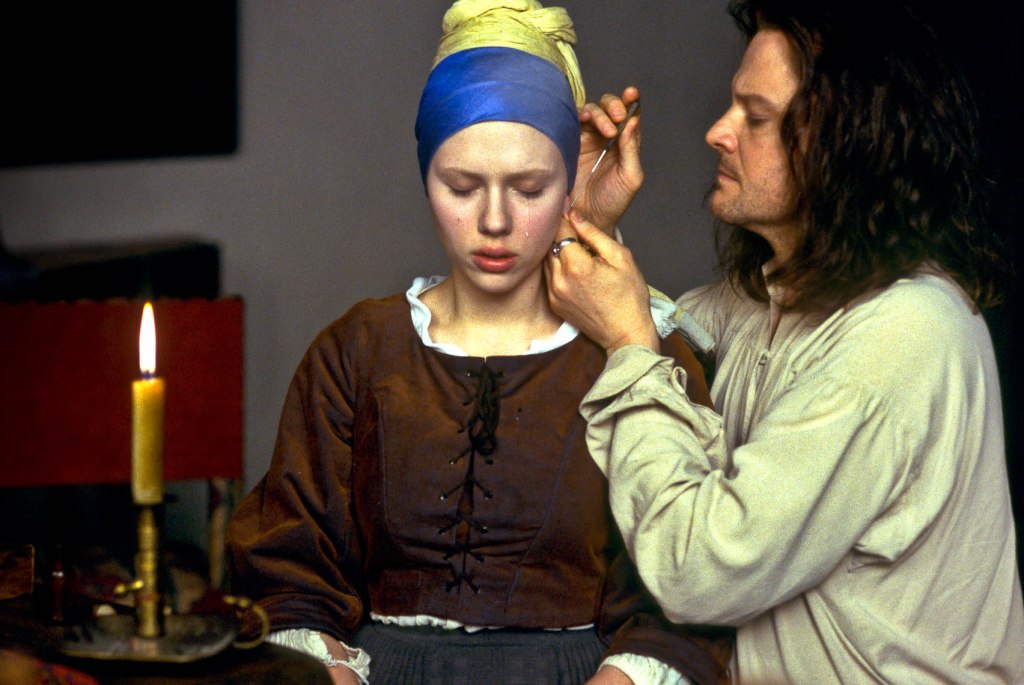
Although now a highly regarded artist, Vermeer was not well known outside of his native city of Delft during his lifetime or in the decades after. Historians credit the 19th-century French critic Étienne-Joseph-Théophile-Thoré (under the pseudonym of William Bürger) for reassessing the artist’s work, which eventually led to Vermeer’s distinguished reputation. Even so, Girl with a Pearl Earring became one of Vermeer’s more famous pieces only around the turn of the 21st century, with the 1995 blockbuster exhibition at the National Gallery of Art, Washington,D.C. and the publication of the best-selling novel Girl with a Pearl Earring by Tracy Chevalier in 1999. The book fashioned the painting’s subject into a housemaid named Griet who works in Vermeer’s home and becomes his paint mixer. It was adapted into an Oscar nominated movie in 2003 starring Scarlett Johansson as the fictional Griet and Colin Firth as Vermeer.

Scarlett Johansson as Griet and Colin Firth as Vermeer in Girl With a Pearl Earring movie (2003)

Where at Present Day

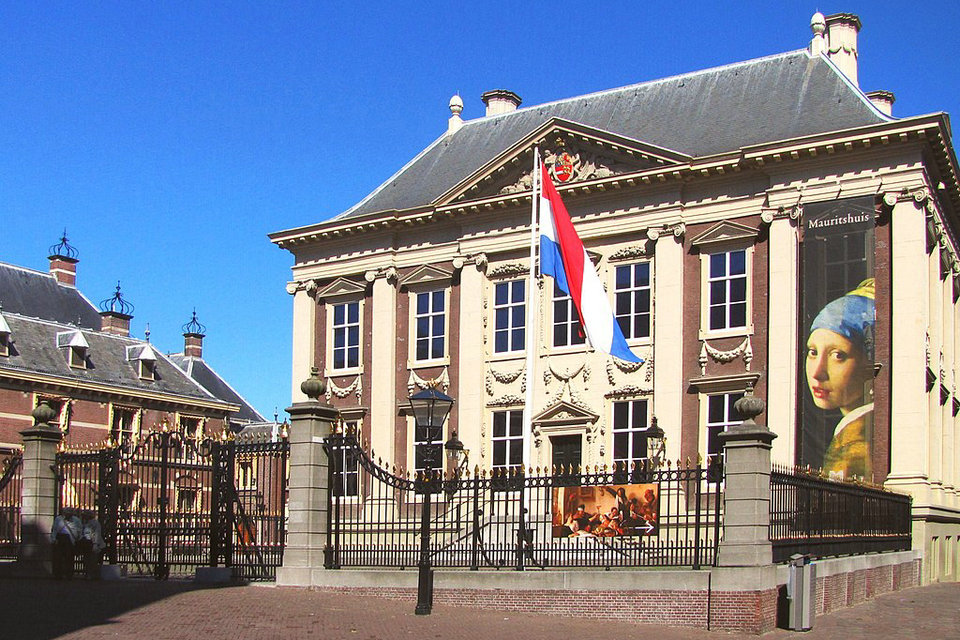
Mauritshuis, Den Haag, Netherlands

As the buildings of Mauritshuis Museum ,Hague underwent renovation in 2012, Girl with the Pearl Earring travelled to Japan, Italy, and the United States. It drew crowds in each location, attesting to its now firm place in audience regard. When Girl returned to the Netherlands in 2014, the Mauritshuis announced it would no longer lend out the painting, assuring visitors that the museum’s main attraction would always be in its home.

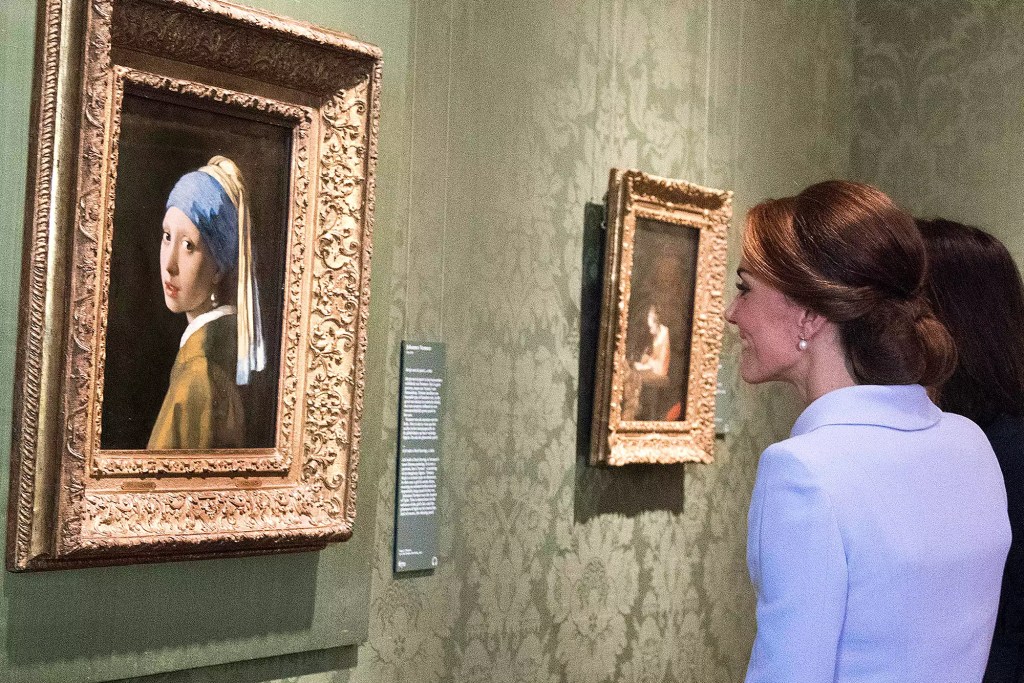
Princess Kate Middleton of England came face-to-face with one of the best-loved paintings in the world — “Girl with a Pearl Earring” — during a visit to the Mauritshuis museum in The Hague.
 

Conclusion

Humans have always adored paintings as one of the highest form of visual arts, and few of such arts can truly surpasses the inertness of still lives and remains immortal forever. The Girl With a Pearl Earring, poses the appeal of simplicity to rethink of life and consider the fact that beauty of life can also be found in the simplest joys around us.

KHADI PRAKRITIK PAINT

 Khadi Prakratik Paint has been developed from cow dung by Kumarappa National Handmade Paper Institute (KNHPI), Jaipur, a unit of Khadi and Village Industries Commission (KVIC), under the administrative control of the Ministry of MSME.  Khadi Prakratik paint is eco-friendly and cost effective.  The Khadi Prakratik Paint developed by KNHPI has been tested at National Test House, Ghaziabad (Govt. of India), National Test House, Mumbai (Govt. of India) and Shri Ram Institute of Industrial Research, Delhi (An ISO certified test lab) and satisfies the parameters required for paint.

It is envisaged that manufacture of Khadi Prakratik Paint will promote local manufacturing, create sustainable employment and generate additional revenue for farmers and cow shelter homes and will also generate employment in the rural areas, which will improve the rural economy and help in controlling the migration from rural to urban areas, in the country.

Cow dung is a major constituent used in the manufacture of Prakritik Paint. 100 kgs. of cow dung is utilized for making 500 liters of paint. Therefore, setting up of paint units would be helpful in utilization of cow dung and thereby help in cleaning the environment.

KNHPI imparts training in manufacture of Khadi Prakritik Paint. Prakritik Paint manufacturing units are being set up under Prime Minister’s Employment Generation Programme (PMEGP) scheme of Ministry of MSME. The technology for the manufacture of Khadi Prakritik Paint has been provided to many units in villages in the country.

Bible-Believing Studies in ROMANS

 These studies were originally prepared for a series of radio broadcasts. They have been edited for publication, but formality of style has not been a priority. I hope that the conversational tone of these studies will not be a stumbling block to you, but that it will, rather, make this work easier to read. May you find the commentary readable and enjoyable as well as instructive. This commentary is a book of STUDIES (please bear with me for the all capital letters that I use throughout this book for emphasis). However, they are also intended to be practical and devotional, as well as doctrinal. If our studies do not stir you to love God more and to live for Him better, then as an author I will have failed. I have no desire to increase your intellect without also influencing your will and challenging  you to follow the Lord Jesus Christ more fully.

Title of Book

Bible-Believing Studies in ROMANS                                                     

Editor Name

Michael D. O’Neal

ISBN no. 

9798418543578

Imprint

Independently Published

Year

2022

Edition

First

Language

English

Genre

Education

Publisher

Edupedia Publications Pvt Ltd


Convocation ceremony of Dayalbagh Educational Institution, Agra

 Secretary Department of Higher Education Shri Amit Khare addressed the Convocation ceremony of Dayalbagh Educational Institution, Agra today Prof.  Prem Kumar KalraDirector, Dayalbagh Educational Institute also graced the occasion.

Congratulating students on their graduation, Shri Khare said that “India’s journey from being a third world, fledgling democracy to this position of power and eminence is the result of the toil and dedicated contribution of every section of society. The role of the educated people in any sector has been especially significant because they have guided and led this change in various capacities. Today you are joining this rank of educated intellectuals, the young enlightened Indians who will lead the world”.

Shri Khare expressed confidence that students graduating today will become future leaders and lead the world.  “It is this confidence that fuels our dreams for country’s missions like Start Up India, Skill India, Make in India- Make for the World and Atma Nirbhar Bharat”, he added.

He urged students to emerge not as ‘job seekers’ but as ‘job givers’,  to promote the individual capability of each student, teach them to think, equip them with the skills required to face the 21st century and global leaders – while imparting values rooted in Indian culture.

Secretary Shri Khare also said that the experience of the Covid pandemic would have given students a fresh perspective to life, and prepared them better for facing its vagaries in future.   

He appreciated the efforts of DEI in imparting multidisciplinary education in subjects as diverse as Quantum Computing to Textile Designing to Music, and its Vision 2031 to support the same principles that have been recommended by the National Education Policy 2020.  He said that the institute’s focus on value based quality education, inclusivity, multidisciplinarity, research, use of ICT – all align well with the NEP 2020, he added.

In this context he recalled his conversation with Prof. Kalra a few years ago, when Shri Kalra had highlighted that Dayalbagh is a unique institution that brings education and values together something which is now talked about in the National Education Policy 2020.  Shri Khare said that Dayalbagh Educational Institution in its philosophy and vision has been much ahead of times in its thinking of the day, and many of the ideas of National Education Policy 2020 are already enshrined in the ethos of DEI.


Highlighting India’s growing presence in the international media space, Secretary Khare mentioned about IMF Chief Kristalina Georgieva praise on India’s decisive steps taken to deal with the COVID-19 pandemic”.

He prevailed upon the students to help those who have been less fortunate, who are deprived of the benefits that a good education provides.  He extended his best wishes to the students for a bright future.

*****

Is Indian Handicraft at risk ?

Handicraft as we all know it, is the craft work of processing materials by hands or simple hand tools. The outcome of such a craftwork involves decorative pieces or useful objects. The materials used in the making are mostly natural, but can be industrially processed or even recycled too.

Handicraft is an artform that is deeply rooted in the traditions of India. And the sector provides livelihood to lakhs of people. They produce goods ranging from carpets, potteries, paintings, embroidery and the list goes on. Every region in India has handicraft that is unique to that region. Such as Chikan Kari weaving from Lucknow. Madhubani paintings from Mithalia, Bidri metal handicraft from Karnataka, Pashmina shawls from Kashmir and so on.

However, over the years this industry had to endure certain challenges, making it hard for the artisans to flourish and make a living.

Issues faced by artisans

There are a number of reasons why artisans in the craft industry are facing problems. Some of the widely varied reasons are;

  • Informal sector- Handicraft industry is a highly informal sector. Artisans are usually structured through informal contracts between traders, middlemen, master artisans and low skilled artisans. Along with that, this industry is largely unorganised, making it hard for the industry to flourish organically.
  • Lack of education- The lack of education makes it difficult for the artisans to manage inventory, access government schemes information and bargain with traders and middleman.
  • Outdated production methods- Artisans lack the funds to upgrade to better tools and technologies or undergo training.
  • Competition from organised sector- Artisans are losing customers, due to the arrival of cheaply priced machine made products, especially Chinese made goods.

These are few of the reasons handicraft industry is lagging behind. However, it is never too late to make amends and prevent the sector from sinking.

How to revive the Handicraft industry?

One of the first steps to be taken to boast the Handicraft industry, is the action to make this industry organised. It is a given fact that middlemen and traders mend their ways into benefiting from the sales by jeopardizing the livelihood of artisans. Having an organised and formal sector will help with the righteous distribution  of profit. This is the task of the government to take needful action and prioritise this industry just like any other high yielding industry.

Along with taking into account the mission of creating awareness among the artisans and educating them on basic information about the working and functioning of the industry. Apart from that, it is also important for the government to create awareness among the common public and urge them to help save the livelihood of handicraft workers, and avoid choosing cheaper machine made alternative. Thus helping to preserve the Indian tradition.

Government’s role in empowering Indian Handicraft

Over the past few years, the Government of India has launched schemes and plans that could potentially benefit the handicraft artisans. Some of the schemes are;

  • National Handicraft Development Programme
  • Ambedkar Hastshilp Vikas Yojna
  • Handicraft Mega Cluster Mission
  • Integrated Handloom Development Scheme

Mentioned above are just few of the schemes launched by the government. But just launching schemes would not be of much help, until and unless those schemes are actually implemented at the grassroot level.

In instances like these, NGOs like Cradftizen Handicraft, Asha Handicraft Association, etc.,  play a vital role in campaigning such schemes across the artisans, and making them aware about their right and benefits.

                   The handicraft industry makes Rs 25,000 crores annually by exporting goods. This sector has a lot of potential that can be tapped and channelised into a highly profitable industry, along with benefit and uplifting the artisans, who are keeping the Indian traditions and craft alive.

Uniform Civil Code

Uniform Civil Code refers to implementation and application of such laws, personal in nature applicable to all the citizens equally irrespective of their race, religion, caste and creed. Ever since prior to India receiving independence, across the nation, the implementation and formulation of uniform civil code has always been a matter of controversy. In India, it is a significant issue regarding secularism in politics and today also it continues to be a disruptive matter for the political parties, some conservative religious sects and groups and Muslim groups in defense of the customs of their religion. At present, personal laws of different communities are different and it is governed according to their religious scriptures and text.

During the British rule, the codification procedure of Uniform Civil Code was first started. This set of rules were mainly for the Muslim and Hindu citizens. The British refrained from interfering in the domestic sphere as they feared opposition from the leaders of the community. In 1941, formation of B N Rau Committee took place in order to codify the Hindu Law post a long period. In 1956, a bill was adopted as the Hindu Succession Act on recommendations of B N Rau Committee after India’s independence. Thus, the law related to unwilled or undevised succession among the Jains, Buddhists, Hindus and Sikhs excluding the Muslims, Jews, Christians and Parsis as being distinct communities from Hindus, was codified and amended.

Uniform Civil Code is mainly concerned with the personal laws of all religions and communities. The laws personal in nature includes divorce, marriage, adoption, maintenance and inheritance. Under Article 44 of the Indian Constitution, the Indian states are expected to apply common laws and directive principles for all the citizens of India while formulating policies of the nation. On the other hand, Article 25-28 of the Constitution of India states religious freedom to all the citizens of India and allows the religious groups to keep up their own affairs.

The Uniform Civil Code is basically a set of three words i.e. Uniform, Civil and Code. Uniform refers to ‘same in all cases or not varying’, Civil refers to ‘associated with the people who live in the country’ and Code refers to ‘ a set of law or rules or a systematic law statement’. Thus, it can be inferred that the civil rules should not be different for all the people regardless of their religion. In Indian Context, Uniform Civil Code is the implementation of one such civil law that should be relevant to all the religious sects and communities in matters concerning marriage, maintenance allowance, divorce, adoption and inheritance. The Uniform Civil Code is mentioned under Article 44 of the Indian Constitution. The article states that, “the State shall endeavor to secure a Uniform Civil Code for the citizens throughout the territory of India.” As stated under the Indian Constitution, the Uniform Civil Code’s appeal is accordant with the principles of fairness, equity, justice and human rights. In order to bring uniformity in the personal laws, the courts have held in their judgements that the government should shift towards a uniform civil code. The same has been observed in many cases, Shah Bano case being a popular one among these.

After the Shah Bano case in 1985, Uniform Civil Code emerged as an important topic of interest. The women’s right to life and dignity is adversely affected by the polygamy and triple talaq practices. These law sets were a matter of debate when there was question of making certain laws applicable to all the Indian citizens. The fundamental rights to practice any religion should not be curtailed by these laws. The debate was then shifted to the personal law of Muslims which is partially related to Sharia law which permits polygamy and divorce. The implementation of Uniform Civil Code was primarily opposed by the Indian Muslims and some conservative religious groups considering it as a threat to freedom of the religion.

To Kill A Mockingbird: The Book Review

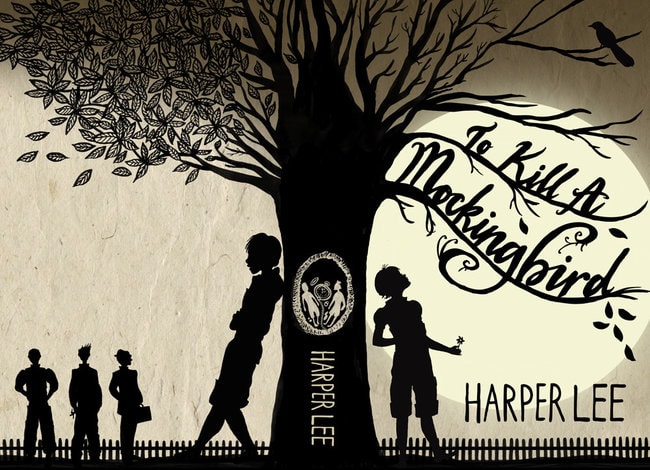
Cover of To Kill A Mockingbird novel (1960)

Introduction

To Kill a Mockingbird is a very popular modern classic by the American author Harper Lee, that narrates a coming-of-age story with a theme of social equality and prejudice. It was published in 1960 and was instantly successful. The unforgettable novel of a childhood in a sleepy Southern town and the crisis of conscience that rocked it. In the United States, it is widely read in high schools and middle schools. To Kill A Mockingbird  has become a classic of modern American Literature, winning the Pulitzer Prize in1961 and was later made into an Academy Award-winning film, also a classic.

About The Author

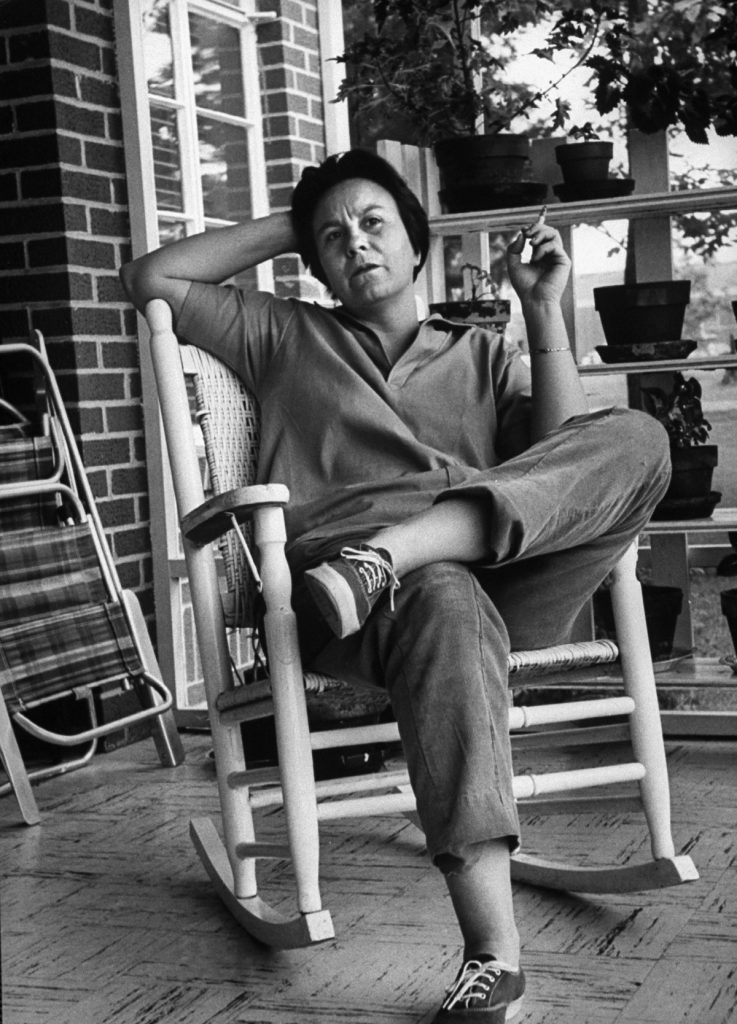
Nelle Harper Lee (April 28, 1926 – February 19, 2016) was an American novelist best known for her 1960 novel To Kill A Mockingbird. Lee has received numerous accolades and honorary degrees, including the Presidential Medal of Freedom  in 2007 which was awarded for her contribution to literature. She assisted her close friend Truman Capote  in his research for the book In Cold Blood (1966). Capote was the basis for the character Dill Harris in To Kill a Mockingbird.

Harper Lee

Storyline of The Novel

The novel follows the story of a black man in the 1930s, convicted for the rape of a white girl. It is written from the perspective of two young children and their confusion at topics like race and the discriminatory ways of adults around them. Despite been written in a child’s perspective, the story does not diminish the meaningful themes of the novel in any way. Even after 80 years of its publication, the book is still popular and highly relates to our society.

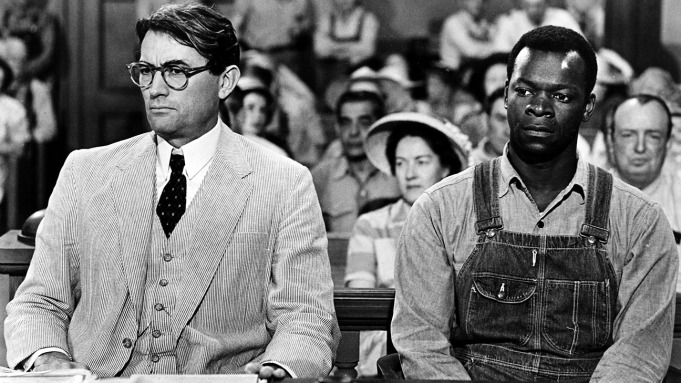
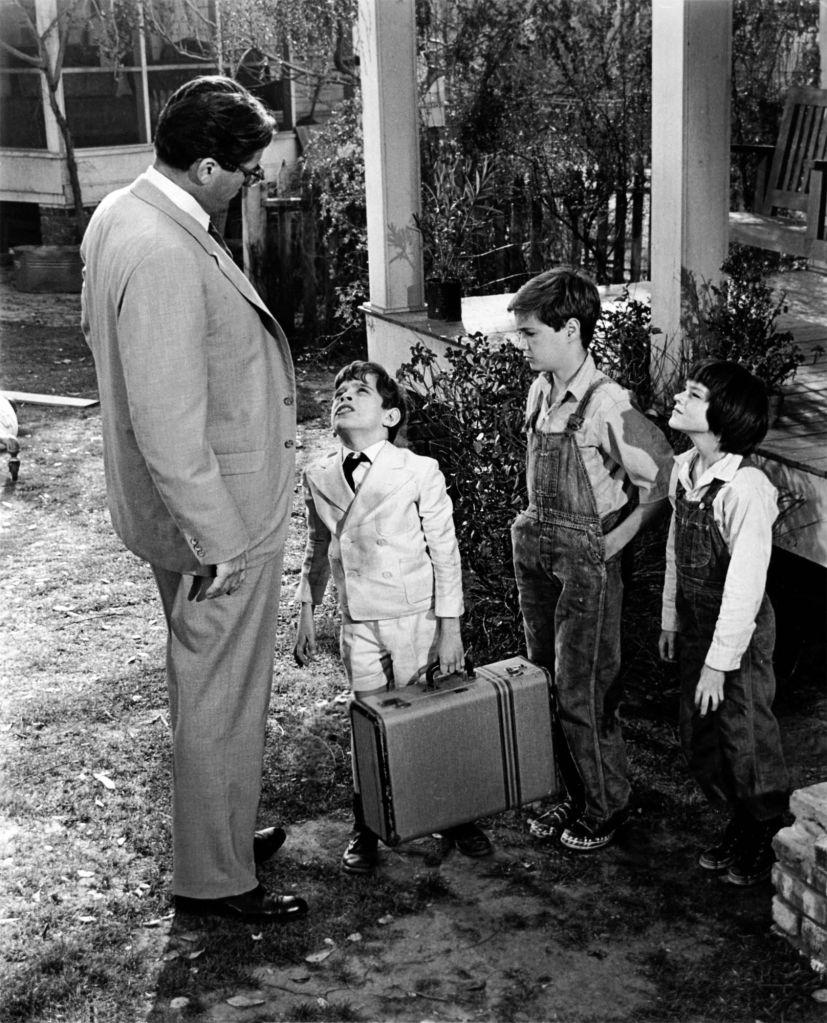
Gregory Peck as Atticus Finch and Brock Peters as Tom Robinson in To Kill A Mockingbird movie(1962)

The story evolves around six-year-old Scout Finch is living in the small town of Maycomb, Alabama during the Great Depression. Raised by Atticus Finch, Scout and her brother, Jem, are very comfortable with Maycomb and understand the well being of their neighbours, except the house of the mysterious Arthur Radley, whom they obsess over. Half the book is basically about Scout, Jem, and Dill (their new friend) trying to lure Arthur Radley out of his house. However, when Atticus, a lawyer, decides to take the case of a black man named Tom Robinson, tensions become high and the trial to see whether Tom Robinson is guilty or innocent based on his crime and, especially, his skin colour is at stake. 

Analysis of The Storyline

To Kill a Mockingbird focuses on that gut instinct of right and wrong, and distinguishes it from just following the law. Even the titular quote: “Shoot all the blue jays you want, if you can hit ’em, but remember it’s a sin to kill a mockingbird” is in itself an allegory for this message. Being in itself a generic message, the idea of ‘doing what’s right’ obviously has a different meaning depending on when and where you’re reading the book. If you take 1960, when the book was written, America was in a state of ethical development as social inequality was – very – gradually being overcome. Women’s rights and black rights movements were beginning to emerge and some campaigned through violence. Would Atticus Finch condone this?

In the 1930s, when the book was set, America was in the midst of the Great Depression. This was a time when economic difficulties meant that the American Dream was receding further and further away. We could consider that Atticus Finch felt that his own dream of an equal, morally decent society was also heading in the wrong direction.

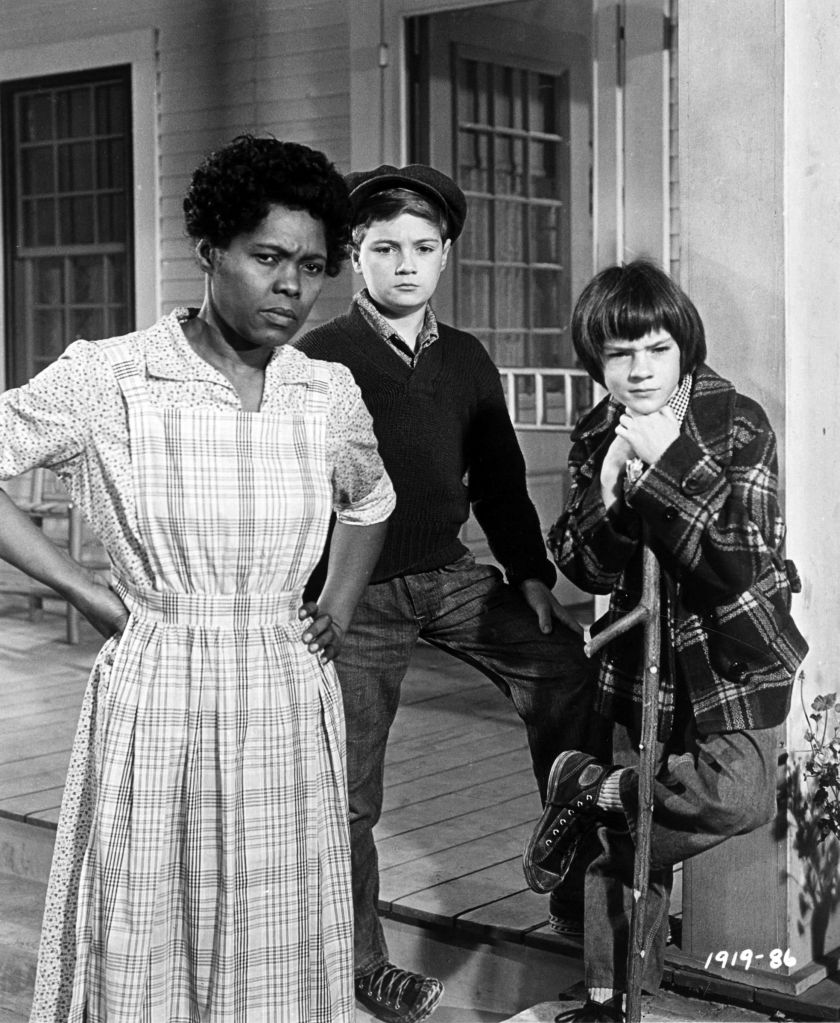
Scene from To Kill A Mockingbird movie (1962)

Criticism and Relevance of The Storyline

This 1960 novel is ahead of its time; carrying a message that is still needed by today’s world, Harper Lee’s debut novel is regarded as one of the best contemporary classics. Prejudice against the black community is the main theme of this novel. The lives of the main character revolve around this. Standing up for what’s right, defending the weak, swimming against the current; all these righteous acts comes at a huge price, sometimes even risking the lives and dignity of our loved ones. The novel gives us a strong message to the readers. It so skilfully presents the vulnerability of a minority community and how they fall prey to prejudice. The author very skilfully brings forth the sub of racism, that too very tenderly through characters who peacefully struggle against this evil. Harper Lee shows us that in every society, there are some people who would stay firmly at the side of justice, though they may face severe consequences.

scene from To Kill A Mockingbird movie (1962)

Conclusion

Without denying the constancy of the moral message, and the pure ingenuity of the book, it’s still open to debate whether, as with all classics, schoolchildren should be forced to read the novel and go over it page-by-page. Therefore everyone who reads it can take something out of it which no one has before. Let it not be forgotten that a true piece of literature, like To Kill a Mockingbird, is meaningful in every period and that today, Atticus Finch’s message should be heard in the midst of all the global conflicts that we hear of on the news every day and night.

KVIC’s “Charkha Kranti” Created a Buzz on Gandhian Values

 Khadi’s exponential growth, as mentioned by President in his address to the Parliament ahead of the Budget Session, is a result of the “Charkha Kranti” initiated by Khadi and Village Industries Commission (KVIC) in the last 7 years. KVIC built several monumental Charkhas to propagate Gandhian thoughts and symbolism of Charkha in India and abroad which further popularized Khadi and played a key role in its massive growth. Khadi’s success was acknowledged by the President in his address to the Parliament on 31st January and by Home Minister Shri Amit Shah, a day before at Sabarmati Riverfront in Ahmadabad, while unveiling Mahatma Gandhi’s 100 sq meter wall mural on his 74th Martyr’s Day.

Interestingly, KVIC was formed in the year 1956 but it made no effort in the next 58 years; i.e. till 2014, to popularize Khadi, Charkha or any other symbol associated with Mahatma Gandhi. “Khadi” and “Gandhi” were only used for political gains. It was only after the year 2014, that concrete efforts were made by the Narendra Modi government to popularize Khadi and spread the thoughts of Mahatma Gandhi and the symbolism of Charkha across the globe. Be it the birth anniversary or the martyrdom of Mahatma Gandhi, KVIC organized unique programs to celebrate Gandhian thoughts.

During the last 7 years, KVIC built monuments like world’s biggest wooden and steel charkhas, world’s smallest charkha on wrist watches, Gandhi ji’s world’s largest wall mural made of clay Kulhads, world’s largest national flag made of Khadi fabric, heritage Charkha museum and many more. Charkha, which was Gandhi ji’s tool in the fight against the British Rule, made its way to a foreign country, for the first time in 2017. Since then, Bapu’s Charkha has reached 60 countries of the world.

“It is with the inspiration of Prime Minister, Shri Narendra Modi that concrete steps were taken to popularize Khadi and Charkha not only in India but across the world. This played a major role in increasing the production and sale of Khadi and, thereby, contributed to realizing Bapu’s dream of Gramoday. The Charkha Kranti also saw distribution of a record 55,000 advanced charkhas to the Khadi artisans across the country that provided them with self-employment,” Chairman KVIC, Shri Vinai Kumar Saxena said.

1956 to 2014 – No significant activity/event

July 5, 2016 – World’s largest wooden Charkha installed at IGI Airport, New Delhi, by Shri Amit Shah, the then BJP President and  Member of Parliament.

October 18, 2016 – Biggest Ever Charkha distribution in Independent India at Ludhiana by  Prime Minister Shri Narendra Modi.

May 21, 2017 – World’s largest Stainless Steel Charkha installed at Connaught Place, New Delhi by Shri Amit Shah, the then BJP President and  Member of Parliament.

May 21, 2017 – Heritage Charkha Museum Inaugurated at Connaught Place, New Delhi, by Shri Amit Shah, the then BJP President and Member of Parliament.

October 2, 2017 – A big wooden Charkha unveiled in Uganda, for the first time on foreign soil.

April 15, 2018 – Stainless Steel Charkha unveiled by former Agriculture Minister Shri Radha Mohan Singh at Motihari in Bihar to commemorate Champaran Satyagrah centenary celebrations.

June 7, 2018 – Pietermaritzburg station in South Africa sported a Khadi look and trains draped in Khadi fabric. This Railway Station is the place where Gandhi ji was thrown off a train for refusing to give up his seat in a first class, “whites-only” compartment, 125 years ago in 1893. It was the first such program sponsored by KVIC on foreign soil.

June 26, 2018 – Grand Stainless Steel Charkha installed at Sabarmati Riverfront, Ahmadabad. The Charkha was unveiled by Shri Amit Shah, the then BJP President and  Member of Parliament.

January 31, 2019 – World’s Largest Wall Mural of Mahatma Gandhi Made of terracotta Kulhads unveiled at NDMC building in New Delhi by Vice President Shri M. Venkaiah Naidu.

January 30, 2020 – World’s Smallest Charkha used in Unique Khadi Wrist Watches that were launched by the then  Minister of MSME, Shri Nitin Gadkari.

Charkha was sent to 60 countries during Khadi exhibitions in 2017 and 2018.

October 2, 2021 – World’s largest Monumental National Flag made of Khadi Fabric and weighing 1400 KG, unveiled in Leh by the  Lieutenant Governor of Ladakh, Shri RK Mathur.

30 January 2022 – A grand wall mural of Mahatma Gandhi made of clay Kulhads installed at Sabarmati Riverfront in Ahmadabad. This is India’s 2nd and Gujarat’s first wall mural of this kind that was unveiled by Minister of Home Affairs and Co-operation, Shri Amit Shah.

2014-15 to 2020-21 – 55,000 New Model Charkhas and 9000 modern looms distributed to Khadi artisans across the country to increase the production of Khadi.


****

18th Convocation of Tezpur University, Assam

 The Prime Minister, Shri Narendra Modi addressed the 18th Convocation of Tezpur University, Assam today through video conferencing. Governor of Assam Prof. Jagdish Mukhi, Union Education Minister Shri Ramesh Pokhriyal ‘Nishank’ and the Chief Minister of Assam Shri Sarbananda Sonowal were also present on the occasion.

Speaking on the occasion, the Prime Minister said today is a moment to remember and cherish for a lifetime for over 1200 students. He believed that what the students learnt at Tezpur University will accelerate the progress of Assam and progress of the country. He said the sentiment contained in the university anthem which was written by Bharat Ratna Bhupen Hazarika resonates with the great history of Tezpur. The Prime Minister quoted a few lines from the University Anthem

अग्निगड़र स्थापत्य, कलियाभोमोरार सेतु निर्माण,

ज्ञान ज्योतिर्मय,

सेहि स्थानते बिराजिसे तेजपुर विश्वविद्यालय”

That is, Tezpur University is situated in a place where there is an architecture like Agnigad, where there is a Kalia-Bhomora bridge, where there is a light of knowledge. He said eminent personalities like Bhupen Da, Jyoti Prasad Agarwala and Bishnu Prasad Rabha are identified with Tezpur.

Addressing the students, the Prime Minister said from now until the completion of 100 years of India’s independence, are also the golden years of your life. He urged them to spread the glory of Tezpur across India and all over the world, take Assam and North East to new heights of development. He asked the students to take full advantage of the possibilities created by the Government’s efforts at development of the North East especially in sectors like connectivity, education and health.

The Prime Minister remarked that Tezpur University is also known for its Innovation Center. These Grassroots innovations are giving momentum to Vocal for Local and are being used to solve local problems, opening new doors of development. He lauded the innovations of Tezpur University like low- cost technology to provide clean drinking water, pledge taken to convert Waste into Energy in every village, inexpensive and effective technology related to biogas and organic fertilizers, campaign to preserve the Biodiversity and Rich Heritage of North East, documentation the languages of the North East tribal society which are in danger of extinction, preservation of centuries-old wood-carved art at Batadrav Thana, Nagaon, digitization of Assam’s books and papers written during colonial times.

The Prime Minister cited Tezpur University Campus itself as the reason for motivation to do work on so many local needs. Here the hostels are named after mountains and rivers in this region. He said these are not just names, but also inspiration for life. He said in the journey of life, we have to face many

The  Prime  Minister  elaborated  on  the  concept  of  Aatmnirbhar  Abhiyan.  He  explained  while  this movement is about change in resources, physical infrastructure, technology and economic and strategic might, the biggest transformation is in the realm of instinct, action and reaction which is in sync with the mood of today’s youth.difficulties, many mountains and many rivers have to be crossed. He said to the students that with every mountaineering your expertise grows and your perspective is ready for new challenges. He said like several tributaries merge into one river and mix into the sea, we should also take knowledge from different people in life, learn and achieve our goal and move forward with that learning. He said when one proceeds with this approach, North East will be able to contribute to the development of the country.

The Prime Minister said today’s young India has a distinctive way of taking on challenges. He used the recent performance of the young Indian cricket team in Australia to illustrate his point. The Indian cricket team faced so many challenges. They suffered crushing defeat yet recovered equally fast and won the next match. The Players showed determination despite injuries. They took the challenge head on and looked for fresh solutions instead of getting frustrated by difficult conditions. There were inexperienced players but their morale was high and they grabbed the opportunity given to them. They overpowered a better team with their talent and temperament.

The Prime Minister stressed that this stellar performance of our players is important not just from the point of view of the sports field. Shri Modi listed important life lessons from the performance. First, we should have faith and confidence in our ability; second, a positive mindset begets positive results. Third and most important lesson, said the Prime Minister, is – if one is facing two options, one safe and the other is an option of a difficult victory, one must surely explore the option of victory. There is no harm in occasional failure and one should not refrain from taking the risks. We need to be proactive and fearless. If we overcome the fear of failure and unnecessary pressure, we will emerge fearless. This new India, confident and dedicated to goals, is evident not only in the cricket field, all of you are part of this picture, the Prime Minister told the Students.

This self-confidence and absence of fear in trading the uncharted path and young energy has strengthened the country in its fight against Corona. India overcame the initial apprehensions and showed that with resolve and resilience, resources are not far behind. India took fast, proactive decisions instead of compromising with the situation and effectively fought with the virus. Made in India solutions contained the spread and improved the health infrastructure. Our vaccine related research and production capability is giving India and many other countries of the world confidence of a security shield, said the Prime Minister.

The Prime Minister also listed digital infrastructure enabling direct benefit transfer, fintech digital inclusion, world’s largest banking inclusion, world’s largest toilet construction movement, largest movement of providing tap water in every household, world’s largest health insurance scheme and world’s largest vaccination drive as testimony to today’s India’s attitude, unafraid of experimentation for solution and not averse to undertake large-scale projects. These projects are benefitting Assam and the Northeast.

The Prime Minister talked of new technologies that are creating new possibilities. Talking about the possibility of future universities which might be fully virtual providing students and faculty to be part of any university of the world, the Prime Minister emphasized the need for a regulatory framework for such transformation. He pointed out that the new National Education Policy is a step in this direction. This policy encourages maximum use of technology, multi-disciplinary education and flexibility. NEP puts stress on preparing our education system for data and data-analytics. Data analysis will massively improve the processes from admissions to teaching and evaluation.

The Prime Minister called upon the students of Tezpur University to help in fulfilling these goals. He said that, after finishing their formal education, they not only work for their future but for the future of the country. He advised them to keep their ideals high which will protect them from the vicissitudes of life. He said the next 25-26 years are important for them as well as their country and expressed the hope that the students will take the country to new heights.

Union Education Minister Shri Ramesh Pokhriyal ‘Nishank’ congratulated the graduating students for successful completion of an important part of their lives and being eligible for jobs in various fields. He expressed happiness over the fact that many students among them were from foreign countries such as Zimbabwe, Ghana, Etopia, etc. and observed that it shows the principle of “Vasudhaiva Kutumbakam” i.e “The world is one family”. He observed that the University has a mosaic culture and it is not surprising because the University itself is located at Tezpur, which is a cultural and historic place. He further added that cultural doyens like Rupkonwar Jyoti Prasad Agarwala, Bishnuprasad Rabha, Natasurya Phani Sarma and Dr Bhupen Hazarika’s works are identified with Tezpur.

He hoped that the students would not only bring laurels to its own state but also play a crucial role in development of the nation. He said that in order to reform, transform and perform, the National Educational Policy (NEP) has been adopted, which will bring much needed qualitative change in the educational sector.  He said that NEP is focused on inclusive, impactful and innovative education and it will usher in a new era intellectual development in India.

A total of 1218 students received their degrees and diplomas in the Convocation out of which 371 were undergraduate, 725 postgraduate, 36 PG Diploma and 86 were Ph.D. Among the degree recipients, 46 toppers of various undergraduate and postgraduate programmes received Gold Medals. A Best Graduate and another Best Post Graduate of the year were also awarded Gold Medals in the Convocation.

******

Farm Bill 2020

In India, agriculture is regarded as a dominant sector in the country. More than 70% of the population in India is involved in the agricultural activities either directly or indirectly. We are able to eat peacefully only due to the hard work of the farmers. Though the farmers work hard in the field day and night in order to feed the country yet they are compelled to live a life of indigence and starvation. Recently in 2020, new bills for the welfare and comfort of the farmers and the agricultural sector was introduced by the Central government. However, these bills were greatly opposed by the farmers and the government of the State. There were protests against the bills on roads and streets by the farmers across the nation. A resolution was also passed by the Punjab Assembly rejecting the ordinances of Central government on 28th August 2020.

A combination of three bills together constitute the Agriculture Bill 2020 or Farm Bill 2020. These three bills were recently passed by the Parliament. These bills are: Farmers Produce and Commerce (Promotion and Facilitation) Bill 2020, Farmers Agreement (Empowerment and Protection) on Price Assurance and Farm Services Bill 2020 and Essential Commodities (Amendment) Bill 2020. These bill make huge changes in the agricultural sector structurally. These bills also seemed to encourage corporate investments in the ecosystem of agriculture in order to make agriculture more benefitable to the farmers.

The Farm Bill 2020 contemplates an alternative possible way to the farmers to sell their produce in open market, providing them an opportunity to sell their products anywhere and to anyone and even get high price for it. In such areas of trade, neither agriculture produce market committee (APMC) fees nor tax by the government on transactions will be charged. The APMC would require to compete with these alternate platforms and now the farmers would have the choice to sell their produces of the farm. The farmers have the authority to sell their farm’s produce directly to the corporate or exporter purchasing in bulk from the farm. The current procurement of food grains based on minimum support price (MSP) is not obliterated by the Farm Bill 2020. The system of procurement based on MSP continues and the farmers can also sell their farm produces at Mandis on the existing MSP.

A number of schemes for the well being of the farmers as well as agricultural sector is launched every now and then by the government. The main aim behind introducing the Farm Bills was to boost the agriculture sector and double the income of farmers by 2022. It was believed that freeing the agriculture sector will consequently help in better pricing due to vast competition in the market. The corporate sector would be induced to invest in the ecosystem of agriculture as the farmers would have the choice to sell their crop products directly to the corporates and the exporters.

As the New Farm Bill 2020 provides great measures for the welfare of the farmers by giving them opportunity to sell their farm products in open market and also allowing them to fix the price according to themselves on mutual understanding of both the farmer and the corporates. Farmers are apprehensive of getting the MSP for their produce. However, the farmers do fear the domination on the agricultural sector with the power of money by the larger corporates and retailers, they also fear that the Mandies would become inessential like BSNL and MTNL future days and they also doubt that if in near future the trade shifts substantially to alternative platforms, the APMCs may become unavailable and have to shut down. No mechanism for fixation of price was prescribed under the Price Assurance Bill. The farmers were anxious about their exploitation as free hand was given to corporate houses. The Bill seemingly deregulated the movement, production, storage and distribution of essential food commodities such as edible oils, pulses, oil seeds, potatoes and onion which are removed from the Essential Commodities (Amendment) Ordinance.

Scope of Silk Industry in India

Silk – the queen of all fabrics is historically one of India’s most important industries. India produces a variety of silks called Mulberry, Tasar, Muga and Eri, based on the feeding habit of the cocoons.
The sericulture industry today employs over 700,000 farm families and is mostly concentrated in Karnataka, Tamilnadu and Andhra Pradesh and to some extent Assam and West Bengal. Karnataka accounts for more than 70 percent of the country’s total silk production.


Sericulture is one industry which is beneficial to the agriculturists. As in today 56 lakhs people are dependent on the sericulture industry, 5.6 million people out of which 4.7 million are agriculturists. The rest are reelers, weavers etc.

India is the second largest producer of silk, contributing to about 18 per cent to the world production. What is however, more noteworthy is the fact that India’s requirement of raw silk is much higher than its current production at present. Thus, there is considerable scope for stepping up production of raw silk in the country, overcome the persistent conflict of interest between exporters of silk products and producers of raw silk.


While sericulturists want imports of raw silk to be restricted to have better market for their produce, exporters want imports of cheaper raw silk so as to be able to export more silk products at competitive rates. India has all the four varieties of silk namely, mulberry, tassar, eri and muga. It is however, disheartening to note that we have not yet been able to fully exploit this advantage and make our presence felt on the international scene more prominently than at present. For this, one has to clearly understand the strengths and weaknesses of different segments of this sector.

The strength of this industry lies in its wide base, the sustaining market demand pull especially from the Indian handloom weaving sector, the infrastructure created by the national sericulture project and the research and training capabilities.


Silk is the most elegant textile in the world with unparalleled grandeur, natural sheen, and inherent affinity for dyes, high absorbance, light weight, soft touch and high durability and known as the “Queen of Textiles” the world over. On the other hand, it stands for livelihood opportunity for millions owing to high employment oriented, low capital intensive and remunerative nature of its production. The very nature of this industry with its rural based on-farm and off-farm activities and enormous employment generation potential has attracted the attention of the planners and policy makers to recognize the industry among one of the most appropriate avenues for socio-economic development of a largely agrarian economy like India.


Silk has been intermingled with the life and culture of the Indians. India has a rich and complex history in silk production and its silk trade which dates back to 15th century. Sericulture industry provides employment to approximately 8.7 million persons in rural and semi-urban areas in India. Of these, a sizeable number of workers belong to the economically weaker sections of society, including women. India’s traditional and culture bound domestic market and an amazing diversity of silk garments that reflect geographic specificity has helped the country to achieve a leading position in silk industry.

Silk production in India

India has the unique distinction of being the only country producing all the five known commercial silks, namely, mulberry, tropical tasar, oak tasar, eri and muga, of which muga with its golden yellow glitter is unique and prerogative of India. 

Mulberry sericulture is mainly practised in states such as Karnataka, Andhra Pradesh, Assam and Bodoland (Kokrajhar, Chirang, Baksa and Udalguri districts of Assam), West Bengal, Jharkhand and Tamil Nadu who are the major silk producing states in the country. North East has the unique distinction of being the only region producing four varieties of silk viz., Mulberry, Oak Tasar, Muga and Eri. Overall NE region contributes 18% of India’s total silk production.

Title of Book

Scope of Silk Industry in India

Editor Name

Deobrat Kumar

ISBN no. 

978-81-951123-8-8

Imprint

IJR

Year

2022

Edition

First

Language

English

Genre

Education

Publisher

Edupedia Publications Pvt Ltd

Training and Skill Development by NGO

 With 50% of India’s population under the age of 25, India is poised to have the largest workforce by 2027. While the demographic dividend could be in favour of India, there are some stiff challenges that we are faced with.

“Individuals with combination of Skills, viz- broad-based education and training, basic and portable high-level skills, including teamwork, problem solving, information and communications technology (ICT) and communication and language skills are most employable and adaptable to changes in the world of work.”

– International Labour Organization


Acquiring life skills is of foremost importance when young people prepare for the job market. This is because:
  • At the entry-level, employees are expected to be able to understand, comprehend, communicate and problem-solve.
  • Opens array of sectors for young people to kick start their career rather than confining them to a sector or job.
  • These skills are essential to get better jobs and increase their chances for career progression.


To start with, Skill Development Team conducts student mobilisation activities in schools and colleges through presentations & posters and in villages & local communities through mobilisation vans, pamphlet distribution, community meetings, etc. The team further works with Village Pradhan, frontline workers (like ASHAs and AWWs) to mobilise prospective students. Minimum qualification required for undertaking these courses is higher secondary.

Improved training and skill development is critical for providing decent employment opportunities to the growing youth population and is necessary to sustain the high growth momentum.

The insufficient skills and illiteracy compel the poor section of the society to put more than extra physical efforts. This is how they fulfill their basic needs. Despite sweating hard, they manage to earn daily wages only. “Unfortunately, a few of them don’t get to work daily.”

To uproot this curse from the lives of poor people, NGO provide “Free of Cost” skills development programs for poor and needy people. These are specifically drafted to upskill the downtrodden people. These programs include Computer Hardware, Computer Training, Mobile Repairing, Sewing Training, Mehndi Design, Incense Stick etc.

Poverty is pronounced deprivation in a well- being and comprises many dimensions, including low incomes, and the inability to acquire the basic goods and services necessary for survival. Poverty alleviation implies the reduction or eradication of poverty level in any society, skill training in various programs leads to acquisition of competencies to generate wealth through applicable Programs with skills and competencies to become self-employed. Lack of skills and experience and Mismatch between supply and demand for labour may be adjusted by the entrepreneurial skills on how to find business ideas to encourage young people to start their own business.

Poverty means more than simply low income. It includes lack of voice in determining what goes on in one’s community, as well as vulnerable livelihoods. Food insecurity is often a reality of poverty. Skills development contributes to social and economic integration in poor people’s lives. Skills development can be considered as a public good.Lack of access to education and training maintains a low level of education and productive skills among the rural poor.

Skills Development Programs by Narayan Seva Sansthan gives according to your interest.

Skill development Programs have to be aligned to ensure better employment opportunities for the Poor People. In, the country the lack of relevant skills of the underprivileged youth group and a mismatch between supply and demand in the market leads to very poor employability and lower wages for them. Narayan Seva Sansthan has also taken various efforts at the national and regional level to promote health, education to unprivileged people. In this research it has been emphasized that necessary education, training and skill development programs are very necessary for disadvantaged group to have a better life. Invest in the skills and employability of workers contributes to the improvement of productivity and competitiveness. But a great number of destitute children are not getting the basic needs like education and skill development training which is leading them to poverty, insufficient nutrition and illiteracy. A complete strategy for Skills Training Programs Linked to Employment will need to be developed so that underprivileged group can have access for skills training leading to employment. Skills are vital for productivity and growth and are in fact at the core of improving people’s employment outcomes.

As we all know that in today’s generation Education is the most important key to success, this is a very general statement and all people are familiar to this. In, this pragmatic world survival and day to day income become impossible to huge number of educated communities.

Skills development for poor people be also essential to address the opportunities and challenges meeting new demands of changing economies and new technologies in the context of globalization.

Title of Book

Training and Skill Development by NGO

Editor Name

SUMIT SINGH CHANDEL

ISBN no. 

978-81-951123-0-2

Imprint

IJR

Year

2022

Edition

First

Language

English

Genre

Education

Publisher

Edupedia Publications Pvt Ltd