

Creativity

Creativity has no exact definition, and there can’t be any because creativity differs as per the perspective of each and every individual.

Creativity is a free spirit that lives within each of us since the day we are born, the only difference is that every one practices Creativity in a different manner and it’s not about the traditional Creativity which is mostly associated with a painter, artist or cartoonist but, every one. It is not about drawing shapes or abstract art, but anything.

It is always said that a child lives in every person and as we grow up and become adults that child get lost somewhere in the busy life and adulthood, same goes with creativity with time some of us just forget how brilliant they are at being creative in their work , creativity keeps us alive and most importantly it challenges our mind to bring up new ideas. A person who is good at convincing people is a type of creativity, as it requires planning and study of facts in order to be successful at this similarly, a sand artist how did he became a sand artist ? He choose the wlemebt sand to showcase his creativity, identifying your style, idea and inspiration can help you claim your creativity. It is possible to look beyond the normal horizon which is also called imagination and today each one of us is aware about the power of imagination.
Creativity has no exact definition, and there can’t be any because creativity differs as per the perspective of each and every individual.

Creativity is a free spirit that lives within each of us since the day we are born, the only difference is that every one practices Creativity in a different manner and it’s not about the traditional Creativity which is mostly associated with a painter, artist or cartoonist but, every one. It is not about drawing shapes or abstract art, but anything.

It is always said that a child lives in every person and as we grow up and become adults that child get lost somewhere in the busy life and adulthood, same goes with creativity with time some of us just forget how brilliant they are at being creative in their work , creativity keeps us alive and most importantly it challenges our mind to bring up new ideas. A person who is good at convincing people is a type of creativity, as it requires planning and study of facts in order to be successful at this similarly, a sand artist how did he became a sand artist ? He choose the wlemebt sand to showcase his creativity, identifying your style, idea and inspiration can help you claim your creativity. It is possible to look beyond the normal horizon which is also called imagination and today each one of us is aware about the power of imagination.
Thus, the above example shows how creativity can be practiced professionally and non professionally. It is present at every place well the place where we live which is a planet, planet earth is another example of creativity. Universe was not formed in a day or two it took million of years to make things the way they look today but, for once this is creativity it is called creativity of God the formation of solar system, the planets, birth of first human, land , water and everything.

The people who are close to art and craft are often attracted by creativity, they have a 6th sense that can identify the difference quickly that a normal busy man can’t basically creative difference.
Creativity and challenge go side by side. Creativity is challenging like the works today is dynamic and things keep on changing and in this process of change our work is adapting to the changes and be progressive with the work
So, creativity is in high demand. Apart from being intelligent, humble, punctual, creativity is also considered in top priority. A creative person can come up new ideas and strategy, it’s just like writing in lesser number of words but the meaning is deep. Here creativity can solve the purpose.

DO NOT GIVEUP THE BEGINNG IS ALWAYS THE HARDEST


WHEN WE ARE OPEN TO LEARNING MORE….THEN WE ARE WILLING TO WORK FOR IT…

             AND WE THRUST OUR INTUITION & FOLLOW OUR HEARTS…..WELL,THEN ANYTHING IS POSSIBLE.

              BELIEVE IN YOURSELF!NEVER EVER GIVE UP!


           In order to understand the attitude,read this amazing motivational story.this is very interesting,so make sure to read till the end.

            Once a foreigner came to india and he was enjoying sightseening onthe outskirts of kerala, a beautiful city of south india.he then entered a temple which was in under construction.

             He stops nearby a man who was a sculptor busy in making an idol with his brush and few tools. Therevwas another similar idol lying nearby the sculptor.in confusion,the foreigner asked the sculptor.

              “ i can’t see any mistake in the first idol,where is it,can you please let me know”

                While brushing the second idol,the sculptor replied “please see,the nose of the first idol is damaged and it cannot be repaired”

                 The foreigner said,”okay….. Where will it be installed?”

                 Sculptor answered”it will be installed at the 200 feet above the temple building”

                 The foreigner smiled sarcastically and said to sculptor”if this idol will be installed so high then obviously no one would be able to see the damaged nose of the idol.why are you wasting time in creating this second idol?”

                The sculptor smiled and said “yes…..you are right.no one will be able to see thst damaged nose but i know it and  every time when i will see that idol,the guilt of building a damaged idol will hunt me.”

                   Guys,excellent means perfection and you have to be  perfect in anything you do in life,no matter what .excellence drives from inside and you have to realize it.

                    Excellence is not something that you want to show off but it should be from your inner self.no matter what you do in your life,you should be satisfied from inside.

                    One thing you have to understands is if you don’t do it with complete excellence,don’t do it all because if it is not excellent then it will not be profitable or fun.

                    We are what we repeatedly do and excellence, therefore,is not an act,it’s a habit.

                      This story clearly shows that life presents changes to all of us.success is no accident but it is hard work, preseverance ,learning,and sacrifice.a dream doesn’t become reality through magic.

                        It takes sweat,determination,and hard work.humans are creatures of habit.if you quit when things get tough,it gets much easier to quit the next time. on the other hand

                         On the other hand,if you force yourself to push through it,the grit begins to grow in you.so,my dear friends believe in the end.

                           Always remember strength doesn’t come from winning ,your hard work and struggles in life develop your real strengths.

                             When you go through hardships and decide not to surrender,that is call strength,what is one piece of advice we can give to the young guns of this new era? It is indeed never give up.

Nowadays,many students are too afraid to dream of how great their life can be because of other people .they offer them numerous example of what can go wrong.

                              Hey,give plenty of examples of how hard life is,the struggles in life….. But there is no need to believe in that.

             “BELIVE YOUR SELF,NEVER EVER GIVE UP”.

Cold War

Cold War was the state of mounting tension between the USA and Soviet Russia after the Second World War was over for Supremacy in the world as the Super Power. The United States of America became the representative of capitalist countries, and the Soviet Union Russia became the representative of communism. Hence, there was an ongoing rivalry between the two great powers. Since this rivalry did not result in a war, but only in diplomatic incidents, it is called the Cold War.

Current Scenario of Water Resources in India

CURRENT ACENAI

Water resources are sources of water that are useful or potentially useful to humans. Water resources come in many forms but the three major forms are saltwater, groundwater, surface water. Although our earth is called the ” Blue Planet” as 70% of the earth is covered by water yet only 2.5% of the world’s water is fresh, while 97.5% is saline being oceans. Of this small percentage of fresh water, only 0.3% of this freshwater is available from rivers, lakes, and reservoirs, 30% from the groundwater while the rest is stored in distant glaciers, ice sheets, mountainous areas, places that we hardly access. The demand for water from various water users, namely domestic, municipal, agricultural, horticulture, recreation, power, and industrial sectors are increasing.
Now for discussing the current scenario of water resources, we will be discussing two things the availability and the quality of water resources. Firstly, discussing the availability factors, the renewable freshwater resources of the country are only about 4% of those of the world. As in many countries, the water resources of this country are not evenly distributed in space and time. Although some water is received from the upstream countries, precipitation is the main source of water availability. India is an agricultural country and a greater share of the population lives in rural areas. There prevails so much inadequacy of water resources in some areas whereas there is excess supply of water resources in other areas. This much inequity in distribution leads to so many problems. One side of the country is facing floods whereas another side is facing drought , these two opposite phenomena are hitting the country simultaneously. The increased pressure is spilling over the groundwater resources as well because of hydrological uncertainty growing groundwater contamination problems. Our government is trying to solve this problem that exists due to inequity in distribution of water resources by working on certain projects like transferring huge volumes of water from one basin to another whether there is a lack of water resources.
If we talk about the quality of water resources then we must be aware of the fact that with increasing population, the amount of wastewater discharge also increases. This poses a crucial problem of water pollution to rivers as well as groundwater and thus meeting human water needs and sustenance of aquatic ecosystems remain one of the greatest. Indian rivers such as Ganga, Yamuna are showing a very poor state of water quality in many stretches. Also, the groundwater contamination by arsenic in West Bengal and fluoride contamination in Rajasthan is posing a serious threat to mankind as the drinking water supply is at the stake of great hydrological risk. Arsenic poisoning and fluoride contamination are becoming major bottlenecks in safe drinking water supply and health. Thus water quality management is the most complicated task.
Appropriate water management plans are required to be adopted by the industries to reduce wastewater, water scarcity and to have less stress on the water resources so that they could be used for other essential drinking water supplies. This will facilitate water accountability to industrial consumers and in turn, it will be a significant contribution to water resource planners and for the sustainability of resources as well.

Superstition in Hinduism

Religion in India is very dominant over its people. People have blind trust and faith in the religion and it's practices. In India people can get killed, and people can kill for their religion.

From the day a person is born to the day he dies, he lives his entire life superstitiously. If he tries to make any progress, the fear of sin, God etc will stop him.

Indian society is a male dominated society. It doesn't matter what the standard of living of a particular person is, still his thinking and actions somewhere supports that pillar. I believe the rise in population of India is due to the desire for a baby boy instead of a girl. Here it is believed that if you keep a vow to any of the Gods and seek for a boy child, that couple would definitely get it. Sometimes by luck they get a boy and this increases the faith and belief in vows.

People make a deal with God that if I get this job I will give you this. If my son recovers soon, I will come and give you this. There are thousands of ways in which people bribe God for their own good. Even if God existed, he would never need anything as he is supreme.

It is believed that skipping one meal in a week is good for health, but here in the Hindu religion, keeping fast is to appease God, who doesn't exist. Keeping fast also doesn't mean to eat nothing, one could eat fruits and various other stuff which is not made up of wheat and all. How can a person be so selfish? Even if he is not eating, he is keeping a vow, he is doing this for his own benefit.

Before marriage it's not important to see whether a girl and boy love each other, like each other or understand each other. It's ok if thinking doesn't match, matching a horoscope is far more necessary and important. If something is going wrong between the couple after marriage it is because of the bad position and conditions of various planets in space. It's really hard to make people understand that the universe is one, the position of various planets is fixed in the orbits, how could it affect a man sitting on the earth? How can one relate to this craziness? It's really strange and shocking to see this behavior of a growing and developing society.

When a person dies and is taken for funeral, only boys can burn the dead body of his/her mother or father. Girls are not not allowed to go to the cremation grounds. This is not because they know the scientific reason, it's because they are girls.

Girls aren't allowed to enter the temple of Lord Hanuman because he never married. On one hand they worship him and on the other hand he wasn't married so girls cannot touch his statue.

People believe in the fact that ghosts exist in this world. Many claim that they have seen souls, only bad souls which eat a person at once or take him away. Where do those souls take them? No one knows. The level of Dumbness is hard to express in words. In this world no soul exists. The human body is like a machine with an additional feature of feelings, emotions and capability to think high. Heart is the engine, which pumps throughout life, the day that engine stops working, the machine is of no use. It's a kind of machine that if engine fails once it's impossible to repair it. With the body all emotions, all functions stop working. That's the end. Nobody can restart and can make it work in the form of ghosts or souls. All the evil and angels exist and live inside you and end with you.

When people worse than ghosts exist in front of your eyes openly, what's the need of bad souls which only comes in night and darkness? To trouble you? Vibes of people matter that can be evil or god.

Menstruation is one of the natural processes which every girl has to face after the age of 12 till 45-50. It's a very beautiful process created by the universe, for reproduction, and to create your young ones. In a girl’s body,  eggs exist which she lays over the membrane of blood in her ovary duct. Every month that membrane of blood waits for the sperm to fuse which later becomes a foetus and becomes a child. When the egg doesn't receive any sperm that layer breaks down and blood comes out of the body every month, which causes pain and various other problems to a girl.However, due to superstitions, a lot of stigma is attached to this beautiful process. Girl is forced to be singled out by barring her from entering temples and kitchens, to name a few places. It is so humiliating to know that everyone now knows you are having periods. This is a private thing, there is no reason to make it public, and a point of discussion.India is one of the major emerging and growing countries of the world. On one hand it is going towards westernization in terms of technology, culture and standard of living and on the other hand at ground reality it is stuck to the same old mentality.There are infinite examples to give upon these superstitious behavior of the people . Majorly in Hindu religion. For real development and progress Indian society has to rise above all these, that only will lead to real development and progress. 

Covid extends the interval of theatre

Nishant Bharatiya and Ridhima Raina

Jaipur.       The budding journalists interacted with theater actor/director Mr. Chitrarth Mishra, they discussed about the current scenario of theatre artists as affected by the pandemic. Mr. Mishra explained that currently the artists are waiting for state governments guidelines for further shows but also requesting the local auditoriums to provide them seating spaces for some time so they can perform in front of enough audience to cover up the expenses of director and the crew. These artists have also been planning with JKK to organise events or festivals to perform the plays that have been on hold from the past year.

Some artists have been performing at different venues with less people about 10-15 in open spaces with every person sitting in a distance of 2-6 feet. And all the people were to be checked and sanitized who entered the venue. Mr. Mishra told about the workshops and classes organized by the local artists for aspiring actors but they have to do that virtually as the number of covid cases rose, he said that they might plan on taking offline classes with a number of 20 members at a time if the condition gets better. These online workshops though have not been a complete success as according to Mr. Mishra acting is more of an physical activity but learning acting virtually has made it more of a lecture. Mr. Mishra said that plays have been performed online but people don’t seem to like attending them because amid this pandemic people’s lives have been revolving around these digital platforms.

Jhansi ki Rani

Jhansi ki Rani , the one who fought bravely against the rule of british and inspired many women all over the world with her bravery and courage . Her father Moropanth Tambe raised her like a warrior . Even though she was born in a brahmin family ,she can fight like Kshatriya since her childhoood . She started to think against slavery from the childhood itself .She always wanted to end the rule of bhritish. She was called dearly as manu by her family.

When she was married to Gangadar Rao Newalkar.She got renamed from Manikarnika to lakshmi bai .she helped alot to her husband to defend the jhansi from the influence of british .she is the best women warrior i have ever heard .Her thoughts gives every indian women a fire in their hearts .she gave birth to a boy child in 1851 and nmed him as Damodar Rao .He was dead due to the backsliders . Later they adopted a boy named Anand Rao and renamed as Damodar Rao.

Generally at their time by tradition after husband’s death , wife needs to shave her head . But rani lakshmi bai refused to shave her head and decided to take care of the kingdom by becoming a queen , to not let the name of her husband down. She wanted the atrocities of britishers to come to an end .

Five books you should give a try at least once in your lifetime

Photo by Thought Catalog on Pexels.com

If you are a bookworm and like your leisure time reading books, then listed below are the names of five books you should give a read, in case yiu haven’t yet.

1) The diary of a young girl, by Anne Frank

Anne Frank’s diary is a first hand account of a yoing girl’s life as she and her family tries their best to hide from the Nazis. It is deeply influential since despite the torture on inflicted upon the Jews by the Nazis, Anne still believes the world to be a beautiful place where people live with good hearts.

2) The Harry Potter Series, by J.K Rowling

Are you an ardent fan of the Harry Potter movies? If yes, then the books are a must read for you. You can simply sit at your home and get transferred to the world of magic via the Harry Potter books. Come and join Harry as he discovers himself and fights against all odds and grows into one of the most celebrated literary characters in the world.

3) The girl with Seven names, by Hyeon – seo Lee

This is a North korean Defector’s story. It tells us the journey of a young girl who manages to escape from the frightening and ruthless regime in North Korea, all the while hoping that life would be better for her outside but what follows are a series of unexpected and tragic events and she soon realises that the journey to freedom is a long way indeed. The book vividly describes how life is really like in North Korea and gives us an insight of the young girl’s struggle as she tries her best to avoid repatriation and guide her family out of North Korea.

4) If i Stay , by Gayle Forman

The protagonist of the story named Mia is a 17 year old girl who loses her entire family in a catastrophic car accident. In one day, Mia becomes an orphan. How Mia manages to survive and struggles to deal with the aftermath is what the book is all about.

5) The Alchemist, by Paulo Coelho

It is the story of a shepherd boy who lives his land in search of his dream of finding a treasure. The book qoutes – “When you want something, all the universe conspires in helping you to achieve it.” Meaning that when a person strives to achieve his dream and works against all odds to accomplish it, nature helps him out. The reader can learn a lot of things from the book as the protagonist learns from his journey.

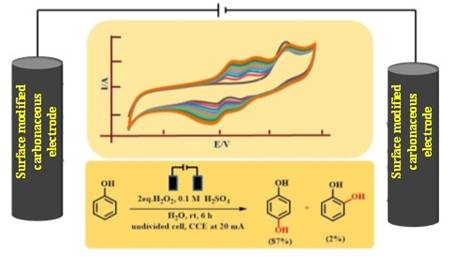
New method can efficiently transform phenol to a key ingredient for manufacturing food preservatives, pharmaceuticals & polymers

 Indian researchers have found that electrolysis using surface-modified electrodes for efficient large-scale transformation of phenol to 1,4 hydroquinone used as intermediate in the manufacturing of food preservatives, pharmaceuticals, dyes, polymers. India currently imports 1,4 hydroquinone at a heavy cost due to lack of efficient processes for conversion of phenol to 1,4 hydroquinone.

Phenol and it’s oxidized products like 1,4-hydroquinone, catechol, or resorcinol are vital and primary building blocks used in the synthesis of many medicinal and industrially used organic compounds. Especially products like 1,4 hydroquinone are used as intermediates in the manufacturing of food preservatives, pharmaceuticals, dyes, polymers, etc. In addition, oxidation of phenol leads to a huge value addition. India imports phenol worth 23.6 million USD while India spends US$56.5M for importing 1,4-hydroquinone. Conventionally, phenol oxidation is carried out by chemical methods using catalysts involving precious metals, metal oxides, and enzymes along with hazardous oxidants. But these methods suffer from many disadvantages, including incomplete conversion of starting material and lack of product selectivity along with environmental hazards.

In this background, researchers from the Centre for Nano and Soft Matter Sciences led by Dr. Bhagavatula Prasad and CSIR-National Chemical Laboratory regarded electrolysis as an effective way to carry out the oxidative transformation of phenol to 1,4 hydroquinone. This work has been published in the New Journal of Chemistry’ recently.

Electrochemical organic transformations are being looked at with great interest these days because of the economic and environmental advantages they offer over conventional chemical transformation methods. As these transformations are typically carried out in an aqueous medium by just passing electricity through the substrate (in this case phenol), no environmentally hazardous oxidants/reductants are involved in this process. Though electrochemical transformations offer so many advantages, there are several practical issues, especially with respect to phenol oxidation.

For example, the conventional metal-based electrodes could not be used for this transformation as they start losing the activity over time due to the adsorption of the oxidized products on their surfaces. Furthermore, many times they lead to over oxidation of phenol resulting in lack of product selectivity and unwanted product formation (tar). Additionally, some of the electrodes also suffer with issues like physical stability and durability of the electrodes with time.

Through detailed cyclic voltammetric studies, the NCL and CeNS researchers established all these difficulties could be overcome using electrodes having disordered graphene-like structures with desired number of oxygen-bearing surface functional groups such as hydroxyl (-C-OH), carboxyl (-COOH), and carbonyl (-C=O) groups. The surface modification could be achieved again by electrochemical treatment of the electrode in an acidic environment. Based on systematic studies using techniques like Raman spectroscopy and X-ray photoelectron spectroscopy, the researchers established optimum conditions for this surface modification. With such appropriately surface-modified carbonaceous electrodes, the conversion of phenol was excellent (99%) with 87% selectivity to 1,4-hydroquinone.

The researchers are currently looking at other industrially relevant processes that could be accomplished by such environmentally benign electro-organic transformations.


Publication link:

DOI: 10.1039/d1nj04640c

LABORATORY FOR CHECKING THE QUALITY OF DRINKING WATER

 As reported by States/UTs, so far 2021 drinking water quality testing laboratories at different levels viz. State, district, sub-division and/or block level, has been set up in the country. State-wise details of drinking water quality testing laboratories is at Annex-I.

 To make provision of potable tap water supply in adequate quantity, of prescribed quality and on regular & long-term basis to every rural household by 2024, since August, 2019, Government of India in partnership with States, is implementing Jal Jeevan Mission (JJM) – Har Ghar Jal. Thus, as of date, out of 19.27 Crore rural households in the country, 8.88 Crore (46.09%) households are reported to have provision of tap water supply in their homes. State-wise details is at Annex– II.

 The State/UT, district & village-wise status of tap water connection in rural households, schools and anganwadi centres as reported by States/ UTs is in public domain and available on JJM dashboard at:

https://ejalshakti.gov.in/jjmreport/JJMIndia.aspx

Definition under State of Forest Report

 As per decision 19/Conference of Parties (CP) 9-Kyoto Protocol, the forest can be defined by any country depending upon the capacities and capabilities of the country as follows:-

Forest- Forest is defined structurally on the basis of

  • Crown cover percentage: Tree crown cover- 10 to 30% (India 10%)


  • Minimum area of stand: area between 0.05 and 1 hectare (India 1.0 hectare) and


  • Minimum height of trees: Potential to reach a minimum height at maturity in situ of 2 to 5 m (India 2m)

India’s definition of forest has been taken on the basis of above three criteria only and very well accepted by United Nations Framework Convention on Climate Change (UNFCCC) and Food and Agriculture Organization (FAO) for their reporting/communications. The forest cover is defined as ‘all land, more than one hectare in area, with a tree canopy density of more than 10 percent irrespective of ownership and legal status. Such land may not necessarily be a recorded forest area. It also includes orchards, bamboo and palm’. The definition of forest cover has clearly been defined in all the India State of Forest Report (ISFR) and in all the International communications of India.

In ISFR 2021 recently published by the Ministry on 13th January, 2022, the forest cover figures are divided as ‘Inside Recorded Forest Area’ and ‘Outside Recorded Forest Area’. Those ‘Inside Recorded Forest Area’ are basically natural forests and plantations of Forest Department. The Forest cover ‘Outside Recorded Forest Area’ are mango orchards, coconut plantations, block plantations of agroforestry. Thus data of mango plantations etc. is automatically getting separated out as Forest Survey of India is reporting the figures of ‘Outside Recorded Forest Area’ separately.

The Interpretation of satellite data for classifying Very Dense Forest (VDF) is also supported by the ancilliary data like field inventory data of FSI, ground truthing data and high resolution satellite imagery wherever required.

At present, there is no plan to change the definition of forest cover and very dense forest. The definition of forest cover in ISFR represents true picture as described. 

All India State of Forest Reports having state wise forest cover maps and district wise forest cover figure are available at FSI website. 

****

National afforestation programmes to improve the forest cover

 The year-wise details of budgetary allocations and expenditure on national afforestation programmes, through the Centrally Sponsored Schemes (CSS) of the Ministry, National Afforestation Programme (NAP) and National Mission for a Green India (GIM) from 2017-18 to 2021-22, are  as under:

(Amount in Rupees in crore)

Year

2017-18

2018-19

2019-20

2020-21

2021-22

(as on  24th January,2022)

Budget Allocated

NAP 80.00

GIM

47.80


176.94*


193.63*


160.00*


220.00*

Expenditure

80.00

46.99

176.73*

193.63*

158.04*

200.13*

*Combined allocation and expenditure for Green India Mission-National Afforestation Programme.

NAP has been the flagship afforestation scheme of the Ministry, implemented since year 2000 on pan India basis, for afforestation in identified degraded forest areas with people’s participation and decentralised forest governance. GIM activities were started in 2015-16. NAP and GIM, along with other afforestation schemes, have been contributing in restoration of degraded forest areas in the country. This has helped in stabilization and increase in the extent of forest cover, which is evident from the India State of Forest Report (ISFR) published by Forest Survey of India (FSI). The latest India State of Forest Report (ISFR 2021) revealed that the total forest and tree cover of the country is 8,09,537 square kilometres (which is 24.62 percent of the geographical area of the country) compared to 7,94,245 sq km (24.16 percent) in ISFR 2015. This is an increase of 15,292 sq km of forest and tree cover of the country. The ISFRs also pointed out that the positive change could be attributed to conservation measures or management interventions such as afforestation activities, participation of local people for better protection in plantation areas as well as in traditional forest areas, expansion of trees outside forests, tree plantation drives etc.

In order to achieve the targeted objectives of national afforestation programmes, the Ministry has approved merger of NAP into Green India Mission (GIM) and accordingly financial allocation for both the schemes is provided under one budgetary head so that the overall greening efforts are augmented. The budget allocation for the merged scheme has increased from Rs. 160 crore in the year 2020-21 to Rs. 220 crore during the year 2021-22. Besides, the funds under Compensatory Afforestation Fund Management and Planning Authority (CAMPA), inter-alia, is used for forest and wildlife management related activities including compensatory afforestation.

The Ministry also promotes tree plantation as people’s movement through School Nursery Yojana and Nagar Van Yojana. Tree plantation/afforestation being the multi-departmental effort, taken up cross sector by various departments of the Centre and State Governments, Non-Government Organizations, civil society, corporate bodies etc. also contributes in achieving the targeted objectives of national afforestation programmes.

Revision of Air Quality Standards

 Government has notified National Ambient Air Quality Standards (NAAQS) for 12 pollutants in 2009 to protect public health and environment from air pollution.

Review of the existing standards, criteria governing these standards as well as incorporating new parameters with advances in scientific research is a continuous process. With changes in fuel, technology and demographics as well as advances in air pollution measurement techniques, risk and exposure assessment, review of Air Quality Standards (NAAQS) are carried for better improvement in public health. Review of NAAQS has been sanctioned to a joint team lead by IIT Kanpur.

The Air (Prevention and Control of Pollution) Act, 1981 stipulates functions of Central Pollution Control Board and State Pollution Control Board as given below:

Section 16(2)(h) – Central Pollution Control Board may lay down standards for quality of air.

Section 17(1)(g) – State Pollution Control Board shall lay down, in consultation with the Central Pollution Control Board and having regard to the standards for the quality of air laid down by the Central Pollution Control Board, standards for emission of air pollutants into the atmosphere from industrial plants and automobiles or for the discharge of any air pollutant into the atmosphere from any other source whatsoever not being a ship or an aircraft.

World Health Organisation (WHO) has published WHO’s Air Quality guideline (AQG) in September, 2021, The guideline makes recommendations for air quality levels to protect health of population and specifically mention that national standards should be decided in due consideration of other governing factors like background level, socio-economic status, national goals and further scientific research based outcome.

However, these guidelines for ambient air quality are guidance to policy makers and not legally binding. Periodic revision of NAAQS is undertaken to include new advancements in air pollution monitoring and its health impact.

National Adaptation Fund for Climate Change (NAFCC)

 The National Adaptation Fund for Climate Change (NAFCC) was established to support adaptation activities in the States and Union Territories (UTs) of India that are vulnerable to the adverse effects of climate change. NAFCC is implemented in project mode and till date, 30 projects are sanctioned in 27 States and UTs.

The Ministry of Environment, Forest and Climate Change has demarcated the Hazard Line for the entire mainland coast of India under its Integrated Coastal Zone Management (ICZM) project. Further, Coastal Regulation Zone Notification 2019 has been notified to conserve and protect the unique environment of coastal stretches and marine areas to promote sustainable development.

The NAFCC projects implemented in the states of Kerala, Tamil Nadu and Andhra Pradesh include activities relating to coastal areas and these projects are- (i) Promotion of integrated farming system of Kaipad in coastal wetlands of North Kerala (ii) Management and rehabilitation of coastal habitats and biodiversity for climate Change Adaptation and Sustainable Livelihood in Gulf of Mannar, Tamil Nadu and (iii) Climate Resilient interventions in Dairy Sector in coastal and Arid areas in Andhra Pradesh. Till date, a sum of Rs. 6,35,68,108/- has been released to the State of Andhra Pradesh under NAFCC.

Blue Economy is the sixth dimension of Government of India’s Vision

 Union Minister of State (Independent Charge) Science & Technology; Minister of State (Independent Charge) Earth Sciences; MoS PMO, Personnel, Public Grievances, Pensions, Atomic Energy and Space, Dr Jitendra Singh today said that the Government of India’s Vision of New India by 2030 enunciated in February 2019 highlighted the Blue Economy as the sixth dimension of its vision. He said, Rs. 150 Cr has been provisioned during 2021-22 under Deep Ocean Mission.

In a written reply to a question in the Rajya Sabha today, Dr Jitendra Singh said, a Draft Policy document on Blue Economy has been prepared by MoES taking into consideration the reports of the expert working groups which emphasizes holistic development and growth of India’s Blue Economy. The following seven thematic areas or pillars are identified:

  • National accounting framework for the blue economy and ocean governance.
  • Coastal Marine Spatial Planning and Tourism.
  • Marine fisheries, aquaculture, and fish processing.
  • Manufacturing, Emerging industries, trade, technology, services, and skill development.
  • Logistics, infrastructure and shipping, including trans-shipments.
  • Coastal and deep-sea mining and offshore energy.
  • Security, strategic dimensions, and international engagement