Rural sustainability and advancement by Apex Cluster Community Resources Development Society (ACCORDS)

 The Apex Cluster Community Resources Development Society (ACCORDS) is a non-profit organisation that was foundedin the year 2006 (under Manipur Societies Registration Act I of 1989, bearing Regd. No. 796) byNorth Eastern Region Community Resource Management Society (NERCRMS) under North Eastern Region Community Resource Management Project (NERCORMP) Phase – I; which was funded by the NEC, Ministry of DoNER, Govt. of India jointly with International Fund for Agricultural Development (IFAD).

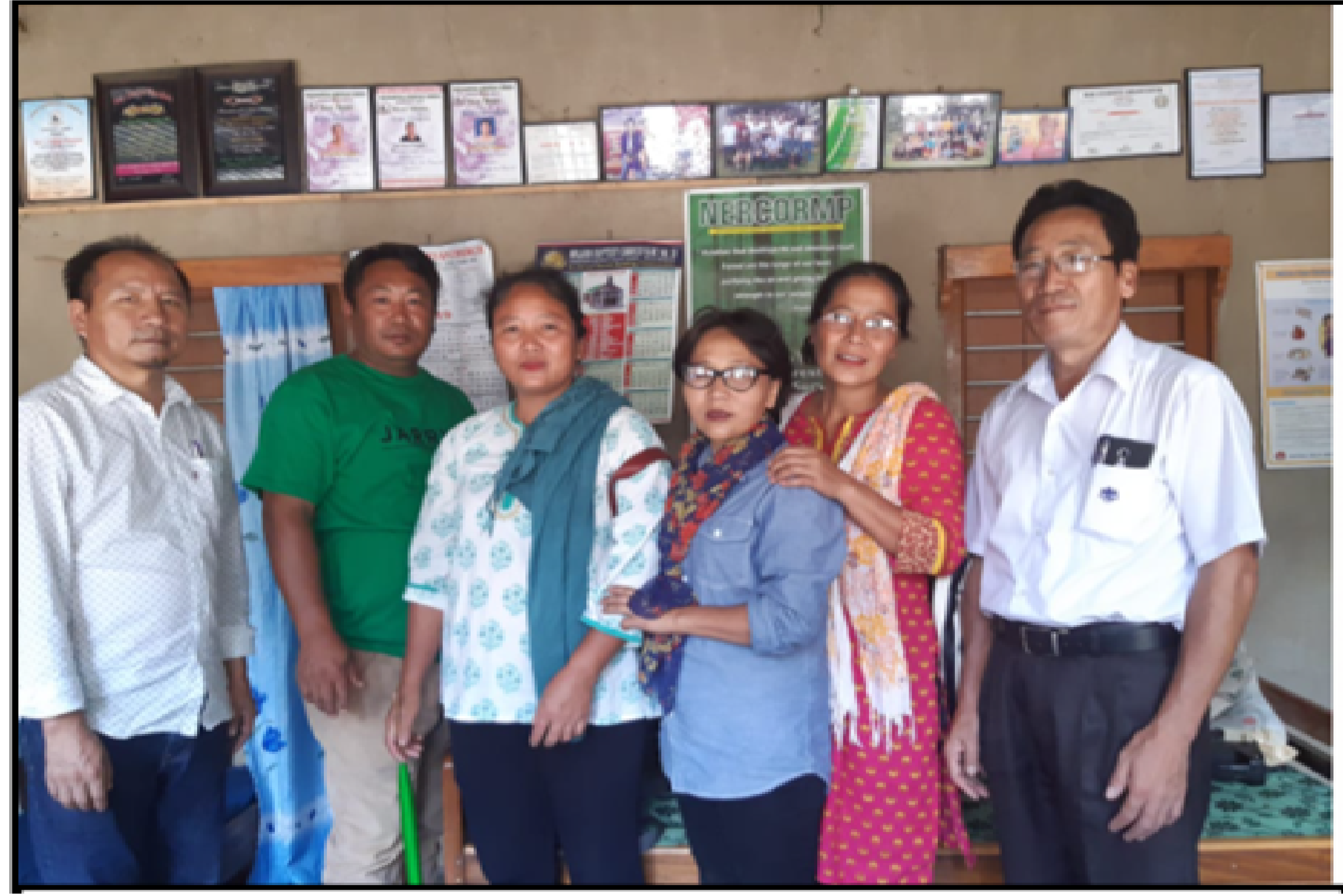
Office bearers of ACCORDS, Senapati District, Manipur

The ACCORDS is enabling environment for sustainable socio-economic development of the rural communities by providing micro credits and other support services such as skill building, promotion of enterprises and community resources that enhances quality of life and sustain peace and harmony in the region. The ACCORDS is a conglomerate of589 Self Help Groups (SHGs), 143 Natural Resource Management Groups (NaRMGs), 35 SHG Federations, and 21 NaRMGs Cluster Associations.

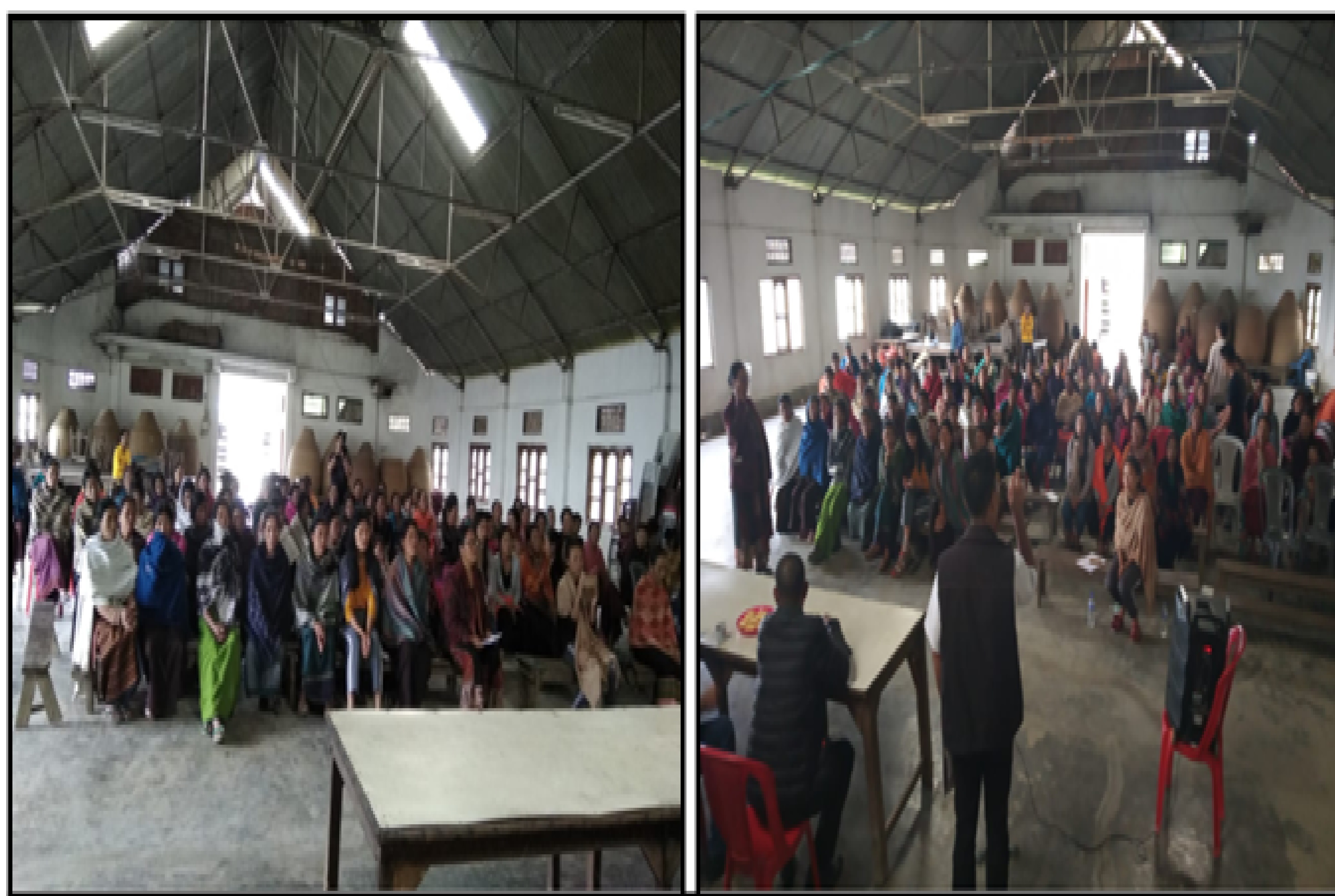
Skill Development Programs organized by ACCORDS

The ACCORDS is collaborating with institutions like NABARD, KVK, District Administration, Line Departments such as Forest, Veterinary, Horticulture, Agriculture, and others.


Ongoing activities:


1. Microfinance                                                                  Self –financed by ACCORDS

2. Special SHGPI (old 100 NERCORMP SHGs) through NABARD

3. SHGPI (100 new SHGs)                                               through NABARD

4. Tribal Development Fund project                                  through NABARD

5. Livelihood & Enterprise Development Prog.     Through NABARD


Major Achievements


  1. The ACCORDS microfinance was launched in 2009 and provided loans to 200 SHGs at low rate of interest (14 % per annum) for income generation activities.
  2. Promoted over 600 SHGs in Senapati and Kangpokpi Districts under NERCORMP/IFAD and 150 SHGs under SHPI/NABARD programme
  3. Facilitated in credit linking of 100 SHGs with banks.
  4. Trained 150 women under LEDP and 90 women under MEDP supported by NABARD
  5. Conducted 15 Financial Literacy Awareness Programme under NABARD.
  6. Constructed a Rural Haat at Tadubi Bazaar under NABARD.
  7. Running Rural Mart at Senapati under NABARD
  8. Implemented TDF/Wadi projects for 200 beneficiaries under NABARD.
  9. Facilitated Area based schemes (Credit linkage) of 40 beneficiaries with MSCB and NABARD.


*********

Winners of Vande Bhartam, Nritya Utsav competition gearing up to enthrall audiences

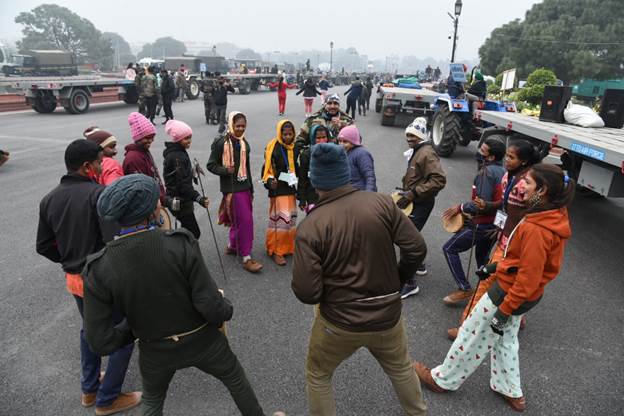
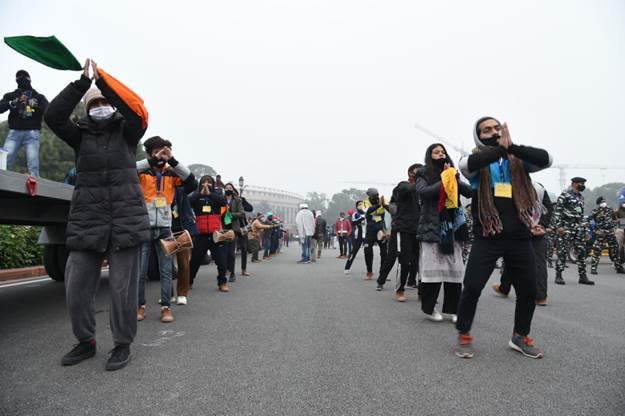
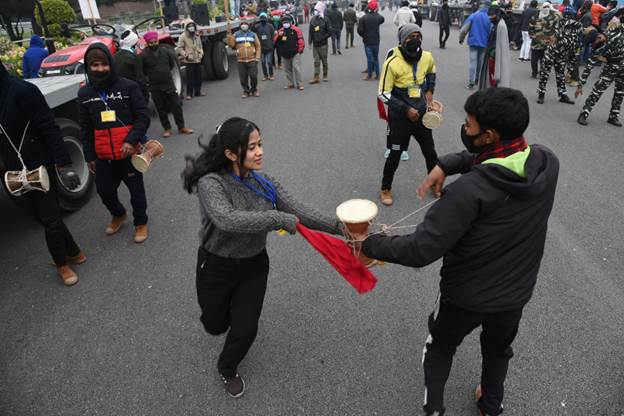
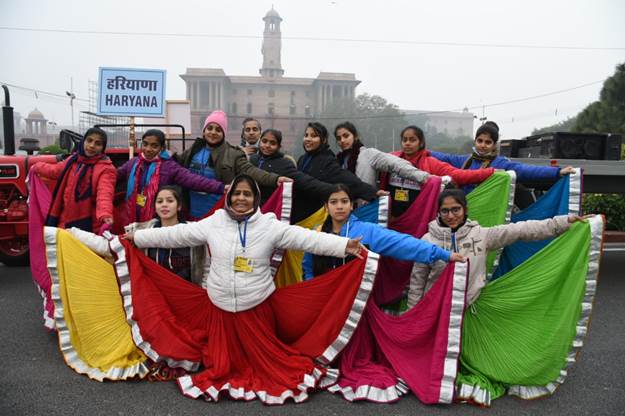
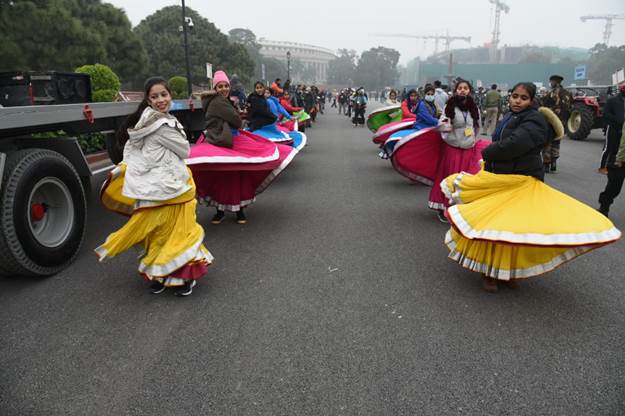
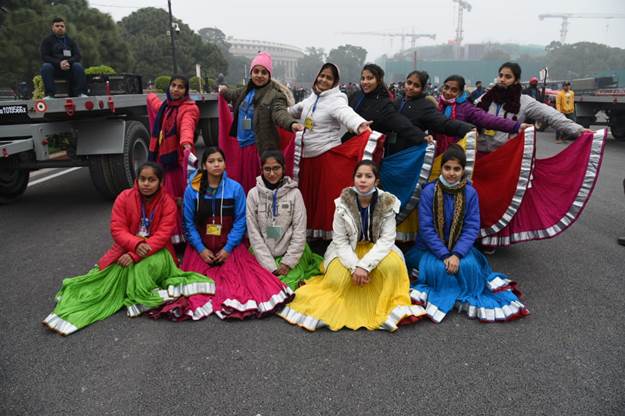
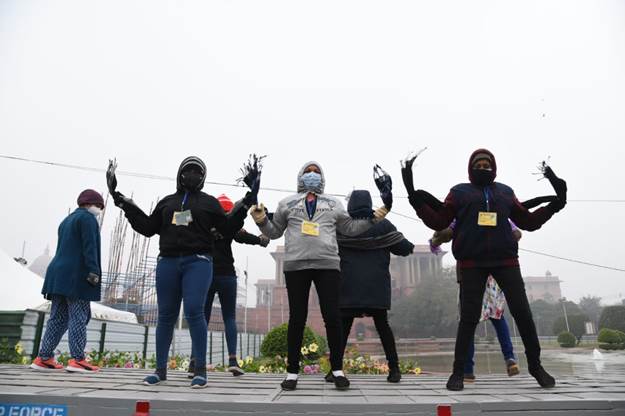
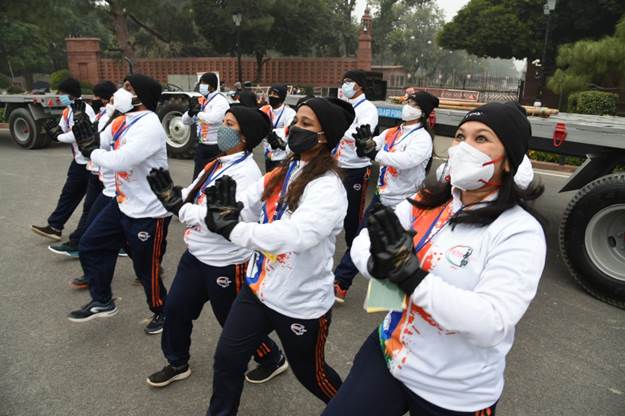
 The winners ofVande Bhartam, Nritya Utsav Grand Finale are gearing up to enthrall the audiences at the Republic Day 2022 parade at Rajpath, New Delhi on 26th January. The rehearsals for the grand performance have been taking place with full enthusiasm at Rajpath and Indira Gandhi Indoor Stadium , New Delhi.

The winners are being trained by the four renowned choreographers. These include Kathak Dancer Ms. Rani Khanam, along with Ms. Maiyetree Pahari, Ms. Tejaswini Sathe, and Mr.Santosh Nair who are giving training to 36 teams who have come from different states.

The 480 performers have been selected by the Ministry of Culture through a four level Vande Bharatam-Nritya Utsav competition. The Grand Finale of the Vande Bharatam-Nritya Utsav, a part of Azadi Ka Amrit Mahotsav was held in New Delhi on 19th December, 2021

The Vande Bharatam competition began at the district level on November 17 and saw the participation of more than 3,870 contestants in 323 groups. Those who cleared the screening at the district level took part in the state-level competition from November 30, 2021. More than 20 virtual events were conducted for the state-level competition over a span of 5 days till 4th December 2021

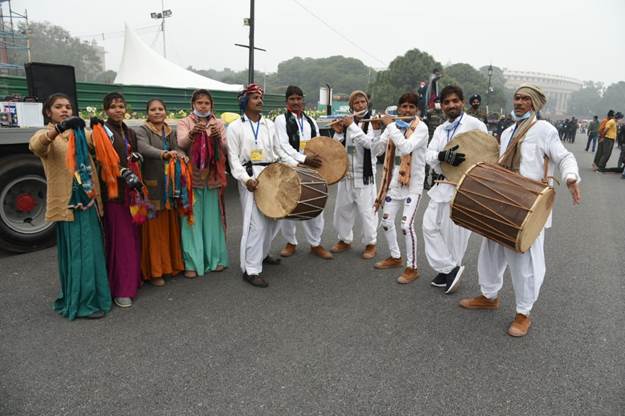
Over 2,400 participants from 200 plus teams were short-listed for the zonal level competition. The zonal finals took place at Kolkata, Mumbai, Bengaluru, and Delhi from 9th to 12th of December where 104 groups displayed their dance prowess before an august jury and applauding fans. Participating groups performed specially choreographed acts in various dance categories like classical, folk, tribal, and fusion. They will now give a performance on Republic Day where all the groups will merge into a one whole, yet retaining the identity of individual dance forms, in the true spirit of Ek Bharat Shrestha Bharat.

Of these 104 groups,73 groups comprising 949 dancers from all 4 zones made it to the Grand Finale, which was held in Delhi at the Jawaharlal Nehru Stadium Auditorium on 19th of December.

Top 480 dancers were declared as winners from the Grand Finale and they will perform on the Republic Day Parade to be held at Rajpath, New Delhi on 26th January 2022.

WhatsApp Image 2022-01-18 at 08.54.40.jpegWhatsApp Image 2022-01-18 at 08.53.38.jpegWhatsApp Image 2022-01-18 at 08.53.24.jpegWhatsApp Image 2022-01-18 at 08.51.39.jpegWhatsApp Image 2022-01-18 at 08.51.21.jpegWhatsApp Image 2022-01-18 at 08.51.01.jpegWhatsApp Image 2022-01-18 at 08.50.50.jpegWhatsApp Image 2022-01-18 at 08.50.02.jpegWhatsApp Image 2022-01-18 at 08.49.05.jpegWhatsApp Image 2022-01-18 at 08.48.53 (1).jpeg

This is the first time that teams are selected for Republic Day Performance at Rajpath through an All India dance competition with the aim of enhancing Jan Bhagidari.

*****

What is Controlling?Importance Of Controlling In Management?

Controlling helps managers monitor the effectiveness of their planning, organizing, and leading activities.Controlling determines what is being accomplished — that is, evaluating the performance and, if necessary, taking corrective measures so that the performance takes place according to plans.

Controlling can also be viewed as detecting and correcting significant variations in the results obtained from planned activities

Importance of Controlling

The following are some factors contributing to the importance of controlling:

1️⃣Decentralization of authority

Since managers at every level of an organization have to exercise control, the controlling process leads to decentralization. This, in turn, enables middle and lower level managers to have some autonomy in making decisions. An organization that distributes authority at every level always works smoothly and efficiently.

2️⃣Increasing managerial abilities

By enabling all managers to possess the autonomy to make decisions, controlling enhances their managerial abilities. With these skills, managers can further their organization’s goals by adapting to diverse situations and problems. Furthermore, this also helps managers grow and develop at an individual level by giving them new experiences.

3️⃣Using resources effectively

The most important function of controlling is to compare actual performances with expected results. This, in turn, helps managers understand where they are lacking and how they can improve their performances. Using this knowledge, managers can use all available resources optimally and prevent their wastage.

4️⃣Facilitating coordination

In every business organization, managers and employees always have to coordinate and work with each other collectively. Controlling improves this coordination by basically demarcating all activities and efforts into fixed boundaries. It brings together all the resources of an organization and enables its personnel to work together with unified efforts.

5️⃣Structuring human behaviour

Since all organizations have to depend on humans for functioning, they need to regulate human behaviour of their employees. Controlling rationalizes this human behaviour and prevents employees from behaving arbitrarily and badly. It basically does so by providing for sanctions in case employees do not prescribe to expected standards of behaviour. For example, managers often take disciplinary action against employees who take unauthorized leaves.

6️⃣Achieving efficiency and effectiveness

A good control system can always greatly boost an organization’s efficiency and effectiveness. It generally does this by identifying deficiencies in an organization’s functioning and suggesting improvement measures. Managers use control to achieve their targets in this manner.

Entrepreneurship

What Is an Entrepreneur?

An entrepreneur is an individual who creates a new business, bearing most of the risks and enjoying most of the rewards. The process of setting up a business is known as entrepreneurship. The entrepreneur is commonly seen as an innovator, a source of new ideas, goods, services, and business/or procedures.

Entrepreneurs play a key role in any economy, using the skills and initiative necessary to anticipate needs and bringing good new ideas to market. Entrepreneurship that proves to be successful in taking on the risks of creating a startup is rewarded with profits, fame, and continued growth opportunities. Entrepreneurship that fails results in losses and less prevalence in the markets for those involved.

How Entrepreneurship Works

Entrepreneurship is one of the resources economists categorize as integral to production, the other three being land/natural resources, labor, and capital. An entrepreneur combines the first three of these to manufacture goods or provide services. They typically create a business plan, hire labor, acquire resources and financing, and provide leadership and management for the business.

Entrepreneurs commonly face many obstacles when building their companies. The three that many of them cite as the most challenging are as follows:

Overcoming bureaucracy

Hiring talent

Obtaining financing

Entrepreneurship is the process by which individuals or a group of individuals (entrepreneurs) exploit a commercial opportunity, either by bringing a new product or process to the market, or by substantially improving an existing good, service, or method of production. This process is generally organized through a new organization (a start-up company), but may also occur in an established small business that undergoes a significant change in product or strategy (see below on growth).

In sum, entrepreneurship is the process of starting and developing a company, with the aim of delivering something new or improved to the market, or by organizing the means of production in a superior way.  This process is principally organized through the formation of a start-up company, is managed by entrepreneurs, often under considerable personal and financial risk, and is temporary in duration, as a phase in a business’s lifecycle.  A key distinction between start-ups and other small or young businesses is an aspiration (realized or not) to substantially grow.  As companies mature out of the start-up phase, they evolve into sustainable businesses, are acquired or sold to public investors, or decay and may eventually shut down, as new companies start-up and take their place.

Online Registration Process for admissions in KVs to commence from April 1

 Online Registration for Admission to Class I in KendriyaVidyalayas for the Academic Year 2021-2022 will commence from April 1st 2021, while registrations for Class II and above will be done from April 8th 2021 in offline mode.

For Class I, online registrations will begin at 10:00 am on 1st April 2021 and will close at 7:00 pm on 19th April 2021. The Admission details can be obtained through website https://kvsonlineadmission.kvs.gov.inand also through Android Mobile App.

The official Android Mobile App for KVS Online Admission for Class I for the academic year 2021-2022 and instructions for downloading and installing the App will be available at https://kvsonlineadmission.kvs.gov.in/apps and also on Google Play Store.

Registration for Class II and above will be invited on the basis of availability of seats from 08.04.2021, 8:00 am to 15.04.2021 till 4:00 pm in offline mode.

For Class XI, Registration forms may be downloaded from Vidyalaya Website as per the schedule for admission 2021-2022 available on KVS (HQ) Website (https://kvsangathan.nic.in)

Reckoning of age for all Classes shall be as on 31.03.2021. Reservation of seats will be as per KVS Admission Guideline available on the Website (https://kvsangathan.nic.in)

Under present situation of COVID -19, KVS appeals to all guardians to follow the directions issued by Competent Authority (Central/State/Local).

Currently, Kendriya Vidyalaya Sangathan is running a chain of 1247 KVs.

*****

mantra to “reform, perform and transform” the education landscape of country

 Union Education Minister Shri Ramesh Pokhriyal ‘Nishank’ held a virtual meeting Director General UNESCO, Ms Audrey Azoulay in New Delhi today. They discussed key issues of mutual importance including National Education Policy, India’s response to COVID Pandemic especially in the education sector, among others concerning India UNESCO cooperation. Shri Amit Khare, Secretary, Higher Education, delegation from UNESCO and senior officials of the Ministry were also present in the meeting.

Shri Pokhriyal said that under the visionary leadership of our Prime Minister Shri Narendra Modi, Ministry of Education Government of India has ensured that education reaches even the last child in the remotest part of the country. In this context he mentioned about initiatives undertaken to ensure continuity of education for children across the country. Such as under Prime Minister E –Vidya scheme, DIKSHA (Digital Infrastructure for Knowledge Sharing) platform was started to continue education for students (with internet access). While One Class – One Channel programme ‘SWAYAM PRABHA’ was initiated for providing education to children without internet access.

Stressing that concerted efforts were taken to ensure no lose of valuable academic year, he mentioned about Digitally Accessible Information System (DAISY), an initiative for differently-able children. He also spoke about MANODARPAN, the government’s initiative to provide online psychosocial support to students, teachers and families for their mental health and emotional wellbeing. This has helped over 12,500 Students, he said.

The Minister also mentioned that competitive entrance exams for almost 2.3 million students, the largest entrance examinations in the world were conducted successfully and safely during the covid pandemic.  Highlighting the crucial role played by Indian educational institutions during the trying times of pandemic, Shri Pokhriyal said these institutions transformed the challenges posed by COVID into opportunities. They came up with innovations like the low-cost portable ventilators, affordable and AI-powered COVID-19 test kits, affordable and effective PPE kits and masks. These innovations proved instrumental in providing healthcare facilities to not only India but also to over 62 countries, he added. He said that two vaccines by India has helped not only India in fighting the covid but has also helped the entire world.  

Minister emphasized that Year 2020 will be remembered for National Education Policy 2020 of Government of India. It aims to transform the educational ecosystem for over 340 million students of the country. It is based on the foundations of Equality, Equity, Access, Affordability and Accountability. It seeks to fulfill our Prime Minister’s vision of making India a ‘global superpower of knowledge’ and his ‘mission’ to create a ‘global citizen’. He emphasized that Indian Government is working on the mantra to “reform, perform and transform” the education landscape of India.

He mentioned that NEP’s aim to achieve 100% GER in school education by 2030, and 50% in Higher Education by the year 2035 will bring additional 35 million students into the fold of higher education.  He also shared that Gender Parity Index in Higher education in India has crossed 1.

He noted that NEP-2020 recommendations are in accordance with the SDG Goal 4, “Education for All’. He said that as recommended in NEP, Government will soon bring out school textbooks with more emphasis on environmental education.

To mark the important occasion of ‘commemoration of 75th year of India’s independence ( “Azadi ka Amrit Mahotsav”), Minister proposed holding an event at the UNESCO Headquarters highlighting India’s journey through these 75 years.

Director General of UNESCO Ms. Audrey Azoulay appreciated the response of the Indian Government in mitigating the challenges of covid and ensuring continuity of education during covid pandemic by providing education to the students through different mediums of TV, Radio, online etc. to the last student of the country. She remarked that India’s response to covid was remarkable in terms of scale and diversity. She requested the Union Minister to share the experiences and best practices relating to education sector of India with member states of UNESCO. She congratulated the Minister for bringing out the New Education policy which is visionary and capable of transforming the education sector. She remarked that important concepts under NEP like strengthening administrative capacities, Socio- Emotional learning, Environmental awareness, etc are very crucial for development of students. On behalf of UNSECO, she extended full support in implementation of National Education Policy.

*****


Webinar on ‘Women in Leadership: Achieving an equal future in a Covid-19 world’,

 Union Minister of Education Shri Ramesh Pokhriyal ‘Nishank’ addressed the Webinar on Women in Leadership: Achieving an equal future in a Covid-19 world, organized today on the occasion of International Women’s Day. The Webinar was conducted by the University Grants Commission (UGC) in association with Ministry of Education. Shri Sanjay Dhotre, MoS, Education, Secretary Higher Education Shri Amit Khare, Secretary School Education and Literacy Smt. Anita Karwal, Prof. D P Singh, Chairman, UGC, Prof. Rajnish Jain, Secretary, UGC, senior officials of the Ministry were also present. 43 women Vice-Chancellors and 25 Principals of Higher Education Institutions (HEIs) also joined the webinar online.  

Shri Pokhriyal highlighted the importance of women leaderships during Covid 19 pandemic by stating that the best role played by anyone in pandemic is none other than the “Mothers”. He further added that women are performing exceedingly well in science, technology, research, literature and social services showcasing highest quality of leadership potential. Speaking on National Education Policy (NEP) -2020, the Minister stated that the Policy has a potential to empower the women in society. He appreciated the fact that women enrolment has increased in IITs and NITs.

Shri Sanjay Dhotre, MoS for Education stated that the celebration of the contributions made by Women and girls should not be restricted to just one day. He appreciated the role of women in maintaining health, immunity, hygiene, sanitation of their family members during covid-19. He mentioned that the ‘Gender-Inclusion Fund’ in the National Education Policy 2020 will be constituted to build the nation’s capacity to provide equitable quality education for all girls.

Speaking on the occasion, Prof. D P Singh, Chairman, UGC observed that the theme of the webinar “Women in Leadership- Achieving an equal future in a covid-19 world” has been announced by UNDP and is also aligned with the priority theme of the 65th Session of the UN Commission on the Status of Women. He also highlighted the flagship Generation Equality campaign of UN which calls for women’s right to decision making in all areas of life, equal pay, equal sharing of unpaid care and domestic work, an end to all forms of violence against women and girls, and health care services that respond to their needs.

Smt Anita Karwal, Secretary emphasized that women need access to resources to be able to progress and play leadership role in different areas.  Shri Amit Khare, Secretary , Higher Education highlighted that Gender Parity Index has increased during the last 4-5 years from 1% to 1.01 % at present, which is a commendable achievement also appreciated by UNESCO. He further suggested that Women Deans & Heads of Departments should be imparted training to take up future leadership roles as Vice-Chancellors.

Women of four universities, Prof Najma Akhtar, Vice-Chancellors, Jamia Millia Islamia (JMI), Prof. Sushma Yadav, Vice-Chancellor,  Bhagat Phul Singh (BPS)Women’s University , Prof. Balwinder Shukla, Vice-Chancellor Amity University, Noida and Prof. Shalini Bharat, Director, Tata Institute of Social Sciences (TISS)  also spoke on the webinar theme and shared their experiences during the covid -19 period. The programme was also viewed live by a significant number of VCs, Principals, faculty members and students.


****


Feed your soul with some Astronomy….

Astronomy is a subject that produces a spark in everyone. Who doesn’t like gazing at the stars with awe or secretly trying to make a wish when looking at the falling stars or more precisely ‘meteors’ . As it is famously said-

You are not a human being looking at the Universe but the universe looking itself in human form .

Some say, time travel is impossible but often we don’t realise that when gazing at the night sky , you are literally looking millions of years into the past. This thought can make anyone’s heart dance and excite them to explore such a gigantic cosmos.

Astronomy takes your imagination to the next level. We are connected to this field since the arrival of human on this planet. From ancient times , farmers used sky to decide the sowing seasons of crops, astrologers for predicting fortune and astronomers for making calendars and navigation routes for ships. Our ancestors knew the significance of Sun and thus worshipped it. The ancient Mayan Civilisation and Egyptians constructed the pyramids in such a way that their location coincided with that of the positions of the Constellations above.

Certainly this suggests that Astronomy is in our blood . Renowned astronomer Carl Sagan quoted “ The Cosmos is within us. We are made up of star stuff. We are a way for the Universe to know itself.” By studying Astronomy , you understand there are no limitations to what we can achieve, you surrender yourself and your ego before this humongous Cosmos, you feel free and connected to the Nature. If one is interested in going to the depths of this field , one can follow these tips:

1) Be curious- Curiosity kills fear more than courage will ever do.

2) Be patient- Good things take time.

3) Seek knowledge and wisdom- Your soul is most happy when you are in a learning state.

4) Be truthful- A scientist must always be truthful to herself/himself and to the world. Truth is the ultimate thing that a being chases.

5) Be fearless- Know in your mind that you are as old as this Universe and there is nothing to be afraid of because we all are essentially same at the root level.

Always be hopeful because somewhere in this vast universe something incredible is waiting to be known.

” In Response to Executive Order 9066″ : Analysis

Dwight Okita’s poem “In Response to Executive Order 9066” addresses issues such as identity, and discrimination as a result of cultural hybridity. The narrator of the poem is a fourteen year old Japanese girl who writes a letter to the government in response to Executive Order 9066. As the title of the poem implies the historical context of the poem is the time when president Franklin D Roosevelt signed the Executive Order 9066. After two months of the Japanese attack on the Pearl Harbour Roosevelt signed the order, which orders the removal of over 12000 people of Japanese descent from the West Coast. This resulted in their loss of home, job and all other possessions including human rights.

Okita uses the form letter to represent the innocence as well as the horrors in the mind of the young people who were forced to leave to the camps. The narrator presents the the people in her life, from father to best friend in the letter. The relevance of racial identity among children is presented by the best friend. Through the first person narrative, poet presents the contrast between two cultures, one she came from and the other she grew up.

tje narrator is a normal, naive American girl even though she is of Japanese origin. She says to the government that it is obvious that I will be coming to the camp and I have packed. Her innocence is visible when she mentions about the tomato seeds. Her father warns her that they don’t grow there. The cultural dilemma faced by the girl can be find when she mentions about her inability to use chopsticks and her love for hotdogs.

The following lines after this shows the horrors of migration, war and racial identity among children. Denise and the narrator were best friends. But after being aware that narrator is of Japanese origin her friend has started to discriminate her. She said “you are going to start a war”. Denise also told her to keep their mouth shut, and not to give secrets to the enemies. Thus these lines suggest that even innocent people were considered as enemies or “other” as a result of war. Even being a young naive girl, the narrator is discriminated.But she looks upon this discrimination with hope and love and gives Denise tomato seeds and tells her that “she would miss her”.

Through this poem Okita presents themes like discrimination, innocence and ignorance. Both the characters are ignorant. The narrator is ignorant about her being discriminated, and it’s reason, about her future in the camps. The friend is ignorant about war and considers and stereotypes every Japanese as enemies. This shows her ignorance. Innocence is the primary theme of the poem through which the narrator is unfolding her feelings and hope. Poet shows how war and relocation affect the common people and children who are not even part of that.

ALCOHOL USE DISORDER

“Addiction makes good people do terrible things”

Alcohol use disorder (sometimes called alcoholism) is a medical condition. It includes weighty or successive liquor drinking problem which further causes several issues, enthusiastic pain or physical harm. A blend of medicines, conduct treatment and support can assist you or a friend or family member with recovery. It is a disease which includes functioning of brain and it require both clinical and mental therapies to control it. Alcohol use disorder can be gentle, moderate or extreme. It can grow rapidly or throughout a significant stretch of time.

EFFECTS OF DRINKING

Drinking an excessive amount of liquor can harm an individual’s wellbeing and it is related with:

  1. Brain damage
  2. Despair, depression and suicide.
  3. Breast, liver, colon and mouth cancer
  4. Fetal alcohol syndrome
  5. Accidents and injuries
  6. Liver problems

Successive or heavy drinking can likewise cause individual issues, for example, issue with:

  1. Money
  2. Individual Connections
  3. Work.

CAUSES AND SYMPTOMS

Researchers are as yet attempting to get what causes alcohol use disorder. It appears to be a combination of at least one of the accompanying:

  • Genetics.
  • Early childhood events.
  • Attempts to relieve emotional pain.

On the other hand, some of the symptoms of alcohol use disorder are:

  1. Passing out or not recollecting things that occurred.
  2. Proceeding to drink regardless of whether it makes trouble or damage you or others.
  3. Drinking more or longer than you arranged.
  4. Feeling bad or irritated when you’re not drinking.
  5. Successive headaches.
  6. Getting into risky circumstances when you’re drinking.
  7. Surrendering exercises so you can drink.
  8. Disapproving of work, school, connections or the law due to drinking.
  9. Encountering withdrawal symptoms – like sickness and shaking

STAGES OF ALCOHOL USE DISORDER

In danger stage: This is the point at which you drink socially or drink to mitigate pressure or to feel much improved. You may start to develop a tolerance for alcohol.

Early liquor use issue: In this stage, you have advanced to blackouts, drinking alone or in secret and thinking about alcohol a lot.

Mid-stage liquor use issue: Your liquor use is presently out of control and causes issues with day-to-day existence (work, family, monetary, physical and emotional wellness). Organ harm should be visible on lab tests and outputs.

End-stage liquor use issue: Drinking is presently the principle focal point of your life, to the prohibition of food, closeness, wellbeing and bliss. Despair, inconveniences of organ harm and passing are presently close.

TREATMENT

Behavioral therapies: Counselling, or talk treatment, with a healthcare provider like a psychologist or mental health counsellor can explain you several ways to change your behaviour.

Medications: The U.S. Food and Drug Administration has endorsed naltrexone and acamprosate for the treatment of liquor use issue. Topiramate and gabapentin can likewise diminish craving in certain individuals. A more established drug – disulfiram – is currently utilized rarely. These meds appear to assist with diminishing the background obsessional thinking around liquor.

Support gatherings: Group gatherings with different alcoholics can assist you to remain calm. Alcoholics Anonymous (AA) gatherings are generally free and are accessible in many networks. Different styles of recovery bunches include: Celebrate! Recuperation (Christian concentration), Rational Recovery (non-profound) and Recovery Dharma (care/Buddhist concentration).

BODY SHAMING

Body shaming is characterized as the demonstration of offering inappropriate and pessimistic remarks about someone else’s weight or size. Habitually, this is the kind of thing that overweight individuals are exposed to yet there’s an expanding pattern in criticising the people who look ‘excessively thin’.

Body shaming is universal. It’s in magazines, papers, network shows, motion pictures, discussions between companions, on the Internet and online media locales. Remarks can be terrible and once in a while utilized in poor-taste jokes. Nobody ought to need to experience a daily reality such that they’re caused to regret their bodies by others, particularly considering individuals are frequently basic enough of their own appearance.

The results of body shaming are extreme, regardless of whether you’re rebuking yourself or another person, and can add to psychological well-being issues.

Body shaming appears in numerous ways:

  • Criticizing your own appearance, through a judgment or correlation with someone else.
  • Criticizing one more’s appearance before them
  • Criticizing one more’s appearance without their insight.

Unfortunately, body shaming happens among all kinds of people of every unique shape and body sizes. Body shaming has included the two reactions of being “excessively fat”, or “excessively thin”, frequently singling out imperfections that are totally inappropriate. Numerous magazines, online media stages, and promotions add to body shaming in manners that have begun to standardize these harming practices. Numerous TV shows and motion pictures have fallen into this example too, where the “fat” character is frequently the subject of analysis and lighthearted element. With the moving practices of superstar fat shaming via web-based media, it is critical to comprehend the potential results that might emerge.

EFFECTS OF BODY SHAMING

  1. Depression: Individuals who are victimized because of weight are at a higher danger of wretchedness and other mental issues.
  2. Eating disorders: Fat shaming is connected to an expanded danger of dietary problems, for example, binger eating.
  3. Reduced self-esteem: Fat shaming is connected to decreased confidence.
  4. Others: By causing pressure, weight gain, expanded cortisol levels, and mental issues, weight separation might raise your danger of different chronic disease.
  • Thus, depression is one of the top reasons for expanded self-destruction hazard – and individuals who are victim of body shaming are bound to be discouraged. It’s conceivable that weight separation might expand self-destruction hazard.

DEALING WITH BODY SHAMERS

1. Fight hate with love: It’s extremely simple to become involved with others’ web of antagonism. You are above what the world says or thinks about you. Battle the hate you get with love by showing empathy to the people who don’t track down esteem in themselves and want to cut others down. Forgive the individuals who betray you and send love just as light to the people who need it. Life is too short to even consider hate yet there’s a lot of space for all of us to engage each other with kindness, sympathy and love.

2. Always be authentic: Being authentic is your own super power and authenticity comes from extraordinary and persistent self-study and self-information. That implies knowing your great side, yet additionally knowing your not-super great side. Recall no piece of you is your adversary. When we know both our sides, we will actually want to rehearse extremist self-acknowledgment and really at that time would our actual inward power be able to sparkle. At the point when we practice self-acknowledgment, we can likewise acknowledge others without judgment.

3. Embrace positivity: Being careful means being in the present moment with your body and brain. It’s a heavenly energy that conveys inside a bliss that we as a whole long to communicate in our lives. At the point when we figure out how to overcome our own instabilities, we accept a care that ingrains power, harmony, empathy, pardoning and love. We enlighten genuine magnificence that goes past the world’s assumptions for who we ought to be. We move others around us as they share in our weaknesses that we were told to stow away.

CYBERBULLYING

BULLYING

Bullying is undesirable, forceful conduct among school matured kids that includes a genuine or perceived power imbalance. The conduct is repeated, or can possibly be repeated, over the long run.

CYBERBULLYING

Cyberbullying is harassing that happens over computerized gadgets like cells, PCs, and tablets. Cyberbullying can happen through SMS, Text, and applications, or online in web-based media, discussions, or gaming where individuals can see, take an interest in, or share content. Cyberbullying incorporates sending, posting, or sharing negative, hurtful content, or mean substance about another person. It can incorporate sharing individual or private data about another person causing shame or embarrassment. Some cyberbullying goes too far into unlawful or criminal conduct.

The most well-known spots where cyberbullying happens are:

  • Online Media, like Facebook, Instagram, Snapchat, and Tik Tok
  • Text informing and informing applications on versatile or tablet gadgets
  • Texting, direct informing, and web based talking over the web
  • Online discussions, talk rooms, and message sheets, like Reddit
  • Email
  • Web based gaming networks

Cyberbullying can be:

Determined – Digital gadgets offer a capacity to quickly and constantly convey 24 hours every day, so it very well may be hard for kids encountering cyberbullying to track down help.

Long-lasting – Most data communicated electronically is extremely durable and public, if it is not reported and removed. A negative web-based standing, including for the people who bully, can affect school affirmations, business, and different everyday issues.

Difficult to Notice – Because instructors and guardians may not hear or see cyberbullying occurring, it is more difficult to perceive.

With the prevalence of web-based media and advanced gatherings, remarks, photographs, posts, and content shared by people can frequently be seen by outsiders just as colleagues. The information a person offers on the web – both their own personal or any bad, mean, or terrible content – makes a sort of long-lasting freely available report of their perspectives, exercises, and behaviour. This openly available report can be considered as a web-based standing, which might be open to schools, bosses, universities, clubs, and other people who might be exploring an individual now or later on. Cyberbullying can hurt the internet-based reputation of all interested parties – in addition to the individual being harassed, yet those doing the bullying or taking interest in it.

  • The 2019 School Crime Supplement to the National Crime Victimization Survey (National Center for Education Statistics and Bureau of Justice) demonstrates that, from one side of the country to the other, around 16% of understudies in grades 9-12 experienced cyberbullying.
  • The 2019 Youth Risk Behavior Surveillance System (Centers for Disease Control and Prevention) demonstrates that an expected 15.7% of secondary school students were electronically tormented in the year before the overview.

LAWS

All states have laws expecting schools to react to bullying. As cyberbullying has become more predominant with the utilization of innovation, many states currently incorporate cyberbullying, or notice cyberbullying offenses, under these laws. Schools might make a move either as legally necessary, or with local or school policies that permit them to train or make another move. A few states additionally have arrangements to address bullying if it affects the performance of school.

Steps an individual can take after cyberbullying:

Tell somebody: The primary thing to do is tell a grown-up you trust.  Individuals who are cyberbullied may feel humiliated or hesitant to report a harasser. Some might delay since they’re not 100 percent sure who is doing the bullying. Yet, bullying can deteriorate, so shout out until you track down somebody to help. In some cases, the police can find a mysterious web-based harasser, so it’s frequently beneficial to report it.

Report harassing: Social media sites view it in a serious way when individuals post awful or mean stuff or set up fake records. If an individual reports an abuse, then the site administrator takes serious action such as blocking the user to prevent further cyberbullying and not allowing the person to use the site in future. Assuming somebody sends you mean messages or messages, report it to telephone administration or email suppliers (like Comcast, Google, and Verizon).

Block the bully: Most gadgets have settings that let you electronically block the bully or bullies from sending notes. In the event that you don’t have any idea how to do this, ask a companion or grown-up who does.

Be protected on the web: Password protect your smartphone and your online sites, and change your passwords often: Make certain to share your passwords only with your parent or gatekeeper.

IMPORTRANT NOTE

Make sure to step forward and take action against cyberbullying if you or anybody around you is facing. Let the bully know it is not okay and it is not okay to affect other person both emotionally and mentally.


POVERTY

“Overcoming poverty is not a gesture of charity. It is an act of justice”

-Nelson Mandela

Poverty is articulated hardship in prosperity, and contains many aspects. It incorporates low salaries and the failure to acquire basic goods and products fundamental for living with nobility. Poverty likewise incorporates low degrees of wellbeing and training, helpless access to clean water and disinfection, deficient actual security, absence of voice, and inadequate limit and chance to better one’s life.

Issues like hunger, disease, and helpless sterilization are major causes and end results of poverty. In other words, that not having food implies being poor, yet being poor additionally implies being not able to manage the cost of food or clean water. The impacts of poverty are frequently interrelated with the goal that one issue rarely happens alone. Terrible sanitation makes one helpless to illnesses, and yearning and absence of clean water makes one considerably more defenseless against sicknesses. Impoverished nations and networks frequently experience the ill effects of separation and end up trapped in a pattern of poverty.

POVERTY AND SOCIAL LIFE

The endless loop of poverty implies that deep rooted obstructions and inconveniences are passed from one age onto the next. Joblessness and low wages establish a climate where youngsters can’t attend the class. Youngsters should regularly work to provide a revenue for their family. With respect to youngsters who can go to school, many neglect to perceive how difficult work can further develop their lives as they see their parents battle at each day undertakings. Other plagues accompanying poverty include:

  • Devastating mishaps because of risky workplaces consider the new structure breakdown in Bangladesh.
  • Poor housing- an enduring reason for illnesses.
  • Water and food related sicknesses that happen just on the grounds because poor can’t bear “safe” food sources.

At last, poverty is a significant reason for social pressures and takes steps to separate a country due to income disparity. This happens when the wealth of a nation is ineffectively circulated among its residents and when a little minority has a greater part of the cash. Wealthy or developed countries maintain stability because of the presence of a middle class. Be that as it may, even Western nations are continuously losing their working class. Therefore, there has been an expanded number of riots and conflicts. For society, poverty is an exceptionally dangerous variable that can undermine a whole country. The Arab Spring is an extraordinary illustration of how revolts can begin due to not many open positions and high poverty levels.

POVERTY AFFECTING CHIDREN

  • Children from helpless background fall behind at all phases of training.
  • By the age of three, more unfortunate kids are assessed to be nine months behind kids from more affluent foundations.
  • Before the finish of elementary school, students getting free school dinners are assessed to be around three terms behind their companions.
  • By 14, this hole surges to above five terms.
  • By 16, kids getting free school dinners are around 1.7 grade points underneath their more prosperous companions’ normal GPA.

SELF CARE

“It could be anything that floats your boat — anything that puts a smile on your face,” Dr. Gill Lopez says. “Anything that makes you feel cared for, even if it’s you caring for yourself.”

The World Health Organization defines self-care as: “the ability of individuals, families, and communities to promote health, prevent disease, maintain health, and to cope with illness and disability with or without the support of a healthcare provider. “As per this definition, taking care of oneself incorporates everything connected with remaining physically healthy – including cleanliness, nourishment, and looking for clinical consideration when required. It’s all the methods an individual can require to oversee stressors in their day-to-day existence and deal with their own wellbeing and prosperity.

Taking care of oneself requires checking in with yourself and asking yourself how you’re doing and what your body’s requesting. Certain individuals use it to manage troublesome reports, others just to keep up with their satisfaction every day. Taking care of oneself doesn’t mean exactly the same thing for everybody. Various individuals will embrace distinctive taking care of oneself practices, and even your own definition may change over the long run. “What is self-care for one person will likely differ from someone else, and what’s self-care for you one day might not feel like self-care another day,” Dr. Amsellem says.

 Taking part in taking care of oneself routinely could assist you with doing your absolute best. “At the point when we are consistently dealing with ourselves, we are better ready to respond to the things that continue in our lives,” It’s something we do to keep up with positive well-being.

At a point when taking care of oneself is routinely rehearsed, the advantages are expansive and have even been connected to positive wellbeing results like decreased pressure, improved immune system, expanded productivity, and higher confidence.

TYPES OF SELF-CARE

Emotional self-care, for example, self-talk, week by week bubble showers, saying “no” to things that cause pointless pressure, allowing yourself to take a respite, or setting up a week after week espresso date with a companion

Physical self-care, for example, focusing on rest, taking on an activity routine you can stay with, picking sound and sustaining food sources over profoundly handled ones.

Spiritual self-care, like going to a religious service, investing energy in nature, reflecting, consolidating normal thoughtful gestures into your day, or keeping an appreciation diary.

SELF-CARE PRACTICES

Exercise: People who practice somewhere in the range of two and eight hours out of each week all through their lives diminished their danger of passing on by 29 to 36 percent.

Finding Purpose: As indicated by the researchers having a strong life purpose   was related with diminished death rates.

Diet: Eating a diet loaded up with five servings of leafy foods each day is related with a lower hazard of mortality, particularly from heart-related issues.

Sleep: Too-little rest (under seven hours out of each night) is connected with higher death rates, however a lot of rest wasn’t sound all things considered.

Getting Outside: According to a recent report distributed in Lancet Planet Health, investing energy in green space is related with a lower death rate.

An Analysis of Philip Larkin’s poem “Church Going”

Philip Larkin is a British poet of twentieth century. His poem “Church Going” deals with the issues regarding the declining religious beliefs and spirituality of the twentieth century. The title of the poem carries multiple connotations. In a primary analysis the title may refer to going to the church for participating in the sermons or for praying. Another meaning is just visiting the church for the sake of visiting. And in a deeper analysis it can be said that the title may refer to going away from the church which means an escape from religion and spirituality.

The poem is filled with various rhetorical questions through which poet brings a sense of sarcasm. Poet is at the church in the beginning. As he enters he thuds close the door. But he refuses to enter first, because he doesn’t want to disturb the practices. Then there are several instances in the poem which reflects the lack of faith in the poetic persona’s mind.

He has seen many pillars, bible, altar and he doesn’t feel any respect towards them. He reads from the Bible in a sarcastic way and exits. He feels a kind of uncle or irreverence towards the church and religion. The poetic persona wonders that what will happen to the church if the people completely stop the visit. He says that some will be tourist attractions with their documents and ceremonial plate wares. Others will decay and take over by sheeps and cows. Or some women with superstitious beliefs would visit.

The narrator also wonders who will be the last person to visit the church as a church. One may be a history buff, or an antique lover. Someone who loves the Christmas will also be a visiter. But the last person may be a poet like the narrator, bored and ignorant about religion. Even though the poetic persona is ignorant and having irreverence, says that the church held everything together from the shattered form. It is the place of marriage, birth and death and gives meaning to all human action. The church, which is a serious and meaningful place in a meaningful ground combine all human instinct and humans seek wisdom from here. Through the poem Philip Larkin presents a contrast between shattering beliefs and the spirituality of the twentieth century and the role of church and religion in giving meanings to human life.