World Pharmacist Day

The world pharmacist day reminds the world to pay a special tribute to all those pharmacists who are rendering services with kindness and empathy.Pharmacists are the best group who are supporting the medical system with much kindness and tenderness. During the time of the pandemic, pharmacists have played a key role in supporting health care. 

World pharmacist’s day is celebrated on the 25th of September. Every year, world pharmacist’s day is celebrated with great enthusiasts.The world is celebrating this day to thank those pharmacists who pay extra attention to the health care of the people. The theme of this year’s world pharmacist day is nothing other than  “Pharmacy: Always trusted for your health”. The selection of the theme is done with extra care and concern. It is highly related to trust in the field of health care. Trust is the fundamental aspect of the health care field. Human relationships are built around the concept called trust. Trust can act as a vital part of health care. Health is a sensitive area. Health can be achieved through the trust of so many branches.The association between people belonging to the pharmacy field and the patients is very important.The helping hands of the pharmacists especially during the pandemic are worth mentioning. So, it is important to give respect and pay tribute to the selfless services of pharmacists across the world.

World Pharmacist Day: Significance

The IPF Council 2009 in Istanbul introduced the world pharmacist’s day celebration and demonstrated the importance of the world pharmacist day. The services of this particular group of people should be brought into the limelight. The world should know more about pharmacists. It is important to know the value of their services in the health care feels. The world pharmacist’s day celebration aims at promoting and recognizing the role of pharmacists in health care.The day is also a reminder to accept the pharmacists and their services with respect. It helps to promote the importance of pharmacists. The world should understand the pivotal role of pharmacists. World Pharmacists Day encourages people to identify the pharmacists in all nooks and corners of the world. It helps people across the globe to identify the pharmacists among the crowd. It is important to know more about the selfless activities of pharmacists. They are providing the best possible services for the people in the best way in the field of medical care.

What is the International Pharmaceutical Federation (IPF)?

The International Pharmaceutical Federation (IPF) is the founder of World Pharmacists Day. This organization aims at providing possible recognition to pharmacists across the world. The global body represents everything related to the field of pharmacy.  The IPF is the main source for pharmaceutical education, pharmaceutical sciences and other aspects related to the sector of pharmacy. It is the selfless service of the pharmacists that can bring about a smile in the face of the patients who are suffering from various diseases. The services rendered by this group should be put in the limelight and should be treated with extra importance.

The world should promote the services and accept the helping hands extended by this group of people. Health care is an important aspect of life and it is important to understand the better services of pharmacists across the globe. The IPF represents trillions of pharmacists across the globe. The IPF has 144 branches and through the national organizations, they are trying to bring forth the importance of pharmacists across the globe. The academic institutional members, representatives and individual members of the particular body can stand as the representatives working in this sector. The pharmaceutical scientists, pharmaceutical educators, pharmacists and representatives around the world. IPF has its office in the Netherlands. This is a  non-governmental organization that can help pharmacists across the world to cope up with situations.

The IPF can support the pharmacists to develop their resources and extending their services. The IPF works to ensure the completeness of the services rendered by pharmacists across the globe. The selfless services are appreciated and coordinated by the IPF. Scientific inventions and practices are possible through this. It is an attempt to meet the health care of the world. It is an effort to meet the expectations and the necessity of the people depending on the pharmaceuticals’ is worth noting that  78% of Pharmacy Technicians are Females. There are a total of  4 million pharmacists can be identified across the globe. It is important to serve and respect them in the right way. The revenue of the pharmaceutical market is around 1204.8 billion USD. They are the most accessible healthcare professionals available in the health care field. They are the valuable assets of the health care sector.

They are the group of experts who are providing the best treatment advice, medicine usage advice and many more things to do while taking the medicines. Health care is safe within their hands. The world can witness the kindness and empathy of the pharmacist’s people. World pharmacist’s day is celebrated on September 25th 2021 this year. It is the selfless activity of pharmacists across the world irrespective of age and gender in the medical world. The IPF was established in the year 1912 on September 25. This is the reason why the Turkish members have suggested the celebration of the day on 25th September.

Why change your IP address

Why change your IP address
Changing your IP address can be useful if you want to avoid being attacked by other users who
are targeting your IP address, or if you simply want a new online identity from an IP standpoint.
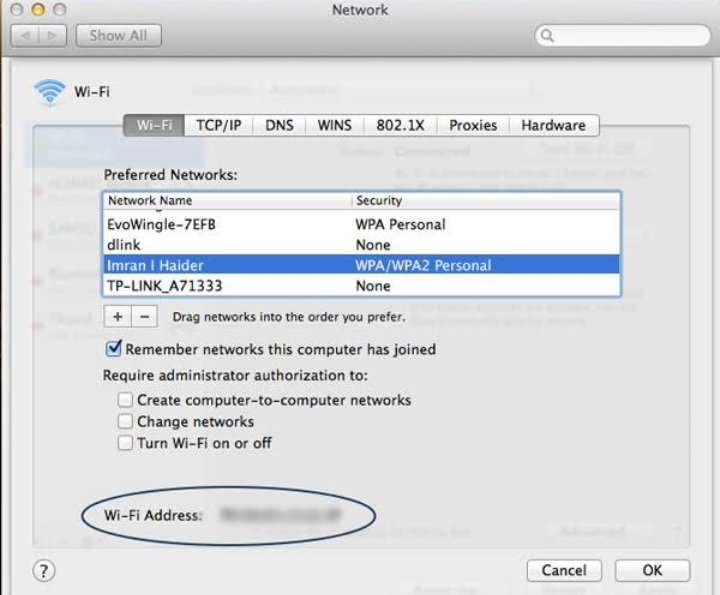
You can change your IP address on a Mac at any time through System.

Don’t worry. Changing your IP address is easy, even if you’ve never done it before.
It’s also perfectly safe and — as long as you’re not using it to break other laws — it’s
legal. Your computer and phone have several types of IP addresses (short for
internet protocol, a unique series of numbers that identify your specific device with
your online browsing), but we’ll focus on the type normally changed to protect your
privacy as you browse, and those which make you appear like you’re in a different
country.

If you just want to change your IP address without the additional privacy boost,
you can either enter your preferred IP manually, or you can just force your
device to retrieve a new one automatically.

Is it even legal to change your IP
address?

Yes, it’s legal to change your IP address in the US. People change their IP
addresses routinely when facing direct attacks on their online security, when
testing a website before it goes live, or when they simply prefer to protect their
privacy. Obviously, this FAQ is in no way offering legal advice and you should
consult a licensed attorney for specific questions, but the legal boundaries on
IP address changes usually start with what you change your IP to, and what
you do with that new IP address.

If you’ve changed your IP to impresonate individual or a business — often
called IP spoofing — you could be running afoul of the US Computer Fraud and
Abuse Act. You might also run into trouble if you’re changing your IP address
to access a website you’ve been banned from. IP spoofing is also a tool used
by some cybercriminals to perform a handful of well-known attacks, most
commonly those related to identity theft and those aimed at crippling websites
with organized distributed denial of service bombardment.

Startup

 By: Astha Raghav. 

The term “startup” refers to a company in the first stages of operations. Startups are founded by one or more entrepreneurs who want to develop a product or service for which they believe there is demand. These companies generally start with high costs and limited revenue, which is why they look for capital from a variety of sources such as venture capitalists.

KEY TAKEAWAYS

  • A startup is a company that’s in the initial stages of business.
  • Until the business gets off the ground, a startup is often financed by its founders and may attempt to attract outside investment.
  • The many funding sources for startups include family and friends, venture capitalists, crowdfunding, and loans.
  • Startups must also consider where they’ll do business and their legal structure.
  • Startups come with high risk as failure is very possible but they can also be very unique places to work with great benefits, a focus on innovation, and great opportunities to learn.

Understanding Startups

Startups are companies or ventures that are focused on a single product or service that the founders want to bring to market. These companies typically don’t have a fully developed business model and, more crucially, lack adequate capital to move onto the next phase of business. Most of these companies are initially funded by their founders.

Startups can use seed capital to invest in research and to develop their business plans. Market research helps determine the demand for a product or service, while a comprehensive business plan outlines the company’s mission statement, vision, and goals, as well as management and marketing strategies.

Examples of Startups

Dotcoms were a common startup in the 1990s. Venture capital was extremely easy to obtain during this time due to a frenzy among investors to speculate on the emergence of these new businesses. Unfortunately, most of these Internet startups eventually went bust due to major flaws in their business plans, such as lacking a path to sustainable revenue. However, a handful of companies survived when the dotcom bubble burst. Both Amazon (AMZN) and eBay (EBAY) are examples.


The first few years are very important for startups—a period during which entrepreneurs should concentrate on raising capital and developing a business model.

Many startups fail within the first few years. That’s why this initial period is important. Entrepreneurs need to find money, create a business model and business plan, hire key personnel, work out intricate details such as equity stakes for partners and investors, and plan for the long run. Many of today’s most successful companies—Microsoft (MSFT), Apple (AAPL), and Facebook (FB), to name a few—began as startups and ended up becoming publicly traded companies.

<

p class=”comp mntl-sc-block finance-sc-block-html mntl-sc-block-html” id=”mntl-sc-block_1-0-17″ style=”background-color: white;color: #111111;font-family: SourceSansPro, sans-serif;font-size: 17.6px;margin-bottom: 1.75rem;margin-top: 0px”>Thank you!

Diabetes


By: Astha Raghav. 

diabetes, is a metabolic disease that causes high blood sugar. The hormone insulin moves sugar from the blood into your cells to be stored or used for energy. With diabetes, your body either doesn’t make enough insulin or can’t effectively use the insulin it does make.

Untreated high blood sugar from diabetes can damage your nerves, eyes, kidneys, and other organs.

There are a few different types of diabetes:

  • Type 1 diabetes is an autoimmune disease. The immune system attacks and destroys cells in the pancreas, where insulin is made. It’s unclear what causes this attack. About 10 percent of people with diabetes have this type.
  • Type 2 diabetes occurs when your body becomes resistant to insulin, and sugar builds up in your blood.
  • Prediabetes occurs when your blood sugar is higher than normal, but it’s not high enough for a diagnosis of type 2 diabetes.
  • Gestational diabetes is high blood sugar during pregnancy. Insulin-blocking hormones produced by the placenta cause this type of diabetes.

A rare condition called diabetes insipidus is not related to diabetes mellitus, although it has a similar name. It’s a different condition in which your kidneys remove too much fluid from your body.

Each type of diabetes has unique symptoms, causes, and treatments. 

Thank You!

Hockey


By: Astha Raghav 

Hockey is a sport in which two teams play against each other by trying to manoeuvre a ball or a puck into the opponent’s goal using a hockey stick. There are many types of hockey such as bandyfield hockeyice hockey and rink hockey.

In most of the world, the term hockey by itself refers to field hockey, while in Canada, the United States, Russia and most of Eastern and Northern Europe, the term usually refers to ice hockey.

The first recorded use of the word hockey is in the 1773 book Juvenile Sports and Pastimes, to Which Are Prefixed, Memoirs of the Author: Including a New Mode of Infant Education by Richard Johnson (Pseud. Master Michel Angelo), whose chapter XI was titled “New Improvements on the Game of Hockey”.The belief that hockey was mentioned in a 1363 proclamation by King Edward III of England is based on modern translations of the proclamation, which was originally in Latin and explicitly forbade the games “Pilam Manualem, Pedivam, & Bacularem: & ad Canibucam & Gallorum Pugnam”.The English historian and biographer John Strype did not use the word “hockey” when he translated the proclamation in 1720, instead translating “Canibucam” as “Cambuck”; this may have referred to either an early form of hockey or a game more similar to golf or croquet.

The word hockey itself is of unknown origin. One supposition is that it is a derivative of hoquet, a Middle French word for a shepherd’s stave.The curved, or “hooked” ends of the sticks used for hockey would indeed have resembled these staves. Another supposition derives from the known use of cork bungs (stoppers), in place of wooden balls to play the game. The stoppers came from 

Games played with curved sticks and a ball can be found in the histories of many cultures. In Egypt, 4000-year-old carvings feature teams with sticks and a projectile, hurling dates to before 1272 BC in Ireland, and there is a depiction from approximately 600 BC in Ancient Greece, because it was played with a horn or horn-like stick . In Inner Mongolia, the Daur people have been playing beikou, a game similar to modern field hockey, for about 1,000 years.

Most evidence of hockey-like games during the Middle Ages is found in legislation concerning sports and games. The Galway Statute enacted in Ireland in 1527 banned certain types of ball games, including games using “hooked” (written “hockie”, similar to “hooky”) sticks.

By the 19th century, the various forms and divisions of historic games began to differentiate and coalesce into the individual sports defined today. Organizations dedicated to the codification of rules and regulations began to form, and national and international bodies sprang up to manage domestic and international competition.

Thank you!

6 ways to create positive brand image online


By: Astha Raghav 

The ultimate guide to creating a positive brand image for online reputation management.

1. Own Your own website : Your first goal for creating a positive online image is having a website. Chances are you already have one for your business like your business. com. If you have a website you control at #1 in search results, it will get the most amount of clicks and prevent most people most people from continuing to look through the rest of the search results.

2.Own Related domains: If you want to take it to the next level, build up some other domains for your business or yourself.  

3.Start Multiple Blogs: Your main personal or company blog does not have to be your only blog. Thanks to Google + authorship and Google Direct Connect, you can tell Google a blog on any topic is related to you.

4.Be active on social media: Notice that I did not say create a whole lot of random social profiles that you may never touch again.

5. Create online “business cards”: Several websites allow you to create a personalized page that displays a short bio about you plus links to your website, blog and social networks. 

6. Claim your local profiles: If you have a local business, be sure to claim your local profiles and local directory listingsor create them if they don’t exist on sites like Yelp, Merchant Circle, Yahoo local and similar sites.

Thank you!

Dance A Stress Buster

Dance wether zumba, hip-hop, Kathak, bhangra, garba, dandiya, shuffle, house, chicago or freestyle is a way to express our thoughts and feelings without the need of words or expression.

It’s an art that let’s your creativity being expressed through the medium of your hands, legs and body. It does not have any specific way to do it, it is unique to everyone’s own creativity. It is just expressing your heart out. It need not be in front of everyone to show-off your skills in dance, it is actually to free yourself and dance the way you want, maybe in a closed room in front of a camera of mirror.

The actually essence of dance is being what you are, doing what you like, just for yourself and nobody else. It is like a stress buster, which helps you to take all your worries, frustration, anger, happiness out and makes you feel a relaxed. And if you dance happily it even have positive effect on your body, helps you to stay fit. It helps to develop your personality.

If you are really want to dance you can join a dance club or group, which helps you to interact with new people, expand you world from just home to school, college or office. You find like minded people it motivates you to be more expressive in your life.

And ultimately I want to say, you want to join a club or not it’s your decision, it actually doesn’t matter, the thing matter is just ‘Dance Your Heart Out’ that’s it, no matter in club, stage or just in a room.

DANCE YOUR HEART OUT

Do we have to sacrifice good economy for healthy environment?

Be the change you wish to see in the world. Take a pledge to protect Mother Earth this World Environment day

Past decade has handed over much benefit to human kind and the one to suffer is environment exposing environmental degradation that costs…….. per year worldwide.

“While the overall policy focus should be on meeting basic needs and expanding opportunities for growth, they should not be on the expense of unsustainable environmental degradation.”-muthukmara mani(senior environmental economist).

Using natural resources as fuel to the economic development many have curbed themselves over the poverty, it providing employability and many new opportunities to individuals. With excess greed and overuse of all these resources there has been excruciating effects on environment overall degrading forests, scarring natural resources these are overall affecting the economy in return.

Tony Abbott said his govt. won't "put the environment ahead of the economy". RT if you think he's got his it wrong.

Poverty remains cause of either of both consequence and cause of environmental degradation. Needless mining and overuse of resources that are on first hand limited to us which is quiet evident over degrading agriculture yields per hectare as livestock is overgrazed grassland and forest deplete for human settlements.

            The question that arises is our economic benefit so crucial that it costs us worsened environmental quality, depleted resources, extinct habitats and other impacts?

Something that emerges out is environmental stability, low emission resource efficient greening of the economy should be possible at costs of terms less to that of GDP of each country, valuing the available natural resources and taking policy decision accordingly.

To avail this issue the natural environmental growth be necessary, affordable, desirable, and measurable.

  • If not now it’s going to be a challenge to turn the pages around to covert the damages done to nature with hefty economical costs in future and also proving deadly not only to the flora-fauna but eventually to humans too, hence it’s necessary to avail it at the very moment.
  • Policies such as environmental taxes can positively help minimize the cost and pressure over governments hence making it affordable to all.
  • With so many diversifies ecologies and habitat all over the globe the policies and laws needs to be designed such that it preserves and nourishes these natural gems.
We think cutting edge technology is essential in delivering environmental and economic gains.

What can be done?

Particulate emission reduction can effectively help decrease GDP modestly even reducing 10%.

Making more tractable efficient commitments and following them religiously, look through the environments vision and then make other end decision regarding the communities, societies, business and governments. Science can be at its most use when it’s accessible to every person who wishes to use it. Every person taking this as a personal responsibility the awareness would make it up to history pages. We need to turn around the current situation and consider it as a need of an hour if we wish out economy our trades our families to thrive in peace without draining our economies.

Feminism is for everybody

“To be ‘feminist’ in any authentic sense of the term is to want for all people, female and male, liberation from sexist role patterns, domination, and oppression.” bell hooks made this clear and powerful statement in her 1981 study of sexism, racism, and the feminist and civil rights movements Ain’t I a Woman: Black Women and Feminism. Almost 40 years on, the world is still reckoning with pervasive and inexcusable gender inequality underpinned by bias and sexism, and research and health care are no exception. Today, The Lancet publishes a theme issue on advancing women in science, medicine, and global health, with the aim of showcasing research, commentary, and analysis that provide new explanations and evidence for action towards gender equity. This theme issue is the result of a call for papers that led to over 300 submissions from more than 40 countries. The overwhelming conclusion from this collection of work is that, to achieve meaningful change, actions must be directed at transforming the systems that women work within—making approaches informed by feminist analyses essential.

It is well established that women are under-represented in positions of power and leadership, undervalued, and experience discrimination and gender-based violence in scientific and health disciplines across the world. Intersectional approaches have provided insights into how other categories of difference such as ethnicity, class, geography, disability, and sexuality interact with gender to compound inequalities. Most submissions to this theme issue came from high-income countries, highlighting the need to support scholarship from the Global South. Geordan Shannon and colleagues provide a global overview of gender inequality in science, medicine, and global health, and discuss the evidence for the substantial health, social, and economic gains that could be achieved by addressing this inequality. Indeed, some studies, including one in this issue by Cassidy Sugimoto and colleagues, show that more diverse and inclusive teams lead to better science and more successful organizations.

Despite decades of recognition, these problems have proved stubbornly persistent. It is now commonplace for organizations to make public statements valuing diversity, hire diversity officers, and implement programmed to advance women’s careers. Yet, all too often, such programmers locate the source of the problem, and hence the solution, within women and their own behavior. Thus, although actions such as mentoring and skills training might be well intentioned and advantageous to a degree, they often fail to engage with broader features of systems that disproportionately privilege men. For instance, Holly Wittman and colleagues show, using data from a federal funder, how gender bias disadvantages women applying for grant funding.

Reflecting on these biases can be difficult for professions like science and medicine that are grounded in beliefs of their own objectivity and evidence-driven thinking. A trio of papers in this issue demonstrates the value of critical perspectives in this regard. Malika Sharma explains how the “historical gendering of medicine prioritizes particular types of knowledge (and ways of producing that knowledge), and creates barriers for critical, and specifically feminist, research and practice”. Feminist and other critical perspectives enable researchers to question the underlying assumptions that produce and maintain social hierarchies, and in doing so, imagine ways to transform fields and practices to make them more equitable and inclusive. Likewise, Sara Davies and colleagues argue that a feminist research agenda is key to advancing gender equality in global health, and Kopano Ratele and colleagues explain why efforts to engage men in advancing gender equality must be grounded in an appreciation of theories of masculinity.

For actions to have lasting and far-reaching consequences, they must therefore be directed at creating institutional-level change. Several pieces in this theme issue discuss such approaches, with a Review by Imogen Coe and colleagues providing a toolbox of organizational best practices towards gender equality in science and medicine. The Lancet’s commitments to addressing gender bias in publishing are detailed in a Comment. Gender equity is not only a matter of justice and rights, it is crucial for producing the best research and providing the best care to patients. If the fields of science, medicine, and global health are to hope to work towards improving human lives, they must be representative of the societies they serve. The fight for gender equity is everyone’s responsibility, and this means that feminism, too, is for everybody—for men and women, researchers, clinicians, funders, institutional leaders, and, yes, even for medical journals.

Bloom’s Taxonomy

A group of cognitive psychologists, curriculum theorists and instructional researchers, and testing and assessment specialists published in 2001 a revision of Bloom’s Taxonomy with the title A Taxonomy for Teaching, Learning, and Assessment. This title draws attention away from the somewhat static notion of “educational objectives” (in Bloom’s original title) and points to a more dynamic conception of classification.

The authors of the revised taxonomy underscore this dynamism, using verbs and gerunds to label their categories and subcategories (rather than the nouns of the original taxonomy). These “action words” describe the cognitive processes by which thinkers encounter and work with knowledge.

A statement of a learning objective contains a verb (an action) and an object (usually a noun).

Using Bloom's taxonomy to help write lesson plans is the best way to start to differentiate your lessons. It can be tricky for new teachers and trainee teachers to plan lessons and differentiate effectively but I found using Bloom's taxonomy is a great help. This infographic shows exactly the differentiation possible.  #teacherofsci  #adviceforteachers #teacheradvice #teachertips #teachingtips #teacher #teachers #teaching #education #writinglessonplans #lessonplan #bloomstaxonomy #blooms
  • The verb generally refers to [actions associated with] the intended cognitive process.
  • The object generally describes the knowledge students are expected to acquire or construct. (Anderson and Krathwohl, 2001, pp. 4–5)

The cognitive process dimension represents a continuum of increasing cognitive complexity—from remember to create. Anderson and Krathwohl identify 19 specific cognitive processes that further clarify the bounds of the six categories. 

The Cognitive Process Dimension – categories, cognitive processes (and alternative names)

..

Remember

recognizing(identifying)

recalling (retrieving)

Understand

interpreting(clarifying, paraphrasing, representing, translating)

exemplifying(illustrating, instantiating)

classifying(categorizing, subsuming)

summarizing(abstracting, generalizing)

inferring (concluding, extrapolating, interpolating, predicting)

comparing(contrasting, mapping, matching)

explaining(constructing models)

Apply

executing (carrying out)

implementing (using)

Analyze

differentiating(discriminating, distinguishing, focusing, selecting)

organizing (finding, coherence, integrating, outlining, parsing, structuring)

attributing(deconstructing)

Evaluate

checking (coordinating, detecting, monitoring, testing)

critiquing (judging)

Create

generating(hypothesizing)

planning (designing)

producing (construct)

The knowledge dimension represents a range from concrete (factual) to abstract (metacognitive) (Table 2). Representation of the knowledge dimension as a number of discrete steps can be a bit misleading. For example, all procedural knowledge may not be more abstract than all conceptual knowledge. And metacognitive knowledge is a special case. In this model, “metacognitive knowledge is knowledge of [one’s own] cognition and about oneself in relation to various subject matters . . . ” (Anderson and Krathwohl)

 The Knowledge Dimension

Factual

  • knowledge of terminology
  • knowledge of specific details and elements

Conceptual

  • knowledge of classifications and categories
  • knowledge of principles and generalizations
  • knowledge of theories, models, and structures

Procedural

  • knowledge of subject-specific skills and algorithms
  • knowledge of subject-specific techniques and methods
  • knowledge of criteria for determining when to use appropriate procedures

Metacognitive

  • strategic knowledge
  • knowledge about cognitive tasks, including appropriate contextual and conditional knowledge
  • self-knowledge

Bloom’s Revised Taxonomy Model

Note: These are learning objectives – not learning activities. It may be useful to think of preceding each objective with something like, “students will be able to…:

The Knowledge Dimension

Factual

The basic elements a student must know to be acquainted with a discipline or solve problems in it.

The Knowledge Dimension

Conceptual

The interrelationships among the basic elements within a larger structure that enable them to function together.

The Knowledge Dimension

Procedural

How to do something, methods of inquiry, and criteria for using skills, algorithms, techniques, and methods.

The Knowledge Dimension

Metacognitive

Knowledge of cognition in general as well as awareness and knowledge of one’s own cognition

The Cognitive Process Dimension

Remember

Retrieve relevant knowledge from long-term memory.

Remember + Factual

List primary and secondary colors.

Remember + Conceptual

Recognize symptoms of exhaustion.

Remember + Procedural

Recall how to perform CPR.

Remember + Metacognitive

Identify strategies for retaining information.

The Cognitive Process Dimension

Understand

Construct meaning from instructional messages, including oral, written and graphic communication.

Understand + Factual

Summarize features of a new product.

Understand + Conceptual

Classify adhesives by toxicity.

Understand + Procedural

Clarify assembly instructions.

Understand + Metacognitive

Predict one’s response to culture shock.

The Cognitive Process Dimension

Apply

Carry out or use a procedure in a given situation.

Apply + Factual

Respond to frequently asked questions.

Apply + Conceptual

Provide advice to novices.

Apply + Procedural

Carry out pH tests of water samples.

Apply + Metacognitive

Use techniques that match one’s strengths.

The Cognitive Process Dimension

Analyze

Carry out or use a procedure in a given situation.

Analyze + Factual

Select the most complete list of activities.

Analyze + Conceptual

Differentiate high and low culture.

Analyze + Procedural

Integrate compliance with regulations.

Analyze + Metacognitive

Deconstruct one’s biases.

The Cognitive Process Dimension

Evaluate

Make judgments based on criteria and standards.

Evaluate + Factual

Select the most complete list of activities.

Evaluate + Conceptual

Determine relevance of results.

Evaluate + Procedural

Judge efficiency of sampling techniques.

Evaluate + Metacognitive

Reflect on one’s progress.

The Cognitive Process Dimension

Create

Put elements together to form a coherent whole; reorganize into a new pattern or structure.

Create + Factual

Generate a log of daily activities.

Create + Conceptual

Assemble a team of experts.

Create + Procedural

Design efficient project workflow.

Create + Metacognitive

Create a learning portfolio.