PACHMARHI: Verdant Jewel of the Satpuras

Pachmarhi is Madhya Pradesh’s most verdant jewel, a place where has found exquisite expression in myriad enchanting ways.
Complementing the magnificence of nature are the works of man; Pachmarhi is also an archaeological treasure-house. In cave shelters in the Mahadeo Hills is an astonishing richness in rock paintings. Most of these have been placed in the period 500- 800 AD , but the earliest paintings are an estimated 10000 years old.
The town has a quiet gentility about it as if Victorian traditions and high collars still governed most people’s lives.
PLACES TO EXPLORE 

PRIYADARSHINI (FORSYTH POINT)
This vantage viewing point marks the place from where Pachmarhi was discovered by Captain Forsyth in 1858. The British developed Pachmarhi as a resort and their influence is embodied in its churches and colonial architecture.
JAMUNA PRAPAT (BEE FALL)
A spectacular fall in the stream which provides drinking water to Pachmarhi. The bathing pools above the fall are very popular.
HANDI KHOH
A mile long trek from Bee Falls takes one to Handi Khoh, a horse-shoe shaped ravine, the edge of which drops a sheer 100m into the earth. The valley is rich in medicinal plants. 

APSARA VIHAR (FAIRY POOL)
Easily accessible from Jai Stambh, this fairy pool is an ideal picnic spot for families with small children, since the pool is shallow, deepening only towards the base of the fall.
ALSO VISIT:  Banshree Vihar, Tridhara and Irene Pool are the other pool of Pachmarhi. 
RAJAT PRAPAT (BIG FALL)
Those seeking adventure will find it in this ten-minute walk over rocks and boulders from Apsara Vihar to the top of the Rajat Prapat.

JALAWATARAN (DUCHESS FALLS)
The descent is steep and the trek strenuous for almost all of the 4km to the base of the fall’s first cascade.
SUNDER KUND (SAUNDER’S POOL)
Crossing the stream below Duchess Falls and following a footpath about 2.5km in a south-westernly direction brings one to a huge Rocky pool in the Jambu Dwip stream, an excellent place for swimming.
MAHADEO
The temple at Mahadeo cave is located at the base of the Mahadeo hill, at a distance of 12km from Pachmarhi town. There is a pool in the temple which has curative properties. About half a kilometer west of the Mahadeo cave is a natural fissure in the rock, that is worshipped by the locals as Gupt Mahadeo or Chhota Mahadeo.
CHAURAGARH TEMPLE
Located at an altitude of 1330m atop the Chauragarh Peak, the trek to the Chauragarh temple comprises of 1380 steps. The temple courtyard is stacked with thousands of tridents offered by the devotees. The temple is a half-built modern structure with an idol of Shiva in the sanctum.
CHRIST CHURCH
Built in 1857 by the British, this church is generally regarded as the most beautiful small Church in Madhya Pradesh. The Church’s architecture if fascinating; its ‘sanctum-sanctorum’ has a hemispherical dome on top with its ribs ending with faces of angels. The nave of the church does not contain single pillar for support. The baptismal font is a rare brass piece and the bell is as old as the church and it’s chimes can be heard from a long distance.

PANDAV CAVES 
Five ancient dwellings excavated in the sand-stone rock in a low hill. Pachmarhi derives its name from these caves which, as the legend goes, once provided shelter to five Pandav brothers. These caves are now protected monuments.

SATPURA NATIONAL PARK 
Set up in 1981, Satpura National Park is 524 sq km in area. It spreads through a dense forest of evergreen Sal , teak and bamboo. The park is home to the gaur, tiger, leopard, beer, four-horned deer, blue bull and rich variety of birds.
BISON LODGE 
Constructed in 1862, the Bison Lodge is the oldest house in Pachmarhi. It now houses a beautiful museum depicting the rich flora and fauna of Pachmarhi.
ALSO VISIT: Jata Shankar, Catholic Church, Dhoopgarh, Trishar, Banshree Vihar, Reechhgarh, Sangam, The Cave Shelters, Astachal and Harper’s Cave.

BANDHAVGARH: National Park With a Rich Historical Past

Bandhavgarh is a small National Park ; compact, yet teeming with wildlife. The density of the tiger population in Bandhavgarh is the highest known in India. This is also White Tiger country. These have been found in the old state of Rewa for many years. The last known was captured by Maharaja Martand Singh in 1951. This white tiger, Mohun, is now stuffed and on display in the palace of the Maharajas of Rewa.
The terrain is of great Rocky hills rising sharply from the swampy and densely-forested valley bottoms. The finest of these hills in Bandhavgarh, sided with great cliffs and eroded rocks and on its highest point stands Bandhavgarh Fort, and particularly around the fort, are numerous caves containing shrines and ancient Sanskrit inscriptions.
Prior to becoming a National Park, the forests around Bandhavgrah had long been maintained by as a Shikargah, or game reserve, of the Maharajas of Rewa. Hunting was carried out by the Maharajas and their guests – otherwise the wildlife was relatively well-protected. 
In 1947 Rewa State was merged with Madhya Pradesh; Bandhavgarh came under the regulation of Madhya Pradesh. The Maharaja of Rewa still retained the hunting rights of Bandhavgarh and no special measures were taken until 1968, when the areas were constituted as a National Park, since then, numerous steps have been taken to retain Bandhavgarh Bational Park as an unspoilt natural habitat. 

What to see 

The Fort 
The Fort is estimated to be 2000 years old. Various dynasties have ruled the fort : the Maghas from the 1st century AD, the Vakatakas from the 3rd century AD, the Sengars from the 5th century AD, the Baghela took over, ruling from Badhavgarh until 1617, when Maharaja Vikramaditya Singh moved hi capital to Rewa. The last inhabitants deserted the fort in 1935.
Flora 
The vegetation is chiefly of Sal forest in the valleys and on the lower slopes, gradually changing to mixed deciduous forest on the hills and in the hotter, drier areas of the park in the south and west. Bamboo is found throughout.
Wildlife
There are more than 22 species of mammals and 250 species of birds. Common langurs and rhesus macaque represent the primate group. Carnivores include the Asiatic jackal, Bengal Fox, sloth bear, ratel, grey mongoose, striped Hynes, jungle cat, leopard and tiger. The artiodactyls frequently sighted are wild pig, spotted dear, sambar, chausingha, nilgai and chinkara. Mammals such as dhole, the small Indian civet, palm squirrel and lesser bandicoot rat are seen occassionally. The vegetation along streams and marshes is rich in birdlife. The common ones are little grebe, egret, lesser adjutant, saris crane, black kite, crested peafowl, red jungle fowl, dove, parakeet, kingfisher and Indian roller. Reptilian fauna include cobra, Krait, viper, ratsnake, etc.

Wildlife viewing 
The main way of getting about in the park is motor vehicle. Jeep safaris timing are from 10 am to 4 pm, as the animals are most active during these periods. A Forest Department guide must always accompany you. This guide will able to direct you and point out wildlife. 

THE PENCH

Pench lies in Madhya Pradesh. Nestled in the southern sloes of the satpura ranges of central India, Pench Tiger Reserve(757.90 sq.kms)lies in southern Madhya Pradesh , bordering Maharashtra. The Pench National Park which constitutes the core of the Park is 292.86 sq.kms , and comprises the Indira Priyadarshini Pench National Park and the Mowgli Pench Sanctuary. Pench was brought under Project Tiger in 1992 .
Pench National Park gets its name from the Pench river that flows through it, dividing it into the western Chhindwara Block (141.61 sq kms) , and the eastern Seoni Block (145.24 sq kms).
Over 1,200 species of plants have been recorded in the area including several rare and endangered plants as well as plants of ethnobotanical importance.
Pench National Park is the original setting of Rudyard kipling’s famous work, The Jungle Book. The character, Mowgli, was inspired by Sir William Henry Sleeman’s pamphlet, ‘An Account of Wolves Nurturing Children in Their Dens’ which describes a jungle boy captured in Seoni district near the village of Seoni district near the village of Sant Baori in 1831. 
Pench being situated in Central India is subjected to extreme and tropical weather. Month of January may also witness sub-zero temperatures and frost. Monsoon arrives in the second week of June. 
The forests found in Pench Tiger Reserve are divided into three parts as follows:-
1.Southern Tropical Wet Deciduous Forest
2.Southern Tropical Dry Teak Deciduous Forest
3.Southern Tropical Dry Mixed Deciduous Forest
Dry mixed forest spreads in about one-third area of the protected area. Whose main species are salai, pickle, moyan, tendu etc. Kahua (Arjuna), Jamuna, Guular and Saja are found along the banks of river streams. Trees of Mahua, Palash, Plum etc. are found scattered around the open forests of displaced areas of old villages. Teak forests are found in about one quarter area. There are about 82 types of grass species and Bamboo found in this forest area.
Pench is prime tiger country. The area has always been rich in wildlife. Pench Tiger Reserve has the highest density of herbivores in India, 90.3 animals per square kilometre. The area is especially famous for its huge population of gaur (Indian bison), cheetal, sambar, neelgai, wild dog and wild pig. Other animals in the Park include the sloth bear, chousingha, chinkara, barking deer, jackal, fox, palm civet, small Indian civet, jungle cat, hyena and porcupine.
Pench Tiger is also among the best area for bird watching. Over 285 species of resident and migratory birds including the Malabar pied hornbill, Indian pitta, osprey, grey headed fishing eagle, white-eyed buzzard are found here. Four species of the endangered vulture, white-rumped, long billed, white scavenger and king vulture can be seen in good numbers in these forests. In winter, thousands of migratory birds come to this reserve. 
Jungle safaris are a major attraction of the park. A dawn safari, when animals are out in the open looking for food and water, is an unforgettable experience. Tigers and leopards can be seen near water bodies and even on the roads in summer. Cheetal, sambar and neelgai are found grazing in the forests and the banks of the river. Large herds of gaur are often spotted in the bamboo patches. Jackals, wild dogs and rhesus monkeys can be seen foraging for food in the densely-wooded jungles.

DEEP LEARNING SERIES- PART 6

The previous article was about the procedure to develop a deep learning network and introduction to CNN. This article concentrates on the process of convolution which is the process of taking in two images and doing a transformation to produce an output image. This process is common in mathematics and signals analysis also. The CNN’s are mainly used to work with images.

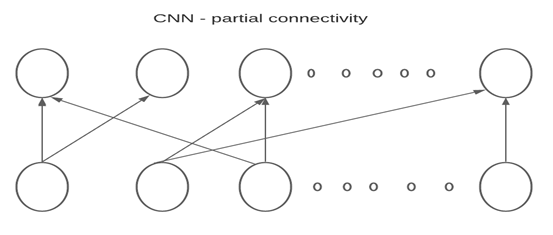
In the CNN partial connection is observed. Hence all the neurons are not connected to those in the next layer. So the number of parameters reduces leading to lesser computations.

Sample connection is seen in CNN.

Convolution in mathematics refers to the process of combining two different functions. With respect to CNN, convolution occurs between the image and the filter or kernel. Convolution itself is one of the processes done on the image.

Here also the operation is mathematical. It is a kind of operation on two vectors. The input image gets converted into a vector based on colour and dimension. The kernel or filter is a predefined vector with fixed values to perform various functions onto the image.

Process of convolution

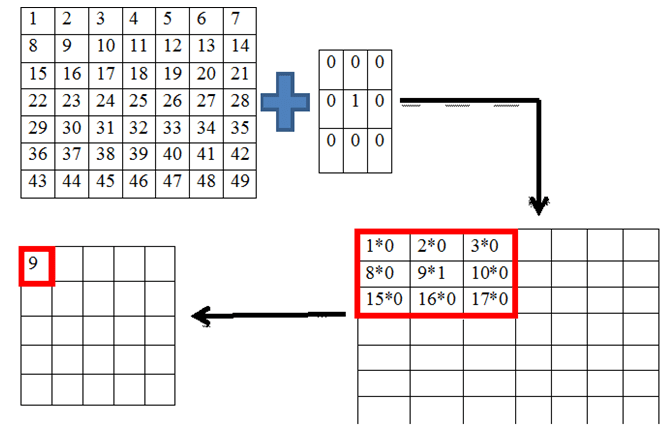
The kernel or filter is chosen in order of 1*1, 3*3, 5*5, 7*7, and so on. The given filter vector slides over the image and performs dot product over the image vector and produces an output vector with the result of each 3*3 dot product over the 7*7 vector.

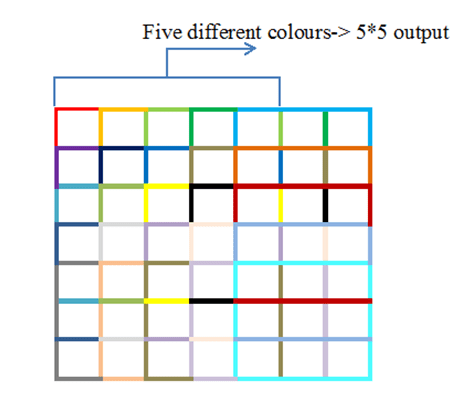
A 3*3 kernel slides over the 7*7 input vector to produce a 5*5 output image vector. The reason for the reduction in the dimension is that the kernel has to do dot product operation on the input vector-only with the same dimension. I.e. the kernel slides for every three rows in the seven rows. The kernel must perfectly fit into the input vector. All the cells in the kernel must superimpose onto the vector. No cells must be left open. There are only 5 ways to keep a 3-row filter in a 7-row vector.    

This pictorial representation can help to understand even better. These colors might seem confusing, but follow these steps to analyze them.

  1. View at the first row.
  2. Analyse and number the different colours used in that row
  3. Each colour represents a 3*3 kernel.
  4. In the first row the different colours are red, orange, light green, dark green and blue.
  5. They count up to five.
  6. Hence there are five ways to keep a 3 row filter over a 7 row vector.
  7. Repeat this analysis for all rows
  8. 35 different colours will be used. The math is that in each row there will be 5 combinations. For 7 rows there will be 35 combinations.
  9. The colour does not go beyond the 7 rows signifying that kernel cannot go beyond the dimension of input vector.

These are the 35 different ways to keep a 3*3 filter over a 7*7 image vector. From this diagram, we can analyse each row has five different colours. All the nine cells in the kernel must fit inside the vector. This is the reason for the reduction in the dimension of output vector.

Procedure to implement convolution

  1. Take the input image with given dimensions.
  2. Flatten it into 1-D vector. This is the input vector whose values represent the colour of a pixel in the image.
  3. Decide the dimension, quantity and values for filter. The value in a filter is based on the function needed like blurring, fadening, sharpening etc. the quantity and dimension is determined by the user.
  4. Take the filter and keep it over the input vector from the first cell. Assume a 3*3 filter kept over a 7*7 vector.
  5. Perform the following computations on them.

5a. take the values in the first cell of the filter and the vector.

5b. multiply them.

5c. take the values in the second cell of the filter and the vector.

5d. multiply them.

5e. repeat the procedure till the last cell.

5f. take the sum for all the nine values.

  • Place this value in the output vector.
  • Using the formula mentioned later, find the dimensions of the output vector.

HAPPY LEARNING!!

DEEP LEARNING SERIES- PART 5

The previous article was on algorithm and hyper-parameter tuning. This article is about the general steps for building a deep learning model and also the steps to improve its accuracy along with the second type of network known as CNN.

General procedure to build an AI machine

  1. Obtain the data in the form of excel sheets, csv (comma separated variables) or image datasets.
  2. Perform some pre-processing onto the data like normalisation, binarisation etc. (apply principles of statistics)
  3. Split the given data into training data and testing data. Give more preference to training data since more training can give better accuracy. Standard train test split ratio is 75:25.
  4. Define the class for the model. Class includes the initialisation, network architecture, regularisation, activation functions, loss function, learning algorithm and prediction.
  5. Plot the loss function and interpret the results.
  6. Compute the accuracy for both training and testing data and check onto the steps to improve it.

Steps to improve the accuracy

  1. Increase the training and testing data. More data can increase the accuracy since the machine learns better.
  2. Reduce the learning rate. High learning rate often affects the loss plot and accuracy.
  3. Increase the number of iterations (epochs). Training for more epochs can increase the accuracy
  4. Hyper parameter tuning. One of the efficient methods to improve the accuracy.
  5. Pre-processing of data. It becomes hard for the machine to work on data with different ranges. Hence it is recommended to standardise the data within a range of 0 to 1 for easy working.

These are some of the processes used to construct a network. Only basics have been provided on the concepts and it is recommended to learn more about these concepts. 

Implementation of FFN in detecting OSTEOARTHRITIS (OA)

Advancements in the detection of OA have occurred through AI. Technology has developed where machines are created to detect OA using the X-ray images from the patient. Since the input given is in the form of images, optimum performance can be obtained using CNN’s. Since the output is binary, the task is binary classification. A combination of CNN and FFN is used. CNN handles feature extraction i.e. converting the image into a form that is accepted by the FFN without changing the values. FFN is used to classify the image into two classes.

CNN-convolutional neural network

The convolutional neural network mainly works on image data. It is used for feature extraction from the image. This is a partially connected neural network. Image can be interpreted by us but not by machines. Hence they interpret images as a vector whose values represent the color intensity of the image. Every color can be expressed as a vector of 3-D known as RGB- Red Green Blue. The size of the vector is equal to the dimensions of the image.


This type of input is fed into the CNN. There are several processing done to the image before classifying it. The combination of CNN and FNN serves a purpose for image classification.

Problems are seen in using FFN for image

  • We have seen earlier that the gradients are chain rule of gradient at different layers. For image data, large number of layers in order of thousands may require. It can result in millions of parameters. It is very tedious to find the gradient for the millions of these parameters.
  • Using FFN for image data can often overfit the data. This may be due to the large layers and large number of parameters.

The CNN can overcome the problems seen in FFN.

HAPPY LEARNING!!!

History & Law

                                            (Photo: University of Chicago Law School)

History and law are two sides of a polished mirror”. As we read it, that is there any relation of history with the law, then suddenly it strikes our mind that these two are different subjects because in India students mostly take topics in relation with the subjects they are studying. But when we think beyond, the subject we get to know that history and law are interrelated. Laws are influenced by events in history. The events which have happened before and what their outcomes were and what things can be changed for the better. In taking all these points in mind, laws are made. We take a lesson from our history to make laws.

 History is also related to law. As we read the incidents in our history, they are somehow related to the laws which existed at those times. The British laws which are still followed now from our history are Indian penal code,1860; the transfer of property act, 1882; the foreigner’s act, 1946; Income tax act, 1961; Indian evidence act,1872; Indian police act,1861; etc.

 The goods and the bads all somehow share a relationship with the laws and rules. The movements which changed the life of many countries also took place because of the heinous laws in countries like the French revolution, the American civil war, the National movements in India, and many more. All are related to laws that became unbearable torture on the victims. One can study the connection between law and history in comparative law. Comparison of laws of different time scales can be done. Law is a process that makes the public civilized, abides by norms that are set by society from time to time. Hence, the law is continuity in search of humanity and civility.

 Now the question that arises is: “Which part of history is relevant in today’s time“? According to my, contemporary history is most important in the present time. Contemporary history includes the span of historical events starting from 1945. These events are most relevant to the present time scenario. Many historians describe the early modern period as the time frame between 1500 and 1800.  This period mainly follows the late middle-age period. Further, it is marked by the initial European colonies, the beginning of recognizable nation-states as well as the rise of strong centralized government.

 Contemporary history helps in strengthening the cultural identity of a nation. This is because when we learn about the cultural heritage of our race or religion, we engulf ourselves in an abundance of information, which often depicts the decisions our ancestors made or the traditions that have been carried down the generations. These define who we are and why we exist in our society.

 History well told is beautiful. Many of the historians who most appeal to the general reading public, know the importance of dramatic and skillful writing as well as of accuracy. History is very important because it helps us to understand the present. If we will listen to what history has to say, we can come to a sound understanding of the past that will tell us much about the problems we now face. If we refuse to listen to history, we will find ourselves fabricating a past that reinforces our understanding of current problems.

 To conclude, George Mosse once said, “What man is, the only history tells.” History is interlinked with law. With truly reading, one can have a holistic view of the idea of the concept. In my view, contemporary history is more relevant in today’s time. The study of it is still relevant albeit the uncertainty of today’s world. As the saying goes, “With age comes wisdom“, is a true reminder of the experience one gains with the passage of times (which is history).


History & Law

                                            (Photo: University of Chicago Law School)

History and
law are two sides of a polished mirror”
. As we read it, that is there any
relation of history with the law, then suddenly it strikes our mind that these
two are different subjects because in India students mostly take topics in
relation with the subjects they are studying. But when we think beyond, the
subject we get to know that history and law are interrelated. Laws are
influenced by events in history. The events which have happened before and what
their outcomes were and what things can be changed for the better. In taking
all these points in mind, laws are made. We take a lesson from our history to
make laws.

 History is also
related to law. As we read the incidents in our history, they are somehow
related to the laws which existed at those times. The British laws which are
still followed now from our history are Indian penal code,1860; the transfer of
property act, 1882; the foreigner’s act, 1946; Income tax act, 1961; Indian
evidence act,1872; Indian police act,1861; etc.

 The goods and the
bads all somehow share a relationship with the laws and rules. The movements
which changed the life of many countries also took place because of the heinous
laws in countries like the French revolution, the American civil war, the
National movements in India, and many more. All are related to laws that became
unbearable torture on the victims. One can study the connection between law and
history in comparative law. Comparison of laws of different time scales can be
done. Law is a process that makes the public civilized, abides by norms
that are set by society from time to time. Hence, the law is continuity in
search of humanity and civility.

 Now the question
that arises is: “Which part of history is relevant in today’s time“?
According to my, contemporary history is most important in the present time.
Contemporary history includes the span of historical events starting from 1945.
These events are most relevant to the present time scenario. Many historians
describe the early modern period as the time frame between 1500 and 1800. 
This period mainly follows the late middle-age period. Further, it is marked by
the initial European colonies, the beginning of recognizable nation-states as
well as the rise of strong centralized government.

 Contemporary
history helps in strengthening the cultural identity of a nation. This is
because when we learn about the cultural heritage of our race or religion, we
engulf ourselves in an abundance of information, which often depicts the
decisions our ancestors made or the traditions that have been carried down the
generations. These define who we are and why we exist in our society.

 History well told
is beautiful. Many of the historians who most appeal to the general reading
public, know the importance of dramatic and skillful writing as well as of
accuracy. History is very important because it helps us to understand the
present. If we will listen to what history has to say, we can come to a sound
understanding of the past that will tell us much about the problems we now
face. If we refuse to listen to history, we will find ourselves fabricating a
past that reinforces our understanding of current problems.

 To conclude, George
Mosse once said, “What man is, the only history tells.” History is
interlinked with law. With truly reading, one can have a holistic view of the
idea of the concept. In my view, contemporary history is more relevant in
today’s time. The study of it is still relevant albeit the uncertainty of
today’s world. As the saying goes, “With age comes wisdom“, is a true
reminder of the experience one gains with the passage of times (which is
history).


An unexamined life is not worth living

 by Shashikant Nishant Sharma 

                                                       (Photo: Motivation Mentalist)

Well said by
Socrates.

An
unexamined human life is deprived of the meaning and purpose of existence. The
ability to introspect removes the individualistic absurdity by invoking a
commitment to moral integrity and social solidarity.

 Just like a seed
needs soil, sunlight and water for its germination, human life needs
introspection and examination for its growth. A greater understanding of the
experiences gained in the life at any particular time, enriches one’s
engagement with self and the universe.

Mahatma Gandhi’s
examination of self through his autobiography, “My experiments with
truth”, highlights the significance of reflection on life. Mahatma Gandhi
was not only able to map his weaknesses and vulnerabilities through the
examination, but was also able to question his prejudices and understand his
strength as a human being.

 This very ability
to reflect on life adds more depth to the character of Arjun in Mahabharat than
most of the other characters. Instead of following the norms and fighting with
his clan, Arjun questions the meaninglessness of the war and the purpose of his
life.

 The fast-changing
societies and consumerist culture in the contemporary world leave less time for
human beings to examine and think about the changes. Adaptation to changes have
become automatic and unquestionable.

 The quotation has
strong relevance in the present times where human beings are burdened with the
histories of war, colonisation, nationalisation, erosion of morality in the
scientific and technological advancements and the sense of spiritual
uprootedness. 

It is in these
times that one needs to dwell deeper into the conscience to find the purpose of
existence and engage in a more meaningful manner with the society.


THE FIGHT AGAINST CHILD TRAFFICKING

Child trafficking alludes to the abuse of girls and boys, essentially for labor work and sexual exploitation. Children account for 27% of all the illegal exploitation victims around the world, and two out of each three child victims are girls. Some of the time sold by a relative or an associate, in some cases baited by bogus guarantees of education and a “superior” life.

Child Trafficking in the European Union - Humanium

The reality is that they take advantage of children. They are held in slave-like conditions without sufficient food, haven or clothing, and are regularly seriously manhandled and cut off from all contact with their families. Every country on the planet is influenced by human trafficking, and subsequently, kids are compelled to exit school, hazard their lives and are denied of what each child deserves ,a better future.

We can stop this by supporting unprivileged children who are denied of legitimate education, health and shelter. It’s a child right to get legitimate education, heath and shelter fundamentally a superior living. We can do this by interfacing with NGOs which work in improvement of kids’ lives. We can donate cash, garments and different accomplices to them. Also strict action should be taken against those who are involved in this vicious crime. Children are future of a country if they are not safe then a country will never develop.

RESOURCES:

https://www.savethechildren.org/us/charity-stories/child-trafficking-awareness

ATTITUDES AND JOB SATISFACTION

 ATTITUDES AND JOB SATISFACTION


Attitudes are evaluative statements they may either be favorable or unfavorable. It is concerned with the objects, people or events. They reflect how we feel about something which finally leads to everything because that an Attitude. They are complex, to be more estimable it is considered to be as the fundamental properties or components.

The attitude towards the job is all what defines us. Typically, researchers assume that attitudes have three components: COGNITIVE, AFFECTIVE, BEHAVIORAL. Cognitive component is the opinion or belief with a particular segment of an attitude. Affective component is the motion or feeling segment of an attitude. Behavioral component is an intention to behave in a certain way forward or toward someone or something.


When it comes to Organizations, attitudes are important. When we think Job is important, we need to change our attitude, according to the sequence with the knowledge development. Performance can be enriched when one commits towards the job.


JOB SATISFACTION

We as human beings have thousand of attitudes, but Organizational behavior focuses on a very limited number of that form positive or negative evaluations that employees hold about their work environment. Much of the research has looked at three attitudes Job Satisfaction, Job involvement and Organizational commitment. Other important attitudes include perceived organizational support and employee engagement. 

The job satisfaction is said to be a positive feeling about evaluating job characteristics while a person with the negative feeling shows less job satisfaction. Employees with high job involvement strategy, identify, with care about the kind of work they do, they enjoy themselves.

An employees’ asset is the true satisfaction as if it were separate from life satisfaction, but they may be more related to think. Life satisfaction decreases when people become unemployed, according to research in Germany, and not just because of the loss of income. Research in Europe says that job satisfaction is positively correlated with the life satisfaction, and your attitudes and experiences in life spill over into your job approaches and experiences.


HOW CAN I MAKE MY JOB BETTER?

  1. You can work on your attitude to either improve your experience or find a positive perspective. 
  1. Write down everything you hate about your job, but wait for a few days off so that you can get a more objective view important. 
  1. Be specific, Think about the environment, the people and the work separately, find something positive even if it’s just the coffee in the break room.
  1. Job satisfaction is generally more strongly related to how interesting you work is than it is to other factors.
  1. Read your lists aloud to a few trusted friends.
  1. Decide what to do, you will be getting a solution.


BACTERIAL MENINGITIS

BY- DAKSHITA NAITHANI

INTRODUCTION

The inflammation of the meninges is known as meningitis. The Dura mater, arachnoid mater, and pia mater are the three membranes (meninges) that border the vertebral canal and skull, encapsulating the brain and spinal cord. Symptoms such as headaches, fever, and stiff neck are common.

Prior to the discovery of antibiotics, this was a fatal illness. Despite tremendous advancements in healthcare, the disease still has a death rate of over 25%. Many different pathogens can cause the disease, but bacterial meningitis has the largest worldwide impact.

Despite advances in diagnosis, treatment, and immunisation, 8.7 million cases of meningitis were recorded globally in 2015, with fatalities as much as 379,000. In early 2020, the first incidence of meningitis linked to COVID 19 was discovered. Every year on April 24th, World Meningitis Day is commemorated. Meningitis is one of the leading causes of illness and death in children under the age of five worldwide. According to Indian studies, meningitis is one of the main causes of mortality among infants under the age of five. 

TYPES OF MENINGITIS

Viral meningitis: It is the most frequent, but not the most dangerous, form of meningitis, accounting for 85 percent of cases. Enteroviruses are among the most prevalent causing viruses.

Bacterial meningitis: Bacterial meningitis is the second most prevalent kind of meningitis, affecting around 3 per million individuals each year. N. meningitidis, S. pneumoniae, H. influenzae, and S. aureus are the microorganisms that cause this kind of meningitis. Inflammation of the meninges can be caused by the same bacterium that causes TB.

In most countries, N.meningitidis is the primary cause of meningitis and a feared illness. The fatality rate from bacterial meningitis is frequently greater in underdeveloped nations than in industrialised countries.

Fungal meningitis: It’s a rare occurrence that generally leads to persistent meningitis. It is caused by a fungus that infects the body and travels from the blood to the nervous system, as the name implies.

Parasitic meningitis: It is less frequent than viral or bacterial meningitis and is caused mostly by parasites found in soil, excrement, cereals, or chickens. The infection is spread through ingesting the parasite’s eggs rather than normal routes. One of the most severe diseases is amoebic meningitis.

Non-infectious meningitis: It is a complication of an underlying health condition, rather than an infection. Inflammation in the tissues can be caused by a variety of factors, including drug use, head trauma, brain surgery, and cancer-related issues.

HOW DOES IT SPREAD FROM ONE INDIVIDUAL TO ANOTHER?

Meningitis caused by fungi, parasites, or non-infectious organisms is not contagious, while viral and bacterial are extremely contagious. Sneezing, coughing, and sharing utensils, cutlery, and toothbrushes are all ways to spread viral and bacterial meningitis. People who have these viruses or bacteria in their nose or throat but are not ill are generally carriers.

RISK FACTORS FOR MENINGITIS:

Risk factors for meningitis include:

•People who do not complete or skip their recommend childhood or adult immunization schedule

• Most of the viral cases occur in children younger than five years of age. Bacterial cases are common to those under the age of twenty years. Age also plays a big role in determining the risk factor.

 • It is possible to live in a community. Meningococcal meningitis is more common in college students who live in dorms and children who attend boarding schools or child care centres. This is most likely due to the bacterium’s ability to spread fast among big populations through the respiratory pathway.            

• Immune system dysfunction. Meningitis is also made more likely by AIDS, alcoholism, diabetes, immunosuppressive medications, and other immune system disorders. Anyone without a spleen should be immunised to reduce their risk.

SYMPTOMS

Meningitis affects more than two-thirds of children under the age of two, with the majority of cases occurring in the first two years of life. This might be related to low immunity and increased brain vascularity, which puts children at a higher risk. Furthermore, due to the immaturity of the central nervous system (CNS) in babies and children, the symptoms of infection are also hazy. Due to these reasons doctors depend more on the diagnostic tests rather than the symptoms.

-Fever for more than a week

-Neck stiffness

-Headaches

-Nausea and vomiting

-Altered or reduced level of consciousness

-Lethargy

-Rash

-Convulsions

Meningitis rash

A mild rash is one of the late indicators that one of the bacteria that causes meningitis, Neisseria meningitidis, is present in your circulation. The rash will become more visible as the illness progresses and spreads. The palms of the hands and the inside of the mouth, for example, may exhibit indications of a rash more easily than other parts of the body.

TREATMENT AND MANAGEMENT OF DISEASE

The therapy is determined on the underlying aetiology of meningitis. Antibiotics are used to treat bacterial meningitis, which may necessitate urgent hospitalisation. This might aid in the prevention of brain injury. The treatment of fungus meningitis may need the use of antifungal medicines. Viral meningitis may go away on its own, but you’ll need to see a doctor to figure out what’s causing it and how to treat it properly. On the basis of symptoms present parasitic meningitis is treated.

In all instances of bacterial meningitis, prompt treatment and supportive care and antibiotics are essential. Antibiotics are chosen depending on the organism that is thought to be causing the illness. In order to give the optimum antimicrobial coverage, the physician must consider the patient’s medical history.

Steroid Therapy: There isn’t enough data to back up the use of them in bacterial meningitis.

Chemoprophylaxis: Close contacts of a patient with N. meningitidis and H. influenzae type B meningitis should take this medication. People who have shared utensils, and health care providers in close proximity to secretions are all examples of close interactions.

Physical Therapy Management

In most cases, physical rehabilitation begins in the intensive care unit. It’s critical to remember a patient’s chart contraindications to therapy, such as intracranial pressure, cerebral pressure, and other lab results that dictate rehabilitation recommendations, while starting a plan of care. In the acute phase, proper posture and range of exercises should be started as soon as it is safe to do so. Proper pillow and towel placement will maintain the integrity of the skin and avoid contractures. Maintaining trunk and neck mobility is critical for functional mobility.

The earlier a patient begins therapy, the lower the risk of subsequent impairments, allowing for a better treatment.

If left untreated it can lead to significant brain problems and is sometimes deadly. In 10–20 percent of survivors, it can cause brain damage, hearing loss, or learning disabilities, as well as amputations in certain cases.

DIAGNOSTIC TESTS

 It is detected by analysing the cerebrospinal fluid, which includes a white blood cell count, glucose, protein, and, in rare circumstances, a polymerase chain reaction (PCR). A lumbar puncture is used to collect CSF, and the opening pressure can be monitored.

Bacteria in the blood are identified using blood cultures. Bacteria have the ability to move from the bloodstream to the meninges. Both sepsis and meningitis can be caused by a variety of bacteria, including N. meningitidis and S. pneumonia.

A differential complete blood count is an indicator of health general. The amount of red and white blood cells in your blood is counted. Infection is fought by white blood cells. In meningitis, the count is generally high.

Pneumonia, TB, and fungal infections can all be detected using chest X-rays. Meningitis can develop as a result of pneumonia.

A head CT scan may reveal issues such as a brain abscess. From the sinuses to the meninges, bacteria can spread.

A glass test may also be performed by doctors. The doctor performs this test by rolling a glass over the rash formed. It’s most probable meningitis rash if the rash doesn’t disappear with pressure. The odd patches on the skin may be the consequence of another ailment if it fades away.

PREVENTION

Microbes that cause meningitis can easily be dispersed all around through aerosols when a carrier coughs, sneezes or shares utensils or other oral items. A few steps which are present to prevent it are:-

• Please wash your hands. Hand cleaning is important in preventing the transmission of germs. Hands should be washed before and after meals, touching objects or animals in public places. Show children how to wash and rinse their hands completely and properly.

 •Practice good oral hygiene. Do not share edibles and utensils with anybody else.

•Maintain a good immune system by keeping a good diet and staying healthy.

 •One should always cover their mouth while coughing or sneeze.

• If you’re expecting a child, be cautious about what you eat. Reduce your risk of listeriosis by cooking meat to 165 degrees Fahrenheit, which includes hot dogs.  Choose pasteurised milk cheeses that are clearly stated on the package.

Why are the whales the biggest animals ever?

Most people are aware of the whales that can grow up to a massive 98 feet in length but did you know that just a few million years ago they only grew to about 32 feet. There are lots of different species of whales out there in today’s time approximately over 80 and some of the popular whales are the killer whale, the humpback whale, the beluga whale, the grey whale, the sperm whale and the blue whales. They are somewhat different in colour and shape but one common thing is that they’re all pretty impressive in size. For example, the sperm whale is the largest toothed predator on earth and the blue whale is the largest animal ever they are even larger than a dinosaur, woolly mammoth or any other living creature we know of that has ever lived on our planet.


Nearly 50 million years ago, Whales first came into existence and they looked nothing like they do today in fact they didn’t even live underwater. The first whale was Pakicetus, this was a four-footed land mammal and is known as the first whale and it was about the size of a wolf and was a carnivore.


According to the American Museum of Natural History fossils found in Pakistan back in 1983 revealed that these mammals lived on land by shallow waters. Some scientists believe that Pakicetus was a land dweller who is forced to swim in the ocean due to a lack of food on land or warm temperatures as they spent more and more time in the water the animal evolved into a creature that lived in the sea over the years this evolution helped the whales to develop features like fins instead of legs so that they could adapt to living in the water.


Pakicetus displayed whale-like characteristics like a long skull paleontologists also had a unique ear bone something that’s distinctive. They evolved thanks to our environmental changes over time that influenced the animal’s habitat diet and behaviour. The Natural History Museum in London explains that one of the first evolved mammals to come from Pakicetus was a species known as Ambulocetus, who lived near an estuary between 50 to 48 million years ago. Similar to Pakicetus this species of early whale had four feet however its hind legs were shorter and resembled flippers they also formed a special tail for swimming using these to swim faster in the water.


Over a period of about 37 million years, Pakicetus gradually evolved into over 80 different species of whales you heard that right it took 37 million years for this evolution to take place that’s why 27 and a half million years ago one of the first whales was significantly smaller than they are today this particular species of whale was just 18 feet long and had baleen instead of teeth. For some who don’t know baleen then, Baleen is a filtration system that whales have that pushes the water out of their mouths keeping animals like krill which are small shrimp-like crustaceans in their mouths for them to eat the bristles of baleen are comprised of keratin the same keratin that humans have in their fingernails and hair today about a dozen existing whale species have baleen the rest have teeth but these teeth are different than the ones humans have.


Since they’re designed to catch prey rather than chew it whales definitely didn’t start out as the Titans of the sea they are today as their smaller size made them easy prey for predators like hungry sharks it wasn’t until three million years ago if things started to shift in the whales favor this time was known as the Ice Age as temperatures in the water began to drop whales instinctively needed to pack on extra pounds of blubber to keep them warm they are warm-blooded mammals after all thanks to shifting currents and temperature changes in the water the ocean floor grew rich with plankton and with this plankton came hungry krill to sate whales were well fed at this time was an understatement whales everywhere filled their tummies with scrumptious krill and they grew larger and larger the whales that had developed baleen instead of teeth took full advantage of this never-ending feast since they were better equipped to swallow up dense patches of food thanks to their growing size they were able to swim longer distances to look for even more food and reach warmer waters which encouraged even more growth.


Today’s humpback whales can travel over 5000 miles each year that’s one of the largest migrations of any animal on earth whales are consistently the biggest animal on our planet. For example, the blue whale weighs more than a Boeing 757 passengers and its belly buttons are the size of a dinner plate. The blue whale is currently so massive that if you were to take all its blood vessels and form them into a continuous line. Today’s whales are fully evolved from Pakicetus you can still see a glimpse of their ancestors not just with the naked eye of course some whales still have remnants of what used to be a bone for a hind leg in their skeleton it just doesn’t show outside the skin.
While science has proven that whales have evolved from Pakicetus they have another possible relative that still lives on earth with us today. The study conducted at the University of Calgary in 2009 Hippopotamus is believed to be the closest living relative to the whale based on fossil evidence in DNA data there seems to be a strong relationship between whales and Hippopotamus. Many scientists believe that the hippopotamus also descended from Pakicetus. Today’s Hippopotamus like whales spend tons of time in the water and are also mammals.


However, before this study was conducted many scientists argued that hippopotamuses were more closely related to pigs cows sheep and even giraffes. It’s still argued in different circles whether hippopotamus are more closely related to whales or pigs but as more and more studies are conducted many scientists are leaning toward calling hippopotamus and whales cousins no matter which mammals whales are most closely related to there’s no denying that when it comes to size they’re truly one of a kind.


Many scientists believe that whales have hit their capacity for growth once they measure 109 feet that’s because at 110 feet a whale can’t physically close their mouth within 10 seconds before its prey escapes if it took any longer they wouldn’t be able to eat which would lead to their death. A whale of 109 feet can consume enough water to fill up a large living room and that’s every time it opens its mouth to feed.