Ways to Manage Stress

Stress is part of being human, and it can help motivate you to get things done. Even high stress from serious illness, job loss, a death in the family, or a painful life event can be a natural part of life. You may feel down or anxious, and that’s normal too for a while. Talk to your doctor if you feel down or anxious for more than several weeks or if it starts to interfere with your home or work life. Therapy, medication, and other stategies help. In the meantime, there are things you can learn to manage stress before it gets to be too much. Consider these suggestions:

Exercise

To start with, physical activity can help improve your sleep. And better sleep means better stress management. Doctors don’t yet know exactly why, but people who exercise more tend to get better deep “slow wave” sleep that helps renew the brain and body. Just take care not to exercise too close to bedtime, which disrupts sleep for some people. Exercise also seems to help mood. Part of the reason may be that it stimulates your body to release a number of hormones like endorphins and endocannabinoids that help block pain, improve sleep, and sedate you. Some of them (endocannabinoids) may be responsible for the euphoric feeling, or “runner’s high,” that some people report after long runs.

People who exercise also tend to feel less anxious and more positive about themselves. When your body feels good, your mind often follows. Get a dose of stress relief with these exercises:

Applications

Animals

Since the time Earth developed the quality of sustaining life, life has always gone under the process of evolution. Life started from single celled organisms and developed stage by stage. One organism extinct to develop into its better developed species or even at times it happens that some animals get erased from the surface of the earth due to extreme environmental condition.

EXTINCT ANIMALS: Species of animals which existed in the surface of the earth once upon a time but has no current existence, this may have been a result of extreme environmental condition or some other condition for existence. For example, we have dinosaurs, Dodo.

ENDANGERED ANIMALS: The species of animals which have only a few animals left on the surface of the earth and are in the mouth of being extinct are known as endangered, currently this is a result of poaching i.e., unethical killing of wild animals with purpose or change in the climate due to pollution and other factors. For example, we have the Royal Bengal Tiger.

We cannot do anything for the species which are extinct but we can definitely take steps and save our endangered species. Poaching laws should be made stricter and it should be taken care that people follow them.

Different types of animals :

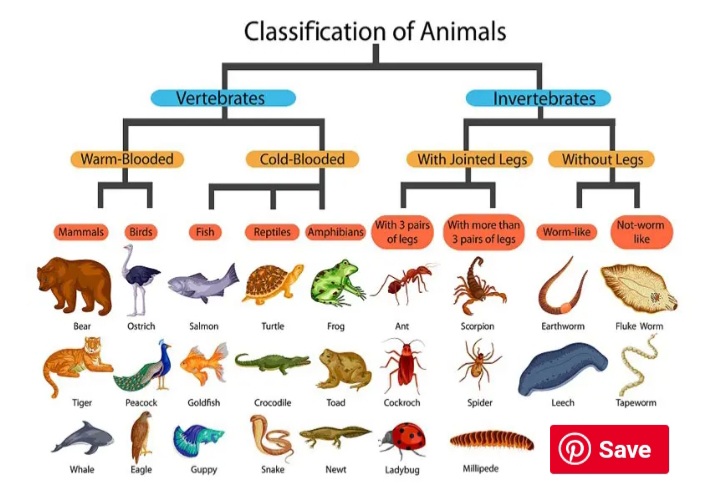
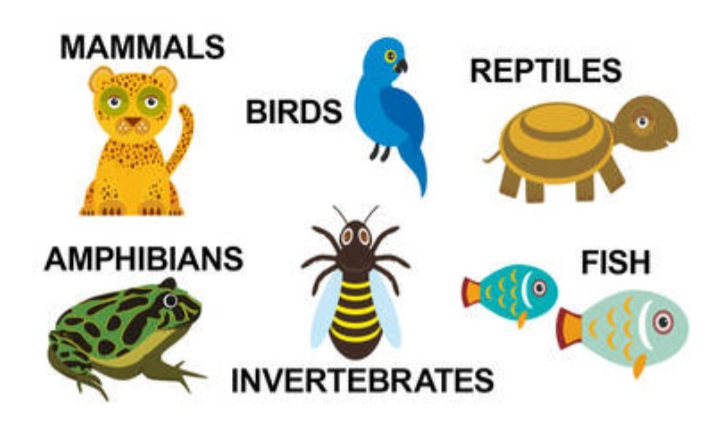
Scientists sort the different types of animals in the world into categories based on certain characteristics. Animals are generally grouped into six types of aninals. The system for animal classifications is called taxonomy.

The Animal Kingdom :

All animals belong to a biological kingdom called kingdom Animalia. This kingdom is then broken down into over 30 groups. About 75% of all species on earth are aninals. Animals are then broken down into two types : vertebrates and invertebrates.

* Animals with a backbone are vertebrates.

* vertebrates belong to the phylum called phylum chordata.

* vertebrates are classified into five classes. They are amphibians, birds, fish,mammals, and reptiles.

* Animals without a backbone are invertebrates.

* Most invertebrates are in the phylum Arthropoda.

1. Amphibians :

All amphibians are vertebrates, and they need moist environment or water to survive.

* They are cold- blooded.

* They absorb water and breathe through their thin skin

* They have at least one special king gland used for defense.

* Most follow the life cycle of egg-larva- adult.

* examples : frog , newts, salamanders, toads.

2. Birds

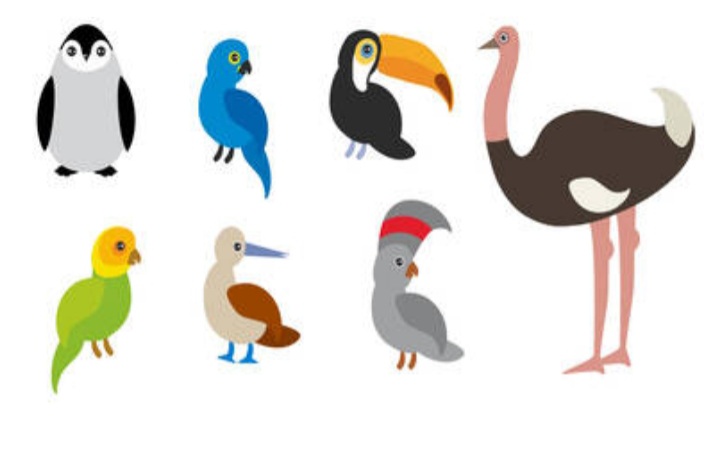
Birds are a type of warm- blooded vertebrate that are adapted to fly.

* Not all birds can fly, but they do all have wings.

* Birds have beaks that help them catch and swallow food.

* The digestive system of a bird allows it to eat whenever it can and digest that food later.

* Birds lay egg to reproduce.

* They are endothermic, mening they maintain their own constant body temperature.

* They are bipedal, which means they have two legs.

* They have hollow bones and their bodies are covered in feathers.

* Birds belong to the class called Aves.

* Examples : albatrosses, chickens, hummin birds, falcons, falmingoes, ostriches, owls, parrot, penguins, pigeons.

3. Fish :

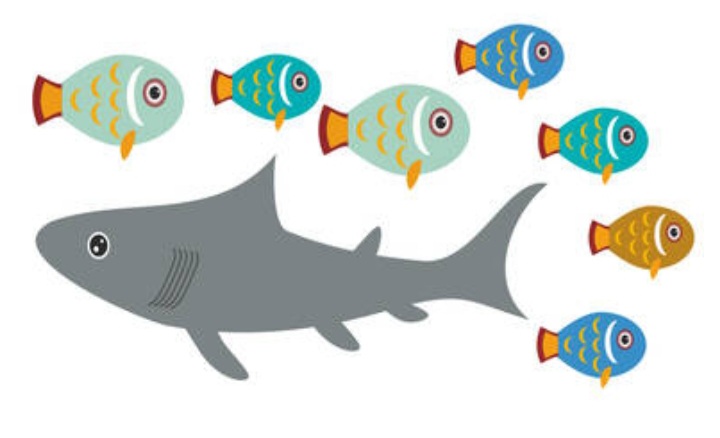
Fish are also vertebrates, and they are considered the oldest-known vertebrates.

* They are ectothermic, or cold- blooded, which means they rely on their surroundings to regulate their body temperature.

* Fish have funs.

* Most, but not all, fish have bodies covered in scales and breathe through gills.

* Fish live under water.

* Examples : eels, hangfish, lampreys, minnows, rays, salmon, seahorses, sharks.

4. Mammals :

Mammals are another type of vertebrate that belongs to the class Mammalia.

* young mammals get nourishment from milk produced by their mothers.

* Most mammals have hair.

* Their jaw is hinged directly to their skull unlike all other vertebrates.

* Almost aĺl mammals give birth to live bsbies.

* They are endothermic, or warm- blooded.

* Examples : there are over 5500 living species of mammals all over the world. Aardvarks, bats, elephants, hamsters, human, rabbits, rhinoceroses, whales.

5. Reptiles :

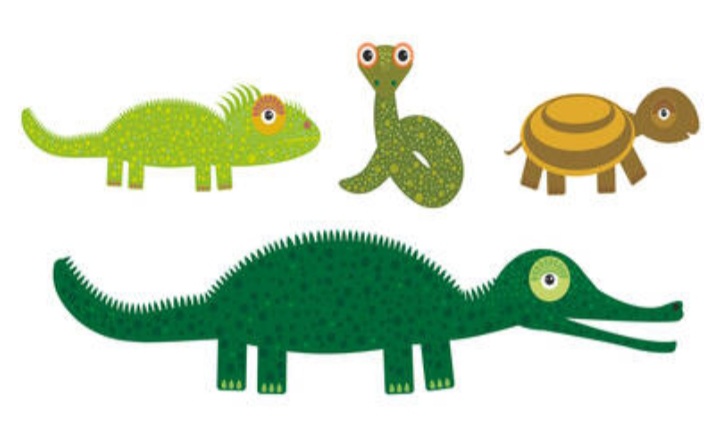
Reptiles are thought to be the first vertebrates to live completely on land. But, not all reptiles live only on land today.

* They are cold- blodded, or ectothermic

* They lay eggs to reproduce.

* They have four legs or descended from animals with four legs.

* They breathe through lungs

* Their bodies are covered in scales or scutes.

* Examples : crocodiles, geckos, lizards, sea turtles, snakes, tortoises.

Invertebrates :

Approximately 95% of all animals are invertebrates. Invertebrates do not have a backbone. There are different types of invertebrates, but they all share a few characteristics.

• They are made up of many cells that work together, or multicellular.

• Most, but not all have tissues, cells that work together in a more complex way.

• Most, but not all, can move.

• There are over 35 phyla of invertebrates.

• They generally have soft babies.

Types of Invertebrates :

There are eight phyla of invertebrayes that are alive today.

* Annelida – have a segmented body and primitive brain

* Arthropoda – have jointed appendages and an exoskeleton.

* Cnidaria – have tissues and an incomplete digestive system

* echinodermata – have some type of spiny structure on their bodies

* Mollusca – generally have sofy bodies and a hard exoskeleton.

* Nematoda – unsegmented with worm- shaped bodies

* platyhelminthes – have soft, ribbon- like worms with no respiratory system.

* porifera – multicellular organisms living in water with no organs or tissues.

Examples : anemone( cnidaria) , clams ( mollusca), coral,

BTS Converting Yet To Be Opened World Cup Bridge into Their Own Personal Fashion Runway

BTS – Reason Behind Billion “Smiles”

BTS performs “Butter” on the “World Cup Bridge” for Jimmy Fallon’s “The Tonight Show”. Lighting up the sky over Seoul, looking hot & stunning, with their powerful vocals they made sure that the haters will fall for them after watching this performance.

BTS made guest appearance on NBC’s “The Tonight Show” starring Jimmy Fallon on 13th and 14th July. On second day, they performed “Butter” – The No. 1 song on Billboard Hot 100 charts for the last seven weeks, in a location that shocked not only Army’s but also many more people around the world. They performed on the “World Cup Bridge”. Which is under construction, the bridge is planned to cross the Han River in Seoul, South Korea and connect to the Mapo District and Yeongdeungpo District. This bridge is set to open to the public in August 2021.

As you can see in the video this is not pre-recorded. They did all the choreography, with live audio, and rigged up a light show that was coordinated with the song. And! Jimmy Fallon and his show just got their names on a major architectural construction in Seoul that hasn’t even opened yet, it’s an ultimate gift for Jimmy Fallon and The Tonight Show.

BTS has previously borrowed the National Museum of Korea, a historical palace, Seoul’s Incheon International Airport, a Mall and a theatre. When the world was still vibing on “Butter” and the Army was busy breaking their own record of “Dynamite” for “Butter” the band dropped their newest single “Permission to Dance”. “Butter” has spent seven weeks at No. 1 on the Billboard Hot 100, becoming their fourth No. 1 after “Dynamite”.

The biggest boy band in the world BTS members RM, Jin, Suga, Jhope, Jimin, V and Jungkook  dropped their newest single “Permission to Dance” on last friday (9th July) as you can see in the mv they converted the sign language into choreography and showed respect to almost everyone. I don’t understand how can someone still hate them. Criticizing someone is really easy but appreciating  someone for their work is so hard.

“Butter” has spent seven weeks at No. 1 on the Billboard Hot 100, becoming their fourth No. 1 after “Dynamite”. BTS is the most successful music groups in Guinness World Records history, alongside other chart topper like Ariana Grande, Madonna.

No one is saying you have to like BTS but saying that they have no talent can easily debunked.

They are making their whole nation feel proud, everyday they are setting new records, like “Suga” said, “They just want to make people happy with their music”. BTS is breaking their own records with their talent and with their killer looks. Remember before posting trash about them that “They have got ARMY right behind them, ALWAYS” cause,

“We Purple BTS”

Property Rights

What Are Property Rights?

Property rights define the theoretical and legal ownership of resources and how they can be used. These resources can be both tangible or intangible and can be owned by individuals, businesses, and governments. In many countries, including the United States, individuals generally exercise private property rights or the rights of private persons to accumulate, hold, delegate, rent, or sell their property. In economics property rights form the basis for all market exchange, and the allocation of property rights in a society affects the efficiency of resource use.

Understanding Property Rights

Property is secured by laws that are clearly defined and enforced by the state. These laws define ownership and any associated benefits that come with holding the property. The term property is very expansive, though the legal protection for certain kinds of property varies between jurisdictions.Property is generally owned by individuals or a small group of people. The rights of property ownership can be extended by using patents and copyrights to protect:

  • Scarce physical resources such as houses, cars, books, and cellphones
  • Non-human creatures like dogs, cats, horses or birds
  • Intellectual property such as inventions, ideas, or words

Other types of property, such as communal or government property, are legally owned by well-defined groups. These are typically deemed public property. Ownership is enforced by individuals in positions of political or cultural power. Property rights give the owner or right holder the ability to do with the property what they choose. That includes holding on to it, selling or renting it out for profit, or transferring it to another party.

Acquiring Rights to a Property

Individuals in a private property rights regime acquire and transfer in mutually agreed-upon transfers, or else through homesteading. Mutual transfers include rents, sales, voluntary sharing, inheritances, gambling, and charity. Homesteading is the unique case; an individual may acquire a previously unowned resource by mixing his labor with the resource over a period of time. Examples of homesteading acts include plowing a field, carving stone, and domesticating a wild animal. In areas where property rights don’t exist, the ownership and use of resources are allocated by force, normally by the government. That means these resources are allocated by political ends rather than economic ones. Such governments determine who may interact with, can be excluded from, or may benefit from the use of the property.

Private Property Rights

Private property rights are one of the pillars of capitalist economies, as well as many legal systems, and moral philosophies. Within a private property rights regime, individuals need the ability to exclude others from the uses and benefits of their property. All privately owned resources are rivalrous, meaning only a single user may possess the title and legal claim to the property. Private property owners also have the exclusive right to use and benefit from the services or products. Private property owners may exchange the resource on a voluntary basis.

Private Property Rights and Market Prices

Every market price in a voluntary, capitalist society originates through transfers of private property. Each transaction takes place between one property owner and someone interested in acquiring the property. The value at which the property exchanges depends on how valuable it is to each party. Suppose an investor purchases $1,000 in shares of stock in Apple. In this case, Apple values owning the $1,000 more than the stock. The investor has the opposite preference, and values ownership of Apple stock more than $1,000.

Book Review: The Girl Who Saved the King of Sweden

The Girl who saved the king of Sweden is written by Jonas Jonasson. His best-selling novel is the hundred years old man who climbed out of the window and disappeared.

Book plot:

Nombeko Mayeki is born a poor black girl in Soweto. She leaves the slums and in a twist of fate. She ran over a car but survives. this puts her into the employ of the engineer who ran her over, as a cleaner in South Africa’s secret nuclear weapons facility.
Nombeko is smart, brilliant and a fast learner. Even during her childhood, she is surrounded by uneducated people, still, she managed to teach herself how to read write, and calculate arithmetics. She even tells the answers of long multiplications within seconds. She learned English and poetry from a scholar who has 32 diamonds in his teeth. He is irresponsible about his life, but he is good at poetry and reading. First, he wanted to seduce Nombeko but, she stabbed his leg with her scissors and made him use a crane for more than several months. After that incident she always had her scissors wherever she goes, one night she came to know that person is dead and went to his home and grabbed all his diamonds then in the morning she left her native place.
In the custody of the engineer, she taught herself engineering arithmetics and science as well as learned Chinese from the other servent sisters. After fate made her escape from there. She went to Sweden but… Instead of antelope meat, one of the atomic bombs ended up inside her luggage.
Nombeko’s Ultimate wish is to live a normal and happy life with her own family and children. How does she gets rid of that nuclear weapon, what happened to her diamonds? how she lives her life normally and how she saves the king of Sweden- as it is said in the title of the book is the main plot of this book.

About the book:

This is one of the books that you never feel pathetic whenever a character dies. Cause, the whole book is written in a comical manner, and the author used a lot of anectode and funny incidents to make the book more alive.

Some facts about Jonas Jonasson’s books:

  • His storylines will be simple and understanding. Whatever the plot might be, it will have the question mark of what is going to happen at every end of the chapters in our minds.
  • Jonas Jonasson’s book themes will be similar to his other works. The cover itself tells you that the appearance of the books is similar to one and another.
  • Jonas Jonasson is a comedy writer. Who writes with a lot of anectodes and comical scenes. He is one of the authors who has the ability to make the funeral into a theatre.

Book Quotes:

It sure was an unjust world when certain people received an excess of certain things, while others got nothing.

The more I see of men, the more I like my dog.

The difference between stupidity and genius is that genius has its limits.

Neeraja Bhanhot – life

Neeraja Bhanhot was born on 7 September 1963, in Chandigarh, Punjab, India, to Rama Bhanot and Harish Bhanot, a Mumbai- based journalist. She was the couple’s third child, a much longed – for daughter after two sons, Akhil and Aneesh. Neeraja attended Chandigarh’s Scared Heart School till she was in the 6th Standard, after which her family moved to Mumbai . There she attended Bombay Scottish School and went on to graduate from St. Xavier’s College. Even though Neeraja’s career had taken off, her family decided to get her married to a man in Sharjah, UAE. By March 1985, Neeraja was married. This is where her life took a turn for the worse. The marriage proved to be a disaster. After two months, she left her husband at the age of 22, due to pressurising dowry demands. But this woman refused to surrender to the society because she was born with the spirit to fight. Despite a sour marriage, she started her career in modelling and made appearance in various advertisements like Binaca toothpaste etc. She then applied for a flight attendant’s job with Pan Am, the principal and largest international air carrier in the United States at that time. Only 80 of the 10,000 applicants were picked, and Neeraja was one of them. She was sent to Miami to train for 6-8 weeks, and within a year, based on performance and peer review, she was sent to London to train to be a purser- the senior most cabin manager. Pursers worked as managers on flights, handling passenger complaints, making required announcements and handling security. She was soon made a senior flight purser with the airways – a big career achievement for a young woman of 22.

Financial Literacy

What Is Financial Literacy?

Financial literacy is the ability to understand and effectively use various financial skills, including personal financial management, budgeting, and investing. Financial literacy is the foundation of your relationship with money, and it is a lifelong journey of learning. The earlier you start, the better off you will be, because education is the key to success when it comes to money.

Read on to discover how you can become financially literate and able to navigate the challenging but critical waters of personal finance. And when you have educated yourself, try to pass your knowledge on to your family and friends. Many people find money matters intimidating, but they don’t have to be, so spread the news by example.

Understanding Financial Literacy

In recent decades financial products and services have become increasingly widespread throughout society. Whereas earlier generations of Americans may have purchased goods primarily in cash, today various credit products are popular, such as credit and debit cards and electronic transfers. Indeed, a 2019 survey from the Federal Reserve Bank of San Francisco showed that consumers preferred cash payments in only 22% of transactions, favoring debit cards for 42% and credit cards for 29%.

Other products, such as mortgages, student loans, health insurance, and self-directed accounts, have also grown in importance. This has made it even more imperative for individuals to understand how to use them responsibly. Although there are many skills that might fall under the umbrella of financial literacy, popular examples include household budgeting, learning how to manage and pay off debts, and evaluating the tradeoffs between different credit and investment products. These skills often require at least a working knowledge of key financial concepts, such as compound interest and the time value of money. Given the importance of finance in modern society, lacking financial literacy can be very damaging to an individual’s long-term financial success.

Being financially illiterate can lead to a number of pitfalls, such as being more likely to accumulate unsustainable debt burdens, either through poor spending decisions or a lack of long-term preparation. This in turn can lead to poor credit, bankruptcy, housing foreclosure, and other negative consequences. Thankfully, there are now more resources than ever for those wishing to educate themselves about the world of finance. One such example is the government-sponsored Financial Literacy and Education Commission, which offers a range of free learning resources.

Strategies to Improve Your Financial Literacy Skills

Developing financial literacy to improve your personal finances involves learning and practicing a variety of skills related to budgeting, managing and paying off debts, and understanding credit and investment products. Here are several practical strategies to consider.

Create a Budget—Track how much money you receive each month against how much you spend in an Excel sheet, on paper, or with a budgeting app. Your budget should include income (paychecks, investments, alimony), fixed expenses (rent/mortgage payments, utilities, loan payments), discretionary spending (nonessentials such as eating out, shopping, and travel), and savings.

Pay Yourself First—To build savings, this reverse budgeting strategy involves choosing a savings goal (say, a down payment for a home), deciding how much you want to contribute toward it each month, and setting that amount aside before you divvy up the rest of your expenses.

Pay Bills Promptly—Stay on top of monthly bills, making sure that payments consistently arrive on time. Consider taking advantage of automatic debits from a checking account or bill-pay apps and sign up for payment reminders (by email, phone, or text).

What Is a TLD? Top-Level Domains

What Does Top-Level Domain (TLD) Mean?

Top-level domain (TLD) refers to the last segment of a domain name or the part that follows immediately after the “dot” symbol.

For example, in the internet address: https://www.google.com,  and Domain.com
 the “.com” portion is the TLD.

TLDs are mainly classified into two categories: generic TLDs and country-specific TLDs.

Examples of some of the popular TLDs include:

.com
.org
.net
.gov
.biz
.edu.

The Internet Corporation for Assigned Names and Numbers (ICANN), is the entity that coordinates domains and IP addresses for the internet.

Historically, TLDs represented the purpose and type of domain or the geographical area from which it originated. ICANN has generally been very strict about opening up new TLDs, but in 2010, it decided to allow the creation of numerous new generic TLDs as well as TLDs for company-specific trademarks.

Top-level domains are also known as domain suffixes.

Top-Level Domain (TLD)

ARPANET created TLDs to allow humans to ease the process of memorizing IP addresses. Instead of using a series of digits for each computer, the domain name system was established to organize addresses in a more user-friendly way.

In 1971, the first email was developed and sent using an “@” symbol. The “address” after the @ was not the domain but the actual computer it was sending to. In the early 1980s, when the earliest domains started being developed, the first TLDs such as .org and .com saw the light.

A top-level domain recognizes a certain element regarding the associated website, such as its objective (business, government, education), its owner, or the geographical area from which it originated.

Each TLD includes an independent registry controlled by a specific organization, which is managed under the guidance of the Internet Corporation for Assigned Names and Numbers (ICANN).

ICANN recognizes the following types of TLDs:

Generic Top-Level Domains (gTLD)
These are the most popular types of TDLs. Some examples include “.edu” for educational sites and .”com” for commercial sites. These types of TLDs are available for registration.

Country-Code Top-Level Domains (ccTLD)
Every ccTLD recognizes a specific country and is generally two letters long. For example, the ccTLD for Australia is “.au”.

Sponsored Top-Level Domains (sTLD)
These TLDs are supervised by private organizations.

Infrastructure Top-Level Domains
There is only one TLD in this category, which is “.arpa”. The Internet Assigned Numbers Authority controls this TLD for the Internet Engineering Task Force (IETF).

In earlier times, the purpose of each TLD was specific, such as .com which was used only for commercial websites. Eventually, as the Internet kept growing and evolving, this restriction was abandoned, and now there’s almost no distinction between most TLDs.

However, some TLDs are reserved for some unique purposes even today, such as gTLDs that are assigned for educational institutions (.edu) and those assigned for government and the military (.gov and .mil).

Some of the TLDs and their original explanations are as follows:

.com — Commercial businesses.
.org — Organizations (generally charitable).
.net — Network organizations.
.gov — U.S. government agencies.
.mil — Military.
.edu — Educational facilities, like universities.
.th — Thailand.
.ca — Canada.
.au — Australia.

.in — India

How to Buy a Domain Name: Domain Registration Guide

If you want to start a blog or a new online business, you’ll need to register a domain name, the name for your website. Getting the right domain for your needs might sound technical at first, but the process is pretty simple.

This domain registration guide will tell you what you need to know about domain name extensions, how to choose the right one for your needs, and the steps you’ll need to take to check if a domain name is available and to register your domain.

What Is a Domain Name?

Every website on the internet has an IP address. These addresses point to a website’s location — think of them like GPS coordinates. The IP address, which is generally a set of numbers, usually resembles something like this:

Unfortunately, trying to remember all of those numbers in order to navigate to a website can be challenging. That’s where domain names step in and lend a hand.

A structure called the Domain Name System (DNS) translates those IP addresses into names that are (hopefully) simple to remember. Those names are called domain names.

Your website’s domain is what people enter into the address bar on their browsers to point it toward your website. In the simplest terms, if an IP address is your website’s GPS coordinates, the domain is its street address. Some examples are mailchimp.com and google.com.

When someone types a domain into a browser, it gets routed through a DNS server. That server translates the name to figure out which IP address it points to. Then it grabs the data for that website and delivers it to the browser. This process happens in a matter of seconds, letting you find and view a website fast.

Types of Domains

According to Verisign, there were over 360 million registered domains in 2019. The types you can buy vary greatly. To make the best choice, you need to first understand the anatomy of a domain, which is made of two main parts — a second-level domain (SLD) and a top-level domain (TLD).
Second-Level Domains (SLDs)

A second-level domain is what most people think of when they think of the name of a website. It’s the unique name that you choose to represent your brand because it’s the part that people will remember the most.

In a web address, an SLD appears just to the left of the extension, or top-level domain. It can contain as many letters, numbers, and special characters as you want, but it’s best to keep them short and easy.
Top-Level Domains (TLDs)

Top-level domains (TLDs) are also referred to as domain extensions. They’re the series of letters that appear at the right of your SLD, after the dot. The most popular ones include:
.com: Short for “commercial,” this was the first TLD launched, initially meant for business and commercial use. It’s still the most popular.
.net: Short for “network,” this was created for technology organizations, but it has become another common option for business website owners of all types.
.edu: Short for “education,” this TLD was created for universities, colleges, and other educational institutions. Today, it’s mostly associated with U.S. schools.
.org: Short for “organization,” this was developed for non-profit organizations but soon became popular among schools, communities, and for-profit enterprises.
.gov: Short for “government,” this was created strictly for U.S. government agency use.
.mil: Short for “military,” this TLD was developed solely for use by branches of the U.S. military.

There are also TLDs for different countries (.ca for Canada, for example) as well as niche domains like .coffee, .cheap, and .ninja. In all, there are more than 1,500 different TLDs to choose from, and the list continues to grow. But the cost for different TLDs vary. Some carry more “weight” than others, which should impact your decision when buying a domain.

How Much Does a Domain Name Cost?

When you buy a domain name through domain registrars, you register it for one year with the option of a multi-year registration. You will be able to renew your domain name registration when the initial period finishes, and will usually be alerted by the registrar to do so. Domain names are also sometimes included in your web hosting plan and if not, usually offered by your hosting company.

A domain name with a common top-level domain, such as .com, can be had for as low as $12.99 per year, and promotions are often available. Internet domains purchased through Mailchimp also come with free WHOIS privacy protection and a Secure Sockets Layer (SSL) certificate to provide your website with free verification and encryption.

You do need to have a web hosting plan to put your site online, but you don’t need to have hosting to purchase a domain. Assuming you have a business or blog name in mind, it’s possible to reserve your brand’s name for the future by purchasing and registering your domain name now. Then you’ll have plenty of time to consider how to build your website.

How to Choose a Domain Name

Since your domain name can have a major impact on your online presence, what you choose is a vital first step in building your brand. Finding the perfect domain name, however, can be challenging.

While it’s true that there are millions of domain names available, many of the popular domain names that are easy to remember are taken. Fortunately, you can still get what you need if you go through a simple process and use a bit of imagination.
Make It Brandable, Not Generic

Creative, memorable domain names are always better than generic ones. After all, your domain name is how people will find, remember, and spread the word about your business on the internet. It’s much better to have something that aligns with your brand instead of a domain name that’s made up of a bunch of general keywords.

For example, can you tell the difference between cheapcarinsurance.com and affordableautoinsurance.com? Which one would you trust when it comes to buying insurance? Probably neither. Both sound a little spammy, and they’re terribly generic.

On the other hand, you’ll probably know where the domain names progressive.com or geico.com are going to point you to. Those companies have invested in their brands, and they’ve used them in their domain names. You can trust that these sites are legitimate.

Even if you haven’t built up trust and loyalty yet, you can start by choosing a strong domain name that fits your brand.

Choose the Right Domain Extension

When picking the extension or TLD for your domain name, “.com” is still the best choice unless you have a reason to choose something else. Roughly 43% of all domains have a .com extension, making it what people expect to see the most.

While Google confirms that your choice of TLD will not impact rankings, it does affect consumer perception. Many people view other TLDs as less trustworthy.

That said, .net or .org extensions are not uncommon, so they can be good secondary options if you find the perfect name and the coveted .com isn’t available.

But if you do decide to go with an extension other than a .com, make sure you take a look at what type of website is currently on the .com extension. Someone is bound to go there accidentally while looking for your brand. If the site holds fishy or offensive content, you might want to steer clear of that name altogether.

Finally, avoid those niche domain name extensions like .space, .club, .pizza, unless you really think they’ll enhance your brand.

Watch Domain Length

When it comes to domain name length, shorter is better. Search engines — Google in particular — give preference to easy-to-understand and simple domain names that deliver what they promise. URLs that are filled with numbers and special characters can hurt search engine rankings.

Your domain name should be as short as possible while still capturing the concept of your website. Short domains are easier to read, take up less room on marketing materials, and have a better chance at sticking in visitors’ memories.

The downside to short domain names is that there are fewer of them available. But, if your brand name is 100% unique or has some other creative element to it, you might be able to find something to fit the bill.

So, what is an acceptable length? Aim for 6 to 14 characters with a focus on the shorter end of that range.

Make It Memorable

Whatever domain you choose should also be memorable. It should be simple enough for anyone to spell and type.

Not sure if your domain name is memorable? Tell it to 10 friends and ask them if they can spell it. If more than a few struggle, you need to pick something else.

Provided your chosen domain name passes that first test, make sure it’s also easy to pronounce for the sake of word-of-mouth promotion. Use that same “10 friends” test as a guide. Write the domain name down and ask your friends to pronounce it. If no one struggles, you have a winner.

Think about some popular websites like Yahoo, Amazon, Reddit, and Twitter. Each is short and easy to spell. If you choose poorly, there’s a good chance that many of your visitors are going to end up on someone else’s website.

Avoid Numbers and Hyphens

Imagine asking your 10 friends to spell or pronounce a domain name filled with numbers and dashes. It won’t work.

If you choose a domain name with these elements, you’re likely going to lose traffic to people who can’t remember your domain or effectively tell someone else how to find it. We probably wouldn’t have Facebook today if you had to go to Face-Book.com to reach the site.
Check for Trademark Infringement

Both major and minor brands alike take issue with others using their trademarked names. Even if you’ve just made an innocent mistake, the legal hassle involved in a lawsuit and having to rearrange your web presence could be costly.

You can avoid these situations by using a trademark lookup tool before you finalize your choice.
Future-Proof Your Domain Name

Domains and websites are long-term investments. That means you should avoid choosing a domain name that includes a year or the latest trendy catchphrase.

Think about where your business or brand might be in five or ten years. If you provide basic SEO services now, you might end up expanding your offerings as your business grows. So, using the words “marketing” or “digital marketing” might be better descriptors than “SEO services.”
Use a Domain Name Generator

If you’re not the creative type, you can use a domain name generator to help spark some ideas. Simply enter in some words or phrases that describe your brand or website, and these tools will give you a list of ideas that you can then check for availability.

Steps to Buying a Domain Name

Let’s assume you have a list of catchy, memorable, branded, and short domain names, and you’re ready to buy. Here are the steps for buying and registering your domain name.
1. Choose a Reliable Domain Registrar

To get a domain name, you should first find a registrar that is accredited with the Internet Corporation for Assigned Names and Numbers (ICANN), which is the nonprofit organization responsible for coordinating all of the numerical spaces on the internet. Mailchimp offers domains governed by ICANN.
2. Find a Domain Availability Checker Tool

The next step in your journey is a domain name search and should involve a domain availability checking tool. This will tell you if the domain you want, such as tinysgarage.com, is available or not.

3. Choose the Best Domain Name Option

When you’re checking for available domain names, you’ll often find that your first, second, and tenth choices are already taken. Some of the different approaches you can take when this happens are:
Keep searching. Let your creative juices flow, and continue to search until you find something you love — or at least like.
Choose another extension. If the .com isn’t available and you’re set on a certain name, consider the .net or .org if you think it will work.
Reach out to the owner. Maybe the domain is already owned, but it’s not being put to much use. You could reach out to the owner with an offer.

4. Purchase Your Domain Name and Complete Its Registration

During the checkout process, you’ll be required to enter your contact information, including an email address, to register the domain.

5. Verify Ownership of Your New Domain

Paying for your domain might seem like the last step in the process, but you also need to verify your ownership. This step lets you send email using the domain (myname@topnotchsales.com, for instance) and keeps other people from using it without your permission.

If you purchase your domain through marketplace, this process is simple. You’ll receive a verification email after you complete your purchase. Simply click on the Verify Domain button in the email and follow the instructions on the next page, and you can start using your domain to build your brand. You’ll only ever have to complete this step once.

Buying a Domain from Another Person

If the domain name you want is already owned, it might still be available. Assuming you find a name that you simply must have, here are the steps to complete a purchase:
1. Find the Owner’s Contact Information

Locate the owner of the domain by looking up their contact information through the WHOIS directory. If it isn’t listed, you may be able to contact them from information you find on the domain’s website.
2. Negotiate a Fair Price

Once you make contact, offer a fair price for the domain. If you aren’t sure about a price, do some research. You can even hire a broker to facilitate the deal on your behalf if you want the domain badly enough.
3. Complete the Sale Using Escrow

Avoid wiring money to a stranger on the internet. It’s just a bad idea. Instead, use an escrow service to ensure that both parties are satisfied and your sale is as low risk as possible.


What is psoriasis?

Psoriasis is an immune-mediated disease* (a sickness with an uncertainreason that is characterisedby usinginfectionprecipitatedby using dysfunction of the immune system) that reasonsirritation in the body. There can also be seensigns and symptoms of the irritation such as raised plaques (plaques may additionallyappearextraordinary for specialpores and skin types) and scales on the skin.

This happensdue to the fact the overactive immune device speeds up pores and skintelephone growth. Normal pores and skin cells definitelydevelop and shed (fall off) in a month. With psoriasis, pores and skin cells do this in solely three or 4 days. Instead of shedding, the pores and skin cells pile up on the floor of the skin. Some humansfile that psoriasis plaques itch, burn and sting. Plaques and scales might alsoshow up on any phase of the body, even though they are normallyobserved on the elbows, knees, and scalp.

Inflammation brought onthrough psoriasis can have an effect ondifferent organs and tissues in the body. People with psoriasis can alsoadditionallyjourneydifferentfitness conditions. One in three human beings with psoriasis can alsoadditionallyimprove psoriatic arthritis. Signs of PsA encompass swelling, stiffness and ache in the joints and areas surrounding the joints. PsA regularly goes undiagnosed, especially in its milder forms. However, it’s vital to deal with PsA early on to assistkeep away fromeverlasting joint damage.

Symptoms frequently begin between a while 15 and 25, however can begin at any age. Men, women, and teens of all pores and skin colorations can get psoriasis.

Locations and Types

Psoriasis can show upsomewhere on the body, even on the eyelids, ears, lips, pores and skin folds, hands, feet, and nails. Plaques can be a few small patches or can have an effect ongiant areas. It’s feasible to have psoriasis plaques and scales in extra than one area on the physique at a time.

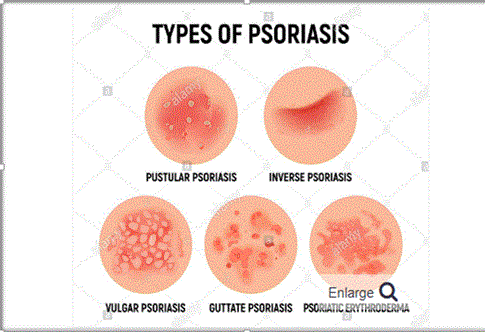
There are 5kinds of psoriasis. It’s feasible to have greater than one kind of psoriasis at one time and extra than one kind in a lifetime. Treatments can also range relying on the kind and area of the psoriasis.

Causes and Triggers 

While scientists do now not be aware of what precisely motives psoriasis, we do recognize that the immune gadget and genetics play essential roles in its development. One issue we do know: psoriasis is no longer contagious. You can’t trap psoriasis from every other person. Usually, some thing triggers psoriasis, inflicting signs and symptoms to show up or worsen. Triggers fluctuate from character to person.

Life with Psoriasis

As with different continual diseases, psoriasis can also have an effect on areas of your lifestyles different than your bodily health. Psoriasis may additionally have an effect on your emotional health, your relationships, and how you take care of stress. It may want to even have an effect on areas of your existence that you wouldn’t expect, such as the garments that you pick to wear. For some people, residing with psoriasis can be a challenge. However, there are approaches to take care of these challenges so you can thrive with psoriasis

Let us tell you 5 ways of Ayurveda so that you can        deal with Psoriasis.

  1. We should avoid eating fish or salty with milk. We have to avoid eating very sweet, salty, chili, milk, curd and sour food.
  2. We should  try that our skin is not dry. We can also massage with oil so that the skin does not become dry
  3. Panchakarma
    • In this, we get a lot of relief from (vomiting) vaman and virechana.
  4. Medicine
  • Arogyavardhini  vati

          2-2 tab . morning-evening

                      +

mahamanjisathdi vati

           2-2 tab morning – afternoon – evening.

                          +

  • vrihad Panchanimbadi churna
    • Gm. Morning- afternoon- evening.

                        +

  • khadiraristha sarivadyasva

           20-20 ml. morning – afternoon- evening with water

5. And we have to apply it very well on the whole body where there is psoriasis.

And whenever you take treatment, please take the advice of the doctor.

This disease is not a contagious disease, so please make the patient feel comfortable.

Conclusion –

  • Ayurveda is an historic clinical exercise that some human beings attempt for psoriasis. It entails precise dietary habits, natural compounds, and a number different supportive practices.
  • In this article, we had appear at the advantages of Ayurveda for humans with psoriasis.

Little Women : A classic for the ages

by Louisa May Alcott

Although it hadn’t won any awards at the time of its release, multiple film adaptions, television shows, plays and retellings are a testament to the cult that surrounds the book “Little Women” by author Louisa May Alcott (1832-1888). Published in two volumes in 1868 and 1869, Alcott wrote the book in response to a request from her friends and family to write a book for young girls. The first novel was a huge success and struck a chord with readers and Alcott was flooded with letters requesting the second volume immediately. She quickly wrote the next volume to accommodate them. Eventually, the two volumes were released as one novel in 1880.

The novel continues to be very widely read and the ambitious female characters in it contributed to the rise of feminism in 20th century America. It revolves around the story of the four March sisters: Margaret “Meg”, Josephine “Jo”, Elizabeth “Beth” and Amy as they live their lives and grow into adults. The girls must contend with learning to become good women and learning about who they are as people with the help of their mother and father.

While on the surface it may come across as a simple story about the four March girls’ journeys from childhood to adulthood, Little Women centres on the conflict between two emphases in a young woman’s life—that which she places on herself, and one which she places on her family. In the novel, an emphasis on domestic duties and family detracts from various women’s abilities to attend to their own growth. For Jo and, in some cases, Amy, the problem of being both: an individual skilled at what they do and to be a dutiful woman creates conflict and pushes the boundaries set by nineteenth-century American society.

At the time when the novel was composed, women’s status in society was slowly increasing. As with any change in social norms, however, progress toward gender equality was made slowly. Through the four different sisters, Alcott explores four possible ways to deal with being a woman bound by the constraints of societal expectations: marry young and create a new family, be subservient and dutiful to one’s parents and immediate family, focus on one’s art, pleasure, and person, or struggle to live both a dutiful family life and a meaningful professional life . While some of the March sisters conform to society’s expectations of the role that women should play, the others initially attempt to break free from these constraints and nurture their individuality. Eventually, however, settling into a more customary life. While Alcott does not suggest that one model of womanhood is more desirable than the other, she does recognize that one is more realistic than the other.

The novel contains five intrinsic aspects: character, theme, setting, plot, and writing style. It is an unusual example of young adult literature of the time because Alcott gives her character with both faults and virtues, avoids teaching to reader, writes in a simple but accurate style, employs simple and often humorous dialogue. Heart-warming and emotional, Little Women by Louisa May Alcott has stood the test of time, and indeed deserves the title of being the cult classic we all know.

China’s 5 Year Plan (2021-2025): Proposed Dam on River Brahmaputra

The five-year plans are a sequence of economic and social development initiatives furnished by the CCP (Chinese Communist Party) since 1949. The five-year plans were inspired by the five-year plans from the USSR and the focus was on launching new schemes, reforms and setting new growth targets.

Since the 11th five-year plan (2006-2010), the Chinese government has mentioned it as ‘Guidelines’ instead of plans. Currently China is on its 14th five-year plan/ guidelines. Unlike the previous five year plans, there is no specific GDP growth target and instead, the government announced that growth would be kept in “reasonable range” and an annual target would be set based on the specific conditions each year. The focus of the current plan is on self-sufficiency as the country had to endure difficulty after the United States had restricted China’s major chip makers from using American technology. Other areas of focus will be on the above 7 percent growth in the research and development spending. The government will also try to raise the urban residents to 65 percent of the population while maintaining green development and increasing the life expectancy by 1 year. Infrastructure will also be an area of priority with a focus on high-quality development of the belt and road initiative.

One of the biggest infrastructure projects of the 14th The five-year plan (2021-2025) has been officially approved to build a series of dams in the lower reaches of the Yarlung Zangbo River, as the Brahmaputra is known in Tibet before it flows into India.

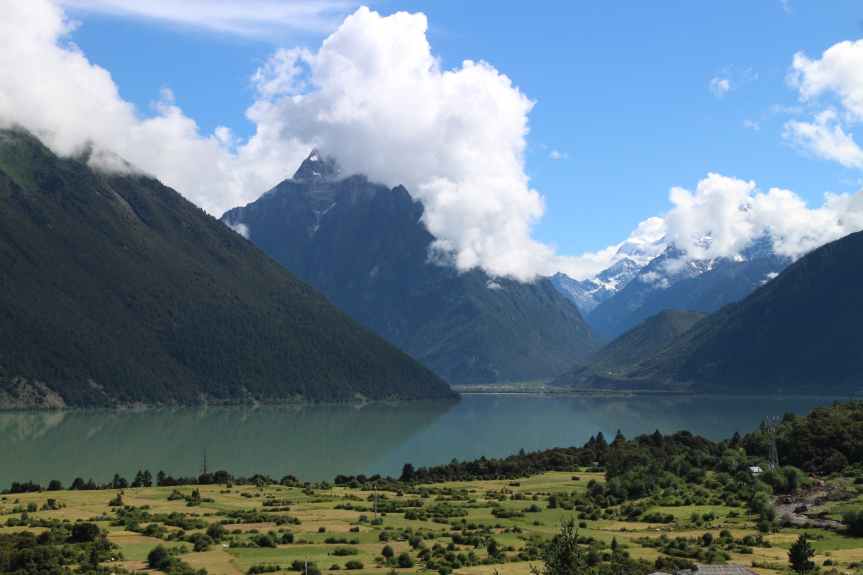
The proposed dam would be in Medog, Tibet region will have a maximum possible capacity of 60 gigawatts and could potentially produce 300 billion kWh annually. The location is an area called ‘the great bend’ also known as ‘Yarlung Tsangpo Grand Canyon’ where the river goes through a very drastic U-turn and then the river descents from an elevation of 3000 meters to around 800 meters. Due to the drastic elevation change, the river flow is quite strong and is also an ideal location to build the dam.

The location of the dam could be a strategically risky move by china as it is very close to the Indian border but the other issue is that this proposed dam can undermine the water security of India. India relies heavily on the Brahmaputra River for agriculture and various other purposes.  Due to this, the proposed Dibang Dam by India in downstream (Arunachal Pradesh) might be the solution to offset the effect of the Chinese proposed dam. Although the majority of the catchment area of Brahmaputra is on the Indian side there is still the issue of water flow from the upstream as Assam usually suffers from floods in the rainy season and any additional water flow from the Chinese dam would make the situation worse. The problem will not only affect India but also Bangladesh due to its low-lying land and flood-prone region. Problem is that the region is ecologically diverse and sensitive and any kind of development in this region will negatively affect the ecology of this region. Due to turbulent tectonic plates, there are high chances of landslides and earthquakes as well. India will have to be vigilant and develop its strategy according to the developments on the Chinese side.

References:

Breaking Down the Myths on Self Harm

Self-harm is very common and affects more people than you might think. This means it’s likely that at least two young people in every secondary school classroom have self-harmed at some time, so if you are self-harming, you are not alone – lots of information and support is available.

Self-harm isn’t a suicide attempt or a cry for attention. However, it can be a way for some people to cope with overwhelming and distressing thoughts or feelings.  Self-harm should be taken seriously, whatever the reason behind it. It is possible to live without self-harm. It is important to know that you won’t always feel the way you do now. With the right help and support most people who self-harm can and do fully recover.

The self-harm cycle

Self-harm most frequently takes the form of cutting, burning or non-lethal overdoses, resulting to behavioral outbursts. It usually starts as a way to relieve the build-up of pressure from distressing thoughts and feelings, as a temporary relief from the emotional pain the person is feeling. It’s important to know that this relief is only temporary because the underlying reasons still remain. Soon after, feelings of guilt and shame might follow, which can continue the cycle.

The self-harm cycle

Because there may be some temporary relief at the start, self-harm can become someone’s normal way of dealing with life’s difficulties. This means that it is important to talk to someone as early as possible to get the right support and help. Learning new coping strategies to deal with these difficulties can make it easier to break the cycle of self-harm in the long term.

While it is true that anyone can be affected by self-harm, some people are more likely to self-harm than others because of things that have happened in their lives – where they live, things that are happening with friends, family or at school, or a combination of these. This means that some people are more at risk of self-harm than others. Some factors that might make someone more at risk are:

  • Experience of a mental health disorder. This might include depression, anxiety, borderline personality disorder, and eating disorders.
  • Being a young person who is not under the care of their parents, or young people who have left a care home.
  • Being part of the LGBT community.
  • Having been bereaved by suicide

Some people can manage these troubles by talking to friends and family, while others may find these difficulties overwhelming. When we don’t express our emotions and talk about the things that make us distressed, angry or upset, the pressure can build up and become unbearable. Some people turn this in on themselves and use their bodies as a way to express the thoughts and feelings they can’t say aloud, hoping that the pain they inflict upon themselves will distract them from their mental pain and negate it.

There are lots of myths attached to self-harm. Negative stereotypes can be powerful enough to hurt someone who’s already hurting.

MYTH: ‘Self-harm is attention-seeking’

One of the most common stereotypes is that self-harm is about ‘attention seeking’. This is not the case. Many people find it difficult to talk to anyone about what they are going through for a long time and it can be very hard for them to find enough courage to ask for help, hence they find self arm the easiest way to let all the pain out.

MYTH: ‘Self-harm is a goth thing

Self-harm has been stereotyped to be seen as part of youth subcultures such as “goth” or “emo”. There is no conclusive evidence of this with little or no evidence supporting the belief that self-harm is part of any particular young person subculture. A certain way someone dresses has no connection to one’s mental state. Dressing up all black with pierced and inked skin and dark eye makeup doesn’t mean you cannot be happy, or living in a rich or posh family doesn’t mean you can’t be hurting. Human mind works in different ways and stereotyping our upbringings doesn’t do justice to it.

MYTH: ‘Only girls self-harm’

It is often assumed that girls are more likely than boys to self-harm, but boys aren’t heartless. It doesn’t necessarily mean that if a boy is unable to express his feelings, they aren’t worth heard about and dealt with.

MYTH: ‘People who self-harm must enjoy it’

Some people believe that people who self-harm take pleasure in the pain or risk associated in the behavior. The term “harm” means pain. For some, being depressed has left them numb and they want to feel anything to remind them they are alive, even if it hurts, because sometimes emotions can be overwhelming enough to make you vulnerable to an extent that you choose harming yourself for the sake of feeling something instead of talking it out. Nobody would voluntarily want to hurt themselves in their normal state of mind.

MYTH: ‘People who self-harm are suicidal’

Self-harm is sometimes viewed as a suicide attempt by people who don’t understand it. For many people self-harms is about trying to cope with difficult feelings and circumstances. Some people have described it is a way of staying alive and surviving these difficulties, some look at it as punishment for the deeds they regret doing. However, some people who self-harm can feel suicidal and might attempt to take their own life.

People often link self-harm to suicide but for me it was something very different; it was my alternative to suicide, my way of coping even though sometimes I wished that my world would end.

Yes. Talking to someone is the first step to getting out of the cycle.

Telling someone about your self-harm shows strength and courage; it can often be a huge relief to be able to let go of such a secret, or at least share it.

One shouldn’t be afraid to ask for help whenever and however they need to. Talking about your feelings isn’t a sign of weakness, it shows that you are taking charge of your well-being and doing what you need to stay healthy. It isn’t always easy to express how you are feeling. Talking can be a way of coping with a problem you’ve been carrying around in your head for a while. Feeling listened to can help you feel more supported and knowing that you aren’t alone in this.

I’ve tried so many distraction techniques – from writing down my thoughts, hitting a pillow, listening to music, writing down pros and cons. But the most helpful to my recovery was the five minutes rule, where if you feel like you want to self-harm, you wait for five minutes before you do it, then see if you can go another five minutes, and so on till eventually the feeling that you need to is over.

Many people stop hurting themselves when the time is right for them. Everyone is different and if they feel the need to self-harm at the moment, they shouldn’t feel guilty about it – it is a way of surviving, and doing it now does NOT mean that they will need to do it forever. It is a huge step towards stopping when they begin to talk about it, because it means that they are starting to think about what might take its place eventually.

Biography-Abraham Lincoln

” I walk slowly, but I never walk backward” -Abraham Lincoln

Abraham Lincoln, the 16th President of the United States, guided his country through the most devastating experience in its national history- Civil War. He is considered by many historians to have been the greatest American President. He was born on 12February,1809 in Hardin (now Laure) country in Kentucky. His father Thomas Lincoln was a skilled carpenter and his mother was Nancy Hanks. Lincolns left Kentucky and moved to Indiana in 1816. There little Lincoln attended some schools for less than a year altogether. Lincolns left Indiana for Illinois in 1830. In 1831 Lincoln left home for New Salem and served briefly in the black Hawk War (1831). The military interlude was uneventful except that he was elected Captain of his volunteer Company. In 1842 he married Mary Todd. He served one term (1847-49) as a member of the US House of Representatives where he opposed the Mexican War as unnecessary and unconstitutional. He had been indifferent about the annexation of Texas, already a slave territory, but he opposed any expansion that would allow slavery into new area, gained as a result of the Mexican war. He expressed his view that the nation would become “either all slave or all free”. He won the Presidential election as the 16th President of the US and his inauguration was held in March 1861. He was soon noted for taking vigorous measures in the Civil War sometimes at odds with the Constitution and often at odds with the ideas of his military commanders. He was naturally anti-slavery. He endorsed the 13th Amendment to the Constitution abolishing slavery and thus charged the racial future of the United States. But it agitated a section of the white people. John Wilkes Booth, a Negrophobe shot Lincoln while he attended a performance at Ford’s Theatre in Washington on 14th April, 1865. Lincoln’s achievements for saving the Union and freeing the slaves, and his martyrdom just at the War’s end assured his continuing fame forever.

Employee Recruitment and Selection

Recruitment or Hiring is the process of searching and attracting the right candidates for hiring them for vacant jobs in an organization. There are two sources of recruitment, internal sources and external sources. Recruitment refers to the process of searching for potential employees and influencing them to work for their organization.

The purpose of the recruitment process is to find talented and qualified individuals for the growth and development of their organization. It is part of the human resource management(HRM) department.

Recruitment is the development and maintenance of adequate manpower resources. It involves the creation of a pool of available labor upon whom the organization can draw when it needs additional employees.’ The recruitment process leads to a collection of candidates for any vacancies an organization might have.


There are many sources of recruiting potential employees but all of them can be grouped into two categories, namely.

Internal Sources of Recruitment

Internal sources of recruitment consist of employees who are already on the payroll of a firm. It also includes former employees who have returned to work for the organization. Recruitment from internal sources is done to fill up vacancies through promotion, re-hiring and transferring employees within the company.

Advantages of Internal Sources of Recruitment

  • Selecting and transferring existing employees is a simpler process.
  • The managers are aware of the talents and abilities of already existing employees.
  • Internal recruitment serves as a tool to boost the morale of employees as internal hiring creates job and promotion opportunities for existing employees.
  • Internal hiring promotes a feeling of loyalty amongst the employees.
  • Existing employees are already aware of the company’s working methods and don’t take a long time to adjust to new positions.

External Sources of Recruitment

External sources of recruitment refer to the sources that lie outside or exist external to the organization.

Sources of external recruitment include:

  1. People joining an organization, specifically through recommendations.
  2. Employment agencies( e.g. naukri.com) or employment exchanges.
  3. Advertising
  4. Institutes like colleges and vocational schools (e.g. campus selection)
  5. Contractors
  6. Hiring unskilled labor
  7. List of applications
  8. Temporary workers.

Encouraging existing employees to recommend suitable candidates can thus lead to the hiring of the right individuals for the right jobs. A higher level of teamwork and synchronization among employees would, therefore, be achieved.

However, it might also lead to employees picking their close friends and family members who are unfit for the jobs. Thus, talented individuals might lose out on good opportunities.

Whereas, external recruitment provides a wider collection of potential employees with the necessary skillset. It has proven to be a successful recruitment process when hiring for managerial and technical positions.

Characteristics of External Sources

  • Long and time-consuming process.
  • It is an expensive process.
  • When external people are given opportunities over them, then existing workers lose morale
  • Hiring new employees can lead to the introduction of new blood and thus the introduction of a new set of skills and ideas.


EMPLOYEE SELECTION

Employee Selection is the process of putting right men on right job. It is a procedure of matching organizational requirements with the skills and qualifications of people. Effective selection can be done only when there is effective matching. By selecting best candidate for the required job, the organization will get quality performance of employees. Moreover, organization will face less of absenteeism and employee turnover problems. By selecting right candidate for the required job, organization will also save time and money. Proper screening of candidates takes place during selection procedure. All the potential candidates who apply for the given job are tested.

But selection must be differentiated from recruitment, though these are two phases of employment process. Recruitment is considered to be a positive process as it motivates more of candidates to apply for the job. It creates a pool of applicants. It is just sourcing of data. While selection is a negative process as the inappropriate candidates are rejected here. Recruitment precedes selection in staffing process. Selection involves choosing the best candidate with best abilities, skills and knowledge for the required job.

EMPLOYEE SELECTION PROCESS

Employee selection Process takes place in following order-

Preliminary Interviews- It is used to eliminate those candidates who do not meet the minimum eligiblity criteria laid down by the organization. The skills, academic and family background, competencies and interests of the candidate are examined during preliminary interview. Preliminary interviews are less formalized and planned than the final interviews. The candidates are given a brief up about the company and the job profile; and it is also examined how much the candidate knows about the company. Preliminary interviews are also called screening interviews.

Application blanks- The candidates who clear the preliminary interview are required to fill application blank. It contains data record of the candidates such as details about age, qualifications, reason for leaving previous job, experience, etc.

Written Tests- Various written tests conducted during selection procedure are aptitude test, intelligence test, reasoning test, personality test, etc. These tests are used to objectively assess the potential candidate. They should not be biased.

Employment Interviews- It is a one to one interaction between the interviewer and the potential candidate. It is used to find whether the candidate is best suited for the required job or not. But such interviews consume time and money both. Moreover the competencies of the candidate cannot be judged. Such interviews may be biased at times. Such interviews should be conducted properly. No distractions should be there in room. There should be an honest communication between candidate and interviewer.

Medical examination- Medical tests are conducted to ensure physical fitness of the potential employee. It will decrease chances of employee absenteeism.

Appointment Letter- A reference check is made about the candidate selected and then finally he is appointed by giving a formal appointment letter.

IMPORTANCE OF SELECTION

Selection is an important process because hiring good resources can help increase the overall performance of the organization. In contrast, if there is bad hire with a bad selection process, then the work will be affected and the cost incurred for replacing that bad resource will be high.

The purpose of selection is to choose the most suitable candidate, who can meet the requirements of the jobs in an organization, who will be a successful applicant. For meeting the goals of the organization, it is important to evaluate various attributes of each candidate such as their qualifications, skills, experiences, overall attitude, etc. In this process, the most suitable candidate is picked after the elimination of the candidates, who are not suitable for the vacant job.

The organization has to follow a proper selection process or procedure, as a huge amount of money is spent for hiring a right candidate for a position. If a selection is wrong, then the cost incurred in induction and training the wrong candidate will be a huge loss to the employer in terms of money, effort, and also time. Hence, selection is very important and the process should be perfect for the betterment of the organization.