The ‘Critical Minerals Summit: Enhancing Beneficiation and Processing Capabilities’ commenced at the India Habitat Centre, New Delhi today. The summit, designed to foster collaboration and innovation in critical minerals beneficiation and processing, was inaugurated under the patronage of the Ministry of Mines, with Shri V L Kantha Rao, Secretary of Mines, presiding over the opening ceremony.
The summit featured exhibition pavilions showcasing a diverse array of minerals sourced from both terrestrial and marine environments, providing attendees with a comprehensive view of the critical minerals landscape.
Shri V L Kantha Rao, in his keynote address, underscored India’s urgent need for robust exploration and utilization of critical minerals to support the nation’s rapid economic growth and clean energy aspirations. He highlighted recent government initiatives, including mineral block auctions, aimed at accelerating domestic mineral exploration and production.
On the sidelines of the summit, a Memorandum of Understanding (MoU) was signed between the Ministry of Mines and Shakti Sustainable Energy Foundation. This MoU initiates a partnership between Ministry of Mines, Shakti Sustainable Energy Foundation, Council on Energy, Environment and Water (CEEW) and TERI. This partnership will focus on providing knowledge support in the field of Critical Minerals which are crucial for India’s economic development, national security, and low-carbon energy transition.
The summit also hosted dynamic panel discussions on crucial topics such as building India’s processing and beneficiation capabilities and scaling strategies for domestic and global markets. Notable discussions revolved around the Ministry’s commitment to infrastructure development for research and development in mineral processing, with initiatives like the Indo-Australian Critical Minerals Research Hub at IIT Hyderabad.
Thereafter, a technology session was held where private companies, R&D institutions, academia as well as GSI and NFTDC showcased India’s Mineral potential and technology available for processing and beneficiation of critical minerals in India through a presentation.
Dr. Veena Kumari D., Joint Secretary of the Ministry of Mines, concluded the day by emphasizing the need for efficient processing technologies amidst global policy uncertainties. She underscored India’s potential as a leading player in electric vehicles, energy storage technologies, and other critical sectors, stressing the importance of nurturing a robust domestic supply chain.
The summit, poised to continue its deliberations over the next day, aims to position India as a global hub for critical mineral processing, thereby supporting the nation’s ambitions of becoming a self-reliant and globally competitive player in the critical minerals arena.
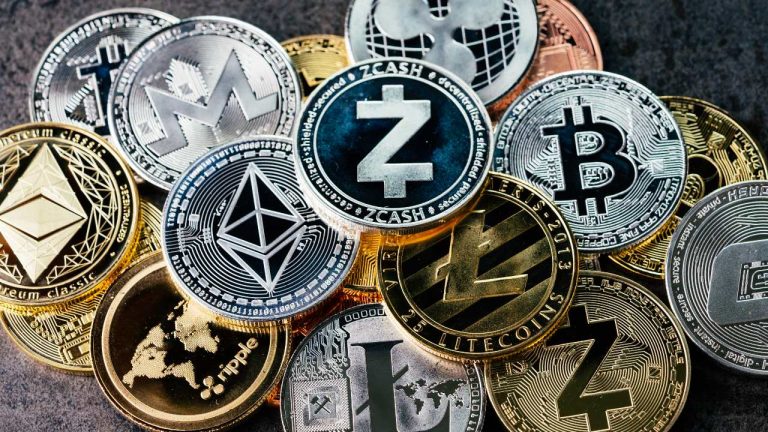
A cryptocurrency, crypto-currency, or cryptois a digital asset designed to figure as a medium of exchange wherein individual coin ownership records is stored during a ledger existing in an exceedingvariety of a computerized database using strong cryptography to secure transaction records, to manage the creation of additional coins, and to verify the transfer of coin ownership. Cryptocurrency doesn’t exist in physical form (like paper money) and is usually not issued by a central authority. Cryptocurrencies typically use decentralized control against a financial organisation’s digital currency (CBDC). When a cryptocurrency is minted or created before issuance or issued by one issuer, it’s generally considered centralized. When implemented with decentralized control, each cryptocurrency works through distributed ledger technology, typically a blockchain, that is a public financial transaction database.
It is broadly defined as a virtual or digital money that takes the form of tokens or “coins.”The “crypto” in cryptocurrencies refers to complicated cryptography that allows for the creation and processing of digital currencies and their transactions across decentralized systems.
Bitcoin, first released as open-source software in 2009, is that the first decentralized cryptocurrency. Since the discharge of bitcoin, many other cryptocurrencies are created.
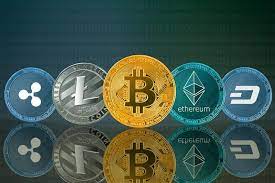
DIFFERENT CRYPTOCURRENCIES
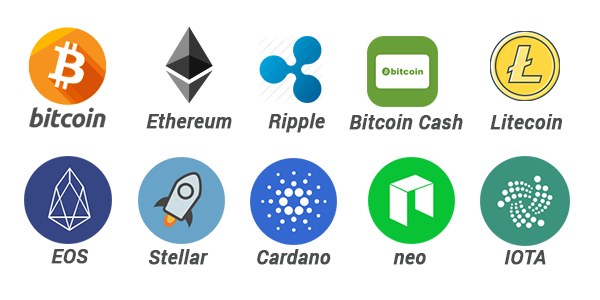
BITCOIN
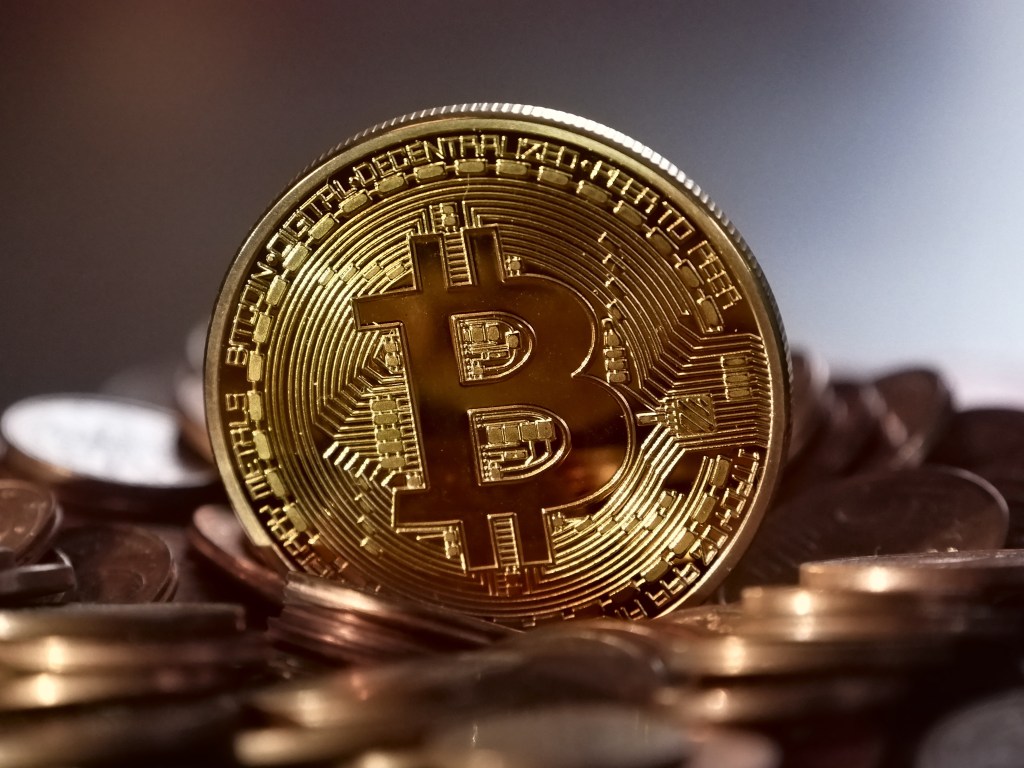
Bitcoin (₿) is a decentralized digital currency, without a central bank or single administrator, that can be sent from user to user on the peer-to-peer bitcoin network without the need for intermediaries. Transactions are verified by network nodes through cryptography and recorded in a public distributed ledger called a blockchain. The cryptocurrency was invented in 2008 by an unknown person or group of people using the name Satoshi Nakamoto. The currency began use in 2009 when its implementation was released as open-source software. Bitcoins are created as a reward for a process known as mining. They can be exchanged for other currencies, products, and services, but the real-world value of the coins is extremely volatile. Research produced by the University of Cambridge estimated that in 2017, there were 2.9 to 5.8 million unique users using a cryptocurrency wallet, most of them using bitcoin. Users choose to participate in the digital currency for a number of reasons: ideologies such as commitment to anarchism, decentralization and libertarianism, convenience, using the currency as an investment and pseudonymity of transactions. Increased use has led to a desire among governments for regulation in order to tax, facilitate legal use in trade and for other reasons (such as investigations for money laundering and price manipulation).
2. ETHEREUM(ETH)
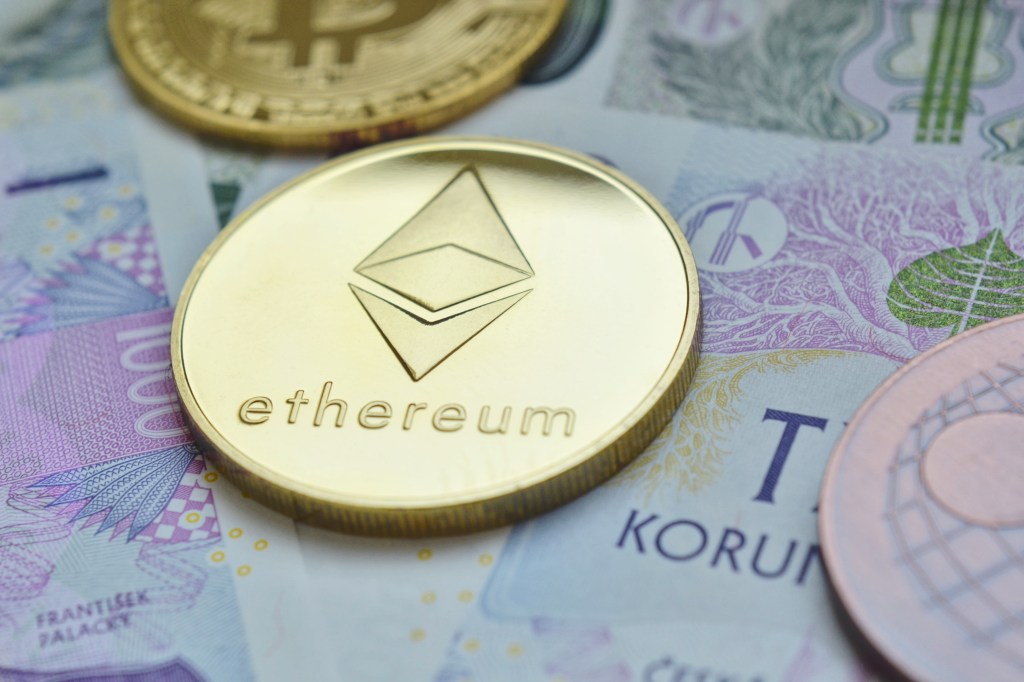
Ethereum is a decentralized software platform that enables smart contracts and decentralized applications (dapps) to be built and run without any downtime, fraud, control, or interference from a third party. The goal behind Ethereum is to create a decentralized suite of financial products that anyone in the world can freely access, regardless of nationality, ethnicity, or faith. This aspect makes the implications for those in some countries more compelling, as those without state infrastructure and state identifications can get access to bank accounts, loans, insurance, or a variety of other financial products.Ether, launched in 2015, is currently the second-largest digital currency by market capitalization after Bitcoin, although it lags behind the dominant cryptocurrency by a significant margin. As of January 2021, ether’s market cap is roughly 19% of Bitcoin’s size.
3. LITECOIN(LTH)
Litecoin, launched in 2011, was among the first cryptocurrencies to follow in the footsteps of Bitcoin and has often been referred to as “silver to Bitcoin’s gold.” It was created by Charlie Lee, an MIT graduate and former Google engineer. Litecoin is based on an open-source global payment network that is not controlled by any central authority and uses “scrypt” as a proof of work, which can be decoded with the help of consumer-grade CPUs. Although Litecoin is like Bitcoin in many ways, it has a faster block generation rate and hence offers a faster transaction confirmation time. Other than developers, there are a growing number of merchants that accept Litecoin. As of January 2021, Litecoin has a market capitalization of $10.1 billion and a per-token value of $153.88, making it the sixth-largest cryptocurrency in the world.
4. POLKADOT(DOT)
Polkadot is a unique proof-of-stake cryptocurrency that is aimed at delivering interoperability among other blockchains. Its protocol is designed to connect permissioned and permission-less blockchains, as well as oracles, to allow systems to work together under one roof. Polkadot’s core component is its relay chain that allows the interoperability of varying networks. It also allows for “parachains,” or parallel blockchains with their own native tokens for specific-use cases. Polkadot was created by Gavin Wood, another member of the core founders of the Ethereum project who had differing opinions on the project’s future. As of January 2021, Polkadot has a market capitalization of $11.2 billion and one DOT trades for $12.54.
5. STELLAR(XLM)
Stellar is an open blockchain network designed to provide enterprise solutions by connecting financial institutions for the purpose of large transactions. Huge transactions between banks and investment firms—typically taking several days, involving a number of intermediaries, and costing a good deal of money—can now be done nearly instantaneously with no intermediaries and cost little to nothing for those making the transaction. Stellar was founded by Jed McCaleb, a founding member of Ripple Labs and developer of the Ripple protocol. He eventually left his role with Ripple and went on to cofound the Stellar Development Foundation. Stellar Lumens have a market capitalization of $6.1 billion and are valued at $0.27 as of January 2021.
From the last 1 year cryptocurrencies are become very famous and lots of people are investing on it. But what is actually a cryptocurrency? Cryptocurrencies are the digital money in the form of tokens or coins. Cryptocurrencies remove the involvement of third parties like banks during a transaction between a user to the other. In this blog we going to see the top 5 cryptocurrencies in the world 2021, Advantages and Disadvantages of Cryptocurrencies.
Bitcoin is the leading cryptocurrency in the world now with $641 Billion market capitalization. Bitcoin is created on 2009 by an unknown person or a group of people in the name of Satoshi Nakamoto. The transactions are verified by nodes through cryptography in blockchain. As of now the price of one bitcoin is equal to $33270 USD. Five years ago, the price of one bitcoin is just $500 USD. The growth rate of bitcoin 6,300 percent. As of now MicroStrategy is the public company that holds the most bitcoins followed by Tesla.
Ethereum is the second leading cryptocurrency after bitcoin with $307 Billion market capitalization. Ethereum is founded on 30 July 2015 by Vitalik Buterin, a Russian-Canadian entrepreneur and programmer from Toronto. As of now 2021 one Ethereum is equal to $2035 USD. Five years ago, the price of one Ethereum coin is just $7.10 USD. Over the last year growth rate of Ethereum is 900 percent. As of now Vitalik Buterin holds the most Ethereum.
3. TETHER
After Bitcoin and Ethereum comes Tether with $62 Billion market capture. This coin is special because it is a stable coin. Tether was founded in 2014 by Brock Pierce, Craig Sellars and Reeve Collins. Tether is originally known as Realcoin. The price of one tether is equal to $1 USD. The growth rate of tether is 581 percentage.
Here comes Binance after tether with $56 billion market capture. Binance was found on july 2017 by Changpeng Zhao, a Chinese-Canadian business executive. He is the founder and CEO of Binance. In 2017, one Binance coin is equal to $0.10 USD. By june 2021, it had risen to $350 The growth rate of Binance from 2017 is 3,50,000 percent. The specialty of this coin is that it can be also traded in other forms of cryptocurrency such as Ethereum and Bitcoin. Changpeng Zhao hold the most Binance coins.
Cardano stands 5th with $51 Billion market capture. Cardano was founnded on 2017 by Ethereum Co-Founder Charles Hoskinson to provide balanced ecosystem for cryptocurrencies. In 2017 Cardano token was just $0.02 USD. By june 2021, It had risen to $1.50 USD with an increase of 7,400 percentage. As of now Charles Hoskinson holds the most Cardano tokens.
ADVANTAGES OF CRYPTOCURRENCIES
There is no involvement of third parties like banks.
The transaction cost is very low or nothing.
Protection from fraud payments.
Potential for high returns.
Easier international trade.
Strong security
DISADVANTAGESOFCRYPTOCURRENCIES
Cyber security issues
Scalability
Cryptocurrencies not accepted everywhere.
There is a greater risk in investing in cryptocurrencies.
There is no refund policy.
It’s not friendly user, it is hard to understand
That’s all from my side if you like the blog, please share and rate it.
With India’s rapid technological progress and extraordinary breakthroughs, particularly with the introduction of COVID-19, the fintech sector has been on a steady upward trajectory. With the increasing popularity and understanding of cryptocurrencies such as Bitcoin, Ripple, Dogecoin, and others among Indians, many people have begun to invest the majority of their time and money in virtual currencies in the hopes of profiting from the current worldwide wave.
The Reserve Bank of India, India’s ultimate financial body, has defined cryptocurrency as a type of digital/virtual currency issued using a sequence of written computer codes that rely on cryptography, or encryption, and is thus independent of any central issuing authority per se. It has emerged as a person-to-person issuance and transaction system that employs private and public keys to enable authentication and encryption for safe transactions, supported by blockchain technology. Despite the fact that the Inter-Ministerial Committee’s report was still pending, the RBI issued a circular in early April 2018 prohibiting all commercial and cooperative banks, small finance banks, payment banks, and non-bank financial companies (NBFCs) from not only dealing in virtual currencies but also from providing services to all entities dealing in virtual currencies. This effectively brought the crypto sector to a halt, as exchanges required banking services to transmit and receive money in order to turn it into cryptocurrency and pay workers, vendors, and office space, among other things. The situation surrounding cryptocurrencies and their use, however, drastically changed on March 4, 2020, when India’s highest court, the Hon’ble Supreme Court of India, issued a well-considered judgment quashing the RBI’s previous ban. The subject was primarily addressed by the Hon’ble Supreme Court of India in light of Article 19(1)(g) of the Indian Constitution, which provides the right to practice any profession or carry on any occupation, trade, or business, as well as the idea of proportionality. The Reserve Bank of India has issued a warning to the general public about the potential misuse of private cryptocurrencies in a variety of ways. If the New Bill imposes a complete prohibition on private cryptocurrencies, however, cryptocurrency investors will be forced to invest and trade in unregulated marketplaces. Furthermore, the goal of enacting a virtual currency/cryptocurrency law is to make the process of dealing with and holding virtual currency/cryptocurrency easier in a safer technological environment. Even with the introduction of state-owned cryptocurrency that will be regulated by the RBI, the risk factor associated with cryptocurrency investment and holding will remain the same. Furthermore, according to the most recent modifications to Schedule III of the Corporations Act, 2013, the Government of India has mandated that companies must disclose their investments in cryptocurrencies beginning with the next financial year. That is to say, businesses must now declare profit or loss on cryptocurrency/virtual currency transactions, the value of their holdings, and details of any deposits or advances received for the purpose of trading or investing in cryptocurrency or Virtual currency. People working in the crypto business have greeted this move with open arms since it is understood that it will allow all Indian enterprises to carry cryptocurrency on their balance sheets. Conclusion: Based on the inferences that can be derived from the aforementioned facts and the current state of affairs in the cryptocurrency sector, it is clear that there is a lack of clarity in India when it comes to cryptocurrency legislation. Well-structured cryptocurrency legislation that covers crypto trading exchanges, blockchain technology, investors, and those who work in the sector is urgently needed, and such regulation requires more attention.
Conclusion:
Based on the inferences that can be derived from the aforementioned facts and the current state of affairs in the cryptocurrency sector, it is clear that there is a lack of clarity in India when it comes to cryptocurrency legislation. A well-structured cryptocurrency legislation that covers crypto trading exchanges, blockchain technology, investors, and those who work in the sector is urgently needed, and such regulation requires more attention.
The booming crytocurrency firms say they’re scuffling to find the right people to fill hundreds of positions as a mania of interest in crytocurrencies puts them in competition against some of the leading financial institutions in the world.
Despite a fall in the crytocurrency market in May, the total market value is up 400% over the past year to about $1.4 trillion. Major firms like Goldman Sachs Group Inc., Bank of New York Mellon Corp. and DBS Group Holdings Ltd. are starting to offer services and trading.
That’s causing cryto firms to be left with fewer candidates for the hundreds of vacant jobs that is required to expand their business.
Binance, the world’s largest crypto exchange, is advertising for some 370 positions globally. Gemini, Founded in New York, plans to raise its Singapore headcount to 50 from 30. Hong Kong based Crypto.com, currently lists more than 200 openings.
Changpeng Zhao
” We are hiring aggressively”, Binance CEO Changpeng Zhao said. “We see the industry growing exponentially on a year-to-year basis, and we need to scale our team to cope with it.” “We are a geo-equal-opportunity employer. We don’t mind where people are, as long as they can produce results.”
Despite the boom , finding candidates with relevant experience can be difficult, and some companies are lowering their expectations or changing their job criteria. It isn’t easy to come by someone with strong cryto knowledge. Experience plays a major challenge. So firms look for candidates with expertise in banking and fintech because such skills can be transferred to a new position.
Citigroup Inc. became the latest Wall Street giant to say that it will help its richest clients bet on cryto as part of a new digital assets group. The move challenged rivals like Goldman Sachs and Morgan Stanley, which both similarly invested in blockchain companies recently.
Bobby Ong, the co-founder and CEO of crypto data firm CoinGecko.com, said on Twitter that it’s getting really tiugh to find the right people in Malaysia. The firm made internal adjustments and is now offering some roles that can be fully remote anywhere around the globe.
“We are competing with companies like investment banks or major technology companies, so we have to pay on par or a premium,” he said. “This is going to make the market even hotter.”
Cryptocurrency is the talk of the hour. From business tycoons to the general public, everyone has a divided opinion about the future of cryptocurrency. While Bill gates might call it “better than currency” or Warren Buffett may term it as “a mirage”, its worthwhile to know what exactly is cryptocurrency. A cryptocurrency is a digital or virtual currency that is secured by cryptography. Many cryptocurrencies are decentralized networks based on blockchain technology. In simple terms a blockchain is a type of database. A database is a collection of information that is stored electronically on a computer system.
Bitcoin is one of the widely recognized cryptocurrencies. It is digital currency which was invented in 2008 by an unknown person or group of people using the name Satoshi Nakamoto whose identity still remains a mystery. The currency began use in 2009. Bitcoin offers the promise of lower transaction fees than traditional online payment mechanisms and, unlike government-issued currencies, it is operated by a decentralized authority.
There is no physical bitcoin, only balances kept on a public ledger that everyone has transparent access to. All bitcoin transactions are verified by a massive amount of computing power. Bitcoin is not issued or backed by any banks or governments, nor is an individual bitcoin valuable as a commodity. Despite it not being legal tender or legally recognized money within a given political jurisdiction, in most parts of the world, bitcoin is very popular and has triggered the launch of hundreds of other cryptocurrencies, collectively referred to as altcoins, like Ethereum, Binance Coin, Tether, etc.
Many bitcoin supporters believe that digital currency is the future. Many individuals who endorse bitcoin believe it facilitates a much faster, low-fee payment system for transactions across the globe. Although it is not backed by any government or central bank, bitcoin can be exchanged for traditional currencies; in fact, its exchange rate against the dollar attracts potential investors and traders interested in currency plays. Indeed, one of the primary reasons for the growth of digital currencies like bitcoin is that they can act as an alternative to national fiat money and traditional commodities like gold. But many people purchase bitcoin for its investment value rather than its ability to act as a measure of exchange as the lack of guaranteed value and its digital nature means the purchase and use of bitcoin carries several inherent risks.
Thus, No one knows what will become of bitcoin. It is mostly unregulated, but some countries like Japan, China and Australia have begun weighing regulations. Governments are concerned about taxation and their lack of control over the currency.
One thing that has been in the news constantly in the recent times is the COVID-19, however, you might have noticed the terms like ‘Bitcoin’, ‘Crypto’, ‘Dogecoin’ pop up on the news briefly or as you scanned the newspaper. If you have ever wondered as to why Elon Musk’s tweets have been going viral in the economic world, this article is for you. If you are someone who is totally unaware of what cryptocurrencies are, this article is for you.
What exactly is cryptocurrency ?
The word cryptocurrency is made up of 2 smaller words. Crypto(Encryption) and Currency. Let’s talk about currency. Over time, the currencies have changed a lot. From simple barter systems, nickels, gold, paper. We as humans have assigned some value to these objects, which become our currency. The paper money which we hold has a certain value agreed upon by the entire nation. It is the government’s duty to make sure that the value of these notes is maintained. If the government wishes, it could print more money. Due to this unlimited amount, the value of the money could decrease over time since there will be more of it in circulation. This concept is known as inflation.
Here we can identify 2 problems with paper money. It is unlimited and centralised. In order to solve these 2 problems, we have cryptocurrency. Cryptocurrency is basically digital money, that can be stored on your computer, and transferred to one another without the intervention of banks or any other intermediaries.
Advantages of Cryptocurrency
Decentralised: Nobody controls the currency
No transaction restrictions: Available to everyone of every nationality
Secure: It has an unalterable record of every transaction
Privacy: You can make anonymous transactions
Limited: Finite amount
How it functions:
Since there is only a limited amount of a particular cryptocurrency, there are 2 ways to obtain some of it.
Mining
Buying
Mining for crypto currencies is an entirely different process from traditional mining. One has to solve complex mathematical equations and problems to get hold of cryptocurrency. The more the number of people trying to solve these problems, the more complex these equations get. Hence, it also increases the price of the currency.
For those who do not have the resources, skill set or means to earn cryptocurrency, they can buy some from ‘Hodlers’(crypto holders).
Since the number of people who are trying to get cryptocurrencies such as bitcoin are increasing, the value of the currency increases. This is because the currency becomes scarce. When some big companies like Tesla started to accept payments in bitcoin, the this asset was considered to be very valuable by the people. This explains why the tweets of Elon Musk are affecting the prices of Bitcoin.
I strongly believe that cryptocurrencies are going to be the currencies of the future, however it is very important to gain substantial knowledge before formulating your opinion. There are many celebrities and entrepreneurs who have invested in cryptocurrency, and at the same time, there are many who haven’t. One such notable example would be Warren Buffet, who thinks that cryptocurrency is ‘contrary to the interests of civilisation’.
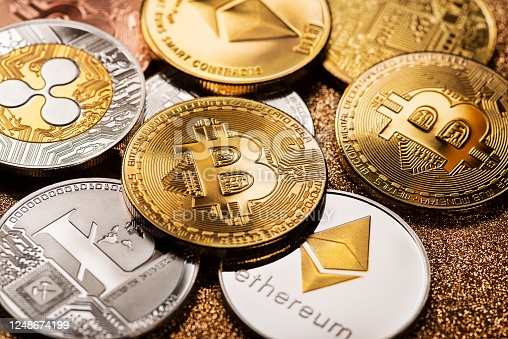
Some famous crypto currencies: Bitcoin, Ethereum, Dogecoin, Tether, XRP.
Imagine you’re having a conversation with your friends now at some point in this conversation someone’s going to bring cryptocurrencies. Today cryptocurrencies have become a global phenomenon known by most people but understood by few. Cryptocurrency is something that everyone wants to talk about but no one really knows how they work so today I’m going to fix that.
Currency it’s an important part of our life.Cryptocurrency is the digital or virtual currency that is meant to be a medium of exchange. Cryptocurrency is quite similar to real world currency just that it does not have any physical personification. As of 2018, there’s more than 1600 cryptocurrencies available. Now there are some popular ones like bitcoin, litecoin, ethereum. And new cryptocurrency crops up every single day.
Some features of cryptocurrency are that there’s a limit to how many units can exist. With bitcoin this limit exists at 21 million now after this no more bitcoins will be produced. You can easily verify the transfer of funds. They operate independent of bank or a central authority. New units are added only after certain conditions are met.
So what’s makes cryptocurrency so special firstly. There’s is no or little transaction cost. 24/7 access to money. No limits on purchase and withdrawals. Freedom for anyone to use. International transaction are faster.
Cryptocurrency is the key to the complex digital cash problem.
Two major cryptocurrency. Bitcoin and ether. Bitcoin is a form of digital currency and is decentralized without a central bank. It uses blockchain to perform transaction on a peer to peer network. Ether is a currency that’s accepted in ethereum network. They’re the biggest and most valuable crypticurrencies. These are widely use across the world. Bitcoin is used to send money to someone this is very similar to how real life currency works while ether it is used as a currency within a ethereum network although it can be used for real life transaction as well. Bitcoin transactions are manual which means you have to personally performed these while with ether you have the option to make these transaction manual or automatic which means that these transaction will take place when certain conditions has been met. For bitcoin it takes 10 minutes to perform a transaction while ether takes only 20 seconds to finish a transaction.
There’s a limit to how many bitcoin can exist; 21,000,000. Ether is expected to be continous but not expected to exceed 100,000,000.
It should also be noted that investing in cryptocurrencies is legal in India and there are no laws that prohibit individuals from buying or selling virtual coins. Investing in crypto is liked making money while you’re sleeping.
I think the pandemic has taught people the importance of multiple streams of income unfortunately having a job doesn’t means security. Despite the economic crisis this is still the good time to invest in gold and cryptocurrency.
Cryptocurrency is a form of payment that can be exchanged online for goods and services. Many companies have issued their own currencies, often called tokens, and these can be traded specifically for the good or service that the company provides. Think of them as you would arcade tokens or casino chips. You’ll need to exchange real currency for the cryptocurrency to access the good or service.
Cryptocurrencies work using a technology called blockchain. Blockchain is a decentralized technology spread across many computers that manages and records transactions. Part of the appeal of this technology is its security.
Cryptocurrencies may go up in value, but many investors see them as mere speculations, not real investments. The reason? Just like real currencies, cryptocurrencies generate no cash flow, so for you to profit, someone has to pay more for the currency than you did.
That’s what’s called “the greater fool” theory of investment. Contrast that to a well-managed business, which increases its value over time by growing the profitability and cash flow of the operation.
As NerdWallet writers have noted, cryptocurrencies such as Bitcoin may not be that safe, and some notable voices in the investment community have advised would-be investors to steer clear of them. Of particular note, legendary investor Warren Buffett compared Bitcoin to paper checks: “It’s a very effective way of transmitting money and you can do it anonymously and all that. A check is a way of transmitting money too. Are checks worth a whole lot of money? Just because they can transmit money?”
For those who see cryptocurrencies such as Bitcoin as the currency of the future, it should be noted that a currency needs stability so that merchants and consumers can determine what a fair price is for goods. Bitcoin and other cryptocurrencies have been anything but stable through much of their history. For example, while Bitcoin traded at close to $20,000 in December 2017, its value then dropped to as low as about $3,200 a year later. By December 2020, it was trading at record levels again.
This price volatility creates a conundrum. If bitcoins might be worth a lot more in the future, people are less likely to spend and circulate them today, making them less viable as a currency. Why spend a bitcoin when it could be worth three times the value next year?
Creating a Google Scholar profile is an essential step for academics, researchers, and students who wish to increase the visibility of their scholarly work, track citations, and connect with other researchers. A well-maintained Google Scholar profile not only showcases your work but also helps you keep tabs on the impact of your research. Here’s a detailed guide on setting up and optimizing your Google Scholar profile.
Start by visiting Google Scholar: To create a Google Scholar profile, navigate to the Google Scholar website. If you don’t already have a Google account, you will need to create one. Use your academic or professional email address if possible, as this lends credibility to your profile.
Complete the sign-up process: Click on “My Profile” at the top left corner to start creating your profile. You’ll be prompted to enter basic information such as your name, affiliation (your university or organization), and your academic email address. Verifying your email address with an academic institution helps to authenticate your profile’s credibility.
Step 2: Add Publications
Manually add publications: Google Scholar allows you to manually add publications if they are not automatically listed. Click the “+” icon and choose “Add articles manually.” Provide all necessary details such as title, authors, publication year, volume, and pages. Accurate information helps in correctly indexing your work.
Automatically update publications: You can set your profile to automatically update with new publications. This feature, however, should be used with caution as it may add papers that are not yours, especially if you have a common name. Regularly review your profile to ensure all publications listed are correct.
Step 3: Enhance Your Profile
Include a professional photo: Adding a professional profile picture makes your Google Scholar profile more personal and accessible. Choose a clear, professional headshot that appropriately represents your professional persona.
Write a brief description: Under the ‘About’ section, include a brief biography highlighting your research interests, major findings, and any other relevant academic achievements. This summary enhances your profile’s visibility in related search queries.
Step 4: Manage Your Profile Visibility
Adjust privacy settings: Google Scholar allows you to control the visibility of your profile. You can make your profile public to ensure that other researchers and collaborators can find you and your work. Alternatively, you can keep it private if you are not ready to share your information.
Check your citation metrics: Google Scholar provides various metrics, such as the total number of citations, h-index, and i10-index. These metrics are important for assessing the impact of your work. Regularly check these metrics to understand how your research is being cited by peers.
Step 5: Connect and Collaborate
Follow other researchers: You can follow the work of other scholars to keep up with new publications and research trends in your field. This not only helps in staying current but also builds a network of peers with similar interests.
Conclusion
A Google Scholar profile is a valuable tool for any researcher looking to enhance the visibility and accessibility of their work. By following these steps, you can create a comprehensive and effective profile that accurately reflects your scholarly contributions. Regular updates and active management are key to maintaining a profile that truly represents your academic journey.
Final Note
While creating and maintaining a Google Scholar profile, ensure that all the information is accurate and up to date. This diligence will maximize your profile’s effectiveness in contributing to your academic reputation and research collaborations.
Block chain , IA , biometrics technologies qui Revolutionate la finance . Ethereum is on track to overtake Bitcoin’s market cap A Wallet to freedom Deutsche Bank the Current money system is fragile. Deutsche bank sees that by 2030 digital currencies will rise to over 200 million users. In the “In the Imagine 2030 ” report , it suggests the digital currency could eventually replace cash one day , as demand for anonymity and amore decentralized means of payment grows.
Illias Louis Hatzis is the founder at Mercato Blockchain Corporation AG and a weekly columnist at DailyFintech.com Usually this time of year , we start to read price predictions about Bitcoin going to a million bucks a coin. I’ve never been a big fan of price predictions . Some get them right, and most get them wrong. Price predictions are about short term gains, that are usually very fickle. But a week ago I read an interesting prediction in the news. Deutsche bank made a very bold statement . The German Bank published a research report called Imagine 2030. In this report the bank says that cryptocurrencies are currently just additions to the current money payment system . However , in the next decade they could be replacements .This bank is spot on with its prediction .But , prediction is are always tricky. Hindsight is 20/20 , Rightnow , everyone wants to believe . We can taste the decentralized future . Cryptocurrencies have become more popular . Crypo can be both unique solution and good, evil like everything else in life.
People’s working habits, communication styles, shopping habits, and even how they pay for items have all altered as a result of technological advancements. Companies and customers no longer prefer cash, and contactless payments such as Apple Pay are gaining traction.
Consumers may pay for things at computerized registers with a quick wave of their smartphone. Now, a new type of payment mechanism is gaining traction: cryptocurrencies.
By now, almost everyone has heard of Bitcoin. It was the first cryptocurrency to gain mainstream acceptance, but others are gaining traction.
There are almost 2,000 different types of cryptocurrencies, with new ones being created every day. According to research, the majority of individuals have heard of cryptocurrencies but do not fully comprehend what it is.
WHAT IS CRYPTOCURRENCY
Cryptocurrency is a digital payment mechanism that does not rely on banks for transaction verification. It’s a peer-to-peer system that allows anyone to make and receive payments from anywhere. Cryptocurrency payments are digital additions to an online database that specify specific transactions, rather than actual money that is carried around and exchanged in the real world.
The transactions that you make with cryptocurrency funds are recorded in a public ledger. A digital wallet is where you keep your cryptocurrency.
The name cryptocurrency comes from the fact that it uses encryption to verify transactions. This means that storing and sending cryptocurrency data between wallets and to public ledgers requires complex coding. The encryption’s goal is to give security and privacy.
THE SECURITY OF CRYPTOCURRENCY
Blockchain technology is commonly used to create cryptocurrencies. The method transactions are recorded in “blocks” and time stamped is described by blockchain. It’s a lengthy, complicated procedure, but the end result is a secure digital ledger of cryptocurrency transactions that hackers can’t alter.
Transactions also necessitate a two-factor authentication process. To begin a transaction, you might be requested to enter a login and password. Then you may be required to input an authentication code sent to your personal cell phone through text message. While security measures are in place, this does not mean that cryptocurrencies are impenetrable to hackers.
In fact, some high-profile thefts have wreaked havoc on bitcoin businesses. In 2018, hackers stole $534 million from Coincheck and $195 million from BitGrail. According to Investopedia, this makes them two of the biggest cryptocurrency hacks of 2018.
TIPS FOR INVESTING IN CRYPTOCURRENCY
Investments are always dangerous, but according to Consumer Reports, some experts believe bitcoin is one of the riskier investment options available. Digital currencies, on the other hand, are among the hottest commodities. CNBC predicted earlier this year that the cryptocurrency market would hit $1 trillion in value by the end of 2018. If you’re thinking about investing in cryptocurrencies, there are a few things you should know.
Research Collaborations Learn about bitcoin exchanges before you invest a single dollar. These platforms let users to purchase and sell digital currencies, but according to Bitcoin.com, there are 500 different exchanges to select from. Before making a decision, do your homework, study reviews, and speak with more experienced investors.
Know How to Safely Store Your Cryptocurrency You must store cryptocurrency if you purchase it. You can keep it on an exchange or in a digital “wallet,” such as one of the crypto wallets listed in our blog post Which cryptocurrency wallet should I use? While there are numerous types of wallets, each has its own set of advantages, technological needs, and security features. You should invest in the same way as you would on exchanges.
Invest in a variety of things. Diversification is an important part of any effective investment strategy, and it’s no different when it comes to cryptocurrency. Don’t put all of your money in Bitcoin just because it’s the term you’re familiar with. There are thousands of possibilities, and it’s ideal to diversify your portfolio by investing in other currencies.
Be ready for the unexpected. Be aware that the cryptocurrency market is quite volatile, so expect ups and downs. Prices will fluctuate dramatically. Cryptocurrency may not be a good fit for you if your investment portfolio or mental health can’t manage it.
Cryptocurrency is currently all the rage, but keep in mind that it is still in its infancy. Investing in something new comes with its own set of obstacles, so be prepared.
Cryptocurrencies are generally utilized outside of traditional banking and government institutions and are traded over the Internet.
The rewards given to miners increase the cryptocurrency’s supply.
As long as benevolent nodes possess a majority of computer power, the network’s integrity may be preserved by ensuring that confirming transactions is a costly business. To make verification costly enough to accurately confirm p, the verification algorithm necessitates a lot of processing power, and consequently electricity.
The price of a coin is multiplied by the number of coins in circulation to determine its “market cap.”
Bitcoin has historically dominated the whole cryptocurrency market cap, accounting for at least 50% of the market cap value, with altcoins increasing and decreasing in market cap value in relation to Bitcoin.
Bitcoin’s value is mostly controlled by speculation, as well as other technological limiting considerations like block chain incentives, which are coded into Bitcoin’s architecture technology.
The cryptocurrency market cap follows a pattern known as “halving,” which occurs when the block rewards obtained from Bitcoin are halved owing to technologically enforced restricted variables infused into Bitcoin, which in turn causes the cryptocurrency market value to decrease.
The bitcoin market has been extremely turbulent in the last 24 hours. The volume of trades increased, confirming the panic selling. Many alternative tokens, on the other hand, exhibited only a minor rebound.
According to a study by Fidelity’s cryptocurrency company, seven out of ten institutional investors plan to invest in or buy digital assets in the future, despite price volatility being the biggest hurdle for new entrants.
CRYPTOCURRENCIES ARE THE NEW ASSET! CRYPTOCURRENCIES ARE ON PEAK ! CRYPTO-BILL! CRYPTO IN INDIA! AND WHAT NOT.
A LOT OF US MIGHT WONDER , WHY HAS THE CRYPTOCURRENCY BECOME A BIG HIT and WHAT IS IT ??
CRYPTOCURRENCIES ARE DIGITALISED AND DECENTRALISED ASSETS. THE TRANSACTIONS THAT ARE MADE ARE HIGHLY SECURED. THEY WORK ON BLOCKCHAIN TECHNOLOGY. THAT IS A PUBLIC LEDGER. ALL THE TRANSACTIONS ARE STORED IN CHRONOLOGICAL ORDER. THE GOVERNMENT HAS NO CONTROL OVER THE TRANSACTIONS, THUS A LOT OF COUNTRIES HAVE BANNED CRYPTOCURRENCIES OR THEIR STATUS IS LEFT UNCLEARED.
BITCOIN THE THE MOST SYNONYMOUS CRYPTOCURRENCY BUT SINCE LAST 6 MONTHS EVEN ETHEREUM AND DOGECOIN HAVE GAINED POPULARITY.
IT WORKS JUST LIKE TEH STOCK MARKET, THE PRICES RISE AND FALL. STOCK MARKETS HAVE BANKS IN BETWEEN FOR TRANSATION BUT CRYPTOCURRENCIES HAVE THEIR OWN BASE.
INVESTMENT IN CRYPTOCURRENCY IS ADOPTED BY A LOT OF PEOPLE. BUT DUE TO UNCERTAINITY OF DROP IN PRICE SOME RESIST INVESTING IN IT.
In order to understand the merits and demerits of the CryptoCurrency Bill, also called Crypto Bill, one has to delve into the sphere and understand what cryptocurrency is. This is required for a clearer understanding of the bill. Not only this, but the knowledge of cryptocurrency will also aid one in forming their own opinions of the same.
What is cryptocurrency? – It is a digital form of money and is decentralized. This means that unlike the US Dollar or the Euro, there is no centralized body to regulate and manage its value. It can also be termed as a deregulated form of money. Cryptocurrency is monitored by peer-to-peer internet protocol and is an encrypted string of data encoded to signify one unit of currency.
In a nutshell, cryptocurrency is just like paper money and can be used to carry out day-to-day transactions and buy regular goods and services although many people invest in cryptocurrencies as they would in other assets, such as stocks or precious metals such as gold.
Why is cryptocurrency gaining traction? – Albeit the fame of cryptocurrency in other countries is commendable with instances like Elon Musk investing a handsome amount of money on Bitcoin( a form of cryptocurrency), people in India too are showing interest. Understanding this phenomenon is important to understand the aftermath of the bill (if implemented).
Failing government policies – It is no secret that many government policies have failed miserably having an impact on the economy of the country. Plus, in the last two years, the business has slowed down due to the ongoing pandemic and no one knows what’s in store for the future. Also, nothing appreciable has been done by the government for the revival of the economy. With all these phenomena going on, crypto has been a savior and hence the inclination of people towards it. This has been possible because of the decentralized and the deregulated nature of the currency.
Progressive Taxation – Taxes are no doubt a necessity. An individual who earns more has to pay a higher tax and a person who earns less, has to contribute less. But in the case of crypto, no such system exists. It is a good escape from the taxation system and nevertheless the less digital knowledge of the currency and its working, it is gaining fame.
Type of digital gold – People invest in a lot of things. Precious artifacts, stocks, and precious, high-value metals. One metal that all people invest in is Gold. Prices of gold usually increase providing people with a good deal of benefits and it seldom disappoints. Somewhat similar is the case with cryptocurrency. The meteoric rise that people witness in it is a key factor of people getting more interested.
But is crypto full of advantages and no negatives? That is not the case. Understanding its disadvantages is equally important to weigh the consequences of the bill better.
Perils of cryptocurrency –
Deregulated – Deregulated nature of the crypto can be advantageous not just to genuine users but also to hackers and spoofing. Digital theft is a possibility since no one is present to oversee the activities.
Stability- The graph does not always go high. There have been times when downfall has been witnessed. The volatility of crypto is another aspect that needs to be kept in mind.
Scalability- While security and decentralization are what the main focus of crypto is, speed remains an issue.
THE CRYPTOCURRENCY BILL – In the year 2018, a circular by the RBI was issued barring banks and other financial institutions from facilitating transactions using crypto. SC however quashed the circular on grounds of ‘disproportionality’ and business using crypto resumed. In the Budget Session held from January 29, 2021-April 18,2021, the Cryptocurrency and Regulation of Official Digital Currency Bill, 2021 was to be introduced. This proposed creation of a facilitative framework for the creation of ‘official digital currency’ and prohibit all private crypto in India. This however was presented neither in the Budget nor the Monsoon session. The reason given was more introspection on the matter.
What if the bill is implemented in India? Will it be useful for the masses as a whole or will the rich become richer? Is it a good deal to exit the crypto bus?
The fact that corruption will be controlled because of the digital signature mechanism of the currency cannot be neglected. FDIs will be attracted. Technological development will be promoted for sure. India will be able to compete with the developed nations across the globe.
A host of advantages exist but the next question arises –Given the digital literacy divide and money in hands of a few, is India ready?
According to Visa, consumers spent more than $1 billion worth of cryptocurrencies on goods and services via crypto-linked cards in the first six months of 2021. Only a fraction of this amount was done in the same times last year (2020) and last to last year (2019), according to the firm’s estimations. According to a CNBC report, Visa did not reveal any numbers.
On July 7, Visa CFO Vasant Prabhu told the news source, “We are trying a lot to establish an ecosystem that makes crypto money more useable and more like any other cash.” People are looking at alternative methods to use cryptocurrencies for items that they would normally pay for with traditional currency, according to Prabhu. “There are numerous difficulties with regard to volatility. However, it is the responsibility of cryptocurrency owners to maintain and track their assets“, he added. Visa isn’t the only company to see cryptocurrency’s steady rise in popularity among customers.
In a research, Master card discovered that over 93 percent of North American consumers planned to utilise bitcoin or other developing payment technology in the coming year, such as biometrics, contactless payments, or QR code systems. “We see a lot of volume on our network of people buying cryptocurrencies at these various licenced exchanges,” Prabhu said.
Visa also announced that the FTX cryptocurrency platform, established by billionaire Sam Bankman-Fried, will be included in its Fintech Fast Track programme, which has as one of its goals making cryptos smarter for consumer and business spending. According to the article, the payments company’s CFO has no intentions to add cryptocurrencies to its balance sheet in the near future.
Coinbase made its Nasdaq debut in April, making it the first cryptocurrency-focused company to do so in the United States. While Bitcoin’s success was largely due to its widespread use, its value has now plummeted. Following a drop in crypto assets such as Bitcoin and Ethereum on May 19, exchange disruptions have been observed around the world. Aber consumers and traders complained about trouble trading their digital assets, exchanges cited a variety of reasons for downtime.

















You must be logged in to post a comment.