Feed them Pawfectly!

What if I offer you crores and crores of money and ask you to stay away from food for days in return? Will you do it? Can you survive without eating? I’m guessing it’s a NO!
Food is one of our necessities. Here ‘our’ not only includes humans but also animals. For animals food (including water) is their only requirement to survive but unfortunately, they don’t even get that.
You’ll have seen dogs, cats, cows, and various other animals come behind us while we walk on the street. They don’t walk behind you to harass you they come to you with hope in their eye. They just need food and a little love rather than getting hit by a stick. Being cruel to them won’t make you superior instead having empathy towards them and treating them like humans will.

Every mother loves to feed their children and would cook many dishes for them but don’t forget those mothers who search for food in a heap of garbage every day just to survive.
Do they deserve this? Of course not!
Nobody deserves this! Then why do they have to do this for their survival?

God has not given them a voice to speak but their eyes are enough to convey their sorrow.
Just feed an animal and see what they do for you in return. Trust me! you’ll be God in their eyes

Things to keep in mind before feeding a stray animal
 • Avoid sweets
Sweets take a lot of time to digest and can result in various health issues in them and can also affect their immunity.

 • Avoid fried and spicy food
Animals might not find fried and spicy food attractive. Avoid feeding them leftovers. Fried and spicy food can lead to many health problems

 • Avoid allergic food
Animals can be allergic to some food items just like humans. Always research before feeding.

 • Do not Overfeed
Every animal has their capacities to eat. Do not force them to eat more, it might make them ill.

 • Avoid plastic bags
Never give them food in plastic bags. They might stick their head inside it and cause breathing problems. Try using plastic bowls.

 • Serve them water
Water is as important as food for them. They can find their water but it’s best to serve them which will make their job much easier.

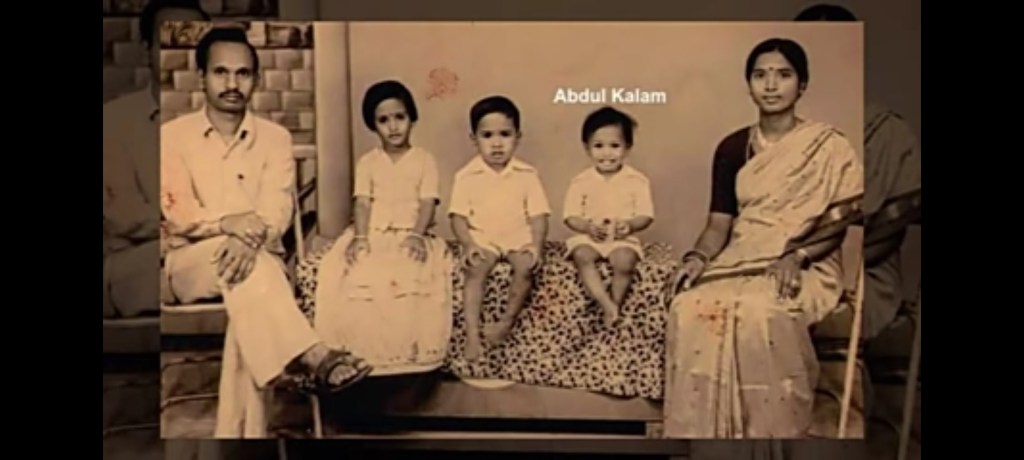
Dr. APJ ABDUL KALAM

Dr. APJ Abdul Kalam’s whole life journey is the inspiration
of all. Dr. APJ Abdul Kalam was born on 15 October 1931 at
Rameswaram in Tamil Nadu. His father was a boat owner can’t his
mother was a homemaker. He came from a financially poured
background and he used to distribute the newspaper to support his family.

Education:
He completed her schooling at Rameswaram Elementary School. In 1954 he graduated in physics from St. Joseph’s College Tiruchirappalli. In 1955 he joined the madras institute of technology and he started aerospace engineering.


Career:
Dr.kalam was to become a pilot but he was Ranked 9 well the IAF offered only 8 slots. He was a simple person who owned a few positions including a simple coat a lungi, and his beloved Veena and collection of books. He didn’t even have a television he was a kind-hearted man. His love for children is always evicted. APJ Abdul Kalam’s birthday on October 5 is celebrated as “World Students day”.
From 1963-1980 his career was spent in space research with the founding of India’s space program by Vikram Sarabhai under the Indian committee for space Research which became ISRO. The successful launch of the satellite launch vehicle(SLV-3) was the high point of the Kalam space tent propelled India into a select band of countries with rocket-launching capabilities. After this success, he was shifted to the Defense R& D or against PRDO to had a missile project and was meet the director of Defense Metallurgical Research Laboratory DMRL in Hyderabad in 1982 his effort gives both the guided missile development program leading to the launch of surface to surface missile named Prithvi surface-to-air missile named Trishul surface-to-air missile named Akash third-generation Anti-tank missile named NAG. The launch of the Prithvi missile on 25 February 1988 was a historical moment for our country. It was not a surface to surface missile but was a basic module for the coming future.
Later Kalam leads a pivotal role in the 1998 nuclear tests known as Pokhran -II this was surprising many because he did not come from a nuclear science. His sincere for making India self-relevant and defense space research gave him the title of “Missile man of India”

His Awards:
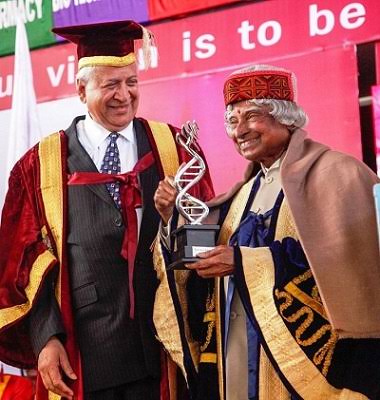
He was awarded a Padma Bhushan in 1981 Padma Vibhushan 1990, and then proudly declared the Bharat Ratna in the year 1997. From 1999 to 2001 he became the principal scientific advisor of India. In the year of 2002, Dr. Kalam was the President of India. As a president he proved himself. When am dead do not declare a holiday instead work a day extra this word Dr. Kalam profound words


His books:
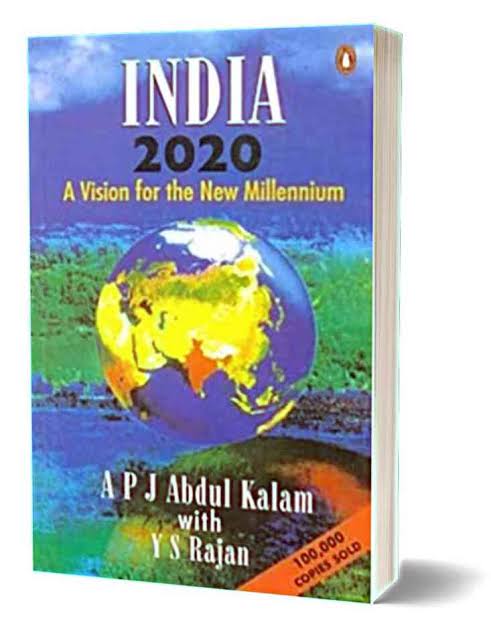
Dr. Kalam was a writer and has been the author of many books Four of Dr. Kalam books “Wings of fire”, “India 2020”, “Me Journey”, “Ignited Mind” this book can be translated into many languages.


Death:
It was during his lecture at the Indian Institute of Management Shillong on 27th July 2015 that it suddenly collapsed and declared death due to massive cardiac arrest. He’s journey started from Rameswaram and reached Rashtrapathi bawan. Today Dr. Kalam was not with us but he’s teaching to achieve new milestones in science, technologies, and all vital years in life.

What to do with kitchen waste?

Our kitchen generates lot of waste throughout the day whether it is vegetable peel, leftover meal or rotten vegetables and fruits. All of these waste goes into dustbin.

According to report 60% of waste comes from kitchen. These waste gets mixed and collected in landfills. These waste releases methane gas which is a greenhouse gas. This pollutes air and water.

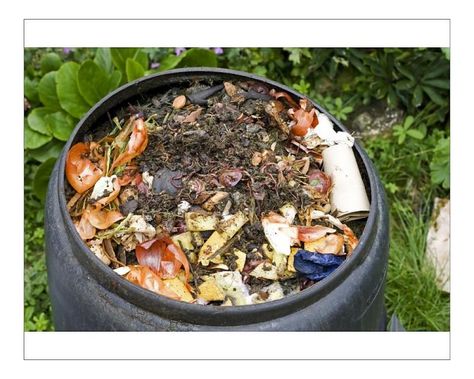
We can use these kitchen waste to make compost. Nowadays people buy fertilizers from market but what if we use kitchen waste to make compost. Isn’t this amazing way to save Earth as well as money ?

How to make compost :-

First we need is kitchen waste called as green waste. Drained the excess water from it. These waste are rich in nitrogen. Second we need is dried leaf called brown waste. Third microbes ( an accelerator ). Fourth is container you can use any container either of earthen pot or anything as per your ease.

Put dried leaves in the lower of container above it spread green kitchen waste add some accelerator i.e; microbes on top of it. Again put another layer of dried leaves and close the lid of container. That’s one day waste. On second day repeat the same process. Once in 4-5 days mix it well so that it can absorb oxygen. Oxygen is essential for its breakdown.

When container get full keep it aside for 20-30 days. After 30 days compost is ready to use. We can this compost to nourish the plants and grow whatever we want.

Krishna River

• Rises from the Western Ghats in Maharashtra.

• Total length – 1,400 km.

• Outfall – Bay of Bengal.

• Extension – Andhra Pradesh ; Telangana ;
Maharashtra; Karnataka .

• 8% of the total geographical area.

• Boundary – Balaghat range (north), Eastern Ghats (south and the east) , Western Ghats
(west)

Major tributaries – 13

Right bank tributaries – Six

• The Ghataprabha

• The Malaprabha

• The Tunga Bhadra

Left bank tributaries – Seven

• The Bhima

• The Musi

• The Munneru

• Major Hydro Power stations

● Koyna ; Tungabhadara ; Sri Sailam ; Nagarjuna
Sagar ; Almatti ; Naryanpur ; Bhadra.

• Rich mineral deposits – industrial development.

• Important industrial activities – Iron and steel,
cement, sugar cane, vegetable oil extraction and rice milling.

• Major Urban Centers – Pune, Hyderabad.

• Hydrological observation – Central and State Governments.

INTERNSHIPS

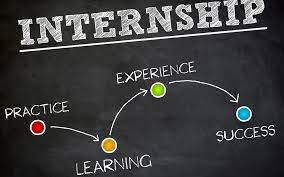
The internship is the main source for a college student to improve and prove his/her knowledge.

Every college student has composed placements and off compose placements.

At the time of placements in a different company, we have to submit our Resume. That resume gives our real appearance to interview. If we have done any internships and any skill development that will help for our desired company placements.

Lets more about internships

Internships is the training and real-time project to the confidence of our skills for real-world understanding

 The internship is an opportunity offered by an employer to potential employees, as an intern, to work at a firm for a fixed period of time. Interns are usually likes undergraduates or students, and most internships period last between a month and three months. … An internship can be either paid or voluntary.

Which internships we have done?

Internships are based on your desired knowledge, department and day by day improved courses

Things to consider when choosing an internship

  • Which sector are you interested? …
  • What will be your responsibilities? …
  • What will you will get ? …
  • Where you have to do? …
  • What’s the environment like is it comfortable ? …
  • Will you get the opportunity to more network? …
  • What are the skills will you learn? …
  • What are your qualifications for ?

Let specific directions for your internships

There are some websites for internships that may have offline and online internships :

  • Linkedin
  • Glassdoor
  • Google
  • Internshala
  • Internship.com
  • Internmatch.com
  • Youturn
  • Idealist
  • Global Experience
  • Coolworks

Go for these websites you will find “updated(your name) version.0”

GAP YEAR

Gap year time : A Life Changing Opportunities.

First, we have to know what is a Gap Year ?

Gap year is a break time where all the career aspirants think and take a step ahead for learning new skills or looking better ways to track back in career line, basically it’s about the career decision time to figure out the new steps.

Many people take gap year to do internships, preparing for their upcoming competitive exams. Some people also take a break from career to get away from their busy path and enjoy their time .

Whenever anyone is stuck and stressing about what to do in their career basically they take a gap to figure out their choices. It’s better not to take rush and settle down for their decision making time. Some people also start learning about interesting skills, taking care of their mental health and stop pressuring themselves.

Many people feel scared to take a gap year because of their family reputation or you can say comparison with others and also from pressure they can’t able to decide their path and start working against their choice. And some people continue their study without gaining any interest just because of their fear and mental stress.

For my opinion Gap Year is really important for decision making, we should not feel ashamed or blame ourselves for taking gap , it is very major to know our interest and shape it for our better life.

The Spanish Inquisition: A Turbulent Time

What was the Spanish Inquisition?

The Spanish inquisition was a judicial institution that prevailed in Spain from 1478 to 1834. It was set up through the Catholic church to root out and punish any heresy (religious beliefs that differed from those prevailing at the time, in this instance Catholicism) being practiced in the country. In each region of Spain, tribunals comprising of Catholic officials were set up to perform the functions of the inquisition. This system was aimed at consolidating power and establishing control in the country, but today the reputation of the inquisition is that it was an extremely brutal and turbulent time in Spanish society.

What happened during this time?

The Spanish inquisition is a well-known historical event but for reasons that should not be praised. It marked a period of violence and intolerance. The people working for inquisitions were called inquisitors. They would arrive in a town, and announce their presence to all the townspeople. Any heretics present in the town would be given a chance to confess, and thereby receive punishment which ranged from whipping to pilgrimage and repentance. Any person who was accused of being a heretic was forced to admit to it, and in case they did not voluntarily confess, they would be subject to violent torture and even execution. More often than not, people were victims of false allegations of being a heretic, but there was no formal court procedure or trial and the mere suspicion of being a heretic was enough to enforce severe punishment. Once a person was accused, even if falsely, there was no escaping either torture, imprisonment, or death. So, many people would end up confessing early on, even if they weren’t actual heretics, to say themselves from any severe consequences later on. This shows how much fear and tyranny was present in society at that time.

This period also represented one of xenophobia and parochialism. When the inquisition began, Spain was a very diverse country, both ethically and religiously. Many different communities like the Jews, Muslims and Christians all lived in harmony in the same regions. The objective of the inquisition was to eradicate such people from Spain who did not identify with the Catholic church and its beliefs. For more than 350 years, people who were not Catholics were subject to torture and exile from Spain.

We can clearly draw a comparison here to Nazi Germany under Hitler’s dictatorship, where only white people of the Aryan race were allowed to live in the country while others were deported or killed in cold blood. In both cases the victims were subject to inhumane torture and suffering. Also, the Jewish people were the major victims in both situations. Under the inquisition, Spanish Jews were forced to either convert to Catholicism or leave Spain entirely. Even those who converted, called the ‘Conversos’ were not safe as they were constantly under suspicion of secretly practicing Judaism while using Catholicism as a disguise. Eventually focus shifted to Muslims converting to Christianity to save themselves, called the ‘Moriscos’. In 1609 they were all ordered to leave Spain entirely.

Any punishments to be given were done so in public for everyone to see, and they were called ‘acts of faith’. It was meant to show the public what it means to defy the Catholic church and their beliefs, and why they should not follow any other ideology. In the worst of cases, where there were unrepentant heretics, they would even burn them alive at the stake for all of the public to witness.

Conclusion

Eventually in 1834, the inquisition was put to an end and the Catholic church’s power diminished in Spain. However, we cannot disregard the damage that had been caused in the 350 odd years. Thousands of people were tortured, killed or exiled from their homes in Spain. They were stripped of their land and wealth, and left homeless and poor. Many religious minorities had to flee from Spain, leaving behind their home land and all that they knew, while those that remained faced discrimination and suffering at the hands of the inquisitors. Not only mainland Spain, but even the Spanish territories like those in America had their own smaller inquisitions that took their own tolls (Mexico, Peru). However, as time progressed, so did political thinking, and Spain realized its mistake in introducing such a violent system and removed it. Today, Spain is a tolerant and accepting country with diverse groups of people all living in harmony.

Swami Vivekanand

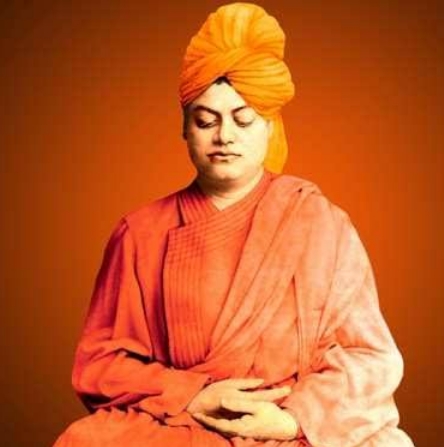
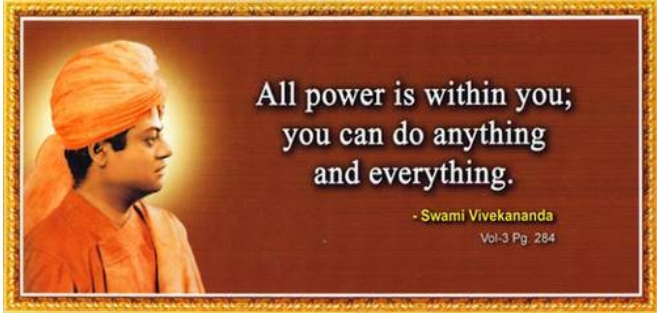
Swami Vivekananda’s inspiring personality was well known both in India and in America during the last decade of the nineteenth century and the first decade of the twentieth. 

Born as Narendranath Datta in a Bengali Kayastha family,  he is the chief driving force behind various religious reform movements during the times of Colonial India. He introduced Hinduism to the world in a famous speech that he spoke in Chicago in 1893.

He was born on January 12, 1863 and His father was Vishwanath Datta, an attorney at the Calcutta high court while his mother, Bhubaneswari Devi was a housewife. From a very young age, Vivekananda was interested in spirituality and would meditate in front of the images of Hindu Gods and Goddesses.

He is regarded as a one of the finest spiritual leaders and intellects India has produced.

He was a devout follower of an Indian saint named Sri Ramakrishna Paramhansa. Not only that, he was a devout follower of Sri Ramakrishna Paramhansa, whose ideologies he followed till the day he breathed his last. Inspired him, he even formed the Ramakrishna Math and the Ramakrishna Mission. He went to the United States of America to teach modern Hindu philosophy.

His vast knowledge of Eastern and Western culture as well as his deep spiritual insight, fervid eloquence, brilliant conversation, broad human sympathy, colourful personality, and handsome figure made an irresistible appeal to the many types of Americans who came in contact with him. People who saw or heard Vivekananda even once still cherish his memory after a lapse of more than half a century.

The Swami’s mission was both national and international. A lover of mankind, he strove to promote peace and human brotherhood on the spiritual foundation of the Vedantic Oneness of existence. A mystic of the highest order, Vivekananda had a direct and intuitive experience of Reality. He derived his ideas from that unfailing source of wisdom and often presented them in the soulstirring language of poetry.

To the Hindus he preached the ideal of a strength-giving and man-making religion. Service to man as the visible manifestation of the Godhead was the special form of worship he advocated for the Indians, devoted as they were to the rituals and myths of their ancient faith. Many political leaders of India have publicly acknowledged their indebtedness to Swami Vivekananda.

In America Vivekananda’s mission was the interpretation of India’s spiritual culture, especially in its Vedantic setting. He also tried to enrich the religious consciousness of the Americans through the rational and humanistic teachings of the Vedanta philosophy. In America he became India’s spiritual ambassador and pleaded eloquently for better understanding between India and the New World in order to create a healthy synthesis of East and West, of religion and science.

The natural tendency of Vivekananda’s mind, like that of his Master, Ramakrishna, was to soar above the world and forget itself in contemplation of the Absolute. But another part of his personality bled at the sight of human suffering in East and West alike. It might appear that his mind seldom found a point of rest in its oscillation between contemplation of God and service to man. Be that as it may, he chose, in obedience to a higher call, service to man as his mission on earth; and this choice has endeared him to people in the West, Americans in particular.

Swami Vivekananda focused on channelling the energy of the youth. He said that Youth is the most important segment of any country.

In the course of a short life of thirty-nine years (1863-1902), of which only ten were devoted to public activities-and those, too, in the midst of acute physical suffering-he left for posterity his four classics: Jnana-Yoga, Bhakti-Yoga, Karma-Yoga, and Raja-Yoga, all of which are outstanding treatises on Hindu philosophy. In addition, he delivered innumerable lectures, wrote inspired letters in his own hand to his many friends and disciples, composed numerous poems, and acted as spiritual guide to the many seekers, who came to him for instruction. He also organized the Ramakrishna Order of monks, which is the most outstanding religious organization of modern India. It is devoted to the propagation of the Hindu spiritual culture not only in the Swami’s native land, but also in America and in other parts of the world.

Swami Vivekananda passed away on July 4 in the year 1902. He was just 39 years old. Even almost 120 years after his demise, he is still alive in many people’s hearts and minds as they fondly remember his ideologies and what he taught.

National Youth Day is celebrated on January 12, every year in India to honor the birth anniversary of Swami Vivekananda.

Overthinking- problem of today’s generation

Overview 

Overthinking is simply what its name suggests – thinking too much. Overthinking is going over the same thought again and again, analyzing the simplest of situations or events until all sense of proportion has gone. The overthinking brain cannot translate these thoughts into actions or positive outcomes, so therefore creates feelings of stress and anxiety. The phrase “overthinking” is often used quite flippantly these days. (You can picture the social media posts: “I’m overthinking my holiday packing. Lol.”) But for the genuine overthinker, there is nothing shallow or light-hearted about their thoughts. Overthinking is like a problem which every 2nd or 3rd person is going through right now. It is something where you tend to think about a lot, which tends to control your mind, and you waste so much of your energy and you tend to lose time on something which doesn’t even matter to you that much and over the time you start doubting on yourself. 

Why does we overthink? 

Thinking a lot is a habit, much like biting our nails. Where overthinking becomes problematic is when we continually overlook the underlying need behind the behavior. It’s something we start doing because we’re coping with feelings that might be uncomfortable, or with needs that are not met. An intelligent or creative person’s mind needs to be fed. It needs “food for thought”. When this type of person does not provide their mind with intriguing or stimulating information on a regular basis, they’ll feel an unmet need. It’s quite possible the person will start to think or fantasize about things they have no control over, simply to fill the space. It becomes entertaining to think a lot, it provides stimulation. We tend to overthink when something bothers us. But if it starts to bother a lot than it also effects one’s health. 

How to stop overthinking? 

Step back and look at how you’re responding 

The way you respond to your thoughts can sometimes keep you in a cycle of rumination, or repetitive thinking. 

The next time you find yourself continuously running things over in your mind, take note of how it affects your mood. Do you feel irritated, nervous, or guilty? What’s the primary emotion behind your thoughts? 

Having self-awareness is key to changing your mindset. 

Find a distraction 

Shut down overthinking by involving yourself in an activity you enjoy. 

This looks different for everyone, but ideas include: 

  • learning some new kitchen skills by tackling a new recipe 
  • going to your favorite workout class 
  • taking up a new hobby, such as painting 
  • volunteering with a local organization 

Take a deep breath 

You’ve heard it a million times, but that’s because it works. The next time you find yourself tossing and turning over your thoughts, close your eyes and breathe deeply. 

Meditate 

Developing a regular meditation practice is an evidence-backed way to help clear your mind of nervous chatter by turning your attention inward. 

Not sure how to get started? We’ve got everything you need to know in this how-to guide. All you need is 5 minutes and a quiet spot. 

Look at the bigger picture 

How will all the issues floating around in your mind affect you 5 or 10 years from now? Will anyone really care that you bought a fruit plate for the potluck instead of baking a pie from scratch? 

Don’t let minor issues turn into significant hurdles. 

Do something nice for someone else 

Trying to ease the load for someone else can help you put things in perspective. Think of ways you can be of service to someone going through a difficult time. 

Does your friend who’s in the middle of a divorce need a few hours of childcare? Can you pick up groceries for your neighbor who’s been sick? 

Realizing you have the power to make someone’s day better can keep negative thoughts from taking over. It also gives you something productive to focus on instead of your never-ending stream of thoughts. 

So don’t just overthink, whenever you feel that it’s happening just take a deep breath and it will be fine! 

Human rights

The twentieth century has seen numerous changes in Indian society in each field. The world itself saw two World Wars, numerous other enormous and little show-downs, cold-war, and rise of fundamentalism and psychological warfare which has ended up a risk to respectful society. The improvement in science and innovation has made life more comfortable but expanded the damaging capacity of fighting to such tall extents that the world appears to be living on a load of explosives and may self-destroy it one day. Man appears to have misplaced himself in this fabric world.

Coming back to India, it saw the heightened of flexibility battle within the starting of the final century, picked up autonomy halfway through it and experienced quick socio-economic changes. It has been able to preserve its mainstream majority rule nature and structure. But at times our commitments to preserve human rights were tried to the total.

The unstable circumstances in Kashmir, Gujarat and a few other delicate regions and indeed regularly serene ranges at touchy times have raised certain questions that got to be replied. Questions like: Has India been able to ensure human rights? In the event that there have been laxities or disappointments, how can they be evacuated? Do the barefaced charges against the nation, of having fizzled to secure human rights hold water or they are fair a portion of political purposeful publicity? And at long last what steps have been taken by the government to ensure that these rights are not abused? These questions got to be replied within the right point of view some time recently coming to a agreement whether human rights are secure in our nation. And more critically, what ought to be done to preserve and reinforce them.

There are two conclusions on the matter that India incorporates a convention of maintaining human values and securing human rights. The Father of the Country, Mahatma Gandhi wandered as distant as South Africa to battle for the cause of the neighborhood dark individuals. The Indian people’s possess battle for flexibility was extraordinary in it and expected more noteworthy size when observed within the higher viewpoint of putting an conclusion to the abominations and persecutions allotted out by outside run the show to humankind living in a nation.

It was, in this manner, in right sincere that after accomplishing autonomy; India was made a Imperial Equitable Republic. The six Essential rights, i.e. (i) Right to Uniformity, (ii) Right to Opportunity, (iii) Right against Abuse, (iv) Right to Opportunity of Religion, (v) Social and Instruction Rights and (vi) Right to Protected Cures were revered within the Structure. Other than, there has been a authoritative gathering at the State and the Parliament at the Middle to sanction laws from time to time for social and financial equity and improvement.

There’s an free and effective legal framework for security of rights of the citizens. Consequently, right conditions and an satisfactory set-up were made for tranquil, legal and dynamic presence for everybody with small or no scope for infringement on human rights.

In this way, we have a solid convention and protected backing to guarantee upkeep of human rights. But this does not cruel that there have been no laxities within the framework. There’s no dissent of the truth that there have been outright infringement of human rights ‘n a few parts at a few period of time like Delhi in 1984, Godhead m 2001 and J&K in 1980’s and 1990’s. It is germane to say here that distinctive communities have been at the accepting conclusion of such infringement totally different times and regions, with each community announcing to be the most exceedingly bad sufferers. But we are able call these episodes laxities not disappointments for the basic reason that they have been intermittent occurrences not a State incited orders of genocide like those of the Jews in Nazi Germany. By and expansive individuals themselves have been mindful for making ruin on target bunches. State has continuously stood for casualties and fortification of law and arrange.

The government’s execution in this respect has gotten wide spread feedback from different quarters. But in all reasonableness, we must to begin with of all have a see at the steps taken to preserve human rights.

The National Human Rights Commission was made in October 1993 which is an expression of India’s concern for security and advancement of human rights. It has developed as a lasting body having crucial teacher interface with the Minorities Commission, the Women’s Commission and the SC’s and ST’s Commission. Its primary capacities are counted underneath:

The creation of an autonomous commission laying down a appropriate framework and strategy for its work and bringing all the related issues inside its scope and control talks volume approximately the government’s concern to set up equity and run the show of law.

The Commission has its claim staff for conducting examinations into complaints of human rights infringement. It can moreover use the administrations of experts or examining offices of Central or State Governments. The Commission has moreover related itself with Non-Governmental Associations (NGOs) in examination work. It fixes time limits for accepting data or report falling flat which it goes before on its claim and orders indictment or such other activity against the charged for which it can approach and include the State Tall Court or the Preeminent Court.

It may suggest to the concerned specialist or government the give of such prompt intervals alleviation to the casualty because it may think fundamental. The Commission too has the control to go before in movements or petitions of charges of human rights infringement by equipped powers.

That the government has made it official on itself to show its activity taken report on the suggestion of the Commission bears declaration to the truth that the government isn’t as it were sharp to ensure human rights but moreover genuine around making an independent body which might make an air of believe on it among the individuals of India. The government needs to appear that it is its obligation to preserve legitimate open arrange and peace.

The destinations and circles of the Commission moreover incorporate security of planned castes and tribes as these classes have endured colossally for numerous centuries in terms of barefaced segregation and abuse. The Commission knows the esteem of locks in Central and State Governments, NGOs, common teach and other components of respectful society in its campaign to battle separation.

Since its initiation in 1993, the National Human Rights Commission has fared surprisingly well in its targets. It has kept on get and change various person complaints from people strikingly Davits and Exhorts against the affirmed acts of segregation, untouchability, savagery against human creatures, outrages of different sorts and high-handedness of open hirelings, etc. The Commission is exceptionally much able of managing successfully the issues like Godhead carnage and other ethnic and devout issues.

The exterior universes as well as the depreciators at domestic are fast to criticize that the episodes of expansive scale departure of Kashmiri Pandits from the valley are clear signs of the destitute state of undertakings within the nation with respect to human rights.

We may say that the travel to conclusion human abominations in a world which is isolated by financial inlets and devout convictions is long and testing. In India as all over else within the world, history and society have seen carnage and genocide. As we walk towards civilization and advance, there’s more extensive condemnation of savagery executed by devout or political intensity. What is vital is to figure it out the encourage to regard human rights as a national obligation, a ethical basic and God’s decree of all inclusive brotherhood. Nothing else things more.

Supply Chain Challenges for Covid-19 Vaccine Delivery in India

1. Logistics and Management

As of today, there are 154 candidate vaccines in pre-clinical trials, 21 in Phase-1 trials (Small-scalesafety trials), 12 in Phase-2 trials (Expanded safety-trials) and 11 in the path of approval across the globe. Not to forget, Russia’s first registered vaccine against the virus – Sputnik V. Even India has over a dozen of companies working on the vaccines out of which Covaxin developed by Bharat Biotech in collaboration with ICMR, is in its final stages and is highly anticipated. With so many possibilities, pharmaceutical manufacturers and distributors need to ensure continuity in vaccine development and delivery to meet the market demand. The following table talks about the potential vaccines being manufactured in India.

2. Availability and Affordability

Once the vaccine is launched, availability and affordability will be a key challenge. We must consider
the possibility of a private-public partnership to move this further, like in the case of polio vaccines.
There could be possible problems of irregular access to the vaccines, shortage in the supply, theft and
robbery, spike in pricing etc. which must be thought of beforehand. The vaccines must be suitably and
fairly priced for the lower income groups to be able to afford.

3. Manufacture and Production outreach

India has an upper hand in this criterion, since it has been manufacturing and exporting a significant
amount of vaccines and medicines of different kinds, globally. However, on the arrival of a potential
vaccine, manufacture and production has to be given a clear priority and must be upscaled, in order to
be prepared for the challenges of shortages like in the case of N95 masks.

4. Education and Outreach

Although vaccines are primarily important, it is not vital that everyone must be vaccinated at one
time. People with good immunity, free of ailments and high resilience are not particularly required to
be vaccinated. Healthcare workers, Senior citizens, people with health problems like diabetes, asthma,
coronary diseases etc. must be given first priority over the healthy population of the country, which
can be vaccinated at a later stage, if necessary.

Overview of Absalom and Achitophel

The neo-classical age place the epic at the top of the hierarchy of various poetic compositions. This leads the poets of the late 17th and early 18th century to attempt to write Epic poetry. Dryden instead chooses a mock-heroic trend as a means of representing and satirizing especially different socio-political ages. A mock-epic or the mock-heroic imitates the elaborate form and ceremonious style of the epic genre but usually applies them to a commonplace or trivial subject matter.

Poetic style

Dryden wrote this poem in an eloquent flexible, cogent yet controversial poem. According to David Daiches Dryden build on the ‘Reform of our members’ the perfect wase poetic style. Dr. Johnson Heiled Dryden and said that Dryden was the founder of the “new verification” and with him, it is apparent that English poetry has did not tend to revert to its former savageness. Johnson also remarked that before Dryden no poetical diction, no refined use of words was appropriated to arts. Critics have stated that it was in Dryden’s prologue and epilogue two places that he achieved that great strength. He could be Ironic, satirical, critical, humorous, or indent in a variety of ways. Absalom and Achitophel is a famous example of Dryden’s clear summative statement and the greatest achievement of his argumentative verse. The style of poem is essentially heroic which means that the plot, the character, the wit, the passion, and the description are all amplified above the level of common conversation. The style is best adapted to the biblical allegory and a narrative of great political evils during 17th century England.

Polish plot

Charles II had no legitimate son after him his brother James was supposed to sit on the throne. The plot was made to exclude him from the throne and create the atmosphere to make the Duke of Monmouth sit on the throne, this controversy was called the Popish plot by Titus Oatis.

Absalom and achitophel was published in 1681. Absalom and Achitophel was a contribution to the debate on public affairs in the form of verse satire. Dryden’s reason and intents were all on the side of legitimate and settled government so that the whig agitation to exclude from the succession. Charles II heir and his brother James on the ground that he was a Roman Catholic. And to encourage Charles’s legitimate son the Duke of Monument to assert his claim found Dryden on the Jory side. Supporting legality and the true succession protectants whig agitation in favor of exclusion of James from the succession was led by Earl of Shaftesbury and the Duke of Buckingham. Dryden took the biblical story of the rebellion of Absalom against his father King David and applied it to the contemporary situation with Charles II.

Alleviating poverty through education

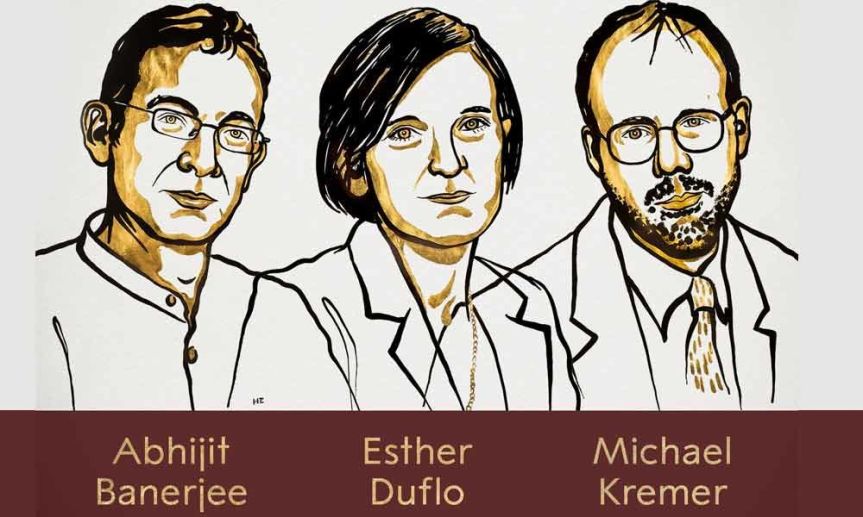
In 2019, Abhijeet Bannerjee, Esther Duflo and Michael Kremer received the Nobel Prize in Economics for their experimental approach to alleviating poverty. Poverty is one of the biggest issues faced by mankind. It is associated with social problems such as malnutrition, poor education and health. Poverty alleviation is the method of systematically reducing poverty by improving peoples’ education and job opportunities and in turn drastically improve their standard of living.

Their approach was very simple. To tackle the big problem of how to remove poverty, break it down into smaller, manageable questions. Once you find those questions, try to answer each one of them with a field experiment. A field experiment is a randomized controlled trial in which participants make choices in their normal day-to-day environment. Some of these experiments were carried out to find out how exactly education plays a role in reducing poverty.

Michael Kremer rounded up a large number of schools that needed some kind of support and split them up into groups. These schools were given resources that they were not receiving before. These resources varied from textbooks to free school meals. The outcome of the resource distribution was randomised. Due to this, researchers could find a connection between the various types of resources and how it helped children learn better. Surprisingly, textbooks and free school meals proved to make no difference in the learning of the students. It was observed that lack of resources was not the major problem that the low-income schools were facing. The biggest problem was that the teaching happening in these schools was not in accordance with the students’ needs. Banerjee and Duflo analysed remedial tutoring in Mumbai and Vadodara by providing schools with teaching assistants who helped students that had special needs. They discovered that helping the weakest student was a very effective measure in increasing the quality of education.

These experiments showed us that teachers lacked incentive and accountability, which showed in a high level of absenteeism. Reforms had to be made to bring teaching in line with students’ needs and the experiments showed that extra resources are of very limited value.

After the field experiment, this is what Banerjee and Duflo had to say on education policy formation:

  1. They believe that if the cost of schooling decreases, it would lead to a sizeable increase in school enrolment. If some financial barriers and non -financial barriers (e.g: distance to school) are removed it would certainly result in better school participation,
  2.  Awareness about the benefits of education should be spread. If the underprivileged know that there is a wage gap between the educated and uneducated, they would certainly want to be educated. Providing information about jobs would lead to an increase in education investment.

3. More attention should be paid to weaker students. Teaching assistants should be provided to make sure all students are able to cope with the level of teaching and should ensure no child is left behind.

This was how field experiments in education proved to be useful in alleviating poverty.

Wannacry Cyber Attack

What was the cyber attack?

The WannaCry ransomware attack was a worldwide cyber attack in May 2017 by the WannaCry ransomware. It propagated through EternalBlue, an exploit developed by the United States National Security Agency (NSA) for older Windows systems. WannaCry is a ransomware cryptoworm, which targeted computers running the Microsoft Windows operating system by encrypting data and demanding ransom payments in the Bitcoin cryptocurrency. The worm is also known as WannaCrypt, Wana Decrypt0r 2.0, WanaCrypt0r 2.0, and Wanna Decryptor. It is considered a network worm because it also includes a transport mechanism to automatically spread itself. This transport code scans for vulnerable systems, then uses the EternalBlue exploit to gain access, and the Double Pulsar tool to install and execute a copy of itself. WannaCry versions 0, 1, and 2 were created using Microsoft Visual C++.

When did it happen?

The attack began on Friday, 12 May 2017, with evidence pointing to an initial infection in Asia at 07:44 UTC. Within a day the code was reported to have infected more than 230,000 computers in over 150 countries. Officially the initial outbreak was from 12 May 2017 to 15 May 2017. Organizations that had not installed Microsoft’s security update from April 2017 were affected by the attack.

How did it happen?

The vulnerability WannaCry exploits lies in the Windows implementation of the Server Message Block (SMB) protocol. The SMB protocol helps various nodes on a network communicate, and Microsoft’s implementation could be tricked by specially crafted packets into executing arbitrary code. It is believed that the U.S. National Security Agency discovered this vulnerability and, rather than reporting it to the infosec community, developed code to exploit it, called EternalBlue. This exploit was in turn stolen by a hacking group known as the Shadow Brokers, who released it obfuscated in a seemingly political Medium post on April 8, 2017. Microsoft itself had discovered the vulnerability a month prior and had released a patch, but many systems remained vulnerable, and WannaCry, which used EternalBlue to infect computers, began spreading rapidly on May 12. In the wake of the outbreak, Microsoft slammed the U.S. government for not having shared its knowledge of the vulnerability sooner.

Who did it?

The US and UK governments have said North Korea was responsible for the WannaCry malware attack affecting hospitals, businesses and banks across the world in May 2017. Ironically, it was allegedly developed as a cyber-attack exploit by the US National Security Agency. Although they were reported to have known of the tool’s vulnerabilities, the NSA didn’t bring it to Microsoft’s attention until the hacker group called Shadow Brokers leaked EternalBlue to an obscure website. Further analysis of the attack by companies such as Symantec revealed links to the Lazarus group who in turn have been linked to North Korea although the attack does not bear the hallmarks of a nation-state campaign.

Which security services were violated?

WannaCry spread using an exploit called EternalBlue, created by—and subsequently stolen from—the U.S. National Security Agency (NSA). EternalBlue enabled attackers to discover vulnerable computers on the target network. WannaCry also leveraged an NSA backdoor called DoublePulsar to install WannaCry on the networkThe WannaCry ransomware attack hit around 230,000 computers globally .A third of NHS hospital trusts were affected by the attack. Terrifyingly ambulances were reportedly rerouted, leaving people in need of urgent care in need. It was estimated to cost the NHS a whopping £92 million after 19,000 appointments were canceled as a result of the attack. As the ransomware spread beyond Europe, computer systems in 150 countries were crippled. The WannaCry ransomware attack had a substantial financial impact worldwide. It is estimated this cybercrime caused $4 billion in losses across the globe.

Affected organizations

  • Andhra Pradesh Police, India
  • Automobile Dacia, Romania
  • Boeing Commercial Airplanes
  • Cambrian College, Canada
  • Hitachi
  • Honda
  • Instituto Nacional de Salud, Colombia
  • Portugal Telecom
  • Pulse FM
  • Renault
  • Russian Railways
  • University of Milano-Bicocca, Italy
  • Vivo, Brazil

Global Warming a threat to Life

The process of rising average air temperatures near the Earth’s surface during the past one to two centuries is known as global warming. Climate scientists have been collecting extensive data of numerous weather events (such as temperatures, precipitation, and storms) and associated effects on climate (such as ocean currents and the chemical makeup of the atmosphere) since the mid-twentieth century. The Intergovernmental Panel on Climate Change (IPCC) was established in 1988 by the World Meteorological Organization (WMO) and the United Nations Environment Program (UNEP) to give voice to a growing conviction within the scientific community (UNEP).  Human beings and human activities have been responsible for a worldwide average temperature increase of between 0.8 and 1.2 °C (1.4 and 2.2 °F) of global warming since preindustrial times, according to a special report published by the IPCC in 2018, and most of the warming observed in the second half of the twentieth century can be attributed to human activities.

Climate change since last glaciation

Changes in the sum of qualities that constitute climate change are referred to as global warming. Changes in precipitation patterns, winds, ocean currents, and other aspects of the Earth’s climate are all examples of climate change. A federal assessment on the implications of climate change on the future of the United States has been issued. According to recent research from the Geological Survey, climate change has been more relevant over the industrial age of the previous two centuries. The climate of the Earth has changed across different periods, from a single human life to billions of years. Significant fluctuations in the worldwide extent of glaciers and ice sheets were seen throughout the Pleistocene glacial era (about 2,600,000 to 11,700 years ago). Changes in the geometry of Earth’s orbit around the Sun drove changes in the distribution of solar radiation over the planet’s surface. According to a new study, these changes occurred across tens to hundreds of millennia. 

The most recent ice age, or glacial era, ended 21,000 years ago, and is known as the Last Glacial Maximum. Continental ice sheets stretched deep into Europe and North America’s middle latitude areas during this period. The global annual mean temperature appears to have been 4–5 degrees Celsius (7–9 degrees Fahrenheit) lower than it was in the mid-twentieth century. During the last ice age, Earth’s climate was marked by more cooling at higher latitudes and very less cooling across broad portions of the tropical waters (around the Equator). The Holocene is the term used to describe the most recent period of Earth’s history. The Holocene Epoch is an era in which humans have had a significant impact on climate. However, other scientists suggest that the Holocene ended very recently and that the Earth is now in the Anthropocene Epoc, a climatic gap that might be named the Anthropocene Epoc. Since the end of the ice age, people have had a major effect on climate throughout this time period.

Causes of Global Warming

  1. The greenhouse effect

A balance of solar and terrestrial radiation keeps the Earth’s average surface temperature constant. Because the frequencies of the radiation are very high and the wavelengths are relatively short, solar radiation is sometimes referred to as “shortwave” radiation. Terrestrial radiation, on the other hand, is classified as longwave radiation due to its low frequencies and long wavelengths. The total energy of incoming solar radiation is approximately 1,366 watts per square metre each year. Approximately 30 units of incoming solar energy are reflected back to space by clouds, the atmosphere, or reflecting areas of the Earth’s surface for every 100 units of incoming solar radiation. Earth’s planetary albedo is the reflective capacity of the planet, and it does not have to remain constant throughout time. Earth must emit these same 70 units back into space to preserve thermodynamic equilibrium. Some of the infrared light emitted by the Earth’s surface is absorbed by greenhouse gases. As a result of this absorption, some of the initial 70 units are unable to reach space. The presence of greenhouse gases in the atmosphere causes the surface and lower atmosphere to warm up.

  1. Radiative forcing

Solar radiation and greenhouse gases in the atmosphere may change the      temperature of the Earth’s surface and lower atmosphere. According to Dr. David Frum, “radiative forcing” might be thought of as “radiative force” or “radiative forcing.” The quantity of downward-directed radiant energy impinging on the Earth’s surface is measured by radiative forcing, which is a measure of the effect of a specific climatic component. Climate variables that contribute to the warming of the Earth’s surface are known as “positive forcing,” whereas forces that cool the Earth’s land surface are known as “negative forcing.” According to the IPCC, there is no question that human-caused greenhouse gas emissions are driving global warming. Each square metre of Earth’s surface receives around 342 watts of solar energy each year on average. This amount can be linked to a change in the Earth’s temperature. Changes in the distribution of terrestrial radiation (that is, radiation emitted by Earth) within the atmosphere can cause temperature changes at the surface. Radiative forcing has a natural cause in some situations, such as during volcanic eruptions when expelled gases and ash block some of the sun radiation reaching the surface. It has an anthropogenic, or purely human, origin in other situations. Anthropogenic increases in carbon dioxide, methane, and nitrous oxide, for example, are predicted to cause positive radiative forcing of 2.3 watts per sq metre. 

  1. The influences of human activity on climate

Human activity has affected global surface temperatures through altering the radiative balance that governs the Earth on a variety of temporal and geographical scales. The most substantial and well-known anthropogenic effect is the increase in greenhouse gas concentrations in the atmosphere. Humans also have an impact on climate through altering aerosol and ozone concentrations and changing the land cover of the Earth’s surface.