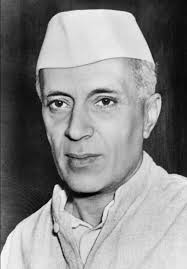
Jawaharlal Nehru was the first prime minister of India. He was born in Allahabad United provinces British Raj November 1889. His father’s name of Motilal Nehru and mother’s name was Swaruprani Thussu. His father was a politician and Indian lawyer his mother was Motilal`s second wife. He was the first of the three children of her parents.
Nehru received most of his primary education at home with the help of several tutors and governors. At the age of 15 Nehru was enrolled at Harrow School in England. Then he got admission at Trinity College Cambridge. After graduate degree Nehru enrolled himself at the Inns of Court School of Law in 1910 and studied law. In two year passed in Bar Examination and was offered to be admitted to the English bar Nehru returned to his Homeland in 1912 and started practicing law as a barrister at the Allahabad High Court. He married Kamala Kaul on February 8th, 1969 at the age of Indira Priyadarshini to become the first woman Prime Minister of the country.
1916 Nehru first met Gandhi a relationship that turned to be one of a lifetime for the two with Gandhi as his mentor Nehru Rose to prominence in the National Congress so much so that he was elected to the post of the general secretary of the Congress Nehru not only contributed greatly to the National Movement in India but also gave the freedom struggle and international Outlook in 1927 following the rejection of Gandhi plea and Nehru Presidency over the Lahore session of Congress in 1928 Nehru demanded complete Independence this resolution made him one of the most significant leaders of the independent movement he along with Gandhi manifested Limited civil disobedience and was jailed for the same in 1947 India rejected the withdrawal of the British from the Indian solid it suffered the pain of partition as the British had decided to partition of the the country into India and Pakistan Pakistan was formed on August 14, 1947. Nehru became the first Prime Minister of independent India from August 15 1947 until May 2, 1964,4 Nehru during his term as the Prime Minister brought forward radical changes in domestic international, economic, agricultural and social policies for the same he established numerous Institutions of Higher Learning to educate Young India include free and compulsory primary education to all children in his five-year plan throughout.
Nehru region Kashmir reminded a subject of contention both India and Pakistan wanted to include state in the country Pakistan in 1948 even made an attempt at seizing Kashmir by force but failed in their
attempt it was during his time that the Portuguese left Goa and the region
become a part of India he was referred to as the architect of modern India Nehru was best out with the Bharat Ratna award in 1955 India’s highest civilian honor 3 died in New Delhi India on 27 may 1964 at age of 74
“Without peace all other dream vanish and are reduced to Ashes”.
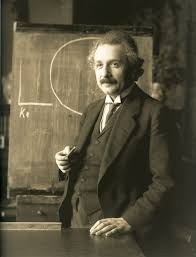
Albert Einstein comes from a middle-class family. When he was born his family started that something was wrong with him he had a very large and misshapen head but unfortunately within the first few weeks the shape of his head become normal but their worry didn’t stop when he was very young his parents thought of him it intellectually disabled because he was very slow too long to talk and did not speak until he was four years old at that time in his thoughts but did not speak.
He used to practice the sentence in his head or dumb topically under his breath until he got a right and then say them aloud many people believe that anything would never succeed at anything when he was 5 years old his father shown in men simple pocket compass Einstein Boss fascinated and that was the beginning of his opposition with science he also began playing the violin at 808 continue to play throughout his life cool and still was a good student most of his grades were and he was the top of his class but mainly because of Math and Science so history depends mostly on his interest in the subject when Einstein for only 10 years old he started educating himself by the age of 12 and 10 thought himself Euclidean geometry by the age of 15 him master calculus but he headed the disciplined and rigid type of the teachers so he dropped out of school at age 15 and left Germany to award Military Service his parents were worried that their son become a School dropout with no employee office girls and not wearing promising future bed all bed and time did not quit his education he applied to the Swiss Federal Institute of Technology but believe it or not if fail the entrance exam Albert Einstein failed an exam he was not prepared He excelled in Math and physics that his knowledge on project other than that was not good so he failed the exam and had to take it a second time and then he was admitted that he met his future wife, Mileva maric she was the only woman among the students in the graduation.
He would not get a job in the academy for almost A decade every one of these professionals knew that is that he was brilliant but they were also bothered by his Rebellious and disobedient side so they refused to recommend him for various positions to the academic institution wouldn’t hear him bad in Einstein needed money so he got a job as a clerk in a patent office the job was mostly mindless and very easy for increasing so he like the job because he had so much free time to study and Research while working there developed his most important theories while walking the boring job he developed the theory of relativity aunty world most famous equation e =MC2.
Einstein was nominated for a Nobel prize that did not receive it until 11 years later Albert Einstein become the most influential president of the 20 century his research changed the world Road hundred of books and was also a great philosopher so there are so many things to be learned I have no special talent I am only passionately curious to follow your curiosity whatever that is see where it goes never be afraid to coaching the world around you and don’t be afraid of falling and making mistakes along the way a person who never made a mistake tried anything new dark to discover and dark to make mistakes that what device such as per people from unsuccessful don’t be afraid to control your fear and don’t be afraid to follow your passion you don’t have to be the next Einstein be the best you can be to rise tomorrow and become a person you will be proud of the world is waiting for you.
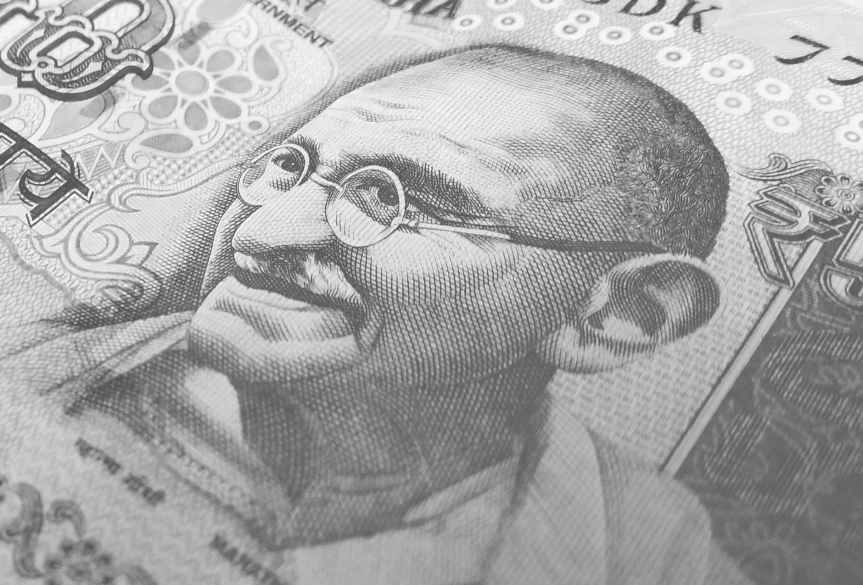
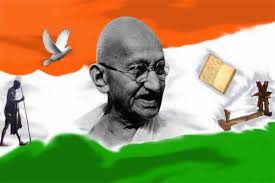
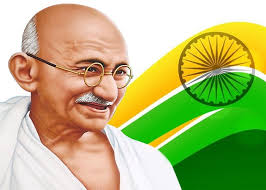
The name ‘Gandhi’ needs no introduction. Any part of the world that understands civilisation and humanitarian values appreciates Mahatma Gandhi (October 2, 1869-January 30, 1948). Thus it doesn’t come as a surprise that you find Gandhi fans in a diverse range-from the present American President, Barack Obama to philanthropic groups working in Rio
Movements launched by Mahatma Gandhi:
Mahatma Gandhi overcame insurmountable odds to bring the mighty British Empire to its knees. It is not merely because of the Non-cooperation Movement or the Dandi March (1931) that we know him today. It is true, of course, that these movements, along with the Quit India Movement (1942), brought the British Government to its knees. Gandhi was a man of the masses. Such was his popularity that the British went weak in their knees at the prospect of arresting him. They were afraid of making a martyr of him and thus adding to his popularity. This was no mean achievement for a man described by Winston Churchill as a ‘half- naked fakir’. Gandhi’s idea of non-violent resistance against the British rule appealed to the conscience of the Indian society groaning under the unjust rule of the British since the Battle of Plassey in 1757.
When Gandhi put Satyagraha into action for the first time in South Africa in1906 and became a success there, it didn’t take much time to recognise and hail the arrival of a great leader. But Gandhi was more than a messiah in the world of politics. He was a powerful social reformer who campaigned relentlessly to end discrimination against India’s untouchable class, whom he called the Harijans (children of God).
Mahatma Gandhi Awards:
• In 1930, Gandhi was named the Man of the Year by Time’s Magazine. • In 2011, Time magazine named Gandhi as one of the top 25 political icons of all time. • He did not receive the Nobel Peace Prize despite being nominated five times between 1937 and 1948.
• The Government of India institutionalized the annual Gandhi Peace Prize to distinguished social workers, world leaders, and citizens. Nelson Mandela, the leader of South Africa’s struggle against apartheid was a recipient of the award
About Mahatma gandhi Personality:
The spiritual strength of Gandhi’s personality has to be given due recognition. His autobiography My Experiments with Truth bears a living testimony to this. Gandhiji used his spiritual strength to overcome all opposition. He walked across the country’s villages trying to make its people realise the importance of sanitation and healthy habits. If this does not prove his sincerity, let us remember his fast-unto-death in the riot-hit Calcutta of September 1947, which brought the Hindus and Muslims together again after a terrible violence.
Would any of our leaders today dare to walk the riot-hit streets of Noakhali with only a Tagore song to give him company? It is stupid to question the courage of this man who perhaps might even have achieved the impossible task of unifying India and Pakistan again had he not been shot dead by a fanatic called Nathuram Godse on January 30, 1948.
Film on Mahatma Gandhi:
Ben Kingsley portrayed Mahatma Gandhi in the 1982 film Gandhi, which won the Academy Award for Best Picture. Therefore, Mahatma Gandhi would be remembered forever as he spread the message of non-violence, truth, faith in God, and also he fought for India’s Independence. His methods inspired various leaders, youth not only in India but also out of India. In Indian history, he is considered as a most prominent personality and as the simplest person who wears dhoti. He spread the message of swaraj and taught Indians how to become independent.
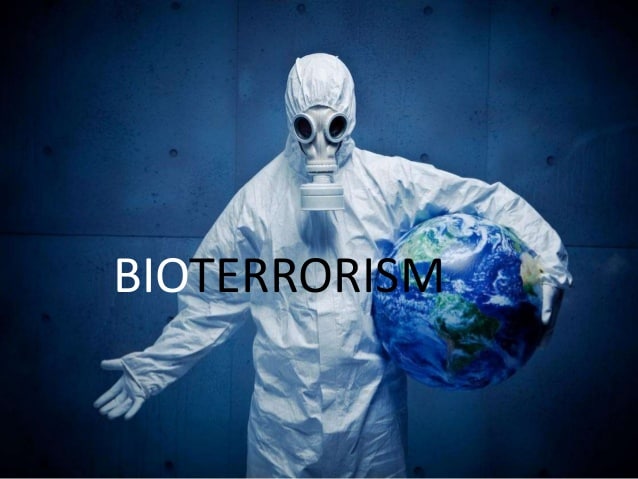
From the past two decades , it is stated that the threat of biological warfare is not a myth but a harsh reality of the world . Due to the outbreak , we can recognise the high risk and consequences of bioterrorism.
This editorial provides you the overview of bioterrorism , it’s symptoms , causes , measures and impact on humans in present scenario .
Introduction
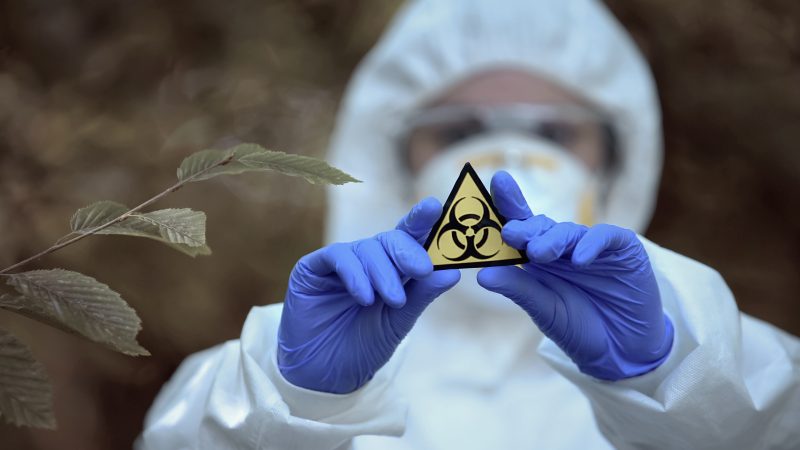
A bioterrorism attack is the deliberate release of viruses, bacteria, or other germs to cause illness or death. These germs are often found in nature. But they can sometimes be made more harmful by increasing their ability to cause disease, spread, or resist medical treatment.
Biological agents spread through the air, water, or in food. Some can also spread from person to person. They can be very hard to detect. They don’t cause illness for several hours or days. Scientists worry that anthrax, botulism, Ebola and other hemorrhagic fever viruses, plague, or smallpox could be used as biological agents.
Despite patchy intelligence, France started its own biological weapons programme in the early 1920s. It was headed by Auguste Trillat, an inventive German-educated chemist who envisioned and tested the sustained virulence of airborne pathogens.
The goal of bioterrorism is usually to create fear and/or intimidate governments or societies for the purpose of gaining political, religious, or ideological goals. Bioterrorism may have a different effect on societies than would weapons such as explosives.
Symptoms
The symptoms of exposure to a biological agent might include sore throat, fever, double or blurred vision, rash or skin blisters, exhaustion, difficulty talking, confusion, descending muscle weakness, nausea, abdominal pain, vomiting, diarrhea, and coughing.
History
Historically, biological weapons have been a threat to humans for many centuries. At those times, very crude methods such as fecal matter, animal carcasses, etc. were used to contaminate water sources, but now the concentrated forms of biological agents such as dried spores and genetically modified organisms are available, which are fatal even in minute quantity.
During the Indo-Pakistan war of 1965, a scrub typhus outbreak in north-eastern India came under suspicion. India’s defense and intelligence outfits were alert to the outbreak of pneumonic plague – well known in biological warfare – in Surat and Bubonic plague in Beed in 1994, which caused several deaths and sizeable economic loss.
Prevention
There are some points that you need to consider during the outbreak :
If you become aware of a suspicious substance, quickly get away.
Cover your mouth and nose with layers of fabric that can filter the air but still allow breathing. Examples include two to three layers of cotton such as a t-shirt, handkerchief or towel.
Depending on the situation, wear a face mask to reduce inhaling or spreading germs.
If you have been exposed to a biological agent, remove and bag your clothes and personal items.
Follow official instructions for disposal of contaminated items.
Wash yourself with soap and water and put on clean clothes.
Contact authorities and seek medical assistance. You may be advised to stay away from others or even to quarantine.
If your symptoms match those described and you are in the group considered at risk, immediately seek emergency medical attention.
Follow the instructions of doctors and other public health officials. Avoid crowds.
Rolihlahla Mandela was born into the Madiba clan in the village of Mvezo, in the Eastern Cape, on 18 July 1918. His mother was Nonqaphi Nosekeni and his father was Nkosi Mphakanyiswa Gadla Mandela, principal counsellor to the Acting King of the Thembu people, Jongintaba Dalindyebo. In 1930, when he was 12 years old, his father died and the young Rolihlahla became a ward of Jongintaba at the Great Place in Mqhekezweni. Hearing the elders’ stories of his ancestors’ valour during the wars of resistance, he dreamed also of making his own contribution to the freedom struggle of his people. He attended primary school in Qunu where his teacher, Miss Mdingane, gave him the name Nelson, in accordance with the custom of giving all schoolchildren “Christian” names He completed his Junior Certificate at Clarkebury Boarding Institute and went on to Healdtown, a Wesleyan secondary school of some repute, where he matriculated. Mandela began his studies for a Bachelor of Arts degree at the University College of Fort Hare but did not complete the degree there as he was expelled for joining in a student protest. On his return to the Great Place at Mqhekezweni the King was furious and said if he didn’t return to Fort Hare he would arrange wives for him and his cousin Justice. They ran away to Johannesburg instead, arriving there in 1941. There he worked as a mine security officer and after meeting Walter Sisulu, an estate agent, he was introduced to Lazer Sidelsky. He then did his articles through a firm of attorneys – Witkin, Eidelman and Sidelsky. He completed his BA through the University of South Africa and went back to Fort Hare for his graduation in 1943. Meanwhile, he began studying for an LLB at the University of the Witwatersrand. By his own admission he was a poor student and left the university in 1952 without graduating. He only started studying again through the University of London after his imprisonment in 1962 but also did not complete that degree. In 1989, while in the last months of his imprisonment, he obtained an LLB through the University of South Africa. He graduated in absentia at a ceremony in Cape Town. Entering politics: Mandela, while increasingly politically involved from 1942, only joined the African National Congress in 1944 when he helped to form the ANC Youth League (ANCYL). In 1944 he married Walter Sisulu’s cousin, Evelyn Mase, a nurse. They had two sons, Madiba Thembekile “Thembi” and Makgatho, and two daughters both called Makaziwe, the first of whom died in infancy. He and his wife divorced in 1958. Mandela rose through the ranks of the ANCYL and through its efforts, the ANC adopted a more radical mass-based policy, the Programme of Action, in 1949. In 1952 he was chosen as the National Volunteer-in-Chief of the Defiance Campaign with Maulvi Cachalia as his deputy. This campaign of civil disobedience against six unjust laws was a joint programme between the ANC and the South African Indian Congress. He and 19 others were charged under the Suppression of Communism Act for their part in the campaign and sentenced to nine months of hard labour, suspended for two years. A two-year diploma in law on top of his BA allowed Mandela to practise law, and in August 1952 he and Oliver Tambo established South Africa’s first black law firm, Mandela & Tambo. At the end of 1952 he was banned for the first time. As a restricted person he was only permitted to watch in secret as the Freedom Charter was adopted in Kliptown on 26 June 1955. The Treason Trial: Mandela was arrested in a countrywide police swoop on 5 December 1956, which led to the 1956 Treason Trial. Men and women of all races found themselves in the dock in the marathon trial that only ended when the last 28 accused, including Mandela, were acquitted on 29 March 1961. On 21 March 1960 police killed 69 unarmed people in a protest in Sharpeville against the pass laws. This led to the country’s first state of emergency and the banning of the ANC and the Pan Africanist Congress (PAC) on 8 April. Mandela and his colleagues in the Treason Trial were among thousands detained during the state of emergency. During the trial Mandela married a social worker, Winnie Madikizela, on 14 June 1958. They had two daughters, Zenani and Zindziswa. The couple divorced in 1996. Days before the end of the Treason Trial, Mandela travelled to Pietermaritzburg to speak at the All-in Africa Conference, which resolved that he should write to Prime Minister Verwoerd requesting a national convention on a non-racial constitution, and to warn that should he not agree there would be a national strike against South Africa becoming a republic. After he and his colleagues were acquitted in the Treason Trial, Mandela went underground and began planning a national strike for 29, 30 and 31 March. In the face of massive mobilisation of state security the strike was called off early. In June 1961 he was asked to lead the armed struggle and helped to establish Umkhonto weSizwe (Spear of the Nation), which launched on 16 December 1961 with a series of explosions. On 11 June 1964 Mandela and seven other accused, Walter Sisulu, Ahmed Kathrada, Govan Mbeki, Raymond Mhlaba, Denis Goldberg, Elias Motsoaledi and Andrew Mlangeni, were convicted and the next day were sentenced to life imprisonment. Goldberg was sent to Pretoria Prison because he was white, while the others went to Robben Island. Mandela’s mother died in 1968 and his eldest son, Thembi, in 1969. He was not allowed to attend their funerals. On 31 March 1982 Mandela was transferred to Pollsmoor Prison in Cape Town with Sisulu, Mhlaba and Mlangeni. Kathrada joined them in October. When he returned to the prison in November 1985 after prostate surgery, Mandela was held alone. Justice Minister Kobie Coetsee visited him in hospital. Later Mandela initiated talks about an ultimate meeting between the apartheid government and the ANC. Release from prison: On 12 August 1988 he was taken to hospital where he was diagnosed with tuberculosis. After more than three months in two hospitals he was transferred on 7 December 1988 to a house at Victor Verster Prison near Paarl where he spent his last 14 months of imprisonment. He was released from its gates on Sunday 11 February 1990, nine days after the unbanning of the ANC and the PAC and nearly four months after the release of his remaining Rivonia comrades. Throughout his imprisonment he had rejected at least three conditional offers of release. Mandela immersed himself in official talks to end white minority rule and in 1991 was elected ANC President to replace his ailing friend, Oliver Tambo. In 1993 he and President FW de Klerk jointly won the Nobel Peace Prize and on 27 April 1994 he voted for the first time in his life. President: On 10 May 1994 he was inaugurated as South Africa’s first democratically elected President. On his 80th birthday in 1998 he married Graça Machel, his third wife.True to his promise, Mandela stepped down in 1999 after one term as President. He continued to work with the Nelson Mandela Children’s Fund he set up in 1995 and established the Nelson Mandela Foundation and The Mandela Rhodes Foundation. In April 2007 his grandson, Mandla Mandela, was installed as head of the Mvezo Traditional Council at a ceremony at the Mvezo Great Place. Nelson Mandela never wavered in his devotion to democracy, equality and learning. Despite terrible provocation, he never answered racism with racism. His life is an inspiration to all who are oppressed and deprived; and to all who are opposed to oppression and deprivation. He died at his home in Johannesburg on 5 December 2013.
We are what we think. All that we are arises with our thoughts. With our thoughts, we make the world. Peace comes from within. Do not seek it without.
Lord Buddha
Introduction.
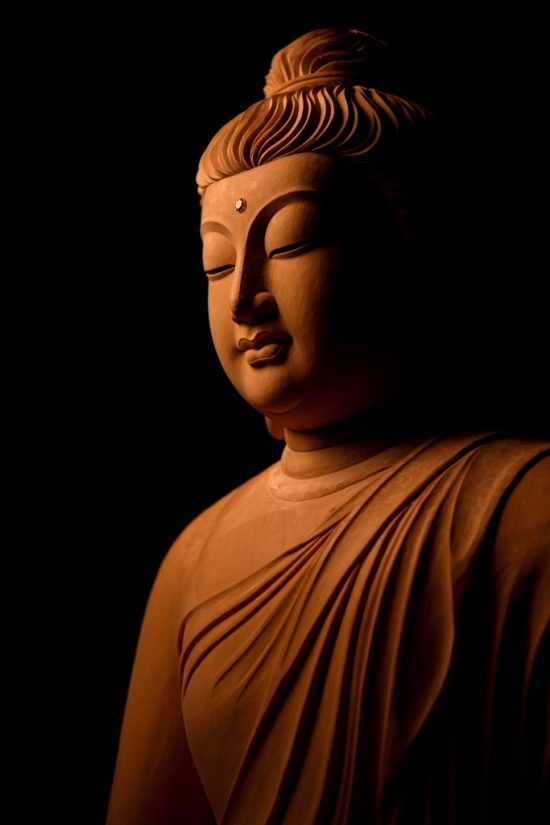
He was a spiritual personality . An ancient teacher and enlightened many . A founder of world religion Buddhism . He was popularly known as Gautama Buddha (also known as Siddhattha Gotama or Siddhārtha Gautama or Buddha Shakyamuni ) .
The Enlightened One who rediscovered an ancient path to release clinging and craving and escape the cycle of birth and rebirth. He taught for around 45 years and built a large following, both monastic and lay. His teaching is based on his insight into the arising of duḥkha (the unsatisfactoriness of clinging to impermanent states and things) and the ending of duhkha—the state called Nibbāna or Nirvana (extinguishing of the three fires).
Buddhism
Buddhism, one of the major religions and philosophical systems of southern and eastern Asia and of the world. Buddha is one of the many epithets of a teacher who lived in northern India sometime between the 6th and the 4th century before the Common Era.
The title buddha was used by a number of religious groups in ancient India and had a range of meanings, but it came to be associated most strongly with the tradition of Buddhism and to mean an enlightened being, one who has awakened from the sleep of ignorance and achieved freedom from suffering.
According to the various traditions of Buddhism, there have been buddhas in the past and there will be buddhas in the future. Some forms of Buddhism hold that there is only one buddha for each historical age; others hold that all beings will eventually become buddhas because they possess the buddha nature (tathagatagarbha).
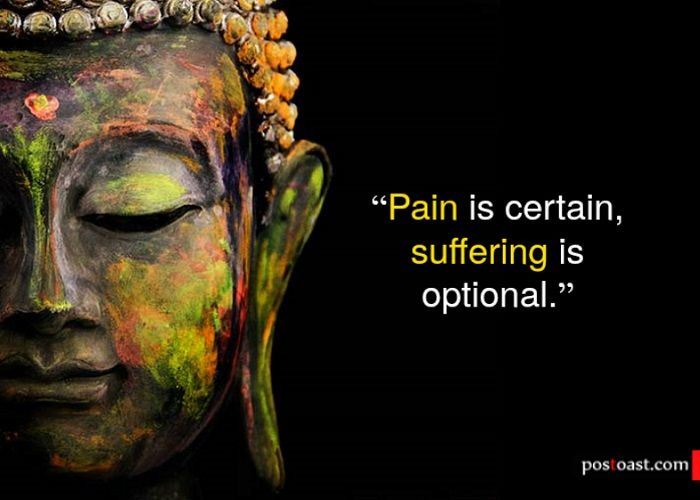
According to Buddhist doctrine, the universe is the product of karma, the law of the cause and effect of actions, according to which virtuous actions create pleasure in the future and nonvirtuous actions create pain.
Your work is to discover your world and then with all your heart give yourself to it.
Lord Buddha
History
Gautama Buddha ( born c. 6th–4th century BCE, Lumbini, near Kapilavastu, Shakya republic, Kosala kingdom [now in Nepal]—died, Kusinara, Malla republic, Magadha kingdom [now Kasia, India]).
Buddha is one of the many epithets of a teacher who lived in northern India sometime between the 6th and the 4th century before the Common Era.
Learnings from Gautama Buddha.
1. “Three things cannot be hidden: the sun, the moon and the truth.”
2. “You will not be punished for your anger; you will be punished by your anger.”
3. “You can search throughout the entire universe for someone who is more deserving of your love and affection than you are yourself, and that person is not to be found anywhere. You, yourself, as much as anybody in the entire universe, deserve your love and affection.”
4. “We are shaped by our thoughts; we become what we think. When the mind is pure, joy follows like a shadow that never leaves.”
5. “Believe nothing, no matter where you read it, or who said it, no matter if I have said it, unless it agrees with your own reason and your own common sense.”
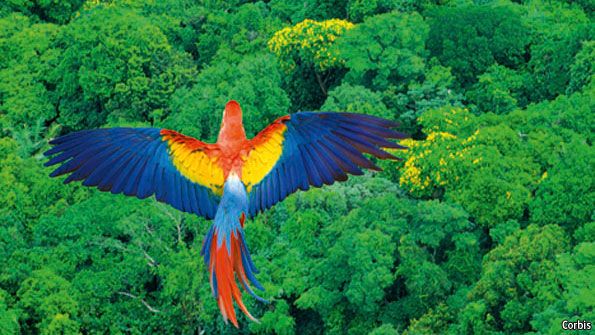
The forest is a peculiar organism of unlimited kindness and benevolence that makes no demands for its sustenance and extends generously the products of its life activity; it affords protection to all beings, offering shade even to the axe-man who destroys it.
– Gautama Buddha
Today , let’s feel the presence of fresh air , waterfall , trees , flora and fauna . Being a citizen of a country , which is well known for its resources , different species, mixed economy and different cultures. It is important for us to see the world of flora and fauna.
Well you get to know by the heading , today we are gonna talk about THE AMAZON’S which is well known for its vast species .
Introduction .
The Amazon jungle or Amazonia, is a moist broadleaf tropical rainforest in the Amazon biome that covers most of the Amazon basin of South America. This basin encompasses 7,000,000 km2 (2,700,000 sq mi), of which 5,500,000 km2 (2,100,000 sq mi) are covered by the rainforest. This region includes territory belonging to nine nations and 3,344 formally acknowledged indigenous territories.
The majority of the forest is contained within Brazil, with 60% of the rainforest, followed by Peru with 13%, Colombia with 10%, and with minor amounts in Bolivia, Ecuador, French Guiana, Guyana, Suriname, and Venezuela. Four nations have “Amazonas” as the name of one of their first-level administrative regions, and France uses the name “Guiana Amazonian Park” for its rainforest protected area. The Amazon represents over half of the planet’s remaining rainforests, and comprises the largest and most biodiverse tract of tropical rainforest in the world, with an estimated 390 billion individual trees divided into 16,000 species.
The name Amazon is said to arise from a war Francisco de Orellana fought with the Tapuyas and other tribes. The women of the tribe fought alongside the men, as was their custom. Orellana derived the name Amazonas from the Amazons of Greek mythology, described by Herodotus and Diodorus.
Flora and Fauna.
Wet tropical forests are the most species-rich biome, and tropical forests in the Americas are consistently more species rich than the wet forests in Africa and Asia.
This constitutes the largest collection of living plants and animal species in the world.
The region is home to about 2.5 million insect species, tens of thousands of plants, and some 2,000 birds and mammals. To date, at least 40,000 plant species, 2,200 fishes, 1,294 birds, 427 mammals, 428 amphibians, and 378 reptiles have been scientifically classified in the region.
The biodiversity of plant species is the highest on Earth with one 2001 study finding a quarter square kilometer (62 acres) of Ecuadorian rainforest supports more than 1,100 tree species.
Human impact on Amazon jungle.
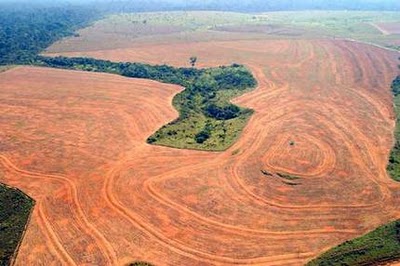
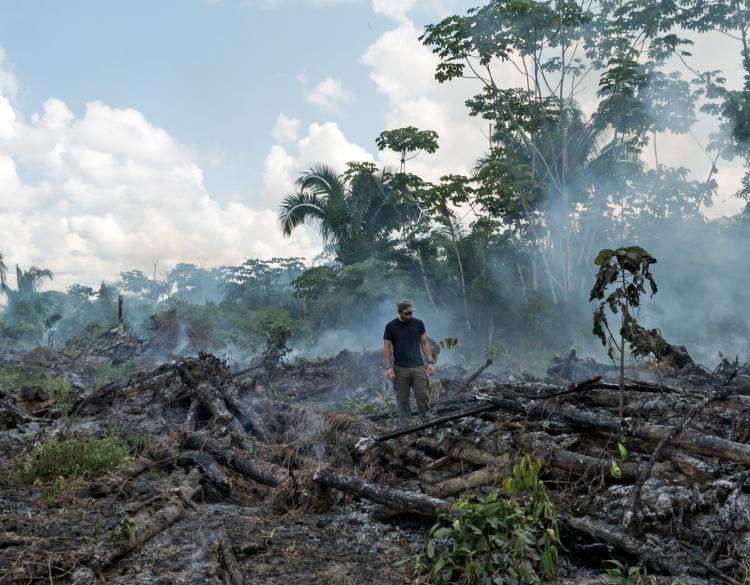
The human impact on the Amazon rainforest has been grossly underestimated according to an international team of researchers. … They found that selective logging and surface wildfires can result in an annual loss of 54 billion tonnes of carbon from the Brazilian Amazon, increasing greenhouse gas emissions.
Lead researcher Dr Erika Berenguer from Lancaster University said: “The impacts of fire and logging in tropical forests have always been largely overlooked by both the scientific community and policy makers who are primarily concerned with deforestation. Yet our results show how these disturbances can severely degrade the forest, with huge amounts of carbon being transferred from plant matter straight into the atmosphere.”
The second author, Dr Joice Ferreira from Embrapa in Brazil, said: “Our findings also draw attention to the necessity for Brazil to implement more effective policies for reducing the use of fire in agriculture, as fires can both devastate private property, and escape into surrounding forests causing widespread degradation. Bringing fire and illegal logging under control is key to reaching our national commitment to reducing carbon emissions.”
The forest is not a resource for us, it is life itself. It is the only place for us to live.
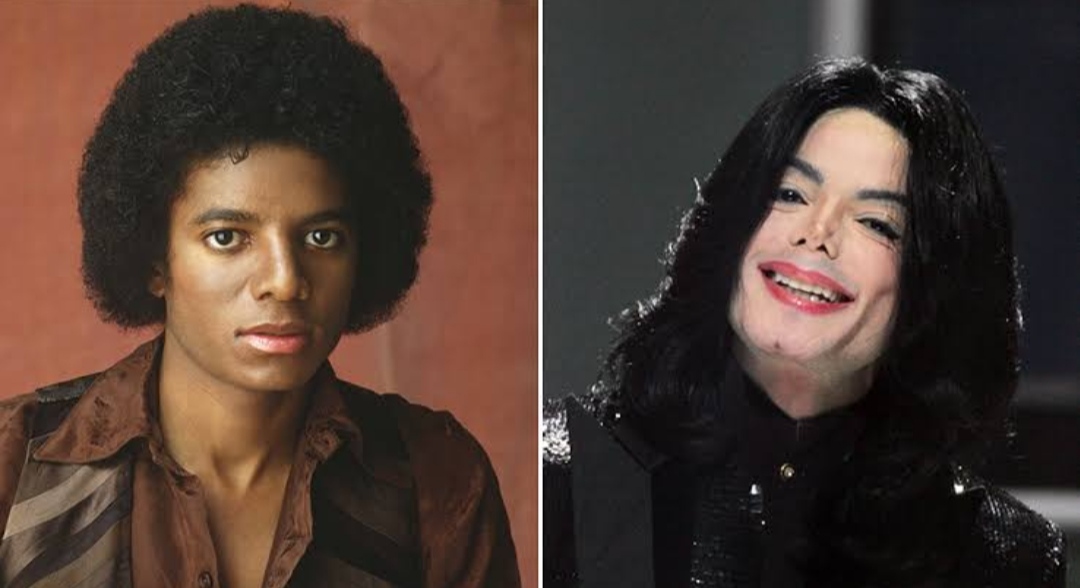
Michael Joseph Jackson(1958-2009) also popularly known as Michael Jackson,was an American singer, songwriter, and dancer. He is famously known as king of pop,he is regarded as one of the most significant cultural figures of the 20th century.
His contributions to music, dance, fashion, and philanthropy, made him a global figure.
He influenced many people, many genres across the world through stage and video performances.
His popularized dance moves like moon walk , still this complicated dance gestures is creating popularity, records.He is the most awarded music artist in history.
Jackson is one of the best selling music artists of all time, with estimated sales of over 350 million records worldwide. For his incredible contribution to music,dance he was honoured with 15 Grammy awards, six Brit awards, a golden globe award, and 39 Guinness world records.
Michael Jackson, also known as most commercially successful entertainers of all time. At the age of 50, Michael Jackson passed away,at his home in Los Angeles, California, after suffering from cardiac arrest caused by a fatal combination of drugs given to him by his personal doctor.
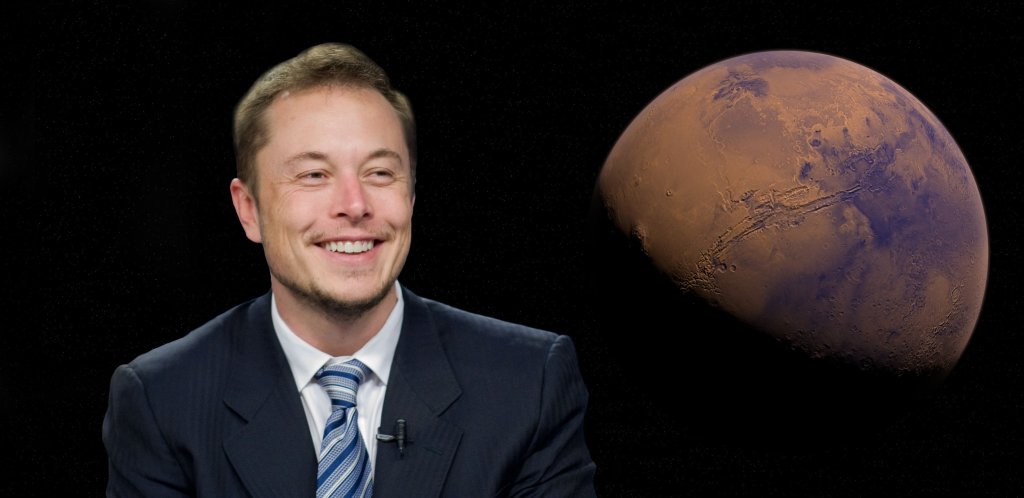
Elon musk is South African-born American entrepreneur and a business magnate. He is one Billionaire in the world. He is the founder and CEO of SpaceX, CEO of Tesla, founder of Boring company and Co-founder of OpenAI and Neuralink. In this blog, we are going the discuss the success story of Elon Musk.
PERSONAL LIFE
Elon Revee Musk was born on 28 June 1971 in Pretoria, South Africa. His father is Errol Musk, a electromechanical engineer, pilot and a sailor. His mother is Maye Musk, who is a model. From a very young age Elon musk was very interested in computers and programming. At the age of 12, he created a video game and sold it to computer magazines for $500. His friends used to tease him calling introverted child. After his parents divorced in 1980, he used to live with his father. After two years, he estranged from his father.
EDUCATION
Musk studied in Waterkloof House Preparatory school and Bryanston High School before graduating from Pretoria Boys High School.After that his high school, he want to study in America and by knowing that it would be easily to enter in America through Canada. In 1988, Musk applied to Canadian passport through his Canadian born mother after obtaining the passport he left South Africa because of the apartheid system, that force to work in South Africa Military. After arriving in Canada, he was failed to stay with his great-uncle instead of that he stayed at a youth hostel. In 1990, he enrolled in Queen’s University in Kingston, in Ontario. After two years, he transferred to University of Pennsylvania. In 1995, he enrolled in Stanford University to study P.H.D in Material Science. Just after two days, he decide to left Stanford University to start an Internet Startup. In 1997, he graduated from University of Pennsylvania with a bachelor degree in Economics and bachelor of Arts degree in Physics.
BUSINESS CAREER
ZIP2
In 1995, Musk with his brother Kambal and Gred Kouri founded ZIP2 company, which provides map, directions to news paper publishing industries. Musk used to write code all days in a week for zip2. In 1999, Compaq(a computer manufacturing company) bought zip2 for $307 million, in which musk got $22 million for his 7 percent share in ZIP2 company.
X.comand PayPal
In 1999, Musk Co-Founded X.com, which was an online e-mail payment company. Within its initial months, the company eventually reached 200000 customers joined the company. In the same year, X.com merged with Confinity, which had its own money-transfer service PayPal. In 2001, the company renamed as PayPal. In 2002, eBay bought PayPal for $1.5 Billion in stock in which Musk was the largest stakeholder with 11.7 percent and received 100 million.
SpaceX
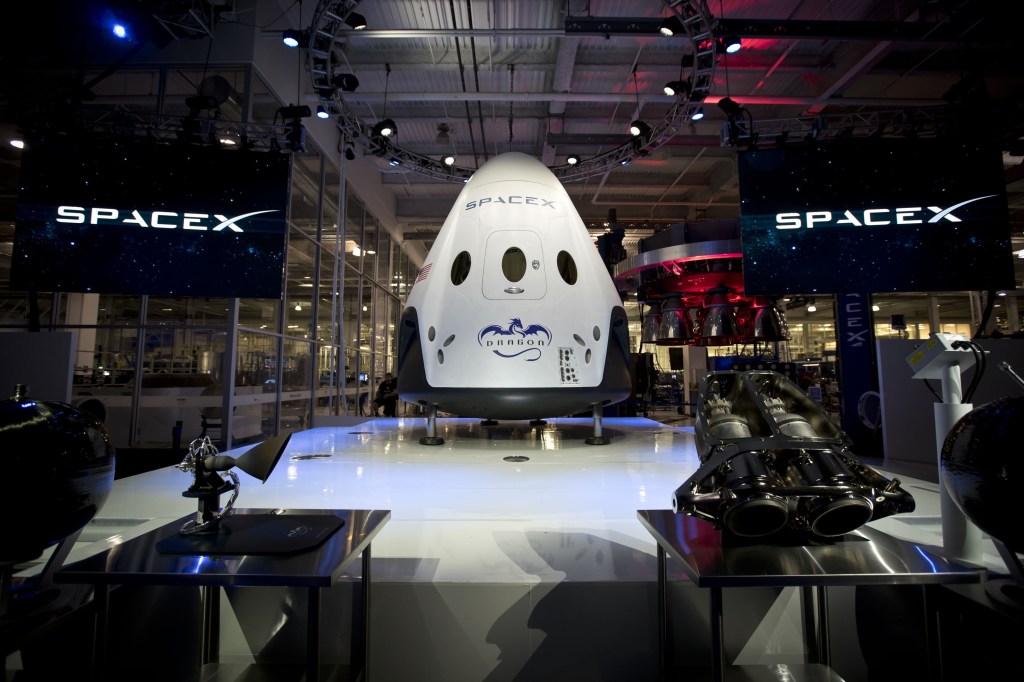
In February 2002, Musk founded Space Exploration Technologies Corporation traded as SpaceX with his $100 million. In 2006, SpaceX launched there first rocket, Falcon 1 but it failed in just 33 seconds. In 2007, SpaceX launched there second rocket, this due to engine failure the engines shutdown completely and the fail to reach the orbit. Another failure for SpaceX. Then SpaceX launched there third rocket, this time also it failed. The failure almost killed the company. After three failed launches, SpaceX successfully launched there 4 rocket. It was the first privately fueled rocket to reach the earth orbit. After the successful launch, SpaceX received $1.6 Billion for Commercial Resupply Service contract.
TESLA
Tesla motors originally known as Tesla was founded by Martin Eberhard and Marc Terpenning. In 2004, Elon Musk become the funders of Tesla and joined Tesla’s board of directors as a chairman. Musk played an active role in Tesla. In 2008, Musk become the CEO of Tesla. Now Tesla is one of the top company of electric cars.
Dr. APJ Abdul Kalam’s whole life journey is the inspiration of all. Dr. APJ Abdul Kalam was born on 15 October 1931 at Rameswaram in Tamil Nadu. His father was a boat owner and his mother was a homemaker. He came from a financially poured background and he used to distribute the newspaper to support […]
Brian Lara(Full Name: Brian Charles Lara) is a former Trinidadian cricker and is regarded as one of the greatest to have ever graced the game. He was a prolific run scorer in both one day internationals and test cricket. He was born on 2nd May, 1969 in Cantaro, Trinidad. He batted left hand and is known in the cricket world for his knock of 400 not out versus England in 2004 – a record for most runs scored by a batsman in one innings. He also scored a score of 501 not out, which is also a record for the highest first class individual score in an innings, for Warwickshire against Durham at Edgbaston in 1994.
He did not take much time to impress others at Harvard cricket clinic. Spotting his talent, his coach soon made him play against cricket balls. West Indain cricketer Carlisle Best was impressed with the boy after seeing him bat at the club and presented him a bat as a gift. He loved both cricket and football as a kid. When he confronted with a situation to choose one, it was his father who played a role in Lara’s decision.
He made his debut for the national cricket team of West Indies when he was just 21 in the year 1990. It took him a bit longer to create an impression at the top level, it was not until 1994. In 1994, he broke the records of highest individual score in test cricket after score 375 runs versus England and the record of highest individual score in first class cricket after scoring 501 not out in county cricket. He later bettered his personal best score by scoring 400 not out against the same opposition and broke the record that belonged Mathew Hayden ( Mathew Hayden 380).
He raised curtains to his international career after 2007 ICC Cricket World Cup. He finished his career as one of the most prolific run scorers in the history of cricket. He scored 11, 953 and 10,405 in test cricket and one day cricket respectively(including 53 centuries) – one of the few to do so. Called as ‘Prince of Trinidad’, he was inducted to the ICC Hall of Fame in 2012.
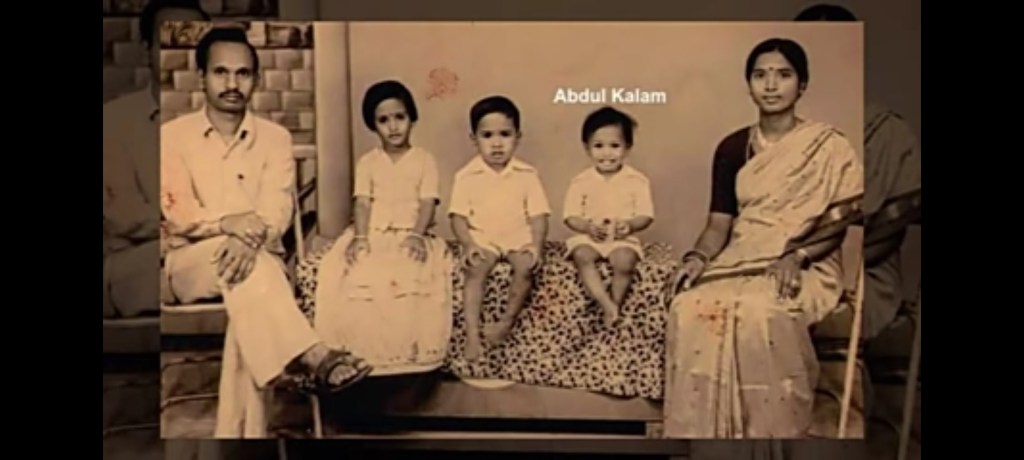
Dr. APJ Abdul Kalam’s whole life journey is the inspiration of all. Dr. APJ Abdul Kalam was born on 15 October 1931 at Rameswaram in Tamil Nadu. His father was a boat owner can’t his mother was a homemaker. He came from a financially poured background and he used to distribute the newspaper to support his family.
Education: He completed her schooling at Rameswaram Elementary School. In 1954 he graduated in physics from St. Joseph’sCollege Tiruchirappalli. In 1955 he joined the madras institute of technology and he started aerospace engineering.
Career: Dr.kalam was to become a pilot but he was Ranked 9 well the IAF offered only 8 slots. He was a simple person who owned a few positions including a simple coat a lungi, and his beloved Veena and collection of books. He didn’t even have a television he was a kind-hearted man. His love for children is always evicted. APJ Abdul Kalam’s birthday on October 5 is celebrated as “World Students day”. From 1963-1980 his career was spent in space research with the founding of India’s space program by Vikram Sarabhai under the Indian committee for space Research which became ISRO. The successful launch of the satellite launch vehicle(SLV-3) was the high point of the Kalam space tent propelled India into a select band of countries with rocket-launching capabilities. After this success, he was shifted to the Defense R& D or against PRDO to had a missile project and was meet the director of Defense Metallurgical Research Laboratory DMRL in Hyderabad in 1982 his effort gives both the guided missile development program leading to the launch of surface to surface missile named Prithvi surface-to-air missile named Trishul surface-to-air missile named Akash third-generation Anti-tank missile named NAG. The launch of the Prithvi missile on 25 February 1988 was a historical moment for our country. It was not a surface to surface missile but was a basic module for the coming future. Later Kalam leads a pivotal role in the 1998 nuclear tests known as Pokhran -II this was surprising many because he did not come from a nuclear science. His sincere for making India self-relevant and defense space research gave him the title of “Missile manof India”
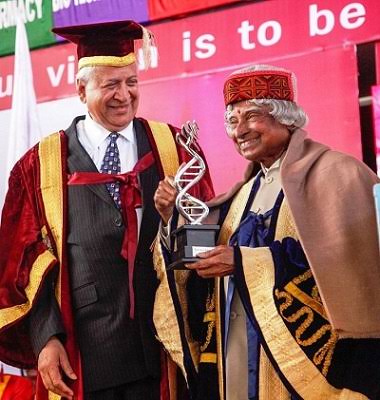
His Awards: He was awarded a Padma Bhushanin 1981 Padma Vibhushan 1990, and then proudly declared the Bharat Ratna in the year 1997. From 1999 to 2001 he became the principal scientific advisor of India. In the year of 2002, Dr. Kalam was the President of India. As a president he proved himself. When am dead do not declare a holiday instead work a day extra this word Dr. Kalam profound words
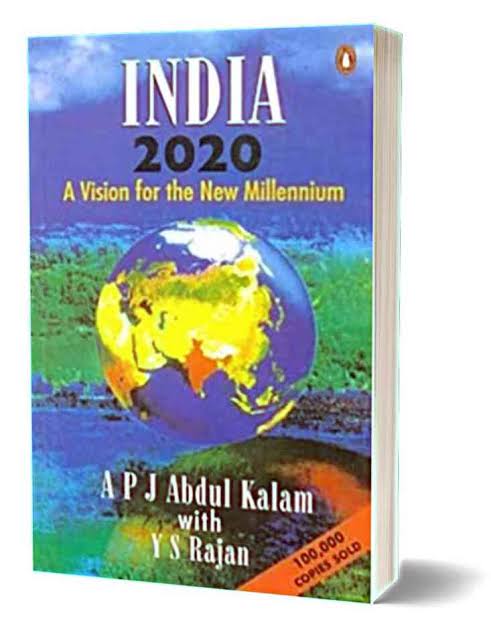
His books: Dr. Kalam was a writer and has been the author of many books Four of Dr. Kalam books “Wings of fire”, “India 2020”,“Me Journey”, “Ignited Mind” this book can be translated into many languages.
Death: It was during his lecture at the Indian Institute of Management Shillong on 27th July 2015 that it suddenly collapsed and declared death due to massive cardiac arrest. He’s journey started from Rameswaram and reached Rashtrapathi bawan. Today Dr. Kalam was not with us but he’s teaching to achieve new milestones in science, technologies, and all vital years in life.
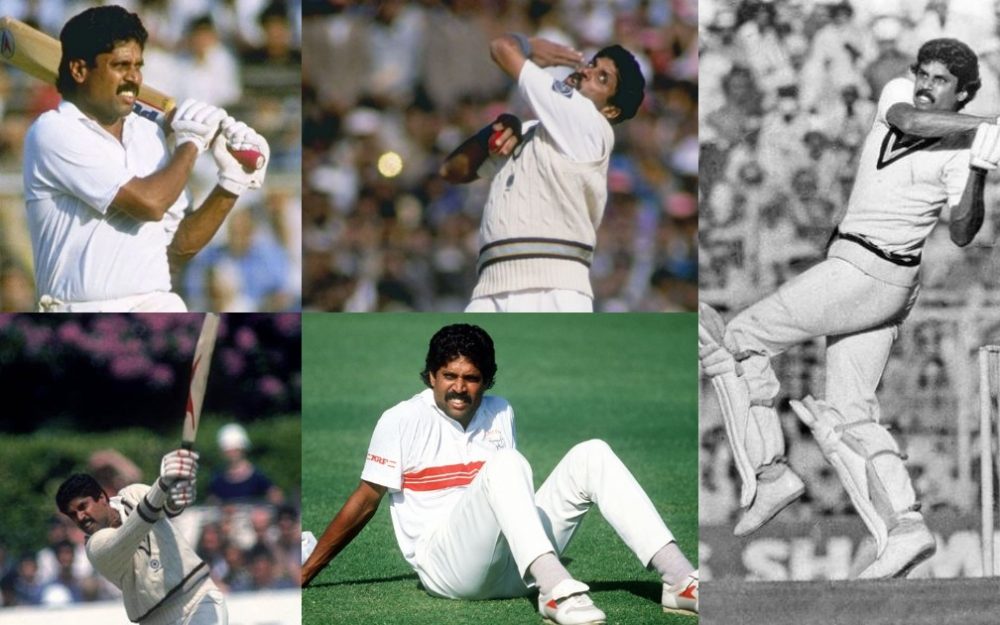
Kapil Dev(Full Name:Kapil Dev Ramlal Nikhanj), regarded as the greatest Indian all-rounder and one of the best all-rounders in the history of cricket, was born on 6th of January, 1959 in Chandigarh, India. He represented India and Haryana at national and state level respectively. He also played for Northamptonshire and Worcestershire during his career. He is known for being the only cricketer to have scored more than 5000 runs and picked over four hundred wickets. His greatest achievement was leading an underdog Indian to glory in the 1983 ICC Cricket World Cup.
Kapil Dev entered the scene of professional cricket with his debut for his state team Haryana in first-class cricket. His debut match was against Punjab in the Ranji Trophy in 1975-76. He impressed by picking 6 wickets for 39 runs in this match. He started bowling as a spinner in this match and later switched to fast medium bowling. He batted right-arm and bowled right-arm fast medium pace. He was a middle-order batsman with tremendous power and was known for power hitting. His ability to bowl and bat fast racked to the national team. He made his debut for the Indian national cricket team during the 1978-79 series against Pakistan. In his debut appearance, he picked seven wickets in the series. He was nicknamed as ‘Haryana Hurricane’.
Kapil Dev was the sixth child in his family. His parents were Ram Lal Nikhanj and Raj Kumari Lajwanti, who had moved from Rawalpindi to Chandigarh during the Partition. His father ran a construction and timber business. Right from a young age he was interested in games than academics. He gained attention at a higher level when he was just thirteen years old. He asked to fill up a spot in one of Chandigarh sector teams. His performances led to repeated call ups. This attracted selectors from the state level and was picked in the state team. At his time, he was the only true fast bowler India possessed. Throughout his career, he played with aggression and matchless passion. He was filled with energy and self reliant even when he was young. Kapil Dev regards his father as his role model and idolised G. R. Vishwanath when growing up. G. R. Vishwanath was a match winner in those days and is regarded as one of the greatest Indian batsmen. The Indian team never lost a match whenever Vishwanath scored a century.
There were many highlights during his career: leading the Indian to victory in 1983 World Cup, his match saving knock of 175 not out including 22 boundaries against Zimbabwe, becoming the youngest player to score two thousand runs and pick two hundred wickets. At the end of his international test career, he boasted a record 434 wickets including 23 five-fors (which was later broken by Courtney Walsh) and 5000 runs with the bat. In one day internationals, he managed to score 3783 runs and pick 253 wickets which consisted of one hundred and one five wicket haul. His first class record is equally impressive with the numbers of 10,800 runs including sixteen centuries and 815 wickets. He was declared as the Indian cricketer of the century by Wisden magazine in 2002. Since his retirement, he has been involved in cricket administration and broadcasting roles.
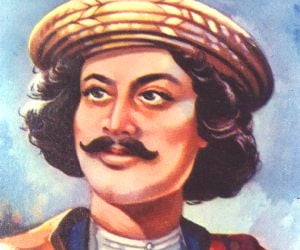
Raja Ram Mohan Roy, a great reformer, thinker, so much ahead of his times, one of the makers of modern India, a versatile personality and the founder of the Brahma-Samaj was born on 22nd May, 1772 in Radhanagar, a village in West Bengal.
When this so remarkable man was born there was an all-round decline in all walks of life. The law and order was in shambles, moral values, social concerns and religious institutions were at their lowest and the economy in a chaos. It was a time when the whole country was drowned in many superstitions, dead and useless rituals and caste, creed, and religious narrowness reigned supreme. It was a time when women were looked upon as helpless creatures worthy only to be confined to homes and hearths.
Ram Mohan Roy came with his scientific temper, broad outlook, championship of freedom, liberal and fundamental reforms and harbinger of equality and humanism. He thought differently and much ahead of his times. His ideas, ideals and practices helped a lot in the reawakening and renaissance in the country.
His dynamism and personal charismatic charm made people in thousand to rally behind him for fundamental reforms in religion, society, politics, education and personal life. He virtually caused to dawn a new era of enlightenment and reawakening.
Ram Mohan Roy’s father, Rama Kant Roy was a wealthy landlord. He sent his son Ram Mohan to the village school for his elementary education where the young boy learnt Arabic and Persian besides his mother tongue Bengali.
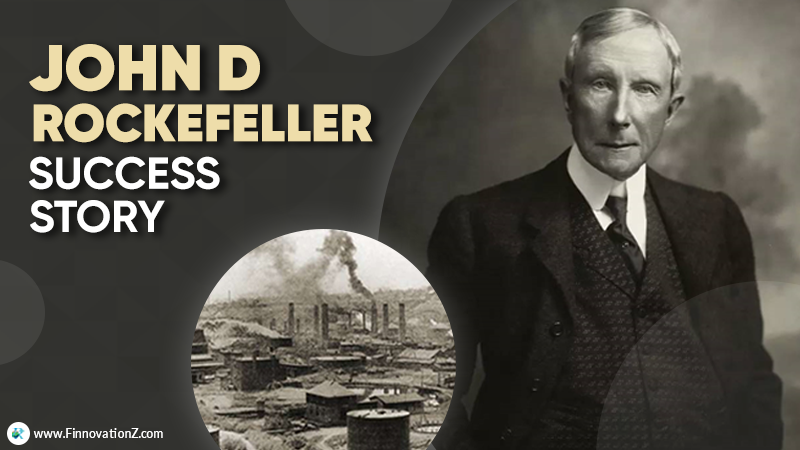
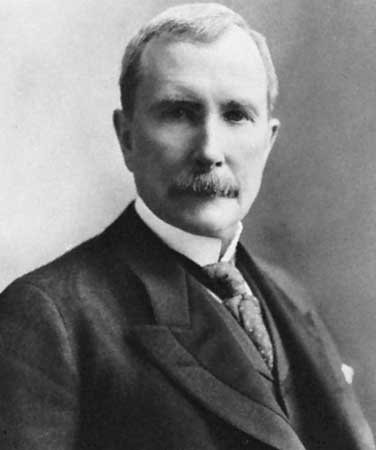
John D. Rockefeller was born July 8, 1839, in Richford, New York, about midway between Binghamton and Ithaca. His father, William Avery Rockefeller, was a “pitch man” — a “doctor” who claimed he could cure cancers and charged up to $25 a treatment. He was gone for months at a time traveling around the West from town to town and would return to wherever the family was living with substantial sums of cash. His mother, Eliza Davison Rockefeller, was very religious and very disciplined. She taught John to work, to save, and to give to charities. From 1852 Rockefeller attended Owego Academy in Owego, New York, where the family had moved in 1851. Rockefeller excelled at mental arithmetic and was able to solve difficult arithmetic problems in his head — a talent that would be very useful to him throughout his business career. In other subjects Rockefeller was an average student but the quality of the education was very high. In 1853, the Rockefellers moved to Cleveland, Ohio, and John attended high school from 1853 to 1855. He was very good at math and was on the debating team. The school encouraged public speaking and even though Rockefeller was only average, it was a skill that would prove to useful to him. Early Business Career: 1855-1863 In the spring of 1855 Rockefeller spent 10 weeks at Folsom’s Commercial College — a “chain College” — where he learned single- and double-entry bookkeeping, penmanship, commercial history, mercantile customs, banking, and exchange. From his father he had learned how to draw up notes and other business papers. His father was very meticulous in matters of business and believed in the sacredness of contracts. In August of 1855, at the age of 16, Rockefeller began looking for work in Cleveland as a bookkeeper or clerk. Business was bad in Cleveland at the time and Rockefeller had problems finding a job. He was always neatly dressed in a dark suit and black tie. Cleveland was not a large city in 1855 and Rockefeller could easily visit every business in under a week’s time. He returned to many businesses three times. Finally, on September 26, 1855, he got a job as an assistant bookkeeper with Hewitt & Tuttle, commission merchants and produce shippers. Rockefeller soon impressed his employers with his seriousness and diligence. He was very exacting and scrupulously honest. For example, he would not write out a false bill of lading under any circumstances. He went to great lengths to collect overdue accounts. He was pleasant, persistent, and patient, and he got the company’s money from the delinquents. During the Civil War their business expanded rapidly. Grain prices went up and so did their commissions. Most of their selling was done on commission, so Clark & Rockefeller took no risks from price fluctuations. Rockefeller’s style was very precise and calculated. He was not a gambler but a planner. He avoided speculation and refused to make advances or loans. Rockefeller was extremely hard working. He traveled extensively, drumming up business throughout Ohio, and then would go to the banks and borrow large sums of money to handle the shipments. This aggressive style built the business up every year.
However, by the early 1860s, Rockefeller realized that the future of the commission merchant business in Cleveland was going to be limited. He had become convinced that the railroads were going to become the primary means of transportation for agricultural commodities. This would be to the disadvantage of Cleveland, because its position as an important Lake Erie port was its primary transportation advantage. He saw that the rising grain output of the Midwest and the Northwest of J. J. Hill would change the nature of the business for good. The huge elevators on Lake Michigan and the flour-millers of Minneapolis would be the dominant players in the business. Rockefeller came to believe that the future of Cleveland lay in the collection and shipment of raw industrial materials — not agricultural commodities. This would allow Cleveland to exploit its geographical advantages — mid-way between the Eastern seaboard and Chicago — and accessible to both rail and water transportation. He saw his chance in 1863 — Rockefeller Exits: 1892-1897 During 1891-92 all the evidence suggests that Rockefeller had a partial nervous breakdown from overwork. He lost all of his hair, including his eyebrows, and suffered from ill health in the early 1890s. During this period Rockefeller’s wealth had increased to such an extent that his major problem was what to do with it all. He solved this problem by hiring Frederick T. Gates in September of 1891 as a full-time manager of his fortune. By this time, Rockefeller was literally inundated with appeals from individuals and charities for funds. Gates not only removed this burden; he also oversaw all of Rockefeller’s investments, which were becoming huge in their own right. For example, by 1897 Rockefeller owned large holdings of the Missabe iron range in Minnesota, a railroad to carry the ore to Lake Superior, and a fleet of huge ore-carrying lake steamers. In 1901 Rockefeller sold his iron ore-related business to J.P. Morgan for $80,000,000 with an estimated profit of at least $50,000,000 — a huge fortune in its own right, but it was just one of his investments. Morgan added the Rockefeller properties to the U.S. Steel Corporation. By 1896, Rockefeller stopped going to his office daily and in 1897 he retired, at the age of 58. He took part in some management activity until 1899 but none to speak of thereafter. John Archbold ran Standard Oil from the mid-1890s onward. Archbold disliked prominence and asked Rockefeller to remain as the nominal president of Standard. Not publicly announcing his retirement was a great mistake on Rockefeller’s part. Rockefeller had resisted the temptation to exploit the Standard’s near-monopoly position by raising prices “too” much. Although Rockefeller’s pricing policies did result in some “monopoly profits” for the Standard, they were fairly mild. Not so Archbold. He raised prices aggressively, and the dividends rolled in. The consequence was that Rockefeller got all the blame for the policies even though he had almost no further role in management. Retirement and Philanthropy From the mid-1890s until his death in 1937, Rockefeller’s activities were philanthropic. Rockefeller’s fortune peaked in 1912 at almost $900,000,000, but by that time he had already given away hundreds of millions of dollars. His son, John D. Rockefeller, Jr. in 1897 joined Gates in the full time management of the fortune. The University of Chicago — which Rockefeller was largely responsible for creating — alone received $75,000,000 by 1932. He set up, at the urging of his son, the Rockefeller Institute for Medical Research (now Rockefeller University) and his gifts to it totaled $50,000,000 by the 1930s. He founded the General Education Board in 1903 (later the Rockefeller Foundation). The General Education Board helped to establish high schools throughout the South by providing free professional advice on improving instruction and education. The effort was a cooperative one, and local money was used to build the high schools. In 1919, Rockefeller donated $50,000,000 to the Board to raise academic salaries, which were very low in the wake of WWI. The Rockefeller Foundation was officially established in 1913 and Rockefeller transferred $235,000,000 to it by 1929. In 1909, Rockefeller established the Rockefeller Sanitary Commission which was largely responsible for eradicating hookworm in the South by 1927. When Rockefeller died, on May 23, 1937, his estate totaled only $26,410,837. He had given most of his property to his philanthropies and to his son and other heirs. Rockefeller was a Schumpeteran entrepreneur. He clearly changed “the stream of the allocation of resources over time by introducing new departures into the flow of economic life” by creating the modern oil industry.
Last, but not least, he set the standard for philanthropy. Just the eradication of hookworm in the South alone would merit his place as one of the great humanitarians of the 20th Century. But his reputation was so sullied that he never received the credit that he was due for this great act on behalf of humankind.
“Don’t be afraid to give up the good to go for the great.”




















 Eduindex
You must be logged in to post a comment.