Top Ten Books to Read in 2024 to get Motivated

 In 2024, there might be a range of new books that inspire motivation, but here are ten timeless motivational reads that have consistently resonated with readers seeking inspiration:

  1. “Atomic Habits” by James Clear: This book delves into the power of small habits and how they can lead to remarkable changes in life, offering practical strategies for personal development.

  2. “The Power of Now” by Eckhart Tolle: Focused on mindfulness and living in the present moment, this book helps readers find inner peace and motivation by embracing the now.

  3. “Grit: The Power of Passion and Perseverance” by Angela Duckworth: Duckworth explores the significance of grit—the combination of passion and perseverance—and how it drives success.

  4. “Mindset: The New Psychology of Success” by Carol S. Dweck: Dweck explores the concept of fixed versus growth mindsets, inspiring readers to embrace challenges and develop a growth-oriented perspective.

  5. “The Subtle Art of Not Giving a F*ck” by Mark Manson: This unconventional self-help book offers a refreshing take on finding meaning in life by prioritizing what truly matters and letting go of the rest.

  6. “Start with Why” by Simon Sinek: Sinek examines the power of purpose and how starting with a clear “why” can drive motivation, innovation, and success in various aspects of life.

  7. “You Are a Badass: How to Stop Doubting Your Greatness and Start Living an Awesome Life” by Jen Sincero: With humor and insight, Sincero encourages readers to embrace their potential, overcome self-doubt, and live a fulfilling life.

  8. “Daring Greatly” by Brené Brown: Brown explores the concept of vulnerability as a source of courage and motivation, challenging readers to embrace vulnerability as a path to growth.

  9. “The 5 Second Rule: Transform Your Life, Work, and Confidence with Everyday Courage” by Mel Robbins: Robbins introduces a simple technique to overcome procrastination and boost motivation by counting down from five to take action.

  10. “Man’s Search for Meaning” by Viktor E. Frankl: This profound book by a Holocaust survivor explores finding meaning in life even amidst suffering, offering insights into resilience and the human spirit.

These books cover various aspects of personal development, motivation, and mindset, offering diverse perspectives and strategies to inspire and drive positive change in life.

Review of Book – Atomic Habits

  THE PHENOMENAL INTERNATIONAL BESTSELLER: OVER 1O MILLION COPIES SOLD WORLDWIDE


Transform your life with tiny changes in behaviour, starting now.

People think that when you want to change your life, you need to think big. But world-renowned habits expert James Clear has discovered another way. He knows that real change comes from the compound effect of hundreds of small decisions: doing two push-ups a day, waking up five minutes early, or holding a single short phone call.

He calls them atomic habits.

In this ground-breaking book, Clears reveals exactly how these minuscule changes can grow into such life-altering outcomes. He uncovers a handful of simple life hacks (the forgotten art of Habit Stacking, the unexpected power of the Two Minute Rule, or the trick to entering the Goldilocks Zone), and delves into cutting-edge psychology and neuroscience to explain why they matter. Along the way, he tells inspiring stories of Olympic gold medalists, leading CEOs, and distinguished scientists who have used the science of tiny habits to stay productive, motivated, and happy.

These small changes will have a revolutionary effect on your career, your relationships, and your life.
________________________________
NEW YORK TIMES AND SUNDAY TIMES BESTSELLER

‘A supremely practical and useful book.’ Mark Manson, author of The Subtle Art of Not Giving A F*ck

‘James Clear has spent years honing the art and studying the science of habits. This engaging, hands-on book is the guide you need to break bad routines and make good ones.’ Adam Grant, author of Originals

Atomic Habits is a step-by-step manual for changing routines.‘ Books of the Month, Financial Times

‘A special book that will change how you approach your day and live your life.’ Ryan Holiday, author of The Obstacle is the Way


  • Publisher ‏ : ‎ Random House Business (30 October 2018)
  • Language ‏ : ‎ English
  • Paperback ‏ : ‎ 320 pages
  • ISBN-10 ‏ : ‎ 1847941834
  • ISBN-13 ‏ : ‎ 978-1847941831
  • Reading age ‏ : ‎ Customer suggested age: 13 years and up
  • Item Weight ‏ : ‎ 390 g
  • Dimensions ‏ : ‎ 15.3 x 2.4 x 23.4 cm
  • Country of Origin ‏ : ‎ United Kingdom

Book Review 

I will divide the review into 5 parts. The first part is a summary of the book with short excerpts highlighted while taking notes. Next, I hope to share pieces of advice that have motivated me while building new habits. Following that, I will share how I implemented the first 3 habits throughout these months. Then, some thoughts to whom I would recommend reading the book. Last, there are 4 complementary readings.

SUMMARY

[Introduction] James starts by sharing personal strategies he implemented to recover from a serious accident in high school. That event forced him to improve the quality of his routine to get his life in order, coming to the conclusion that “we all deal with setbacks, but in the long run, the quality of our lives often depends on the quality of our habits. With the same habits, you will end up with the same results. But with better habits, anything is possible.”

[Section I : The Fundamentals]

[Chapter 1] Here we learn the power of compounding effect: changes that seem small and unimportant at any given day will compound into remarkable results if we are willing to stick with them for months and years. James explains that “breakthrough moments are often the result of many previous actions, which build up the potential required to unleash a major change.” Comparing to habits, he shows that bamboo can barely be seen during the first couple of years while the roots grow underground before exploding for almost 100 feet into the air in a few weeks. From that perspective, we come to understand the best outcomes are generally delayed.

[Chapter 2] Based on a 3-layer concentric circle behavior change model—divided into outcome change, process change, and identity change—James explains that we should pay attention to our inner identity by focusing on beliefs, assumptions, and values. “Many people begin the process of changing their habits by focusing on what they want to achieve. This leads us to outcome-based habits. The alternative is to build identity-based habits. With this approach, we start by focusing on who we wish to become.” The strongest changes, then, happen from inside out, starting from our identity, passing through the process, and ultimately changing the outcome.

[Chapter 3] In this chapter we are introduced to a 4-step framework, which is composed of cue, craving, response, and reward. James calls it ‘The 4 Laws of Behavior Change’. He then explains that we can think of each law as a lever that influences our behavior—when the levers are in the right positions, they create good habits effortless whereas when they are in the wrong position, it is nearly impossible. Through examples, he explains that “the cue triggers a craving, which motivates a response, which provides a reward, which satisfies the craving and, ultimately, becomes associated with the cue.” Together they create a habit loop that, when repeated many times, habits become automatic.

[Section II : Make It Obvious]

[Chapter 4] A primer on how cues play a crucial role in predicting habit formation without consciously thinking about the outcomes. Once our habits become so common, the cues associated with them become essentially invisible because they are deeply encoded. If we want to create better habits, a good idea is to be aware of the cues. James finishes up by sharing a strategy called ‘Habits Scorecard’—a simple exercise to become more aware of our behavior on a daily basis. We first write down a chronological list of our daily habits and, once we have a full list, we score each habit as an effective, ineffective, or neutral habit. Besides noticing what is actually going on, we can notice if certain behaviors help us become the type of person we wish to be.

[Chapter 5] The cues that can trigger a habit come in a wide range of forms, and the 2 most common cues are time and location. When we make a specific plan for when and where we will perform a new habit, we are more likely to follow through. Stacking our habits by pairing a new habit with a current habit is a form to connect our behavior to our own advantage. An example when building a daily journaling habit would be: “after I pour my cup of coffee each morning, I will journal for 5 minutes.”

[Chapter 6] This chapter shows how our environment plays a crucial role in defining habit behaviors. “Given that we are more dependent on vision than any other sense, it should come as no surprise that visual cues are the greatest catalyst of our behavior.” To build good habits, then, we should either make desirable cues obvious in our environment or build new habits in a new environment to avoid fighting against old ones.

[Chapter 7] One of the most practical ways to break a bad habit is to reduce exposure to the cue that causes it. As James points out, “it is easier to avoid temptation than resist it.”

[Section III : Make It Attractive]

[Chapter 8] James explains how the modern food industry has created products that are more attractive and addictive to consumers, and by doing so he shows that the more attractive an opportunity is, the more likely it is to become habit-forming. Every behavior that is highly habit-forming tends to be associated with higher levels of dopamine. It is the anticipation of a reward that motivates us to take action. “Temptation bundling is one way to make your habits more attractive. The strategy is to pair an action you want to do with an action you need to do.”

[Chapter 9] “We tend to adopt habits that are praised and approved of by our culture because we have a strong desire to fit in and belong to the tribe.” That said, it is common to pick up habits and behaviors from our parents, peers, and colleagues. There is also a tremendous internal pressure to comply with the norms of the tribe. And, finally, we try to copy the behavior of successful people because we desire success ourselves. One of the best strategies to build better habits is to join a culture where the desired behavior is the normal behavior.

[Chapter 10] To avoid unnecessary and detrimental cravings, we should highlight the benefits of avoiding a bad habit by making it seem unattractive. “Habits are unattractive when we associate them with negative feelings.”

[Section IV : Make It Easy]

[Chapter 11] “All habits follow a similar trajectory from effortful practice to automatic behavior, a process known as automaticity. Automaticity is the ability to perform a behavior without thinking about each step, which occurs when the nonconscious mind takes over.” The key component is to pay close attention to the frequency we perform a habit, not much for how long we have been practicing it.

[Chapter 12] Since every action requires a certain amount of energy, we are motivated to do what is easy. By contrast, the more energy required, the less likely it is to occur. “You don’t actually want the habit itself. What you really want is the outcome the habit delivers. The greater the obstacle, the more friction there is between you and your desired end state.” That is why we should reduce the friction associated with our habits by creating a prosperous environment to make future actions easier.

[Chapter 13] There are decisive moments that deliver an outsized impact every single day. As James puts, these decisive moments are a fork in the road, sending us in the direction of a productive path or an unproductive one. To avoid procrastination, the skill of ‘Showing Up’ says that we should start a new habit by taking baby steps, making it as easy as possible to take action. “A new habit should not feel like a challenge. The actions that follow can be challenging, but the first 2 minutes should be easy. What you want is a gateway habit that naturally leads you down a more productive path.” He calls it the ‘Two-Minute Rule’, meaning that new habits should take less than 2 minutes to do in the beginning. Once the habit is established we can improve and master the finer details.

[Chapter 14] In order to keep bad habits away is to make them difficult in the first place. There are 2 interesting strategies to improve our future behavior. [1] Make good choices in advance before we can fall victim to temptation in the future. James gives a personal example by sharing that whenever he is looking to cut calories he will ask the waiter to split his meal and box half of it to go before the meal is served. If, however, he waits for the meal to be served and tries to eat just half, that would never happen. [2] Make onetime actions that can automate our future habits and deliver increasing returns over time such as buying a good water filter, unsubscribing from unwanted emails, moving to a friendlier neighborhood, buying a standing desk, or setting up automatic bill pay.

[Section V : Make It Satisfying]

[Chapter 15] We should make sure to feel immediately satisfied after performing a new habit to increase the odds that the behavior will be repeated next time. “The human brain has evolved to prioritize immediate rewards over delayed rewards.” For that, we can add a little bit of immediate pleasure to the habits that pay off in the long-run.

[Chapter 16] Here we learn how to measure our progress by tracking our habits. The immediate satisfaction it delivers—as mentioned earlier in Chapter 15—is one of the many benefits that standout. Besides that, James says, “when we get a signal that we are moving forward, we become more motivated to continue down that path.” The most basic format to track our habits is to get a calendar and mark an X each time we stick with our routine. One of the most important passages of the entire book is as follows: “If you miss one day, try to get back into it as quickly as possible. The first mistake is never the one that ruins you. It is the spiral of repeated mistakes that follows. Missing once is an accident. Missing twice is the start of a new habit. This is a distinguishing feature between winners and losers. Anyone can have a bad performance, a bad workout, or a bad day at work. But when successful people fail, they rebound quickly.”

[Chapter 17] In order to prevent bad habits and/or eliminate unhealthy behaviors, James says that we could either add an instant cost to the action or make it painful. A habit contract is also another strategy to hold our accountability: “It is a verbal or written agreement in which you state your commitment to a particular habit and the punishment that will occur if you don’t follow through. Then you find one to two people to act as your accountability partners and sign off on the contract with you.”

[Section VI : Advanced Techniques]

[Chapter 18] We learn how to distinguish habits when genes may or may not influence our performance especially for competitive activities. “One of the best ways to ensure your habits remain satisfying over the long-run is to pick behaviors that align with your personality and skills.” James proposes us to set some time apart to explore new activities in the beginning, before shifting our focus to exploit them thoroughly.

[Chapter 19] When we find the sweet spot of our ability we tend to learn best and fastest. The ‘Goldilocks Rule’ states that “humans experience peak motivation when working on tasks that are right on the edge of their current abilities. Not too hard. Not too easy. Just right.”

[Chapter 20] One downside of certain habits, James explains, is that we may stop paying attention to the little details and errors. To counterbalance that we should review and reflect on the process over time to remain conscious of our own performance. Using a simple chart to convey his message, we learn that “the process of mastery requires that you progressively layer improvements on top of one another, each habit building upon the last until a new level of performance has been reached and a higher range of skills has been internalized.”

PERSONAL THOUGHTS

Reading the book twice helped me take better notes and capture details. In the meantime, I thought about 3 simple strategies that could improve our adherence to new habits. Let me share these strategies here with you, and in the following section, I will describe how I managed to cultivate the first 3 new habits upon reading the book—following the system proposed by James together with these 3 strategies.

[1] The first strategy is about determining a ‘commitment time frame’ to avoid excuses during this initial trial period. A 1-month time frame is a fair commitment, choosing to start on the first day of the month to practice it every single day for a full month. Just at the end of the period, I will take the time to reflect and evaluate the pros and cons.

[2] The next one is to choose only 1 new habit each month. In doing so we become familiar with the practice intentionally while we develop a sense of purpose.

[3] Last, during the first month of any new habit, I noticed that if I spend time exploring the details and the benefits, my motivation stays high. It doesn’t only help us create better practices, but it is also inspiring to learn from others who have succeeded previously by adding the same habit into their lives. Podcasts, articles, videos, books, online courses, tutorials, and blog posts are all good sources.

IMPLEMENTATION OF NEW HABITS

[Nov 1, 2018] I had been wanting to journal on a daily basis for many years but that had never happened. Although I have carried a notebook with me for quite a while, it has never worked as a real journal—a daily routine, when we sit down and write personal thoughts, intentions, and reflections at around the same time. Instead, it has been mostly used to take notes during meetings, to write down ideas and thoughts, to express travel memories, and to doodle. Today, after 3+ months, I haven’t looked back once, and still can’t believe it took me that long to start this daily habit. During the first month, I read blog posts, watched videos, and even read a short and inexpensive book to foster my creativity.

[Dec 1, 2018] I have been impressed by the physical capabilities we can develop through body movement. Although yoga has been a special part of my life since I was 18, I hadn’t given proper attention to handstands. But now, after 2+ months practicing it every day, it is rewarding to see improvements on a weekly basis. Again, I definitely recommend watching videos and reading tutorials to find your favorite method. This is the perfect habit to stack at the end or in the middle of any physical movement practice you may enjoy.

[Jan 1, 2019] By now we know the benefits of cold showers—ranging from healthier skin appearance all the way to a more resilient perspective of the world. I had previously taken cold showers for 3 months in 2017, but it was a “goal” mindset instead of a “habit” mindset. After that trial I set aside and, although I have kept taking cold showers once or twice a week since then, I wished cold showers was the default mode. Now, after 1+ month, I can’t see myself taking warm showers. After all, it is about intention. Again, we can learn uncountable benefits of cold showers by reading success stories. One of my inspirations was Wim Hof. It isn’t comfortable in the beginning of any chosen day, but after 3-4 minutes, both my breath and thoughts calm down.

Putting them together, these 3 habits don’t take more than 30 minutes of my day. While I spend about 10 minutes journaling and 10 more minutes practicing handstands, I save 5 minutes taking cold showers because I won’t stay any longer than necessary.

RECOMMENDATION

[1] First, if you have watched videos, listened to podcasts, read articles and books on habit formation and, after all that, you feel satisfied, then, please, save your money and time.

[2] However, if you are like me, that even after reading a few books on building habits and having successfully added good habits to your life, feel that there is still room for improvement, this book can be a terrific addition.

[3] Last, if you haven’t spent much time and energy discovering a good system to build lasting habits while breaking bad ones, please, read this book.

COMPLEMENTARY READINGS

[1] Game Changers, by Dave Asprey, exposed me to a wealth array of ideas/habits/tools that have helped me decide which new habit to build next. The book is divided into 46 laws.

[2] Essentialism, by Greg McKeown, helped me focus on less but more important tasks, giving clarity to what matters most. This is especially interesting to break bad habits.

[3] The Talent Code, by Daniel Coyle, brought more motivation when learning new skills based on the assumptions that we develop new talents through deep practices, finding our ignition identity, and having the right coach to guide us genuinely. I read it many years ago, then, a few years back, I read his following book called The Little Book of Talent—which is perhaps even more to the point.

[4] The Systems View of Life, by Fritjof Capra, enlightened my perspectives on how nature and living beings are systematically integrated. It is a profound and slightly academic book that can complement Atomic Habits especially to tie together the 4-step framework into the feedback loop system.

I sincerely hope you, too, have fun while building new habits.

Book Review: Atomic Habits

 THE PHENOMENAL INTERNATIONAL BESTSELLER: OVER 1O MILLION COPIES SOLD WORLDWIDE


Transform your life with tiny changes in behaviour, starting now.

People think that when you want to change your life, you need to think big. But world-renowned habits expert James Clear has discovered another way. He knows that real change comes from the compound effect of hundreds of small decisions: doing two push-ups a day, waking up five minutes early, or holding a single short phone call.

He calls them atomic habits.

In this ground-breaking book, Clears reveals exactly how these minuscule changes can grow into such life-altering outcomes. He uncovers a handful of simple life hacks (the forgotten art of Habit Stacking, the unexpected power of the Two Minute Rule, or the trick to entering the Goldilocks Zone), and delves into cutting-edge psychology and neuroscience to explain why they matter. Along the way, he tells inspiring stories of Olympic gold medalists, leading CEOs, and distinguished scientists who have used the science of tiny habits to stay productive, motivated, and happy.

These small changes will have a revolutionary effect on your career, your relationships, and your life.
________________________________
NEW YORK TIMES AND SUNDAY TIMES BESTSELLER

‘A supremely practical and useful book.’ Mark Manson, author of The Subtle Art of Not Giving A F*ck

‘James Clear has spent years honing the art and studying the science of habits. This engaging, hands-on book is the guide you need to break bad routines and make good ones.’ Adam Grant, author of Originals

Atomic Habits is a step-by-step manual for changing routines.‘ Books of the Month, Financial Times

‘A special book that will change how you approach your day and live your life.’ Ryan Holiday, author of The Obstacle is the Way


  • Publisher ‏ : ‎ Random House Business (30 October 2018)
  • Language ‏ : ‎ English
  • Paperback ‏ : ‎ 320 pages
  • ISBN-10 ‏ : ‎ 1847941834
  • ISBN-13 ‏ : ‎ 978-1847941831
  • Reading age ‏ : ‎ Customer suggested age: 13 years and up
  • Item Weight ‏ : ‎ 390 g
  • Dimensions ‏ : ‎ 15.3 x 2.4 x 23.4 cm
  • Country of Origin ‏ : ‎ United Kingdom

Book Review 

1. Don’t set Goals : Writer kehte he ki goal set karne ki bajay ek system pe focus karna chaiye
Goals set krna achi bat he lekin us goal ko achieve karne k liye system ko behtar banana padega jo hame us goal tak pahuchayega.
Agar British Cycling team ki bat kare to gold medal jeetna to unka goal shuru re raha tha, lekin Dave ne jab system ko better banaya, to goal apne ap achieve ho gaya.
Maan lijiye apka room bikhra pada he. Ap ek goal set krte ho ki mujhe room clean karna hee to ek bar room clean ho jayega, lekin agar ap apni chijo ko sahi jagah rkhne ki adat bana lo to apka kamra kabhi bikhra milegha hi nai.

2 – Change your Identity :
Apni buri adato ko change krne ke liye hame adto ko chang karne s pehle apne aap ko change karna ki jrurt hoti he .
Hamari adte hamari identity ko follow krti he .
Example k liye –
Man lijiye ek insan cigarette chodne ki koshish krta he . Is douran jab use koi cigarette offer karta he to vo ye kahta he “ nahi yar, me cigg chodne ki kosis kar raha hu’
Usnea bhi tak apni identity nahi badli. Vo apne ap ko abhi bhi smoker manta he.
Lekin, agar vo ye kahe ki “ nahi yar, me cigg nahi pita” is se vo apni identity change kar leta he. Ab vo apne ap ko non smokere consider karta he . This new identity motivates that person to stick with it.

3 – Change your Environment –
Hamare sath akshar esa hota h ki ham kitchen me jate to paani pine k liye, lekin hamari nazar chips k packet pe padti he or ham use khane lagte he .
Hairani ki baat ye he ki hame na to bhookh lagi thi or na hi chips khane ki ichha hui thi.
Malls vale yahi technique use krte he, mehange or profitable products racks me upar or ankho ki range me rakhi jate he jo customer ko easily notice ho jate he .
And chances are that customers in products ko jrurt na hote hue bhi kharid lete he.
Isi technique se ham bhi kisi bhi habit ko abopt kar skte he ya kisi bad habit ko chord bhi skte he.
Fruits jyada khanee h ? to fruit basket ko vaha rkho jaha ap apna din ka sabs jyada time spnd krte ho. Jab fruits apki ankho k samne rahnge to ap automatically unhe consume krne lag jaoge.
Padhai krt krte distract hote h to padhai k liy alag room, ya room me alag table ko study zone bana do. Yani padhai bed pe nhi usi enviorment m kroge, to apka mind kam distract hoga qki usko pata h k aap study zone m ho.

4. Don’t run for the best: Ek choti si interesting si story share krta hu. Florida University ke ek professor ne apne photography students ko 2 groups me divide kiya. Pehle group ko yeh challenge diya ki unko pure semester jyada se jyada photos submit karne he , 100 photos submit krne vale ko A grade, 90 vale ko B.
Or dusre group ko challenge diya to submit only 1 photo but that has to be the perfect one. Jiska photo sabse perfect hoga usko A grade, or us se kam vale ko B grade milega.

Interesting.
At the end of the semester saare best photos surprisingly first group se aye.
Aap bhi soch rahe honge k esa kese hua, dusra group jisne pura semester ek photo ko perfect krne me lagaya unke photos best rank me q nahi aye ?

Because jaha dusra group ek hi photo ko perfect banana me laga raha, pehle group ne jab bahot sare photos click kiye to isi ke sath unki skills bhi enhance hoti rahi. Vo har photo me experiment karte rahe or apni hi mistakes se sikhte rahe.

Agar apko business krna he ya startup krna he or best idea ya best opportunity k liye ruke he to ap kabhi start hi nahi kar paynege,
Jo bhi idea he jesi bhi opportunity he uspe jab mehnat ki jayegi to vo hi best ban jayega.

Book Review – Rich Dad Poor Dad

“Rich Dad Poor Dad” is a personal finance book written by Robert Kiyosaki, which challenges the traditional views of financial success and offers a unique perspective on the importance of financial education.
The book revolves around the lessons Kiyosaki learned from his “rich dad” (his best friend’s father) and “poor dad” (his biological father) who had two very different approaches to money management. Through anecdotes and personal experiences, Kiyosaki highlights the value of financial literacy and how it can lead to greater financial freedom and security.
One of the most significant takeaways from the book is the idea that it’s not about how much money you make, but rather how much money you keep and how well you invest it. Kiyosaki emphasizes the importance of investing in assets that generate passive income, such as rental properties, stocks, and businesses. He also stresses the need to avoid liabilities that drain your finances, such as credit card debt and car payments.
Another key lesson is the value of taking calculated risks and embracing failure as a learning opportunity. Kiyosaki encourages readers to think outside the box and to take calculated risks in order to achieve financial success.
While the book has been criticized for oversimplifying complex financial concepts and promoting a “get rich quick” mentality, it nonetheless serves as an excellent starting point for anyone looking to improve their financial literacy and mindset.
Overall, “Rich Dad Poor Dad” is a thought-provoking and inspiring book that challenges conventional wisdom about money and provides practical advice for achieving financial freedom. Whether you’re just starting out on your financial journey or looking to improve your existing financial situation, this book is definitely worth a read.

Write Book Review and Suggest your Book

How to write a review of a book

Step 1. Provide a summary

Have you ever watched a movie only to realize that all the good bits were already in the trailer? Well, you don’t want the review to do that. What you do want the summary to do is reveal the genre, theme, main conflict, and main characters in the story — without giving away spoilers or revealing how the story ends.

A good rule of thumb is not to mention anything that happens beyond the midpoint. Set the stage and give readers a sense of the book without explaining how the central issue is resolved.


Emily W. Thompson’s review of The Crossing:

In [Michael] Doane’s debut novel, a young man embarks on a journey of self-discovery with surprising results.

An unnamed protagonist (The Narrator) is dealing with heartbreak. His love, determined to see the world, sets out for Portland, Oregon. But he’s a small-town boy who hasn’t traveled much. So, the Narrator mourns her loss and hides from life, throwing himself into rehabbing an old motorcycle. Until one day, he takes a leap; he packs his bike and a few belongings and heads out to find the Girl. Read more…

Non-fiction summary tip: The primary goal of a non-fiction summary is to provide context: what problems or issues has the book spotted, and how does it go about addressing them? Be sure to mention the authors of the title and what experience or expertise they bring to the title. Check Stefan Kløvning’s review of Creativity Cycling for an example of a summary that establishes the framework of the book within the context of its field.

Step 2. Present your evaluation

While you should absolutely weave your own personal take of a book into the review, your evaluation shouldn’t only be based on your subjective opinion. Along with presenting how you reacted to the story and how it affected you, you should also try to objectively critique the stronger and weaker elements of the story, and provide examples from the text to back up your points.

To help you write your evaluation, you should record your reactions and thoughts as you work your way through a novel you’re planning on reviewing. Here are some aspects of the book to keep in mind as you do.

Your evaluation might focus heartily on the book’s prose:

Donald Barker’s review of Mercenary

Such are the bones of the story. But, of course, it is the manner in which Mr Gaughran puts the bones back together and fills them with life that makes “Mercenary” such a great read. The author’s style seems plain; it seems straightforward and even simple. But an attempt at imitation or emulation quickly proves that simple it is not. He employs short, punchy sentences that generate excellent dialogue dripping with irony, deadpan humour and wit. This, mixed with good descriptive prose, draws the characters – and what characters they are – along with the tumultuous events in which they participated amidst the stinking, steaming heat of the South American jungle, out from the past to the present; alive, scheming, drinking, womanising and fighting, onto the written page.

You can give readers a sense of the book by drawing comparisons to other well-known titles or authors:

Laura Hartman’s review of The Mystery of Ruby’s Mistletoe:

Reading Ms. Donovan’s book is reminiscent to one of my favorite authors, Dame Agatha Christie. Setting up the suspects in a snowbound house, asking them to meet in the drawing room and the cleverly satisfying conclusion was extremely gratifying. I can picture Miss Marple and Hercule Poirot nodding at Ms. Donovan saying “Well done!”

Not everyone’s tastes are the same, and you can always acknowledge this by calling out specific story elements in your evaluation: 

Kevin R. Dickinson’s review of The Heart of Stone:

Whether you enjoy Galley’s worldbuilding will depend heavily on preference. Galley delivers information piecemeal, letting the characters, not the author, navigate the reader through Hartlund. A notable example is the magic system, an enigmatic force that lacks the ridge structures of, say, a Brandon Sanderson novel. While the world’s magical workings are explained, you only learn what the characters know and many mysteries remain by the end. Similar choices throughout make the world feel expansive and authentic.

Non-fiction evaluation tip: A book’s topic is only as compelling as its supporting arguments. Your evaluation of a nonfiction book should address that: how clearly and effectively are the points communicated? Turn back to Stefan’s critique for an example of a non-fiction critique that covers key takeaways and readability, without giving away any “big reveals.”

Step 3. Give your recommendation 

At the end of the day, your critique needs to answer this question: is this a book you would (or wouldn’t) recommend to other readers? You might wrap up by comparing it to other books in the same genre, or authors with similar styles, such as: “Fans of so-and-so will enjoy this book.” 

Let’s take a look at a few more tips:

You don’t need to write, “I recommend this book” — you can make it clear by highlighting your favorable opinion:

Emily W. Thompson’s review of The Crossing:

Following in the footsteps of Jack Kerouac and William Least Heat-Moon, Doane offers a coming of age story about a man finding himself on the backroads of America. Doane’s a gifted writer with fluid prose and insightful observations, using The Narrator’s personal interactions to illuminate the diversity of the United States.

Despite his flaws, it’s a pleasure to accompany The Narrator on his physical and emotional journey. The unexpected ending is a fitting denouement to an epic and memorable road trip.

Add more punch to your rating by mentioning what kind of audience will or won’t enjoy the book:

Charleigh Aleyna Reid’s review of The King of FU:

I would recommend this book to anyone who grew up in the 90’s and would like to reminisce about the time, someone who is interested to see what it was like to be a 90’s kid, or perhaps anyone who is looking for a unique, funny story about someone’s life.

Unless you found the title absolutely abhorrent, a good way to balance out a less favorable book review it to share what you did like about the book — before ultimately stating why you wouldn’t recommend the novel:

Nicola O’s review of Secrets of the Sea Lord:

Overall, there are plenty of enjoyable elements in this story and fans of Atlantis and mer mythology should give it a try. Despite this, it does not rise above a three-star rating, and while I had some difficulty pinning down why this is, I concluded that it comes from a surprisingly unsophisticated vocabulary. There are a couple of graphic sex scenes, which is absolutely fine in a paranormal romance, but if they were removed, I could easily imagine this as an appealing story for middle-schoolers.

Non-fiction recommendation tip: As with fiction book reviews, share why you did or didn’t enjoy the title. However, in one of the starkest divergences from fiction book reviews it’s more important than ever that you mention your expectations coming into the non-fiction book. For instance, if you’re a cow farmer who’s reading a book on the benefits of becoming a vegetarian, you’re coming in with a large and inherent bias that the book will struggle to alter. So your recommendation should cover your thoughts about the book, while clearly taking account your perspective before you started reading. Let’s look once more at Stefan’s review for an example of a rating that includes an explanation of the reviewer’s own bias.

Bonus tips for writing a book review

Let’s wrap up with a few final tips for writing a compelling review.

  • Remember, this isn’t a book report.If someone wants the summary of a book, they can read the synopsis. People turn to book reviews for a fellow reader’s take on the book. And for that reason…
  • Have an opinion. Even if your opinion is totally middle-of-the-line — you didn’t hate the book but you didn’t love it either — state that clearly, and explain why.
  • Make your stance clear from the outset. Don’t save your opinion just for the evaluation/recommendation. Weave your thoughts about the book into your summary as well, so that readers have an idea of your opinion from the outset.
  • Back up your points. Instead of just saying, “the prose was evocative” — show readers by providing an actual passage that displays this. Same goes for negative points — don’t simply tell readers you found a character unbelievable, reference a certain (non-spoiler) scene that backs this up.
  • Provide the details. Don’t forget to weave the book’s information into the review: is this a debut author? Is this one installment of a series? What types of books has the author written before? What is their background? How many pages does the book have? Who published the book? What is the book’s price?
  • Follow guidelines. Is the review you’re writing for Goodreads? For The New York Times? The content and tone of your review will vary a good deal from publication to publication.
  • Learn from others. One of the best ways to learn how to write a great review is to read other reviews! To help you out with that, we’ve published a post all about book review examples.

Writing book reviews can be a rewarding experience! As a book-lover yourself, it’s a great opportunity to help guide readers to their next favorite title. If you’re just getting started as a reviewer and could use a couple more tips and nudges in the right direction, check out our comprehensive blog post on how to become a book reviewer. And if you want to find out which review community is the right fit for you, we recommend taking this quick quiz:

Write your Book Review and Get Published on this portal for free. Send mail to editor@eindex.org

Schindler’s Ark: The Book Review

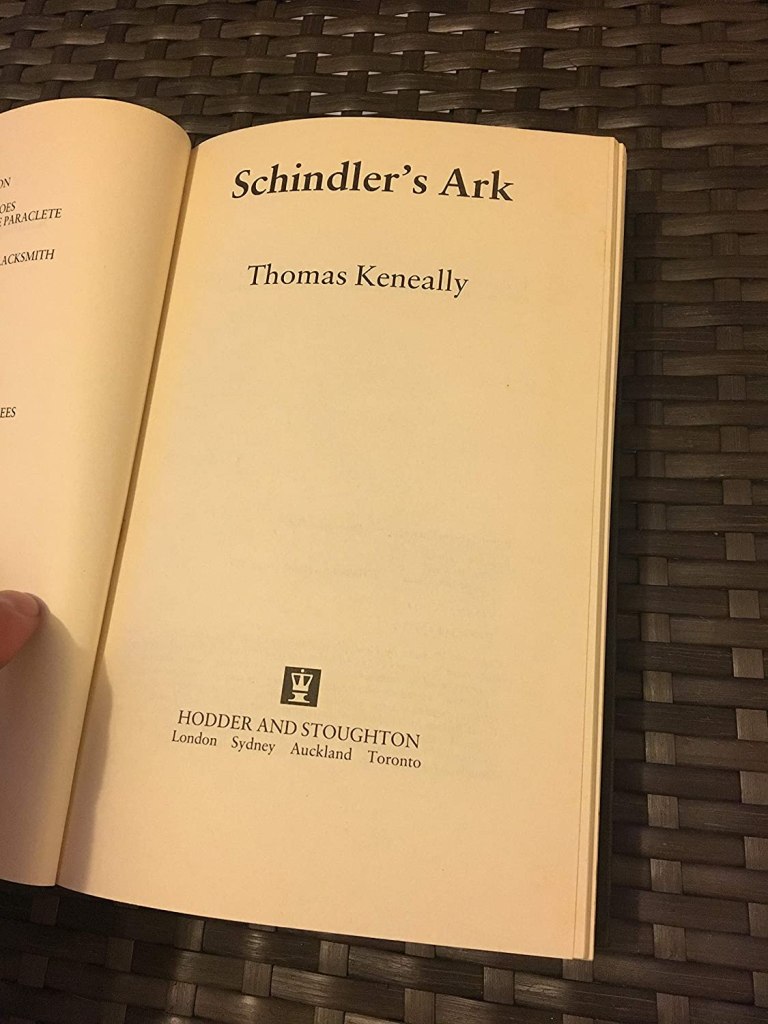
First Printed Edition of Schindler’s Ark

Introduction

Australian author Thomas Keneally‘s novel first “Schindler’s Ark” (later republished as Schindler’s List) brought the story of Oskar Schindler’s rescue of Jewish people during the Nazi Holocaust, to international attention in 1982, when it won the Booker Prize. It was made by Steven Spielberg into the Oscar-winning film Schindler’s Listin 1993, the year Schindler and his wife were named Righteous Among the Nations.

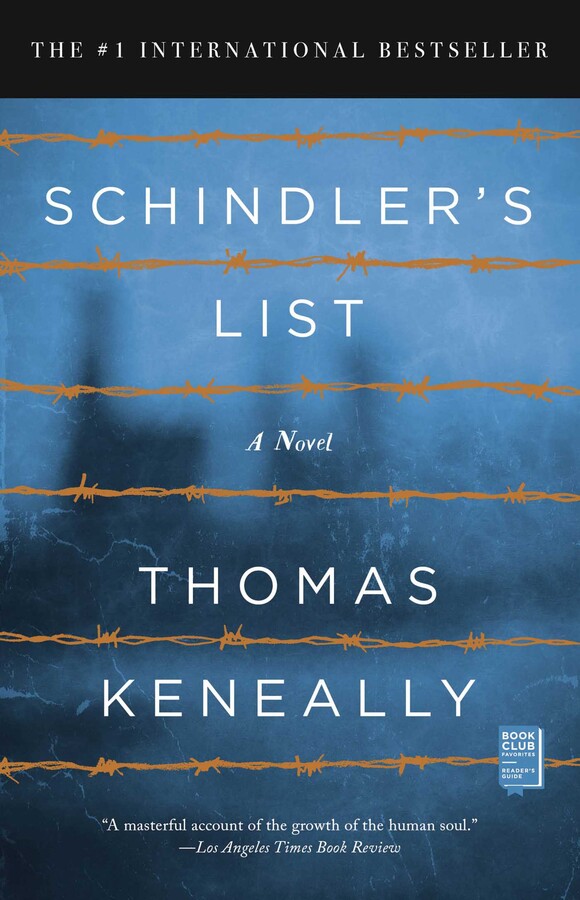
Schindler’s Ark later republished as Schindler’s List

About The Author

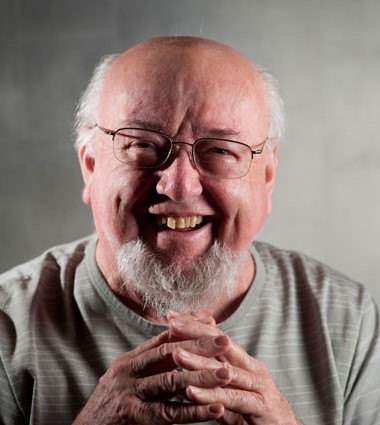
Thomas Michael Keneally, (born 7 October 1935) is an Australian novelist, playwright, essayist  and actor.  Keneally’s first story was published in The Bulletin  magazine in 1962 under the pseudonym Bernard Coyle. By February 2014, he had written over 50 books, including 30 novels. He is particularly famed for his Schindler’s Ark  (1982) (later republished as Schindler’s List), the first novel by an Australian to win the Booker Prize and is the basis of the film Schindler’s List. He had already been shortlisted for the Booker three times prior to that: 1972 for The Chant of Jimmie Blacksmith, 1975 for Gossip from the Forest, and 1979 for Confederates. Many of his novels are reworkings of historical material, although modern in their psychology and style.

Thomas Keneally

Storyline of The Novel

The story of the novel is based on true events, on account of the Nazi Holocaust during World War II. Oskar Schindler, (born April 28, 1908, Svitavy [Zwittau], MoraviaAustria-Hungary  [now in the Czech Republic]—died October 9, 1974, Hildesheim, West Germany), German industrialist who, aided by his wife and staff, sheltered approximately 1,100 Jews from the Nazis  by employing them in his factories, which supplied the German army during World War II.

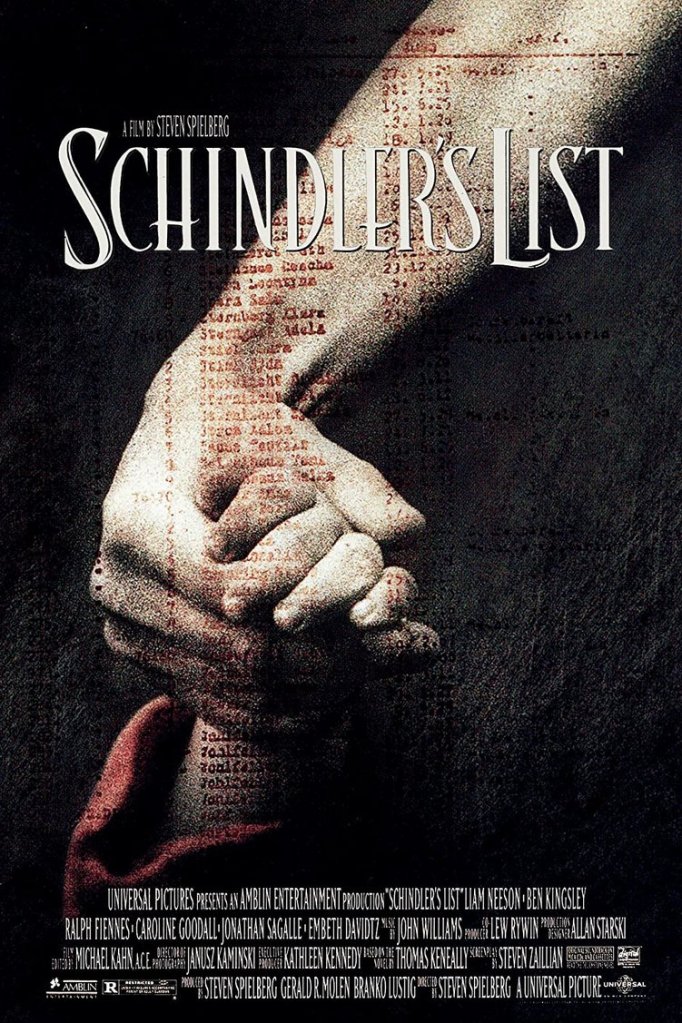
Poster of Steven Spielberg‘s movie Schindler’s List (1993)

In the shadow of Auschwitz, a flamboyant German industrialist grew into a living legend to the Jews of Kraków. He was a womaniser, a heavy-drinker and a bon viveur, but to them he became a saviour. This is the extraordinary story of Oskar Schindler, who risked his life to protect Jews in Nazi-occupied Poland and who was transformed by the war into a man with a mission, a compassionate angel of mercy.

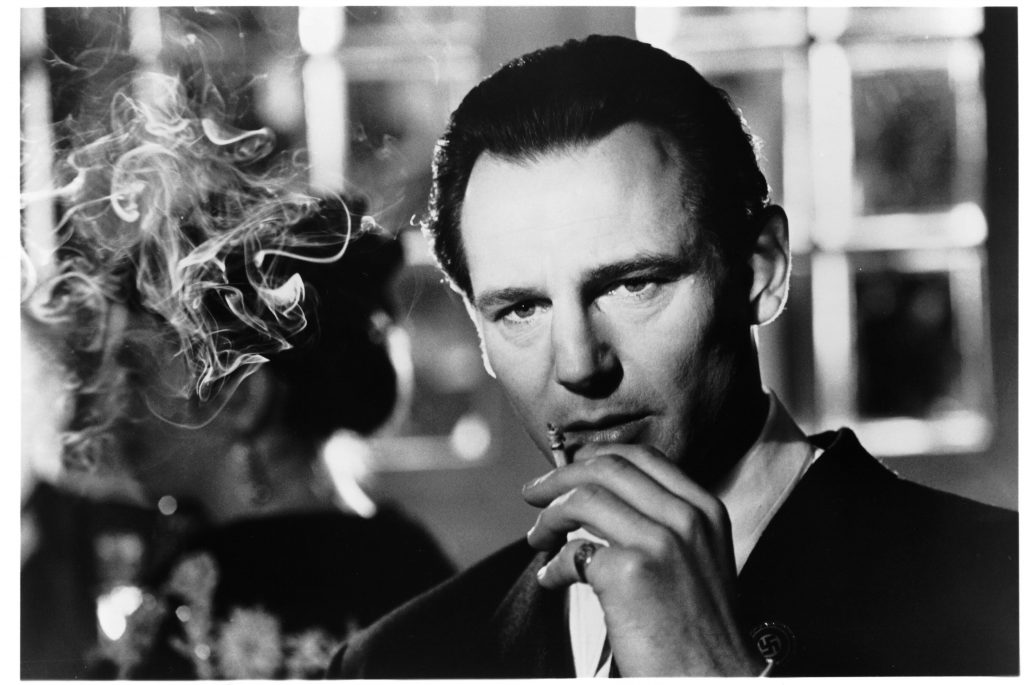
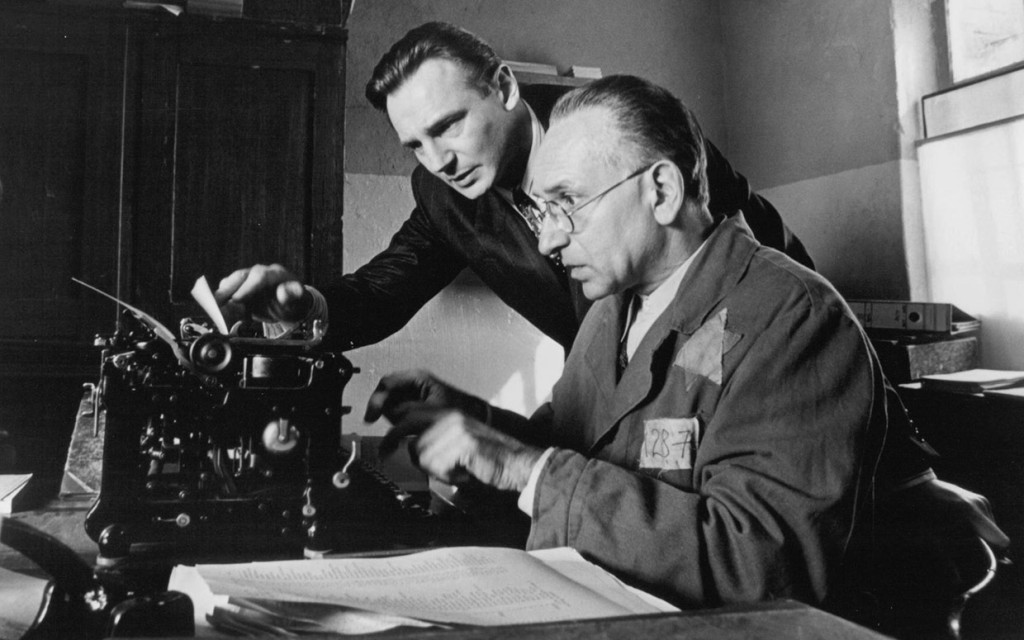
Liam Neeson as Oskar Schindler in Schindler’s List (1993)

Analysis of The Storyline

The novel introduced a vast and diverse cast of characters. However, the focus of the narrative was between Oskar Schindler and Amon Goeth. In the story, there was a dichotomy between what is essentially good and what is evil, that was personified by these two primary characters. Goeth represented everything evil. The war churned out a selfish and heartless sadist who found delight in inflicting pain on the Jews. Ironically, he lusted after his Jewish maid. Schindler, on the other hand, was portrayed as the Good German. He didn’t believe everything that the Nazi regime was saying against the Jews. He was, however, a man of contradictions. Despite being depicted as the epitome of goodness, he lived a self-indulgent lifestyle, which included proclivity towards the bottle and women. His infidelities have been a constant source of pain for his wife, Emilie. He also uses his connections to gain the upper hand in negotiations; it would also be a seminal part of his campaign to save the Jews.  

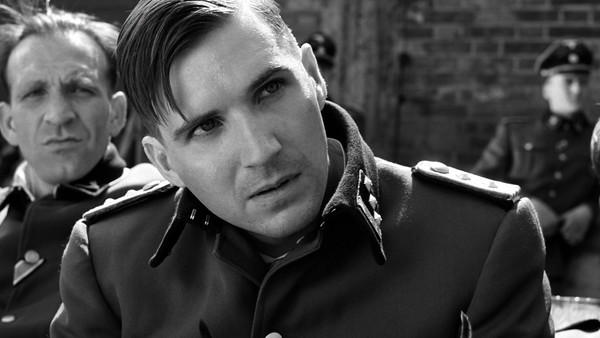
Ralph Fiennes as Amon Goeth in Schindler’s List (1993)

Criticism of The Storyline

The amount of research poured to recreate the story of Oskar Schindler was astounding. And the starting point to this is as interesting as the novel itself. As noted in the Author’s Note, a chance encounter in 1980 led to the novel. Schindler’s motivation for protecting his workers was rarely ever clear, especially at the start. Questions still hound his true intentions. He, after all, brazenly took advantage of the cheap labour the Jews offered at the start of his enterprise. Is Schindler an anti-hero? The answer can be found in Keneally’s extensive research. Through interviews with surviving Schindlerjuden and different Second World War archives, he managed to identify the point in which Schindler decided to protect the Jews. While horseback riding on the hills surrounding Kraków, he witnessed an SS Aktion unfold on the Jewish ghetto below. The Jews were forcefully taken out of their houses. Those who resisted were shot dead, even in the presence of children. Witnessing the atrocious acts firsthand turned Schindler’s stomach. It was then that he resolved to save as many Jews as he can.

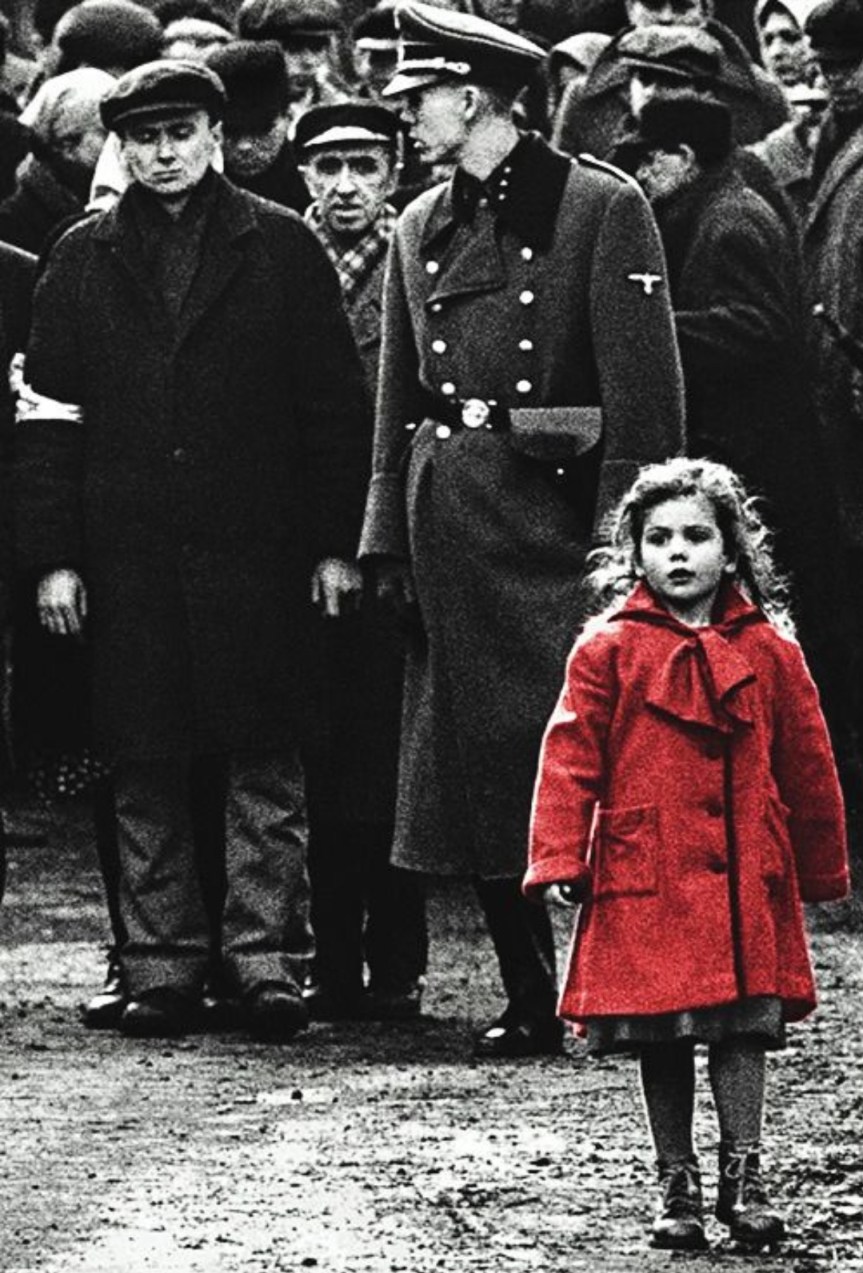
Scene from Schindler’s List (1993)

Overall, what didn’t work was the manner in which Keneally related the story of Oskar Schindler. As the story moved forward, it became clearer that Keneally was unsure of how to deliver the story. His resolve to remain loyal to Oskar’s story was commendable. He endeavored to do just that but it never fully came across. The result was an amalgamation of fiction and historical textbook. The strange mix muddled the story and the result was a perplexing work of historical fiction. It is without a doubt that one of the darkest phases of contemporary human history is the Second World War. Nobody expected that the meteoric ascent of Der Führer, Adolf Hitler, in the German political ladder would lead to a devastation of global scale. As the Axis forces march towards and beyond their boundaries, they would leave death and destruction in their wake, stretching from Europe, to the Pacific, and to the Far East. The consequences of the war would resonate well beyond its time. With genocides, concentration camps, and slave labour commonplace, the war was a reflection of the human conditions. Its peak, the Holocaust, exhibited the extent of the darkest shades of the human spirit. It was a grim portrait.

Indeed, the Second World War brought out the worst in humanity. However, in times of darkness, there are those among us who rise to the occasion. One of them is Oskar Schindler whose story was related by Thomas Keneally in his nonfiction novel, Schindler’s List (1982).

Conclusion

While Keneally‘s dramatization of this great man’s exploits is lacking in novelistic shape or depth, the brutality and heroism are satisfyingly, meticulously presented–as plain, impressive, historical record; and if admirers of Keneally’s more imaginative work may be disappointed, others will find this a worthy volume to place beside one of the several Wallenberg biographies.

To Kill A Mockingbird: The Book Review

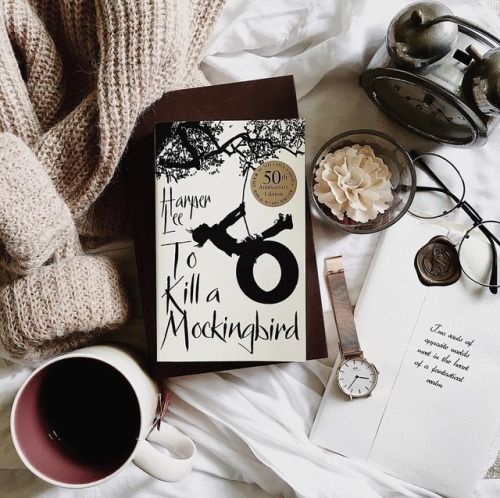
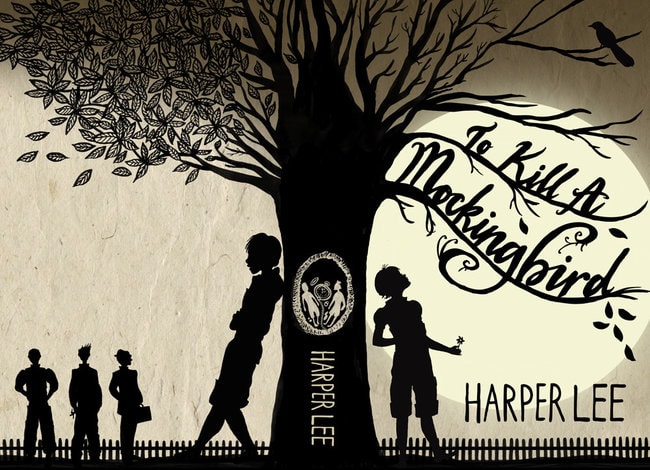
Cover of To Kill A Mockingbird novel (1960)

Introduction

To Kill a Mockingbird is a very popular modern classic by the American author Harper Lee, that narrates a coming-of-age story with a theme of social equality and prejudice. It was published in 1960 and was instantly successful. The unforgettable novel of a childhood in a sleepy Southern town and the crisis of conscience that rocked it. In the United States, it is widely read in high schools and middle schools. To Kill A Mockingbird  has become a classic of modern American Literature, winning the Pulitzer Prize in1961 and was later made into an Academy Award-winning film, also a classic.

About The Author

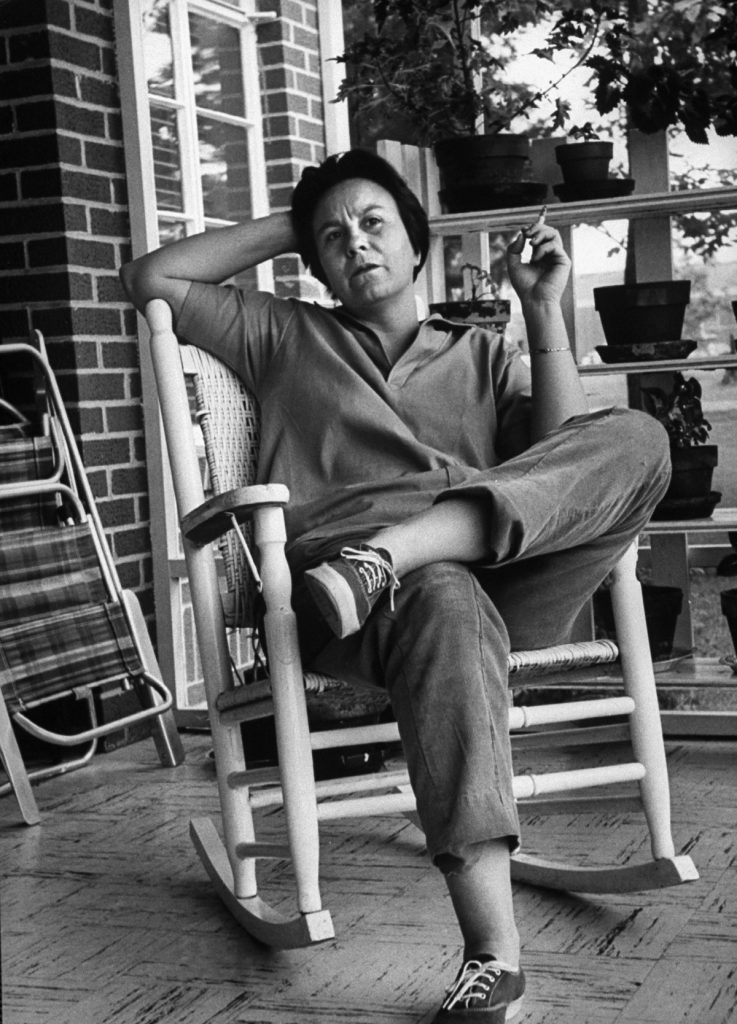
Nelle Harper Lee (April 28, 1926 – February 19, 2016) was an American novelist best known for her 1960 novel To Kill A Mockingbird. Lee has received numerous accolades and honorary degrees, including the Presidential Medal of Freedom  in 2007 which was awarded for her contribution to literature. She assisted her close friend Truman Capote  in his research for the book In Cold Blood (1966). Capote was the basis for the character Dill Harris in To Kill a Mockingbird.

Harper Lee

Storyline of The Novel

The novel follows the story of a black man in the 1930s, convicted for the rape of a white girl. It is written from the perspective of two young children and their confusion at topics like race and the discriminatory ways of adults around them. Despite been written in a child’s perspective, the story does not diminish the meaningful themes of the novel in any way. Even after 80 years of its publication, the book is still popular and highly relates to our society.

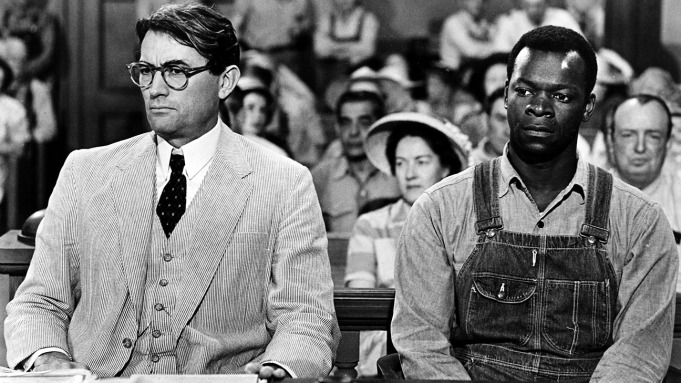
Gregory Peck as Atticus Finch and Brock Peters as Tom Robinson in To Kill A Mockingbird movie(1962)

The story evolves around six-year-old Scout Finch is living in the small town of Maycomb, Alabama during the Great Depression. Raised by Atticus Finch, Scout and her brother, Jem, are very comfortable with Maycomb and understand the well being of their neighbours, except the house of the mysterious Arthur Radley, whom they obsess over. Half the book is basically about Scout, Jem, and Dill (their new friend) trying to lure Arthur Radley out of his house. However, when Atticus, a lawyer, decides to take the case of a black man named Tom Robinson, tensions become high and the trial to see whether Tom Robinson is guilty or innocent based on his crime and, especially, his skin colour is at stake. 

Analysis of The Storyline

To Kill a Mockingbird focuses on that gut instinct of right and wrong, and distinguishes it from just following the law. Even the titular quote: “Shoot all the blue jays you want, if you can hit ’em, but remember it’s a sin to kill a mockingbird” is in itself an allegory for this message. Being in itself a generic message, the idea of ‘doing what’s right’ obviously has a different meaning depending on when and where you’re reading the book. If you take 1960, when the book was written, America was in a state of ethical development as social inequality was – very – gradually being overcome. Women’s rights and black rights movements were beginning to emerge and some campaigned through violence. Would Atticus Finch condone this?

In the 1930s, when the book was set, America was in the midst of the Great Depression. This was a time when economic difficulties meant that the American Dream was receding further and further away. We could consider that Atticus Finch felt that his own dream of an equal, morally decent society was also heading in the wrong direction.

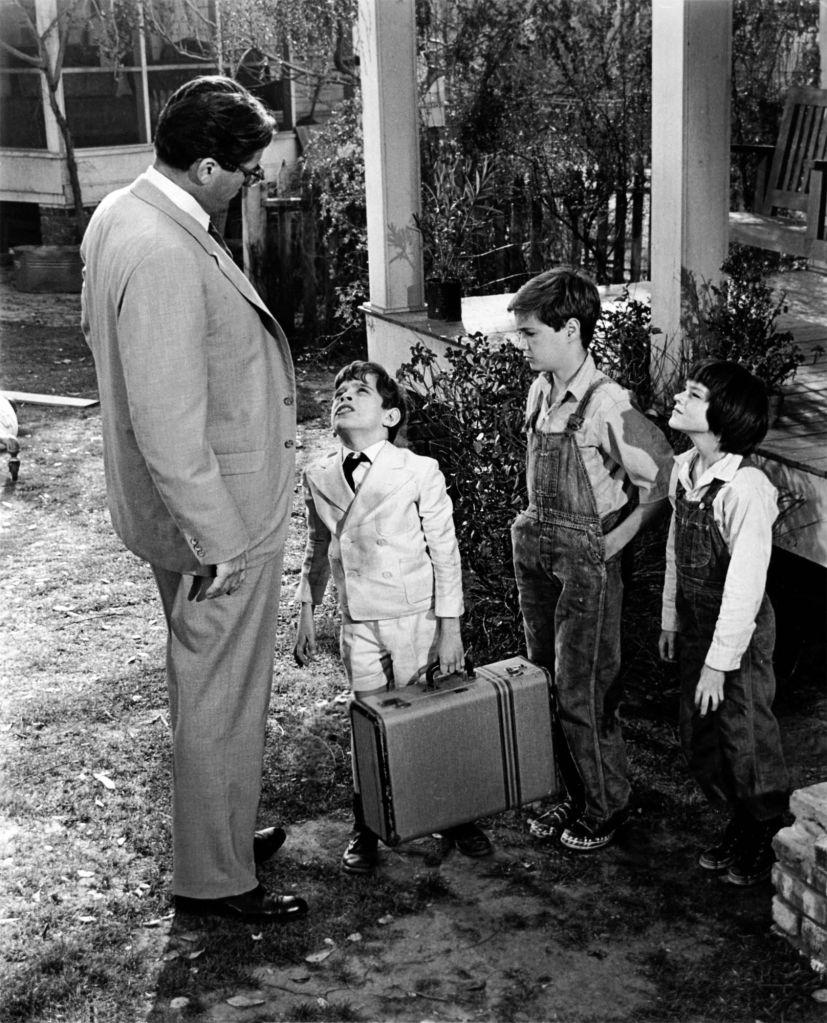
Scene from To Kill A Mockingbird movie (1962)

Criticism and Relevance of The Storyline

This 1960 novel is ahead of its time; carrying a message that is still needed by today’s world, Harper Lee’s debut novel is regarded as one of the best contemporary classics. Prejudice against the black community is the main theme of this novel. The lives of the main character revolve around this. Standing up for what’s right, defending the weak, swimming against the current; all these righteous acts comes at a huge price, sometimes even risking the lives and dignity of our loved ones. The novel gives us a strong message to the readers. It so skilfully presents the vulnerability of a minority community and how they fall prey to prejudice. The author very skilfully brings forth the sub of racism, that too very tenderly through characters who peacefully struggle against this evil. Harper Lee shows us that in every society, there are some people who would stay firmly at the side of justice, though they may face severe consequences.

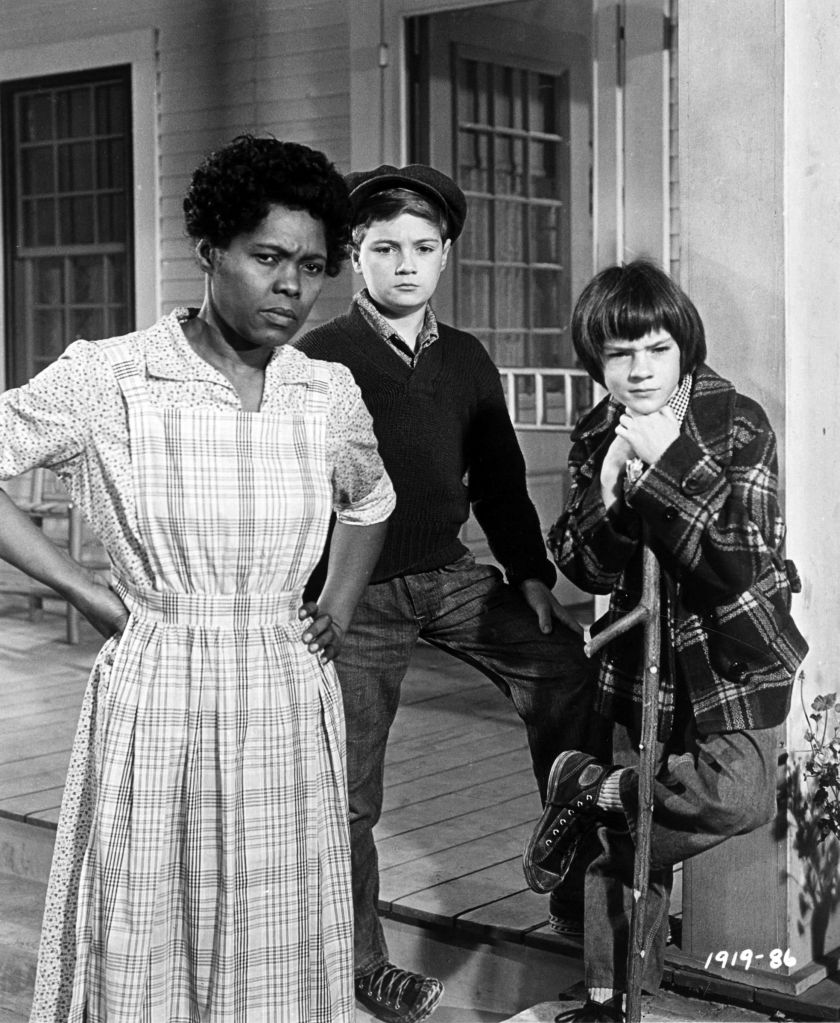
scene from To Kill A Mockingbird movie (1962)

Conclusion

Without denying the constancy of the moral message, and the pure ingenuity of the book, it’s still open to debate whether, as with all classics, schoolchildren should be forced to read the novel and go over it page-by-page. Therefore everyone who reads it can take something out of it which no one has before. Let it not be forgotten that a true piece of literature, like To Kill a Mockingbird, is meaningful in every period and that today, Atticus Finch’s message should be heard in the midst of all the global conflicts that we hear of on the news every day and night.

Murder mysteries recommendations, you cannot put down.

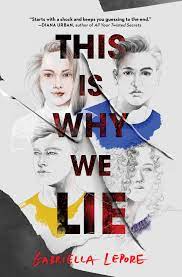
This is Why We Lie by Gabriella Lepore.

In Gardiners Bay, everyone has a secret. The population of Gardiners Bay is disturbed when Jenna Dallas and Adam Cole discover Colleen O’Dell’s death drifting off the coastline of their seaside village. The fact that her drowning was not an accident is even more surprising.Jenna begins her own investigation as her closest friend becomes a crucial suspect. She knows she needs Adam on her side when she discovers scandals at Preston Prep School that link back to Rookwood reform school.Adam is used to receiving critical stares as a student at Rookwood, but now his pals are being probed by the police. Even if it means trusting Jenna, Adam will do whatever he can to keep them safe.The truth begins to distort as the falsehoods unfold. Only one thing is certain: someone will have to pay the price.

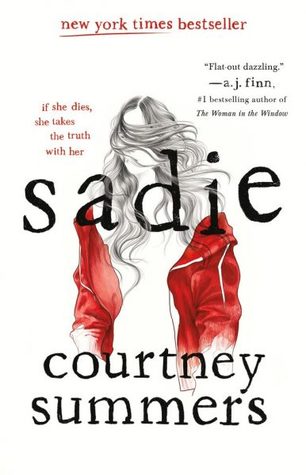
Sadie by Courtney Summers.

A search for a missing girl leads to a quest of vengeance. A podcast that follows the clues she’s left behind, similar to Serial. And a cliffhanger that you won’t be able to forget.Sadie’s life hasn’t been easy. She’s been raising her sister Mattie in an isolated tiny town since she was a child, doing her best to create a decent life for them and keep their heads above water.When Mattie is found dead, however, Sadie’s entire life falls apart. After a bungled police investigation, Sadie is desperate to discover her sister’s killer and sets out on the road with only a few hints to guide her.When West McCray overhears Sadie’s tale at a local gas station while working on a feature about little, forgotten villages in America, he becomes obsessed with recovering the missing child. He launches his own podcast while he follows Sadie’s trail, attempting to figure out what occurred and finding her before it’s too late.Courtney Summers has authored her career-defining book. Sadie is a fast-paced, suspenseful novel that will have you engrossed until the very last page.

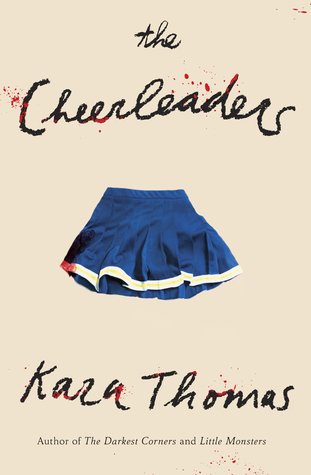
The Cheerleaders by Kara Thomas.

In Sunnybrook, there are no longer any cheerleaders.Then there was the automobile tragedy, in which two girls died after colliding with a tree on a wet night. The killings occurred not long after. The man next door murdered those two young ladies. Because he was shot by the cops, no one will ever know why he did it. The final cheerleader to die was Monica’s sister. Sunnybrook High School dissolved the cheer squad after she committed herself. Nobody wanted to think about the females they’d lost.It had been five years since then. Sunnybrook High’s professors and students now wish to honour the fallen cheerleaders. Monica, on the other hand, finds it difficult. She only want to forget. Monica’s world, meanwhile, is beginning to fall apart. There are the letters in her stepfather’s desk, an unearthed, years-old mobile phone, and a weird new classmate. It doesn’t matter what occurred five years ago. Some locals know more than they’re letting on. Monica is somehow in the core of it all.Sunnybrook may no longer have cheerleaders, but it doesn’t mean no one else is in danger.

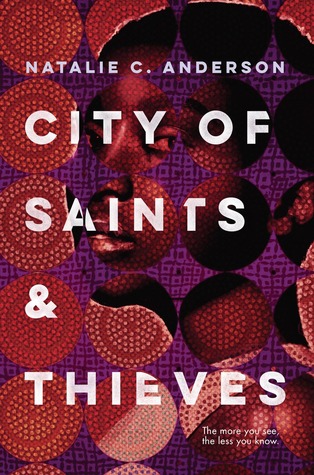
City of Saints and Thieves by Natalie C. Anderson.

A girl who doesn’t exist dwells in the shadows of Sangui City. Tina and her mother arrived in Kenya as refugees hoping for a new life and a place to call home after leaving the Congo. Her mother swiftly got employment as a maid for a wealthy household, including Roland Greyhill, one of the city’s most powerful businessmen. Tina quickly discovers, however, that the Greyhill fortune was built on a life of corruption and criminality. So when her mother is found shot to death in Mr. Greyhill’s study, she knows who’s to blame.Tina spends the next four years alone on the streets, working as a master thief for the Goondas, Sangui City’s local gang, with vengeance on her mind. Tina returns to the Greyhill estate thanks to a work for the Goondas, giving her the opportunity for retribution she’s been waiting for. But the sorrow of previous scars and the draw of old connections overcome Tina as soon as she enters the magnificent mansion, putting in motion a hazardous chain of events that might cost Tina her life at any moment. But in this fast-paced, nail-biting thriller, she holds on because she ultimately discovers the horrific truth about who killed her mother—and why.

They Wish They Were Us by Jessica Goodman.

A murder mystery set in the setting of a prestigious Long Island prep school. Everything on Gold Coast, Long Island, appears flawless, from the posh downtown stores to the perfectly groomed beaches to Jill Newman’s and her friends’ polished uniforms. Nothing is as it appears, as Jill discovered three years ago.Jill’s closest friend from freshman year, the smart and dazzling Shaila Arnold, was murdered by her lover. Graham confessed, the matter was closed, and Jill tried to move on after that awful night on the beach.Now that Jill is in her senior year, she is determined to make it the finest one yet. She is, after all, a senior and a Player, a member of Gold Coast Prep’s exclusive, not-so-secret society. Senior Players have the nicest parties, the finest grades, and the entire school’s adulation. Jill is going to have a great year. She is certain of it.When Jill begins to receive messages professing Graham’s innocence, her plans for a flawless senior year begin to fall apart. Who killed Shaila if it wasn’t Graham? Jill swears to find out, but doing so might jeopardise her friendships as well as her future.

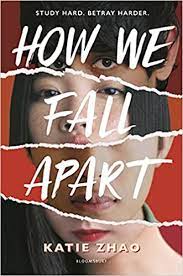
How We Fall Apart by Katie Zhao.

Nancy Luo is taken aback when her former closest friend, Jamie Ruan, a top-ranked junior at Sinclair Prep, vanishes and is later discovered dead. Nancy is even more taken aback when word gets out that she and her friends—Krystal, Akil, and Alexander—are potential suspects, courtesy to “The Proctor,” a student who anonymously incriminated them using the school’s social networking app.Jamie used to be friends with all of them, and she knew all of their deepest, darkest secrets. Now The Proctor is aware of them as well. The four must find the genuine killer before The Proctor exposes them to too much and costs them too much, such as Nancy’s entire scholarship.Nancy begins to think that her pals are holding secrets from her as well. When their ex-best buddy comes up dead, students at an elite prep school are compelled to confront their secrets.

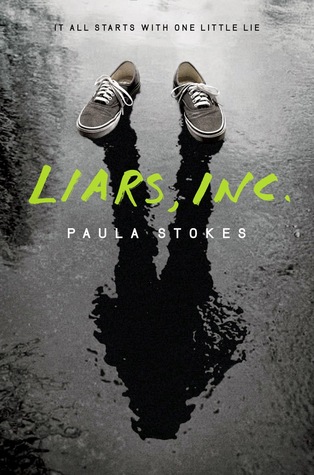
Liars Inc. by Paula Stokes.

Max Cantrell has never been a big believer in telling the truth, so when the chance to sell fake permission slips and cover stories to his classmates emerges, it seems like a decent way to make some money and spice up a dull senior year. Max creates Liars, Inc. with the aid of his buddies Preston and Parvati. Suddenly, everyone requires something, and money begins to flow in. Who’d have guessed that lying could be so lucrative?When Preston requests his own cover storey to visit a girl he met online, Max is more than happy to oblige. Until Preston does not return home. Then the evidence piles up, horrifying hints leading the detectives to Preston’s body. Numerous hints that lead to Max as the culprit. Will Max be able to track out the true killer before going to prison for a crime he didn’t commit?

To kill a mockingbird summary

To kill a Mockingbird is a novel written by Harper Lee. The book was published in 1960 and was successful right away. It was Harper Lee’s first novel which sold more than 30 million copies all over the world and was also given the Pulitzer Prize. This novel is a classic among and outside of the bibliophiles for some very valid reasons. Let’s explore them

Plot

The story is set in a fictional town of Maycomb in Alabama and narrated by a 6 year old girl, Jean Louise Finch, the daughter of a righteous and virtuous lawyer Atticus Finch. 

The story begins with Jean Louise and her brother Jeremy Finch talking about their esoteric neighbour Boo Radley who never went out of his house and that fascinates the Finch siblings yet they are scared of him too much. It revolves around the adventures of the Finch siblings in the beginning.

These adventures are followed by some worries that rain down on the finch household by virtue of a case their father is working on, the case of Tom Robison, an African-American fellow who is accused of rape of a young white girl Mayella Ewell. Atticus Finch is fighting in favor of Robinson. This story is set up in the 1930s, when discrimination against African Americans was prevailing, a good evidence of that is provided in the book when different churches are mentioned for the white and African American people. Because Atticus was fighting for Robinson, he was looked down upon by the people of Maycomb, especially some of the more powerful figures of the town. Atticus Finch and his children are threatened all this while but he didn’t deter, he refused to step down until Robinson was given a chance, but he didn’t stand a chance.

The trial takes place and Tom Robinson is convicted of raping the girl even though all odds favor him. He is pronounced guilty because of the color of his skin. Nevertheless, an African American man being given the chance to explain himself was a huge leap for that town, all because of Atticus’s determination and skill. This case affects the finch siblings as well.

A deeper look

At first glance, the story seems about the escapades of Jean Louise and her brother Jeremy Finch but after a close look one will discover that this novel explores more profound issues in Maycomb which parallels the issues that 20th century and to some extent even 21st century America faces. First and foremost it addresses racism, in not the best of ways but you can’t blame the author considering the times it was written in. it doesn’t deal with racism nor does it offer any solution to deal with it. It simply mentions the bizarre laws that existed or rather lack of any laws. Understanding is a thing that Atticus does very well, he possesses the ability to understand even his enemies even When a mob is about to attack him. “A mob’s always made up of people, no matter what” is what he says to his children when talking about the same incident. His empathy is something that keeps the readers wondering.

It touches on the subject of gender roles and how Jean Louise who was a tomboy was told by her aunt to act ladylike. And it talks about subjects that can only be realized when you read and think about it yourself

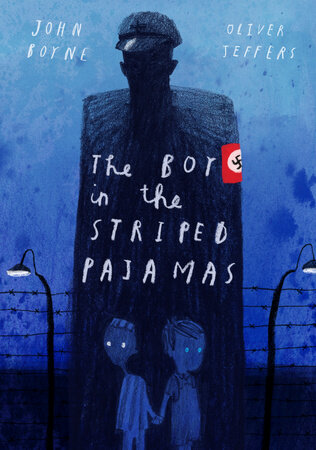
Book review for ‘the Boy in the stripped Pyjamas’: A heartbreak but not a very real story

The holocaust is for sure a topic that as discussed as infamous it can be. It is as much a tragic story as a fact that can make any person grip in fear of what a human is capable of becoming.

Bruno is a 9-years old boy in Berlin during the Second World War and his father a member of the Nazi party, soon promoted to office the Auschwitz camp at the personal orders of the Fuhrer.

Sad and missing his friends, Bruno spots a pale boy in pyjamas with a lot of people on the other side of the fence. Bruno meets this boy, Shmuel whom he quickly befriends. Shmuel informs Bruno that he lived on this side of the fence with his grandfather, brother and father. And to the merry of both boys, they share the same birthday and age.

Shmuel grows pale and lean everyday and Bruno starts to sneak him food. They talk and share their lives while Bruno does not really understand what is going on the other side of the fence.

One day, Shmuel informs Bruno that his father is missing and everyone in his family is desperate to find him. That evening, Bruno removes his clothes, pulls up the stripped pyjamas Shmuel offers him and crosses the fence to search for Shmuel’s father.

Both the kids are spotted by guards who ask them to participate in the march. The march ends in a closed room which Bruno assumes is the place to sleep and sit together. He holds Shmuel’s hands and whispers to him that they shall be friends for life.

Bruno is missing and only his clothes are found near the camp fence. His father, deducing what must have happened is broken and offers himself to the now invading Allied armies.

This fictional story that forms the plot of the book, “The boy in the stripped Pyjamas” by Irish author John Boyne. The book quite metaphorically illustrates the fact that the adults were really not concerned with what is happening under their noses while the kids were just been broken, separated by fences and lines drawn between races.

The Boy in the Striped Pajamas (Deluxe Illustrated Edition) by John Boyne:  9780399559310 | PenguinRandomHouse.com: Books

However, and quite correctly, the historians have argued that this book has several historical inconsistencies that might make a reader believe that concentrations camps were way more lax than they really were. No one, let alone a kid was left off work to let him have the time to meet, talk to and enjoy another human being’s company.

Auschwitz: Concentration Camp, Facts, Location - HISTORY
An actual picture from the Auschwitz Camp

At the end, the author expresses his belief in humanity by stating,

Of course, all of this happened a long time ago and nothing like that could ever happen again. Not in this day and age.

Happy reading!

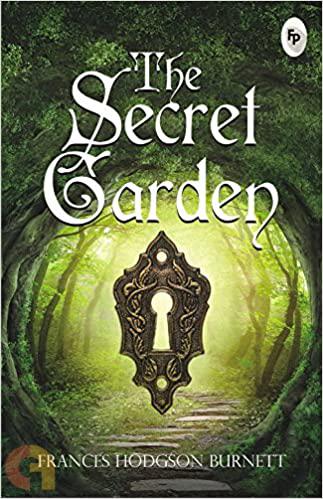
The Secret Garden: A book review

A girl is born to a rich household of a British officer in the times of the Raj. As customary to apparently the then tradition of rich households in British India, the child was raised by the local servants. The father and the mother never really bothered to spend some time with her. However, a deadly plague breaks in and everyone dies. Everyone, but the girl child who is now a bitter, unkind girl who has spent a large part of her growing time simply commanding people and repressing her emotions and has a habit of being fed, and bathed and clothed – all by others. The death of her family means she has to now live with her uncle – a lord in the British Isles.

In that cold, dead and open manor, she discovers the meaning of work, expression, friendship and love – not only nurturing back his cousin to health, but also helping her uncle rediscover happiness and let the garden where her wife passed away – the secret garden with no doors open to anyone.

The Secret Garden by Frances Hodgson Burnett - Land of Tales

The secret garden – a British children’s classic for more than a century now – is some of those books which one might not necessarily complete in one go, but would be pressed innately to return to it. The story is very much of a child but it builds up in ways that often evade even adult and contemporary literature. Imagination, revelations and most importantly the fact that the protagonist is but a child – all of it is simply touching. A movie was made on the book in 2020 starring Collin Firth and Julie Walters.

The Secret Garden (2020 film) - Wikipedia

Remember to give it a read!!!

4 MUST READ BOOKS TO START YOUR OWN STARTUP

1. ZERO TO ONE

Zero to One presents at once an optimistic view of the future of progress in American and a new way of thinking about innovation. It starts by learning to ask the question that lead you to find value in unexpected places.

2. THE LEAN STARTUP

Rather than wasting time creating elaborate  business plans, the lean startup offers entrepreneurs- in companies of all sizes – a way to test their vision continuously, to adopt and adjust before its too late. The author provides scientific approach to creating and managing successful startups in a age when companies need to innovate more than ever.

3. THE FOUNDERS DILEMMAS

The founder dilemmas draws on the inside stories of founders like EVAN WILLIAMS of twitter and TIM WESTERGREN of Pandora, while mining quantitative data on almost ten thousand founders.

People problems are the leading cause of failure in startups. This book offers solutions.

4. HOOKED

The author of this book provides practical insights to create user habits that stick , actionable steps for building products people love, fascinating examples from the iPhone to Twitter, Pinterest to Bible app, and many other habit forming products.

LEARNING LESSONS FROM THE BOOK : THE PSYCHOLOGY OF MONEY

1. Use money to gain control over time, because the ability to do what you want, when you want, with whom you want , for as long as you want to, pays the highest dividend that exists in finance.

2. Wealth is what you don’t see, its hidden, it is the oncome that you have not spent and that is the fastest way to be wealthy, not spending the money you have and doing its opposite will never make you wealthy.

3. Wealth is just the accumulated leftovers after you spend what you take in. And since you can build wealth without a high income, but have no chance of building wealth without a high savings rate, its clear which one matters more.

4. Do not aim to be coldly rational( by looking at the spreadsheet) when making financial decisions. Aim to just be pretty reasonable. Reasonable is more realistic and you have a better chance of sticking with it for the long run.

5. Like everything else worthwhile, successful investing demands a price. But its currency is volatility, fear, doubt, uncertainity, and regret and you have to view them as fees( a price worth paying to get something nice in exchange).

MAJOR LEANINGS FROM THE BOOK : THE 5 AM CLUB

1. The first hour of the day is the golden hour and thus in the first hour from 5 am to 6 am applying  the 20/20/20 formula can truly change your performance of the whole day.

2. It states that the first 20 minutes are for exercising, the next 20 minutes are for growing i.e. reading or listening podcast or audiobooks.

3. By performing these activities you awaken the 4 interior empires( mindset, heart set, soul set, and health set) because if you want to experience empires in your outer life you need to develop your inner ones first.

4. Waking up at 5 am can enhance peoples productivity and happiness and as a result people can achieve an epic height of success in their professional as well as personal life.

I recommend everyone reading this blog to please read this book once.

HAPPY READING ; )

Thank you!

SOME OF THE BEST QUOTES FROM THE BOOK: THE QUICK AND EASY WAY TO EFFECTIVE SPEAKING

1. “ Successful communication depends upon how well the speaker can make his talk a part of the listeners and the listeners a part of the talk”

2. “The chief cause of your fears of public speaking is simply that you are unaccustomed to speak in public”

3. “ If you want to interest your listeners then don’t begin with an introduction. Begin by leaping right into the heart of your story.”

4. “The best way for a speaker to endear himself to an audience is to play himself down.”

5. “ The audience must feel that there is a message being delivered straight from the mind and heart of the speaker to their minds and their hearts.”

6. “The ability to speak clearly precedes the ability to move others to action.”

7. “ You cant project your personality in a talk to others by using reasons alone; you have to release to them how deeply you yourself believe on what you say.”

8. “ You will never know what progress you can make unless you speak, and speak and speak again.”