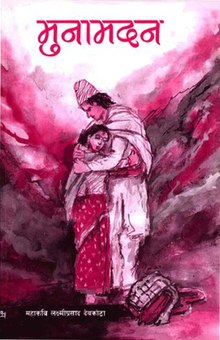
Muna Madan

Almost no one hasn’t heard of Devkota’s most well-known creation, the Muna Madan. This short epic about Muna and Madan is well-known in Nepali, but its English translation is equally well-known. Madan, a hopeless rancher, decides to go to Tibet as a vendor in order to get money, leaving behind his elderly mother and lovebird wife, Muna. Muna begs her husband to stay, but Madan withdraws in the hopes of accumulating wealth for the family. The hardships Muna and Madan have while trying to reunite with one another are depicted in a horrible way in sonnet. Muna Madan, while being a short epic, has become a commercial success and is regarded as a model of Nepali writing.

Plot

Muna Madan is a Nepalese epic that tells the heartbreaking story of Muna and Madan. It was written in a melodious version in 1935 by Nepalese writer Laxmi Prasad Devkota. It is one of the most well-known works of Nepali literature. Not long before his death in 1959, Devkota observed, “It would be fine if every one of my works were singed, except for Muna Madan.” In terms of deals, it is the best Nepali book ever written. It’s not a Jhaurey song in the traditional sense. The plot revolves around a man (Madan) who abandons his significant other (Muna) and travels to Lhasa in order to bring in money. Madan represents all Nepalese young people who migrate abroad to make ends meet.

Muna, Madan’s wife, is the queen of sacrifice and love. She adores her Madan and is devastated that she must send him to Lahsa, a dangerous and difficult region. However, she accepts the challenge and decides to remain in the country with her elderly and weak mother-in-law. On his way back to his residence, Madan becomes unwell. His friends abandon him on the road and come home to tell him he has died. Finally, a Nepalese man from a lower caste comes to his aid. That is why a guy is said to be magnificent because of his heart, which is full of love and humanity, rather than his caste or ethnicity.

Madan returns to Kathmandu after regaining his health only to discover that both his mother and beloved wife had died. Madan ultimately comes to the realization that money has no meaning at the time. The story also recounts the life of a poor widow who suffered greatly without her husband and died in sorrow. In this poem, Devkota addresses the most important challenges plaguing Nepalese society at the moment. Through the story of Muna and Madan, Laxmi Prasad Devkota hopes to stabilize the truths of archaic societies, unscientific notions, and the negative impacts of unemployment and poverty in Nepalese society. The poet has brilliantly characterized love by writing about Muna and Madan’s connection.
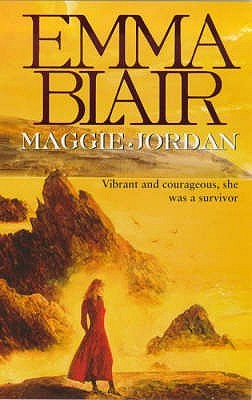
Muna Madan

Almost no one hasn’t heard of Devkota’s most well-known creation, the Muna Madan. This short epic about Muna and Madan is well-known in Nepali, but its English translation is equally well-known. Madan, a hopeless rancher, decides to go to Tibet as a vendor in order to get money, leaving behind his elderly mother and lovebird wife, Muna. Muna begs her husband to stay, but Madan withdraws in the hopes of accumulating wealth for the family. The hardships Muna and Madan have while trying to reunite with one another are depicted in a horrible way in sonnet. Muna Madan, while being a short epic, has become a commercial success and is regarded as a model of Nepali writing.

Plot

Muna Madan is a Nepalese epic that tells the heartbreaking story of Muna and Madan. It was written in a melodious version in 1935 by Nepalese writer Laxmi Prasad Devkota. It is one of the most well-known works of Nepali literature. Not long before his death in 1959, Devkota observed, “It would be fine if every one of my works were singed, except for Muna Madan.” In terms of deals, it is the best Nepali book ever written. It’s not a Jhaurey song in the traditional sense. The plot revolves around a man (Madan) who abandons his significant other (Muna) and travels to Lhasa in order to bring in money. Madan represents all Nepalese young people who migrate abroad to make ends meet.

Muna, Madan’s wife, is the queen of sacrifice and love. She adores her Madan and is devastated that she must send him to Lahsa, a dangerous and difficult region. However, she accepts the challenge and decides to remain in the country with her elderly and weak mother-in-law. On his way back to his residence, Madan becomes unwell. His friends abandon him on the road and come home to tell him he has died. Finally, a Nepalese man from a lower caste comes to his aid. That is why a guy is said to be magnificent because of his heart, which is full of love and humanity, rather than his caste or ethnicity.

Madan returns to Kathmandu after regaining his health only to discover that both his mother and beloved wife had died. Madan ultimately comes to the realization that money has no meaning at the time. The story also recounts the life of a poor widow who suffered greatly without her husband and died in sorrow. In this poem, Devkota addresses the most important challenges plaguing Nepalese society at the moment. Through the story of Muna and Madan, Laxmi Prasad Devkota hopes to stabilize the truths of archaic societies, unscientific notions, and the negative impacts of unemployment and poverty in Nepalese society. The poet has brilliantly characterized love by writing about Muna and Madan’s connection.
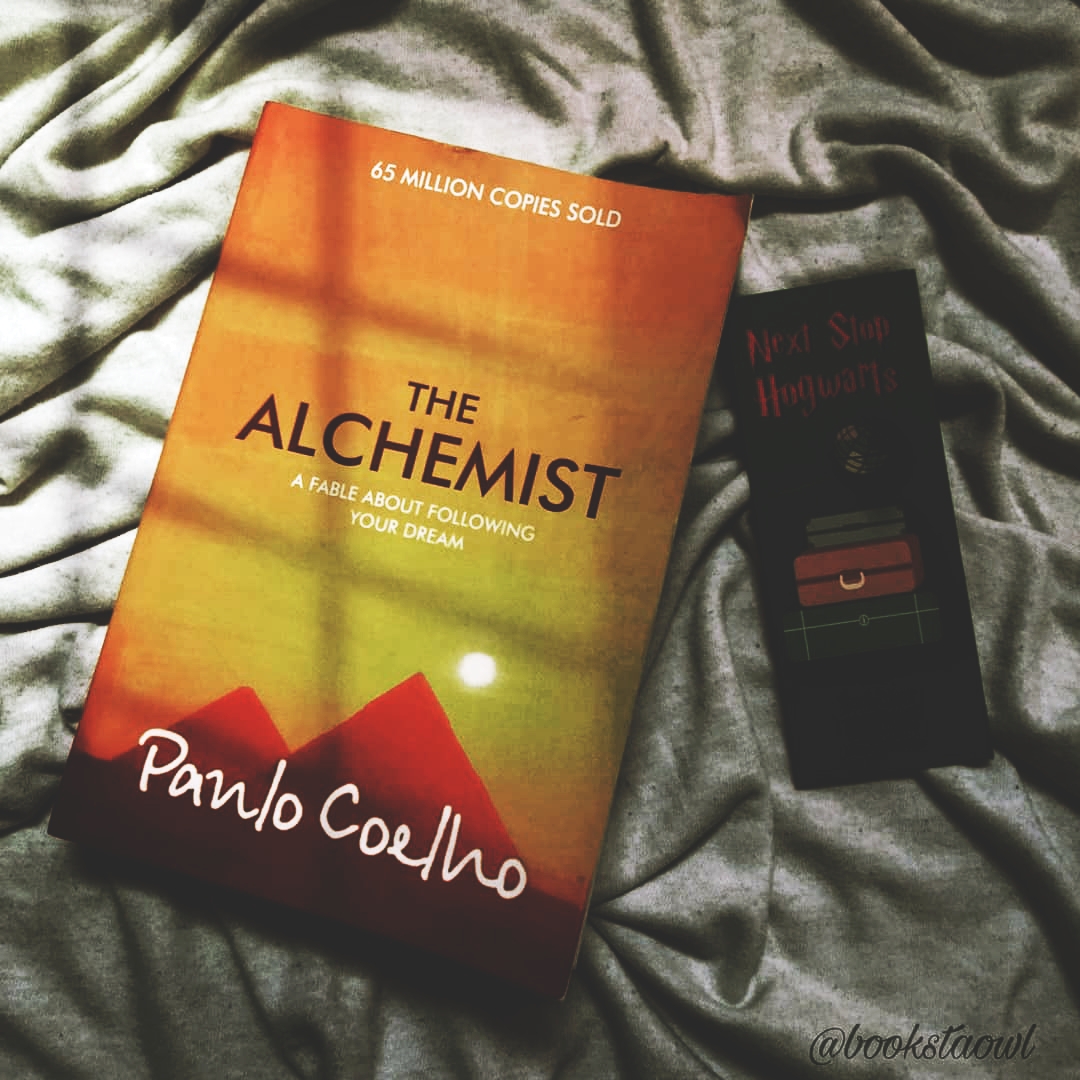
MAGGIE JORDAN BY EMMA BLAIR

ABOUT THE AUTHOR:

Emma Blair was a pen name for Scottish actor and author Iain Blair, who began writing in his spare time and whose first novel, Where No Man Cries, was published in 1982. During a writing career spanning three decades he produced some thirty novels, but his true identity remained a secret until 1998 when his novel Flower of Scotland was nominated for the RNA Romantic Novel of the Year award. He was one of Britain’s most popular authors and his books among the most borrowed from libraries.
Iain Blair died in July 2011.

ABOUT THE BOOK:

The book Maggie Jordan by Emma Blair is about a vibrant and courageous woman Maggie Jordan named after the book. The book was originally published in 1990. Set in the 1930s and 1940s, “Maggie Jordan” traces the life of a young Scottish woman from the carpet mills of Glasgow to the battlefields of the Spanish Civil War. Maggie Jordan. Praise for Emma Blair:’An engaging novel and the characters are endearing – a good holiday read’ Historical Novels. All the tragedy and passion you could hope for .Romantic fiction pure and simple and the best sort – direct, warm and hugely readable. Women’s fiction at an excellent level. ‘Emma Blair explores the complex and difficult nature of human emotions in this passionately written novel’.

THE PLOT:

Seventeen year old Emma Blair was living with her beautiful family and also working in The Haven Hotel in the village of Heymouth. The time when most of Maggie Jordan’s family are killed in the freak flood in the small coastal village of Heymouth. Now her only living family is her elder sister Laura and her husband John McNair with their twins. In the middle of all the unfortunes in Heymouth, Maggie Jordan encountered Howard Taft, the journalist who is one the persons, going to be the reason for her happiness. After the loss of her family Maggi Jordan moved along with her elder sister Laura and John to Glasgow. There she managed to find herself a job in Glasgow carpet mills. But her poor fate also followed her there in the form of John who tried to rape her. In between she met Nevil Sanderson in Glasgow carpet mills where she is working, with whom she got engaged.

Nevil Sanderson suddenly decides he must go to Spain and join the Republicans in their fight against Franco. Although she struggles on without him, Maggie eventually realises her place is by his side and journeys to Spain to join him. But the newly promoted Nevil has become distant and ruthless, and is fiercely jealous of her new friendship with American journalist Howard Taft. Years later, married and with an eight-year-old daughter, Maggie has returned to Glasgow. Astonished when Howard reappears, bringing light and laughter back into her life, she is forced to take decisions – decisions which threaten to destroy even the vibrant and courageous Maggie Jordan.

FAVOURITE LINES:

‘But all the middle of the valley was a place to rest in, to sit and think that troubles were not if we would not make them. To know the sea outside the hill, but never to behold it”

“Every time he looked at the line and wizened face it was as though he’d been punched hard in the stomach”.

“That was a job which never got any easier, particularly where children were concerned. Just her luck to be in charge of the ward that morning. Just her rotten luck!”

The author was trying to tell us the struggles and how much pain a woman can bear. But he dragged a little extreme by playing with a woman’s pain. After all she is a human.

SHORT STORIES WITHIN NOVELS:

A story within a story is referred to as an embedded narrative. The embedded narrative is a literary device in which a character within a story becomes the narrator of a second story within the first one. Multiple layers of stories within stories are sometimes called Nested Stories. These stories mostly exist in a book to enlighten people. Sometimes the author himself wrote some short stories which are really motivating and alluring, then he might include them in his novels. In the other case, the author pushes himself to write short stories which will be suitable within his/her novels.

We all love stories, especially short stories. So, we will look at some stories within stories or stories within novels or dramas one by one as parts of segments.

THE ALCHEMIST: BY PAULO COELHO

The shopkeeper sent his son to learn about the secret of happiness from the wisest man in the world. The lad wandered through the desert for forty days, and finally came upon a beautiful castle, high atop a mountain. It was there that the wise man lived.

“Rather than finding a saintly man, though, our hero, on entering the main room of the castle, saw a hive of activity: tradesmen came and went, people were conversing in the corners, a small orchestra was playing soft music, and there was a table covered with platters of the most delicious food in that part of the world. The wise man conversed with everyone, and the boy had to wait for two hours before it was his turn to be given the man’s attention.

“The wise man listened attentively to the boy’s explanation of why he had come, but told him that he didn’t have time just then to explain the secret of happiness. He suggested that the boy look around the palace and return in two hours.

“‘Meanwhile, I want to ask you to do something,’ said the wise man, handing the boy a teaspoon that held two drops of oil. ‘As you wander around, carry this spoon with you without allowing the oil to spill.’

“The boy began climbing and descending the many stairways of the palace, keeping his eyes fixed on the spoon. After two hours, he returned to the room where the wise man was.

“‘Well,’ asked the wise man, ‘did you see the Persian tapestries that are hanging in my dining hall? Did you see the garden that it took the master gardener ten years to create? Did you notice the beautiful parchments in my library?’

“The boy was embarrassed and confessed that he had observed nothing. His only concern had been not to spill the oil that the wise man had entrusted to him.

“‘Then go back and observe the marvels of my world,’ said the wise man. ‘You cannot trust a man if you don’t know his house.’

“Relieved, the boy picked up the spoon and returned to his exploration of the palace, this time observing all of the works of art on the ceilings and the walls. He saw the gardens, the mountains all around him, the beauty of the flowers, and the taste with which everything had been selected. Upon returning to the wise man, he related in detail everything he had seen.

“‘But where are the drops of oil I entrusted to you?’ asked the wise man.

“Looking down at the spoon he held, the boy saw that the oil was gone.

“‘Well, there is only one piece of advice I can give you,’ said the wisest of wise men. ‘The secret of happiness is to see all the marvels of the world, and never to forget the drops of oil on the spoon.’

Through this story author express, that one should follow his dreams and must take care of his responsibilities also. That’s the secret of happiness.

The Alchemist

WHERE TO GET FREE EBOOKS https://eduindex.org/2021/07/20/where-to-get-free-e-books/

THE DETECTIVE NOVELS https://eduindex.org/2021/07/21/the-detective-novels/

MUST-READ TWO BOOKS BY PAULO COELHO – 2

Paulo Coelho wrote many best-selling books most of which are popular all around the world. And translated in various languages. One of his masterpieces is Alchemist. All of his works are related to self-help and motivational genres.

Book: Veronica Decides To Die

Veronica is a young woman who commits suicide due to being full of emptiness in her life. While she waiting for death after taking a lot of sleeping pills she fainted and found herself in an asylum alive. But Doctor said that she has only a few days to live due to a heart condition caused by the overdose. Her presence there affects all of the mental hospital’s patients, especially Zedka, who has clinical depression; Mari, who has panic attacks; and Eduard, who has schizophrenia, and with whom Veronika falls in love. At least she wants to live or not is the key base of this novel.

Why you should read this book: 

This one is not a boring plot, book content moves slow still does not let you drop the idea to read it. And this contains good vocabulary which is worth recommending to every reader. If you ever tried or at least thought once to end your life read this one it will make you believe in Miracle. 

Book Quotes:

People never learn anything by being told, they have to find out for themselves.

You are someone who is different, but who wants to be the same as everyone else. 

You have two choices, to control your mind or to let your mind control you.

Note: This book is also adapted as a film by Emily Young in 2009. 

Book: The Spy

Mata Hari, the beautiful woman, the dancer, the courtesan, and the spy. She was the center of attraction wherever she goes… As a dancer she delighted her audiences, as a courtesan, she bewitched the richest and powerful men of the era. But is she really a spy? 

Why you should read this one:

This book is based on real events. Mata Hari is a real person who is accused of espionage and executed.

On the back cover, it says, “Fiction.” But, I would rather love to say it’s a historical work. 

When a man sleeps with many women, do we care to say any terms? So, I can’t criticize Mata Hari for being a courtesan. 

In this work, I can visualize how men treated women as an object during those time. They gave preference for outer appearance. They wanted their wife to be loyal. But, those rules aren’t for them. And those things made my heart shrunk.

Book Quotes:

I decided to be who I always dreamed of. And the price of a dream is always high.

When we don’t know where life is taking us, we are never lost. 

At this moment, I look back at my life and realize that memory is a river, one that always runs backward.

Recommendations:

I don’t recommend both of these books to children especially if you are younger than sixteen. One book contains intimate scenes and another one contains sexual harassment scenes. Thus I would like to recommend these to elder readers who are more than sixteen.

TWO MUST-READ BOOKS OF PAULO COELHO https://eduindex.org/2021/07/18/two-must-read-books-of-paulo-coelho/

BOOK REVIEW: THE DA VINCI CODE https://eduindex.org/2021/07/19/book-review-the-da-vinci-code/

The book of life- Daily meditation.

Book review

Author name-Jiddu krishnamurti

introduction

He is an Indian spiritual leader. He was educated in theosophy by the British social reformer Annie Besant. His basic philosophy lies on observation. His works includes on mind and thoughts, nature, environment, relationship, living and dying, love, lowliness, fear and freedom.

Book name -The book of life- Daily mediation

Chapter -The book contains 12 chapters within itself.

Publisher’s name  –  HyperCollins Publishers (Australia) Pty.Ltd.

Publishing year-Sep/2019

ISBN-9780141004969

About the book

The book is written by Jiddu Krishnamurti at the basics of daily routine. The book is based on the observations and experiences of the author. The book is about finding the truth of life through living. This book presents the 365 days of the year. The writer was meditating and trying to find the truth of life. His experiences are interconnected with others. He started writing from January to December.

The story of man of mankind is in you, the vast experiences, the deep-rooted fears, anxieties, sorrow, pleasure and all the beliefs that man has accommodated throughout the millennia.

The book is about the listening process, learning, authority and self-knowledge. The author said, ask yourself why do we follow a leader or authority and later on we criticize them and insist on carving ourselves. Self-awareness is a process of knowing one self. It is not about isolation or withdrawal from the relationships mentioned by the author. He said self-knowledge can help to bring change in society.

The author described the sense of becoming, beliefs, action and good and evil. The author said everyone wants to become something. Becoming something is a will. A will is led by self-projections and a conflict is about struggling to reach our wills. All wills and conflicts are becoming integrated. The author mentioned the love and self, role and hinders of beliefs. He focused on the observations, action and ideas. He said goodness has no motive whereas evil things can’t be justified at any cost. 

Dependence, attachment, relationship and fear are in sync. We all depend on something, be it beliefs, religion or a person. The dependence leads to attachment. The attachment develops the relationship when the relationship starts having conflicts and a fear of detachment. The root of fear, anger and loneliness is you and I. we have to learn the tricks to deal with our fear.

The author discussed intimacy, love, lust, marriage and profession. Here also he asked the individual to leave the ego and accept the reality of life. He also discussed the intelligences, thoughts, knowledge, brain, transformation. He said aloneness is not loneliness. Mediation is the way by which we can achieve that peace and truth of life.

To choose this book for the review is my first option because the book is related to the life experiences of the author. The book consists of all aspects of life. The author discussed every topic briefly with causes and results. The book has a religious aspect of life. It is a daily life experience. How meditation helps a person to attain inner peace, the importance of self-knowledge, self- reliance and the truth of life- all the things are core essence of this book.

But I feel the book is in accidental order. The author is just assuming the things. The topic discussed by the author in this book is very common. I think he could work on some other topics too.

Conclusion: 

We are just busy in our lives. We all are lost in the darkness of sorrow, greed, anger and love. We stopped to think about the truth of life. We are just focusing on the material world. We all are ignoring our truth of life. We just have to spend our life handling some emotions like sorrow, anger and ego. The cause of the problem is only the sense of supremacy. We are just working for I and degrading you. We are not happy with what we have. We are not satisfied with what we achieved. We all are having an unnecessary race. The book gives us idea how we can deal with ourselves. Knowing yourselves, listening, hearing and what is the true knowledge we are not even don’t care about all of these things. The book focuses on this value. The attainment of true knowledge is only possible through mediation. The mediation helps to awaken your inner desire of knowing truth, learning about the real meaning of peace and maintaining the meaning of self-knowledge. The book supports love not lust. The difference between love and desire, willing and integration, loneliness and loneliness are clearly mentioned in the book. Aloneness is the essence of achieving the truth whereas loneliness is about withdrawal of your feelings. Relationship is the mirror- the lines really give a different idea about the relationship. Here the meaning of relationship is considered as knowing yourself from another point of view. I learnt the value of self-knowledge and I felt that self- knowledge is the only key to unlocking life. Controlling and managing your emotions is really important because it reflects your knowledge which could be only possible by mediation.

Bedazzle – Book Review

Introduction

What boosts up your confidence in social media? Apparently, the amount of kindness and appreciation from the wonderful people here on our site boosts my confidence.

Bedazzle‘ by Shamoly Khera is an effective self help book that educates the readers about how confidence sprouts inside everyone, the author has given many instances to make the readers understand some crucial topics. The book is well researched and efficacious.

‘Our ‘weirdness’ is actually our uniqueness. Our only job in this world actually is to not be like anyone else, but be the best version of ourselves.

– From ‘Bedazzle’ by Shamoly Khera.

Interpretation

This book explores the idea of adapting yourself to the environment around you, coming out of your comfortable zone and the significance of perspectives. I loved how the author has elucidated about discerning our aspirations and drives, a lot of you would feel reluctant to take up a job/stream of education you really love, Shamoly Khera has given an interesting example of the different dispositions we watch in the ‘Friends’ series, if you’ve watched the show, then the way the author has drawn a parallel line will definitely fascinate you.

The mindset of an individual matters a lot, in order to become successful or achieve something you should have a clear mindset. The information about the ‘Fixed Mindset’ and ‘Growth Mindset’ is one of the best insights I’ve got from this book. I’ve added some of the best insights in my book journal as well.

This book offers you the beneficial information to boost your confidence, the amount of research and the plausible instances the author has given are really convincing. If you are looking for an insightful self help book, you can go for this one.

Unfettered Wings – A Book Review

Introduction

LEXIBLE, STOIC, CALM, UNDERSTANDING and so many glorifying words to teach women how they should behave in relationships, with family members and literally with everyone.

Have you ever physically cringed while encountering stoic women characters in a movie/book, who behave like a rehabilitation centers for emotionally unavailable men? Have you ever felt betrayed when the society normalizes the mansplaining?

I was reading a ridiculous, an absolutely disgusting statement yesterday, ‘Women using mobiles will pave a way for them to elope with men’. The appalling thing is the above statement was made by Women’s Commission Member. When women talk about their broken marriage, abusive relationships, the distressing advice, the society throws in their face is, ‘YOU COULD HAVE BEEN FLEXIBLE, IT WOULD HAVE WORKED’.

The above statement justifies that, if a woman is not stoic, if a woman is not flexible, she deserves the abuse. It’s high time we have to stop glorifying the flexible women.

The Book Analysis

Unfettered Wings’ by Sana Munir is an excellent collection of short stories that delineate the lives of ten Pakistani women, ‘Unfettered’, YES, the women you encounter in these stories are uncontrollable, they are unbounded from abusive relationships, moral policing, society’s pejorative stereotypes. This powerful collection of short stories left an indelible impact, agonizing story of Reema who’s sexually abused by her uncle in childhood, story of a young, charming Habiba who’s shot by her brother for helping a man without his knowledge, an appalling story of a sex worker, and so many grisly storylines made my blood run cold. Some stories revolve around the political tensions in the borders alongside the portrayal of harrowing emotions of women.

Sana Munir’s writing style is claustrophobic. It’s still suffocating me. A must read feminist literary work.

MAJOR LEARNING LESSON FROM THE BOOK- TALK LIKE TED

1. The speaker must love and should be genuinely passionate about his topic, if the speaker himself is not inspired by what he is speaking then it cant inspire others. So always choose the topic which you would love to speak about.

2. No one wants to hear the same boring and old stuff. People want something new, thus reveal information that’s completely new to your audience, and they will be your devoted listener.

3. Deliver jaw dropping moment in your presentation. Share something by which your audience will get surprised because that moment makes your presentation remarkable.

4. Don’t try to make your talk too long or too short that the audience cant even get what you have to say. According to the author, the ideal length of a talk should be 18 minutes. Because it forces you to say only what is important.

5. The best way to teach the heart and soul of your audience is to tell them stories, especially your own stories. Because they will only listen to what you are saying only if they feel familiar and connected to what you have to say.

Little Women : A classic for the ages

by Louisa May Alcott

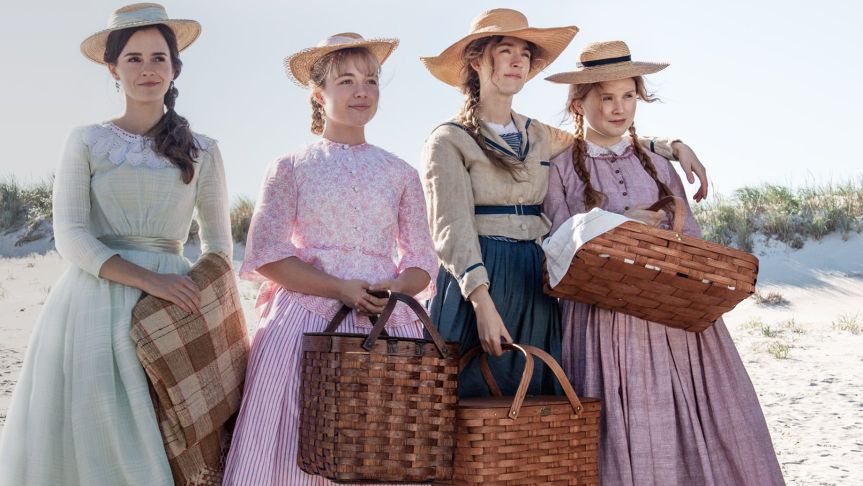
Although it hadn’t won any awards at the time of its release, multiple film adaptions, television shows, plays and retellings are a testament to the cult that surrounds the book “Little Women” by author Louisa May Alcott (1832-1888). Published in two volumes in 1868 and 1869, Alcott wrote the book in response to a request from her friends and family to write a book for young girls. The first novel was a huge success and struck a chord with readers and Alcott was flooded with letters requesting the second volume immediately. She quickly wrote the next volume to accommodate them. Eventually, the two volumes were released as one novel in 1880.

The novel continues to be very widely read and the ambitious female characters in it contributed to the rise of feminism in 20th century America. It revolves around the story of the four March sisters: Margaret “Meg”, Josephine “Jo”, Elizabeth “Beth” and Amy as they live their lives and grow into adults. The girls must contend with learning to become good women and learning about who they are as people with the help of their mother and father.

While on the surface it may come across as a simple story about the four March girls’ journeys from childhood to adulthood, Little Women centres on the conflict between two emphases in a young woman’s life—that which she places on herself, and one which she places on her family. In the novel, an emphasis on domestic duties and family detracts from various women’s abilities to attend to their own growth. For Jo and, in some cases, Amy, the problem of being both: an individual skilled at what they do and to be a dutiful woman creates conflict and pushes the boundaries set by nineteenth-century American society.

At the time when the novel was composed, women’s status in society was slowly increasing. As with any change in social norms, however, progress toward gender equality was made slowly. Through the four different sisters, Alcott explores four possible ways to deal with being a woman bound by the constraints of societal expectations: marry young and create a new family, be subservient and dutiful to one’s parents and immediate family, focus on one’s art, pleasure, and person, or struggle to live both a dutiful family life and a meaningful professional life . While some of the March sisters conform to society’s expectations of the role that women should play, the others initially attempt to break free from these constraints and nurture their individuality. Eventually, however, settling into a more customary life. While Alcott does not suggest that one model of womanhood is more desirable than the other, she does recognize that one is more realistic than the other.

The novel contains five intrinsic aspects: character, theme, setting, plot, and writing style. It is an unusual example of young adult literature of the time because Alcott gives her character with both faults and virtues, avoids teaching to reader, writes in a simple but accurate style, employs simple and often humorous dialogue. Heart-warming and emotional, Little Women by Louisa May Alcott has stood the test of time, and indeed deserves the title of being the cult classic we all know.

Book Review-The diary of a young girl Anne Frank

Anne Frank (born June 12, 1929, Frankfurt am Main, Germany—died February/March 1945, Bergen-Belsen concentration camp, near Hannover), Jewish girl whose diary of her family’s two years in hiding during the German occupation of the Netherlands became a war classic.

Photo by Ava Sol on Pexels.com

Anne’s father, Otto Frank (1889–1980), a German businessman, moved his wife and two daughters to Amsterdam early in Adolf Hitler’s Nazi government. After German forces conquered the Netherlands in 1941, Anne was forced to switch from a public to a Jewish school. She was given a red-and-white plaid diary for her 13th birthday on June 12, 1942. She started writing in the book that day.

“I hope I will be able to confide in you about anything, as I have never been able to confide in anybody before, and I hope you will be a wonderful source of comfort and support.”

The Franks went into hiding in the backdoor office and warehouse of Otto Frank’s food-products firm on July 6, 1942, when Anne’s sister, Margot, was facing deportation (allegedly to a forced-labor camp).

The Frank family and four other Jews—Hermann and Auguste van Pels and their son, Peter, and Fritz Pfeffer—were confined to the “hidden annex” with the help of a few non-Jewish friends, including Miep Gies, who brought in food and other supplies. During this period, Anne kept a diary, documenting day-to-day life in hiding, from little irritations to the terror of being discovered.

She talked about usual adolescent concerns as well as her future ambitions, which included becoming a journalist or writer. On August 1, 1944, Anne wrote her final diary entry. The annex was discovered three days later by the Gestapo, who were acting on a tip from Dutch informers.

On September 3, 1944, the Frank family was taken to Westerbork, a transit camp in the Netherlands, and then to Auschwitz, a concentration camp in German-occupied Poland, on the last train to leave Westerbork for Auschwitz. The following month, Anne and Margot were moved to Bergen-Belsen.

Anne’s mother died in early January, only days before Auschwitz was liberated on January 18, 1945. The Dutch government determined that Anne and Margot perished in a typhus outbreak in March 1945, just weeks before Bergen-Belsen was liberated, however experts disclosed new evidence in 2015, including examination of archival data and first-hand reports, showing that the sisters might have perished in February 1945.

When Soviet troops seized Auschwitz on January 27, 1945, they discovered Otto Frank sick there.

The papers left behind by the Gestapo were eventually given to Otto Frank by friends who examined the hiding site after the family was apprehended. He discovered Anne’s diary among them, which was later published as Anne Frank: The Diary of a Young Girl (originally in Dutch, 1947).

It follows her emotional evolution in the face of adversity and is precocious in style and insight. “I still think, despite everything, that humans are truly wonderful at heart,” she wrote. The Holocaust Diary, which has been translated into over 65 languages, is the most widely read Holocaust diary, and Anne Frank is undoubtedly the most well-known Holocaust victim.

The Diary was also adapted into a play, which premiered on Broadway in October 1955 and won the Tony Award for Best Play as well as the Pulitzer Prize for Best Drama in 1956. In 1959, George Stevens directed a film adaptation of the book.

The play was controversial: screenwriter Meyer Levin criticised Otto Frank and his chosen screenwriters, Frances Goodrich and Albert Hackett, for sanitising and de-Judaizing the storey in an early version of the play (later realised as a 35-minute radio play) and accused them of sanitising and de-Judaizing the storey.

The drama was revived (with additions) on Broadway in 1997–98 after being played in high schools all around the world.

Photo by Pixabay on Pexels.com

The revised English translation of the Diary, published in 1995, includes material that was cut out of the first version, making it nearly one-third longer than the first. The Frank family’s hideaway on Amsterdam’s Prinsengracht canal has since become a museum that is consistently among the city’s most popular tourist attractions.

ANNE FRANK’S QUOTES

“How wonderful it is that nobody need wait a single moment before starting to improve the world.”

“I know what I want, I have a goal, an opinion, I have a religion and love. Let me be myself and then I am satisfied. I know that I’m a woman, a woman with inward strength and plenty of courage.”

“Everyone has inside of him a piece of good news. The good news is that you don’t know how great you can be! How much you can love! What you can accomplish! And what your potential is!”

“What is done cannot be undone, but one can prevent it happening again.”

“I don’t think of all the misery but of the beauty that still remains.”

The Little Prince and why all love him

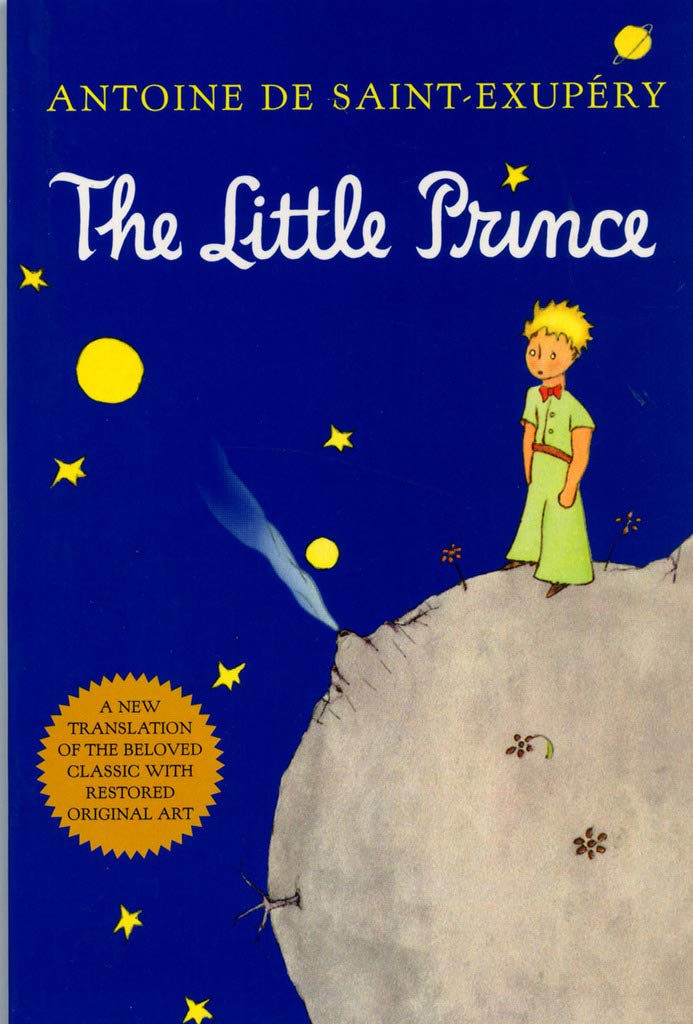
The Little Prince by Antoine de Saint-Exupery is a all time classic in children’s literature. And yet, after reading it, a part of me felt that there could seldom be books as beautiful as this one for any age group. It starts with the buildup of a character of a narrator who loves childhood and treats their intellect superior to those of adult. From the very first page, a reader will laugh with the author and commend him for his though process. And suddenly switches to the backdrop of a war – the second world war to be specific. There he meets a young boy – a boy not more than 12 and clad in his own idiosyncratic behaviour – childish behaviour. This boy is our little prince.

The story deals with love, life, friendship, knowledge, curiosity and death – all as the prince sees them. And it is exactly this part of the story where the reader is lost with the author. Admiration, adoration, love and tears – all move with the prince, a character so beautiful that he cannot die in the heart if the one who has read that that book.

It is a small book and in that small novella is a plethora of beautiful and innocent lines that are bound to steal your heart away or to quote the book,

“What makes the desert beautiful,’ said the little prince, ‘is that somewhere it hides a well…”

Make friends with the little prince and whenever you shall see a star, that one meaningless star will have a laugh or a smile for you each time.

Amazon.com: The Little Prince (8580001044842): Antoine de Saint-Exupéry,  Richard Howard: Books

Black Friday By James Patterson

Introduction

A wise man once said, if you start reading James Patterson‘s books you will never be able to stop visualizing about the story for weeks!! How exciting and exhilarating the journey was! It’s been a long time since I read his books. After reading a lot of overwhelming reads, I decided to pick Patterson’s book up.

This book was originally published in the year 1986 with the themes of economic warfare and a brainy FBI service cop investigating the terrorists group which caused several bombings in the wall street.

PLOTLINE AND ANALYSIS

James Patterson’s Alex Cross series is my all-time favorite. Archer Caroll reminded me of Alex Cross and his breathtaking investigations. This is a brilliantly written novel with the secret militia group, and deterioration of financial systems of the world.

The storyline is very interesting and some parts are certainly difficult to understand as it vividly concentrates on the American stock markets. A secret militia group called ‘Green Band’ scares the world by collapsing the stockmarkets of wall street. A lawyer Caitlin Dillon tries to solve the chaos with Archer Caroll. The bomb threats, stupendous adventures of Caroll, nostalgic love of Archer Caroll and Nora are the typical, awe inspiring elements in Patterson’s works. Little did I know that I was yearning for an action thriller genre. After reading ‘Black Friday’ I definitely want to read more books from this genre now. I was binge reading this book, it was an engrossing summer read for me! Guess what? I’m gonna add more Patterson’s books in my list now.

Do you love reading American thriller books/series? Comment down below!

A Folklore For My Generation

‘There was something special about the sixties. That seems true now, in retrospect, but even when I was caught up in the whirlwind of it happening I was convinced of it’

Haruki Murakami for A Folklore For My Generation

INTRODUCTION AND ANALYSIS

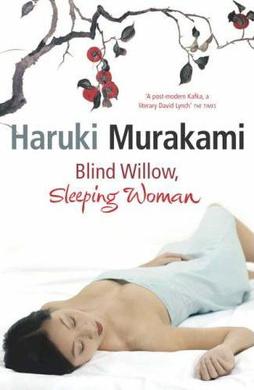
The story of 1960s, with the blend of magical Beatles and students’ movements, this short story is one of the insightful creations of Murakami‘s. He has delineated the life of the adults in 1960s with the evocative storyline. Moreover, he talks about the boisterous students and their complicated emotions in relationships.

Two high school friends are meeting again in Italy and discussing about their life. The story moves from the outlook of the narrator, he reminisces the story of his friend and parallelly his friend narrates it from another perspective.

‘If you have ever gone to high school, you know the type I mean. There’s somebody like him in every class, the kind that keep things running smoothly’

He introduces the protagonist as a perfectionist, the above lines elucidate the demeanor of the central character, the relationship of the perfectionist and his Miss Clean girlfriend Yoshiko.The girlfriend’s character is as complex as his typical, classic characters, she makes you wince, laugh and cry.

Both friends are talking about their work lives in present, in retrospect, the narrator contemplates about the relationship of his friend and Yoshiko. The emotions are fervent and profound, the story revolves around the deep seated thoughts of Yoshiko and how she panics to marry his friend despite of the excellent wavelength in their relationship, the strong convictions of Yoshiko and how she sets boundaries in the relationship which makes it suffocating for his friend are portrayed in Murakami’s subtle humor narration.

THE ENDING

The ending is the bee’s knees in the storyline!! Although the storyline is moving with the dark portrayal of the complicated emotions, the readers strangely feel satisfied in the end, the slapstick humor wafts discreetly from the grim circumstances.

‘It seems to me that very sad things always contain an element of the comical’

His friend talks about his relationship to the narrator and concludes his story by quoting the above lines with an instance of forgotten fairytale. The story vividly captures the absurdity of human lives and the fragile convictions of the young adults, I guess this is one of the best stories in the collection, the human suffering and depth of emotions are brilliantly ventured in the elusive storyline. The writing style is lucid but certainly elusive. Recommending this short story to everyone, Murakamians this should be your next read!

LEARNING LESSONS FROM THE BOOK- GO GIVER

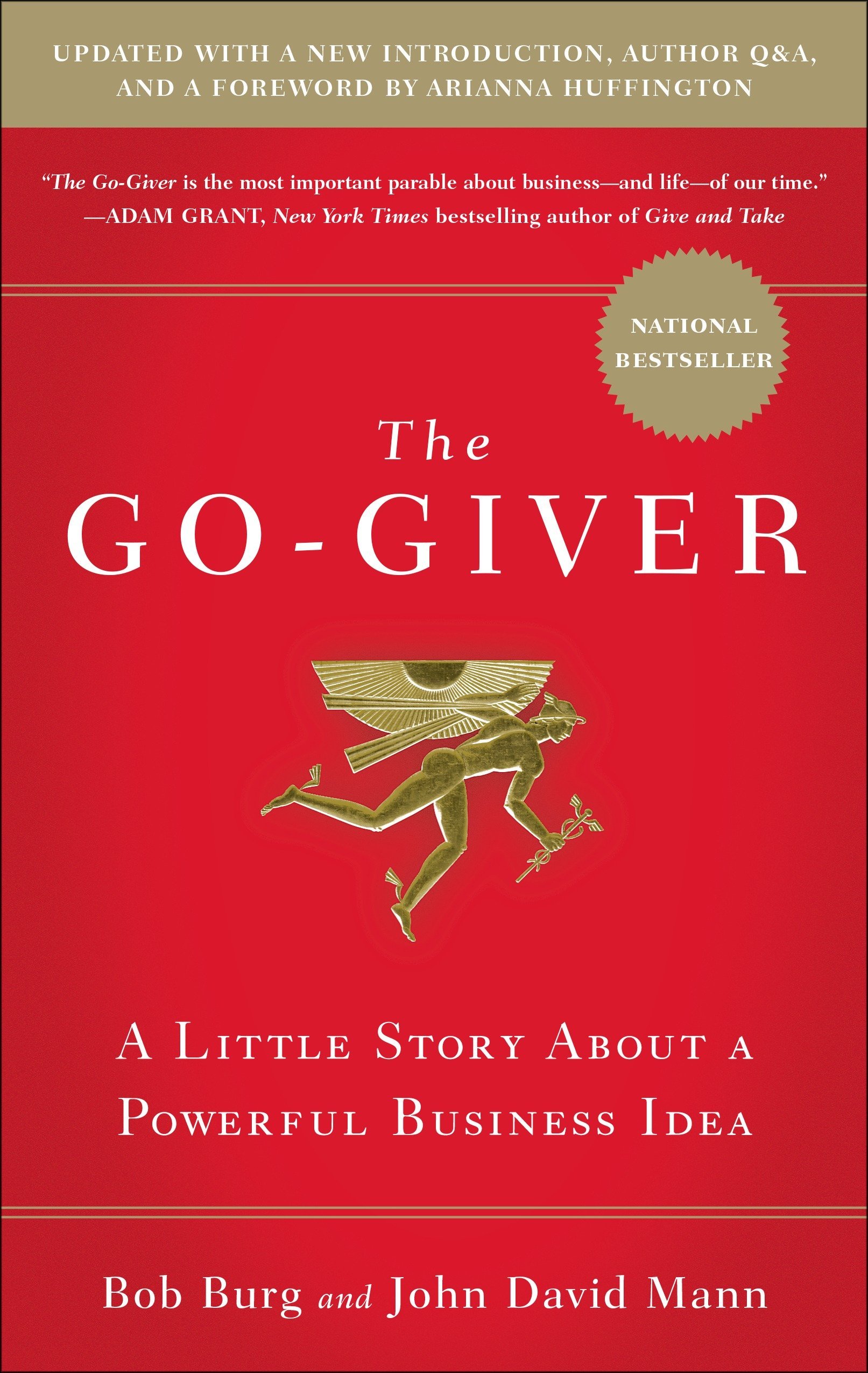
1. Your income is determined by how many people you serve and how well you serve them.

2. The only winning proposition is one hundred percent. Forget win-win , focus on the other persons win. Because your influence is determined by how abundantly you place other peoples interest first.

3. As long as you are trying to be someone else or putting on some act or behaviour someone else taught you, you have no possibility of truly reaching people. The most valuable thing you have to give people is yourself.

4. All the giving in the world wont bring success, unless you also make yourself willing and able to receive in like measure. Thus, the key to effective giving is to stay open to receiving.

5. Your true worth is determined by how much more you give in value than you take in payment.