
Struggles of big dairy companies in India!!!

India is that the world’s biggest producer and consumer of dairy. In 2018 alone, India produced 186 million metric tonnes of milk — about 410 billion pounds and 22 percent of the milk produced globally. Almost all of that is consumed domestically thanks to India’s dairy-heavy diet — think creamy curries, yogurt drinks, and a popular type of butter called ghee. A quick note before we proceed: this includes milk from buffaloes, which are an important source of milk in many developing countries. the point is that India loves milk.

What is pushing India's small dairy farmers out of business?

In 2011, the French dairy company Danone hoped to capitalize on this by opening a division in India. Danone opened its own processing plant in Haryana and tried to capture some of India’s 1.2 billion dairy lovers. But less than a decade later, Danone shuttered their dairy business in India. That same year, the corporate made 28 billion dollars worldwide and was within the top three global dairy companies. With all this success, elsewhere, why did Danone’s dairy business sour in India? Let’s start with some background on Danone. Their business is broken down into three categories:

  1. 1.specialized nutrition, like supplements and formula for babies;
  2. bottled waters and seltzers;
  3. dairy and plant-based alternatives.

That one makes up over half of their global sales, but it’s also the one that failed in India. Danone does still sell specialized nutrition products in the country, but they don’t break out those sales figures separately. This is the same company as Dannon in the U.S. The company decided to rebrand to make the spelling less confusing for American consumers. Anyway, now for some background on India’s dairy industry. There are about 75 million dairy farmers in India. Most of them are women who own one or two buffaloes or cows to supplement the family’s income. Nearly half of India’s milk is not sold, but consumed by the farmers household. This makes India’s dairy industry much more fractured and localized than other countries where Danone operates. Take the company’s native France and one of its biggest customers, the U.S. Each has far fewer dairy farms with herds that dwarf India’s one or two animal average. This was Danone’s first big problem in India: sourcing milk is difficult. Of the half not consumed by farmers’ households, only about 15 percent goes to big organized companies or government run cooperatives. The rest goes to hundreds of small, local milk processors.

Tainted milk: Branded dairy in India sees 5% increase in ...

The largest companies like Amul, Mother Dairy, and Nestlé have tiny percentages of the market, and they’ve been there for decades. Market research firms Mintel and Euromonitor declined to release specific market share numbers to CNBC. However, a 2016 piece in The Economic Times of India citing Euromonitor put the figures at about 7 percent for Amul, 3.7 percent for Mother Dairy, and 2.9 percent for Nestlé. In short, tapping into the existing dairy infrastructure is effective but time consuming. Imagine the effort of contacting dozens or hundreds of local and regional dairies, processors, or individual farmers. But establishing a separate supply chain altogether is very expensive — a lesson Danone learned the hard way. And when Danone did get milk, the company focused on the wrong products. Danone pushed plain yogurt and flavored yogurt drinks — popular in places like the U.S. and France with high profit margins to boot. But in India around the time when Danone arrived, yogurt comprised only 7 percent of the dairy consumed.

The real money was in ghee, a type of clarified butter, and plain old fluid milk, a product with razor-thin margins dominated by those hundreds of local small-scale producers. Analysts explained to CNBC the simple reason why Indian consumers shunned Danone’s prepackaged yogurt. And if Indian consumers did want to buy premade yogurt, they had a slew of cheaper options than Danone. Dairy never accounted for more than 10 percent of Danone’s sales in India, a far cry from its global 50 percent. Its specialized nutrition arm picks up the slack, and the company announced a renewed focus on that division when it shuttered its dairy operation. Meanwhile, two of their biggest competitors, Amul and Nestlé, made nearly five billion and 750 million from dairy, respectively. But not all hope is lost for Danone’s dairy in India.
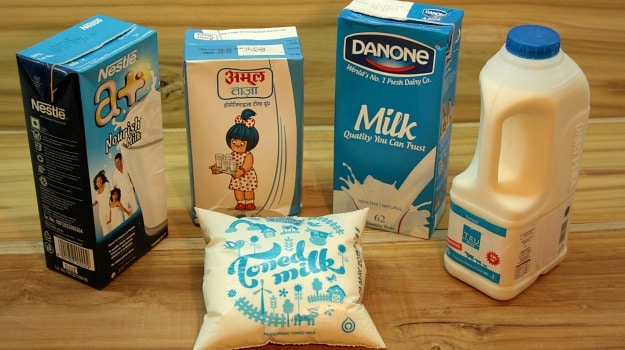
Amul, Nestle, Mother Dairy, Tru & Danone: Which Milk Tastes the ...

In January 2018, the same time that Danone ended its dairy production there, the investment arm of the company announced its part in a 26.5 million dollar investment in Epigamia, an Indian yogurt startup. This could be a sustainable move for Danone in India’s dairy industry because Epigamia offers consumers products that add value onto the plain yogurt they will make cheaply reception . But perhaps most importantly is this: while much of the population still makes yogurt the old-fashioned way, analysts predict that a growing number of consumers will want to buy premade options as they move into corporate jobs in developing urban centers. Very large numbers indeed. If only 5 percent of India’s 1.35 billion people decides to buy prepackaged yogurt, that’s over 67 million consumers — more than the entire population of Danone’s native France.


Why Apple was not so popular in India???

Apple sells millions of iPhones every year. In the year 2018, the tech giant reported selling close to 47 million units worldwide. But not all markets are created equal. India has been one of the hardest countries to crack for the Cupertino giant. Although it’s been over a decade since Apple began selling iPhones in India, the company can’t seem to get a big bite of the world’s second-largest smartphone market. India is a very price-sensitive market, which means that people pay a lot of attention to what value they are getting out of the price that they are paying for a particular product.

In the case of Apple, there’s a lot of premium being paid for the brand itself, and that’s where the price-conscious Indian consumer thinks about that if they are getting the same kind of features or specs from another phone that they can get a lower price, that makes it tougher to sell something at a much higher premium. Apple is definitely feeling the pressure. Samsung and Xiaomi accounted for the majority of smartphone sales in India in quarter three of 2018, garnering 22 percent and 27 percent respectively of the smartphone market. In contrast, Apple made up only about 1 percent of India’s smartphone market share, trailing behind Chinese phone makers Vivo and Oppo. It’s also worth noting that the premium smartphone market in which Apple operates still makes up less than 5 percent of the overall smartphone market in India.

7 Key Strategies That You Must Learn from Apple's Marketing

Most of the smartphones in India that sell, they are below $200 and Apple does not have any play in that segment. This environment is one that competitors like Samsung have begun to adapt to. The South Korean powerhouse is launching its Galaxy M series budget smartphones to appeal to the Indian market. In contrast, Apple doesn’t seem too keen on changing up its India strategy. I got some ideas for you, OK? I talked to some people at Walmart yesterday. An arrangement with Walmart Flipkart to take over India with a budget phone rather than doing it piecemeal? For us, we’re about making the best product that enriches people’s lives. And so, we’re not about making the cheapest. For us, what we’ve seen is, there’s enough people in every country in the world that we play in that we can have a really good business by selling the best phones. Still, some tech investors see Apple as being out of touch with the India market. You think they are going to slash prices? I think they have to. How can you sell a $1,000 phone in a market like China where the GDP per person is $10,000? In India it’s $2,000. And if you go back to the September earnings release, they talked about the fact that India was way below where they thought.

Apple postpones launch of online store in India - The Economic Times

Well, if your average GDP person is $2,000 and you’re trying to sell a $1,000 phone, it’s gonna be probably pretty hard to sell it. They probably want to eat. Another issue for Apple: stiff tariffs. I think iPhones have a specific disadvantage in the India market because of the local regulation. There is a very high import duty on the phones that are not manufactured locally in India. So for most of the big players in the India market, they are manufacturing locally so they do not have to pay that high import duty. Samsung has been manufacturing phones in India since 2007 and just last year opened the world’s largest mobile phone factory on the outskirts of New Delhi. Chinese phone makers Xiaomi and Oppo have also invested millions of dollars to build manufacturing plants in the country. That’s not to say Apple has completely ignored India.

The tech giant already manufactures its lower-cost iPhone SE and iPhone 6s models locally, through a partnership with Taiwanese manufacturer Wistron. This year, Apple is also expected to move its production of the iPhone X series into Foxconn’s plant in southern India. If you look at how we’ve done over the years, we’ve gone from a $100-$200 million business to last year we had we exceeded $2 billion. That $2 billion was flat year over year after a rapid rapid growth. And so we have more work to do. We’d like to put stores there. We would like some of the duties and so forth that are put on the products to go away. But even with its local hardware production push, Apple still fails to provide Indians with a robust software experience.

Apple iOS 13 Release: Should You Upgrade?

Apple has introduced turn-by-turn navigation for the India market. Before that, that significant part was missing. And beyond that, there’s not a lot of customization that Apple has done for the India market. There are not a lot of apps that specifically cater to the India market. Past complaints for Apple Maps also included missing major landmarks and having very sparse data of cities and towns. But again, Apple is working on a solution. The company has hired thousands of engineers at its mapping facility in Hyderabad to improve its services. Apple Pay is also not an option in India, though similar payment services from Samsung and Google have already been rolled out. Finally, unlike in most other markets, Apple can’t rely so much on its brand recognition to sell devices in India. The other challenge for Apple in India is that it cannot have its own retail stores or own Apple stores because of some regulatory issues, which means it has to have partners on the retail side, whether it’s the Apple premium resellers, which you see in many other countries as well, or with the third-party resellers. In order to have a larger presence in the market.

Apple has to have partnerships with thousands of these resellers, which in a country as big as India, can be challenging. Apple is still a premium status symbol for many Indians, but one that is out of reach for the majority of the population. With phones from Chinese brands like OnePlus, which was India’s best selling premium smartphone brand for the second quarter in a row, offering similar features at a fraction of the cost, Apple may have a very tough time getting a bigger slice of the India market.

Apple - Localizing the Message - Global Marketing Professor

Negotiating- The Art, a small story!!!

I think there is an art to it it’s a craft, the negotiating training this morning in the office and the reason, negotiating it be is because it’s the one area of the deal where people need me the most and they need me the most they think I have the most confidence and the confidence that I have going to the deal comes from experience and it comes from honestly – practice practice practice because no matter what you’re selling you’re selling. Two different people you’ve got a seller and a buyer and in every negotiation you’ve got price you’ve got pressure and you’ve got persistence those are the three P’s remember that is it can be a nice little instructional.

The negotiations between Disney and Lucasfilm - A negotiation case ...

An iPhone cost to make now you’re not going to negotiate the price of an iPhone because there’s too strong demand but let’s say there wasn’t strong demand then you can negotiate or you can find a retailer who’s going to sell it to you for cheaper because it doesn’t cost nearly as much to make that phone. As it does for you to buy it real estate is the same way a deal that’s listed from 10 8 down to 10 so 10 million bucks the offer originally came in at 8 million dollars okay that seems like it’s way too far apart. If I go to the seller he’s going to say you got to come up they’re going to say oh no this is my offer so what do you do what do you do you remember the price you want to try to get – which in this instance was around 8 and a half that’s where we thought we’d get a deal done and the legacy price what the seller paid seller paid six point five. So, even at our low terrible awful offer that sellers making money that’s a good thing to remember and to consistently remind each side and then you let time saturate the emotions of the deal and you use repetition you only paid six five even if this bullshit offer you’re making money.

The Art of Negotiation in Project Management

There are clients who are losing million and they use pressure right the fear of a falling market and the fear of missing out every seller fears they’re not going to get their price going forward because maybe the market could change every buyer has a little fear that they’re going to lose it a little fear they’re going to miss out and then you’re trying to find the price in the middle where both sides will say we came to that number because that’s the max or the minimum that I’m willing to go to get this deal done.

Can a Business Simulation Game help develop Negotiation and ...

How Jack Ma inspired me!!!

Jack Ma- every 5 years we have a review for our strategy now our strategy is always to look at the 30 years and 10 years every strategic decisions we make we have to ask one question this decision we make solve society problem because we believe the biggest social property you solved the most successful you are so if we do it this cannot solve any social problems we don’t do it second is this project is going to be successful in 10 years. If it’s it’s going to be successful in 10 years let’s do it if it’s going to be successful in one year or one month normally we forget about it because why you can be successful in one year or one month.

Alibaba billionaire Jack Ma: I know nothing about tech or marketing

We all have to put parham and 5 years ago we had a big debate about 10 years later 20 years what are the things this china society the world leave want so we say happiness and health strategy to happiness and health we believe Holly do you know the movie industry bring people happy because today nobody is happy rich people are happy poor people not happy you know at least when I watch movie after you’re happy but right. So, I think we should have partner with the Hollywood especially like a lot of you know we have a different way of living and in China the movie we have a lot of heroes but China movies heroes always dead the American me movie here will never die if all the heroes die who want to be the hero so my movie I want to make the hero live right so this is this is I think we should learn a lot and it’s all about two years so we have another eight years ago I want to make our company that it’s it’s not ecommerce it’s something that giving people inspirations given people.

Alibaba's co-founder Jack Ma to retire | The Passage

In the eBay model why about this model I told myself for is the gum set or a hat that will care about what the other people and the other thing Forrest Gump said nobody make money out of the catching whales people make money by catching shrimps so

 We serve small business or not if you want to win in business you have to think bigger than the service or product you

They also teach all the tricks all the turns all the dips all the tosses in the air did it matter as much as the experience we provided to students every person wants to feel loved every person wants to feel like they belong but they want to feel wanted appreciated validated and see and so we’ve always at our school thought bigger. We thought about they may come in for a service but they come back and they refer others because we enrich their lives we focus on the essential human needs like love like care like belonging that across cultures across demographics everybody wants to feel or experience.

Jack Ma and Jerry Yang talk about Yahoo's big Alibaba investment ...

I love Jack Ma’s message thinking five or 10 years from now because what people are worried about let’s say right now for the next six months it’s going to come and go but what stands the test of time are the deep down worries and fears that we all share so if you want to have a successful business you have to think bigger than the service or product you provide because people may come to your dance school people may come to your coffee shop by random chance but that’s not what’s going to keep them there and that’s not what’s going to make them refer clients to you now I’ve got a special bonus clip for you but before we get to it today’s question is how have you been thinking small in your business and what can you do to change that to really make an impact on your customers.