Old Becomes Richest Man In India Making Money Online!

Mithun Bhat, born in Bhopal, could buy 2 houses within a month, Bentley, Ferrari and paid all his debts. But previously, he worked with salary under the minimum wage. So, how could he earn so much money only in a month? He tells us his story.

“I worked at pizza delivery service for a year. I was prior a collage student and did a part time job in a restaurant. I did it to support my study. In the second year of study I was close to be expelled since I could not pay the tuition. At the time, I had to take a loan. I could finally paid my tuition, but I had no money to pay the monthly installments to the bank. Honestly, studying and working all at once was beyond my endurance, and eventually, I was expelled from campus a week before the end of school year. That was the beginning of the darkest days of my life. My father lost his job and my family didn’t know how to survive. Could you imagine how hopeless I felt? I had no decent work and no education, and my father lost his job. I could do nothing to help them.

One night, I was delivering a pizza to the last location. A guy opened the door. He was with his friends, and while he was paying the pizza, I heard their discussion about where would they invest Rs. 2,000,000 they earned 10 minutes ago. I just made a glance and saw a sort of graph and figures on the laptop screen. The guy opening the door gave me Rs. 1,000 but the price was only Rs. 600. He told me to keep the change.

I was absolutely surprised and after I got back home, I took my laptop and tried to recall about their discussion. After 5 minutes, I remembered that they told about online trading. On the Broker website I found the graphs and figures I saw at the guy’s laptop.

After reading all information about the broker and watching tutorial videos, I opened a demo account where I got virtual money. I quickly understood what I had to do, it was very easy. I earned some money after my very first transaction. Then I thought… I did not lose anything, so I decided to open a real account and deposited my last money there. At the morning, I woke up and saw that I earned Rs. 30,654 over that night. After 2 weeks I could paid my debts off, bought a car, and I could help my father while he was searching for a new job and pay his expenses for the next few months. 2 weeks later, I already had 2 houses in the suburb. And all I did without leaving my home and getting higher education.

That’s my luck. It would never happen if I did not meet the rich guy while delivering the pizza. I know there are a lot of people having not good times like me, that’s why I tell you: if you want to live without any problem, I can tell you how to earn money with Trading Resource. It is very easy if you would try it.

Mark Cuban: A Biography

Mark Cuban was born on July 31st 1958 in Pittsburgh, Pennsylvania to a Jewish working-class family. From the early age of 12, he began showing entrepreneurial skills. He used to sell garbage bags going door to door to pay for shoes and clothes. In high school he earned extra money by selling stamps and old coins. To pay for his college tuition, he even started giving dance lessons.

He graduated from Indiana University in 1981 and moved to Dallas, Texas where he started his first company MicroSolutions, a computer consulting business. For 8 years, he grew MicroSolutions to become an expert in computer networking. In 1990, he sold the company for $6 million. This was also the time when the internet was gaining traction. Sensing that it was going to become the next big thing, he and his friend Todd Wagner started the internet company Broadcast.com. Broadcast.com let people across the globe listen to basketball games. The comapny was a huge success and was soon sold to Yahoo for $5.6 billion.

Cuban always wanted to be a part of professional sports. So, in 2000 he bought the NBA team, Dallas Mavericks for about $300 million. The Mavericks however, were not really a winning team. Cuban planned to turn this around. He sacked many of the old staff, built a new stadium and always supported his players. He sat courtside for many games and cheered for his team, which was rare for a team owner to do. In 2011, the Mavericks finally won their first NBA championship thanks to their star player Dirk Nowitzki.

In 2011 he also appeared in the reality TV show Shark Tank and has invested in over a hundered companies as of 2020. His net worth today is a whopping $4.5 billion and has made the Forbes list of Top billionaires of the world. He currently resides in Dallas with his wife and 3 children.

Globalization!

Globalization is the word used to describe the growing interdependence of the world’s economies, cultures, and populations, brought about by cross-border trade in goods and services, technology, and flows of investment, people, and information.

Globalization is driven by the convergence of political, cultural and economic systems that ultimately promote — and often necessitate — increased interaction, integration and dependency amongst nations.

The more that disparate regions of the world become intertwined politically, culturally and economically, the more globalized the world becomes.

These international interactions and dependencies are enabled and accelerated by advances in technology, especially in transportation and telecommunications. In general, money, technology, materials and even people flow more swiftly across national boundaries today than they ever have in the past. The flow of knowledge, ideas and cultures is expediated through Internet communications.

There are three types of globalization:

1. Economic globalization. This type focuses on the unification and integration of international financial markets, as well as multinational corporations that have a significant influence on international markets.
2. Political globalization. This type deals mainly with policies designed to facilitate international trade and commerce. It also deals with the institutions that implement these policies, which can include national governments as well as international institutions, such as the International Monetary Fund and the World Trade Organization.
3. Cultural globalization. This type focuses on the social factors that cause cultures to converge — such as increased ease of communication and transportation, brought about by technology.

Start from down and reach the up

Hello guys, today’s topic is going to be very informative.

“Start up ” have you ever heard of this
Word before? Even if you have never heard of the word start up many of us actually heard about those startups which are doing fantastic .

Start ups are the newly established business,by one or more entrepreneurs.These entrepreneurs set up business by taking financial risks .

Start ups are actually initiated by its founders based on an idea which has a potential to become successful and bring profits to the company .

Even though startups gives wings to an individual’s dreams it is not easy to create an impact with an startup during this tough competition era.

And while setting up an start up the individual needs to have necessary funds so mostly the start ups are setup by taking loans,or borrowing money from families,friends.

So generally startup are built around one main idea which can change the whole picture,which can create an impact in the industry.

Startups can become successful only when the foundations that is the base on which the company is started should be rock solid,their main aim should not change even though some alterations can be done .

As the company grows the more the need of funds increases so especially the risk of setting up a startup should be taken very seriously and the decision must taken carefully.

There are many thing that you need such as impressive idea,funds and trusted partners and sacrifice your time,health  for the wellbeing of the startup.

Start ups basis is believe ,the belief you have in your own self,your idea which is projected outside.

Entrepreneurs should have certain qualities that is needed for a successful startup so many institutions and universities are providing training for those who dream of starting their own company.

But in reality many startups that don’t stand a chance in the competition lack those qualities,they have the idea but cannot put into action,they cannot manage work as they have very little experience in this industry,they get swayed by others words and forget their whole main aim .

Mock startups are those programs where a student gets to experience the simulation of the real world.

Even the government entrepreneurship programs ,non profit entrepreneurship programs support many start ups They give guidance and even support them if the idea shows a potential .

Intellectual advisors ,hardworking staff ,investors who don’t mind to try risks for profits ,mentors who can guide you ,and great Teamwork makes the dream work that is it accelerates the growth rate of that start up.

Every start up has their own ups and downs but what is important is to never lose faith in yourselves and always hope for the best by putting out your best .

Startups don't have a instant success they to grow step by step and the more impact it has on the business industry the more it grows.

Some of the successful startups are

  • Ola
  • Swiggy
  • Zomato
  • Oyo
  • Flipkart

Every succesful company at present is a startup in the past and lessons should be learnt from those experiences

So always dream big ,work hard ,have faith,never lose hope ,never give up, and

“Learning from failures , paves the way to success.”

Thankyou^^

All about : Business enenvironment

Photo by Zeeshaan Shabbir on Pexels.com

The word ‘business environment’ indicates the aggregate total of all people, organisations and other forces that are outside the power of industry but that may affect its production. 

Business environment is an aggregate of all conditions, events and influences that surround and affect it. It is broad and ever changing as its separate elements interact. A single firm’s environment is narrow in scope than the total environment of business. It is complicated and continuously changing.” —Professor Keith Davis.

No business can exist in a vacuum. The rapidly changing business environment might shorten the life of a given strategy. The external changes might influence the activities and quality of decisions of both the firm and its competitors. George Salk says, “If you’re not faster than your competitor, you’re in a tenuous position, and if you’re only half as fast, you’re terminal.”

Hence, as Kenich Ohmae says that “environmental analysis is the critical starting point of strategic thinking.” Charles Darwin has said, “It is not the strongest of the species that survive nor the most intelligent, but the one most responsive to change.”

We live in a dynamic environment that changes all the time. Businesses must understand the changes in the environment and how these changes affect their performance. The process of thinking strategically requires that managers understand how the structure and competitive dynamics of their industry affect the performance and profitability of their companies. Armed with an appreciation of the forces in their industry that give rise to opportunities and threats, managers should be able to make better strategic decisions.

Successful managers must recognize opportunities and threats in their firm’s external environment. Regardless of the industry, the external environment is critical to a firm’s survival and success. A host of external factors influence a firm’s choice of direction and action.

https://byjus.com/commerce/business-environment/

https://www.google.com/url?sa=t&source=web&rct=j&url=https://www.economicsdiscussion.net/business-environment/business-environment/32496&ved=2ahUKEwi03ayMjsLxAhWH73MBHSywCNMQFjAdegQIQhAC&usg=AOvVaw0q8hAs46xYNiZxMosg94ta&cshid=1625151231113

Different types of Digital Marketing media

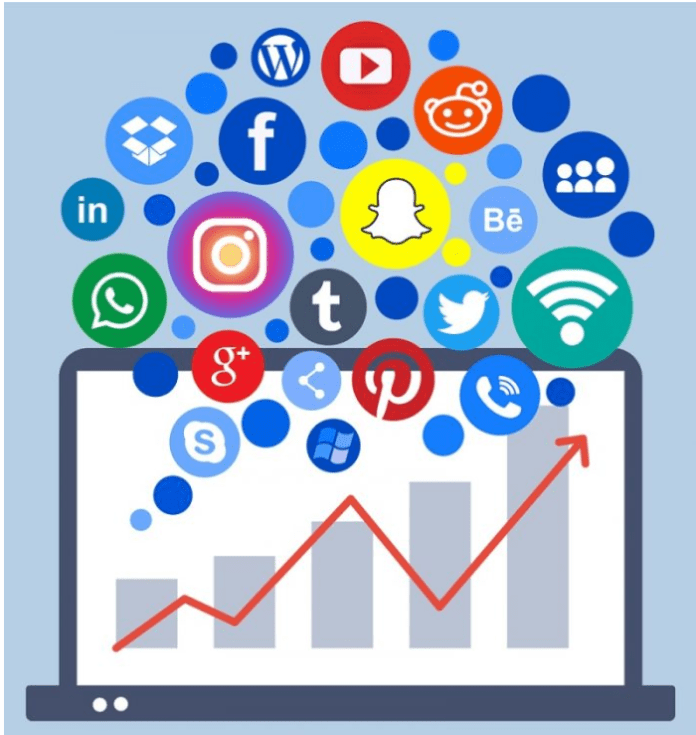
Digital marketing refers to advertising delivered through digital channels such as search engines, websites, social media, email, and mobile apps. Using these online media channels, digital marketing is the method by which companies endorse goods, services, and brands.

Nowadays, Digital Marketing is the most commonly used way of advertising and promoting goods and services and for good reason. Social Media has completely changed the A-Zs of Advertising. Digital Marketing offers it all- from insights into the customer’s engagement with the post, decrease in costs compared to traditional ways of marketing (tv, radio ads, billboards) and the ‘trend’ and ‘viral’ factor which, once taken advantage of, can help boost the sales of the company by a huge margin. Targeted emails and personalised ads to the target audience according to their taste and preferences compared to one ad designed for the general public (published in newspapers or played on tv/radio) is much more efficient and effective.

Moreover, as social media platforms gain more popularity and attracts more and more people, it guarantees more reach and views for the digital content/media, making it more efficient than traditional means.

There are three major types of digital media channels which are Owned, Paid and Earned media.

Owned media channel is controlled by the brand itself. For example, Instagram account of Netflix India. All the media shared on this channel is owned and developed by the company itself which is why it is not trusted and considered credible. There are no guarantees that it will attract consumers because communication from the company about its own products is not trustworthy.

However, some of its benefits include- It gives control over the content consumed and shared with the target audience. It is cost efficient because the company does not have to pay a third party to do the same. It is a long-term plan since its not based on time duration-based contract with any third party and it is not feedback or word of mouth that dies down with time.

Paid media channel is controlled by a third party who is paid to share content for the company. For example, Ads on Instagram, paid searches on google etc. This channel is in demand as social media platforms become business friendly day by day and this also gives control as the company approves and knows what is being shared and consumed by its target audience.

Some of its challenges are- This channel has a declining response rate as consumers are becoming more aware of such tactics and do not trust paid sources. Moreover, it has poor credibility because the third party is being paid to publish catchy and engaging content and it does not say anything about the quality of the product or service.

Earned media channel is the channel controlled by the customers. For example, Word of mouth, recommendations to friends and family, Trends and buzz etc. All media and feedback shared by customers publicly which can be positive or negative. The main benefit is that this channel is the most credible because these are the genuine feedbacks from customers who have used the product or service. If positive, it can also boost sales and increase market share by attracting new customers due to word of mouth. However, it does not give the company any control as it can be negative and damaging to the company’s reputation in that case.

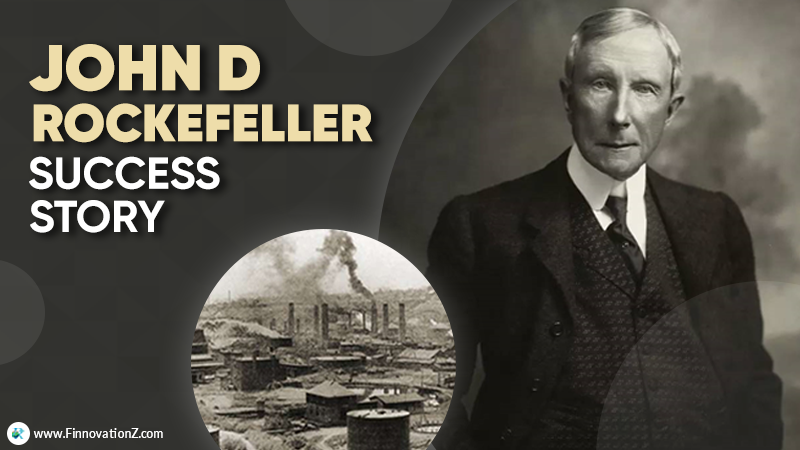
JOHN D ROCKEFELLER SUCCESS STORY

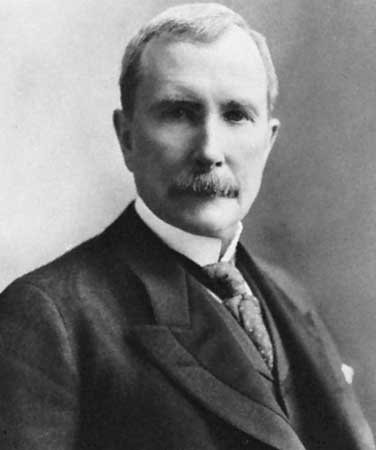
John D. Rockefeller was born July 8, 1839, in Richford, New York, about midway between Binghamton and Ithaca. His father, William Avery Rockefeller, was a “pitch man” — a “doctor” who claimed he could cure cancers and charged up to $25 a treatment. He was gone for months at a time traveling around the West from town to town and would return to wherever the family was living with substantial sums of cash. His mother, Eliza Davison Rockefeller, was very religious and very disciplined. She taught John to work, to save, and to give to charities.
From 1852 Rockefeller attended Owego Academy in Owego, New York, where the family had moved in 1851. Rockefeller excelled at mental arithmetic and was able to solve difficult arithmetic problems in his head — a talent that would be very useful to him throughout his business career. In other subjects Rockefeller was an average student but the quality of the education was very high.
In 1853, the Rockefellers moved to Cleveland, Ohio, and John attended high school from 1853 to 1855. He was very good at math and was on the debating team. The school encouraged public speaking and even though Rockefeller was only average, it was a skill that would prove to useful to him.
Early Business Career: 1855-1863
In the spring of 1855 Rockefeller spent 10 weeks at Folsom’s Commercial College — a “chain College” — where he learned single- and double-entry bookkeeping, penmanship, commercial history, mercantile customs, banking, and exchange. From his father he had learned how to draw up notes and other business papers. His father was very meticulous in matters of business and believed in the sacredness of contracts.
In August of 1855, at the age of 16, Rockefeller began looking for work in Cleveland as a bookkeeper or clerk. Business was bad in Cleveland at the time and Rockefeller had problems finding a job. He was always neatly dressed in a dark suit and black tie. Cleveland was not a large city in 1855 and Rockefeller could easily visit every business in under a week’s time. He returned to many businesses three times. Finally, on September 26, 1855, he got a job as an assistant bookkeeper with Hewitt & Tuttle, commission merchants and produce shippers.
Rockefeller soon impressed his employers with his seriousness and diligence. He was very exacting and scrupulously honest. For example, he would not write out a false bill of lading under any circumstances. He went to great lengths to collect overdue accounts. He was pleasant, persistent, and patient, and he got the company’s money from the delinquents.
During the Civil War their business expanded rapidly. Grain prices went up and so did their commissions. Most of their selling was done on commission, so Clark & Rockefeller took no risks from price fluctuations. Rockefeller’s style was very precise and calculated. He was not a gambler but a planner. He avoided speculation and refused to make advances or loans.
Rockefeller was extremely hard working. He traveled extensively, drumming up business throughout Ohio, and then would go to the banks and borrow large sums of money to handle the shipments. This aggressive style built the business up every year.

However, by the early 1860s, Rockefeller realized that the future of the commission merchant business in Cleveland was going to be limited. He had become convinced that the railroads were going to become the primary means of transportation for agricultural commodities. This would be to the disadvantage of Cleveland, because its position as an important Lake Erie port was its primary transportation advantage. He saw that the rising grain output of the Midwest and the Northwest of J. J. Hill would change the nature of the business for good. The huge elevators on Lake Michigan and the flour-millers of Minneapolis would be the dominant players in the business. Rockefeller came to believe that the future of Cleveland lay in the collection and shipment of raw industrial materials — not agricultural commodities. This would allow Cleveland to exploit its geographical advantages — mid-way between the Eastern seaboard and Chicago — and accessible to both rail and water transportation. He saw his chance in 1863 — 
Rockefeller Exits: 1892-1897
During 1891-92 all the evidence suggests that Rockefeller had a partial nervous breakdown from overwork. He lost all of his hair, including his eyebrows, and suffered from ill health in the early 1890s.
During this period Rockefeller’s wealth had increased to such an extent that his major problem was what to do with it all. He solved this problem by hiring Frederick T. Gates in September of 1891 as a full-time manager of his fortune. By this time, Rockefeller was literally inundated with appeals from individuals and charities for funds. Gates not only removed this burden; he also oversaw all of Rockefeller’s investments, which were becoming huge in their own right. For example, by 1897 Rockefeller owned large holdings of the Missabe iron range in Minnesota, a railroad to carry the ore to Lake Superior, and a fleet of huge ore-carrying lake steamers. In 1901 Rockefeller sold his iron ore-related business to J.P. Morgan for $80,000,000 with an estimated profit of at least $50,000,000 — a huge fortune in its own right, but it was just one of his investments. Morgan added the Rockefeller properties to the U.S. Steel Corporation.
By 1896, Rockefeller stopped going to his office daily and in 1897 he retired, at the age of 58. He took part in some management activity until 1899 but none to speak of thereafter. John Archbold ran Standard Oil from the mid-1890s onward. Archbold disliked prominence and asked Rockefeller to remain as the nominal president of Standard. Not publicly announcing his retirement was a great mistake on Rockefeller’s part. Rockefeller had resisted the temptation to exploit the Standard’s near-monopoly position by raising prices “too” much. Although Rockefeller’s pricing policies did result in some “monopoly profits” for the Standard, they were fairly mild. Not so Archbold. He raised prices aggressively, and the dividends rolled in. The consequence was that Rockefeller got all the blame for the policies even though he had almost no further role in management.
Retirement and Philanthropy
From the mid-1890s until his death in 1937, Rockefeller’s activities were philanthropic. Rockefeller’s fortune peaked in 1912 at almost $900,000,000, but by that time he had already given away hundreds of millions of dollars. His son, John D. Rockefeller, Jr. in 1897 joined Gates in the full time management of the fortune.
The University of Chicago — which Rockefeller was largely responsible for creating — alone received $75,000,000 by 1932.
He set up, at the urging of his son, the Rockefeller Institute for Medical Research (now Rockefeller University) and his gifts to it totaled $50,000,000 by the 1930s.
He founded the General Education Board in 1903 (later the Rockefeller Foundation). The General Education Board helped to establish high schools throughout the South by providing free professional advice on improving instruction and education. The effort was a cooperative one, and local money was used to build the high schools. In 1919, Rockefeller donated $50,000,000 to the Board to raise academic salaries, which were very low in the wake of WWI.
The Rockefeller Foundation was officially established in 1913 and Rockefeller transferred $235,000,000 to it by 1929.
In 1909, Rockefeller established the Rockefeller Sanitary Commission which was largely responsible for eradicating hookworm in the South by 1927.
When Rockefeller died, on May 23, 1937, his estate totaled only $26,410,837. He had given most of his property to his philanthropies and to his son and other heirs.
Rockefeller was a Schumpeteran entrepreneur. He clearly changed “the stream of the allocation of resources over time by introducing new departures into the flow of economic life” by creating the modern oil industry.

Last, but not least, he set the standard for philanthropy. Just the eradication of hookworm in the South alone would merit his place as one of the great humanitarians of the 20th Century. But his reputation was so sullied that he never received the credit that he was due for this great act on behalf of humankind.

“Don’t be afraid to give up the good to go for the great.”

MANAGEMENT [a]

MANAGEMENT IS THE PROCESS OF DESIGNING AN ENVIRONMENT IN WHICH INDIVIDUALS, WORKING TOGETHER IN GROUPS, EFFICIENTLY AND EFFECTIVELY ACHIEVE SELECTED AIMS.

IT IS A CONTINUOUS PROCESS. IT COMPRISES OF SET OF INTERRELATED AND INTEDEPENDENT FUNCTIONS LIKE PLANNING, ORGANISING, STAFFING, DIRECTING AND CONTROLLING . EVERY INSTITUTION OR ORGANISATION NEEDS MANAGEMENT ; BE IT A PETROL PUMP OR A SCHOOL.

IT IS AIMED THAT IN MANAGEMENT TASKS ARE DONE EFFECTIVELY AND EFFICIENTLY. THERE ARE THREE LEVELS OF MANAGEMENT. EVERY LEVEL EMPLOYS WORKERS TO COMPLETE THE DESIRED GOAL.

IT IS A NEVER ENDING PROCESS. IT STARTS AT PLANNING AND ENDS AT CONTROLLING.

CHOKE POINTS

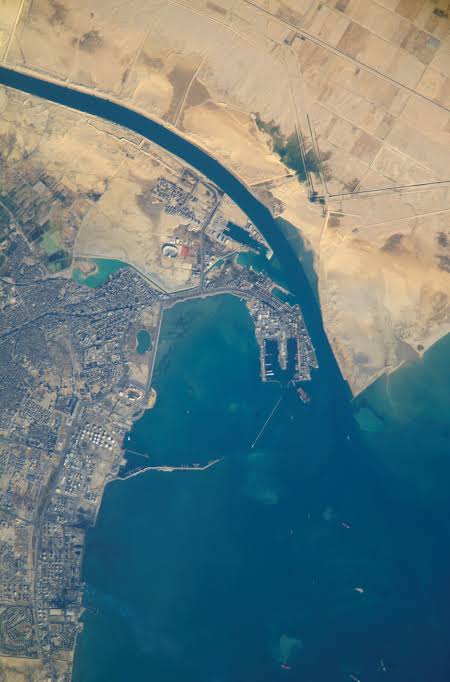
A strait is a naturally formed passage connecting two large water bodies. Canal too connects two large water bodies but are man-made i.e. intentionally constructed for faster connectivity. We can call it a man-made strait. Canals such as the Panama Canal(connecting Pacific and Atlantic) and Suez Canal(connecting Red sea and the Mediterranean) have drastically reduced the time required for inter Continental connectivity and are of massive economic value. Recently when the Suez Canal was blocked it costed dearly in economic terms an estimated loss of $ 54 billion in trade. The enormous dependence on Straits and canals also means it is of tremendous strategic importance to countries, total control over one of the busiest choke points gives a country immense bargaining power and will be an obvious member in any global trade-related groupings.

Suez Canal

Some of the world’s busiest Straits include Malacca Strait, Strait of Hormuz, Dover Strait, Bosphorus Strait, The Danish Straits, Sunda Strait among others that connect prominent continents. Malacca strait is the shortest shipping channel between the Indian Ocean and the Pacific Ocean. Among artificial shipping routes, Germany’s Kiel Canal is the world’s busiest canal which accommodates more ships than the Suez and Panama Canal combined.

In today’s highly globalized world imports and exports are a necessary part of daily commercial business. Trade with other countries is one of the ways how countries can establish their presence for profitability or goodwill(or both)in a foreign land. All of these in turn for their faster functionality are dependent on Straits and Canals. Any obstruction or blockage of one of these chokepoints can have a vast and far-reaching cascading effect.

Lifestyle.

Lifestyle often refers to:

Lifestyle (sociology), the way a person lives
Otium, ancient Roman concept of a lifestyle
Style of life, dealing with the dynamics of personality.

Lifestyle is the interests, opinions, behaviours, and behavioural orientations of an individual, group, or culture. The term was introduced by Austrian psychologist Alfred Adler in his 1929 book, The Case of Miss R., with the meaning of “a person’s basic character as established early in childhood”. The broader sense of lifestyle as a “way or style of living” has been documented since 1961. Lifestyle is a combination of determining intangible or tangible factors. Tangible factors relate specifically to demographic variables, i.e. an individual’s demographic profile, whereas intangible factors concern the psychological aspects of an individual such as personal values, preferences, and outlooks.

But why does everyone wants a good standard of living life. As in this is a mental tandancy human wants are unlimited. And the resources are scarce but that doesn’t matter the thing is lifestyle as all of us want to live a good life eat what we want Live where we want and spend the whole money where we want to the best.

Lifestyle may also refer to:

*Lifestyle business, a business that is set up and run with the aim of sustaining a particular level of income.
*Lifestyle center, a shopping center or mixed-used commercial development that combines the traditional retail functions of a shopping mall with leisure amenities.
*Lifestyle (department store), a retail fashion brand which is part of the Dubai-based Landmark Group.

And many more, but all this centers, businesses offers the best for an individual’s lifestyle.

The impact of Social Media Influencers on Promotion of a brand

Promotion of a brand involves informing, persuading and keeping the potential consumers for continued and long term engagements. Promotion can be done by informing the public about the features of the product or brand, persuading them to buy the product by telling its unique features and keeping in touch with the customers to convince them to further buy more products of the same brand by providing after-sales-services and by maintaining good producer-consumer relations.

It is also important to note that there is a difference between promoting a product and promoting a brand. Promoting a brand is broader in terms as it focuses on building and maintaining brand image and is related with the promotion of the entire business. Promotion of a product is narrower in terms as it just focuses on promoting a “particular product”. For example, when Loreal Paris uses the tagline “You’re worth it”, it not just promotes a particular product but the entire Loreal brand. However, when it uses “5 problems, 1 solution”, it promotes a particular product (i.e., Total Repair 5) by highlighting the importance of it.

Online Brand or Product Promotion is the method of promoting the brand or product on different social media and online platforms by using the internet to its full potential to reach a wide range of audience. For ages, brands and advertisers have influenced and shaped consumers’ attitudes and behaviours and sometimes we don’t even get to know about it.


There are several ways in which Social Media Influencers impact promotion of a brand or a product:

1) Influencing Purchase Decision of Consumers:

Consumers’ purchase intentions are frequently measured and used by marketing managers as an input for decisions for new and existing products. Social Media Influencers do not put up advertisements but just directly talk about the product or brand in details, how to use their, if they are value for money. So influencers cover the “Frequently Asked Questions” about a product.

2) Convincing customers to buy products:

After influencing the purchase decision of the customers, the main task of influencers is to make their followers buy the products. Actions involving social media influencers help more when there is best personalised advertisement done by the influencers.

3) Distribution of Samples:

This is one of the newest techniques through which social media influencers help business firms in their promotional activities. The influencers take free samples from the producers and further distribute them to their followers in terms of “online giveaways”. This technique of “Online Giveaway” becomes extremely beneficial for those firms which are new in the market. The social media influencers ask their followers to comment, like or share the posts of the business product/firm they’re associated and few lucky winners are the ones who get to take the products in these Online Giveaways. There’s also traditional form of distribution of samples where influencers distribute a business firm’s products which are generally smaller in quantity than the original products so that customers get a first hand experience of the products.

Clearly, social media influencers have had gained and influenced their followers a lot in recent years and especially during the pandemic. People rely on influencers more these days and influencers keep on creating more content for their followers.

How to start a Small Business in India

We must have thought once in our lifetime about starting our own business, we may also have hundreds of amazing company ideas and have gained a lot of knowledge in the process. However, if you have no prior expertise or skills in this industry, launching a new firm is difficult.

What things you should consider before starting your own business?

Doing business entails numerous components such as customer service, public image, loyalty, and brand value, among others. As a result, anyone considering starting a new firm should think about all of this before getting started. As a result, before launching a small business in India, an entrepreneur should examine the following things.

The majority of people dream of starting a business, but few of them ever take the first crucial step. As a result, anyone who is contemplating or has an idea for a business should take the first step toward putting it into action. Simple steps could include things like starting to save, creating a business plan, and collaborating with various stakeholders.

Make a Plan for your Business

All the steps that you have to take to start a new business, the business plan contains all of the information needed to put the business idea into action, such as the type of business, nature of the business, and the type of business entity required, such as a sole proprietorship, joint-stock company, or partnership firm. A business strategy can also assist you in proper implementation while also coping with the changing environment.

A firm can only be sustained by the entrepreneur’s or businessmen’s original investment. It is critical to define the sort of source, such as retained earnings, loans, or outside investment, ahead of time. Furthermore, the source of funds must be determined ahead of time. It is strongly advised that the entrepreneur invest his or her own money as a first investment, as this will ensure that he receives the most reward for all of his hard work later on when the business succeeds.

Maintain positive relationships with people in your line of work

Every second of doing business is like learning something new. It is critical that you make contact with at least a few people who work in the same field as you. It will keep you up to date on the newest advancements, new government rules, and how to solve company challenges, among other things. It is also advised that you should have healthy and fair competition rather than taking unfair advantage of company opportunities.

Get a Domain & Build a Website

Those were the days when direct contact and direct marketing were critical to corporate success. In the traditional way of doing company, which is highly expensive, a substantial investment is necessary. From now on, we should start by establishing an online presence through the creation of a website, SEO, and internet marketing, among other things. A company can now sell its items thousands of miles distant via the internet. This form of business requires minimal infrastructure, making it a viable choice for small firms with limited capital.

Create a Social Media Presence

Apart from having an online presence, having a social media presence on numerous platforms such as Facebook, Instagram, Twitter, and others is also essential. Although an online presence is used to sell items or services, a social media presence will aid in the development of a brand image, customer relations, and the expansion of client reach.

People will not go straight to your web sites, but having a social media presence will assist you in transferring followers from social media to your business model.

Set your Goals

Setting goals is critical when running a business. I’m not talking about long-term objectives here, but rather short-term objectives. Setting weekly and monthly goals is critical for achieving long-term goals when beginning a business since it helps to maintain our motivation and confidence at regular intervals. Setting a benchmark for this week’s sale, determining the number of complaints to be resolved this month, or raising client numbers to a certain level are all examples of short-term goals.

Continue to try new things

Every entrepreneur should be willing to test new things and study how the market or the customer reacts to them before making changes. Because the market is incredibly dynamic and trends change frequently, an entrepreneur should never assume that his or her business is performing well.

Going to hit a century : Diesel price!

Diesel fuel, in general is any liquid fuel specifically designed for use in diesel engines, whose fuel ignition takes place, without any spark, as a result of compression of the inlet air mixture and then injection of fuel. Therefore, diesel fuel needs good compression ignition characteristics.

The most common type of diesel fuel is a specific fractional distillate of petroleum fuel oil, but alternatives that are not derived from petroleum, such as biodiesel, biomass to liquid (BTL) or gas to liquid (GTL) diesel are increasingly being developed and adopted. To distinguish these types, petroleum-derived diesel is increasingly called petrodiesel in some academic circles.

In many countries, diesel fuel is standardised. For example, in the European Union, the standard for diesel fuel is EN 590. Diesel fuel has many colloquial names, most commonly, it is simply referred to as Diesel. In the UK, diesel fuel for on-road use is commonly abbreviated DERV, standing for diesel-engined road vehicle, which carries a tax premium over equivalent fuel for non-road use. In Australia, diesel fuel is also known as distillate, and in Indonesia, it is known as Solar, a trademarked name by the local oil company Pertamina.

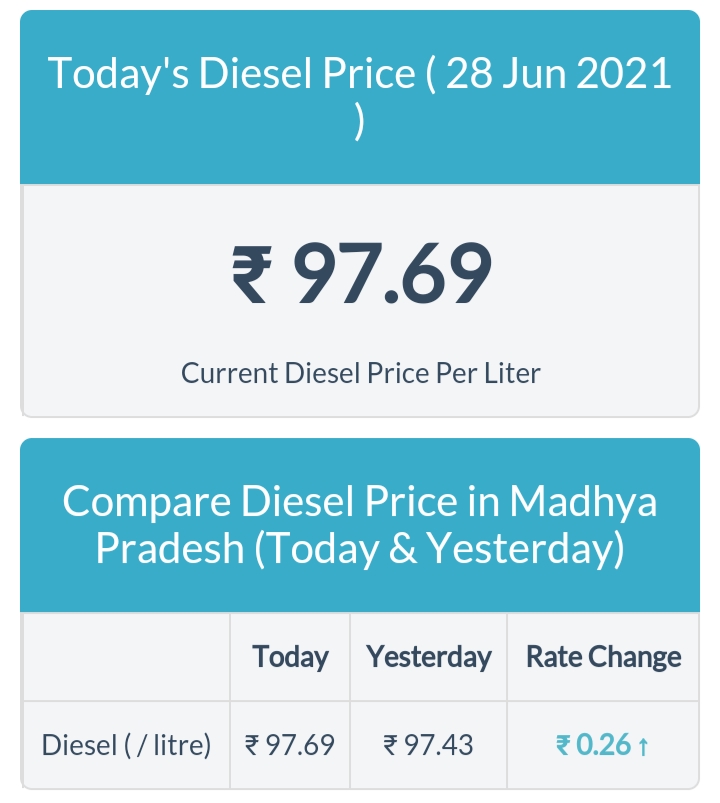
Diesel price in Madhya Pradesh today is fixed by state-run oil marketing companies based the daily ‘Dynamic Fuel Pricing’ mechanism. Here, you can check the current diesel price in Madhya Pradesh, find todays diesel price as well as the quarterly price trend in Madhya Pradesh. New diesel prices in Madhya Pradesh are updated by oil firms daily at 6:00 am IST.

You can also find out how diesel prices in Madhya Pradesh are calculated and how prices are compared to other states. Additionally, find the current Madhya Pradesh diesel price and primary factors impacting diesel prices in India as well as the highest and lowest price recorded during a month.

Implementation of Nanotechnology with DNA

Abstract:

DNA (Deoxyribonucleic acid) is the molecule that stores and transmits genetic information for the development, functioning, growth and reproduction of all living organisms and many viruses. It possesses remarkable binding specificity, thermodynamic stability and can be created with infinite choice of sequences that bind to their complementary nitrogenous bases (namely adenine (A), cytosine (C), guanine (G) or thymine (T)). It is structurally well defined on the nanometre scale and has a persistence length of 50 nanometres under conventional conditions. It can be rapidly synthesized and modified using automated methods. The field of DNA nanotechnology uses its information to assemble structural motifs and connects them together. This field has a significant impact on nanoscience and nanotechnology, and controls molecular self-assembly. Here, we summarize the approaches that are used to assemble DNA nanostructures and examine their emerging applications in areas such as biophysics, diagnostics, nanoparticle and protein assembly.

Introduction:

Nanotechnology is the purist’s approach to biomolecular engineering. This field aims to create molecular structures and devices through the exclusive use of DNA as an engineering material1. The well-characterized nature of DNA base pairing provides an easy means to control DNA interactions. The success of DNA nanotechnology comes from three key ingredients: 1) our quantitative understanding of DNA thermodynamics, which makes it possible to predict how single-stranded DNA molecules fold and interact with one another, 2) the rapidly falling cost and increasing quality of DNA synthesis, and 3) the focus on cell-free settings, where designed reaction pathways can proceed without interference from DNA and RNA processing enzymes that might be encountered in cells. DNA nanotechnology has long been motivated by the goal of building ‘smart therapeutics’, drug delivery systems, tools for molecular biology and other devices that could interact with or operate within living cells. Such applications play to the obvious strengths of nucleic acid nanostructures and devices, particularly their small size, biocompatibility and straightforward manner in which they could be programmed to interact with cellular nucleic acids through hybridization.

Cell-free DNA nanotechnology

To operate reliably in complex, wet environments, living organisms use sensory receptors to detect changes in that environment, motors and actuators to adapt to the environment, computational control circuits to convert sensor information into motor activity, and structural elements that protect and organize these components. Intriguingly, cell-free DNA nanotechnology has made progress towards the construction of most of the functional components — both structures and dynamic devices — required for creating molecular ‘robots’ that can emulate some of the behavioural complexity observed in biology.

DNA nanotechnology in lysates and fixed cells

Cellular conditions are considerably different from that of cell-free experiments. The presence of nucleic-acid-binding proteins, including DNases and RNases, may interfere with device performance, and cellular environments are highly structured, which inhibits the free diffusion of exogenously delivered nucleic acids. Cell lysates, serum and fixed cells provide reaction environments that each capture some of the complexity of live cells and enable testing and optimization of nucleic acid devices in well-controlled conditions.3

CONCLUSION:

DNA-based therapeutics and diagnostics are set apart from more established approaches because of their capacity to respond to the surrounding environment. Molecular logic and conditional (un)hiding of drug moieties could decrease side effects and increase specificity. Even the relatively simple one- or two-input systems built so far have resulted in increased specificity and performance, and could be further improved with more complex multi-input logic. Diagnostic and therapeutic decisions are routinely based on the analysis of panels of multiple molecular markers, be they proteins, RNA, DNA, lipids, sugars or metabolites. For example, immunologists must often consider large numbers of cell surface proteins to delineate all of the various cell types in a blood sample. Gene expression classifiers that reliably distinguish different tissues and disease states are typically built on measurements of tens or hundreds of different RNA species. Given the success of dynamic DNA nanotechnology in scaling up the size and reliability of molecular circuits in cell-free settings, it is intriguing to think that DNA ‘biocomputers’ could eventually perform complex diagnostic tasks based on the analysis of tens of molecular markers directly in living organisms.

REFERENCES:

Seeman, N. C. & Belcher, A. M. Emulating biology: building nanostructures from the bottom up. Proc. Natl Acad. Sci. USA 99, 6451–6455 (2002).
Chen, J. H. & Seeman, N. C. Synthesis from DNA of a molecule with the connectivity of a cube. Nature 350, 631–633 (1991).
Fu, T. J. & Seeman, N. C. DNA double-crossover molecules. Biochemistry 32, 3211–3220 (1993).

A guide to take your business international

As Globalisation takes over the world, more and more businesses are expanding and opening their manufacturing units, branches, outlets, offices all over the globe. While some grow exponentially and expand their market, sales and customer base, some fail to get any response and incur huge promotional, travel, administration and financial costs.

This is why it is extremely crucial to form an entry strategy that suits the organisation. It is also important to assess the financial position and capacity of the organisation and to understand that International business gives delayed returns as spreading awareness, competing with the competitor’s product and building an International customer base takes time and incurs promotional costs.

Once the business is ready to enter the international market, there are several factors to be considered.

  1. Firstly, the organisation needs to conduct market research and choose the country and the specific locations where there is demand for their product/service.
  2. Secondly, assessing the culture, language of the country and city is also very important. The organisation can make the necessary changes (if any) to its product/service and its packaging and labelling accordingly.
  3. The last step is to form an entry strategy that suits the organisation and the market and implement the stategy.

Ways of entering an International Market

There are several ways to enter a market depending on the product/service reach preferred by the organisation and the financial capacity of the organisation.

  • Direct Exporting- In this method, the organisation directly sends its products, transfers its employees and workers to the location chosen. It involves huge setup, transportation and transfer costs. Therefore, this method is only used when the product that is being exported has a lot of demand in the new market and will definitely get a response from the target audience. For example, exporting machines to developing countries where there’s no manufacturing of such machines but a huge demand for the same.
  • Through a distributor- In this method, products are sold to distributors who are wholesale buyers. The distributor uses his own selling and pricing strategies to sell the product in the market.
  • Licensing- Through licensing, the organisation can share its technology, method and basic know how with local companies. However, through this method, the product is sold under the local companies’ name and brand so there is no scope of building an international brand and consumer base.
  • Contract Manufacturing– Through this method, the company pays a local manufacturing unit to manufacture their products by sharing their technology and design. It saves the cost of exporting or setting up a manufacturing unit abroad and is ideal for products that require large scale production.
  • Strategic Alliance- This method includes Mergers, Acquisitions and Joint Ventures. In Joint Ventures, two companies form another company to work as partners. For example, Hero Honda. In Mergers and Acquisitions, one company merges with or acquires another company. There is no formation of third company or new identity in this case. For example, Walmart acquired Flipkart.
  • Through an Overseas agent- Using this method, the company hires a local agent to make business relationships on behalf of the company. The agent acts as a sales representative who sells the products on behalf of the company and has no direct relationship with the customers. The agent gets commission on his sales. This is an effective method to save costs in case the organisation wants to test out the response of the foreign potential consumers or distribute their products on small scale without incurring huge costs.