Most Powerful Biography of Dr.A.P.J. Abdul Kalam

Dr.A.P.J. Abdul Kalam, the star of the youth’s hope, is hailed as an unparalleled dawn in the political sky.

Birth and Adolescence of Abdul Kalam  

He was born on 15 October 1931 in Rameswaram, Tamil Nadu, the son of Jainulabdeen Marakayar and Ashiamma. His primary education took place in Rameswaram. He completed his engineering education in Chennai. 

Continuing Works of Abdul Kalam 

Not only did he tell others to dream, he also made it his policy to dream. The dream is not about selfishness. It is about her motherland, which includes the development of others. So he has a lot of work to do in relation to it. He first worked for an airline manufacturing and development company. At that time he developed the jet called “Nandi”. Realizing his uniqueness, the Indian Space Research Organization hired him. At that time, he was also known for his ability to launch satellites and launch missiles. Next he moved from the space company to the field of nuclear research and became successful. He next held the top post in the Indian Ministry of Defense and rose to the position of Scientific Adviser to the Prime Minister of India. Similarly, his work in the field of information and security is immeasurable.

Abdul Kalam Became the President of the Republic 

Among the positions held by Abdul Kalam, his crowning achievement was his position as the President of our Republic of India. Not only was he a good energetic scientist but also a great patriot, the position was only five years from 25.07.2002 to 2007. Although the benefits of this position were immeasurable. The benefits of the 12th President of India and his position are not to be underestimated. 


Kalam Received Titles and Awards 


Abdul Kalam was presented with several awards in recognition of their service. He has received many awards including Von Braun Award, Om Prakash Bass Award, Padma Vibhushan Award, Padma Bhushan Award, Nehru National Award, Indira Gandhi Award and special doctorate degree from various universities. Above all, he is proud to have been awarded the Bharat Ratna, India’s highest award, in 1998.

The Path Paved by Abdul Kalam

Abdul Kalam is the one who realizes that pride comes when knowledge and energy combine. He was exalted and sought to bring his country to the forefront of world history. Abdul Kalam passed away on July 27, 2015. 

Kalam, who has been not only a great leader but also a great volunteer in action, will guide us if we look at his picture and study the lesson and walk in his footsteps.

Does Execution Simply Mean An Initiative?

“Dreams reach their final destination when executed.”

  • Amatullah P.

What exactly is Execution for you? A dictionary nerd would give the perfect definition of it but the ‘Dictionary of Business’ has a completely different meaning altogether. Let’s begin with the standard way and get you imagining!

Till now, we made you analyse the aftermath of building a company but this story will drag you into that internal process of thought!

It’s been a struggling journey all along. You are broke and want some source of income which is quite obvious. That is when your company is born because it has started occupying some space in your thought. Now, you plan towards executing its existence in the society. Of course, you don’t begin with that company motive in head. The first thought is always to go for a job wherein you receive ample experience from which you can learn and set up your own business. Let us consider that you are ready to begin your own company which means that you will now have to execute your motive. Executing here doesn’t simply mean initiating. Execution includes the proper steps you take into getting your company a success! Of course, you are not required to become an overnight news sensation. All you need to do is, just take the correct steps towards your company.

Execution means employing eligible employees for your company, being updated with the current market trends and coming up with suitable services, efficiently marketing your goods and services either through social media or any other network which is in exquisite demand during the given period of time! All the steps that you take which would guarantee success of your company come under the umbrella term Execution in business. Coming up with customer attractions like discounts, giveaways, buy 1 get 1 free offers are examples of perfectly executing your business in the smoothest way possible! You want people to buy your products and these attractions are sure to get the flies in the trap! Of course, the word ‘Trap’ shouldn’t be literally considered here because you don’t want to impose your services on people rather make them opt for those willingly and with love. That’s exactly why, Execution as a concept turns out to be handy!

The example of KFC has been discussed in the earlier article as well. How it started with the sale of chicken and became a widespread branch including more variety in food items which is the way they executed their business to make it run for a long long period of time. They considered the needs of people and came up with convenient offers to keep fuelling the company. Effective planning in short, is what we term as Execution. By this, you are not expected to lay down a prospectus with phenomenal ideas, all clashing into one another, making it difficult for you to decide! You are not expected to stretch a wide sheet of paper and jot down ideas from different sources. It’s because experience teaches you all but if you are a perfectionist then you are free to do so. There is no obligation in the negation! 😂

By now, you must have understood the key to effective functioning of a company which lies in the way you run it- Execution. Yes, execution is similar to initiation. Yes, execution is beginning the task but it also carries a deeper meaning wherein the way you begin that task, too is involved.

Thank You For Reading!

Elon Musk Founder of Tesla Replied to Youtuber Madan Gowri

A question for you before going into the topic. Why did Elon Musk, the second richest man in the world, respond to Madan Gowri of Tamil Nadu?

Don’t know? don’t worry. We now know why Elon Musk responded to YouTuber.

Brief Information About Tesla

Tesla is an American electric vehicle and clean energy company based in Palo Alto, California. Tesla’s current products include electric cars, battery energy storage from home to grid-scale, solar panels and solar roof tiles, as well as other related products and services. Elon Musk, the Tesla company’s founder, has said that Tesla’s car plant will definitely open in India if it offers a temporary exemption from import duty on electric cars. 

Why Elon Musk Replied to Youtuber Madan Gowri

Tamil Nadu celebrity YouTuber Madan Gowri has asked when the American company Tesla will introduce electric cars in India. Elon Musk responded by saying that Tesla was looking forward to the day, but that it was unlikely because India had the highest import duty in the world. He said India should not treat electric cars like petrol and diesel and that it would not be conducive to climate change in India. At the same time, he said that he expects the Indian government to provide a temporary tax exemption for electric cars, and if so, a Tesla car plant would be set up in India.

Meanwhile, government sources say that Tesla has written a letter to the Union Government of India to reduce the import duty on electric cars. It is noteworthy that a few days ago, Union Transport Minister Nitin Gadkari called for “Tesla to open a car manufacturing plant in India”.

What do people think?

The Union government has said it will impose higher taxes on foreign cars to encourage domestic carmakers. But economists blame rising Union Government taxes on rising petrol and diesel prices. The demand of the people is that the Union Government should reduce the tax on petrol and diesel or relax the taxes on electric vehicles and make it possible for them to buy them at cheaper prices.

Hope you now understand why Elon Musk has responded to Tamil Nadu YouTuber Madan Gowri.

Hope you liked this news. We will meet in the next article…

Thank You…!!!

BENEFITS OF INTERMITTENT FASTING(IF)

 So, if you’re the one person who runs away from exercise and workout and still dream of a HEALTHY LIFESTYLE, let me bust out an age old myth about fasting for you. How can fasting benefit one’s body? What does intermittent fasting do to your body? Is a sixteen hour fast beneficial for your health? These are the type of questions that generally arise in our skeptical minds when we hear about intermittent fasting. Well, if you too find yourself in middle of these questions, then you have reached the right place. We’ll provide you with ample reasons to choose this fasting in order to benefit your inner and outer self.

Intermittent fasting is one of the most aired dieting methods these days, a pattern of eating and fasting in a cycle within 24 hours.

There are different patterns of intermittent fasting, the most common being the 16/8 (16 hours of fasting window and 8 hours of eating window) pattern. Others can be 20/4, 5:2 pattern etc.

You will be shocked to know that it is a scientifically proven method of improving your mental and physical health.

So here we bring your attention to some of the top benefits of intermittent fasting: 

1.CHANGES HORMONE, CELLS AND GENE FUNCTION

Many changes occur in our body while we don’t eat. Our body changes the level and functions of the hormones to allow them to use the stored fat for primary energy generation. It also initiates the repair of damaged body cells. 

Some of the aforesaid changes occurring in our body due to fasting are;

a. Increase in Human Growth Hormone (HGH)

The exotic increase in level of HGH in blood leads to high fat burning, repair of tissues in the brain, boost in metabolism and gain in muscle mass, that’s why it is very common in body building industry.

b. Lowering the Insulin level-

Keeping the insulin level low in the blood is the main aim of IF. During the fasting window the insulin level of body lowers down dramatically and reverses the formation of fat and hence, you lose fat. Lowering in insulin also prevents diabetes. 

c. Repair of cells-

During IF, our body cells rejuvenate, cleanse themselves of all waste materials and repair themselves with the help of HGH in order to become stress resistant.

d. Correcting Gene expression-

IF affects different gene expressions to cures many diseases and health problems at genetic levels like cancer etc.

2. LOSING WEIGHT

                   While following an intermittent fasting routine; the body lowers the level of insulin, increases the level of HGH and increases amount of noradrenaline. This consequently leads to burning of excess body fat which is then converted into energy, that is utilized by the body for its daily activities.

                  It also breaks down visceral fat from our abdominal cavity that otherwise is hazardous for our physical well-being. So basically, IF takes down our calorie intake in order to boost our metabolism and correct our lifestyle.

3.IMPROVES BRAIN FUNCTION AND IMMUNE SYSTEM

                      As the metabolic activity of the body improves, so does the condition of the brain which is the most important part of our body. IF reduces inflammation, oxidative stress, blood sugar and insulin resistance of our body which leads to the growth of new nerve cells. It also leads to the secretion of brain hormones which prevents depression and brain damage like strokes.

IF even protects the body against incurable disease like Alzheimer’s.

4.PROTECTS FROM HEART DISEASES

               The intake of healthy IF diet leads to almost no formation of low-density lipoprotein or bad cholesterol which prevents heart attack and also reduces the risk of high blood pressure and other inflammatory diseases of heart. According to new research, regular follow up of IF can considerably lower the rate of heart failure and can add more years to someone’s life.

5. INCREASES LIFE LONGITIVITY

                   Taking an IF diet can persistently uplift a poor lifestyle of a person and help him get rid of heart diseases, abnormal blood pressure, atypical brain problems, obesity, fatigue etc. This, thus, brings the overall health of  a person in the right track also benefitting him from over-aging by repairing the body cells timely. 

LET US KNOW IF YOU HAVE ANY QUESTIONS AND IF YOU WANT ANOTHER ARTICLE ON HOW TO START INTERMITTENT FASTING.


Importance of Skill Development Training

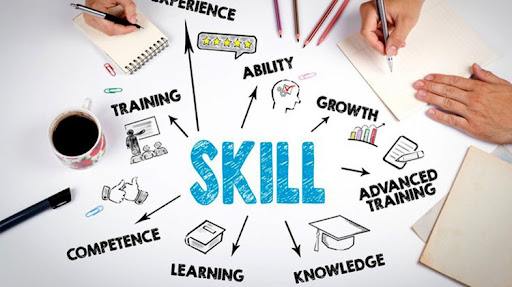
 In today’s competitive world, its very important for people to invest their time and resources to improve their skills, potential capabilities. One needs to do so in order to be future ready. One’s skills determines their ability to carry out any task effectively and efficiently. 

                                                              (Photo: doaram.com)

Skill development is a powerful tool to safeguard the future of youth and for their overall development. It is an important way to increase the employment rate of India. Skills are as essential as one’s academic qualifications. Education and skills should now go hand in hand to be successful. In today’s world, lack of education and skill development restricts people from realizing their potential capabilities and abilities. Eventually, this prevents them from contributing to the economic growth of a country. Thus, education and skill training is vital for the overall growth and personality development of an individual.
Illiteracy is one such reason for lack of skill training. The capability of the poorest sections of society to start business is restricted owing to because of their lack of business skills, illiteracy, their inability to take risks, capital, lack of investment, etc. It would be far better to upgrade their skills so that they can get employed. The strategy of the Ministry of Labor to specialize on skill upgradation has contributed significantly to this mission. 
According to the World Trade Organization, the GDP level can increase up to 3%-5% in 2035, if India focuses on skill development and training. India has taken many initiatives in this regard. The Ministry of Skill Development and Entrepreneurship (MSDE) is responsible for coordinating skill development activities in India. It has supported various organizations like National Skill Development Corporation (NSDC), which aims to promote skill development in the country by establishing institutes across the country and National Skill Development Agency (NSDA), which seeks to coordinate the efforts of the government and the private sector and aid in skill development.

Hon’ble Prime Minister Shri Narendra Modi launched the Skill India Mission, under the Ministry of Skill Development and Entrepreneurship on 15 July 2015, which aims to train over 40 crore people in India in different skills by 2022. The mission seeks to vocational training and certification of Indian youth for a better livelihood and respect in the society. Various initiatives under this campaign are National Skill Development Mission, National Policy for Skill Development and Entrepreneurship, 2015, Pradhan Mantri Kaushal Vikas Yojana (PMKVY), Skill Loan scheme, Rural India Skill etc.

                                                     (Photo: Indiamart)

Schemes & Initiatives through NSDC

  • Pradhan Mantri Kaushal Vikas Yojana (PMKVY)
  • Rozgar Mela
  • Pradhan Mantri Kaushal Kendras (PMKK)
  • Capacity Building Scheme
  • Udaan
  • School Initiatives and Higher Education
  • India International Skill Centres (IISCs)
  • Pre Departure Orientation Training (PDOT)

Schemes related to Entrepreneurship

  • Pradhan Mantri ‘YUVA’ Yojana

Other Schemes and Initiatives

  • Skill Loan Scheme
  • Indian Institute of Skills (IISs)
  • SANKALP
  • Academic Equivalence to Vocational Qualifications
  • Aspirational Districts
  • Swachh Bharat Abhiyan
  • Technology Initiatives

To encourage enterprise and boost employment generation, skill training initiatives are coming up with specialized courses on entrepreneurship in different sectors. Skill development is a very important tool to boost self-confidence of an individual and to instill trust on themselves. With proper skill development training, one can surely become confident and successful. It not only nurtures the inner will but also boosts the personality of an individual.

<

p style=”background: rgb(255, 255, 255);border: 0px;font-family: Roboto, sans-serif;font-size: 16.1px;line-height: 23px;margin: 0px 0px 15px;padding: 0px;vertical-align: baseline”>

What is Creative Writing?

Whether you’re writing a short story, long-fiction, poetry, or non-fiction, at some point in your education, you will likely be faced with the challenge of creative writing. You may do it because it’s required in your English or literature classes, or you may do it simply because you enjoy it.


Creative writing is a form of writing where creativity is at the forefront of its purpose through using imagination, creativity, and innovation in order to tell a story through strong written visuals with an emotional impact, like in poetry writing, short story writing, novel writing, and more.

It’s often seen as the opposite of journalistic or academic writing.
When it comes to writing, there are many different types. As you already know, all writing does not read in the same way.
Creative writing uses senses and emotions in order to create a strong visual in the reader’s mind whereas other forms of writing typically only leave the reader with facts and information instead of emotional intrigue.
Unique Plot
What differentiates creative writing and other forms of writing the most is the fact that the former always has a plot of some sort – and a unique one. 

1. Characters are necessary for creative writing. 

While you can certainly write a book creatively using the second person point of view (which I’ll cover below), you still have to develop the character in order to tell the story.
Underlying Theme
Almost every story out there has an underlying theme or message – even if the author didn’t necessarily intend for it to. But creative writing needs that theme or message in order to be complete. 
That’s part of the beauty of this form of art. By telling a story, you can also teach lessons.

2 Visual Descriptions

When you’re reading a newspaper, you don’t often read paragraphs of descriptions depicting the surrounding areas of where the events took place. Visual descriptions are largely saved for creative writing.
You need them in order to help the reader understand what the surroundings of the characters look like. 
Show don’t tell writing pulls readers in and allows them to imagine themselves in the characters’ shoes – which is the reason people read.

3 Point of View

There are a few points of views you can write in. That being said, the two that are most common in creative writing are first person and third person.
First Person – In this point of view, the narrator is actually the main character. This means that you will read passages including, “I” and understand that it is the main character narrating the story.
Second Person – Most often, this point of view isn’t used in creative writing, but rather instructional writing – like this blog post. When you see the word “you” and the narrator is speaking directly to you, it’s second person point of view.
Third Person – Within this point of view are a few different variations. You have third person limited, third person multiple, and third person omniscient. The first is what you typically find.
Third person limited’s narrator uses “he/she/they” when speaking about the character you’re following. They know that character’s inner thoughts and feelings but nobody else’s. It’s much like first person, but instead of the character telling the story, a narrator takes their place.
Third person multiple is the same as limited except that the narrator now knows the inner thoughts and feelings of several characters.
The last, third person omniscient, is when the narrator still uses “he/she/they” but has all of the knowledge. They know everything about everyone.
While non-creative writing can have dialogue (like in interviews), that dialogue is not used in the same way as it is in creative writing. Creative writing (aside from silent films) requires dialogue to support the story.
Your characters should interact with one another in order to further the plot and develop each character other more.

4. Imaginative Language

Part of what makes creative writing creative is the way you choose to craft the vision in your mind. 
And that means creative writing uses more anecdotes, metaphors, similes, figures of speech, and other figurative language in order to paint a vivid image in the reader’s mind.

5. Emotional Appeal

All writing can have emotional appeal. However, it’s the entire goal of creative writing. Your job as a writer is to make people feel how you want them to by telling them a story.

5. Read More, Understand skills and then Write 

If you really want to write, you need to read. Sure, at any time you could sit down and, having never read a poem, write a book of poems, or having never read a novel, write your own out of thin air, but here’s the thing: they would probably be awful. If you want to be a great writer, or even just a marginally good writer, you have to read. You have to know what has been done and what people are doing now to gain any sense of what you should be doing.

6. Don’t mistake mystery with obscurity

Don’t get caught in the trap of thinking that just because something is difficult to understand, it will create an air of mystery that will draw the reader in. This is rarely true. Don’t sacrifice clarity for cleverness. People generally don’t enjoy reading things that are obscure, whether this effect was achieved on purpose or accidentally. Resist the urge to be complicated for the sake of being complicated.

Know your audience

All writing is writing to someone (even if that someone is just you). You need to keep this in mind when writing. Really consider the question: who is your audience? How can you expect them to handle certain narrative decisions, plot devices, or characters? What is their goal in reading your piece? What is your goal in speaking to the audience? If you don’t have a readily defined audience, make one up and work from there.

Revise. Revise. Revise.

Rarely (super rarely) will your writing be “right” the first time. Sometimes you fail, but much more often, you simply need to revise… again and again. Yes, it can be tedious, but it’s a necessary part of the craft that separates writers from hobbyists and angst-filled teenagers. Learn to revise. Take a step back from your work and approach it with a critical eye. Take advice and input from others. Be ready to make substantial (and sometimes painful) revisions in the pursuit of great literature.

9. Kill your darlings

This is classic writing advice. Your darling could be a line, a scene, a poem or even a whole story. Sometimes you can become emotionally attached to a piece of writing that you are absolutely sure can be brilliant, but for one reason or another just doesn’t work. A lot of times, the reason it doesn’t work is because it’s not that good. It’s not. Really. Cut it and get on with your life. Your efforts are better spent working on something new.

10. Don’t Plagiarise, Be Original 

If you write good and original fiction then new readers will enjoy reading and you can earn a lot of name of fame if readers start liking your writing and you can also start earning from your creative work. 
Many publication houses and famous authors look for new budding creative writing and hire them as ghostwriter for writing in their name and they pay a lot to you. 

How Content Writing helps grow your business .

Haven’t you always been fascinated by those catchy caricatures and witty slogans by companies like Amul and Zomato? Everyday when I pick up the newspaper, the first thing that I make sure to read is the Amul advertisement. I’m not going to lie but I have always admired how they make those with subtle touch of wittiness , the recent trends and also the love of their brand.

Whether it’s a small caricature or a slogan or short articles ; a company’s strategy towards it’s content writing has always worked. How you ask ? Well for starters , I always buy the Amul products , not only because they have this unmatchable quality, but also the way they use their content to market their products and also keep their customers up to date with their accomplishments.

Scoopwhoop, The Quint ; are very popular names right now. I agree that the basic agenda of these companies is content creation, but the way they have build up a blended marketing strategy; has really helped their business evolve. And most importantly , because of their trusted content, many popular brands and organisations join hands with them to get the right exposure in the market . And believe it or not , it really helps!

Creative Content Writing Service - Creative Copywriting Service IT /  Technology Services from New Delhi

Let’s talk about why should a company really invest in its content writing program.

1.Helps put your company on the radar – With regular update regarding the company’s status and also a bit of attention paid to the other relevant issues , people are sure to be talking about it. And this helps put your company on the map.

2.Helps increase the consumer base- When you can very effectively tell the audience about your products and solve all their queries, the customer base is sure to expand. Clearly and effectively mentioning the details about the products and any other related things worth noting, really helps build a relationship of trust between the company and the customer.

3.Words can surely make or break the game– It really boosts the marketing strategy of the company. Many companies approach content writers to pen down their achievements and aspirations that can be imprinted into readers’ minds.

4.Boosts search engine rankings. – Also when your content grabs the public eye, people can’t help but know more about the business and their story. And this will surely shoot those search engine rankings right through the roof.

5.Helps the company become more socially inclusive-It’s the 21st century and it’s more than important to have a voice that to for the right cause.Companies and organisations that keep themselves updated with the recent issues and actively put forth their stand , surely earn the respect of their customers. They can constantly update their websites , social media handles with short but powerful articles to tell people that their customers and their rights matter to them the most . This really helps in building a very healthy relationship between the two.

Netflix and Amazon also evolved with their growing consumer base with help of brilliant content marketing through those catchy slogans or sweet anecdotes. Words really matter, especially when you’re using them to pitch for your brand.

Brown history recently became number 1 Instagram handle for South Asian stories. Now this page further helps the brands connected with it to grow effectively.

Many content writing companies in India have understood the importance of words and are making sure that they put them into use wisely. Companies have to understand that their blogs, posts really impact people. Hence they need to be careful with the kind of information they want to be endorsing.

Having a great rapport with the customers through words – sounds like a very beautiful and effective plan.

What are Differences between Copywriting vs. content writing

Copywriting vs. content writing—it’s all the same, right?

No, they are most definitely not the same. It’s not exactly the difference between apples and oranges—more like oranges and tangerines—but close enough. For young writers looking for work, it’s incredibly important to know the differences between the two; each presents a unique set of challenges and skills to do well. Here, we pinpoint the major differences between copywriting and content writing.

Purpose

The greatest distinction between copywriting and content writing lies in its purpose. Copywriting is selling your personas on your brand; content writing is subtly telling them about it while delivering valuable content.

Copywriting is the art of selling people on an idea, brand, or ideology. The best copywriting fuses the products and ideology of a brand together to create branding. Copywriting is advertorial in nature as its intent is to pitch customers to use a brand’s products and/or services.

For the Mad Men fans out there, this is what Don Draper and Peggy Olson did all the time at Sterling Cooper (or whatever agency they were with at the time). They weren’t selling products, but ideas and emotions that were tied to products.

Content writing is the art of creating content. It needs to either inform, educate or entertain; it needs to have a clear purpose and/or reason behind the piece; it needs to represent the brand’s voice; it needs to be a good read. The best content writing is focused on the quality of the editorial, no matter if it comes from a brand or a publisher. For brands (and some data-driven publishers), content writing aligns with strategic business and marketing goals to attract audiences and potential customers.

Here’s one way to look at the two: content writing passes information along to your audience while copywriting reveals what your brand is all about.

The two, of course, do share similarities. For one thing: goals. Both copywriting and content writing ultimately seek to convert a reader into a sale or a lead. Another similarity: they both need to be well-written. What is well-written for one differs from the other, but quality writing, for whatever purposes, entices readers to keep reading.

Bottom line: The ultimate objective of copywriting is to sell an idea whereas content writing aims to create valuable content to help the audience understand your brand and generate interest.

The job

A truism: copywriters write copy and content writers write content. If you’re confused at what this means, then you should know all shall be explained. Another distinction between copywriting and content writing lies in the job description.

A copywriter is a professional whose job is dedicated to producing copy. This can come in many forms (see below), but the general idea is that a copywriter writes marketing material for a living. It is their trade, craft, skill—whatever you want to call it.

Now, a content writer can be anyone. They are not necessarily a professional writer, but someone who produces content. Thanks to the democratization of the internet, anyone can write now, including professionals, executives, authors, bloggers, software engineers, CEOs, brands, etc. Of course, the best content writers understand the craft of content writing, but it may not be their trade.

Bottom line: A copywriter is a professional who writes marketing copy; a content writer can be anyone producing content.

Types of writing

A copywriter writes marketing material, a content writer writes content—but what kinds of marketing material and content? This is the last major distinction between the two.

Traditionally, copywriting was limited to advertising in the days of yester-yore (again, see Mad Men). But the internet changed the scope of what copywriters can write for beyond witty slogans. Today, the list includes, but is not limited to:

  • Ads, online and off
  • Slogans and taglines
  • Web page content
  • SEO content
  • Email campaigns
  • Television or radio commercial scripts
  • Video scripts
  • Press releases
  • White papers
  • Catalogs
  • Billboards
  • Brochures
  • Postcards
  • Sales letters
  • Direct mail letters
  • Jingle lyrics
  • Social media

Copywriters today see plenty of overlap with content writers and technical writers, but remember: the point is to sell you an idea as part of a marketing campaign.

Likewise, content writing has plenty of opportunities to write different kinds of content, including, but not limited to:

  • Blog posts
  • Newspaper articles
  • Magazine features
  • Whitepapers
  • Email newsletters
  • E-books
  • Books
  • Print magazines
  • Social media posts
  • Podcasts
  • Television
  • Film
  • Radio

Yep—even TV and film is considered content these days, just a different kind (but that’s another story).

What you really need to know is that brands of all kinds need copywriting and content writing to stay fresh, so there’s plenty of opportunities for writers out there to try their hands at both. It’s just a matter of seeing which one you have a knack for and sticking with that one.

Indian Art Style

• Rajasthani miniature art

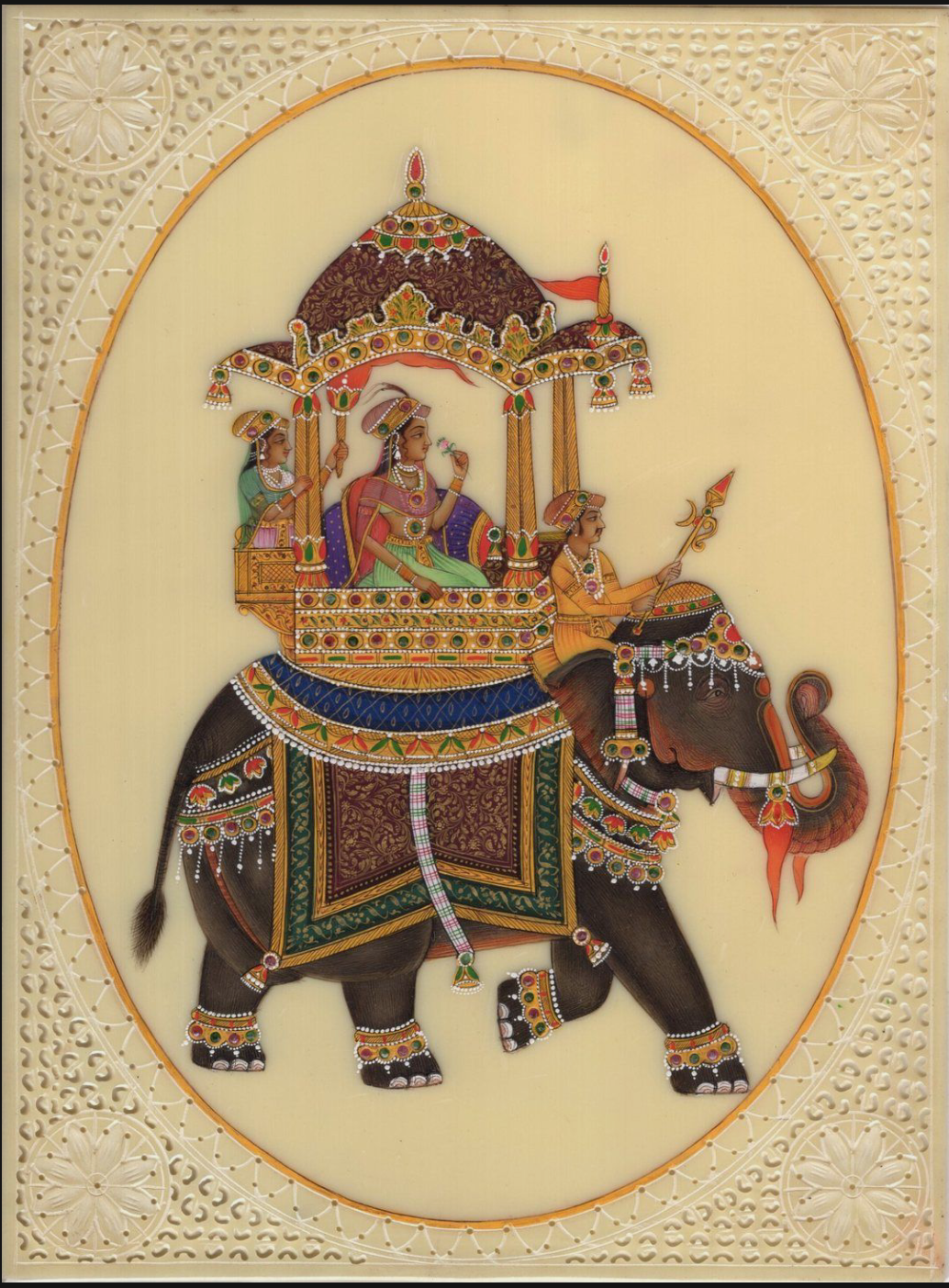
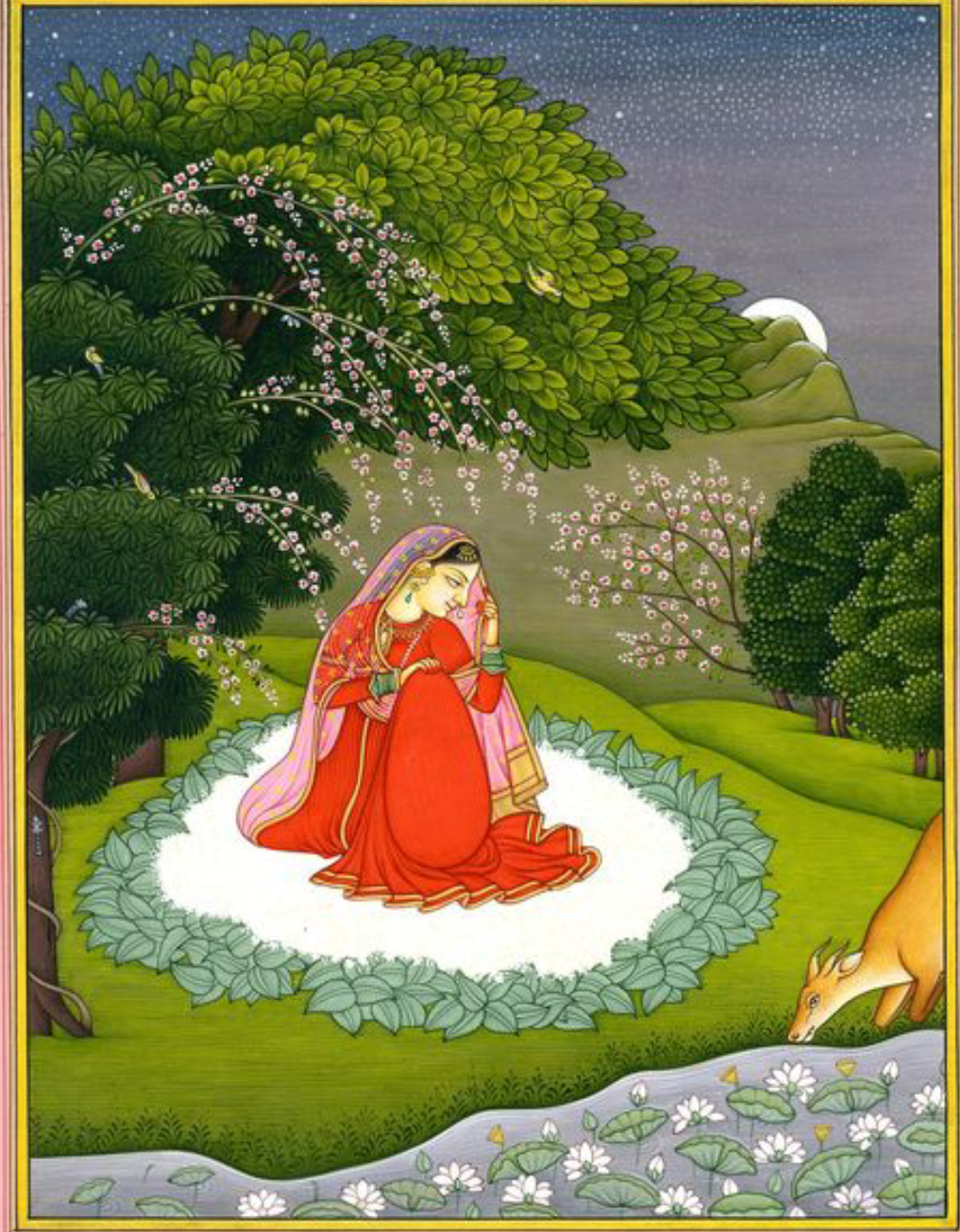
Rajasthan is one of the pioneer seats of miniature painting in India. Rajput painting, also known as Rajasthani painting, is a style of Indian painting evolved and flourished in the royal courts of Rajputana, India. Each Rajput kingdom evolved a distinct style but with certain common features. Rajput paintings depict a number of themes, events of epics like the Ramayana and the Mahabharata, Krishna’s life, beautiful landscapes and humans.

Miniatures in manuscripts or single sheets to be kept in albums were the preferred medium of Rajput painting but many paintings were done on the walls of palaces, inner chambers of the forts, havelis, particularly the havelis of Shekhawati, the forts and palaces built by Shekhawat Rajputs. The colours were extracted from certain minerals, plant sources and conch shells and were even derived by processing precious stones. Gold and silver were also used. The preparation of desired colours was a lengthy process, sometimes taking weeks. The brushes used were very fine.

• Pattachitra

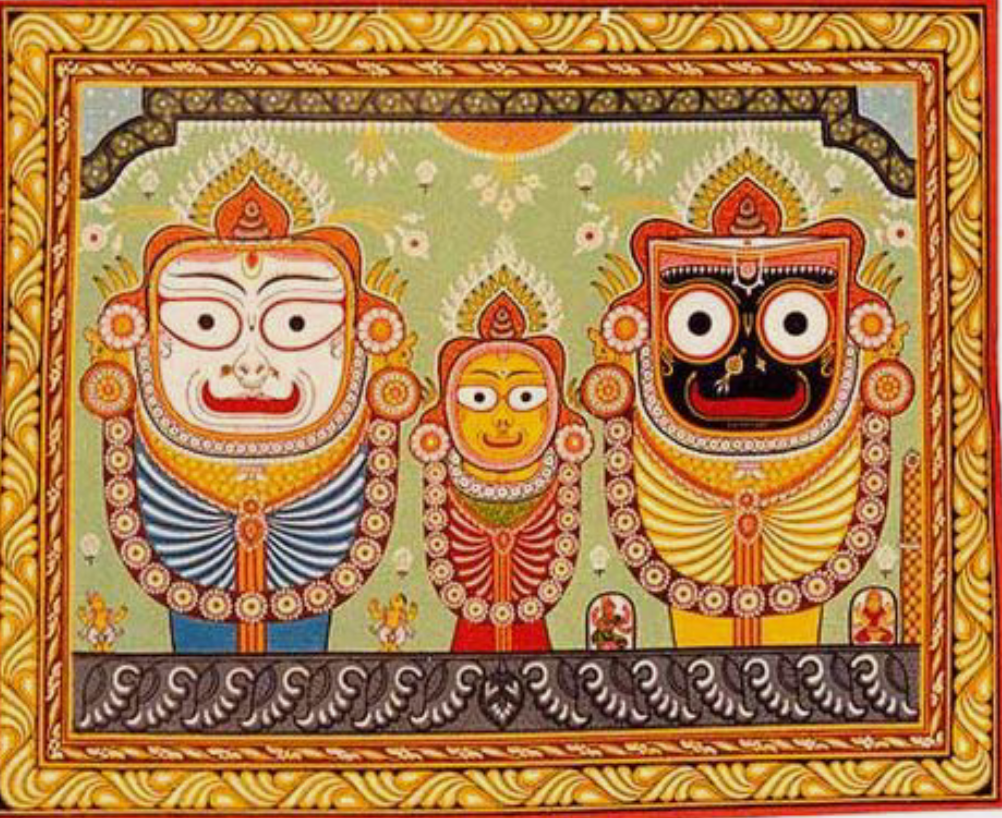
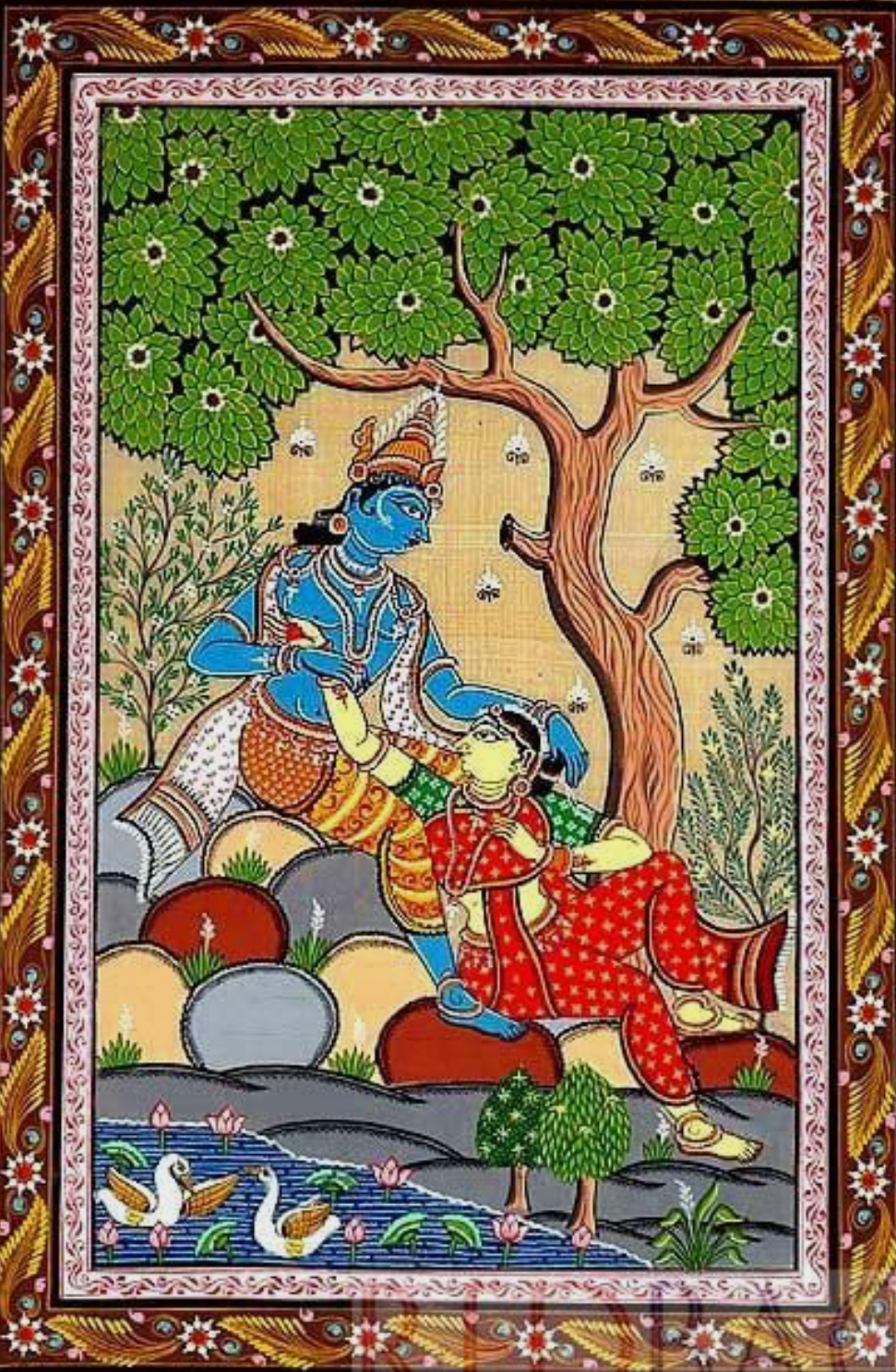
‘Pattachitra’ is a general term for traditional, cloth based scroll painting based in the eastern Indian state of Odisha. In the Sanskrit language, ‘patta’ literally means ‘cloth’ and ‘chitra’ means ‘ picture’. The pattachitra style of painting is one of the oldest and most popular art forms of Odisha.

All colours used in the paintings are natural and the paintings are made fully in the old traditional way by chitrakaras who are Oriya painters. Pattachitra is manifested by a rich colourful application, creative motifs and designs and portrayal of simple themes mostly mythological in depiction. The traditions of pattachitra paintings are more than a 1000 years old. Pattachitra paintings resemble the old murals of Odisha, especially those from the religious centres of Puri, Konark and Bhubaneswar regions, dating back to the 5th century BC. The best works are found in and around Puri, especially in the village of Raghurajpur. The theme of Oriya painting centers round the Jagannath cult and the Vaishnava cult. Since the beginning of pattachitra culture, Lord Jagannath, who is an incarnation of Lord Krishna, has been the major source of inspiration. In the 16th century, with the emergence of the Bhakti movement, the paintings of Radha and Krishna were painted in vibrant shades of orange, red and yellow. There are typical scenes and figures like Krishna, Gopi’s, elephants, trees and other creatures portrayed in these paintings. Krishna is always painted in blue and Gopis in light pink, purple or brown.

Thank you for reading. Have a nice day!🌼

Indian Folk Art

• Warli paintings

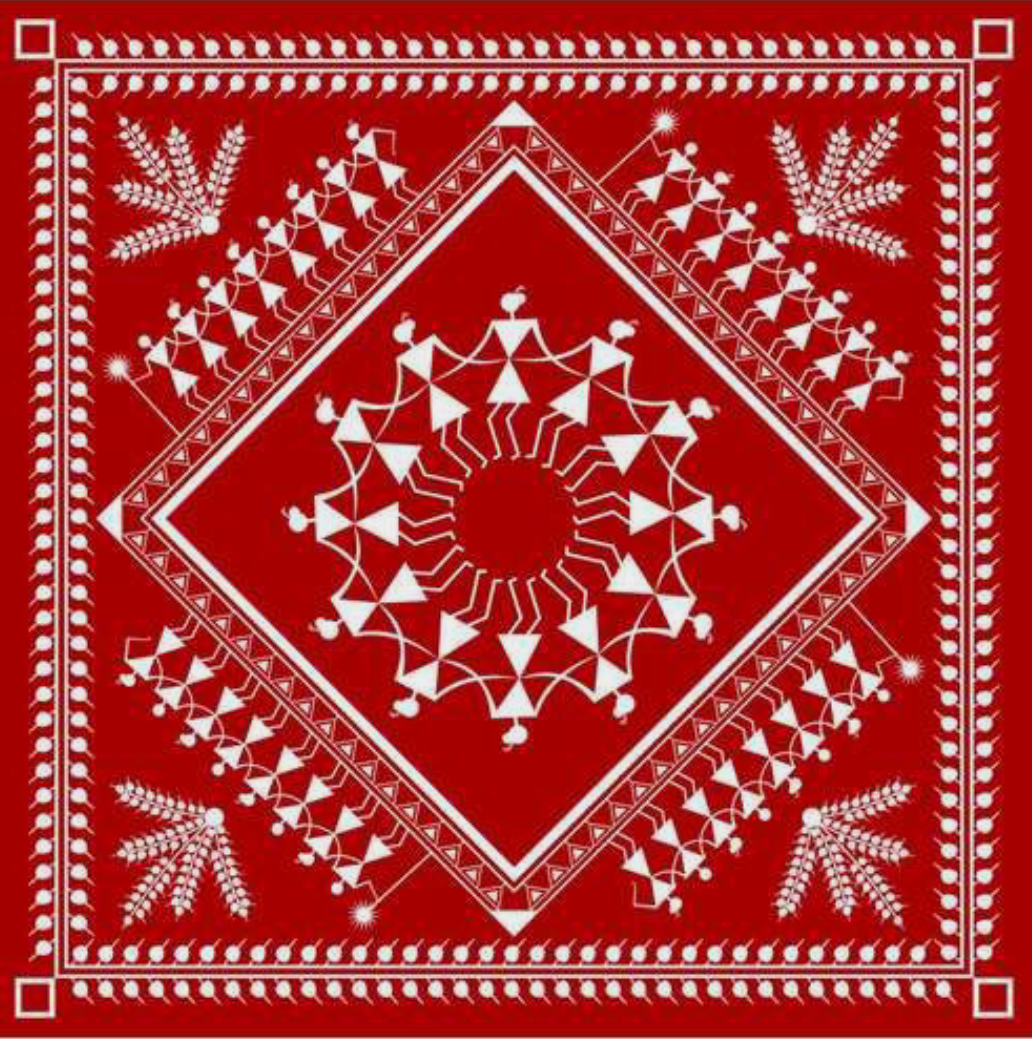
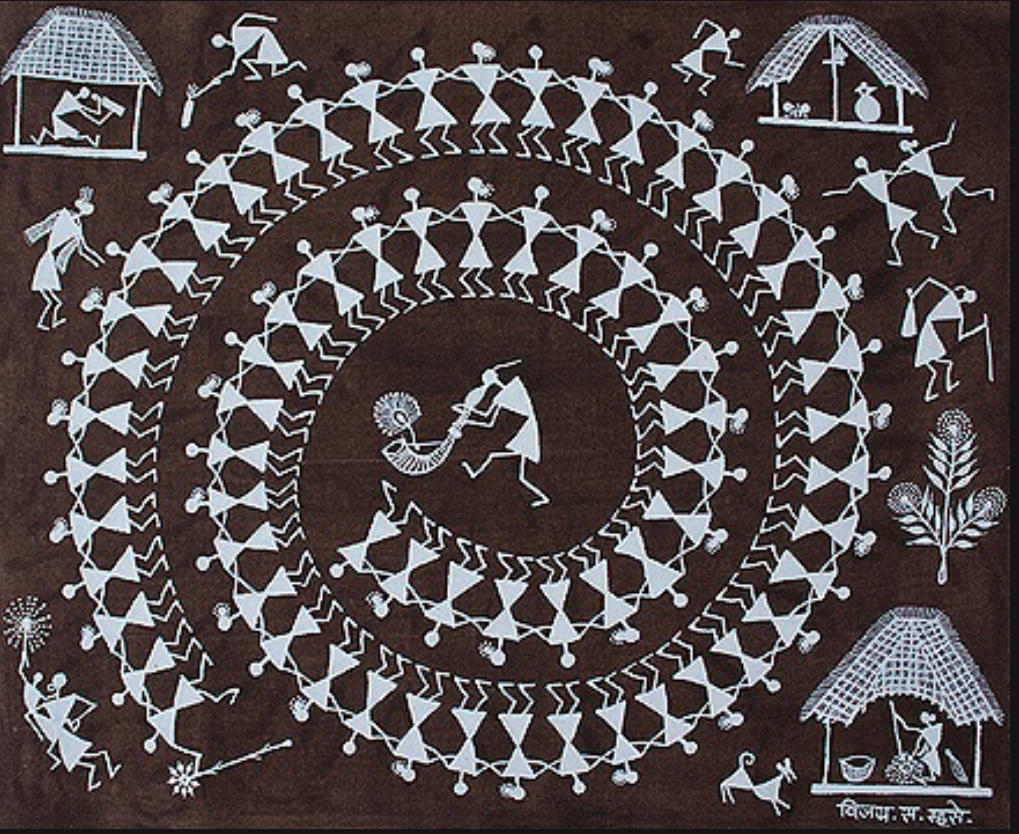
Warlis or Varlis are an indigenous tribes or adivasis living in the mountainous as well as coastal areas on the Maharastra-Gujarat border and surrounding areas. They have their own animistic beliefs, life, customs and traditions. As a result of acculturation, they have adopted many Hindu beliefs. Their extremely rudimentary Wall paintings use a very basic graphic vocabulary a circle, or triangle and a square. Their paintings were monosyllabic. The circle and the triangle come from the observation of nature, the circle representing the sun and the moon, the triangle derived from mountains and pointed trees. Only the square seems to be a different logic and seems to be a human invention, indicating a sacred enclosure or a piece of land.

The ritual paintings are usually done inside their huts. The walls are made of a mixture of branches, earth and cow dung making a red ochre background for wall paintings. Warlis use only white in their paintings. The white pigment used by them is a mixture of rice paste and water with gum as a binding. As the brush, they use a bamboo stick chewed at the end to make it as supple as a paintbrush. The wall paintings are done only on special occasions such as weddings or harvests. Warli art is the cultural intellectual property of the tribal community. Today, there is an urgent need for preserving this traditional knowledge in tribal communities across the globe. Now, Warli painting is registered with a geographical indication under the intellectual property rights act. With the use of technology and the concept of social entrepreneurship, tribals established the Warli Art Foundation, a non-profit company dedicated to Warli art and related activities.

• Cave paintings in India

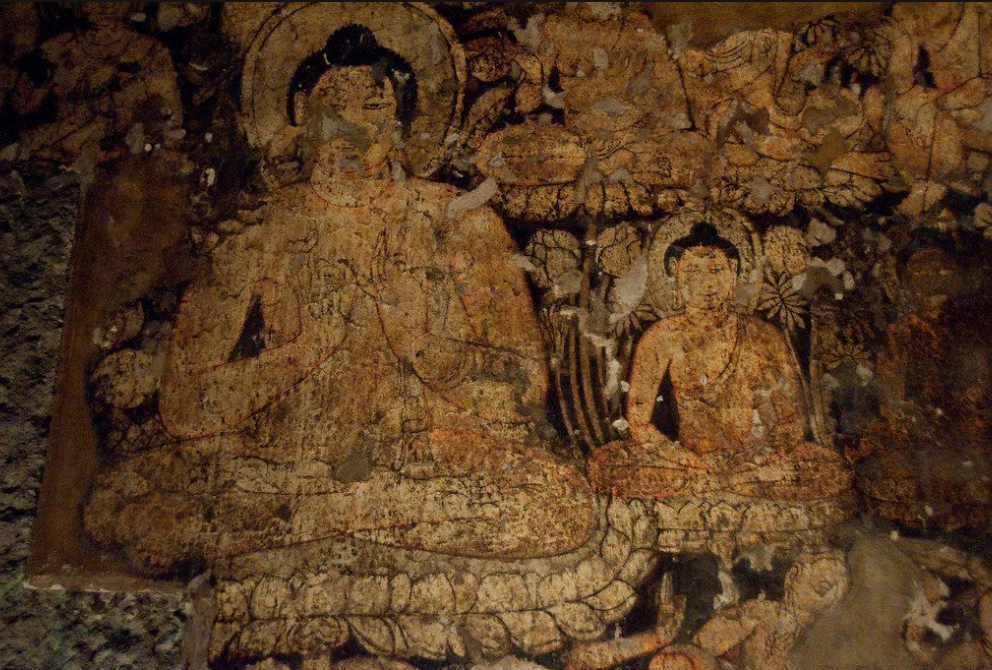
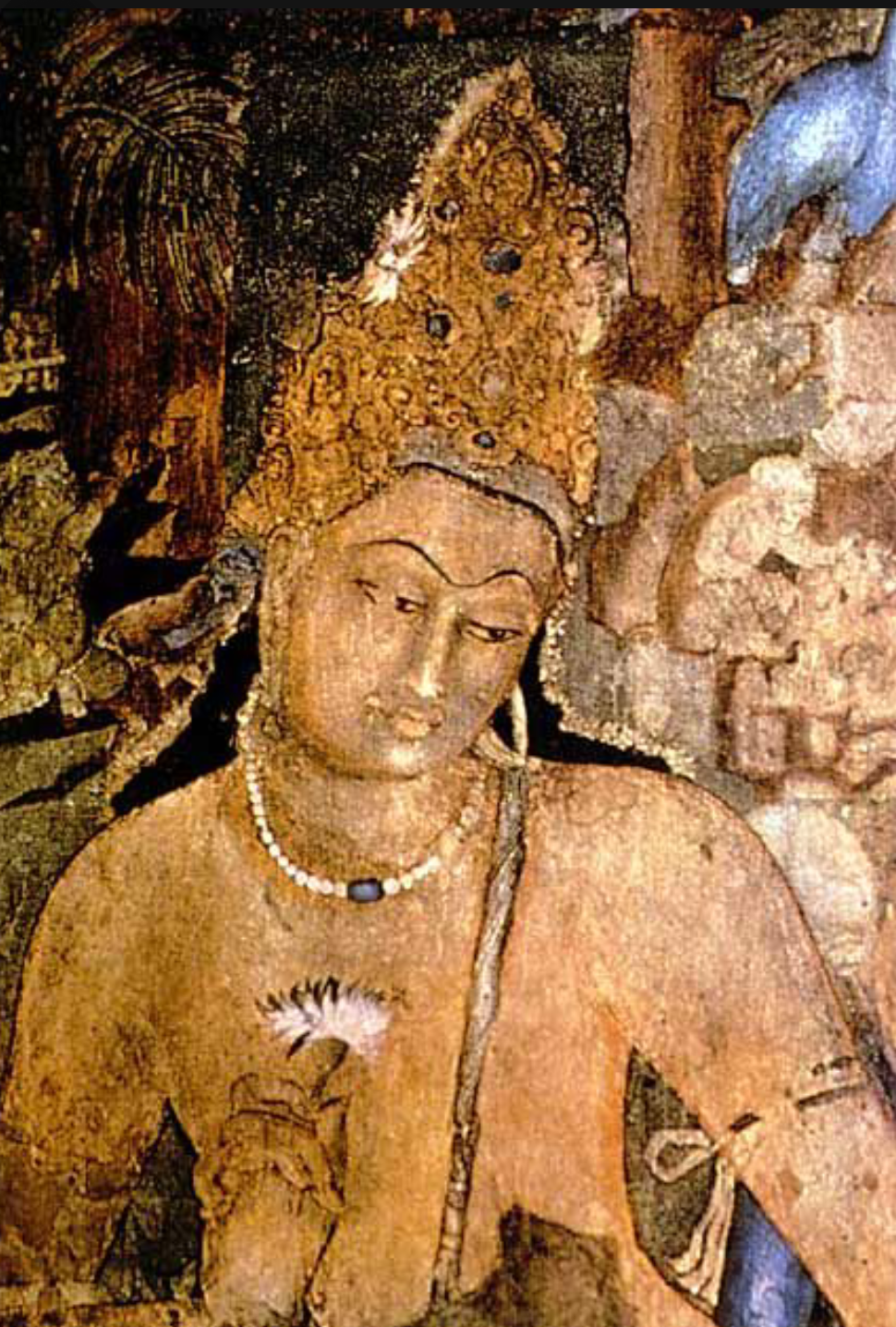
Almost all early painting in India survives in caves, as very few buildings from ancient India survive. The history of cave paintings in India or rock art range from drawings and paintings from prehistoric times – beginning around 30000 BCE in the caves of Central India, typified by those at the Bhimbetka rock shelters – to elaborate frescoes at sites such as the rock cut artificial caves at Ajanta and Ellora, prevalent as late as the 8th – 10th century CE. The frescoes of Ajanta are paintings in the Ajanta caves, which are situated near Aurangabad in Maharashtra. The caves are carved out of large rocks. Inside many of the caves are frescoes. Frescoes are paintings which are done on wet plaster in which colours become fixed on the walls and ceilings at Ajanta.

The paintings reflect different phases of Indian culture from Jain tirthankar Mahaveer’s birth to his Nirvana in the 8th century AD. The frescoes have degraded slightly due to the effect of flash photography. Photography here is not banned. The paintings depict themes of court life, feasting, processions, men and women at work, festivals and various natural scenes including animals and birds and flowers. The artists used shading to give a three-dimensional effect.

Similarly, beautiful frescoes have been found at the Bagh caves, 150 km away to the North of Ajanta. Though the themes in these paintings are both secular and religious, they do depict some aspects of Buddhist life and rituals. One of the most famous paintings show a procession of elephants. Another depicts a dancer and women musicians. These have been influenced by the Ajanta style of painting. These frescoes show a strong resemblance to the frescoes of Sigriya in Sri Lanka.

Thank you for reading. Have a nice day!🌼

Graphic design

Graphic design is the process of visual communication and problem solving through the use of type, space and image. The field is considered a subset of visual communication and communication design but sometimes the term ‘graphic design’ is used interchangeably with these due to overlapping skills involved. Graphic designers use various methods to create and combine words, symbols and images to create a visual arts and page layout techniques to produce a final result. Graphic design often refers to both the process (designing) by which the communication is created and the products (design) which are generated. Common uses of graphic design include identity, publications, print advertisements, posters, billboards, website graphics and elements, signs and product packaging. For example a product package might include a logo for other artwork organised text and pure design elements sketches images shapes and colour which unified the piece. Composition is one of the most important features of graphic design specially when using pre existing materials or diverse elements.

•Skills

A graphic design project me in work to stylisation and presentation of existing text and either pre existing imagery or images developed by the graphic designer. Artistic pieces can be incorporated in both traditional and digital forms which involves the use of visual arts typography and page layout techniques for publications and marketing for example a newspaper story begins with the journalist and photo journalist and then becomes the graphic designer job to organise the page into a reasonable layout and determine if any other graphic element should be required. In a magazine article or advertisement often the graphic designer or art director will commission photographers or illustrators to create original pieces just to be incorporated into the design layout or the designer may utilise stock imagery or photography. Contemporary design practice has been extended to the modern computer. Nearly all popular and ‘industry standard’ software programs used for graphic design since the early 1990’s are products of Adobe systems incorporated. They are Adobe Photoshop (a raster based program for photo editing), Adobe illustrator (a vector based program for drawing), Adobe InDesign ( a page layout program) and Adobe Dreamweaver (for webpage design).

Another major page layout tool is QuarkXPress (a product of Quark Inc. a separate company from Adobe). Both QuarkXPress and Adobe InDesign are often used in the final stage of the electronic design process. Raster images maybe edited in Adobe Photoshop, logos and illustrations in Adobe illustrator and the final product may be assembled in one of the major page layout programs. Most graphic designers entering the field since 1990 are expected to be proficient in at least one or two of these programs.

my work

Another one

•Occupation

Graphic design career paths cover all ends of the creative spectrum and often overlap. Employment within graphic design in walls workers performing specialised tasks such as design services publishing advertising and public relations. The main job responsibility of a graphic designer is the arrangement of visual elements in some type of media. The main job titles within the industry can vary and are often country specific. They can include graphic designer, are director, creative director former animator and the entry level production artist. Depending on the industry served commerce responsibilities may have different titles such as DTP associate and graphic artist But despite changes in the title graphic design principles remain consistent who start the responsibilities may come from early to specialised skills such as illustrations photography animation or interactive design. Today’s graduate in graphic design students are normally exposed to all these areas of graphic design and I guided to become familiar with all of them as well in order to be competitive. Graphic designers will face strong competition when applying for positions for organizations look for candidates with convincing talents and college level education post of field requirements consist of having strong portfolio and bachelors degree first of graphic designers can work in a variety of environments while many will work in companies devoted specifically to the industry such as design consultancies or branding agencies, others may work in publishing, marketing for other communication companies. Increasingly, special sense the introduction of personal computers to the industry commerce many graphic designers have found themselves working in non design oriented organizations as in house designers. Graphic designers may also work as freelance designers, working on their own terms, prices, ideas etc. A graphic designer reports to the art director, creative director or senior media creative. As a designer becomes more senior, he/she may spend less time designing media and more time leading and directing other designers on broader creative activities such as brand development and corporate identity development. Senior designers are often expected to interact more directly with clients, for example taking and interpreting briefs.

Thank you for reading. Have a nice day!🌼

Painting techniques

Techniques in watercolour paintings

#Washes

The most basic watercolour technique is the flat wash. It is reduced by first wetting the area of paper to be covered by the wash, then mixing sufficient pigment to easily fill the entire area. The pigment is applied to a sloping surface in slightly overlapping horizontal bands from the top down. Once complete, the wash should be left to dry and even itself out. Don’t be tempted to work back into a drawing wash, the results are usually disastrous! A variation on the basic wash is the graded wash. This technique requires the pigment to be diluted slightly with more water for each horizontal stroke. The result is a wash that fades out gradually and evenly.

#Glazing

Glazing is a similar watercolour technique Do a wash, but uses a thin, transparent pigment applied over dry existing washes. Its purpose is to adjust the colour and tone of the underlying wash. Non-staining, transparent pigments such as Rose Madder (or Permanent Rose), Cobalt Blue and or Auroline are ideal for glazing as they can be applied layer after led to achieve the desired effect. Be sure each layer is thoroughly dry before applying the next.

#Dropping in colour

This technique is simply the process of introducing a colour to a wet region of the painting and allowing it to blend bleed and feather without interruption. The result is sometimes and predictable but yields interesting and vibrant colour gradations That can’t be achieved by mixing the pigment on the palette.

#Wet-on-wet

Wet-on-wet is simply the process of applying pigment to wait paper. The results very from soft undefined shapes to slightly blurred marks, depending on how wet the paper is. The wet-on-wet technique can be applied over existing washes provided they are thoroughly dry. Simply wet the paper with the large brush and paint into the dampness. The soft marks made by painting wet in wet agreed for subtle background regions of your painting.

#Dry brush

Dry brush is almost the opposite watercolour technique to wet in wet. Here a brush loaded with pigment (and not too much water) is dragged over completely dry paper. The marks produced by this technique are very crisp and hard-edged. They will tend to come forward in your painting and so are best applied around the centre of interest.

#Lifting off

Most water colour pigments can be resolved and lifted off after they have dried. Staining colours such as Phthalo or Prussian blue, Alizarin, Windsor red, yellow or blue are difficult to remove and are best avoided for this technique. The process for lifting of his simple – wet the area to be removed with a brush and clean water, then blot the pigment away with attached. Using strips of paper to mask areas of pigment will produce interesting hard-edged lines and shapes.

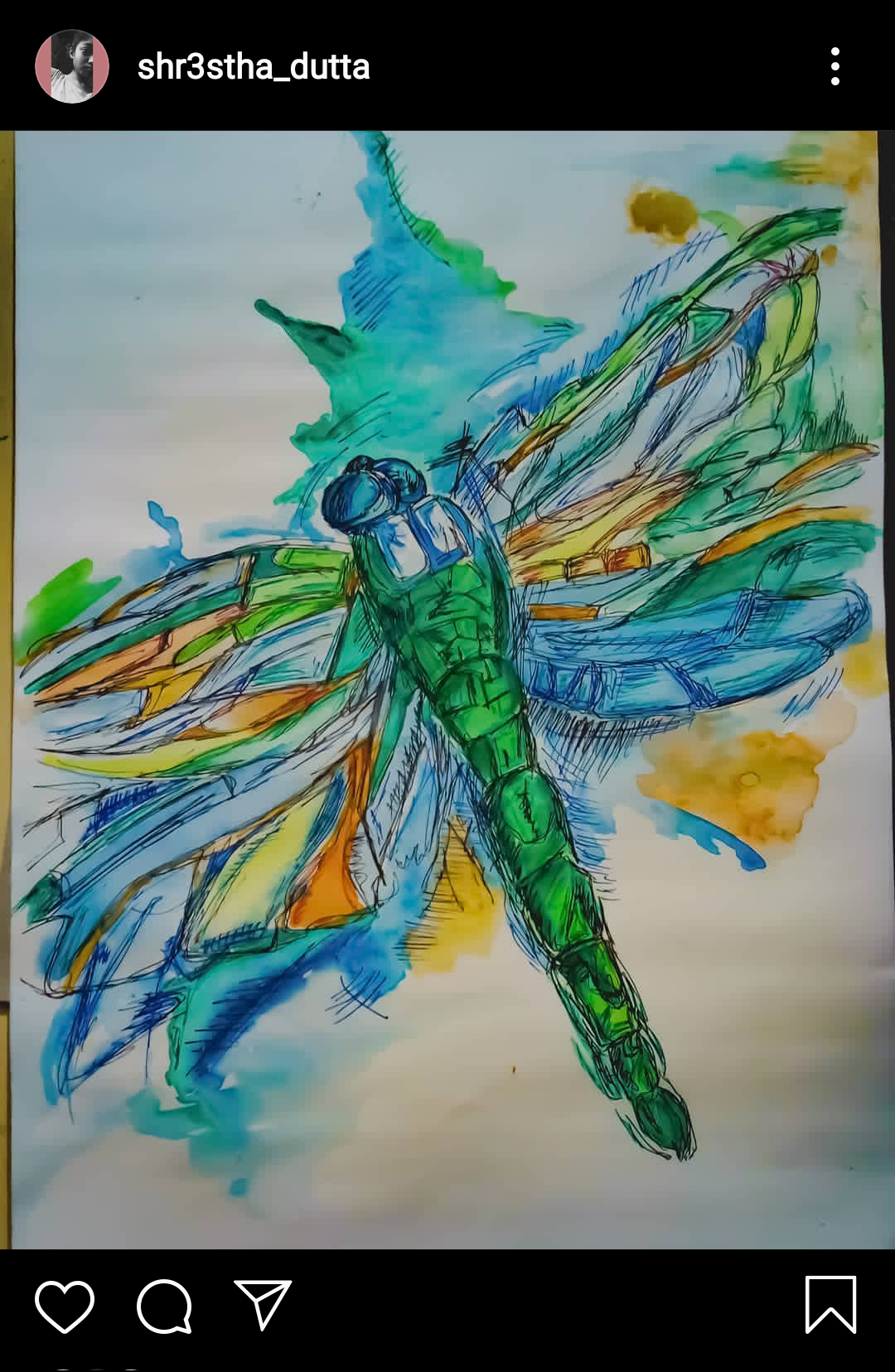
This is one of my watercolour paintings. I love experimenting with the medium.

Techniques in other kinds of painting

paints

As the name implies, pigments are already mixed with oil (usually linseed) in the tube, which makes for slow drying and easier blending. Clean up with turps or preferably and odourless solvent. Can be used straight from the tube (impasto) or thinly for underpainting or glazing. Usually used over canvas or board prepared with an acrylic or gas so undercoat. Retouch varnish may be used to even out the shine when finished. All other vanishes should not be applied until the paint has cured (around 6 months). Oils pretty much maintain their mixed colour once drive for, unlike water based paints which tend to dry darker or lighter than when wet.

#Poster colours

Poster colours contain a binder which remains water soluble when dry. Pigments used are generally of a courser quality than water colours and are therefore more opaque, specially pastel shades which are achieved by mixes that include white. Can be wetted again for further blending. Framing is usually as for water colours.

#Pastels

Here the pigments have been moulded into sticks using distilled water and a minimum of binders. Some are wrapped in waxed paper to prevent breakage. They come in square and round sticks and in pencil form full stock usually used on tinted pestle paper which has a texture (or ‘tooth’) to hold the dry granules of pigment. Spray fixatives prevent rubbing, button to dark in the pestle work. Framing is behind glass with the mat board to prevent the work from touching the glass.

#Acrylic painting

Painting executed in the medium of synthetic acrylic resins. Acrylics dry rapidly, serve as a vehicle for any kind of pigment, and are capable of giving both the transparent brilliance of watercolour and the density of oil paint. They are considered to be less affected by heat and other destructive forces than is oil paint. They found favour among artists who were concerned about the health risks posed by the handling of oil paints and the inhalation of fumes associated with them. Because of all these desirable characteristics, acrylic paints became immediately popular with artists when they were first commercially promoted in the 1960s.

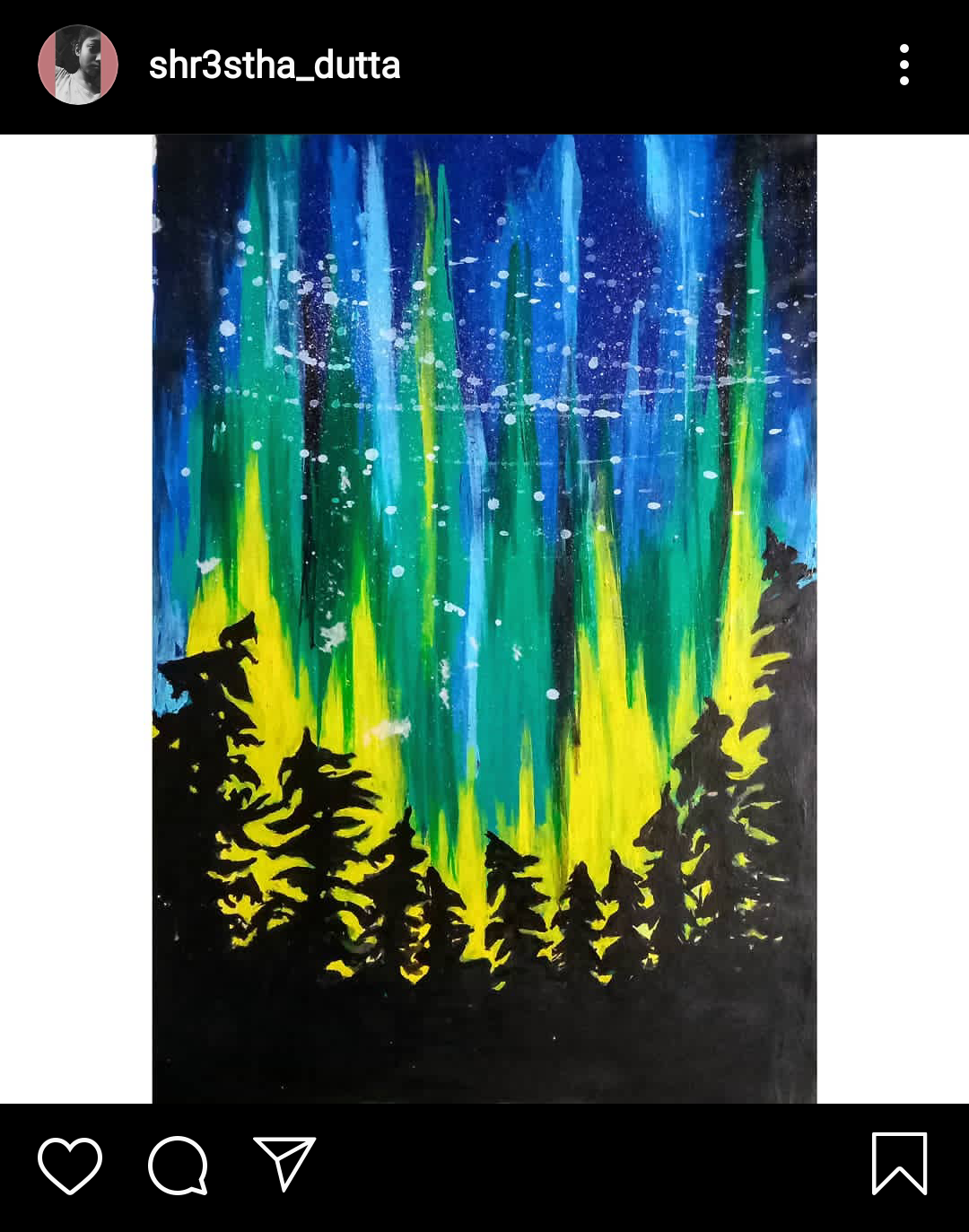
This is one of my acrylic paintings.

#Tempera painting

Painting executed with pigment ground in a water-miscible medium. The word tempera originally came from the word temper, which means ‘to bring to a desired consistency’. Dry pigments are made usable by ‘tempering’ them with a binding and adhesive vehicle. Such painting was distinguished from fresco painting, the colours for which contained no binder.

Thank you for reading. Have a nice day!🌼

Anniversaries (as of 2020)

•75th anniversary of end of World War 2 (1st September 1939 – 2nd September 1945 )

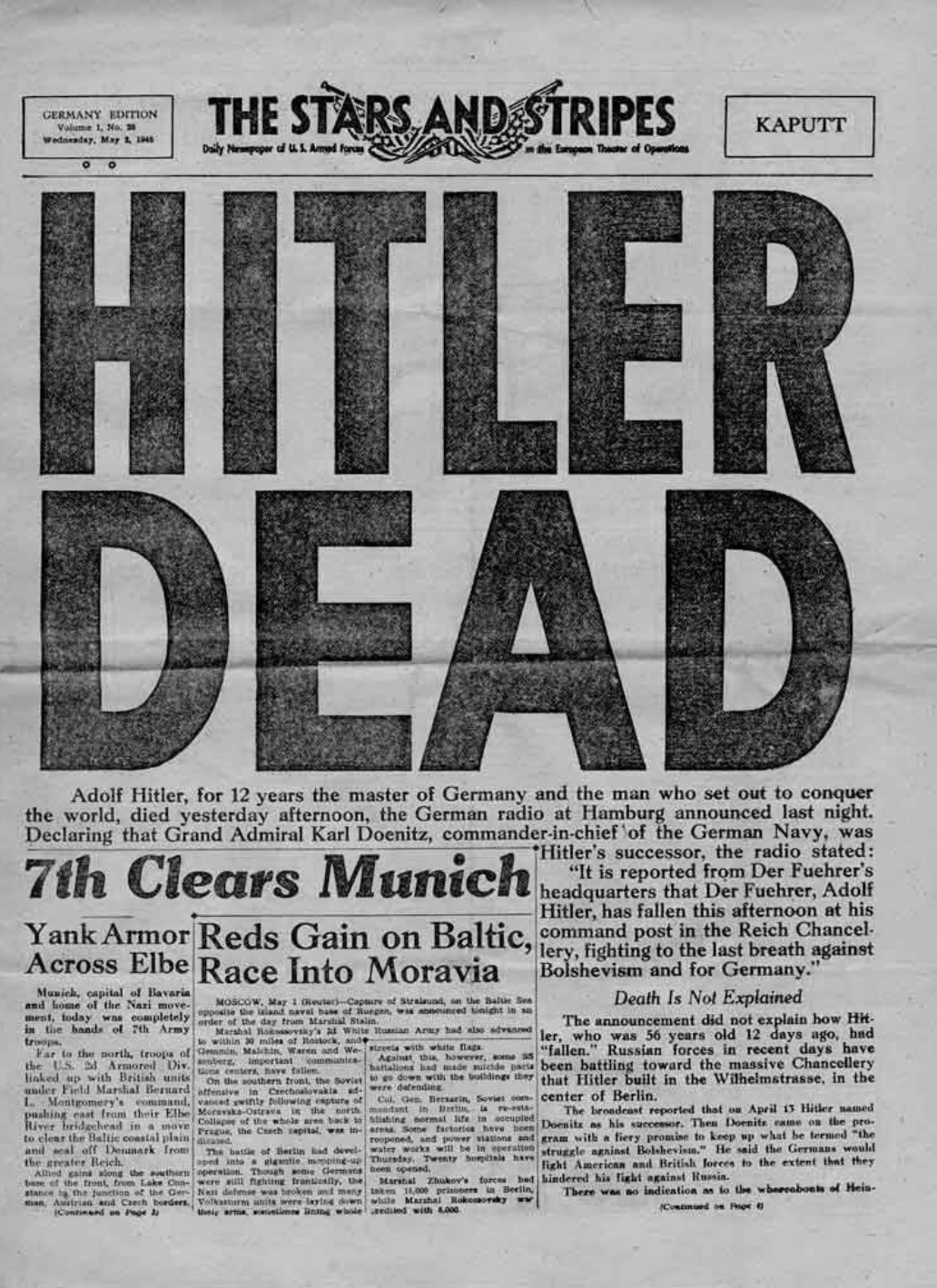
It involved vast majority of the world’s countries forming two different military forces – the Allies and the Axis. The Allied won causing the fall of Nazi Germany and also death of Hitler. It was the deadliest war in world history.

•100th birth anniversary of Isaac Asimov

Isaac Asimov was an American author and a professor of biochemistry at Boston University. Born on 2nd January, 1920 in Petrovichi, Russia. He was well known globally for his science fiction works including ‘I, Robot’, ‘Caves of steel’, ‘End of eternity’ etc. Some of his stories have been made into movies.

• 200th birth anniversary of Anne Bronte

Anne Bronte was an English novelist and poet and the youngest of the famous Bronte sisters. She was born on 17th January, 1820 in Thornton, UK. Some of her works include ‘The tenant of Wildfell hall’ and ‘Agnes Grey’.

•500th death anniversary of Italian artist Raphael

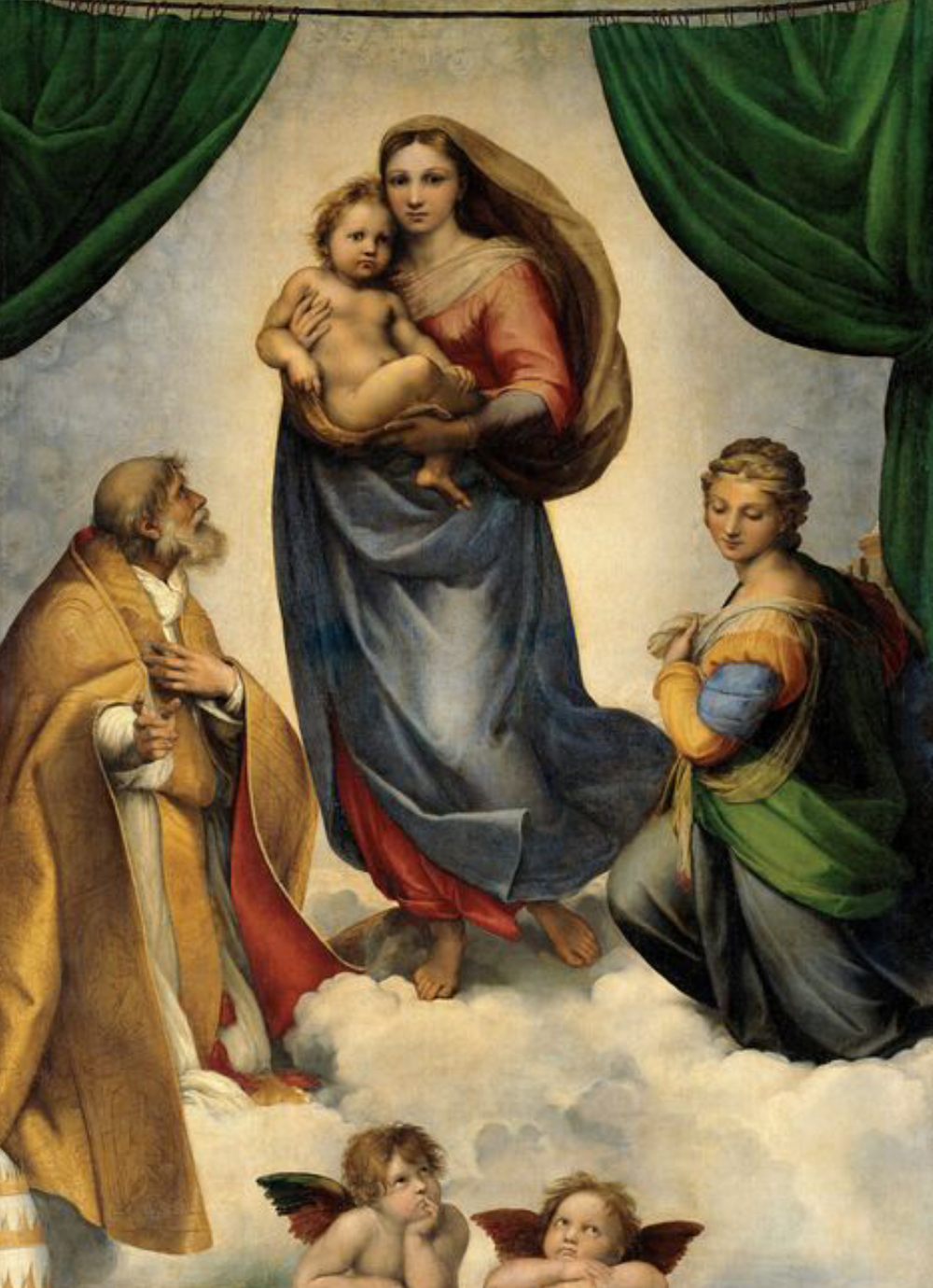
One of the Renaissance period painters, Raffaello Sanzio da Urbino was born on 6th April, 1483 and died on 6th April, 1520. St. Peter’s Basilica is one of his works. His notable artworks include ‘The school of Athens’, ‘The Sistine Madonna’ , ‘The marriage of the virgin’ etc.

•250th birth William Wordsworth

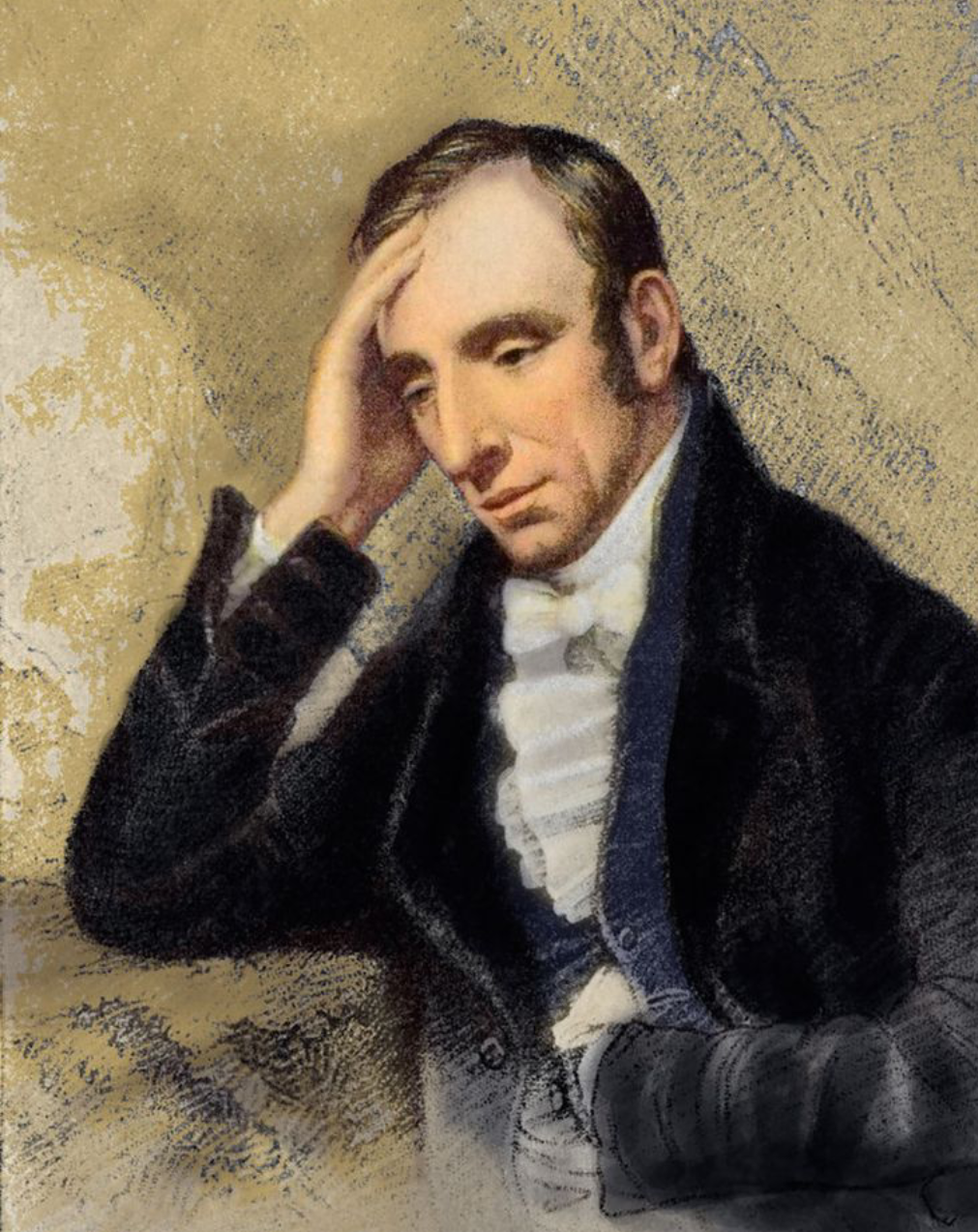
The very famous poem, ‘I wandered lonely as a cloud’ poet William Wordsworth was born on 7th April, 1770 in Cockermouth, UK. He was an English Romantic poet.

•200th birth Florence nightingale

The English social reformer, statistician and the founder of modern nursing was born on 12th May, 1820 in Florence, Italy. She worked hard and determined as a nurse and earned the title ‘Lady with the Lamp’.

•150th death anniversary Charles Dickens

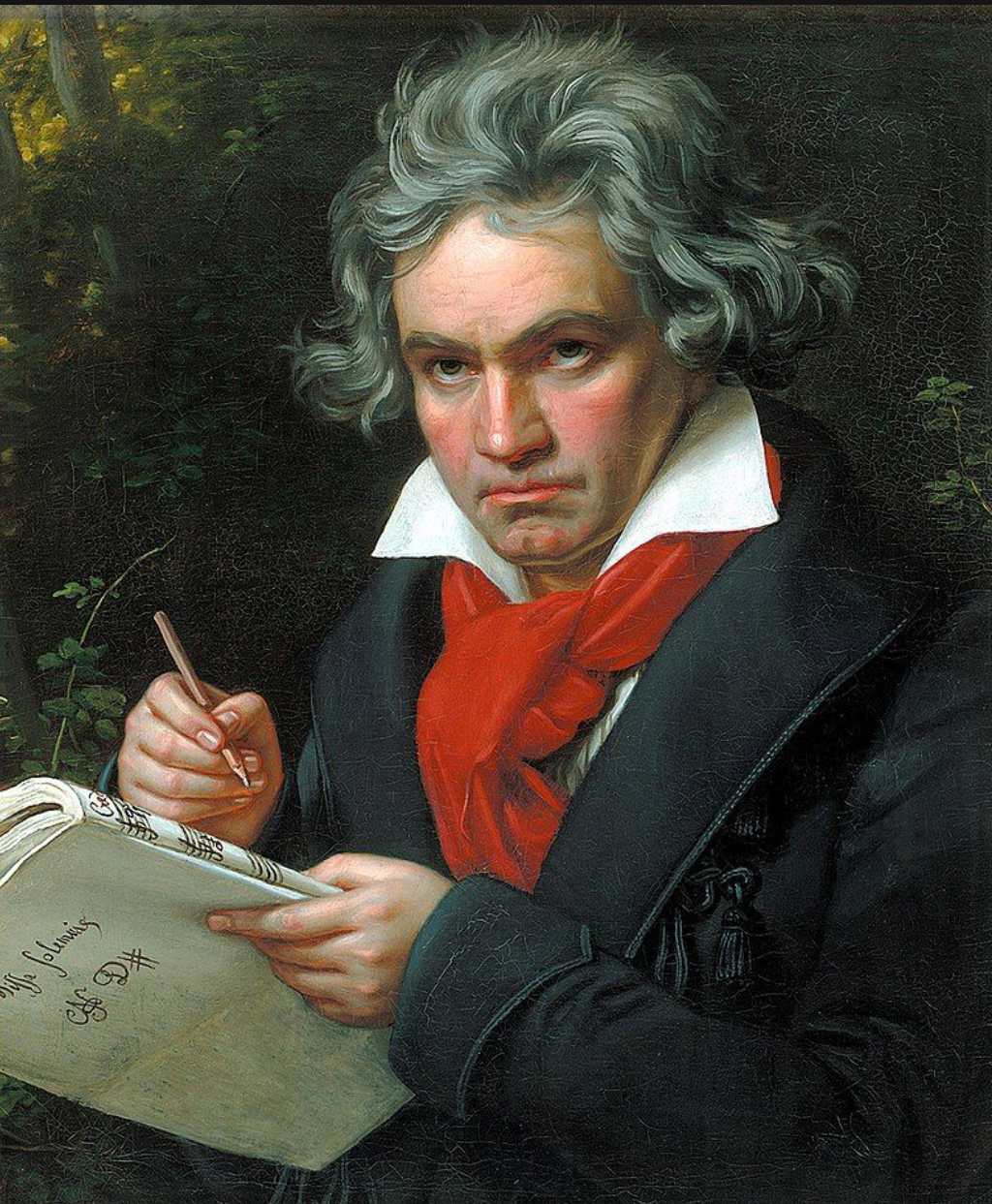
•250th birth anniversary of Ludwig van Beethoven

He was a German composer and pianist whose music ranks amongst the most performed classical music. Till date he remains the most admired composers in the history of western music. He was born in December 1770, Bonn, Germany.

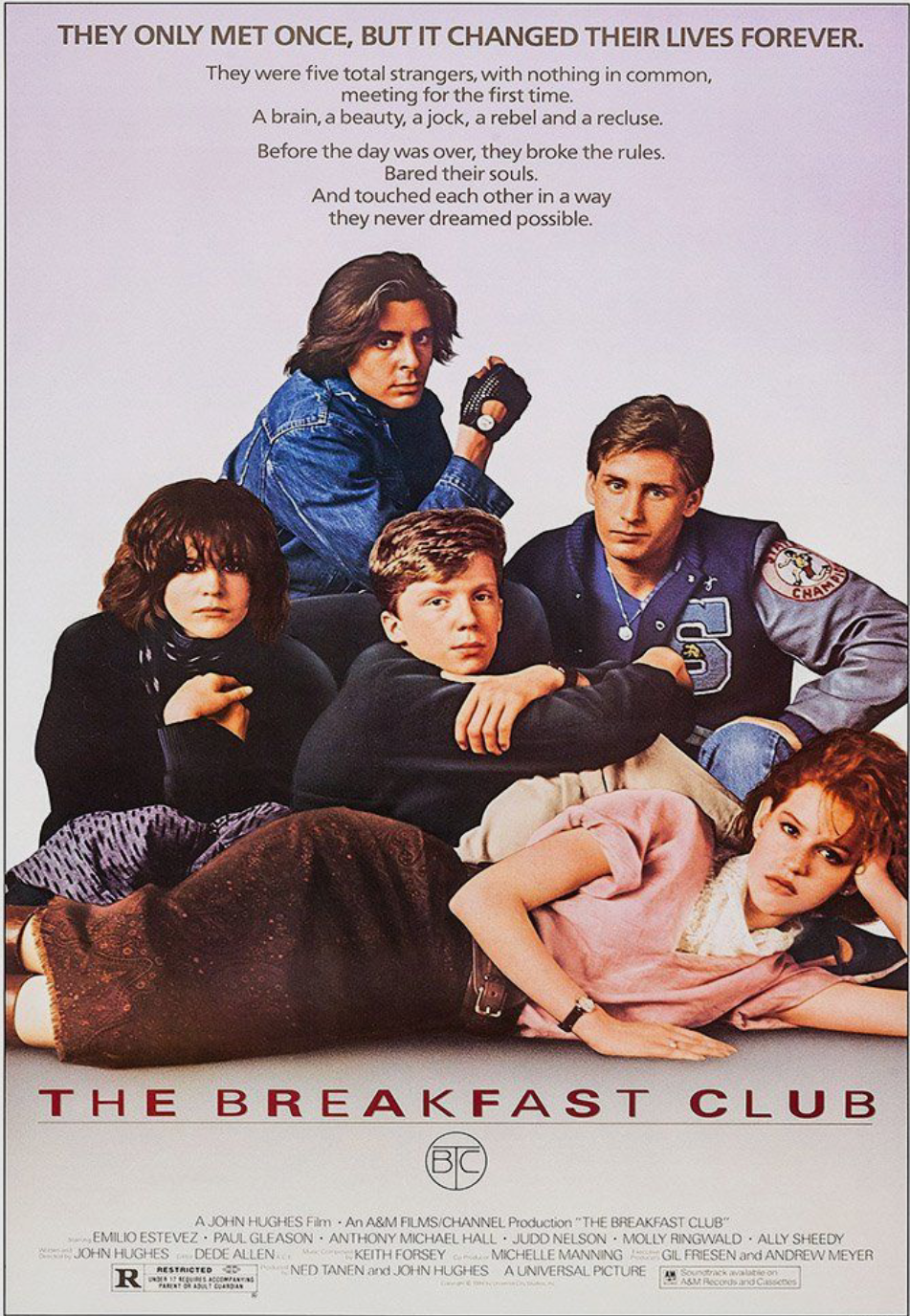
•Breakfast club is 35 now.

1985 The 1985 comedy and drama movie that has been a teenagers must watch since it’s release in 1985.

Thank you for reading. Have a nice day!🌼

Evolution

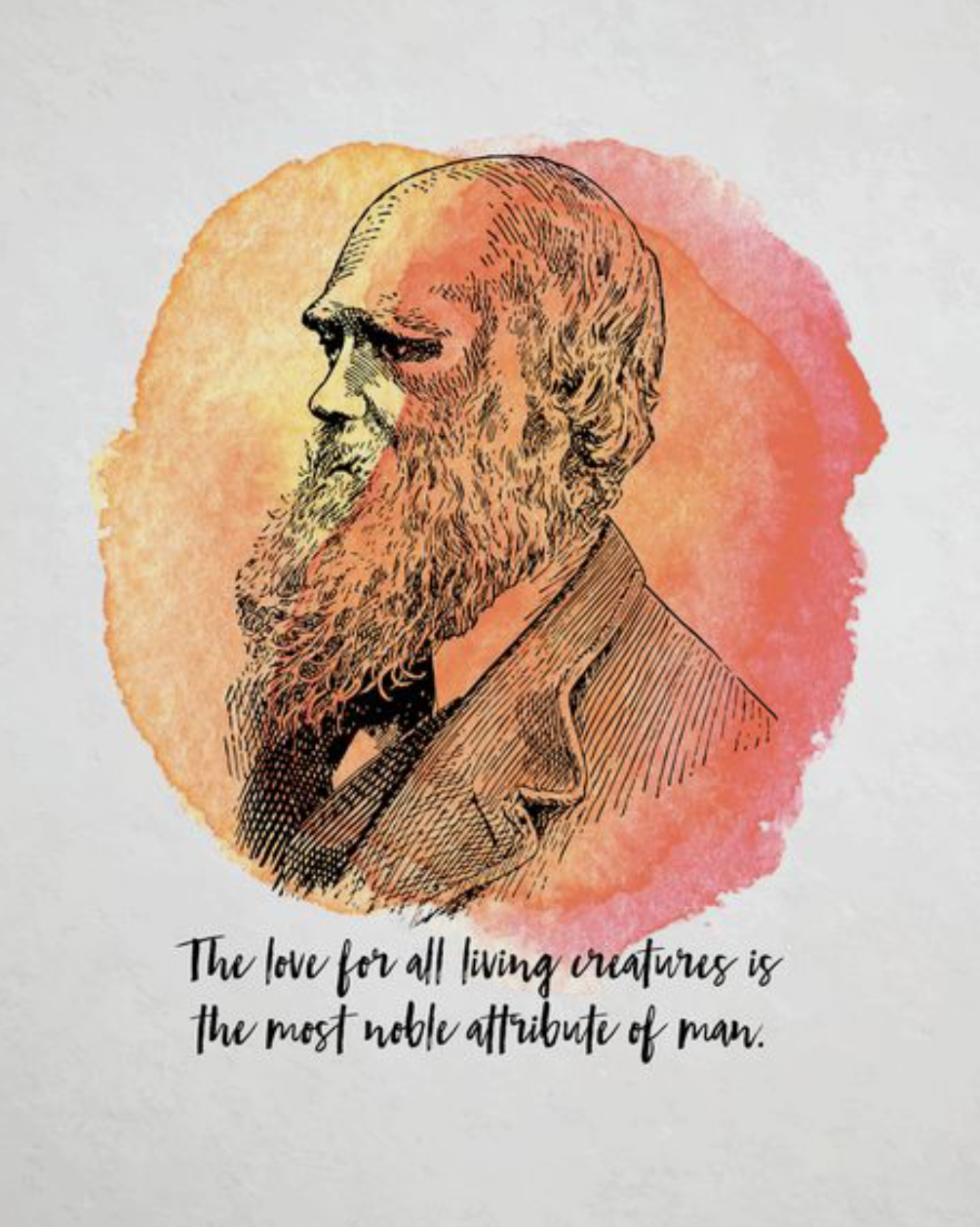
When you think of evolution the first name that comes to one’s mind is that of Charles Darwin. However, the fact is that he was not the first person to put forward the idea of evolution. Lamarck had suggested it earlier but the concept was not popular. In fact zoology professor Robert Grant lost his job because he supported Lamarck theory! An anonymous work titled, ‘The Vestiges of creation’ was ridiculed. It was Charles Darwin who first made the theory acceptable and he was able to do so because he supported it with a huge amount of evidence. Darwin, an English naturalist put forward his theory in a book titled ‘On the origin of the species’. He established that all species descended from common ancestors and that the different species evolved through a process he called natural selection. Darwin’s theory gained acceptance because it was able to explain the diversity of life.


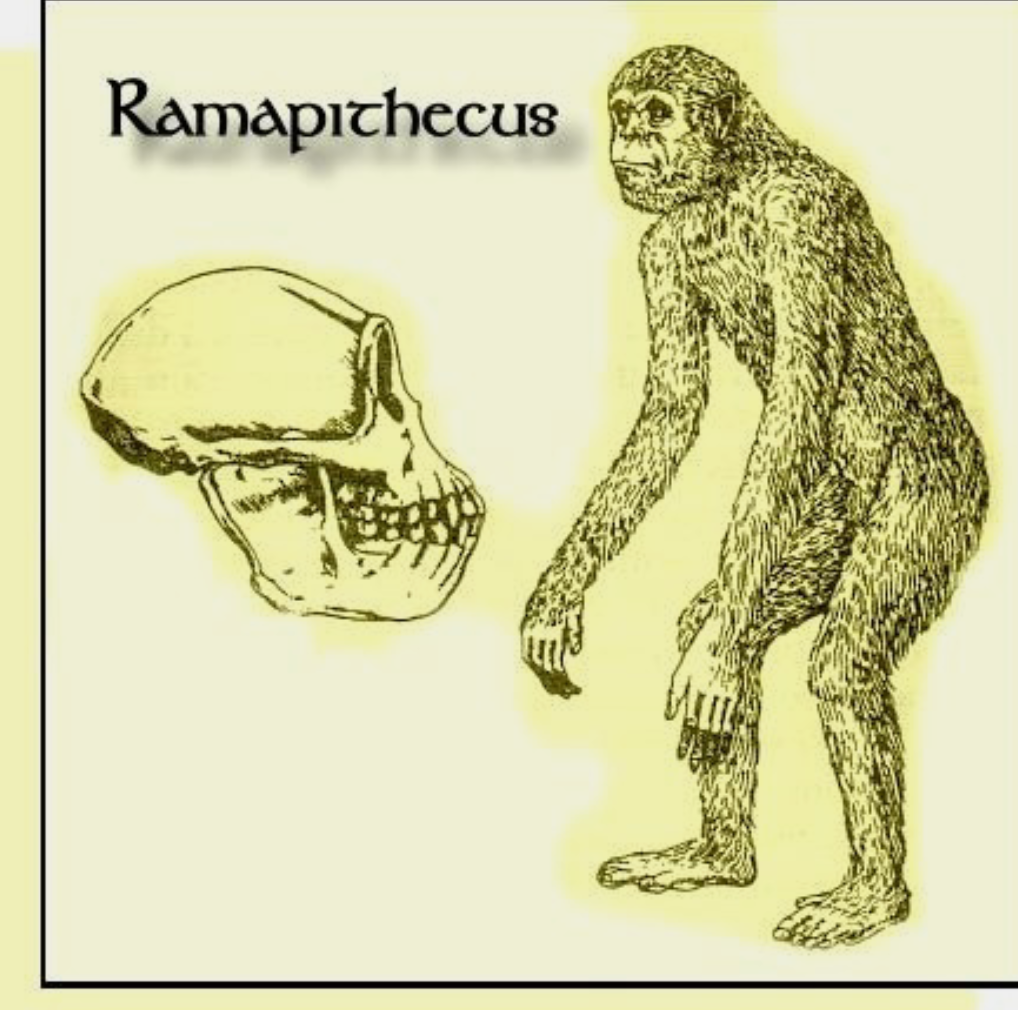
Ramapithecus belongs to an extent group of primates that lived from about 12 to 14 million years ago. Fossils of Ramapithecus were discovered in India and Africa beginning in 1932. Fossil evidence suggested that it had a short face, heavy jaws and enamelled teeth like hominids. Its importance lies in the fact that it was regarded as a possible ancestor of Australopithecus and therefore of modern humans. Later for sale finds indicated that Ramapithecus was more closely related to the orangutan and Ramapithecus is now regarded by many as a member of a group known as Sivapithecus.


It has been long known that humans share a common ancestor with apes but it was only in the last 30 years that techniques for develop to provide strong evidence in support of the theory that humans are more closely related to chimpanzees than they are to gorillas orangutans or Gibbons. The DNA of a chimpanzee is 98% identical to that of a human being. However our bodies adapted for walking on 2 legs. This is possible because the lower portion of the human body evolved to facilitate load bearing and balancing while walking upright. Chimpanzees not only share most of our genes they seem to be able to handle tools and they are able to grasp language pretty well too. Now researchers have found that we share a similar brain pattern when communicating. But in spite of these similarities there are clear differences in body structure intellect and behaviour.


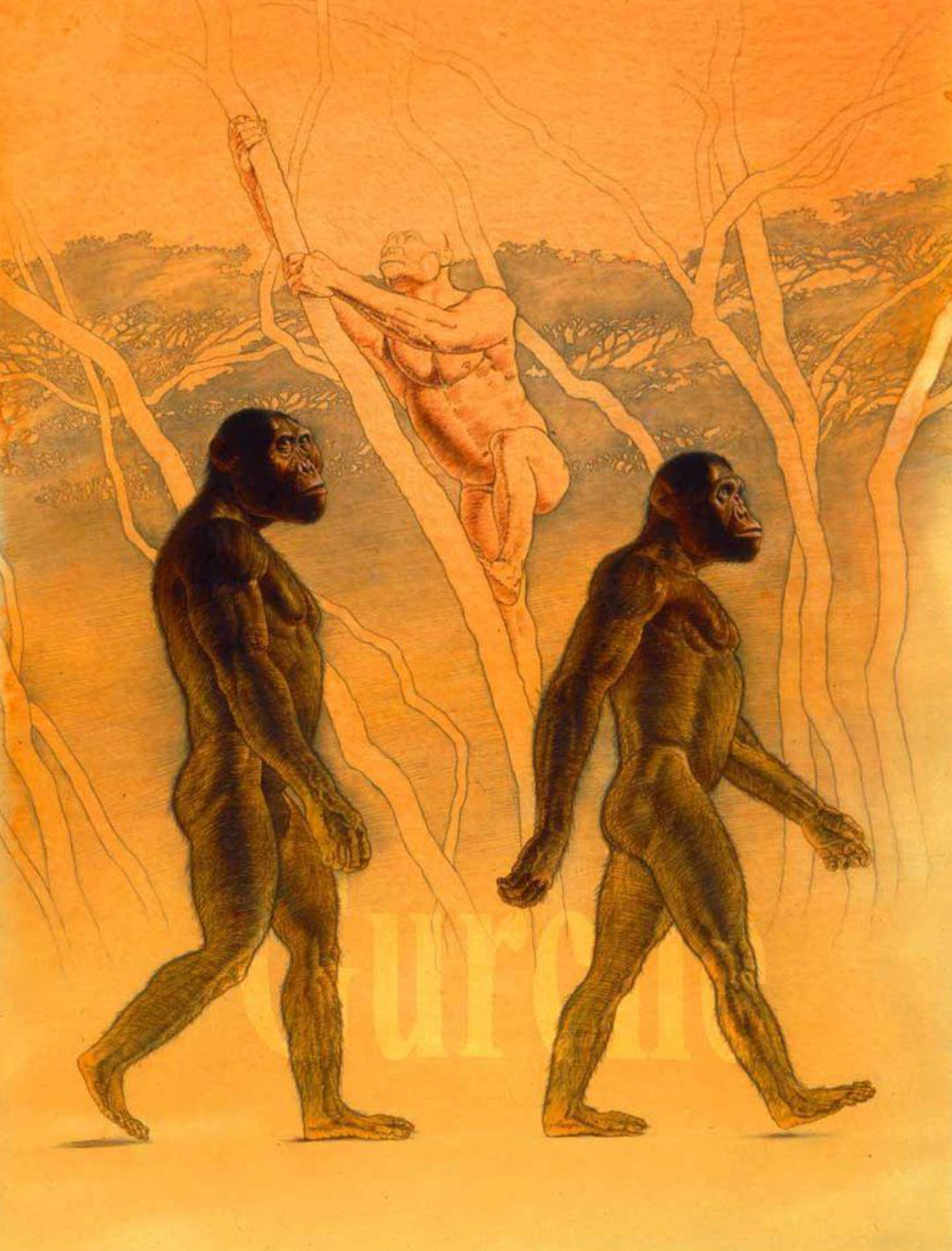
Australopithecus was an early hominid which is now extinct. Fossil evidence suggests that these individuals lived from approximately 4- 2 million years ago after evolving on the continent of Africa. Sense the fossils were recovered from south Africa they were called south African man apes or australopithecines. Australopithecines are believed to have been around 1 to 1.5 metre tall and probably fed on leaves fruits and the remaining of dead animals. Their brains were larger than those of apes but smaller than human brains while their teeth would like human teeth it is believed that Australopithecus eventually evolved into modern humans.


Neanderthal man first appeared in Africa about 200,000 years ago and migrated to the rest of the world around 100,000 years ago. The name Neanderthal comes from Neander valley where an early skull was found. Neanderthals would different from other species of early man. They were much taller and very strong for stop the brains were actually larger than ours are today. They were marvellous hunters. They often used caves as their homes. They were adept at fire making and probably cooked their food routinely. Neanderthals buried their dead. The Neanderthals died out by around 30,000 BC.
Cro-Magnon man lived some 40,000 -10,000 years ago. Their remains were first found in France in 1868 and then throughout other parts of Europe.

Cro-Magnon man was anatomically identical to modern humans and deferred significantly from Neanderthal man who disappeared in the fossil record shortly after Cro-Magnons appearance. Cromagnon man was tall and had an erect posture. He had a prominent chin a surprising forehead and skull shaped like hours. These man was killed hunters toolmakers and artists. Cro-Magnon man was a true human and looked just like us. He is represented by the remains of 5 individuals found in March 18683 adult males one adult female and one child.


•First family.
In 1975 Donald Johansson discovered the remains of at least 13 individuals of all ages at her there in Ethiopia. The sizes of the specimens varied greatly and Johansson believed that they all belong to a single species Australopithecus afarensis in which men were much larger than the females.

Thank you for reading. Have a nice day!🌼