CHALLENGES OF CORRUPTION

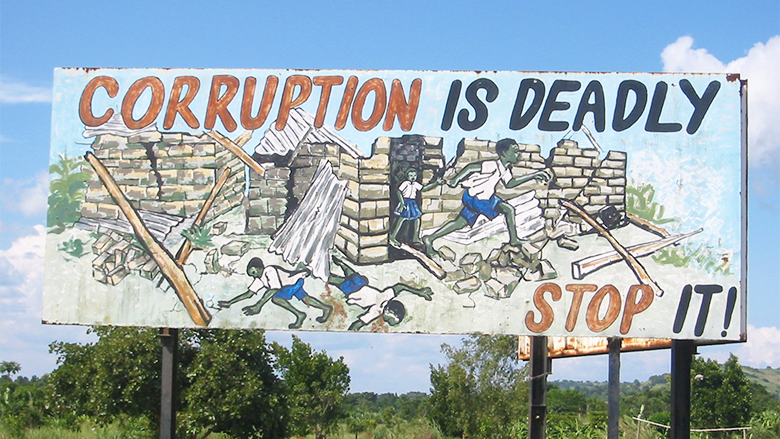
Corruption is a global phenomenon and it’s everywhere. Corruption has increased progressively and is now spreading more and more in our society. Corruption around the world is believed to be endemic and is universal and is a important contributor to slow economic growth, to restrain investment, to inhibit the provision of public services and to increase inequality to such an extent that international organisations like the World Bank have identified corruption as ‘The single greatest obstacle to economic and social development’. Theorists believe that ”corruption is most prevalent during the most intense phase of modernization of a country and tends to decline with institutionalisation of advanced democracy”. Basically, Corruption is offence on the part of an authority or powerful party through means that are not legitimate, immoral, or not compatible with ethical standards.

In a broader sense, Corruption is not just the bad behaviour of government officials stealing off money for their own benefit. It also includes cases where the systems do not work efficiently , and ordinary people are left in a dilemma, needing to give a bribe to get a work done. The economy of the state also plays an important role in increasing corruption. Inequality of wealth distribution, exploitation by employers, and low wages and salaries provide ideal breeding ground for corruption. Corruption also violates human rights, challenges the rule of law, distorts the development process, and dis-empowers the Indian state. Corruption is a hindrance in the process of fulfilling civil, political, economic, social and cultural rights.

FORMS OF CORRUPTION

  • Embezzlement: The theft of resources by people itself who are put to administer it. It happens When unfaithful employees steal from their employers. This is a serious offence where a public officials is misappropriating public resources, when a state official steals from the public institution in which he or she is employed and from resources he is supposed to administer on behalf of the public.
  • Nepotism: Nepotism is typical favouritism, in which an officer prefers his proper kinfolk and family members. Many unrestricted presidents have tried to secure their power position by nominating family members to key political, economic and military/security positions in the state apparatus.
  • Favouritism: Favouritism is a tool of power abuse implying “privatisation” and a highly improper distribution of state resources, no matter how these resources have been accumulated in the first place. Favouritism is the natural human tendency to favour friends, family. Favouritism is closely related to corruption so far as it implies a corrupted distribution of resources. It can be said that this is the other side of the coin where corruption is the accumulation of resources.
  • Fraud: Fraud is a financial crime that involves some kind of deception or deceit. Fraud involves a manipulation or distortion of information, facts and expertise, by public officials positioned between politicians and inhabitants, who seek to draw a private profit. Fraud is when a public official, who is responsible for carrying out the orders or tasks assigned by his superiors , manipulates the flow of information to his private profit.
  • Bribery: This form of corruption is the payment that is given or taken in a corrupt relationship. A bribe is a fixed sum, a certain percentage of a contract, or any other favour in money of kind, usually paid to a state official who can make contracts on behalf of the state or otherwise distribute benefits to companies or individuals, businessmen and clients.

Characteristics of Corruption

  1. It is a gap between group and their individual interest.
  2. It is between two or more parties since one can hardly be corrupt with one’s own self.
  3. Consenting adults that have a common understanding.
  4. It is Beneficial in future.
  5. The Existence of power that could be grabbed, entrusted or otherwise available.
  6. The misuse of the power that often drives a wedge between intended and stated positions, for benefits that is unintended.

Corruption in India is a consequence of the nexus between bureaucracy, politics and criminals. It has been observed that in cities and villages throughout India, there is “mafia raj” consisting of municipal and government officials, elected politicians, judicial officers, real estate developers and law enforcement officials, who acquire, develop and sell land in illegal ways. Many state-funded construction activities in India, such as constructing roads, flyovers, are dominated by the construction mafia, which are groupings of corrupt public works officials, materials suppliers, politicians and construction contractors.

It is now well recognized that the State is mainly responsible for both formulating and enforcing policies relating to good governance and human rights. Good governance is a key factor. The good governance agenda includes protection and promotion of human rights and rule of law. Both these functions will not be fully accomplished if corruption is widespread in government. Major challenge is that Corruption is a strong violator of human rights, particularly the economic and social rights of individuals as well as those of the State. It not only weakens development and growth, it also hinders efforts aimed at poverty eradication, socio-economic transformation and creation of an egalitarian society in accordance with the Directive Principles of the State Policy.


CORRUPTION IN INDIA…

Looking at the situation of India today, corruption can be observed and seen in almost every person, every place, every sector, every field, every institute, every dealing, every department, every exchange, every transaction, every opportunity, every job, every system and what not. In case of politics, it is in a worst situation or condition. Sometimes a doubt arises that whether we are living in a democratic country, whether we are following the constitution of  Dr. B .R. Ambedkar or not. Because the present scenario in India is like that, really worst. 

Corruption can be seen in every aspect. In politics, before winning elections-corruption to win, after forming government- corruption in activities and welfare programs. See the situation, how worse is it becoming day by day .I want to discuss this with some examples .Let’s begin.
CORRUPTION WITH EXAMPLES:
1.Distribution of money and gifts at the time of elections to come into power. See how they are cheating on people to come into power and for their personal benefits .They are directly spoiling the voting right of the people.
2. Corruption in quality and quantity of products. Corruption can be seen in the aspects of quality and quantity. If government is distributing something among the people, in between reaching the people from the government, it goes through a lot of corruption, like in hands of officers corruption takes place, some officers they ask money in return from the people to give their part from the government, which is so weird. And sometimes they practice do mal practices by which people may loose their quality ad quantity of the products receiving from the government.
3.For example, corruption in petrol, and food products. Expired products, and adulterated foods and products, cheating in petrol and fuels filling and many more like this. 
MAIN REASON FOR CORRUPTION IN INDIA:
The causes of corruption in India include excessive regulations, complicated tax and licensing systems, numerous government departments with opaque bureaucracy and discretionary powers, monopoly of government controlled institutions on certain goods and services delivery, and the lack of transparent laws and processes.

THERE IS A LOT OF CORRUPTION IN INDIA:

Corruption is especially prevalent in the judiciary, police, public services, and public procurement sectors. Due to varying levels of corruption and quality of government operations across India, local investment conditions vary between and within states.


A SAD THING IS:

Corruption in India is a consequence of the nexus between Bureaucracy, politics and criminals. India is now no longer considered a soft state. It has now become a consideration state where everything can be had for a consideration. Today, the number of ministers with an honest image can be counted on fingers.
HOW CAN WE STOP CORRUPTION:

  1. Expose corrupt activities and risks that may otherwise remain hidden.
  2. Keep the public sector honest, transparent and accountable.
  3. Helps stop dishonest practices.
  4. Ensure that public sector employees act in the public interest.


Corruption Unlimited

India has the dubious distinction of being one of the top ten corrupt countries of the world. The malaise is too deep and wide to be eradicated so much so that common people have become despondent to the point of apthy. India has become a country of scams, scandals, corruption, graft and gratification.

Bribery, gratification, illegal donations, kickbacks etc are now the order of the day. They have become endemic part and parcel of our life. Go to any department, ministry, office, school, college, police station law court, hospital or any any other place of work you can think of, you will find corruption ubiquitous. Even accident victims are not spared. People involved in train or plane accidents are robbed and plundered in very tragic and helpless conditions even by those who are supposed to be honest, helping and defender of the law and order. Can there be more degrading situation than this? Sometimes it looks as if the situation has reached the point of no return but then the inner conscience says “no” and urges to fight it.

Corruption has been eating into our vitals in spite of moral teachings, exhortations, slogans and learned lectures from the political platforms against the corrupt. No corrupt person has been hanged so far. The mills of law are too slow to grind and punish these political goons. It may take years even to take cognizance of corrupt practices, let alone punishing corrupt persons in top slots. Even our judiciary is not free from the malaise. Many a time a finger has been raised towards people sitting in the judgement.

Corruption percolates from above and gradually reaches all the lower levels of the society and administration. There is collusion and nexus between antisocial elements, mafias, criminals and politicians in power. There is no limit to hawalas, money laundering and a parallel economy exists there with their blessings. The criminals and the culprits are ruling the roost because of their high connections, contacts and money and muscle power. The long arm of corruption reaches everywhere. Neither politics, nor religion, nor elections, nor judiciary is beyond its reach. Dacoits and history sheeters are sitting in the Parliamentary and legislatures. Time has come when the people should wage a relentless war and crusade against corruption and corrupt practices. It is now or never.

The Prime Minister has given a clarion call to end this menace of corruption. Like him, all other honest Indian citizens, officials and workers hang their heads with shame. The Lok Pall Bill should be introduced in the Parliament at the earliest. There should be exemplary punishment for officers, ministers and all others who practice corruption. None should be spared, not even the highest. There should be transparency in decision making and implementation of policies. There should be one window clearance in big and vital contracts and licenses. There should be accountability and responsibility for all the actions and decisions. Right to information should find place among fundamental rights. Nepotism, red tapism, favouritism etc should be dealt with an iron hand. There should be no judicial hesitation, delay and procrastination in meeting out the due punishment to the corrupt. None can be above the law of the law of the land . There can be special courts to try the corrupt in the minimum possible time. The mills of justice should grind fine and fast too. Public should be aroused against the corrupt so that the people in authority do not become law in themselves and hold the country to ransom by their corrupt, selfish and narrow minded practices. This is the only way to have responsive government and clean leadership.

RTI ACT and Investigative Journalism.

Just like citizens, the RTI act has enabled lot many journalists in the country to investigate regarding their concerned issues. RTI act over the years has become an important weapon for journalists to divulge hidden and lesser known information. RTI act has become so crucial and an “everyday thing” for some journalists that they have build their entire career out of it.

Some of the famous cases where RTI act has helped journalists in their investigation procedure are:

1) Chhatrapati Shivaji Memorial Project by journalist Mr. Vishwas Waghmode:

Mr. Waghmode, a journalist at the time in The Indian Express investigated the controversial Chhatrapati Shivaji Memorial project. According to him, the initial cost quoted by the contractor was Rs.3826 crores which was supposed to be the lowest bid as opposed to the government’s bid which was Rs.2500 crores. The government in order to resolve this issue set up a committee led by the chief secretary in order to renegotiate the cost which successfully got the cost down to the government’s estimate of Rs.2500 crores. Mr.Waghmode in connection with this case stated that the rules do not allow renegotiation but rather they are supposed to issue fresh tenders. He further added that the opposition was alleging the government had reduced the height of the statue in order to reduce the cost which the government vehemently denied.

In order to have the “genuine information”, he took the help of RTI act. Mr. Waghmode discovered and revealed how the government had in reality decreased the height of the statue and the horse by 7.5m. But in order to show that the height of the statue was not reduced, they had instead increased the height of the sword by 7.5m. He further revealed that since the sword was straight, the amount of money required to build the sword was quite less when compared to the reduction in height and that in turn helped them reduce the cost by a substantial amount.

RESULT:

When all of this came into the public eye, the State Government could not justify why the height of the sword was increased and was in deep shame.

2) HONORARY DOCTORATE SCAM by Shyamlal Yadav.

When we talk about investigative journalism in India, we can never ignore this name, that is, Shyamlal Yadav. In 2018, Mr. Shyamlal Yadav in The Indian Express published a series of investigative reports on how India has emerged as one of the biggest markets for “predatory” publishers of substandard research journals.


On February 6, 2018, The Indian Express scrutinised over 500 RTI applications filed over 470 higher educational institutions to find that monitoring authorities, and hundreds of politicians and bureaucrats were awarded such degrees between 1997 and 2017.

The list for instance included former director of IISC, who received 18 honorary doctorates from public universities between 2006 and 2012 when he was chairman of NAAC’s EC. The list also had several UGC chairmen who had such degrees during their tenure.


RESULT:
Rules were made by higher authorities in 2019 after the investigative report via RTI files whereby NAAC officials, family weren’t allowed to accept honorary doctorates from institutions under their watch. RTI was used to dig out crucial facts in this case.

3) Discontinuation of LIC policies by Shyamlal Yadav

Shyamlal Yadav got information through RTI from Life Insurance Corporation (LIC) that there were 59 million insurance policies those were lapsed permanently due to discontinuance of premium. And the premium deposited since then had become LIC property. Despite many efforts LIC did not provide the info on total money deposited against those policies till the date they lapsed. As a result, Indian Express published the story about the discontinuation.


RESULT:


Within 25 days of publication of the story, LIC issued fresh
advertisements regarding renewal of policies.

4) Streams of Filth by Shyamlal Yadav:

This was an investigation by Shyamlal Yadav regarding water pollution in India that took over one year. About 39 RTI applications regarding expenses by Government on water projects were filed.
It came into notice that large amount of money was spent by Government for water purification projects but there was little effect on nation’s lifelines.
The story was published in The Indian Express and was selected by UNESCO as one of the 20 best Investigative pieces in the world.


RESULT:
Central Pollution Control Board said the rivers of India are not just polluted but severely toxic.

Reservation becoming danger!

The government constantly launches new programmes and schemes to support the citizens of India in the best way. But, every aspect has some negative relations to it. While bits of negativity can be ignored, the differences can’t be neglected when it starts shaping into a social issue. This article addresses the issue of Reservation- An Analysis as to how far is it beneficial to support the minorities via reservation quotas.

The agenda of the reservation for the backward class in the society is to provide them equal opportunities to showcase their talent and abilities. This initiative proves best when it gives a chance to the left-out people of the society to come up and earn for themselves a respectable and comfortable life.

  • The problem originated from the mindset of some sections of the society or some particular people who believe in supreme powers to be in the hands of only few, selected people belonging to particular religions or caste or place, etc. Clearly speaking, people who favour discrimination in the society. This leaves those people behind who are unaware of their rights and powers as a citizen of the country.
  • People who are in minority at a place are often in danger of being controlled by the dominant ones. This happened to be a serious problem.

Consequently, the govt. launched the mission for reservation in quotas for the poor and backward classes of the population. This has been an ever growing compulsion imposed to all institutions including the private sectors, to provide reserved seats to the disabled, poor, scheduled castes (SCs), scheduled tribes (STs), OBCs, EWS, and so on. The institutional bodies must reserve some seats/posts in their organisations for these people. To avoid fraud, people belonging to such categories are issued a certificate for the same after verification but frauds are committed even after it. It has become easy to get a certificate proving a general category person to be the one belonging to scheduled castes. What is more important to know is why do people try seizing rights of backward class that are granted to them by the govt. itself.

The reason is competition. The race is going so fast that everyone wants success, be it at others’ cost. The mindset is still. It is not changing. This is one side.

The other side says that the minority groups are being provided with a lot! Their recognition is increasing but in a negative way. Know how-

  • There are people belonging to backward classes also, who take advantage of situations. Such people get the reserved seats with the help of their certificates and owns the rest (this way, corruption originates from them too when they misuse their rights for self purpose…).
  • The reservations are provided with quotas to each backward section which they can avail without being in the competition or the race of success that everyone is running nowadays. This is the real advantage to them. They are given relaxation for marks in schools/college admissions especially in govt. institutions, for ranks in competitive exams, for eligibility of posts in govt. jobs, and so on. This has led to high disagreement among the ones belonging to the general category. Opportunities seem to be seized from the hands of the general people when the less competent fellows get higher positions in the work environment or even in the educational institutions.

Students work hard to reach a better place in life. Granting admissions to students with “certificates” even at lesser marks than the ones belonging to general category appears injustice. The reason is that the competitive exams are to test the abilities of the students which is examined on the basis of their scores. If the minorities are given admissions at very less scores than the others’, this should not be considered a competitive exam anymore!

These exams are the only way to earn recognition in the fast growing world since they form an important part in defining a person’s knowledge. Govt. jobs also require a ranking in their exams to consider an applicant for a post. This is a connected chain which is being misused when the deserving people are left out just to follow some norms. If the poor or other Reserved seat students are provided education at low costs in schools and in the same manner as others, then at-least there should be not such leverage in colleges or in the competitive exams. When the equality has been granted since the beginning, everyone is equal till the middle, then why again protect them. Having access to same knowledge as the general people, the minor section students too become capable of scoring high, making it a point of dissatisfaction to provide them support at every step of life even when they are better off.

This is a big discussion with many pros and cons but it is also a very serious matter to be addressed keeping in mind the welfare of each section of society. Everyone seeks protection in such matters since it is the question of future of the present and upcoming generation.

WHAT IS INDIAN MEDIA DOING?

The purpose of media in a nation is to provide information and knowledge to the people of the country. Media is regarded to be the most reliable means of information for the masses. There is no uncertainty about it that media plays an essential part in broadcasting information and facts, it keeps us informed regarding the happening across the world. The media acts as a link within the residents and the administration of the nation act as a third eye to the government, it draws clarity between the people and the state. News media is the fourth pillar of the democracy, be it a print media or television/ radio its main objective is to spread information with unbiased news without any modification or restriction, because people believe what they know, see and hear from these media platforms and manage to develop views and beliefs based on the data they are perceiving.


Indian media has been known for its reliable and substantial influence on the social, economical and political aspects of the country. In recent years the practice of funded news and increase in TRP has destroyed the faith across the media drastically, and because of this, the biggest victim turns out to be the Indian constitutionalism. The system of exerting money and supports from the corporate houses, politicians, administration, and big organizations, so that the media could show beneficial news concerning them has become a general practice in the press and is ruining the integrity of a journalist. Even if some of the media organizations or reporters want to present the right information to the people, they are always shut by the warning or threatening calls .


From the past two months where Indian TV channels mainly national ones have developed a fascination for one particular section of news – the demise of Bollywood star Sushant Singh Rajput. No matter however trivial or impossible, the Indian news media has left no stone unturned while broadcasting on Rajput’s death while there is other news like continuous rapes in Uttar Pradesh, the aftermath of floods in Assam, Ladakh issues, etc.


Most of the TV-news channels undividedly feed the desires of their political leaders and build the narratives to promote their political publicity. Paid news is dropping moral norms of journalism and day by day, the trust of the people on media platforms is disintegrating. The news commentators sitting on the ease of their AC studios and involving in undesirable discourse upon particular splinter group are accused of the current position of crisis in the nation. The Indian media now bears a severe crisis of reliability. If it does not improve itself, it will find its greatest asset going quickly depreciated and ultimately disappearing. Stripped of authenticity, sincerity, and trustworthiness, the media will desist to value to huge numbers of people lacking as a source of shoddy entertainment. Its high time now and we should stop this inconsistency before it causes more damage to the nation. Simply debar these news channels as we don’t need the help of news channels for biased opinions.

Hunger Games of the government…

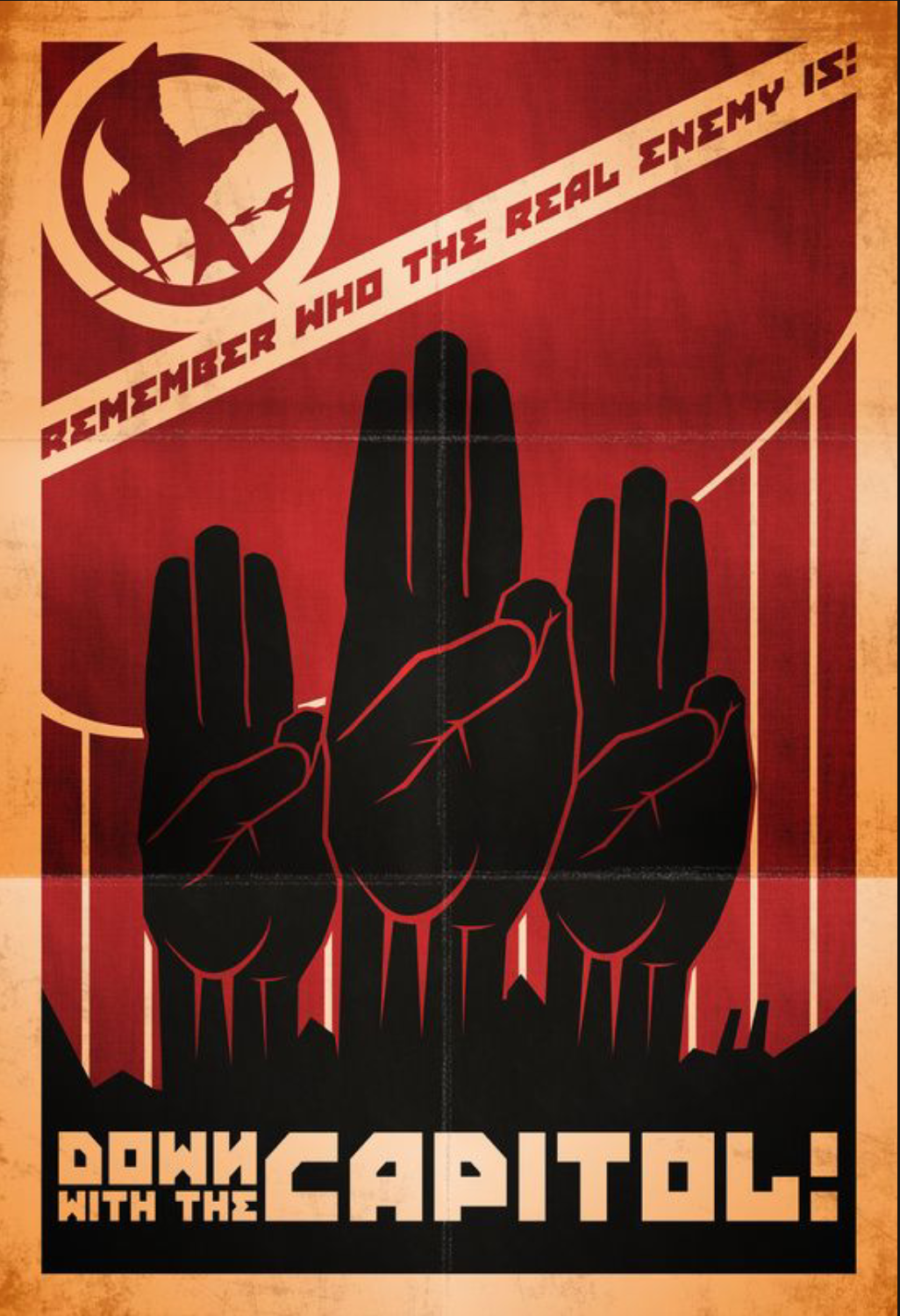
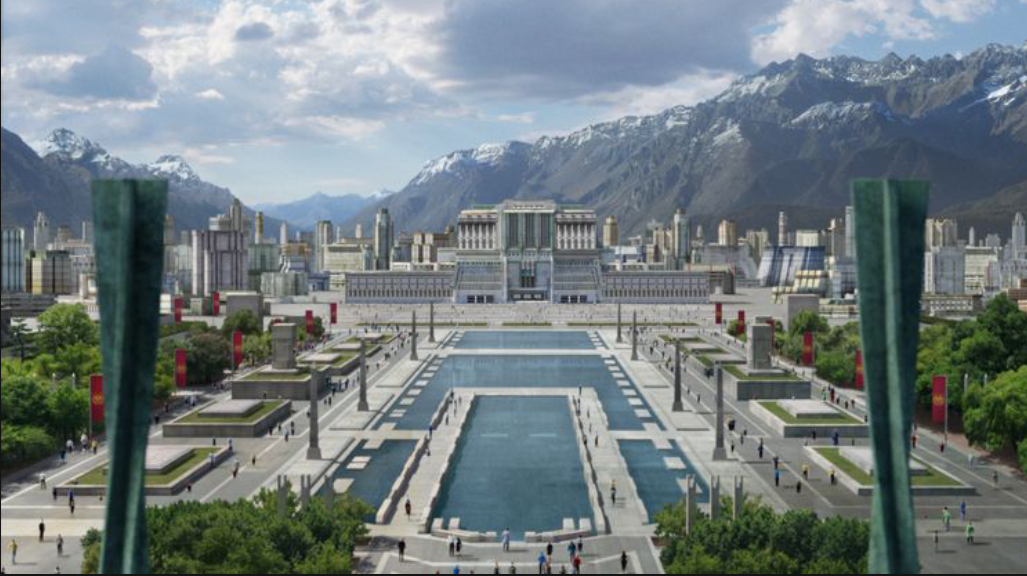
The government holds too much power. This is very well portrayed in the Hunger Games a book trilogy written by American author Suzanne Collins later made into a science fiction dystopian film series. The story is basically how the government has too much power over the lives of common man, how and why it is so wrong. The story is takes place in the fictional country that goes by the name of Panem. It consists of 12 districts that have been assigned various disciplines under which the people of the district work. Naming a few, district 3 specializes in technology, district 11 in agriculture, district 12 in coal mining. District 12 being the smallest and the poorest. All these districts are forced to produce the assigned goods and no have no freedom. The Capitol is the government who enjoy all the riches and luxury while the other districts starve to death. The Capitol, for the sole purpose of entertainment, organises this game annually where two teenagers- a male and a female are forced to participate, locked in an area and have to fight each other to death. The one who survives is declared the winner.

On the big screen we may find it interesting but more interestingly the series is the best depiction of communism. We know that our government always wants to suppress us and gain full control over our lives. Hence this book or the movie series is a good way to give us some lesson in an entertaining manner.

The government’s control over the goods production in a district and no freedom of their own reminds us of the real world example of North and South Korea. Everyone is aware of the situation here. People in North Korea have no freedom it is only the governmental control over their lives and henceforth people are starving. On the contrary, South Korea is thriving. Former Soviet Union couldn’t find a permanent position due to the same reasons. It had too much control over the people and the people suffered. A government cannot work without the cooperation of its people. History holds records of how such controlling government led to their own decline. Panem government violates its people’s basic rights resulting in poverty and starvation and later a rebellion.

The Hunger Games also shows how the upper class lives in luxury in contrast to the middle class lives. It shows how the people of district 1 enjoy all the facilities and live a posh life. They do not have to wait in lines for hours to manage some food for the family. This demonstrates real life situation where the rich are getting richer and the poor even poorer. The government might show us false hope but it is the lower class people who are the fools. The horrors of communism in this book/movie is a good way to let the younger generation realise the truth about the world. Also teach us lessons to be smarter.

Thank you for reading. Have a nice day!

Role of Youth in Eradicating Corruption.

Once, Dr. A.P.J Abdul Kalam has rightly said, ” If a country is to be corruption free and become a nation of beautiful minds, I strongly feel there are three key societal members who can make a difference. They are – Father , Mother and the teachers.”

The truth is, corruption is now a worldwide phenomenon. But according to me the fourth and the most important societal member who can eradicate corruption is the YOUTH of our country. The real war has to be fought against these social evils and as the leaders of tomorrow it is our prime responsibility and duty. Why should we create awareness in small children about such vicious crimes ? Because – Things sowed in the minds of young take deep roots.

In reality, it is very difficult to root out the infectious disease known as corruption which has become rampant in every field of life. However instead of bearing it we must challenge it. Some years ago when social activist Anna Hazare started the anti-corruption moment, the maximum crowd was of schhool and college students. Their support is what made the purpose of the protest a succesful one. But was that enough?

Mahatma Gandhi- the father of our nation has quoted ,” A small act of good deed can cause endless ripples.” Youth of our country should remain vigilant and never allow themselves to be exploited by this social evil. Many people say that nothing can be done, but I believe things can change. Of course individual efforts can bring excellence but only collective efforts can be delivered effectively.

In the modern era, our Government is slowly accepting the opinions of young minds and their needs have been put forth as priority.I truly believe that the modernisation and dinamic attitude in the Indian parliament will slowly yet steadily change the phase of our nation. According to me it is not only the duty of politicians and government officials to boycott curroption but also the duty of each and every individual to war against it.

Whenever the circumstances may come, public should not bribe school or college managements to accomodate seat and admissions. We should not bribe traffic police for violating the traffic rules. Corruption has made our country lawless. Muscle and money power has come the law. Our freedom fighters fought all their lives to give us freedom from physical slavery. However we as a educated generation are not free from financial slavery.

Gandhi led the non-violent fight against the british but the currency note which bears his photo is the medium of corruption. What an irony ! Corruption is a virus which can be eradicated if the youth of our country decides to do so. No matter how much the delay we must not pay the bribe at any cost.

Albert Einstein has rightfully said that, ” Evils in the world exist not only because of those who do them but also because of the one’s who just see them annd do nothing to prevent it.” Corruption is like cancer which starts at one part of the system and spreads to every part if not treated or cured at an early stage.

Many years ago we had tryst with destiny and now the time has come when we shall redeem our pledge as the responsible citzens of this nation. Let us wake the Anna Hazare in us and stand for ” India against Corruption”. Only when the last tree has died and the last river has been poisoned and the last fish has been caught will we realise we cannot eat money.

Even if the older generations saw corruption as an immortal enemy, we millenials think of it as a mortal one. So my dear youngsters, ask not what your country can do for you. Ask what you can do for your Country and World at large as one family.

IS THERE END TO CORRUPTION?

People think that we may catch scam after scam and this country will not change. There must be a sense of urgency and restlessness because we need and want to make a corruption-free India. The other name of ‘just the way things are in India’ is corruption. Corruption is the misuse of power or public property for personal gains, like taking bribery. We see that even the simplest daily- routine administrative tasks cannot be performed without a bribe to the civil servant in charge of the paperwork. If you need your work done, don’t forget your bribe money. This situation leads to many issues, but there are two significant issues in it.

Firstly, if we get our work done through bribery, that means we are not paying our taxes rightly, and the person who is receiving it is also not paying taxes. It generates black money. Some people cannot afford bribe. When their work doesn’t get done, and some person with money gets his job done, the divide between have, and have-not widens. This exercise is also contagious. Others get influenced, and they decide that paying a little bit more will get their work done, and so they jump on the bandwagon. It creates a big chain of people who give rise to corruption and black money.

Secondly, we are developing a habit of getting our work done on our own and not informing an authority about something wrong in administration. After this becomes a habit, any new policy will face resistance because we deal with things in our way. So, subsequent procedures or instructions for the collective goodwill not work and so everyone who is connected with that system suffers.

Luxury, convenience and comfort are some offerings that lure us into becoming corrupt. The government allocates let’s say anti-poverty funds, resources for infrastructure development. Why is it that a minor percentage of the entire sum reaches us? It is because, throughout the channel of resource distribution, people are sitting who want an extra taste of all these offerings. The force of this desire is so immense that they snatch money without considering people for whom it was destined.

Corruption in India worsens poverty. A good portion of our taxes gets collected in few hands when it is meant for everyone. Corruption also gives rise to inflation. Since people have black money now and their purchasing power has increased, they demand more for things. When there is a huge demand for materials and objects due to surge in black money, pressure comes on supply which creates inflation. People with money will consume resources since now they have additional money (all thanks to black money and corruption) and ultimately the poor will be deprived of things that he deserves. There is more poverty which leads to a deficit of public trust in government and law.

India’s goal to transform itself into a market for foreign companies and attract investment is increasingly being challenged by corruption and red-tape”.[1] The culture of bribery creates uncertainty for foreign investors. They don’t know if their investment is safe anymore and so become reluctant. Why isn’t everyone alarmed about it and doing something required at own level? Indeed, we Indians are a ‘low arousal’ people. We endure injustice and unfairness. The poor suffer inhuman conditions, and we say ‘that is how it works here’. We must stand up peacefully and resist corruption. It is an epidemic tearing into India’s foundation and economic wellbeing. We can only fix it by real Indians. There is only one-step- we must do it at our level.


[1]Siddharth Chatterjee, Corruption- An Epidemic of Epic Scale in India, The Huffpost, April 4, 2014, available at: https://www.huffpost.com/entry/corruptionan-epidemic-of-_b_5083293.