

The rapid growth of artificial intelligence has created new opportunities for organizations across industries, including education, research, healthcare, and business. At the same time, the cost of deploying advanced AI models remains a major concern for institutions seeking to integrate these technologies into everyday operations. As a result, interest in open-weight models and more affordable AI infrastructure solutions continues to increase.
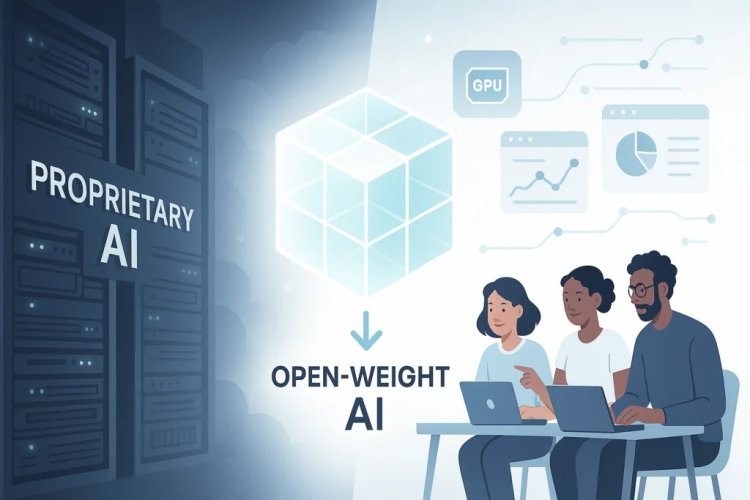
According to Stackademic, iFrame introduced a hosted inference service in August 2024 built around Meta’s Llama 3.1 and several other leading open-weight AI models. The service aims to provide enterprise-grade AI capabilities while reducing the costs typically associated with commercial AI platforms.
The launch reflects a broader shift taking place throughout the artificial intelligence sector. Organizations are increasingly exploring alternatives to proprietary systems in order to gain more flexibility, transparency, and control over how AI technologies are deployed. Open-weight models have emerged as an attractive option because they allow developers and institutions to better understand, customize, and manage the systems they use.
Meta’s Llama 3.1 played an important role in accelerating this trend. Released in 2024, the model quickly gained recognition for delivering strong performance across a wide range of tasks. Researchers, developers, and organizations began adopting the model because it offered capabilities comparable to many closed-source alternatives while providing greater deployment freedom.
iFrame’s hosted inference service is designed to simplify access to these models. Instead of building and maintaining complex infrastructure, customers connect through an API and gain access to powerful AI tools without managing hardware resources. This approach helps reduce technical barriers for organizations that want to implement artificial intelligence but lack dedicated infrastructure teams.
The service includes additional software layers intended to improve reliability and consistency. Features such as prompt optimization, structured output controls, and verification mechanisms help organizations generate predictable results across different applications. These capabilities are especially important when AI systems are used in environments where accuracy and consistency matter.
One of the primary advantages highlighted by iFrame is cost efficiency. The company states that the service delivers inference pricing that is approximately 40% to 70% lower than comparable hosted offerings from OpenAI for similar workloads. While savings vary depending on the specific task being performed, the overall goal is to make advanced AI more accessible to a wider range of organizations.
Lower costs have important implications for educational institutions and research organizations. Universities, training centers, and academic programs increasingly rely on AI-powered tools for data analysis, content generation, tutoring support, and research assistance. Budget constraints often limit access to large-scale AI systems, making affordable infrastructure an important factor in technology adoption decisions.
The economics behind the service are based on infrastructure optimization. Rather than depending on a single computing environment, iFrame routes workloads across hyperscale GPU resources while optimizing the software stack responsible for inference. This allows the company to reduce operational expenses without sacrificing performance levels required by enterprise customers.
The growing popularity of open-weight models also supports academic and research objectives. Open systems provide greater transparency, allowing researchers to examine model behavior and explore new applications. This level of visibility is often valuable in educational settings where understanding the technology itself is as important as using it.
Beyond education, the platform supports a wide variety of use cases. According to the company, the hosted inference service has been used for medical coding automation, evidence synthesis, research support, long-context document analysis, and AI-powered assistants. These applications demonstrate how modern inference platforms are becoming foundational components of digital transformation initiatives.
Another factor driving adoption is the desire to reduce dependence on a single technology provider. Many organizations now seek greater flexibility when building AI strategies. Open-weight ecosystems allow businesses and institutions to choose deployment approaches that align with their operational requirements while avoiding long-term vendor lock-in.
The launch also reflects changing perceptions about the future of artificial intelligence infrastructure. For years, many organizations assumed that access to advanced AI required reliance on a small number of proprietary providers. The success of open-weight models is challenging that assumption by showing that high-performance AI can be delivered through alternative approaches.
Industry observers expect this trend to continue as open models improve and infrastructure providers develop more efficient deployment methods. The combination of lower costs, stronger performance, and greater flexibility is encouraging broader adoption across sectors that previously viewed advanced AI as financially out of reach.
As artificial intelligence becomes more integrated into education, research, and professional environments, the importance of scalable and affordable infrastructure will continue to grow. Services such as iFrame’s hosted inference platform demonstrate how organizations are working to make advanced AI capabilities more accessible while maintaining the performance and reliability required for real-world applications.
The introduction of the platform highlights a key development in the AI market: powerful open-weight models, when paired with optimized infrastructure and enterprise-ready software tools, are becoming a viable alternative to traditional proprietary systems. For institutions seeking cost-effective access to advanced AI technologies, this model represents an increasingly attractive path forward.


You must be logged in to post a comment.