

AI translation tools can help international students participate in everyday university life, but they work best as communication aids rather than replacements for language learning. A useful tool might clarify a lecturer’s instructions, help a new student ask for directions or keep a group discussion moving. It cannot reliably interpret every accent, cultural reference or specialist term.
The challenge for students and educators is choosing when to use translation, which format suits the situation and how to keep students actively learning the language they are studying in.
Why Language Access Matters in Higher Education
University study requires more than understanding textbooks. Students must follow fast-moving lectures, discuss ideas with classmates, contact administrative offices and manage unfamiliar situations off campus. Language barriers can make those ordinary activities exhausting, particularly during the first weeks of study abroad.
UNESCO’s 2025 guidance, Languages Matter: Global Guidance on Multilingual Education, argues for education that recognises learners’ languages and makes learning more accessible. Translation technology can contribute to that goal, but it is only one part of an inclusive approach. Clear teaching, accessible materials, opportunities to ask questions and human support remain important.
Four Situations Where AI Translation Can Help
1. Following lectures and unfamiliar terminology
Live captions or translated speech may help a student follow the main point of a lecture while adapting to a new language of instruction. The most useful approach is to check unfamiliar terminology after class, rather than treating a machine-generated translation as a perfect record. In subjects such as engineering, medicine or law, a single mistranslated term can change the meaning of an explanation.
2. Participating in group projects
Group work often moves faster than formal lectures. Students interrupt politely, use informal expressions and switch between discussing concepts and deciding who will complete each task. A translation tool can help clarify a short question or confirm an agreed deadline. It should not take the place of asking a teammate to repeat or explain something when the meaning is uncertain.
3. Navigating campus services
Student accommodation offices, libraries and transport services are practical settings for brief translated conversations. A student may need to ask about office hours, explain a routine maintenance problem or understand directions. Translation is a useful first step for straightforward requests; official documents, financial obligations, health matters and immigration advice require verification through appropriate university staff or qualified professionals.
4. Building confidence in everyday conversations
Daily interactions at a café, student society or campus event provide chances to practise speaking. Translation can help a newcomer start an exchange that might otherwise feel intimidating. A productive habit is to use the translated answer to learn a phrase, then try that phrase independently during the next similar conversation.
Choosing Between Apps, Live Captions and Wearable Devices
The best translation format depends on whether a student is reading, listening or speaking. No single device handles every learning task equally well.
- Phone translation apps work well for written notices, unfamiliar vocabulary and occasional face-to-face exchanges. They are often the simplest starting point, although using a screen can interrupt eye contact.
- Live captions can be valuable during lectures and presentations when readable text is easier to follow than spoken output. Their usefulness depends on microphone quality, supported languages and the availability of an appropriate service.
- Translation earbuds offer spoken assistance without a handheld screen. Students should check how two-way conversations work, including whether the other participant needs a device or access to an app.

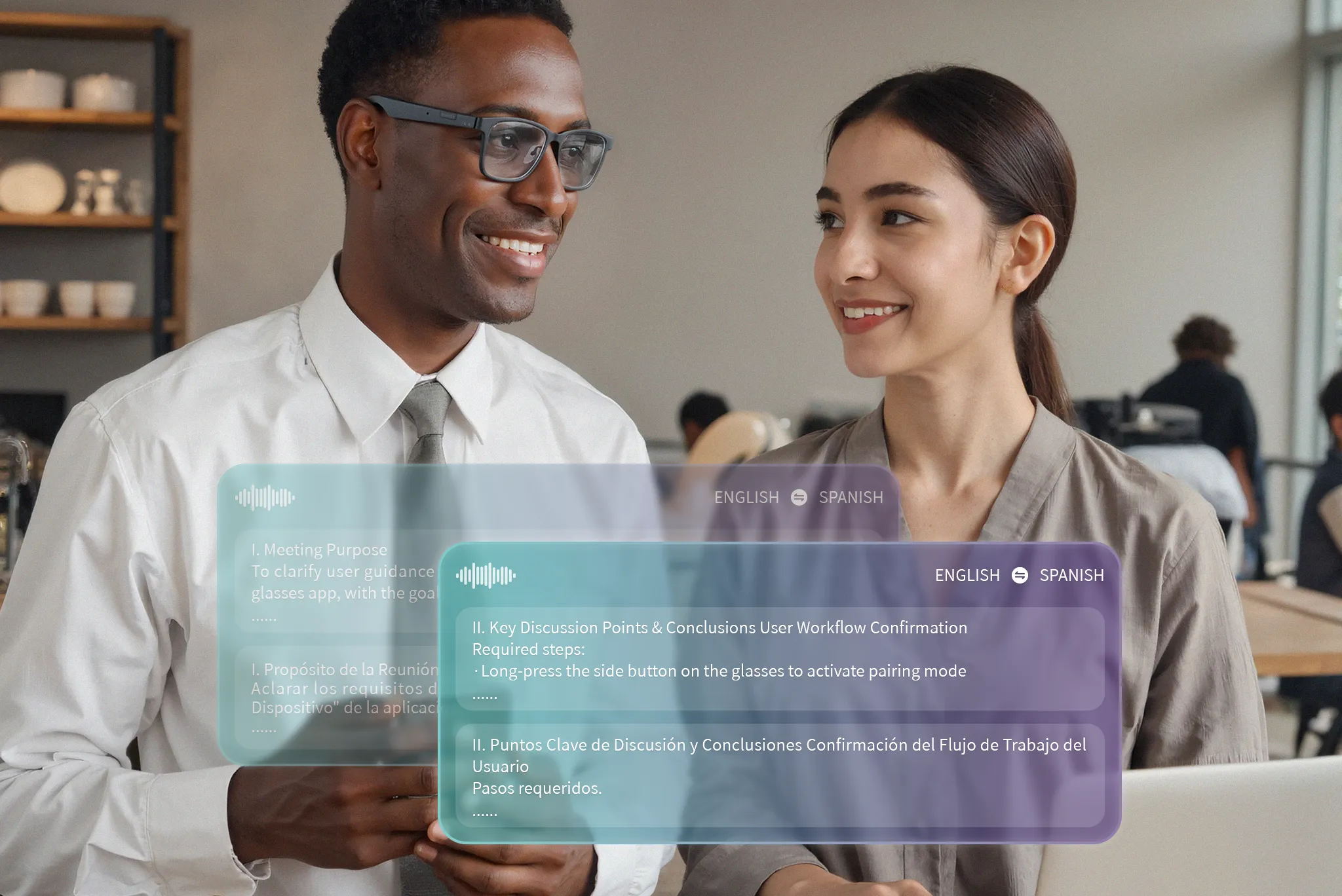
For students who regularly need spoken support during campus conversations, translation glasses provide another hands-free format to explore. Some audio-first models play translated speech through the frames, allowing the wearer to maintain eye contact. However, wearable translation often depends on a companion smartphone, internet access and pauses between spoken turns. It is not a substitute for a trained interpreter.
Price and practicality matter as much as technical features. Students should first try tools already available through their phone or university before paying for specialised hardware.
Why Instant Translation Is Not the Same as Learning a Language
AI-generated translation provides an answer to a communication problem; language learning develops the ability to solve that problem independently. Students still need practice recognising speech, choosing appropriate words, expressing opinions and understanding cultural context.
An October 2026 systematic review by Haoyu Lu and Jie Guo examined 31 studies of AI-supported translation teaching in higher education. The review identified potential benefits for feedback and error awareness, but also risks of overreliance and superficial revision. Outcomes depended on the task, the learner and the guidance provided by educators.
A simple distinction helps: use translation to gain access to information, then use study activities to build competence. For example, a student might use translation to understand an assignment briefing, but should still practise summarising the task in their own words.
Accuracy, Privacy and Academic Integrity Still Matter
Speech translation can misinterpret overlapping voices, uncommon names, regional accents and context-specific vocabulary. Students should verify deadlines, assessment instructions and important commitments against written sources. University staff can clarify consequential information more reliably than an unverified transcript.
Privacy rules apply even when a wearable has no camera. A device that listens to or records speech may capture personal information or send audio to cloud services. Recording a lecture, tutorial or private conversation requires following the institution’s policies and obtaining consent where necessary. Students should also check how recordings are stored, retained and deleted.
Academic integrity is another consideration. A translation aid used to understand instructions is different from submitting machine-translated writing as independent work. Individual courses may restrict translation software during assessments or require students to disclose AI assistance. The relevant course rules should guide use.
A Practical Five-Step Approach for Students and Teachers
- Identify the task. Decide whether the student needs vocabulary support, lecture comprehension, a short conversation or formal interpreting.
- Start with the lowest-friction option. Test a phone app, university captioning service or existing accessibility tool before purchasing equipment.
- Check one realistic example. Try the tool with actual course vocabulary, normal speaking speed and the languages the student uses.
- Build in verification. Confirm names, dates, technical terms and important instructions through a second source or a knowledgeable person.
- Turn assistance into practice. Keep a short list of useful expressions, ask students to explain meanings in their own words and gradually reduce reliance on translation for familiar tasks.
Educators can also make translation tools more effective by sharing key terminology in advance, allowing appropriate processing time and explaining which forms of AI assistance are permitted. These practices benefit students regardless of whether they use a phone, captions or a wearable.
The Goal Is Participation, Not Permanent Dependence
AI translation tools have a legitimate place in multilingual education when they help students access information and participate more confidently. The strongest results come from matching the tool to the situation, recognising its limitations and keeping language development at the centre of the learning process.
For international students, the ideal outcome is not needing a translator for every conversation. It is being able to participate today while developing the skills to communicate more independently tomorrow.
Share a few recent shots from your camera roll, no context needed.
View all responses

