Corporate branding refers to the practice of promoting the brand name of a corporate entity, as opposed to specific products or services. The activities and thinking that go into corporate branding are different from product and service branding because the scope of a corporate brand is typically much broader. For example, Corporate Branding Johor Bahru
Tag: digital marketing
Digital Marketing and Its Types
Marketing their products and services is a very important thing for any business and company. Through media outlets such as television, newspapers, and FM radio, some companies market their products directly to homes and attract customers. But despite such marketing methods in this technological world, a method called digital marketing is becoming very popular.
What is this digital marketing? How many types are there? we will find out in this article.
What is Digital Marketing?
Digital marketing is the process by which a company or business makes their products available to the public through the Internet, marketing them, and attracting customers to sell their products.
In the 21st century, people have been using the Internet more and more actively, especially for a few years. Knowing this, every company knows the needs of the people and adopts the strategy of marketing their products and services through the internet.
You do not need to have vast coding or programming knowledge to enter this digital marketing field. A certain amount of coding knowledge is sufficient. Not only that but an important requirement is to have the ability to understand what customers expect and what their need.
Types of Digital Marketing
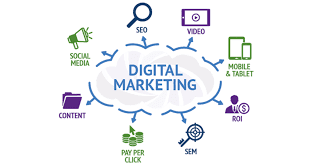
1. SEO
SEO is Search Engine Optimization. A business or company will have created a website for them. That website should rank top in search engines like Google. This means that if you search for the name of the company or their products on Google, their website should come in the top rank. To do this, they use keywords or tags when creating the company’s website, and use some coding techniques to bring the website to the top. Not only that but only if the keywords are updated frequently will the company be able to rank in the top rank in the search engine.
2. SMM
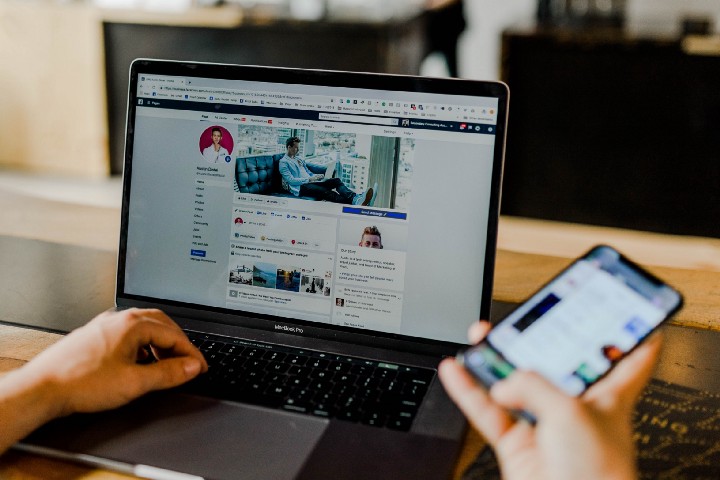
SMM is Social Media Marketing. Any company would have created an account for them on social media. I.e. media like Instagram, Facebook, Twitter. They will often update on social media like this about their products. This will increase the chances of attracting customers and selling the product easily.
3. Email Marketing
Every company, they will advertise their products to their customers via email. Each company will advertise their products to their customers via email. For example, if we enter into a website it will ask you to sign up or login. If we put our email ID in and sign up, they will know our email ID. Through this they often advertise their products and services to us via email.
4. Content Marketing
A company will create blogs and videos about their products and services on their website. When customers see all of this, there is an attraction to their products. So the chances of that company making progress are high.
5. SEM
SEM is Search Engine Marketing. SEM can be said to be the paid version of SEO. A company will pay for their website and make it rank top in the search engine. The company will publish their website on Google AdSense. When customers search for a keyword related to that company on Google it will come up in the top of the search engine.
6. Pay Per Click Ads
It’s something everyone knows. When we enter in to certain websites, apps, we are shown some ads there. Those advertisers will publish their ads on Google AdSense. Related ads will be displayed according to the needs of the customers. Advertisers will pay Google AdSense based on how many customers click on the ads.
7. Affiliate Marketing or Influencer Marketing
A company will select people who have a lot of followers on social media and tell them about their products and services. Tell to people about their products. If someone buys the company’s products through that influencer, the company will pay a certain amount of commission to that influencer. We’ve all seen some of the biggest actors talking about certain products on their social media.
How to Useful is Twitter for Marketing
Digital Marketing Online Course Chapter 1
DIGITAL MARKETING
Digital Marketing
Any marketing that uses electronic devices to convey promotional messaging and measure its impact. In practice, digital marketing typically refers to marketing campaigns that appear on a computer, phone, tablet, or other device. It can take many forms, including online video, display ads, and social media posts. Digital marketing is often compared to “traditional marketing” such as magazine ads, billboards, and direct mail. Oddly, television is usually lumped in with traditional marketing.
Did you know that more than 3 quarters of Americans go online on a daily basis? Not only that, but 43% go on more than once a day and 26% are online “almost constantly.”
These figures are even higher among mobile internet users. 89% of Americans go online at least daily, and 31% are online almost constantly. As a marketer, it’s important to take advantage of the digital world with an online advertising presence, by building a brand, providing a great customer experience that also brings more potential customers and more, with a digital strategy.
What is digital marketing?
Digital marketing, also called online marketing, is the promotion of brands to connect with potential customers using the internet and other forms of digital communication. This includes not only email, social media, and web-based advertising, but also text and multimedia messages as a marketing channel.
Essentially, if a marketing campaign involves digital communication, it’s digital marketing.
Inbound marketing versus digital marketing
Digital marketing and inbound marketing are easily confused, and for good reason. Digital marketing uses many of the same tools as inbound marketing—email and online content, to name a few. Both exist to capture the attention of prospects through the buyer’s journey and turn them into customers. But the 2 approaches take different views of the relationship between the tool and the goal.
Digital marketing considers how each individual tool can convert prospects. A brand’s digital marketing strategy may use multiple platforms or focus all of its efforts on 1 platform.
Inbound marketing is a holistic concept. It considers the goal first, then looks at the available tools to determine which will effectively reach target customers, and then at which stage of the sales funnel that should happen.
The most important thing to remember about digital marketing and inbound marketing is that as a marketing professional, you don’t have to choose between the 2. In fact, they work best together. Inbound marketing provides structure and purpose for effective digital marketing to digital marketing efforts, making sure that each digital marketing channel works toward a goal.
B2B versus B2C digital marketing
Digital marketing works for B2B as well as B2C companies, but best practices differ significantly between the 2.
- B2B clients tend to have longer decision-making processes, and thus longer sales funnels. Relationship-building strategies work better for these clients, whereas B2C customers tend to respond better to short-term offers and messages.
- B2B transactions are usually based on logic and evidence, which is what skilled B2B digital marketers present. B2C content is more likely to be emotionally-based, focusing on making the customer feel good about a purchase.
- B2B decisions tend to need more than 1 person’s input. The marketing materials that best drive these decisions tend to be shareable and downloadable. B2C customers, on the other hand, favor one-on-one connections with a brand.
Of course, there are exceptions to every rule. A B2C company with a high-ticket product, such as a car or computer, might offer more informative and serious content. Your strategy always needs to be geared toward your own customer base, whether you’re B2B or B2C.
Types of digital marketing
There are as many specializations within digital marketing as there are ways of interacting using digital media. Here are a few key examples.
Search engine optimization
Search engine optimization, or SEO, is technically a marketing tool rather than a form of marketing in itself. The Balance defines it as “the art and science of making web pages attractive to search engines.”
The “art and science” part of SEO is what’s most important. SEO is a science because it requires you to research and weigh different contributing factors to achieve the highest possible ranking. Today, the most important elements to consider when optimizing a web page include:
- Quality of content
- Level of user engagement
- Mobile-friendliness
- Number and quality of inbound links
The strategic use of these factors makes SEO a science, but the unpredictability involved makes it an art.
In SEO, there’s no quantifiable rubric or consistent rule for ranking highly. Google changes its algorithm almost constantly, so it’s impossible to make exact predictions. What you can do is closely monitor your page’s performance and make adjustments accordingly.
Content marketing
SEO is a major factor in content marketing, a strategy based on the distribution of relevant and valuable content to a target audience.
As in any marketing strategy, the goal of content marketing is to attract leads that ultimately convert into customers. But it does so differently than traditional advertising. Instead of enticing prospects with potential value from a product or service, it offers value for free in the form of written material.
Content marketing matters, and there are plenty of stats to prove it:
- 84% of consumers expect companies to produce entertaining and helpful content experiences
- 62% of companies that have at least 5,000 employees produce content daily
- 92% of marketers believe that their company values content as an important asset
As effective as content marketing is, it can be tricky. Content marketing writers need to be able to rank highly in search engine results while also engaging people who will read the material, share it, and interact further with the brand. When the content is relevant, it can establish strong relationships throughout the pipeline.
Social media marketing
Social media marketing means driving traffic and brand awareness by engaging people in discussion online. The most popular platforms for social media marketing are Facebook, Twitter, and Instagram, with LinkedIn and YouTube not far behind.
Because social media marketing involves active audience participation, it has become a popular way of getting attention. It’s the most popular content medium for B2C marketers at 96%, and it’s gaining ground in the B2B sphere as well. According to the Content Marketing Institute, 61% of B2B content marketers increased their use of social media this year.
Social media marketing offers built-in engagement metrics, which are extremely useful in helping you to understand how well you’re reaching your audience. You get to decide which types of interactions mean the most to you, whether that means the number of shares, comments, or total clicks to your website.
Direct purchase may not even be a goal of your social media marketing strategy. Many brands use social media marketing to start dialogues with audiences rather than encourage them to spend money right away. This is especially common in brands that target older audiences or offer products and services not appropriate for impulse buys. It all depends on your company’s goals.
To learn more about how Mailchimp can help with your social media strategy, check out the comparison of our free social media management tools versus others.
Pay-per-click marketing
Pay-per-click, or PPC, is posting an ad on a platform and paying every time someone clicks on it.
How and when people see your ad is a bit more complicated. When a spot is available on a search engine results page, also known as a SERP, the engine fills the spot with what is essentially an instant auction. An algorithm prioritizes each available ad based on a number of factors, including:
- Ad quality
- Keyword relevance
- Landing page quality
- Bid amount
Each PPC campaign has 1 or more target actions that viewers are meant to complete after clicking an ad. These actions are known as conversions, and they can be transactional or non-transactional. Making a purchase is a conversion, but so is a newsletter signup or a call made to your home office.
Whatever you choose as your target conversions, you can track them via your chosen platform to see how your campaign is doing.
Affiliate marketing
Affiliate marketing lets someone make money by promoting another person’s business. You could be either the promoter or the business who works with the promoter, but the process is the same in either case.
It works using a revenue sharing model. If you’re the affiliate, you get a commission every time someone purchases the item that you promote. If you’re the merchant, you pay the affiliate for every sale they help you make.
Some affiliate marketers choose to review the products of just 1 company, perhaps on a blog or other third-party site. Others have relationships with multiple merchants.
Whether you want to be an affiliate or find one, the first step is to make a connection with the other party. You can use a platform designed to connect affiliates with retailers, or you can start or join a single-retailer program.
If you’re a retailer and you choose to work directly with affiliates, there are many things you can do to make your program appealing to potential promoters. You’ll need to provide those affiliates with the tools that they need to succeed. That includes incentives for great results as well as marketing support and pre-made materials.
Native advertising
Native advertising is marketing in disguise. Its goal is to blend in with its surrounding content so that it’s less blatantly obvious as advertising.
Native advertising was created in reaction to the cynicism of today’s consumers toward ads. Knowing that the creator of an ad pays to run it, many consumers will conclude that the ad is biased and consequently ignore it.
A native ad gets around this bias by offering information or entertainment before it gets to anything promotional, downplaying the “ad” aspect.
It’s important to always label your native ads clearly. Use words like “promoted” or “sponsored.” If those indicators are concealed, readers might end up spending significant time engaging with the content before they realize that it’s advertising.
When your consumers know exactly what they’re getting, they’ll feel better about your content and your brand. Native ads are meant to be less obtrusive than traditional ads, but they’re not meant to be deceptive.
Marketing automation
Marketing automation uses software to power digital marketing campaigns, improving the efficiency and relevance of advertising.
According to statistics:
- 90% of US consumers find personalization either “very” or “somewhat” appealing
- 81% of consumers would like the brands they engage with to understand them better
- 77% of companies believe in the value of real-time personalization, yet 60% struggle with it
Marketing automation lets companies keep up with the expectation of personalization. It allows brands to:
- Collect and analyze consumer information
- Design targeted marketing campaigns
- Send and post marketing messages at the right times to the right audiences
Many marketing automation tools use prospect engagement (or lack thereof) with a particular message to determine when and how to reach out next. This level of real-time customization means that you can effectively create an individualized marketing strategy for each customer without any additional time investment.
Email marketing
The concept of email marketing is simple—you send a promotional message and hope that your prospect clicks on it. However, the execution is much more complex. First of all, you have to make sure that your emails are wanted. This means having an opt-in list that does the following:
- Individualizes the content, both in the body and in the subject line
- States clearly what kind of emails the subscriber will get
- Offers a clear unsubscribe option
- Integrates both transactional and promotional emails
You want your prospects to see your campaign as a valued service, not just as a promotional tool.
Email marketing is a proven, effective technique all on its own: 89% of surveyed professionals named it as their most effective lead generator.
It can be even better if you incorporate other techniques such as marketing automation, which lets you segment and schedule your emails so that they meet your customer’s needs more effectively.
Digital Marketing Online Course Chapter 1
Digital Marketing
•What is Digital Marketing?
What is Digital Marketing
Digital Marketing
Digital marketing is, as the word suggests, the use of digital media to market products. There are multiple websites like Amazon, eBay, Flipkart, etc., where people can buy products. With the availability of these websites, to purchase a product, one doesn’t have to leave the house if one doesn’t want to. It can be seen as a new philosophy and business practice emerging with improvements in technology. Digital marketing makes shopping easier for the consumer. If a seller knows what his target audience wants, it makes marketing products to them much easier.
Types of Digital Marketing
- SEO (Search Engine Optimization)
Search Engine Optimization helps with the expansion of online visibility in results that come up in search engines. What happens is that if a business ranks high on the search engine results page (SERP), the number of visitors that your website gets is increased. With the use of SEOs, passive visits to your page can become active and receive more traction.
- Search Engine Marketing
Search Engine Marketing is a technique where a business or a company can buy a particular advertising space. This can be seen on search platforms like Facebook Paid Promotions, or even Google or Instagram. One example is Pay Per Click advertising. It is, as the name suggests that the marketer pays the search engine for every click that a user makes.
- Content Marketing
To amplify visibility, reputation, and to advertise itself, a lot of attention and effort has to be put into the content. The content has to be precise, good quality, transparent, and sharp so that it stands out and boosts SEOs.
- Social Media Marketing
Social media now plays a very crucial role in the promotion of the goods and services of any company. It connects with a much more comprehensive range of people in a more intimate way. It is easy to gain feedback or engagement from social media. Social media is also used to place orders, which makes it so much simpler for the user to find the page, see if it is trustworthy, based on interactions by other customers, and also place orders with no hassle. These companies don’t just post content that relates to their product. Making statements on current situations or having posts only for the sake of engagement and witty commentary can all help have a large customer base. This enables visibility and also promotion of the product itself.
Importance of Digital Marketing
Today we live in a technologically advanced world where anything is possible through the internet. Digital marketing functions and is possible only because of the internet. It is the core of what digital marketing is. In a society where we struggle with scarcity and rising prices, digital marketing is the way to turn that around. The internet is easily accessible by everyone in any part of the globe. It is no longer reserved for a specific stratum of society. It is now easier to connect with people without even having to meet them.
It is also incredibly convenient for people to buy anything required from the internet without taking a foot outside of their homes. It saves time and shows a person the various reviews people have left. A person can easily compare prices on multiple websites and pick what is best suited to their needs. It is beneficial to those who are disabled and can help them get their work done and live a life of independence.
It also helps businesses themselves. The traders can advertise for less money, or even for free if one knows how to do it well. Products can often go viral without any money being invested in marketing. It mainly helps small businesses and helps them get traction.
Digital marketing majorly helps all kinds of businesses take off. It is a vital source of marketing in this day and age. This form of marketing shows how one can take advantage of technology and further their business. The internet has made the world a smaller place and digital marketing just helps build bridges between the business and the customer. After all, “It’s hard to find things that won’t sell online.” – Jeff Bezos
How To Improve Website Ranking
Many of us often wonder how google determines which website to show for particular keyword searches. According to Backlinko the result which appears first on google gets 31.7% of clicks whereas the website which appears second receives just 0.75% of clicks.
Assume you are a business entrepreneur. You have developed a website that is your digital storefront. Having a digital store is very different from having a brick-and-mortar store. You don’t need a patronizer to call visitors into your store because now what you have are virtual visitors.
But how do you draw their attention to your website?
The problem with most people is not how they can develop a website or about the blogging in the website; it’s about whether or not they know how to pull maximum traffic for their website.
Among the most important factors which influence search engine optimization and increase the ranking of websites is having a good website’s content, link popularity, and architecture.
- Publish Relevant Content.
The content in a website is, without doubt, the number one factor which determines the search engine rankings and there is no substitute for great content. The fact is search engines are designed in such a way that they constantly develop new technologies to reward the quality of content in your website. Among the things that one should be careful of when posting content is having keyword searches including page titles, the format of the text, the links used in the website, its URLs, and its page content. Therefore it is very important to have a good balance of these aspects as they influence the rankings of websites.
- SEO Friendly Content.
It is very important to know about what is trending in the market as it generates almost six times more possibility of a website to catch the eye of viewers than it usually does. One needs to write content optimized for the search engine and the users. Having a content length of 1000 to 2000 words can increase the chances of your search engine rankings also.
- Website Architecture.
The architecture of a website largely influences the traffic of the website . one should be cautious of having a website that has content that is easy to read. The architecture of a website should be such that it has codes that are well-formed which thereafter makes it easy for the search engines to read the content of the site.
- Link Popularity.
The popularity of a website is a great indicator to prove that it has important content in its website. If a website has high traffic it suggests that its website content has relevant information if particular keywords. Many websites also use the trick of using inbound links of other websites to influence the traffic on their website. When a link of another website gets used as a reference to a website, in this case, search engines consider it as a ‘vote of confidence
These are not the only factors which influence the ranking of a website as there are many more factors to it but these are the important factors which you should keep in mind as it does optimize the ranking of a website.
Digital Marketing
Digital marketing is an internet or remote area marketing where customer and dealer purchase and sell products. It is a marketing which can be done on our laptop , PC’s , Computer, Mobile. It consists of various types of marketing on social media like Facebook , Instagram , Twitter etc.
As technology increasing day by day , the way of online marketing also changes rapidly. Digital marketing is just a promotion of ads, brands to a potential customer who is willing to purchase a product. There are some various companies like Flip kart.com, Amazon.com , E-bay.com who did online marketing to sell their products to customer.

Digital Marketing
There are various types of marketing techniques which are similar as digital marketing. These are as following-:
Content Marketing
This is the marketing technique by which you can reach a customer by writing some content. Content marketing deals with the distribution of a valuable contents provide to a customer or customer is retaining or not. Content Marketing taught us how we can deliver our content to a customer so that customer becomes loyal towards us.

Content Marketing
Affiliate Marketing
Affiliate Marketing is a advertising technique where you can promote the products of a company in your websites or blogs to earn money. Many of the companies like Amazon , Walmart , Flip kart have affiliate programs that pay out millions of rupees or dollars who sell their products to remote area customers.

Affiliate Marketing
Social Media Marketing
Social Media Marketing is a technique by which we can promote brands or ads of a product in social media Facebook , Instagram , Twitter etc . to earn money.Using Social media marketing you can generate social trust and awareness among peoples. Peoples are very busy in social media for chatting , by using social media marketing they can utilize their time to earn some trust or money.This is a platform where you can provide availability of a product to a customer so that he/she can retaining your products and generate awareness among another customers.

Social Media Marketing
Email Marketing
Email Marketing is a platform of marketing where you can touch with your customers by sending emails to generate awareness among customers. There are many people’s who are confused by unsolicited emails or spams , this is not what Email marketing does. By using Email Marketing we can send the information about products to a customer , if customer wants to purchase the product they can send mail .

Email Marketing
Pay Per Click Marketing
The primary goal of this marketing is the paid ads. Pay per Click Marketing is a technique which is used to drive traffic to a websites in which an advertiser pays a publisher when the ad is clicked. Marketers can set PPC on Instagram, Facebook , P interest and show the ads to the people to purchase the products.

Pay Per Click Marketing
Digital Marketing Challenges/Issues
- The challenge which a Digital Marketer faces is to generate traffic of the number of individuals who is coming in your website and how long they are staying. More a traffic more customers can purchase a products.
- Another challenge is that the content which you can showcase in your social media or a channel whether a customer can stay in your channel or not.
- The challenge is that you can know the technology which are changing from day to day to life.
- Digital Marketers must convence their brands and ads to people’s to earn money.
- Digital marketer first take care of that what customer needs, according to customers needs , questions , concerns digital marketer takes decision.
Pros/Cons of Digital Marketing
Pros of Digital Marketing
- Digital Marketing is Cost Effective as compared to Traditional Market.
- Digital Marketing is measurable i.e how many peoples reach website, click website, post like, post share,audience retention rate etc.
- By Digital Marketing we can reach our business globally around the world by sitting at home.
- Digital Marketing is personalized i.e we have data of customer like email,address,mobile no.
Cons of Digital Marketing
- Digital Marketing Requires skills to grow a business electronically or digitally without skills you cannot perform digital marketing.
- Digital Marketing is time consuming i.e it takes time to grow your skills, business etc.
- In Digital Marketing there is High Competition to reach globally in a world.
- In Digital Marketing customer can complain to a social media that his brand is not so good ,their may be chances of negative responses from customers then ratings of product decreases.
Short and Long form content: Their relevance
The terms short and long-form content gets thrown around a lot in the realm of the internet but if we were to clearly define and differentiate both type of content. Then it becomes much harder to discern between the two.
For instance, if we were to describe, how many word counts define long-form content. Then we will notice that there is no particular amount of words that will fulfill those criteria. For some content creators, 1000 words might be long and for some, it may be short. This same principle can be applied to the viewers as well. Due to these many experts consider long-form and short-form as more of beliefs rather than any specific word count. The word count can also vary according to the type of content and subject.
Now let us transition into the social media platforms instead to understand this phenomenon better. In a nutshell, the rise of short-form of content and marketing sounds likes a great deal but we have to look at the underlying challenges and opportunities that come with it. Tik-Tok, Instagram, and many other platforms have become quite popular but somehow YouTube still manages to be relevant. Why is that?
One of the biggest strengths of YouTube and its encouragement of long-form of content is the higher level of engagement. Long-form of content is easier to monetize, instead of one ad banner in a one-minute video a creator can add multiple advertisement banners in a 20-minute video. Advertisers prefer that and so does the platform, this also incentivizes the content creator to make long-form content. In the advent of the pandemic, many platforms that focused on short-form content have suffered. An example of this is ‘Quibi’, which started as a Netflix alternative on the go, and many people were not traveling and restricted to their homes due to the restriction and lockdowns. The relevance of Quibi shifted to a very volatile situation. Because when a person is at home, he/she prefer to watch a full episode instead of a brief version of that content. We cannot determine the exact failure of Quibi but it’s certainly one of the major contributors to this.
When does short content Work?
This is not to say that short-form content does not work, because the popularity of platforms that cater to short-form content is thriving especially when it comes to images and short videos. This means that it’s very crucial to determine the target audience. Although Tik-Tok and Instagram might not have the original content and monetization possibilities as compared to YouTube. They are still the go-to platforms for many new creators and numerous advertisers.
But things are a little different when the content is in written form. It’s also essential to understand when the short-form content works and when it does not. For instance, Buzzfeed focuses on large volumes of shorter content. Another thing to keep in mind is that multimedia is an integral part of Buzzfeed content and sometimes the content only acts as a supplementary shell for their multimodal content.
Due to a busy work-life balance, people tend to have less time to spare, and short-form content seems like the right choice. It also works well on mobile application platforms. Applications like ‘inshorts’ and ‘dailyhunt’ have perfected the short-form content delivery. While working on short-form content, there are a few more prerequisites that are necessary. For example, the content needs to be on point and needs to convey the whole story succinctly. To keep the engagement the need for multimedia inputs also becomes more important. Due to the digital transformation of the news, the time cycle of news has become compressed, readers demand any kind of news instantly and news is now consumed in binges.
Things to keep in mind and is it good or bad?
Short-form content also requires short-form marketing. This is a challenging area where advertisers are trying to keep the users engaged but they also have to ensure to not annoy them with on the face and bombastic ads. This is one area that is still not well received by the consumers.
There is no particular answer to the question if the rise of short-form content is good or bad. This all depends on the context of the problem. While designing and creating the content, the writer will have to determine the target audience. This essentially solves half the problem. There is a demand for short-form content but this is more relevant concerning video and photo content sharing. Written short-form content needs to be accompanied by multimedia to make it enticing. While the heading needs to be attractive but overly clickbaity headings should be avoided. The epidemic of fake news in instant messaging platforms like Whatsapp has left a sour taste in people’s mouths.
Many predicted that desktops will be wiped out as smartphones arrive but desktops are still relevant and even though a mobile-first strategy is preferential, almost every major website still offers a desktop equivalent to their mobile counterparts. The reason is simple, less bounce and significantly higher average time on the site.
The same can be applied to the long-form content, with long-form content there are more possibilities compared to short-form content. There can be additional content and features like good or bad, or pros and cons, just like I’m doing here! Various examples, references, graphs, etc can be complimented to the content. It also becomes easier to organize content with numerous subheadings to make content much more intelligible. This is not to say that the longer the content is necessarily better because sometimes long-form content results in a point of diminishing returns. In many cases, the topic and subject are much more important than the form of content. Content relevance, internal linking structure, User Experience design, pictures, videos, and the quality of a website or application are very important as well.
In conclusion, we can say that both short-form and long-form of content are relevant, the only catch is to determine which type of content applicable in that particular situation. Short-form content platforms have seen a huge surge of popularity but on the contrary, marketing and monetizing of short-form has their own sets of problems that are needed to be addressed.
BASICS OF DIGITAL MARKETING
What is Digital Marketing?
Computers and the internet have made it easy for us to do many things simultaneously. It has revolutionized our thought process. With the Covid-19 pandemic the entire world has adapted to the situation by working from home. The use of the term ‘Digital Marketing’ has increased during this time frame. It is used to promote small businesses as well as large scale businesses. We make use of it from the time we use our phones to surf social media platforms like Instagram, YouTube, etc to making deals and strategies for our company or brand. Digital devices, platforms, media, data generated and technology are the foundations of digital marketing.
Milllenials are considered as ‘digital pioneers’ of technology and social media. It is the generation to be born into a world which is at its peak technological innovation. It has seen the rise of many Influencers and social media pioneers who make content and earn through brand collaborations. For a brand, an online presence has never been as important as today. Online brands like Amazon, Google, Zomato, Myntra they’re all based on keeping their online audiences engaged. As Albert Einstein said “In the middle of difficulty lies opportunity” there is an opportunity for us to seize even in a pandemic. Marketing yourself is the best strategy to follow in this digital era.
Types of Digital Marketing –
With digital marketing platform, you can gain a better understanding of what type of content resonates with the customers. This allows marketers to understand the demand of the consumers. It is entirely dependent on the engagement rate of the audience.
Digital Marketing can be branched into Search Engine Optimization or SEO Marketing, Email Marketing, Social Media Marketing or SMM, Influencer and Affiliate Marketing, Pay- per-click or PPC Marketing. When the customer is looking for something to buy they will probably click on one of the first results that show up on Google. Hence SEO Marketing comes into the picture. It consists of learning strategies on how to rank your own website on Google using appropriate keywords. It is more credible form of marketing. Email marketing allows organizations to stay connected with customers and clients via newsletters and connecting employees within a company to interact formally. Social Media Marketing involves Instagram, YouTube, LinkedIn, Twitter for promoting brands, businesses or their skills using visual effects. It depends upon the impressions, comments, conversions, clicks, etc. Influencer Marketing requires you to choose up a specialty and create a platform and gain followers. The followers trust the influencers, which makes them likely to buy a product recommended by them. Affiliate Marketing is to promote other brands and earn a certain percentage through it. Pay-per-click or also known as PPC is one of the most common types of digital marketing. It charges you for the number of clicks that you get on your advertisement. PPC comes under search engine marketing and content or social media marketing.
Digital Marketing is cheap, measureable and has high returns. Various resources online provide insight into what digital marketing is. There are many students studying in universities who decide to take up Digital Marketing as their major and make a career in this field. The knowledge and skills are just as important as it is to keep ourselves updated with the ever changing technology.
5 reasons to choose a career in digital marketing
We are in the digital age, where the emergence of digital marketing as opposed to the traditional forms of marketing is clearly visible. As a result, most of the jobs today in the marketing and advertising industry demand expertise in field like media planning, content management, and social media. And digital marketing also has countless alternatives and techniques related to it, you can get innovative and explore different avenues for your advertising strategies on a careful spending plan.
Today, as we can see all generations from Gen Z, millennials and elders are online 24X7 and to attract them, nowadays businesses use digital media as a source of communication. There were as many as 2 lakh job offerings for digital marketing in 2016, and this demand is estimated to increase 10x over the next few years. Due to the fact that the digital world is ever-evolving, digital marketing experts have an unprecedented opportunity to develop their skills as storytellers and impact many sectors.
E-commerce marketing platforms such as Instagram and Facebook introduce new features continuously to help brands communicate with users, resulting in increasing brand loyalty. Reports suggest that by 2021 there will be around 635.8 million web users in India. According to McKinsey, the number of people using smartphones will again double by 2023.
Digital marketing methods have a similar objectives as that of traditional marketing tools. Promoting through advanced channels offer many benefits to publicists, including quantifiable ROI.
Reasons to choose a career in digital marketing:-
1.Highly demanded profession – Unlike any other marketing, digital marketing is much easier to launch your professional career. learning how the business runs and acquiring the correct knowledge of the online industry is the least it takes your way to be a digital marketing expert. Indeed one can also learn without an entry-level position you can also feature your abilities and work through contributing to a blog and online media exercises.
2.Broader spectrum of choices – As digitisation becomes popular among enterprises, organisations across from new businesses to big corporate houses are now looking for experts in the field of digital marketing with applicable experience. Many big brands like Google are looking for new generation digital marketers especially in the areas of AI which are on the uprising emerging innovations as it turns out to be more standard and offers adaptability.
3.Keeps you up to date – Working in this industry where something comes up new every day implies a quick-moving environment. An individual doing SEO, for example, should stay aware of the metrics which are updated constantly. Advertisers likewise should also see all the rules regarding different channels.
4.Higher Compensation – This market is a competitive industry where all the people rival for their gifted ability in the industry. This implies that people with higher abilities can have higher compensation and also many extraordinary perks and even rewards replying upon their job.
5.One man, too many hats – Another explanation that this field will be among the top vocations in the year 2021is its versatility. Digital marketing experts can show considerable amount of authority in more than one zone depending upon the enthusiasm and the abilities they posses. As the business develops further more options may further introduce themselves making this field more significant.


You must be logged in to post a comment.