Volcano Eruption

“We are, all of us, growing volcanoes that approach the hour of their eruption, but how near or distant that is, nobody knows- not even God.”

~ Friedrich Nietzsche

We always talk about , what it would be like to see volcano eruption in front of your eyes ?

How amazing it would be like to find out , how the volcano erupt ?

There are many things that we don’t know exist in our earth 🌍. Do you want to know about it . If yes , than read the editorial .

Introduction

A volcano is a rupture in the crust of a planetary-mass object, such as Earth, that allows hot lava, volcanic ash, and gases to escape from a magma chamber below the surface.

On Earth, volcanoes are most often found where tectonic plates are diverging or converging, and most are found underwater.

The word volcano is derived from the name of Vulcano, a volcanic island in the Aeolian Islands of Italy whose name in turn comes from Vulcan, the god of fire in Roman mythology.

Many ancient accounts ascribe volcanic eruptions to supernatural causes, such as the actions of gods or demigods. To the ancient Greeks, volcanoes’ capricious power could only be explained as acts of the gods, while 16th/17th-century German astronomer Johannes Kepler believed they were ducts for the Earth’s tears.[87] One early idea counter to this was proposed by Jesuit Athanasius Kircher (1602–1680), who witnessed eruptions of Mount Etna and Stromboli, then visited the crater of Vesuvius and published his view of an Earth with a central fire connected to numerous others caused by the burning of sulfur, bitumen and coal.

Types of eruptions

  • Hydrothermal eruption. An eruption driven by the heat in a hydrothermal systems.
  • Phreatic eruption. An eruption driven by the heat from magma interacting with water.
  • Phreatomagmatic eruption.
  • Lava.
  • Strombolian and Hawaiian eruptions.
  • Vulcanian eruptions.
  • Subplinian and Plinian eruptions.

How do volcanoes erupt?

Deep within the Earth it is so hot that some rocks slowly melt and become a thick flowing substance called magma. Since it is lighter than the solid rock around it, magma rises and collects in magma chambers. Eventually, some of the magma pushes through vents and fissures to the Earth’s surface. Magma that has erupted is called lava.

The explosivity of an eruption depends on the composition of the magma. If magma is thin and runny, gases can escape easily from it.
Explosive volcanic eruptions can be dangerous and deadly.

Humans and volcanoes

Volcanic eruptions pose a significant threat to human civilization. However, volcanic activity has also provided humans with important resources.

Although volcanic eruptions pose considerable hazards to humans, past volcanic activity has created important economic resources.

Volcanic ash and weathered basalt produce some of the most fertile soil in the world, rich in nutrients such as iron, magnesium, potassium, calcium, and phosphorus.

Volcanic activity is responsible for emplacing valuable mineral resources, such as metal ores.

The paradox of volcanoes was that they were symbols of destruction but also life. Once the lava slows and cools, it solidifies and then breaks down over time to become soil – rich, fertile soil.
She wasn’t a black hole, she decided. She was a volcano. And like a volcano she couldn’t run away from herself. She’d have to stay there and tend to that wasteland.
She could plant a forest inside herself.

Matt Haig, The Midnight Library

Link

The World of Nepotism

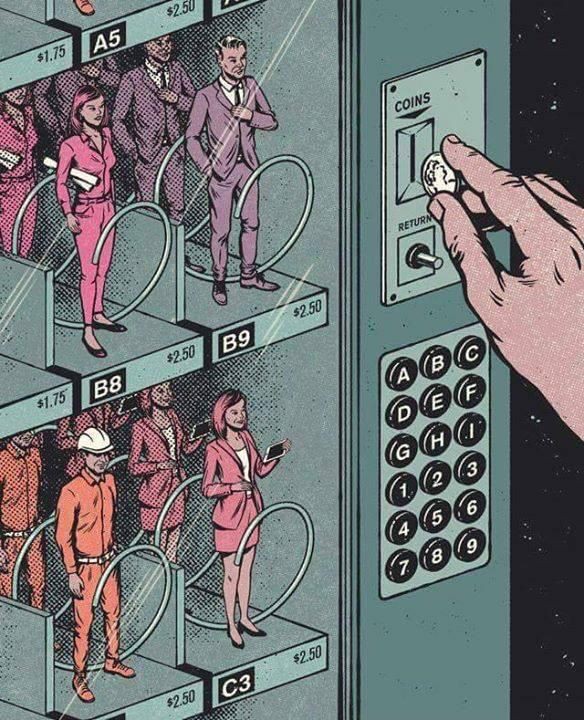
Welcome to the anti-meritocratic world, this world. What are you going to do about it? Will you stand back and watch while cronyism, nepotism, the old school tie, the private club, the right university, the right accent, the right background, the right secret society, the right religion, the right family, destroy merit so that their chosen ones can prosper at your expense. It’s time to smash the conspiracy. Break up all the mechanisms that allow privileged groups within society to rig the system in their favour and penalise anyone who doesn’t belong to their insidious cliques.

Michael Faust, The Meritocracy Party

Well , Its a very complicated questions . In the world, where one’s knowledge didn’t get recognition .

What would you do , when you get acknowledged not on the basis of your knowledge but on the basis of your relation with the owner ?

What would you do , if you don’t get promoted because you are not his /her relative ?

Do you ignore the fact that you are not the one , whom your boss approves?

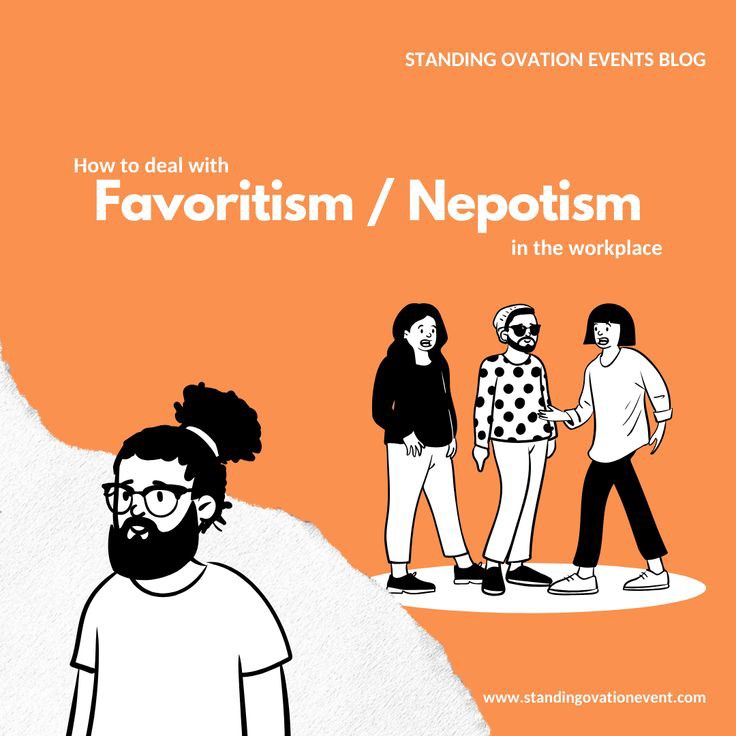
Well , if you think it’s favouritism than you are absolutely correct . You may also come accross the word NEPOTISM and if you don’t than start reading the passage . (I did as well )

This 8 letter word is destroying everyone in today’s world. And who is responsible for creating such a hypocrite. We the people have to repose this curse and make sure to control it with our coming generations, else it will destroy the whole world. And there’ll be no humanity left in this world” –

Ikramul Hannah.

Introduction

Nepotism is a the practice among those with power or influence of favouring relatives or friends, especially by giving them jobs.

Nepotism is generally defined as “the bestowal of patronage by public officers in appointing others to positions because of blood or marital relationship”.

Nepotism is found in almost all the fields but it is practiced most in business, politics, sports and entertainment sectors. It has been in practice since time immemorial, but some special cases have made it to the limelight in the past few decades.

Nepotism in India :

India has it’s fair share in the field of NEPOTISM . Well , have you ever expected that . I say , YES . Because being one of the largest country , people might become more thirsty for power . “When constantly reaching out for more, you forget what you have” Christine Szymanski.

Nepotism can be characterized as ‘the demonstration of utilizing force or impact to get out of line preferences for individuals from one’s family’.

You must be conflicted , why does nepotism exist even today ? We are living in 21st century , than why we have such orthodox thinking ? Who says no one can define what is going on in one’s mind ( well I say , isn’t is obvious ) .

From the politics to the Entertainment , from the owner to the customer, from the Bollywood to the Judiciary ; Nepotism is everywhere .

Like in OJO -MOJO , After the submission of writing competition , OJO’s class teacher asked him who wrote better . Is it MOJO or OLLY , what do you think whom he would choose . MOJO thinks OJO will choose OLLY because he likes her . But when the result announced MOJO was astounded because OJO choose MOJO’s writing . So , what do you think is it nepotism or not . Think and you will know the answer .

Bias has become the first qualification to join a party, and extreme bias the virtue to become a leader.

Link

A Tale of An Indomitable Woman

Laxmi Agarwal, was only 15 when her jilted lover had thrown acid on her and she had to bear the brunt of a monstrous attack. The motive of the attacker was vengeance for her refusal to marry him. She was burning alive on the road in excruciating pain and was screaming for help on the road. When the accident took place, she was in a state of shock. The only question that kept arising in her mind was “why me?” For two and a half months she refused to look at herself in the mirror, she failed to have the spirit to face what she had been through. Her heart and mind were filled with feelings of self -hatred and shame.

People around her especially women would call her names and taunted her. They faulted her for this heinous crime and questioned her upbringing which would leave her and her family tormented. She was scarred for her entire life and was traumatized that she had contemplated suicide. But thinking of the pain that she would cause to her parents, she decided to end such thoughts. Her attacker assumed that he would leave her trapped within the four walls of her house but little did he know that he had ruined her face not her dreams.

Change was afoot for Laxmi, she refused to be enslaved by the injustice caused to her, with her family’s support she bounced back powerfully. She had filed a Public interest litigation in the supreme court that dealt with acid attack crimes and also petitioned for the ban of the sale of acid which led to the court ordering central and state governments to curb the regulation of acid. After four years of trial her attacker was put behind the bars. Laxmi Agarwal was presented with the International Women of courage award by Michelle Obama, she was also given the International Women Empowerment Award from the Ministry of Women and Child Development, she has challenged the stereotypes and prejudices of the beauty community and has helped over 400 acid attack survivors with her NGO.

Putting myself in her shoes, at such a young age seeing your life colliding and having no control over is horrifying. Face is the first part of the body which is directly associated to your identity. It would have felt like someone has taken away my identity for the rest of my life. The look on my face would change how people would perceive me and that would have impacted me mentally as the psychological pain cannot be measured. Women like Laxmi are an epitome of courage and resilience going through a life changing event still led her to having a strong ground beneath her. She did not let anyone else decide what her life could be and took charge over it herself. Laxmi encourages people to fight against wrongful acts and stand up for themselves. She is undoubtedly an inspiration for not only acid attack survivors but also for every person who has faced injustice in their lives.

FEAR OF MARRIAGE

In Indian culture, marriage is very important to raise a generation.It is believed that the only goal of girls is to be married to someone .Girls only know one thing that they have to go to someones home after getting married thought to be a good wife, good daughter in law.
Just want their daughter to be good in their homes so that they should feel proud of them.Generally girls learn household work just only because one day they have to go to someones home as a wife and they have to do all those who work there

I think this thing is very wrong here if they have to learn household work then they have to learn for themselves then it is good. The first thinking of Gender inequality comes here in woman’s mind that the parents always forced them to do all these things just because they were female,. Why don’t they teach boys to do all those things?

It is changed in todays world but somewhere it is also the same as before.If boys just serve their own meal then a large argument starts in homes that why does their son serve their own meal. They have two sisters already.It is their job to serve everyone.

Just because of male dominance or patriarchal society. Women are not allowed to do what they like. Women are not allowed for studies just because parents think that if they study their expectations increases and parents faces many difficulties to discover a guy who is good for her.If women wants to go out of town for further studies they are not allowed just because of families in security or societal pressure at what if their daughters get attracted towards someone but why this is only for women? Men are always allowed to do what they want whether it’s a choice whether it’s the studies or whatever they want.It is all just due to thinking of everybody that girls have to do everything or they have to sacrifice their dreams, hobbies, likes and dislike just because they are female they have to go to someones home as a wife after marriage.

Just take an example – mom woke up early in the morning and from that time till late night they are busy in household work and It become daily routine because of this they forget how to enjoy their life.They sacrifice their dreams, hobbies, life for family. They don’t do anything for themselves because there has a lot of guilt attached with taking care of themselves, doing things for themselves. And we don’t even thinks about it. If we ask anyone Does your Mom eat something? Not only children her family members don’t know whether she take her meal or not.Just because we don’t notice this. why don’t we notice? It is just because of what we see from childhood.

In our culture, parents choose a guy for their daughters.How can two strangers live their whole life without knowing each other?

WEDDING MEANS LOVE, LAUGHTER AND HAPPILY EVER AFTER….

How can a normal marriage be?

All the proposal come through someone or other who tells the man’s family about lady or vice versa, then the man’s family would contact girl’s family or vice versa and then they ask for time and day to meet. Then match making occurs and then parents or family decide that both men and lady are made for each other.

Right???

Or what happens when this doesn’t work?

Women went through matrimonial hell. To meet random strangers and matchmakers, face a lot of judgements and criticism that leads to clinical depression and anxiety for them. They have to go through lots of rejection for just human beings.

How can anyone be judged by skin colour, body structure, body weight, height, & education?

And after all these women aren’t allowed to reject someone.If a guy is chosen by her family than women have to marry whether she wanted or not.

Everyone says women also have the right to choose their life partner, they are allowed to do what they want to do in their life. But in reality, just opposite is happening because we obey what parents want because this is what we see from our childhood.

It is not about matrimonial / marriage. It is about the Rights, wishes, likes and dislikes of a Woman who is been suppressed by either family or society. Just because of thinking…

Marriage is a very beautiful journey in everyone’s life. Just because of something we hate it or women thought that after marriage their life is going to hell. some women take it as a Golden cage or some take it as a most beautiful dream .so it depends upon how they think about it

Why Do We Dream?

Dreams are hallucinations that occur during certain stages of sleep. They’re strongest during paradoxical sleep, or the rapid eye movement stage, once you could also be less likely to recall your dream. Much is understood about the role of sleep in regulating our metabolism, vital sign, brain function, and other aspects of health. But it’s been harder for researchers to elucidate the role of dreams.

When you’re awake, your thoughts have a particular logic to them. once you sleep, your brain remains active, but your thoughts or dreams often make little or no sense. this might be because the emotional centers of the brain trigger dreams, instead of the logical regions.

Though there’s no definitive proof, dreams are usually autobiographical thoughts that supported your recent activities, conversations, or other issues in your life. However, there are some popular theories on the role of dreams.

The role of dreams – Researchers still don’t entirely agree on the aim of dreams. There are, however, some widely held beliefs and theories.

Dreams as therapists – Your dreams could also be ways of confronting emotional dramas in your life. and since your brain is working at a way more emotional level than when you’re awake, your brain may make connections regarding your feelings that your conscious self wouldn’t make.

Dreams as fight-or-flight training – One of the areas of the brain that’s most active during dreaming is that the amygdala. The amygdala is that a part of the brain related to the survival instinct and therefore the fight-or-flight response.

One theory suggests that because the amygdala is more active during sleep than in your waking life, it’s going to be the brain’s way of getting you able to affect a threat.

Fortunately, the brainstem sends out nerve signals during paradoxical sleep that relax your muscles. That way you don’t attempt to run or clock in your sleep.

Dreams as your muse – One theory for why we dream is that it helps facilitate our creative tendencies. Artists of all types credit dreams with inspiring a number of their most creative works. you’ll have awakened sometimes in your life with an excellent idea for a movie or a song, too.

Without the logic filter, you would possibly normally use in your waking life which will restrict your creative flow, your thoughts and concepts haven’t any restrictions when you’re sleeping.

Dreams as memory aides – One widely held theory about the aim of dreams is that they assist you to store important memories and things you’ve learned, get obviate unimportant memories and type through complicated thoughts and feelings.

Research showsTrusted Source that sleep helps store memories. If you learn new information and sleep thereon, you’ll be ready to remember it better than if asked to recollect that information without the advantage of sleep.

How dreams affect memory storage and recall isn’t clearly understood yet. But dreams may help the brain more efficiently store important information while blocking out stimuli that would interfere with memory and learning.

Why can we have nightmares?

Dreams that assist you deal productively with emotions, memories, and other information could seem very helpful. The occasional nightmare is taken into account by a dream that’s simply more frightening or upsetting. Nightmares tend to be caused by stress, anxiety, or sometimes as a reaction to certain medications.

However, if you’ve got nightmares frequently, you’ll have a sleeping disorder. Regularly occurring scary dreams are often labeled a sleeping disorder if the nightmares:

  • cause you to worry about getting to sleep
  • lead to frequent disruptions of your sleep
  • bring about other sleeping or psychological problems
  • Many people experience occasional nightmares throughout their lives. However, the American Sleep Association estimates only about 5 percent of the population experiences persistent nightmares as a sleeping disorder.

What influences dreams?

Some factors that affect us when we’re awake also can influence our dreams.

Health conditions – One of the most important influences on dreams is what proportion or how little you’re sleeping. Being sleep-deprived for an evening or two (or more) can make parts of your brain far more active once you finally do slip into paradoxical sleep. You’re likely to possess more vivid dreams if you’ve had some restless nights. You’re also more likely to recall those dreams, too.

Being pregnant is additionally a catalyst for vivid dreaming. Increased hormone production affects the way your brain processes thoughts and emotions. This often results in some intense dreams.

Mental health disorders like depression and anxiety, also as manic depression and other mood-related conditions, can trigger intense and sometimes disturbing or negative dreams and nightmares. The medications for these conditions, including antidepressants and antipsychotics, also are related to a better risk of nightmares.

Foods – There isn’t indisputable evidence that certain foods cause wilder or better dreams. But it’s clear that some foods may set the stage for you to recollect your dreams better.

High-carb foods, for instance, can offer you quick energy. But after a short time, they will leave you feeling down. Anything that affects your waking mood is probably going to affect your unconscious mood, too. So, if a sugar crash has you moping around during the day, those feelings could carry over into your sleep.

Also, food that causes you to awaken throughout the night may end in you awakening more frequently within the REM stage. When that happens, you’ll probably remember more of your dreams.

Daily activities – Just as little or interrupted sleep often leads to more vivid dreaming, an honest night’s sleep will hamper the extreme dreams you’ll recall.

A small study trusted Source found that one great way to sleep more soundly is to exercise within the morning. an honest run or other cardio workouts before noon helps set your clock in order that you’re more inclined to nod off faster and spend longer in deep sleep than if you didn’t exercise or if you exercised late in the dark.

Runners and other serious fitness enthusiasts tend to spend less time in dreamy paradoxical sleep, which is one among the lightest stages of sleep. Also, the more effectively you’ll de-stress during the day, the less likely you’ll be to bring stress and anxiety to bed. Which ought to help hamper nightmares and interrupted sleep each night.

How to remember your dreams – One of the explanations dreams are often difficult to recollect is that the brain chemical related to memory — norepinephrine — and therefore the brain’s electrical activity that helps with recall are at their lowest levels when you’re dreaming. In fact, if you’ve got a dream but don’t awaken during the dream, you won’t be ready to commit it to memory. The dreams you remember are those that are ongoing once you awaken.

Two ways to assist recall your dreams is to inform yourself as you’re falling asleep that you simply want to recollect your dream. If that’s your last thought, you’ll be more likely to awaken with a dream still somewhat fresh in your memory.

Since dream recall is often easily interrupted by even the slightest distraction, you ought to attempt to remember the maximum amount of your dream as soon as you awaken. Don’t get out of bed or believe anything. attempt to grasp whatever images or memories you’ve got of your dream and write them down on a pad next to your bed or on your smartphone.


What you need to get the best out of you.

The Goal is Not the Point

Imagine, for a moment, that your life is like a treasure hunt.

It’s not much of a leap, really. Like any good treasure hunt, you have a map to guide you. In life, the map is your corner of the universe. Some of the areas on the map you know quite well. These areas are the places and people and things that you’re familiar with and that are part of your daily life.

Other areas of the map are foreign to you. These yet-to-be-explored regions are home to the milestones in life that you can imagine reaching, but that have eluded you thus far. This undiscovered portion of the map is where your hopes and goals and dreams live. These goals are like little pieces of buried treasure that are hidden somewhere out on the map, somewhere that you hope to get to soon.

One day, a particular goal grabs your attention and you decide to set out on a treasure hunt.

Searching for Buried Treasure

You begin the long hike toward your treasure and encounter a challenge or two along the way. Already the actual path is starting to look different than the buried treasure that you had been imagining. Things get worse when you finally arrive to the spot of the treasure.

This whole time, you had been imagining a chest filled with gold. After uncovering the treasure, however, all you can find are a few scraps of silver and some antique relics. These items are valuable in their own right, for sure, but they were not what you were thinking about this whole time.

You say to yourself, “This doesn’t look like the treasure I was envisioning! I must be on the wrong path. I wasted all this time!”

After thinking for a few moments, you wonder, “Hmm… maybe I should switch goals? I bet there is bigger treasure elsewhere.”

Theory vs. Practice

I’ve certainly experienced situations similar to the treasure hunt described above. Perhaps you have too.

I’m talking about situations where the goal we were excited to pursue—getting a degree, starting a new exercise routine, making a career change—turns out to look very different in practice than in theory.

It’s natural to feel a sense of disappointment or confusion or frustration when this occurs, but I think the deeper problem is rooted in how we approached the treasure hunt in the first place.

Goals as a Compass

The problem with a treasure hunt is that most people spend all of their time thinking about the treasure. The fastest way to get to a particular spot, however, is to set your compass and start walking.

The idea here is to commit to your goal with the utmost conviction. Develop a clear, single-minded focus for where you are headed. Then, however, you do something strange. You release the desire to achieve a particular outcome and focus instead on the slow march forward.

Pour all of your energy into the journey, be present in the moment, be committed to the path you are walking. Know that you are moving unwaveringly in one clear direction and that this direction is right for you, but never get wrapped up in a particular result or achieving a certain goal by a specific time.

In other words, your goal becomes your compass, not your buried treasure. The goal is your direction, not your destination. The goal is a mission that you are on, a path that you follow. Whatever comes from that path—whatever treasure you happen to find along this journey—well, that’s just fine. It is the commitment to walking the path that matters.

New Solutions vs. Old Solutions

We have a tendency to undervalue answers that we have already discovered. We under utilize old solutions—even if they are best practices—because they seem like something we have already considered.

Here’s the problem: “Everybody already knows that” is very different from “Everybody already does that.” Just because a solution is known doesn’t mean it is utilized.

Even more critical, just because a solution is implemented occasionally, doesn’t mean it is implemented consistently..

We assume that new solutions are needed if we want to make real progress, but that isn’t always the case.

Use What You Already Have

This pattern is just as present in our personal lives as it is in corporations and governments. We waste the resources and ideas at our fingertips because they don’t seem new and exciting.

There are many examples of behaviors, big and small, that have the opportunity to drive progress in our lives if we just did them with more consistency. Flossing every day. Never missing workouts. Performing fundamental business tasks each day, not just when you have time. Apologizing more often.

Of course, these answers are boring. Mastering the fundamentals isn’t awesome, but it works. No matter what task you are working on, there is a simple checklist of steps that you can follow right now—basic fundamentals that you have known about for years—that can immediately yield results if you just practice them more consistently.

Progress often hides behind boring solutions and underused insights. You don’t need more information. You don’t need a better strategy. You just need to do more of what already works.

Dream big, but start small!

Why is it So Hard to Stick to Good Habits?

Have you ever set out with the goal of actually sticking to a new behavior … only to find yourself not doing it at all one week later?

I know I have.

Why is it so hard to form good habits? Why is it so difficult to make consistent change? How can we have the best intentions to become better, and yet still see so little progress?

And most importantly, is there anything we can do about it?

Your Life Goals are Not Your Habits

Your audacious life goals are fabulous. We’re proud of you for having them. But it’s possible that those goals are designed to distract you from the thing that’s really frightening you—the shift in daily habits that would mean a re–invention of how you see yourself.

We all have hopes and dreams.

And most of the time, we have at least a general sense of what those goals are: the way we want our bodies to look and the good health we want to enjoy, the respect we want to receive from our peers and the important work we want to create, the relationships we want with our family and friends and the love we want to share.

Overall, this is a good thing. It’s nice to know what you want and having goals gives you a sense of direction and purpose. However, there is one way that your hopes and dreams actually sabotage you from becoming better: your desires can easily lure you into biting off more than you can chew.

You know exactly what I mean…

  • You get inspired by The Biggest Loser, head to the gym, bust your butt to the point of exhaustion, and take the next three months off to recover.

.

  • You’re motivated by your friend’s stories of traveling to new countries, so you start to plan your own around–the–world trip, only to end up overwhelmed by all the details and stay at home.

Too often, we let our motivations and desires drive us into a frenzy as we try to solve our entire problem at once instead of starting a small, new routine..

So how do we balance our desire to make life–changing transformations with the need to build small, sustainable habits?.

Dream Big, But Start Small

If you’re serious about making real change — in other words, if you’re serious about doing things better than you are now — then you have to start small.

Imagine the typical habits, good or bad: Brushing your teeth. Putting your seatbelt on. Biting your nails.

These actions are small enough that you don’t even think about them. You simply do them automatically. They are tiny actions that become consistent patterns.

Wouldn’t it make sense that if we wanted to form new habits, the best way to start would be to make tiny changes that our brain could quickly learn and automatically repeat?

What if you started thinking of your life goals, not as big, audacious things that you can only achieve when the time is right or when you have better resources or when you finally catch your big break … but instead as tiny, daily behaviors that are repeated until success becomes inevitable?

What if losing 50 pounds wasn’t dependent on a researcher discovering the perfect diet or you finding a superhuman dose of willpower, but hinged on a series of tiny habits that you could always control? Habits like walking for 20 minutes per day, drinking 8 glasses of water per day, eating two meals instead of three.

I think the following quote, sums this idea up nicely.

If you plant the right seed in the right spot, it will grow without further coaxing.

I believe this is the best metaphor for creating habits.

The “right seed” is the tiny behavior that you choose. The “right spot” is the sequencing — what it comes after. The “coaxing” part is amping up motivation, which I think has nothing to do with creating habits. In fact, focusing on motivation as the key to habits is exactly wrong.

Let me be more explicit: If you pick the right small behavior and sequence it right, then you won’t have to motivate yourself to have it grow. It will just happen naturally, like a good seed planted in a good spot.

How great is that?

The typical approach is to dive into the deep end as soon as you get a dose of motivation, only to fail quickly and wish you had more willpower as your new habit drowns. The new approach is to wade into the shallow water, slowly going deeper until you reach the point where you can swim whether you’re motivated or not.

Focus on Lifestyle, Not Life–Changing

Too often we get obsessed with making life–changing transformations..

  • Running a marathon would be life–changing, running 3 days per week is a new type of lifestyle.
  • Squatting 100 more pounds would be life–changing, squatting 3 days per week is a new type of lifestyle.

Do you see the difference?

Life goals are good to have because they provide direction, but they can also trick you into taking on more than you can handle. Daily habits , tiny routines that are repeatable  are what make big dreams a reality.

.

Never Fear to Fail .

Treat Failure Like a Scientist

When a scientist runs an experiment, there are all sorts of results that could happen. Some results are positive and some are negative, but all of them are data points. Each result is a piece of data that can ultimately lead to an answer.

And that’s exactly how a scientist treats failure: as another data point.

This is much different than how society often talks about failure. For most of us, failure feels like an indication of who we are as a person.

Failing a test means you’re not smart enough. Failing to get fit means you’re undesirable. Failing in business means you don’t have what it takes. Failing at art means you’re not creative. And so on.

But for the scientist, a negative result is not an indication that they are a bad scientist. In fact, it’s quite the opposite. Proving a hypothesis wrong is often just as useful as proving it right because you learned something along the way.

Your failures are simply data points that can help lead you to the right answer.

Failure Is the Cost You Pay to Be Right

None of this is to say that you should seek to make mistakes or that failing is fun. Obviously, you’ll try to do things the right way. And failing on something that is important to you is never fun.

But failure will always be part of your growth for one simple reason…

If you’re focused on building a new habit Or learning a new skill or mastering a craft of any type, then you’re basically experimenting in one way or another. And if you run enough experiments, then sometimes you’re going to get a negative result.

It happens to every scientist and it will happen to you and me as well. To paraphrase Seth Godin: Failure is simply a cost you have to pay on the way to being right.

Treat failure like a scientist. Your failures are not you. Your successes are not you. They are simply data points that help guide the next experiment.

Working When Work Isn’t Easy

Anyone can work hard when they feel motivated.

When I was an athlete, I loved going to practice the week after a big win. Who wouldn’t? Your coach is happy, your teammates are pumped up, and you feel like you can beat anyone. As an entrepreneur, I love working when customers are rolling in and things are going well. Getting results has a way of propelling you forward.

But what about when you’re bored? What about when the work isn’t easy? What about when it feels like nobody is paying attention or you’re not getting the results you want?

It’s the ability to work when work isn’t easy that makes the difference.

It’s Not the Event, It’s the Process

All too often, we think our goals are all about the result. We see success as an event that can be achieved and completed.

But if you look at the people who are consistently achieving their goals, you start to realize that it’s not the events or the results that make them different. It’s their commitment to the process. They fall in love with the daily practice, not the individual event.

What’s funny, of course, is that this focus on the process is what will allow you to enjoy the results anyway…

If you want to be a great writer, then having a best-selling book is wonderful. But the only way to reach that result is to fall in love with the process of writing.

If you want the world to know about your business, then it would be great to be featured in Forbes magazine. But the only way to reach that result is to fall in love with the process of marketing.

If you want to be in the best shape of your life, then losing 20 pounds might be necessary. But the only way to reach that result is to fall in love with the process of eating healthy and exercising consistently.

What matters the most is the consistency and the feeling to keep thriving untill and unless the dreams are achieved .

Dreams:Into the Unconscious

They can be pleasing and peaceful or even dreadful nightmares, they come and go, they can be strange and irrelevant, we remember some dreams and we forget the others. There is no single relevant theory behind the cause of dreams, many psychologists, oneirologists and experts hold different hypothesis based on their respective studies. They can be some ideas which have creeped their way out from the subconscious or emotions or even images. They say in our life we spend a total of 6 years dreaming.

It is clearly yet not known in which area of the brain do our dreams really originate, many theories and speculations are their more or less similar but yet to be confirmed true. Our mind is like a maze and one of god’s most extravagant creation.

These are some of the theories which have been curated based on the hypothesis done by researchers.

Based on different religions

All the diverse cultures be it Hinduism, Buddhism or Christianity have their own theories behind the purpose of dreams.eg- According to Hinduism dreams are one of the three states along with sleeping and walking state while Judaism states that dreams are part of this world where we gain new experiences and hence dreams can be interpreted.

Jung and Freud

On the other hand we had two great experts from the field of psychology that is Sigmund Freud and Carl Jung who had contrasting views on the reason behind dreaming, Freud stated that they sprout out from the unconscious and he states that dreams are the royal road to the unconscious. Dreams show your unconscious desires as well. While Jung states that dreams have messages and can solve many problems, they hold the key to many emotional and personal problems.

Other Theories

There is no real underlying reason based on our dreams according to many experts, they have no connection to our past memories, thinking process or our thoughts and neither connected with any past incident which moved us, They are just a part of our sleeping cycles.

But many scientist state the complete opposite that is our anxieties, desires, wishes and fears are reflected in our dreams.

ASH(Activation -synthesis Hypothesis)

One of the other theories is activation-synthesis hypothesis which states that there is no real message or purpose behind the dreams which we experience rather they pull out irrational or random thoughts, emotions and memories which are formed into electrical brain impulses and hence we get dreams.

REM

REM(rapid eye movement) sleep is said to consist of the most intriguing dreams and these are the kind of the dreams you experience which generally wake you up or which you can easily recall. Even animals dream and most of the mammals also experience REM sleep which is used to compare with the sleep patter and dream pattern of humans.Neurological Theories-

There's No Such Thing As a Universal Symbol in Dreams

Neurological Theories

Continual Activation Theory-

The continual activation theory has been given by Jie Zhang and it states that due to brain activation and synthesis one gets dreams. According to Zhang during the process of sleeping the memory is transferred from temporary memory to long term memory. This theory is a combination of Hobson’s activation synthesis hypothesis and Solm’s theory.

  • ASH(Activation -synthesis Hypothesis)-

One of the other theories is activation-synthesis hypothesis which states that there is no real message or purpose behind the dreams which we experience rather they pull out irrational or random thoughts, emotions and memories which are formed into electrical brain impulses and hence we get dreams.

I would like to quote “You are never to old to set another goal or to dream a new dream”.