Strategies for eCommerce Business Management

 by Shashikant Nishant Sharma 

In the digital age, ecommerce has revolutionized the way businesses operate, providing a platform for buying and selling products and services online. However, the management of an ecommerce business requires careful planning, execution, and adaptation to succeed in a highly competitive market. This article discusses key management strategies that can help businesses thrive in the ecommerce landscape.

Customer-Centric Approach: Successful ecommerce businesses prioritize customer satisfaction. Understanding customer needs, preferences, and expectations is crucial for tailoring products, services, and overall user experience. Implementing robust customer relationship management (CRM) systems, gathering customer feedback, and analyzing data can provide insights into customer behavior, enabling businesses to personalize offerings and enhance customer loyalty.
Seamless User Experience: A seamless and user-friendly website or mobile app is vital for ecommerce success. Businesses must invest in responsive design, intuitive navigation, fast page loading times, and secure payment gateways to ensure a smooth shopping experience. Regular usability testing, optimization, and incorporating user feedback help identify and address any usability issues, improving customer satisfaction and conversion rates.
Effective Inventory Management: Efficient inventory management is essential for ecommerce businesses to meet customer demands while minimizing costs. Employing inventory management systems and implementing demand forecasting techniques can help optimize stock levels, avoid stockouts, reduce holding costs, and streamline order fulfillment processes. Real-time inventory tracking ensures accurate product availability information, minimizing the risk of disappointing customers with out-of-stock items.
Streamlined Order Fulfillment: Timely order fulfillment and reliable shipping processes are critical for customer satisfaction. Ecommerce businesses should establish partnerships with reliable logistics providers to ensure prompt delivery and order tracking. Integration between the ecommerce platform and the fulfillment process, along with automated order processing, can improve efficiency and reduce errors. Providing customers with transparent shipping updates and clear return policies further enhances their experience.
Data-Driven Decision Making: Effective management of an ecommerce business relies on leveraging data insights. By utilizing analytics tools, businesses can track key performance indicators (KPIs), analyze sales trends, customer behavior, and website performance. This data-driven approach helps identify areas for improvement, fine-tune marketing strategies, optimize pricing, and enhance overall business operations.
Marketing and Customer Acquisition: To stand out in the competitive ecommerce landscape, businesses must invest in marketing and customer acquisition strategies. Utilizing search engine optimization (SEO) techniques, paid advertising, social media marketing, and content marketing can increase brand visibility, drive traffic to the website, and attract potential customers. Effective use of data analytics and customer segmentation allows businesses to target their marketing efforts, maximizing the return on investment.
Mobile Optimization: As mobile usage continues to rise, optimizing ecommerce websites and applications for mobile devices is crucial. Mobile responsiveness, intuitive navigation, and mobile-friendly payment options ensure a seamless experience for customers accessing the platform through smartphones and tablets. Mobile optimization strategies also include leveraging mobile apps, push notifications, and location-based marketing to engage with customers and enhance their mobile shopping experience.
Cybersecurity and Data Protection: With the increasing risk of cyber threats and data breaches, ecommerce businesses must prioritize cybersecurity and data protection. Implementing robust security measures such as encryption, secure payment gateways, and secure user authentication helps safeguard customer information and build trust. Compliance with data protection regulations, such as the General Data Protection Regulation (GDPR), is essential for ensuring customer privacy.
Continuous Innovation and Adaptation: The ecommerce landscape evolves rapidly, and successful businesses must adapt to changing trends and technologies. Continuous innovation in product offerings, customer experience, and technology implementation is vital to stay competitive. Monitoring market trends, keeping an eye on competitors, and actively seeking customer feedback enables businesses to identify opportunities for improvement and implement necessary changes.

UPI accounted for more than half of the digital transaction in FY 22.

Unified Payments Interface (UPI), the digital payment system that rides on smartphones and increased internet connectivity, has shown a quantum jump and is now a preferred mode of payment.

The Economic Survey released on 31st January  said “the progress of UPI has been remarkable”. In the fiscal year ending March 31, 2022, UPI accounted for 52 per cent of the total 8,840 crore financial digital transactions. “In December 2022, UPI touched its highest-ever mark with Rs 12.8 lakh crore worth of transactions,” the survey said.

It showed that UPI transactions touched a new high in December with 782 crore transactions worth Rs 12.8 lakh crore. On an average, over 2019-22 calendar years, the growth in UPI-based transactions in value and volume terms has been 121% and 115%, respectively.

Introduction to SEO

Introduction to SEO

Search Engine Optimization, more commonly referred to as SEO, is one of the most crucial aspects of marketing. As such, if you’re working to market your blog or your business, you need to know what SEO means and what the rules and ways of SEO success are. While a successful SEO strategy isn’t an exact science, and its practice has been challenged on many fronts throughout the years, knowing the basics is still important to an effective marketing campaign.


What is SEO?

SEO refers to the process of making a website more visible on a search engine’s results page. To clarify, a great SEO strategy will put a company’s website at the top of the list on a Google search page, therefore increasing the likelihood that people will visit the site. Search engines strive to provide the most relevant results for a person conducting a search, so that when a person runs an internet search for “cupcakes,” the first thing to appear isn’t a cookie shop, but a bakery that specializes in cupcakes as well as a definition of the dessert. In other words, SEO helps to make a search relevant to the user and can be critical in driving traffic to your site.


Search engines work by searching the Internet to find text that meets certain criteria. This text is known as keywords and refers to the most important theme(s) of the website, company, or product. Scouring the online world to find keywords are why, as in the example above, a search for “cupcakes” yields a result of multiple pages about cupcakes, not cookies. Other important things that a search engine uses to rank a website include titles, headings, and links that make up the content of a website’s pages. Search engines also employ search engine indexing to find, digest, and store the content of a website. A search engine index refers to the set of data that’s used to base a final search result on.

The Importance of Keyword Research

Another important part of an SEO introduction is understanding the significance of keywords. We explained above that keywords are the specific words or set of words that best describe the theme or overall concept of an idea, website, business, or product. Keywords are the words that people use when conducting a search, and should be words that are included in the content of your webpage. Choosing the right keywords can help to drive traffic to your site, attract potential customers, and greatly improve your SEO ranking.

When deciding what keywords you should include in your text, you should consider things such as the relevancy of the keyword(s) to your website and company, as well as the competitors that are using the same keyword(s) (you can check this by running a quick Google search of chosen keywords yourself, and seeing what sites appear at the top of the list). To discover the value of your keywords, you can buy a sample campaign from Google AdWords, which will allow you to test the traffic generated by your chosen keywords. If all three things are in check—the keywords are relevant to your website, competitors are experiencing success with similar keywords, and a sample campaign yields high traffic—you should feel confident in moving forward with the keywords.

SEO Tools and Services

Although an SEO introduction is a fantastic place to start, as your marketing initiatives develop, you might want to think about acquiring additional SEO products and services. These resources are frequently made available by the search engines themselves, including Google’s Google Analytics, Google Webmaster Tools, Google AdWords Keywords Tool, Google Alerts, Google Trends, DoubleClick Ad Planner, Google Page Speed, Google Site Map, and others.


In addition to the tools offered by Google, you may also investigate additional internet tools or even employ a business that specializes in SEO marketing to build and optimize your website.

6 Ways to Get More Business for Your Ecommerce Line


C:\Users\APURVA\Downloads\mark-konig-Tl8mDaue_II-unsplash.jpg

Source: https://unsplash.com/photos/Tl8mDaue_II 


Since the arrival of the Covid-19 pandemic, the commercial marketing industry has changed drastically. Earlier, most companies focused solely on physical sales and invested rarely in digital advertising. But with the revolutionary changes that the e-commerce sector went through, many industries came forward to adopt the latest technology to stay updated with the trends and maintain their position in the market. 

Enterprises like Escape Room Palm Springs, a Reliance store in Bangalore, or the Dark Horse publishing house in Japan have actively invested in different e-commerce marketing tips and strategies to boost their sales and brand value. And just for the big fishes and older companies, the new entrepreneurs can also invest in e-commerce to take their business to new heights of success. 

It is a smart move for the small and medium-sized corporations to pick the same and browse for opportunities through hard work to stay tough in the commercial market against their competitors. Here are 6-ways through which you can also get more business for your e-commerce line: 

  1. Know your customers 

Understanding your customers is the most crucial part of an e-commerce business. If you plan to reach out to more audiences for your brand and convert them into followers and subscribers, you must know all about them and their preferences. Here are some questions that you should keep in mind while attracting customers to your website:


  • What websites do these people visit? 

  • What are their hobbies? 

  • Do they have a particular affinity or interest in a service or product? 

  • How long do they usually research on the internet? 


Facts and details like these will help you better understand your users and their interests. It will give you the right idea about how you can draw them to your business and also sustain their attention. And by answering the above questions, you will also be able to strategize a more efficient plan to establish a more profitable marketing tactic to target them. 

  1. Increase the About Us section 

The customers generally prefer to look at the About Us section for an e-commerce website they are scrolling on and researching. This information area lets them understand the company/brand’s business ambition and whether they want to invest further in their products. 

So remember to be open in your About Us section. It is where you can go all out and share your business idea and concept, love for the products, the hard work that goes to crafting what you are providing, and how you can make the customer’s life more comfortable through your services. The more you convince the consumers that you are their friend and a great person, the more they will prefer to invest their money in your company’s products and business schemes. 

  1. Expand your demographic 

While it is a good idea to target a specific audience group to your company, you might lose many consumers in the long run if you do not expand your user base in the long run. By limiting yourself to some clients, you might restrict the growth and expansion of your e-commerce company and lose credential patrons. So focus on expanding your demographic to broaden your horizons and open new marketing opportunities to draw in and retain more customers. 

  1. Practice Quality over Quantity 

When you consider e-commerce, quality always comes before quantity. Make sure that your products and the services you provide to your customers are high-quality and satisfying to their demands. In this way, they will build trust for your business and come to rely more on your services. Your business’s reputation will grow and help you gain a trustworthy image in the commercial market. 

  1. Switch to D2C 

Gone are the days when B2B (business to business) and B2C (business to consumer) could pave the way for boosting your e-commerce as a brand in the commercial market. To get the best for your business’s marketing, switch to the D2C (direct to customer) policy for marketing and gaining customers. D2C allows you to connect directly to your clients and consumers without going through a mediator like a retailer, distributor, or dealer. There are several benefits of practicing D2C, such as: 

  • You get to retain complete control of the engagement process with the customers by avoiding any intermediate parties. 

  • You can connect directly with your clients and understand them better. 

  • It helps you establish a secure and effective connection with your target audience and thus deliver products that satisfy their preferences. 

  1. Keep an eye on the numbers and analytics

It is also crucial to focus on your analytics and inventory numbers in e-commerce. It allows you to keep a close eye on your accounting and invest wisely in your spending for advertising and marketing. Also, by focusing on the analytic points of your business, you can track your traffic sources and accordingly plan a profitable conversion rate to boost subscribers and customers for your company. Various tools help you get deep insights into the accounting and the analysis of your business. And you can use this information to get more resources and traffic activity for your website to market your e-commerce brand strategically. 

Conclusion 

So, these are the 6-easy ways that will help you get more business for your e-commerce line. We know e-commerce is growing tremendously, and it won’t be long before it may outwit the physical sales. With marketers and entrepreneurs actively competing to boost their sales and gain more customers, it is time for you to also keep up with new trends and draw in more patrons by increasing customer comfort and efficiently marketing for your e-commerce business. 


Category management in supermarkets: what's important for newcomers to know?

Category management is a categorisation of products according to buyers’ shopping habits. It is used within any retail store, including the supermarket or its website with the possibility of ordering goods for home delivery. Category management for one retail chain (for example, several supermarkets) is similar to physical stores and online trading. However, the categories may vary from point to point. This is because it depends on the customers who often visit the store.

What does a manager have to know when starting to work on categories in the supermarket?

It’s going to be difficult to analyze customer segments

Simply because they are going to be buying goods offline. When you move at least 50 per cent of your goods online to collect goods in-store or pay for home delivery, the whole situation will improve. Although, this still does not guarantee that the customer segments will meet your expectations. Yes, you can track customers through recurring patterns in receipts. You can also come up with hypotheses based on the data obtained from your competitors and other market analyses. Still, you won’t be able to study your customers under a microscope.

The cost of a product will often take precedence over its other qualities

It is a major problem for category management in supermarkets and retail in general. Most likely, grocery store visitors care more about the product’s price, and low cost always wins over other characteristics. Therefore, it will be more challenging to create categories: inevitably, you should be guided by the price of the goods.

At some point, it will be difficult to fight off competitors

You will be selling the same items which are available in other supermarkets. Some manufacturers may agree to cooperate exclusively with your chain of stores; however, this is unlikely because this arrangement is simply unprofitable for the supplier. Moreover, it’s impossible to lower the bar and start undercutting, that is, trading at a loss. After all, a business needs to earn money. In some instances, it may only be achievable through introducing discounts.

You will be able to test hypotheses only on a small number of consumers

Why? Most trade will occur in offline stores rather than in their online equivalents. And this, as we remember, complicates the task of marketers and, unfortunately, category managers. Only a small percentage of consumers shop online. That makes sense: you have to pay for delivery. You can’t select your products or ensure that all your fruit and vegetables are intact. Your delivery guy might also be late or you may face logistical problems like mixed-up orders.

How can you test your hypotheses on those customers who have turned to your supermarket website? First, you have to study your portal analytics: how users have found you, how they behave on the site, which tabs they open first, and how their filter products in various categories. If you have social media accounts, be sure to use them. The statistics offered by Instagram will demonstrate who your customers are and how they behave. By understanding the core of your audience accessing your resources, you can create category management hypotheses and test them on users before displaying the goods in stores. Of course, many of your customers will not shop online. Still, you can learn all about them, for example, through their choice of purchases on receipts.

The variety of categories will depend on the location of the supermarket

This limits your ability to influence the profits of the business. The categories will depend largely on areas where your shops are located, as well as people who live there and their buying power. For example, it is pointless to introduce a category of personal care products if jars of face cream have been sitting on the shelves for months in a particular store. It makes no sense to reduce the number of household goods with an above-average price tag if they sell like hotcakes. If you work in a supermarket in a deprived area, be prepared for a succession of identical categories with low-cost products.

Start learning category management now to secure a job within this field in a few weeks! This area has been actively booming in India and the surrounding regions. Therefore, your knowledge will definitely be in demand.

Gig Economy

What Is the Gig Economy?

In a gig economy, temporary, flexible jobs are commonplace and companies tend to hire independent contractors and freelancers  instead of full-time employees. A gig economy undermines the traditional economy of full-time workers who often focus on their career development.

Understanding the Gig Economy

In a gig economy, large numbers of people work in part-time or temporary positions or as independent contractors. The result of a gig economy is cheaper, more efficient services, such as Uber or Airbnb, for those willing to use them. People who don’t use technological services such as the Internet may be left behind by the benefits of the gig economy. Cities tend to have the most highly developed services and are the most entrenched in the gig economy. A wide variety of positions fall into the category of a gig. The work can range from driving for Lyft or delivering food to writing code or freelance articles. Adjunct and part-time professors, for example, are contracted employees as opposed to tenure-track or tenured professors. Colleges and universities can cut costs and match professors to their academic needs by hiring more adjunct and part-time professors.

The Factors Behind a Gig Economy

America is well on its way to establishing a gig economy, and estimates show as much as a third of the working population is already in some gig capacity. Experts expect this working number to rise, as these types of positions facilitate independent contracting work, with many of them not requiring a freelancer to come into an office. Gig workers are much more likely to be part-time workers and to work from home. Employers also have a wider range of applicants to choose from because they don’t have to hire someone based on their proximity. Additionally, computers have developed to the point that they can either take the place of the jobs people previously had or allow people to work just as efficiently from home as they could in person.

Economic reasons also factor into the development of a gig economy. Employers who cannot afford to hire full-time employees to do all the work that needs to be done will often hire part-time or temporary employees to take care of busier times or specific projects. On the employee’s side of the equation, people often find they need to move or take multiple positions to afford the lifestyle they want. It’s also common to change careers many times throughout a lifetime, so the gig economy can be viewed as a reflection of this occurring on a large scale.

During the coronavirus pandemic of 2020, the gig economy has experienced significant increases as gig workers have delivered necessities to home-bound consumers, and those whose jobs have been eliminated have turned to part-time and contract work for income. Employers will need to plan for changes to the world of work, including the gig economy, when the pandemic has ended.

Criticisms of the Gig Economy

Despite its benefits, there are some downsides to the gig economy. While not all employers are inclined to hire contracted employees, the gig economy trend can make it harder for full-time employees to develop in their careers since temporary employees are often cheaper to hire and more flexible in their availability. Workers who prefer a traditional career path and the stability and security that come with it are being crowded out in some industries.

For some workers, the flexibility of working gigs can actually disrupt the work-life balance, sleep patterns, and activities of daily life. Flexibility in a gig economy often means that workers have to make themselves available any time gigs come up, regardless of their other needs, and must always be on the hunt for the next gig. Competition for gigs has increased during the pandemic, too. And unemployment insurance usually doesn’t cover gig workers who can’t find employment.

In effect, workers in a gig economy are more like entrepreneurs than traditional workers. While this may mean greater freedom of choice for the individual worker, it also means that the security of a steady job with regular pay, benefits—including a retirement account—and a daily routine that has characterized work for generations are rapidly becoming a thing of the past.

Lastly, because of the fluid nature of gig economy transactions and relationships, long-term relationships between workers, employers, clients, and vendors can erode. This can eliminate the benefits that flow from building long-term trust, customary practice, and familiarity with clients and employers. It could also discourage investment in relationship-specific assets that would otherwise be profitable to pursue since no party has an incentive to invest significantly in a relationship that only lasts until the next gig comes along.

Ways to Manage Stress

Stress is part of being human, and it can help motivate you to get things done. Even high stress from serious illness, job loss, a death in the family, or a painful life event can be a natural part of life. You may feel down or anxious, and that’s normal too for a while. Talk to your doctor if you feel down or anxious for more than several weeks or if it starts to interfere with your home or work life. Therapy, medication, and other stategies help. In the meantime, there are things you can learn to manage stress before it gets to be too much. Consider these suggestions:

Exercise

To start with, physical activity can help improve your sleep. And better sleep means better stress management. Doctors don’t yet know exactly why, but people who exercise more tend to get better deep “slow wave” sleep that helps renew the brain and body. Just take care not to exercise too close to bedtime, which disrupts sleep for some people. Exercise also seems to help mood. Part of the reason may be that it stimulates your body to release a number of hormones like endorphins and endocannabinoids that help block pain, improve sleep, and sedate you. Some of them (endocannabinoids) may be responsible for the euphoric feeling, or “runner’s high,” that some people report after long runs.

People who exercise also tend to feel less anxious and more positive about themselves. When your body feels good, your mind often follows. Get a dose of stress relief with these exercises:

Applications

Property Rights

What Are Property Rights?

Property rights define the theoretical and legal ownership of resources and how they can be used. These resources can be both tangible or intangible and can be owned by individuals, businesses, and governments. In many countries, including the United States, individuals generally exercise private property rights or the rights of private persons to accumulate, hold, delegate, rent, or sell their property. In economics property rights form the basis for all market exchange, and the allocation of property rights in a society affects the efficiency of resource use.

Understanding Property Rights

Property is secured by laws that are clearly defined and enforced by the state. These laws define ownership and any associated benefits that come with holding the property. The term property is very expansive, though the legal protection for certain kinds of property varies between jurisdictions.Property is generally owned by individuals or a small group of people. The rights of property ownership can be extended by using patents and copyrights to protect:

  • Scarce physical resources such as houses, cars, books, and cellphones
  • Non-human creatures like dogs, cats, horses or birds
  • Intellectual property such as inventions, ideas, or words

Other types of property, such as communal or government property, are legally owned by well-defined groups. These are typically deemed public property. Ownership is enforced by individuals in positions of political or cultural power. Property rights give the owner or right holder the ability to do with the property what they choose. That includes holding on to it, selling or renting it out for profit, or transferring it to another party.

Acquiring Rights to a Property

Individuals in a private property rights regime acquire and transfer in mutually agreed-upon transfers, or else through homesteading. Mutual transfers include rents, sales, voluntary sharing, inheritances, gambling, and charity. Homesteading is the unique case; an individual may acquire a previously unowned resource by mixing his labor with the resource over a period of time. Examples of homesteading acts include plowing a field, carving stone, and domesticating a wild animal. In areas where property rights don’t exist, the ownership and use of resources are allocated by force, normally by the government. That means these resources are allocated by political ends rather than economic ones. Such governments determine who may interact with, can be excluded from, or may benefit from the use of the property.

Private Property Rights

Private property rights are one of the pillars of capitalist economies, as well as many legal systems, and moral philosophies. Within a private property rights regime, individuals need the ability to exclude others from the uses and benefits of their property. All privately owned resources are rivalrous, meaning only a single user may possess the title and legal claim to the property. Private property owners also have the exclusive right to use and benefit from the services or products. Private property owners may exchange the resource on a voluntary basis.

Private Property Rights and Market Prices

Every market price in a voluntary, capitalist society originates through transfers of private property. Each transaction takes place between one property owner and someone interested in acquiring the property. The value at which the property exchanges depends on how valuable it is to each party. Suppose an investor purchases $1,000 in shares of stock in Apple. In this case, Apple values owning the $1,000 more than the stock. The investor has the opposite preference, and values ownership of Apple stock more than $1,000.

Financial Literacy

What Is Financial Literacy?

Financial literacy is the ability to understand and effectively use various financial skills, including personal financial management, budgeting, and investing. Financial literacy is the foundation of your relationship with money, and it is a lifelong journey of learning. The earlier you start, the better off you will be, because education is the key to success when it comes to money.

Read on to discover how you can become financially literate and able to navigate the challenging but critical waters of personal finance. And when you have educated yourself, try to pass your knowledge on to your family and friends. Many people find money matters intimidating, but they don’t have to be, so spread the news by example.

Understanding Financial Literacy

In recent decades financial products and services have become increasingly widespread throughout society. Whereas earlier generations of Americans may have purchased goods primarily in cash, today various credit products are popular, such as credit and debit cards and electronic transfers. Indeed, a 2019 survey from the Federal Reserve Bank of San Francisco showed that consumers preferred cash payments in only 22% of transactions, favoring debit cards for 42% and credit cards for 29%.

Other products, such as mortgages, student loans, health insurance, and self-directed accounts, have also grown in importance. This has made it even more imperative for individuals to understand how to use them responsibly. Although there are many skills that might fall under the umbrella of financial literacy, popular examples include household budgeting, learning how to manage and pay off debts, and evaluating the tradeoffs between different credit and investment products. These skills often require at least a working knowledge of key financial concepts, such as compound interest and the time value of money. Given the importance of finance in modern society, lacking financial literacy can be very damaging to an individual’s long-term financial success.

Being financially illiterate can lead to a number of pitfalls, such as being more likely to accumulate unsustainable debt burdens, either through poor spending decisions or a lack of long-term preparation. This in turn can lead to poor credit, bankruptcy, housing foreclosure, and other negative consequences. Thankfully, there are now more resources than ever for those wishing to educate themselves about the world of finance. One such example is the government-sponsored Financial Literacy and Education Commission, which offers a range of free learning resources.

Strategies to Improve Your Financial Literacy Skills

Developing financial literacy to improve your personal finances involves learning and practicing a variety of skills related to budgeting, managing and paying off debts, and understanding credit and investment products. Here are several practical strategies to consider.

Create a Budget—Track how much money you receive each month against how much you spend in an Excel sheet, on paper, or with a budgeting app. Your budget should include income (paychecks, investments, alimony), fixed expenses (rent/mortgage payments, utilities, loan payments), discretionary spending (nonessentials such as eating out, shopping, and travel), and savings.

Pay Yourself First—To build savings, this reverse budgeting strategy involves choosing a savings goal (say, a down payment for a home), deciding how much you want to contribute toward it each month, and setting that amount aside before you divvy up the rest of your expenses.

Pay Bills Promptly—Stay on top of monthly bills, making sure that payments consistently arrive on time. Consider taking advantage of automatic debits from a checking account or bill-pay apps and sign up for payment reminders (by email, phone, or text).

Unemployment

Unemployment has become one of the biggest problems around the world. When an individual is an implied, he or she will know very less about the mankind. It is so difficult to face situation and handle situations when the individual is unemployed. Unemployment leads to many silly mistakes. And an unemployed person cannot take over the family and lead the family as well. There is a huge competition in highly populated countries like India. In order to be employed, the only method is to study hard and improve the skills and score better. Basically, the students are not showing good amount of interest towards the studies. Let us now see how to motivate them.

Covid crisis has made many people unemployed. It has taken away the basic need of living. Many people are left with the unfilled stomachs. Some people are dead about by not finding a way to live.

Types of unemployment :

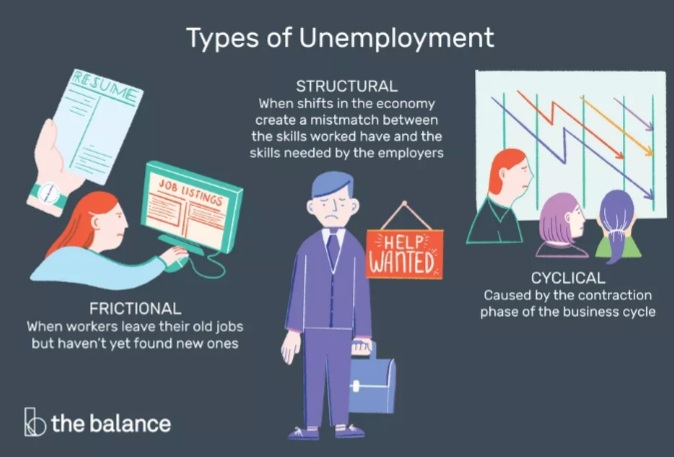
There are four main types of unemployment in an economy frictional, structural, cyclical, and seasonal and each has a different cause.

1. Frictional unemployment :

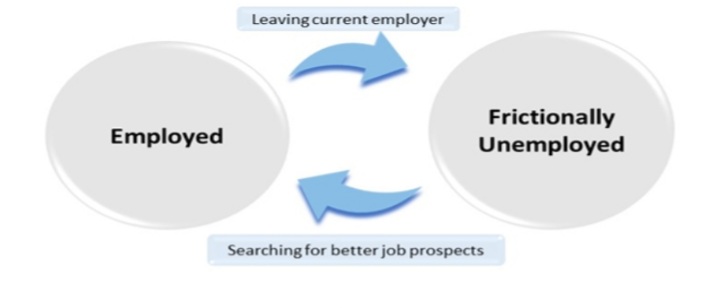
Frictional unemployment is caused by temporary transitions in workers lives, such as when a worker moves to a new city and has to find a new job. Frictional unemployment also includes people just entering the labor force, such as freshly graduated college students. It is the most common cause of unemployment, and it is always in effect in an economy.

2. Structural unemployment :

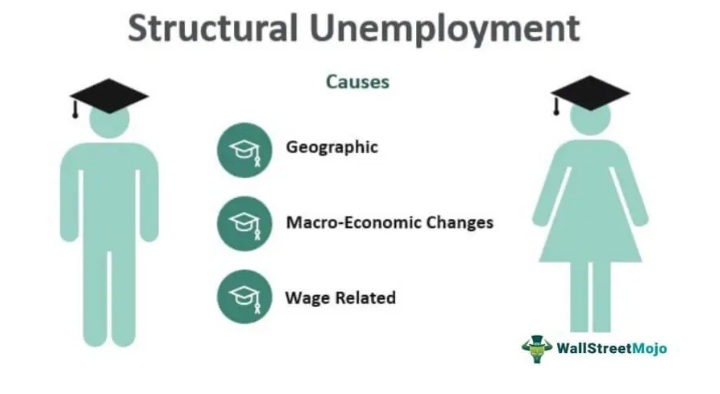
Structural unemployment is caused by a mismatch in the demographics of workers and the types of jobs available, either when there are jobs available that workers don’t have the skills for, or when there are workers availabes but no jobs to fill. Structural unemployment is most obvious in industries undergoing technological advancements.

3. Cyclical unemployment :

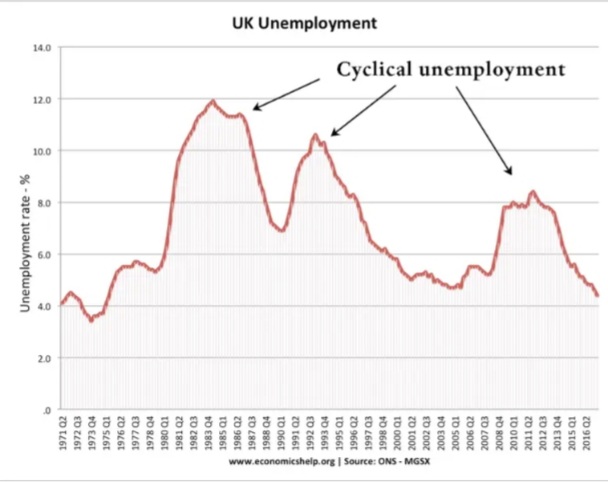
Cyclical unemployment is caused by declining demand. When there is not enough demand in an economy for goods and services, businesses cannot offer jobs . According to keynesian economics , cyclical unemployment is a natural result of the business cycle in times of recession: if all consumers become fearful at once, consumers will attempt to increase their saving at the same time, which means there will be a decrease in spending, and businesses will not be able to employ all employable workers.

4. Seasonal unemployment :

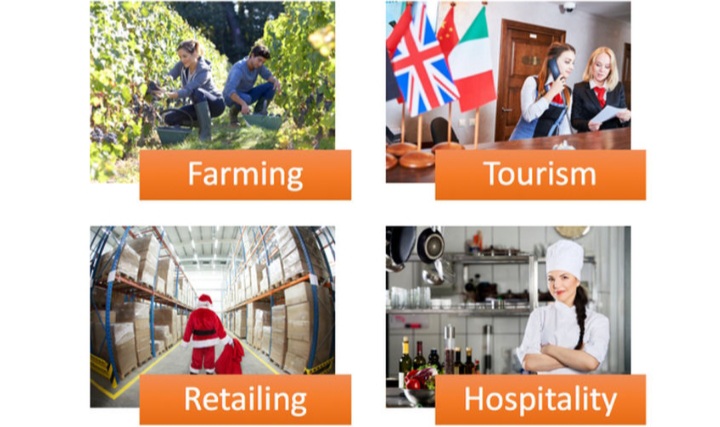
Seasonal unemployment is caused by different industries or parts of the labor market being available during different seasons. Fot instance, unemployment goes up in the winter months, because many agricultural jobs end oncr crops are have harvested in the fall, and those wotkers are left to find new jobs.

Consequences of unemployment in an Economy :

Low unemployment is key to economic stability High and long- term unemployment can cause significant stress on a nation in three key areas.

* Individuals :

Unemployed people have no ability to fulfill their financial obligations and can become mentally stressed, ill, and even homeless.

* Economic efficiency :

During times of high unemployment many job seekers will accept new jobs below their skill level, a situation called “underemployment ” which translates to a loss of human capital for an economys labor market. Unemployed workers will also significantly decreases their consumer spending, which is one of the driving forces of economic growth. Without consumer spending, the economy will slow dramatically.

* socio- political stability :

If unemployment remains high, citizen dissatisfaction can rise to the point of widespread civil unrest.

Possible solutions for Unemployment :

Solving unemployment is a hotly debated topic, and no economists agree on one simple way to do it. However, in the U.S ,if unemployment rises noticeably, the government usually steps in with specific policies designed to lower the total number of unemployed people.

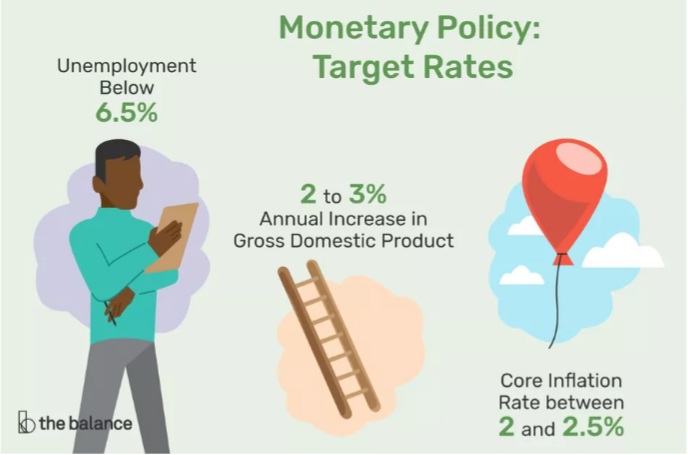
1. Monetary policy :

Monetary policy is financial influence implemented by a central bank . Monetary policies usually come in the form of lower interest rates, which increase the total money supply within an economy by allowing banks and businesses more access to loans and therefore, more accessible spending power.

2. Fiscal policy :

If expansionary monetary policy doesn’t adequately lower the unemployment rate government agencies will turn to fiscal policy. Fiscal policy is fiscal stimulus implemented by the national government and fiscal policies include spending on infrastructure, proposingtax cuts , increasing the minimum wage, or implementing unemployment benefits. These methods are designed to inject more demand into private economy and strengthen economic activity.

Let us now see some of the ways to motivate the students to study and get employeed.

Make things easier :

Showing the things easier and explaining them with clarity helps the students to show better interest on the subject and makes them to pay more attention on what the teacher is trying to convey. When the topics are shown easier for the students, they start learning them and they feel achieved and they pay more attention to study. When a student learns a particular topic or a question, he/she feels comfortable and happy for getting it. Once if they start reading, they develop the interest in them and they continue to read more and more.

Tell the importance :

The students must be motivated with good number of words to understand the need of studying and what happens if they don’t study. A student is like a bird without the wings when they don’t study. So, it is very important to motivate students to study and to make them understand the need of the situation. Motivation brings the right change in the students who are not interested in learning. It develops the interest in them to study.

It seems good if the government provides good number of jobs.

E-COMMERCE

In India, the marketing environment is shifting. From the last ten years to the present, the consumer marketing trend has shifted dramatically. In India, the local environment has altered in terms of infrastructural, social, and economic factors. The popularity of online marketing is growing across a wide range of people of various ages. E-commerce is growing as a new market that has the potential to contribute to economic progress. 

INTRODUCTION:

E-commerce is a platform for businesses and consumers to buy and sell goods and services through the internet. The term “electronic commerce” refers to the use of telecommunication networks to expand a company’s market and retain client relationships. “Businesses and their customers use e-commerce software to conduct transactions. Customers can order things, verify orders and track shipment, review prior transactions, reorder products, and manage their accounts with them 24 hours a day, seven days a week.” (From 2009 to 2012, Auburn See Wolf llc) 

India’s economic industry is on the rise and experiencing a growth spurt. The Online Travel Industry is one of India’s most important segments of ecommerce, and it is flourishing because to the country’s Internet-savvy urban populace. Private companies such as Make my trip, Clear trip, and Yatra were part of the online travel sector. The government has also launched IRCTC, an Indian Railways project that has proven to be successful. The online classifieds market is expanding as well. It is organized into three categories: employment, matrimonial, and real estate. Due to the fast development in the number of mobile users in India in recent years, mobile commerce is proving to be a robust and secure supplement to ecommerce. 

According to a research by the Internet and Mobile Association of India, India’s e-commerce business is growing at a 70 percent yearly rate and has increased by more than 500 percent since 2007. E-commerce and digital downloads are predicted to develop quicker, while online travel will continue to dominate the sector. The following are the primary sectors in the e-commerce industry: 

Travel- 51% 

E-Retailing-40% 

Cothiers-09% 

Unique Features of E-commerce Technology:

1. E-Commerce: is Technology-Enabled: While traditional commerce has existed since the dawn of time, E-commerce is the result of the integration of digital technology into business processes and commercial transactions. Internet, WWW, and different protocols are the technological basis of E-commerce.

2. Virtual Communities: are online communities formed through the use of tools such as chat rooms and specially designed websites where people with common interests may connect with one another over the internet. 

3. Customization: The world is moving away from mass-production and toward mass-customization, thanks to the use of E-commerce technology. Product customization guarantees that goods are created to clients’ specifications and preferences. 

4. Intercommunication: E-commerce technology allows buyers and sellers to communicate in both directions. Firms can communicate with customers via E-commerce enabled websites on the one hand. Customers, on the other hand, can fill out order forms, provide comments, and contact with the companies who run the business. 

5. Universality: E-Commerce allows people to buy and sell things all over the world using websites. The websites are universal in that they may be accessed from anywhere in the world at any time.

Start your own business – Part 1

During the lockdown, most of us lost our jobs and most of us got less paid than our actual wages due to the unpredictable economic statics and decrease percentage. So, everyone started to realize one passive income is not sufficient to run our lifestyle, especially in this pandemic situation. We always need two carriers to make money and satisfy our life needs.

  • One is PROFESSION
  • Another one is PASSION


A profession is something that you don’t hate but you do that to move on in day-to-day life. And passion is something that you love to do and doing that without any expectations. Nowadays nothing is free except viruses. So, even though if you love your passion as much as you even don’t give a second thought to get money out of it. You have to change that pessimistic mentality. Everything is an opportunity to improve both sides. That’s called Win and win solution. If you are teaching something he is earning knowledge and you are earning your deeds as money. So, how one can begin a start-up business? We are going to look at the most possible works to do without a large sum of investment. But, still get some side income from them. You don’t need to find a location or giant machines or decorating them etc… All you need is essential types of equipment for the idea in your mind and some Magic in your hands to achieve your destination. You can work from your home and sell them on Social Media like amazon, Instagram or you can even create your own website to place your products at one point.

Costume designing:

Costume designing is the best way to make a good profit out of essentials. All you need is an innovative mind, designing knowledge, fabrics, and sewing machine. And some customers must have their own ideas about their idea costumes. So, you can even customize your orders according to your customers. And trust me customizing optional website are countable in India. But people require customizing costume designers. You can do costumes like scarfs, veils, hats, dresses and innovative fashion and eligant costumes. Especially, people will roll over the red carpet for you if you sell them at affordable ranges.

Skincare products Making:

Skincare making is the Bestest economical friendly business. It doesn’t need higher investments but still, you can get a good profit if your products are reasonable and if you have magic in your hands to treat someone’s skin problem.

Nowadays skin problems are common to every human. If getting rid of the skin problems are one side. But, choosing a product to give a try is something everyone confuses. You can do skin products to the people’s according to the type of skin. People will celebrate you once they get visible changes. And people love natural ingredients without side effects keep it noted. There is a huge demand for good home-made products like hair oils, hair wash powders, soaps, cleansers, face packs, serums, etc.,

Some extra amount is something that no one will say no to. We will enroot many passionate start-up businesses like this in our upcoming articles. So, it’s time to switch our passion into action.

Acid Rain

“The unthinkable is that we’re distorting this atmospheric balance. We’re shifting the chemical balance so that we have more poisons in the atmosphere – ozones and acid rain on ground level – while we’re also changing the thermal climate of the earth through the greenhouse effect and – get this – simultaneously causing destruction of our primary filter of ultraviolet light. It’s incredible. Talk about the national-debt crisis – we’re piling up debts in the atmosphere, and the piper will want to be paid.”

~ Michael Oppenheimer

Introduction

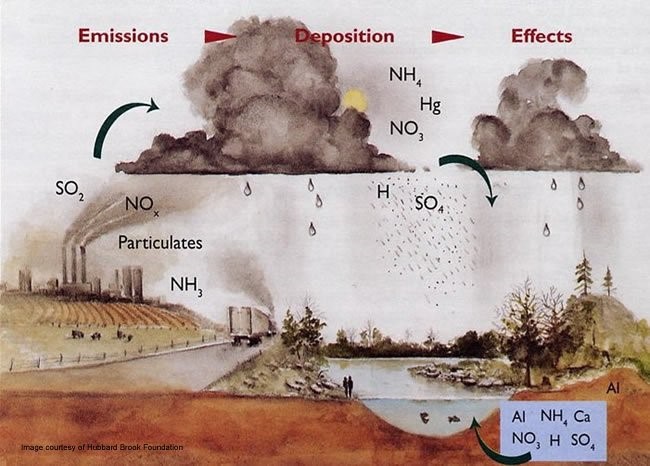
Acid rain, or acid deposition, is a broad term that includes any form of precipitation with acidic components, such as sulfuric or nitric acid that fall to the ground from the atmosphere in wet or dry forms. This can include rain, snow, fog, hail or even dust that is acidic.

Acid rain is caused by a chemical reaction that begins when compounds like sulfur dioxide and nitrogen oxides are released into the air. These substances can rise very high into the atmosphere, where they mix and react with water, oxygen, and other chemicals to form more acidic pollutants, known as acid rain.

It can have harmful effects on plants, aquatic animals, and infrastructure.

Effects of Acid Rain

The ecological effects of acid rain are most clearly seen in aquatic environments, such as streams, lakes, and marshes where it can be harmful to fish and other wildlife. As it flows through the soil, acidic rain water can leach aluminum from soil clay particles and then flow into streams and lakes.

Acid rain has been shown to have adverse impacts on forests, freshwaters, and soils, killing insect and aquatic life-forms, causing paint to peel, corrosion of steel structures such as bridges, and weathering of stone buildings and statues as well as having impacts on human health.

Acid rain also causes the corrosion of water pipes. Which further results in leaching of heavy metals such as iron, lead and copper into drinking water.

Prevention

1. The only precaution that we can take against acid rain is having a check at the emission of oxides of nitrogen and sulphur.
2. We have so far seen the details of acid rain and its harmful effect on animals, plants and the monuments.
3. Being responsible citizens, one should be aware of the harmful effects they cause and of the industries which give out nitrogen and sulphur compound wastes unethically. 4.A great way to reduce acid rain is to produce energy without using fossil fuels. Instead, people can use renewable energy sources, such as solar and wind power. Renewable energy sources help reduce acid rain because they produce much less pollution.

Acid Rain in India

Analysis of rainwater samples from Nagpur, Mohanbari (in Assam), Allahabad, Visakhapatnam and Kodaikanal in the decade 2001-2012 showed a pH level varying from 4.77 to 5.32, indicating that these places have actually been receiving ‘acid rain’. Rainwater with pH below 5.65 is considered acidic.

As energy requirements in India will grow rapidly in tune with the economy, coal dependence is expected to increase threefold over the current level of consumption, making the clouds of acid rain heavier over many highly sensitive areas in the country – the northeast, parts of Bihar, Orissa, West Bengal ,etc ,.

The rains in the Indian Ocean and the Arabian Sea and the Bay of Bengal have become acidic. Studies show the importance to regularly monitor more places for acid rains. But the mechanism to study acid rains is at present inadequate in India. imd stations are not located in the most polluted areas in the country.

Link

The utterly butterly delicious story of Amul

Over the years, Amul, one of the most beloved brands of our country, has become the taste of India, just as its tagline claims. Every Indian millennial has grown up listening to the jingles of its many dairy products, and the Amul girl, the brand’s mascot in the polka-dotted dress, has become a nostalgia-evoking symbol. Amul has truly come a long way since its founding in 1946.

The beginning

Amul was formed as a part of a cooperative movement against Polson Dairy in Anand, Gujarat, which procured milk from local farmers of Kaira District at very low rates and sold it to the then Bombay government. Everyone except the farmers benefited from this trade. The farmers took their plea to Sardar Patel, who had advocated farmers’ cooperatives since 1942. The result was the formation of the Kaira District Co-operative Milk Producers’ Union Limited in Anand.

The union started pasteurising milk produced by a handful of farmers for the Bombay Milk Scheme and grew to 432 farmers by the end of 1948. The rapid growth led to problems including excess production that the Bombay Milk Scheme couldn’t accommodate. To solve this issue, a plant was set up to process all that extra milk into products such as milk powder and butter.

Amul is born

The late Dr. Verghese Kurien, rightly called the Milkman of India, was Amul’s true architect. His journey at Amul began in 1949 when he arrived in Anand to manage a dairy as a government employee. He went from helping farmers repair machinery to revolutionising India’s dairy industry with the White Revolution (or Operation Flood), the largest dairy development programme in the world.

The new dairy with the milk processing plant was ready for operation in October 1955, the year that also saw a breakthrough in dairy technology —buffalo milk was processed to make products for the first time in the world. The word ‘Amul’, derived from ‘Amulya’, which means ‘precious’ or ‘priceless’ in Sanskrit, was used to market the range of milk products developed by the Kaira Union. It is also an acronym for Anand Milk Union Ltd.

Dr Kurien had a vision. He wanted to offer small-scale dairy farmers quality-control units and centralised marketing, which were missing at the time in the dairy economy. Thus, the Gujarat Cooperative Milk Marketing Federation (GCMMF) was created in 1973 to market milk and all milk products produced by six district cooperative unions in Gujarat. GCMMF is the largest exporter of dairy products in India and Amul is the umbrella for all of its products.

Awards, accolades, and a global presence

Over the years, Amul, together with GCMMF, has won numerous awards. Some of these include the Rajiv Gandhi National Quality Award, 1999; the Golden Trophy for Outstanding Export Performance, 2009-10; Best Marketing Campaign, 2014; and World Dairy Innovation Award, among many others. Amul earned recognition all over the world when GCMMF  introduced it on the Global Dairy Trade (GDT) platform, where only the six top dairy players across the world sell their products.

More than a mere slogan

Amul’s famous slogan, which is now a part of its logo, was created in 1994 by Shri Kanon Krishna of a Mumbai-based advertising agency called Advertising and Sales Promotion (ASP). According to Amul, the Taste of India slogan is more than just corporate positioning or advertising jargon. This slogan lends meaning to the brand’s never-ending commitment to taking quality food and products to the rural man, which he otherwise couldn’t have afforded.

The Butter Girl

Amul did not always have the round-eyed moppet as its mascot. The Butter Girl was born in 1966 when Sylvester daCunha, the then MD of the advertising agency handling Amul butter’s account, created her for its campaign. It was a pleasant change from the dull, corporate ads that the previous agency had come up with. Being a seasoned marketer himself, Dr Kurien gave daCunha complete creative freedom to create and release the ads without taking the company’s permission. 30 years later, the Utterly Butterly Girl still wins hearts wherever she is, whether on a billboard or on the packet of butter.

Amul is not just a brand; it is also a movement that represents farmers’ economic freedom. The name is now a household term that is here to stay, and the chubby-cheeked Amul girl will continue to cast a spell on the public.

Transportation in India.

India’s transport sector is large and diverse; it caters to the needs of 1.1 billion people. In 2007, the sector contributed about 5.5 percent to the nation’s GDP, with road transportation contributing the lion’s share.

Good physical connectivity in the urban and rural areas is essential for economic growth. Since the early 1990s, India’s growing economy has witnessed a rise in demand for transport infrastructure and services.

However, the sector has not been able to keep pace with rising demand and is proving to be a drag on the economy. Major improvements in the sector are therefore required to support the country’s continued economic growth and to reduce poverty.

Roads. Roads are the dominant mode of transportation in India today. They carry almost 85 percent of the country’s passenger traffic and more than 60 percent of its freight. The density of India’s highway network — at 0.66 km of roads per square kilometer of land – is similar to that of the United States (0.65) and much greater than China’s (0.16) or Brazil’s (0.20). However, most roads in India are narrow and congested with poor surface quality, and 33 percent of India’s villages do not have access to all-weather roads.

Rural Roads-A Lifeline for Villages in India: Connecting Hinterland to Social Services and markets

Railways. Indian Railways is one of the largest railways under the single management. It carried some 19.8 million passengers and 2.4 million tonnes of freight a day in year 2009 and is one of the world’s largest employer. The railways play a leading role in carrying passengers and cargo across India’s vast territory. However, most of its major corridors have capacity constraint requiring capacity enhancement plans.

Ports. India has 13 major and 199 minor and intermediate ports along its more than 7500 km long coastline. India’s seaborne foreign trade being 95% by volume and 67% by value, the ports play a very significant role in improving foreign trade in a growing economy. These ports serve the country’s growing foreign trade in petroleum products, iron ore, and coal, as well as the increasing movement of containers. Indian ports handled cargo of 850 million tonnes and about 9.0 million TEU container traffic in year 2010. Over the last decade, the average annual growth rate of port cargo volume has been about 10%.. The future potential for port sector, particularly container ports is huge considering that the container traffic is projected to grow to 40 million TEU by 2025. Inland water transportation also remains largely undeveloped despite India’s 14,000 kilometers of navigable rivers and canals.

Aviation. India has 128 airports, including 15 international airports. Indian airports handled 142 million passengers in 2010-11 and 1.6 million tonnes of cargo in year 2009-10. The CAGR for the domestic passenger and freight growth over the last decade has been 14.2% and 7.8% respectively. The dramatic increase in air traffic for both passengers and cargo in recent years has placed a heavy strain on the country’s major airports. Passenger traffic is projected to grow more than 15% annually over 2011-13 and it is estimated that the aviation industry, currently 9th largest in the World, will require 30 billion USD investment in the next 15 years to keep pace with the growing demand.

Urban Transport. India is experiencing rapid urbanization with the present urbanization levels at 30% translating to a population of roughly 340 million living in urban areas. The number of million plus cities is presently at 42 and the urban economy accountd for roughly 60% of the GDP. Motorisation rates in India are in double digits as in most developing economies. Only about 20 cities out of 87 cities with a population in excess of 500,000 and state capitals have any kind of organized transport and only 3-4 cities could lay claim to a mass rapid transit system. The share of public transport in cities with population sizes over 4 million has declined from 69% to 38% between 1994 to 2007. Accident and fatality rates are one of the highest in the world affecting primarily the poor and vulnerable without their own means of transport.

Transport infrastructure in India is better developed in the southern and southwestern parts of the country.

The major challenges facing the sector are:

• India’s roads are congested and of poor quality. Lane capacity is low – majority of national highways are two lanes or less. A quarter of all India’s highways are congested. Many roads are of poor quality and road maintenance remains under-funded. This leads to the deterioration of roads and high transport costs for users.

• Rural areas have poor access. Roads are significant for the development of the rural areas – home to almost 70 percent of India’s population. Although the rural road network is extensive, some 33 percent of India’s villages do not have access to all-weather roads and remain cut off during the monsoon season. The problem is more acute in India’s northern and northeastern states which are poorly linked to the country’s major economic centers.

• The railways are facing severe capacity constraints. All the country’s high-density rail corridors face severe capacity constraints. Also, freight transportation costs by rail are much higher than in most countries as freight tariffs in India have been kept high to subsidize passenger traffic.

• Urban centers are severely congested. In Mumbai, Delhi and other metropolitan centers, roads are often severely congested during the rush hours. The dramatic growth in vehicle ownership during the past decade – has reduced rush hour speeds especially in the central areas of major cities.

• Ports are congested and inefficient. The average annual growth of cargo volume in the ports in the last decade was close to 10%, However, capacity utilization in some of the major ports remain as low as 58-60% Both bulk and containerized traffic is expected to grow at a much faster pace in future and by some estimate the container traffic is projected to grow to about 4.5 times of the current volume by 2025. India’s ports need to significantly ramp up their capacity and efficiency to meet this surging demand.

• Airport infrastructure is strained. . Air traffic has been growing rapidly leading to severe strain on infrastructure at major airports, especially in the Delhi and Mumbai airports which account for more than 40 percent of nation’s air traffic.