Raising the alarm bells for policymakers and citizens, a research report has contended that India may witness the third covid wave from August 2021. The report – COVID-19: The race to finishing line – prepared by SBI Research, claims that the covid third wave peak will arrive in the month of September 2021.
The research report says that India achieved its second wave peak on 7th May. “Going by the current data, India can experience cases around10,000 somewhere around the 2nd week of July. However, the cases can start rising by the second fortnight of August,” the report said.
These are the highlights from the report:
1. Global data shows that on average third wave peak cases are around 1.7 times the peak cases at the time of second-wave. 2. However, based on historical trends the cases can start rising by the second fortnight of Aug’21 with peak cases at least a month later. 3. India has started giving more than 40 lakh vaccination doses per day as shown by 7 DMA. 4. Overall, India has fully vaccinated 4.6% of its population, apart from 20.8% having received one dose. This is still lower than other countries including the US, the UK, Israel, Spain, France among others. 5. The decline in bank deposits in FY21 and concomitant increase in health expenditure may result in further increase in household debt to GDP in FY22. 6. States with high per capita GDP have been associated with higher Covid-19 deaths per million while low per capita GDP are associated with low Covid-19 deaths. 7. Only 4.6 per cent of the population in India is fully vaccinated, while 20.8 per cent have received one dose, much lower compared to other countries including the US (47.1 per cent), the UK (48.7 per cent), Israel (59.8 per cent), Spain (38.5 per cent), France (31.2), among others.
Excel is typically used to organize data and perform financial analysis. It is used across all business functions and at companies from small to large. The main uses of Excel include: Data entry.
Excel is a software program created by Microsoft that uses spreadsheets to organize numbers and data with formulas and functions. Excel analysis is ubiquitous around the world and used by businesses of all sizes to perform financial analysis.
The main uses of Excel include:
1 Data entry 2 Data management 3 Accounting 4 Financial analysis 5 Charting and graphing 6 Programming 7 Time management 8 Task management 9 Financial modeling 10 Customer relationship management (CRM) ** Almost anything that needs to be organized!
Excel is used extensively in finance and accounting functions. In fact, many organizations run their entire budgeting, forecasting, and accounting functions entirely out of Excel spreadsheets.
While Excel is defined as a “data” management tool, the data that is most commonly managed is financial. At CFI, we would define Excel as the ultimate financial software. While there are other pieces of financial software that are tailored toward performing specific tasks, the strongest point about Excel is its robustness and openness. Excel models are as powerful as the analyst wishes them to be.
Accountants, investment bankers, analysts, and people in all types of financial career paths rely on excel to perform their daily job functions.
And one should know how to use MS Excel. Its on of the most important skill in today’s corporate world.
When tillage begins, other arts follow. The farmers, therefore, are the founders of human civilization.”
— Daniel Webster
Introduction
It all started thousand of years ago , when the human civilization came into existence . Agriculture was a key to survival . People were farming for there domestic purpose , not for the others .
As the civilization started to grow accustomed of agriculture , they grew food in surplus that enabled people to live in cities. Plants were independently cultivated in at least 11 regions of the world.
The development of agriculture enabled the human population to grow many times larger than could be sustained by hunting and gathering.
It was the beginning of different civilization in different parts of the World. From those civilizations , one of them was our’s The Indus Valley Civilization . Vedic literature provides some of the earliest written record of agriculture in India. Rigveda hymns , describes plowing, fallowing, irrigation, fruit and vegetable cultivation.
Some of the ancient and historical evidence suggests rice and cotton were cultivated in the Indus Valley.
Agriculture : In India and World today .
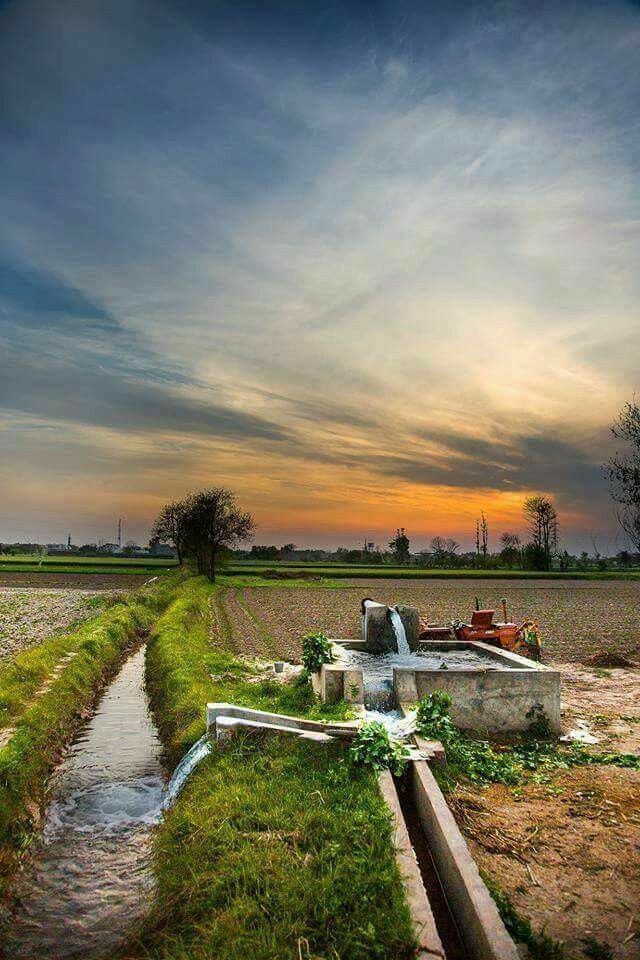
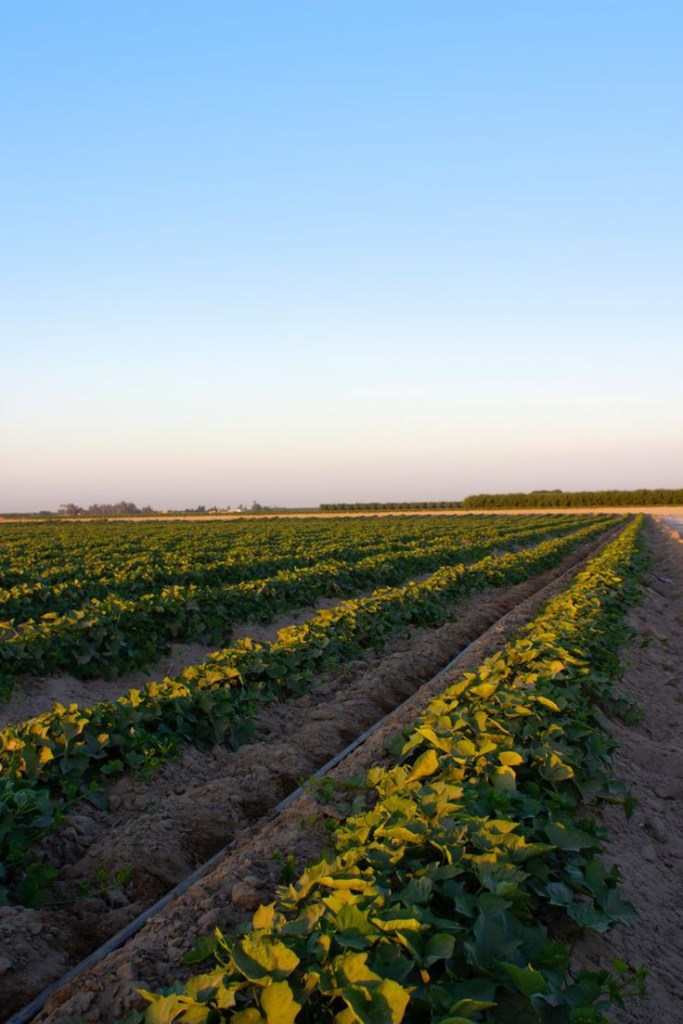
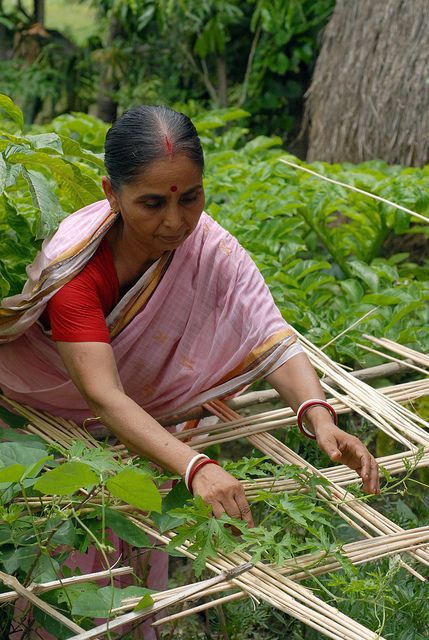
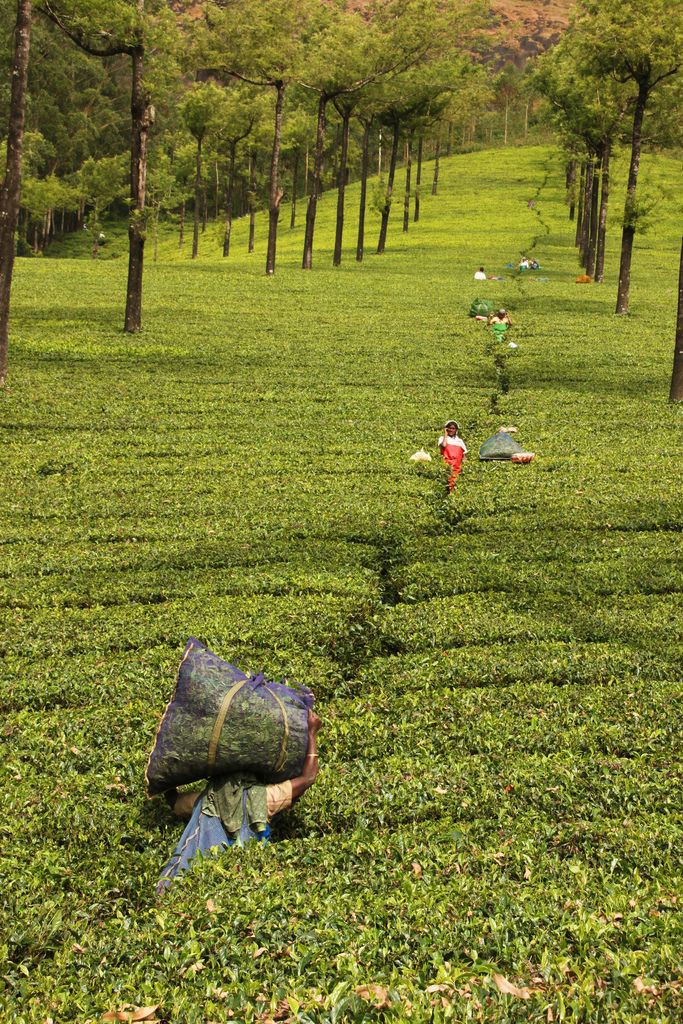
India ranks second worldwide in farm outputs. As per 2018, agriculture employed Indian work force and contributed 17–18% to country’s GDP.
In 2016, agriculture and allied sectors like animal husbandry, forestry and fisheries accounted for 15.4% of the GDP (gross domestic product) with about 41.49% of the workforce in 2020.India ranks first in the world with highest net cropped area followed by US and China.The total agriculture commodities export was US $ 3.50 billion in March – June 2020.
Agriculture is the primary source of livelihood for about 58% of India’s population. Share of agriculture and allied sectors in gross value added (GVA) of India at current prices stood at 17.8 % in FY20.
During 2019-20 crop year, food grain production reached a record of 296.65 million tonnes. In 2020-21, Government of India is targeting food grain production of 298 million tonnes.
India is among the 15 leading exporters of agricultural products in the world. Agricultural export from India reached US$ 38.54 billion in FY19 and US$ 35.09 billion in FY20.
Agriculture is an important industry in the United States. The agriculture industry, which includes both crops and livestock, is responsible for producing most of the world’s foods and fabrics. Agriculture impacts so many things that it’s hard to imagine a world without this important industry.
Schemes and Initiatives
Due to the high requirement of agriculture . It is important for the government to take initiatives and provide better infrastructure to the farmers. However , the required level of investment for the development of marketing, storage and cold storage infrastructure is estimated to be huge.
The Indian Council of Agricultural Research (ICAR), established in 1905, was responsible for the search leading to the “Indian Green Revolution” of the 1970s. The Union Minister of Agriculture is the president of the ICAR. The Indian Agricultural Statistics Research Institute develops new techniques for the design of agricultural experiments, analyses data in agriculture, and specialises in statistical techniques for animal and plant breeding.
Schemes by government for Indian agriculture :
Dairy Entrepreneurship Development Scheme.
Rainfed Area Development Programme (RADP)
Paramparagat Krishi Vikas Yojana (PKVY)
Pradhan Mantri Krishi Sinchai Yojana (PMKSY)
National Agriculture Market (e-NAM)
Pradhan Mantri Kisan Maandhan yojana.
Pradhan Mantri Fasal Bima Yojana (PMFBY)
Kisan Credit Card (KCC) scheme.
Pashu Kisan Credit Card Scheme.
PM-Kisan Scheme.
Conclusion
Agriculture sector is one of the prominent sector in India as well as all over the world . India is becoming self – sufficient in pulses and other crops .
Gone are the days , when India was unable to provide sufficient amount of food to the citizens . Gone are the days , when people used to think agriculture was not as important as other sectors . Gone are the days , when people used to think less of farmers . And gone are the days , when people were less educated about agriculture.
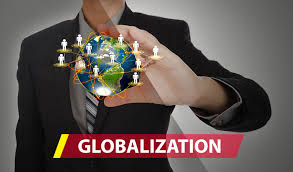
Globalization is the word used to describe the growing interdependence of the world’s economies, cultures, and populations, brought about by cross-border trade in goods and services, technology, and flows of investment, people, and information.
Globalization is driven by the convergence of political, cultural and economic systems that ultimately promote — and often necessitate — increased interaction, integration and dependency amongst nations.
The more that disparate regions of the world become intertwined politically, culturally and economically, the more globalized the world becomes.
These international interactions and dependencies are enabled and accelerated by advances in technology, especially in transportation and telecommunications. In general, money, technology, materials and even people flow more swiftly across national boundaries today than they ever have in the past. The flow of knowledge, ideas and cultures is expediated through Internet communications.
There are three types of globalization:
1. Economic globalization. This type focuses on the unification and integration of international financial markets, as well as multinational corporations that have a significant influence on international markets. 2. Political globalization. This type deals mainly with policies designed to facilitate international trade and commerce. It also deals with the institutions that implement these policies, which can include national governments as well as international institutions, such as the International Monetary Fund and the World Trade Organization. 3. Cultural globalization. This type focuses on the social factors that cause cultures to converge — such as increased ease of communication and transportation, brought about by technology.
Online learning is rapidly becoming one of the most cost-effective ways to educate the world’s rapidly expanding workforce.”
– Jack Messman
Introduction
Virtual classes are becoming a new word in the dictionary of 21st century. It was introduced to the country before but it came to the popularity when people become prisoners in their homes.
Due to the pandemic , virtual world widely came into connect with different countries and one of them was our’s.
Virtual classes become an virtual space where one can ensure to be a keen learner .
How does it work ?
Is it safe to learn online and using different apps for classes ?
How can you assure it cannot harm our privacy ?
Well for the answers you have to read this editorial.
Virtual classes
If you want to teach people a new way of thinking, don’t bother trying to teach them. Instead, give them a tool, the use of which will lead to new ways of thinking.”
– R. Buckminster
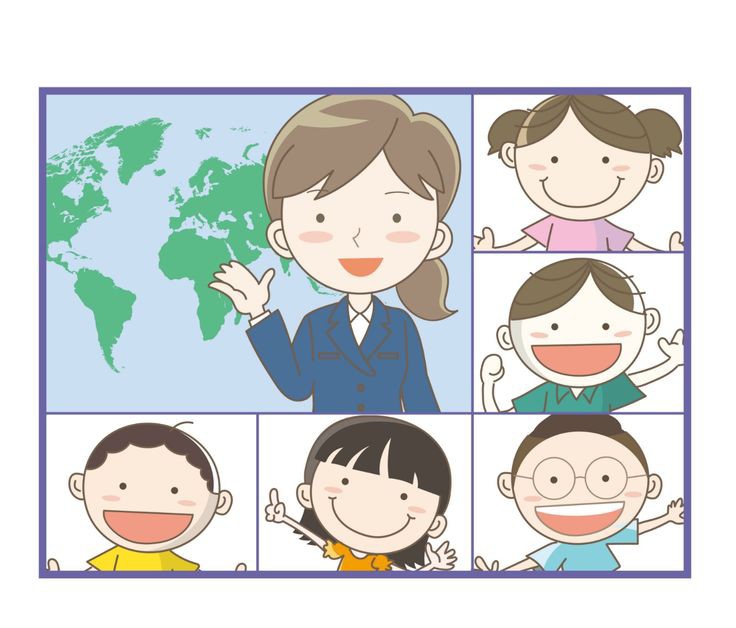
A virtual classroom is a learning and online space where teachers and learners can come together to learn , engage and interact with one another, and work in groups .
The main aim of virtual classes is to provide teacher and learner a platform where they can interact with each other.
It provides an environment to share the learning and thought of the learner and the mentor through video conferencing , Google meetings and others .
How it works
To learn about the virtual classes first you need to know how it works . Their are different portals where we can join virtual classes like zoom , Google meet , WebEx and others . They enable high connectivity , effective communication , simple usage with less internet .
Don’t you think it’s getting to much conceptual . Like OJO -MOJO , I also used some apps for virtual classes and what happened next is the story for me to know and you to explore .
Well , we were at the train station and waiting for a bus , I know I can do standup comedy very well .
Let’s rewrite the statement we were talking about virtual classes . For that we need the most important thing that cannot always be there . Guess what it’s Internet connectivity.
Than we need to login and join from the link that our teachers send in the group .
Want to know a secret , most of the time the link was invisible and students started to create fuss in the group and when it’s time to join the class there were more than 200 messages from where I have to dig the grave , I mean find the link. See how hard I have to work.
Today’s world
Develop a passion for learning. If you do, you will never cease to grow.
– Anthony J. D’Angelo
As the COVID resulted the shut-down of schools and colleges all over the world. More than 1.2 billion children had stoped learning.
And the result , we all know education system changed dramatically with the new e-learning in the digital platform.
Census shows that online learning showing retention of information and take less time. With the increase of online learning many platform providing free learning like BYJU’s , Coursera , Edx , etc,.
Some believe that due to the dramatically changes it was hard to use such platforms and others believe that integration of learning Internet technology education will help to accelerate the learning with diversity.
Choose the sides and make your choice.
If you want to teach people a new way of thinking, don’t bother trying to teach them. Instead, give them a tool, the use of which will lead to new ways of thinking.”
The Securities and Exchange Board of India (SEBI) is the regulatory body for securities and commodity market in India under the jurisdiction of Ministry of Finance , Government of India. It was established on 12 April 1988 and given Statutory Powers on 30 January 1992 through the SEBI Act, 1992.
Securities and Exchange Board of India (SEBI) was first established in 1988 as a non-statutory body for regulating the securities market. It became an autonomous body on 30 January 1992 and was accorded statutory powers with the passing of the SEBI Act 1992 by the Indian Parliament. SEBI has its headquarters at the business district of Bandra Kurla Complex in Mumbai and has Northern, Eastern, Southern and Western Regional Offices in New Delhi, Kolkata, Chennai, and Ahmedabad respectively. It has opened local offices at Jaipur and Bangalore and has also opened offices at Guwahati, Bhubaneshwar, Patna, Kochi and Chandigarh in Financial Year 2013–2014.
The SEBI is managed by its members, which consists of the following:
*The chairman is nominated by the Union Government of India. *Two members, i.e., Officers from the Union Finance Ministry. *One member from the Reserve Bank of India. *The remaining five members are nominated by the Union Government of India, out of them at least three shall be whole-time members.
SEBI has to be responsive to the needs of three groups, which constitute the market:
*issuers of securities *investors *market intermediaries
SEBI has three powers rolled into one body: quasi-legislative, quasi-judicial and quasi-executive. It drafts regulations in its legislative capacity, it conducts investigation and enforcement action in its executive function and it passes rulings and orders in its judicial capacity. Though this makes it very powerful, there is an appeal process to create accountability.
So let’s have a look that what does ecommerce mean~ E-commerce is the activity of electronically buying or selling of products on online services or over the Internet.
And if we talk about “Ecommerce in India” then, India has an Internet user base of about 696.77million as of May 2020, about 40% of the population. In 2017, the largest e-commerce companies in India were Flipkart, Snapdeal and Amazon. In 2018, Amazon beat Flipkart and was recorded the biggest ecommerce in India in terms of revenue. And it’s rapidly growing up day by day.
In India, cash on delivery is the most preferred payment method, accumulating 75% of the e-retail activities. Demand for international consumer products (including long-tail items) is growing faster than in-country supply from authorised distributors and e-commerce offerings. Long tail business strategy allows companies to realize significant profits by selling low volumes of hard-to-find items to many customers, instead of only selling large volumes of a reduced number of popular items. The term was first coined in 2004 by Chris Anderson.
In 2017, the largest e-commerce companies in India were Flipkart, Snapdeal and Amazon. In 2018, Amazon beat Flipkart and was recorded the biggest ecommerce in India in terms of revenue.
And some of the ecommerce sites are:
1. Amazon.in
2. Flipkart
3. Snapdeal
4. ebay India
5. IndiaMART
6. Shopclue
And so on…
But one should properly check the product and should take a clear look in the mind that this product is the only one which I want to purchase and they’ve can go on but inspection of the product must be the first priority of the customer.











 Eduindex
You must be logged in to post a comment.