The term “domestic violence” includes a broad range of violent acts committed by one member of a family or household against another. It often refers to the mistreatment of a child or spouse, and includes not only physical harm but also threats and verbal, psychological, and sexual abuse. The relationship of the abuser to the victim is the key distinction between other assault crimes and domestic violence. In India, domestic violence is always believed to be inflicted on women. However, during personal interactions with many males in society and in the organized setups such as industries and offices, it was observed that men also suffer from domestic violence. Due to stereotyped gender roles, it is hardly believed by society that a woman can inflict violence on men. Many courts also commented on false allegations of domestic violence by women. Men are still not ready to speak of this violence against them and they are ignorant about any legal help to avoid this.
Comparison of India and Other Countries
The prevalence of spouse/intimate partner violence (51.5%) in the latest Indian study2 was found to be higher than data collected for domestic violence under partner abuse state of knowledge project (PASK) from the USA, Canada, and the UK (19.3%).
Domestic violence was recognized as a criminal offense in India in 1983. The offense is chargeable under section 498A of the Indian Penal Code.
Prevalence
Scarce research data on domestic violence against men are available in the scientific literature.
However, according to a recent study, 51.5% males experienced violence at the hands of their wives/intimate partner at least once in their lifetime and 10.5% in the last 12 months.
According to the National Family Health Survey, 2004, this violence is not always inflicted by the female partner/wife but many a time by a male relative of the wife attacks or threatens the man. When physical violence and threats against men by wife’s relatives are taken into account, an estimated 3 crore men are facing domestic violence in India.
In a study conducted by My Nation along with Save Family Foundation (Delhi) on domestic violence against men, between April 2005 and March 2006, 1,650 men were interviewed and their personal cases looked into. The study concluded that Indian women were the most abusive and dominating.
From all over India, 98% of the respondents had suffered domestic violence more than once in their lives. The study covered Indian husbands from various socioeconomic strata, but the bulk of the respondents, according to the researchers, came from the upper middle class and the middle class.
Nadda et al found much higher physical violence, 35% and 26.9%, respectively, against women this reflecting that Indian women are much less physically aggressive than Indian men. Gender symmetry does not exist in India for physical violence.
Types of Violence
Domestic violence has been recognized across the world as a form of violence that affects a person’s life in every way, physically, mentally, emotionally, and psychologically, and is a violation of basic human rights. In a recent study by Malik and Nadda, the most common spousal violence was found to be emotional followed by physical violence.
Physical Violence
This can include slapping; pushing; hitting by wife, her parents, or relatives; or throwing objects like utensils, cell phones, and crockery at the husband. In physical violence, slapping was identified as the most common form (98.3%), and the least common was beaten by weapon (3.3%). Only in one-tenth of the cases, physical assaults were severe.2
Psychological Violence
In emotional violence, reported 85% abuse against the men was criticism, 29.7% were insulted in front of others, and 3.5% were threatened or hurt. It can also be in the form of mental abuse such as constant threats to the husband and his family under false allegations of dowry and domestic violence.
Types of Crime Committed Against Men in India
At home or at the workplace to avoid punishments or to get some rewards, men too can be involved in sexual activity by force. In many states of India, a young man with good qualifications and income is abducted and forced to marry without his consent. False rape and other charges such as molestation are also common. Since law and society always traditionally favor females as the weaker sex, many a time, false complaints of sexual abuse/rape are lodged against men. This is true regarding cases against men under 498A (domestic violence) and false dowry cases, and the same was expressed by various courts during their proceedings.
Effects of Domestic Violence Against Men
Any violence affects life physically, mentally, emotionally, and psychologically. It is also a violation of basic human rights. Unreported and unnoticed violence against men may lead to denial in accepting the family, divorce, depression, or suicide in extreme cases. It has been observed that suicides were more in married men as compared to separated/unmarried men. According to WHO (2002), women think more about committing suicide, whereas men die by suicide more frequently. This is also known as a gender paradox in society.
According to WHO, exposure to violence can increase the risk of smoking, alcoholism, and drug abuse; mental illness and suicidality; chronic diseases such as heart disease, diabetes, and cancer; infectious diseases such as HIV, and social problems such as crime and further violence.
Legal Issues
Despite the data available, suggesting violence against men, no law to protect men is yet to be formed by the legislature. All laws for controlling domestic violence consider women as victims. Antidowry laws Dowry Prohibition Act, 1961, and later Section 498A passed by the Supreme Court of India already show the concern and asked to stop the “Legal Terrorism” in the form of misuse of 498A and the necessary changes to be made by the Parliamen
Need for Gender Neutral Laws
In cases where men are falsely accused of violence or dowry, a law which can address these false allegations is the need of the hour. Human rights and gender equality should include both men and women. Domestic violence should be considered as spousal violence and must not be differentiated due to gender.
Domestic violence act in India is for women only. Studies show that men are also the victims of violence at the hand of women. Hence, necessary amendments addressing violence against men are suggested.
‘Power Of Attorney’ is an authority given by an instrument by one person, called as the donor or principal, authorising another person, called donee or agent to act on his behalf. There may be possibility of giving ‘Power Of Attorney’ by two or more persons jointly to one or more persons. Here a legal authority is given by the principal to the agent which may be broad or limited and an agent can take all necessary decisions i.e. financial, property related matters and all other matters where principal cannot be present to sign or in the case of principal’s illness and disability. A paper signed by principal giving powers to an agent is sometimes itself called a power of attorney. A paper giving a power of attorney should be clear and understandable.
Importance of Power of Attorney
A power of attorney document is an extremely important part of estate planning yet one of the most misunderstood. It is often convenient or even necessary to have someone else act for you as there is advancement in the business and commerce transactions. As many people confuse the power of attorney (POA) with a will (Probate), but these documents are two very different things and have two very different functions. A will comes into effect on the day person die. A POA applies during a person’s lifetime and ceases to apply when he dies. So you actually need both a POA and a will as they complement, and do not overlap, each other. To add a twist to the subject, there are two types of POA: one for property and one for personal care. These two types are completely separate. They deal with different areas of your life and both are required for effective estate planning.
Classification of Attorney
The Power of Attorney can be classified into two categories which includes:
General Power of Attorney: A general power of attorney is one by which an instrument is executed by the principal authorising the agent to do certain acts in general on his behalf. The word ‘General’ here means that the power must be general regarding the subject matter and not general with regard to powers in respect of a subject matter. If the subject matter is not general but restricted to something either specific or specifically mentioned by the principal while drafting an instrument then it will not constitute a general power of attorney. It is otherwise called as limited power of attorney.
Special Power of Attorney: A special power of attorney is one by which a person is appointed by the principal to do some specified act or acts. In this type of power of attorney, an agent conferred with a power to do specific act in a single or specified transactions in the name of the principal.
Durable Power of Attorney: A Power of Attorney which specifically says otherwise, agent’s power ends if principal become mentally incapacitated. However, a power of attorney may say that it is to remain in effect in the event of future incapacity of the principal. A power of attorney that says this is called a durable power of attorney.
To ascertain whether power of attorney is of general or special in nature, the subject matter in respect of which power is conferred Is to be seen accurately. The power of attorney is the unilateral document wherein donor or the principal gives authoritative power to the agent by signing the document and the agent’s sign is not always required.
Persons Competent To Execute
A power of attorney can be executed by any person who is competent to enter into a contract. However, the married women can execute powers of attorney even if they are minors. A company while executing power of attorney must make conformity with the ‘Articles of Association’ and its common seal. A person must be competent to give power to the appointed person so that it will not affect the legality of the instrument/deed of power of attorney.
Authentication of power of Attorney
As per Indian law, a power of attorney is a legal document that has to be properly framed, using the right legal terminology and setting out the objectives and responsibilities that you wish to authorise the appointee to carry out on your behalf. If a person wants to authorise someone to act as a power of attorney on his behalf, it must be signed and notarised by a certified notary advocate, who is able to declare that you are competent at the time of signing the document to issue the said power of attorney. You will need to show your ID to the notary advocate before he/she is able to certify and issue the document. It must be executed and authenticated by the registrar or sub-registrar of assurances as per the ‘Registration Act, 1908’.
Presumption About Power of Attorney
A power of attorney is legal written document which has more legal value and the authenticated attorney will be presumed by the court as legal document under ‘Indian Evidence Act, 1872’. According to the Section: 85 of ‘Indian Evidence Act, 1872’, which provides that the court shall presume that every document purporting to be a power of attorney, and has to be clearly authenticate and executed before the notary or magistrate. If there is any issue arises concerning to the genuineness of the attorney then proof of its execution can be called for the verification.
The term “custodial violence” has not been defined under any law. It is a combination of two word custody and violence. The word ‘custody’ implies guardianship and protective care. Even when applied to indicate arrest or imprisonment, it does not carry any evil symptoms during custody. In a law dictionary the word ‘custody’; has been defined as charge and with regard to a person in imprisonment: judicial or penal safekeeping. As Per Chamber Dictionary, the condition of being held by the police, arrest or imprisonment is called ‘custody’. As Per Legal Glossary Dictionary, custody is imprisonment, the detaining of a person by virtue of lawful Power or authority.
Section 167 of the Code of Criminal Procedure speak about two type of custody i.e. police custody and judicial custody. As per section 167(1) of Cr. P.C., “the magistrate to whom an accused person is forwarded under this section may whether he has or not has jurisdiction to try the case, from time to time, authorize the detention of the accused in such custody as he may think fit. Provided that the magistrate may authorize the detention of the accused person, otherwise than in the custody of the police, beyond the period of 15 days if he is satisfied that adequate ground exist for doing so. So as per section 167 (1) of Cr. Pc. ‘police custody’ can be granted for a maximum period of fifteen days only’ Police custody basically means police remand for the purpose of interrogation. In law actually a police officer has two occasion to keep a person in its custody firstly, from the period when he arrest a person till he produce the said person in the court i.e. first 24 hours of the arrest of accuse. Secondly, when police gets, remand from court after producing the accuse in the court which can be extend up to a maximum period fifteen days, thereafter, a person is sent in judicial custody which in general terms means jail or prison, where an accuse remain in custody till he gets bail or if convicted and sentenced to jail till the completion of sentence. As per law, ‘custody’ of a person begins when the police arrest him.
Other type of custody as mentioned earlier is ‘judicial custody’ which means sending a person in jail or prison. As per section 3 (1) of ‘The Prison Act, 1894’, ‘Prison’ means any jail or place used permanently or temporarily under the general or special order of a State Government for the detention of prisoners and include all land and building appurtenant thereto, but does not include:-
(a) Any place for the confinement of prisoners who are exclusively in the custody of police; or (b) Any place specially appointed by State Government under section 541 of the old Criminal Procedure Code, 1882, (c) Any place, which has been declared by the State Government by general or special order to be subsidiary jail.
The term ‘violence’ is the state or quality of being violent, excessive unrestraint or unjustified force, outrage perforate injury. ‘Violence’ in its literal sense has been defined as the use of force by one person over another so as to cause injury to him. The injury may be physical, mental or otherwise. The simple definition of violence is behaviour designed to inflict injury on a person or damage to property. Custodial violence is a term, which is used for describing violence committed against a person by a police authority. Thus, custodial violence can be defined as “an inhuman trait that springs out of a perverse desire to cause suffering when there is no possibility of any retaliation; a senseless exhibition of superiority and physical power over the one who is overpowered.” According to Law Commission of India, crime by a public servant against the arrested or detained person who is in custody amounts to custodial violence. According to Dr. S. Subramaniam, “Any use of force threat psychological pressure istermed as custodial violence. According to Justice B.P. Jeevan Reddy, “Custodial violence includes torture, death, rape and excessive beating in police custody”.
Although, overcrowding, malnutrition, unhygienic conditions and lack of medical care are some of the factors of death in police and judicial custody, but custodial violence remains the common cause of deaths in prisons and lock-ups. The custodial violence is a generic term and includes all and every type of torture, third degree, harassment, brutality, use of force not warranted by law, etc. custodial violence include illegal detention, arrest which is wrongful or on illegal or on insufficient grounds using third degree method, on the suspects, humiliating them, using filthy language, not allowing them to sleep, extorting confession under pressure, padding up of additional evidence, misuse of the power regarding handcuffing not allowing to meet counsel or family member to accuse, denial of food etc. However since the torture or third degree in the most common and prominent form of custodial violence by the police.
The police officials commit an act of violence upon the persons in their custody under the guise of investigation and interrogation. The heinousness of this crime is that it is committed upon the citizens by the very person who is considered to be the guardian of the citizens. It is committed under the shield of uniform and authority within the four walls of Police Station or lock up, the victim being totally helpless in these circumstances. The protection of an individual from torture and abuse of power by police and other law enforcing officers is a matter of deep concern in a free society.
The chances of violence committed by police on persons in its custody are much greater than any other form of violence. The basic reason behind it is that the victims of such violence are unable to protest against it. The police officers use their official position to manipulate evidences against themselves. Death in custody is generally not shown on the records of the lock-up and every effort is made by the police to dispose of the body or to make out a case that the arrested person died after he was released from jail. Any complaint against torture is not given attention because of ties of brotherhood. No direct evidence is available to substantiate the charge of torture or causing hurt resulting into death, as the police lock- up where generally torture or injury is caused is away from public gaze and the witnesses are either policemen or co-prisoners who are highly reluctant to appear as prosecution witness due to fear of retaliation by the superior officers of the police.
However, in spite of the Constitutional and Statutory provisions contained in the Criminal Procedure Code and the Indian Penal Code aimed at safeguarding personal liberty and life of a citizen, the growing incidence of torture and deaths in police custody has been disturbing. Experience shows that the worst violations of human rights take place during the course of investigation when the police, with a view to securing evidence or confessions, often resort to third-degree methods including torture and techniques of arrests by either not recording them or describing the deprivation of liberty merely as “prolonged interrogations”. A reading of the morning newspapers carrying reports of dehumanising torture, assault, rape and death in police custody or other governmental agencies almost every day is, indeed, depressing. The increasing incidence of torture and death in custody has assumed such alarming proportions that it is affecting the credibility of the rule of law and the administration of the criminal justice system. As a result the society rightly feels perturbed. The society’s cry for justice becomes louder.
Any form of torture or cruel, inhuman or degrading treatment, whether it occurs during investigation, interrogation or otherwise needs the severest condemnation. If the functionaries of the Government become law-breakers, it is bound to breed contempt for the law and no civilised nation can permit that to happen. Custodial violence may be both physical and or mental. It may also consist of gross negligence or deliberate inaction. In a case, when a person was suffering from high blood pressure or similar type of disease, almost for which continuous medicine is essential, and he is not allowed to take medicines the men develop serious health problem or dies. The Apex Court held it to be a case of custodial violence and the State was made liable for damages for their gross negligence in protecting the person in custody.
While it will likely change over time, focusing on a certain career path can help inform your decisions about your professional growth as you gain skills and experience. It’s important to reflect on your interests, skills and career goals as you make certain life choices such as which school to apply for, which entry-level job is right for you, whether to get a post-graduate degree or specialized certification and more.
In this article, I will focus on how to identify your key skills and interests, match those qualities to a potential job field and start a career.
1- WRITE DOWN CAREER GOALS
Before selecting a career, start with self-reflection by asking and answering certain questions. Active reflection helps narrows your choices into something more specific.
Consider asking yourself:
What do I want from my career?
What are my core values?
What activities do I most enjoy, professionally or in my free time?
What are my interests?
What are my strengths and aptitudes? Soft skills? Hard skills?
Do I want to specialize in certain technical skills or take on management roles?
Once you answer questions like these (and any others that are important to you), you can better research potential careers paths. It’s also important to revisit your career goals as you grow personally and professionally to ensure your goals remain achievable and aligned with your interests.
2- Set one short term & one long term goal
Once you have narrowed down your options, consider establishing milestones for your career. Research where other people in your field are at five or ten years into their career, and make note of the job titles they have. Decide what title or advancements you want to have at these future points. Then research what you can do to reach those goals. You may need to undergo training programs, take on specific responsibilities or hold prerequisite positions.
By establishing career goals five or ten years in the future, you can plan based on what progress you should expect every year. Schedule time regularly to reflect on your career and goals.
3- Identify your Personality Type
A personality type is a set of personality traits that can be grouped together. There are multiple methods for discovering your personality type, many of which focus on your responses to different situations. Different personality types may naturally gravitate toward different interests and develop different strengths, including careers.
Different tests list common career choices for each personality type. If you take a variety of tests and one or two careers appear across multiple tests, that specific career is likely worth researching.
4- Did you enjoy your previous job/internship?
Your job satisfaction in previous roles can also help guide your career choices. Identify trends in your previous positions, such as focusing on a specific technical skill. Also, review your job history to identify positions that you felt fulfilled in.
5- Educate yourself with the Job requirements – skills, knowledge, interests,etc
Many jobs have specific education requirements for applicants and new hires, such as obtaining a high school diploma, completing a bachelor’s degree program or having a master’s degree. Some positions also require applicants to have their degrees in a specific field related to the position.
Review the education requirements for jobs you are interested in, and apply for jobs that accept your current level of education or research additionally degrees or certifications you may need.
6- Work on gaining expertise in the skills you already possess
Make a list of your current skills, certifications and areas of expertise. Also ask for feedback about your technical, interpersonal and people management skills from coworkers and colleagues. This evaluation can help you find careers that match what you are best at.
7- If you can choose your interest as your career,what will it be?
Depending on your personality, you may have interests that lend themselves to different careers. Examine your hobbies, past volunteer experiences and interests to identify activities or fields you enjoy. While this information is outside of a professional context, creating a list of activities you like can help you focus a career search. For example, you may enjoy a career in cybersecurity if you enjoy logic puzzles, or you may enjoy a traveling sales role if you like meeting new people.
Use this knowledge to apply for short-term positions or volunteer opportunities to explore new career options. This first-hand experience allows you to test your suitability for a career. If you are currently in school or have a job, consider taking a course or certification program that is required for a field that interests you. This experience can help you determine if the career’s skills and content are something you enjoy.
8- Consider your salary needs
Depending on your lifestyle, you may require a certain salary. Find average salaries by job title, company and location on salaries. This can be a good starting point for determining how much money you may have when first starting out, as well as your earning potential after you’ve gained a certain amount of time and experience. While salary certainly does not equal an engaging, satisfying job, it is an important factor to consider when mapping out your career path.
Life is a journey from beginner to a pro. It drives us from a million ways through which we live, learn, seek, embrace and grow. The growth of a human being into a person is what involves the entire journey of a lifetime. For every second a person lives, he grows in a million uncounted, un-felt ways. The greatest mechanism for the transformation of a human being to a person is education. Education is the power that can change the world.
Education is an integral part of human development and there exist an essential need for the same. But as always said, Growth is always multidimensional. Education teachers of person theoretically. There is a need of social recognisation and realisation in people which we call the Civic sense. The sense of responsibility and concern towards being a good human is what constitutes to an important branch of growth. Teaching makes people intelligent but civic sense makes people gentleman. Also, What point is it to have an education system which lacks the basic education?
people lack in having civic sense as they were never taught about the importance regarding the same. In rushing after our ambitions, we often forget that we need to be responsible and sensible about our living too. There are many strategies and steps which could be followed in order to improve the current situation of our generation as lack of civic sense does not only pulls human away from being a complete person but also exploits the environment. Instances like dumping garbage in the middle of high speeding road, leaving over the packages marks how can professional and uncivilized this generation is.
There should be a systemised remedy provided for the same. As qualities like these are developed in the early stages, the schools should have a subject about Moral Education or Values to Uphold to highlight the importance of being a good human being and how to pursue it.
Only if we start it from the initials, we will make it to the finals too. It is high time for the generation to step out and see the ways to turn their imperfection into areas of improvement. Besides, awareness programs should be held, laws should be made for betterment of the same. When the people will come together, the environment, ethics and morals will never have to be compromised.
Education drives human to a person but civic sense a person to the person.
The glory of India has evolved through jewels of wisdom and royale but on the other hand it has been through a lot of bleak ways which spread their way now too even after ages of the start.
The ways being talked about are the ways through which poverty, with every passing tenure widens its arms and stretches farther on all the left out communities of India. Technically, poverty refers to the lack of monetary facilities which obstruct a citizen to satisfy his needs or wants. If given a detailed look,it will be realised that this evil poverty not only lies in terms of money but has a great extension when it comes to opportunities development performance and preferences especially for the left out communities of India.
Not only the inferior community experience poverty but they witness poverty at even worse when it compelled them to scrounge their glitter of life.
They are poor for not being able to withstand the glorified people. They are even poorer for not being able to witness the politics and policies and false promises made to each one of them from endless of mediators come true.
Poverty in India not only describes itself as lack of money but teaches a lot too. The people of slums are not bothered at all for not having a royal living but all the pray is to ‘not have’ empty stomach. When a rich kid is witnessed excluding his tattered shoes from wearing, these tender kids find the world of happiness from the same. The poor kids are not at all in complex with them being in a state of loan desolation but they count on it as a bouquet of wonders which they encounter with every ride they take to accomplish their tasks.
Poverty vanishes the abilities, worth and consideration of people and entancled in it.
No matter how much we try to deny this fact but Poverty is eating the growth of our country. It is because of this, that a country still needs ages to grow completely, inside out.
The Government of India should take decisions and actions to safeguard and protect the future talents and shining stars of the country. All of us have to initiate spreading empathy, colours and equality instead of flourishing poverty.
The children should not have to work is universally accepted, but there are no universal answer why the problem of child labour persist and how it needs to be tackled. India is faced with the crucial task of eliminating the child labour which is prevalent in all spheres of life. Thousands of children are engaged in the carpet factories, glass factories and other hazardous industries all over the country.
The term child labour has generally two-fold interpretations. Firstly, it is implied to be an economic necessity of poor households and secondly, the explosive aspect in children‟s work concerned with the profit maximizing urge of commercial establishment wherein children are made to work for long hours, paid low remuneration and deprived of educational opportunities.
International Labour Organisation (ILO) defines child labour to “… include children leading permanently adult lives, working long hours for low wages under conditions damaging to their health and physical and mental development, sometime separated from their families, frequently deprived of meaningful educational and training opportunities that could be open up to them a better future”.
Reasons For Child Labour: There are many reasons for the existence of child labour and it varies with place and place to place. In India, poverty is one of the important factors for poverty, but it‟s not the sole factor. Children provide cheap labour, the person who wants labour has to pay less to them than adult labour. The child can be commanded more than an adult. The pull factor of the child labour is the profit maximization.
The main causes to failure to control the child labour are; poverty, low wages than adult, unemployment, absence of schemes for family allowance, migration to urban areas, large family size, children being cheaply available, non existence of strict provisions for compulsory education, illiteracy, ignorance of parents and traditional attitudes.
Child Labour In India: India accounts for the second highest number where child labour in the world is concerned. Africa accounts for the highest number of children employed and exploited. The fact is that across the length and breadth of the nation, children are in a pathetic condition.
Child labour in India is a human right issue for the whole world. It is a serious and extensive problem, with many children under the age of fourteen working in carpet making factories, glass blowing units and making fireworks with bare little hands. According to the statistics given by Indian government there are 20 million Child labours in the country, while other agencies claim that it is 50 million.
The situation of Child labours in India is desperate. Children work for eight hours at a stretch with only a small break for meals. The meals are also frugal and the children are ill nourished. Most of the migrant children, who cannot go home, sleep at their work place, which is very bad for their health and development. Seventy five percent of Indian population still resides in rural areas and are very poor. Children in rural families who are ailing with poverty perceive their children as an income generating resource to supplement the family income. Parents sacrifice their children‟s education to the growing needs of their younger siblings in such families and view them as wage earners for the entire clan.
In Northern India the exploitation of little children for labour is an accepted practice and perceived by the local population as a necessity to alleviate poverty. Carpet weaving industries pay very low wages to Child labours and make them work for long hours in unhygienic conditions. Children working in such units are mainly migrant workers from Northern India, who are shunted here by their families to earn some money and send it to them. Their families dependence on their income, forces them to endure the onerous work conditions in the carpet factories.
While experts blame the system, poverty, illiteracy, adult unemployment; yet the fact is that the entire nation is responsible for every crime against a child. Instead of nipping the problem at the bud, child labour in India was allowed to increase with each passing year. And today, young ones below the age of 14 have become an important part of various industries; at the cost of their innocence, childhood, health and for that matter their lives.
Indian Constitution And Child Labour: Article 23 of Indian Constitution prohibits the trafficking in human beings and forced labour. And Article 24 prohibits the employment of children in factories. It says that No child below the age of fourteen years shall be employed to work in any factory or mine or engaged in any other hazardous employment.
The general understanding was that right secured by Article 24 will hardly be effective in the absence of legislation prohibiting and penalising its violation. However, Supreme Court clearly stated that Article 24 “must operate proprio vigour” even if the prohibition lay down in it is not “followed up by appropriate legislation.” In Labourers, Salal Hydro Project v. State of J&K it was again held that the employment of children below 14 in construction work violates Article 24. It was noted in M C Mehta v. State of Tamilnadu, that menace of child labour was wide spread. Therefore it issued wide ranging directions in the context of employment and exploitation of children in Sivakasi, prohibiting employment of children below the age of 14 and making arrangement for their education by creating a fund and providing employment to the parents or the able bodied adults in the family. These directions were reiterated in Bandhu Mukti Morcha v. Union of India, concerning the employment of children in carpet weaving industry in U.P.
The State shall, in particular, direct its policy towards securing the health and strength of workers, men and women, and the tender age of children are not abused and that citizens are not forced by economic necessity to enter avocations unsuited to their age or strength. Also the State shall, direct its policy towards securing the given opportunities and facilities to develop in a healthy manner and in conditions of freedom and dignity and that childhood and youth are protected against exploitation and against moral and material abandonment to the children.
Article 45 of Indian Constitution made provision for early childhood care and education to children below the age of six years. As per this Article the State shall endeavours to provide early childhood care and education for all children until they complete the age of six years.
Students are already drowning in student loan and upon that they have miscellaneous expenses to cover. Many of you would have lost hopes of studying in prestigious Universities thinking about the expensive cos of living there. However there are cities in the world which offer cheap and affordable living especially for students.
This article derives results based on the average costs indicated on the Mercer Cost of Living Survey. Each of these cities contain not only cheap living but also some of the top universities one might be delighted to get into.
Kuala Lumpur
Kuala Lumpur, Malaysia’s capital and largest city, ranks second in the world for affordability. Also featuring in joint 29th place overall in the best student cities this year, tuition fees at one of Kuala Lumpur’s five ranked universities will cost an average of only US$2,500 per year for international students. For those looking to live in the city center, a one-bedroom apartment will cost an average of US$568 per month.
Kuala Lumpur also ranks well for affordability in the Mercer Cost of Living Survey, coming 141st of 209 countries in terms of expense.
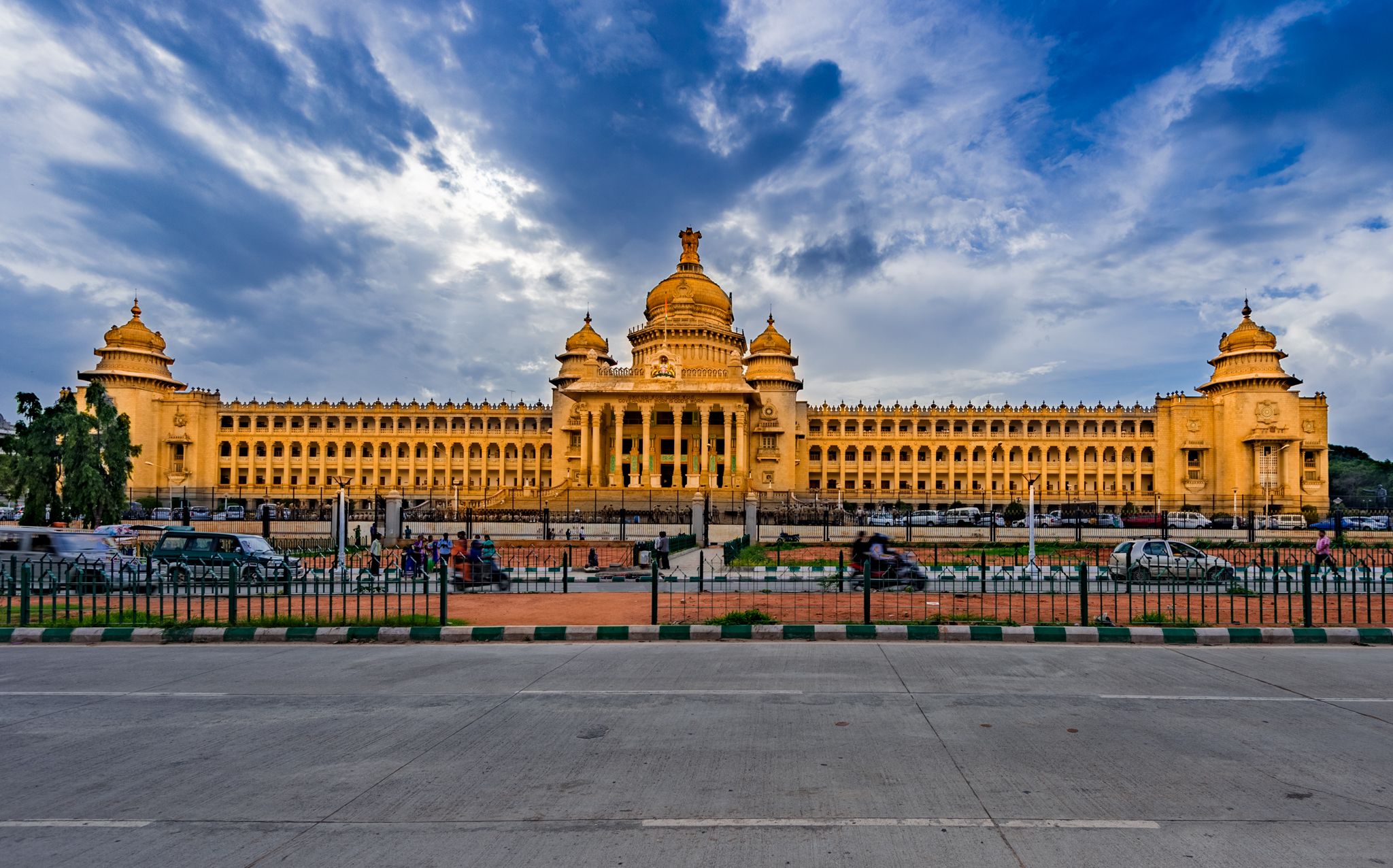
Bangalore
the Indian city of Bangalore, a new entry in this year’s Best Student Cities index at 81st, has the lowest tuition fees of all the cities on this list (only costing US$100 per year on average.) The city also has extremely low living costs , a one bedroom apartment in the city center, for example, will cost you an average of US$250 — this is extremely low compared to cities such as London, where you’d be paying a monthly average of US$2,132.
Bangalore has two universities currently featuring in the world university rankings. It also ranks highly in both the student view indicator and the employer activity indicator, suggesting that Bangalore’s graduates are viewed highly among graduate employers.
Johannesburg
Coming in at ninth worldwide for affordability in 2019, individuals in Johannesburg’s city center can expect to pay an average of US$471 in rent per month for a one bedroom apartment, excluding bills and annual tuition fees of around US$2,300. The city also ranks 185th out of 209 cities in the Mercer Cost of Living Survey (where first place is the most expensive).
This sunny South African city is ranked 78th overall in the Best Student Cities and climbed six places this year in the affordability indicator. The city is home to two institutions featured among the world’s top 550 in the world university rankings.
Budapest
Boasting three world leading universities, and home to over three million people, Hungary’s capital ranks first once again for the affordability category in 2019. Budapest also comes 43rd overall in the Best Student Cities, rising six places his year due to its improved scores in the desirability and student mix indicators (appearing in the global top 60 for both).
Budapest will cost international students an average of US$1,400 in tuition fees per year (much lower than many other study destinations). The city also ranks 164th out of 209 countries in the Mercer Cost of Living Survey.
Tomsk
Ranking 73rd overall in the Best Student Cities index, Tomsk places joint fourth for affordability in 2019 along with fellow Russian cities Novosibirsk and St. Petersburg. Tomsk gained the title of the ‘cultural capital of Siberia’ from the 1960s, when it was fill of artists, writers and film directors, and is still known today as a major educational, scientific and innovation center in Siberia.
If you’re interested in studying at one of Tomsk’s leading institutions, international undergraduate tuition fees cost an average of US$2,600 per year.
St. Petersburg
St. Petersburg is Russia’s second largest city (after Moscow, of course) and home to over five million people. Ranked 66th in the city ranking in 2019, it’s climbed four places in the affordability indicator to claim joint fourth place, with tuition fees at its three leading universities costing an average of US$2,600 per year.
Students looking to study in this awe-inspiring city will be pleased to find out that the city’s cost of living is 28.2 percent cheaper than in Russia’s capital, Moscow. And although St Petersburg’s best score overall is for its affordability, its biggest improvement this year is in the student view indicator, rising 16 places in 2019, reflecting its popularity among students.
Manila
The capital city of the Philippines and one of the oldest cities in the world, Manila is ranked eighth in the world for affordability this year, as well as joint 85th overall in the Best Student Cities index. Manila contains four excellent universities, led by the University of Philippines, which places joint 356th in the world.
With tuition fees averaging out at around US$2,400, and the city ranking 109th out of 209 in the Mercer Cost of Living Survey, Manila is a great place to get a top-quality education without breaking the bank. On top of this, Manila earns its best score in Student View this year, based on student’s experiences whilst studying in the city, and their perceptions of the availability and quantity of graduate employment.
Wroclaw
With sensational architecture and a plethora of diverse cafés and restaurants, Wroclaw, the fourth-largest city in Poland, comes third in the affordability indicator and is a new entry in the Best Student Cities index in 2019 at 108th. Students looking to study in Wroclaw will be pleased to hear that higher education is free for Polish students, and for international students willing to take the same entrance exams and to study a course taught in Polish.
However, if you’d prefer to study in English, tuition fees are still much lower than you’ll find elsewhere. The cost of living in Wroclaw is also relatively low, estimating that the monthly rent for a single person living in the center will cost on average around US$597.
Novosibirsk
Russia’s third largest city, Novosibirsk is packed full of parks and tree lined avenues, as well as being a major manufacturing and administrative center.
It climbed six places to rank 92nd in the Best Student Cities ranking this year and is rated joint fourth for affordability, with tuition fees averaging at US$2,600 per year for international students. Living costs are lower here than in Moscow, with a single metro ticket for example only costing 22 rubles (the equivalent to only 35 US cents).
Hsinchu
Perhaps those of you looking for a great place to study abroad will be blown away by Hsinchu, the second city laying claim to the title, ‘The Windy City’ (the first, of course, being Chicago). Coming 10th for affordability this year and joint 68th overall in the Best Student Cities index, Hsinchu is an excellent option for those who want to study in Taiwan without all the hustle and bustle of a big city.
A form of property called Intellectual property has come into existence and its importance is growing the immaterial products of a man’s brain may be as valuable as his land or his goods. the law ,therefore, gives him a proprietary right in its, and the unauthorised use of it by other person is a violation of his ownership , no less than theft or trespass is.
According to article 2 (vii) of the convention establishing the world Intellectual property organisation(WIPO) ‘Intellectual Property’ shall include the rights relating to-
-literary, artistic, scientific works
-preformance of performing artists,phonograms and broadcasts
-invention in all field of human endeavour,
-scientific designs ,
– industrial designs,
– trademarks , service marks And commercial names and designations ,
– protection against unfair competition.
And all together rights resulting from intellectual activity in the industrial, scientific, literary or artistic fields.
Intellectual peoperty rights (IPRs) are legal rights governing the use of creation of the human mind.
The mundane .object of IPR , generally , is to exclude third parties from exploting protected subject -matter without explicit authorisation of the right holder,for a creation duration of time.Intellectual property rights help creative and inventive activities of orderly marketing of proprietary goods and services.
Categories of Intellectual property Rights
According to the TRIPs , the intellectual property rights are:
1.copyright and related rights
A)rights of artists, printers,musicians, sculptors, photographers,and authors for copyright in their works.
B) Rights of computer programmers whether in source or object code for a copyright in their programmes and compilation data
C) Rights of performers, producers of phonogrammes, and broadcasting organizations in respect of fixation on their programmes for a copyright in their work
2.Right of traders in their trade marks.
3. Right of manufacturers and producers on gegraphical indication in relation to such products and produce.
4.Rights of designers for their distinctive design striking to the eye.
5. Patents-
A) rights of inventors for patent to his invention
B) rights of plant breeders and farmers
C) Right of biological diversity
6. Right of computer technologists for their layout design of integrated circuits
7.Right Of businessmen for protection of their undisclosed information on technology and management i.e.,business secrets.
To ensure that software Development does not violate the cyber laws and enforces IPR calls for paradigm shift in analyzing and modeling nonfunctional and domain requirements in order to deliver quality and legal software product..
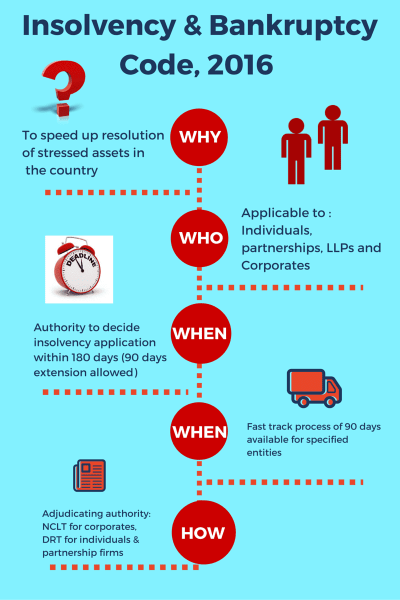
The Code was enacted in 2016 following decades of recommendations suggesting improvements to the previous insolvency regime, which was fragmented, fraught with delays and resulted in poor recoveries for creditors. [1]
The insolvency resolution process in India has in the past involved the simultaneous operation of several statutory instruments.
These include the Sick Industrial Companies Act, 1985, the Securitisation and Reconstruction of Financial Assets and Enforcement of Security Interest Act, 2002, the Recovery of Debt Due to Banks and Financial Institutions Act, 1993, and the Companies Act, 2013.[2]
Broadly, these statutes provided for a disparate process of debt restructuring, and asset seizure and realization in order to facilitate the satisfaction of outstanding debts. [3]
As is evident, a plethora of legislation dealing with insolvency and liquidation led to immense confusion in the legal system, and there was a grave necessity to overhaul the insolvency regime.
All of these multiple legal avenues, and a hamstrung court system led to India witnessing a huge piling up of non-performing assets, and creditors waiting for years at end to recover their money. [5]
The Bankruptcy Code is an effort at a comprehensive reform of the fragmented regime of corporate insolvency framework, in order to allow credit to flow more freely in India and instill faith in investors for speedy disposal of their claims. [4]
The Code consolidates existing laws relating to insolvency of corporate entities and individuals into a single legislation.
The Code has unified the law relating to enforcement of statutory rights of creditors and streamlined the manner in which a debtor company can be revived to sustain its debt without extinguishing the rights of creditors[5]:-
1) The scheme of the Code marked a sea change from the previous regime. In respect of corporate entities, the Code introduced a creditor-in-control regime (with a focus on empowering financial creditors), a time-bound resolution process and reduced scope for judicial intervention, and established institutions such as the Insolvency and Bankruptcy Board of India, insolvency professionals and information utilities.[6]
Since the implementation of this new regime, the constitutional validity of various provisions of the Code has been challenged before various High Courts, and the Supreme Court.
Applicability
The Code provides creditors with a mechanism to initiate an insolvency resolution process in the event a debtor is unable to pay its debts. The Code makes a distinction between Operational Creditors and Financial Creditors. [7]
A Financial Creditor is one whose relationship with the debtor is a pure financial contract, where an amount has been provided to the debtor against the consideration of time value of money (“Financial Creditor”).
Recent reforms have sought to address the concerns of homebuyers by treating them as ‘financial creditors’ for the purposes of the Code. [7]
By a recently promulgated ordinance, the Insolvency and Bankruptcy Code (Amendment) Ordinance, 2018 (“the Ordinance”), the amount raised from allottees under a real estate project (a buyer of an under-construction residential or commercial property) is to be treated as a ‘financial debt’ as such amount has the commercial effect of a borrowing.[7]
The Ordinance does not clarify whether allottees are secured or unsecured financial creditors. Such classification will be subject to the agreement entered into between the homebuyers and the corporate debtor.
In the absence of allottees having a clear status, there may be uncertainty about their priority when receiving dues from the insolvency proceedings. [7]
An Operational Creditor is a creditor who has provided goods or services to the debtor, including employees, central or state governments (“Operational Creditor”). A debtor company may also, by itself, take recourse to the Code if it wants to avail of the mechanism of revival or liquidation. [7]
In the event of inability to pay creditors, a company may choose to go for voluntary insolvency resolution process – a measure by which the company can itself approach the NCLT for the purpose of revival or liquidation. [7]
What was the judicial approach to the Insolvency and Bankruptcy Code?
SERIES OF JUDICIAL PRONOUNCEMENT
With almost more than two years since the introduction of the Code, there have been various challenges in the effective implementation of the Code. However, constructive interpretation by the judiciary coupled with effective amendments to the Code has helped in eradicating most of these teething issues. [8]
Some of the key judicial pronouncements are discussed below:
The Insolvency and Bankruptcy Board of India which is the regulatory and supervisory body in charge of the IBC, has done a commendable job in proactively spreading awareness and regulating the space. [9]
Many important judgments were pronounced throughout the year, including certain landmark cases, where in the Supreme Court has tried to ensure that the spirit of the Code is given primacy over procedural requirements. [9]
Suspended Board of Directors of Corporate Debtor Entity are entitled to access the resolution plan and other related documents:-
In a significant judgments delivered on January 31, 2019, the Hon’ble Supreme Court of India decided on an important aspect with respect to the rights of the suspended board of directors of the Corporate Debtor Entity to receive and access the resolution plan and other related documents, whose case has been admitted by the Adjudicating Authority under the relevant provisions of the Code. [10]
Facts of the Case:
In respect of Mr. Vijay Kumar Jain, Director of Corporate Debtor (‘Appellant’) vs. Standard Chartered Bank and Ors. (As ‘Financial Creditors’), the NCLT had approved the appointment of Resolution Professional (‘RP’) to conduct Corporate Insolvency Resolution Process of Corporate Debtor Company i.e. Ruchi Soya Industries Limited (‘RSIL’). [10]
The appellant, being a member of the suspended board of RSIL, was given notice and agenda for the first meeting of Committee of Creditors (‘CoC’) and was permitted to attend the meeting of CoC. The appellant alleged that he was not granted permission to participate in subsequent meetings of CoC. [10]
As a result, the appellant filed a miscellaneous application before the NCLT to allow his participation in the subsequent meetings of CoC. The appellant also executed a Non-Disclosure Agreement (‘NDA’) to keep information received through participation in the CoC meeting strictly confidential and even undertook to indemnify RP. [10]
However, NCLT vide its order dated August 1, 2018 dismissed the said application of appellant with liberty to the appellant to attend the COC meetings, but not to insist upon the CoC or RP to provide information which is considered as confidential by the CoC or RP. [11]
Against the said order of NCLT, the appellant filed an appeal before the Appellate Tribunal, which recognized the right of appellant to attend and participate on the CoC meetings but Appellate Tribunal vide its order dated August 9, 2018 [12] denied the prayer of the appellant to have access to certain documents including sensitive resolution plan.
The appellant aggrieved by the order of the NCLAT, filed an appeal before the Hon’ble Supreme Court of India. [13]
Apex Court Observations and Findings:
On advertising relevant provisions of the Code and arguments of parties to the dispute, the Supreme Court opined that notice of each meeting of the CoC will have to be given to the suspended board of directors of the corporate debtor entity. [14]
The Supreme Court further noted that the statutory scheme of IBC makes it clear that though the suspended board are not members of the CoC, yet, they have a right to participate in each and every meeting held by the CoC and also have a right to discuss along with members of the CoC, resolution plan that are presented at such meeting. [14]
The Supreme Court further observed that Section 31(1) of the Code make it clear once the resolution plan is passed by the Adjudicating Authority, it shall be binding on the corporate debtor together with guarantors and other stakeholders. [14]
This being the case, it is clear that the erstwhile board of directors, which consists of persons who may have given personal guarantees for the debts owed by the corporate debtor, will be bound by the resolution plan, and therefore, have a vital stake in what ultimately gets passed by the CoC’s.[14]
The Supreme Court also made it clear that so far as confidential information is concerned, RP can take an undertaking in the form of NDA from suspended board of directors of the corporate debtor entity with an objective to maintain strict confidentiality in regard to resolution plan and other related documents. [14]
Further, according to Regulation 39(5) of IBBI (Insolvency Resolution Process for Corporate Persons) Regulations, 2016, the RP shall forthwith send a copy of the order of the Adjudicating Authority approving or rejecting a resolution plan to the participants and resolution applicant. The term ‘Participants’ includes members of the erstwhile Board of Directors of Corporate Debtor. [14]
Thus in view of the above, the Supreme Court allowed the appeal and set aside the impugned order of the Appellate Tribunal. [14]
What was the result of Insolvency and Bankruptcy Code in the present scenario? Also cite relevant case laws.
IBC came into being repealing SICA (Sick Industrial Companies Act), SICA was repealed with effect from 1 December 2016. [15]
To know the background of IBC, it is important to know more about SICA and why it failed to prevail as a law. [15]
This is the exact rationale for the existence of The Insolvency and Bankruptcy Code in India which has been into effect since 2016. [15]
To know the background of IBC, it is important to know more about SICA and why it failed to prevail as a law. [15]
The journey from SICA to IBC
The SICA, 1985:-
The name SICA, itself connotes the reason for its actuality. India witnessed an atmosphere of rampant industrial sickness in the 1980s in furtherance of which the Government of India came up with key legislation i.e. the Sick Industrial Companies Act to combat the issue. [15]
Widespread industrial sickness affects the economy in a number of ways, thus The Act came into being to spot the sick or potentially sick companies owning industrial undertakings and take speedy remedial measures for their revival or in a scenario where there is no such measure, close such units. [15]
This was an action to get the locked up investment in such industrial units released and use them in a more productive manner. SICA was repealed and replaced by the Sick Industrial Companies (Special Provisions) Act of 2003, which diluted certain provisions of SICA and filled certain gaps. [15]
One of the main changes to the new law was that, in addition to combating occupational diseases, it also aimed to reduce the growing incidence by ensuring that companies do not use a medical certificate simply to evade legal obligations and access concessions granted to financial institutions to receive. [15]
The comprehensive performance of the Act did not live up to the expected results and thus, IBC was notified as on 28th May 2016 and the repeal of SICA came into full effect from December 1, 2016. [15]
IBC Kicks In
Mistakes of the past were taken in view and The Insolvency and Bankruptcy code came into being with a wider scope and aiming to resolve the issues via more effective provisions and implementation. It is an act to consolidate and amend the laws having reorganization and insolvency resolution issues as the subject-matter. [15]
The provisions of the Act shall apply to the following in case of insolvency, liquidation, voluntary liquidation or bankruptcy; [15]
“An Act to consolidate and amend the laws relating to reorganisation and insolvency resolution of corporate persons, partnership firms and individuals in a time bound manner for maximisation of value of assets of such persons, to promote entrepreneurship, availability of credit and balance the interests of all the stakeholders including alteration in the order of priority of payment of Government dues and to establish an Insolvency and Bankruptcy Board of India, and for matters connected therewith or incidental thereto.
Whether the expression “and” occurring in section 8(2)(a) may be read as “or”?
The Court held that the expression “and” occurring in section 8(2)(a) may be read as “or” in order to further the object of the statute and/ or to avoid an anomalous situation – once the operational creditor has filed an application, which is otherwise complete, the adjudicating authority must reject the application under Section 9(5)(2)(d) if notice of dispute has been received by the operational creditor or there is a record of dispute in the information utility – So long as a dispute truly exists in fact and is not spurious, hypothetical or illusory, the adjudicating authority has to reject the application – A “dispute” is said to exist, so long as there is a real dispute as to payment between the parties that would fall within the inclusive definition contained in Section 5(6). [16]
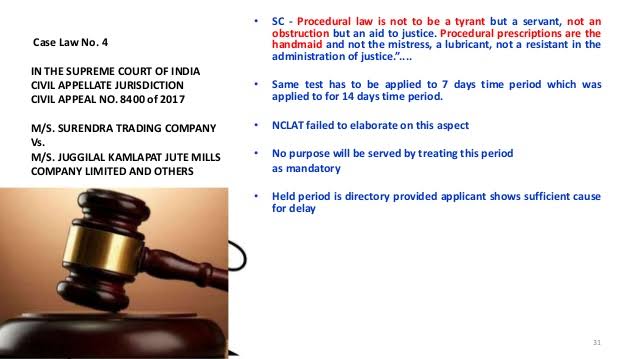
2) Surendra Trading Company Vs. Juggilal Kamlapat Jute Mills Company Ltd. & Others- Supreme Court:
The time limit prescribed in IBC, 2016 for admitting or rejecting a petition or initiation of CIRP under proviso to sub-sec. (5) of Sec. 9, is directory. [17]
The question before the NCLAT was to whether time of fourteen days under section 9(5) given to the adjudicating authority for ascertaining the existence of default and admitting or rejecting the application is mandatory or directory. [17]
NCLAT hold that the mandate of sub-section (5) of section 7 or sub-section (5) of section 9 or sub-section (4) of section 10 is procedural in nature, a tool of aid in expeditious dispensation of justice and is directory. [17]
Further question (with which supreme Court is concerned) was as to whether the period of seven days for rectifying the defects under proviso to sub-section (5) of Section 9 is mandatory or directory. The aforesaid provision of removing the defects within seven days is directory and not mandatory in nature. [17]
3) Essar Steel India Ltd. Vs. Reserve Bank of India-
RBI is authorized to direct any banking company to initiate insolvency resolution process- Gujarat High Court. [18]
A long-drawn legal battle for Essar Steel ends with this Supreme Court judgment. In one of the most discussed cases under IBC i.e. the case of Essar Steel Limited, the Supreme Court delivered its judgment which would probably be the final judgment of the case. Key highlights of the Essar Steel Supreme Court judgment are as follows: [19]
The requirement of completing the corporate insolvency resolution process within 330 days from the insolvency commencement date as introduced by the 2019 Amendment Act was held as non-mandatory. [19]
CoC can delegate its administrative powers or power of negotiation with the resolution applicants to a smaller committee (sub-committee) since such acts would be ultimately required to be approved and ratified by the CoC. [19]
Prospective resolution applicant has a right to receive complete information as to the CD, debts owed by it, and its activities as a going concern and as such it cannot suddenly be faced with “undecided” claims after the resolution plan submitted by it has been accepted. [19]
To put an end to uncertainty, parameters were laid down for limiting the scope of interference of Adjudicating Authority and Appellate Authority with the commercial decision taken by the requisite majority of CoC. [19]
The Supreme Court has re-emphasized the primacy of the commercial wisdom of the CoC in relation to resolution of the corporate debtor as well as difference in treatment of unequally placed creditors based on its earlier decisions in Swiss Ribbons and K. Sashidhar cases. [19]
Why are the judgments of the Insolvency and Bankruptcy cases pending with court?
The judgments of the cases are pending with the Court due to the Causes for the delays which range from frivolous challenges by operational creditors and promoters to basic issues like shortage of judges. [20]
There is no stipulated time-line for operational creditors to challenge the rejection of their claim, shortage of members at the bench, allowing intervention by promoters at the admission stage and long gaps between conclusion of hearing and passing of written orders are all causing delays,” said Sapan Gupta, national head banking and finance practice at Shardul Amarchand and Mangaldas. [20]
To be fair, delays are not a peculiarly Indian phenomenon. Many advanced countries struggle to provide quick, high-quality justice to citizens. But in India the scale of the problem is unprecedented. Focusing on capacity alone won’t reduce delays. [21]
A pervasive reason for the delays is adjournments. Many advanced countries struggle to provide quick, high-quality justice to citizens. But in India the scale of the problem is unprecedented.[21]
Conclusion
In conclusion, the Insolvency and Bankruptcy Code, 2016, is a progressive legislation that is intended to improve the efficiency of insolvency and bankruptcy proceedings in India. The new legislation provides for the early detection of financial distress and a time bound process for resolution. [22]
However, many details on the IBC’s implementation need to be worked out in the regulations, and its success will depend to a large extent on how quickly a high quality cadre of insolvency resolution professionals will emerge and on whether the time bound process for insolvency resolution will be adhered to in practice. [22]
The IBC has taken its first steps to regularize the insolvency process in India. It has amended over 11 legislations in India, bringing about one of the most significant changes to commercial laws in India in recent times. However, the 22 months of this nascent legislation have been ridden with controversies and speedy resolutions. [23]
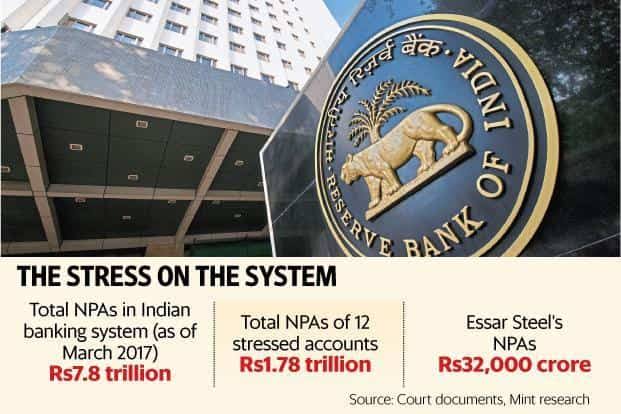
It has also become a very important tool for banks to regularize multitudes of non-performing assets plaguing the country’s economy. Within 7 months of the enactment of the IBC, the Reserve Bank of India released a list of 12 companies which held about 25% of the gross non-performing assets of the country.[23]
With more than 11% of all loans in India being terms as bad loans, the IBC has become the need of the hour. The IBC has brought a plethora of changes to insolvency laws in India and aims to reduce the amount of bad loans that has saddled the economy over the last few years. [23]
We are beginning to see this through various companies successfully concluding their insolvency process. The first successful case of a CIRP was that of Bhushan Steel wherein TATA Steel agreed to purchase Bhushan Steel for Rupees Thirty-Two Thousand Five Hundred Crores. [23]
With many more insolvency resolution processes in the pipeline, only time will tell if the IBC will prove to be a successful tool with its objective of streamlining the insolvency process in India. [23]
1) Bankruptcy Law Reforms Committee, The Interim Report of the Bankruptcy Law Reforms Committee (2015).
2) Rule 2.1.1. of RBI Master Circular – Prudential Norms on Income Recognition, Asset Classification and Provisioning – Pertaining to Advances defines an NPA as ‘An asset, including a leased asset, becomes non-performing when it ceases to generate income for the bank. A ‘non-performing asset’ (NPA) was defined as a credit facility in respect of which the interest and/ or installment of principal has remained ‘past due’ for a specified period of time.
3) It must be noted that creditors having outstanding debts continue to have the right to approach an appropriate forum like civil courts or arbitral tribunals for recovery of debts which would be a contractual right of recovery.
4) As cited in the “Abstract” of “Emerging Jurisprudence on Corporate Insolvency” by Shipra Sayal Institute of Law, Nirma University, Ahmedabad, Gujarat, India.
5) As cited in the “Introduction” Para of “A Primer on the Insolvency and Bankruptcy Code, 2016” by Nishith Desai Associates:- The Legal and Tax Counseling Worldwide.
6) As cited in the “Introduction” para of “Understanding the Insolvency and Bankruptcy Code, 2016:- Analysing the developments in jurisprudence” by “Vidhi Bankruptcy Research Programme” at the Vidhi Centre for Legal Policy and the Legal Division of the Insolvency and Bankruptcy Board of India.
7) As cited in the “Applicability” Para of “A Primer on the Insolvency and Bankruptcy Code, 2016” by Nishith Desai Associates:- The Legal and Tax Counseling Worldwide.
8) As cited in the “4th Para ,viz, Series of Judicial Pronouncement” of “Series of Judicial Pronouncement – Insolvency and Bankruptcy Code, 2016” written by Rushabh Ajmera on TaxGuru.
9) As cited in the “Introduction” Para of “Insolvency and Bankruptcy Hotline:- ANALYSING 2018 THROUGH THE LENS OF THE INSOLVENCY CODE” written on January 17, 2019 by Nishith Desai Associates.
10) As cited in the “4th Para” viz, Series of Judicial Pronouncement” of “Series of Judicial Pronouncement – Insolvency and Bankruptcy Code, 2016” written by Rushabh Ajmera on TaxGuru Website India 11 months ago.
11) As cited in “NCLT pronounced order on August1, 2018”.
13) As cited in “Facts of the Case Para” of “Series of Judicial Pronouncement – Insolvency and Bankruptcy Code, 2016” by Rushabh Ajmera 11 Months ago on TaxGuru India Website.
14) As cited in ” Apex Court Observations and Findings Para” in “Series of Judicial Pronouncement – Insolvency and Bankruptcy Code, 2016” by Rushabh Ajmera 11 Months ago on TaxGuru India Website.
15) As cited in “IBC (Insolvency and Bankruptcy Code, 2016) – The Bankruptcy Law of India” written by Vidushi Trehan, LL.M from Symbiosis Law School, Pune , Intern at Khurana & Khurana, Advocates and IP Attorneys.
16) As cited in “Brief about decision para” in ” “and” occurring in section 8(2)(a) may be read as “or”- Mobilox Innovations (P) Ltd. Vs. Kirusa Software (P) Ltd.- Supreme Court” written by IBC LAWSon September 21, 2017.
17) As cited in “Case Name: M/S. Surendra Trading Company Vs. M/S. Juggilal Kamlapat Jute Mills Company Limited and Others” written by IBC LAWS on September 18, 2017
18) As cited in “RBI is authorised to direct any banking company to initiate insolvency resolution process- Essar Steel India Ltd. Vs. RBI- Gujarat High Court” written on July 17, 2017 by IBC LAWS.
19) As cited in “The Insolvency And Bankruptcy Code In 2019 : Recent Amendments And Key Judgments” written by Mayur Shetty and Chintan Gandhi of Rajani Associates on 12th March 2020.
20) As cited in “Delay becomes the norm in insolvency & bankruptcy cases” by Joel Rebello & Saikat Das, ET Bureau on Aug 15, 2019 at 11:25pm.
21) As cited in “Hidden factors that slow our courts and delay justice” written by Arghya Sengupta.
22) As cited in “Insolvency And Bankruptcy Code” written on 12 September 2017 by Samvad Partners.
23) As cited in “2016: Overview Of The Insolvency And Bankruptcy Code, 2016” written by Namrata Bhagwatula , Senior Associate on 20 September, 2018.
‘Honor crimes are acts of violence, usually murder, committed by male family members against female family members, who are held to have brought dishonor upon the family. A woman can be targeted by (individuals within) her family for a variety of reasons, including refusing to enter into an arranged marriage, being the victim of a sexual assault, seeking a divorce — even from an abusive husband — or (allegedly) committing adultery. The mere perception that a woman has behaved in a way that “dishonors” her family is sufficient to trigger an attack on her life.’
‘Honor killings are not new to the rural India especially in the regions of Hariyana, Uttar Pradesh and Rajasthan. But then such cases are not just restricted to the rural areas. They are also heard of in our capital and in the southern states like Kerela, Tamil Nadu etc. The Aarushi Talwar Case and the killing of Kuldeep and Monica are speculated to be such killings.
Our country has been very selective about the kind of development she has undergone. On an international level with the nuclear deal, 8% growth rate and the recognition India is enjoying to voice its opinion, it seems that ‘India is shining’. But dig deeper into the dark secrets of this developing nation and we still find rampant killings of young couples by their own family members to save their honor because of the incest committed by the couple. Their crime: living in the same village and getting married.
According to the ‘conservative’ khap panchayat, marriage between people of the same village is considered incest as they are siblings and hence these marriages are not valid. So the panchayat orders the murder of the couple and hangs their body in the village crossing as an example to other straying couples.
In India, with its patriarchal society, women are considered as property and the vessel of family’s honor. And any act which might blot the family’s prestige renders an absolute right to the male members to murder the girl, undo her wrongs and win back the honor.
Such crimes as well as such criminals have been breeding under the political blessings of the political parties mainly interested in the vote banks of these villages and the support of the khap panchayat.
In order to find a solution for such killings, it is necessary to analyze it from the very core. The solution to this problem mainly lies in the eradication of myths in the minds of people. They need to be educated with the provisions given in the Hindu Marriage Act and what kinds of marriages are actually considered invalid. Khap Pachayats should at last be ripped out of all its power so that it is unable to wrongly influence the naïve people and to instigate them to commit such inhuman acts.
It is time India finally developed in the real sense. Building malls and increasing the standard of living of the common man is not really development. Cases on Honour killing show that more than half of the Indians still lead lives within the strong crutches of caste system and even today youths don’t have the power to make decisions regarding their own lives. To see that even today, people blindly commit such barbaric crimes and consider it as an act of sanctifying the impure shows that India has really not modernized. Development has to be from the very base, the core. Or else it’s just a hollow wooden structure eaten on the inside by the termites that eventually comes crashing down.
Writing for the sake of writing isn’t writing. You should have a passion to write. That pushes you forward to a greater extent. The interest on writing makes you write the writings that were never written. Don’t make yourself to write, let yourself make you write. There’s a lot of difference between them. It’s like earning to write and writing to earn. What we know is a drop, what we don’t know is an ocean.
Develop a habit of writing because that makes us improve without our knowledge. Write something that happened to you because it tries to bring the coordination between our brain and hands. As the time passes our hand should be faster than our brain. We should think of next sentence while writing the previous. It can even be writing in a dairy.
Start a blog and keep on writing and express what you feel like. Share it to your contacts and ask them to suggest any improvements. Keep on writing and improving by implementing their suggestions and get improvised with your writing.
Writing not only comes from writing. Start reading the different writings. Analyse the way different people write and try to figure out the pattern they try to express themselves. Read and read until you get better in writing.
Write for someone who are looking for writers because that makes you know more about your writing from others. Try to become freelancer and ask for work. Doing work makes you improve. Such work involves lot of research and you will get a chance to know about the unknowns.
Start your journey in facebook groups and Quora groups and make friendship with your mates . Connect with like minded people and that will surely make you know more about the various styles of writing.




/the-hungarian-parliament-on-the-danube-river-at-sunset-in-budapest--hungary-945207010-5c34c19346e0fb00011d477a.jpg)















You must be logged in to post a comment.